
Chromosomal structure — MCQs

A researcher is investigating compounds that modulate the cell cycle as possible chemotherapeutic agents against peripheral T-cell lymphoma. The researcher discovers a group of natural compounds with inhibitory activity against histone deacetylases, a class of enzymes that remove acetyl groups from the lysine residues of histones. A histone deacetylase inhibitor most likely causes which of the following?
An investigator is studying the biology of human sperm cells. She isolates spermatogonia obtained on a testicular biopsy from a group of healthy male volunteers. She finds that the DNA of spermatogonia obtained from these men show a large number of TTAGGG sequence repeats. This finding can best be explained by increased activity of an enzyme with which of the following functions?
A group of scientists developed a mouse model to study nondisjunction in meiosis. Their mouse model produced gametes in the following ratio: 2 gametes with 24 chromosomes each and 2 gametes with 22 chromosomes each. In which of the following steps of meiosis did the nondisjunction occur?
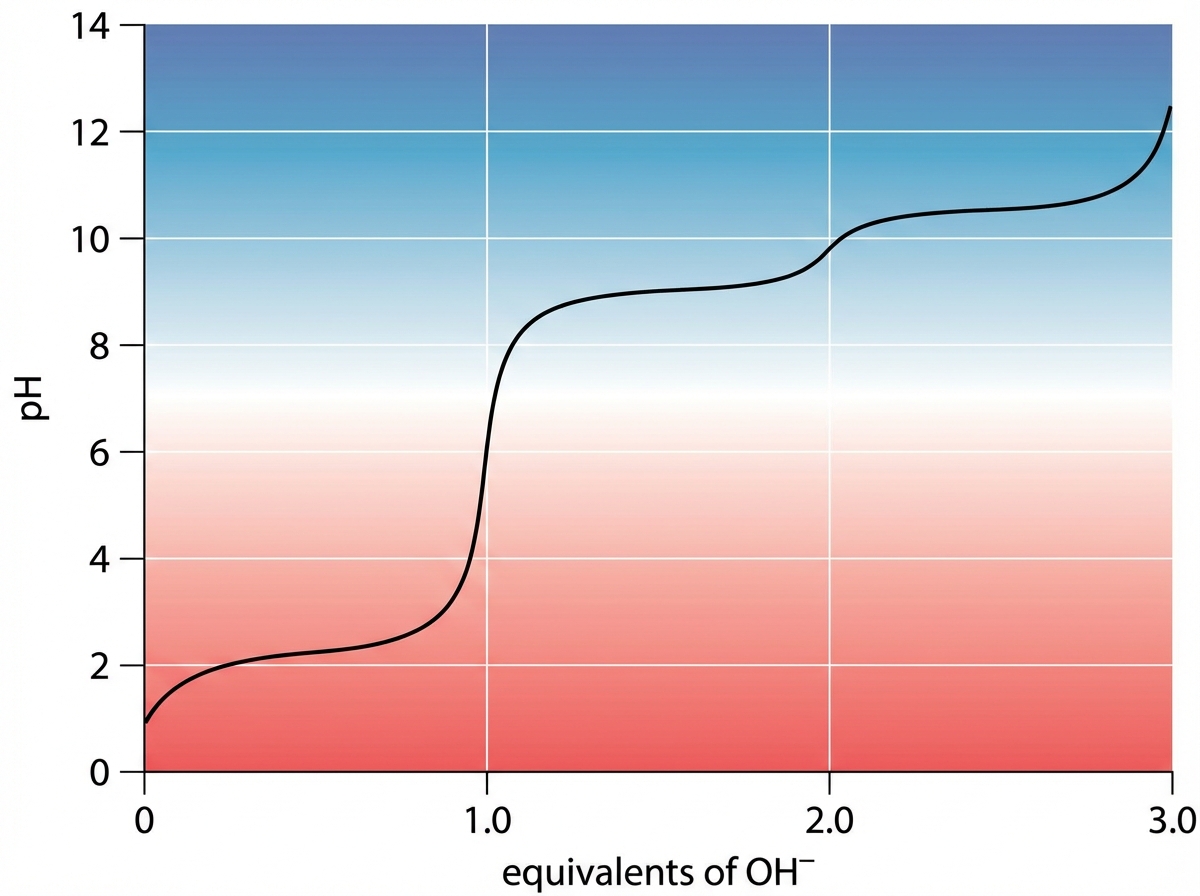
An investigator studying epigenetic mechanisms isolates histone proteins, the structural motifs involved in DNA binding and regulation of transcription. The peptide bonds of histone proteins are hydrolyzed and one type of amino acid is isolated. At normal body pH, this amino acid has a net charge of +1 . The investigator performs titration of this amino acid and obtains the graph shown. The isolated amino acid is most likely which of the following?
Replication in eukaryotic cells is a highly organized and accurate process. The process involves a number of enzymes such as primase, DNA polymerase, topoisomerase II, and DNA ligase. In which of the following directions is DNA newly synthesized?
A 62-year-old man with small cell lung cancer undergoes radiation therapy. His oncologist explains that radiation causes DNA damage and double strand breaks and this damage stops the cancer cells from growing because they can no longer replicate their DNA. One key mediator of this process is a cell cycle regulator called P53, which is upregulated after DNA damage and helps to trigger cell cycle arrest and apoptosis. One mechanism by which P53 activity is increased is a certain chromatin modification that loosens DNA coiling allowing for greater transcription of the proteins within that region of DNA. Which of the following enzymes most likely causes the chromatin modification described in this case?
As part of a clinical research study, the characteristics of neoplastic and normal cells are being analyzed in culture. It is observed that neoplastic cell division is aided by an enzyme which repairs progressive chromosomal shortening, which is not the case in normal cells. Due to the lack of chromosomal shortening, these neoplastic cells divide more rapidly than the normal cells. Which of the following enzymes is most likely involved?
A 23-year-old man presents to his primary care physician with 2 weeks of headache, palpitations, and excessive sweating. He has no past medical history and his family history is significant for clear cell renal cell carcinoma in his father as well as retinal hemangioblastomas in his older sister. On presentation his temperature is 99°F (37.2°C), blood pressure is 181/124 mmHg, pulse is 105/min, and respirations are 18/min. After administration of appropriate medications, he is taken emergently for surgical removal of a mass that was detected by abdominal computed tomography scan. A mutation on which of the following chromosomes would most likely be seen in this patient?
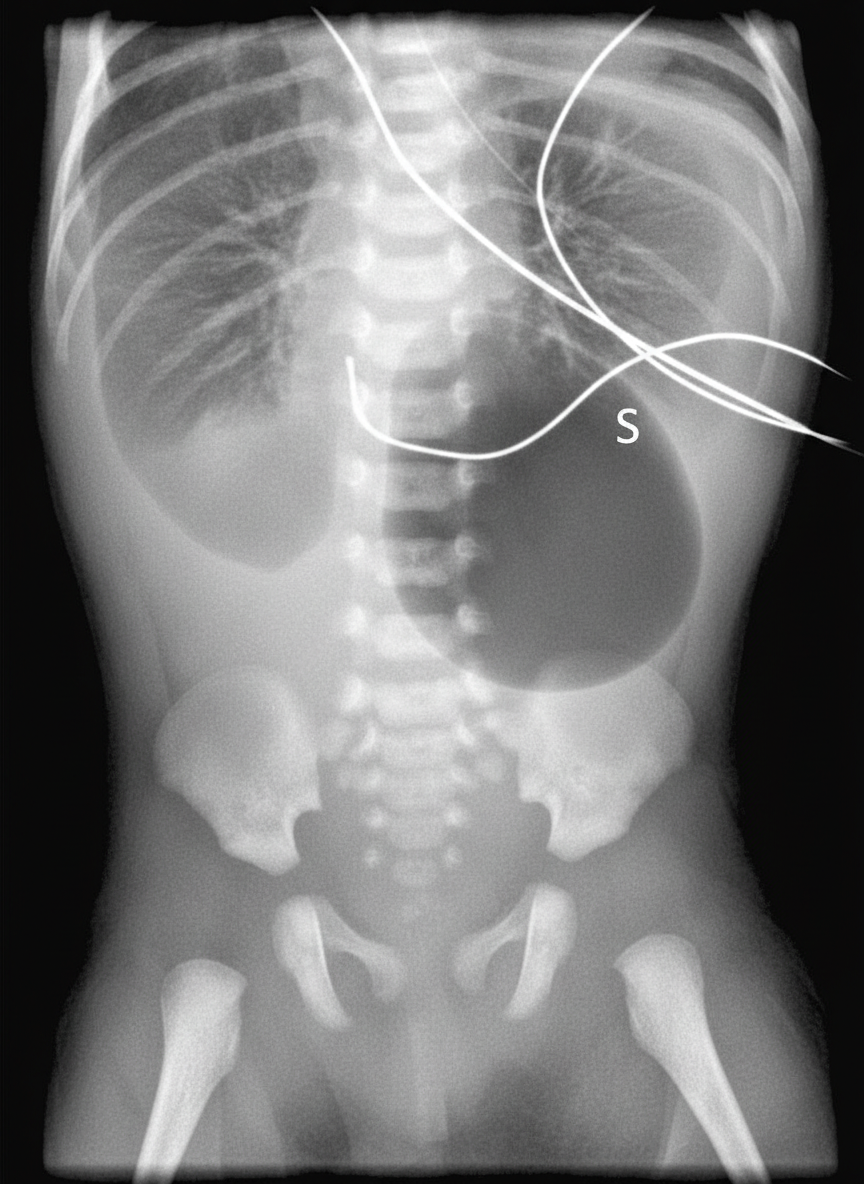
A 40-year-old woman brings her 2-day-old infant to the pediatrician’s office for a routine checkup. She tells the pediatrician that her baby vomits a greenish-yellow fluid after every feeding session. She has not been very successful in feeding him due to this problem. She also says that her baby has not passed stool since they left the hospital. On examination, the pediatrician observes that the baby has a flat facial profile and small eyes. The epicanthal folds are prominent and the palms have a single transverse crease. His abdomen is distended with high-pitched bowel sounds. The pediatrician orders an abdominal radiograph, the film is shown in the picture. Which of the following best explains the physical and clinical features exhibited by this infant?
A 49-year-old man presents to your clinic with “low back pain”. When asked to point to the area that bothers him the most, he motions to both his left and right flank. He describes the pain as deep, dull, and aching for the past few months. His pain does not change significantly with movement or lifting heavy objects. He noted dark colored urine this morning. He has a history of hypertension managed with hydrochlorothiazide; however, he avoids seeing the doctor whenever possible. He drinks 3-4 beers on the weekends but does not smoke. His father died of a sudden onset brain bleed, and his mother has diabetes. In clinic, his temperature is 99°F (37.2°C), blood pressure is 150/110 mmHg, pulse is 95/min, and respirations are 12/min. Bilateral irregular masses are noted on deep palpation of the abdomen. The patient has full range of motion in his back and has no tenderness of the spine or paraspinal muscles. Urine dipstick in clinic is notable for 3+ blood. Which chromosome is most likely affected by a mutation in this patient?
Want unlimited practice?
Get full access to all questions, explanations, and performance tracking.
Scan to download app