
Lipoprotein metabolism — MCQs

A scientist is trying to design a drug to modulate cellular metabolism in the treatment of obesity. Specifically, he is interested in understanding how fats are processed in adipocytes in response to different energy states. His target is a protein within these cells that catalyzes catabolism of an energy source. The products of this reaction are subsequently used in gluconeogenesis or β-oxidation. Which of the following is true of the most likely protein that is being studied by this scientist?
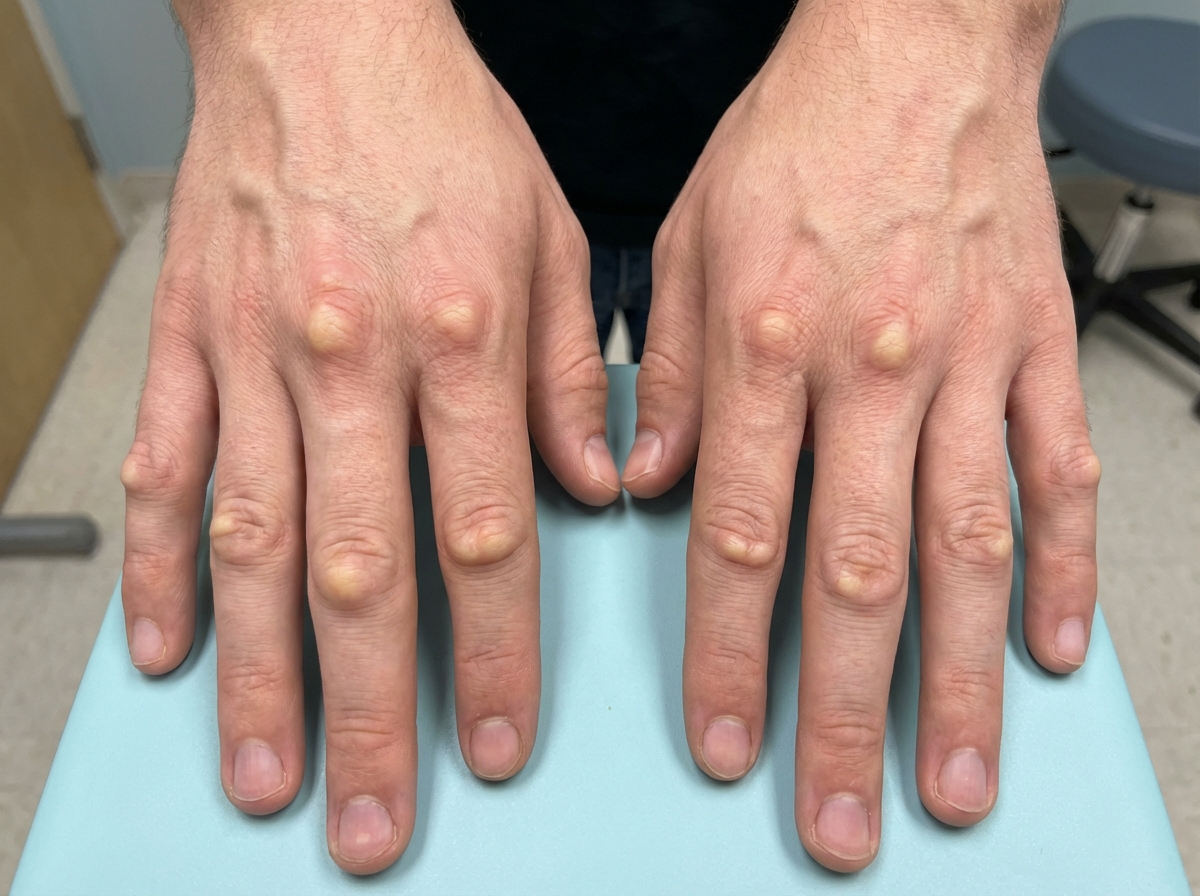
A previously healthy 22-year-old man comes to the physician because of multiple nodules on his hands that first appeared a few months ago. He works as a computer game programmer. His father died of a myocardial infarction at 37 years of age, and his mother has rheumatoid arthritis. A photograph of the lesions is shown. The nodules are firm, mobile, and nontender. Which of the following is the most likely mechanism underlying this patient's skin findings?
A 1-year-old girl is brought to the pediatrician because of a 6-month history of diarrhea. She has not received recommended well-child examinations. Her stools are foul-smelling and nonbloody. There is no family history of serious illness. She is at the 15th percentile for height and 5th percentile for weight. Physical examination shows abdominal distension. Her serum triglyceride concentration is 5 mg/dL. Genetic analysis shows a mutation in the gene that encodes microsomal triglyceride transfer protein. Which of the following is the most appropriate treatment for this patient's condition?
A 33-year-old man presents with his recent laboratory results. He has no symptoms currently, but he underwent a medical evaluation as a requirement for taking up a new job. His medical history is not significant. His laboratory reports are as follows: Blood hemoglobin 13.7 g/dL Leukocyte count 8,000/mm3 Platelet count 350,000/mm3 Serum creatinine 0.8 mg/dL Serum alanine aminotransferase 16 U/L Serum aspartate aminotransferase 14 U/L Serum cholesterol 450 mg/dL Serum triglyceride 790 mg/dL Serum LDL cholesterol 150 mg/dL Serum HDL cholesterol 55 mg/dL Which of the following findings is most likely to be present on physical examination of this patient?
A 14-year-old boy comes to the physician for a follow-up after a blood test showed a serum triglyceride level of 821 mg/dL. Several of his family members have familial hypertriglyceridemia. The patient is prescribed a fibrate medication that increases his risk of gallstone disease. The expected beneficial effect of this drug is most likely due to which of the following actions?
A 10-month-old boy with a seizure disorder is brought to the physician by his mother because of a 2-day history of vomiting and lethargy. Laboratory studies show a decreased serum glucose concentration with low ketones. Further testing confirms a deficiency in an enzyme involved in fatty acid oxidation. Which of the following enzymes is most likely deficient in this patient?
A 57-year-old woman comes to the physician for a routine examination. She takes no medications. She swims 3 times weekly and jogs several miles with her dog on most mornings. Her diet consists primarily of vegetables, fish, and whole grains; she avoids processed foods and carbohydrates. She drinks one glass of red wine with dinner on most evenings. There is no family history of serious medical illness or cardiovascular disease. Physical examination shows no abnormalities. This patient is most likely to have an increase in which of the following laboratory markers?
Steroid hormone synthesis, lipid synthesis, and chemical detoxification are activities of which of the following?
A 35-year-old man comes to the physician because of fatigue and generalized weakness for the past year. He has noticed he has been having fewer bowel movements. He has had pain with defecation and small amounts of blood when wiping. He has not lost weight despite increased efforts to diet and exercise. He has had no fever, throat pain, or difficulty swallowing. His temperature is 36.5°C (97.7°F), pulse is 50/min, blood pressure is 120/90 mm Hg, and BMI is 35 kg/m2. Physical examination shows dry skin and a distended abdomen. There is 1+ pitting edema in the lower extremities. On neurological examination, deep tendon reflexes are 1+. Further evaluation of this patient is most likely to show which of the following findings?
A 24-year-old man presents for an annual check-up. He is a bodybuilder and tells you he is on a protein-rich diet that only allows for minimal carbohydrate intake. His friend suggests he try exogenous glucagon to help him lose some excess weight before an upcoming competition. Which of the following effects of glucagon is he attempting to exploit?
Want unlimited practice?
Get full access to all questions, explanations, and performance tracking.
Scan to download app