
Brown vs. white adipose tissue — MCQs

A 59-year-old female presents to the emergency department after a fall. She reports severe pain in her right hip and an inability to move her right leg. Her past medical history is notable for osteoporosis, rheumatoid arthritis, and has never undergone surgery before. The patient was adopted, and her family history is unknown. She has never smoked and drinks alcohol socially. Her temperature is 98.8°F (37.1°C), blood pressure is 150/90 mmHg, pulse is 110/min, and respirations are 22/min. Her right leg is shortened, abducted, and externally rotated. A radiograph demonstrates a displaced femoral neck fracture. She is admitted and eventually brought to the operating room to undergo right hip arthroplasty. While undergoing induction anesthesia with inhaled sevoflurane, she develops severe muscle contractions. Her temperature is 103.4°F (39.7°C). A medication with which of the following mechanisms of action is indicated in the acute management of this patient’s condition?
An investigator is studying the function of the lateral nucleus of the hypothalamus in an experimental animal. Using a viral vector, the genes encoding chloride-conducting channelrhodopsins are injected into this nucleus. Photostimulation of the channels causes complete inhibition of action potential generation. Persistent photostimulation is most likely to result in which of the following abnormalities in these animals?
A group of investigators is studying thermoregulatory adaptations of the human body. A subject is seated in a thermally insulated isolation chamber with an internal temperature of 48°C (118°F), a pressure of 1 atmosphere, and a relative humidity of 10%. Which of the following is the primary mechanism of heat loss in this subject?
An investigator is examining tissue samples from various muscle tissue throughout the body. She notices that biopsies collected from a specific site have a high concentration of sarcoplasmic reticulum, mitochondria, and myoglobin; they also stain poorly for ATPase. Additionally, the cell surface membranes of the myocytes in the specimen lack voltage-gated calcium channels. These myocytes are found in the greatest concentration at which of the following sites?
A 22-year-old medical student decides to fast for 24 hours after reading about the possible health benefits of fasting. She read that blood glucose levels are maintained by metabolic processes such as hepatic glycogenolysis and hepatic gluconeogenesis during the initial 3 days of fasting. During the day, she did not suffer from the symptoms of hypoglycemia. Which of the following signaling molecules most likely stimulated the reaction which maintained her blood glucose after all her stored glucose was broken down and used up?
A 1-minute-old newborn is being examined by the pediatric nurse. The nurse auscultates the heart and determines that the heart rate is 89/min. The respirations are spontaneous and regular. The chest and abdomen are both pink while the tips of the fingers and toes are blue. When the newborn’s foot is slapped the face grimaces and he cries loud and strong. When the arms are extended by the nurse they flex back quickly. What is this patient’s Apgar score?
You have been asked to deliver a lecture to medical students about the effects of various body hormones and neurotransmitters on the metabolism of glucose. Which of the following statements best describes the effects of sympathetic stimulation on glucose metabolism?
A 55-year-old woman presents to a primary care clinic for a physical evaluation. She works as a software engineer, travels frequently, is married with 2 kids, and drinks alcohol occasionally. She does not exercise regularly. She currently does not take any medications except for occasional ibuprofen or acetaminophen. She is currently undergoing menopause. Her initial vital signs reveal that her blood pressure is 140/95 mmHg and heart rate is 75/min. She weighs 65 kg (143 lb) and is 160 cm (63 in) tall. Her physical exam is unremarkable. A repeat measurement of her blood pressure is the same as before. Among various laboratory tests for hypertension evaluation, the physician requests fasting glucose and hemoglobin A1c levels. Which of the following is the greatest risk factor for type 2 diabetes mellitus?
A 12-year-old boy is brought to the physician because of difficulty in walking for 5 months. His mother reports that he has trouble keeping his balance and walking without support. Over the past year, he has started to have difficulty seeing in the dark and his hearing has been impaired. Examination shows marked scaling of the skin on the face and feet and a shortened 4th toe. Muscle strength is 3/5 in the lower extremities and 4/5 in the upper extremities. Sensation to pinprick is symmetrically decreased over the legs. Fundoscopy shows peripheral pigment deposits and retinal atrophy. His serum phytanic acid concentration is markedly elevated. The patient's condition is most likely caused by a defect in which of the following cellular structures?
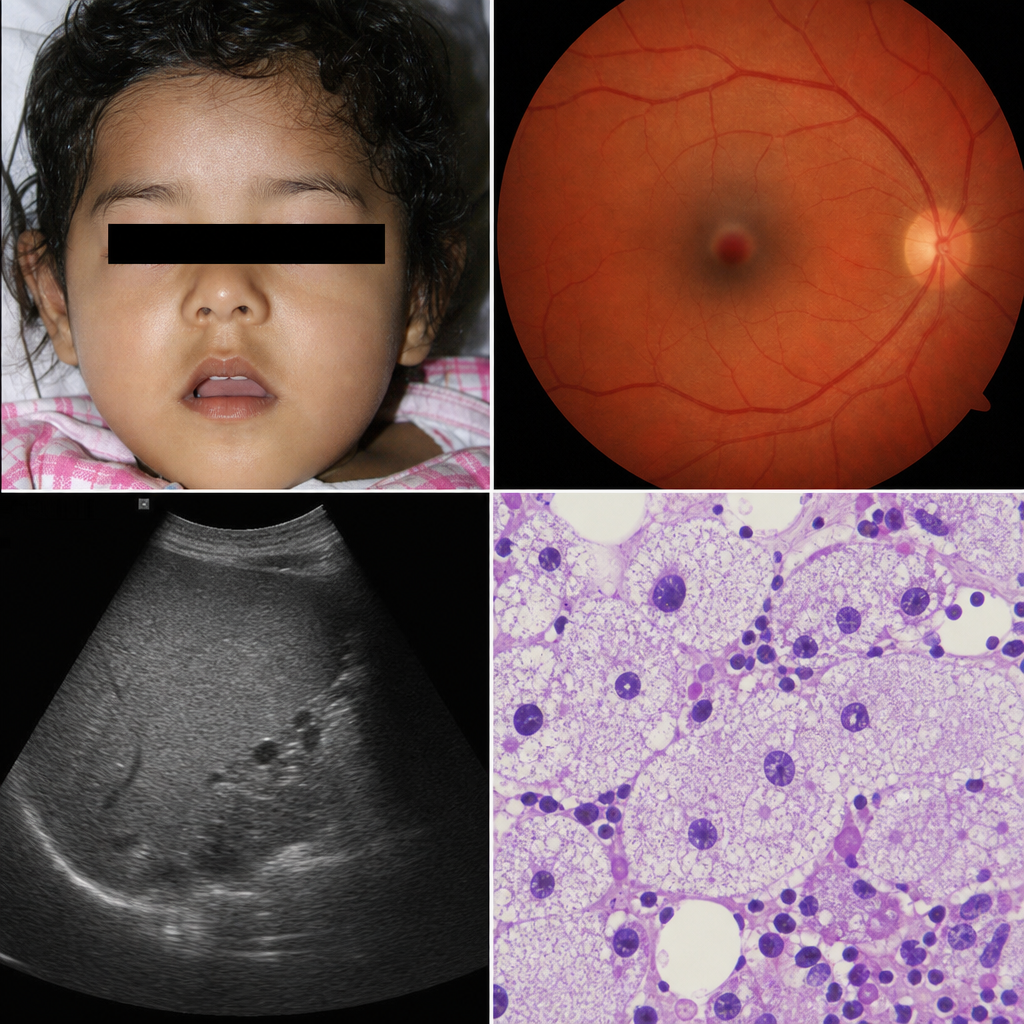
A 3-year-old girl presents with progressive neurodegeneration, a cherry-red spot on fundoscopic examination, and hepatosplenomegaly. Bone marrow biopsy reveals large macrophages with foamy cytoplasm. Enzyme assay of leukocytes shows markedly reduced activity of a lysosomal hydrolase. Which of the following correctly identifies the deficient enzyme and its accumulating substrate in this condition?
Want unlimited practice?
Get full access to all questions, explanations, and performance tracking.
Scan to download app