
Descriptive statistics (central tendency, dispersion) — MCQs

A 24-year-old woman presents to a medical office for a follow-up evaluation. The medical history is significant for type 1 diabetes, for which she takes insulin. She was recently hospitalized for diabetic ketoacidosis following a respiratory infection. Today she brings in a list of her most recent early morning fasting blood glucose readings for review. Her glucose readings range from 126 mg/dL–134 mg/dL, except for 2 readings of 350 mg/dL and 380 mg/dL, taken at the onset of her recent hospitalization. Given this data set, which measure(s) of central tendency would be most likely affected by these additional extreme values?
A biostatistician is processing data for a large clinical trial she is working on. The study is analyzing the use of a novel pharmaceutical compound for the treatment of anorexia after chemotherapy with the outcome of interest being the change in weight while taking the drug. While most participants remained about the same weight or continued to lose weight while on chemotherapy, there were smaller groups of individuals who responded very positively to the orexic agent. As a result, the data had a strong positive skew. The biostatistician wishes to report the measures of central tendency for this project. Just by understanding the skew in the data, which of the following can be expected for this data set?
A study is being conducted on depression using the Patient Health questionnaire (PHQ-9) survey data embedded within a popular social media network with a response size of 500,000 participants. The sample population of this study is approximately normal. The mean PHQ-9 score is 14, and the standard deviation is 4. How many participants have scores greater than 22?
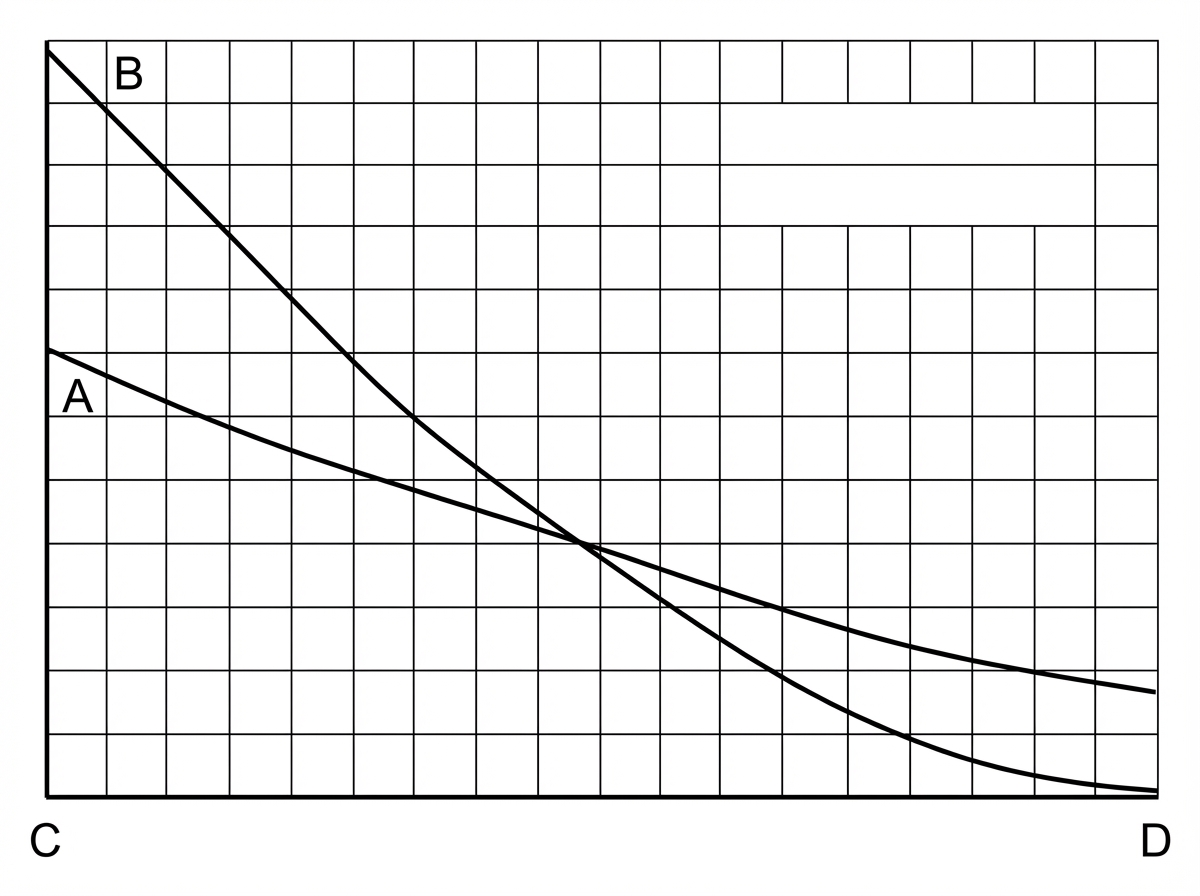
A young researcher is responsible for graphing laboratory data involving pulmonary blood flow and ventilation pattern obtained from a healthy volunteer who was standing in an upright position. After plotting the following graph, the researcher realizes he forgot to label the curves and the x-axis (which represents the position in the lung). Which of the following is the appropriate label for each point on the graph?
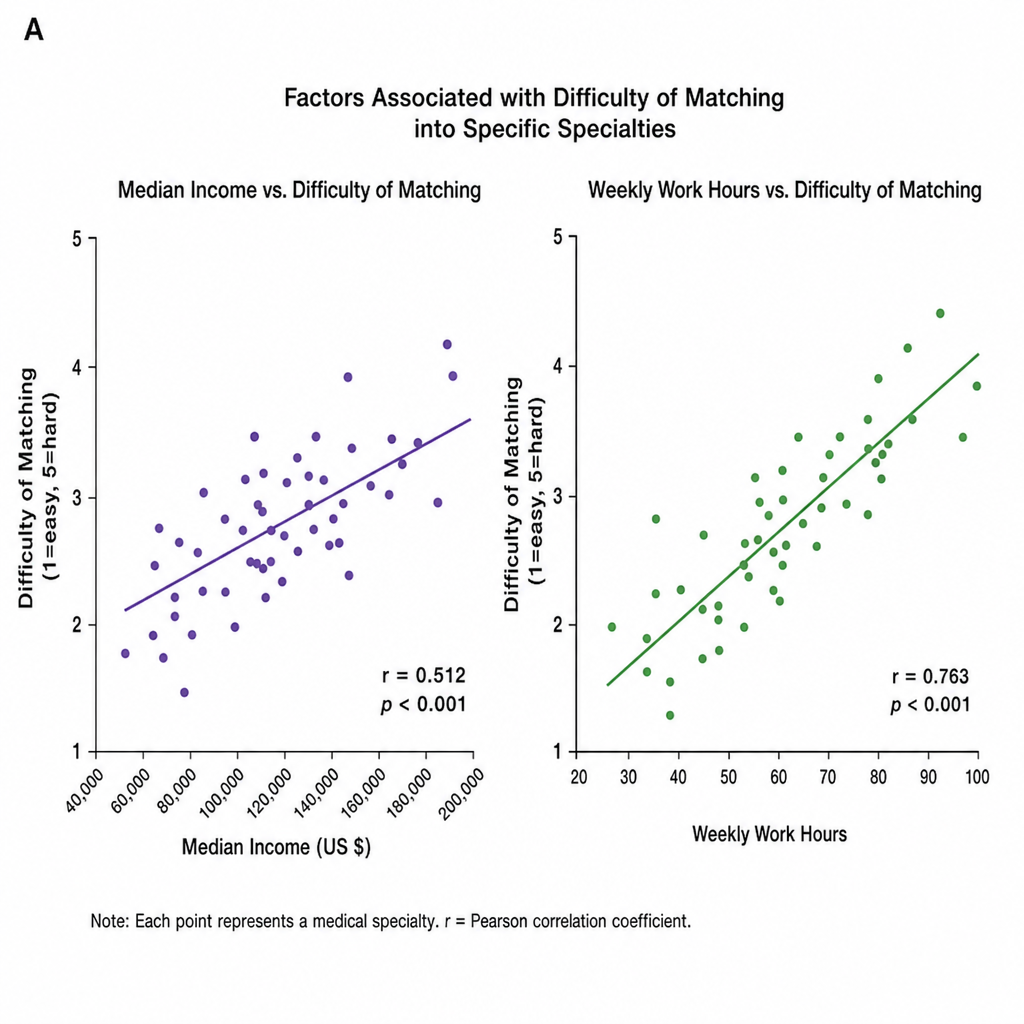
Confident of your performance on Step 1 given your extensive utilization of Medbullets, you preemptively start to ponder your future specialty choice. You come across an analysis of lifestyle factors and how they affect medical student specialty choices. Image A depicts two scatter plots comparing the relationship between median income and weekly work hours on the difficulty of matching into specific specialties. Both associations are statistically significant. Which statement best describes the results?
In 2013 the national mean score on the USMLE Step 1 exam was 227 with a standard deviation of 22. Assuming that the scores for 15,000 people follow a normal distribution, approximately how many students scored above the mean but below 250?
A 50-year-old man presents to the office for a routine health check-up. Managing his weight has been his focus to improve his overall health. The doctor discusses his weight loss goals and overall health benefits from weight loss, including better blood pressure management and decreased insulin resistance. The national average weight for males aged 50-59 years old is 90 kg (200 lb) with a standard deviation of 27 kg (60 lb). What would be the most likely expected value if his weight was 2 standard deviations above the mean?
A child is learning the steps of hand hygiene. Which domain of learning is primarily involved?
A 46-year-old man comes to the physician for a follow-up evaluation one week after being discharged from the hospital for acute pancreatitis and alcohol withdrawal. He drinks 8 to 10 beers daily. When the physician asks him about his alcohol use, the patient says, “This is the second time in a year that I have experienced such severe belly pain because of my pancreas. I realize that it really could be happening because of the amount of alcohol I am drinking. However, I don't think I have the willpower to cut down.” This patient is most likely in which of the following stages of behavioral change?
A 37-year-old man comes to the emergency department with his wife because of a 3-day history of severe pain in his right arm. He also reports that he cannot move his right arm. The symptoms began after the patient woke up one morning, having slept on his side. He is otherwise healthy. He works as a waiter and says that he feels exhausted from working several night shifts per week. He adds that he “can barely keep his eyes open” when looking after their daughter the next day. Since the onset of the pain, he has been unable to work and is fully dependent on his wife, who took an extra shift to make enough money to pay their monthly bills. The patient appears relaxed but only allows himself to be examined after his wife convinces him. His vital signs are within normal limits. Examination shows 1/5 muscle strength in the right arm. Reflexes are normal. He has no sensation to light touch over the entire right arm and forearm. When a pin prick test is conducted, the patient rapidly withdraws the right arm. Which of the following is the most likely diagnosis?
Want unlimited practice?
Get full access to all questions, explanations, and performance tracking.
Scan to download app