
Peritoneum and peritoneal cavity — MCQs

A 34-year-old patient presents with severe pain in the right upper quadrant that radiates to the right shoulder. During laparoscopic cholecystectomy, which of the following anatomical spaces must be carefully identified to prevent bile duct injury?
A 12-year-old boy is brought to the emergency department late at night by his worried mother. She says he has not been feeling well since this morning after breakfast. He skipped both lunch and dinner. He complains of abdominal pain as he points towards his lower abdomen but says that the pain initially started at the center of his belly. His mother adds that he vomited once on the way to the hospital. His past medical history is noncontributory and his vaccinations are up to date. His temperature is 38.1°C (100.6°F), pulse is 98/min, respirations are 20/min, and blood pressure is 110/75 mm Hg. Physical examination reveals right lower quadrant tenderness. The patient is prepared for laparoscopic abdominal surgery. Which of the following structures is most likely to aid the surgeons in finding the source of this patient's pain and fever?
A 2-year-old male is brought to his pediatrician by his mother because of abdominal pain and blood in the stool. Scintigraphy reveals uptake in the right lower quadrant of the abdomen. Persistence of which of the following structures is the most likely cause of this patient's symptoms?
A child is in the nursery one day after birth. A nurse notices a urine-like discharge being expressed through the umbilical stump. What two structures in the embryo are connected by the structure that failed to obliterate during the embryologic development of this child?
A 28-year-old male presents to his primary care physician with complaints of intermittent abdominal pain and alternating bouts of constipation and diarrhea. His medical chart is not significant for any past medical problems or prior surgeries. He is not prescribed any current medications. Which of the following questions would be the most useful next question in eliciting further history from this patient?
A 31-year-old woman presents to the emergency room with high-grade fever and abdominal pain for the past 2 days. She also complains of malaise and has vomited several times since last night. The past medical history is benign. The vital signs include: temperature 40.0°C (104.0°F), pulse 120/min, respiratory rate 28/min, and blood pressure 120/89 mm Hg. On physical examination, severe costovertebral angle tenderness is noted. She is admitted to the medical floor and blood is drawn. The laboratory testing reveals leukocytosis with predominant neutrophilia and increased C-reactive protein and ferritin levels. She is suspected to have a retroperitoneal organ infection. Which of the following best describes the involved organ?
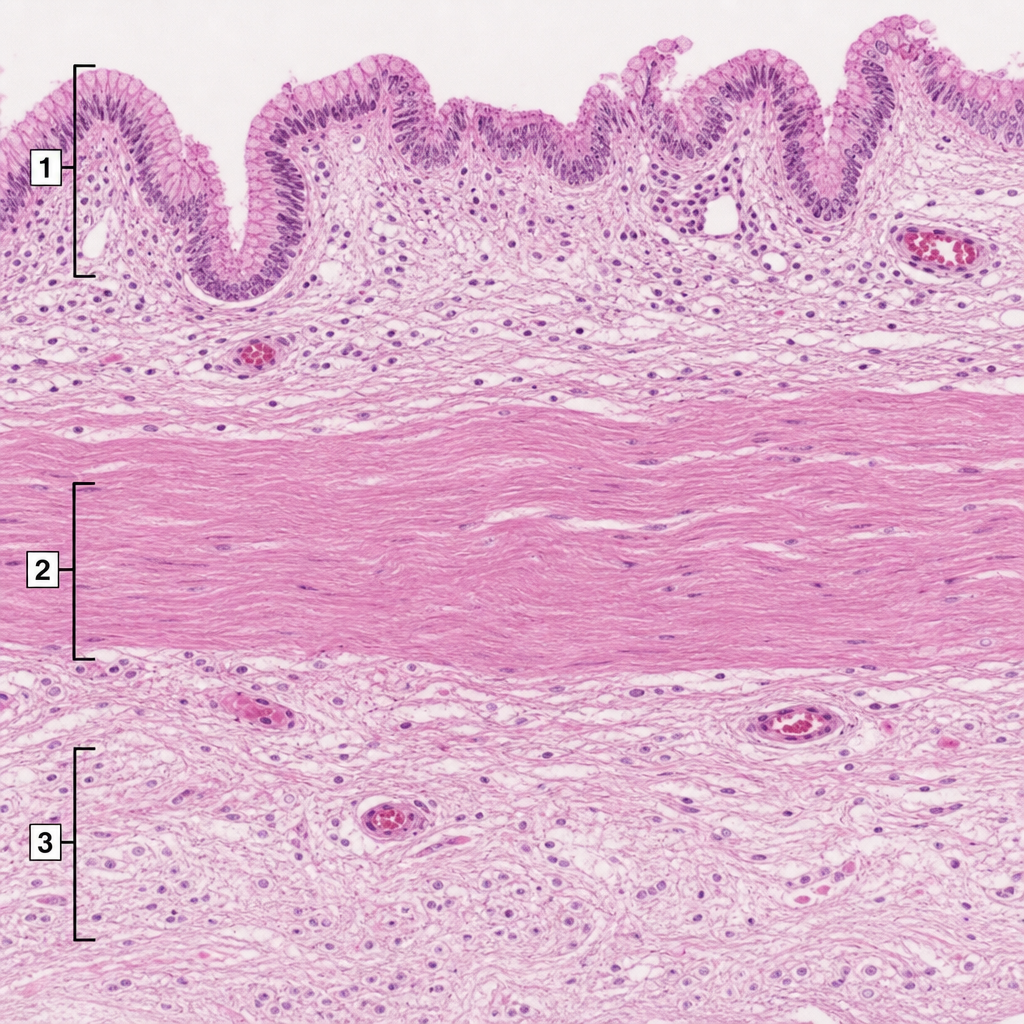
A 36-year-old man undergoes surgical intervention due to a right upper quadrant stab wound. His gallbladder was found to be lacerated and is removed. It is sent for histological evaluation. The pathologist examines the slide shown in the exhibit and identifies several structures numbered the image. Which of the following statements is correct?
What is the most common site of congenital diaphragmatic hernia?
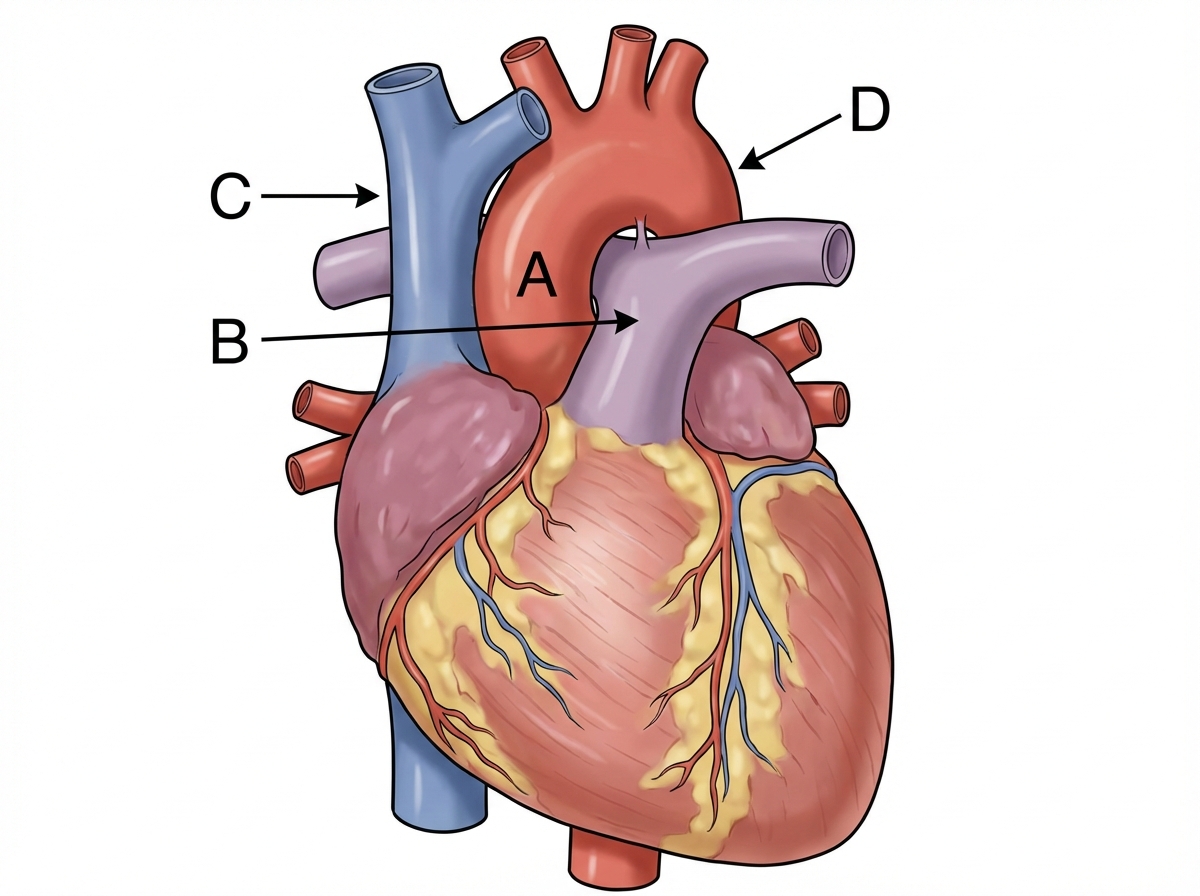
Identify the labeling correctly 
Structure preventing vertical descent of spleen
Want unlimited practice?
Get full access to all questions, explanations, and performance tracking.
Scan to download app