
Great vessels and lymphatics — MCQs

A 72-year-old man presents to his primary care physician because he has been having flank and back pain for the last 8 months. He said that it started after he fell off a chair while doing yard work, but it has been getting progressively worse over time. He reports no other symptoms and denies any weight loss or tingling in his extremities. His medical history is significant for poorly controlled hypertension and a back surgery 10 years ago. He drinks socially and has smoked 1 pack per day since he was 20. His family history is significant for cancer, and he says that he is concerned that his father had similar symptoms before he was diagnosed with multiple myeloma. Physical exam reveals a painful, pulsatile enlargement in the patient's abdomen. Between which of the following locations has the highest risk of developing this patient's disorder?
During a surgical procedure to repair an abdominal aortic aneurysm, the surgeon must be careful to avoid injury to which of the following arterial structures that originates near the level of the renal vessels?
Six days after undergoing a thoracic endovascular aortic repair following a high-speed motorcycle accident, a 29-year-old woman develops a fever, cough, and shortness of breath. Serum studies show a sodium concentration of 129 mEq/L. An x-ray of the chest shows a left-sided pleural effusion. Thoracentesis is performed and shows milky white fluid in the pleural space that remains uniform after centrifugation. A culture of the pleural fluid shows no organisms. Further analysis of the fluid would most likely show which of the following?
A 29-year-old man presents to his primary care provider complaining of testicular pain. He reports a four-day history of dull chronic pain in his left testicle that is worse with standing. His past medical history is notable for asthma and major depressive disorder. He takes inhaled albuterol as needed and sertraline. He is sexually active with a single female partner and always uses barrier protection. His temperature is 99.2°F (37.3°C), blood pressure is 125/75 mmHg, pulse is 85/min, and respirations are 17/min. Physical examination reveals a non-tender twisted mass along the left spermatic cord that disappears when the patient lies supine. This patient’s condition most likely stems from decreased laminar flow at which of the following vascular junctions?
A 56-year-old man with substernal chest pain calls 911. When paramedics arrive, they administer drug X sublingually for the immediate relief of angina. What is the most likely site of action of drug X?
A 70-year-old male comes to the emergency department complaining of severe back pain. The pain started 20 minutes ago when he was sitting and watching TV. He describes the pain as intense, epigastric, and radiating to his back. His vitals on presentation to the emergency department are blood pressure is 150/75 mmHg, pulse is 110/min, and respirations are 24/min with an oxygen saturation of 98% on room air. His body mass index is 35 kg/m^2 and he appears pale and in visible pain. On abdominal exam, his abdomen is tender and a pulsatile mass is felt in the midline during deep palpation. His past medical history includes diabetes, hypertension well-controlled on medications, and a history of benign prostatic hyperplasia. His social history is notable for consuming 2-3 beers per night and a smoking history of ½ pack per day. Which of the following is considered the greatest risk factor for this patient's condition?
A 69-year-old smoker presents to physician after noticing that his face seems to be more swollen than usual. Upon further questioning, he reports increasing shortness of breath and cough over the past 6 months. On exam, his physician notices venous distention in his neck and distended veins in the upper chest and arms. Chest radiograph shows a right upper lobe mass. What is the embryologic origin of the vessel being compressed by this patient's tumor?
A 50-year-old man presents with severe chest pain for a week. His pain increases with breathing and is localized to the right. He has tried over-the-counter medications at home, but they did not help. The patient has a 20-pack-year smoking history and currently smokes 2 packs of cigarettes daily, and he drinks 3 to 4 cans of beer daily before dinner. His temperature is 39.1°C (102.3°F), blood pressure is 127/85 mm Hg, pulse is 109/min, and respirations are 20/min. Respiratory examination shows dullness to percussion from the 7th rib inferiorly at the right midaxillary line, decreased vocal tactile fremitus, and diminished breath sounds in the same area. Chest radiograph is shown in the image. The patient is prepared for thoracocentesis. Which of the following locations would be the most appropriate for insertion of a chest tube?
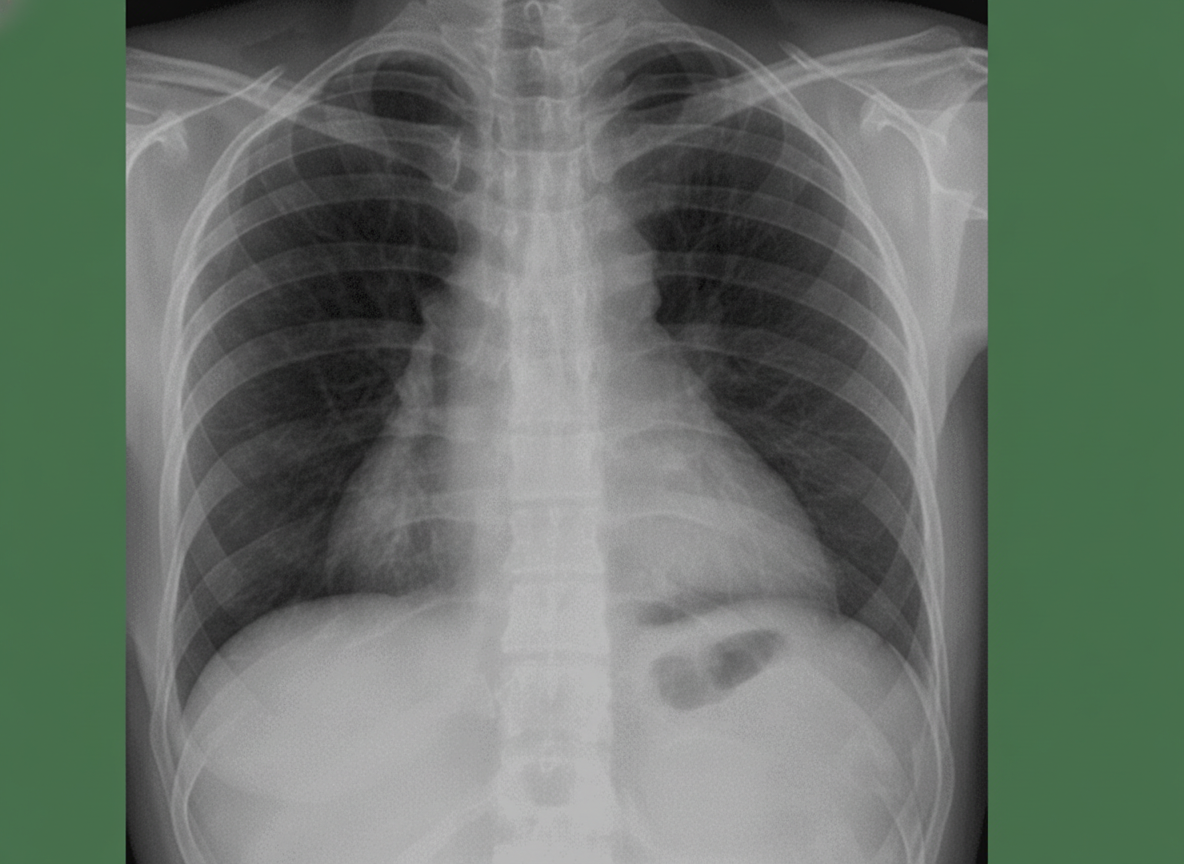
A researcher is investigating the blood supply of the adrenal gland. While performing an autopsy on a patient who died from unrelated causes, he identifies a vessel that supplies oxygenated blood to the inferior aspect of the right adrenal gland. Which of the following vessels most likely gave rise to the vessel in question?
A 65-year-old man presents to the emergency department with abdominal pain and a pulsatile abdominal mass. Further examination of the mass shows that it is an abdominal aortic aneurysm. A computed tomography scan with contrast reveals an incidental finding of a horseshoe kidney, and the surgeon is informed of this finding prior to operating on the aneurysm. Which of the following may complicate the surgical approach in this patient?
Want unlimited practice?
Get full access to all questions, explanations, and performance tracking.
Scan to download app