
Musculoskeletal radiologic landmarks — MCQs

Following a motor vehicle accident, a 63-year-old man is scheduled for surgery. The emergency physician notes a posture abnormality in the distal left lower limb and a fracture-dislocation of the right hip and acetabulum based on the radiology report. The senior orthopedic resident mistakenly notes a fracture dislocation of the left hip. The surgeon's examination of the patient in the operating room shows an externally rotated and shortened left lower limb. The surgeon reduces the left hip and inserts a pin in the left tibia. A review of postoperative imaging leads to a second surgery on the fracture-dislocation of the right hip. Which of the following strategies is most likely to prevent the recurrence of this type of error?
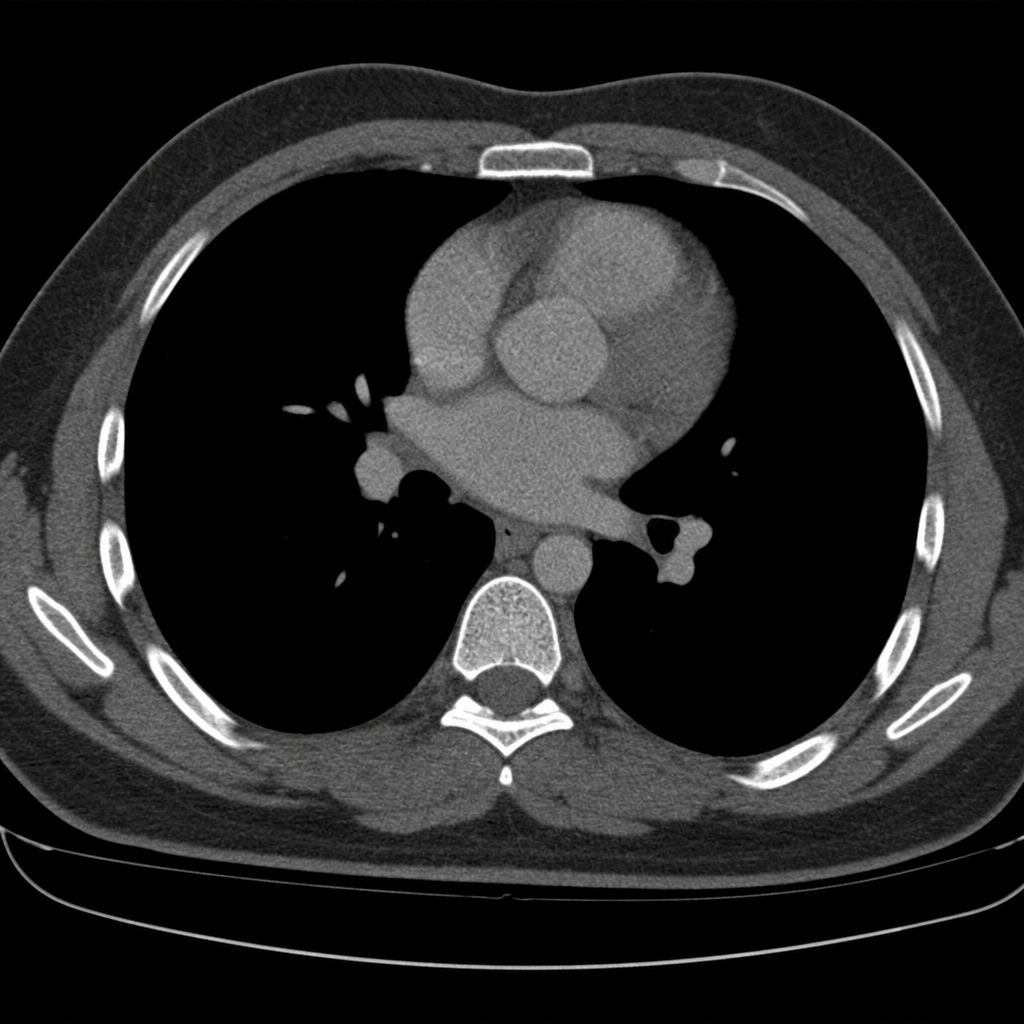
A 40-year-old woman is brought to the emergency department by a paramedic team from the scene of a motor vehicle accident where she was the driver. The patient was restrained by a seat belt and was unconscious at the scene. On physical examination, the patient appears to have multiple injuries involving the trunk and extremities. There are no penetrating injuries to the chest. As part of her trauma workup, a CT scan of the chest is ordered. At what vertebral level of the thorax is this image from?
A 54-year-old man presents to his primary care physician for back pain. His back pain worsens with standing for a prolonged period of time or climbing down the stairs and improves with sitting. Medical history is significant for hypertension, type II diabetes mellitus, and hypercholesterolemia. Neurologic exam demonstrates normal tone, 5/5 strength, and a normal sensory exam throughout the bilateral lower extremity. Skin exam is unremarkable and dorsalis pedis and posterior tibialis pulses are 3+. Which of the following is the best next step in management?
A 25-year-old woman is brought to the emergency department after being involved in a rear-end collision, in which she was the restrained driver of the back car. On arrival, she is alert and active. She reports pain in both knees and severe pain over the right groin. Temperature is 37°C (98.6°F), pulse is 116/min, respirations are 19/min, and blood pressure is 132/79 mm Hg. Physical examination shows tenderness over both knee caps. The right groin is tender to palpation. The right leg is slightly shortened, flexed, adducted, and internally rotated. The remainder of the examination shows no abnormalities. Which of the following is the most likely diagnosis?
A 69-year-old woman presents with pain in her hip and groin. She states that the pain is present in the morning, and by the end of the day it is nearly unbearable. Her past medical history is notable for a treated episode of acute renal failure, diabetes mellitus, obesity, and hypertension. Her current medications include losartan, metformin, insulin, and ibuprofen. The patient recently started taking high doses of vitamin D as she believes that it could help her symptoms. She also states that she recently fell off the treadmill while exercising at the gym. On physical exam you note an obese woman. There is pain, decreased range of motion, and crepitus on physical exam of her right hip. The patient points to the areas that cause her pain stating that it is mostly over the groin. The patient's skin turgor reveals tenting. Radiography is ordered. Which of the following is most likely to be found on radiography?
A 6-month-old boy is brought to the emergency department by his mother, who informs the doctor that her alcoholic husband hit the boy hard on his back. The blow was followed by excessive crying for several minutes and the development of redness in the area. On physical examination, the boy is dehydrated, dirty, and irritable and when the vital signs are checked, they reveal tachycardia. He cries immediately upon the physician touching the area around his left scapula. The doctor strongly suspects a fracture of the 6th, 7th, or 8th retroscapular posterior ribs. Evaluation of his skeletal survey is normal. The clinician is concerned about child abuse in this case. Which of the following is the most preferred imaging technique as the next step in the diagnostic evaluation of the infant?
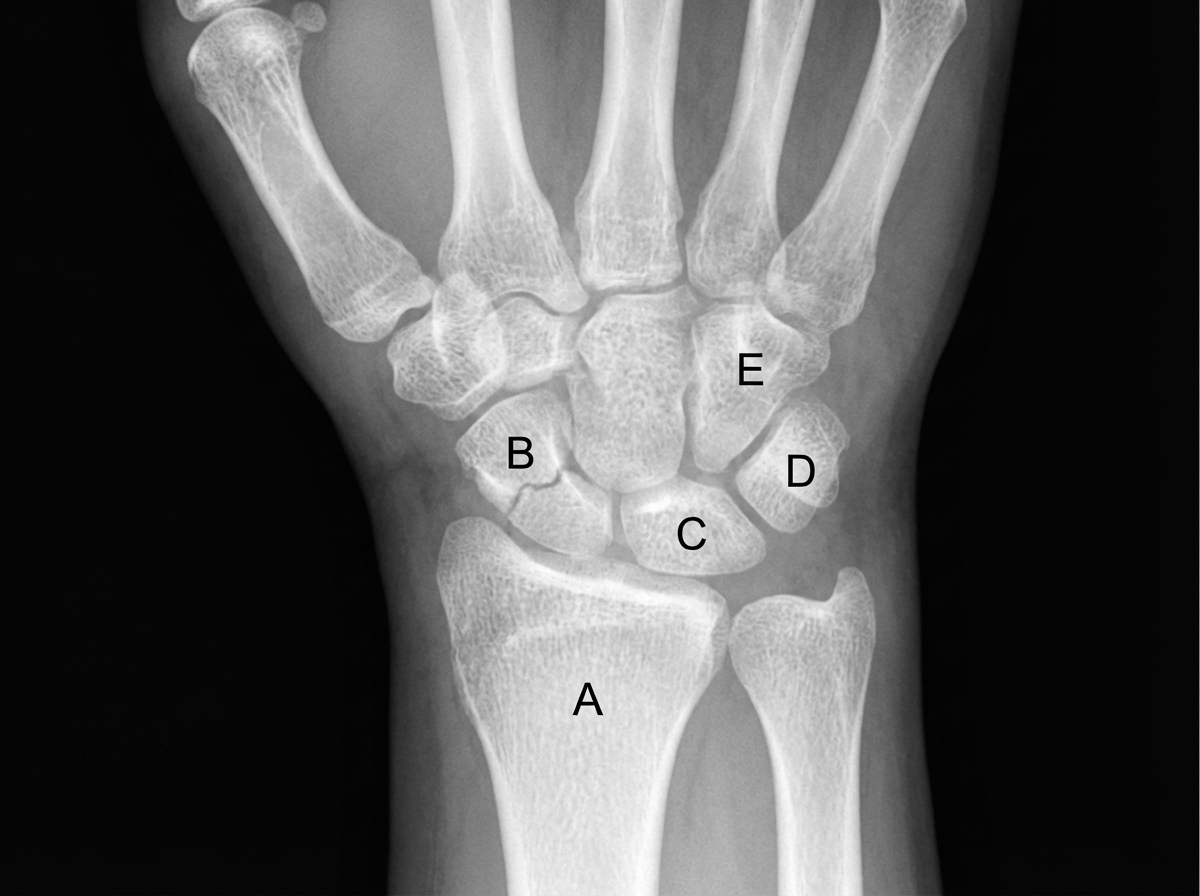
A 33-year-old woman presents to the emergency department with pain in her right wrist. She says she was walking on the sidewalk a few hours ago when she suddenly slipped and landed forcefully on her outstretched right hand with her palm facing down. The patient is afebrile, and vital signs are within normal limits. Physical examination of her right wrist shows mild edema and tenderness on the lateral side of the right hand with a decreased range of motion. Sensation is intact. The patient is able to make a fist and OK sign with her right hand. A plain radiograph of her right wrist is shown in the image. Which of the following bones is most likely fractured in this patient?
A previously healthy 2-year-old boy is brought to the emergency room by his mother because of persistent crying and refusal to move his right arm. The episode began 30 minutes ago after the mother lifted him up by the arms. He appears distressed and is inconsolable. On examination, his right arm is held close to his body in a flexed and pronated position. Which of the following is the most likely diagnosis?
A 25-year-old male presents to his primary care physician for pain in his knee. The patient was in a wrestling match when his legs were grabbed from behind and he was taken to the floor. The patient states that the moment this impact happened, he felt a snapping and sudden pain in his knee. When the match ended and he stood back up, his knee felt unstable. Minutes later, his knee was swollen and painful. Since then, the patient claims that he has felt unstable bearing weight on the leg. The patient has no significant past medical history, and is currently taking a multivitamin and protein supplements. On physical exam you note a tender right knee, with erythema and an effusion. Which of the following is the most likely physical exam finding in this patient?
A 21-year-old man comes to the physician for a follow-up examination. Four days ago, he injured his right knee while playing soccer. Increased laxity of the right knee joint is noted when the knee is flexed to 30° and an abducting force is applied to the lower leg. The examination finding in this patient is most likely caused by damage to which of the following structures?
Want unlimited practice?
Get full access to all questions, explanations, and performance tracking.
Scan to download app