
Abdominal radiologic landmarks — MCQs

A 34-year-old patient presents with severe pain in the right upper quadrant that radiates to the right shoulder. During laparoscopic cholecystectomy, which of the following anatomical spaces must be carefully identified to prevent bile duct injury?
During a surgical procedure to repair an abdominal aortic aneurysm, the surgeon must be careful to avoid injury to which of the following arterial structures that originates near the level of the renal vessels?
A 12-year-old boy is brought to the emergency department late at night by his worried mother. She says he has not been feeling well since this morning after breakfast. He skipped both lunch and dinner. He complains of abdominal pain as he points towards his lower abdomen but says that the pain initially started at the center of his belly. His mother adds that he vomited once on the way to the hospital. His past medical history is noncontributory and his vaccinations are up to date. His temperature is 38.1°C (100.6°F), pulse is 98/min, respirations are 20/min, and blood pressure is 110/75 mm Hg. Physical examination reveals right lower quadrant tenderness. The patient is prepared for laparoscopic abdominal surgery. Which of the following structures is most likely to aid the surgeons in finding the source of this patient's pain and fever?
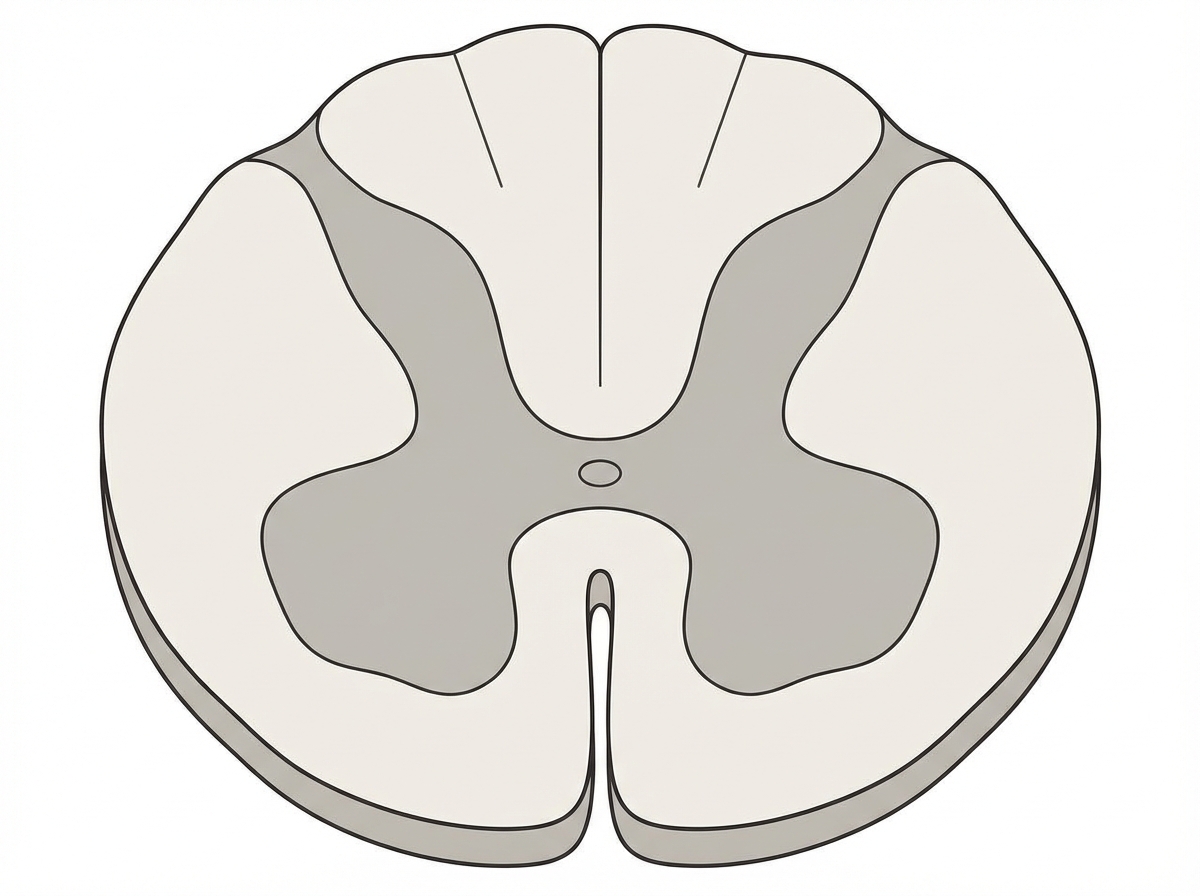
A 45-year-old man is brought to the emergency department by ambulance after a motor vehicle collision. He is not responsive to verbal commands and is unable to provide any history. His pulse is 108/min and regular. Physical examination shows ecchymoses over the neck and back. Neurological examination indicates damage to the spinal cord at the level shown in the illustration. This patient's injury is most likely located at which of the following levels of the spinal cord?
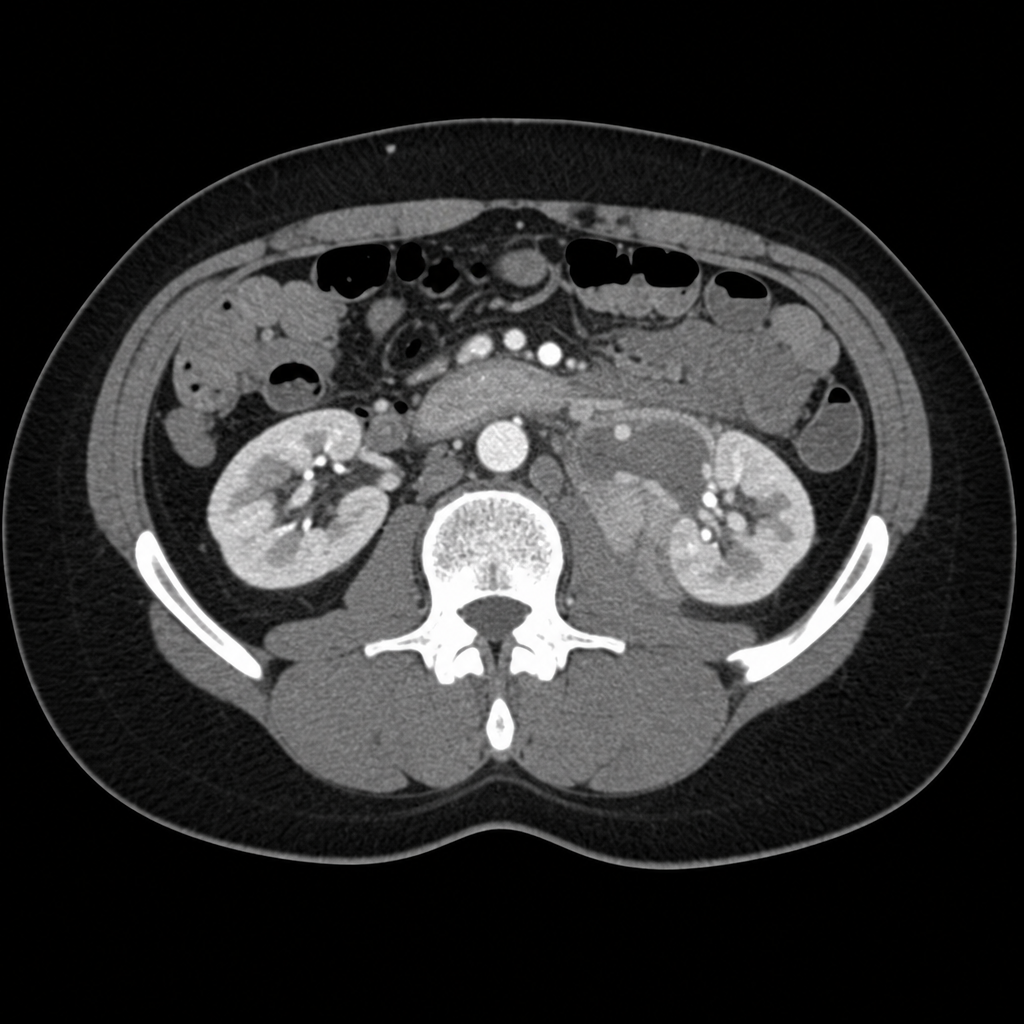
A 35-year-old woman comes to the physician because of progressive left flank pain over the past 2 weeks. She has a history of type 1 diabetes mellitus. Her temperature is 38°C (100.4°F). There is tenderness to percussion along the left flank. Passive extension of the left hip is painful. Her leukocyte count is 16,000/mm3. An axial CT scan is shown. The underlying pathology is most likely located in which of the following anatomical structures?
A 65-year-old woman with atrial fibrillation comes to the emergency department because of sudden-onset severe abdominal pain, nausea, and vomiting for the past 2 hours. She has smoked a pack of cigarettes daily for the past 25 years. Her pulse is 110/min and blood pressure is 141/98 mm Hg. Abdominal examination shows diffuse abdominal tenderness without guarding or rebound. A CT angiogram of the abdomen confirms an acute occlusion in the inferior mesenteric artery. Which of the following structures of the gastrointestinal tract is most likely to be affected in this patient?
A patient undergoes spinal surgery at the L4-L5 level. During the procedure, which of the following ligaments must be divided first to access the spinal canal?
A 65-year-old man presents to the emergency department with vague, constant abdominal pain, and worsening shortness of breath for the past several hours. He has baseline shortness of breath and requires 2–3 pillows to sleep at night. He often wakes up because of shortness of breath. Past medical history includes congestive heart failure, diabetes, hypertension, and hyperlipidemia. He regularly takes lisinopril, metoprolol, atorvastatin, and metformin. His temperature is 37.0°C (98.6°F), respiratory rate 25/min, pulse 67/min, and blood pressure 98/82 mm Hg. On physical examination, he has bilateral crackles over both lung bases and a diffusely tender abdomen. His subjective complaint of abdominal pain is more severe than the observed tenderness on examination. Which of the following vessels is involved in the disease affecting this patient?
A 24-year-old man presents to the emergency department after a motor vehicle accident. The patient was at a stop when he was rear-ended from behind by a vehicle traveling at 11 miles per hour. The patient complains of severe back pain but states he otherwise feels well. The patient is currently seeing a physical therapist who is giving him exercises to alleviate the back pain that is present every morning, relived by activity, and worse with inactivity. He is a student at the university and is struggling with his grades. His temperature is 98.4°F (36.9°C), blood pressure is 117/78 mmHg, pulse is 116/min, respirations are 12/min, and oxygen saturation is 99% on room air. Physical exam demonstrates a decreased range of motion of the patient's spine and tenderness to palpation over the vertebrae. The rest of the exam is deferred due to pain. The patient is requesting a note to excuse him from final exams and work. Which of the following is the most likely diagnosis in this patient?
A CT scan of the abdomen reveals a mass in the pancreatic uncinate process. Which of the following structures is most likely to be compressed by this mass?
Want unlimited practice?
Get full access to all questions, explanations, and performance tracking.
Scan to download app