
Pharyngeal clefts — MCQs

A 20-year-old man presents with a painless neck mass that has gradually increased in size. The mass is anteromedial to the right sternocleidomastoid muscle and has been present for 3 years. The mass increased in size and became more tender following an upper respiratory infection. An ultrasound of the neck identifies a single, round cystic mass with uniform, low echogenicity, and no internal septations. A contrast-enhanced CT scan of the neck shows a homogeneous mass with low attenuation centrally and with smooth rim enhancement. Which of the following is the most likely diagnosis?
A 4-year-old girl is brought by her mother to the pediatrician for neck drainage. The mother reports that the child has always had a small pinpoint opening on the front of her neck, though the opening has never been symptomatic. The child developed a minor cold approximately 10 days ago which resolved after a week. However, over the past 2 days, the mother has noticed clear thick drainage from the opening on the child’s neck. The child is otherwise healthy. She had an uncomplicated birth and is currently in the 45th and 40th percentiles for height and weight, respectively. On examination, there is a small opening along the skin at the anterior border of the right sternocleidomastoid at the junction of the middle and lower thirds of the neck. There is some slight clear thick discharge from the opening. Palpation around the opening elicits a cough from the child. This patient’s condition is caused by tissue that also forms which of the following?
A 7-year-old boy is brought to the emergency department with a high fever and oxygen desaturation. He had a tracheostomy placed as an infant and has been placed on mechanical ventilation intermittently. Since then, he has had several bouts of pneumonia similar to his current presentation. In addition, he has been deaf since birth but is able to communicate through sign language. He attends school and performs above average for his grade. Physical exam reveals underdeveloped cheekbones, hypoplasia of the mandible, and malformed ears. Abnormal development of which of the following structures is most likely responsible for this patient's symptoms?
A 25-year-old man presents to the clinic with a midline swelling in his neck. He is unsure about when it appeared. He denies any difficulty with swallowing or hoarseness. His past medical history is insignificant. On physical examination, there is a 1 cm x 2 cm firm mildly tender nodule on the anterior midline aspect of the neck which moves with deglutition and elevates with protrusion of the tongue. Which of the following is the most likely embryologic origin of the nodule in this patient?
An investigator is studying the teratogenicity of cigarette smoking during pregnancy. He reviews several databases containing data about birth defects and prenatal drug exposures and finds that infants exposed to cigarette smoke in utero are approximately 2 times as likely to have a particular birth defect than unexposed infants. This defect results from abnormal development during the 6th week of gestation, when the maxillary prominences grow medially and fuse first with the lateral and then the medial nasal prominence. The defect is most likely which of the following?
A patient was admitted with skull base trauma. The doctor was testing the marked structure in the pharyngeal region. Which of the following nerves was being tested?
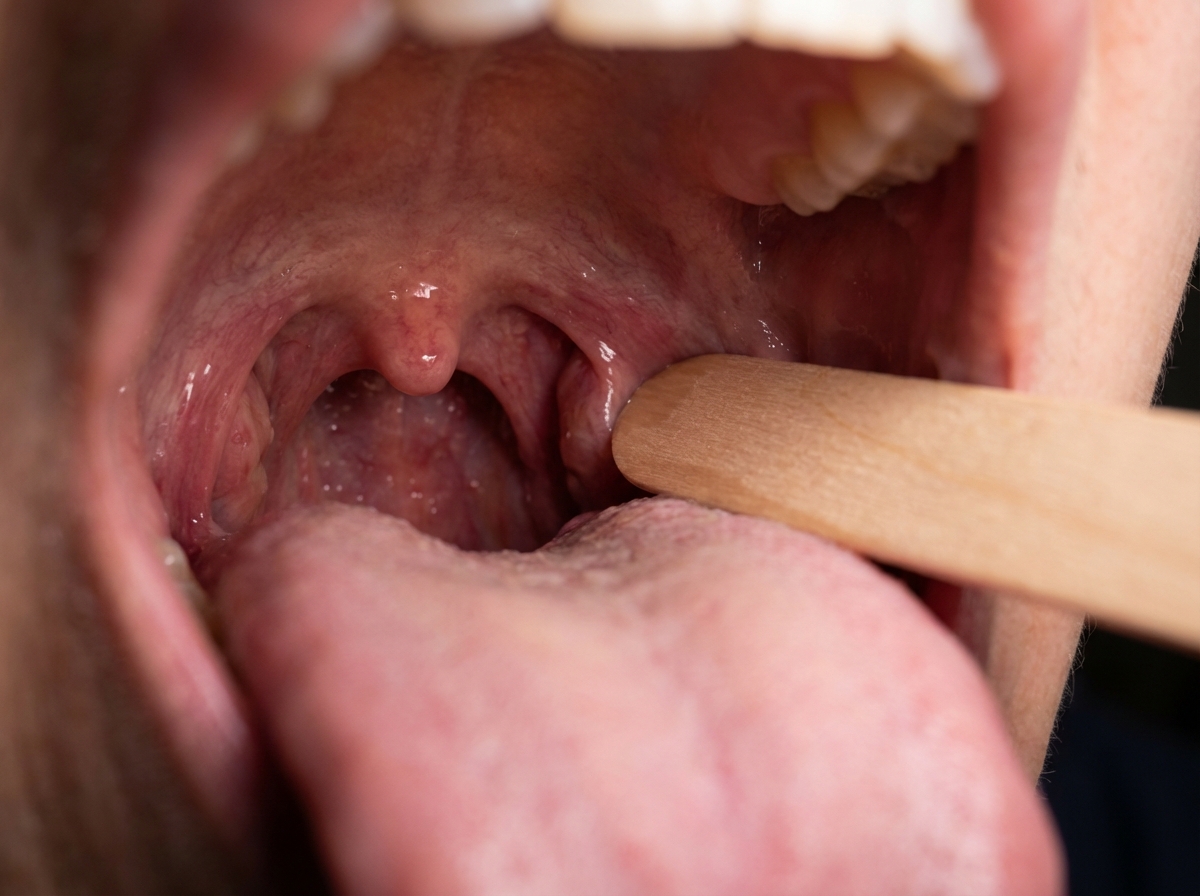
A 78-year-old man comes to the physician because of a change in his voice. His wife says his voice has progressively become higher pitched, and he has had a 5.4-kg (11.9-lb) weight loss over the past 4 months. He has smoked half a pack of cigarettes daily for the past 40 years. Direct laryngoscopy shows an irregular, nodular glottic mass. A biopsy specimen of the mass shows poorly differentiated squamous cells with nuclear atypia, hyperkeratosis, and disruption of the basement membrane. Involvement of a muscle derived from which of the following branchial arches is the most likely cause of his symptoms?
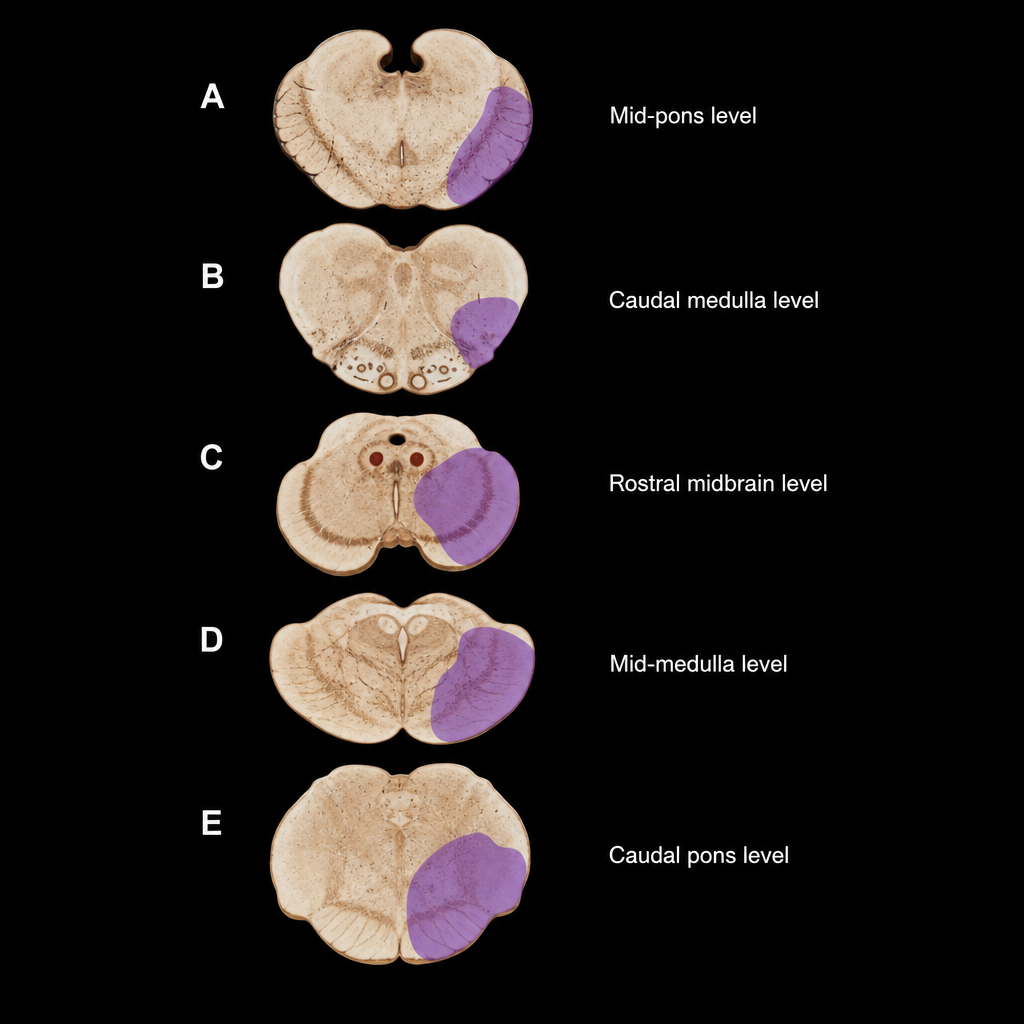
The axial brainstem section shown in the image demonstrates a focal infarct (shaded region) at the level indicated by the label. The patient presents with ipsilateral facial numbness, ipsilateral Horner syndrome, dysphagia, and contralateral loss of pain and temperature sensation in the limbs. At which labelled axial level does this lesion reside, and which artery is most likely occluded?
A 64-year-old woman presents to an endocrinologist after her second time having a kidney stone in the last year. The patient reports no other symptoms except overall fatigue. On evaluation, the patient’s temperature is 98.4°F (36.9°C), blood pressure is 120/76 mmHg, pulse is 72/min, and respirations are 12/min. The patient has no neck masses and no tenderness to palpation in the abdomen. On laboratory workup, the endocrinologist finds that the patient has elevated parathyroid hormone levels and serum calcium. For surgical planning, the patient undergoes a sestamibi scan, which localizes disease to an area near the superior aspect of the thyroid in the right neck. Which of the following is the embryologic origin of this tissue?
Want unlimited practice?
Get full access to all questions, explanations, and performance tracking.
Scan to download app