
Spinal cord organization — MCQs

A 65-year-old woman comes to the physician for the evaluation of sharp, stabbing pain in the lower back for 3 weeks. The pain radiates to the back of her right leg and is worse at night. She reports decreased sensation around her buttocks and inner thighs. During the last several days, she has had trouble urinating. Three years ago, she was diagnosed with breast cancer and was treated with lumpectomy and radiation. Her only medication is anastrozole. Her temperature is 37°C (98.6°F), pulse is 80/min, respirations are 12/min, and blood pressure is 130/70 mm Hg. Neurologic examination shows 4/5 strength in the left lower extremity and 2/5 strength in her right lower extremity. Knee and ankle reflexes are 1+ on the right. The resting anal sphincter tone is normal but the squeeze tone is reduced. Which of the following is the most likely diagnosis?
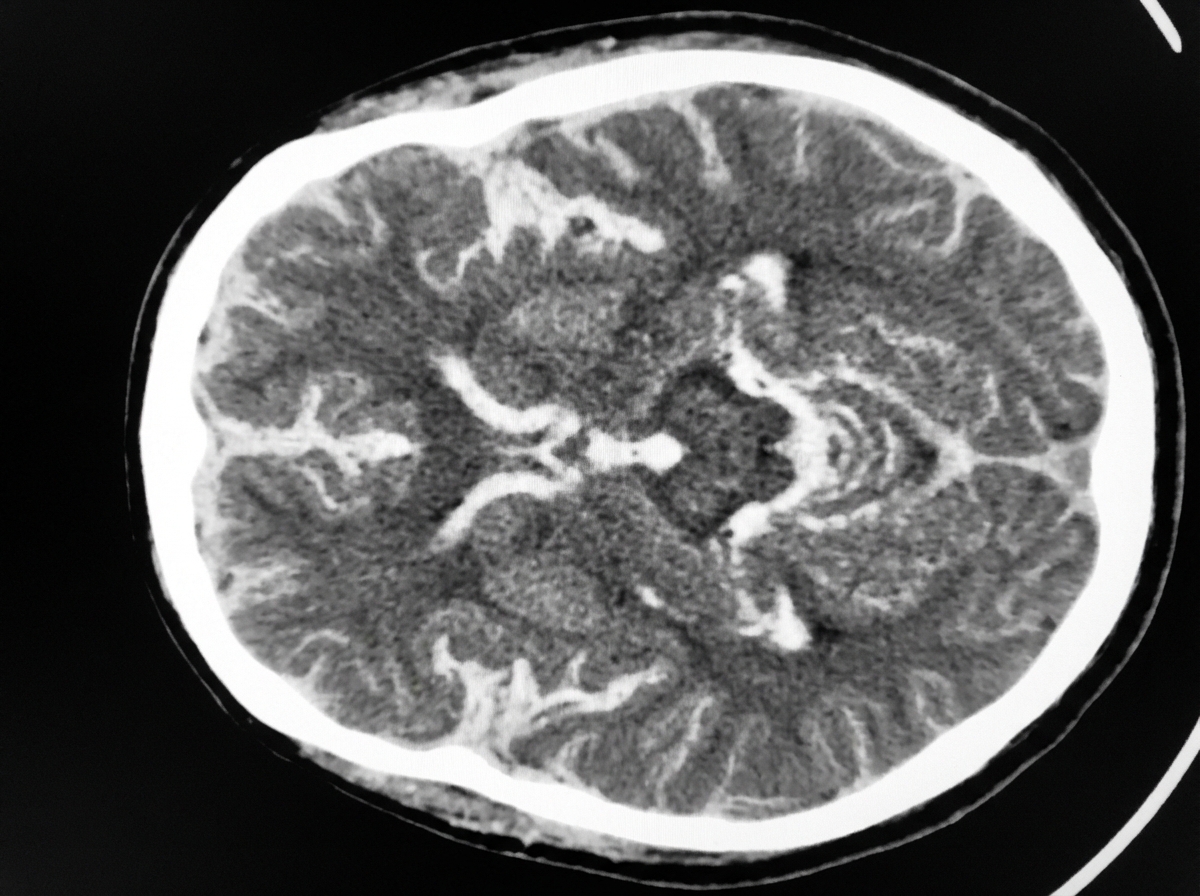
A 54-year-old man is brought to the emergency department 30 minutes after being hit by a car while crossing the street. He had a left-sided tonic-clonic seizure and one episode of vomiting while being transported to the hospital. On arrival, he is not oriented to person, place, or time. Physical examination shows flaccid paralysis of all extremities. A CT scan of the head is shown. This patient's symptoms are most likely the result of a hemorrhage in which of the following structures?
A 20-year-old man is brought to the emergency department 20 minutes after he sustained a stab wound to his back during an altercation. He reports weakness and numbness of the lower extremities. He has no history of serious illness. On arrival, he is alert and cooperative. His pulse is 90/min, and blood pressure is 100/65 mm Hg. Examination shows a deep 4-cm laceration on his back next to the vertebral column at the level of the T10 vertebra. Neurologic examination shows right-sided motor weakness with diminished vibratory sense ipsilaterally, decreased sensation to light touch at the level of his laceration and below, and left-sided loss of hot, cold, and pin-prick sensation at the level of the umbilicus and below. Deep tendon reflexes of his right lower extremity are 4+ and symmetrical. Babinski sign is absent bilaterally. The remainder of the examination shows no abnormalities. Which of the following is the most likely diagnosis?
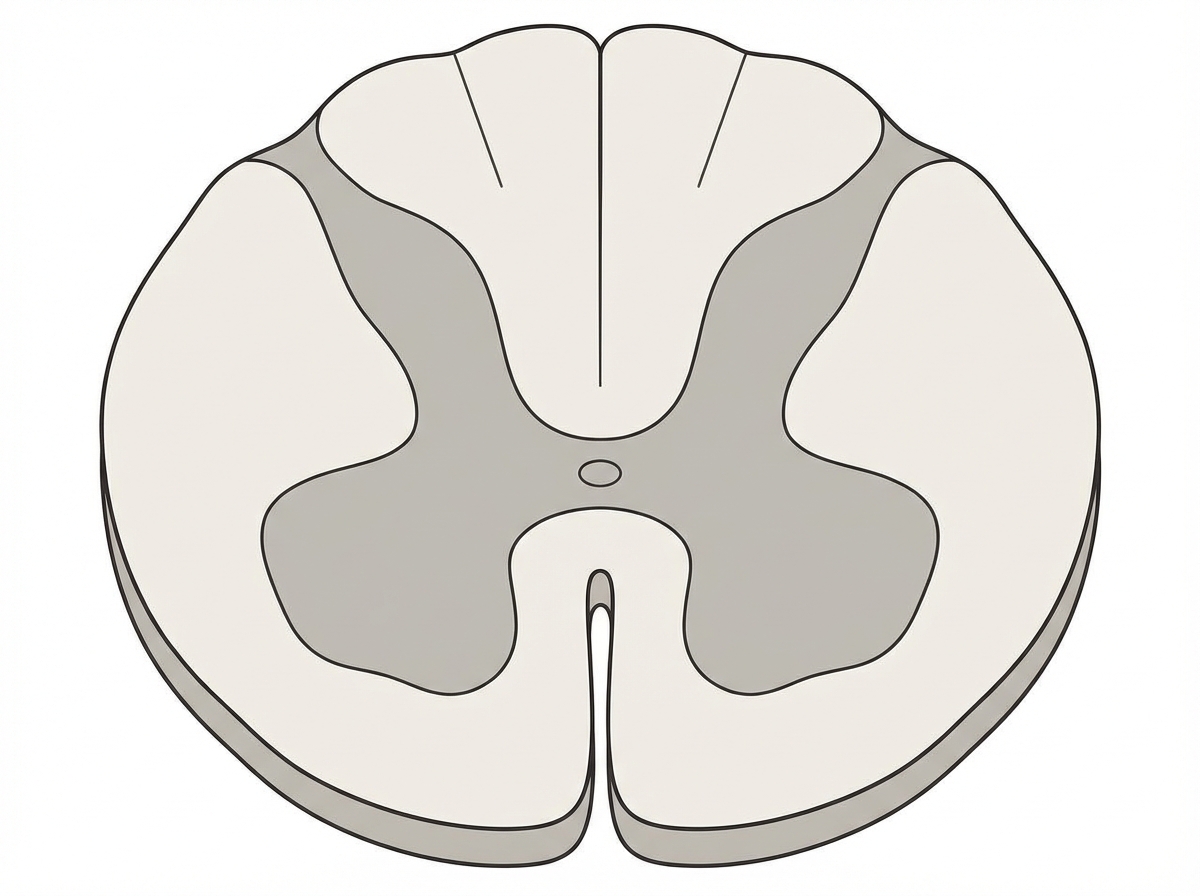
A 45-year-old man is brought to the emergency department by ambulance after a motor vehicle collision. He is not responsive to verbal commands and is unable to provide any history. His pulse is 108/min and regular. Physical examination shows ecchymoses over the neck and back. Neurological examination indicates damage to the spinal cord at the level shown in the illustration. This patient's injury is most likely located at which of the following levels of the spinal cord?
A 22-year-old man is rushed to the emergency department after a motor vehicle accident. The patient states that he feels weakness and numbness in both of his legs. He also reports pain in his lower back. His airway, breathing, and circulation is intact, and he is conversational. Neurologic exam is significant for bilateral lower extremity flaccid paralysis and impaired pain and temperature sensation up to T10-T11 with normal vibration sense. A computerized tomography scan of the spine is performed which shows a vertebral burst fracture of the vertebral body at the level of T11. Which of the following findings is most likely present in this patient?
A 47-year-old man comes to the emergency department because of urinary and fecal incontinence for 6 hours. Earlier in the day, he suffered a fall at a construction site and sustained injuries to his back and thighs but did not seek medical attention. He took ibuprofen for lower back pain. His temperature is 36.9°C (98.4°F), pulse is 80/min, and blood pressure is 132/84 mm Hg. Examination shows tenderness over the lumbar spine, bilateral lower extremity weakness, absent ankle jerk reflexes, and preserved patellar reflexes. There is decreased rectal tone. An ultrasound of the bladder shows a full bladder. Which of the following is the most likely diagnosis?
A 22-year-old man is brought to the emergency department after he was impaled by a metal rod during a work accident. The rod went into his back around the level of T9 but was removed before arrival. He has no past medical history and does not take any medications. On physical examination, he has significant muscle weakness in his entire left lower body. He also exhibits impaired vibration and proprioception in his left leg as well as loss of pain and temperature sensation in his right leg. Which of the following sections of the spinal cord was most likely damaged in this patient?
An MRI of a patient with low back pain reveals compression of the L5 nerve root. Which of the following muscles would most likely show weakness during physical examination?
Where does the only cranial nerve without a thalamic relay nucleus enter the skull?
A 55-year-old construction worker falls off a 2-story scaffolding and injures his back. His coworkers bring him to the urgent care clinic within 30 minutes of the fall. He complains of left lower-limb weakness and loss of sensation in the right lower limb. He does not have any past medical history. His vital signs are stable. A neurologic examination reveals a total loss of motor function when testing left knee extension, along with the left-sided loss of light touch sensation from the mid-thigh and below. There is a right-sided loss of pin-prick sensation of the lateral leg and entire foot. At this time of acute injury, what other finding is most likely to be found in this patient?
Want unlimited practice?
Get full access to all questions, explanations, and performance tracking.
Scan to download app