
Histology of blood and hematopoiesis — MCQs

A 66-year-old man comes to the physician for a 3-month history of fatigue. He has hypertension and hyperlipidemia. He had a transient ischemic attack 3 years ago. He drinks 3 beers a day, and sometimes a couple more on social occasions. He currently takes aspirin, simvastatin, hydrochlorothiazide, and metoprolol. His temperature is 37.1°C (98.8°F), pulse is 78, respirations are 19/min, and oxygen saturation on room air is 97%. He is in no distress but shows marked pallor and has multiple pinpoint, red, nonblanching spots on his extremities. On palpation, his spleen is significantly enlarged. Laboratory studies show a hemoglobin of 8.0 g/dL, a leukocyte count of 80,000/mm3, and a platelet count of 34,000/mm3. A blood smear shows immature cells with large, prominent nucleoli and pink, elongated, needle-shaped cytoplasmic inclusions. Which of the following is the most likely diagnosis?
During the third week of development, the blastocyst undergoes a variety of differentiation processes responsible for the formation of the gastrula and, eventually, the embryo. This differentiation creates cell lineages that eventually become a variety of body systems. What cell lineage, present at this date, is responsible for the formation of the liver?
An investigator is studying the immune response and the spleen in a mouse model infected with Escherichia coli. Which of the following anatomical sites in the spleen is important for the secondary maturation and affinity maturation of B cells that will ultimately target Escherichia coli?
A 12-year-old boy presents to the emergency department with a recent history of easy bleeding. He experienced multiple episodes of epistaxis and bleeding gums over the past two days. He also had flu-like symptoms a week ago which resolved over the past few days. His past medical history is notable for well-controlled asthma. His temperature is 98.9°F (37°C). Physical examination is notable for a petechial rash. No splenomegaly is noted. A coagulation panel reveals an elevation in bleeding time with normal PT and PTT. The blood component that is most likely deficient in this patient contains granules of which of the following?
A 7-year-old girl presents to a new pediatrician with fever, shortness of breath, and productive cough. She had similar symptoms a few weeks ago. The girl was born at 39 weeks gestation via spontaneous vaginal delivery. She is up to date on all vaccines and is meeting all developmental milestones. A further review of her history reveals seizures, upper respiratory infections, and cellulitis. On physical examination, the patient is pale with white-blonde hair and pale blue eyes. Which of the following would you expect to see on a peripheral blood smear for this patient?
A 72-year-old woman comes to the physician because of a 1-month history of progressive fatigue and shortness of breath. Physical examination shows generalized pallor. Laboratory studies show: Hemoglobin 5.8 g/dL Hematocrit 17% Mean corpuscular volume 86 μm3 Leukocyte count 6,200/mm3 with a normal differential Platelet count 240,000/mm3 A bone marrow aspirate shows an absence of erythroid precursor cells. This patient’s condition is most likely associated with which of the following?
A 34-year-old man comes to the physician because of blurry vision and fatigue for 2 months. During this period, he has also had occasional bleeding from his gums after brushing his teeth. One month ago, he was diagnosed with deep vein thrombosis after returning from an overseas business meeting. His pulse is 118/min, respirations are 19/min, and blood pressure is 149/91 mm Hg. Pulse oximetry on room air shows an oxygen saturation of 97%. Examination shows bluish discoloration of the lips. The tip of the spleen is palpable 1 cm below the left costal margin. Sensory examination of the hands shows paresthesia. Hemoglobin concentration is 18 g/dL, hematocrit is 65%, leukocytes are 15,000/μL, and platelets are 470,000/μL. His serum erythropoietin concentration is decreased. Activation of which of the following is the most likely underlying cause of this patient's condition?
A 30-year-old man is admitted to the hospital with a presumed pneumonia and started on antibiotics. Two days later, the patient shows no improvement. Blood cultures reveal yeast with pseudophyphae. Which of the following cell types is most likely deficient or dysfunctional in this patient?
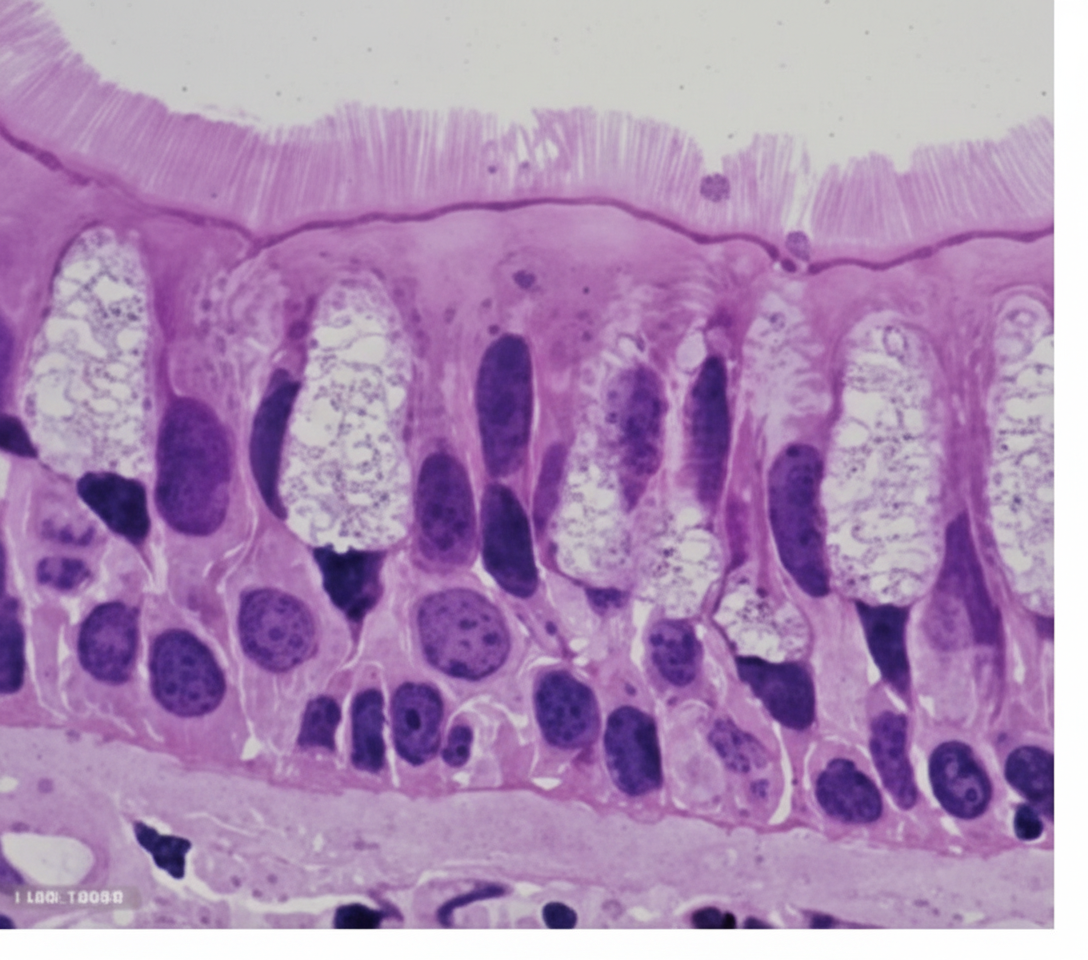
This type of epithelium is most commonly seen in which of the following organs?
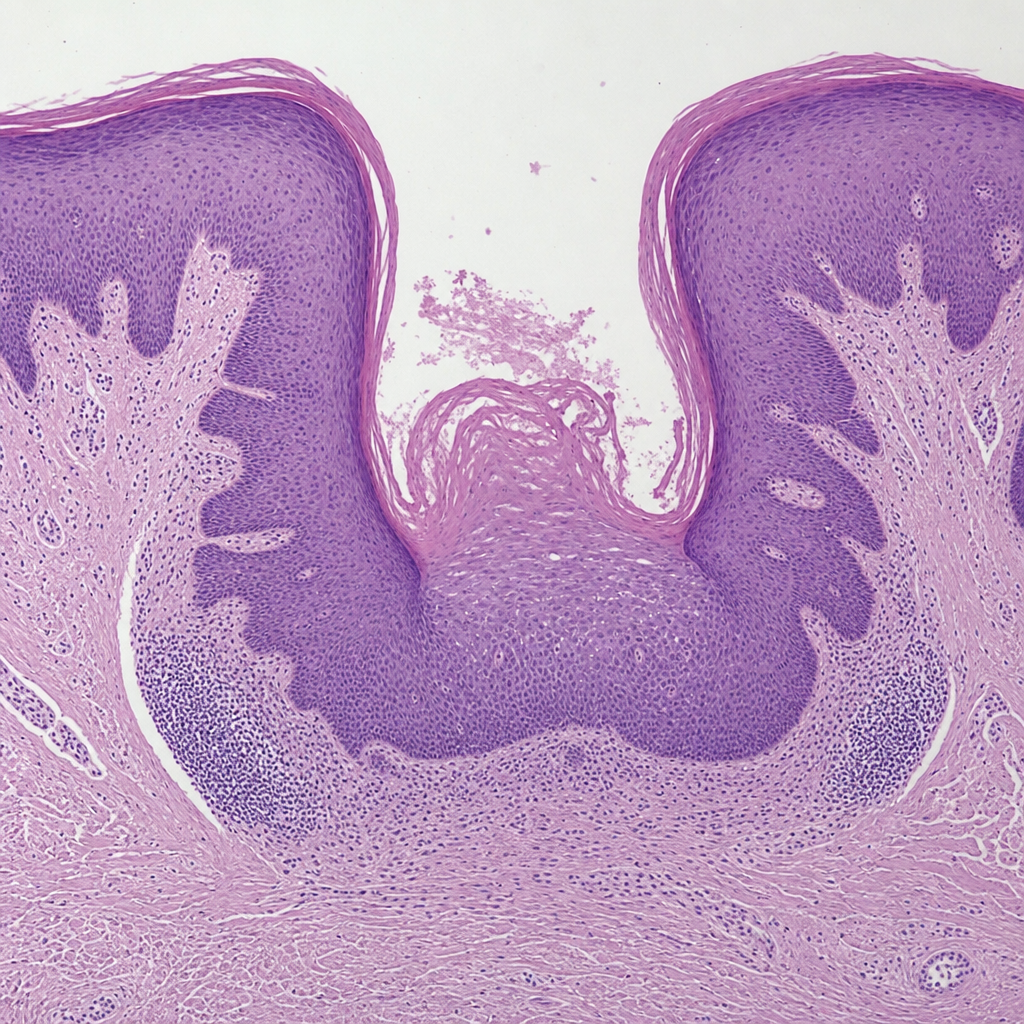
Identify the type of papillae of the tongue shown in the histological image below:
Want unlimited practice?
Get full access to all questions, explanations, and performance tracking.
Scan to download app