
Electron microscopy in histology — MCQs

A scientist is studying the anatomy and function of bone growth. He is able to create a cell line of osteocytes with a mutation that prevents the osteocytes from exchanging nutrients and waste products within neighboring lamellae. This mutation most likely affected which of the following cell structures?
A 42-year-old man presents to his primary care provider complaining of foamy urine for the last 2 weeks. He has also begun to notice swelling in his hands and feet, and he says that his shoes have not been fitting normally. On exam, the patient has a temperature of 98.8°F (37.1°C), blood pressure is 132/84 mmHg, pulse is 64/min, and respirations are 12/min. The patient has 2+ pitting edema bilaterally up to his shins. A 24-hour urine study is found to contain 9.0 g of protein. The patient is referred to a specialist and undergoes a renal biopsy. On light microscopy, the glomeruli demonstrate basement membrane thickening. On electron microscopy, subepithelial deposits are seen. Which of the following is a characteristic of this patient’s disease?
An investigator is studying the interaction between epithelial cells and calcium ion concentration. When the calcium ion concentration available to a sample of epithelial tissue is decreased, an increased gap between adjacent epithelial cells is seen on electron microscopy. This observed decrease in cell adhesion is most likely due to an effect on which of the following proteins?
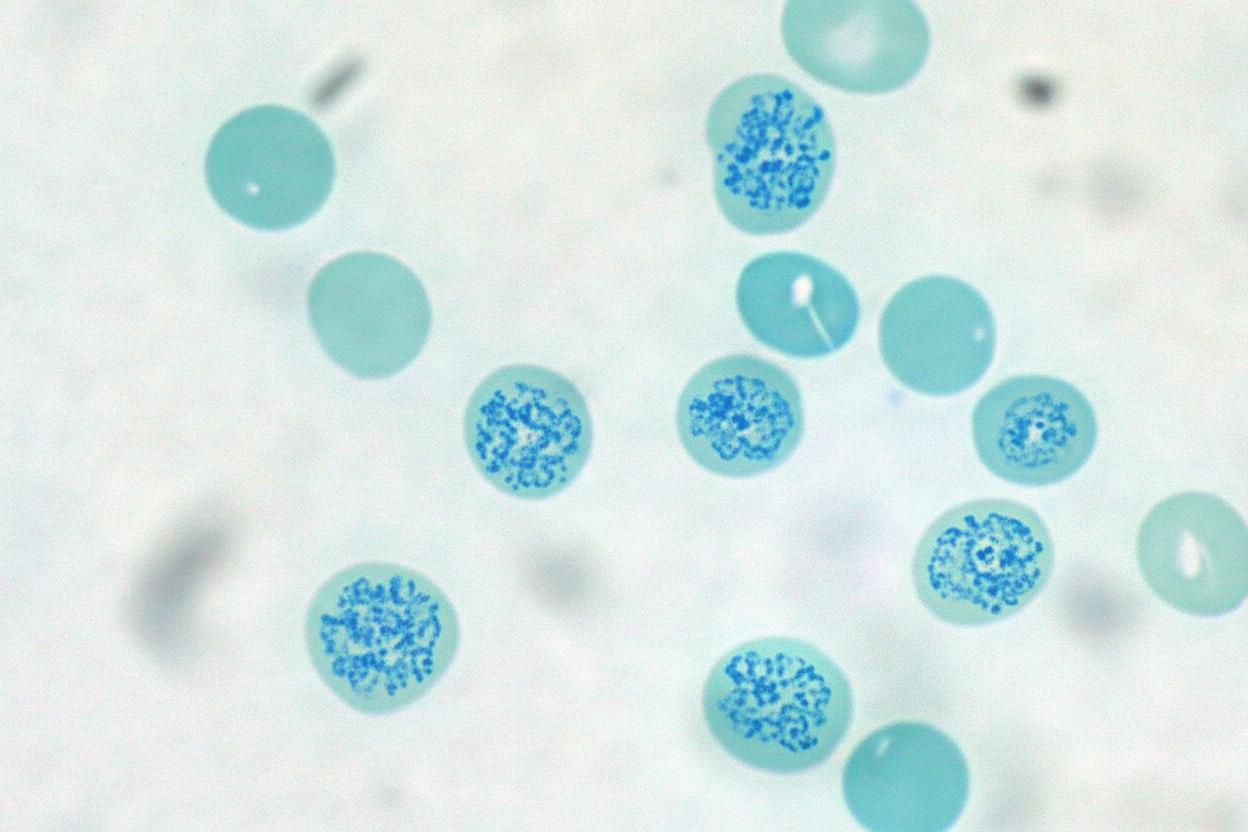
A 59-year-old woman with a history of chronic kidney disease comes to the physician for a 3-month history of easy fatiguability. Physical examination shows subconjunctival pallor. Her hemoglobin concentration is 8.9 g/dL, mean corpuscular volume is 86 μm3, and serum ferritin is 225 ng/mL. Treatment with erythropoietin is begun. A peripheral blood smear is obtained one week after treatment. A photomicrograph of the smear after specialized staining is shown. The prominent color of the intracellular structure in some of the cells is most likely the result of staining which of the following?
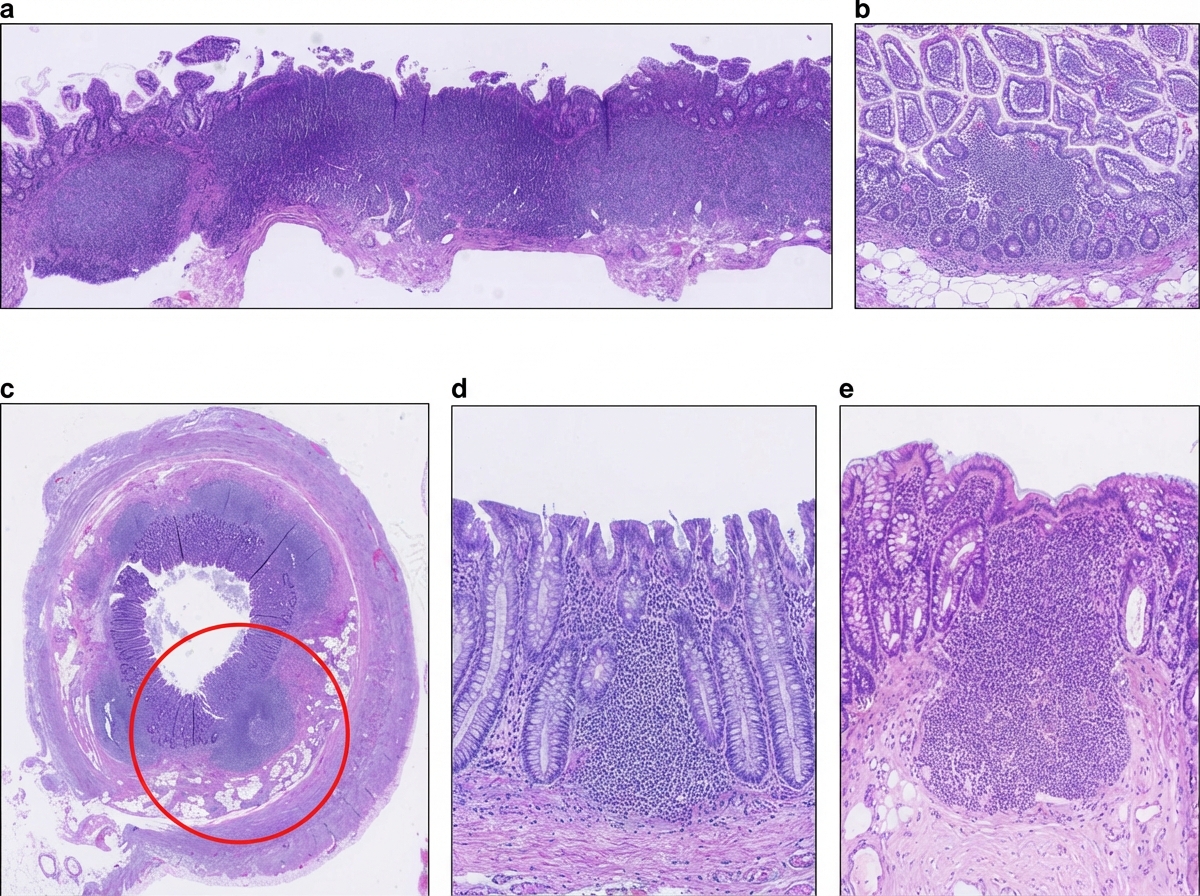
A 36-year-old man undergoes ileocecal resection after a gunshot injury. The resected ileocecal segment is sent for histological evaluation. One of the slides derived from the specimen is shown in the image. Which of the following statements regarding the structure marked within the red circle is correct?
A 45-year-old man presents to the office with complaints of facial puffiness and mild swelling in his lower back. He denies chest pain, blood in the urine, or fever. He was recently diagnosed with colon cancer. The vital signs include a blood pressure of 122/78 mm Hg, a pulse of 76/min, a temperature of 36.9°C (98.4°F), and a respiratory rate of 10/min. On physical examination, there is mild facial puffiness that is pitting in nature and presacral edema. His other systemic findings are within normal limits. Urinalysis shows: pH 6.2 Color light yellow RBC none WBC 3–4/HPF Protein 4+ Cast oval fat bodies Glucose absent Crystal none Ketone absent Nitrite absent 24 hours urine protein excretion 4.8 g A renal biopsy is ordered and diffuse capillary and basement membrane thickening is noted. Which of the following findings is expected to be present if an electron microscopy of the biopsy sample is performed?
An investigator is studying the effects of zinc deprivation on cancer cell proliferation. It is hypothesized that because zinc is known to be a component of transcription factor motifs, zinc deprivation will result in slower tumor growth. To test this hypothesis, tumor cells are cultured on media containing low and high concentrations of zinc. During the experiment, a labeled oligonucleotide probe is used to identify the presence of a known transcription factor. The investigator most likely used which of the following laboratory techniques?
A 4-year-old male is accompanied by his mother to the pediatrician. His mother reports that over the past two weeks, the child has had intermittent low grade fevers and has been more lethargic than usual. The child’s past medical history is notable for myelomeningocele complicated by lower extremity weakness as well as bowel and bladder dysfunction. He has been hospitalized multiple times at an outside facility for recurrent urinary tract infections. The child is in the 15th percentile for both height and weight. His temperature is 100.7°F (38.2°C), blood pressure is 115/70 mmHg, pulse is 115/min, and respirations are 20/min. Physical examination is notable for costovertebral angle tenderness that is worse on the right. Which of the following would most likely be found on biopsy of this patient’s kidney?
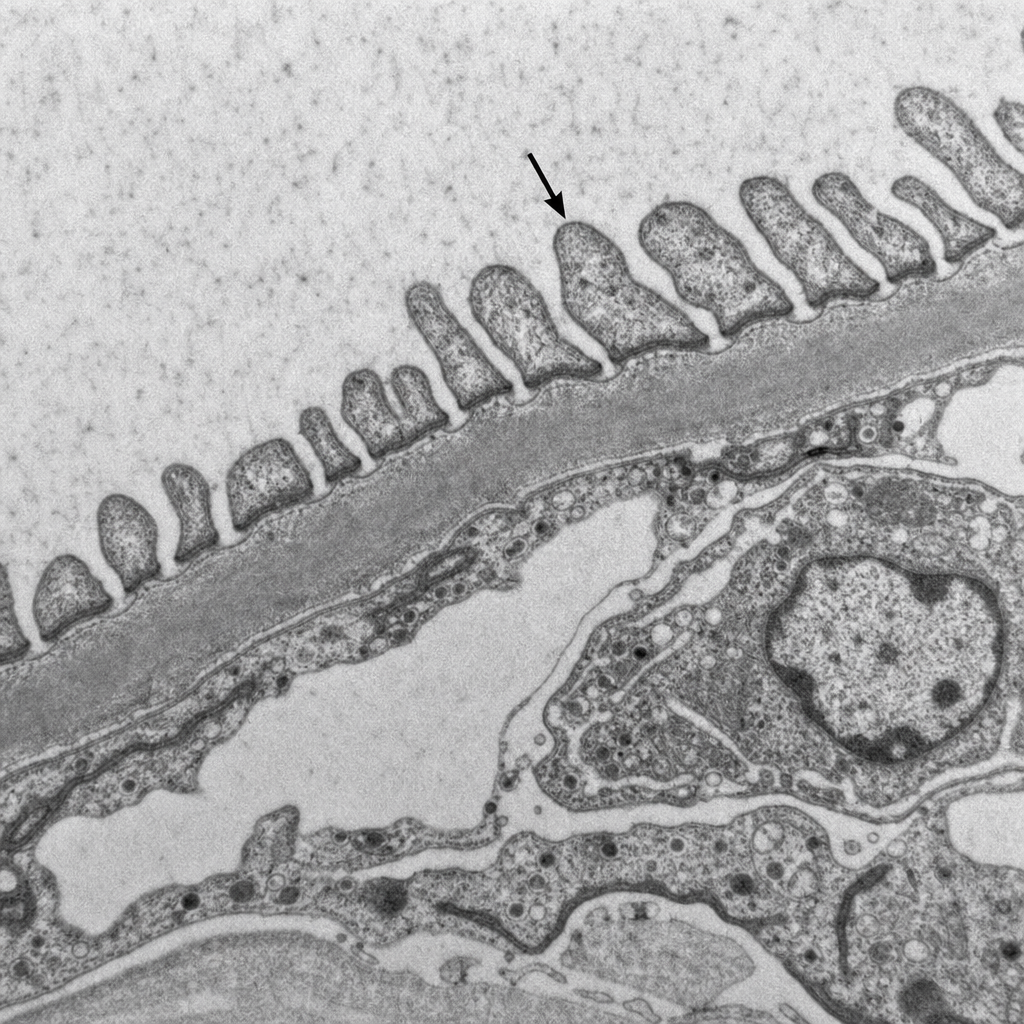
A 12-year-old male presents to the emergency department following several days of facial edema. A urinalysis confirms proteinuria and hematuria. Once admitted, a kidney biopsy is viewed under an electron microscope to confirm the diagnosis of minimal change disease. In the following electron micrograph, what process occurs in the structure marked with an arrow?
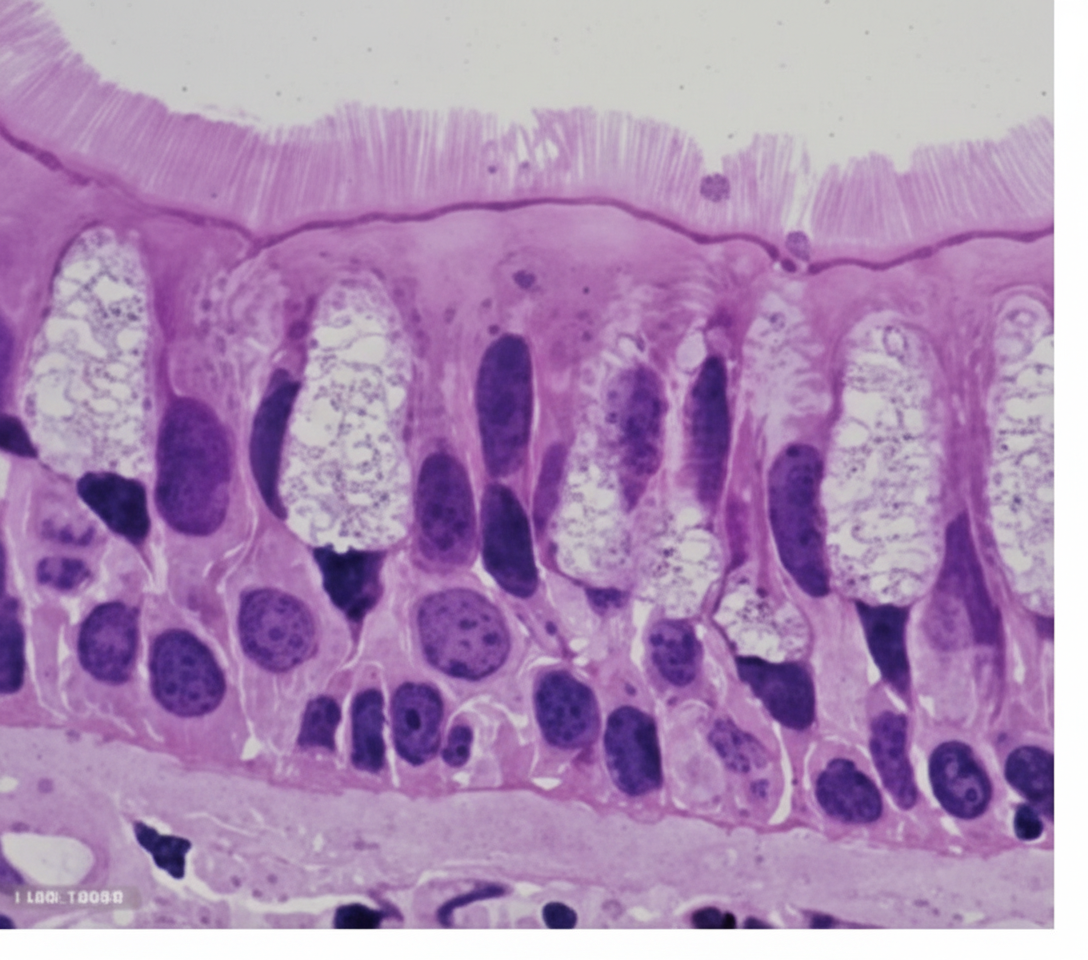
This type of epithelium is most commonly seen in which of the following organs?
Want unlimited practice?
Get full access to all questions, explanations, and performance tracking.
Scan to download app