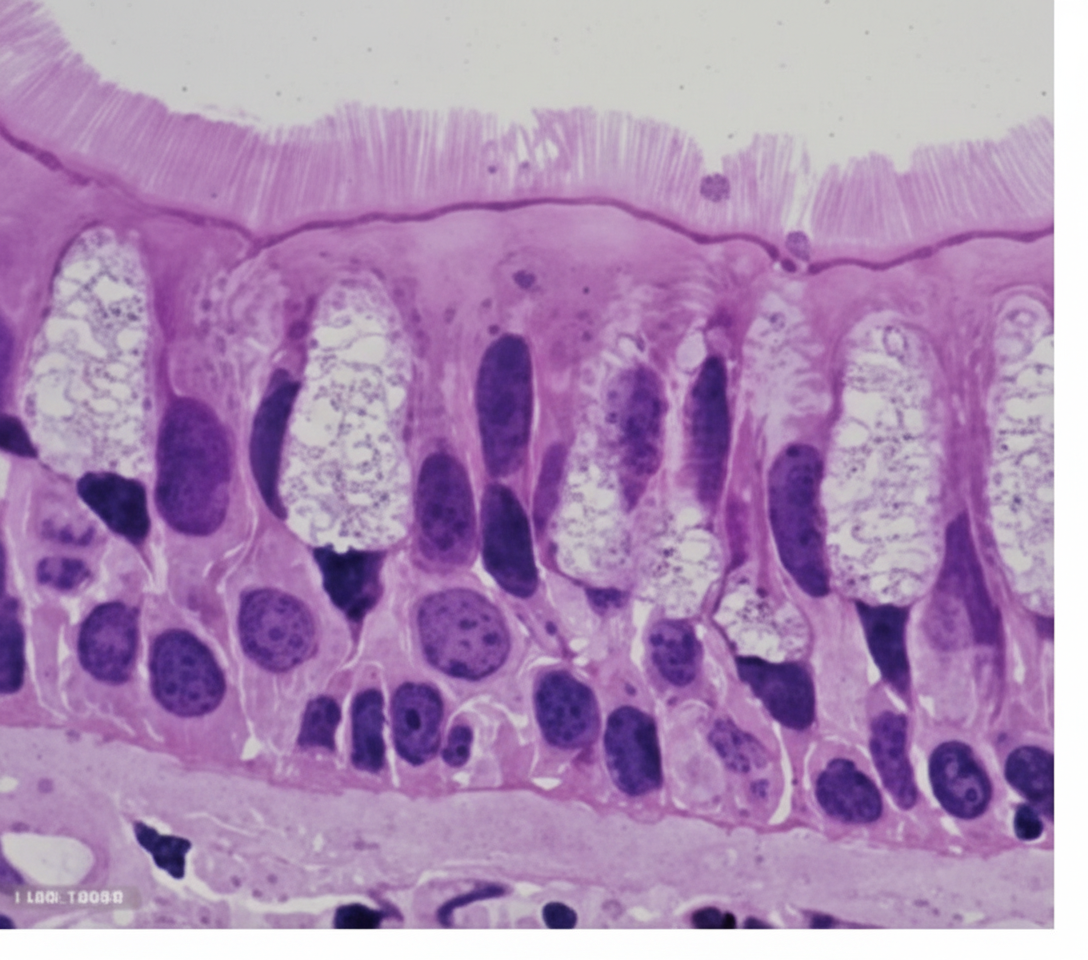
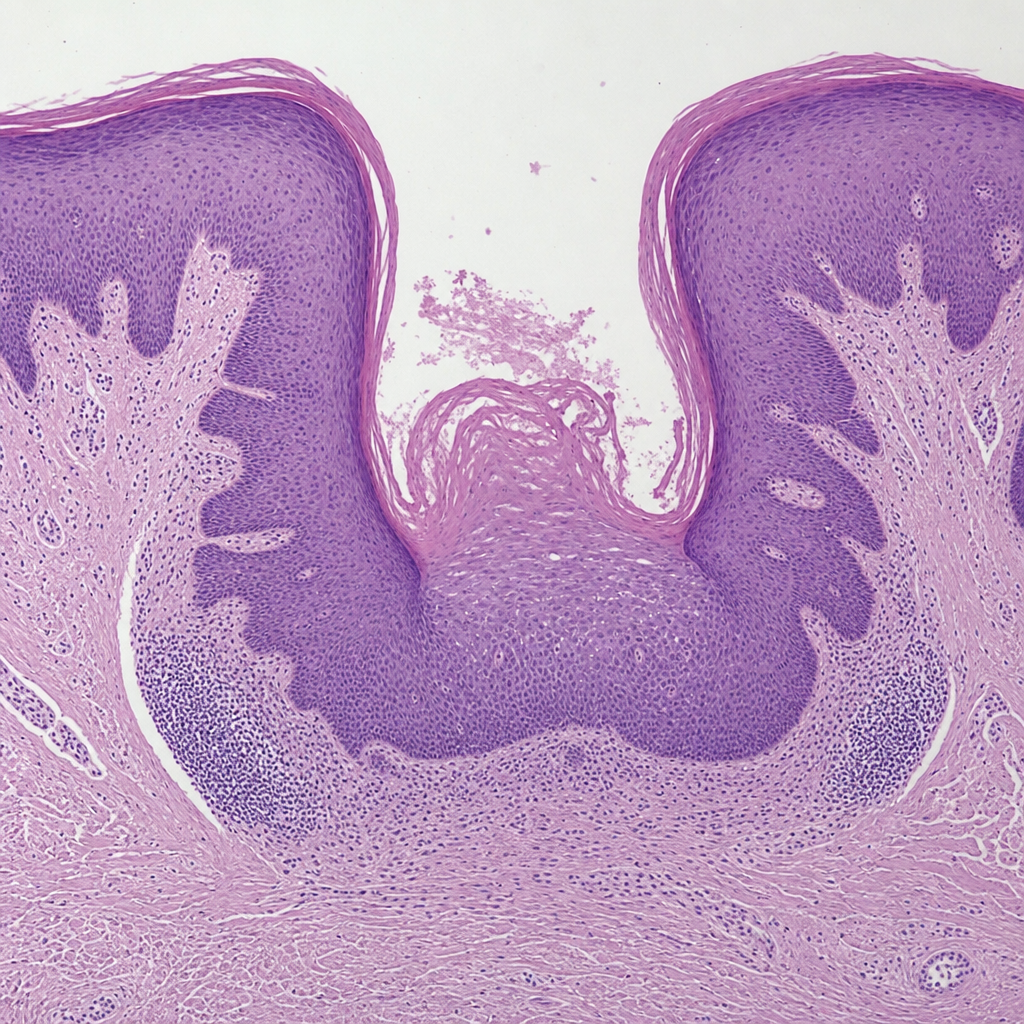
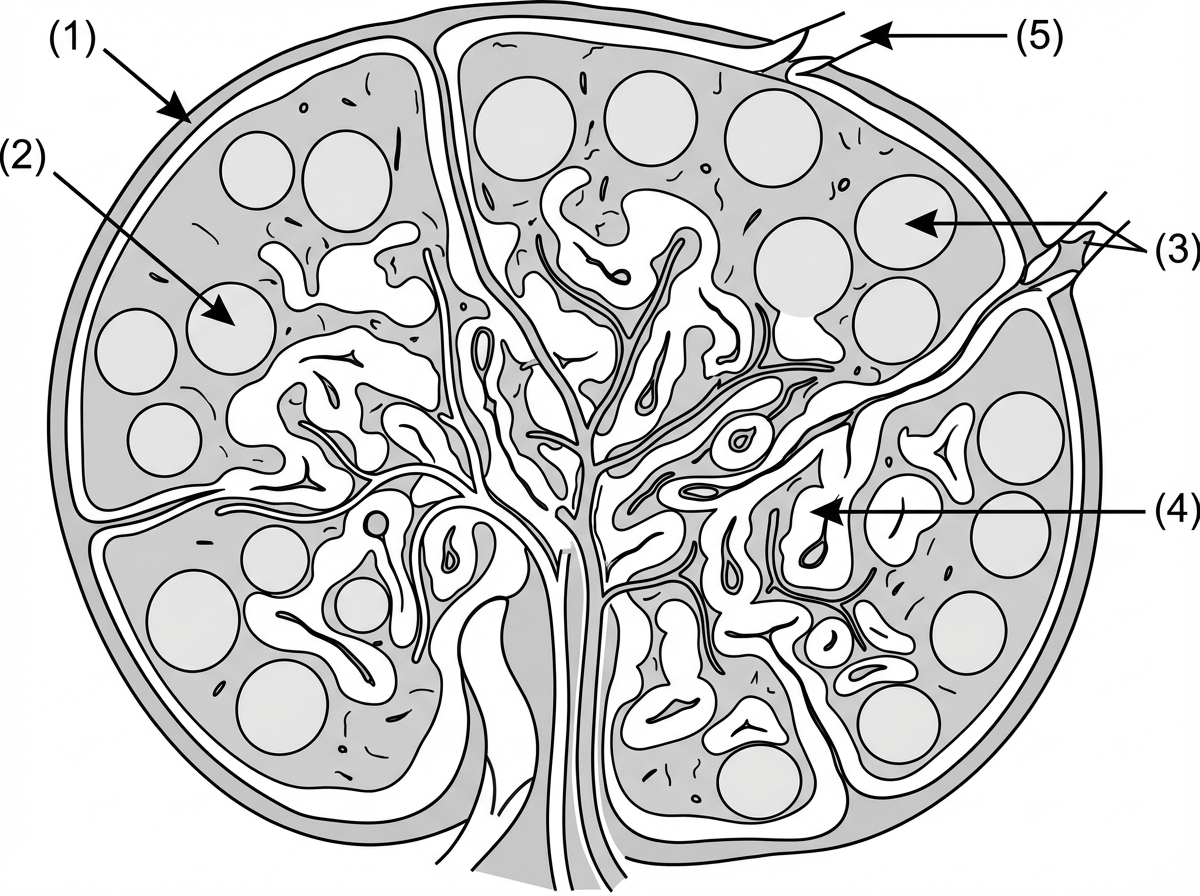
An investigator is conducting a study to document the histological changes in the respiratory tree of a chronic smoker. He obtains multiple biopsy samples from the respiratory system of a previously healthy 28-year-old man. Histopathological examination of one sample shows simple cuboidal cells with a surrounding layer of smooth muscle. Chondrocytes and goblet cells are absent. This specimen was most likely obtained from which of the following parts of the respiratory system?
Q2
A 38-year-old man comes to the physician because of a 6-month history of chest discomfort and progressive dyspnea. He cannot do daily chores without feeling out of breath. He was diagnosed in childhood with a milder X-linked dystrophinopathy that has caused progressive proximal muscle weakness and gait abnormalities over the years. Physical examination shows a waddling gait and weak patellar reflexes. Cardiovascular examination shows a holosystolic murmur, displaced point of maximal impulse, and bilateral pitting edema of the ankles. Laboratory studies show elevated levels of brain natriuretic peptide. Which of the following is the most likely underlying cause of this patient's muscle weakness?
Q3
An investigator is examining tissue samples from various muscle tissue throughout the body. She notices that biopsies collected from a specific site have a high concentration of sarcoplasmic reticulum, mitochondria, and myoglobin; they also stain poorly for ATPase. Additionally, the cell surface membranes of the myocytes in the specimen lack voltage-gated calcium channels. These myocytes are found in the greatest concentration at which of the following sites?
Q4
A 24-year-old male with cystic fibrosis is brought to the emergency room by his mother after he had difficulty breathing. He previously received a lung transplant 6 months ago and was able to recover quickly from the operation. He is compliant with all of his medications and had been doing well with no major complaints until 2 weeks ago when he began to experience shortness of breath. Exam reveals a decreased FEV1/FVC ratio and biopsy reveals lymphocytic infiltration. Which of the following components is present in the airway zone characteristically affected by the most likely cause of this patient's symptoms?
Q5
An 82-year-old woman presents to the emergency department after a fall. Imaging reveals diffuse trauma to the left humerus from the midshaft to the distal metaphysis with shearing of the periosteum. The orthopedic surgeon suggests a follow-up in 2 weeks. In that time, the patient develops worsening pain. At follow-up, she is found to have diffuse bone necrosis from the midshaft of the left humerus to the distal metaphysis, with no involvement of the distal forearm structures. Which of the following structures must have been damaged to cause this diffuse bone necrosis?
Q6
A 24-year-old woman comes to the physician for an annual routine examination. Menses occur at regular 28-day intervals and last for 4 days with normal flow. Her last menstrual period was 3 weeks ago. She is sexually active with one male partner and they use condoms consistently. The patient is 160 cm (5 ft 3 in) tall and weighs 72 kg (150 lb); BMI is 28.1 kg/m2. She feels well. Pelvic examination shows a smooth, mobile right adnexal mass. A subsequent ultrasound of the pelvis shows a single, 2-cm large, round, hypoechoic mass with a thin, smooth wall in the right ovary. The mass has posterior wall enhancement, and there are no signs of blood flow or septae within the mass. Which of the following is the most appropriate next step in management?
Q7
An investigator is studying neuronal regeneration. For microscopic visualization of the neuron, an aniline stain is applied. After staining, only the soma and dendrites of the neurons are visualized, not the axon. Presence of which of the following cellular elements best explains this staining pattern?
Histology US Medical PG Practice Questions and MCQs
Question 1: An investigator is conducting a study to document the histological changes in the respiratory tree of a chronic smoker. He obtains multiple biopsy samples from the respiratory system of a previously healthy 28-year-old man. Histopathological examination of one sample shows simple cuboidal cells with a surrounding layer of smooth muscle. Chondrocytes and goblet cells are absent. This specimen was most likely obtained from which of the following parts of the respiratory system?
A. Terminal bronchiole (Correct Answer)
B. Alveolar sac
C. Main stem bronchus
D. Bronchiole
E. Respiratory bronchiole
Explanation: ***Terminal bronchiole***
- Terminal bronchioles are lined by **simple cuboidal epithelium** and contain surrounding **smooth muscle** but lack cartilage (chondrocytes) and goblet cells, matching the histological description.
- They represent the most distal purely conducting airways before respiratory bronchioles, where gas exchange begins.
*Alveolar sac*
- Alveolar sacs are primarily composed of **Type I and Type II pneumocytes** for gas exchange, and would not have a prominent smooth muscle layer or cuboidal cells in this described pattern.
- They are the terminal structures of the respiratory tree where gas exchange occurs, defined by very thin walls lacking cartilage and goblet cells.
*Main stem bronchus*
- The main stem bronchi are characterized by **pseudostratified ciliated columnar epithelium** with abundant **goblet cells** and contain **hyaline cartilage** (chondrocytes) in their walls.
- The presence of goblet cells and cartilage (chondrocytes) makes this option inconsistent with the given histological findings.
*Bronchiole*
- Bronchioles are generally lined by **ciliated columnar to cuboidal epithelium** with scattered goblet cells in larger ones, and they possess smooth muscle but lack cartilage.
- While they share some features with terminal bronchioles, the presence of goblet cells (even if sparse) distinguishes bronchioles from terminal bronchioles.
*Respiratory bronchiole*
- Respiratory bronchioles are distinguished by their walls having occasional **alveoli**, indicating the beginning of gas exchange. Their epithelium is cuboidal.
- They would not be described as having a "surrounding layer of smooth muscle" in isolation as clearly as a terminal bronchiole, and the presence of alveoli would be a key distinguishing feature.
Question 2: A 38-year-old man comes to the physician because of a 6-month history of chest discomfort and progressive dyspnea. He cannot do daily chores without feeling out of breath. He was diagnosed in childhood with a milder X-linked dystrophinopathy that has caused progressive proximal muscle weakness and gait abnormalities over the years. Physical examination shows a waddling gait and weak patellar reflexes. Cardiovascular examination shows a holosystolic murmur, displaced point of maximal impulse, and bilateral pitting edema of the ankles. Laboratory studies show elevated levels of brain natriuretic peptide. Which of the following is the most likely underlying cause of this patient's muscle weakness?
A. Increased number of CTG repeats in the DMPK gene
B. Interruption of microtubule depolymerization through stabilization of GDP-tubulin
C. Impaired connection of cytoskeletal actin filaments to membrane-bound dystroglycan (Correct Answer)
D. Cell–mediated cytotoxicity against skeletal muscle antigens in the endomysium
E. Defective lysine-hydroxylysine crosslinking of tropocollagen
Explanation: ***Impaired connection of cytoskeletal actin filaments to membrane-bound dystroglycan***
- The description of a **milder X-linked dystrophinopathy** with progressive muscle weakness and gait abnormalities, coupled with cardiac manifestations like a **holosystolic murmur** and elevated **BNP**, is characteristic of a **dystrophinopathy**, such as **Becker muscular dystrophy**.
- **Dystrophin** is a critical protein that links the **cytoskeletal actin filaments** to the **dystroglycan complex** at the sarcolemma, providing mechanical stability to muscle fibers. Impaired connection leads to muscle fragility and degeneration.
*Increased number of CTG repeats in the DMPK gene*
- This describes **myotonic dystrophy type 1**, which is an autosomal dominant condition, not X-linked.
- While it causes muscle weakness, it is also associated with **myotonia**, testicular atrophy, and cataracts, which are not mentioned.
*Interruption of microtubule depolymerization through stabilization of GDP-tubulin*
- This mechanism is associated with **chemotherapeutic agents** like taxanes (e.g., paclitaxel, docetaxel), which interfere with cell division.
- It does not explain a genetic, progressive muscle weakness disorder.
*Cell–mediated cytotoxicity against skeletal muscle antigens in the endomysium*
- This describes the pathophysiology of **polymyositis**, an **inflammatory myopathy**.
- Polymyositis is an autoimmune condition and does not typically present as an X-linked inherited disorder diagnosed in childhood.
*Defective lysine-hydroxylysine crosslinking of tropocollagen*
- This mechanism is characteristic of disorders affecting **collagen synthesis** and cross-linking, such as **Ehlers-Danlos syndrome**.
- These conditions primarily affect connective tissue, leading to joint hypermobility, skin hyperextensibility, and tissue fragility, not primarily progressive muscle weakness due to dystrophin deficiency.
Question 3: An investigator is examining tissue samples from various muscle tissue throughout the body. She notices that biopsies collected from a specific site have a high concentration of sarcoplasmic reticulum, mitochondria, and myoglobin; they also stain poorly for ATPase. Additionally, the cell surface membranes of the myocytes in the specimen lack voltage-gated calcium channels. These myocytes are found in the greatest concentration at which of the following sites?
A. Ventricular myocardium
B. Tunica media
C. Lateral rectus muscle
D. Glandular myoepithelium
E. Semispinalis muscle (Correct Answer)
Explanation: ***Semispinalis muscle***
- The described characteristics—**high concentration of sarcoplasmic reticulum, mitochondria, and myoglobin** with **poor ATPase staining**—are hallmarks of **Type I (slow-twitch oxidative) skeletal muscle fibers**.
- Postural muscles like the **semispinalis** (part of the erector spinae group) are predominantly composed of Type I fibers adapted for sustained, aerobic contraction to maintain posture.
- These fibers appear **red** due to high myoglobin content, have abundant mitochondria for aerobic metabolism, and stain **poorly for ATPase** (distinguishing them from Type II fast-twitch fibers).
- While all skeletal muscle does possess voltage-gated calcium channels for excitation-contraction coupling, the overall profile best matches slow-twitch postural muscles.
*Ventricular myocardium*
- While cardiac muscle has high mitochondria, myoglobin, and sarcoplasmic reticulum, it **does possess L-type voltage-gated calcium channels** on the sarcolemma, which are essential for cardiac excitation-contraction coupling.
- Cardiac muscle relies on **both** extracellular Ca²⁺ influx through these channels and calcium-induced calcium release from the SR.
- Cardiac muscle typically stains **strongly for ATPase**, not poorly.
*Tunica media*
- Composed of **vascular smooth muscle** with poorly developed sarcoplasmic reticulum and relatively few mitochondria compared to skeletal or cardiac muscle.
- Smooth muscle relies heavily on **extracellular calcium influx** and the calmodulin pathway for contraction.
- Not characterized by high myoglobin content.
*Lateral rectus muscle*
- This extraocular muscle contains predominantly **Type IIb fast-twitch glycolytic fibers** adapted for rapid, precise eye movements.
- These fibers have **low myoglobin** (white muscle), fewer mitochondria, and stain **strongly for ATPase**.
- Opposite profile from the described tissue.
*Glandular myoepithelium*
- Myoepithelial cells are specialized contractile cells in secretory glands with minimal sarcoplasmic reticulum and mitochondria.
- Function is brief contraction for secretion expulsion, not sustained aerobic work.
- Do not exhibit the high oxidative capacity described.
Question 4: A 24-year-old male with cystic fibrosis is brought to the emergency room by his mother after he had difficulty breathing. He previously received a lung transplant 6 months ago and was able to recover quickly from the operation. He is compliant with all of his medications and had been doing well with no major complaints until 2 weeks ago when he began to experience shortness of breath. Exam reveals a decreased FEV1/FVC ratio and biopsy reveals lymphocytic infiltration. Which of the following components is present in the airway zone characteristically affected by the most likely cause of this patient's symptoms?
A. Pseudostratified columnar cells
B. Goblet cells
C. Simple cuboidal cells (Correct Answer)
D. Stratified cuboidal cells
E. Cartilage
Explanation: ***Simple cuboidal cells***
- The patient's symptoms, history of a lung transplant, and biopsy findings of **lymphocytic infiltration** suggest **bronchiolitis obliterans**, a form of chronic lung allograft dysfunction.
- Bronchiolitis obliterans primarily affects the **small airways** (bronchioles), which are characterized by an epithelial lining of **simple cuboidal cells** and lack cartilage.
*Pseudostratified columnar cells*
- These cells line the **trachea** and **main bronchi** (larger airways), which are typically not the primary site of damage in bronchiolitis obliterans.
- They are part of the **mucociliary escalator** and are also associated with cartilage.
*Goblet cells*
- While present in the **larger airways** along with pseudostratified columnar cells, goblet cells are less prominent or absent in the small bronchioles primarily affected by bronchiolitis obliterans.
- Their characteristic function is mucus production, not the specific epithelial type of the affected bronchioles.
*Stratified cuboidal cells*
- This cell type is **rare** in the respiratory tract and is not characteristic of the small airways affected by bronchiolitis obliterans.
- Stratified epithelia are typically seen in ducts of glands or specialized transitional zones, not the functional bronchioles.
*Cartilage*
- Cartilage provides structural support to the **trachea and main bronchi**, but it is **absent** in the small airways (bronchioles) that are the primary target of bronchiolitis obliterans.
- The presence of cartilage would indicate a larger airway, contradicting the pathophysiology of this condition.
Question 5: An 82-year-old woman presents to the emergency department after a fall. Imaging reveals diffuse trauma to the left humerus from the midshaft to the distal metaphysis with shearing of the periosteum. The orthopedic surgeon suggests a follow-up in 2 weeks. In that time, the patient develops worsening pain. At follow-up, she is found to have diffuse bone necrosis from the midshaft of the left humerus to the distal metaphysis, with no involvement of the distal forearm structures. Which of the following structures must have been damaged to cause this diffuse bone necrosis?
A. Volkmann’s canal
B. Haversian canal
C. Epiphyseal plate
D. Brachial artery (Correct Answer)
E. Ulnar nerve
Explanation: ***Brachial artery***
- Damage to the **brachial artery** can compromise the blood supply to the entire distal upper limb, leading to **ischemia** and subsequent **bone necrosis**, particularly in the humerus as described.
- The extensive necrosis from the midshaft to the olecranon process suggests a significant vascular insult affecting a large portion of the bone.
*Volkmann’s canal*
- **Volkmann’s canals** primarily house small blood vessels and nerves that run perpendicular to the long axis of bone, connecting Haversian canals.
- Damage to these microscopic canals alone would not typically cause such a widespread and diffuse pattern of macroscopic bone necrosis.
*Haversian canal*
- **Haversian canals** contain the blood vessels and nerves within the osteons, the basic structural units of compact bone.
- While essential for local bone viability, damage to individual Haversian canals would lead to microscopic areas of necrosis, not the widespread bone death observed here.
*Epiphyseal plate*
- The **epiphyseal plate (growth plate)** is responsible for longitudinal bone growth and is typically found in growing children, not an 82-year-old woman.
- Damage to this structure in a child would primarily affect bone development and length, not widespread necrosis in an adult.
*Ulnar nerve*
- The **ulnar nerve** carries motor and sensory fibers to parts of the forearm and hand and does not supply blood to the bone.
- Damage to the ulnar nerve would result in neurological deficits, such as numbness and weakness, but would not directly cause bone necrosis.
Question 6: A 24-year-old woman comes to the physician for an annual routine examination. Menses occur at regular 28-day intervals and last for 4 days with normal flow. Her last menstrual period was 3 weeks ago. She is sexually active with one male partner and they use condoms consistently. The patient is 160 cm (5 ft 3 in) tall and weighs 72 kg (150 lb); BMI is 28.1 kg/m2. She feels well. Pelvic examination shows a smooth, mobile right adnexal mass. A subsequent ultrasound of the pelvis shows a single, 2-cm large, round, hypoechoic mass with a thin, smooth wall in the right ovary. The mass has posterior wall enhancement, and there are no signs of blood flow or septae within the mass. Which of the following is the most appropriate next step in management?
A. Diagnostic laparoscopy
B. CT scan of the pelvis
C. Oral contraceptive
D. CA-125 level
E. Follow-up examination (Correct Answer)
Explanation: ***Follow-up examination***
- The ultrasound findings of a **small (2-cm)**, **simple (hypoechoic, thin-walled, no septations, no blood flow)** adnexal cyst in a **premenopausal woman** are characteristic of a functional ovarian cyst.
- Functional cysts are typically benign and resolve spontaneously, making **expectant management with follow-up** the most appropriate initial step.
*Diagnostic laparoscopy*
- This is an **invasive surgical procedure** indicated for suspicious or persistent ovarian masses that require histological evaluation or removal.
- It is **not warranted for a small, simple cyst** with benign features found incidentally in an asymptomatic, premenopausal woman.
*CT scan of the pelvis*
- A CT scan provides additional imaging but exposes the patient to **radiation** and is generally reserved for masses with **complex features** or when evaluating for metastasis.
- It is **not necessary for a simple cyst** that has already been well-characterized by ultrasound.
*Oral contraceptive*
- While oral contraceptives can **suppress ovulation** and potentially prevent the formation of new functional cysts, they generally do **not hasten the resolution of existing cysts**.
- They are sometimes used in cases of recurrent functional cysts but are not the primary management for an initial, asymptomatic simple cyst.
*CA-125 level*
- **CA-125** is a tumor marker primarily used for monitoring ovarian cancer, especially in **postmenopausal women** or those with highly suspicious masses.
- Its levels can be elevated in various benign conditions, and it is **not indicated for a small, simple cyst** in a premenopausal woman, where the risk of malignancy is very low.
Question 7: An investigator is studying neuronal regeneration. For microscopic visualization of the neuron, an aniline stain is applied. After staining, only the soma and dendrites of the neurons are visualized, not the axon. Presence of which of the following cellular elements best explains this staining pattern?
A. Microtubule
B. Golgi apparatus
C. Lysosome
D. Rough endoplasmic reticulum (Correct Answer)
E. Nucleus
Explanation: **Rough endoplasmic reticulum**
- Aniline stains, particularly basic dyes like cresyl violet or toluidine blue, stain the **basophilic structures** within the neuronal cell body (soma) and dendrites, which are rich in **rough endoplasmic reticulum (RER)**.
- The RER, along with free ribosomes, makes up **Nissl bodies**, responsible for protein synthesis, and these structures are largely absent in the axon, explaining the lack of staining.
*Microtubule*
- **Microtubules** are cytoskeletal components found throughout the neuron, including the axon, and are not preferentially stained by aniline dyes in a way that differentiates the soma and dendrites from the axon.
- Their primary role is in **axonal transport** and maintaining cell shape, not in conferring basophilia that would be highlighted by this type of staining pattern.
*Golgi apparatus*
- The **Golgi apparatus** is involved in modifying, sorting, and packaging proteins and lipids; it is present in the soma and dendrites but also has a more limited presence in axons.
- While important for neuronal function, the Golgi apparatus does not possess the same high concentration of **basophilic RER** that gives rise to the characteristic Nissl staining pattern.
*Lysosome*
- **Lysosomes** are organelles responsible for waste degradation and recycling within the cell; they are found in the soma and dendrites but are less prominent in the axon.
- They are not readily visualized by basic aniline stains in the same manner as the highly basophilic RER, and their presence doesn't explain the differential staining observed.
*Nucleus*
- The **nucleus** contains the cell's genetic material and is prominently stained by basic dyes due to its DNA content.
- However, the question specifies visualization of the "soma and dendrites," implying cytoplasmic structures, and the nucleus itself does not extend into the dendrites or axon to explain their staining pattern.