
Valve development — MCQs

A 38-year-old woman, gravida 2, para 1, at 24 weeks' gestation comes to the physician for a routine prenatal evaluation. She has no history of major medical illness and takes no medications. Fetal ultrasonography shows a cardiac defect resulting from abnormal development of the endocardial cushions. This defect is most likely to result in which of the following?
A 67-year-old man presents to his primary care physician for a wellness checkup. The patient states he has been doing well and currently has no concerns. The patient's daughter states that she feels he is abnormally fatigued and has complained of light-headedness whenever he gardens. He also admits that he fainted once. The patient has a past medical history of type II diabetes, hypertension, and constipation. He recently had a "throat cold" that he recovered from with rest and fluids. His temperature is 98.9°F (37.2°C), blood pressure is 167/98 mmHg, pulse is 90/min, respirations are 12/min, and oxygen saturation is 99% on room air. Physical exam reveals a systolic murmur heard best along the right upper sternal border. An ECG is performed and demonstrates no signs of ST elevation. Cardiac troponins are negative. Which of the following is the most likely diagnosis?
A 4-year-old male is brought into your office because his mother states he has been fatigued. He has not been acting like himself and has been getting tired easily while running around and playing with other children. As of last week, he has also been complaining of being short of breath. His vitals are temperature 98.6 deg F (37.2 deg C), blood pressure 100/75 mmHg, pulse 98/min, and respirations 22/min. On exam, the patient is short of breath, and there is a holosystolic murmur with an appreciable thrill along the left sternal border. There are no other noticeable abnormalities, and the mother states that the child's prenatal course along with genetic testing was normal. What is the most likely diagnosis?
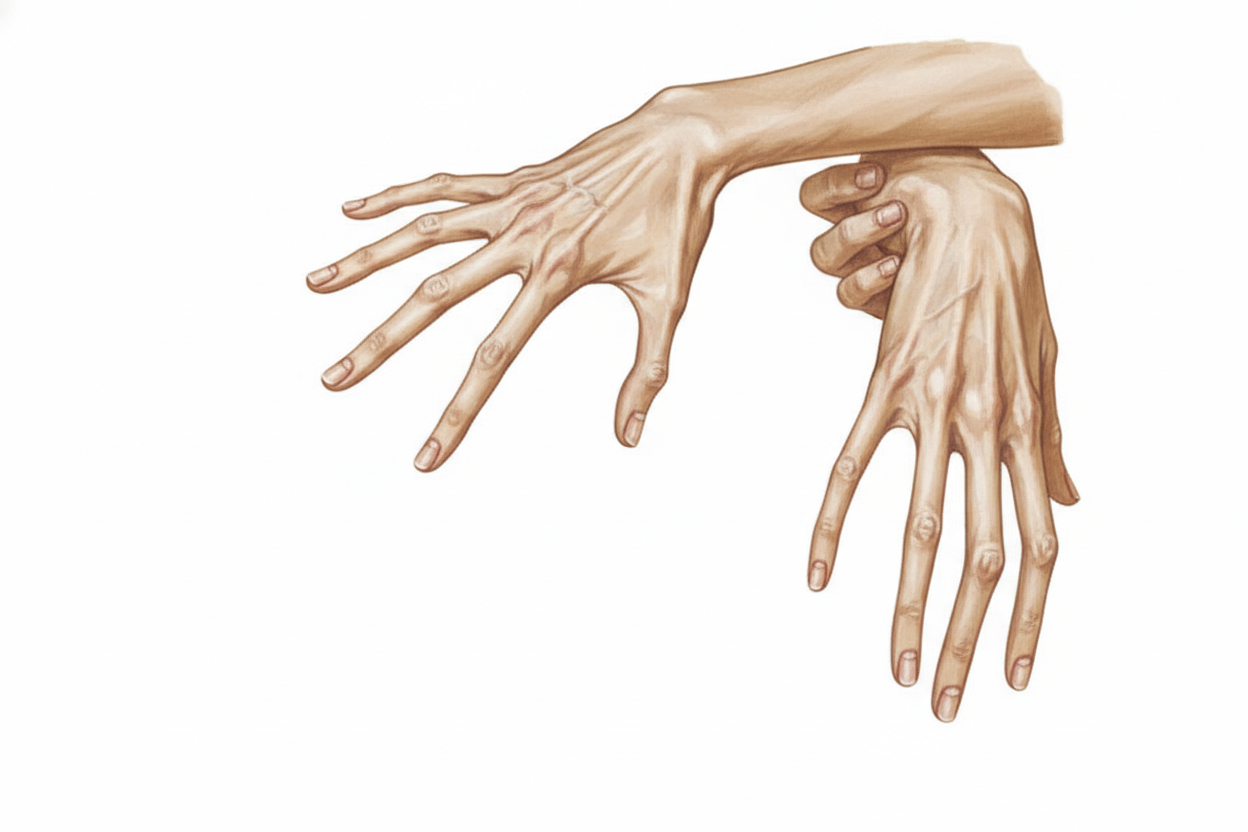
A 27-year-old is going through a pre-employment evaluation. The patient has no history of any medical conditions, but there is a strong family history of ischemic heart disease on his father’s side. The patient drinks alcohol occasionally but does not use any illicit drugs or smoke. On examination, the physician notices that the patient has a very flexible body and long fingers (seen in the image). Auscultation of the heart reveals a mid-systolic click over the apex. What is the most likely mechanism behind this finding?
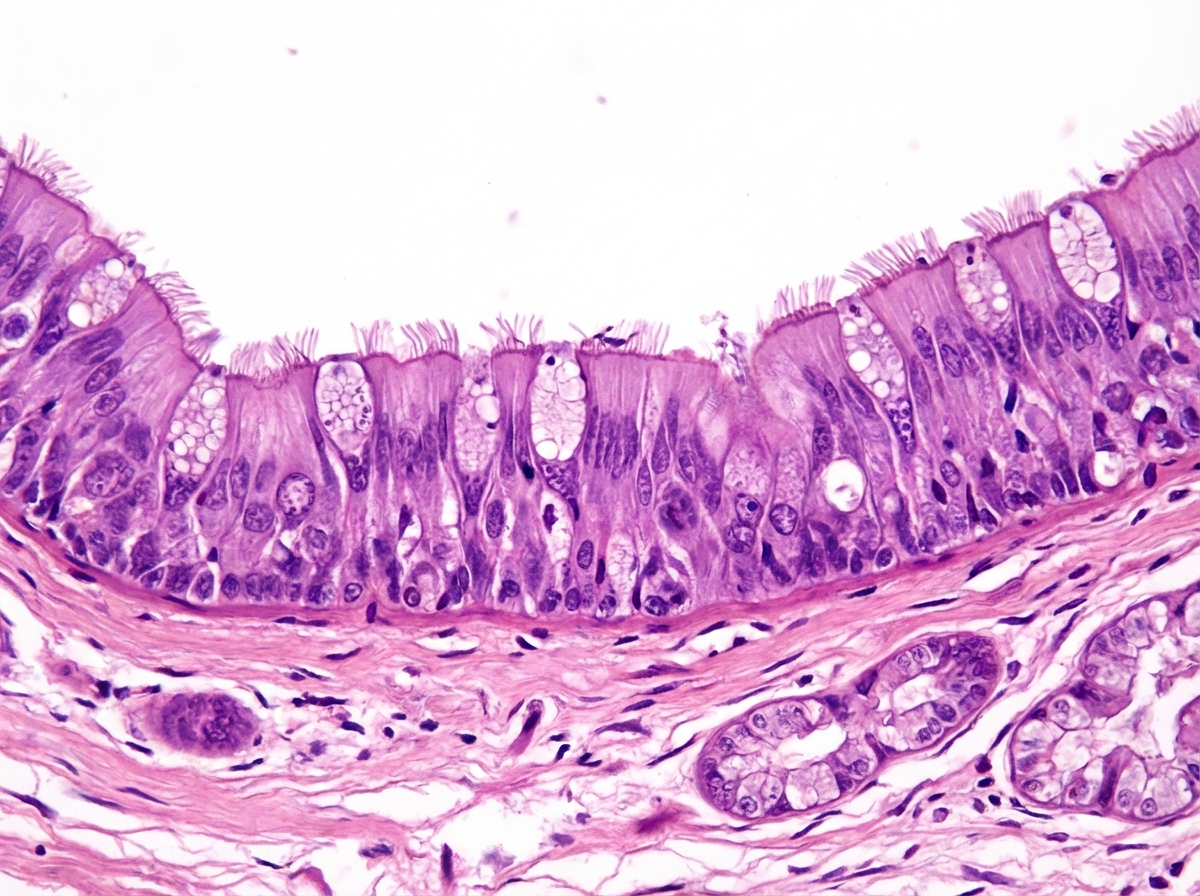
A research team is studying certain congenital anomalies of the respiratory tract. The method consists of marking a certain germinal layer with an isotope, following its development stages in chicken embryos, and finally analyzing the specimen. A given specimen of tissue is presented in the exhibit. Which of the following germinal structures most likely gave rise to the epithelial lining of this specimen?
A 3175-g (7-lb) male newborn is delivered at 39 weeks' gestation to a 29-year-old primigravid woman following a spontaneous vaginal delivery. Apgar scores are 8 and 9 at 1 and 5 minutes, respectively. Cardiac examination in the delivery room shows a continuous machine-like murmur. An echocardiogram shows a structure with blood flow between the pulmonary artery and the aorta. This structure is most likely a derivate of which of the following?
A 14-year-old boy who has been otherwise healthy presents to his doctor complaining of feeling easily winded and light-headed at basketball practice. He has never felt this way before and is frustrated because he is good enough to make varsity this year. He denies smoking, alcohol, or recreational drug use. His mother is very worried because her oldest son and brother had both died suddenly while playing sports despite being otherwise healthy. The transthoracic echocardiogram confirms the suspected diagnosis, which demonstrates a preserved ejection fraction and systolic anterior motion of the mitral valve. The patient is advised that he will need to stay hydrated and avoid intense exercise, and he will likely need an ICD due to his family history. Which of the following physical exam findings is consistent with this patient’s most likely diagnosis?
Shortly after delivery, a female newborn develops bluish discoloration of the lips, fingers, and toes. She was born at term to a 38-year-old primigravid woman. Pregnancy was complicated by maternal diabetes mellitus. Pulse oximetry on room air shows an oxygen saturation of 81%. Echocardiography shows immediate bifurcation of the vessel arising from the left ventricle; the vessel emerging from the right ventricle gives out coronary, head, and neck vessels. An abnormality in which of the following developmental processes most likely accounts for this patient's condition?
A newborn is rushed to the neonatal ICU after becoming cyanotic shortly after birth. An ultrasound is performed which shows the aorta coming off the right ventricle and lying anterior to the pulmonary artery. The newborn is given prostaglandin E1 and surgery is planned to correct the anatomic defect. Which of the following developmental processes failed to occur in the newborn?
A 26-year-old woman comes to the physician because she has not had a menstrual period for 5 weeks. Menarche was at the age of 14 years and menses occurred at regular 30-day intervals. She reports having unprotected sexual intercourse 3 weeks ago. A urine pregnancy test is positive. Which of the following best describes the stage of development of the embryo at this time?
Want unlimited practice?
Get full access to all questions, explanations, and performance tracking.
Scan to download app