
Atrial septation — MCQs

An obese 37-year-old woman is brought to the emergency department 2 hours after the onset of weakness in her left arm and leg. She fell from the stairs the day prior but did not have any loss of consciousness or nausea after the fall. She travels to Asia regularly on business; her last trip was 4 days ago. She has no history of serious illness. Her only medication is an oral contraceptive. Her temperature is 37.8°C (100°F), pulse is 113/min and regular, and blood pressure is 162/90 mm Hg. Examination shows decreased muscle strength on the left side. Deep tendon reflexes are 4+ on the left. Babinski sign is present on the left. The right lower leg is swollen, erythematous, and tender to palpation. Further evaluation is most likely to show which of the following?
A 9-year-old boy is brought to the clinic by his parents for an annual wellness examination. He is a relatively healthy boy who was born at term via vaginal delivery. He is meeting his developmental milestones and growth curves and is up-to-date on his immunizations. The father complains that he is picky with his food and would rather eat pizza. The patient denies any trouble at school, fevers, pain, or other concerns. A physical examination demonstrates a healthy boy with a grade 3 midsystolic ejection murmur at the second intercostal space that does not disappear when he sits up. What is the most likely explanation for this patient’s findings?
A 2-year-old girl is brought to the physician by her mother for a well-child examination. Cardiac auscultation is shown. When she clenches her fist forcefully for a sustained time, the intensity of the murmur increases. Which of the following is the most likely cause of this patient's auscultation findings?
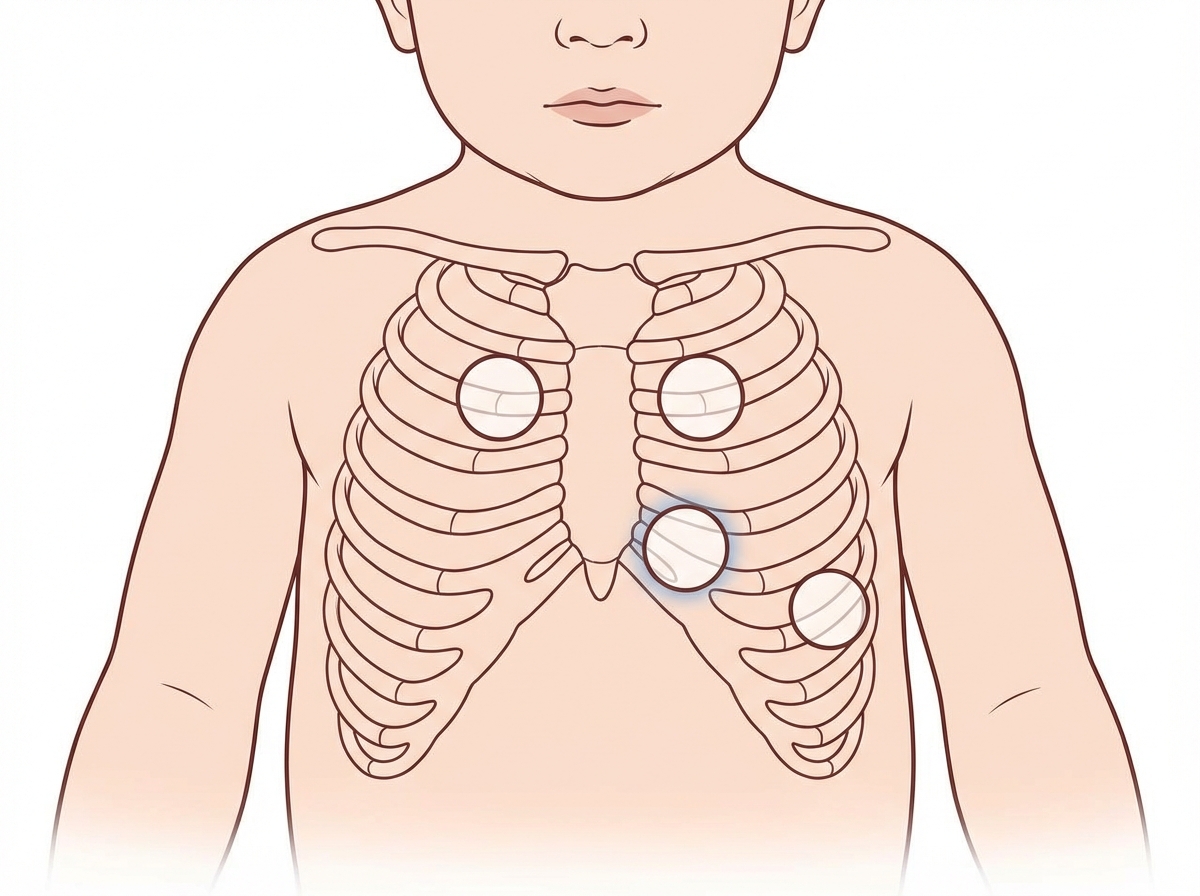
A 4-year-old male is brought into your office because his mother states he has been fatigued. He has not been acting like himself and has been getting tired easily while running around and playing with other children. As of last week, he has also been complaining of being short of breath. His vitals are temperature 98.6 deg F (37.2 deg C), blood pressure 100/75 mmHg, pulse 98/min, and respirations 22/min. On exam, the patient is short of breath, and there is a holosystolic murmur with an appreciable thrill along the left sternal border. There are no other noticeable abnormalities, and the mother states that the child's prenatal course along with genetic testing was normal. What is the most likely diagnosis?
A 26-year-old man is brought to the emergency department due to right-sided facial and upper extremity weakness and aphasia. The patient was in his usual state of health until two hours prior to presentation, when he was eating breakfast with a friend and acutely developed the aforementioned symptoms. Medical history is unremarkable except for mild palpitations that occur during times of stress or when drinking coffee. Physical examination is consistent with the clinical presentation. Laboratory testing is unremarkable and a 12-lead electrocardiogram is normal. A non-contrast head CT and diffusion-weighted MRI shows no intracranial hemorrhage and an isolated superficial cerebral infarction. Transthoracic echocardiography with agitated saline mixed with air shows microbubbles in the left heart. There is a possible minor effusion surrounding the heart and the ejection fraction is within normal limits. Which of the following is most likely the cause of this patient's clinical presentation?
An 18-month-old boy presents to the pediatrician by his mother for a routine check-up. The mother has no concerns, although she asks about the "hole in his heart" that the patient had at birth. The patient has no history of cyanosis or heart failure; however, a holosystolic, harsh murmur was noted at the 3- and 6-month check-ups. On examination, the patient is playful and alert. He has met all developmental milestones. The cardiac examination reveals a regular rate and rhythm with persistence of the holosystolic, harsh murmur. What is the most likely cause of the murmur in this child?
A patient in the neonatal intensive care unit develops severe cyanosis. Cardiac exam reveals a single loud S2 with a right ventricular heave. Echocardiography reveals an aorta lying anterior and right of the pulmonary artery. Which of the following processes failed during fetal development?
A 7-year-old boy is brought by his parents to his pediatrician due to progressive fatigue and shortness of breath while playing sports. He is otherwise healthy with no known medical disorders and no other symptoms. The boy was born at 39 weeks gestation via spontaneous vaginal delivery. He is up to date on all vaccines and is meeting all developmental milestones. On physical examination, his temperature is 36.9ºC (98.4ºF), pulse rate is 90/min, blood pressure is 100/70 mm Hg, and respiratory rate is 18/min. Pulses in all four extremities are equal and normally palpated; there is no radio-femoral delay. The pediatrician suspects a congenital heart disease after auscultation of the heart. Which of the following congenital heart diseases is most likely to present with the clinical features listed above?
A 28-year-old man comes to the physician because of a persistent tingling sensation in the right side of his face. The sensation began after he underwent an extraction of an impacted molar 2 weeks ago. Examination shows decreased sensation of the skin over the right side of the mandible, chin, and the anterior portion of the tongue. Taste sensation is preserved. The affected nerve exits the skull through which of the following openings?
A 28-year-old woman with corrected transposition of the great arteries (L-TGA) who has been asymptomatic presents for preconception counseling. She has a systemic right ventricle supporting systemic circulation and asks about pregnancy risks. Her cardiologist notes mild tricuspid regurgitation. Evaluate the embryologic basis of her condition and synthesize recommendations regarding pregnancy.
Want unlimited practice?
Get full access to all questions, explanations, and performance tracking.
Scan to download app