
Triangles of the neck — MCQs

A 4-year-old girl is brought to the physician for a painless lump on her neck. She has no history of serious illness and her vital signs are within normal limits. On examination, there is a firm, 2-cm swelling at the midline just below the level of the hyoid bone. The mass moves cranially when she is asked to protrude her tongue. Which of the following is the most likely diagnosis?
A 17-year-old boy comes to the physician because of a 3-month history of pain in his right shoulder. He reports that he has stopped playing for his high school football team because of persistent difficulty lifting his right arm. Physical examination shows impaired active abduction of the right arm from 0 to 15 degrees. After passive abduction of the right arm to 15 degrees, the patient is able to raise his arm above his head. The dysfunctional muscle in this patient is most likely to be innervated by which of the following nerves?
A 20-year-old man comes to the clinic complaining of shoulder pain for the past week. He is a pitcher for the baseball team at his university and reports that the pain started shortly after a game. The pain is described as achy and dull, intermittent, 7/10, and is concentrated around the right shoulder area. He denies any significant medical history, trauma, fever, recent illness, or sensory changes but endorses some difficulty lifting his right arm. A physical examination demonstrates mild tenderness of the right shoulder. When the patient is instructed to resist arm depression when holding his arms parallel to the floor with the thumbs pointing down, he reports significant pain of the right shoulder. Strength is 4/5 on the right and 5/5 on the left with abduction of the upper extremities. What nerve innervates the injured muscle in this patient?
During a thyroidectomy, a surgeon must carefully identify and preserve the parathyroid glands. These glands are most commonly located posterior to which part of the thyroid gland?
A 40-year-old male presents to the physician's office complaining of an inability to push doors open. He has had this problem since he was playing football with his children and was tackled underneath his right arm on his lateral chest. On examination, he has a winged scapula on the right side. Which of the following nerves is most likely the cause of this presentation?
A 47-year-old man presents to you with gradual loss of voice and difficulty swallowing for the past couple of months. The difficulty of swallowing is for both solid and liquid foods. His past medical history is insignificant except for occasional mild headaches. Physical exam also reveals loss of taste sensation on the posterior third of his tongue and palate, weakness in shrugging his shoulders, an absent gag reflex, and deviation of the uvula away from the midline. MRI scanning was suggested which revealed a meningioma that was compressing some cranial nerves leaving the skull. Which of the following openings in the skull transmit the affected cranial nerves?
A 72-year-old woman is brought to the emergency department for right hip pain 1 hour after she fell while walking around in her house. She has been unable to stand or walk since the fall. She has hypertension and gout. Her sister died of multiple myeloma at the age of 55 years. Current medications include amlodipine and febuxostat. She does not smoke cigarettes. She drinks a glass of wine daily. Her temperature is 37.3°C (99.1°F), pulse is 101/min, and blood pressure is 128/86 mm Hg. Examination shows right groin tenderness. Range of motion of the right hip is limited by pain. The remainder of the examination shows no abnormalities. A complete blood count and serum creatinine concentration are within the reference range. An x-ray of the hip shows a linear fracture of the right femoral neck. She is scheduled for surgery. Which of the following is the most likely underlying cause of this patient's fracture?
A 25-year-old man presents to the clinic with a midline swelling in his neck. He is unsure about when it appeared. He denies any difficulty with swallowing or hoarseness. His past medical history is insignificant. On physical examination, there is a 1 cm x 2 cm firm mildly tender nodule on the anterior midline aspect of the neck which moves with deglutition and elevates with protrusion of the tongue. Which of the following is the most likely embryologic origin of the nodule in this patient?
An 87-year-old male presents to his neurologist for a follow-up visit. He is being followed for an inoperable tumor near his skull. He reports that he recently noticed that food has started to lose its taste. He also notes increasing difficulty with swallowing. He has a history of myocardial infarction, diabetes mellitus, hyperlipidemia, hypertension, and presbycusis. He takes aspirin, metoprolol, metformin, glyburide, atorvastatin, lisinopril, and hydrochlorothiazide. On examination, the patient is a frail-appearing male sitting in a wheelchair. He is oriented to person, place, and time. Gag reflex is absent on the right side. A taste evaluation is performed which demonstrates a decreased ability to detect sour and bitter substances on the right posterior tongue. The nerve responsible for this patient’s loss of taste sensation also has which of the following functions?
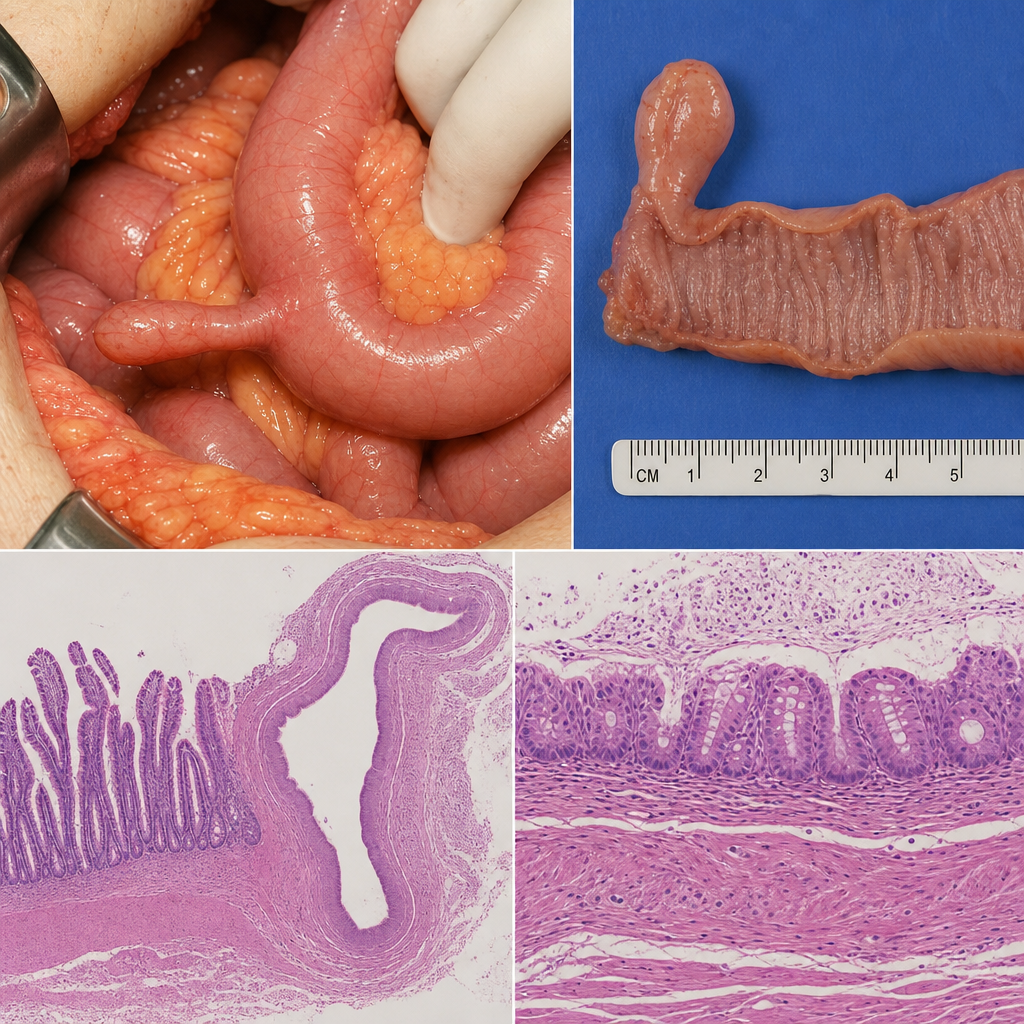
During a routine appendectomy in a 19-year-old man, the surgeon identifies a 5 cm blind-ended diverticulum on the antimesenteric border of the ileum, approximately 60 cm proximal to the ileocecal valve. Histological examination of the resected specimen reveals heterotopic gastric mucosa within the diverticulum wall alongside normal ileal mucosa and a well-defined muscularis propria continuous with the bowel wall. Which developmental structure failed to obliterate to produce this anomaly?
Want unlimited practice?
Get full access to all questions, explanations, and performance tracking.
Scan to download app