
Cervical sympathetic chain — MCQs

A 69-year-old man undergoes modified radical neck dissection for an oropharyngeal tumor. During the procedure, he requires multiple blood transfusions. Four hours after the surgery, examination shows that the right and left pupils do not constrict when a light is shone into the left eye. When light is shone into the right eye, both pupils constrict. Fundoscopic examination shows no abnormalities. Which of the following is the most likely location of the lesion?
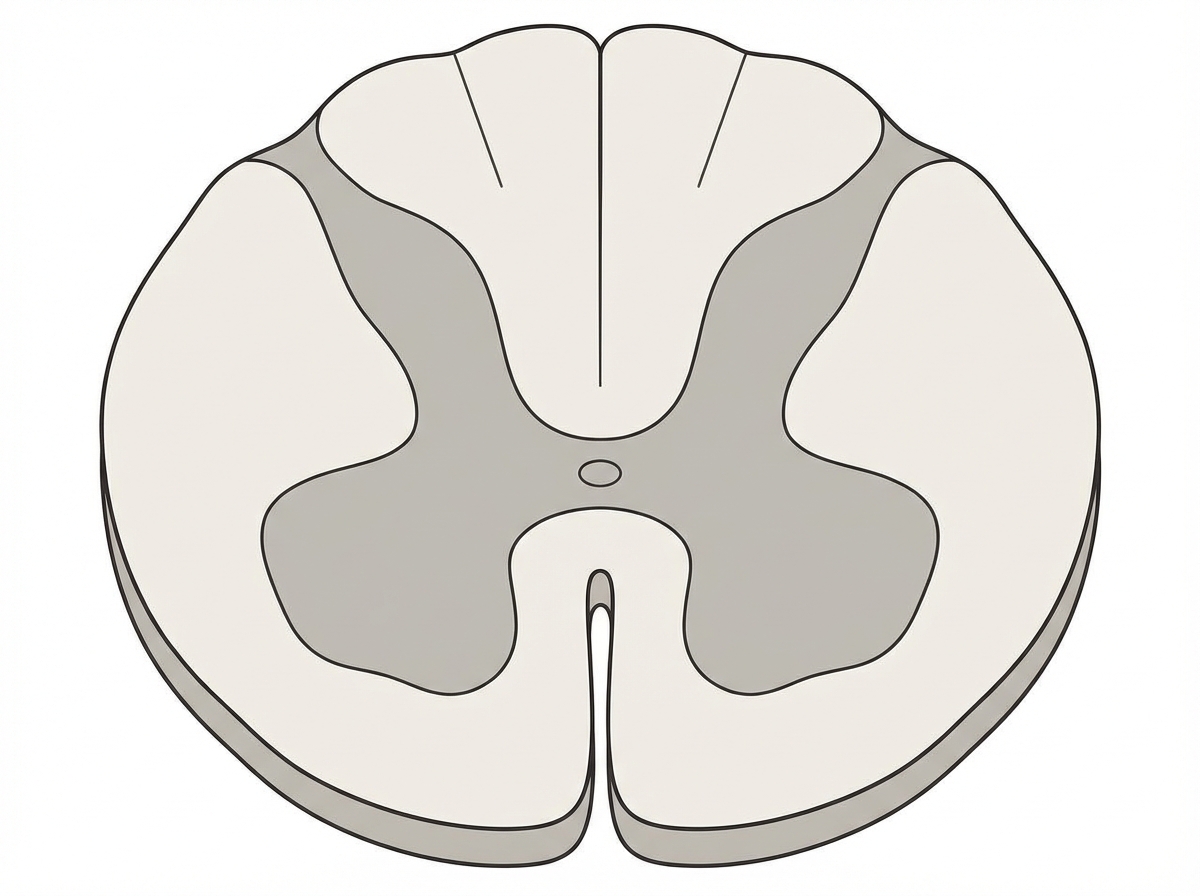
A 45-year-old man is brought to the emergency department by ambulance after a motor vehicle collision. He is not responsive to verbal commands and is unable to provide any history. His pulse is 108/min and regular. Physical examination shows ecchymoses over the neck and back. Neurological examination indicates damage to the spinal cord at the level shown in the illustration. This patient's injury is most likely located at which of the following levels of the spinal cord?
A 72-year-old man presents to his primary care physician because he feels like his vision has been changing over the last 6 months. In particular, he feels that he cannot see as well out of his right eye as previously. His past medical history is significant for myocardial infarction as well as Lyme disease. On presentation, he is found to have a droopy right eyelid as well as persistent constriction of his right pupil. Additionally, the skin on his right half of his face is found to be cracked and dry. Which of the following is most likely associated with this patient's symptoms?
A 65-year-old female with a past medical history of hypertension presents to her primary care doctor with a 3 month history of spasmodic facial pain. The pain is located in her right cheek and seems to be triggered when she smiles, chews, or brushes her teeth. The pain is sharp and excruciating, lasts for a few seconds, and occurs up to twenty times per day. She denies headaches, blurry vision, facial weakness, or changes in her memory. She feels rather debilitated and has modified much of her daily activities to avoid triggering the spasms. In the clinic, her physical exam is within normal limits. Her primary care doctor prescribes carbamazepine and asks her to follow up in a few weeks. Which cranial nerve is most likely involved in the patient's disease process?
A 28-year-old man comes to the physician because of a persistent tingling sensation in the right side of his face. The sensation began after he underwent an extraction of an impacted molar 2 weeks ago. Examination shows decreased sensation of the skin over the right side of the mandible, chin, and the anterior portion of the tongue. Taste sensation is preserved. The affected nerve exits the skull through which of the following openings?
A 68-year-old man comes to the physician because of double vision and unilateral right eye pain that began this morning. His vision improves when he covers either eye. He has hypertension, mild cognitive impairment, and type 2 diabetes mellitus. The patient has smoked two packs of cigarettes daily for 40 years. His current medications include lisinopril, donepezil, metformin, and insulin with meals. His temperature is 37°C (98.6°F), pulse is 85/minute, respirations are 12/minute, and blood pressure is 132/75 mm Hg. His right eye is abducted and depressed with slight intorsion. He can only minimally adduct the right eye. Visual acuity is 20/20 in both eyes. Extraocular movements of the left eye are normal. An MRI of the head shows no abnormalities. His fingerstick blood glucose concentration is 325 mg/dL. Further evaluation is most likely to show which of the following?
A 39-year-old woman is brought to the emergency department following a stab wound to the neck. Per the patient, she was walking her dog when she got robbed and was subsequently stabbed with a knife. Vitals are stable. Strength examination reveals 2/5 right-sided elbow flexion and extension, wrist extension, and finger motions. Babinski sign is upward-going on the right. There is decreased sensation to light touch and vibration on the patient's right side up to her shoulder. She also reports decreased sensation to pinprick and temperature on her left side, including her lower extremities, posterior forearm, and middle finger. The patient's right pupil is 2 mm smaller than the left with drooping of the right upper eyelid. Which of the following is the most likely cause of the patient’s presentation?
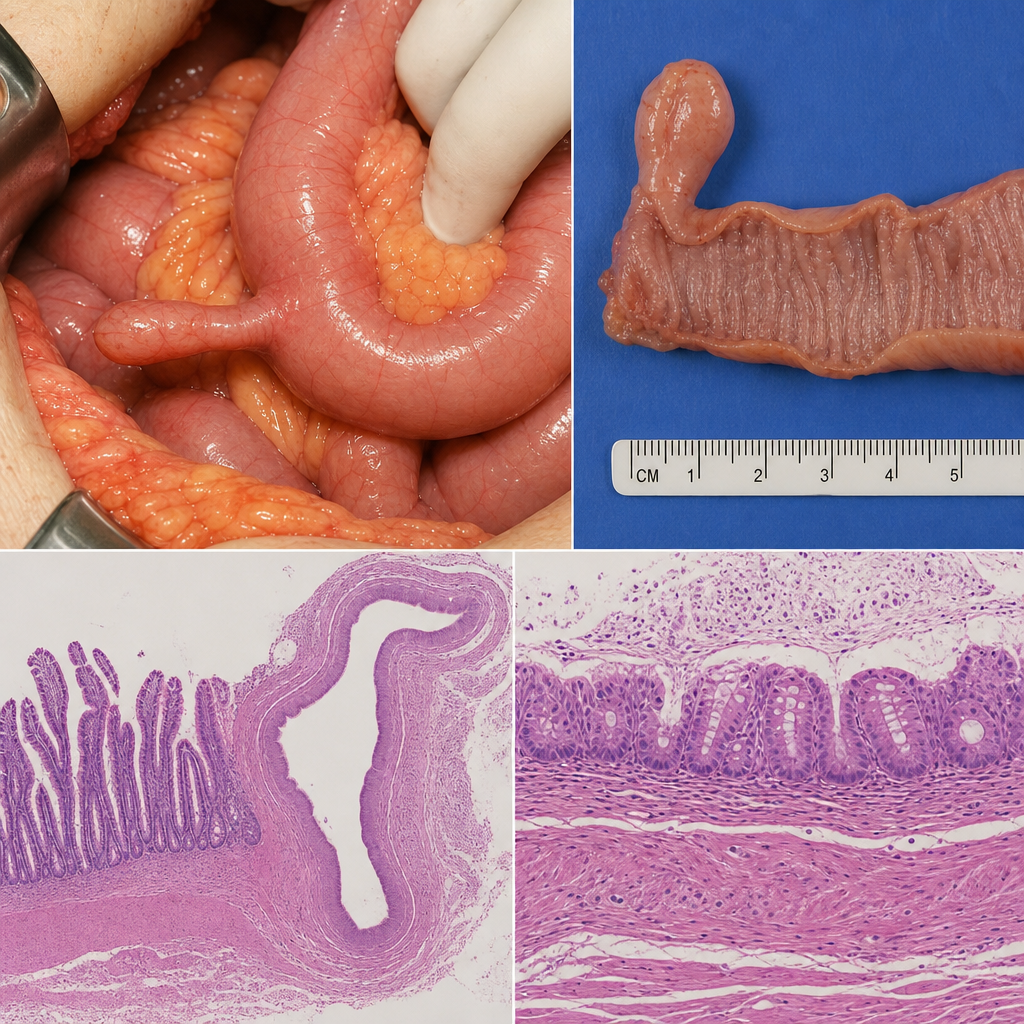
During a routine appendectomy in a 19-year-old man, the surgeon identifies a 5 cm blind-ended diverticulum on the antimesenteric border of the ileum, approximately 60 cm proximal to the ileocecal valve. Histological examination of the resected specimen reveals heterotopic gastric mucosa within the diverticulum wall alongside normal ileal mucosa and a well-defined muscularis propria continuous with the bowel wall. Which developmental structure failed to obliterate to produce this anomaly?
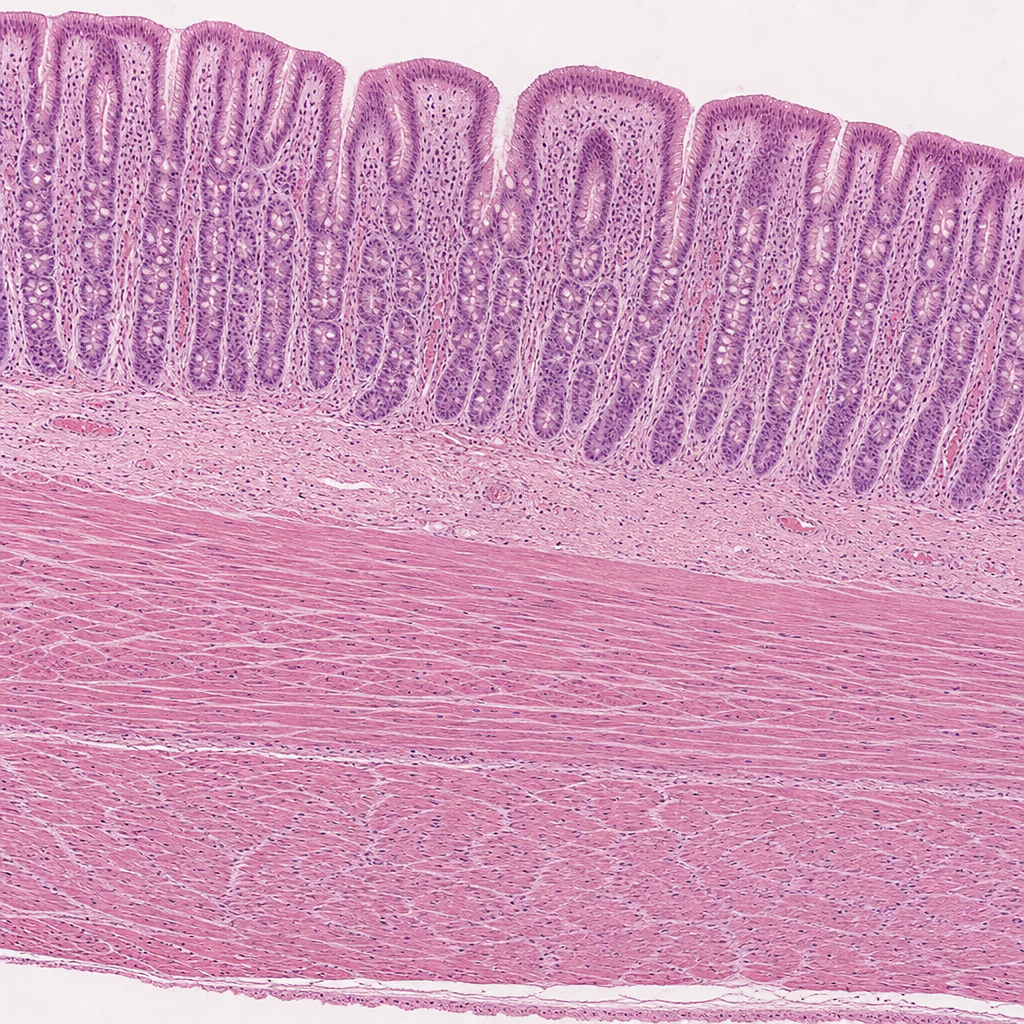
A histology slide from a routine autopsy is shown. The image reveals a tubular structure whose wall contains an inner oblique, middle circular, and outer longitudinal smooth muscle layer. The mucosa is lined by simple columnar epithelium with prominent gastric pits, and the lamina propria contains straight tubular glands extending the full depth of the mucosa with parietal (oxyntic) cells and chief cells that open into the base of the pits. The submucosa is unremarkable. Which region of the gastrointestinal tract does this specimen most likely represent?
Impaired gag reflex is seen due to a lesion in which cranial nerves?
Want unlimited practice?
Get full access to all questions, explanations, and performance tracking.
Scan to download app