
Primitive gut formation — MCQs

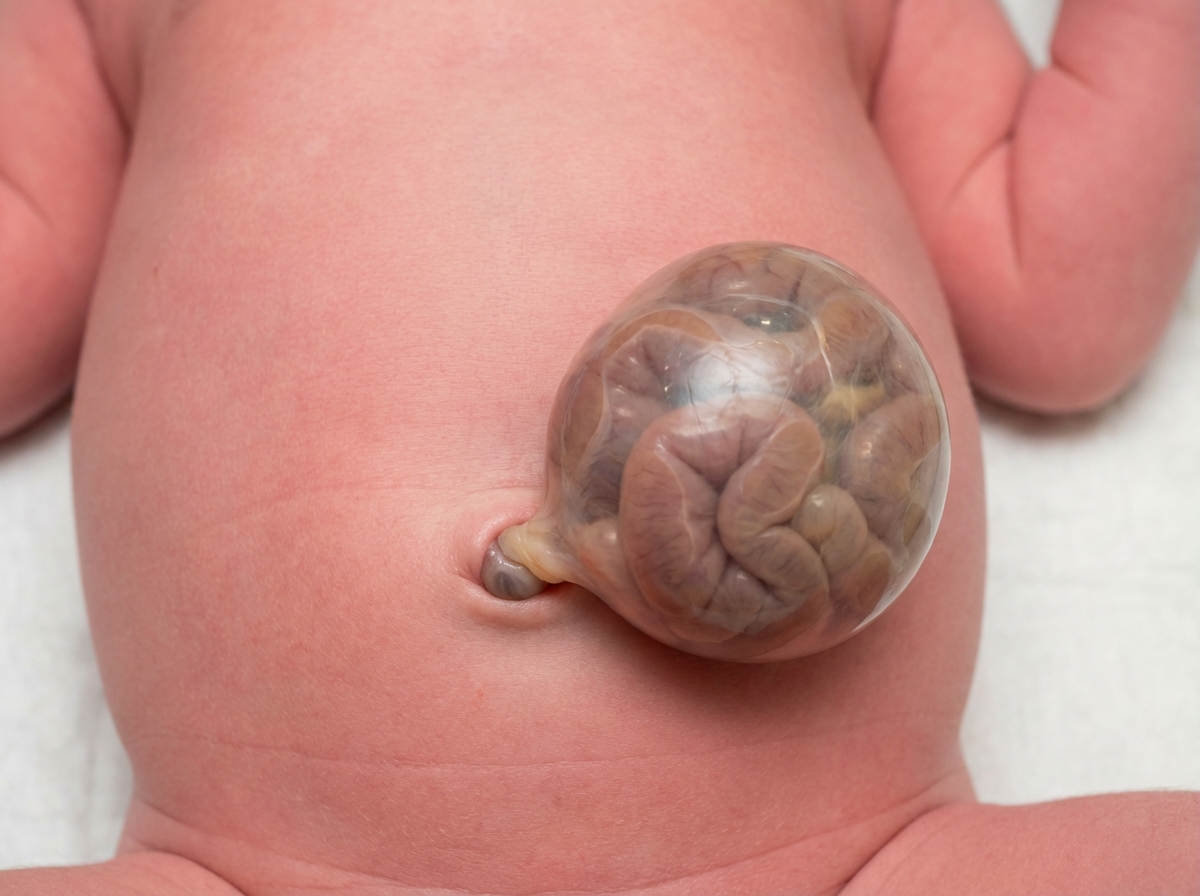
A 42-year-old woman presents to the emergency department in active labor. She has had no prenatal care and is unsure of the gestational age. Labor progresses rapidly and spontaneous vaginal delivery of a baby boy occurs 3 hours after presentation. On initial exam, the child is 1.9 kg (4.2 lb) with a small head and jaw. A sac-like structure containing intestine, as can be seen in the picture, protrudes from the abdominal wall. What complication is closely associated with this presentation?
A 34-year-old woman comes to the emergency department because of a 2-hour history of abdominal pain, nausea, and vomiting that began an hour after she finished lunch. Examination shows abdominal guarding and rigidity; bowel sounds are reduced. Magnetic resonance cholangiopancreatography shows the dorsal pancreatic duct draining into the minor papilla and a separate smaller duct draining into the major papilla. The spleen is located anterior to the left kidney. A disruption of which of the following embryological processes is the most likely cause of this patient's imaging findings?
A 75-year-old man presents to the clinic for chronic fatigue of 3 months duration. Past medical history is significant for type 2 diabetes and hypertension, both of which are controlled with medications, as well as constipation. He denies any fever, weight loss, pain, or focal neurologic deficits. A complete blood count reveals microcytic anemia, and a stool guaiac test is positive for blood. He is subsequently evaluated with a colonoscopy. The physician notes some “small pouches” in the colon despite poor visualization due to inadequate bowel prep. What is the blood vessel that supplies the area with the above findings?
A 60-year-old gentleman passes away after a car accident. On routine autopsy it is incidentally noted that he has both a ventral and dorsal pancreatic duct. This incidental finding observed by the pathologist is generated due to failure of which of the following embryological processes?
A 2-year-old boy is brought to the emergency department by his mother for evaluation of severe abdominal pain that began one hour ago. On examination, the patient is afebrile and has diffuse rebound tenderness with acute epigastric pain. A stool guaiac test is positive. A small bowel perforation is suspected. What is the embryologic structure that is the underlying cause of this patient’s presentation?
A new imaging modality is being tested to study vitelline duct morphology. A fetus at 20 weeks' gestation is found to have partial obliteration of this duct. Which of the following is the most likely sequela of this condition?
A 10-month-old infant is brought in by his parents because he is vomiting and not passing stool. His parents say he has vomited multiple times over the past couple of hours, but the most recent vomit was green. The patient has no significant past medical history. On physical examination, the patient is irritable and crying. On palpation in the periumbilical region, an abdominal mass is present. Emergency laparotomy is performed, which shows a part of the patient’s intestine folded into the section adjacent to it. Which of the following is the most likely diagnosis for this patient?
A researcher is investigating the blood supply of the adrenal gland. While performing an autopsy on a patient who died from unrelated causes, he identifies a vessel that supplies oxygenated blood to the inferior aspect of the right adrenal gland. Which of the following vessels most likely gave rise to the vessel in question?
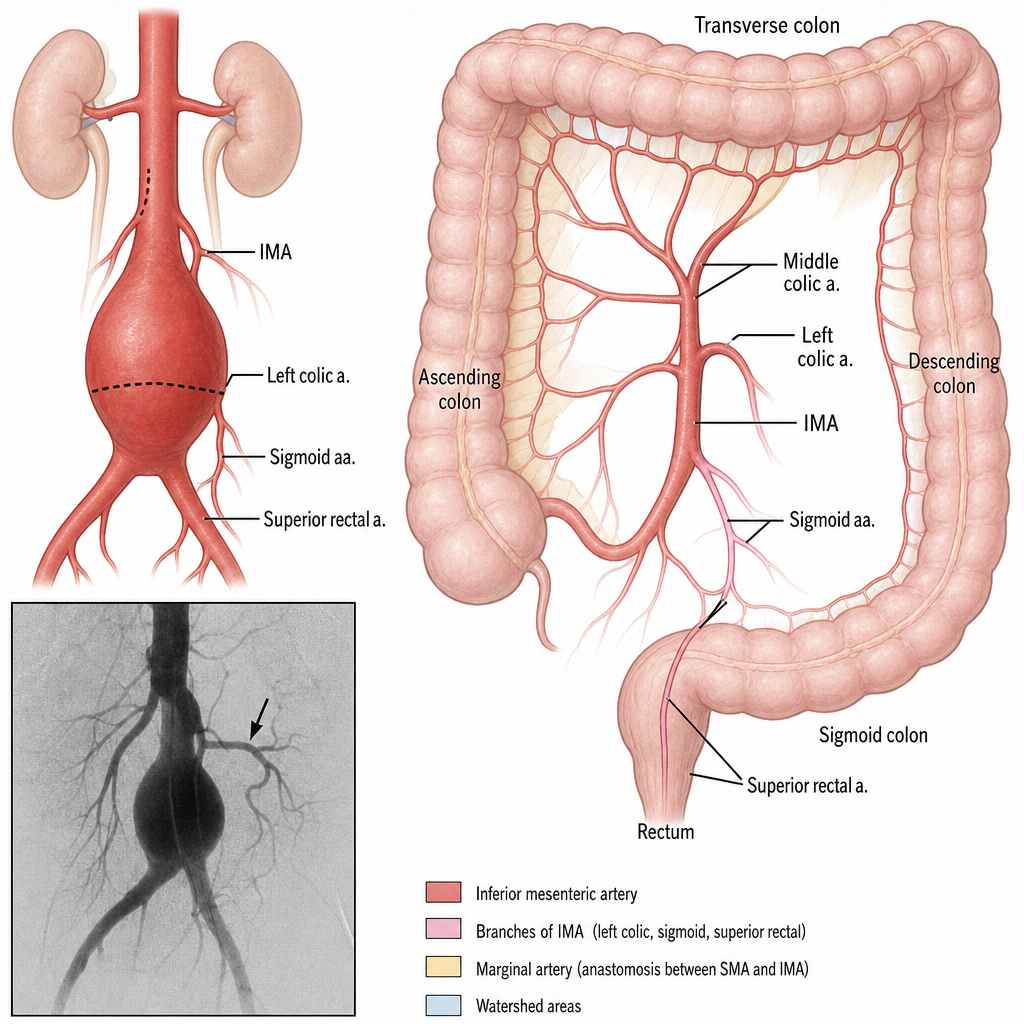
A vascular surgery team is reviewing pre-operative angiography for a 67-year-old man with a large abdominal aortic aneurysm extending to the bifurcation. The aneurysm sac and the origin of the inferior mesenteric artery (IMA) have been identified on imaging. The surgeon notes that the IMA must be reimplanted to preserve blood supply to a critical region. Based on the vascular territory of the IMA and its anastomotic connections, which clinical consequence is the surgical team most concerned about preventing if the IMA is ligated without reimplantation and collateral flow via the marginal artery of Drummond is inadequate?
A 4-week-old infant presents with progressively worsening jaundice. Laboratory studies show direct hyperbilirubinemia, elevated gamma-glutamyl transferase, and pale stools. Liver biopsy shows bile duct proliferation and portal fibrosis. Intraoperative cholangiogram reveals absence of extrahepatic bile ducts with normal intrahepatic ducts proximally. The gallbladder is present but atretic. Synthesize the embryological timing and pathophysiological mechanism of this postnatal progressive condition.
Want unlimited practice?
Get full access to all questions, explanations, and performance tracking.
Scan to download app