
Diaphragm development — MCQs

A 42-year-old woman presents to the emergency department in active labor. She has had no prenatal care and is unsure of the gestational age. Labor progresses rapidly and spontaneous vaginal delivery of a baby boy occurs 3 hours after presentation. On initial exam, the child is 1.9 kg (4.2 lb) with a small head and jaw. A sac-like structure containing intestine, as can be seen in the picture, protrudes from the abdominal wall. What complication is closely associated with this presentation?
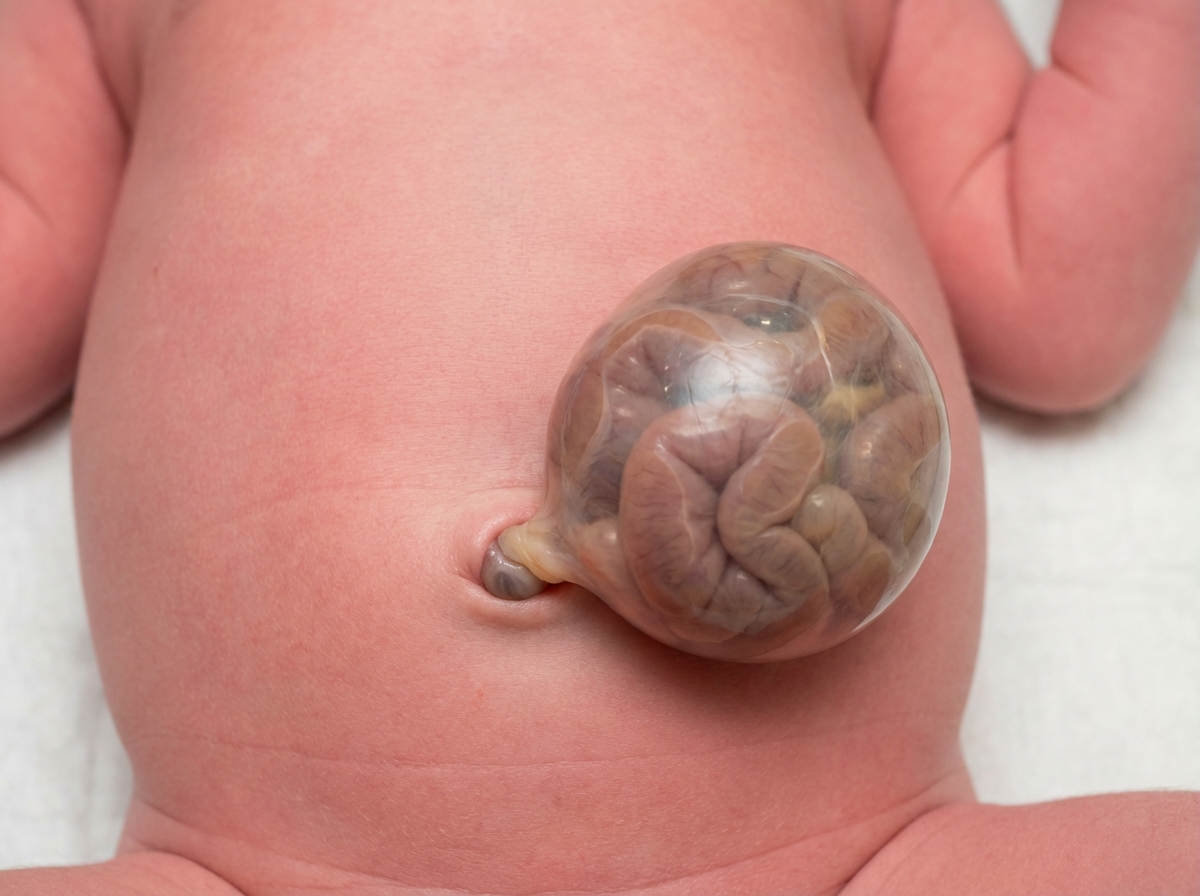
During the third week of development, the blastocyst undergoes a variety of differentiation processes responsible for the formation of the gastrula and, eventually, the embryo. This differentiation creates cell lineages that eventually become a variety of body systems. What cell lineage, present at this date, is responsible for the formation of the liver?
A 50-year-old man is brought in by ambulance to the emergency department with difficulty breathing and speaking. His wife reports that he might have swallowed a fishbone. While taking his history the patient develops a paroxysmal cough. Visualization of his oropharynx and larynx shows a fishbone lodged in the right piriform recess. After successfully removing the fishbone the patient feels comfortable, but he is not able to cough like before. Damage to which of the following nerves is responsible for the impaired cough reflex in this patient?
A 31-year-old man presents for his annual physical exam. The physician fails to palpate a ductus deferens on the left side. An ultrasound confirms absence of the left ductus deferens and further reveals absence of the left epididymis, seminal vesicle, and kidney. Spermogram and reproductive hormones panel are within normal limits. Left-sided agenesis of an embryonic anlage is suspected. Which two structures are connected by this anlage during embryogenesis?
A newborn infant is resuscitated and transferred to the neonatal intensive care unit. The infant has notable limb deformities as well as low-set ears and a flattened nose. He was born at 34 weeks gestation to a healthy mother who received regular obstetric follow-up. Resuscitation was notable for difficulty maintaining oxygenation in the newborn. Despite appropriate interventions, the infant is still struggling to maintain adequate oxygenation. Which of the following is most likely the cause of this patient's symptoms?
A 2600-g (5-lb 8-oz) male newborn is delivered at 34 weeks' gestation to a 22-year-old woman. The mother did not have prenatal care. Upon examination in the delivery room, the newborn's skin appears blue. He is gasping and breathing irregularly. The ears are low-set with broad auricles, and the nasal tip is flattened. The lower jaw is small and displaced backward. The right foot is clubbed. Which of the following is the most likely underlying cause of this patient's condition?
A child is in the nursery one day after birth. A nurse notices a urine-like discharge being expressed through the umbilical stump. What two structures in the embryo are connected by the structure that failed to obliterate during the embryologic development of this child?
During development, a fetus is found to have incomplete fusion of the neural tube. Which of the following structures would most likely be affected by this developmental defect?
A 28-year-old male presents to his primary care physician with complaints of intermittent abdominal pain and alternating bouts of constipation and diarrhea. His medical chart is not significant for any past medical problems or prior surgeries. He is not prescribed any current medications. Which of the following questions would be the most useful next question in eliciting further history from this patient?
A 35-year-old man is brought to the trauma bay by ambulance after sustaining a gunshot wound to the right arm. The patient is in excruciating pain and states that he can't move or feel his hand. The patient states that he has no other medical conditions. On exam, the patient's temperature is 98.4°F (36.9°C), blood pressure is 140/86 mmHg, pulse is 112/min, and respirations are 14/min. The patient is alert and his Glasgow coma scale is 15. On exam, he has a single wound on his right forearm without continued bleeding. The patient has preserved motor and sensation in his right elbow; however, he is unable to extend his wrist or extend his fingers further. He is able to clench his hand, but this is limited by pain. On sensory exam, the patient has no sensation to the first dorsal web space but has preserved sensation on most of the volar surface. Which of the following structures is most likely injured?
Want unlimited practice?
Get full access to all questions, explanations, and performance tracking.
Scan to download app