
Placenta and fetal membranes — MCQs

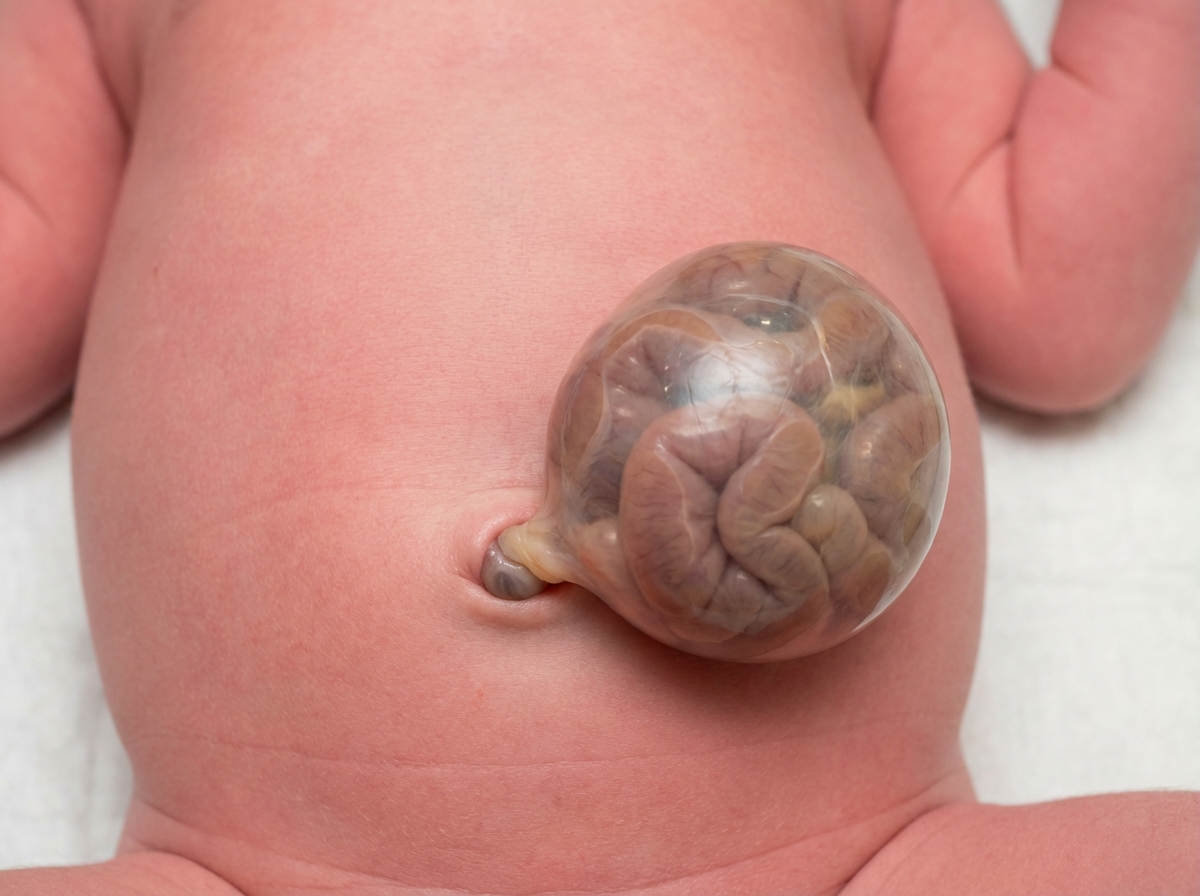
A 42-year-old woman presents to the emergency department in active labor. She has had no prenatal care and is unsure of the gestational age. Labor progresses rapidly and spontaneous vaginal delivery of a baby boy occurs 3 hours after presentation. On initial exam, the child is 1.9 kg (4.2 lb) with a small head and jaw. A sac-like structure containing intestine, as can be seen in the picture, protrudes from the abdominal wall. What complication is closely associated with this presentation?
A 35-year-old G3P2 woman currently 39 weeks pregnant presents to the emergency department with painful vaginal bleeding shortly after a motor vehicle accident in which she was a passenger. She had her seat belt on and reports that the airbag deployed immediately upon her car's impact against a tree. She admits that she actively smokes cigarettes. Her prenatal workup is unremarkable. Her previous pregnancies were remarkable for one episode of chorioamnionitis that resolved with antibiotics. Her temperature is 98.6°F (37°C), blood pressure is 90/60 mmHg, pulse is 130/min, and respirations are 20/min. The fetal pulse is 110/min. Her uterus is tender and firm. The remainder of her physical exam is unremarkable. What is the most likely diagnosis?
A 31-year-old G3P0 is admitted to the hospital with profuse vaginal bleeding and abdominal pain at 34 weeks gestation. She reports passing bright blood with clots and no water in the discharge. She denies recent trauma or medical illnesses. She had no prenatal care. Her previous pregnancies culminated in spontaneous abortions in the second trimester. She has a 6-year history of drug abuse and cocaine smoking 2 hours prior to the onset of her symptoms. Her blood pressure is 160/90 mm Hg, the heart rate is 93/min, the respiratory rate is 19/min, and the temperature is 36.9℃ (98.4℉). The fetal heart rate is 110/min. On examination, the patient is lethargic. Her pupils are constricted, but reactive to light bilaterally. There are no signs of trauma. Abdominal palpation identifies lower abdominal tenderness and strong uterine contractions. The fundus of the uterus is between the xiphoid process and umbilicus. The patient’s perineum is grossly bloody. On pelvic examination, the vaginal canal is without lesions. The cervix is almost completely effaced and 2 cm dilated. Which of the following options is the most likely cause of the patient’s pregnancy-related condition?
A researcher is studying the interactions between foreign antigens and human immune cells. She has isolated a line of lymphocytes that is known to bind antigen-presenting cells. From this cell line, she has isolated a cell surface protein that binds to class I major histocompatibility complex molecules. The continued activation, proliferation and survival of this specific cell line requires which of the following signaling molecules?
A 39-year-old woman, gravida 3, para 2, at 32 weeks' gestation comes to the emergency department 1 hour after the sudden onset of severe abdominal pain and nausea. She has had one episode of nonbloody vomiting. Pregnancy has been uncomplicated, except for a blood pressure measurement of 150/90 mm Hg on her last prenatal visit. Her first child was delivered vaginally; her second child was delivered by lower segment transverse cesarean section because of a nonreassuring fetal heart rate. She appears anxious and pale. Her temperature is 36.1°C (96°F), pulse is 115/min, and blood pressure is 92/65 mm Hg. Extremities are cool and clammy. Pelvic examination shows a rigid, tender uterus. The cervix is 30% effaced and 1 cm dilated; the vertex is at -1 station. The fetal heart rate is 100/min. Which of the following is the most likely diagnosis?
A 36-year-old woman, gravida 2, para 1, at 30 weeks' gestation comes to the physician for evaluation of increased urinary frequency. She has no history of major medical illness. Physical examination shows no abnormalities. Laboratory studies show an increased serum C-peptide concentration. Ultrasonography shows polyhydramnios and a large for gestational age fetus. Which of the following hormones is predominantly responsible for the observed laboratory changes in this patient?
A 34-year-old G3P2 presents at 33 weeks gestation with several episodes of bloody spotting and mild vaginal bleeding over the past 2 weeks. The bleeding has no specific triggers and resolves spontaneously. She does not report abdominal pain or uterine contractions. She has had two cesarean deliveries. At 20 weeks gestation, the ultrasound examination showed the placental edge to be 5 cm away from the internal cervical os. On examination at this visit, the vital signs are as follows: blood pressure, 110/70 mm Hg; heart rate, 89/min; respiratory rate, 15/min; and temperature, 36.6℃ (97.9℉). The uterus is tender with no palpable contractions and streaks of blood are noted on the perineum, but there is no active bleeding. An ultrasound evaluation shows the placental edge 1 cm from the internal cervical os. Which of the following options best describes the placental position at each ultrasound?
A 28-year-old male presents to his primary care physician with complaints of intermittent abdominal pain and alternating bouts of constipation and diarrhea. His medical chart is not significant for any past medical problems or prior surgeries. He is not prescribed any current medications. Which of the following questions would be the most useful next question in eliciting further history from this patient?
Research is being conducted on embryoblasts. The exact date of fertilization is unknown. There is the presence of a cytotrophoblast and syncytiotrophoblast, marking the time when implantation into the uterus would normally occur. Within the embryoblast, columnar and cuboidal cells are separated by a membrane. Which of these cell layers begins to line the yolk sac cavity?
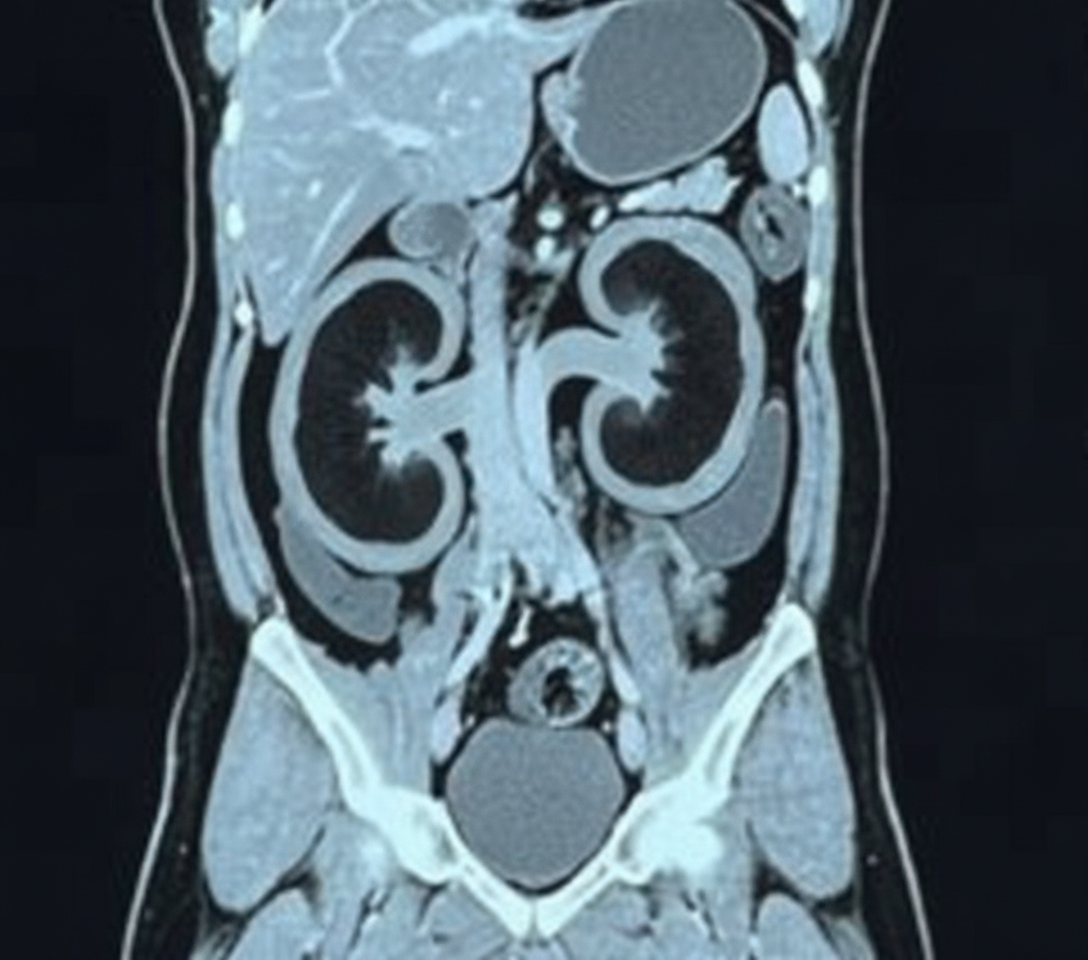
An 11-year-old girl is brought to the office by her mother due to complaint of intermittent and severe periumbilical pain for 1 day. She does not have any significant past medical history. She provides a history of a recent school trip to the suburbs. On physical examination, there is a mild tenderness around the umbilicus without any distension or discharge. There is no rebound tenderness. Bowel sounds are normal. An abdominal imaging shows enlarged mesenteric lymph nodes, and she is diagnosed with mesenteric lymphadenitis. However, incidentally, a mass of tissue was seen joining the inferior pole of both kidneys as shown in the image. Which of the following best describes this renal anomaly?
Want unlimited practice?
Get full access to all questions, explanations, and performance tracking.
Scan to download app