
Fertilization and zygote formation — MCQs

Fertilization begins when sperm binds to the corona radiata of the egg. Once the sperm enters the cytoplasm, a cortical reaction occurs which prevents other sperm from entering the oocyte. The oocyte then undergoes an important reaction. What is the next reaction that is necessary for fertilization to continue?
A 25-year-old woman is brought to the emergency department by her roommate with severe right lower quadrant pain for the last 8 hours. The pain is progressively getting worse and is associated with vomiting. When you ask the patient about her last menstrual period, she tells you that although she stopped keeping track of her cycle after undergoing surgical sterilization 1 year ago, she recalls bleeding yesterday. The physical examination reveals a hemodynamically stable patient with a pulse of 90/min, respiratory rate of 14/min, blood pressure of 125/70 mm Hg, and temperature of 37.0°C (98.6°F). The abdomen is tender to touch (more tender in the lower quadrants), and tenderness at McBurney's point is absent. Which of the following is the best next step in the management of this patient?
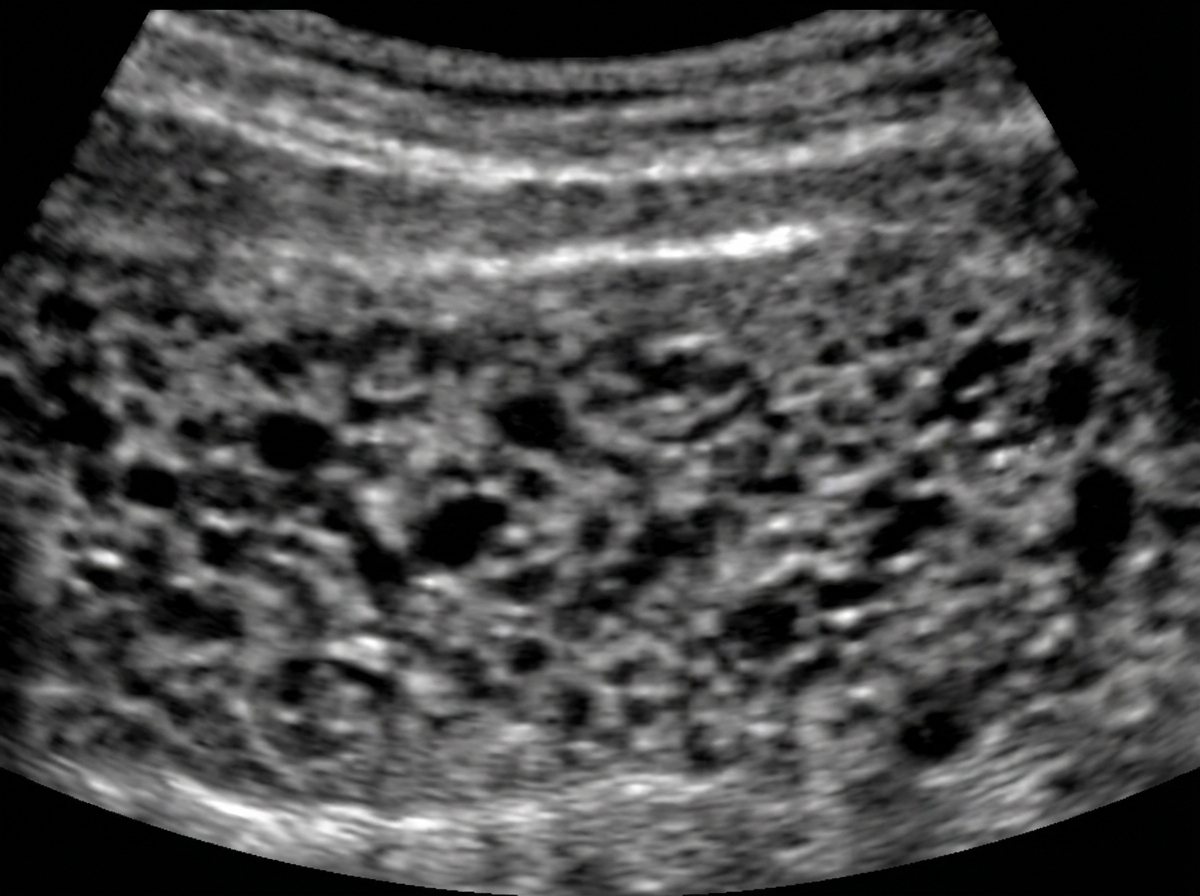
A 30-year-old woman comes to the primary care physician because she has felt nauseous and fatigued for 3 weeks. Menses occur at irregular 24- to 33-day intervals and last for 4–6 days. Her last menstrual period was 7 weeks ago. Her temperature is 37°C (98.6°F), pulse is 95/min, and blood pressure is 100/70 mm Hg. Pelvic examination shows an enlarged uterus. Her serum β-hCG concentration is 96,000 mIU/mL (N < 5). An abdominal ultrasound is shown. Which of the following is the most likely diagnosis?
A 34-year-old woman comes to the fertility clinic with her husband for infertility treatment. The couple has been having unprotected intercourse for the past 2 years without any pregnancies. This is their first time seeking fertility treatment. The patient's past medical history includes asthma. She denies any menstrual irregularities, menstrual pain, abnormal bleeding or past sexually transmitted infections. The husband reports that "he would get sick easily and would always have some upper respiratory infections." Physical examination of the wife demonstrates nasal polyps bilaterally; vaginal examination is unremarkable. Physical examination of the husband is unremarkable. Semen analysis results are shown below: Semen analysis: Volume: 1.9 mL (Normal > 1.5 mL) pH: 7.4 (Normal: > 7.2) Sperm concentration: 0 million/mL (Normal: > 15 million/mL) Total sperm count: 0 million/mL (Normal: > 39 million/mL) Total motility: N/A (Normal: > 40%) Morphology: N/A (Normal: > 4% normal forms) What is the most likely explanation for this couple's infertility?
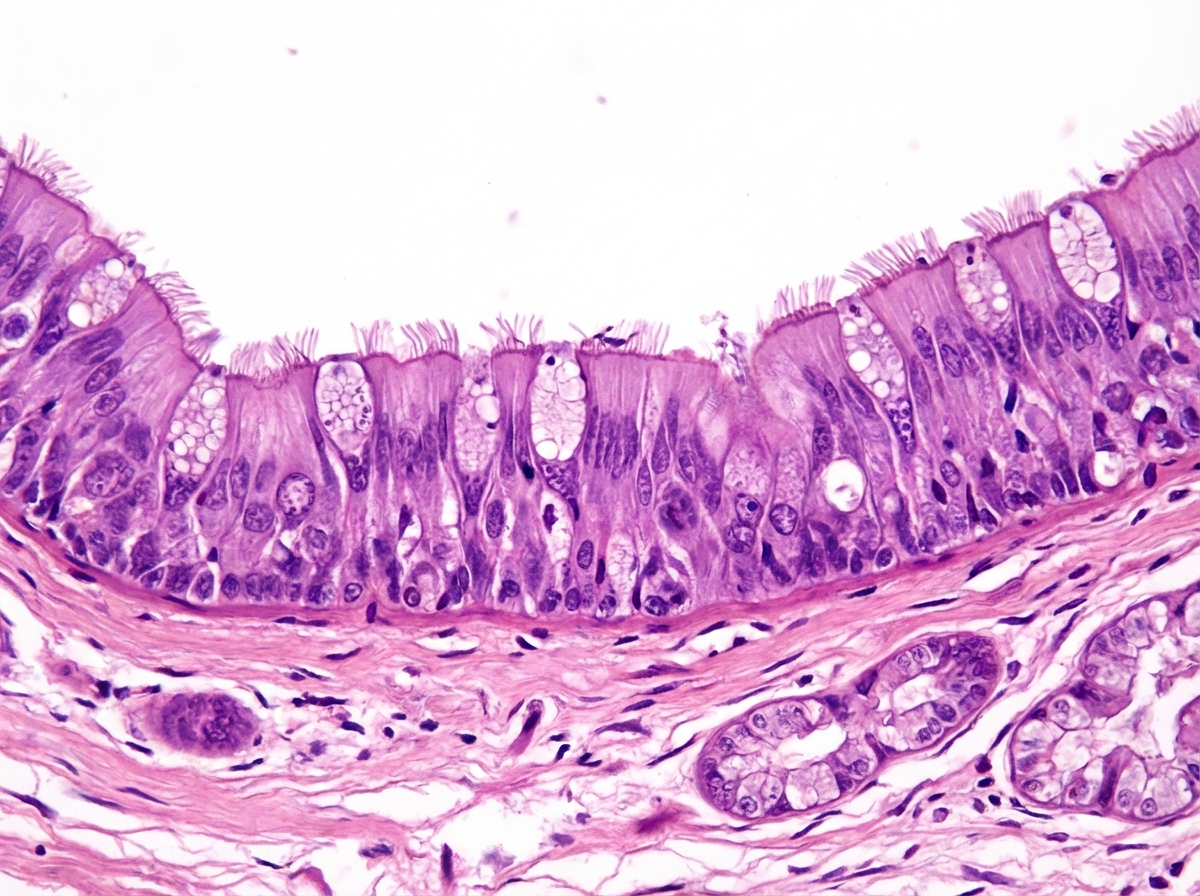
A research team is studying certain congenital anomalies of the respiratory tract. The method consists of marking a certain germinal layer with an isotope, following its development stages in chicken embryos, and finally analyzing the specimen. A given specimen of tissue is presented in the exhibit. Which of the following germinal structures most likely gave rise to the epithelial lining of this specimen?
A 24-year-old woman presents to the emergency department for evaluation of lower abdominal pain. She endorses 6 hours of progressively worsening pain. She denies any significant past medical history and her physical examination is positive for non-specific, diffuse pelvic discomfort. She denies the possibility of pregnancy given her consistent use of condoms with her partner. The vital signs are: blood pressure, 111/68 mm Hg; pulse, 71/min; and respiratory rate, 15/min. She is afebrile. Which of the following is the next best step in her management?
A 38-year-old woman presents to her primary care physician concerned about her inability to get pregnant for the past year. She has regular menstrual cycles and has unprotected intercourse with her husband daily. She is an immigrant from Australia and her past medical history is not known. She is currently taking folic acid and multivitamins. The patient's husband has had a sperm count that was determined to be within the normal range twice. She is very concerned about her lack of pregnancy and that she is too old. Which of the following is the most appropriate next step in management for this patient?
Research is being conducted on embryoblasts. The exact date of fertilization is unknown. There is the presence of a cytotrophoblast and syncytiotrophoblast, marking the time when implantation into the uterus would normally occur. Within the embryoblast, columnar and cuboidal cells are separated by a membrane. Which of these cell layers begins to line the yolk sac cavity?
A researcher is studying gamete production and oogenesis. For her experiment, she decides to cultivate primary oocytes in their arrested state and secondary oocytes just prior to fertilization. When she examines these gametes, she will find that the primary oocytes and secondary oocytes are arrested in which phases of meiosis, respectively?
A 26-year-old woman comes to the physician because she has not had a menstrual period for 5 weeks. Menarche was at the age of 14 years and menses occurred at regular 30-day intervals. She reports having unprotected sexual intercourse 3 weeks ago. A urine pregnancy test is positive. Which of the following best describes the stage of development of the embryo at this time?
Want unlimited practice?
Get full access to all questions, explanations, and performance tracking.
Scan to download app