
Sensory testing of dermatomes — MCQs

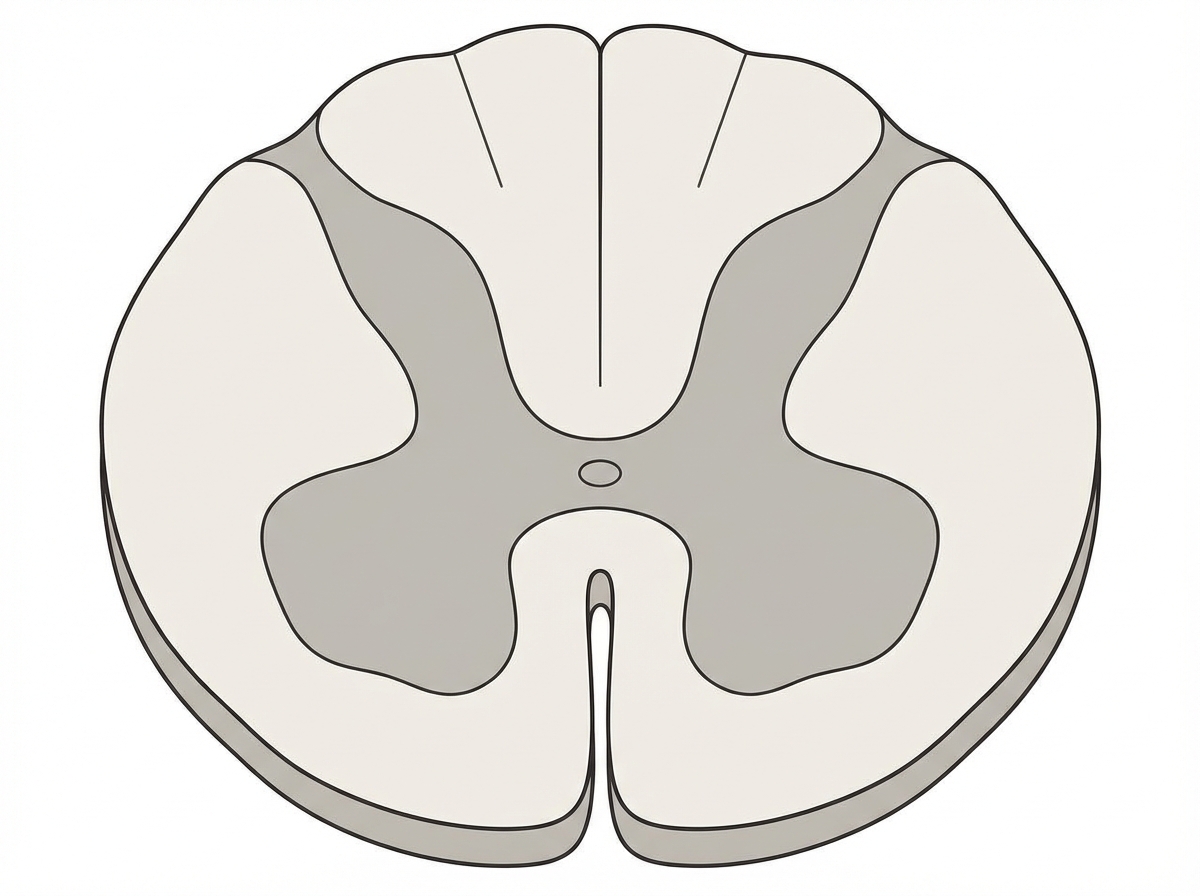
A 45-year-old man is brought to the emergency department by ambulance after a motor vehicle collision. He is not responsive to verbal commands and is unable to provide any history. His pulse is 108/min and regular. Physical examination shows ecchymoses over the neck and back. Neurological examination indicates damage to the spinal cord at the level shown in the illustration. This patient's injury is most likely located at which of the following levels of the spinal cord?
A 25-year-old woman comes to the physician because of pain and weakness in her right forearm and hand for several months. Two years ago, she sustained a fracture of her ulnar shaft with dislocation of the radial head that was treated surgically. Physical examination shows mild tenderness a few centimeters distal to the lateral epicondyle. She has marked weakness when attempting to extend her right middle finger. There is radial deviation on extension of the wrist. Sensation is not impaired. Which of the following nerves is most likely affected in this patient?
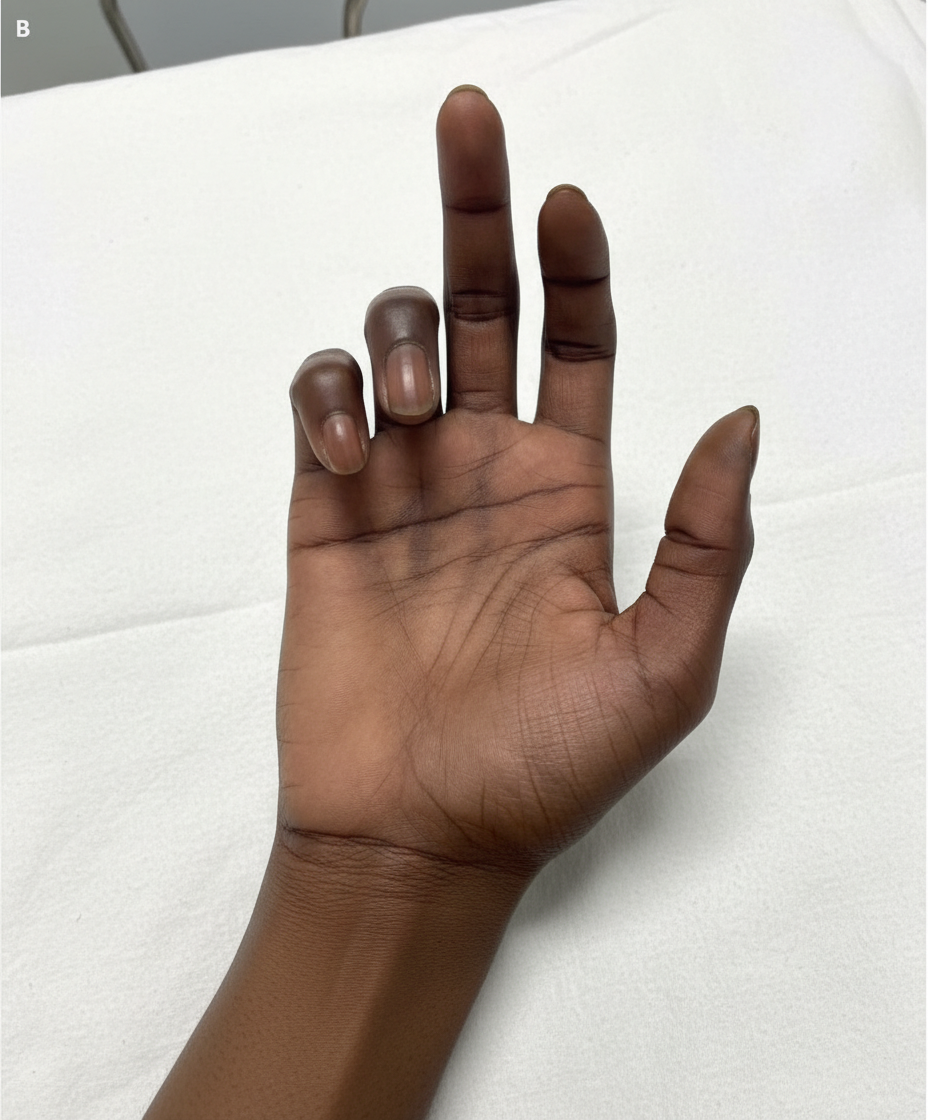
A 30-year-old man presents with weakness in his right hand. He says he has been an avid cyclist since the age of 20. He denies any recent trauma. Physical examination reveals decreased sensations over the 4th and 5th digits with difficulty extending the 4th and 5th digits. Strength is 4 out of 5 in the extensor muscles of the right hand and wrist. When the patient is asked to extend his fingers, the result is shown in the image. Which of the following nerves is most likely damaged in this patient?
A 51-year-old woman comes to the physician because of progressively worsening lower back pain. The pain radiates down the right leg to the lateral side of the foot. She has had no trauma, urinary incontinence, or fever. An MRI of the lumbar spine shows disc degeneration and herniation at the level of L5–S1. Which of the following is the most likely finding on physical examination?
A 29-year-old woman presents to the primary care office for a recent history of falls. She has fallen 5 times over the last year. These falls are not associated with any preceding symptoms; she specifically denies dizziness, lightheadedness, or visual changes. However, she has started noticing that both of her legs feel weak. She's also noticed that her carpet feels strange beneath her bare feet. Her mother and grandmother have a history of similar problems. On physical exam, she has notable leg and foot muscular atrophy and 4/5 strength throughout her bilateral lower extremities. Sensation to light touch and pinprick is decreased up to the mid-calf. Ankle jerk reflex is absent bilaterally. Which of the following is the next best diagnostic test for this patient?
A 72-year-old woman is brought in to the emergency department after her husband noticed that she appeared to be choking on her dinner. He performed a Heimlich maneuver but was concerned that she may have aspirated something. The patient reports a lack of pain and temperature on the right half of her face, as well as the same lack of sensation on the left side of her body. She also states that she has been feeling "unsteady" on her feet. On physical exam you note a slight ptosis on the right side. She is sent for an emergent head CT. Where is the most likely location of the neurological lesion?
A 40-year-old woman presents with a ‘tingling’ feeling in the toes of both feet that started 5 days ago. She says that the feeling varies in intensity but has been there ever since she recovered from a stomach flu last week. Over the last 2 days, the tingling sensation has started to spread up her legs. She also reports feeling weak in the legs for the past 2 days. Her past medical history is unremarkable, and she currently takes no medications. Which of the following diagnostic tests would most likely be abnormal in this patient?
A 59-year-old woman presents to the emergency room with severe low back pain. She reports pain radiating down her left leg into her left foot. She also reports intermittent severe lower back spasms. The pain started after lifting multiple heavy boxes at her work as a grocery store clerk. She denies bowel or bladder dysfunction. Her past medical history is notable for osteoporosis and endometrial cancer. She underwent a hysterectomy 20 years earlier. She takes alendronate. Her temperature is 99°F (37.2°C), blood pressure is 135/85 mmHg, pulse is 85/min, and respirations are 22/min. Her BMI is 21 kg/m^2. On exam, she is unable to bend over due to pain. Her movements are slowed to prevent exacerbating her muscle spasms. A straight leg raise elicits severe radiating pain into her left lower extremity. The patient reports that the pain is worst along the posterior thigh and posterolateral leg into the fourth and fifth toes. Palpation along the lumbar vertebral spines demonstrates mild tenderness. Patellar reflexes are 2+ bilaterally. The Achilles reflex is decreased on the left. Which nerve root is most likely affected in this patient?
A 75-year-old man comes to the physician because of a 2-week history of sharp, stabbing pain in the lower back that radiates to the back of his left leg. He also has had a loss of sensitivity around his buttocks and inner thighs as well as increased trouble urinating the last week. Two years ago, he was diagnosed with prostate cancer and was treated with radiation therapy. Neurologic examination shows reduced strength and reflexes in the left lower extremity; the right side is normal. The resting anal sphincter tone is normal but the squeeze tone is reduced. Which of the following is the most likely diagnosis?
A 35-year-old woman, gravida 2, para 1, at 40 weeks' gestation, presents to the hospital with contractions spaced 2 minutes apart. Her past medical history is significant for diabetes, which she has controlled with insulin during this pregnancy. Her pregnancy has otherwise been unremarkable. A baby boy is born via a spontaneous vaginal delivery. Physical examination shows he weighs 4.5 kg (9 lb), the pulse is 140/min, the respirations are 40/min, and he has good oxygen saturation on room air. His left arm is pronated and medially rotated. He is unable to move it away from his body. The infant’s right arm functions normally and he is able to move his wrists and all 10 digits. Which of the following nerve roots were most likely damaged during delivery?
Want unlimited practice?
Get full access to all questions, explanations, and performance tracking.
Scan to download app