
Cross-sectional anatomy — MCQs

On this page
While performing a lumbar puncture on a patient presenting with fever, neck rigidity, and altered sensorium, what is the last structure to be encountered by the needle?
A 24-day-old neonate is brought to the emergency department by his parents with high-grade fever, inability to feed, and lethargy. Since his birth, he was active and energetic, feeding every 2-3 hours and making 6-8 wet diapers every day until 2 days ago when he vomited twice, developed diarrhea, and slowly became lethargic. The boy was born at 39 weeks gestation via spontaneous vaginal delivery. He is up to date on all vaccines and is meeting all developmental milestones. He has not been in contact with any sick people lately. Today, his temperature is 39.4°C (102.9°F). He looks floppy and is unresponsive and difficult to rouse. Physical exam reveals a bulging anterior fontanelle. He is admitted to the NICU with the suspicion of neonatal meningitis, cerebrospinal fluid analysis is ordered, and empiric antibiotics are started. Which of the following structures will be punctured during the lumbar puncture procedure?
A 45-year-old man is brought to the emergency department by ambulance after a motor vehicle collision. He is not responsive to verbal commands and is unable to provide any history. His pulse is 108/min and regular. Physical examination shows ecchymoses over the neck and back. Neurological examination indicates damage to the spinal cord at the level shown in the illustration. This patient's injury is most likely located at which of the following levels of the spinal cord?
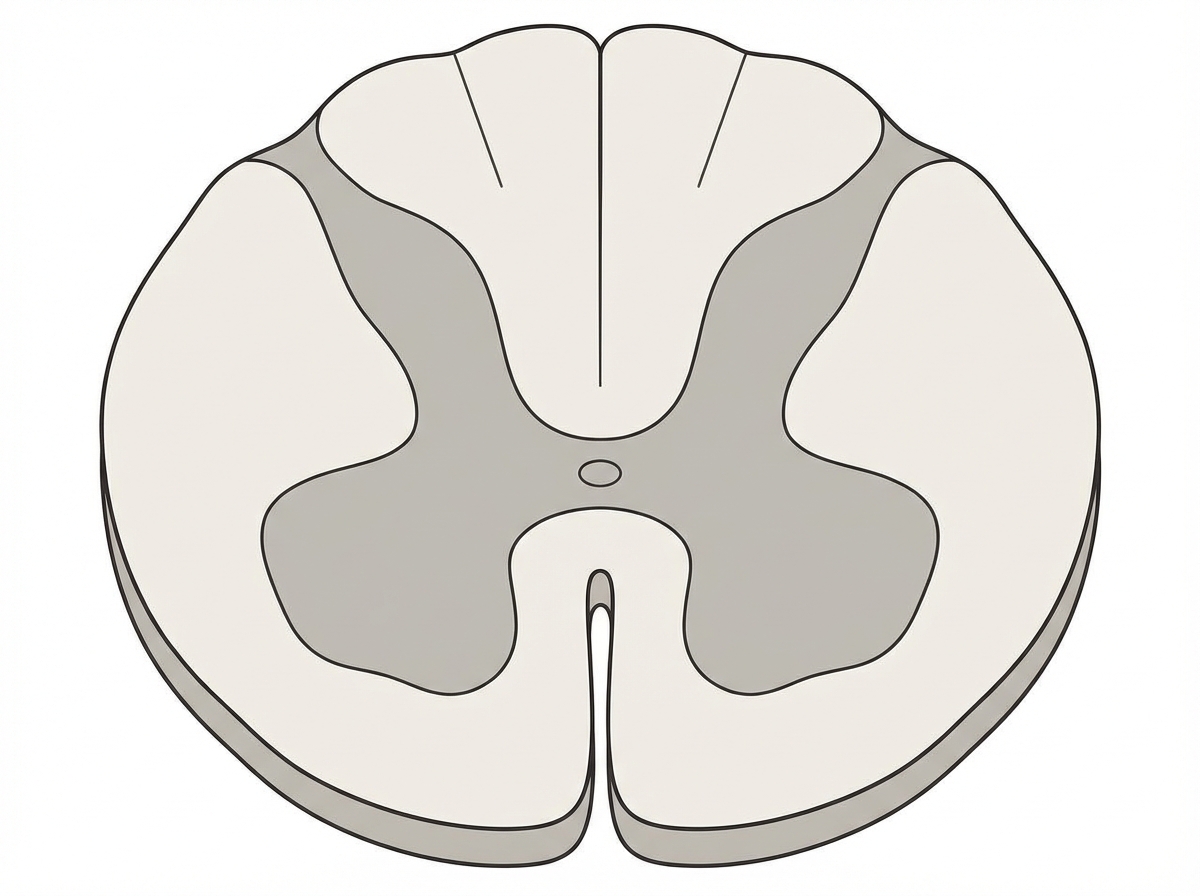
A 28-year-old man is admitted to the hospital for the evaluation of symmetric, ascending weakness that started in his feet and has become progressively worse over the past 5 days. A lumbar puncture is performed to confirm the diagnosis. As the needle is advanced during the procedure, there is resistance just before entering the epidural space. This resistance is most likely due to which of the following structures?
Practice by Chapter
Principles of cross-sectional imaging
Practice Questions
Head and neck cross-sections
Practice Questions
Thoracic cross-sections
Practice Questions
Cardiac cross-sections
Practice Questions
Upper abdominal cross-sections
Practice Questions
Lower abdominal cross-sections
Practice Questions
Pelvic cross-sections
Practice Questions
Upper limb cross-sections
Practice Questions
Lower limb cross-sections
Practice Questions
Anatomical planes and reference lines
Practice Questions
Want unlimited practice?
Get full access to all questions, explanations, and performance tracking.
Scan to download app