
Pontine nuclei — MCQs

A 45-year-old patient presents with difficulty speaking and swallowing following a stroke. MRI reveals an infarct in the medulla. Which of the following cranial nerve nuclei is most likely affected?
A 72-year-old woman is brought in to the emergency department after her husband noticed that she appeared to be choking on her dinner. He performed a Heimlich maneuver but was concerned that she may have aspirated something. The patient reports a lack of pain and temperature on the right half of her face, as well as the same lack of sensation on the left side of her body. She also states that she has been feeling "unsteady" on her feet. On physical exam you note a slight ptosis on the right side. She is sent for an emergent head CT. Where is the most likely location of the neurological lesion?
A 27-year-old man is brought into the emergency department by ambulance. The patient was at an appointment to receive welfare when he began acting abnormally. The patient was denied welfare. Shortly afterwards, he no longer responded to questions and stared blankly off into space, not responding to verbal stimuli. Other than odd lip-smacking behavior, he was motionless. Several minutes later, he became responsive but seemed confused. The patient has a past medical history of drug abuse and homelessness and is not currently taking any medications. His temperature is 98.9°F (37.2°C), blood pressure is 124/78 mmHg, pulse is 90/min, respirations are 14/min, and oxygen saturation is 99% on room air. Physical exam reveals cranial nerves II-XII as grossly intact with 5/5 strength in the upper and lower extremities and a stable gait. The patient seems confused when answering questions and has trouble remembering the episode. Which of the following is the most likely diagnosis?
A 57-year-old woman is brought to the emergency department by her husband with complaints of sudden-onset slurring for the past hour. She is also having difficulty holding things with her right hand. She denies fever, head trauma, diplopia, vertigo, walking difficulties, nausea, and vomiting. Past medical history is significant for type 2 diabetes mellitus, hypertension, and hypercholesterolemia for which she takes a baby aspirin, metformin, ramipril, and simvastatin. She has a 23-pack-year cigarette smoking history. Her blood pressure is 148/96 mm Hg, the heart rate is 84/min, and the temperature is 37.1°C (98.8°F). On physical examination, extraocular movements are intact. The patient is dysarthric, but her higher mental functions are intact. There is a right-sided facial weakness with preserved forehead wrinkling. Her gag reflex is weak. Muscle strength is mildly reduced in the right hand. She has difficulty performing skilled movements with her right hand, especially writing, and has difficulty touching far objects with her index finger. She is able to walk without difficulty. Pinprick and proprioception sensation is intact. A head CT scan is within normal limits. What is the most likely diagnosis?
Where does the only cranial nerve without a thalamic relay nucleus enter the skull?
A man appearing to be in his mid-50s is brought in by ambulance after he was seen walking on railroad tracks. On further questioning, the patient does not recall being on railroad tracks and is only able to provide his name. Later on, he states that he is a railroad worker, but this is known to be false. On exam, his temperature is 99.9°F (37.7°C), blood pressure is 128/86 mmHg, pulse is 82/min, and respirations are 14/min. He appears disheveled, and his clothes smell of alcohol. The patient is alert, is only oriented to person, and is found to have abnormal eye movements and imbalanced gait when attempting to walk. Which of the following structures in the brain likely has the greatest reduction in the number of neurons?
A 75-year-old man is brought to the emergency room after being found unresponsive in his home. His medical history is unknown. On physical examination he does not demonstrate any spontaneous movement of his extremities and is unable to respond to voice or painful stimuli. You notice that he is able blink and move his eyes in the vertical plane. Based on these physical exam findings, you expect that magnetic resonance angiogram will most likely reveal an occlusion in which of the following vessels?
A 26-year-old man is brought to the emergency department by ambulance after being involved in a motor vehicle collision. He does not open his eyes on command or respond to verbal cues. A CT scan of the head shows a hyperdense fluid collection in the right medial temporal lobe with medial displacement of the uncus and parahippocampal gyrus of the temporal lobe. Which of the following cranial nerves is most likely to be injured as a result of this patient's lesion?
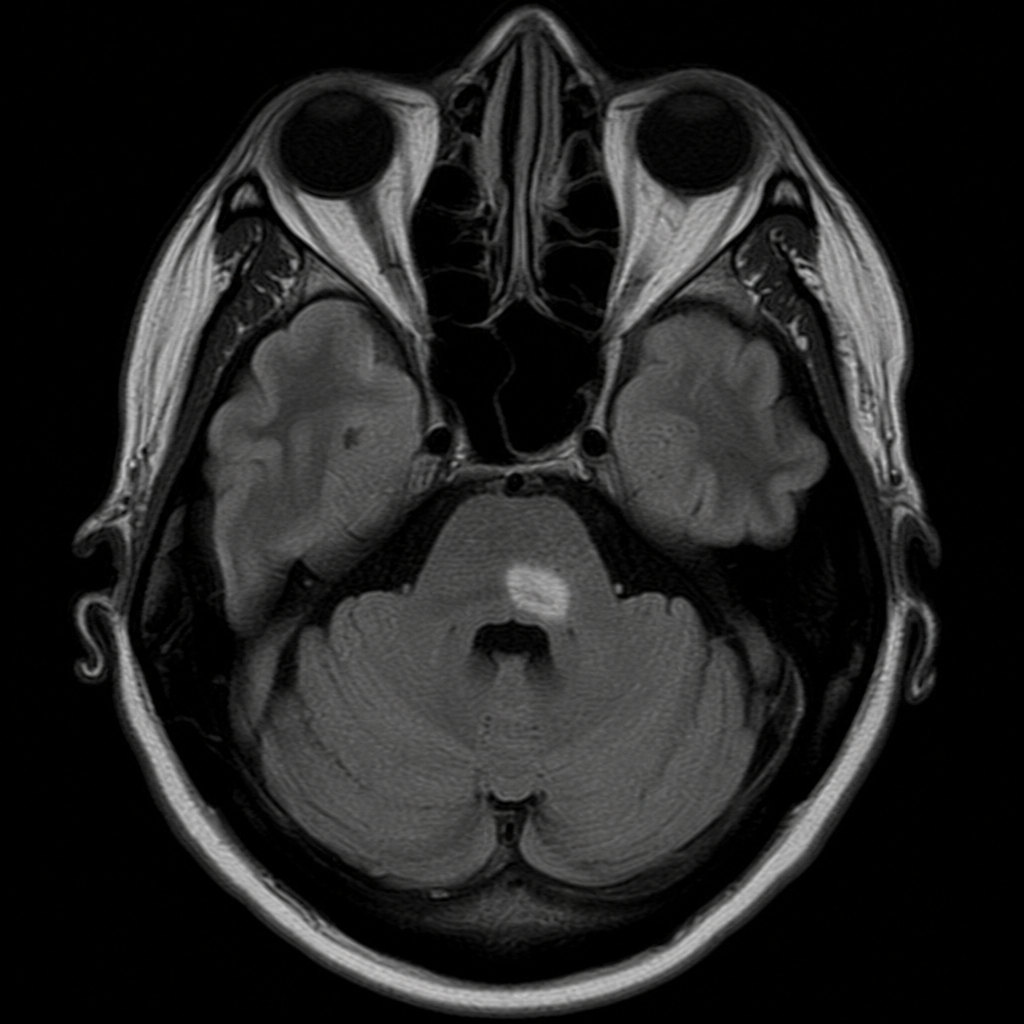
A 67-year-old man with a history of atrial fibrillation presents with sudden onset of right-sided facial droop involving the forehead, inability to conjugately gaze to the right, and left-sided hemiplegia sparing the face. His pupils are equal and reactive. An MRI is obtained. At which axial level and side does the lesion most likely reside?
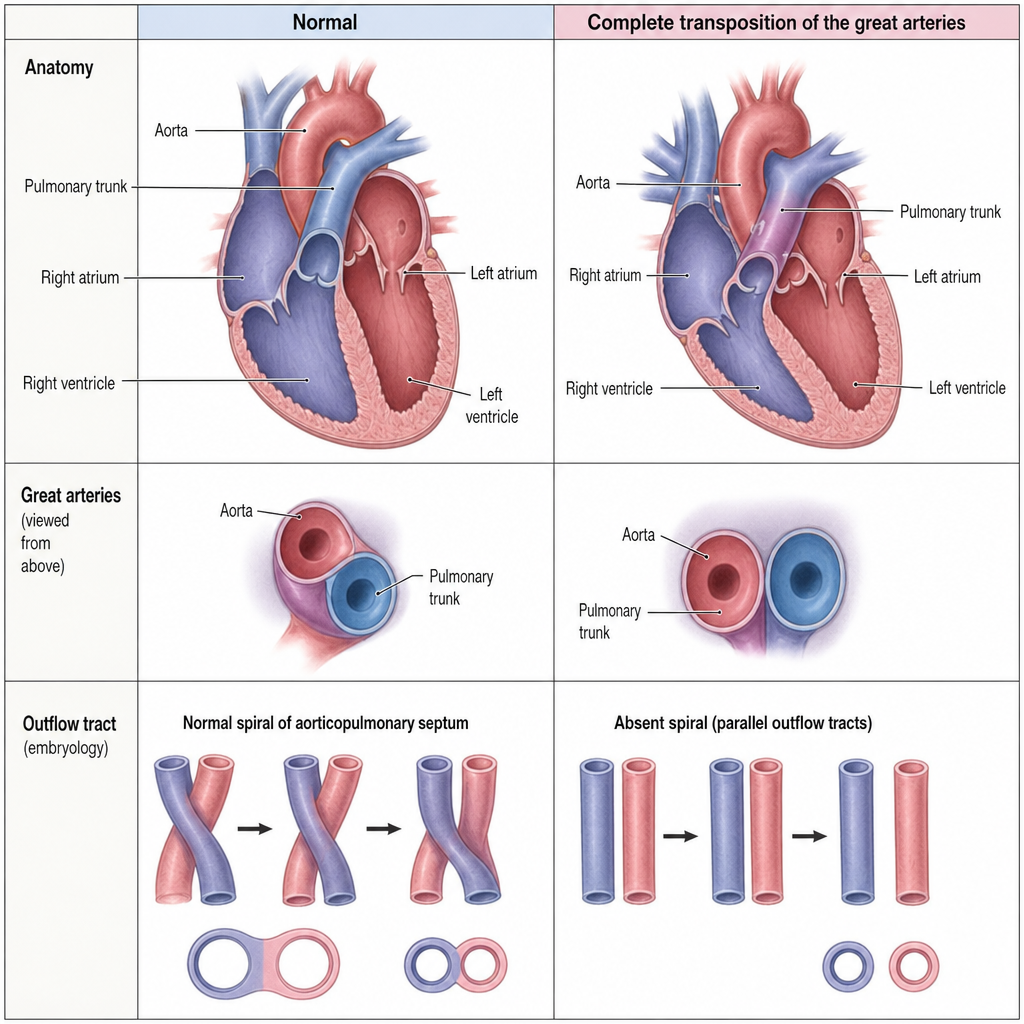
A 32-year-old woman at 28 weeks of gestation undergoes a fetal echocardiogram that reveals the aorta arising from the morphological right ventricle and the pulmonary trunk arising from the morphological left ventricle. The great vessels run parallel rather than in their normal spiral relationship. The embryological error most directly responsible for this anomaly occurred during which developmental process?
Want unlimited practice?
Get full access to all questions, explanations, and performance tracking.
Scan to download app