
Urinary Calculi — MCQs

What is the diagnosis based on the following X-ray?
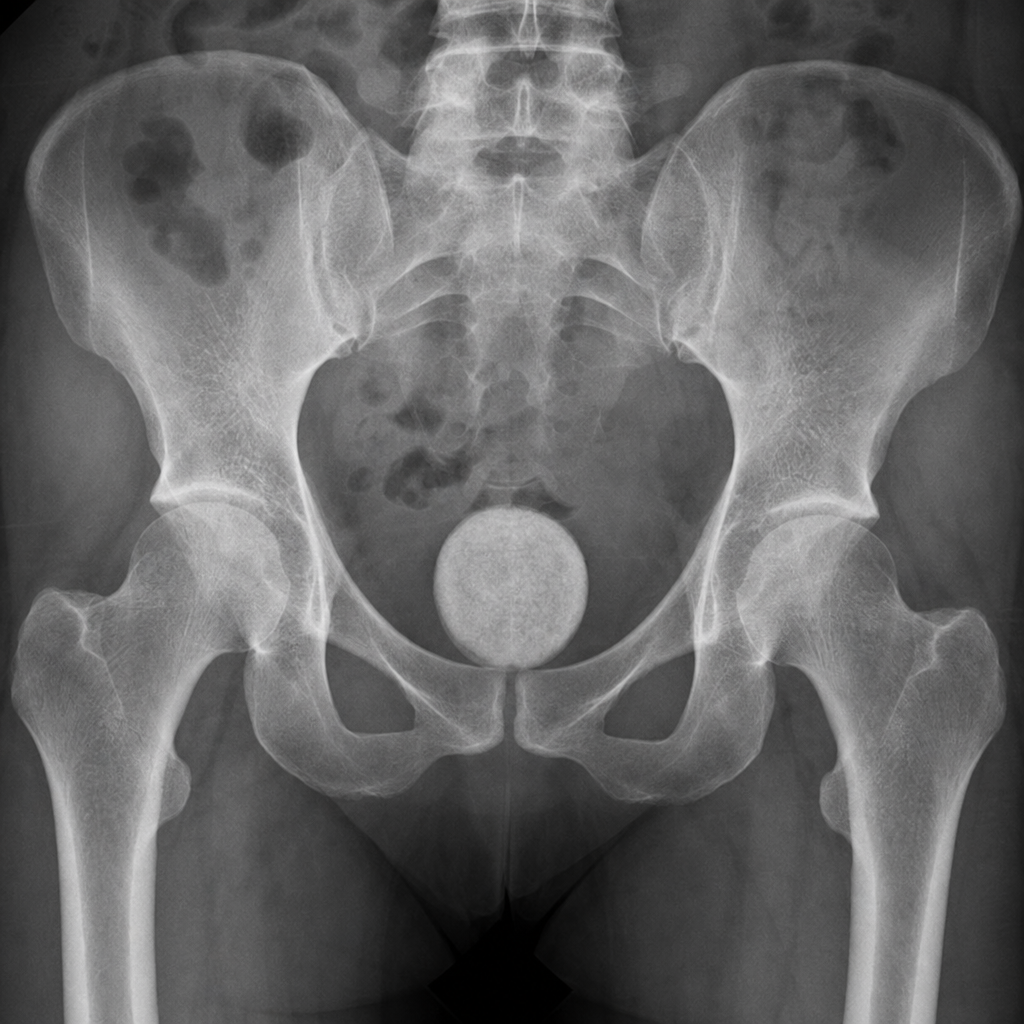
What is the most common type of stone found in the bladder?
Ultrasound is the best initial investigation of choice for:
A 50-year-old man has a history of frequent episodes of renal colic with high calcium renal stones. The most useful diuretic in the treatment of recurrent calcium stones is:
A 45-year-old Caucasian male with a history of chronic myeloid leukemia for which he is receiving chemotherapy presents to the emergency room with oliguria and colicky left flank pain. His serum creatinine is 3.0 mg/dL and his urine pH is 5.0. You diagnose nephrolithiasis. His kidney stones, however, are not visible on abdominal x-ray. His stone is most likely composed of which of the following?
A patient presents with persistent and severe pain in the lateral thigh and pubic regions, requiring hospital admission for observation and potential surgical intervention. Where is the ureteral stone most likely lodged?
Which of the following advice is not given to a 35-year-old female patient with recurrent renal stones?
Which of the following types of kidney stones are commonly associated with urinary tract infections?
An infant with severe dehydration secondary to diarrhea suddenly presents with flank mass and blood in urine. The most probable diagnosis is?
Which of the following potassium sparing diuretics cause renal stones?
Want unlimited practice?
Get full access to all questions, explanations, and performance tracking.
Scan to download app