
Congenital and Developmental Chest Anomalies — MCQs

The most likely diagnosis in a newborn who had a radiopaque shadow with an air-fluid level in the chest along with hemivertebrae of the 6th thoracic vertebra on plain X-ray is –
Which of the following statements about Branchial cysts is true:
Which of the following is an acquired condition?
A 3-year-old child presents with respiratory distress and a history of recurrent respiratory infections. Based on the provided imaging, what is the most likely diagnosis?
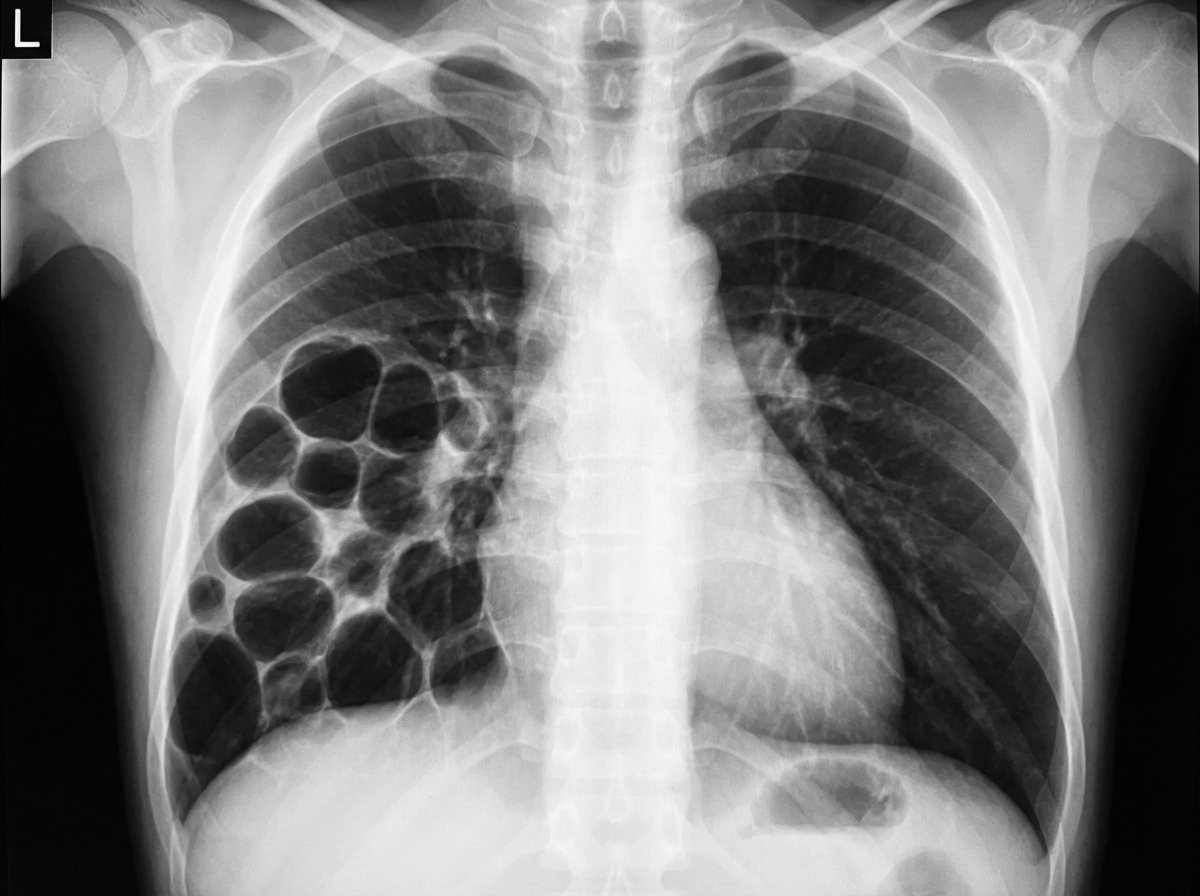
Which one of the following life-threatening congenital anomalies in the newborn presents with polyhydramnios, aspiration pneumonia, excessive salivation and difficulty in passing a nasogastric tube?
Congenital cyanotic heart disease with pulmonary oligemia is seen with –
Pulmonary plethora in a child presenting with cyanosis, is seen in?
A patient presents with recurrent lung infections, and the chest X-ray provided shows a characteristic finding. What is the most likely diagnosis?
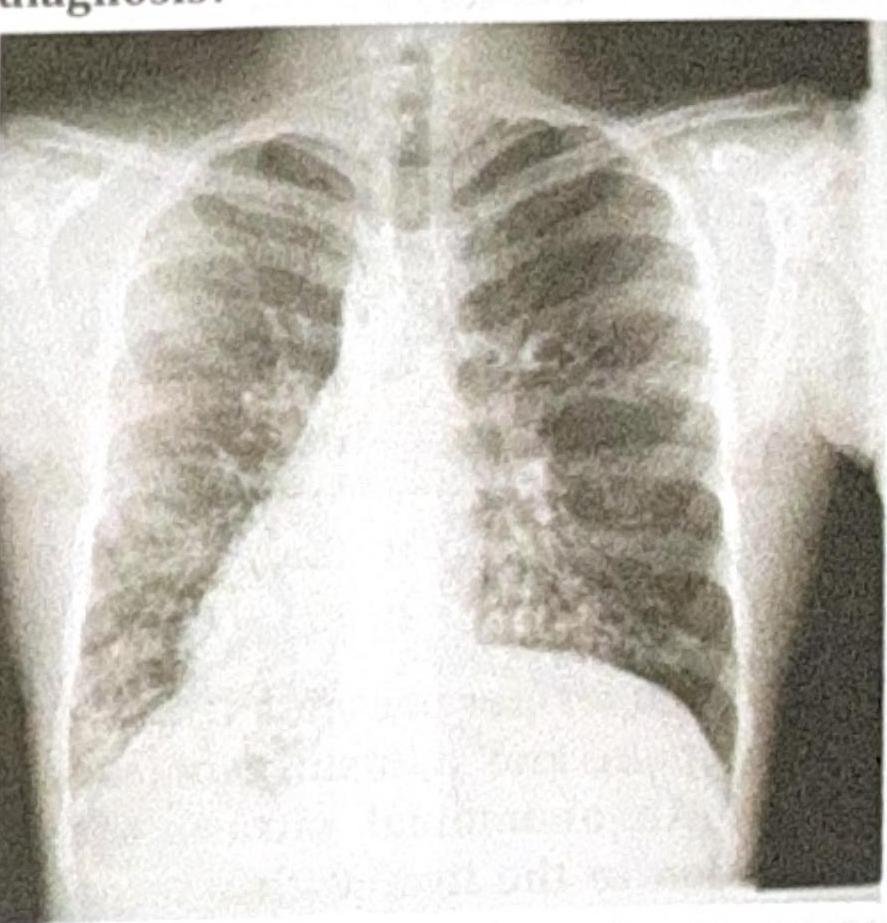
Identify the most likely diagnosis based on the chest X-ray findings in a patient with low-grade fever.
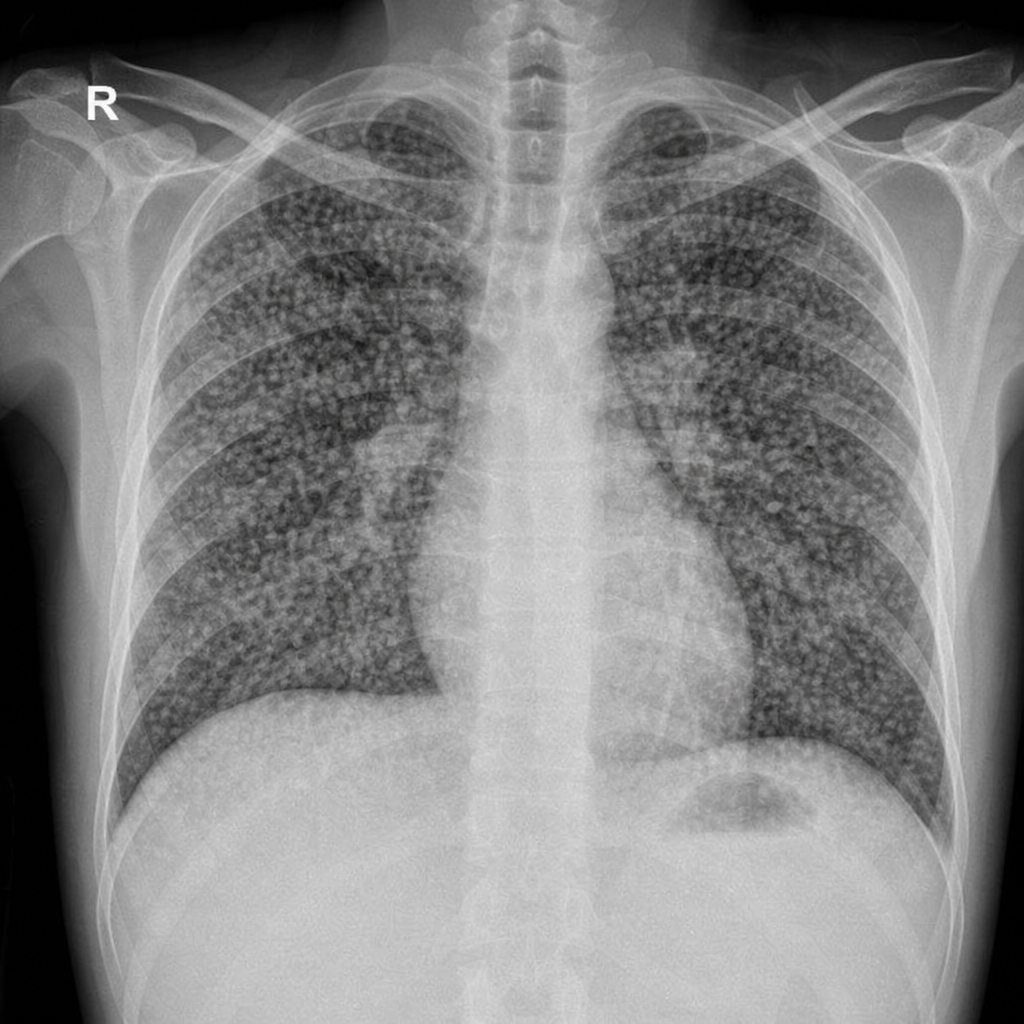
On CT chest, the 'halo sign' is particularly associated with which condition in immunocompromised patients?
Want unlimited practice?
Get full access to all questions, explanations, and performance tracking.
Scan to download app