At what size is placentomegaly diagnosed on USG?
Which investigation is primarily used to diagnose intestinal obstruction?
The 'Mexican hat sign' is characteristically seen in which of the following conditions?
Keyhole appearance on ultrasound is seen in which of the following conditions?
What is the most important radiological sign of splenic rupture?
Atrophic kidney with papillary calcification in a garland pattern is seen in?
Which of the following is not a renal pseudotumor?
What condition typically presents with a double bubble appearance on a plain X-ray?
What is the most accurate imaging modality for diagnosing a hemangioma of the liver?
Regarding pancreatitis, which of the following statements is TRUE or FALSE: CECT is the investigation of choice (IOC) for acute pancreatitis. Modified Balthazar CT severity index score >6 indicates good prognosis. 'Duct penetrating sign' is seen in adenocarcinoma of the pancreas. Colon cut-off sign is seen in acute pancreatitis. IOC for chronic pancreatitis is MRCP.
Explanation: **Explanation:** **Placentomegaly** is defined as an abnormally thickened placenta measuring **>40 mm (4 cm)** in the anteroposterior (AP) diameter, measured perpendicular to the long axis of the placenta during the second or third trimester. 1. **Why 40 mm is correct:** The placental thickness (in millimeters) roughly corresponds to the gestational age (in weeks) up to 30 weeks. However, it should never exceed 40 mm at any point during pregnancy. A thickness exceeding this threshold indicates underlying pathology, often related to increased fluid content (edema) or compensatory hypertrophy. 2. **Why other options are incorrect:** * **25 mm & 30 mm:** These are considered normal placental thicknesses for the early second trimester (approx. 25 and 30 weeks respectively). * **35 mm:** While approaching the upper limit of normal, 35 mm is still considered within the physiological range for a late-third-trimester pregnancy. **High-Yield Clinical Pearls for NEET-PG:** * **Common Causes of Placentomegaly:** * **Maternal:** Diabetes Mellitus (most common), Rh-isoimmunization, Severe Anemia. * **Fetal:** Hydrops fetalis, Intrauterine infections (TORCH, especially Syphilis/CMV), Chromosomal anomalies (Triploidy). * **Placental:** Chorioangioma, Gestational Trophoblastic Disease (Molar pregnancy). * **Small Placenta (<15 mm):** Associated with Preeclampsia, IUGR, and Chronic Hypertension. * **Measurement Tip:** Always measure the thickness at the thickest portion, near the umbilical cord insertion, excluding the retroplacental complex.
Explanation: ### Explanation **Correct Answer: B. Intestinal barium meal** **1. Why Intestinal Barium Meal is Correct:** An **intestinal barium meal** (specifically a small bowel follow-through or enteroclysis) is the primary contrast study used to evaluate the small intestine. In cases of suspected **chronic or subacute intestinal obstruction**, it helps identify the site, degree, and potential cause of the blockage. By tracking the transit of barium through the jejunum and ileum, radiologists can visualize strictures, adhesions, or intraluminal masses that impede the flow of contrast. **2. Analysis of Incorrect Options:** * **A. Barium Swallow:** This study focuses exclusively on the **esophagus**. It is used for diagnosing dysphagia, esophageal webs, or motility disorders (e.g., Achalasia cardia) and does not visualize the distal intestinal segments where obstruction typically occurs. * **C. Stomach Barium Meal:** This focuses on the **stomach and duodenum** (upper GI). While it can detect gastric outlet obstruction, it is insufficient for diagnosing obstructions located in the distal small bowel. * **D. All of the above:** Since the studies are site-specific, they cannot be used interchangeably for generalized intestinal obstruction. **3. Clinical Pearls for NEET-PG:** * **Gold Standard/Initial Investigation:** For *acute* intestinal obstruction, the first-line investigation is an **Erect X-ray Abdomen**, which shows multiple air-fluid levels and dilated bowel loops. * **Contrast Choice:** In cases of *acute* obstruction where perforation is suspected, **Gastrografin** (water-soluble contrast) is preferred over Barium to avoid chemical peritonitis. * **Enteroclysis:** This is a specialized version of an intestinal barium meal where contrast is injected directly into the duodenum via a tube; it is the most sensitive contrast study for small bowel lesions. * **CT Abdomen:** Currently, Contrast-Enhanced CT (CECT) is the investigation of choice in clinical practice for identifying the "transition point" in bowel obstruction.
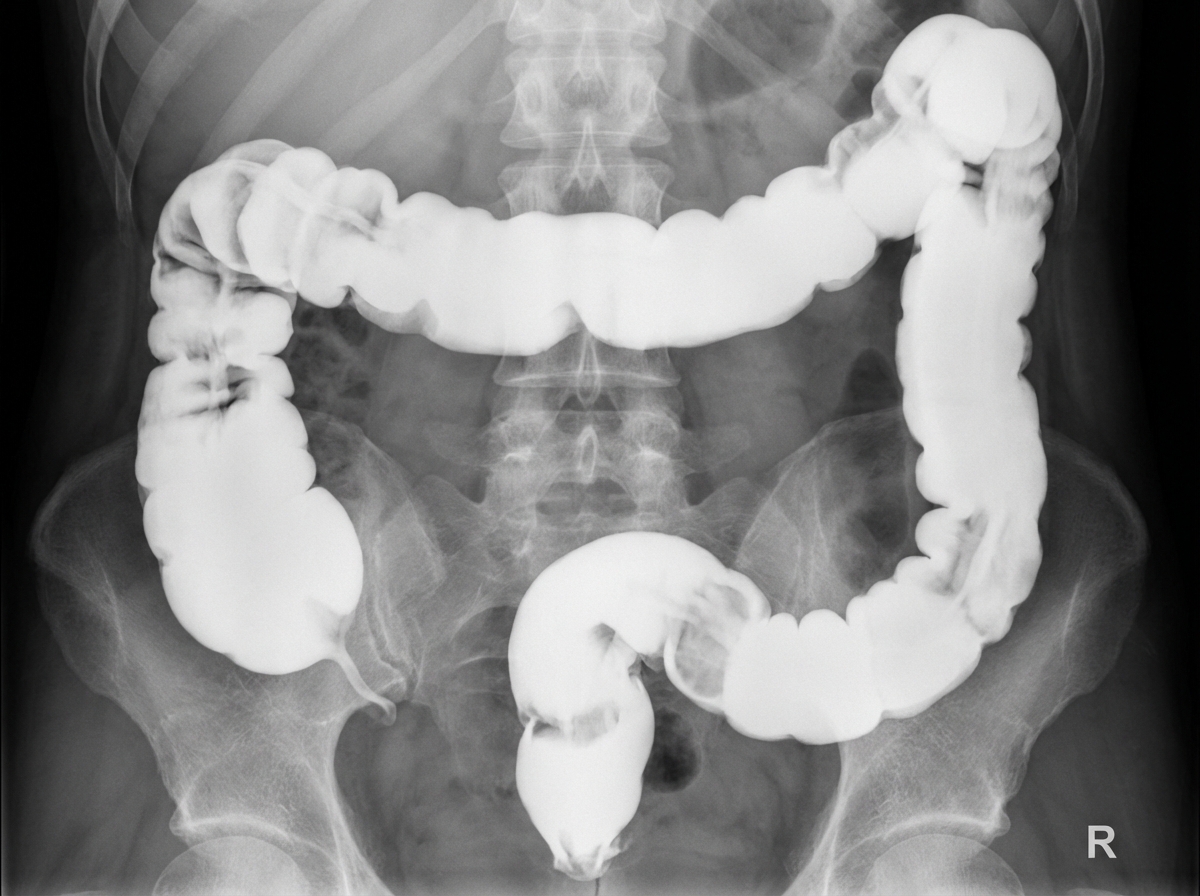
Explanation: ### Explanation The **'Mexican hat sign'** is a classic radiological sign seen on a **double-contrast barium enema**. It represents a **pedunculated colonic polyp** viewed "en face" (head-on). **Why it occurs:** A pedunculated polyp consists of a head and a stalk. When the patient is positioned so that the X-ray beam passes vertically through the polyp, the barium coats the surface of both the head and the stalk. This creates two concentric rings: 1. The **outer ring** represents the barium coating the head of the polyp. 2. The **inner ring** represents the barium coating the stalk. Together, these resemble a traditional Mexican hat (sombrero). **Analysis of Incorrect Options:** * **Sigmoid volvulus:** Characterized by the **'Coffee bean sign'** on plain X-ray and the **'Bird’s beak sign'** on a barium enema. * **Midgut volvulus:** Classically shows the **'Whirlpool sign'** on Doppler ultrasound or CT, and a **'Corkscrew appearance'** of the duodenum on an upper GI series. * **Sessile colonic polyp:** These lack a stalk. On a double-contrast study, they typically appear as a single line or a **'Bowline sign'** (crescentic shadow) rather than concentric rings. **High-Yield Clinical Pearls for NEET-PG:** * **Target Sign / Bull’s Eye Sign:** Often used to describe intussusception on ultrasound/CT. * **Apple Core Lesion:** Characteristic of annular constricting carcinoma of the colon. * **Lead Pipe Colon:** Seen in chronic ulcerative colitis due to loss of haustrations. * **Thumbprinting:** Indicates bowel wall edema, classically seen in ischemic colitis.
Explanation: **Explanation:** The **"Keyhole appearance"** on antenatal or postnatal ultrasound is a pathognomonic sign of **Posterior Urethral Valves (PUV)**. **Why it occurs:** PUV is the most common cause of bladder outlet obstruction in male infants. The "keyhole" is formed by the combination of a **thick-walled, distended urinary bladder** (the head of the keyhole) and a **dilated posterior urethra** (the neck of the keyhole) situated superior to the obstructing valves. This appearance is best visualized in the transverse plane of the pelvis. **Analysis of Incorrect Options:** * **Polycystic Kidney:** Characterized by multiple cysts of varying sizes. In Autosomal Recessive PCKD, kidneys appear bilaterally enlarged and hyperechoic ("bright") on ultrasound. * **Hydronephrosis:** Refers to the dilatation of the renal pelvis and calyces. While PUV causes secondary hydronephrosis, the term "keyhole sign" specifically describes the bladder and urethral morphology. * **Intracapsular breast implant rupture:** This is associated with the **"Linguine sign"** (on MRI) or the **"Stepladder sign"** (on Ultrasound), representing the collapsed elastomer shell within the fibrous capsule. **High-Yield Clinical Pearls for NEET-PG:** * **PUV Triad:** Distended bladder, dilated posterior urethra, and bilateral hydroureteronephrosis. * **Gold Standard Investigation:** Voiding Cystourethrogram (VCUG) is the definitive test to diagnose PUV postnatally. * **Associated Findings:** Oligohydramnios (in utero) and "Potter sequence" (pulmonary hypoplasia, limb deformities, and abnormal facies) due to prolonged lack of amniotic fluid. * **Management:** Initial bladder drainage followed by endoscopic primary valve ablation.
Explanation: ### Explanation Splenic rupture is a common consequence of blunt abdominal trauma. On a plain abdominal X-ray, the **obliteration of the splenic shadow** is considered the most important and reliable sign. **1. Why "Obliteration of splenic shadow" is correct:** In a healthy individual, the spleen is often visible as a soft tissue density in the left upper quadrant, outlined by adjacent perisplenic fat. When the spleen ruptures, the resulting perisplenic hematoma and blood accumulation obscure these fat planes. This loss of definition (obliteration) of the splenic outline is the primary radiological indicator of injury on a plain film. **2. Analysis of Incorrect Options:** * **Obliteration of psoas shadow:** This is typically seen in retroperitoneal pathologies (e.g., psoas abscess, retroperitoneal hemorrhage, or renal trauma). Since the spleen is an intraperitoneal organ, its rupture does not consistently affect the psoas shadow unless there is massive associated retroperitoneal bleeding. * **Indentation of the left side air bubble:** While a large hematoma can displace or indent the gastric air bubble medially, this is a secondary/indirect sign and is less specific than the loss of the splenic shadow itself. * **Fracture of lower ribs on the left side:** This is a significant **clinical association** (present in about 25% of cases), but it is not a sign of the rupture itself. It indicates the *mechanism* of injury rather than the *diagnosis* of organ damage. **High-Yield Pearls for NEET-PG:** * **Gold Standard Investigation:** Contrast-Enhanced CT (CECT) is the investigation of choice for hemodynamically stable patients. * **FAST (Focused Assessment with Sonography for Trauma):** The initial screening tool used in the emergency room to detect free intraperitoneal fluid (hemoperitoneum). * **Kehr’s Sign:** Referred pain to the left shoulder due to diaphragmatic irritation by splenic blood (a classic clinical pearl). * **Ballance’s Sign:** Fixed dullness to percussion in the left flank and shifting dullness in the right flank.
Explanation: ### Explanation **Analgesic Nephropathy** is the correct answer. This condition results from chronic ingestion of large quantities of analgesics (traditionally phenacetin, aspirin, or NSAIDs). The primary pathology involves **renal papillary necrosis (RPN)** due to direct toxicity and ischemic injury to the vasa recta. As the necrotic papillae undergo dystrophic calcification, they appear as high-density shadows surrounding the renal sinus. On imaging, this classic appearance is described as a **"Garland pattern"** or a **"Ring sign"** (when calcified papillae are seen in cross-section). Over time, the kidney undergoes progressive scarring, leading to a characteristically **shrunken, atrophic kidney** with irregular contours. **Analysis of Incorrect Options:** * **Tuberculosis (TB):** While TB causes renal calcification, it typically presents as "Putty kidney" (autonephrectomy), which is a dense, amorphous, global calcification of the entire kidney, rather than a specific papillary garland pattern. * **Hypercalcemic Nephropathy:** This leads to **Nephrocalcinosis**, where calcification is primarily located in the renal medulla/parenchyma (medullary nephrocalcinosis), but it does not typically present with the specific "garland" papillary necrosis pattern or significant renal atrophy in early stages. * **Vesico-ureteric Reflux (VUR):** Chronic VUR leads to reflux nephropathy characterized by polar scarring and clubbing of calyces, but papillary calcification in a garland distribution is not a feature. **High-Yield Clinical Pearls for NEET-PG:** * **Ring Sign:** Seen on IVP when contrast surrounds a sloughed papilla. * **Lobulated Contour:** Analgesic nephropathy often shows a "bumpy" or "indentation over the columns of Bertin" appearance due to papillary loss. * **Increased Risk:** Patients with analgesic nephropathy have a significantly higher risk of developing **Transitional Cell Carcinoma (TCC)** of the renal pelvis or bladder.
Explanation: **Explanation:** A **renal pseudotumor** is a normal anatomical variation or a benign developmental condition that mimics a renal neoplasm on imaging (like ultrasound or CT) but consists of normal renal parenchyma. **Why Option D is correct:** A **Persistent calyceal impression** is not a pseudotumor. It refers to an indentation on the renal pelvis or calyces, usually caused by an adjacent normal structure like a blood vessel (vascular impression). It represents a filling defect or contour change in the collecting system rather than a parenchymal mass mimicking a tumor. **Analysis of Incorrect Options (True Pseudotumors):** * **Fetal Lobulations:** These are smooth indentations of the renal cortical surface between the medullary pyramids. They result from the failure of complete fusion of the fetal reniculi. They are a common normal variant and do not represent pathology. * **Hypertrophied Column of Bertin:** This is the most common renal pseudotumor. it is an extension of cortical tissue that indents the renal sinus. On imaging, it has the same echogenicity and enhancement patterns as the normal cortex. * **Dromedary Hump:** This is a focal bulge on the lateral aspect of the **left kidney**, caused by the splenic impression during development. It is composed of normal cortical tissue. **High-Yield Clinical Pearls for NEET-PG:** * **Key Diagnostic Feature:** The most important feature of a pseudotumor on CT/MRI is that it **enhances identically to the normal renal cortex** in all phases. * **Location:** Dromedary humps are almost exclusively seen on the **left** kidney. * **Splenic Encapsulation:** Sometimes a "Splenule" (accessory spleen) can also mimic a renal mass, but it follows splenic enhancement patterns.
Explanation: ### Explanation **Correct Answer: A. Annular pancreas** The **"Double Bubble" sign** on a plain abdominal X-ray is a classic radiological finding indicating **duodenal obstruction**. It is caused by the presence of two air-filled pockets: one in the stomach and the other in the proximal (pre-stenotic) duodenum. **Annular pancreas** occurs due to the failure of the ventral pancreatic bud to rotate properly, resulting in a ring of pancreatic tissue encircling the second part of the duodenum. This leads to extrinsic compression and subsequent high intestinal obstruction, manifesting as the double bubble sign. **Analysis of Incorrect Options:** * **B. Lobular pancreas:** This is a normal anatomical variation where the pancreas has a lobulated surface; it does not cause luminal obstruction. * **C. Ca pancreas:** While pancreatic cancer (especially in the head) can cause gastric outlet obstruction, it typically presents in older adults with jaundice and weight loss. It is not the "classic" association for the double bubble sign in a pediatric/neonatal context. * **D. Pancreatitis:** This usually presents with a "sentinel loop" (localized ileus) or the "colon cut-off sign," rather than a double bubble appearance. **High-Yield Clinical Pearls for NEET-PG:** * **Differential Diagnosis for Double Bubble Sign:** Annular pancreas, Duodenal atresia (most common), Duodenal web, and Malrotation with Ladd’s bands. * **Association:** Duodenal atresia and Annular pancreas are frequently associated with **Down Syndrome (Trisomy 21)**. * **Key Feature:** If the X-ray shows a double bubble with **distal gas**, it suggests partial obstruction (like Annular Pancreas or Stenosis); if there is **no distal gas**, it strongly suggests Duodenal Atresia. * **Management:** The surgical treatment of choice for annular pancreas causing obstruction is **Duodenoduodenostomy**.
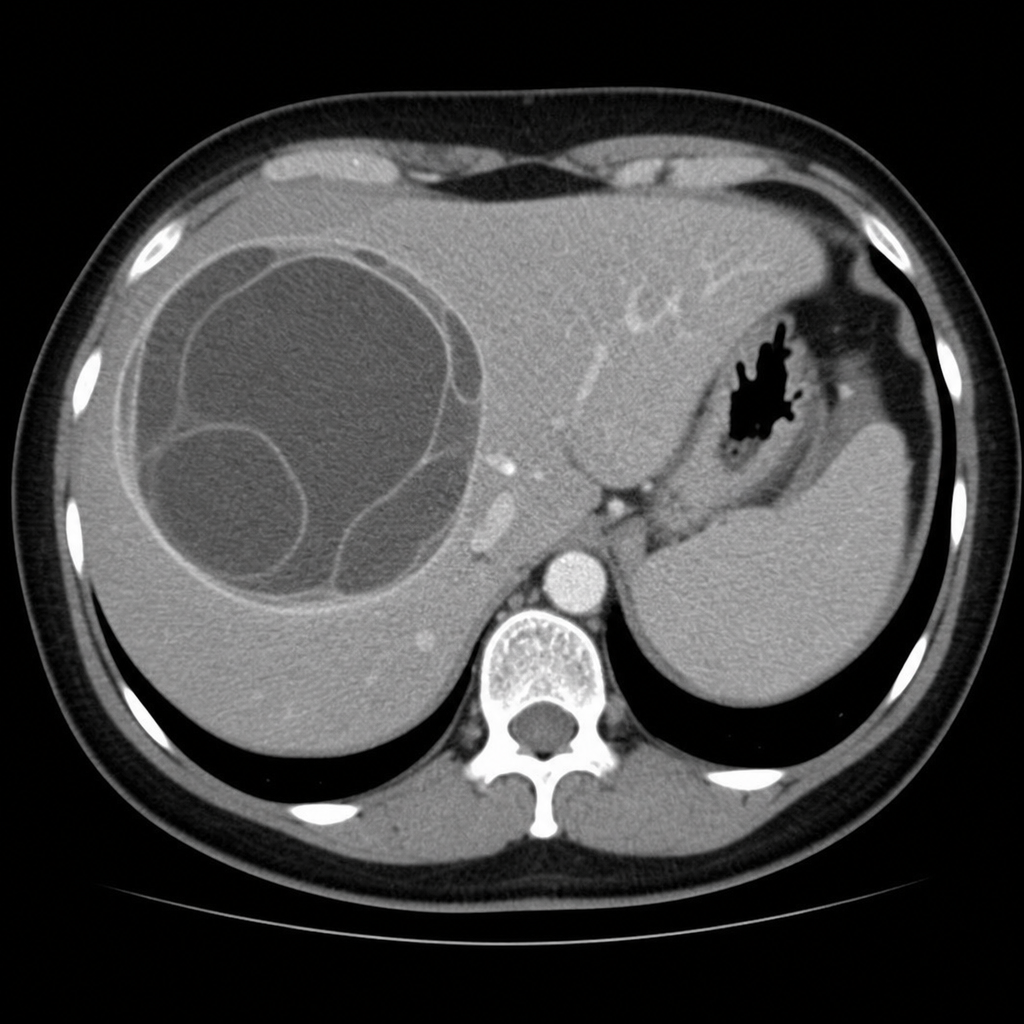
Explanation: **Explanation:** **1. Why MRI is the Correct Answer:** Magnetic Resonance Imaging (MRI) is considered the most accurate and sensitive imaging modality for diagnosing hepatic hemangiomas. It boasts a sensitivity and specificity of >90%. On MRI, hemangiomas exhibit a characteristic **"Light Bulb Sign"**—appearing as a well-demarcated, markedly hyperintense lesion on T2-weighted sequences. When combined with gadolinium-enhanced dynamic imaging, they show the classic peripheral globular enhancement with centripetal fill-in, similar to CT but with superior soft-tissue contrast. **2. Analysis of Incorrect Options:** * **Ultrasound (USG):** Usually the initial screening tool. Hemangiomas typically appear as well-defined, homogeneous, hyperechoic masses. However, USG lacks the specificity to definitively differentiate them from other lesions like focal fatty infiltration or metastasis. * **CECT:** A highly reliable modality that shows peripheral, nodular, centripetal enhancement (the "fill-in" sign). While excellent, it is slightly less sensitive than MRI for very small lesions (<1 cm) and involves ionizing radiation. * **Hepatic Scintigraphy (Technetium-99m labeled RBC scan):** This was historically the "gold standard" for specificity due to the "hot spot" sign on delayed images. However, it has poor spatial resolution and has been largely superseded by MRI in modern clinical practice. **3. High-Yield Clinical Pearls for NEET-PG:** * **Most common** benign tumor of the liver. * **Centripetal Fill-in:** The hallmark enhancement pattern (from periphery to center). * **Giant Hemangioma:** Defined as a lesion >5 cm (some texts say >10 cm); may be associated with **Kasabach-Merritt Syndrome** (consumptive coagulopathy and thrombocytopenia). * **Management:** Most are asymptomatic and require no treatment unless they cause mass effect or complications.
Explanation: This question tests your knowledge of imaging modalities and radiological signs in pancreatic pathology, a high-yield area for NEET-PG. ### **Analysis of Statements:** 1. **CECT is the IOC for acute pancreatitis (TRUE):** Contrast-Enhanced Computed Tomography (CECT) is the gold standard for diagnosing acute pancreatitis, assessing its severity, and identifying complications like necrosis or pseudocysts. 2. **Modified Balthazar CTSI >6 indicates good prognosis (FALSE):** The CT Severity Index (CTSI) ranges from 0–10. A score of **7–10 (High)** indicates a poor prognosis with high morbidity and mortality. A score of 0–3 indicates a good prognosis. 3. **'Duct penetrating sign' is seen in adenocarcinoma (FALSE):** This sign (where the pancreatic duct is seen passing through a mass) is characteristic of **Autoimmune Pancreatitis (AIP)** or lymphoma. In adenocarcinoma, the duct is typically obstructed or obliterated. 4. **Colon cut-off sign is seen in acute pancreatitis (TRUE):** This is a classic X-ray finding where there is abrupt termination of gas in the splenic flexure due to inflammatory exudate spreading into the phrenicocolic ligament. 5. **IOC for chronic pancreatitis is MRCP (TRUE):** Magnetic Resonance Cholangiopancreatography (MRCP) is the investigation of choice as it non-invasively visualizes ductal irregularities, "chain of lakes" appearance, and side-branch involvement. ### **Clinical Pearls for NEET-PG:** * **Sentinel Loop:** A localized ileus of a jejunal loop near the pancreas (seen on X-ray). * **Double Duct Sign:** Simultaneous dilatation of the Common Bile Duct (CBD) and Main Pancreatic Duct; highly suggestive of **Pancreatic Head Carcinoma**. * **Timing of CECT:** Ideally performed **72–96 hours** after symptom onset to accurately assess the extent of pancreatic necrosis.
Imaging of Liver
Practice Questions
Biliary Tract Imaging
Practice Questions
Pancreatic Imaging
Practice Questions
Spleen and Lymphatic System
Practice Questions
Gastrointestinal Tract Imaging
Practice Questions
Renal and Urinary Tract Imaging
Practice Questions
Adrenal Imaging
Practice Questions
Female Pelvic Imaging
Practice Questions
Male Pelvic Imaging
Practice Questions
Abdominal Trauma Imaging
Practice Questions
Acute Abdomen Imaging
Practice Questions
Imaging of Peritoneal Cavity and Retroperitoneum
Practice Questions
Get full access to all questions, explanations, and performance tracking.
Start For Free