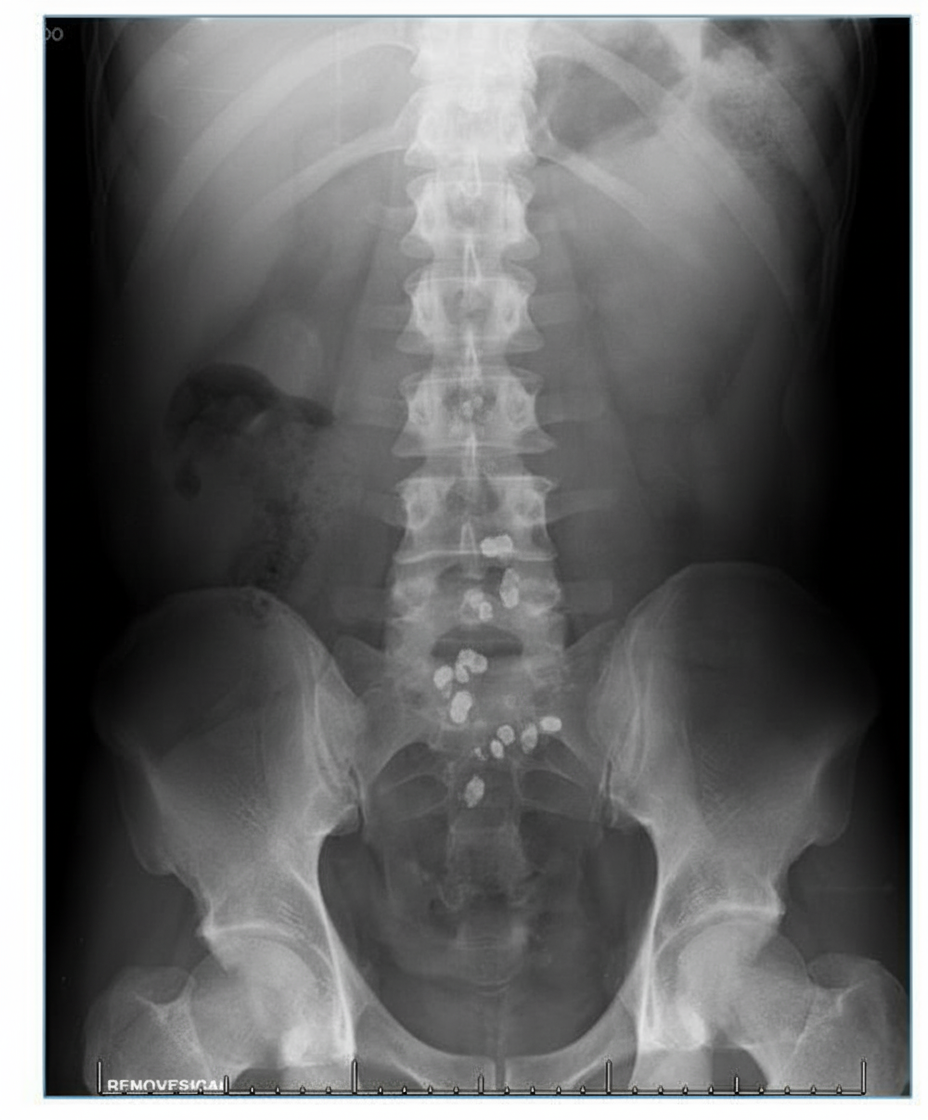
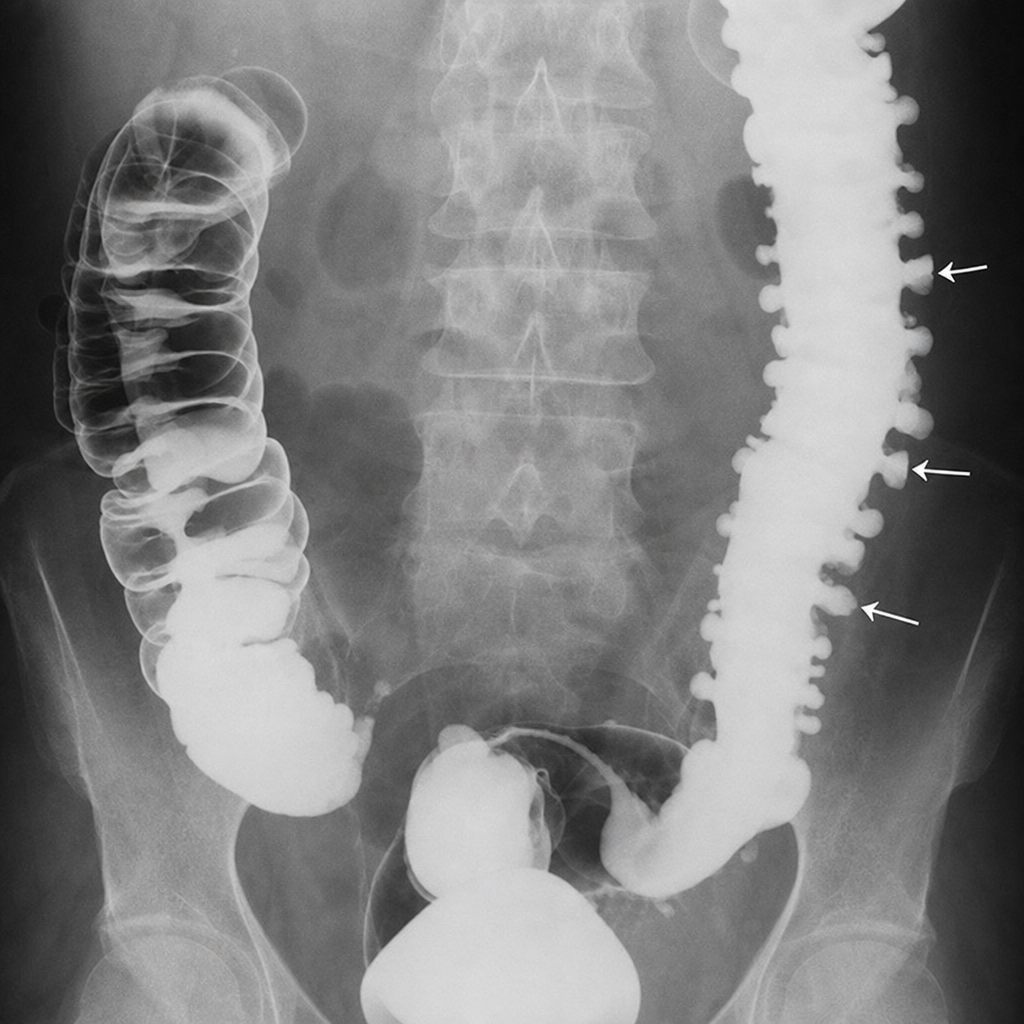
A patient with abdominal pain shows a "coffee bean" sign in a plain abdominal X-ray. What is the probable diagnosis?
Non-visualization of the gastric fundic bubble with an air-fluid level in the retrocardiac region suggests which of the following?
The 'adder head' sign on an Intravenous Pyelogram (IVP) is indicative of which condition?
For the evaluation of blunt abdominal trauma, which of the following imaging modalities is ideal?
The 'bowler hat' sign is radiographically observed in which of the following conditions?
What does the term "pseudo kidney" refer to in medical imaging?
Which of the following signs is NOT seen in hypertrophic pyloric stenosis?
Multiple air-fluid levels in a child are seen in which condition?
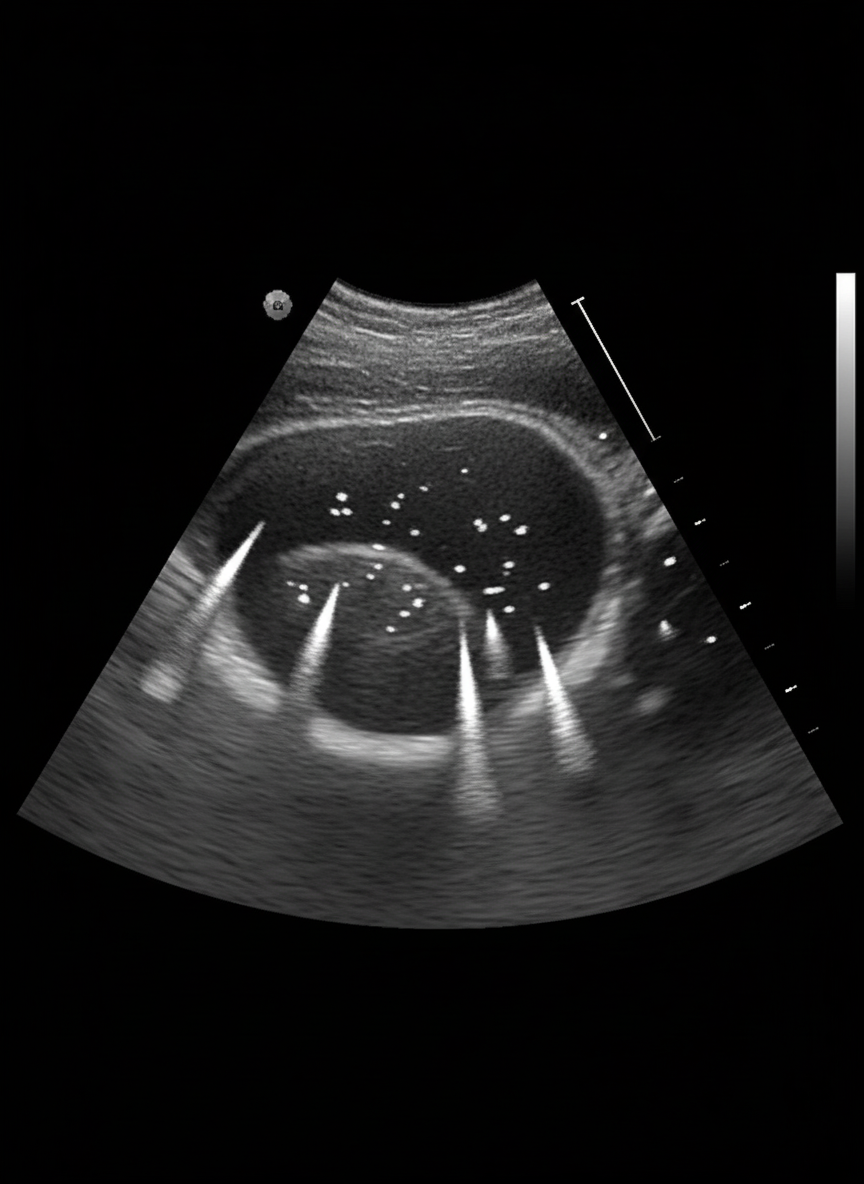
Which of the following are true features of cholecystitis on ultrasonography?
Which of the following liver metastases appear hypoechoic on ultrasound?
Explanation: ### Explanation **1. Why Sigmoid Volvulus is Correct:** The **"Coffee Bean" sign** (also known as the Omega sign or Frimann-Dahl sign) is the pathognomonic radiographic feature of **Sigmoid Volvulus**. This condition occurs when the sigmoid colon twists on its mesenteric axis, leading to a closed-loop obstruction. The resulting massive dilation of the sigmoid loop creates a smooth, U-shaped shadow that resembles a giant coffee bean. The "bean" typically points toward the right upper quadrant, and its "cleft" is formed by the two adjacent inner walls of the twisted loop. **2. Analysis of Incorrect Options:** * **Colon Carcinoma:** Typically presents with an **"Apple Core" lesion** (annular constriction) on a barium enema, rather than a single massive dilated loop. * **Duodenal Atresia:** Characterized by the **"Double Bubble" sign** on X-ray, representing air in the stomach and the proximal duodenum, usually seen in neonates. * **Acute Pancreatitis:** Common radiographic findings include the **"Sentinel Loop"** (localized ileus of a jejunal loop) or the **"Colon Cut-off sign"** (abrupt collapse of the colon near the splenic flexure), but not a coffee bean appearance. **3. High-Yield Clinical Pearls for NEET-PG:** * **Bird’s Beak Sign:** Seen on a barium enema at the site of the twist in sigmoid volvulus. * **Whirl Sign:** The classic appearance of twisted mesentery on a CT scan. * **Management:** Initial treatment is often **sigmoidoscopic detorsion** (unless gangrene is suspected), followed by elective surgery to prevent recurrence. * **Cecal Volvulus:** Unlike sigmoid, the dilated loop in cecal volvulus usually has only one air-fluid level and tends to point toward the left upper quadrant.
Explanation: ### Explanation **1. Why Achalasia Cardia is Correct:** Achalasia cardia is a primary esophageal motility disorder characterized by the failure of the Lower Esophageal Sphincter (LES) to relax and the absence of peristalsis. This leads to massive dilatation of the esophagus (megaesophagus). * **Retrocardiac Air-Fluid Level:** The dilated esophagus acts as a reservoir for undigested food and secretions. On a chest X-ray, this appears as a vertical air-fluid level behind the heart (in the posterior mediastinum). * **Absent Gastric Bubble:** Because the LES remains tonically contracted, air cannot pass from the esophagus into the stomach. Consequently, the normal gastric fundic gas bubble is absent or significantly diminished. **2. Analysis of Incorrect Options:** * **Carcinoma Esophagus:** While it causes obstruction, the esophagus is rarely dilated enough to produce a massive retrocardiac air-fluid level comparable to Achalasia. The gastric bubble is usually preserved unless the obstruction is absolute and acute. * **Esophageal Web:** These are thin mucosal folds (often in the upper esophagus, e.g., Plummer-Vinson syndrome). They cause dysphagia but do not result in the massive proximal dilatation or loss of the gastric bubble seen in Achalasia. * **Congenital Hypertrophic Pyloric Stenosis (CHPS):** This is a gastric outlet obstruction. It typically presents with a **distended, air-filled stomach** (large gastric bubble) and a "gasless abdomen" distally, which is the opposite of the finding described. **3. High-Yield Clinical Pearls for NEET-PG:** * **Barium Swallow Finding:** "Bird’s beak" or "Rat-tail" appearance (tapering at the GE junction). * **Chest X-ray Signs:** Mediastinal widening, retrocardiac air-fluid level, and absent gastric bubble. * **Gold Standard Diagnosis:** Esophageal Manometry (shows incomplete LES relaxation and aperistalsis). * **Heller’s Myotomy:** The definitive surgical treatment, often combined with a partial fundoplication.
Explanation: ### Explanation **Correct Answer: A. Ureterocele** The **'Adder head' sign** (also known as the 'Cobra head' sign) is a classic radiological finding on an Intravenous Pyelogram (IVP) diagnostic of a **ureterocele**. A ureterocele is a congenital cystic dilatation of the distal-most intramural portion of the ureter. On an IVP, the dilated ureteric end appears as a radiopaque bulbous area surrounded by a thin radiolucent halo. The radiopaque center represents the contrast-filled dilated ureter, while the radiolucent halo represents the edematous wall of the ureterocele and the bladder mucosa protruding into the bladder lumen. This combination mimics the appearance of a cobra or adder head. **Why the other options are incorrect:** * **B. Cystocele:** This is the herniation of the urinary bladder into the vaginal canal due to pelvic floor weakness. On imaging, it appears as the bladder base dropping below the pubococcygeal line, not as a focal ureteric dilatation. * **C. Enterocele:** This refers to the herniation of the small bowel into the rectovaginal space. It is typically diagnosed via defecography or MRI, showing bowel loops descending between the vagina and rectum. * **D. Omentocele:** This is a type of hernia containing the omentum (fatty tissue), usually through the abdominal wall. It does not involve the urinary collecting system. **High-Yield Clinical Pearls for NEET-PG:** * **Ureterocele Association:** Often associated with a **duplicated collecting system** (Weigert-Meyer Law), where the ureterocele typically involves the ureter draining the **upper pole** of the kidney. * **Reverse Appearance:** On a voiding cystourethrogram (VCUG), a ureterocele may appear as a **filling defect** in the bladder. * **Differential Diagnosis:** A "pseudoureterocele" (lacking the lucent halo) can be caused by distal ureteric stones or bladder tumors.
Explanation: **Explanation:** **Computed Tomography (CT)**, specifically Contrast-Enhanced CT (CECT), is the **gold standard** and ideal imaging modality for evaluating hemodynamically stable patients with blunt abdominal trauma (BAT). 1. **Why CT is Correct:** CT offers superior sensitivity and specificity for identifying solid organ injuries (liver, spleen, kidneys), detecting retroperitoneal hemorrhages, and diagnosing hollow viscus perforations. It allows for "grading" of organ injuries, which guides the decision between conservative management and surgical intervention. Modern multidetector CT (MDCT) is also excellent at detecting "active contrast extravasation" (blush), indicating active bleeding. 2. **Why Other Options are Incorrect:** * **Ultrasonography (FAST):** While **Focused Assessment with Sonography for Trauma (FAST)** is the initial screening tool for unstable patients to detect free intraperitoneal fluid (hemoperitoneum), it cannot reliably grade organ injuries, visualize the retroperitoneum, or detect bowel injuries. * **Nuclear Scintigraphy:** This is too slow, lacks anatomical detail, and is not used in acute trauma settings. * **Magnetic Resonance Imaging (MRI):** Although highly detailed, MRI is impractical in trauma due to long scan times, difficulty in monitoring unstable patients, and incompatibility with many resuscitation equipments. **High-Yield Clinical Pearls for NEET-PG:** * **Hemodynamically Unstable + Positive FAST:** Proceed directly to **Laparotomy**. * **Hemodynamically Stable:** **CECT** is the investigation of choice. * **The "Triple Sign" on CT** (Pneumoperitoneum, bowel wall thickening, and free fluid without solid organ injury) suggests a **hollow viscus injury**. * **Splenic injury** is the most common organ injury in blunt trauma, followed by the liver.
Explanation: **Explanation:** The **'Bowler Hat' sign** is a classic radiological sign seen on a **double-contrast barium enema**. It represents a **sessile colonic polyp** or a pedunculated polyp viewed head-on. **Why it occurs:** When a polyp is coated with barium and surrounded by air, it projects into the lumen. Depending on the orientation of the polyp relative to the X-ray beam, the barium collects in the "moat" or the angle between the polyp and the colonic wall, creating a ring-like shadow. The "dome" of the hat represents the surface of the polyp, and the "brim" represents the barium at the base. * **Crucial distinction:** If the "hat" points **toward** the center of the lumen, it is a polyp. If it points **away** from the lumen, it represents a diverticulum. **Analysis of Incorrect Options:** * **Sigmoid Volvulus:** Characterized by the **'Coffee Bean' sign** or 'Omega' sign on X-ray, and the 'Bird’s Beak' sign on barium enema. * **Midgut Volvulus:** Classically shows the **'Whirlpool' sign** on Doppler USG/CT and a 'Corkscrew' appearance of the distal duodenum on contrast studies. * **Intussusception:** Associated with the **'Target' or 'Donut' sign** on USG and the **'Coiled Spring' appearance** on barium enema. **NEET-PG High-Yield Pearls:** * **Polyp <5mm:** Usually hyperplastic (low malignant potential). * **Polyp >2cm:** High risk of malignancy. * **Mexican Hat Sign:** Another name for the bowler hat sign when seen head-on. * **Apple Core Deformity:** Classic sign for annular Constricting Carcinoma of the colon.
Explanation: ### Explanation **1. Why Option A is Correct:** The **"Pseudo-kidney sign"** is a classic ultrasonographic finding where a segment of bowel mimics the appearance of a kidney. In a cross-sectional or longitudinal view, a **thickened bowel wall** (which is hypoechoic/dark) surrounds the **central mucosal/luminal contents** (which are hyperechoic/bright). This creates an appearance similar to the renal cortex surrounding the echogenic renal sinus. It is most commonly associated with: * **Intussusception** (Target or doughnut sign in transverse; pseudo-kidney in longitudinal). * **Gastrointestinal malignancies** (e.g., Adenocarcinoma of the colon or Lymphoma). * **Inflammatory Bowel Disease** (e.g., Crohn’s disease). **2. Why the Other Options are Incorrect:** * **Option B (Hydronephrosis):** This refers to the dilation of the renal pelvis and calyces due to obstruction. On USG, it appears as a branching, fluid-filled (anechoic) collecting system, not a bowel-like structure. * **Option C (Unascended kidney):** Also known as an **Ectopic Kidney** (e.g., Pelvic kidney). While the kidney is in an abnormal location, it is a true kidney, not a "pseudo" mimic. * **Option D (Undescended testes):** This refers to **Cryptorchidism**. On USG, an undescended testis appears as an oval, homogeneous, hypoechoic structure, usually located in the inguinal canal. **3. Clinical Pearls for NEET-PG:** * **Target/Doughnut Sign:** The transverse equivalent of the pseudo-kidney sign, highly characteristic of **Intussusception**. * **Hayfork Sign:** Another USG sign of intussusception seen in the longitudinal plane (representing the layers of the intussusceptum). * **High-Yield Tip:** If a "pseudo-kidney" is seen in an elderly patient with weight loss, think **Colonic Carcinoma**. If seen in a child with colicky pain, think **Intussusception**.
Explanation: **Explanation:** **Hypertrophic Pyloric Stenosis (HPS)** is a common cause of gastric outlet obstruction in infants (typically 3–6 weeks old) due to hypertrophy of the pyloric sphincter muscle. **Why Troseier Sign is the Correct Answer:** **Troisier sign** refers to the clinical finding of a hard, enlarged left supraclavicular lymph node (**Virchow’s node**). It is a classic sign of metastatic spread from an intra-abdominal malignancy, most commonly **gastric adenocarcinoma** in adults. It has no clinical or radiological association with congenital HPS. **Analysis of Incorrect Options (Signs of HPS):** The other options are classic radiological signs seen on **Barium Swallow/Meal** studies in HPS: * **String sign:** Represents a thin, elongated column of barium passing through the narrowed, constricted pyloric canal. * **Shoulder sign:** Occurs when the hypertrophied pyloric muscle bulges into the gastric antrum, creating a "shoulder" of barium. * **Double track sign:** Seen when barium is trapped between the folds of the redundant mucosa within the narrowed pyloric canal, appearing as two parallel lines. **Clinical Pearls for NEET-PG:** * **Clinical Presentation:** Non-bilious, projectile vomiting in a "hungry feeder." * **Physical Exam:** A palpable, firm, mobile "olive-shaped" mass in the epigastrium. * **Investigation of Choice:** **Ultrasound (USG)**. Diagnostic criteria include a pyloric muscle thickness **>3 mm** and a pyloric canal length **>14–15 mm**. * **Metabolic Abnormality:** Hypochloremic, hypokalemic metabolic alkalosis (paradoxical aciduria). * **Treatment:** Ramstedt’s pyloromyotomy.
Explanation: **Explanation:** The presence of **multiple air-fluid levels** on an erect abdominal X-ray is a hallmark sign of **distal small bowel obstruction**, such as **Ileal obstruction**. 1. **Why Ileal obstruction is correct:** In distal obstructions, a large segment of the small intestine (jejunum and ileum) proximal to the blockage fills with swallowed air and secreted fluid. On an upright film, gravity causes the fluid to settle, creating multiple "stair-step" air-fluid levels. Generally, more than 2–3 air-fluid levels are considered pathological in children. 2. **Why other options are incorrect:** * **Gastric obstruction:** Typically presents with a single large air-fluid level in the left upper quadrant (the dilated stomach) and a "gasless abdomen" distally. * **Duodenal obstruction:** Classically presents with the **"Double Bubble Sign"** (air in the stomach and proximal duodenum). There are usually only two air-fluid levels; the rest of the distal bowel is gasless. * **Esophageal atresia:** If there is no tracheoesophageal fistula (TEF), the abdomen will be completely gasless. If a distal TEF is present, there may be gas, but it does not typically present with multiple air-fluid levels unless a secondary lower obstruction exists. **NEET-PG High-Yield Pearls:** * **Double Bubble Sign:** Duodenal Atresia, Annular Pancreas, Midgut Volvulus. * **Triple Bubble Sign:** Jejunal Atresia. * **Step-ladder pattern:** Classic description for multiple air-fluid levels in small bowel obstruction. * **Coiled Spring Sign:** Seen on contrast studies in Intussusception. * **String Sign of Kantor:** Seen in Crohn’s disease (terminal ileum).
Explanation: ### Explanation The diagnosis of **cholecystitis** on ultrasonography relies on identifying specific morphological changes in the gallbladder wall and surrounding tissues. **Why the correct answer is right:** **Thickened gallbladder wall (>3 mm)** is a hallmark sign of cholecystitis. In **chronic cholecystitis**, recurrent inflammation leads to the replacement of normal muscular tissue with fibrous tissue, resulting in a **thick, fibrosed gallbladder wall**. While wall thickening can be seen in acute cases due to edema, the presence of fibrosis specifically points toward the chronic inflammatory process. **Analysis of other options:** * **Stone impacted at the neck:** While a common *cause* of acute cholecystitis (calculous cholecystitis), the presence of a stone alone is not a diagnostic "feature" of the inflammation itself; many patients have asymptomatic stones at the neck without active cholecystitis. * **Pericholecystic halo:** This refers to fluid or edema around the gallbladder. While it is a secondary sign of **acute** cholecystitis, it is less specific than wall thickening and can be seen in other conditions like hepatitis or heart failure. * **Increased vascularity:** Seen on Power Doppler, this indicates hyperemic flow in the gallbladder wall. While present in acute inflammation, it is not as definitive or classic a diagnostic criterion as the structural wall changes. **NEET-PG High-Yield Pearls:** 1. **Sonographic Murphy’s Sign:** The most specific sign for **acute cholecystitis** (maximal tenderness over the gallbladder when compressed by the USG probe). 2. **Wall Thickness:** Normal is **<3 mm**. Causes of "pseudo-thickening" include hepatitis, cirrhosis (ascites), and congestive heart failure. 3. **Emphysematous Cholecystitis:** Characterized by "dirty shadowing" or "ring-down artifacts" due to gas in the wall/lumen; it is a surgical emergency often seen in diabetics. 4. **Porcelain Gallbladder:** Intramural calcification of the gallbladder wall; associated with an increased risk of gallbladder carcinoma.
Explanation: ### Explanation Liver metastases are the most common malignant tumors of the liver. Their appearance on ultrasound depends on the vascularity, cellularity, and collagen content of the primary tumor. **1. Why Carcinoma of the Breast is correct:** Breast carcinoma metastases are typically **hypoechoic** because they are often highly cellular with minimal stroma or internal architecture. Hypoechoic lesions are the most common presentation for metastases from lymphomas and most solid organ primaries, including the breast and lung. **2. Analysis of Incorrect Options:** * **Carcinoma of the Colon (Option A):** These are characteristically **hyperechoic**. This is due to the high degree of vascularity or the presence of microcalcifications and fibrous tissue within the metastatic deposits. * **Carcinoma of the Bladder (Option C):** While variable, urothelial cell metastases often present with mixed echogenicity or hyperechoic patterns compared to the more consistently hypoechoic breast metastases. * **Mucinous Adenocarcinoma (Option D):** These typically appear **hyperechoic** or may show cystic components. The presence of mucin and associated calcifications increases the acoustic impedance, leading to a brighter (hyperechoic) appearance. **3. High-Yield Clinical Pearls for NEET-PG:** * **Hyperechoic Metastases:** Think "GI and Vascular"—Colon (most common), Renal Cell Carcinoma, Carcinoid, and Choriocarcinoma. * **Hypoechoic Metastases:** Think "Solid and Lymphatic"—Breast, Lung, and Lymphoma. * **Target/Bull’s Eye Sign:** A hypoechoic halo around a liver lesion is highly suggestive of malignancy (metastasis). * **Calcified Metastases:** Most commonly associated with **Mucinous Adenocarcinoma of the Colon**. * **Cystic Metastases:** Often seen in Cystadenocarcinoma of the ovary or pancreas, and Sarcomas (due to central necrosis).
Imaging of Liver
Practice Questions
Biliary Tract Imaging
Practice Questions
Pancreatic Imaging
Practice Questions
Spleen and Lymphatic System
Practice Questions
Gastrointestinal Tract Imaging
Practice Questions
Renal and Urinary Tract Imaging
Practice Questions
Adrenal Imaging
Practice Questions
Female Pelvic Imaging
Practice Questions
Male Pelvic Imaging
Practice Questions
Abdominal Trauma Imaging
Practice Questions
Acute Abdomen Imaging
Practice Questions
Imaging of Peritoneal Cavity and Retroperitoneum
Practice Questions
Get full access to all questions, explanations, and performance tracking.
Start For Free