The feathery appearance seen in the jejunum is due to which of the following structures?
Which of the following conditions shows a "snowstorm appearance" on ultrasonography?
Fifteen years after menopause, what is the maximum normal ovarian volume on ultrasound?
Which of the following is an initial investigation for acute abdomen?
Apple core appearance in barium enema is seen in which condition?
The "Double Bubble" sign on an abdominal skiagram is suggestive of which of the following conditions?
What is true about virtual colonoscopy?
A unilateral small smooth kidney is seen in which of the following conditions?
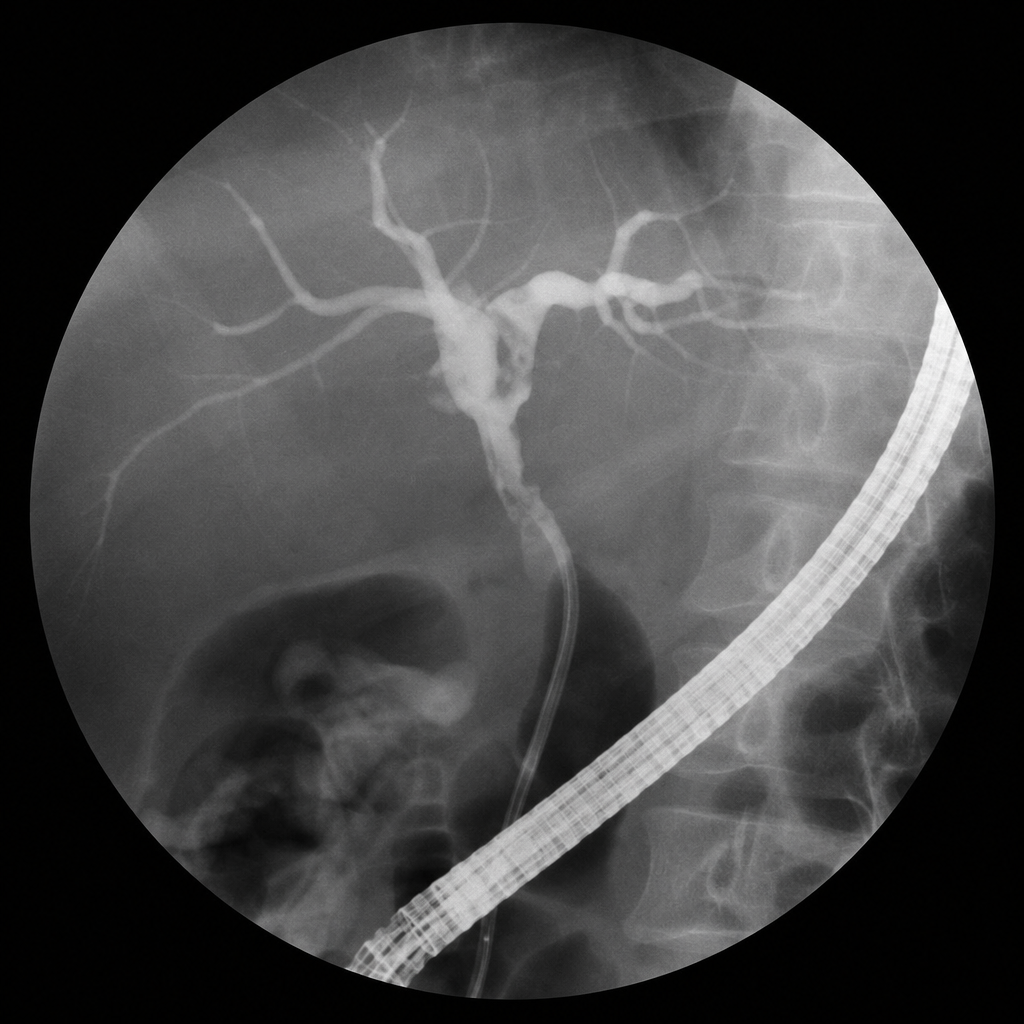
What is the best investigation for bilhemia?
A plain radiograph of the abdomen demonstrates gas within the bowel wall (pneumatosis). Which of the following would MOST likely be associated with this finding?
Explanation: **Explanation:** The characteristic **"feathery appearance"** of the jejunum on a barium study is due to the **Valvulae conniventes** (also known as Plicae circulares or Kerckring folds). These are permanent mucosal folds that project into the intestinal lumen. In the jejunum, these folds are tall, thick, and numerous, creating a dense, feathered pattern when coated with contrast. **Analysis of Options:** * **Valvulae conniventes (Correct):** These folds are most prominent in the proximal small bowel (jejunum). On X-ray, they appear as thin lines that cross the **entire width** of the bowel lumen. In the ileum, they become sparse and shorter, leading to a smoother appearance. * **Haustrations:** These are characteristic of the **large intestine**. Unlike valvulae, haustral folds are incomplete and do **not** cross the entire diameter of the bowel. They give the colon a sacculated appearance, not a feathery one. * **Luminal gas:** Gas provides a negative contrast (black) on X-ray. While it can outline the bowel, it does not create the specific feathery mucosal pattern. * **Vascular network:** While the jejunum has a rich blood supply (vasa recta), these are located within the mesentery and wall; they are not responsible for the intraluminal mucosal pattern seen on contrast studies. **High-Yield NEET-PG Pearls:** 1. **Stack of Coins Appearance:** When the small bowel is dilated (as in obstruction), the valvulae conniventes become prominent and parallel, resembling a stack of coins. 2. **Jejunum vs. Ileum:** Jejunum is characterized by a "feathery" pattern; Ileum is characterized by a "featureless" or smooth appearance. 3. **Rule of 3-6-9:** Normal diameter limits are <3 cm for small bowel, <6 cm for colon, and <9 cm for the cecum. 4. **Moulage Sign:** Loss of the feathery pattern (appearing like "poured wax") is seen in Celiac disease due to mucosal atrophy.
Explanation: **Explanation:** The **"snowstorm appearance"** is the classic ultrasonographic hallmark of a **Hydatidiform Mole** (specifically a complete molar pregnancy). This appearance is caused by the presence of multiple small, hydropic (fluid-filled) chorionic villi that undergo cystic degeneration. On ultrasound, these vesicles appear as a complex pattern of numerous small, low-level echoes (hyperechoic areas) interspersed with tiny sonolucent (anechoic) spaces, resembling a snowstorm or "bunches of grapes." **Analysis of Options:** * **Hydatidiform Mole (Correct):** The absence of a fetus and the presence of a heterogeneous mass filling the uterine cavity with characteristic cystic spaces confirm this diagnosis. * **Tubal Pregnancy:** Typically presents as an adnexal mass (e.g., "blob sign" or "bagel sign") with an empty uterus. * **Abdominal Pregnancy:** Characterized by a fetus located outside the uterus, often with an empty uterine cavity and oligohydramnios. * **Fibroid:** Usually appears as a well-defined, hypoechoic, solid mass with whorled patterns and posterior acoustic shadowing. **High-Yield Clinical Pearls for NEET-PG:** * **Complete Mole:** 46 XX (most common), paternal origin, "snowstorm" appearance, no fetal parts, high risk of choriocarcinoma. * **Partial Mole:** 69 XXY (triploidy), fetal parts may be present, focal cystic changes in the placenta. * **Theca Lutein Cysts:** Often seen bilaterally in the ovaries due to extremely high levels of β-hCG associated with molar pregnancies. * **Clinical Triad:** Painless vaginal bleeding, uterus larger than gestational age, and hyperemesis gravidarum.
Explanation: **Explanation:** The size and volume of the ovaries are highly dynamic and depend primarily on the hormonal status of the woman. Post-menopause, the cessation of follicular development leads to progressive ovarian atrophy. **1. Why 2 mL is Correct:** In the postmenopausal period, the ovaries shrink significantly. While the average volume is often cited around **1.2 to 1.5 mL**, the established upper limit of normal for a woman more than 10–15 years post-menopause is **2 mL**. Any volume exceeding this, or a volume more than double that of the contralateral ovary, warrants further investigation to rule out malignancy. **2. Analysis of Incorrect Options:** * **A (1 mL):** While many postmenopausal ovaries are this small, it is the average/mean volume rather than the "maximum normal" threshold. * **C (8 mL):** This is the upper limit of normal for a **premenopausal** (reproductive age) woman. In a postmenopausal patient, an 8 mL ovary is considered significantly enlarged and suspicious. * **D (10 mL):** This is the standard upper limit for a normal ovary in a menstruating female. In postmenopause, this would be a clear indication for a surgical consult. **High-Yield Facts for NEET-PG:** * **Formula for Ovarian Volume:** $0.523 \times \text{length} \times \text{width} \times \text{thickness}$. * **Premenopausal Normal:** Up to 10 mL (mean 4–6 mL). * **Postmenopausal Normal:** Up to 2 mL (mean 1.2–1.5 mL). * **The "Rule of Two":** A simple way to remember postmenopausal limits is that the volume should be less than **2 mL** and the difference between the two ovaries should not exceed **2x**. * **Clinical Pearl:** Postmenopausal ovaries are often difficult to visualize on ultrasound due to their small size and lack of follicles; if they are easily seen and appear "prominent," it is a red flag.
Explanation: **Explanation:** In the clinical evaluation of an **acute abdomen**, the choice of imaging depends on the suspected pathology, but **Ultrasound (USG)** is considered the **initial investigation** of choice. This is primarily due to its high accessibility, lack of ionizing radiation, cost-effectiveness, and real-time imaging capabilities. It is particularly superior for evaluating the hepatobiliary system (e.g., acute cholecystitis), pelvic pathologies in females (e.g., ectopic pregnancy, ovarian torsion), and pediatric cases (e.g., intussusception, appendicitis). **Analysis of Options:** * **B & C (MDCT/CECT):** While **Contrast-Enhanced CT (CECT)** is the **Gold Standard** and the most sensitive investigation for most causes of acute abdomen (like acute pancreatitis, bowel ischemia, or perforation), it is not the *initial* step due to radiation exposure, cost, and potential nephrotoxicity of contrast. It is usually reserved for cases where USG is inconclusive. * **D (X-ray):** While an Erect Abdominal X-ray is useful for detecting pneumoperitoneum (free air under the diaphragm) or bowel obstruction, its sensitivity is much lower than USG for a broad range of abdominal pathologies. **High-Yield Clinical Pearls for NEET-PG:** * **Investigation of Choice (IOC) for Acute Cholecystitis:** USG. * **Gold Standard for Acute Pancreatitis:** CECT (performed after 48–72 hours for maximum accuracy). * **IOC for Ureteric Colic:** Non-Contrast CT (NCCT) KUB. * **IOC for Intestinal Perforation:** X-ray Chest PA view (Erect) to see free gas under the diaphragm. * **FAST (Focused Assessment with Sonography for Trauma):** The initial USG screening tool used in hemodynamically unstable blunt trauma patients.
Explanation: **Explanation:** The **Apple Core Appearance** (also known as the "napkin-ring" sign) is a classic radiologic finding on barium enema, most commonly associated with **annular, constricting colonic carcinoma** (typically of the descending or sigmoid colon). **1. Why Colonic Carcinoma is correct:** This appearance is caused by an infiltrating tumor that grows circumferentially around the lumen of the colon. The tumor causes focal, irregular narrowing of the bowel lumen with "overhanging edges" or "shouldering" at the proximal and distal ends. On a barium study, the contrast fills the narrow central channel, resembling the core of an apple after the outer fruit has been eaten. **2. Why other options are incorrect:** * **Fissure in ano:** This is a small tear in the lining of the anal canal. It is a clinical diagnosis and does not produce large-scale luminal narrowing or the apple core sign on imaging. * **Rectal carcinoma:** While rectal cancer is a malignancy, it usually presents as a bulky mass or an irregular filling defect. The specific "apple core" morphology is classically described for colonic segments where the circumferential growth can constrict the lumen symmetrically. * **Hemorrhoids:** These are vascular cushions in the anal canal. On imaging, they may appear as small, smooth filling defects but never cause circumferential constriction. **Clinical Pearls for NEET-PG:** * **Most common site:** The apple core sign is most frequently seen in the **sigmoid colon**. * **Differential Diagnosis:** While highly suggestive of malignancy, similar appearances can rarely be seen in chronic Crohn’s disease, ulcerative colitis with stricture, or ischemic colitis. * **Next Step:** The definitive investigation for a patient with an apple core sign is **Colonoscopy and Biopsy** to confirm malignancy.
Explanation: ### Explanation The **"Double Bubble" sign** is a classic radiological hallmark of **Duodenal Atresia**. This sign is seen on an abdominal skiagram (X-ray) and represents two air-filled pockets: 1. **The first bubble:** Represents the dilated stomach. 2. **The second bubble:** Represents the dilated proximal duodenum. The "double bubble" occurs because there is a complete obstruction in the duodenum (usually at the second part). Air swallowed by the neonate can fill the stomach and the proximal duodenum but cannot pass further into the distal bowel, resulting in a **gasless distal abdomen**. #### Analysis of Options: * **Duodenal Atresia (Correct):** The most common cause of this sign. It is frequently associated with **Down Syndrome** (Trisomy 21) and polyhydramnios in utero. * **Ileal Atresia:** This presents as a **"Triple Bubble" sign** or multiple dilated bowel loops with air-fluid levels, as the obstruction is much lower in the gastrointestinal tract. * **Anorectal Malformation:** This typically presents with features of distal large bowel obstruction. Diagnosis is usually clinical or via an **Invertogram** (Wangensteen-Rice view) to determine the level of the lesion. * **Bladder Calculi:** These appear as radiopaque (white) densities in the pelvic region, not as air-filled "bubbles." #### High-Yield Clinical Pearls for NEET-PG: * **Differential Diagnosis for Double Bubble:** While Duodenal Atresia is the most common, other causes include **Annular Pancreas**, **Malrotation with Midgut Volvulus** (Ladd’s bands), and **Duodenal Web**. * **Association:** Approximately 30% of infants with Duodenal Atresia have **Down Syndrome**. * **Clinical Presentation:** Neonates present with **bilious vomiting** within the first 24–48 hours of life (unless the atresia is pre-ampullary, which is rare). * **Management:** Initial stabilization with an orogastric tube followed by surgical repair (**Duodenoduodenostomy**).
Explanation: **Explanation:** **Virtual Colonoscopy (CT Colonography)** is a minimally invasive imaging technique used to screen for colorectal polyps and cancers. **Why Option A is correct:** While "image quality" can be subjective, in the context of radiology examinations, virtual colonoscopy provides superior **visualization of the entire colonic wall**, including areas behind folds (haustra) that might be missed by a conventional endoscope (the "blind spots"). It offers high-resolution 2D and 3D reconstructions that allow for precise localization of lesions and assessment of the extracolonic structures, which conventional colonoscopy cannot do. **Analysis of Incorrect Options:** * **Option B:** While MRI colonography exists, it is rarely used clinically due to cost and motion artifacts. Standard "Virtual Colonoscopy" refers almost exclusively to **CT Colonography**. * **Option C:** Virtual colonoscopy is significantly **faster**, typically taking only 10–15 minutes, whereas conventional colonoscopy can take 30–60 minutes plus recovery time from sedation. * **Option D:** This is a major disadvantage. Virtual colonoscopy is purely diagnostic. If a polyp is found, the patient must undergo a **conventional colonoscopy** for biopsy or polypectomy. **High-Yield Clinical Pearls for NEET-PG:** * **Requirement:** Requires bowel preparation and **colonic insufflation** (with CO2 or air) to distend the lumen. * **Indications:** Preferred in patients on anticoagulants, those with "failed" conventional colonoscopy (e.g., due to tortuous colons or strictures), or elderly patients who cannot tolerate sedation. * **Sensitivity:** Highly sensitive (>90%) for polyps >10 mm, but sensitivity drops for flat lesions or small polyps (<6 mm). * **Key Limitation:** Exposure to ionizing radiation and inability to perform therapeutic interventions.
Explanation: **Explanation:** The correct answer is **Renal artery stenosis (RAS)**. The size and contour of the kidney are determined by the adequacy of blood supply and the integrity of the renal parenchyma. **1. Why Renal Artery Stenosis is correct:** In RAS, the chronic reduction in renal blood flow leads to **ischemic atrophy**. Because the global blood supply is reduced, the kidney shrinks uniformly. This results in a **small, smooth-surfaced kidney**. It is typically unilateral if only one artery is affected (e.g., due to atherosclerosis or fibromuscular dysplasia). **2. Analysis of Incorrect Options:** * **Reflux Nephropathy:** This typically causes **unilateral small kidneys with irregular outlines**. The hallmark is polar scarring (usually at the poles) and associated calyceal clubbing, making the surface "bumpy" rather than smooth. * **Lobar Infarction:** An infarct leads to localized tissue death and subsequent scarring. This results in a **focal contour defect** or a "depressed scar" on the kidney surface, not a global smooth reduction in size. * **Chronic Glomerulonephritis:** While this causes small smooth kidneys, it is a systemic metabolic/immunological process that almost always affects both kidneys. Therefore, it presents as **bilateral** small smooth kidneys. **Clinical Pearls for NEET-PG:** * **Unilateral Small Smooth Kidney:** Renal artery stenosis, Congenital hypoplasia. * **Unilateral Small Irregular Kidney:** Chronic pyelonephritis, Reflux nephropathy, Renal infarction. * **Bilateral Small Smooth Kidneys:** Chronic glomerulonephritis, Hypertensive nephrosclerosis, Bilateral RAS. * **Goldblatt Kidney:** A classic experimental model of hypertension caused by unilateral renal artery constriction.
Explanation: **Explanation:** **Bilhemia** is a rare clinical condition characterized by the formation of a fistula between the biliary tree and the hepatic venous system (biliary-venous fistula). This leads to the direct passage of bile into the bloodstream, resulting in rapid-onset, severe conjugated hyperbilirubinemia. It most commonly occurs as a complication of percutaneous liver biopsy, transhepatic cholangiography, or blunt liver trauma. **Why ERCP is the Correct Answer:** ERCP (Endoscopic Retrograde Cholangiopancreatography) is considered the investigation of choice because it is both **diagnostic and therapeutic**. 1. **Diagnostic:** It can demonstrate the extravasation of contrast from the biliary tree into the venous system. 2. **Therapeutic:** The definitive management of bilhemia involves reducing the pressure within the biliary tree to allow the fistula to close. ERCP allows for **sphincterotomy and stent placement**, which facilitates bile drainage into the duodenum rather than the venous system. **Why Other Options are Incorrect:** * **MRCP:** While excellent for visualizing biliary anatomy non-invasively, it is purely diagnostic and cannot provide the immediate decompression required to treat the fistula. * **CT Scan:** Useful for detecting liver trauma or subcapsular hematomas, but it lacks the sensitivity to identify a small biliary-venous fistula and offers no therapeutic intervention. * **EUS (Endoscopic Ultrasound):** Useful for evaluating distal CBD stones or pancreatic masses, but it cannot visualize the intrahepatic fistula or provide the necessary biliary decompression. **High-Yield Clinical Pearls for NEET-PG:** * **Classic Presentation:** Sudden, extreme rise in serum bilirubin (often >10-15 mg/dL) within 24–48 hours following a liver procedure. * **Pathophysiology:** Bile flows into the veins because the biliary secretion pressure (approx. 20 cm H2O) exceeds the central venous pressure. * **Management Gold Standard:** Biliary decompression via **ERCP** is the first-line treatment. Surgery is reserved for cases where endoscopic management fails.
Explanation: ### Explanation **Correct Answer: D. Gas in the portal vein** **Underlying Medical Concept:** The presence of gas within the bowel wall is termed **pneumatosis intestinalis**. When the integrity of the intestinal mucosa is compromised (due to ischemia, necrosis, or increased intraluminal pressure), gas enters the intramural space. From the bowel wall, this gas is drained by the mesenteric veins, which eventually carry it into the **portal venous system**. Therefore, pneumatosis intestinalis and portal venous gas are frequently seen together, particularly in life-threatening conditions like **Necrotizing Enterocolitis (NEC)** in neonates or mesenteric ischemia in adults. **Analysis of Incorrect Options:** * **A. Air in the biliary tract (Pneumobilia):** This is usually caused by a communication between the bowel and the bile duct (e.g., gallstone ileus, ERCP, or incompetent Sphincter of Oddi). Unlike portal gas, pneumobilia is typically located **centrally** near the hilum. * **B. Blood in the biliary tract (Hemobilia):** This presents with the triad of RUQ pain, jaundice, and GI bleed (Quincke's triad). It does not have a direct pathophysiological link to gas in the bowel wall. * **C. Gas in the hepatic veins:** This is a rare finding usually associated with trauma, gas-forming infections of the liver, or retrograde flow from the IVC. It is not a standard progression of pneumatosis intestinalis. **High-Yield Clinical Pearls for NEET-PG:** * **Radiological Appearance:** Portal venous gas is seen as branching radiolucencies extending to the **periphery** of the liver (carried by centrifugal blood flow), whereas pneumobilia is **central**. * **Most Common Cause (Neonates):** Necrotizing Enterocolitis (NEC). Look for the "Rigler sign" (gas on both sides of the bowel wall) if perforation occurs. * **Clinical Significance:** In the context of an acute abdomen, the combination of pneumatosis and portal venous gas is an ominous sign indicating bowel infarction.
Imaging of Liver
Practice Questions
Biliary Tract Imaging
Practice Questions
Pancreatic Imaging
Practice Questions
Spleen and Lymphatic System
Practice Questions
Gastrointestinal Tract Imaging
Practice Questions
Renal and Urinary Tract Imaging
Practice Questions
Adrenal Imaging
Practice Questions
Female Pelvic Imaging
Practice Questions
Male Pelvic Imaging
Practice Questions
Abdominal Trauma Imaging
Practice Questions
Acute Abdomen Imaging
Practice Questions
Imaging of Peritoneal Cavity and Retroperitoneum
Practice Questions
Get full access to all questions, explanations, and performance tracking.
Start For Free