MRI is contraindicated in patients with which of the following conditions?
"Double bubble" sign with absent distal bowel air shadows on X-ray abdomen is characteristic of?
Computed Tomography (CT scan) is least accurate for diagnosis of:
What is the initial imaging modality of choice for insulinoma?
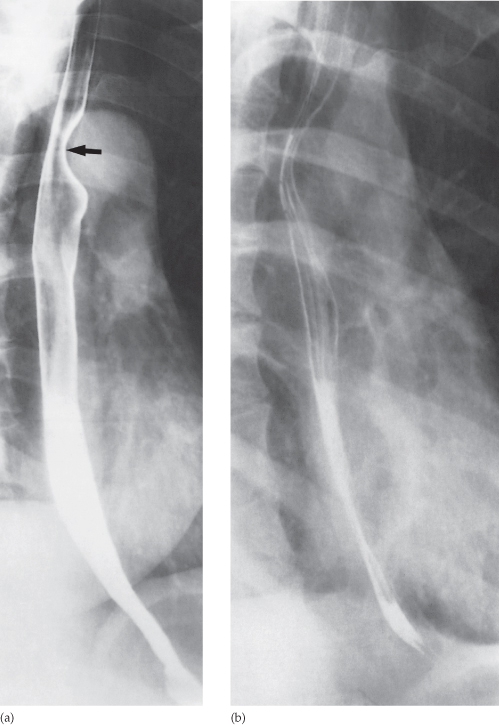
Which of the following is NOT a radiological evidence of achalasia cardia?
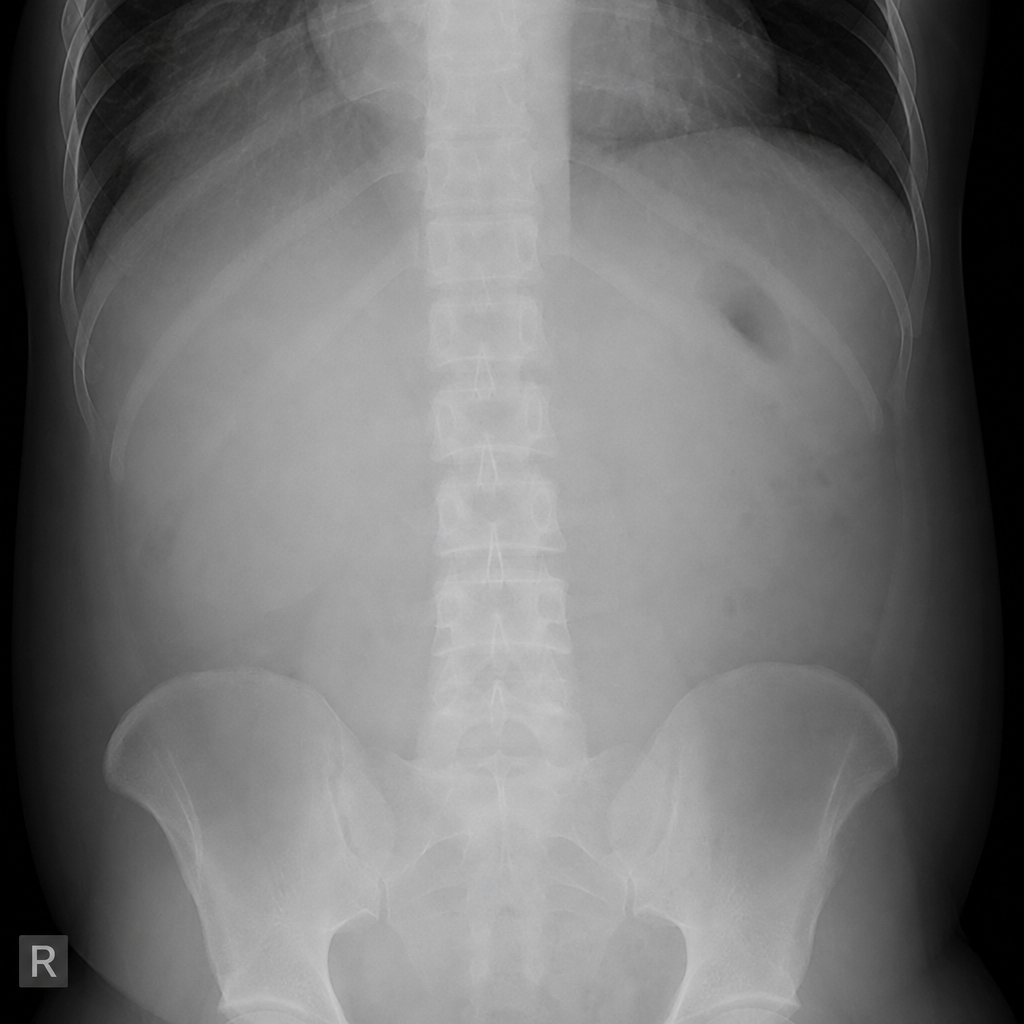
All of the following are features of splenic rupture on plain X-ray of the abdomen except?
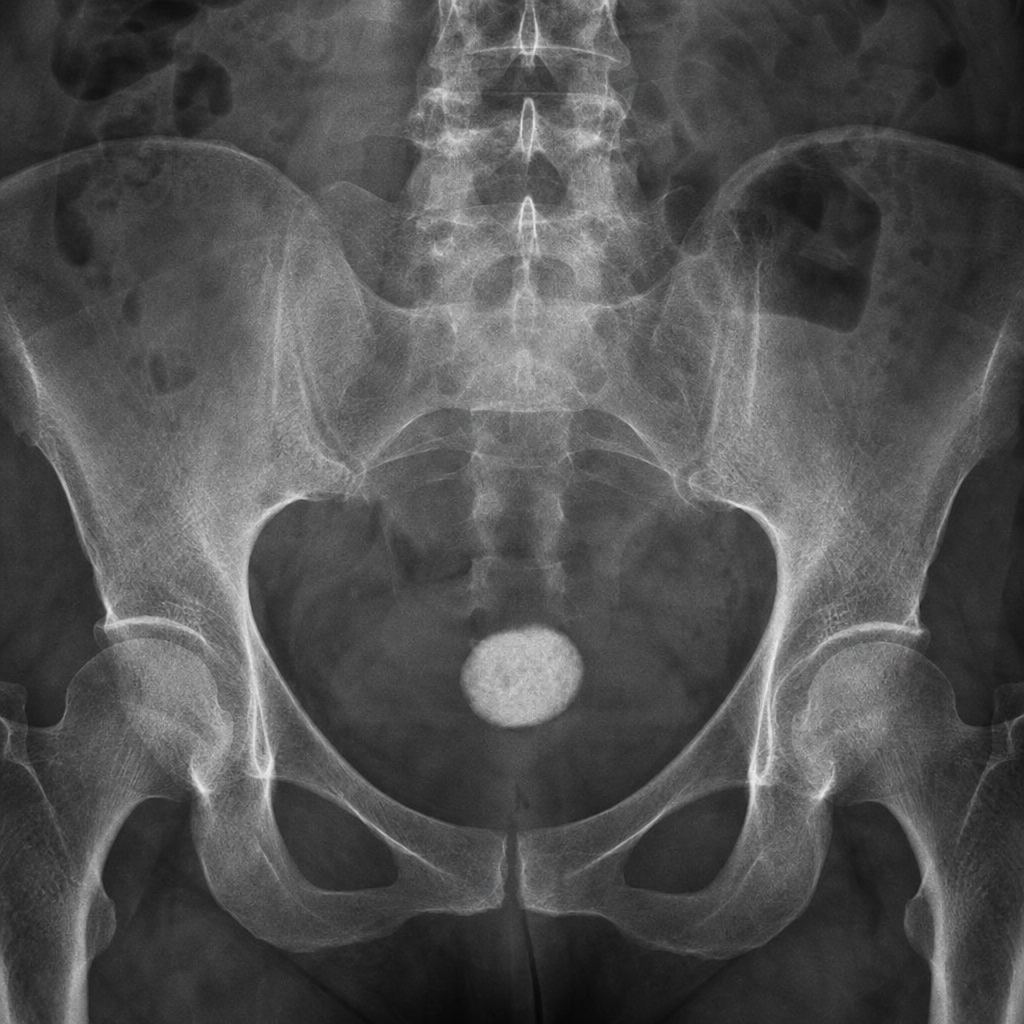
Which of the following diseases characteristically shows radiological urinary bladder calcification resembling a fetal head in the pelvis?
Which X-ray sign is indicative of pneumoperitoneum?
Aerial enhancement and venous phase washout in a liver mass larger than 2 cm is diagnostic for which of the following conditions?
A central stellate scar on CT scans is typically seen in which of the following conditions?
Explanation: ### Explanation **1. Why Option A is Correct:** MRI (Magnetic Resonance Imaging) utilizes a powerful static magnetic field and radiofrequency pulses. A **metallic foreign body in the eye** (e.g., a steel shard) is an absolute contraindication because the magnetic field can exert torque or translational force on the ferromagnetic object. This can cause the object to move or vibrate, leading to catastrophic intraocular hemorrhage, retinal detachment, or globe perforation. Screening with X-ray or CT is mandatory if a patient has a history of metalwork exposure. **2. Why the Other Options are Incorrect:** * **B. Sensitivity to contrast dye:** MRI contrast (Gadolinium) is chemically distinct from CT contrast (Iodinated). A history of allergy to CT dye is not a contraindication for MRI. Even if a patient is allergic to Gadolinium, a non-contrast MRI can still be performed. * **C. Intracranial hemorrhage:** MRI is highly sensitive for detecting hemorrhage (especially using GRE or SWI sequences). While CT is the initial investigation of choice due to speed, hemorrhage itself is not a contraindication. * **D. Agoraphobia:** While claustrophobia (fear of enclosed spaces) is a common challenge in MRI, it is a **relative contraindication**. It can be managed with open MRI machines, oral sedatives, or general anesthesia. **3. High-Yield Clinical Pearls for NEET-PG:** * **Absolute Contraindications:** Cardiac pacemakers (older models), cochlear implants, ferromagnetic aneurysm clips, and metallic foreign bodies in the eye. * **Safe Implants:** Most modern orthopedic implants (stainless steel/titanium) and prosthetic heart valves are MRI-compatible, though they may cause image artifacts. * **Pregnancy:** MRI is generally avoided in the first trimester (precautionary), but it is not strictly contraindicated and is preferred over CT due to the lack of ionizing radiation. * **Nephrogenic Systemic Fibrosis (NSF):** A rare but serious risk associated with Gadolinium use in patients with severe renal failure (GFR < 30 mL/min).
Explanation: ### Explanation **1. Why Duodenal Atresia is Correct:** The **"Double Bubble" sign** represents the gaseous distension of the stomach and the first part of the duodenum, separated by the pyloric sphincter. In **Duodenal Atresia**, there is complete failure of recanalization of the duodenum during the 8th–10th week of gestation. Because the obstruction is complete, no air can pass into the distal small or large intestines. Therefore, the classic radiographic presentation is two air-filled bubbles in the upper abdomen with a **gasless distal abdomen**. **2. Why Other Options are Incorrect:** * **Duodenal Webs:** While a duodenal web can cause a double bubble sign, it is often an incomplete obstruction (fenestrated web). This usually allows some air to pass distally, resulting in **distal bowel gas** on X-ray. * **Congenital Hypertrophic Pyloric Stenosis (CHPS):** CHPS typically presents with a **"Single Bubble"** (distended stomach) and a gasless distal abdomen only if the obstruction is total. However, the obstruction is at the pylorus, so the duodenum does not dilate. * **All of the above:** Incorrect because the absence of distal air specifically points toward complete atresia rather than partial stenosis or webs. **3. High-Yield Clinical Pearls for NEET-PG:** * **Associations:** Duodenal atresia is strongly associated with **Down Syndrome (Trisomy 21)** in approximately 30% of cases. * **Antenatal Finding:** Polyhydramnios is common due to the inability of the fetus to swallow and absorb amniotic fluid. * **Vomiting:** Characteristically presents as **bilious vomiting** within the first 24–48 hours of life (as the obstruction is usually distal to the Ampulla of Vater). * **Differential for Double Bubble:** If distal gas is present, consider Malrotation with Midgut Volvulus (a surgical emergency), Duodenal Stenosis, or Annular Pancreas.
Explanation: **Explanation:** The correct answer is **D. 1cm size Gall stones**. The primary reason CT is least accurate for gallstones is that approximately **15-25% of gallstones are "isodense" to bile**. Because CT density depends on the attenuation of X-rays, stones composed primarily of pure cholesterol have a similar radiodensity to the surrounding bile, making them invisible on a standard CT scan. In contrast, **Ultrasonography (USG)** is the gold standard for gallstones, as it relies on acoustic impedance rather than density, achieving nearly 95% sensitivity. **Analysis of other options:** * **A. 1cm Hepatic Artery Aneurysm:** With the use of IV contrast (CT Angiography), vascular structures are opacified. A 1cm aneurysm would appear as a bright, contrast-filled out-pouching, making CT highly accurate. * **B. 1cm Para-aortic Lymph node:** CT is the modality of choice for staging and detecting lymphadenopathy. A 1cm node is easily visualized against the low-density retroperitoneal fat. * **C. 1cm Pancreatic Tail Mass:** Multi-detector CT (MDCT) with a dedicated pancreatic protocol is highly sensitive for detecting small focal masses, especially if they cause contour deformity or enhancement changes. **High-Yield Clinical Pearls for NEET-PG:** * **Gold Standard for Gallstones:** Transabdominal Ultrasound (USG). * **Most Sensitive for Choledocholithiasis (CBD stones):** MRCP (Magnetic Resonance Cholangiopancreatography) or EUS (Endoscopic Ultrasound). * **CT Appearance:** Only calcified (radiopaque) or mixed stones are consistently seen on CT. Pure cholesterol stones are often missed. * **Rule of Thumb:** If a question asks for the "Investigation of Choice" for the gallbladder, the answer is almost always USG.
Explanation: **Explanation:** Insulinomas are the most common functional neuroendocrine tumors (NETs) of the pancreas. They are typically small (<2 cm), solitary, and benign. Because of their small size, high-resolution imaging is required for localization. **Why Endoscopic Ultrasound (EUS) is the correct choice:** EUS is considered the most sensitive modality (sensitivity >90%) for localizing insulinomas. Since the transducer is placed in close proximity to the pancreas via the stomach or duodenum, it overcomes the limitations of bowel gas and body habitus, allowing for the detection of very small lesions that other modalities might miss. It also allows for Fine Needle Aspiration (FNA) if required. **Analysis of Incorrect Options:** * **A. Ultrasound (USG):** Transabdominal USG has very low sensitivity (approx. 20-30%) for pancreatic tumors due to interference from overlying bowel gas and the small size of insulinomas. * **B. CT Abdomen:** While multiphasic (triple-phase) CT is often the first *non-invasive* step, it frequently misses small insulinomas. EUS remains superior for definitive localization. * **C. Somatostatin Receptor Scan (SRS):** Unlike other NETs (like gastrinomas), insulinomas often lack somatostatin receptors (SSTR2). Therefore, Octreotide scans have a low detection rate (~50%) and are not the preferred initial modality. **High-Yield Clinical Pearls for NEET-PG:** * **Whipple’s Triad:** Symptoms of hypoglycemia, low plasma glucose (<50 mg/dL), and relief of symptoms after glucose administration. * **Gold Standard for Localization:** Intraoperative Ultrasound (IOUS) combined with surgical palpation is the most accurate (nearly 100%), but EUS is the preferred *pre-operative* investigation. * **Medical Management:** Diazoxide is used to inhibit insulin release in patients awaiting surgery.
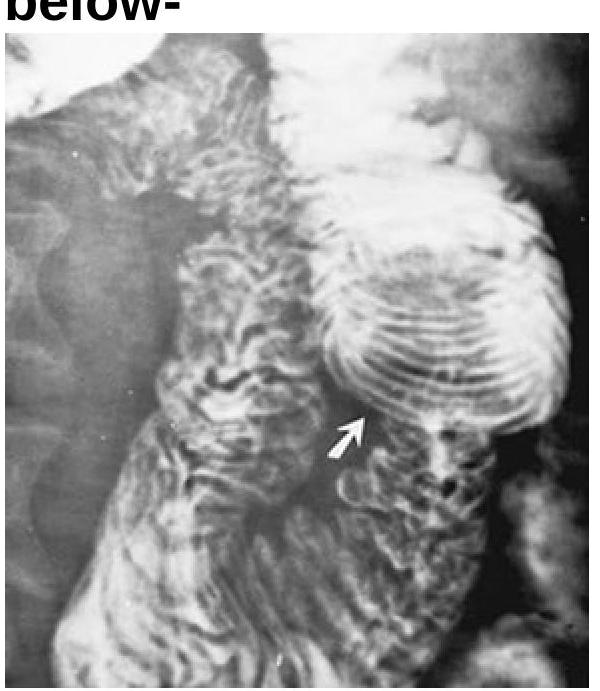
Explanation: **Explanation:** Achalasia cardia is a primary esophageal motility disorder characterized by the failure of the Lower Esophageal Sphincter (LES) to relax and the **absence of peristalsis** (aperistalsis) in the distal two-thirds of the esophagus. This occurs due to the degeneration of the myenteric (Auerbach’s) plexus. **Why "Exaggerated Peristalsis" is the correct answer:** In Achalasia, the hallmark is the **loss of primary peristalsis**. The esophagus becomes an adynamic, dilated sac. Therefore, exaggerated peristalsis is never seen; instead, one might see weak, non-propulsive "tertiary contractions." **Analysis of Incorrect Options:** * **A. Smooth narrowing of the esophagus:** On a Barium Swallow, the failure of the LES to relax creates a characteristic smooth, tapered narrowing known as the **"Bird’s beak"** or "Rat-tail" appearance. * **B. Dilated tortuous esophagus:** Chronic obstruction at the LES leads to proximal dilatation. In advanced stages, the esophagus becomes massive and redundant, known as a **"Mega-esophagus"** or "Sigmoid esophagus." * **C. Absence of air in the fundus:** Because the LES remains tonically contracted, air cannot pass from the esophagus into the stomach. This results in the **absence of the gastric air bubble** on a plain X-ray chest/abdomen. **High-Yield Clinical Pearls for NEET-PG:** * **Gold Standard Investigation:** Esophageal **Manometry** (shows incomplete LES relaxation and aperistalsis). * **Initial Investigation of Choice:** Barium Swallow. * **Heller’s Myotomy:** The surgical treatment of choice (often combined with Dor/Toupet fundoplication). * **Chagas Disease:** A common secondary cause of achalasia (caused by *Trypanosoma cruzi*). * **Complication:** Increased risk of Squamous Cell Carcinoma of the esophagus due to chronic stasis.
Explanation: In splenic rupture, the primary radiological findings on a plain X-ray are related to the accumulation of blood (hemoperitoneum) in the left upper quadrant and the resulting mass effect on surrounding structures. ### **Explanation of the Correct Answer** **Option C (Obliteration of colonic air bubble)** is the correct answer because it is **not** a feature of splenic rupture. In fact, the opposite occurs: the **splenic flexure of the colon is typically displaced downwards** by the enlarging perisplenic hematoma. This is known as the "indentation" or "displacement" of the colonic gas shadow, rather than its obliteration. ### **Analysis of Incorrect Options** * **A. Obliteration of psoas shadow:** Hemoperitoneum or retroperitoneal hemorrhage associated with splenic injury causes a "ground-glass" opacity that obscures the sharp margin of the psoas muscle. * **B. Obliteration of splenic outline:** As blood collects around the spleen, the density of the hematoma matches the density of the spleen, causing the distinct anatomical borders of the organ to disappear. * **D. Elevation of left hemidiaphragm:** The accumulation of blood and subphrenic irritation often leads to a reactive elevation of the left diaphragm and may be associated with left-sided pleural effusion or basal atelectasis. ### **High-Yield Clinical Pearls for NEET-PG** * **Gold Standard Investigation:** Contrast-Enhanced CT (CECT) is the investigation of choice for hemodynamically stable patients to grade splenic injury. * **FAST Scan:** Focused Assessment with Sonography for Trauma is the initial screening tool in the ER to detect free fluid. * **Kehr’s Sign:** Referred pain to the left shoulder due to diaphragmatic irritation from a ruptured spleen. * **Ballance’s Sign:** Fixed dullness to percussion in the left flank and shifting dullness in the right flank.
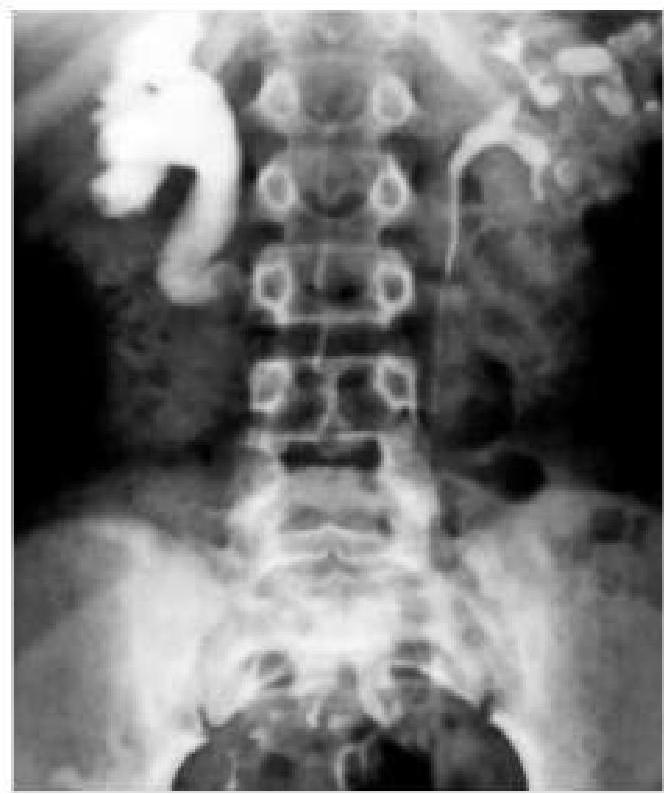
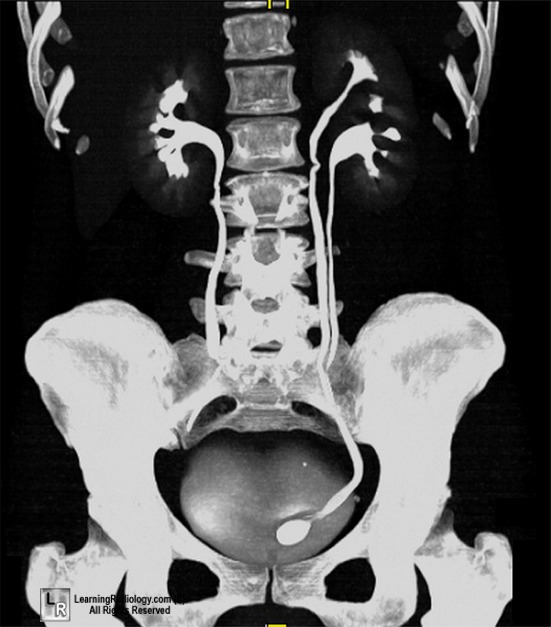
Explanation: **Explanation:** The correct answer is **Schistosomiasis** (specifically *Schistosoma haematobium*). This parasitic infection is a classic cause of bladder wall calcification. **1. Why Schistosomiasis is correct:** In chronic Schistosomiasis, the female fluke deposits eggs in the submucosa of the bladder. These eggs eventually die and undergo dystrophic calcification. On a plain X-ray (KUB), this appears as a thin, curvilinear, radio-opaque line outlining the bladder wall. When the bladder is empty, these calcified walls collapse and overlap, creating a characteristic **"fetal head" appearance** in the pelvis. **2. Why the other options are incorrect:** * **Tuberculosis (TB):** While TB causes urinary tract calcification, it typically involves the kidneys ("putty kidney") and ureters ("beaded ureter"). Bladder involvement in TB usually leads to a small, contracted, and scarred **"thimble bladder,"** but circumferential "fetal head" calcification is not characteristic. * **Chronic Cystitis:** Most forms of chronic cystitis do not cause wall calcification. An exception is *Encrusting Cystitis* (caused by *Corynebacterium urealyticum*), but the calcification is usually irregular and plaque-like, not a smooth fetal-head contour. * **Malignancy:** Bladder cancer (like Squamous Cell Carcinoma, which is associated with Schistosomiasis) may show surface calcification, but it is typically focal, irregular, or stippled within a mass rather than a global wall outline. **High-Yield Clinical Pearls for NEET-PG:** * **Schistosomiasis** is the most common cause of bladder calcification worldwide. * It is a major risk factor for **Squamous Cell Carcinoma (SCC)** of the bladder (unlike the general population where Transitional Cell Carcinoma is more common). * **Differential for "Curvilinear Calcification" in Pelvis:** Schistosomiasis (bladder), Uterine Fibroids (popcorn calcification), and Atherosclerosis of iliac arteries.
Explanation: **Explanation:** **Rigler’s Sign (Correct Answer):** Rigler’s sign, also known as the **double-wall sign**, is a classic radiographic indicator of **pneumoperitoneum** (free intraperitoneal air). Under normal conditions, only the inner mucosal surface of the bowel wall is visible because it is outlined by intraluminal gas. When there is a perforation, free air collects in the peritoneal cavity, outlining the outer (serosal) surface of the bowel. When both the inner and outer margins of the bowel wall are clearly visualized on a plain radiograph, it confirms the presence of extraluminal air. **Analysis of Incorrect Options:** * **A. Steeple sign:** Refers to the subglottic narrowing seen on an AP neck X-ray, characteristic of **Laryngotracheobronchitis (Croup)**. * **C. Golden ‘S’ sign:** Seen on a chest X-ray when there is **Right Upper Lobe collapse** caused by a central mass (usually bronchogenic carcinoma). * **D. ‘Bird of prey’ sign:** Also known as the "Bird’s beak" sign, it is seen on a barium swallow in **Achalasia Cardia** or on a contrast enema in **Sigmoid Volvulus**. **High-Yield Clinical Pearls for NEET-PG:** * **Gold Standard for Pneumoperitoneum:** The most sensitive plain film is the **Erect Chest X-ray**, which can detect as little as 1–2 ml of free air under the diaphragm. * **Cupola Sign:** Refers to air trapped under the central tendon of the diaphragm on a supine X-ray. * **Football Sign:** Seen in massive pneumoperitoneum (usually in neonates), where the entire abdominal cavity is outlined by air, resembling an American football. * **Tell-tale Sign:** Air outlining the falciform ligament.
Explanation: ### Explanation **Hepatocellular Carcinoma (HCC)** is the correct answer because the described imaging pattern—**arterial phase enhancement** followed by **venous/delayed phase washout**—is the classic hallmark of HCC on dynamic contrast-enhanced CT or MRI. 1. **Why HCC is correct:** HCC derives its blood supply primarily from the **hepatic artery** (unlike normal liver parenchyma, which receives 75% from the portal vein). During the arterial phase, the tumor intensely enhances (hypervascularity). As the contrast moves into the portal venous and delayed phases, the tumor loses contrast faster than the surrounding liver, creating the "washout" appearance. In a cirrhotic patient, this pattern in a lesion >2 cm is considered diagnostic according to LI-RADS criteria, often obviating the need for biopsy. 2. **Why other options are incorrect:** * **Hemangioma:** Characteristically shows **peripheral globular enhancement** with "centripetal fill-in" (moving from the outside in) on delayed scans. It does not show washout. * **Focal Nodular Hyperplasia (FNH):** Shows intense arterial enhancement but typically remains isointense or hyperintense on venous phases. A pathognomonic **central stellate scar** is often seen. * **Adenoma:** Shows arterial enhancement but usually lacks the distinct "washout" seen in HCC. It is strongly associated with oral contraceptive use and lacks a central scar. ### Clinical Pearls for NEET-PG: * **Tumor Marker:** Elevated **Alpha-fetoprotein (AFP)** is the most common marker for HCC. * **Fibrolamellar Variant:** Occurs in young patients without cirrhosis; characterized by a large mass with a central calcified scar. * **Triple Phase CT:** The gold standard for diagnosing hypervascular liver lesions, consisting of non-contrast, late arterial, and portal venous phases.
Explanation: ### Explanation The presence of a **central stellate (star-shaped) scar** is a classic radiological sign seen in specific benign or slow-growing tumors. This scar typically represents a core of dense fibrous or fibrovascular tissue. **1. Focal Nodular Hyperplasia (FNH):** This is the most common liver tumor associated with a central scar. On CT, the scar is typically hypoattenuating on the arterial phase but shows **delayed enhancement** due to the accumulation of contrast within the fibrous tissue. **2. Renal Oncocytoma:** This is a benign renal neoplasm. A central stellate scar is seen in approximately 33% of cases. Unlike FNH, the scar in oncocytoma often remains **hypovascular** and does not enhance significantly, helping to differentiate it from Renal Cell Carcinoma (RCC). **3. Serous Cystadenoma (SCA) of the Pancreas:** Often referred to as a "sunburst" or "honeycomb" lesion, this benign pancreatic tumor frequently features a central calcified stellate scar. The presence of **central calcification** within the scar is highly suggestive of SCA. #### Why "All of the above" is correct: While FNH is the most frequently tested association, the central stellate scar is a shared morphological feature across all three listed conditions. Recognizing this "triad" is essential for differential diagnosis in abdominal imaging. #### High-Yield Clinical Pearls for NEET-PG: * **FNH:** Look for the "spoke-wheel" appearance on angiography. It is not associated with oral contraceptives (unlike hepatic adenoma). * **Fibrolamellar Carcinoma:** A malignant liver tumor in young adults that *also* has a central scar. However, unlike FNH, the scar in fibrolamellar carcinoma is usually **calcified** and does not enhance. * **Oncocytoma:** Often presents with a "spoke-wheel" vascular pattern on angiography, similar to FNH.
Imaging of Liver
Practice Questions
Biliary Tract Imaging
Practice Questions
Pancreatic Imaging
Practice Questions
Spleen and Lymphatic System
Practice Questions
Gastrointestinal Tract Imaging
Practice Questions
Renal and Urinary Tract Imaging
Practice Questions
Adrenal Imaging
Practice Questions
Female Pelvic Imaging
Practice Questions
Male Pelvic Imaging
Practice Questions
Abdominal Trauma Imaging
Practice Questions
Acute Abdomen Imaging
Practice Questions
Imaging of Peritoneal Cavity and Retroperitoneum
Practice Questions
Get full access to all questions, explanations, and performance tracking.
Start For Free