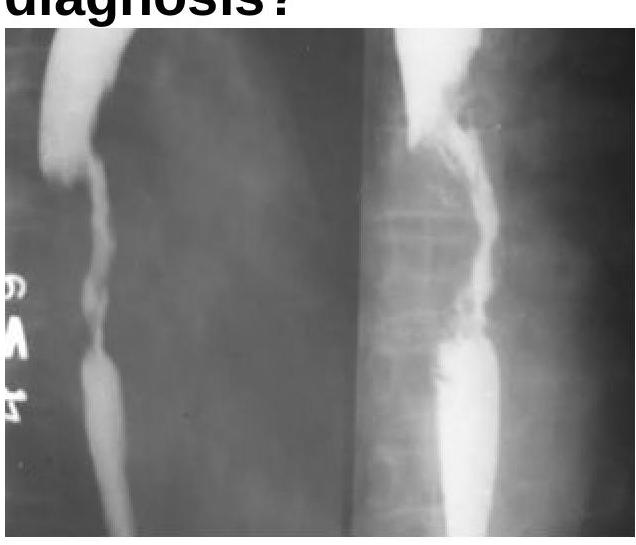
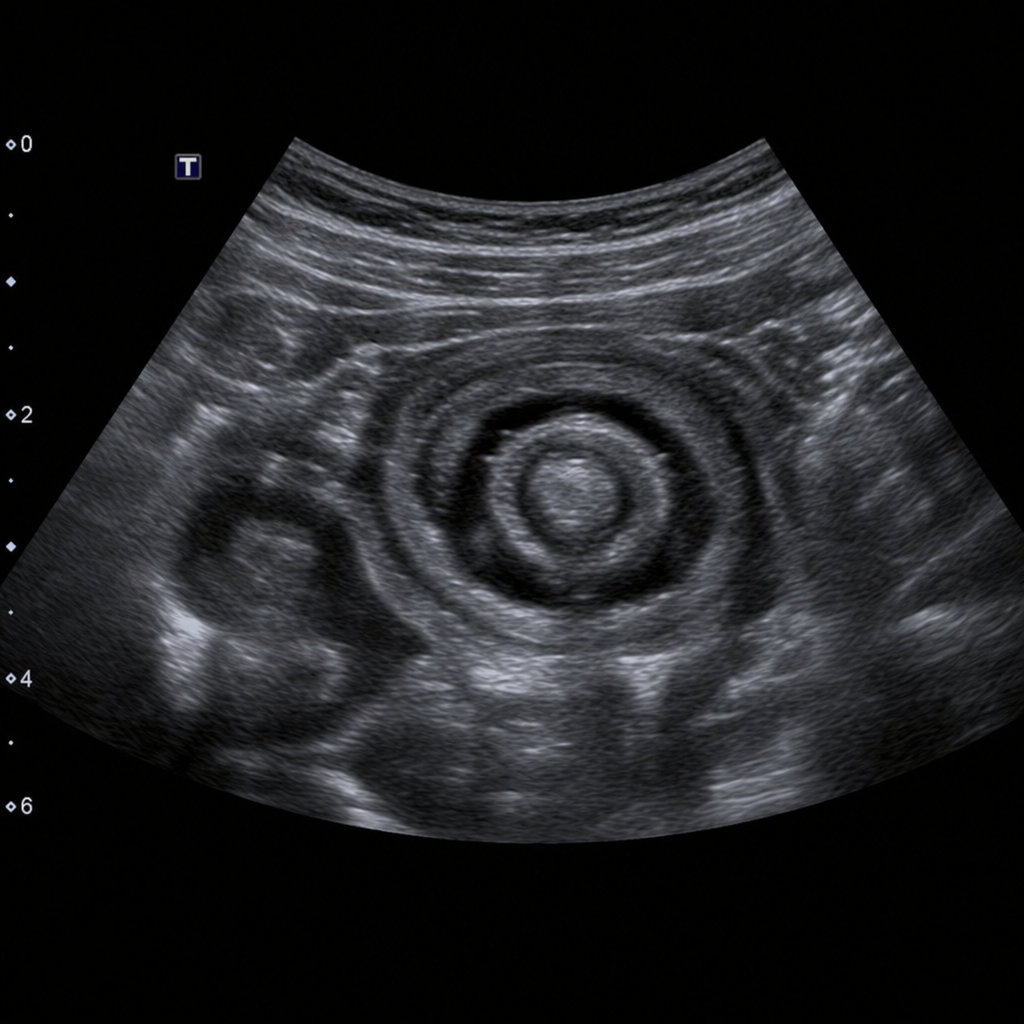
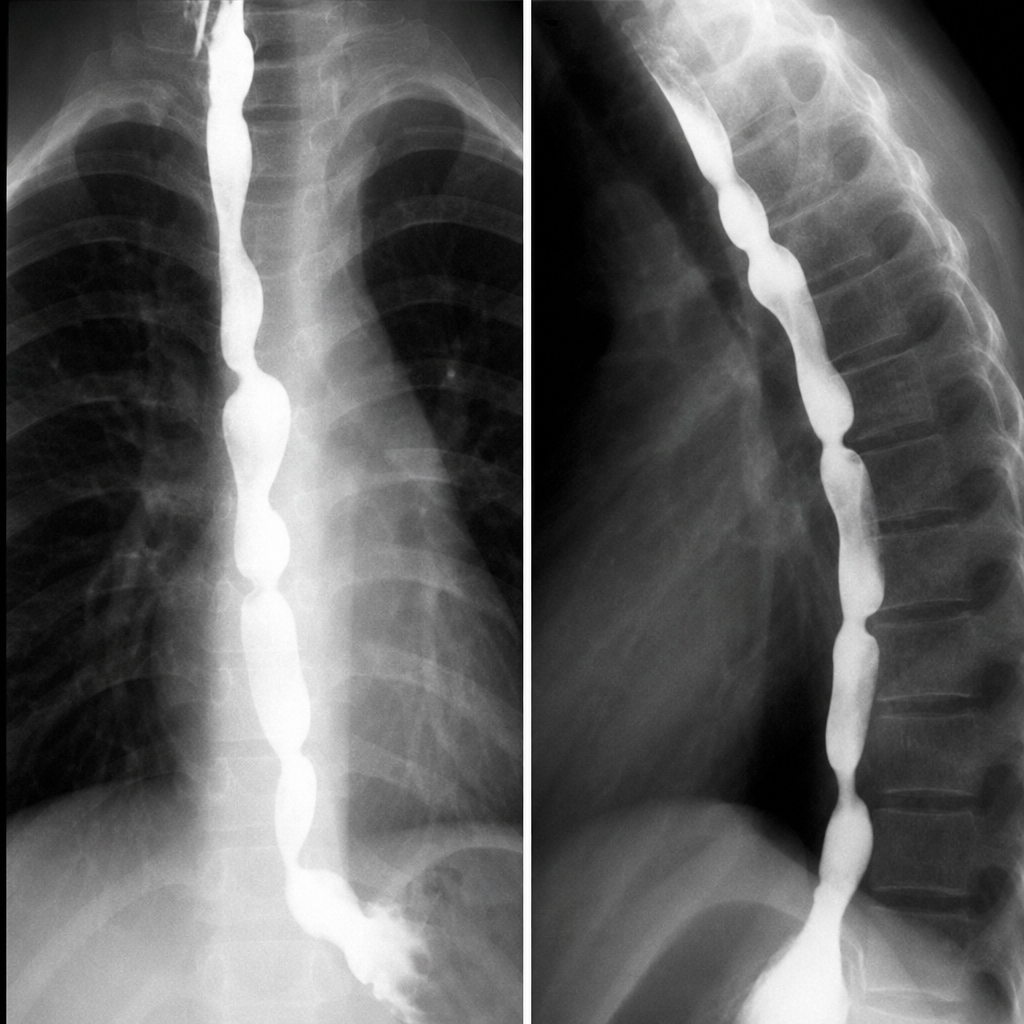
A young patient presents with fever and right upper quadrant pain. Clinical examination reveals hepatomegaly but no jaundice. Ultrasound reveals a solitary, homogeneous, hypoechoic lesion in the right lobe measuring 5 cm x 5 cm x 4 cm. Tests for hydatid disease were negative. Which of the following is the best recommendation for initial treatment?
Ectopic mucosa of Meckel's diverticulum is diagnosed by which of the following methods?
What is the best method to visualize the proximal bile duct?
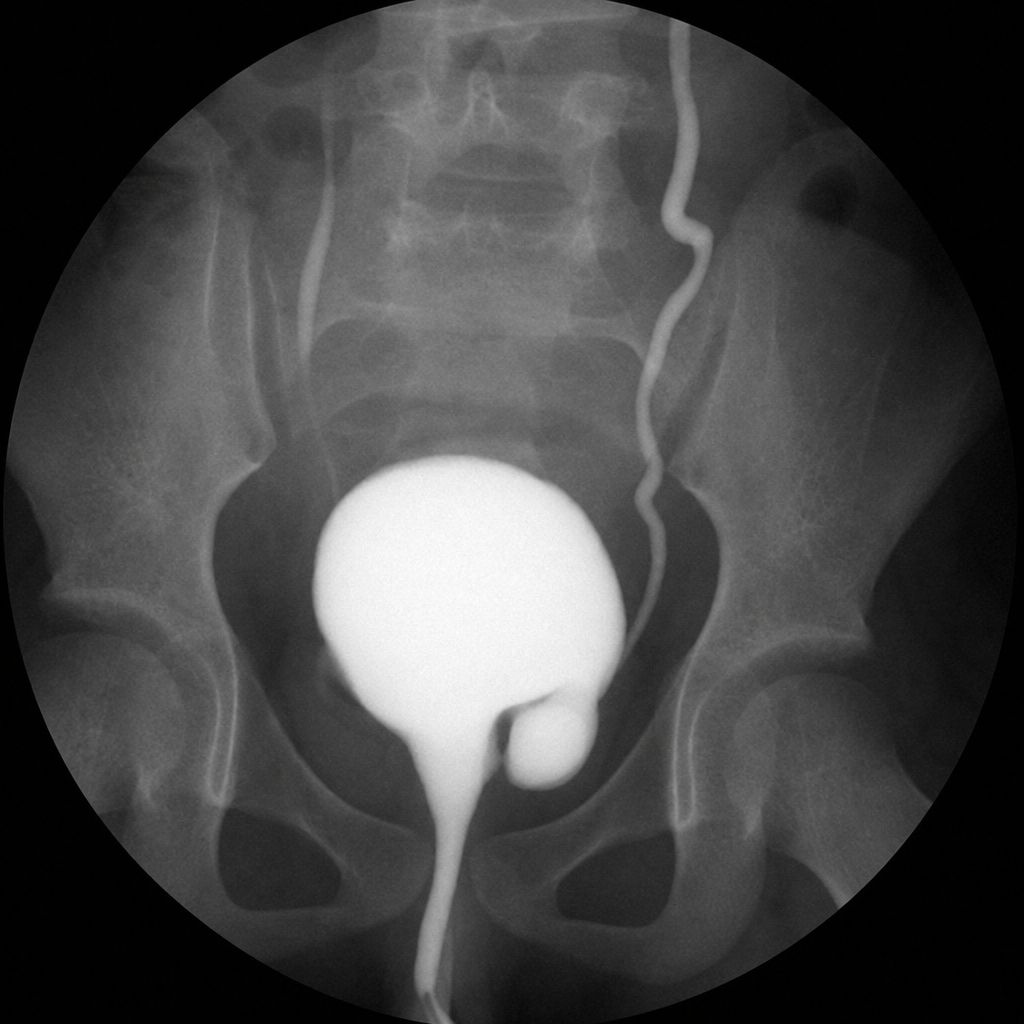
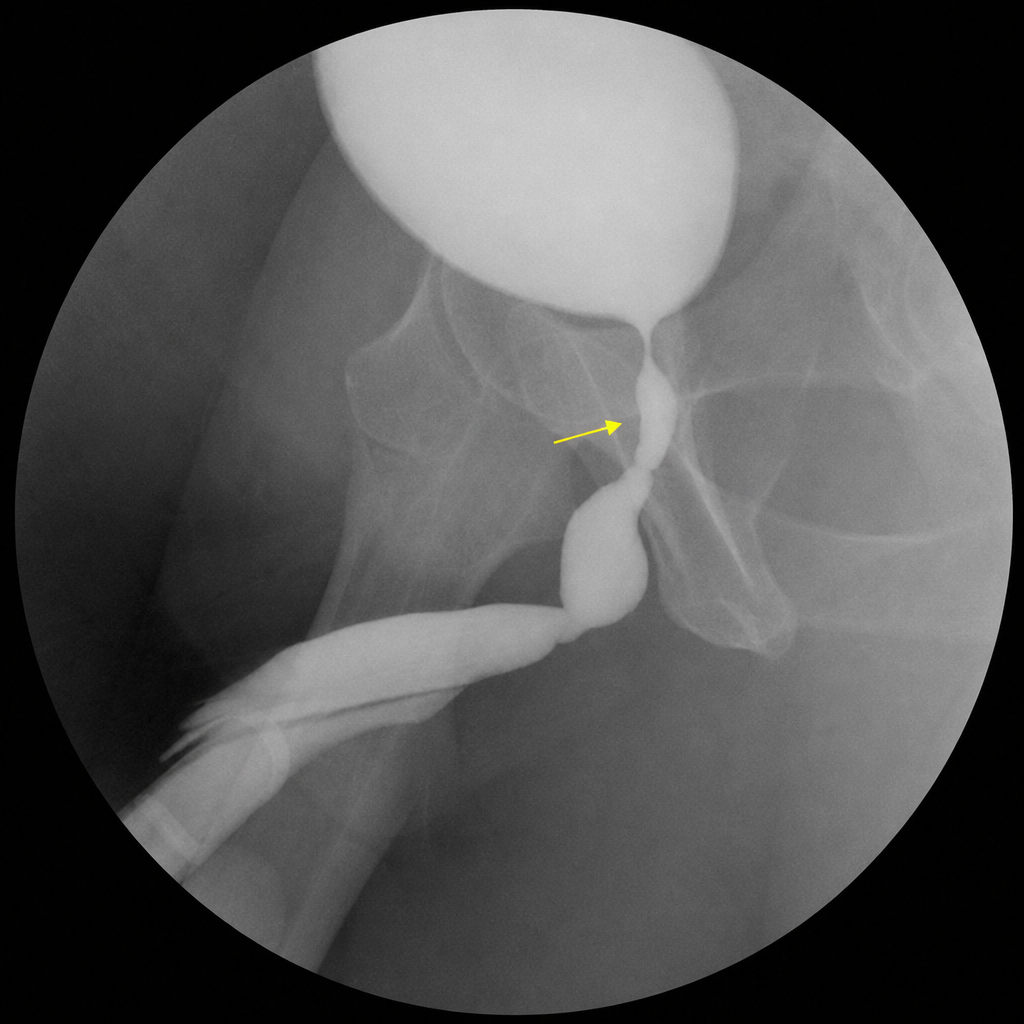
"Phantom calyx" or "Amputated calyx" on IVU is a feature of which condition?
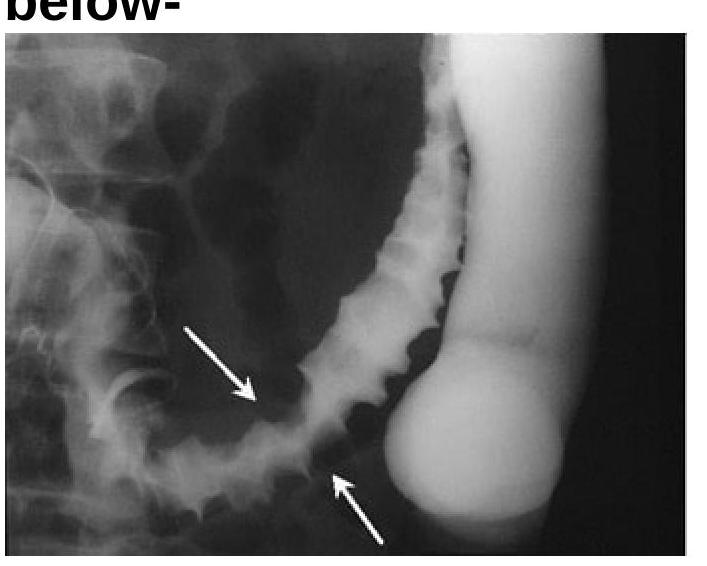
What condition is associated with the "comb sign" on CT abdomen?
Intravenous urogram shows a 'flower vase' appearance. What is the most likely diagnosis?
Which is the best investigation to detect pneumoperitoneum?
What is the most common disease affecting the human body?
The 'coffee bean sign' is characteristically seen in which of the following conditions?
Which ovarian tumor is characterized by the presence of a maximum radiopaque shadow?
Explanation: **Explanation:** The clinical presentation of fever, right upper quadrant pain, and hepatomegaly in a young patient, combined with a solitary hypoechoic lesion in the right lobe of the liver, is classic for an **Amoebic Liver Abscess (ALA)**. The negative hydatid serology further supports this diagnosis over Echinococcal cysts. **1. Why Option C is Correct:** The primary treatment for an uncomplicated amoebic liver abscess is **medical management** with antiamoebic drugs (e.g., Metronidazole or Tinidazole). Approximately 90-95% of patients respond dramatically to antibiotics alone within 48–72 hours. Unlike pyogenic abscesses, which often require drainage, uncomplicated amoebic abscesses resolve well with pharmacotherapy. **2. Why Other Options are Incorrect:** * **Options A & B:** Routine aspiration or catheter drainage is **not** recommended as initial therapy. Drainage is reserved for specific indications: lack of clinical response to drugs after 48-72 hours, large abscesses (>10 cm) at risk of rupture, abscesses in the left lobe (high risk of pericardial rupture), or if the abscess is thin-walled and imminent to burst. * **Option D:** Hepatectomy is a radical surgical procedure and is never the initial treatment for an infectious abscess. Surgery is only considered for complications like rupture into the peritoneal cavity causing peritonitis. **Clinical Pearls for NEET-PG:** * **Most common site:** Right lobe (due to the streaming effect of portal blood flow). * **Classic appearance:** "Anchovy sauce" pus (chocolate-colored, odorless). * **Radiology:** Typically a solitary, peripheral, hypoechoic lesion without a prominent wall (unlike pyogenic abscesses which are often multiple and have thicker walls). * **Gold Standard Diagnosis:** Serology (IHA/ELISA) is highly sensitive; imaging helps in localization.
Explanation: **Explanation:** **Meckel’s diverticulum** is the most common congenital anomaly of the gastrointestinal tract, resulting from the failure of the vitelline duct to obliterate. Approximately 50% of symptomatic cases contain **ectopic gastric mucosa**, which secretes acid and leads to painless lower GI bleeding (melena or hematochezia). 1. **Why Tc-99m is the Correct Answer:** The **Technetium-99m pertechnetate scan** (often called a **"Meckel’s Scan"**) is the gold standard for diagnosis. The pertechnetate ion is selectively taken up by the **mucous-secreting cells of the ectopic gastric mucosa**, not the diverticulum itself. On imaging, this appears as a "hot spot" in the right lower quadrant that appears simultaneously with the stomach signal. 2. **Why Other Options are Incorrect:** * **Angiography:** Used primarily to localize the site of active, brisk bleeding (usually >0.5 ml/min) but cannot specifically identify ectopic mucosa. * **CT Scan:** While CT can identify complications like diverticulitis or bowel obstruction, it lacks the sensitivity to detect small patches of ectopic mucosa. * **Endoscopy:** Standard upper or lower endoscopy (colonoscopy) cannot reach the mid-distal ileum where Meckel’s is typically located. **High-Yield Clinical Pearls for NEET-PG:** * **Rule of 2s:** 2% of the population, 2 inches long, 2 feet from the ileocecal valve, 2 types of ectopic tissue (Gastric > Pancreatic), and usually presents by age 2. * **Pharmacological Enhancement:** The sensitivity of a Meckel’s scan can be increased using **H2 blockers (Cimetidine)**, **Glucagon**, or **Pentagastrin**, which enhance the retention or uptake of the radionuclide. * **Most common presentation:** Painless rectal bleeding in a child.
Explanation: ### Explanation **Correct Answer: A. Percutaneous transhepatic cholangiogram (PTC)** The biliary system is divided into proximal (intrahepatic and high extrahepatic) and distal (common bile duct) segments. **Percutaneous Transhepatic Cholangiography (PTC)** is the gold standard for visualizing the **proximal bile ducts**, especially in cases of high-grade biliary obstruction (e.g., Klatskin tumors). In these scenarios, the bile ducts proximal to the obstruction are dilated; a needle is passed through the liver parenchyma into a dilated duct to inject contrast. This provides superior opacification of the anatomy above the level of a stricture compared to retrograde methods. **Analysis of Incorrect Options:** * **ERCP (Option C):** While excellent for the **distal bile duct** and periampullary region, it is often unsuccessful in visualizing the proximal ducts if there is a complete high-level obstruction (e.g., Hilar Cholangiocarcinoma), as contrast cannot bypass the block from below. * **Endoscopic Ultrasonography (EUS) (Option B):** Highly sensitive for detecting small stones or masses in the distal CBD and gallbladder, but it is an operator-dependent tool primarily used for staging and biopsy rather than comprehensive mapping of the proximal biliary tree. * **Transabdominal Ultrasonography (Option D):** This is the **initial screening modality** for biliary pathology. While it can detect ductal dilation, it lacks the resolution and contrast detail required for definitive visualization of the proximal ductal anatomy. **High-Yield Clinical Pearls for NEET-PG:** * **Initial Investigation of choice** for obstructive jaundice: Transabdominal Ultrasound. * **Gold standard for distal CBD** visualization/intervention: ERCP. * **Best non-invasive modality** for the entire biliary tree: MRCP (Magnetic Resonance Cholangiopancreatography). * **PTC is preferred over ERCP** when there is altered anatomy (e.g., Roux-en-Y gastric bypass) or a high hilar obstruction.
Explanation: **Explanation:** The correct answer is **Tuberculosis (A)**. Genitourinary tuberculosis (GUTB) is characterized by a chronic granulomatous infection that leads to extensive fibrosis and stricture formation. The "Phantom Calyx" or "Amputated Calyx" appearance on Intravenous Urography (IVU) occurs when a stricture develops at the **infundibulum** (the neck of the calyx). This stricture completely obstructs the drainage, preventing the contrast medium from entering that specific calyx, making it appear "missing" or "amputated" on the radiograph. **Analysis of Incorrect Options:** * **B. Hydronephrosis:** Typically shows "clubbing" of the calyces due to backpressure, but the calyces remain visible and connected to the pelvis. * **C. Bilharziasis (Schistosomiasis):** Characteristically presents with "linear calcification" of the bladder wall (fetal head appearance) and ureteric strictures, but not typically isolated infundibular amputation. * **D. UPJ Obstruction:** Results in massive dilation of the renal pelvis and calyces (ballooning), but the connection between them remains patent. **High-Yield Clinical Pearls for NEET-PG:** * **Earliest Sign of GUTB on IVU:** "Moth-eaten" appearance of the calyces (due to cortical erosions). * **Putty Kidney:** End-stage GUTB where the kidney is non-functional and autonephrectomized with dense calcification. * **Golf-hole Ureter:** Retraction of the ureteric orifice due to fibrosis. * **Thimble Bladder:** A small, contracted, fibrotic bladder with reduced capacity.
Explanation: The **Comb Sign** is a classic radiological hallmark of active, hemodynamically significant **Crohn’s disease**. ### 1. Why Crohn’s Disease is Correct The "comb sign" refers to the appearance of prominent, engorged, and widely spaced **vasa recta** (the small arteries supplying the bowel) within the mesentery. In active Crohn’s disease, transmural inflammation leads to increased blood flow and fibrofatty proliferation (creeping fat). On a contrast-enhanced CT, these dilated vessels align parallel to each other, resembling the teeth of a comb. This sign is highly specific for **active inflammation** and helps differentiate acute flares from chronic fibrostenotic disease. ### 2. Why Other Options are Incorrect * **Ulcerative Colitis:** This condition primarily involves the mucosa and submucosa rather than the full thickness of the wall. Mesenteric vascular engorgement is rare; instead, CT may show "lead pipe" appearance or "target sign" due to mucosal edema. * **Tuberculosis (Abdominal):** While it can cause bowel wall thickening, it typically presents with necrotic mesenteric lymphadenopathy and asymmetric involvement of the ileocecal junction, rather than prominent vasa recta. * **Intestinal Lymphoma:** This usually presents with "aneurysmal dilatation" of the bowel lumen and bulky, non-necrotic lymphadenopathy. It does not typically cause the hypervascular mesenteric response seen in Crohn’s. ### 3. NEET-PG High-Yield Pearls * **String Sign of Kantor:** Narrowing of the terminal ileum due to spasm or fibrosis (seen on Barium studies). * **Creeping Fat:** Mesenteric fat wrapping around the bowel circumference, a precursor to the comb sign. * **Proud Flesh:** Inflammatory polyps (pseudopolyps) seen in the colon. * **Skip Lesions:** Segmental involvement of the bowel, a key differentiator from the continuous involvement in Ulcerative Colitis.
Explanation: **Explanation:** The **'flower vase' appearance** on an Intravenous Urogram (IVU) is a classic radiological sign of a **Horse-shoe kidney**. This occurs because the lower poles of both kidneys are fused across the midline (usually by an isthmus at the level of L4). This fusion prevents the normal lateral rotation of the kidneys; instead, the kidneys remain vertically oriented or medially rotated. Consequently, the long axes of the kidneys are directed downwards and medially, and the ureters arise from the anterior surface, draping over the isthmus before descending, mimicking the shape of a flower vase. **Analysis of Options:** * **A. Duplex system with upper moiety ureterocele:** Characterized by the **'Drooping Lily'** appearance, where the obstructed upper pole moiety displaces the lower pole moiety downwards and outwards. * **B. Polycystic kidney disease:** Typically shows bilateral enlarged kidneys with a **'Spider leg'** appearance due to the elongation and compression of the calyces by multiple cysts. * **C. Horse-shoe kidney:** Correct. The fusion of lower poles leads to the characteristic 'flower vase' or 'hand-holding' appearance. * **D. Retro-caval ureter:** Characterized by a **'Fish-hook'** or **'J-shaped'** ureter, where the right ureter passes behind the Inferior Vena Cava. **High-Yield Pearls for NEET-PG:** * **Embryology:** The ascent of the horse-shoe kidney is arrested by the **Inferior Mesenteric Artery (IMA)**. * **Most common site of fusion:** Lower poles (90%). * **Complications:** Increased risk of PUJ obstruction, nephrolithiasis, and infections. * **Associated Malignancy:** Increased incidence of **Wilms tumor** (in children) and **Transitional Cell Carcinoma**.
Explanation: ### Explanation **1. Why Plain X-ray Chest (Erect) is the Correct Answer:** The **Erect Chest X-ray (CXR)** is considered the gold standard screening investigation for pneumoperitoneum. This is due to the anatomical shape of the diaphragm; the domes of the diaphragm are higher than the rest of the abdominal cavity. Free air (which is less dense than viscera) rises and collects under the diaphragm. * **Sensitivity:** An erect CXR can detect as little as **1–2 ml** of free air. * **Advantage:** It provides better contrast between the thin diaphragm and the air, whereas an erect abdominal X-ray often cuts off the diaphragmatic domes or lacks the necessary clarity to visualize small amounts of subdiaphragmatic air. **2. Analysis of Incorrect Options:** * **A. Plain X-ray Abdomen (Erect):** While it can show free air, the centering of the beam is lower. It is less sensitive than a CXR because the diaphragmatic area is at the periphery of the film, leading to poorer visualization of small air pockets. * **B. Left Lateral Decubitus:** This is the **investigation of choice only if the patient cannot stand**. Air collects between the liver and the right lateral chest wall. It can detect about 5–10 ml of air but is secondary to the erect CXR. * **D. CT Scan:** CT is actually the **most sensitive** modality (detecting <1 ml of air). However, in the context of standard medical exams like NEET-PG, if "best" refers to the initial, most cost-effective, and standard screening tool, **Erect CXR** is the traditional correct answer. *Note: If the question asks for the "Most Sensitive," choose CT.* **3. Clinical Pearls for NEET-PG:** * **Rigler’s Sign:** Visualization of both sides of the bowel wall (intraluminal and extraluminal air); seen on supine films. * **Football Sign:** Large volume pneumoperitoneum outlining the entire peritoneal cavity. * **Cupola Sign:** Air trapped under the central tendon of the diaphragm. * **Positioning:** Patients should remain upright for at least **5–10 minutes** before the X-ray to allow air to rise.
Explanation: **Explanation:** **Dental caries** is recognized by the World Health Organization (WHO) and the Global Burden of Disease studies as the most common non-communicable disease affecting humans globally. It affects nearly 3.5 billion people worldwide, with untreated dental caries in permanent teeth being the single most prevalent condition. The disease involves the localized destruction of susceptible dental hard tissues by acidic by-products from bacterial fermentation of dietary carbohydrates. **Analysis of Options:** * **Gingivitis (Option A):** While extremely common and often a precursor to periodontitis, its global prevalence is lower than that of dental caries. * **Hypertension (Option B):** This is the most common "silent killer" and a leading risk factor for cardiovascular disease, affecting approximately 1.28 billion adults, but it does not surpass the sheer number of cases seen in dental decay. * **Diabetes (Option C):** Although a major global health emergency with rising prevalence (approx. 537 million adults), it remains significantly less common than dental caries. **NEET-PG Clinical Pearls:** * **Radiological Note:** In dental radiology, caries appear as **radiolucent** (dark) areas on a radiograph because the demineralized enamel/dentin is less dense than healthy tissue. * **Bitewing Radiographs:** These are the gold standard imaging modality for detecting interproximal (between teeth) caries that are not visible during a clinical exam. * **Microbiology:** *Streptococcus mutans* is the primary causative organism associated with the initiation of dental caries.
Explanation: ### Explanation **Correct Answer: C. Sigmoid volvulus** The **'Coffee Bean Sign'** (also known as the Omega sign or Frimann-Dahl sign) is the classic radiographic hallmark of **Sigmoid Volvulus**. This condition occurs when the sigmoid colon twists on its mesenteric axis, leading to a closed-loop obstruction. * **Mechanism:** As the sigmoid loop undergoes torsion, it becomes massively distended with gas. The two medial walls of the dilated loop appose each other, forming a central dense line (the "cleft" of the bean), while the lateral walls form the rounded outer margins of the "bean." The apex of the "bean" usually points toward the Right Upper Quadrant (RUQ). **Analysis of Incorrect Options:** * **A. Intussusception:** Characterized by the **'Target sign'** or **'Doughnut sign'** on ultrasound/CT, and the **'Coiled spring sign'** on barium enema. * **B. Bowel Ischemia:** Often presents with **'Thumbprinting'** (due to mucosal edema) or **'Pneumatosis intestinalis'** (gas within the bowel wall) in advanced stages. * **D. Congenital Hypertrophic Pyloric Stenosis:** Classically shows the **'String sign'** (narrowed pyloric canal) or **'Shoulder sign'** on barium studies, and the **'Target/Donut sign'** on ultrasound. **High-Yield Clinical Pearls for NEET-PG:** * **Bird’s Beak Sign:** Seen on barium enema in Sigmoid Volvulus (tapering at the site of the twist). * **Cecal Volvulus:** Unlike sigmoid, the distended cecum usually has only one air-fluid level and the "bean" points toward the Left Upper Quadrant (LUQ). * **Management:** Initial treatment for Sigmoid Volvulus is often **sigmoidoscopic detorsion** (unless gangrene is suspected), whereas Cecal Volvulus usually requires surgery.
Explanation: **Explanation:** The correct answer is **Teratoma (Option A)**. **Why Teratoma is correct:** A Mature Cystic Teratoma (Dermoid cyst) is a germ cell tumor derived from all three germ layers (ectoderm, mesoderm, and endoderm). It characteristically contains well-differentiated tissues, including **teeth and bone**. On a plain X-ray or CT scan, these calcified structures appear as dense, **radiopaque shadows**. Additionally, the presence of sebum/fat within the cyst creates a "fat-fluid level," which is a classic radiological hallmark. **Why the other options are incorrect:** * **Dysgerminoma (Option B):** While these may show speckled or irregular calcifications in about 10-15% of cases, they lack the organized, dense radiopaque structures (like teeth) seen in teratomas. * **Mucinous Cystadenoma (Option C):** These are large, multiloculated cystic tumors. While the cyst wall may occasionally calcify, they do not typically present with significant radiopaque shadows. * **Granulosa Cell Tumor (Option D):** These are sex cord-stromal tumors known for estrogen production. They are usually solid or complex cystic masses and do not characteristically feature radiopaque calcifications. **High-Yield Clinical Pearls for NEET-PG:** * **Rokitansky Nodule (Dermoid Plug):** A solid prominence within a teratoma containing hair or teeth; often the site of malignant transformation. * **Tip of the Iceberg Sign:** An ultrasound finding in teratomas where the anterior dense acoustic shadowing from hair/sebum obscures the posterior wall. * **Psammoma Bodies:** If a question mentions "fine, sand-like calcifications" in an ovarian mass, think **Serous Cystadenocarcinoma**. * **Most common ovarian tumor in young women:** Mature Cystic Teratoma.
Imaging of Liver
Practice Questions
Biliary Tract Imaging
Practice Questions
Pancreatic Imaging
Practice Questions
Spleen and Lymphatic System
Practice Questions
Gastrointestinal Tract Imaging
Practice Questions
Renal and Urinary Tract Imaging
Practice Questions
Adrenal Imaging
Practice Questions
Female Pelvic Imaging
Practice Questions
Male Pelvic Imaging
Practice Questions
Abdominal Trauma Imaging
Practice Questions
Acute Abdomen Imaging
Practice Questions
Imaging of Peritoneal Cavity and Retroperitoneum
Practice Questions
Get full access to all questions, explanations, and performance tracking.
Start For Free