What is the most common cause of widening of the C-loop of the duodenum?
What is the minimum size of a liver metastasis that can be detected by contrast-enhanced computed tomography (CECT)?
What is the investigation of choice for small bowel tumors?
Which of the following imaging modalities can be used to detect carcinoma of the prostate gland?
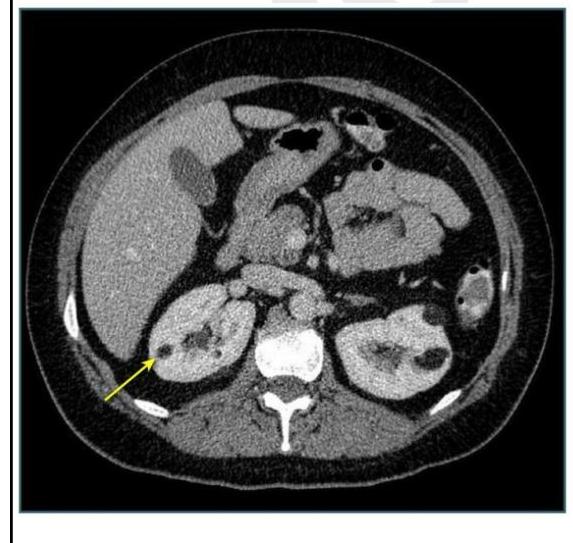
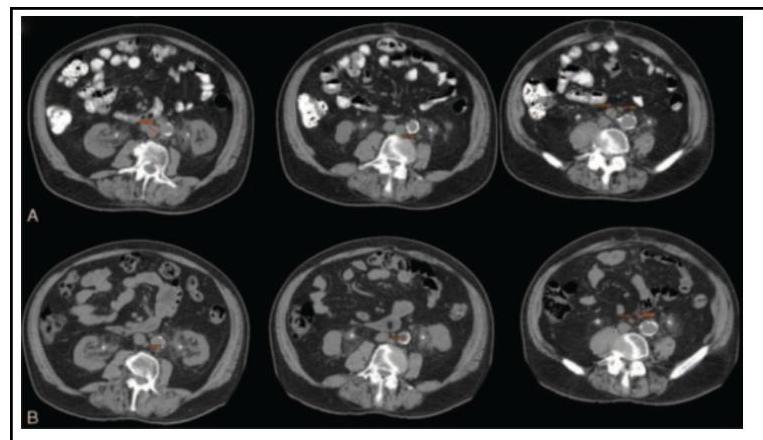
Comment on the diagnosis shown below?

Which sonographic parameter is used to estimate intrauterine growth restriction?
What is the diagnosis suggested by the barium X-ray findings?

What is the first radiologic sign of Crohn's disease in the terminal ileum?
A 61-year-old man undergoes a CT scan study of the abdomen for unexplained abdominal distension. Low attenuation intraperitoneal collections with enhancing septae are demonstrated. There is scalloping of the liver border and omental thickening. Which one of the following is most likely to be the underlying cause?
Which of the following is true about OCG?
Explanation: The **C-loop of the duodenum** is the anatomical space formed by the first, second, and third parts of the duodenum, which snugly cradles the **head of the pancreas**. Any mass-occupying lesion in this region can cause the C-loop to expand or "widen" on a barium swallow or CT scan. ### Why Carcinoma of the Head of the Pancreas is Correct **Carcinoma of the head of the pancreas** is the most common cause of a widened C-loop. As the tumor grows, it exerts outward pressure on the inner curvature of the descending (second) part of the duodenum. This often results in the classic **"Frostberg’s Inverted 3 Sign"**, where the tumor pulls or pushes the duodenal mucosa, creating an appearance resembling a reverse '3'. ### Analysis of Incorrect Options * **Pancreatitis:** While acute pancreatitis can cause inflammatory edema and some widening, it is usually transient. Chronic pancreatitis may cause widening due to pseudocyst formation, but it is statistically less common than malignancy as a primary cause of significant C-loop expansion. * **Choledochal Cyst:** These are congenital dilations of the bile duct. While a large Type I cyst can displace the duodenum, it typically presents in younger populations and is a much rarer cause compared to pancreatic cancer. * **Retroperitoneal Masses:** Lymphadenopathy (e.g., Lymphoma) or retroperitoneal sarcomas can displace the duodenum, but they usually shift the entire duodenum anteriorly or laterally rather than specifically widening the C-loop symmetrically. ### NEET-PG High-Yield Pearls * **Frostberg’s Sign:** Also known as the "Inverted 3 sign," it is highly suggestive of pancreatic head carcinoma or chronic pancreatitis. * **Rose-Thorn Appearance:** Seen in the duodenum in cases of intramural diverticula or sometimes in Crohn’s disease. * **Double Bubble Sign:** Classic radiological sign for **Duodenal Atresia**. * **Pad Sign:** Indentation on the superior aspect of the duodenal bulb, often seen in pancreatic masses.
Explanation: **Explanation:** The detection of liver metastases on Contrast-Enhanced Computed Tomography (CECT) depends on the spatial resolution of the scanner and the contrast difference between the lesion and the surrounding liver parenchyma. * **Why 5 mm is correct:** Modern multidetector CT (MDCT) scanners, using thin-section collimation (typically 1–2 mm slices) and optimal intravenous contrast enhancement, have a high sensitivity for focal liver lesions. The practical threshold for reliable detection and characterization of a metastasis is **5 mm**. Lesions smaller than this often fall below the resolution limits or are obscured by "partial volume averaging," where the density of the small lesion is averaged with the surrounding healthy tissue. * **Why other options are incorrect:** * **1 mm:** This is below the spatial resolution of standard clinical CT. While micro-metastases exist, they cannot be visualized by current imaging modalities. * **1 cm:** While 1 cm lesions are easily seen, this is not the *minimum* size. CECT is significantly more sensitive than this. * **2 cm:** This was the threshold in the early days of single-slice CT. With modern technology, waiting for a lesion to reach 2 cm would represent a significant diagnostic delay. **High-Yield Clinical Pearls for NEET-PG:** * **Gold Standard:** While CECT is the initial workup of choice, **MRI with hepatocyte-specific contrast agents (e.g., Gadoxetic acid/Primovist)** is the most sensitive modality for detecting small liver metastases (<1 cm). * **Vascularity:** Most liver metastases are **hypovascular** (e.g., Colorectal CA) and are best seen in the **portal venous phase**. * **Hypervascular Metastases:** Metastases from Renal Cell Carcinoma (RCC), Thyroid CA, Melanoma, and Neuroendocrine tumors are best seen in the **late arterial phase**. * **Hypodense Appearance:** On CECT, most metastases appear as well-defined hypodense areas relative to the enhancing liver.
Explanation: **Explanation:** The investigation of choice for small bowel tumors is **Enteroclysis** (specifically CT or MR Enteroclysis in modern practice, though conventional barium enteroclysis remains the classic textbook answer for mucosal detail). **1. Why Enteroclysis is correct:** Enteroclysis involves the administration of contrast (barium or methylcellulose) directly into the proximal jejunum via a nasojejunal tube (Bilbao-Dotter tube). This technique achieves **active distension** of the small bowel loops, which is superior to the passive filling seen in a routine follow-through. This distension allows for the detection of small, intraluminal, or mural lesions (like carcinoids or GISTs) that might otherwise be masked by collapsed bowel loops. **2. Why other options are incorrect:** * **Barium Meal and Follow Through (BMFT):** This is a functional study where contrast is swallowed. It often results in overlapping loops and poor distension, leading to a high false-negative rate for small tumors. * **CT (Standard):** While excellent for staging and detecting extraluminal spread, standard CT without enteric distension lacks the sensitivity to identify early mucosal or small intraluminal masses. * **MRI:** Similar to CT, standard MRI is less effective unless performed as **MR Enteroclysis**, which combines the cross-sectional benefits of MRI with the distension of enteroclysis. **Clinical Pearls for NEET-PG:** * **Gold Standard for Small Bowel Obstruction:** CT Abdomen (highly sensitive for transition points). * **Most common small bowel benign tumor:** Adenoma. * **Most common small bowel malignant tumor:** Adenocarcinoma (overall), though Carcinoid is most common in the ileum. * **Bilbao-Dotter Tube:** The specific tube used for Enteroclysis. * **CT Enterography** (oral contrast) is now more commonly used clinically than Enteroclysis (tube-assisted) due to patient comfort, but Enteroclysis remains the "investigation of choice" for subtle mucosal lesions in academic exams.
Explanation: **Explanation:** The detection and staging of prostate carcinoma involve a combination of biochemical markers and multi-modal imaging. While the question asks for a modality that **can** be used to detect the disease, it is important to distinguish between screening, diagnosis, and staging. **Why CT Scan is the correct answer (in this context):** In the context of oncological imaging, a **CT Scan** is a standard modality used to detect and evaluate prostate cancer, specifically for **nodal staging** and identifying **distant metastasis** (e.g., bone or visceral involvement). While it has poor soft-tissue resolution for identifying the primary tumor within the gland itself, it is essential for detecting the spread of the disease, which is a critical component of "detecting" the extent of the carcinoma. **Analysis of Incorrect Options:** * **PSA (Prostate-Specific Antigen):** This is a **biochemical marker**, not an imaging modality. While it is the primary tool for screening and monitoring, it cannot visualize the gland. * **MRI (Magnetic Resonance Imaging):** Specifically **Multiparametric MRI (mpMRI)** is currently the "Gold Standard" for localizing the primary tumor and guiding biopsies (PI-RADS scoring). However, in many standardized exams, CT remains the classic answer for detecting the systemic extent of the disease. * **TRUS (Transrectal Ultrasound):** TRUS is primarily used to **guide biopsies** rather than for primary detection, as it lacks the sensitivity to reliably differentiate between benign and malignant nodules. **High-Yield Clinical Pearls for NEET-PG:** * **Gold Standard for Local Staging:** mpMRI (T2W, DWI, and DCE sequences). * **Best for Nodal/Systemic Spread:** CT Scan and Bone Scan (Technetium-99m). * **Most Sensitive for Recurrence:** PSMA-PET Scan (Prostate-Specific Membrane Antigen). * **Osteoblastic Metastasis:** Prostate cancer characteristically spreads to the bone as sclerotic/osteoblastic lesions.
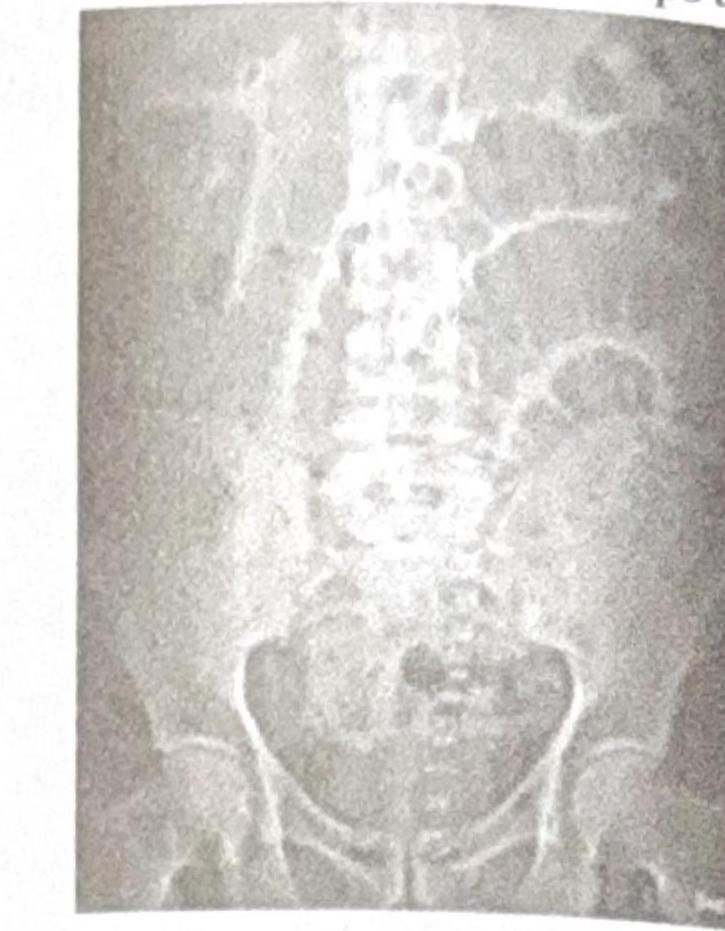
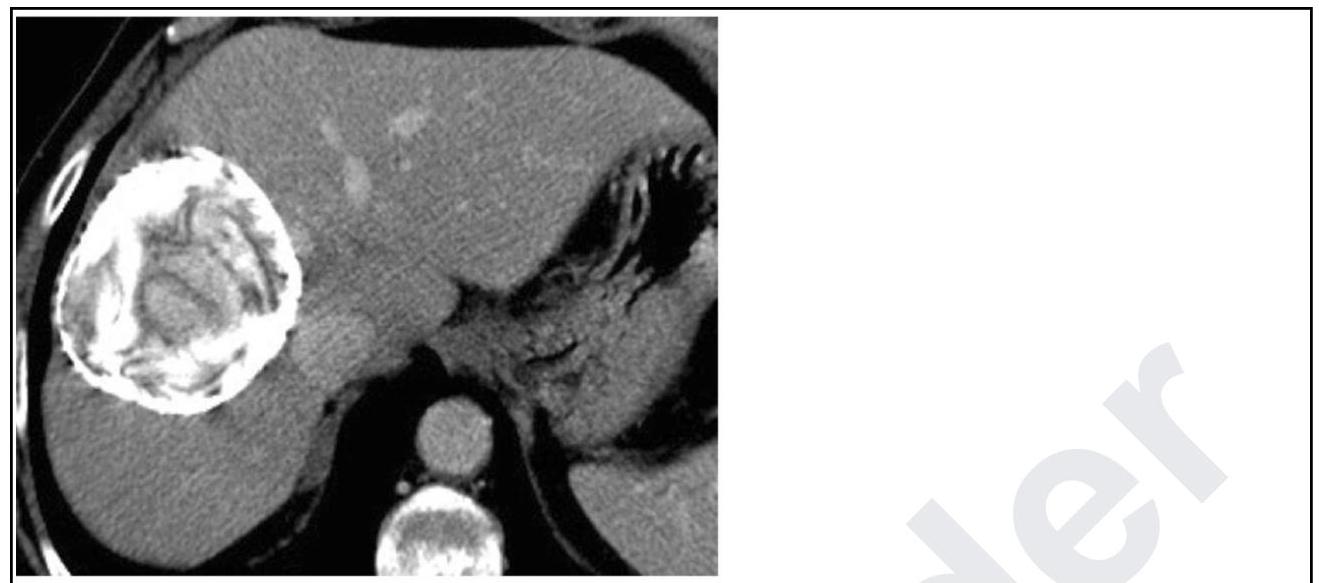
Explanation: ***Drooping water lily sign*** - This is the **classic radiological appearance** of a **hydatid cyst** (echinococcosis) where the detached **inner endocyst membrane** floats on fluid like a water lily on water surface. - Also known as the **camalote sign**, it indicates **cyst rupture** or **membrane detachment** and is pathognomonic for echinococcal cysts on imaging. *Horse shoe kidney* - This refers to a **congenital renal fusion anomaly** where both kidneys are connected at the lower poles, creating a horseshoe shape. - Typically shows **bilateral renal masses** connected across the midline with **malrotation** of the collecting systems. *Flower Vase kidney* - This describes the appearance of **chronic pyelonephritis** where there is **cortical scarring** overlying **dilated calyces**. - The kidney shows a **club-shaped calyceal dilatation** with overlying cortical thinning, resembling a flower vase shape. *Duplication of kidney* - This refers to **complete or incomplete duplication** of the **collecting system** with two separate ureters or a bifid ureter. - Shows **two distinct pelvicalyceal systems** within the same kidney, often with the upper pole ureter inserting ectopically.
Explanation: **Explanation:** **Abdominal Circumference (AC)** is the most sensitive and reliable single sonographic parameter for diagnosing and monitoring **Intrauterine Growth Restriction (IUGR)**. This is because IUGR (specifically asymmetric IUGR) primarily affects the liver size and the depletion of subcutaneous fat stores in the fetal abdomen. Since the liver is the first organ to show reduced growth due to glycogen depletion in a state of placental insufficiency, the AC will decrease before other skeletal measurements. **Analysis of Incorrect Options:** * **Femur Length (FL):** This is a measure of longitudinal skeletal growth. It is generally preserved in asymmetric IUGR ("head and limb sparing effect") and is more useful for determining gestational age in the second and third trimesters. * **Biparietal Diameter (BPD) & Head Circumference (HC):** These measure cranial growth. In asymmetric IUGR, fetal circulation prioritizes the brain (the "brain-sparing effect"), meaning these parameters often remain within normal limits while the body (AC) lags behind. **High-Yield Clinical Pearls for NEET-PG:** * **Best Parameter for Gestational Age (1st Trimester):** Crown-Rump Length (CRL). * **Best Parameter for Gestational Age (2nd/3rd Trimester):** Biparietal Diameter (BPD) or a composite of all four parameters. * **Asymmetric vs. Symmetric IUGR:** Asymmetric (most common) shows a high HC/AC ratio; Symmetric shows a normal HC/AC ratio as all parameters are equally reduced. * **Ponderal Index:** Used clinically to assess the severity of IUGR; it relates fetal weight to length.
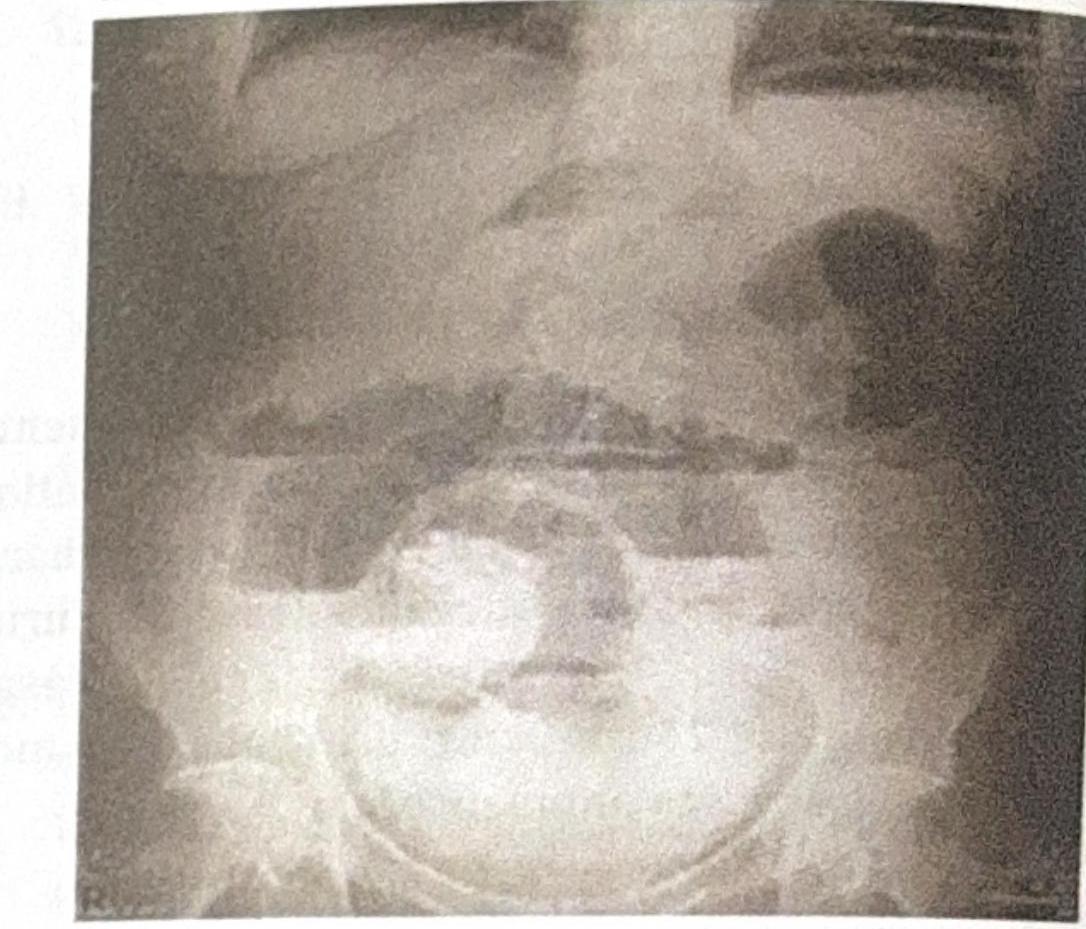
Explanation: ***Carcinoma of the esophagus*** - Classic barium swallow findings include **irregular filling defect**, **shouldering**, and **mucosal destruction** with an **apple-core or rat-tail appearance**. - Shows **abrupt transition** from normal to abnormal mucosa, indicating **malignant stricture** with tissue destruction. *Achalasia* - Barium swallow demonstrates **smooth, symmetric bird-beak tapering** at the gastroesophageal junction without mucosal irregularity. - Shows **retained contrast** in a dilated esophagus due to **failure of lower esophageal sphincter relaxation**. *Plummer-Vinson Syndrome* - Characterized by a **smooth, thin postcricoid web** in the upper esophagus on barium swallow. - Associated with **iron deficiency anemia** and typically affects the **cervical esophagus**, not causing irregular filling defects. *Gastroesophageal reflux disease (GERD)* - Barium swallow may show **reflux of contrast** into the esophagus during fluoroscopy but **no structural lesion**. - May demonstrate **hiatal hernia** or **esophagitis** but lacks the irregular filling defect seen in malignancy.
Explanation: **Explanation:** **1. Why Aphthoid Ulceration is Correct:** Aphthoid ulcers are the **earliest radiologic manifestation** of Crohn’s disease. Pathologically, these represent small, superficial erosions occurring over lymphoid follicles (Peyer's patches). On a double-contrast barium study, they appear as tiny "punched-out" collections of barium surrounded by a radiolucent halo of edema (the "target" or "bull’s eye" sign). Because Crohn’s is a transmural process that begins in the mucosa, these superficial lesions precede deeper ulceration and structural changes. **2. Analysis of Incorrect Options:** * **B. Pseudosacculation:** This is a **late/chronic sign**. It occurs due to asymmetrical involvement where one side of the bowel wall is scarred and fibrotic (shortened), while the opposite uninvolved border bulges out. * **C. Cobblestone pattern:** This represents a **more advanced stage**. It is caused by deep longitudinal and transverse ulcers intersecting, leaving islands of edematous, intact mucosa between them. * **D. Thickening of the bowel wall:** While common in Crohn’s due to transmural inflammation, it is a non-specific finding often seen on CT/USG and usually develops after the initial mucosal insults (aphthoid ulcers) have occurred. **3. NEET-PG High-Yield Pearls:** * **String Sign of Kantor:** Seen in the terminal ileum due to severe narrowing (spasm or fibrosis). * **Proud Flesh:** Inflammatory polyps/regeneration between ulcers. * **Creeping Fat:** Mesenteric fat wrapping around the bowel (classic surgical/CT finding). * **Skip Lesions:** Discontinuous involvement (unlike the continuous involvement in Ulcerative Colitis). * **Comb Sign:** Hypervascularity of the mesentery on CT, indicating active inflammation.
Explanation: ### Explanation The clinical and radiological presentation described is characteristic of **Pseudomyxoma Peritonei (PMP)**. **1. Why the Correct Answer is Right:** Pseudomyxoma peritonei is a clinical syndrome characterized by the accumulation of gelatinous (mucinous) ascites within the peritoneal cavity. The most common primary cause is a mucinous neoplasm of the appendix, such as **Cystadenocarcinoma**. * **Low attenuation collections:** Represent the thick, mucinous fluid. * **Scalloping of the liver and splenic borders:** This is a pathognomonic radiological sign. Unlike simple ascites, the viscous mucin exerts pressure on the visceral surfaces of solid organs, creating a "scalloped" appearance rather than just displacing them. * **Omental thickening:** Often referred to as an "omental cake," caused by the infiltration of mucin and neoplastic cells. **2. Why the Other Options are Wrong:** * **Carcinoid tumor of the appendix:** While carcinoid is the most common tumor of the appendix, it typically presents with appendicitis or carcinoid syndrome (if metastatic). It does not produce mucinous ascites or the scalloping effect. * **Perforated duodenal ulcer:** This would typically present with pneumoperitoneum (free air under the diaphragm) and signs of acute peritonitis, not chronic mucinous collections. * **Spontaneous bacterial peritonitis (SBP):** This occurs in patients with pre-existing cirrhosis and portal hypertension. The fluid is simple ascites (transudative/exudative) and does not cause visceral scalloping or thick septated collections. **3. High-Yield Pearls for NEET-PG:** * **Pathognomonic Sign:** Scalloping of the liver/splenic margin on CT. * **Primary Source:** Appendix (most common), followed by the ovary. * **"Jelly Belly":** The classic clinical term for the gelatinous material found during laparotomy. * **Treatment:** Cytoreductive surgery (CRS) combined with Hyperthermic Intraperitoneal Chemotherapy (HIPEC).
Explanation: **Explanation:** **Oral Cholecystography (OCG)** was historically the gold standard for diagnosing cholelithiasis (gallstones). However, it has been almost entirely **replaced by Ultrasonography (USG)**. USG is the current investigation of choice because it is non-invasive, involves no radiation, does not require contrast ingestion, and has a higher sensitivity (>95%) for detecting gallstones, including those that are radiolucent. **Analysis of Options:** * **Option A:** This is historically incorrect. OCG was first performed by **Evarts Graham and Warren Cole in 1924**, not 1942. This was a landmark achievement in biliary imaging using phenoltetraiodophthalein. * **Option B:** The dye (typically **Iopanoic acid**) is not administered based on weight (1 ml/kg). The standard protocol involves oral ingestion of **3 grams** (usually six 0.5g tablets) the night before the procedure. * **Option C (Correct):** USG is superior as it can detect stones as small as 1-2 mm, visualize the gallbladder wall, and identify pericholecystic fluid—features OCG cannot reliably assess. **High-Yield Clinical Pearls for NEET-PG:** * **Mechanism:** OCG relies on the liver's ability to excrete the contrast into bile and the gallbladder's ability to concentrate it. * **Non-visualization on OCG:** If the gallbladder is not visualized after a double dose, it indicates a diseased gallbladder (e.g., chronic cholecystitis or cystic duct obstruction), provided liver function is normal (Bilirubin < 2-3 mg/dL). * **IOC (Investigation of Choice):** * Cholelithiasis: **USG** * Choledocholithiasis (Bile duct stones): **ERCP** (Gold standard/Therapeutic) or **MRCP** (Diagnostic) * Acute Cholecystitis: **HIDA Scan** (Most sensitive)
Imaging of Liver
Practice Questions
Biliary Tract Imaging
Practice Questions
Pancreatic Imaging
Practice Questions
Spleen and Lymphatic System
Practice Questions
Gastrointestinal Tract Imaging
Practice Questions
Renal and Urinary Tract Imaging
Practice Questions
Adrenal Imaging
Practice Questions
Female Pelvic Imaging
Practice Questions
Male Pelvic Imaging
Practice Questions
Abdominal Trauma Imaging
Practice Questions
Acute Abdomen Imaging
Practice Questions
Imaging of Peritoneal Cavity and Retroperitoneum
Practice Questions
Get full access to all questions, explanations, and performance tracking.
Start For Free