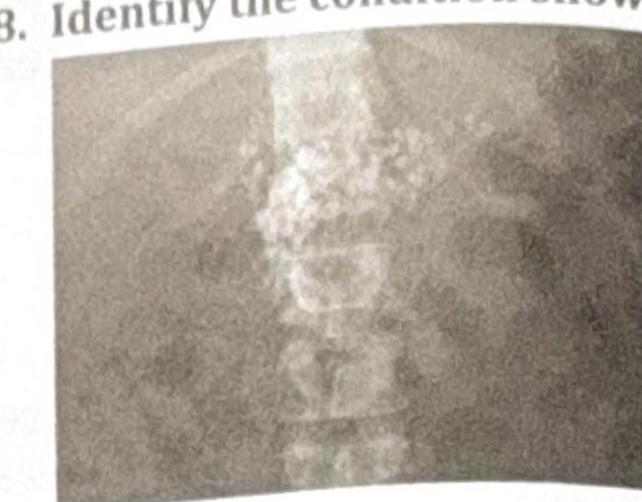
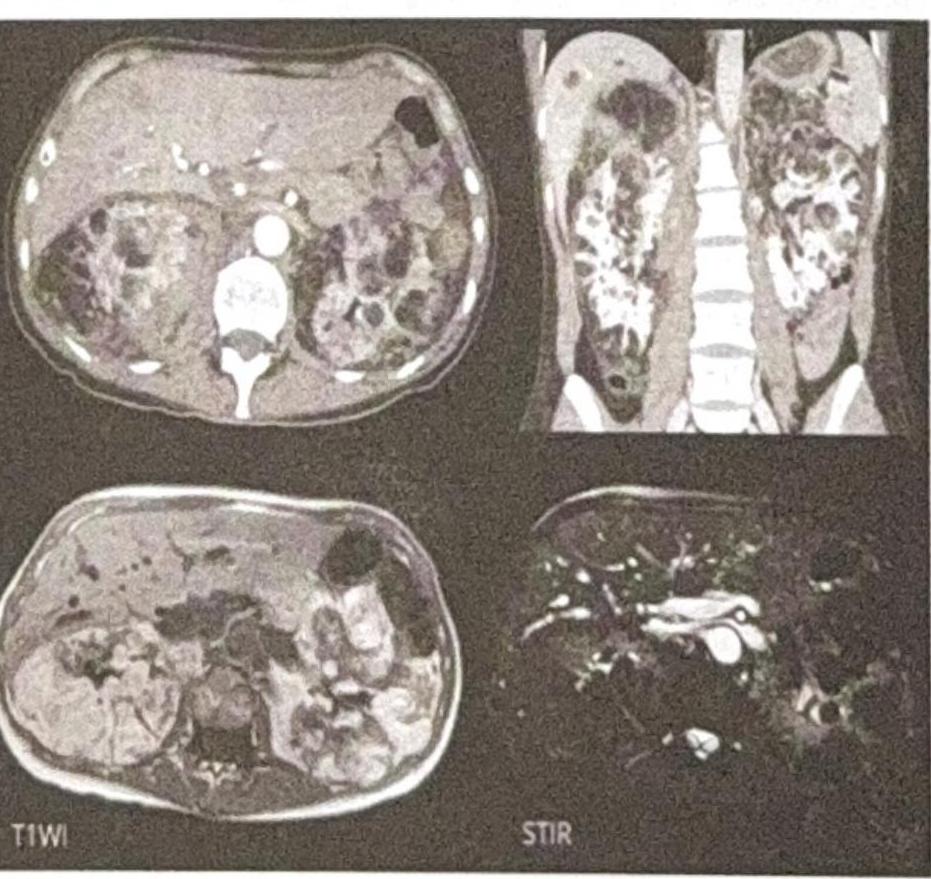
The 'spider leg' sign on an intravenous pyelogram (IVP) suggests which of the following conditions?
What is the characteristic "adder head" appearance seen on an IVP?
What is the ideal imaging modality for diagnosing renal artery hypertension?
Fleischner sign on barium study is seen in which of the following conditions?
Cobra head sign on IVP is classically seen with which of the following conditions?
A solitary hypoechoic lesion of the liver without septa or debris is most likely to be:
Non-visualization of the kidney is seen in all EXCEPT?
Which of the following embryonic structures is the earliest ultrasonographically visible indicator of pregnancy?
What is the diagnosis demonstrated in the barium esophagogram?

A given cystogram appearance is a characteristic feature of which of the following conditions?

Explanation: **Explanation:** The **'Spider leg' appearance** on an intravenous pyelogram (IVP) is a classic radiological sign of **Autosomal Dominant Polycystic Kidney Disease (ADPKD)**. This appearance occurs because the multiple, bilateral cortical and medullary cysts enlarge and exert pressure on the renal collecting system. This pressure causes the renal calyces to become elongated, attenuated (thinned out), and stretched, resembling the long, thin legs of a spider. **Analysis of Options:** * **Polycystic Kidney Disease (Correct):** As explained, the stretching and compression of calyces by numerous cysts create the characteristic spider-leg deformity. * **Renal Stone:** Typically presents as a radiopaque shadow (on KUB) or a filling defect (on IVP). It may cause proximal dilatation but does not stretch the calyces into thin, elongated shapes. * **Hypernephroma (Renal Cell Carcinoma):** This usually presents as a focal mass causing localized distortion, displacement, or "amputation" of a single calyx, rather than the generalized, bilateral stretching seen in ADPKD. * **Hydronephrosis:** Characterized by the dilatation and "ballooning" of the calyces (clubbing), which is the morphological opposite of the thin, stretched appearance seen in the spider leg sign. **High-Yield Clinical Pearls for NEET-PG:** * **ADPKD:** Most common inherited renal disease; associated with **berry aneurysms** (Circle of Willis) and hepatic cysts. * **Swiss Cheese Appearance:** The classic appearance of Polycystic Kidney Disease on a **nephrogram** phase. * **Imaging Choice:** While IVP shows the spider leg sign, **Ultrasonography** is the initial screening modality of choice, and **MRI** is the most sensitive for monitoring cyst volume.
Explanation: ### Explanation **Correct Answer: B. Ureterocele** A **ureterocele** is a congenital cystic dilatation of the distal-most intramural portion of the ureter. On an Intravenous Pyelogram (IVP), this appears as a well-defined, round, or oval radiolucent filling defect within the contrast-filled urinary bladder. This is surrounded by a thin radiopaque halo (the wall of the ureterocele), creating the classic **"cobra head"** or **"adder head"** appearance. This sign is typically seen in the **orthotopic (adult) type**, where the ureterocele is located at the normal vesicoureteric junction. **Analysis of Incorrect Options:** * **A. Ureteral duplication:** While often associated with ectopic ureteroceles (Weigert-Meyer Law), duplication itself presents as two distinct collecting systems and ureters, not a cystic dilatation in the bladder. * **C. Ureteric hypoplasia:** This refers to a congenitally small, narrow ureter, often associated with a multicystic dysplastic kidney, and does not produce a filling defect. * **D. Polycystic kidneys:** ADPKD presents with bilateral enlarged kidneys and multiple cysts causing "spider leg" deformity of the calyces, not distal ureteric signs. **High-Yield Clinical Pearls for NEET-PG:** * **Reverse Appearance:** If the bladder is empty of contrast but the ureterocele is filled, it is called a **"blooming"** or **"negative"** cobra head. * **Weigert-Meyer Law:** In duplication, the upper pole ureter inserts ectopically (inferomedially) and is prone to **ureterocele**; the lower pole ureter inserts normally but is prone to **reflux**. * **Differential Diagnosis:** A "pseudo-cobra head" appearance can be caused by bladder tumors or stones at the UVJ, but these lack the characteristic thin, uniform halo.
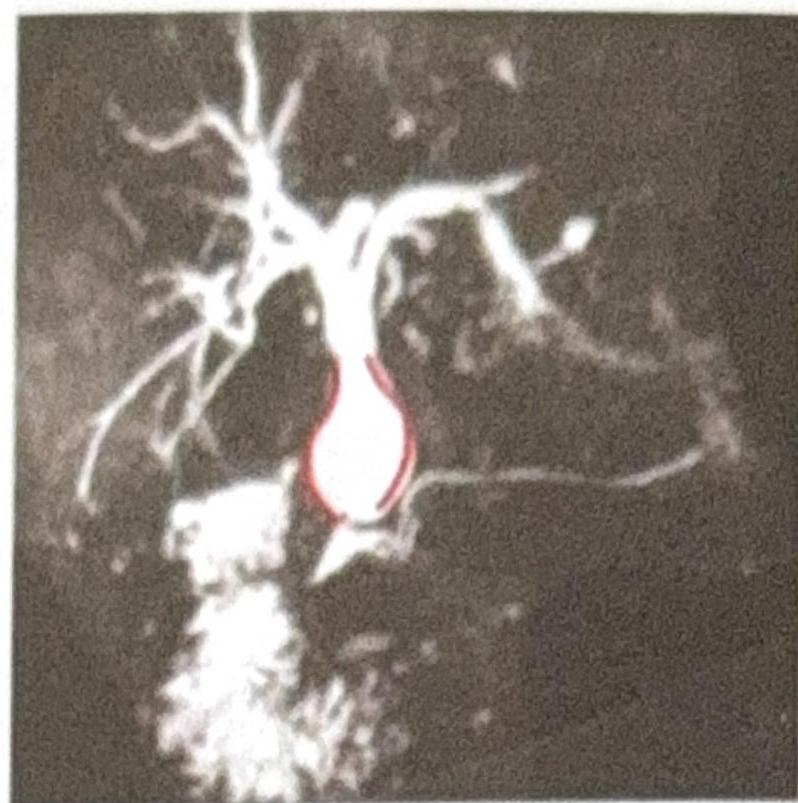
Explanation: **Explanation:** **1. Why Angiography is the Correct Answer:** Digital Subtraction Angiography (DSA) remains the **Gold Standard** for diagnosing renal artery stenosis (RAS), the primary cause of renovascular hypertension. It provides the highest spatial resolution to visualize the renal artery anatomy, identify the site and degree of stenosis (e.g., atherosclerosis or fibromuscular dysplasia), and allows for simultaneous therapeutic intervention (angioplasty/stenting). **2. Why Other Options are Incorrect:** * **Intravenous Pyelogram (IVP):** Historically used to show a "small, hyperconcentrated kidney," it is now obsolete for this purpose due to low sensitivity and specificity compared to cross-sectional imaging. * **Ultrasound (USG):** While Doppler USG is often the initial screening tool (looking for a "Tardus Parvus" waveform), it is operator-dependent and cannot definitively confirm the diagnosis with the precision required for surgical planning. * **Renin Assay:** This is a biochemical test, not an imaging modality. While elevated plasma renin activity suggests renovascular hypertension, it does not localize the anatomical lesion. **3. Clinical Pearls for NEET-PG:** * **Screening Choice:** Duplex Doppler Ultrasound or CT Angiography (CTA) are the preferred initial screening tests. * **Gold Standard:** Conventional Angiography (DSA). * **Fibromuscular Dysplasia (FMD):** Classically seen in young females; angiography shows a **"String of Beads"** appearance. * **Atherosclerosis:** Most common cause of RAS in elderly patients; typically involves the **ostium** (proximal segment) of the renal artery. * **Captopril Renography:** A nuclear medicine test (using DTPA/MAG3) that can be used to assess the functional significance of a known stenosis.
Explanation: **Explanation:** **Fleischner sign** is a classic radiological feature of **Ileocecal Tuberculosis**. It refers to a gaping, wide-open, and incompetent ileocecal valve caused by the thickening of the valve lips and ulceration. On a barium study, this results in the rapid reflux of barium from the cecum into the terminal ileum. **Why the correct answer is right:** In abdominal TB, the ileocecal region is the most common site of involvement due to the abundance of lymphoid tissue (Peyer's patches) and physiological stasis. The inflammatory process leads to the destruction of the ileocecal valve's competency. Another closely related sign is the **Stierlin sign**, where the inflamed cecum is so irritable that it does not retain barium, appearing as a narrow, rigid segment. **Why the other options are incorrect:** * **Crohn’s Disease:** While it also affects the terminal ileum, it typically presents with the **"String sign of Kantor"** (marked narrowing of the terminal ileum due to spasm or fibrosis) and "Proud flesh" (widely spaced loops). * **Small Bowel Carcinoid:** Usually presents with a kinking or angulation of bowel loops due to an intense desmoplastic reaction (fibrosis) in the mesentery, often showing a "starburst" appearance on CT. * **Typhoid:** Primarily causes longitudinal ulcers in the ileum and may lead to perforation, but it does not typically produce the specific valvular changes seen in the Fleischner sign. **High-Yield Clinical Pearls for NEET-PG:** * **Fleischner Sign:** Incompetent/Gaping ileocecal valve (TB). * **Stierlin Sign:** Rapid emptying of the cecum (TB). * **Conical Cecum:** Shrunken, inverted cecum due to fibrosis (TB). * **String Sign of Kantor:** Narrowed terminal ileum (Crohn’s). * **Goose-neck deformity:** Seen in the cecum in TB.
Explanation: ### Explanation The **Cobra head sign** (also known as the **Adder head sign**) is a classic radiological finding on Intravenous Pyelogram (IVP) pathognomonic for an **orthotopic ureterocele**. #### Why Ureterocele is Correct A ureterocele is a congenital cystic dilatation of the distal-most intramural portion of the ureter. On an IVP, the "head" of the cobra is formed by the contrast-filled dilated distal ureter, while the "hood" or the surrounding radiolucent halo is created by the thin, edematous wall of the ureterocele projecting into the contrast-filled bladder. This sign is typically seen in adults with simple (orthotopic) ureteroceles. #### Why Other Options are Incorrect * **Ectopic ureter:** While often associated with ectopic ureteroceles (especially in the Weigert-Meyer law), it does not typically produce the symmetrical "cobra head" appearance. Instead, it often leads to hydroureteronephrosis of the upper pole. * **Horseshoe kidney:** Characterized by the **"Handshaking appearance"** or "Flower vase" appearance of the calyces due to the fusion of lower poles and abnormal axis of the kidneys. * **Medullary sponge kidney:** Classically shows a **"Paintbrush appearance"** or "Bouquet of flowers" due to ectasia of the collecting ducts and stasis of contrast in the pyramids. #### NEET-PG High-Yield Pearls * **Reverse Cobra Head Sign:** Seen in cases of bladder diverticulum or bladder outlet obstruction. * **Drooping Lily Sign:** Seen in a duplicated system where the obstructed upper pole displaces the lower pole moiety downwards. * **Weigert-Meyer Law:** In a duplicated system, the upper pole ureter inserts ectopically (inferomedially) and often has a ureterocele, while the lower pole ureter inserts orthotopically but is prone to reflux.
Explanation: ### Explanation **Correct Answer: D. Simple cyst** The diagnosis of a **Simple Hepatic Cyst** is based on classic ultrasonographic criteria. On ultrasound, a simple cyst typically appears as a **solitary, well-circumscribed, hypoechoic (anechoic) lesion** with smooth, thin walls. Crucially, it lacks internal echoes, septations, or debris. A hallmark feature is **posterior acoustic enhancement**, which occurs because sound waves travel through the fluid-filled cyst with minimal attenuation compared to the surrounding liver parenchyma. **Analysis of Incorrect Options:** * **A. Hydatid Cyst:** Caused by *Echinococcus granulosus*, these typically show internal complexity. Common features include **internal septations** (honeycomb appearance), "daughter cysts," or a "water-lily sign" (detached germinal membrane). Calcification of the wall is also common. * **B. Caroli’s Disease:** This is a congenital disorder characterized by **multifocal, segmental dilatation of intrahepatic bile ducts**. It appears as multiple fluid-filled structures communicating with the biliary tree, often showing the "central dot sign" (portal vein branch surrounded by dilated bile duct). * **C. Liver Abscess:** These are usually **complex collections**. They often have thick, irregular walls and contain **internal debris or echoes** (representing pus). If gas-forming organisms are present, "dirty shadowing" or bright echogenic foci may be seen. **Clinical Pearls for NEET-PG:** * **Simple Cyst:** Most common benign liver lesion; usually asymptomatic and requires no treatment unless very large. * **Amoebic Liver Abscess:** Classically described as a "round/oval hypoechoic lesion in the right lobe" with low-level internal echoes (anchovy sauce appearance). * **Hemangioma:** The most common benign solid tumor of the liver; typically appears as a **hyperechoic**, well-defined mass on ultrasound.
Explanation: **Explanation:** The question refers to the **non-visualization of the kidney in its normal anatomical position (the renal fossa)** during imaging, typically on an Intravenous Urogam (IVU) or ultrasound. **Why Ectopic Kidney is the correct answer:** In **Ectopic Kidney**, the kidney is present and functional but failed to ascend to its normal lumbar position during development. It is most commonly found in the pelvis (**Pelvic Kidney**). While it is not in the "normal" location, it is still **visualized** on imaging if the radiologist scans the lower abdomen and pelvis. It will show normal contrast excretion on IVU, unlike the other conditions listed where the kidney is either absent or non-functional. **Analysis of Incorrect Options:** * **Unilateral Renal Agenesis:** The kidney is congenitally absent on one side. Therefore, it cannot be visualized anywhere in the body. * **Bilateral Renal Agenesis:** Both kidneys are absent (associated with Potter sequence). No renal tissue is present to be visualized. * **Renal Vein Thrombosis:** This causes severe congestion, edema, and loss of renal function. On an IVU, the affected kidney will be a **"non-visualized" or "silent" kidney** because it cannot filter and excrete the contrast medium. **NEET-PG High-Yield Pearls:** * **Most common site for Ectopy:** Pelvis. * **Horseshoe Kidney:** The most common fusion anomaly; the isthmus usually lies anterior to the aorta at the level of **L3-L4** (trapped by the Inferior Mesenteric Artery). * **Pancake Kidney:** A rare anomaly where both kidneys fuse into a single mass in the pelvis. * **Mnemonic for "Silent Kidney" on IVU:** "REVEAL" (Renal agenesis, Ectopy, Vascular (thrombosis), Excretion failure (obstruction), Abnormality (MCKD), Late-stage GN). Note that while Ectopy is on the list, it is "visualized" once the pelvis is scanned.
Explanation: **Explanation:** The earliest ultrasonographically visible indicator of an intrauterine pregnancy is the **Gestational Sac**. It typically appears at approximately **4.5 to 5 weeks** of gestational age (menstrual age) using transvaginal sonography (TVS). It is seen as a small, eccentric fluid collection within the thickened decidua, often characterized by the "Double Decidual Sac sign," which helps differentiate it from a pseudogestational sac. **Analysis of Options:** * **Gestational Sac (Correct):** The first sign, appearing at 4.5–5 weeks. It grows at a rate of approximately 1 mm per day. * **Fetal Pole:** Also known as the embryo, it is the next structure to appear after the yolk sac. It is usually visible at **5.5 to 6 weeks** via TVS. * **Fetal Heart Activity:** This is the first sign of a viable pregnancy. It is typically detected when the fetal pole reaches 2–4 mm in length, usually around **6 weeks** of gestation. * **Fetal Skeleton:** This is a late finding. Mineralization of the fetal skeleton begins at approximately 8 weeks but is generally not clearly visible on routine ultrasound until the **second trimester** (around 12–16 weeks). **High-Yield Clinical Pearls for NEET-PG:** * **Sequence of appearance (TVS):** Gestational Sac (5 wks) → Yolk Sac (5.5 wks) → Fetal Pole/Cardiac activity (6 wks). * **Discriminatory Zone:** The level of serum β-hCG at which a gestational sac should be visible. For TVS, this is typically **1,500–2,000 mIU/mL**. * **Yolk Sac:** The first structure visible *within* the gestational sac; its presence confirms an intrauterine pregnancy and rules out a pseudogestational sac.
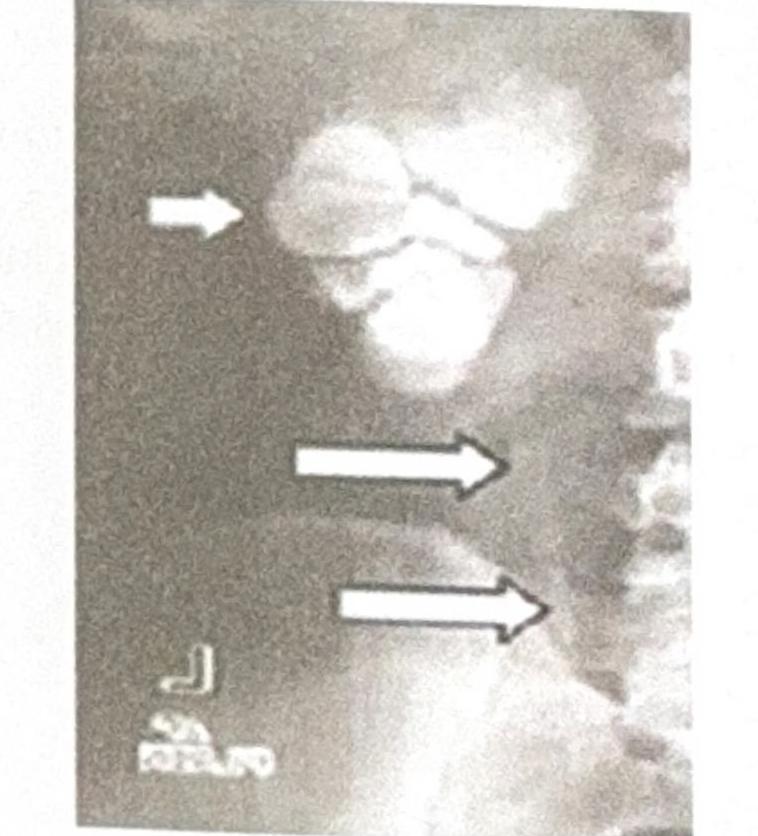
Explanation: ***Carcinoma esophagus*** - Shows classic **rat-tail** or **apple-core appearance** with irregular stricture and **shouldering** on barium esophagogram. - Demonstrates **abrupt cutoff** with mucosal irregularity and asymmetric narrowing characteristic of malignant lesions. *Achalasia* - Presents with **bird-beak appearance** showing smooth, symmetric tapering at the gastroesophageal junction. - Associated with **esophageal dilatation** proximally and absence of the irregular stricture seen in malignancy. *Schatzki's ring* - Appears as a **smooth, thin ring** at the gastroesophageal junction without irregular margins. - Represents a **benign web** that causes intermittent dysphagia, lacking the shouldering of carcinoma. *Nutcracker esophagus* - This is a **functional disorder** with no characteristic findings on barium esophagogram at rest. - Diagnosis requires **manometry** showing high-amplitude peristaltic contractions, not radiographic abnormalities.
Explanation: ***Neurogenic bladder*** - Shows characteristic **"Christmas tree"** or **trabeculated appearance** on cystography due to detrusor muscle hypertrophy and irregular bladder wall thickening. - Results from **neurological disorders** affecting bladder innervation, leading to incomplete emptying and compensatory muscle changes. *Congenital anomalies of the genitourinary tract* - Cystographic findings are highly **variable** depending on the specific anomaly (duplications, diverticula, etc.). - Do not produce the characteristic **trabeculated pattern** seen in neurogenic bladder dysfunction. *Tuberculosis* - Produces a **"thimble bladder"** appearance with severe contracture and reduced capacity on cystography. - Shows **irregular, contracted bladder walls** with calcifications, distinct from the Christmas tree pattern. *Schistosomiasis* - Causes **calcified, contracted bladder** with "eggshell calcification" visible on plain radiographs. - Results in **reduced bladder capacity** and smooth wall thickening, not the trabeculated Christmas tree appearance.
Imaging of Liver
Practice Questions
Biliary Tract Imaging
Practice Questions
Pancreatic Imaging
Practice Questions
Spleen and Lymphatic System
Practice Questions
Gastrointestinal Tract Imaging
Practice Questions
Renal and Urinary Tract Imaging
Practice Questions
Adrenal Imaging
Practice Questions
Female Pelvic Imaging
Practice Questions
Male Pelvic Imaging
Practice Questions
Abdominal Trauma Imaging
Practice Questions
Acute Abdomen Imaging
Practice Questions
Imaging of Peritoneal Cavity and Retroperitoneum
Practice Questions
Get full access to all questions, explanations, and performance tracking.
Start For Free