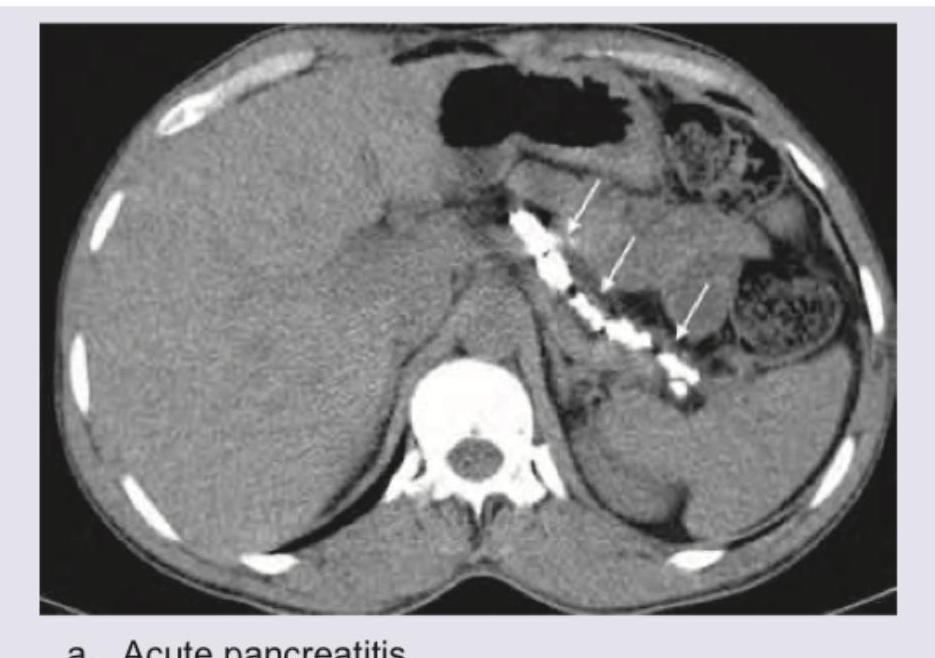
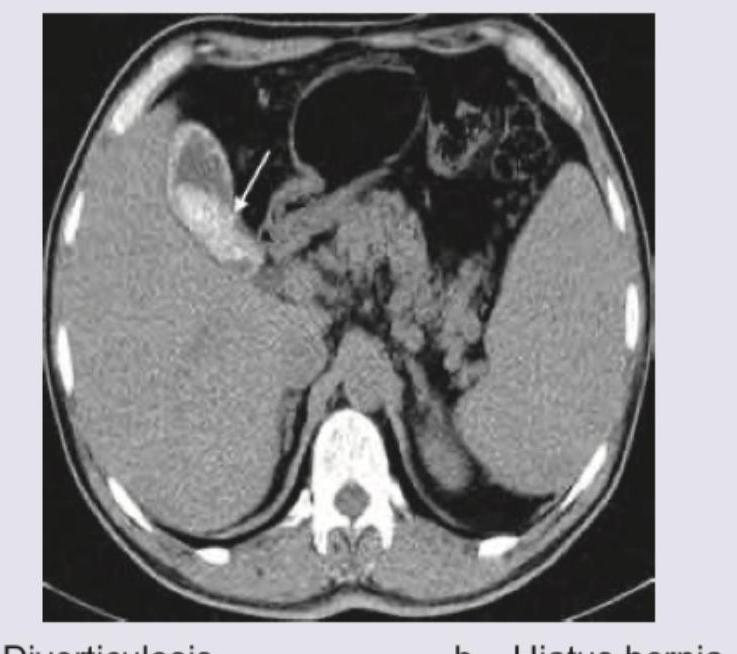
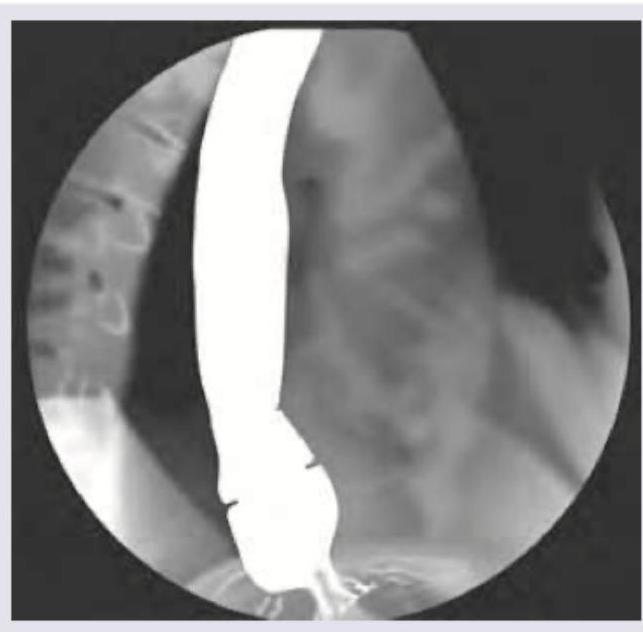
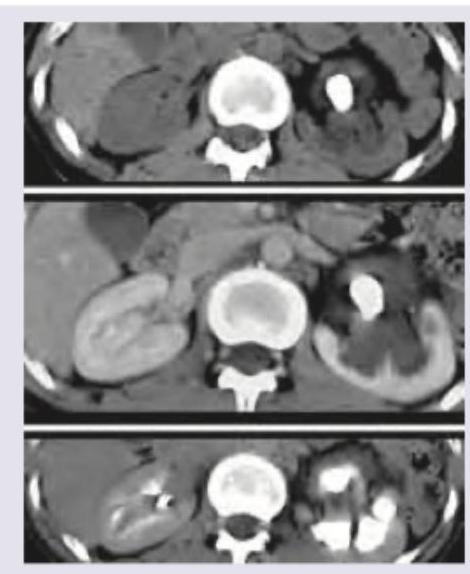
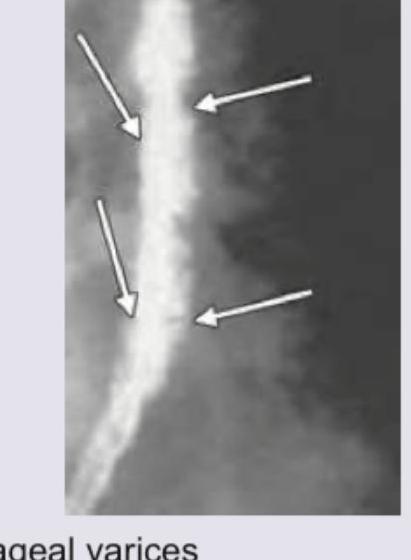
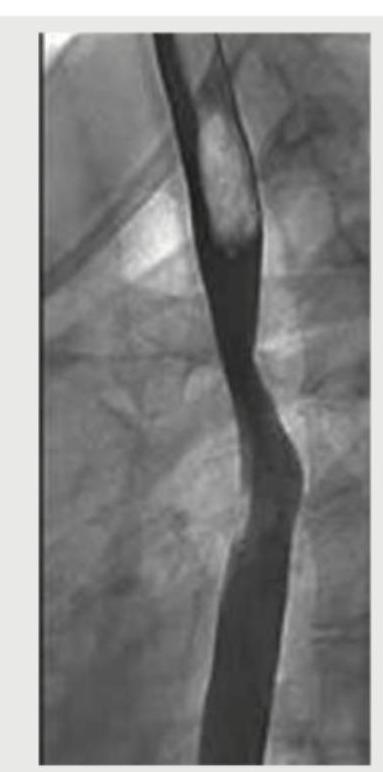
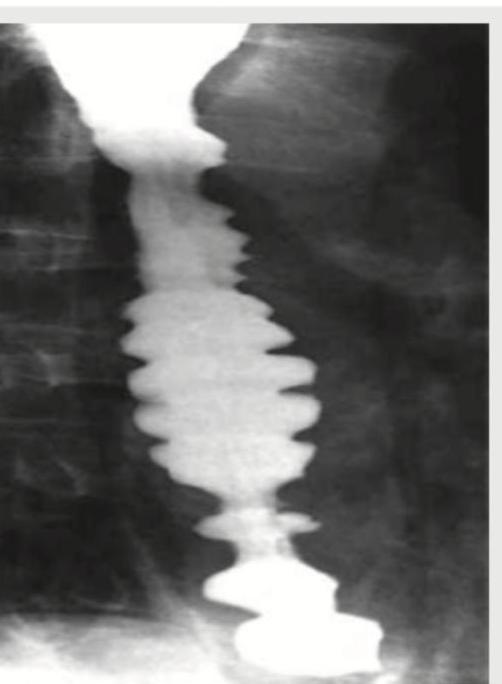
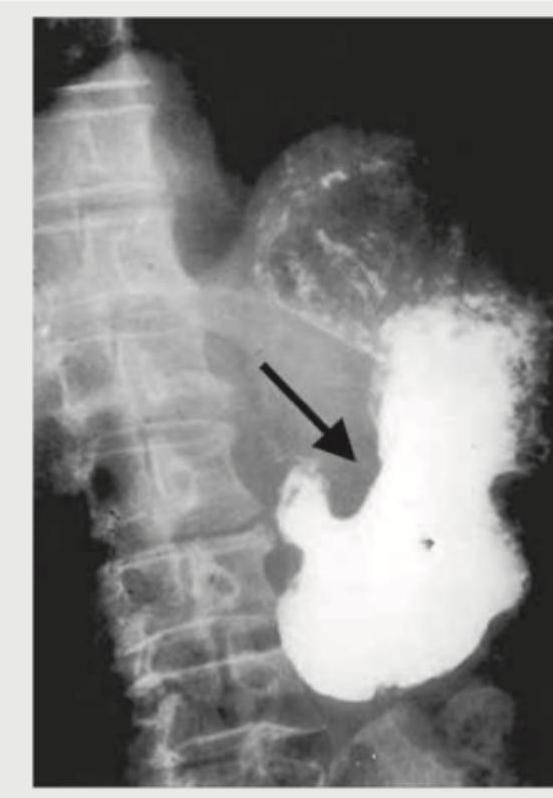
Following is an upper GI contrast study. What is the probable diagnosis?

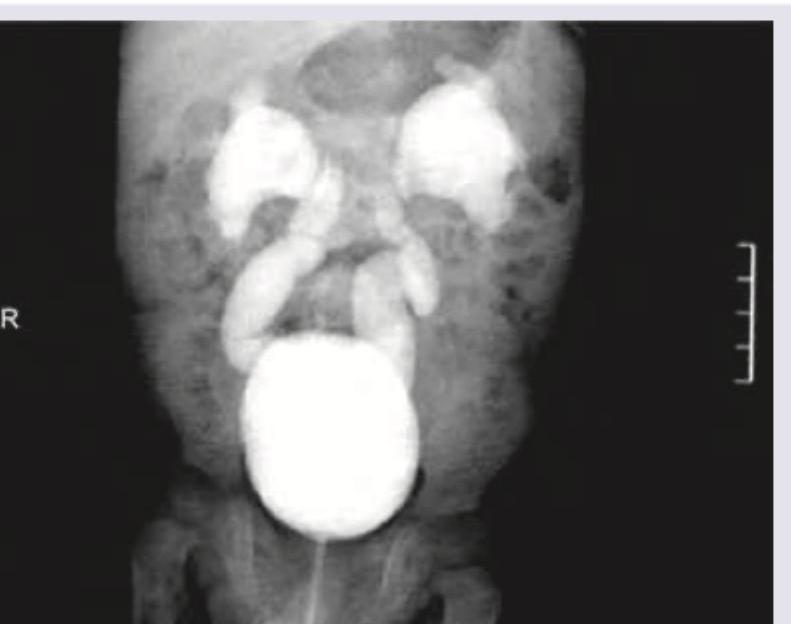
In a patient suspected to be suffering from vesicoureteric reflux, which one of the following radiological investigations may confirm the diagnosis?
The investigation of choice for imaging of urinary tract tuberculosis is:
Which type of renal stone is radiolucent?
Which radiological sign is characteristic of Crohn's disease?
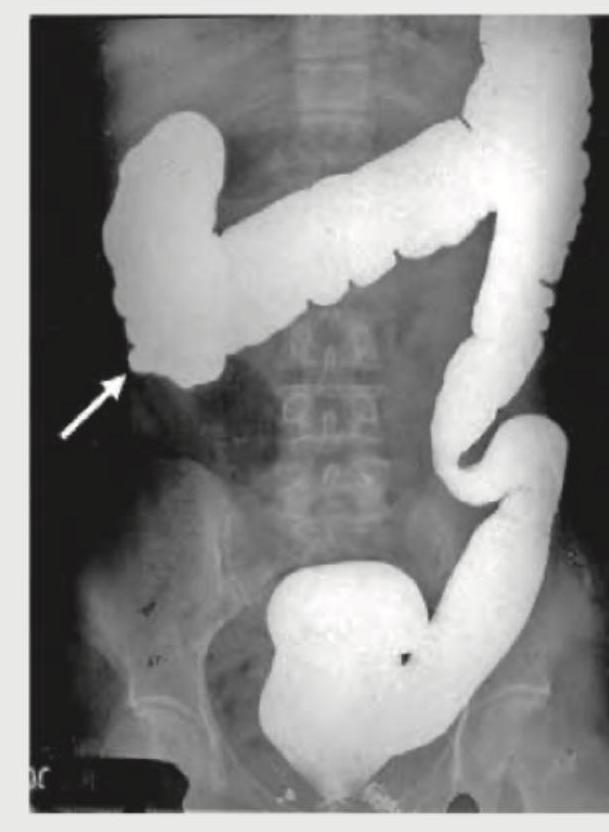
A patient presents with mild abdominal pain and fluctuating bowel habits. The barium enema image is shown below. What is your diagnosis?

Colonic disease can be diagnosed by all of the following methods except?
String of Kantor is seen in which of the following conditions?
What condition is associated with a soap bubble appearance on abdominal radiography?
What is the characteristic 'crumbled egg appearance' in the liver associated with?
Explanation: ***Gastric carcinoma*** - Upper GI contrast studies in gastric carcinoma show characteristic **filling defects** with **irregular mucosal surfaces** and **shouldering** at the margins of the lesion. - Advanced cases may demonstrate **linitis plastica** (leather bottle stomach) with rigid, non-distensible gastric walls and loss of normal rugal folds. *Gastric ulcer* - Benign gastric ulcers typically show **Hampton's line** (thin radiolucent line at the neck of the ulcer crater) and **smooth, regular edges**. - The ulcer crater **projects outside the expected gastric lumen** with surrounding edematous but otherwise normal mucosa. *Duodenal ulcer* - Most commonly occurs in the **duodenal bulb** and appears as a **contrast-filled crater** with smooth, round margins. - Associated findings include **duodenal bulb deformity** and **pyloric spasm**, but would not present as a gastric filling defect. *Duodenal perforation* - Would show **free contrast extravasation** into the peritoneal cavity, particularly in the **right paracolic gutter**. - Clinical presentation includes **acute severe abdominal pain** and **peritoneal signs**, not consistent with a routine upper GI contrast study finding.
Explanation: **Explanation:** **Vesicoureteric Reflux (VUR)** is the retrograde flow of urine from the bladder into the ureters and potentially the kidneys, primarily due to an incompetent vesicoureteric junction. **Why Micturating Cystourethrography (MCU/VCUG) is the Correct Answer:** MCU is the **Gold Standard** investigation for diagnosing and grading VUR. The procedure involves catheterizing the bladder, filling it with radiopaque contrast, and taking fluoroscopic images during the act of micturition. This is crucial because VUR often occurs only when intravesical pressure rises during voiding. It allows for the definitive visualization of contrast moving backward into the ureters and helps in grading the severity (Grades I-V). **Analysis of Incorrect Options:** * **A. Intravenous Urography (IVU):** While IVU visualizes the anatomy of the collecting system, it is an "antegrade" study. It is insensitive for VUR because it cannot demonstrate the retrograde flow of urine from the bladder. * **C. Pelvic Ultrasound:** This is often the initial screening tool. While it can show secondary signs like hydroureteronephrosis or renal scarring, it cannot definitively confirm or rule out VUR. * **D. Antegrade Pyelography:** This involves injecting contrast directly into the renal pelvis (usually via a nephrostomy). It is used to identify distal obstructions, not to evaluate reflux from the bladder. **Clinical Pearls for NEET-PG:** * **Grading:** VUR is graded from I (reflux into ureter only) to V (gross dilatation/tortuosity of ureter and blunting of fornices). * **Radionuclide Cystogram (RNC):** This is more sensitive than MCU for detecting low-volume reflux and involves less radiation, making it ideal for **follow-up** and screening siblings, though MCU remains superior for initial anatomical grading. * **Classic Presentation:** A pediatric patient presenting with recurrent Urinary Tract Infections (UTIs).
Explanation: **Explanation:** **Why Intravenous Urography (IVU) is the Correct Answer:** Intravenous urography remains the **investigation of choice** for urinary tract tuberculosis (UTB) because it provides superior visualization of the early, subtle morphological changes in the pelvicalyceal system. UTB is characterized by "moth-eaten" calyces (due to erosions), infundibular stenosis, and phantom calyces (due to complete obstruction). IVU is highly sensitive in detecting these early mucosal irregularities and the functional status of the kidneys simultaneously. **Analysis of Incorrect Options:** * **Plain X-ray (KUB):** While it can show characteristic "putty kidney" (autonephrectomy) or globular calcifications in late stages, it cannot detect early mucosal changes or provide functional information. * **Ultrasound:** Useful for screening hydronephrosis or identifying renal masses, but it lacks the resolution to identify early papillary necrosis or subtle calyceal distortions typical of TB. * **Computed Tomography (CT):** Specifically, CT Urography is increasingly used and is better for evaluating the extent of extra-renal involvement. However, for the specific purpose of identifying early intraluminal/calyceal anatomy—the hallmark of UTB—classic IVU is traditionally favored in examinations. **High-Yield Clinical Pearls for NEET-PG:** * **Earliest Sign on IVU:** "Moth-eaten" appearance of the calyces due to papillary necrosis. * **Late Sign:** **Putty Kidney** (autonephrectomy) representing a non-functioning, calcified, shrunken kidney. * **Thimble Bladder:** A small-capacity, fibrotic bladder resulting from chronic TB cystitis. * **Beaded Ureter:** Multiple strictures along the ureter giving a beaded appearance. * **Gold Standard for Diagnosis:** Culture of three consecutive early morning mid-stream urine samples (Lowenstein-Jensen medium).
Explanation: **Explanation:** The radiopacity of a renal stone on a plain X-ray (KUB) depends primarily on its atomic number and density. Calcium has a high atomic number, making calcium-containing stones highly radio-opaque. **Correct Answer: C. Uric acid** Uric acid stones are composed of organic compounds (carbon, nitrogen, oxygen, and hydrogen) which have low atomic numbers. Consequently, they do not attenuate X-rays significantly and appear **radiolucent** on plain films. However, they are easily visualized as hyperdense (600–800 HU) on Non-Contrast Computed Tomography (NCCT), which is the gold standard for diagnosis. **Analysis of Incorrect Options:** * **A & B. Calcium Oxalate and Calcium Phosphate:** These are the most common types of stones. Due to the high calcium content, they are **highly radio-opaque**. Calcium phosphate stones are typically the most opaque. * **D. Struvite (Magnesium Ammonium Phosphate):** These are associated with urea-splitting infections. While less dense than pure calcium stones, they contain enough mineral content to be **radio-opaque** (often described as "faintly radio-opaque"). They frequently form large "Staghorn" calculi. **High-Yield Clinical Pearls for NEET-PG:** * **Mnemonic for Radiolucent Stones:** **"U S"** – **U**ric acid and **S**anthine (Xanthine). (Note: Indinavir stones are also radiolucent). * **Gold Standard Investigation:** NCCT KUB is the investigation of choice for all renal stones (except Indinavir stones, which are lucent even on CT). * **Pure Cystine stones** are "ground-glass" or faintly radio-opaque. * **Management Tip:** Uric acid stones can often be dissolved via medical dissolution therapy (urinary alkalinization with potassium citrate).
Explanation: **Explanation:** **String Sign of Kantor** is a classic radiological hallmark of **Crohn’s Disease**, typically seen on a Barium meal follow-through. It represents a long, thin, thread-like linear shadow in the terminal ileum. This appearance is caused by severe narrowing of the bowel lumen due to transmural inflammation, deep ulcerations, and associated myofibroblast-driven fibrosis (stricture formation). **Analysis of Incorrect Options:** * **Pipestem appearance (Lead pipe colon):** Characteristic of **Ulcerative Colitis (UC)**. It occurs due to the loss of normal haustral markings and shortening of the colon resulting from chronic inflammation and mucosal atrophy. * **Pseudopolyps:** These are islands of regenerating or inflamed mucosa surrounded by areas of extensive ulceration. While they can occur in Crohn’s, they are much more characteristic and numerous in **Ulcerative Colitis**. * **Backwash ileitis:** This refers to inflammatory changes in the terminal ileum seen in patients with **pancolitis (UC)**. It is caused by the reflux of colonic contents through an incompetent ileocecal valve, not primary ileal disease. **High-Yield Clinical Pearls for NEET-PG:** * **Proud Flesh Sign:** Widening of the space between bowel loops due to mesenteric fat deposition (Creeping fat) and lymphadenopathy in Crohn’s. * **Cobblestone Appearance:** Produced by deep longitudinal and transverse ulcers (fissures) intersecting with islands of edematous mucosa. * **Skip Lesions:** Crohn’s is characterized by discontinuous involvement, unlike the continuous involvement seen in UC. * **Stierlin Sign:** Rapid emptying of the cecum due to inflammation (seen in both Crohn’s and Ileocecal TB).
Explanation: ***Diverticulosis*** - Barium enema shows characteristic **flask-shaped outpouchings** from the colon wall, representing diverticula filled with contrast. - Mild abdominal pain and **fluctuating bowel habits** are typical presentations of uncomplicated diverticulosis without inflammation. *Stricture colon* - Barium enema would show **segmental narrowing** of the colon lumen with smooth or irregular margins. - Typically presents with **obstructive symptoms** like severe cramping pain and constipation, not mild fluctuating symptoms. *Inflammatory Bowel Disease (IBD)* - Barium enema findings include **lead pipe colon** (loss of haustral markings) or **cobblestone mucosa** pattern. - Clinical presentation involves **bloody diarrhea**, weight loss, and systemic symptoms rather than mild pain. *Toxic megacolon* - Barium enema shows **massive colonic dilatation** (>6 cm transverse colon diameter) with loss of haustral markings. - Presents as a **medical emergency** with severe systemic toxicity, high fever, and signs of perforation risk.
Explanation: **Explanation:** The diagnosis of colonic diseases requires imaging or visualization of the **large intestine**. The correct answer is **Barium swallow** because it is specifically designed to evaluate the upper gastrointestinal tract, not the colon. **1. Why Barium Swallow is the Correct Answer (The "Except"):** A **Barium swallow** involves the ingestion of a radiopaque contrast medium to visualize the **esophagus** and the swallowing mechanism. It terminates at the gastroesophageal junction. Therefore, it provides no diagnostic information regarding the colon. **2. Analysis of Other Options:** * **Visual Colonoscopy:** This is the **gold standard** for diagnosing colonic diseases. It allows for direct mucosal visualization, biopsy of suspicious lesions, and therapeutic interventions (e.g., polypectomy). * **Barium Enema:** This is a traditional radiological study where contrast is introduced via the rectum to visualize the entire colon. It is particularly useful for detecting structural abnormalities like "apple-core" lesions (carcinoma) or diverticulosis. * **Barium Follow-Through (BFT):** While primarily used to study the small intestine, the contrast eventually reaches the **ileocaecal junction** and the **proximal colon**. It can be used to assess the terminal ileum and the flow into the large bowel, making it a secondary method for visualizing the beginning of the colon. **Clinical Pearls for NEET-PG:** * **Apple-core appearance:** Classic sign of colorectal carcinoma on Barium Enema. * **Coffee bean sign:** Pathognomonic for Sigmoid Volvulus on abdominal X-ray. * **Lead pipe colon:** Seen in chronic Ulcerative Colitis due to loss of haustrations. * **CT Colonography (Virtual Colonoscopy):** A non-invasive alternative for screening, though it lacks biopsy capability.
Explanation: **Explanation:** The **String Sign of Kantor** is a classic radiological finding seen on a Barium meal follow-through (BMFT) study. It is characterized by a thin, thread-like appearance of the barium column in the terminal ileum. **Why Crohn’s Disease is Correct:** In Crohn’s disease, chronic transmural inflammation leads to significant thickening of the bowel wall and submucosal fibrosis. This causes severe narrowing of the intestinal lumen and persistent spasm. When barium passes through this constricted segment, it appears as a thin "string," hence the name. It most commonly involves the terminal ileum. **Analysis of Incorrect Options:** * **Ulcerative Colitis:** This condition primarily involves the mucosa and leads to a loss of haustrations, resulting in a **"Lead pipe"** or **"Garden hose"** appearance. It does not typically cause the localized, severe luminal narrowing seen in Kantor’s sign. * **Tuberculosis (Abdominal):** While intestinal TB can cause narrowing, its hallmark radiological signs include the **Stierlin sign** (rapid emptying of the inflamed cecum) and the **Goose neck deformity** (contracted cecum with an ileocecal angle of 90 degrees). * **Carcinoma Colon:** Malignancy typically presents with an **"Apple core" lesion** (annular constriction) due to eccentric growth and overhanging edges (shouldering effect), rather than the long, tapered narrowing of the string sign. **High-Yield Clinical Pearls for NEET-PG:** * **Proud Flesh:** Refers to the inflammatory polyps/protrusions seen at the proximal end of the narrowed segment in Crohn's. * **Kantor’s Sign vs. String Sign of Pylorus:** Do not confuse this with the "String sign" seen in **Hypertrophic Pyloric Stenosis (HPS)**. * **Cobblestone Appearance:** Another classic radiological/endoscopic finding in Crohn's due to deep longitudinal and transverse ulcers. * **Skip Lesions:** Crohn’s is characterized by discontinuous involvement of the GI tract, unlike the continuous involvement in Ulcerative Colitis.
Explanation: **Explanation:** **Meconium Ileus (Correct Answer):** The "soap bubble" appearance (also known as **Neuhauser’s sign**) is a classic radiographic finding in meconium ileus. It occurs when air bubbles become trapped within the thick, tenacious meconium in the distal ileum. This creates a mottled, granular appearance on an abdominal X-ray. Meconium ileus is the earliest clinical manifestation of **Cystic Fibrosis** (seen in ~90% of cases). **Analysis of Incorrect Options:** * **Achalasia Cardia:** Characterized by a "Bird’s beak" or "Rat-tail" appearance on a Barium swallow, caused by the failure of the lower esophageal sphincter to relax. * **Duodenal Atresia:** Classically presents with the **"Double bubble" sign** on X-ray, representing air in the dilated stomach and the proximal duodenum, with no distal gas. * **Hirschsprung’s Disease:** Typically shows dilated bowel loops (megacolon) proximal to an aganglionic segment. On a contrast enema, a "transition zone" is the hallmark finding. **High-Yield Clinical Pearls for NEET-PG:** * **Ground-glass appearance:** Another term used interchangeably with soap bubble appearance for meconium ileus. * **Microcolon:** On a contrast enema, meconium ileus will show a "unused" microcolon distal to the obstruction. * **Target Population:** Always suspect meconium ileus in a neonate with abdominal distension, failure to pass meconium within 48 hours, and a family history of Cystic Fibrosis. * **Management:** Gastrografin (hyperosmolar water-soluble contrast) enema is both diagnostic and therapeutic.
Explanation: ### Explanation **Correct Answer: C. Hydatid liver disease** **Why it is correct:** Hydatid liver disease is caused by the parasite *Echinococcus granulosus*. The **"crumbled egg appearance"** (also known as the **"water lily sign"** or **"serpent sign"**) is a classic radiological finding on Ultrasound or CT. It occurs when the endocyst (the inner germinal layer) ruptures and detaches from the pericyst (the host-derived fibrous capsule). The collapsed, undulating membranes floating within the cyst fluid resemble a crumbled eggshell or a floating water lily. This finding is characteristic of **Gharbi Stage CE3** (transitional stage). **Why the other options are incorrect:** * **A. Hepatic adenoma:** Typically presents as a well-demarcated hypervascular mass, often associated with oral contraceptive use. It may show internal hemorrhage but not floating membranes. * **B. Chronic amoebic liver disease:** Usually presents as a "chocolate-colored" or "anchovy sauce" pus collection. On imaging, it appears as a poorly defined hypoechoic lesion, often in the right lobe, without internal membranes. * **D. Hemangioma:** The most common benign liver tumor. It shows a characteristic **peripheral globular enhancement** with centripetal fill-in on contrast CT/MRI, not a cystic appearance with membranes. **High-Yield Clinical Pearls for NEET-PG:** * **Gharbi Classification:** * CE1: Pure fluid (Simple cyst). * CE2: Daughter cysts (Honeycomb/Multivesicular appearance). * CE3: Detached membranes (Water lily/Crumbled egg appearance). * CE4/5: Calcified/Solid (Dead cyst). * **Treatment of Choice:** PAIR (Puncture, Aspiration, Injection, Re-aspiration) or surgical excision, always covered by **Albendazole**. * **Casoni Test:** An immediate hypersensitivity skin test (now largely replaced by ELISA).
Imaging of Liver
Practice Questions
Biliary Tract Imaging
Practice Questions
Pancreatic Imaging
Practice Questions
Spleen and Lymphatic System
Practice Questions
Gastrointestinal Tract Imaging
Practice Questions
Renal and Urinary Tract Imaging
Practice Questions
Adrenal Imaging
Practice Questions
Female Pelvic Imaging
Practice Questions
Male Pelvic Imaging
Practice Questions
Abdominal Trauma Imaging
Practice Questions
Acute Abdomen Imaging
Practice Questions
Imaging of Peritoneal Cavity and Retroperitoneum
Practice Questions
Get full access to all questions, explanations, and performance tracking.
Start For Free