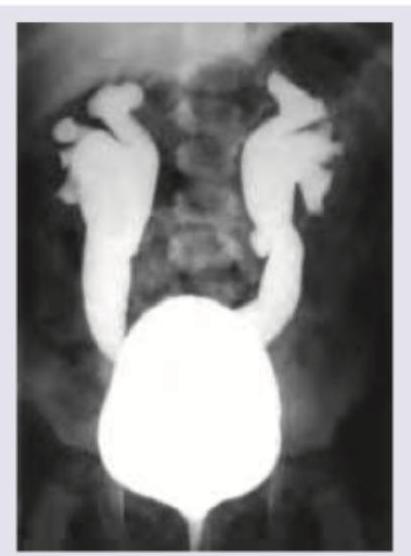
Reflux of urine into the pelvis and calyces with mild dilatation and minimal blunting of fornices indicates which grade of Vesicoureteral Reflux (VUR)?
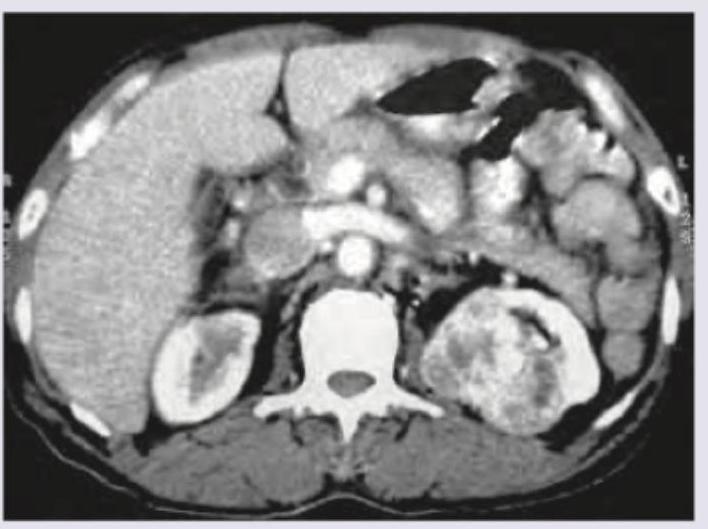
Spoked wheel appearance is seen in which of the following conditions?
Non-contrast spiral CT is the investigation of choice for which of the following conditions?
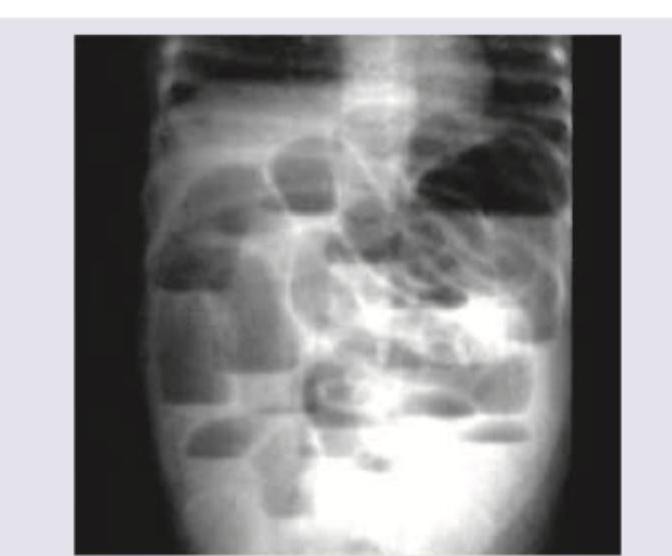
Which pattern on an abdominal radiograph is suggestive of intestinal obstruction?
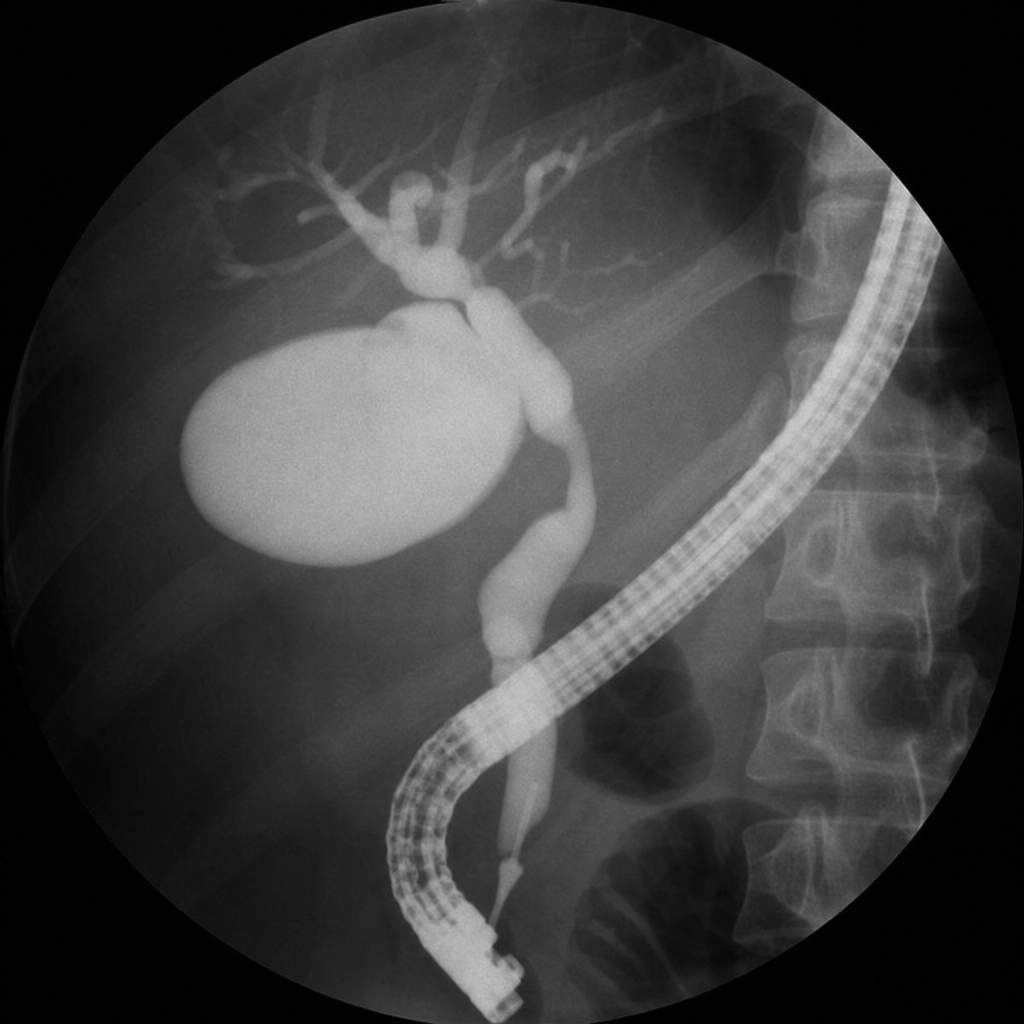
What is the name of the sign seen in Caroli's disease?
What is the investigation of choice for acute pancreatitis?
The "chain of lakes" appearance is characteristic of which condition?
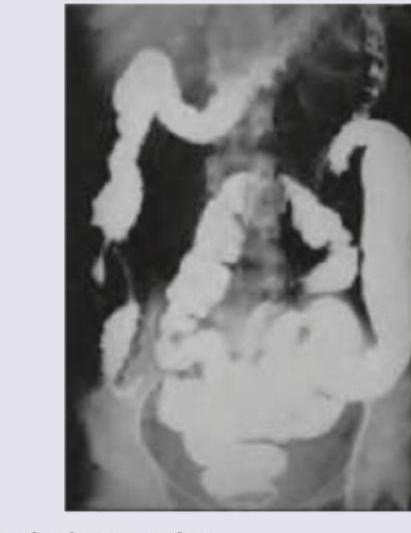
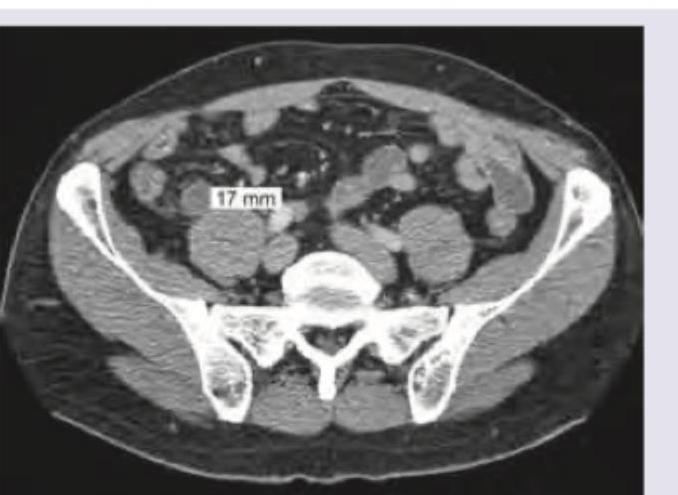
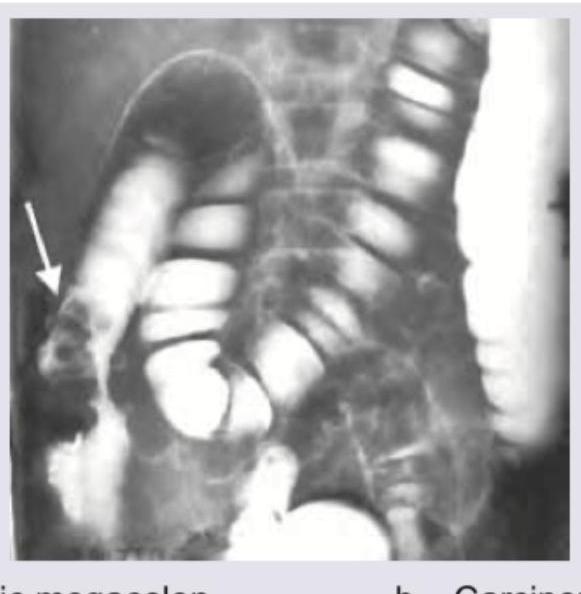
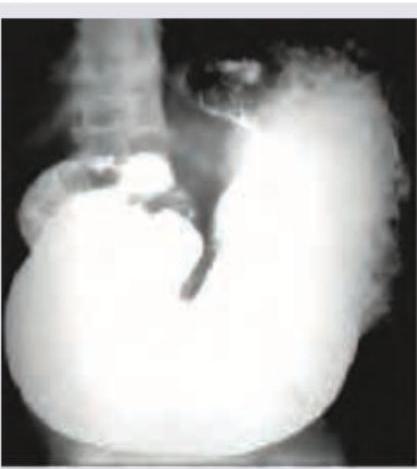
Which of the following is NOT a radiological sign of Crohn's disease?
Which of the following is the investigation of choice for assessment of depth of penetration and perirectal nodes in rectal cancer?
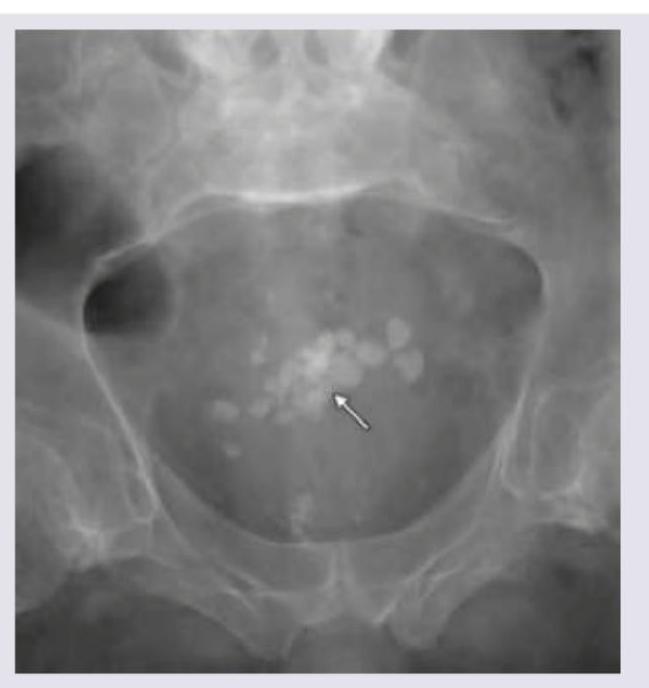
Eggshell pattern on X-ray abdomen may be seen in:
Explanation: The grading of **Vesicoureteral Reflux (VUR)** is based on the International Reflux Study in Children, primarily assessed via Voiding Cystourethrogram (VCUG). ### **Why Grade III is Correct** In **Grade III**, reflux reaches the renal pelvis and calyces. The key diagnostic features are **mild dilatation** of the ureter and renal pelvis, with **minimal blunting (effacement) of the calyceal fornices**. The papillary impressions are still visible, but the sharp "cupping" of the calyces begins to round off. ### **Analysis of Incorrect Options** * **Grade I (Option D):** Reflux is limited to the **ureter only**; it does not reach the renal pelvis. * **Grade II (Option A):** Reflux reaches the pelvis and calyces, but there is **no dilatation**. The calyceal fornices remain sharp and normal in configuration. * **Grade IV (Option C):** Characterized by **moderate dilatation** and tortuosity of the ureter and pelvis. The sharp angle of the fornices is completely lost, though papillary impressions may still be faintly visible. * **Grade V:** Severe dilatation and gross tortuosity of the ureter and pelvis. There is a complete loss of papillary impressions (intrarenal reflux). ### **High-Yield Clinical Pearls for NEET-PG** * **Investigation of Choice:** Voiding Cystourethrogram (**VCUG**) is the gold standard for grading VUR. * **Radionuclide Cystogram (RNC):** More sensitive for follow-up and screening siblings due to lower radiation dose, but provides poor anatomical detail. * **Management:** Grades I-II often resolve spontaneously with medical management (prophylactic antibiotics). Grades IV-V or breakthrough infections often require surgical intervention (e.g., Ureteral Reimplantation). * **Associated Pathology:** VUR is a major risk factor for **Pyelonephritis** and subsequent **Renal Scarring** (Reflux Nephropathy).
Explanation: **Explanation:** The **Spoked Wheel Appearance** is a classic radiological and pathological descriptor for **Renal Oncocytoma**, a benign epithelial tumor of the kidney. **1. Why Oncocytoma is correct:** The "spoke-wheel" pattern refers to the specific vascular arrangement seen on angiography or contrast-enhanced CT. It is caused by the presence of a **central stellate scar** with vessels radiating peripherally toward the tumor capsule. While highly characteristic, it is not pathognomonic, as it can occasionally be seen in Renal Cell Carcinoma (RCC), making pre-operative differentiation challenging. **2. Why the other options are incorrect:** * **Wilm’s Tumor (Nephroblastoma):** Typically presents as a large, heterogeneous mass in children. Its classic radiological sign is the **"Claw Sign"** (normal kidney parenchyma wrapping around the tumor). * **Hydronephrosis:** Characterized by the dilatation of the renal pelvis and calyces. On imaging, it appears as a fluid-filled branching structure, often described as a **"Bear Paw Appearance"** in severe cases (specifically Xanthogranulomatous Pyelonephritis). * **Polycystic Kidney Disease (ADPKD):** Presents as bilateral, massively enlarged kidneys replaced by multiple cysts of varying sizes. It does not exhibit a radial vascular pattern. **Clinical Pearls for NEET-PG:** * **Oncocytoma:** Originates from **intercalated cells** of collecting ducts. On Gross pathology, it shows a mahogany brown color due to excessive mitochondria. * **Angiography:** The "Spoke-wheel" sign is best visualized during the arterial phase of a renal angiogram. * **Differential Diagnosis:** The most important mimic is **Chromophobe RCC**; both share similar histological features (eosinophilic cytoplasm).
Explanation: **Explanation:** **Non-contrast Computed Tomography (NCCT)** of the abdomen and pelvis, specifically using a spiral (helical) technique, is the gold standard and investigation of choice for **acute ureteric colic**. 1. **Why Option A is Correct:** NCCT has a sensitivity and specificity of over 95% for detecting urolithiasis. It can identify almost all types of stones (including radiolucent stones like uric acid stones, which are missed on X-ray KUB) as they appear hyperdense. The spiral technique allows for rapid imaging without respiratory gaps, enabling the detection of even tiny calculi and secondary signs of obstruction like hydroureter, hydronephrosis, or "stranding" of perinephric fat. 2. **Why Other Options are Incorrect:** * **Acute Pulmonary Embolism:** The investigation of choice is **CT Pulmonary Angiography (CTPA)**, which requires intravenous (IV) iodinated contrast to opacify the pulmonary arteries. * **Acute Mesenteric Ischemia:** The gold standard is **CT Angiography** (with IV contrast) to visualize arterial occlusions, venous thrombosis, and bowel wall enhancement patterns. * **Acute Prolapsed Intervertebral Disc (PIVD):** **MRI** is the investigation of choice due to its superior soft-tissue contrast, allowing for better visualization of the nerve roots, thecal sac, and the disc material itself. **High-Yield Clinical Pearls for NEET-PG:** * **Only stone not seen on NCCT:** Indinavir stones (protease inhibitor-induced) are the only urinary stones that are typically isodense to urine and may not be seen on CT. * **Phleboliths vs. Calculi:** On NCCT, a "comet tail sign" suggests a phlebolith (pelvic vein calcification), while a "rim sign" (edema around the stone) confirms a ureteric calculus. * **Radiation Safety:** For follow-up or in pregnant/pediatric patients, Ultrasound is the initial screening tool, though NCCT remains the most definitive.
Explanation: In abdominal radiology, the diagnosis of intestinal obstruction relies on identifying specific gas and fluid patterns. The correct answer is **All of the above** because each option represents a classic radiological sign of different stages or types of obstruction. ### Explanation of Patterns: * **Step ladder pattern (Option A):** This is the hallmark of **Small Bowel Obstruction (SBO)**. It occurs when dilated loops of small bowel (diameter >3 cm) stack on top of each other. On an erect film, multiple air-fluid levels are seen at different heights within the same loop. * **String of beads pattern (Option B):** This sign is highly specific for **SBO with predominantly fluid-filled loops**. Small bubbles of gas get trapped between the valvulae conniventes (circular folds) along the superior wall of the bowel, resembling a string of pearls or beads. * **Diffuse ground glass opacity (Option C):** This occurs in **late-stage obstruction** or "closed-loop" obstruction where the bowel loops are entirely filled with fluid (the "fluid-filled" sign). The lack of gas results in a featureless, hazy, or "ground glass" appearance on the radiograph, often associated with ascites or strangulation. ### NEET-PG High-Yield Clinical Pearls: * **3-6-9 Rule:** Normal diameters are <3 cm (Small bowel), <6 cm (Large bowel), and <9 cm (Cecum). Anything above this suggests obstruction or ileus. * **Valvulae Conniventes vs. Haustra:** Small bowel folds (valvulae) cross the entire width of the lumen, whereas large bowel haustra do not. * **Coffee Bean Sign:** Pathognomonic for Sigmoid Volvulus. * **Bird’s Beak Sign:** Seen on barium swallow for Achalasia or barium enema for Volvulus.
Explanation: **Explanation:** **Correct Answer: D. Central dot sign** **Understanding the Central Dot Sign:** Caroli’s disease is a rare congenital disorder characterized by multifocal, segmental, saccular dilatation of the large intrahepatic bile ducts. On contrast-enhanced CT or MRI, the **"Central Dot Sign"** is a pathognomonic finding. It represents small, enhancing portal venous branches (the "dot") surrounded by large areas of dilated, non-enhancing intrahepatic bile ducts. This occurs because the dilated ducts wrap around the fibrovascular bundles containing the portal vein and hepatic artery. **Analysis of Incorrect Options:** * **A. Urachus sign:** Not a standard radiological term for a specific sign; however, the Urachus is related to midline bladder anomalies (e.g., Urachal cyst). * **B. Football sign:** Seen in **Pneumoperitoneum**. It refers to a large oval radiolucency on a supine abdominal X-ray, where the entire peritoneal cavity is outlined by free air, resembling an American football. * **C. Saddlebag sign:** Typically refers to a specific appearance of a massive pulmonary embolism straddling the bifurcation of the pulmonary artery, or occasionally used in pelvic imaging for certain bladder configurations, but is unrelated to biliary pathology. **High-Yield Clinical Pearls for NEET-PG:** * **Caroli’s Disease vs. Caroli’s Syndrome:** Caroli’s disease involves only ductal dilatation. **Caroli’s Syndrome** is more common and includes ductal dilatation plus **Congenital Hepatic Fibrosis** (leading to portal hypertension and splenomegaly). * **Inheritance:** Usually Autosomal Recessive (associated with ARPKD). * **Complications:** Recurrent pyogenic cholangitis, cholelithiasis (pigment stones), and a significantly increased risk of **Cholangiocarcinoma** (7-15%). * **Todani Classification:** Caroli’s disease is classified as a **Type V Choledochal cyst**.
Explanation: **Explanation:** **Contrast-Enhanced Computed Tomography (CECT)** is the investigation of choice for acute pancreatitis. While the diagnosis is primarily clinical (based on typical abdominal pain and a 3-fold rise in serum amylase/lipase), CECT is the gold standard for assessing the severity, identifying complications (like necrosis, pseudocysts, or abscesses), and staging the disease using the Balthazar score or CT Severity Index (CTSI). **Analysis of Options:** * **X-ray Abdomen (Option A):** Generally non-specific. It may show indirect signs like a "Sentinel loop" (localized ileus) or "Colon cut-off sign," but it cannot diagnose or grade the severity of pancreatitis. * **USG (Option C):** Often the initial screening tool to look for gallstones (the most common etiology), but it is frequently limited by overlying bowel gas and cannot accurately quantify pancreatic necrosis. * **ERCP (Option D):** This is an invasive therapeutic procedure, not a primary diagnostic tool. It is indicated only if there is concomitant biliary obstruction or cholangitis. **High-Yield Clinical Pearls for NEET-PG:** * **Timing of CT:** CECT is most accurate when performed **72 hours after symptom onset**. Scanning too early may underestimate the extent of pancreatic necrosis. * **Balthazar Grading:** Grade A (Normal) to Grade E (Two or more gas collections/peripancreatic fluid). * **IOC for Gallstone Pancreatitis:** USG (to detect stones). * **Most Sensitive Lab Marker:** Serum Lipase (more specific and remains elevated longer than Amylase). * **MRI/MRCP:** Preferred in patients with renal failure (where CT contrast is contraindicated) or to evaluate ductal anatomy.
Explanation: **Explanation:** The **"chain of lakes"** appearance is a classic radiological sign of **Chronic Pancreatitis**. It refers to the irregular, beaded appearance of the main pancreatic duct caused by alternating segments of **strictures (narrowing)** and **ectasia (dilatation)**. This occurs due to chronic inflammation, fibrosis, and the presence of intraductal calculi (stones) that obstruct the flow of pancreatic secretions. This sign is best visualized using **MRCP** (Magnetic Resonance Cholangiopancreatography) or **ERCP** (Endoscopic Retrograde Cholangiopancreatography). **Analysis of Incorrect Options:** * **Acute Pancreatitis:** Characterized by diffuse enlargement of the gland, peripancreatic fluid collections, and fat stranding. The ductal system is usually not chronically deformed in the acute phase. * **Carcinoma of the Pancreas:** Typically presents with the **"Double Duct Sign"** (simultaneous dilatation of the common bile duct and the pancreatic duct) due to a tumor in the head of the pancreas. It usually causes a single, abrupt obstruction rather than multiple alternating segments. * **Ductal Adenoma:** These are rare benign tumors that may cause localized ductal obstruction but do not produce the diffuse, beaded "chain of lakes" pattern seen in chronic inflammatory disease. **High-Yield Clinical Pearls for NEET-PG:** * **Most common cause of Chronic Pancreatitis:** Alcoholism (Adults), Cystic Fibrosis (Children). * **Classic Triad:** Pancreatic calcifications, Steatorrhea, and Diabetes Mellitus. * **Imaging Gold Standard:** MRCP is the non-invasive investigation of choice; CT is best for detecting parenchymal calcifications. * **Sentinel Loop Sign:** A localized ileus (dilated bowel loop) seen in **Acute Pancreatitis** on X-ray.
Explanation: **Explanation:** The correct answer is **Thumb printing** because it is a classic radiological sign of **Ischemic Colitis**, not Crohn’s disease. **1. Why "Thumb printing" is the correct answer:** Thumb printing refers to smooth, rounded indentations on the intestinal wall seen on a barium study or CT. It is caused by **submucosal hemorrhage and edema**, most commonly seen in acute ischemic colitis. While it can occasionally appear in severe ulcerative colitis or infectious colitis, it is not a characteristic feature of Crohn's disease. **2. Analysis of Incorrect Options (Signs of Crohn's Disease):** * **String sign of Kantor:** This represents severe narrowing of the terminal ileum due to transmural inflammation and spasm. It appears as a thin, string-like opacification of the lumen. * **Creeping fat sign:** A pathognomonic CT/surgical finding where mesenteric fat wraps around the bowel wall due to chronic transmural inflammation. * **Cobblestone appearance:** This occurs due to deep longitudinal and transverse ulcerations (fissures) intersecting with islands of edematous, intact mucosa. **High-Yield Clinical Pearls for NEET-PG:** * **Skip Lesions:** Crohn's is characterized by discontinuous involvement (unlike the continuous involvement of Ulcerative Colitis). * **Proud Flesh:** Refers to the inflammatory polyps seen in Crohn’s. * **Comb Sign:** On CT, this refers to prominent, dilated mesenteric vessels (vasa recta) supplying the inflamed bowel segment. * **Lead Pipe Appearance:** A classic sign of **Ulcerative Colitis** (loss of haustrations), often tested as a distractor for Crohn's.
Explanation: ### Explanation The management of rectal cancer depends heavily on accurate **locoregional staging**, which involves assessing the depth of tumor invasion (T-stage) and the involvement of mesorectal lymph nodes (N-stage). **Why MRI Scan is the Correct Answer:** High-resolution **Multiparametric MRI (using a dedicated rectal protocol)** is the gold standard for rectal cancer staging. It provides superior soft-tissue contrast, allowing for precise visualization of the **mesorectal fascia (MRF)**. It is the investigation of choice for: 1. **T-staging:** Assessing the depth of penetration through the muscularis propria. 2. **N-staging:** Identifying perirectal and pelvic lymphadenopathy. 3. **Circumferential Resection Margin (CRM):** Predicting if the surgical margin will be clear, which is the most important prognostic factor for local recurrence. **Analysis of Incorrect Options:** * **Transrectal Ultrasound (TRUS):** While excellent for very early (T1) lesions and distinguishing between T1 and T2 stages, it is operator-dependent, has a limited field of view, and cannot accurately assess the mesorectal fascia or distant pelvic nodes. * **CT Scan Pelvis:** CT has poor soft-tissue resolution for the rectal wall layers. Its primary role is **systemic staging** (detecting distant metastases to the liver or lungs), not local T-staging. * **Double Contrast Barium Enema:** This is a luminal study used to detect mucosal lesions or "apple-core" strictures. It cannot visualize the depth of wall penetration or lymph nodes. **High-Yield Clinical Pearls for NEET-PG:** * **Investigation of choice for distant metastasis:** Contrast-Enhanced CT (CECT) Chest and Abdomen. * **Most important prognostic factor for recurrence:** Involvement of the Circumferential Resection Margin (CRM) on MRI. * **Distance from Anal Verge:** Crucial for deciding between Low Anterior Resection (LAR) and Abdominoperineal Resection (APR). * **Rectal MRI Protocol:** Usually performed without endorectal coils today; high-resolution T2-weighted sequences are the mainstay.
Explanation: **Explanation:** The **"Eggshell pattern"** (or eggshell calcification) on an abdominal X-ray in a neonate is a classic radiological sign of **Meconium Peritonitis**, which is a frequent complication of **Meconium Ileus**. 1. **Why Meconium Ileus is correct:** In patients with cystic fibrosis, thick and inspissated meconium causes an intestinal obstruction (Meconium Ileus). If this leads to an antenatal bowel perforation, meconium escapes into the peritoneal cavity. This sterile chemical peritonitis results in the deposition of calcium salts on the surface of the peritoneum and scrotal sac. On X-ray, these curvilinear or rim-like calcifications resemble an eggshell. 2. **Why other options are incorrect:** * **Testicular Torsion:** This is a surgical emergency characterized by the twisting of the spermatic cord. Diagnosis is primarily clinical and confirmed via Doppler Ultrasound (showing absent blood flow). It does not typically present with calcifications on an abdominal X-ray. * **Hydrocele:** This is a collection of fluid within the tunica vaginalis. While a "meconium hydrocele" (healed meconium peritonitis where calcified meconium tracks into the scrotum) can show eggshell calcification, a simple hydrocele is translucent and does not show calcification on X-ray. **High-Yield Clinical Pearls for NEET-PG:** * **Meconium Ileus:** The earliest manifestation of **Cystic Fibrosis**. * **Ground-glass appearance (Neuhauser sign):** Seen in meconium ileus due to tiny air bubbles trapped in thick meconium. * **Microcolon:** Characteristically seen on contrast enema in meconium ileus. * **Differential for Eggshell Calcification (General Radiology):** Silicosis (hilar lymph nodes), Coal worker's pneumoconiosis, and occasionally in treated Lymphoma or Hydatid cysts.
Imaging of Liver
Practice Questions
Biliary Tract Imaging
Practice Questions
Pancreatic Imaging
Practice Questions
Spleen and Lymphatic System
Practice Questions
Gastrointestinal Tract Imaging
Practice Questions
Renal and Urinary Tract Imaging
Practice Questions
Adrenal Imaging
Practice Questions
Female Pelvic Imaging
Practice Questions
Male Pelvic Imaging
Practice Questions
Abdominal Trauma Imaging
Practice Questions
Acute Abdomen Imaging
Practice Questions
Imaging of Peritoneal Cavity and Retroperitoneum
Practice Questions
Get full access to all questions, explanations, and performance tracking.
Start For Free