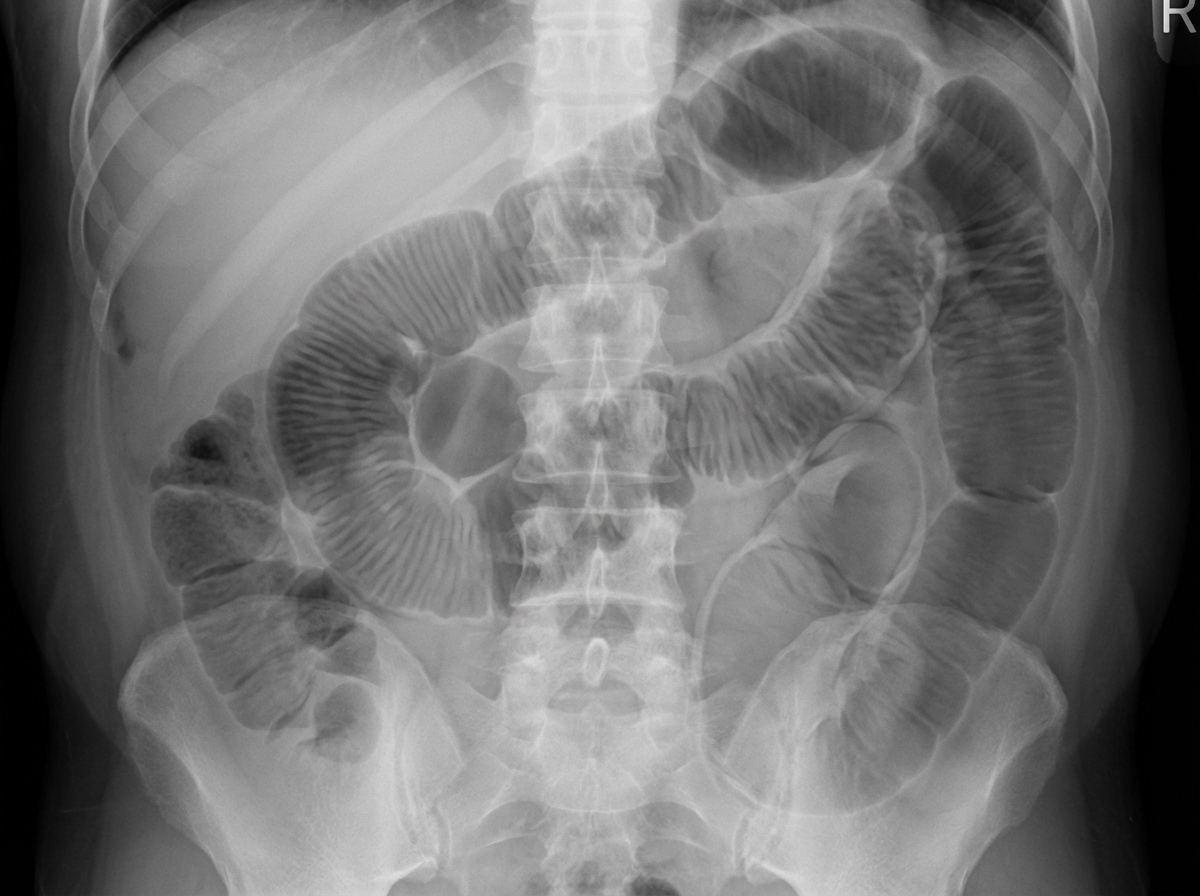
In a high-risk population, hepatocellular carcinoma (HCC) is best detected by which imaging modality?
What is the investigation of choice for a small intestine tumor?
Which of the following is the most specific and sensitive screening test for renovascular hypertension?
What is a characteristic feature of the post-ovulatory endometrium observed on ultrasound?
Fleischner sign is characteristic of which condition?
A patient presents with fever and abdominal pain. If Meckel's diverticulum is involved, what is the best diagnostic method?
Phleboliths are typically seen in which of the following locations?
Which of the following is NOT a CT finding of acute pancreatitis?
Which investigation is the investigation of choice for recurrent sinusitis?
Which of the following is NOT a radiological sign of Ulcerative colitis?
Explanation: **Explanation:** The correct answer is **Ultrasound (USG)**. The key to this question lies in the phrase "best detected," which in the context of a high-risk population (e.g., patients with Cirrhosis or Chronic Hepatitis B/C) refers to **screening and surveillance**. 1. **Why Ultrasound is Correct:** According to international guidelines (AASLD/EASL), USG is the primary screening modality for HCC. It is preferred because it is non-invasive, cost-effective, widely available, and lacks ionizing radiation. When combined with serum **Alpha-fetoprotein (AFP)** levels every 6 months, it provides the best balance of sensitivity and specificity for early detection in asymptomatic high-risk individuals. 2. **Why Other Options are Incorrect:** * **CT and MRI:** While Triple-phase (Multidetector) CT and Dynamic MRI are significantly more sensitive and specific than USG for **characterizing and diagnosing** a lesion once found, they are not used for initial detection/screening due to high cost, radiation (CT), and lack of feasibility for biannual follow-up. * **PET Scan:** HCC is often not FDG-avid (due to high glucose-6-phosphatase levels in well-differentiated tumors), making PET scans unreliable for primary detection. **Clinical Pearls for NEET-PG:** * **Gold Standard for Diagnosis:** Dynamic MRI or Triple-phase CT (showing "Arterial enhancement with venous washout"). * **Screening Interval:** Every 6 months for high-risk patients. * **LI-RADS:** The system used to standardize reporting of liver nodules in patients at risk for HCC. * **Fibrolamellar HCC:** Occurs in young patients without cirrhosis; typically shows a central stellate scar that is T2-hypointense (unlike Hemangioma/FNH).
Explanation: **Explanation:** **1. Why Barium Follow-Through (BFT) is the Correct Answer:** In the context of traditional radiology teaching for exams like NEET-PG, **Barium Follow-Through** remains the investigation of choice for visualizing small intestinal mucosal lesions and tumors. It involves the ingestion of barium sulfate followed by serial radiographs as the contrast moves through the jejunum and ileum. It is highly effective at identifying luminal narrowing, filling defects (intraluminal tumors), and "apple-core" lesions or mucosal irregularities characteristic of small bowel malignancies (like adenocarcinoma or lymphoma). **2. Analysis of Incorrect Options:** * **B. Echocardiography:** This is an ultrasound of the heart. It has no role in evaluating the gastrointestinal tract or detecting small bowel tumors. * **C. X-ray Abdomen:** Plain radiographs are primarily used to detect bowel obstruction (air-fluid levels) or perforation (pneumoperitoneum). They lack the soft tissue resolution to identify a specific tumor mass. * **D. CT Scan with Contrast:** While CT Enterography is increasingly used in modern clinical practice for staging and detecting extraluminal spread, classic academic questions still prioritize Barium studies for the primary detection of mucosal small bowel pathology. **3. Clinical Pearls & High-Yield Facts:** * **Gold Standard for Mucosal Detail:** Enteroclysis (double-contrast) is technically superior to BFT for small bowel imaging as it provides better distension, but BFT is the more common exam answer. * **Most Common Site:** The most common site for small bowel adenocarcinoma is the **duodenum**, whereas Carcinoid tumors are most common in the **ileum**. * **"Apple-core" lesion:** While most famous in the colon, this sign on a barium study indicates a constricting malignancy. * **Modern Shift:** In current clinical practice, **CT Enterography** or **Capsule Endoscopy** are often preferred, but for the purpose of the NEET-PG, Barium Follow-Through is the established classic answer.
Explanation: **Explanation:** Renovascular hypertension (RVH) is most commonly caused by renal artery stenosis (RAS). While **Digital Subtraction Angiography (DSA)** remains the "gold standard" for diagnosis, it is invasive. Among non-invasive screening modalities, **Magnetic Resonance Angiography (MRA)**, particularly Gadolinium-enhanced MRA, is considered highly sensitive (90-100%) and specific (95-99%). It provides excellent anatomical detail of the renal arteries without the risk of ionizing radiation or the nephrotoxicity associated with iodinated contrast used in CT. **Analysis of Options:** * **MRI (Correct):** MRA is the preferred screening tool due to its high diagnostic accuracy and ability to visualize the entire length of the renal artery, including accessory arteries. * **CT Guided Angiography (Incorrect):** While highly accurate, it requires iodinated contrast, which poses a risk of contrast-induced nephropathy (CIN) in patients who often already have compromised renal function due to RVH. * **Captopril Radionuclide Scan (Incorrect):** This is a functional test using DTPA or MAG3. While historically popular, its sensitivity is lower than MRA, especially in patients with bilateral disease or renal insufficiency. * **HRCT (Incorrect):** High-Resolution CT is primarily used for lung parenchyma imaging and has no role in evaluating vascular structures like the renal arteries. **Clinical Pearls for NEET-PG:** * **Gold Standard:** Digital Subtraction Angiography (DSA). * **Most Common Cause:** Atherosclerosis (older males) and Fibromuscular Dysplasia (young females; "string of beads" appearance). * **First-line Screening (Cost-effective):** Duplex Doppler Ultrasound (though operator-dependent). * **Contraindication:** Gadolinium should be avoided in patients with a GFR <30 mL/min due to the risk of **Nephrogenic Systemic Fibrosis (NSF)**.
Explanation: The appearance of the endometrium on ultrasound changes predictably according to the phases of the menstrual cycle. **Explanation of the Correct Answer:** After ovulation, the corpus luteum produces **progesterone**, which initiates the **secretory phase**. Under the influence of progesterone, the endometrial glands become tortuous and filled with glycogen-rich secretions, and the stroma becomes edematous. This increased vascularity and fluid content make the endometrium **hyperechoic (bright)** and thick. Because this tissue is fluid-rich and uniform, it allows sound waves to pass through easily with minimal attenuation, leading to **prominent posterior acoustic enhancement** (increased brightness behind the uterus). **Analysis of Incorrect Options:** * **A. Single hyperechoic thin line:** This is characteristic of the **menstrual phase** or the early proliferative phase, where the functional layer has shed, leaving only the thin basal layer. * **B. Three line sign:** This is the classic appearance of the **late proliferative (pre-ovulatory) phase**. It consists of a central echogenic line (uterine cavity) surrounded by two hypoechoic layers (functional zone) and two outer echogenic lines (basal layer). * **C. Prominent halo:** A hypoechoic subendometrial halo is often seen in the proliferative phase due to the compact nature of the inner myometrium; it is not a specific feature of the post-ovulatory phase. **NEET-PG High-Yield Pearls:** * **Proliferative Phase (Estrogen):** "Three-line sign" (Trilaminar appearance). * **Secretory Phase (Progesterone):** Uniformly hyperechoic, thick endometrium with posterior enhancement. * **Post-menopausal Endometrium:** Should normally be **< 5 mm**. If > 5 mm or bleeding is present, a biopsy is required to rule out endometrial carcinoma. * **Dating:** Ultrasound is most accurate for dating the cycle based on endometrial morphology rather than just thickness.
Explanation: **Explanation:** **Fleischner sign** refers to a prominent, gaping, and patulous ileocecal valve (ICV) caused by the thickening of the lips of the valve and terminal ileum. It is a classic radiological finding in **Ileocecal Tuberculosis (TB)**, typically seen on a Barium enema. 1. **Why Ileocecal TB is correct:** In intestinal TB, the ileocecal region is the most common site of involvement due to the abundance of lymphoid tissue (Peyer’s patches). Inflammation and subsequent fibrosis lead to a rigid, wide-open ICV (Fleischner sign). This is often associated with the **Stierlin sign** (rapid emptying of the inflamed segment, leaving a narrow string of barium). 2. **Why other options are incorrect:** * **Ulcerative Colitis:** Characterized by "Lead pipe" appearance (loss of haustrations) and "Backwash ileitis," but the ICV is typically incompetent rather than thickened/patulous. * **Crohn’s Disease:** Features "String sign of Kantor" (marked narrowing of the terminal ileum) and "Cobblestone appearance." While it involves the ileum, the specific patulous valve sign is not characteristic. * **Ischaemic Colitis:** Classically presents with "Thumbprinting" on X-ray/CT due to submucosal edema and hemorrhage, usually at splenic flexure (Griffith’s point). **High-Yield Clinical Pearls for NEET-PG:** * **Sterling Sign:** Rapid emptying of the terminal ileum due to irritability (seen in TB). * **Conical Cecum:** Shrunken, inverted cecum due to fibrosis in TB. * **Goose-neck deformity:** Seen in TB when the terminal ileum enters a contracted cecum at an abnormal angle. * **Key differentiator:** TB often involves the **ileocecal angle**, whereas Crohn’s more commonly involves the **terminal ileum** while sparing the cecum initially.
Explanation: **Explanation:** **Meckel’s diverticulum** is the most common congenital anomaly of the gastrointestinal tract, resulting from the incomplete obliteration of the vitelline duct. **Why Technetium-99m (Tc-99m) Pertechnetate Scan is the Correct Answer:** The "Meckel’s scan" is the investigation of choice because approximately 50% of all Meckel’s diverticula (and nearly 80-90% of those that become symptomatic/bleed) contain **ectopic gastric mucosa**. The Tc-99m pertechnetate isotope is selectively taken up by the mucous-secreting cells of the gastric mucosa. When the isotope accumulates in the right lower quadrant simultaneously with the stomach, it confirms the diagnosis. Its sensitivity is significantly higher in the pediatric population. **Analysis of Incorrect Options:** * **A. X-ray:** Plain radiographs are non-specific. They may show signs of bowel obstruction or pneumoperitoneum if perforation occurs, but they cannot definitively identify a diverticulum. * **B. Ultrasound:** While USG can sometimes identify a "blind-ending pouch," it is highly operator-dependent and often obscured by overlying bowel gas. * **C. CT Scan:** CT is excellent for diagnosing complications like diverticulitis or enteroliths, but it lacks the functional specificity of the isotope scan for identifying ectopic tissue. **High-Yield Clinical Pearls for NEET-PG:** * **Rule of 2s:** 2% of the population, 2 inches long, 2 feet from the ileocecal valve, 2 types of ectopic tissue (Gastric > Pancreatic), and presents before age 2. * **Pharmacological Augmentation:** To increase the sensitivity of the Tc-99m scan, clinicians may use **Pentagastrin** (increases uptake), **H2 blockers/Cimetidine** (prevents release of isotope from cells), or **Glucagon** (decreases peristalsis). * **Most common presentation:** Painless lower GI bleeding (painless melena) in a child.
Explanation: ### Explanation **Correct Answer: C. Cavernous Hemangiomas** **Understanding Phleboliths** Phleboliths are small, rounded calcifications within a vein, resulting from the calcification of a localized thrombus. They are a hallmark radiographic feature of **slow-flow vascular malformations**, most notably **Cavernous Hemangiomas**. In these lesions, stagnant blood flow leads to thrombus formation, which subsequently undergoes dystrophic calcification. On imaging (X-ray or CT), they appear as focal, radiopaque densities, often with a characteristic "lucent center." **Analysis of Incorrect Options:** * **A. Dental Pulp:** Calcifications here are known as **Pulp Stones** (denticles). They are associated with aging or chronic irritation but are not venous in origin. * **B. Salivary Gland Duct:** Calcifications in the salivary system are called **Sialoliths**. These are typically composed of calcium phosphate and form due to salivary stasis or inflammation within the ductal system (most common in the Submandibular gland). * **D. Subepithelial Bulla:** This refers to a fluid-filled blister (seen in conditions like Pemphigoid). While they may scar or secondarily infect, they do not characteristically form phleboliths. **NEET-PG High-Yield Pearls:** * **Pelvic Phleboliths:** Extremely common on abdominal X-rays. They are located below the level of the ischial spines and must be differentiated from **ureteric calculi** (which are usually higher and more medial). * **Soft Tissue Hemangiomas:** The presence of phleboliths in a soft tissue mass is a highly specific diagnostic sign for a hemangioma. * **Maffucci Syndrome:** A rare disorder characterized by multiple enchondromas and soft tissue hemangiomas containing phleboliths. * **Imaging Appearance:** On CT, phleboliths often show a "tail sign" (a tapering soft tissue extension representing the parent vein).
Explanation: ### Explanation In the context of acute pancreatitis, CT imaging is primarily used to assess the severity, identify complications, and rule out other causes of acute abdomen. **Why Option A is the Correct Answer:** **Dilation of the pancreatic duct** is typically a hallmark of **chronic pancreatitis** or obstructive pathologies (such as a periampullary tumor or a stone in the distal CBD). In acute pancreatitis, the inflammatory process leads to interstitial edema and swelling of the pancreatic parenchyma, which tends to **compress** the duct rather than dilate it. **Analysis of Incorrect Options:** * **B. Fuzzy outline of the pancreas:** This represents peripancreatic fat stranding. It is one of the earliest signs of inflammation as the proteolytic enzymes leak into the surrounding retroperitoneal fat. * **C. Peripancreatic fluid collection:** This is a common feature of acute pancreatitis (Balthazar Grade D/E). These collections occur due to inflammation and vascular leakage and can later evolve into pseudocysts or walled-off necrosis. * **D. Edematous pancreas:** This refers to the diffuse or focal enlargement of the gland due to inflammatory exudate, which is the defining radiological feature of interstitial edematous pancreatitis. **NEET-PG High-Yield Pearls:** 1. **Balthazar Scoring System:** Used to grade the severity of acute pancreatitis based on CT findings (A: Normal, B: Focal/diffuse enlargement, C: Peripancreatic inflammation, D: Single fluid collection, E: Two or more collections/gas). 2. **CT Severity Index (CTSI):** Combines the Balthazar grade with the degree of pancreatic necrosis. 3. **Timing:** The best time to perform a CECT to assess for necrosis is **72 hours** after the onset of symptoms; scans done earlier may underestimate the extent of tissue death. 4. **Sentinel Loop:** A classic X-ray finding in acute pancreatitis representing a localized ileus of a jejunal loop near the pancreas.
Explanation: **Explanation:** The investigation of choice for recurrent or chronic sinusitis is a **Non-Contrast Computed Tomography (NCCT) of the Paranasal Sinuses (PNS)**. **1. Why CT Scan is the Correct Answer:** CT is considered the "gold standard" because it provides superior bony detail and anatomical resolution. It is essential for evaluating the **Osteomeatal Complex (OMC)**, the critical area where the maxillary, ethmoid, and frontal sinuses drain. In recurrent sinusitis, CT helps identify anatomical variations (e.g., deviated nasal septum, Concha bullosa, or Haller cells) that predispose a patient to repeated infections. It is also the mandatory "road map" used by surgeons before performing Functional Endoscopic Sinus Surgery (FESS). **2. Why Other Options are Incorrect:** * **X-ray PNS (Waters and Caldwell views):** While historically used for screening acute sinusitis (showing air-fluid levels), they are inadequate for recurrent cases. They suffer from the superimposition of bony structures and cannot visualize the ethmoid air cells or the OMC effectively. * **MRI:** While MRI is excellent for soft tissue, it is not the first-line investigation for routine recurrent sinusitis. It is reserved for suspected **complications**, such as intracranial extension, orbital cellulitis, or fungal sinusitis (where it shows a characteristic "signal void"). **Clinical Pearls for NEET-PG:** * **Best View for Maxillary Sinus:** Waters View (Occipitomental). * **Best View for Frontal Sinus:** Caldwell View (Occipitofrontal). * **Most common sinus involved in adults:** Maxillary sinus. * **Most common sinus involved in children:** Ethmoid sinus. * **Investigation of choice for Fungal Sinusitis:** MRI (to check for dural invasion).
Explanation: **Explanation:** The correct answer is **A. Raspberry appearance**, as this is a classic radiological sign of **Schistosomiasis** (caused by *Schistosoma mansoni*), not Ulcerative Colitis (UC). In Schistosomiasis, the "raspberry" appearance refers to the multiple, small, rounded filling defects seen on a barium enema due to granulomatous polyps. **Analysis of other options:** * **Lead Pipe appearance:** This is a hallmark sign of chronic UC. It occurs due to the loss of normal haustral markings, bowel shortening, and mural thickening, making the colon appear as a smooth, rigid tube. * **Toxic megacolon:** A life-threatening complication of UC characterized by total or segmental non-obstructive colonic dilatation (usually >6 cm) associated with systemic toxicity. * **Pseudopolyps:** These are islands of regenerating or normal mucosa surrounded by areas of extensive ulceration and inflammation. On imaging, they appear as multiple small filling defects. **High-Yield Clinical Pearls for NEET-PG:** * **Stove-pipe colon:** Another name for the Lead Pipe appearance. * **Collar-button ulcers:** Deep, flask-shaped ulcers seen in acute UC when the ulceration penetrates the muscularis mucosa. * **Backwash ileitis:** Involvement of the terminal ileum in UC (seen in ~10-20% of cases with pancolitis). * **String Sign of Kantor:** Associated with **Crohn’s Disease**, not UC (due to terminal ileal narrowing). * **Thumbprinting:** Suggests bowel wall edema, commonly seen in ischemic colitis or severe UC.
Imaging of Liver
Practice Questions
Biliary Tract Imaging
Practice Questions
Pancreatic Imaging
Practice Questions
Spleen and Lymphatic System
Practice Questions
Gastrointestinal Tract Imaging
Practice Questions
Renal and Urinary Tract Imaging
Practice Questions
Adrenal Imaging
Practice Questions
Female Pelvic Imaging
Practice Questions
Male Pelvic Imaging
Practice Questions
Abdominal Trauma Imaging
Practice Questions
Acute Abdomen Imaging
Practice Questions
Imaging of Peritoneal Cavity and Retroperitoneum
Practice Questions
Get full access to all questions, explanations, and performance tracking.
Start For Free