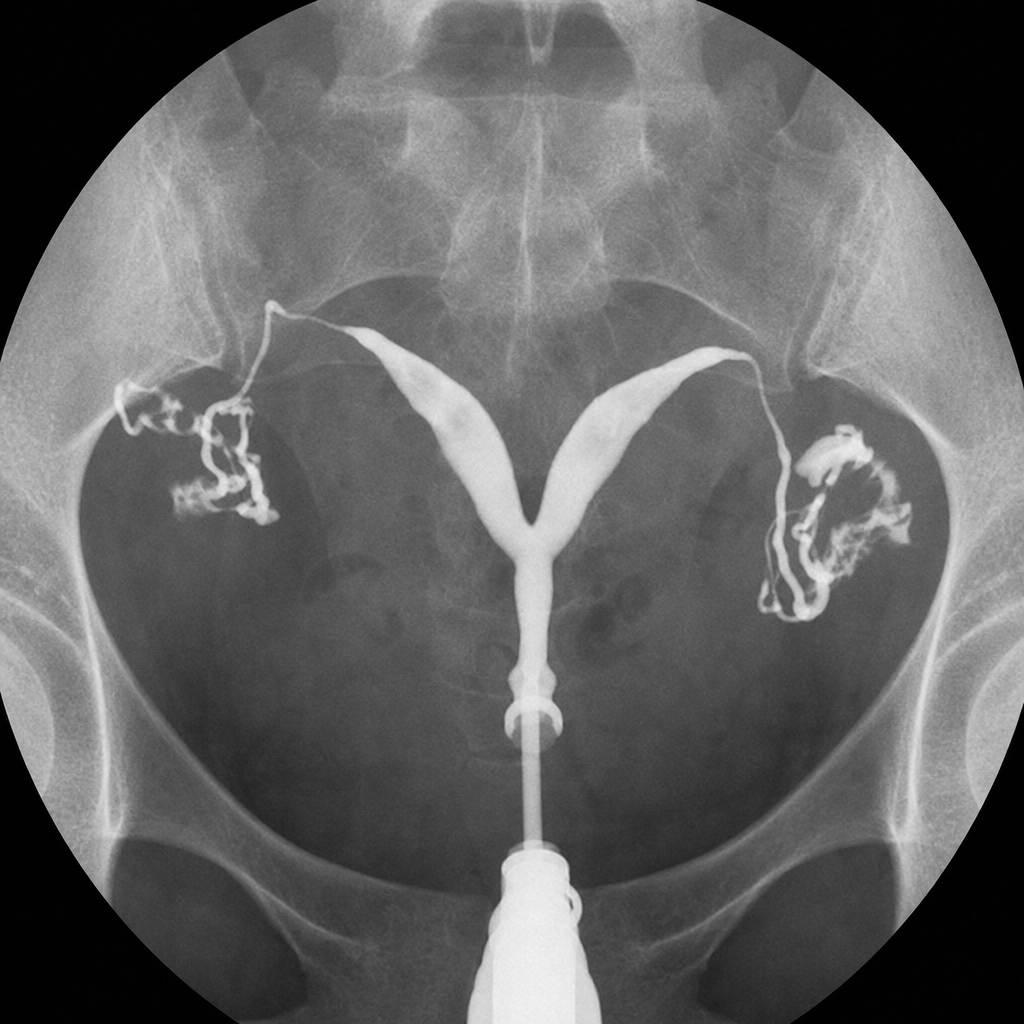
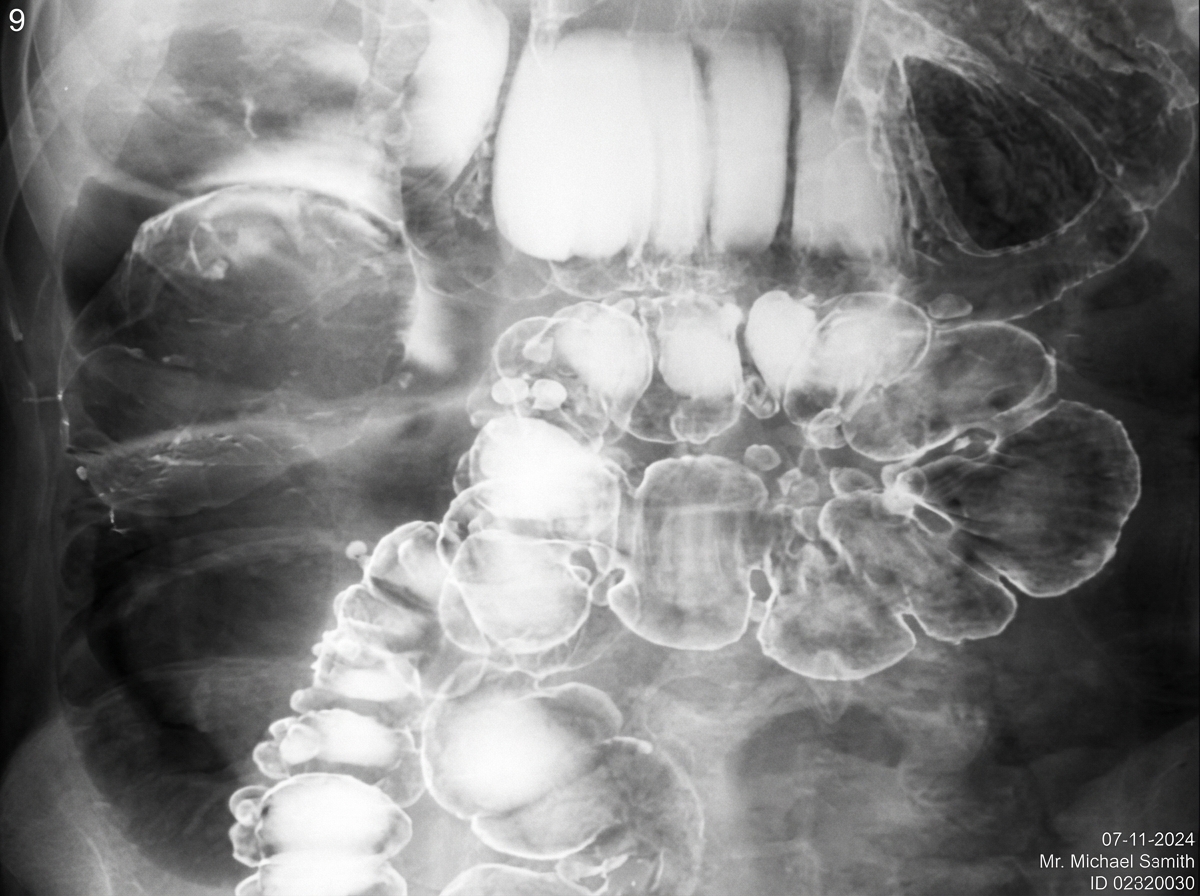
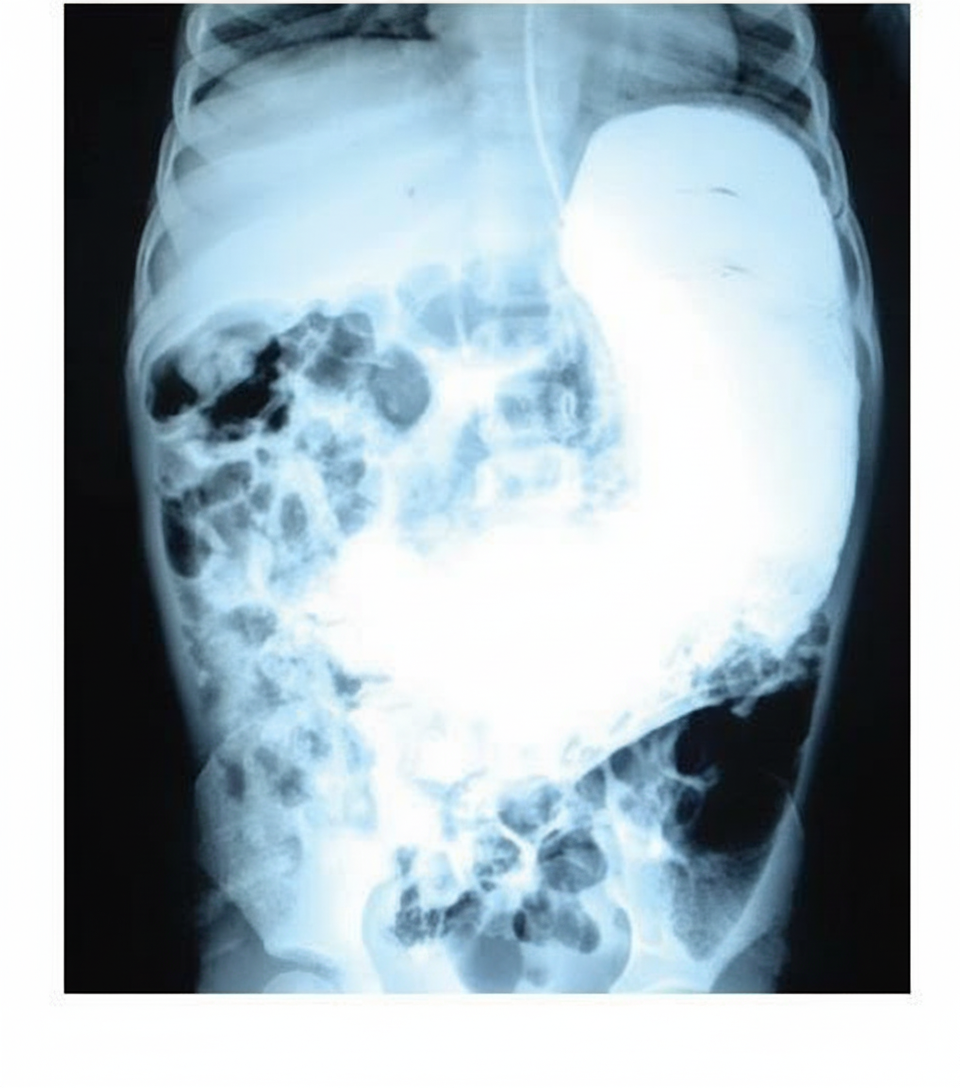
The 'coffee bean sign' is typically observed in which condition?
Which CT view is best for evaluating paranasal sinus polyps?
Which of the following is NOT a common feature of a malignant gastric ulcer on barium meal examination?
A hypoechoic lesion within the prostate is typically seen in which of the following conditions?
Frostburg's reverse 3 sign is seen in which of the following conditions?
Antenatal detection of bone fractures on ultrasound suggests which of the following conditions?
What is the investigation of choice for obstructive jaundice?
What is the most useful investigation for a sliding hernia in a female?
Which investigation is done for intestinal obstruction?
The CT severity index is a measure for which of the following conditions?
Explanation: The **'coffee bean sign'** (also known as the Frimann-Dahl sign) is a classic radiographic hallmark of **Sigmoid Volvulus**. ### 1. Why Volvulus is Correct Sigmoid volvulus occurs when the sigmoid colon twists on its mesenteric axis. This creates a closed-loop obstruction where the affected loop becomes massively dilated with gas. On a supine abdominal X-ray, the two apposed inner walls of the dilated loop form a central dense line (the "cleft" of the bean), while the outer walls form the rounded perimeter, mimicking the shape of a coffee bean. The "apex" of the bean usually points toward the right upper quadrant. ### 2. Why Other Options are Incorrect * **Pyloric Obstruction:** Typically presents with a "single bubble" sign (dilated stomach) and a lack of distal bowel gas. * **Intussusception:** Characterized by the "target sign" or "pseudokidney sign" on ultrasound, and the "meniscus sign" or "claw sign" on contrast enema. * **Intestinal Obstruction:** While volvulus is a type of obstruction, general small bowel obstruction presents with multiple dilated central loops and "valvulae conniventes" (step-ladder pattern), not the specific coffee bean morphology. ### 3. NEET-PG High-Yield Pearls * **Cecal Volvulus:** Unlike sigmoid, this usually shows a "comma" or "fetal" shape and points toward the left upper quadrant. * **Bird’s Beak Sign:** The characteristic appearance of the tapering site of the twist seen on a Barium Enema or CT scan. * **Management:** Initial treatment for sigmoid volvulus is often endoscopic detorsion (sigmoidoscopy), whereas cecal volvulus usually requires immediate surgery.
Explanation: **Explanation:** The **Coronal view** is the gold standard for evaluating the paranasal sinuses (PNS), particularly for inflammatory conditions like polyps. This is because the coronal plane provides an anatomical perspective that mimics the surgical approach used in Functional Endoscopic Sinus Surgery (FESS). It is the best view for visualizing the **Osteomeatal Complex (OMC)**—the critical drainage pathway for the frontal, maxillary, and anterior ethmoid sinuses—and for assessing the relationship of polyps to the skull base (cribriform plate) and the medial orbital wall. **Analysis of Options:** * **Axial View:** While excellent for evaluating the anterior and posterior walls of the frontal/sphenoid sinuses and the relationship of the optic nerve to the posterior ethmoid cells, it is less effective for visualizing the vertical drainage pathways and the roof of the ethmoid sinuses. * **Sagittal View:** Primarily used to assess the frontal sinus outflow tract and the extent of disease along the anterior-posterior axis, but it is not the primary diagnostic plane for polyps. * **3D Reconstruction:** Useful for complex maxillofacial trauma or preoperative planning for extensive tumors, but it lacks the internal mucosal detail required to characterize simple polyps. **High-Yield Clinical Pearls for NEET-PG:** * **PNS CT Protocol:** Usually performed as a non-contrast study (NCCT) with thin sections (≤1-2 mm). * **Haller Cells:** Infraorbital ethmoid air cells seen on coronal views; if enlarged, they can narrow the maxillary ostium. * **Onodi Cells:** Sphenoethmoidal cells (best seen on axial/sagittal) that lie lateral or superior to the sphenoid sinus, placing the optic nerve at risk during surgery. * **Antrochoanal Polyp:** A specific type of polyp that originates in the maxillary sinus and extends through the ostium into the choana; the coronal view best demonstrates its "dumbbell" shape.
Explanation: **Explanation:** In barium studies, distinguishing between benign and malignant gastric ulcers is a high-yield topic. The correct answer is **D** because a **lesser curvature ulcer with a nodular rim** is actually a classic description of a **malignant** gastric ulcer. The question asks for which feature is *NOT* common; however, in the context of standard NEET-PG patterns, this option is often used to highlight that while the lesser curvature is the most common site for *benign* ulcers, a nodular, irregular rim at that location strongly suggests malignancy. **Breakdown of Options:** * **Option A (Greater Curvature):** Benign ulcers are rare on the greater curvature. Any ulcer found here is considered malignant until proven otherwise. * **Option B (Carman’s Meniscus Sign):** This is a pathognomonic sign of a large, infiltrating malignant gastric ulcer. It occurs when the ulcer crater is trapped between the overhanging neoplastic edges, forming a lens-shaped (meniscus) appearance when compressed. * **Option C (Radiating folds):** In benign ulcers, mucosal folds are smooth and reach the very edge of the crater. In **malignancy**, the folds are thickened, clubbed, or fused and stop short of the ulcer base due to tumor infiltration. * **Option D (Correct Answer Context):** While the lesser curvature is a common site for both, a "nodular rim" is a hallmark of malignancy. (Note: In some exam versions, this question is framed to highlight that benign ulcers are *more* common on the lesser curvature, but the presence of a nodular/irregular rim always shifts the diagnosis toward malignancy). **Clinical Pearls for NEET-PG:** * **Hampton’s Line:** A thin, lucent line at the neck of a gastric ulcer indicating a **benign** etiology (representing intact mucosa). * **Ulcer Projection:** Benign ulcers project **beyond** the predicted lumen; malignant ulcers (in-falling) appear to stay **within** the lumen. * **Double Contrast:** Best for visualizing mucosal details and early gastric cancer.
Explanation: ### Explanation **Correct Answer: D. Urethral obstruction** The prostate gland is primarily evaluated using **Transrectal Ultrasound (TRUS)**. In the context of this question, a hypoechoic lesion is a classic sonographic finding associated with **Prostatic Abscess**, which frequently presents clinically with acute urinary retention or **urethral obstruction**. An abscess appears as a localized, fluid-filled, hypoechoic, or anechoic area with internal echoes and peripheral enhancement. **Analysis of Options:** * **A. Adenocarcinoma:** While 70% of prostate cancers are **hypoechoic** and located in the peripheral zone, the question specifically points toward "Urethral obstruction" as the primary clinical association in this specific MCQ context. In many standardized exams, if an abscess (causing obstruction) and cancer are both possibilities, the clinical presentation of obstruction often steers the diagnosis toward inflammatory/obstructive pathologies. * **B. Normal prostate tissue:** The normal prostate typically exhibits a homogeneous, medium-level echogenicity. It is not characterized by focal hypoechoic lesions. * **C. Infertility:** While prostatic issues (like ejaculatory duct cysts) can cause infertility, they are usually midline anechoic structures rather than simple hypoechoic lesions within the parenchyma. **NEET-PG High-Yield Pearls:** 1. **Zonal Anatomy (McNeal):** The **Peripheral Zone** is the most common site for **Carcinoma** (70%) and is best seen as a hypoechoic lesion on TRUS. 2. **Transition Zone:** The most common site for **Benign Prostatic Hyperplasia (BPH)**. 3. **Prostatic Abscess:** Most commonly occurs in the setting of poorly treated prostatitis or in diabetic patients; TRUS is the investigation of choice. 4. **PSA Levels:** Always correlate hypoechoic lesions with PSA. If PSA is >4 ng/mL, a TRUS-guided biopsy is indicated to rule out malignancy.
Explanation: **Explanation:** **Frostberg’s Reverse 3 Sign** (also known as the "Epsilon sign") is a classic radiological finding observed during a **Barium Swallow/Meal** (specifically hypotonic duodenography). It is characterized by a "3" shape appearing in reverse along the medial border of the second part (descending) of the duodenum. **1. Why Carcinoma of the Head of the Pancreas is Correct:** The sign is caused by a mass in the head of the pancreas that infiltrates or exerts pressure on the duodenum. The "indentations" forming the reverse 3 occur because the pancreatic mass pushes the duodenal wall outward above and below the point where the **Ampulla of Vater** is tethered. The central limb of the "3" represents the fixed point at the Ampulla, which is relatively resistant to displacement compared to the adjacent duodenal wall. **2. Analysis of Incorrect Options:** * **Periampullary Carcinoma:** While this occurs in the same anatomical region, it typically presents with irregular filling defects or "shouldering" rather than the specific reverse 3 configuration. * **Annular Pancreas:** This is a congenital anomaly where a ring of pancreatic tissue encircles the duodenum, typically causing a smooth, circumferential narrowing (extrinsic constriction) rather than the specific bi-lobed indentation of Frostberg’s sign. **3. High-Yield Clinical Pearls for NEET-PG:** * **Double Bubble Sign:** Seen in Duodenal Atresia and Annular Pancreas (on X-ray). * **Courvoisier’s Law:** In a patient with painless obstructive jaundice, a palpable gallbladder is unlikely to be due to gallstones; it is more likely due to malignancy (e.g., Carcinoma Head of Pancreas). * **Investigation of Choice:** For staging and diagnosis of Pancreatic Carcinoma, **Contrast-Enhanced CT (CECT)** using a pancreatic protocol is the gold standard. * **Tumor Marker:** **CA 19-9** is the most specific marker for monitoring treatment response.
Explanation: **Explanation:** **Osteogenesis Imperfecta (OI)**, specifically **Type II (Perinatal Lethal)**, is the most common cause of multiple fractures detected in utero. It is a genetic disorder characterized by a defect in Type I collagen synthesis. On antenatal ultrasound, the presence of multiple long bone fractures, "crumpled" or "accordion-like" femurs, and a soft, compressible skull (due to poor mineralization) are hallmark findings. The ribs may also show "beading" due to multiple healing fractures. **Analysis of Incorrect Options:** * **Achondroplasia:** This is the most common non-lethal skeletal dysplasia. It is characterized by rhizomelic (proximal) limb shortening and a large head with frontal bossing, but **not** by bone fragility or fractures. * **Marfan’s Syndrome:** This is a connective tissue disorder affecting fibrillin-1. While it involves skeletal abnormalities like arachnodactyly and pectus deformities, it does not cause prenatal bone fractures. * **Chondrodysplasia Punctata:** This group of disorders is characterized by "stippled epiphyses" (calcific spotting) on imaging. While it involves limb shortening, it is not typically associated with spontaneous intrauterine fractures. **High-Yield Clinical Pearls for NEET-PG:** * **OI Type II** is the most severe/lethal form; **OI Type I** is the mildest and most common. * **Blue sclera** and **dentinogenesis imperfecta** are classic clinical associations of OI. * **Hypophosphatasia** is another differential for prenatal fractures but is distinguished by near-total absence of ossification. * **Thanatophoric Dysplasia** is the most common *lethal* skeletal dysplasia (look for "cloverleaf skull" and "telephone receiver" femurs).
Explanation: **Explanation:** The investigation of choice (initial/screening modality) for obstructive jaundice is **Ultrasonography (USG)**. **Why USG is the Correct Answer:** USG is the first-line investigation because it is non-invasive, cost-effective, radiation-free, and highly sensitive in detecting **biliary tree dilatation**. It effectively differentiates between medical jaundice (parenchymal disease) and surgical/obstructive jaundice (ductal dilation). It can identify the level of obstruction (e.g., intrahepatic vs. extrahepatic) and often the cause, such as gallstones (cholelithiasis) or choledocholithiasis. **Analysis of Incorrect Options:** * **A. CXR (Chest X-ray):** This has no role in evaluating the biliary system or jaundice. It is primarily used for cardiopulmonary assessment. * **C. CT (Computed Tomography):** While excellent for staging periampullary or pancreatic tumors, it is not the initial test. It involves ionizing radiation and is less sensitive than USG for detecting radiolucent gallstones. * **D. MRI (MRCP):** Magnetic Resonance Cholangiopancreatography (MRCP) is the **gold standard diagnostic** investigation for visualizing the biliary anatomy and identifying the exact site/cause of obstruction. However, due to its high cost and limited availability, it is not the "investigation of choice" (initial step). **High-Yield Clinical Pearls for NEET-PG:** * **Initial Investigation of Choice:** USG Abdomen. * **Gold Standard Diagnostic (Non-invasive):** MRCP. * **Gold Standard (Invasive/Therapeutic):** ERCP (Endoscopic Retrograde Cholangiopancreatography) – used when intervention (stenting/stone removal) is required. * **Double Duct Sign:** Seen on USG/CT/MRCP, indicating simultaneous dilatation of the Common Bile Duct (CBD) and Pancreatic Duct, highly suggestive of **Carcinoma Head of Pancreas**.
Explanation: **Explanation:** A **sliding hernia** occurs when an abdominal viscus (most commonly the bladder or a portion of the colon) forms part of the wall of the hernial sac. In females, the most common organs involved in a sliding inguinal hernia are the **ovaries and fallopian tubes**. **Why Barium Meal is the Correct Answer:** A **Barium meal** (specifically a Barium meal follow-through or Barium enema depending on the suspected organ) is traditionally considered the most useful investigation for diagnosing a sliding hernia involving the gastrointestinal tract. It allows for the dynamic visualization of the bowel loops as they descend into the hernial sac. It helps in identifying the "sliding" component by demonstrating the relationship between the bowel and the sac, which is crucial for surgical planning to avoid accidental injury to the visceral wall. **Analysis of Incorrect Options:** * **A. Fluoroscopy:** While fluoroscopy is used during a barium study, it is the contrast medium (Barium) that provides the necessary anatomical detail to identify the hernia. * **C. Palpation method:** This is a clinical examination technique. While it can diagnose the presence of a hernia, it cannot definitively identify the "sliding" nature or the specific visceral wall involvement. * **D. Ultrasound:** Although useful for identifying ovaries in a pediatric or female inguinal hernia, it is operator-dependent and less definitive than contrast studies for characterizing the relationship of the bowel wall to the sac in sliding hernias. **Clinical Pearls for NEET-PG:** * **Definition:** In a sliding hernia, the retroperitoneal organ slides down such that the visceral peritoneum forms part of the sac. * **Most common organ (General):** Sigmoid colon (left side), Cecum (right side). * **Most common organ (Females):** Ovary and Fallopian tube. * **Surgical Note:** The "Bevan’s technique" is a classic surgical approach used for the repair of sliding hernias. Never attempt to separate the "sac" from a sliding hernia, as you may devascularize or enter the lumen of the involved organ.
Explanation: **Explanation:** The diagnosis of intestinal obstruction is primarily clinical, but imaging is essential for confirmation. The **X-ray abdomen (Supine view)** is the initial investigation of choice because it provides the most detailed view of the distribution of gas and the caliber of the bowel loops. * **Why Option B is correct:** In a supine film, gas spreads out within the bowel, allowing for the measurement of bowel diameter (3-6-9 rule) and identification of the site of obstruction. It helps differentiate between small bowel (central loops, valvulae conniventes) and large bowel (peripheral loops, haustrations) dilatation. * **Why Option A is incorrect:** While an **Erect Chest X-ray** is often performed alongside an abdominal series, its primary purpose is to rule out perforation (pneumoperitoneum) by looking for free air under the diaphragm, rather than diagnosing the obstruction itself. * **Why Option C is incorrect:** Lateral views are rarely used in routine practice for obstruction; they are occasionally used in neonates (invertogram) or to look for specific signs like the "coffee bean" in volvulus, but they are not the standard initial investigation. * **Why Option D is incorrect:** Barium meal is contraindicated in acute intestinal obstruction. If barium is given orally and fails to pass an obstruction, it can inspissate (harden), worsening the block or causing peritonitis if a perforation occurs. **High-Yield Clinical Pearls for NEET-PG:** * **Gold Standard:** Contrast-Enhanced CT (CECT) is the most accurate investigation to determine the cause and site of obstruction. * **3-6-9 Rule:** Normal upper limit for bowel diameter is 3 cm (Small bowel), 6 cm (Large bowel), and 9 cm (Cecum). * **Erect Abdomen X-ray:** Classically shows **multiple air-fluid levels** (more than 5 is significant). * **Step-ladder pattern:** Characteristic radiological sign of small bowel obstruction on an erect film.
Explanation: The **CT Severity Index (CTSI)**, also known as the **Balthazar Score**, is a validated scoring system used to assess the severity and prognosis of **Acute Pancreatitis**. ### 1. Why Pancreatitis is Correct The CTSI combines two parameters to predict the morbidity and mortality of acute pancreatitis: * **Balthazar Grade (0–4 points):** Evaluates the degree of pancreatic and peripancreatic inflammation (Grade A to E). * **Pancreatic Necrosis (0–6 points):** Evaluates the percentage of non-enhancing pancreatic parenchyma on contrast-enhanced CT (CECT). * **Calculation:** A total score out of 10 is calculated. A score of 7–10 indicates severe disease with a high risk of complications and mortality. ### 2. Why Other Options are Incorrect * **Hepatitis:** Diagnosis is primarily clinical and biochemical (elevated transaminases). Imaging is used to rule out biliary obstruction but does not use a CTSI. * **Cerebral Trauma:** Severity is assessed using the **Glasgow Coma Scale (GCS)** clinically and the **Marshall or Rotterdam Scales** on CT. * **Meningitis:** This is a clinical and laboratory diagnosis (Lumbar Puncture/CSF analysis). CT is used only to rule out raised intracranial pressure or focal deficits before a tap. ### 3. High-Yield Clinical Pearls for NEET-PG * **Timing:** The best time to perform a CECT for scoring is **72–96 hours** after the onset of symptoms, as necrosis may not be fully evident earlier. * **Modified CTSI:** A newer version that includes extrapancreatic complications (e.g., pleural effusion, ascites) to better correlate with clinical outcomes. * **Balthazar Grade E:** Defined by the presence of two or more peripancreatic fluid collections or gas within the pancreas/retroperitoneum.
Imaging of Liver
Practice Questions
Biliary Tract Imaging
Practice Questions
Pancreatic Imaging
Practice Questions
Spleen and Lymphatic System
Practice Questions
Gastrointestinal Tract Imaging
Practice Questions
Renal and Urinary Tract Imaging
Practice Questions
Adrenal Imaging
Practice Questions
Female Pelvic Imaging
Practice Questions
Male Pelvic Imaging
Practice Questions
Abdominal Trauma Imaging
Practice Questions
Acute Abdomen Imaging
Practice Questions
Imaging of Peritoneal Cavity and Retroperitoneum
Practice Questions
Get full access to all questions, explanations, and performance tracking.
Start For Free