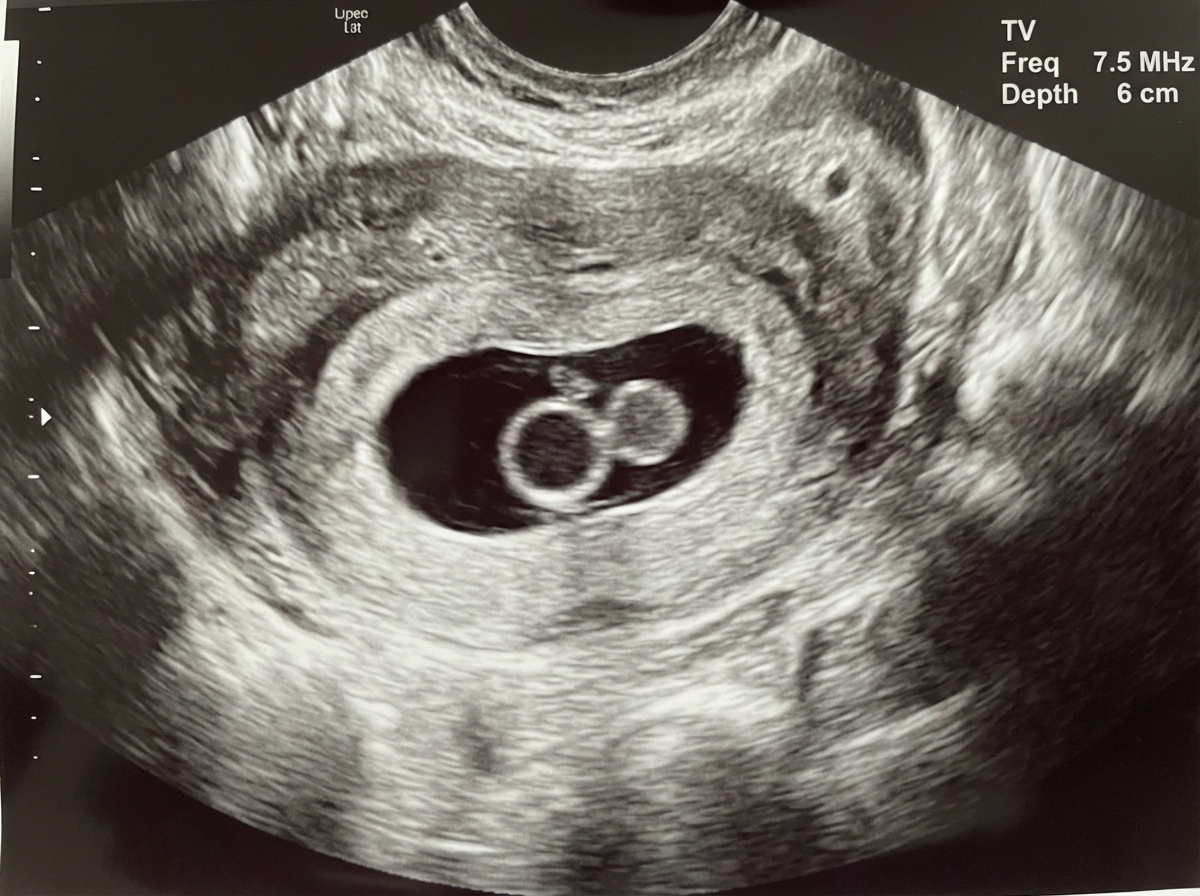
Characteristic fallopian tube findings on sonography in pelvic inflammatory disease includes all except?
Which of the following is an investigation for small intestine abnormalities, excluding one option?
A 54-year-old man presents with a 2-day history of mild abdominal pain, bloating, nausea, vomiting, and poor appetite. His past medical history is significant for recent pneumonia. Radiographic examination reveals a paralytic ileus. Which of the following signs would most likely be found during a physical examination?
An 85-year-old woman has a 48-hour history of generalized abdominal pain and vomiting. On examination, she is dehydrated with multiple dilated small bowel loops measuring up to 4 cm in diameter. A linear gas-filled structure is present in the right upper quadrant with short branches extending from it. What is the most likely diagnosis?
The Mercedes Benz sign or Seagull sign is typically seen in which of the following conditions?
Intra-abdominal calcification in a plain X-ray of the abdomen is most often seen in which of the following conditions?
What is the type of Gharbi classification of the given hydatid cyst?

"Double bubble" sign is a feature of which of the following conditions?
Which area of the colon is least visualized by barium studies?
Which of the following gallbladder pathologies can be diagnosed on a simple abdominal X-ray and may warrant consideration for cholecystectomy based on the radiographic findings alone?
Explanation: **Explanation:** Pelvic Inflammatory Disease (PID) is an infectious and inflammatory process. The hallmark of any acute inflammation is **hyperemia** (increased blood flow). Therefore, on Color Doppler, the walls of the fallopian tubes and the surrounding adnexal tissues will show **increased vascularity** (hypervascularity), not decreased. This makes **Option C** the correct answer as the "except" statement. **Analysis of other options:** * **Fallopian tube wall thickening:** In acute salpingitis, the tubal walls become edematous and thickened (typically >5 mm). This is one of the earliest sonographic signs of PID. * **Cog-wheel appearance:** This is a classic high-yield sign. In the cross-sectional view of a fallopian tube with endosalpingeal edema, the thickened mucosal folds protrude into the lumen, resembling the teeth of a cog-wheel. * **Distended tube with echogenic fluid:** As the infection progresses, the tube becomes occluded and distended with pus (**Pyosalpinx**). On ultrasound, this appears as a fluid-filled structure containing low-level internal echoes (debris/echogenic fluid). **Clinical Pearls for NEET-PG:** * **Bead-on-a-string sign:** Seen in chronic PID (Hydrosalpinx), representing small mural nodules (remnants of endosalpingeal folds) along the thin wall of the distended tube. * **Indefinite Uterus Sign:** Blurring of the uterine borders due to surrounding inflammatory exudate. * **Tubo-ovarian Abscess (TOA):** Occurs when the ovary and tube cannot be visualised separately, forming a complex multiloculated adnexal mass. * **Gold Standard for Diagnosis:** While Ultrasound is the first-line imaging, **Laparoscopy** remains the gold standard for the diagnosis of PID.
Explanation: **Explanation:** The correct answer is **D. USG enteroclysis**. In clinical practice, **enteroclysis** refers to a technique where a large volume of contrast or fluid is infused directly into the small bowel via a nasojejunal tube (passed beyond the ligament of Treitz) to achieve controlled distension. While USG is excellent for screening bowel wall thickening or intussusception, "USG enteroclysis" is not a standard or recognized clinical investigation for small bowel abnormalities. **Analysis of Options:** * **Enteroclysis (Conventional):** This is the traditional fluoroscopic method using barium and methylcellulose (double-contrast). It is highly sensitive for detecting mucosal lesions, strictures, and small bowel tumors. * **Radionuclide Imaging:** Nuclear medicine plays a specific role in small bowel pathology. For example, a **Technetium-99m pertechnetate scan** (Meckel’s scan) is the investigation of choice for detecting ectopic gastric mucosa in Meckel’s diverticulum, and **99mTc-labeled RBC scans** are used to localize obscure gastrointestinal bleeding. * **CT Enteroclysis:** This combines the distension of enteroclysis with the cross-sectional capabilities of MDCT. It is considered the gold standard for diagnosing small bowel obstructions and Crohn’s disease as it visualizes both the lumen and the extraluminal extent of the disease. **High-Yield Clinical Pearls for NEET-PG:** * **Investigation of Choice (IOC)** for Small Bowel Obstruction: **CT Enteroclysis/Enterography.** * **IOC for Meckel’s Diverticulum:** **99mTc-pertechnetate scan.** * **IOC for Celiac Disease:** Upper GI Endoscopy with D2 (duodenal) biopsy. * **String Sign of Kantor:** Classic radiological finding in Crohn’s disease (terminal ileum) seen on barium studies.
Explanation: **Explanation:** **Paralytic ileus** (also known as adynamic ileus) is a condition characterized by the failure of intestinal peristalsis without the presence of a mechanical obstruction. It is commonly triggered by abdominal surgery, electrolyte imbalances (hypokalemia), medications (opioids), or systemic infections like pneumonia (as seen in this patient). 1. **Why the correct answer is right:** In paralytic ileus, there is a global "stunning" or inhibition of the enteric nervous system and smooth muscle activity. Since there is no peristaltic movement to propel gas and fluid through the bowel loops, the characteristic physical finding is **absent or significantly diminished bowel sounds** on auscultation. 2. **Why the incorrect options are wrong:** * **Increased bowel sounds & Borborygmi (Options A & C):** These are characteristic of **Mechanical Small Bowel Obstruction (SBO)**. In mechanical obstruction, the proximal bowel hyper-perfuses and contracts vigorously to overcome the blockage, leading to high-pitched, "tinkling" sounds or loud rumbling (borborygmi). * **Crampy abdominal pain (Option D):** While patients with ileus experience discomfort and bloating, the pain is typically **dull and diffuse**. Sharp, colicky, or "crampy" paroxysmal pain is the hallmark of mechanical obstruction, reflecting the bowel's rhythmic attempts to push against a physical barrier. **High-Yield NEET-PG Pearls:** * **Radiology:** X-ray shows uniform dilatation of both the small and large intestines with gas seen in the rectum. In contrast, mechanical obstruction shows a "cut-off" sign with no gas in the rectum. * **Commonest Cause:** Post-operative state (Physiological ileus is expected for 24–72 hours). * **Electrolyte Trigger:** Hypokalemia is the most frequent metabolic cause. * **Management:** Usually conservative (NPO, IV fluids, and treating the underlying cause).
Explanation: The clinical presentation and imaging findings described are classic for **Gallstone Ileus**, a mechanical small bowel obstruction caused by a large gallstone impacting the intestinal lumen (usually at the ileocecal valve). ### **Why Gallstone Ileus is Correct** The diagnosis is confirmed by the presence of **Rigler’s Triad** on imaging: 1. **Small Bowel Obstruction (SBO):** Dilated loops (>3 cm) and vomiting. 2. **Pneumobilia:** The "linear gas-filled structure with short branches" in the RUQ represents air in the biliary tree, occurring because the stone creates a cholecystoenteric fistula to enter the bowel. 3. **Ectopic Gallstone:** (Though not explicitly mentioned here, it is the third component). ### **Analysis of Incorrect Options** * **A. Acute mesenteric ischemia:** While it can cause SBO and gas in the portal vein, portal venous gas typically extends to the **periphery** of the liver, whereas pneumobilia (seen here) is **central**. * **B. Emphysematous cholecystitis:** This involves gas within the gallbladder wall or lumen, but it does not typically cause generalized small bowel obstruction unless complicated by ileus. * **C. Obstructed right inguinal hernia:** This is a common cause of SBO in the elderly, but it would not explain the pneumobilia (air in the biliary tree). ### **NEET-PG Clinical Pearls** * **Rigler’s Triad:** Pneumobilia, Small bowel obstruction, and Ectopic gallstone (visible in ~30% of X-rays). * **Demographics:** Classically affects elderly females with a history of cholelithiasis. * **Site of Obstruction:** The most common site is the **ileum** (narrowest part of the small bowel). * **Pneumobilia vs. Portal Venous Gas:** Pneumobilia is **central** (due to bile flow); Portal venous gas is **peripheral** (due to centrifugal blood flow).
Explanation: **Explanation:** The **Mercedes Benz sign** (also known as the **Seagull sign**) is a classic radiological finding associated with **Gallstones (Cholelithiasis)**. **Why it occurs:** This sign is seen on a plain abdominal X-ray or CT scan when there are **radiolucent gas-filled fissures** (containing nitrogen, oxygen, and carbon dioxide) within a gallstone. These fissures typically form a tri-radiate pattern resembling the Mercedes Benz logo or a seagull in flight. This phenomenon occurs due to the shrinkage of cholesterol crystals within the stone, creating vacuum clefts. **Analysis of Incorrect Options:** * **B. Renal stones:** These are typically radio-opaque (calcium oxalate/phosphate) and appear as solid white densities. They do not contain internal gas fissures. * **C. Common bile duct (CBD) stones:** While composed of similar material to gallstones, they rarely exhibit this specific gas-fissure pattern and are usually diagnosed via USG or MRCP. * **D. Hydatid cyst:** This condition is associated with signs like the *Water Lily sign* (detached endocyst) or *Floating Membrane sign*, but not the Mercedes Benz sign. **High-Yield Clinical Pearls for NEET-PG:** * **Mercedes Benz Sign:** Gas in gallstones (X-ray/CT). * **WES Triad (Wall-Echo-Shadow):** Classic ultrasound finding for a gallbladder packed with stones. * **Porcelain Gallbladder:** Intramural calcification of the gallbladder wall; associated with a high risk of gallbladder carcinoma. * **Limy Bile:** Excessive calcium carbonate in the gallbladder, making the entire gallbladder lumen appear radio-opaque on X-ray.
Explanation: **Explanation:** **1. Why Meconium Peritonitis is Correct:** Meconium peritonitis is a sterile chemical peritonitis resulting from intrauterine bowel perforation. When meconium escapes into the peritoneal cavity, it triggers an intense inflammatory response. Because meconium contains high concentrations of enzymes and minerals, it undergoes **dystrophic calcification** rapidly (often within 24–48 hours). On a plain X-ray, this typically manifests as **scattered, irregular, or linear calcifications** across the abdomen or scrotum (via the processus vaginalis). It is the most common cause of neonatal intra-abdominal calcification. **2. Analysis of Incorrect Options:** * **Meconium Ileus:** This is a distal small bowel obstruction caused by inspissated meconium (highly associated with Cystic Fibrosis). While it shows a "soap-bubble" appearance (Neuhauser sign) due to air mixing with meconium, it **does not** typically show calcification unless a complication like perforation (leading to peritonitis) occurs. * **Meconium Plug Syndrome:** This is a functional colonic obstruction due to an immature colon. It presents with failure to pass meconium but lacks the inflammatory process required for calcification. * **Necrotizing Enterocolitis (NEC):** The hallmark radiological finding in NEC is **Pneumatosis Intestinalis** (air within the bowel wall) or portal venous gas. While it is a serious neonatal condition, intra-abdominal calcification is not a primary or frequent feature. **Clinical Pearls for NEET-PG:** * **Most common cause of neonatal bowel perforation:** Meconium peritonitis (often secondary to atresia or volvulus). * **Radiological Sign:** Look for "Snow-flake" or "Curvilinear" calcifications. * **Scrotal Calcification:** If you see calcification in the scrotum of a newborn, think of healed meconium peritonitis. * **Association:** Approximately 15-40% of cases are associated with **Cystic Fibrosis**.
Explanation: ***III*** - Type III hydatid cysts show **multivesicular appearance** with **daughter cysts** arranged in a **honeycomb** or **rosette pattern**. - This classification indicates a **fertile cyst** with **viable protoscolices** and represents an **active infection** requiring treatment. *I* - Type I represents a **simple cystic lesion** with **anechoic fluid** and **well-defined walls** without internal septations. - This **unilocular** appearance lacks the **daughter cysts** characteristic of the given image. *II* - Type II shows **fluid collection** with **detached membranes** creating a **floating membrane sign** or **water lily sign**. - This type represents **partial cyst rupture** but lacks the **multivesicular honeycomb pattern** seen in the image. *IV* - Type IV appears as a **heterogeneous mass** with **pseudosolid echogenic content** and **thick calcified walls**. - This **degenerative type** shows **inactive cyst** with **no viable parasites**, unlike the active multivesicular pattern shown.
Explanation: ### Explanation The **"Double Bubble" sign** is a classic radiographic finding seen on a plain abdominal X-ray. It represents the simultaneous dilatation of the **stomach** (first bubble) and the **proximal duodenum** (second bubble), with a lack of distal bowel gas. #### Why "All of the Above" is Correct: The sign occurs whenever there is a **complete or near-complete high intestinal obstruction** at the level of the duodenum. 1. **Duodenal Atresia:** The most common cause. There is a congenital failure of recanalization of the duodenum, leading to a complete blind end. 2. **Annular Pancreas:** A developmental anomaly where a ring of pancreatic tissue encircles the second part of the duodenum, causing extrinsic compression and obstruction. 3. **Duodenal Diaphragm (Web):** An intraluminal membrane with or without a small central aperture (fenestrated web) that obstructs the lumen. Since all three conditions cause obstruction at the same anatomical level (pre-vateric or post-vateric duodenum), they all manifest the "Double Bubble" sign. #### Clinical Pearls for NEET-PG: * **Associated Condition:** Duodenal atresia is strongly associated with **Down Syndrome (Trisomy 21)** in approximately 30% of cases. * **Antenatal Ultrasound:** The sign can be detected in utero, often accompanied by **polyhydramnios** (due to the fetus's inability to swallow and absorb amniotic fluid). * **Differential Diagnosis:** If distal gas is present along with a double bubble, consider **Malrotation with Midgut Volvulus**—a surgical emergency. * **Management:** Initial management involves nasogastric decompression and IV fluids, followed by surgical correction (e.g., Duodenoduodenostomy).
Explanation: The **sigmoid colon** is the most challenging segment to visualize during barium studies (Barium Enema) due to its unique anatomy. ### Why Sigmoid Colon is the Correct Answer: 1. **Redundancy and Overlapping:** The sigmoid colon is an intraperitoneal, S-shaped structure with a long mesentery (sigmoid mesocolon). This results in multiple redundant loops that frequently overlap one another on a standard 2D radiograph, obscuring mucosal detail and small lesions like polyps or early diverticula. 2. **Pelvic Location:** Its deep position within the bony pelvis further complicates visualization due to overlying pelvic structures. 3. **Technical Requirement:** To overcome this, specialized views like the **Chassard-Lapine view** or "angled" sigmoid views are required to "uncoil" the loops. ### Why Other Options are Incorrect: * **Hepatic and Splenic Flexures:** While these areas can be tricky due to their high anatomical position and potential overlap with the ribs or liver/spleen, they are generally fixed in position. Proper patient positioning (oblique views) easily clears these areas. * **Caecum:** As the most proximal part of the large bowel, the caecum is a large, relatively fixed pouch. Once barium reaches the caecum and refluxes into the terminal ileum (the hallmark of a complete study), it is usually well-visualized in the right iliac fossa. ### High-Yield Clinical Pearls for NEET-PG: * **"Coffee Bean" Appearance:** Classic radiological sign of **Sigmoid Volvulus**. * **Apple Core Sign:** Characteristic of annular constricting carcinoma, most commonly seen in the **sigmoid colon**. * **Investigation of Choice:** While barium enema was historical, **Colonoscopy** is now the gold standard for visualizing the sigmoid colon, as it allows for direct visualization and biopsy. * **Water-soluble contrast (Gastrografin):** Used instead of Barium if perforation is suspected.
Explanation: **Explanation:** **Porcelain Gallbladder** is the correct answer because it is characterized by **intramural calcification** of the gallbladder wall. On a plain abdominal X-ray, this appears as a continuous or interrupted curvilinear radiopaque rim outlining the gallbladder in the right upper quadrant. Historically, this finding was considered a strong indication for prophylactic cholecystectomy due to a reported high association with **gallbladder carcinoma** (up to 25%). While recent studies suggest the risk may be lower (approx. 5-7%), it remains a significant radiographic finding that warrants surgical consideration in many clinical guidelines. **Incorrect Options:** * **Cholesterosis (Strawberry Gallbladder):** This involves the deposition of cholesterol esters within the lamina propria. It does not involve calcification and is radiolucent; it is typically diagnosed via ultrasound or pathology. * **Limey Bile (Milk of Calcium Bile):** This refers to thick, paste-like bile containing high concentrations of calcium carbonate. While it is radiopaque on X-ray, it fills the *lumen* rather than the wall and is generally managed based on symptoms (cholecystitis) rather than being an independent indication for surgery due to malignancy risk. * **Diverticulosis (Adenomyomatosis):** This involves mucosal proliferation and invagination (Rokitansky-Aschoff sinuses). It is best diagnosed via Ultrasound (comet-tail artifact) or MRI/MRCP, not plain X-ray. **High-Yield Clinical Pearls for NEET-PG:** * **Porcelain GB:** Associated with chronic cholecystitis and gallstones (95% of cases). * **Imaging:** "Eggshell calcification" in the RUQ. * **Management:** Prophylactic cholecystectomy is recommended, especially if the calcification is "patchy" or "incomplete," as these patterns carry a higher risk of malignancy compared to continuous calcification.
Imaging of Liver
Practice Questions
Biliary Tract Imaging
Practice Questions
Pancreatic Imaging
Practice Questions
Spleen and Lymphatic System
Practice Questions
Gastrointestinal Tract Imaging
Practice Questions
Renal and Urinary Tract Imaging
Practice Questions
Adrenal Imaging
Practice Questions
Female Pelvic Imaging
Practice Questions
Male Pelvic Imaging
Practice Questions
Abdominal Trauma Imaging
Practice Questions
Acute Abdomen Imaging
Practice Questions
Imaging of Peritoneal Cavity and Retroperitoneum
Practice Questions
Get full access to all questions, explanations, and performance tracking.
Start For Free