A 13-year-old boy presents with pain in the lower right tooth region with no remarkable medical history. On intraoral examination, tooth 85 was found to be carious and did not respond to EPT. Radiographs show changes in the apical region. What is the most probable diagnosis?
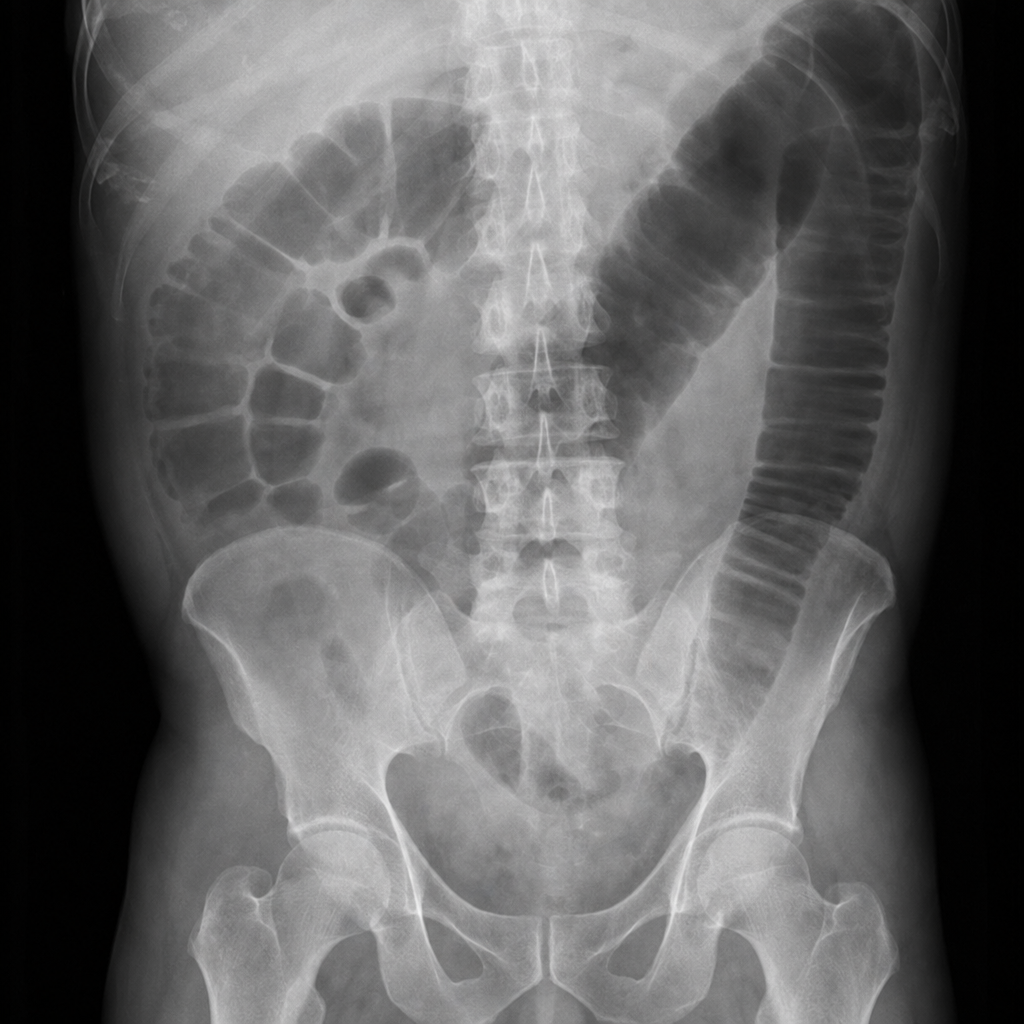
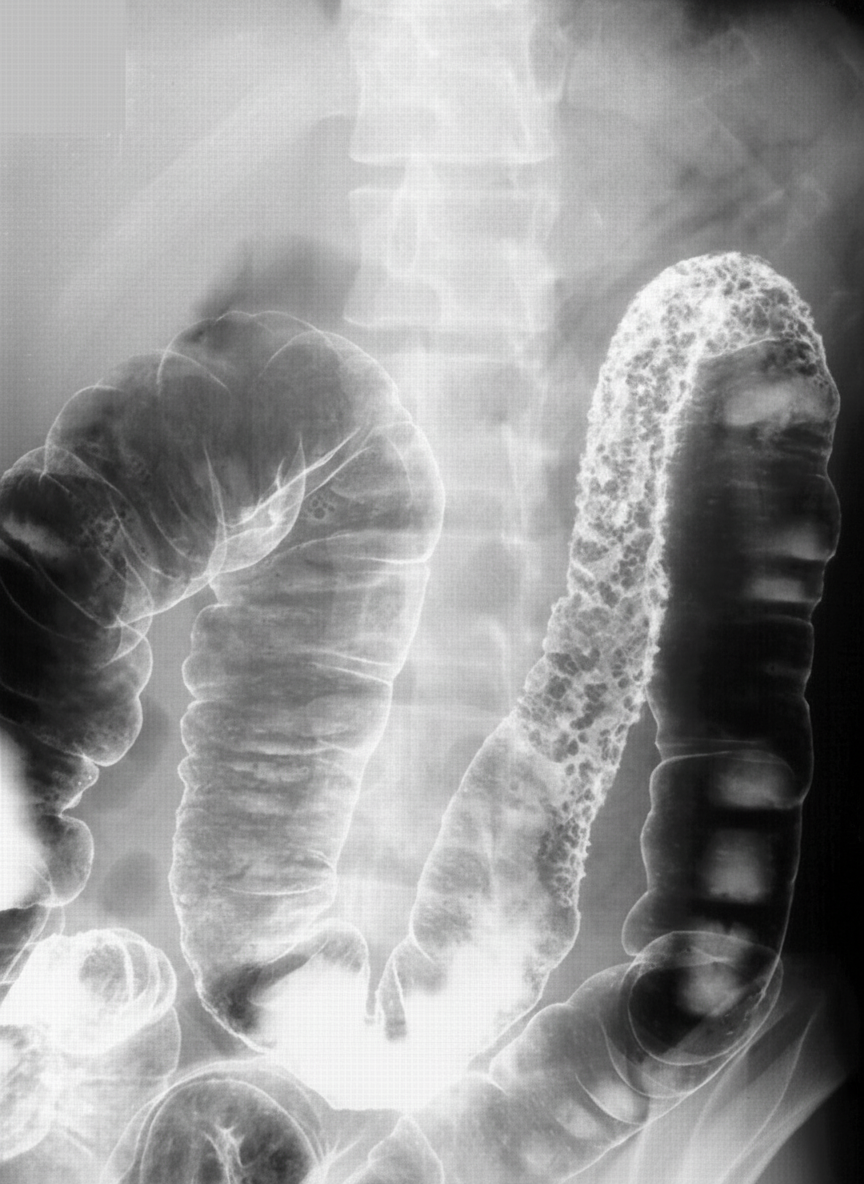
What is the first radiological sign of ulcerative colitis?
String of beads appearance on angiography is seen in which of the following conditions?
Omental caking on CT scan suggests a high possibility of which of the following conditions?
The CT severity index in acute pancreatitis is described by which scoring system?
Spleenic injury is diagnosed on X-ray by which of the following findings?
What is the investigation of choice (IOC) for polycystic kidney disease?
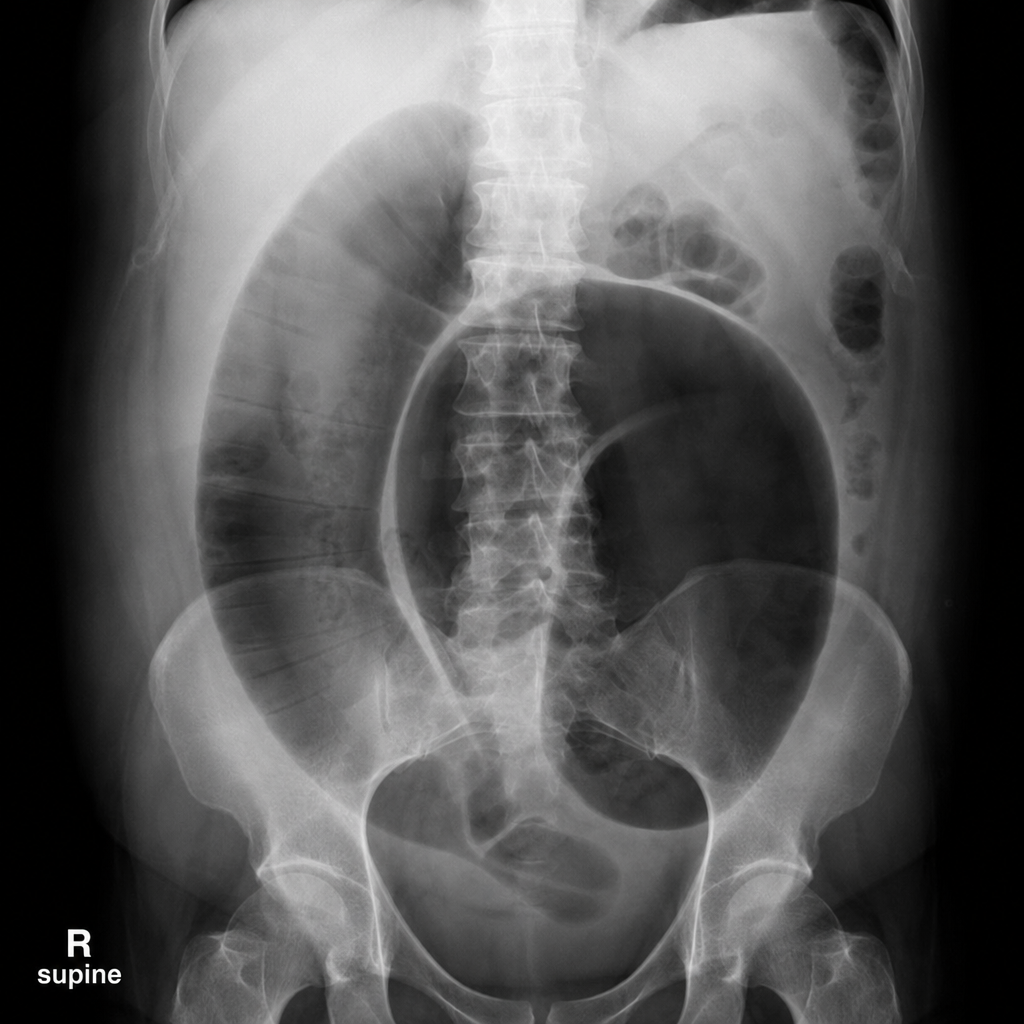
A 44-year-old man with a history of quadriplegia presented to the emergency department with symptoms of a urinary tract infection. What is the diagnosis?

Which structure is outlined with contrast on a CT scan using intraperitoneal contrast material?
Which statement is true regarding the imaging characteristics of a lipoma on Ultrasound (USG), Magnetic Resonance Imaging (MRI), and Computed Tomography (CT)?
Explanation: ### Explanation **Correct Answer: B. Radicular cyst** The clinical presentation describes a non-vital tooth (negative EPT response) with caries and periapical changes. A **Radicular cyst** (also known as a Periapical cyst) is the most common odontogenic cyst. It arises from the **epithelial rests of Malassez** in the periodontal ligament as a result of inflammation following pulp necrosis (due to caries or trauma). **Why it is the correct answer:** * **Pathogenesis:** Caries → Pulpitis → Pulp Necrosis (Non-vital tooth) → Periapical Periodontitis → Radicular Cyst. * **Radiology:** It typically appears as a well-defined, unilocular radiolucency at the apex of a non-vital tooth. * **Clinical Clue:** The negative Electric Pulp Test (EPT) is the definitive sign of a non-vital tooth, which is a prerequisite for a radicular cyst. **Why other options are incorrect:** * **Apical Granuloma:** While also associated with non-vital teeth, granulomas are usually smaller (<1.5 cm) and lack the distinct epithelial lining and cortical expansion often seen in larger cysts. Differentiation often requires histopathology. * **Odontogenic Keratocyst (OKC):** These typically arise from the dental lamina, are often associated with impacted teeth (especially third molars), and the involved teeth are usually **vital**. * **Lateral Periodontal Cyst:** These occur on the lateral aspect of the root and are associated with **vital** teeth. They arise from the remnants of the dental lamina. **High-Yield NEET-PG Pearls:** * **Most common odontogenic cyst:** Radicular Cyst. * **Origin:** Epithelial rests of Malassez. * **Key Diagnostic Feature:** Must be associated with a **non-vital tooth**. * **Histology:** Characterized by Rushton bodies (eosinophilic linear/curved inclusions). * **Treatment:** Root canal treatment (RCT) or extraction with cyst enucleation.
Explanation: **Explanation:** **Loss of haustrations** is the earliest radiological sign of Ulcerative Colitis (UC) visible on a barium enema. This occurs due to mucosal edema and spasm of the muscularis propria, leading to a smoothening of the colonic outlines. As the disease progresses, this loss of haustrations becomes more pronounced, eventually leading to the classic "Lead Pipe" appearance. **Analysis of Options:** * **A. Pseudopolyp formation:** These are islands of regenerating mucosa surrounded by areas of ulceration. They are a feature of **chronic/established** disease, not the earliest sign. * **C. Tubular colon:** This is a **late-stage** finding where the colon becomes shortened, narrowed, and rigid (Lead Pipe colon) due to chronic inflammation and fibrosis. * **D. Increased retrorectal space:** This is a specific sign seen on lateral views of the rectum (normal space is <1 cm). While it is a characteristic feature of UC, it indicates significant rectal involvement and is not typically the "first" sign. **High-Yield Clinical Pearls for NEET-PG:** * **Earliest Sign overall:** Mucosal granularity (best seen on double-contrast barium enema). * **Lead Pipe Colon:** Classic description for a rigid, featureless, and shortened colon in chronic UC. * **Collar Button Ulcers:** Deep ulcers that penetrate the mucosa (also seen in Crohn’s, but classic for UC). * **Thumbprinting:** Indicates severe mucosal edema/hemorrhage (more common in Ischemic Colitis). * **Backwash Ileitis:** Involvement of the terminal ileum in UC (seen in ~10% of cases).
Explanation: **Explanation:** The **"string of beads"** appearance is a classic radiological sign pathognomonic for **Fibromuscular Dysplasia (FMD)**. **1. Why Fibromuscular Dysplasia is correct:** FMD is a non-inflammatory, non-atherosclerotic vascular disease that leads to abnormal cell growth in the arterial walls. The most common type is **medial fibroplasia**, where alternating areas of thinning (aneurysmal dilation) and thickened fibromuscular ridges (stenosis) occur. On angiography, the dilated segments appear as "beads" and the stenotic segments as the "string." It most commonly affects the **renal arteries** (leading to secondary hypertension) and the internal carotid arteries. **2. Why other options are incorrect:** * **Renal and Bladder stones:** These are radiopaque or radiolucent calcifications within the urinary collecting system. On imaging (X-ray or CT), they appear as focal densities. They do not involve the arterial wall architecture and therefore cannot produce an angiographic "string of beads" sign. **Clinical Pearls for NEET-PG:** * **Demographics:** FMD is most commonly seen in **young to middle-aged females**. * **Clinical Presentation:** Often presents as **resistant hypertension** (due to renal artery involvement) or a carotid bruit/stroke in young patients. * **Treatment:** Percutaneous transluminal angioplasty (PTA) **without stenting** is the treatment of choice for renal FMD. * **Differential Diagnosis:** Do not confuse "string of beads" (FMD) with the **"string sign"** (seen in Crohn’s disease or Pyloric stenosis) or the **"beaded appearance of the bile duct"** (seen in Primary Sclerosing Cholangitis).
Explanation: **Explanation:** **Omental Caking** is a classic radiological sign characterized by the infiltration of the greater omentum by solid soft-tissue masses, replacing the normal low-attenuation omental fat. On a CT scan, this appears as a thickened, nodular, or pancake-like soft tissue layer between the anterior abdominal wall and the bowel loops. **Why Ovarian Tumor is the Correct Answer:** The most common cause of omental caking is **peritoneal carcinomatosis**. Among all malignancies, **epithelial ovarian cancer** (especially serous cystadenocarcinoma) is the most frequent cause. This occurs because ovarian cancer cells shed directly into the peritoneal cavity and follow the natural flow of peritoneal fluid, eventually seeding and proliferating on the omentum. **Analysis of Incorrect Options:** * **A, B, and C (Colon, Pancreas, and Stomach Carcinoma):** While these gastrointestinal malignancies can lead to peritoneal seeding and omental involvement, they are statistically less common causes of a classic "omental cake" compared to ovarian cancer. These tumors more frequently present with localized nodal spread or hematogenous metastasis (e.g., to the liver) before extensive peritoneal thickening occurs. **High-Yield Clinical Pearls for NEET-PG:** * **Differential Diagnosis:** Apart from ovarian cancer, omental caking can also be seen in **Tuberculous Peritonitis** (look for high-adenosine deaminase levels and "wet" vs. "dry" patterns) and **Lymphoma**. * **Imaging Feature:** On CT, look for the "Smudged Fat" sign, which is an early precursor to a full omental cake. * **Management:** In the context of ovarian cancer, the presence of omental caking often necessitates an **omentectomy** as part of cytoreductive surgery. * **Psammoma Bodies:** If the primary is a serous ovarian tumor, the omental cake may show fine, sand-like calcifications on CT.
Explanation: **Explanation:** The **Balthazar Score** (CT Severity Index - CTSI) is the gold standard for assessing the severity of acute pancreatitis using contrast-enhanced CT. It combines two parameters to predict morbidity and mortality: 1. **Balthazar Grade (0–4 points):** Evaluates peripancreatic inflammation and fluid collections (Grades A to E). 2. **Pancreatic Necrosis (0–6 points):** Quantifies the percentage of non-enhancing pancreatic parenchyma. A total score of 7–10 indicates severe disease with a high risk of complications and mortality. **Analysis of Incorrect Options:** * **B. Mengini:** Refers to the **Menghini technique**, which is a "one-second" needle biopsy method used primarily for liver biopsies. * **C. Chapman:** There is no standard "Chapman" scoring system in radiology; however, Chapman’s points are used in osteopathic medicine to denote viscerosomatic reflexes. * **D. Napelon:** This is a distractor and does not correspond to any recognized medical classification or scoring system. **High-Yield Facts for NEET-PG:** * **Modified CTSI (Mortele et al.):** An updated version that includes extrapancreatic complications (e.g., pleural effusion, ascites, vascular complications) and simplifies necrosis assessment. * **Timing:** CT is most accurate for assessing necrosis **72–96 hours** after the onset of symptoms. * **Balthazar Grade E:** Defined by the presence of two or more fluid collections or gas within the pancreas/retroperitoneum. * **Clinical Correlation:** While CTSI assesses local complications, the **Ranson Criteria** or **APACHE II** scores are used for clinical/systemic severity.
Explanation: **Explanation:** The spleen is the most commonly injured organ in blunt abdominal trauma. Because the spleen is located in the left upper quadrant, protected by the lower rib cage, a **fracture of the left 9th, 10th, or 11th ribs** is a highly significant indirect sign of splenic injury. The force required to break these ribs is often sufficient to cause underlying splenic laceration or hematoma. **Analysis of Options:** * **Rib fracture (Correct):** This is the most reliable radiographic sign associated with splenic trauma. While not definitive for the injury itself, its presence in a trauma setting strongly necessitates further evaluation (like CT) for splenic involvement. * **Half stomach shadow:** This refers to the "indented" appearance of the gastric bubble due to a perisplenic hematoma. While a classic sign, it is less frequently seen and less specific than the presence of associated rib fractures. * **Obliteration of splenic shadow:** While a large hematoma can obscure the splenic outline, this is a subjective and unreliable finding on plain X-rays, as bowel gas often masks the area. * **Gas under diaphragm:** This indicates a **pneumoperitoneum**, which signifies a perforated hollow viscus (like the stomach or intestine), not a solid organ injury like a splenic rupture. **High-Yield Clinical Pearls for NEET-PG:** * **Gold Standard Investigation:** Contrast-Enhanced CT (CECT) is the investigation of choice for diagnosing and grading splenic injury in stable patients. * **Kehr’s Sign:** Referred pain to the left shoulder due to diaphragmatic irritation by splenic blood. * **Ballance’s Sign:** Fixed dullness to percussion in the left flank and shifting dullness in the right flank. * **Management:** Hemodynamically stable patients are managed conservatively; unstable patients require urgent laparotomy.
Explanation: **Explanation:** **1. Why Ultrasound (USG) is the Correct Choice:** Ultrasound is the **Investigation of Choice (IOC)** and the primary screening tool for Polycystic Kidney Disease (PKD), particularly Autosomal Dominant PKD (ADPKD). It is preferred because it is non-invasive, cost-effective, widely available, and involves **no ionizing radiation**—which is crucial since patients require lifelong monitoring. The diagnosis is based on the **Ravine Criteria** (modified as Pei-Levy criteria), which uses the number of cysts relative to the patient's age to confirm the diagnosis. **2. Why Other Options are Incorrect:** * **MRI:** While MRI is the most *sensitive* modality for detecting very small cysts (<2mm) and is the gold standard for measuring **Total Kidney Volume (TKV)** to predict disease progression, it is not the initial IOC due to high cost and limited accessibility. * **CECT:** CECT provides excellent anatomical detail but is not preferred for routine diagnosis due to radiation exposure and the risk of **Contrast-Induced Nephropathy (CIN)** in patients who may already have declining renal function. * **IVU:** This is an outdated modality. While it may show a "Swiss Cheese" appearance or "Spider Leg" deformity of the calyces, it has been entirely replaced by cross-sectional imaging. **3. High-Yield Clinical Pearls for NEET-PG:** * **ADPKD:** Associated with **PKD1** (Chr 16 - more severe) and **PKD2** (Chr 4) mutations. * **Extra-renal manifestations:** Most common is **Liver cysts**; most serious is **Berry Aneurysm** (Circle of Willis). * **ARPKD:** Presents in infancy with bilateral enlarged echogenic kidneys and is associated with **Congenital Hepatic Fibrosis**. * **Imaging Sign:** On USG, ADPKD shows large kidneys with multiple bilateral cysts of varying sizes. On IVU, it shows the **"Swiss Cheese" appearance**.
Explanation: ***Neurogenic megacolon*** - **Quadriplegia** results in **neurogenic bowel dysfunction** due to loss of autonomic control, leading to **massive colonic dilatation** and impaired motility. - The **spinal cord injury** disrupts the **parasympathetic** and **sympathetic** innervation of the colon, causing functional obstruction and toxic megacolon-like appearance. *Bladder perforation* - Would present with **acute abdominal pain**, **peritonitis**, and **free fluid** on imaging, not colonic dilatation. - Associated with **contrast extravasation** on CT urography or cystography, which is not consistent with this presentation. *Chronic constipation* - Typically shows **fecal impaction** with **moderate colonic dilatation** but not the **massive dilatation** seen in neurogenic megacolon. - Usually involves the **rectosigmoid region** primarily, whereas neurogenic megacolon affects the **entire colon** uniformly. *Gastric distention* - Would show **enlarged stomach** with **air-fluid levels**, not colonic involvement as seen in this case. - Associated with **gastroparesis** or **bowel obstruction**, but does not explain the **colonic changes** typical of spinal cord injury complications.
Explanation: **Explanation:** The core concept tested here is the anatomical distinction between **intraperitoneal** and **extraperitoneal (retroperitoneal/subperitoneal)** structures. **Why Ovary is Correct:** The **ovaries** are unique because they are the only organs in the human body that are truly "intraperitoneal" but not covered by visceral peritoneum (they are covered by germinal epithelium). They are suspended within the peritoneal cavity by the mesovarium. When contrast material is injected into the peritoneal cavity (intraperitoneal contrast), it surrounds and outlines all structures located within that space. Therefore, the ovary will be clearly outlined by the contrast. **Why the other options are incorrect:** * **Prostate:** This is a **subperitoneal** (extraperitoneal) organ located below the pelvic floor. It is separated from the peritoneal cavity by the rectovesical pouch in males. * **Rectum:** The middle and lower thirds of the rectum are extraperitoneal. While the upper third is covered by peritoneum anteriorly and laterally, the rectum as a whole is considered a retroperitoneal/subperitoneal structure. * **Seminal Vesicles:** These are located extraperitoneally, situated between the base of the bladder and the rectum. **High-Yield Clinical Pearls for NEET-PG:** * **Intraperitoneal Organs:** Stomach, Spleen, Liver, First part of Duodenum, Jejunum, Ileum, Transverse Colon, Sigmoid Colon, and Ovaries. * **Retroperitoneal Organs (Mnemonic: SAD PUCKER):** **S**uprarenal glands, **A**orta/IVC, **D**uodenum (2nd/3rd parts), **P**ancreas (except tail), **U**reters, **C**olon (Ascending/Descending), **K**idneys, **E**sophagus, **R**ectum. * **Imaging Note:** Intraperitoneal contrast (CT Peritoneography) is often used to evaluate peritoneal dialysis complications or to detect occult hernias.
Explanation: ### Explanation The correct answer is **Option D: Hyperechoic on USG, hyperintense on MRI, hypodense on CT.** This question tests the fundamental understanding of how fat tissue interacts with different imaging modalities. A lipoma is a benign tumor composed of mature adipose tissue, and its appearance is dictated by the physical properties of fat: 1. **Ultrasound (USG):** Lipomas are typically **hyperechoic** (bright) relative to adjacent muscle. This is due to the multiple internal interfaces between fat lobules and connective tissue septa, which reflect the sound waves. 2. **MRI:** Fat has a short T1 relaxation time and a relatively long T2 relaxation time. Therefore, lipomas appear **hyperintense** (bright) on both T1 and T2-weighted images. A definitive diagnostic feature is the loss of signal (becoming dark) on fat-suppression sequences (STIR or Fat-Sat). 3. **CT Scan:** Fat has a lower physical density than water. On CT, lipomas are characteristically **hypodense**, typically measuring between **-60 to -120 Hounsfield Units (HU)**. #### Why other options are incorrect: * **Options A & C:** Incorrect because lipomas are not hypointense on MRI (they are bright) and not hyperdense on CT (they are darker than water/muscle). * **Option B:** Incorrect because it describes a "hyperdense" appearance on CT. Only calcified or highly vascular structures/hemorrhage appear hyperdense on CT; fat is always significantly hypodense. #### High-Yield Clinical Pearls for NEET-PG: * **CT Density:** The most specific feature of a lipoma is a CT attenuation value of **< -30 HU**. * **MRI "India Ink" Artifact:** On out-of-phase sequences, a dark line may be seen at the fat-water interface of a lipoma. * **Differentiating Liposarcoma:** Look for thick septations (>2mm), nodularity, or significant non-adipose components; a simple lipoma should be homogeneous and follow the signal of subcutaneous fat perfectly.
Imaging of Liver
Practice Questions
Biliary Tract Imaging
Practice Questions
Pancreatic Imaging
Practice Questions
Spleen and Lymphatic System
Practice Questions
Gastrointestinal Tract Imaging
Practice Questions
Renal and Urinary Tract Imaging
Practice Questions
Adrenal Imaging
Practice Questions
Female Pelvic Imaging
Practice Questions
Male Pelvic Imaging
Practice Questions
Abdominal Trauma Imaging
Practice Questions
Acute Abdomen Imaging
Practice Questions
Imaging of Peritoneal Cavity and Retroperitoneum
Practice Questions
Get full access to all questions, explanations, and performance tracking.
Start For Free