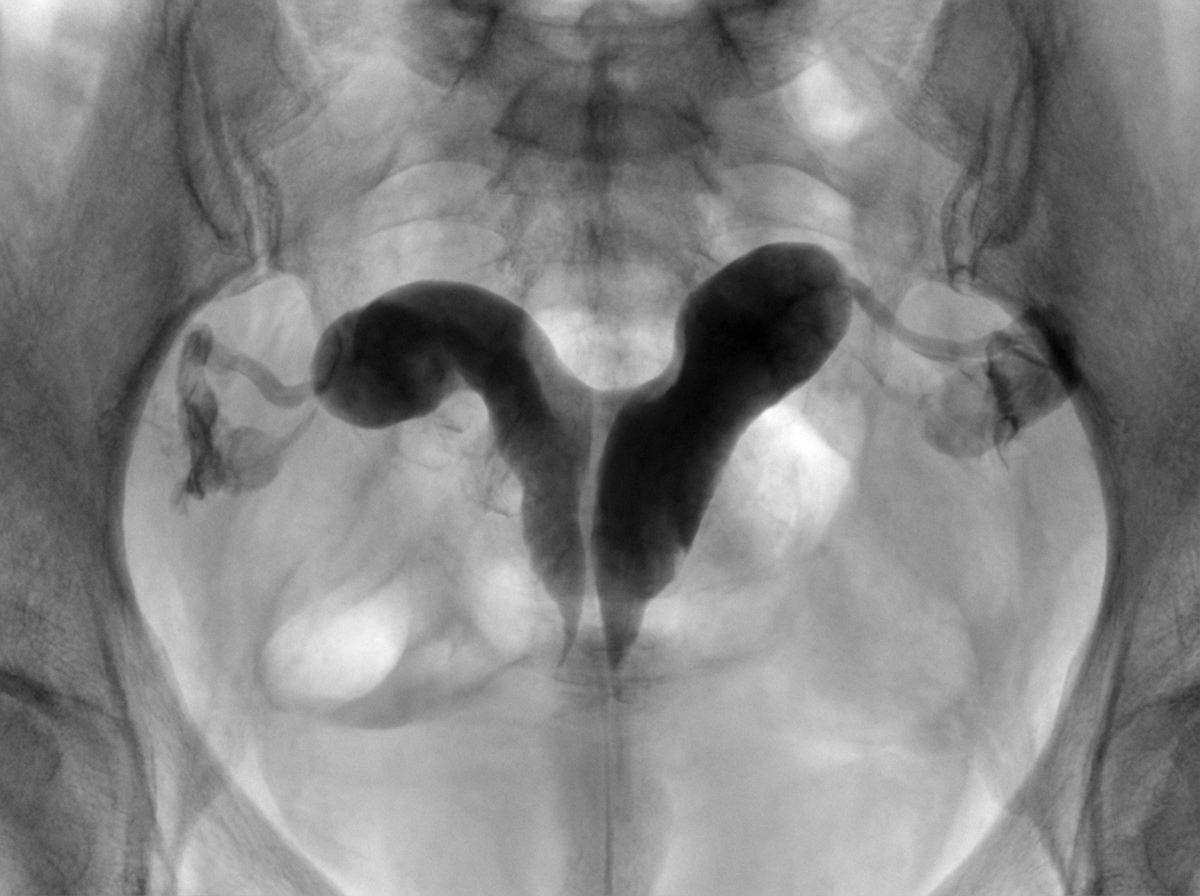
What is the characteristic finding of ectopic pregnancy on ultrasonography?
What is the best imaging modality for evaluating the gallbladder?
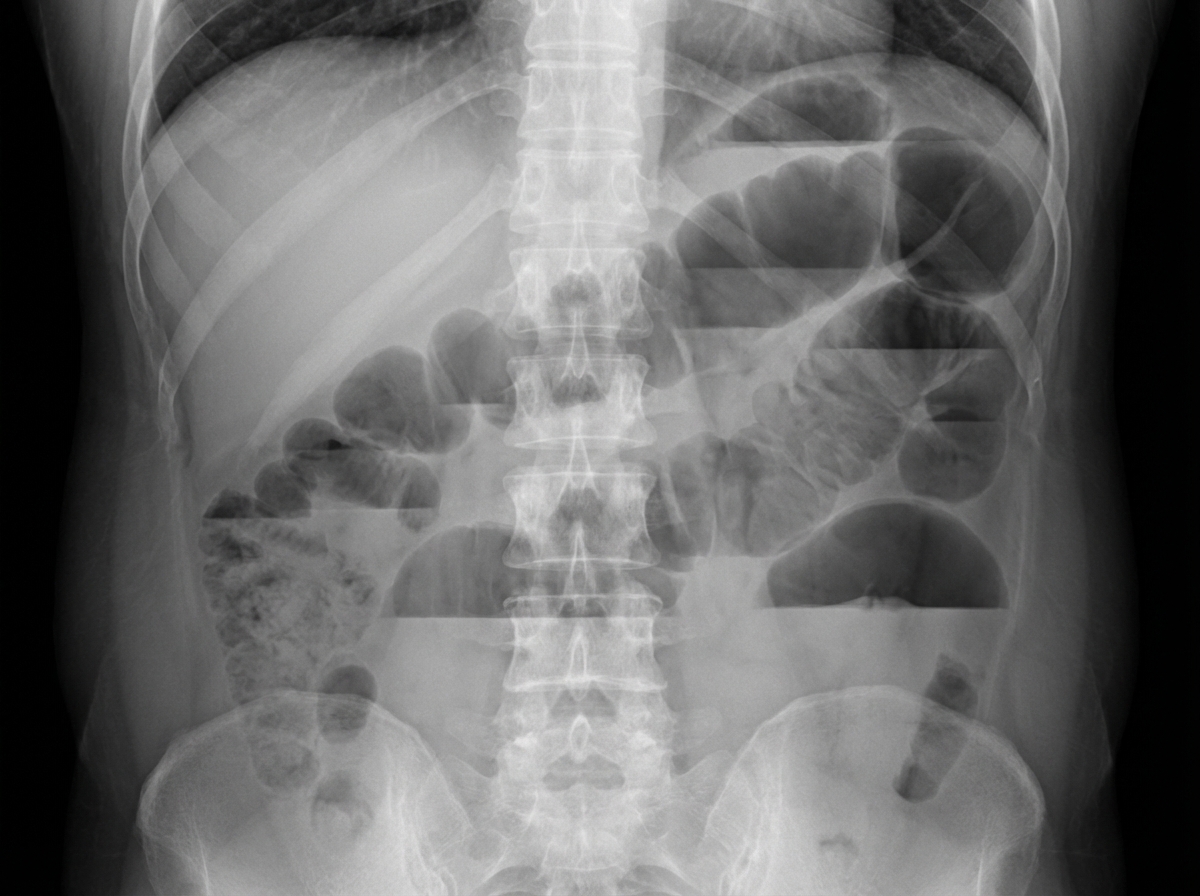
What is the normal number of air fluid levels seen in an X-ray of the abdomen?
What is the earliest finding seen on ultrasound?
Which of the following conditions typically shows a 'prey sign'?
What is the investigation of choice for pseudo-obstruction?
What is the investigation of choice for gallstones?
A 72-year-old man presents with increasing dyspepsia and weight loss. His physical examination is unremarkable. A barium meal is performed. The oesophagus is normal, but a 'bull's eye' lesion is noted in the gastric mucosa. Which one of the following is not a recognised cause of this appearance?
Medusa lock appearance in X-ray is seen in:
A 5-year-old child presents with gas under the diaphragm. What is the most likely diagnosis?
Explanation: ### Explanation The diagnosis of ectopic pregnancy relies on the correlation of clinical findings, quantitative β-hCG levels, and ultrasonography (USG). **1. Why Option A is Correct:** The **absence of an intrauterine gestational sac** in a patient with a positive pregnancy test (especially when β-hCG is above the **discriminatory zone**, typically 1,500–2,000 mIU/mL for transvaginal sonography) is the most fundamental finding. While seeing an extrauterine embryo with a heartbeat is 100% specific, it is only seen in a minority of cases. Therefore, the "empty uterus" sign is the primary red flag that necessitates a thorough search for an ectopic gestation. **2. Analysis of Incorrect Options:** * **Option B:** While a **complex adnexal mass** (the "blob sign") is the most common USG finding in ectopic pregnancy (present in ~60-80% of cases), it is not as definitive as the absence of an intrauterine sac, as it can be confused with a corpus luteum or inflammatory mass. * **Option C:** Ectopic pregnancies typically show **low resistance flow** (high diastolic flow) on color Doppler, often referred to as the **"Ring of Fire"** sign. Increased resistance is incorrect. * **Option D:** **Free fluid** (hemoperitoneum) in the Pouch of Douglas is a common finding, especially in ruptured ectopics, but it is non-specific and can occur with ruptured hemorrhagic cysts or ovulation. **Clinical Pearls for NEET-PG:** * **Pseudogestational Sac:** A midline fluid collection in the uterus (without a yolk sac or double decidual sign) seen in 10% of ectopics. Do not mistake this for a normal pregnancy. * **Double Decidual Sac Sign:** A feature of a true intrauterine pregnancy; its absence helps confirm an ectopic. * **Gold Standard:** Laparoscopy remains the gold standard for diagnosis, though USG + β-hCG is the standard initial approach. * **Most Common Site:** The **Ampulla** of the Fallopian tube.
Explanation: **Explanation:** **Ultrasound (USG)** is the **initial and best imaging modality** for evaluating the gallbladder. Its superiority stems from its high sensitivity (up to 95%) for detecting gallstones, lack of ionizing radiation, cost-effectiveness, and real-time imaging capabilities. It allows for the assessment of the gallbladder wall thickness, pericholecystic fluid, and the presence of the "Sonographic Murphy’s Sign," which is highly specific for acute cholecystitis. **Analysis of Incorrect Options:** * **Operative Cholangiogram (OCG):** This is an invasive procedure performed during surgery (e.g., cholecystectomy) to identify stones in the common bile duct (CBD) or to delineate biliary anatomy. It is not used for primary gallbladder evaluation. * **Percutaneous Transhepatic Cholangiogram (PTC):** This is an invasive procedure used primarily for visualizing the biliary tree when there is proximal ductal dilatation or when ERCP is not feasible. It is a therapeutic/diagnostic tool for obstructive jaundice, not for gallbladder screening. * **Intravenous Cholangiogram:** This is an obsolete technique formerly used to visualize the bile ducts. It has been replaced by safer, non-invasive modalities like MRCP and USG due to the high risk of contrast reactions and poor visualization in jaundiced patients. **High-Yield Clinical Pearls for NEET-PG:** * **Investigation of Choice (IOC) for Gallstones:** Ultrasound. * **IOC for Acute Cholecystitis:** Ultrasound (Initial); **HIDA Scan** (Gold Standard/Most Accurate). * **IOC for Choledocholithiasis (CBD stones):** **ERCP** (Gold Standard/Therapeutic); **MRCP** (Best non-invasive diagnostic). * **Porcelain Gallbladder:** A calcified gallbladder wall seen on X-ray/CT, associated with an increased risk of gallbladder carcinoma.
Explanation: **Explanation:** In a normal, healthy individual, a limited number of air-fluid levels are considered physiological when seen on an erect abdominal X-ray. These occur in areas where gas and liquid naturally coexist. **Why Option D is Correct:** Under normal conditions, **three to five (commonly cited as 3–4)** air-fluid levels are acceptable. These are typically located in: 1. **The Stomach:** The most common site (gastric bubble). 2. **The Duodenal Bulb:** Often seen in the first part of the duodenum. 3. **The Terminal Ileum/Cecum:** Occasional levels may be seen here due to the transition of liquid chyme. **Why Other Options are Incorrect:** * **Option A (Zero):** This is incorrect because the stomach almost always contains a fluid level in the erect position. * **Option B & C (One or Two):** While these are not "abnormal," they do not represent the upper limit of what is considered a normal physiological finding. **Clinical Pearls for NEET-PG:** * **Pathological Air-Fluid Levels:** More than 5 air-fluid levels, or levels broader than 2.5 cm, are highly suggestive of **Intestinal Obstruction**. * **Step-ladder Pattern:** Multiple air-fluid levels arranged centrally in the abdomen are a classic sign of **Small Bowel Obstruction**. * **String of Beads Sign:** Small bubbles of gas trapped between valvulae conniventes in a fluid-filled small bowel; pathognomonic for small bowel obstruction. * **Positioning:** An erect film is essential to visualize air-fluid levels. If the patient cannot stand, a **Left Lateral Decubitus** view is the preferred alternative to detect free air (pneumoperitoneum).
Explanation: ### Explanation In early pregnancy, ultrasound findings follow a predictable chronological sequence based on gestational age. The **yolk sac** is the correct answer as it is the first structure to appear within the gestational sac, confirming an intrauterine pregnancy. **1. Why Yolk Sac is Correct:** The yolk sac is the first functional structure visible inside the gestational sac. On Transvaginal Sonography (TVS), it typically appears at **5 weeks** of gestation. It serves as a critical landmark; its presence confirms an intrauterine pregnancy and precedes the appearance of the embryo. **2. Analysis of Incorrect Options:** * **Fetal Heart (B):** Cardiac activity is usually detected at **5.5 to 6 weeks** via TVS, shortly after the fetal pole (embryo) becomes visible. It is the first sign of a viable pregnancy but appears after the yolk sac. * **Chorion (C):** While the chorionic sac (gestational sac) is technically the very first sign of pregnancy (visible at 4.5 weeks), it is often considered a "sac" rather than a distinct internal structure. Among the specific structures listed, the yolk sac is the earliest internal landmark. * **Placenta (D):** The definitive placenta begins to form later and is typically clearly visualized as a distinct thickened area on the uterine wall around **9–10 weeks**. **3. High-Yield Clinical Pearls for NEET-PG:** * **Order of Appearance (TVS):** Gestational Sac (4.5 weeks) → Yolk Sac (5 weeks) → Fetal Pole/Heartbeat (5.5–6 weeks). * **Discriminatory Zone:** The hCG level at which a gestational sac should be visible is **1,500–2,000 mIU/mL** (TVS). * **Double Decidual Sign:** This is the earliest sign of an intrauterine pregnancy before the yolk sac appears, helping to differentiate a true gestational sac from a pseudogestational sac seen in ectopic pregnancies. * **Yolk Sac Size:** A diameter **>6 mm** is often associated with an abnormal pregnancy outcome.
Explanation: The **'Prey Sign'** (also known as the 'Bird of Prey' sign or 'Beak' sign) is a classic radiologic feature of **Sigmoid Volvulus**. ### 1. Why Volvulus is Correct Sigmoid volvulus occurs when the sigmoid colon twists around its mesentery. On a **Barium Enema**, the contrast material flows through the rectum but narrows sharply at the site of the torsion. This tapered, pointed appearance of the contrast column resembles the **beak of a bird of prey**, hence the name. This sign is pathognomonic for the site of obstruction in a volvulus. ### 2. Why Other Options are Incorrect * **Pyloric Obstruction:** Typically presents with a "String sign" or "Beak sign" (in HPS), but the term 'Prey sign' specifically refers to the colonic appearance in volvulus. In adults, it shows a "Mushroom sign" or simple gastric outlet obstruction. * **Intussusception:** Characterized by the **"Coiled Spring"** sign or "Target/Donut" sign on ultrasound/CT. It represents one segment of the bowel invaginating into another. * **Intestinal Obstruction:** General small bowel obstruction typically shows "dilated loops" and "multiple air-fluid levels" (Step-ladder pattern) on an erect X-ray, rather than a specific tapered beak sign. ### 3. NEET-PG High-Yield Pearls * **Coffee Bean Sign:** The classic appearance of sigmoid volvulus on a plain abdominal X-ray. * **Whirlpool Sign:** The appearance of twisted mesentery and vessels on a CT scan. * **Treatment:** Initial management is often **Rigid Sigmoidoscopy** for detorsion/decompression, followed by elective surgery to prevent recurrence. * **Demographics:** Common in elderly, institutionalized patients or those with chronic constipation.
Explanation: **Explanation:** **Pseudo-obstruction (Ogilvie’s Syndrome)** is characterized by massive dilation of the colon (usually the cecum and right colon) in the absence of a mechanical cause. It typically occurs in critically ill or elderly patients due to an imbalance in the autonomic nervous system. **Why Water-Soluble Contrast Enema (Gastrografin) is the Correct Choice:** 1. **Diagnostic & Therapeutic:** It is the gold standard for differentiating pseudo-obstruction from a true mechanical obstruction (like a tumor or volvulus). Beyond diagnosis, the hyperosmolar nature of the water-soluble contrast draws fluid into the lumen, stimulating peristalsis and often resolving the obstruction therapeutically. 2. **Safety:** Unlike barium, water-soluble contrast is safe if there is an occult perforation, as it does not cause chemical peritonitis. **Analysis of Incorrect Options:** * **A. Barium Enema:** Contraindicated if perforation is suspected (a risk in massive cecal dilation). Barium can also become inspissated (hardened) proximal to an obstruction, worsening the condition. * **B. CECT:** While excellent for identifying mechanical causes and bowel wall ischemia, it lacks the therapeutic benefit of a contrast enema and is not the specific "investigation of choice" for confirming pseudo-obstruction. * **C. Colonoscopy:** Usually reserved as a second-line treatment for decompression if conservative management and pharmacological interventions (Neostigmine) fail. It carries a high risk of perforation in a distended, friable colon. **High-Yield Clinical Pearls for NEET-PG:** * **Initial Management:** Conservative (NPO, NG tube, rectal tube). * **Drug of Choice:** **Neostigmine** (Acetylcholinesterase inhibitor) is the pharmacological treatment of choice. * **Critical Value:** A cecal diameter **>10–12 cm** indicates a high risk of perforation and requires urgent intervention. * **Radiological Sign:** Plain X-ray shows massive colonic distension, often ending abruptly at the splenic flexure (the "cutoff" sign).
Explanation: **Explanation:** **Ultrasonography (USG)** is the gold standard and investigation of choice for gallstones (cholelithiasis). It offers high sensitivity and specificity (>95%) for detecting stones as small as 2 mm. On USG, gallstones typically appear as **hyperechoic (bright) foci** within the gallbladder lumen that demonstrate **posterior acoustic shadowing** and move with changes in patient positioning. **Analysis of Options:** * **X-ray:** Only 10–15% of gallstones are radiopaque (contain enough calcium to be seen). Most stones are cholesterol-based and radiolucent, making X-ray an unreliable screening tool. * **Cholecystography:** Historically used (Oral Cholecystography), this involves ingesting radiopaque dye. It is now obsolete due to its time-consuming nature, radiation exposure, and the superiority of USG. * **CAT Scan (CT):** While CT is excellent for identifying complications like gallbladder perforation or pancreatitis, it is less sensitive than USG for detecting gallstones, as many stones are "iso-attenuating" (same density as bile) and thus invisible on CT. **High-Yield Clinical Pearls for NEET-PG:** * **WES Triad:** (Wall-Echo-Shadow) is a USG sign seen when the gallbladder is completely filled with stones. * **Investigation of choice for Acute Cholecystitis:** USG (Initial); **HIDA scan** (Most accurate/Gold standard). * **Investigation of choice for Choledocholithiasis (CBD stones):** **ERCP** (Gold standard/Therapeutic); **MRCP** (Best non-invasive diagnostic). * **Sludge:** Appears as low-level echoes without shadowing that shift slowly with gravity.
Explanation: ### Explanation The **'bull’s eye' lesion** (also known as a **target lesion**) on a barium meal refers to a central collection of barium (representing an ulcer or umbilication) surrounded by a radiolucent halo (representing a mass or elevated mucosal rim). #### Why Magenstrasse is the Correct Answer **Magenstrasse** (German for "stomach road") is a normal anatomical variant. It refers to the longitudinal mucosal folds along the **lesser curvature** of the stomach that form a physiological channel for the passage of liquids. It is a normal finding and does **not** produce a target or bull's eye appearance. #### Analysis of Incorrect Options (Causes of Bull's Eye Lesion) * **Gastrointestinal Stromal Tumour (GIST):** These are intramural mesenchymal tumours that often undergo central necrosis or pressure necrosis of the overlying mucosa, leading to a central ulceration on a subepithelial mass. * **Melanoma Metastases:** Melanoma is the most common source of hematogenous metastases to the GI tract. These typically present as multiple submucosal nodules with central ulceration, creating the classic "target" appearance. * **Gastric Carcinoma:** While less common than GIST or metastases, a necrotic polypoid adenocarcinoma or a primary gastric lymphoma can present with central ulceration mimicking a bull's eye. #### NEET-PG High-Yield Pearls * **Differential Diagnosis for Bull’s Eye Lesion:** 1. **Metastases:** Melanoma (most common), Breast, Lung. 2. **Subepithelial Tumours:** GIST, Leiomyoma, Neurofibroma. 3. **Inflammatory:** Eosinophilic granuloma, Kaposi sarcoma (in HIV patients). * **Magenstrasse** is significant because it is the site where most gastric ulcers occur, but it is not a "lesion" itself. * **Barium Meal Tip:** A "double-contoured" appearance or "target sign" always suggests a central ulceration within a mass.
Explanation: **Explanation:** **Medusa lock appearance** (also known as the "spaghetti appearance") is a classic radiological sign seen in **Ascariasis** (*Ascaris lumbricoides*). This occurs when a large bolus of adult worms becomes intertwined within the intestinal lumen. On a plain abdominal X-ray, these worms appear as multiple elongated, curvilinear, radiopaque structures against the background of intestinal gas. If a barium study is performed, the worms appear as filling defects, and sometimes the barium is ingested by the worm, outlining its central alimentary canal (the "string sign"). **Analysis of Options:** * **A. Ascariasis (Correct):** Due to the large size (15–35 cm) and tendency of these worms to form tangled masses, they create the characteristic Medusa lock or "bundle of sticks" appearance. * **B. Tapeworm:** These are flat and ribbon-like. While they can be long, they do not typically form the dense, tangled boluses seen in Ascaris. On imaging, they may appear as thin, translucent filling defects but lack the Medusa lock morphology. * **C. Hookworm:** These are very small (approx. 1 cm) and are generally not visible on plain X-rays. * **D. Ascariasis and tapeworm:** Incorrect, as the sign is specific to the morphology of Ascaris. **High-Yield Clinical Pearls for NEET-PG:** * **Barium Study Signs of Ascariasis:** * **Whirlpool sign:** Seen on ultrasound or CT when worms are viewed in cross-section. * **Target sign:** Cross-sectional view on CT. * **Loeffler’s Syndrome:** Transient pulmonary infiltrates with eosinophilia caused by the larval migration of *Ascaris lumbricoides* through the lungs. * **Complications:** Ascaris is a leading cause of mechanical small bowel obstruction and biliary colic (due to migration into the Common Bile Duct).
Explanation: **Explanation:** The presence of **gas under the diaphragm** on an erect X-ray is the hallmark sign of **pneumoperitoneum** (free intraperitoneal air). In a pediatric patient, this finding can result from various pathological, anatomical, or procedural causes. 1. **Enteric Fever (Typhoid):** This is a common cause of secondary peritonitis in children in developing countries. *Salmonella typhi* causes hyperplasia and subsequent necrosis of Peyer's patches in the terminal ileum, leading to **intestinal perforation**, typically in the second or third week of illness. 2. **Chilaiditi’s Syndrome:** This is a "pseudopneumoperitoneum." It occurs when a loop of colon (usually the hepatic flexure) is transposed between the liver and the right hemidiaphragm. On X-ray, it mimics gas under the diaphragm, but can be distinguished by the presence of **haustral markings** within the gas shadow. 3. **Iatrogenic Pneumoperitoneum:** This refers to air introduced during medical interventions, such as recent abdominal surgery, laparoscopy, or even aggressive mechanical ventilation (leading to air tracking from the thorax). **Why "All of the above" is correct:** All three conditions can present with the radiographic appearance of air (or apparent air) beneath the diaphragm. In a clinical exam setting, unless specific symptoms (like fever or recent surgery) are provided, all these etiologies remain differential diagnoses. **Clinical Pearls for NEET-PG:** * **Most sensitive view for pneumoperitoneum:** Left lateral decubitus (can detect as little as 1-2 ml of air). * **Rigler’s Sign:** Seeing both sides of the bowel wall due to free intraperitoneal air. * **Football Sign:** A large collection of air outlining the entire peritoneal cavity (common in neonatal bowel perforation). * **Cupola Sign:** Air trapped under the central tendon of the diaphragm.
Imaging of Liver
Practice Questions
Biliary Tract Imaging
Practice Questions
Pancreatic Imaging
Practice Questions
Spleen and Lymphatic System
Practice Questions
Gastrointestinal Tract Imaging
Practice Questions
Renal and Urinary Tract Imaging
Practice Questions
Adrenal Imaging
Practice Questions
Female Pelvic Imaging
Practice Questions
Male Pelvic Imaging
Practice Questions
Abdominal Trauma Imaging
Practice Questions
Acute Abdomen Imaging
Practice Questions
Imaging of Peritoneal Cavity and Retroperitoneum
Practice Questions
Get full access to all questions, explanations, and performance tracking.
Start For Free