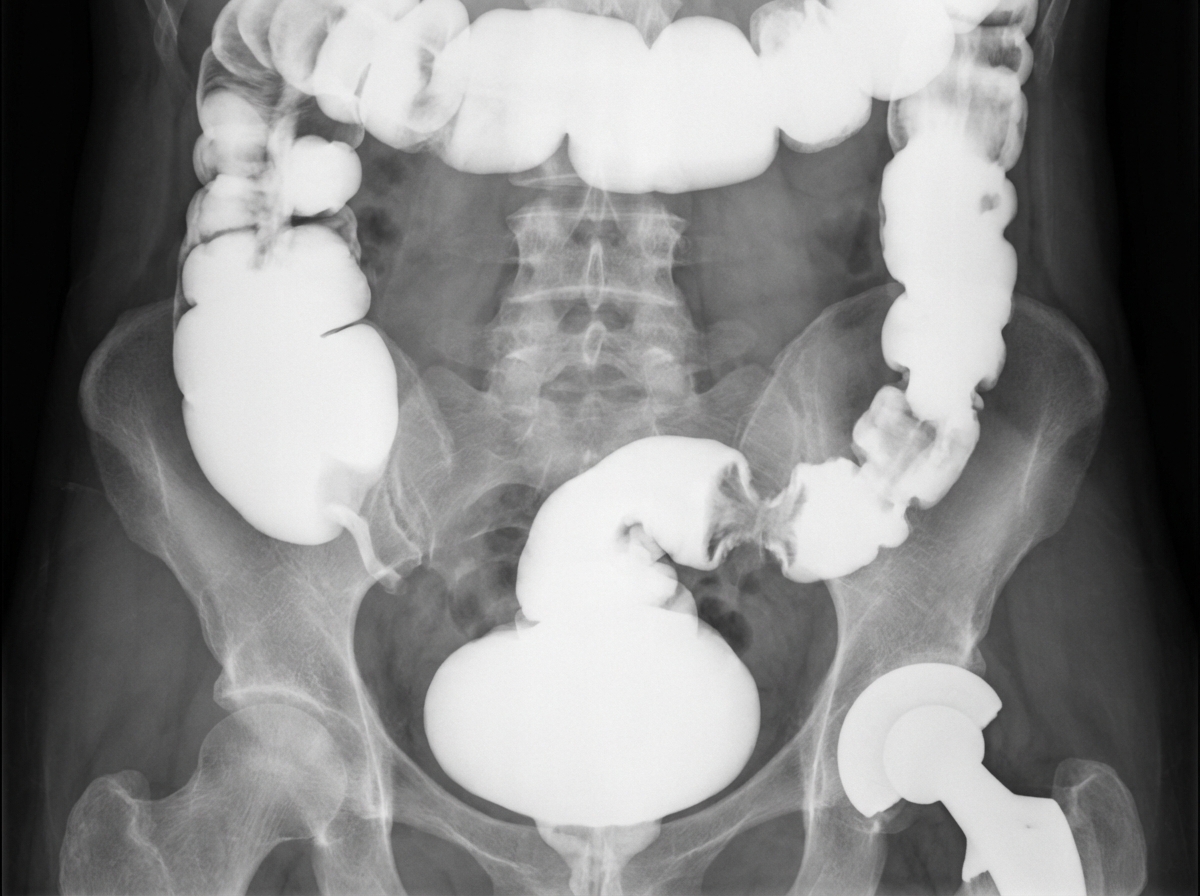
What is the name of the sign observed on barium enema in a patient with intussusception?
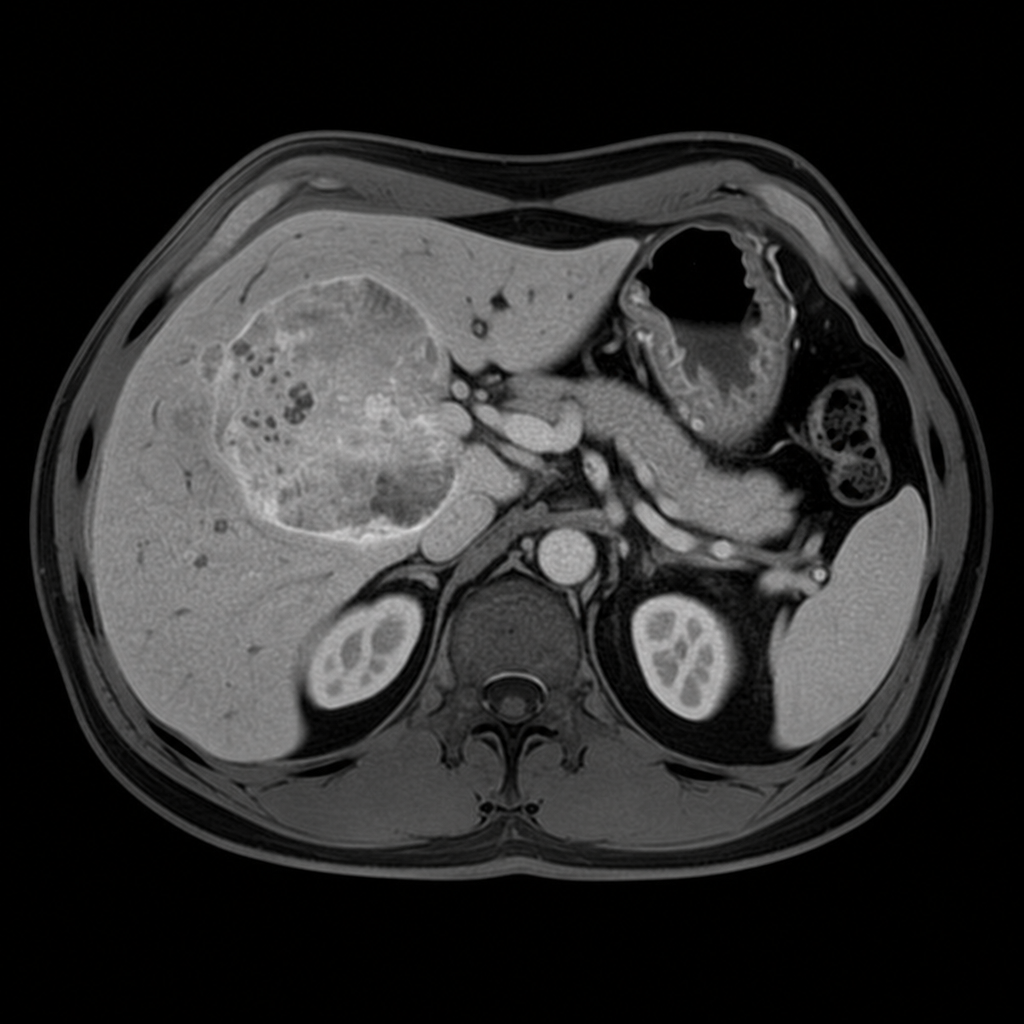
What is the initial investigation of choice in acute Budd-Chiari syndrome?
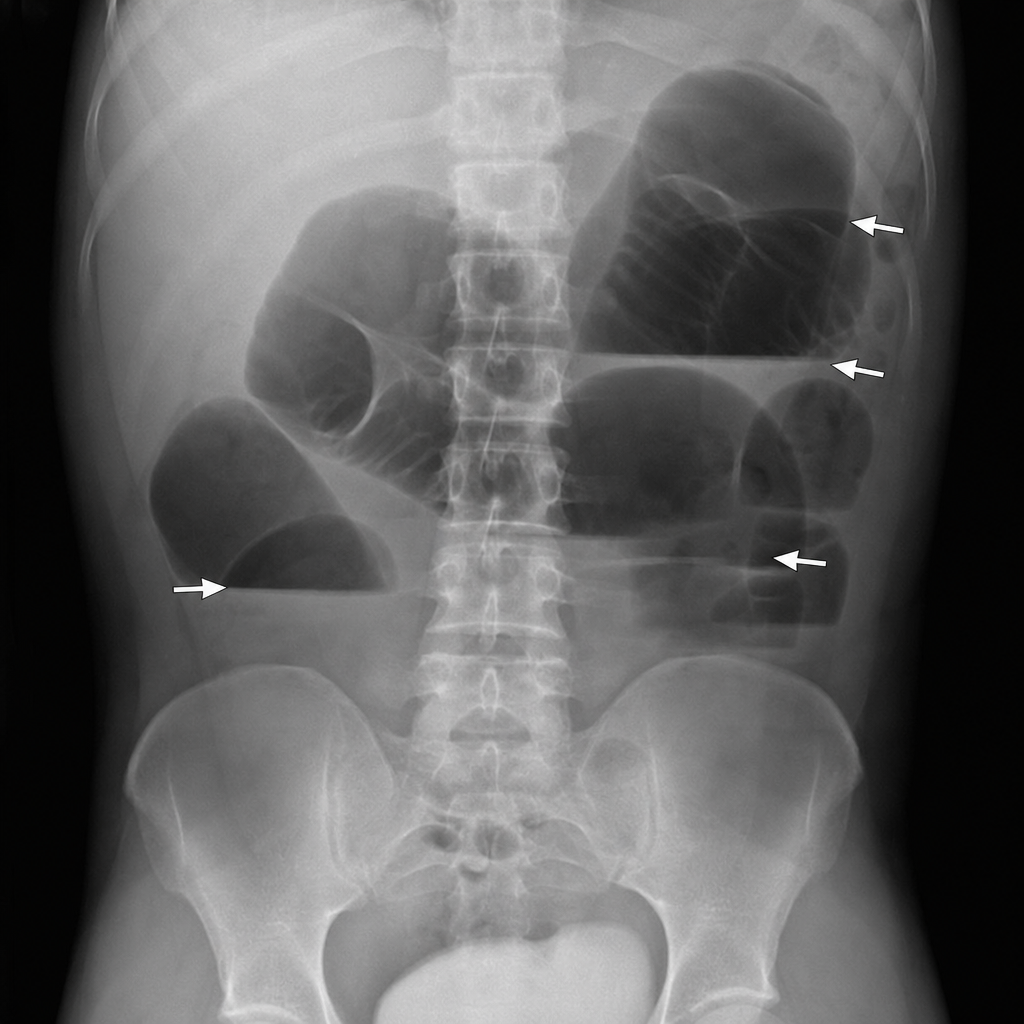
Radiologically, how is a small intestine distinguished from a large intestine in cases of intestinal obstruction?
Which of the following signs is associated with CHPS?
What is the investigation of choice to evaluate the inferior vena cava and renal vein for thrombus in a patient with renal cell carcinoma?
Which of the following is NOT a radiological sign of pneumoperitoneum?
Thickened gall bladder wall in USG is seen in which of the following conditions?
Which of the following findings are highly predictive of placenta accreta?
The "fat ring sign" is characteristic of which condition?
Coiled spring appearance on barium enema is seen in:
Explanation: **Explanation:** **Intussusception** occurs when a proximal segment of the bowel (intussusceptum) telescopes into the lumen of an adjacent distal segment (intussuscipiens). 1. **Why "Coiled Spring Sign" is correct:** On a barium enema, as the contrast material trickles into the narrow space between the intussusceptum and the intussuscipiens, it creates a characteristic appearance of concentric rings or streaks. This resembles a **coiled spring**. Another classic barium enema finding is the **Claw sign**, where the contrast column ends abruptly, outlining the head of the intussusceptum. 2. **Analysis of Incorrect Options:** * **Meniscus sign (A):** While sometimes used to describe the rounded end of the barium column, it is more classically associated with a semi-lunar appearance in the lungs (Air-crescent sign) or meniscus tears in MSK radiology. * **Pseudo kidney sign (B):** This is an **Ultrasound** finding. It represents the longitudinal view of the intussusception, where the edematous bowel walls resemble a kidney. * **Target sign (D):** This is also primarily an **Ultrasound or CT** finding. It represents the transverse (axial) cross-section of the layers of the bowel, appearing as concentric rings. **High-Yield Clinical Pearls for NEET-PG:** * **Most common site:** Ileocolic. * **Clinical Triad:** Intermittent abdominal pain, palpable "sausage-shaped" mass, and "red currant jelly" stools. * **Investigation of Choice (IOC):** Ultrasound (look for Target/Donut sign). * **Treatment:** Hydrostatic (Barium/Saline) or Pneumatic (Air) reduction is the initial management of choice in stable patients.
Explanation: **Explanation:** **Budd-Chiari Syndrome (BCS)** is characterized by the obstruction of hepatic venous outflow, occurring at any level from the small hepatic veins to the junction of the inferior vena cava (IVC) and the right atrium. **Why Ultrasound is the Correct Choice:** **Ultrasound (USG) with Color Doppler** is the **initial investigation of choice** because it is non-invasive, widely available, and highly sensitive (up to 85-90%). It allows for real-time visualization of: * Absence or reversal of flow in hepatic veins. * Intraluminal thrombus or stenosis of the IVC. * Development of intrahepatic collaterals (e.g., "spiderweb" appearance). * Morphological changes like **caudate lobe hypertrophy** (due to its independent venous drainage directly into the IVC). **Analysis of Incorrect Options:** * **A. Echocardiography:** While used to rule out right-sided heart failure (which can mimic BCS symptoms), it is not the primary tool for diagnosing hepatic venous obstruction. * **C. CECT Abdomen:** CECT is excellent for showing the "nutmeg liver" (patchy enhancement) and mapping anatomy for surgery, but it is usually a second-line investigation due to radiation and contrast risks. * **D. Upper GI Endoscopy:** This is used to screen for complications like esophageal varices (portal hypertension) but cannot diagnose the underlying venous obstruction. **High-Yield Clinical Pearls for NEET-PG:** * **Gold Standard Investigation:** Digital Subtraction Angiography (Venography) – used if non-invasive tests are inconclusive or if intervention is planned. * **Classic Triad:** Abdominal pain, ascites, and hepatomegaly. * **Most Common Cause (Global):** Hypercoagulable states (e.g., Polycythemia vera, Factor V Leiden). * **Imaging Sign:** "Nutmeg liver" appearance on CT/MRI (also seen in chronic passive congestion).
Explanation: In cases of intestinal obstruction, distinguishing between the small and large bowel on a plain abdominal X-ray is crucial for diagnosis and management. ### **Why Valvulae Conniventes is Correct** The **small intestine** is characterized by the presence of **Valvulae conniventes** (also known as Plicae circulares or Kerckring folds). These are mucosal folds that are permanent and **extend across the entire width of the bowel lumen**. In a dilated small bowel (obstruction), these folds create a "stepladder" appearance. Their presence across the full diameter is the definitive radiological feature that identifies the small intestine. ### **Analysis of Incorrect Options** * **A. Haustra:** These are characteristic of the **large intestine**. Unlike valvulae conniventes, haustral folds are incomplete and **do not span the entire width** of the bowel. They are spaced further apart and give the large bowel its sacculated appearance. * **C. Cannot be distinguished:** This is incorrect. They are easily distinguished by their anatomical location (small bowel is central; large bowel is peripheral) and their mucosal fold patterns (valvulae vs. haustra). * **D. None of the above:** Incorrect, as a specific anatomical marker exists. ### **High-Yield Clinical Pearls for NEET-PG** * **The 3-6-9 Rule:** Normal bowel diameter should not exceed **3 cm** (Small bowel), **6 cm** (Large bowel), and **9 cm** (Cecum). Anything above this suggests obstruction or ileus. * **Location:** Small bowel loops tend to be **central**, while large bowel loops are located **peripherally** along the flanks. * **String of Beads Sign:** Highly specific for small bowel obstruction; it represents small pockets of gas trapped between valvulae conniventes in a fluid-filled loop. * **Coffee Bean Sign:** Classic radiological finding for Sigmoid Volvulus (large bowel).
Explanation: **Congenital Hypertrophic Pyloric Stenosis (CHPS)** is a condition characterized by hypertrophy of the circular muscle of the pylorus, leading to gastric outlet obstruction. Diagnosis is primarily made via ultrasound, where several classic radiological signs are observed: 1. **Target Sign:** On a **transverse** (short-axis) ultrasound scan, the hypertrophied, hypoechoic muscle surrounding the echogenic mucosa resembles a target or a doughnut. 2. **Antral Nipple Sign:** This refers to the protrusion of redundant pyloric mucosa into the gastric antrum, creating a nipple-like appearance on imaging. 3. **Cervix Sign:** On a **longitudinal** scan, the elongated pylorus indenting the fluid-filled antrum resembles the appearance of the uterine cervix protruding into the vagina. **Why "All of the Above" is correct:** All three signs are classic sonographic descriptions of the anatomical changes in CHPS (muscle thickening and mucosal elongation). Since options A, B, and C are all recognized features, D is the correct choice. **High-Yield Clinical Pearls for NEET-PG:** * **Clinical Presentation:** Non-bilious, projectile vomiting in an infant (typically 3–6 weeks old) with a palpable "olive-shaped" mass in the epigastrium. * **Metabolic Abnormality:** Hypochloremic, hypokalemic metabolic alkalosis (due to loss of HCl from vomiting). * **Ultrasound Criteria:** Pyloric muscle thickness **>3 mm** and pyloric canal length **>14–15 mm**. * **Barium Swallow Sign:** "String sign" (narrowed canal) and "Beak sign" (tapering at the antrum). * **Treatment:** Ramstedt’s pyloromyotomy.
Explanation: **Explanation:** In Renal Cell Carcinoma (RCC), the tumor has a unique propensity to extend into the renal vein and subsequently into the Inferior Vena Cava (IVC). Assessing the presence and extent of this tumor thrombus is critical for surgical planning. **Why Color Doppler Ultrasound is the Correct Answer:** Color Doppler ultrasound is considered the **investigation of choice (IOC)** for evaluating the patency of the renal vein and IVC in RCC. It is highly sensitive and specific for detecting the presence of a thrombus, determining its cephalad extent, and differentiating between a bland thrombus and a tumor thrombus (by demonstrating internal vascularity). Its real-time nature allows for excellent visualization of blood flow dynamics without the need for contrast or radiation. **Analysis of Incorrect Options:** * **Intravenous Pyelogram (IVP):** This is an outdated modality for RCC. It evaluates the collecting system but cannot visualize the internal structure of the renal veins or IVC. * **Ultrasound (USG):** While gray-scale USG can detect a mass, it lacks the hemodynamic information provided by Color Doppler, making it less reliable for confirming the presence of a thrombus. * **CT Scan:** Contrast-enhanced CT (CECT) is the **gold standard for staging** the primary tumor and detecting distant metastasis. However, for the specific evaluation of venous extension, Color Doppler is preferred as the initial targeted investigation. **High-Yield Clinical Pearls for NEET-PG:** * **Staging:** Venous involvement in RCC (Renal vein or IVC below the diaphragm) classifies the tumor as **Stage T3a**. * **Gold Standard for Thrombus Extent:** While Doppler is the IOC, **MRI** is considered the most accurate non-invasive modality for determining the exact superior limit of an IVC thrombus, especially if it extends above the diaphragm. * **Classic Triad of RCC:** Hematuria, flank pain, and a palpable mass (seen in only 10% of cases).
Explanation: **Explanation:** **Pneumoperitoneum** refers to the presence of free air within the peritoneal cavity, most commonly due to a perforated hollow viscus. This is a surgical emergency and a high-yield topic for NEET-PG. **Why "Candy Cone appearance" is the correct answer:** The **Candy Cone appearance** (or Candy Cane sign) is not a sign of pneumoperitoneum. Instead, it is a radiological finding associated with **jejunal diverticulosis** or a specific complication post-Roux-en-Y gastric bypass (Candy Cane Syndrome), where a long redundant blind afferent limb causes pain and reflux. It does not represent free intraperitoneal air. **Analysis of incorrect options (Signs of Pneumoperitoneum):** * **Visualization of Falciform Ligament:** Normally invisible, this ligament becomes outlined by air on both sides in massive pneumoperitoneum, appearing as a vertical linear opacity in the upper abdomen. * **Football Sign:** Seen on a supine radiograph when a large amount of air outlines the entire peritoneal cavity, making the abdomen appear like an American football. The "seams" of the football are represented by the falciform and urachal ligaments. * **Cupola Sign:** Refers to an arcuate (dome-shaped) lucency seen overlying the lower thoracic spine and heart shadow, representing air trapped under the central tendon of the diaphragm. **High-Yield Clinical Pearls:** * **Rigler’s Sign:** Visualization of both the inner and outer walls of the bowel loop (Double wall sign). * **Doge’s Cap Sign:** Air in the Morison’s pouch (Right subhepatic space). * **Gold Standard:** The most sensitive plain radiograph for detecting free air is the **Erect Chest X-ray**, which can detect as little as 1–2 ml of air under the diaphragm. * **Left Lateral Decubitus:** The preferred position if the patient cannot stand; air collects between the liver and the right chest wall.
Explanation: **Explanation:** The normal gallbladder (GB) wall thickness on ultrasonography (USG) is **less than 3 mm**. A thickness of **≥ 3 mm** is considered "thickened" and is a common but non-specific radiological finding seen in various hepatobiliary and systemic conditions. * **Acute Cholecystitis:** This is the most common inflammatory cause. The wall becomes thickened due to edema and inflammation. Associated USG findings include a positive sonographic Murphy’s sign, pericholecystic fluid, and gallstones. * **Mucosal Thickening:** This occurs in chronic cholecystitis or as a reaction to systemic conditions like hypoalbuminemia, congestive heart failure, or cirrhosis. In these cases, the thickening is often diffuse and "layered" due to interstitial edema. * **Cholesterosis:** While often presenting as "Strawberry Gallbladder" with small polyps, diffuse cholesterosis can lead to irregular mucosal thickening and a "fuzzy" appearance of the wall on USG. **Why "All of the above" is correct:** Gallbladder wall thickening is categorized into **primary (intrinsic)** causes like cholecystitis, GB carcinoma, and adenomyomatosis, and **secondary (extrinsic)** causes like hepatitis, pancreatitis, and renal failure. Since all listed options can result in a wall measurement > 3 mm, they are all correct. **High-Yield Clinical Pearls for NEET-PG:** * **Most common cause of GB wall thickening:** Acute Cholecystitis. * **Most common non-biliary cause:** Acute Hepatitis (often shows very marked thickening). * **Adenomyomatosis:** Characterized by wall thickening with **Rokitansky-Aschoff sinuses** (seen as "comet-tail" artifacts on USG). * **Porcelain Gallbladder:** Intramural calcification of the GB wall; it is a risk factor for GB carcinoma.
Explanation: **Explanation:** Placenta accreta spectrum (PAS) refers to the abnormal adherence of the placenta to the underlying myometrium due to the partial or total absence of the decidua basalis. Diagnosis relies heavily on specific sonographic markers. **Why Option C is correct:** The two findings mentioned are highly specific for PAS: 1. **Reduced Myometrial Thickness:** A distance of **<1 mm** between the retroplacental vessels and the uterine serosa-bladder interface indicates extreme thinning or absence of the myometrium, suggesting deep invasion. 2. **Abnormal Placental Lacunae (Lakes):** The presence of large, irregular, "moth-eaten" intraplacental lakes with high-velocity turbulent flow is the most sensitive sonographic sign for placenta accreta. **Why other options are incorrect:** * **Option A & B:** While large lakes and thin serosa-bladder interfaces are predictive, **placental location** (fundal or lateral) is not a primary diagnostic criterion for accreta. In fact, the most significant risk factor for PAS is a **low-lying placenta or placenta previa** in a patient with a previous Cesarean section scar. Fundal or lateral placements are less commonly associated with the pathology compared to lower segment implantation. **High-Yield Clinical Pearls for NEET-PG:** * **Most Common Risk Factor:** Previous Cesarean section + Placenta Previa. * **Gold Standard Imaging:** Transvaginal Ultrasound (TVUS) is the primary modality; MRI is reserved for posterior placentas or assessing the depth of parametrial invasion. * **Key USG Signs:** * Loss of the "retroplacental hypoechoic zone." * Bladder wall interruption/irregularity. * **Exophytic mass:** Seen in placenta percreta (invasion through the serosa into adjacent organs). * **Color Doppler:** Shows "bridging vessels" extending from the placenta to the uterine serosa or bladder.
Explanation: **Explanation:** **Mesenteric panniculitis** is a chronic, non-specific inflammatory and fibrotic process involving the adipose tissue of the mesentery. On CT, it typically presents as a "misty mesentery" (increased attenuation of mesenteric fat). The **"Fat Ring Sign"** (also known as the fat halo sign) refers to the preservation of normal, low-attenuation fat immediately surrounding the mesenteric vessels and lymph nodes within the inflamed mass. This occurs because the inflammatory process spares the fat directly adjacent to the vessels. **Analysis of Options:** * **A. Mesenteric Panniculitis (Correct):** Characterized by the "Fat Ring Sign" and the "Tumoral Pseudocapsule" (a peripheral band of soft tissue limiting the mass from normal surrounding fat). * **B. Lymphoma:** Typically presents as bulky, homogeneous lymphadenopathy that may encase vessels (the "sandwich sign"), but it lacks the specific sparing of perivascular fat seen in panniculitis. * **C. Carcinoid Tumor:** Characteristically presents as a solid, calcified mesenteric mass with a **desmoplastic reaction**, leading to "sunburst" radiating soft tissue strands. It does not show the fat ring sign. * **D. Desmoid Tumor:** These are benign but aggressive fibroblastic proliferations. On CT, they appear as well-defined or infiltrative solid masses, often occurring post-surgery or in patients with Gardner Syndrome. **NEET-PG High-Yield Pearls:** * **Fat Ring Sign vs. Sandwich Sign:** Fat Ring Sign = Mesenteric Panniculitis; Sandwich Sign = Mesenteric Lymphoma (nodes flanking the SMA). * **Misty Mesentery:** A broad differential including panniculitis, edema (heart failure/cirrhosis), hemorrhage, and trauma. * **Clinical Presentation:** Often asymptomatic and found incidentally, but can cause vague abdominal pain or bowel obstruction.
Explanation: **Explanation:** The **"Coiled Spring Appearance"** is a classic radiological sign of **Intussusception**, a condition where a proximal segment of the bowel (intussusceptum) telescopes into a distal segment (intussuscepiens). On a barium enema, the contrast material coats the space between the mucosal surfaces of the two overlapping segments. The barium fills the thin, circular recesses between the intussusceptum and the intussuscepiens, creating a series of concentric rings that resemble a coiled spring or a slinky. **Analysis of Options:** * **Intussusception (Correct):** Besides the coiled spring sign, it also presents with the **"Claw Sign"** (contrast outlining the leading edge of the intussusceptum) and the **"Target Sign"** or **"Pseudokidney Sign"** on ultrasound. * **Carcinoma Colon:** Typically presents with an **"Apple Core Appearance"** (napkin-ring sign) due to circumferential, irregular narrowing of the lumen. * **Sigmoid Volvulus:** Characterized by a **"Coffee Bean Sign"** on X-ray and a **"Bird’s Beak Appearance"** on barium enema at the site of the twist. * **Ileal Atresia:** Presents with a **"Microcolon"** on barium enema (due to disuse) and multiple dilated loops of small bowel with air-fluid levels on X-ray. **High-Yield Clinical Pearls for NEET-PG:** * **Triad of Intussusception:** Intermittent abdominal pain, palpable sausage-shaped mass (usually in the right upper quadrant), and **"Red Currant Jelly"** stools. * **Management:** Hydrostatic (barium/saline) or pneumatic (air) reduction is both diagnostic and therapeutic in stable pediatric patients. * **Dance’s Sign:** Emptiness in the Right Iliac Fossa (RIF) due to the migration of the cecum.
Imaging of Liver
Practice Questions
Biliary Tract Imaging
Practice Questions
Pancreatic Imaging
Practice Questions
Spleen and Lymphatic System
Practice Questions
Gastrointestinal Tract Imaging
Practice Questions
Renal and Urinary Tract Imaging
Practice Questions
Adrenal Imaging
Practice Questions
Female Pelvic Imaging
Practice Questions
Male Pelvic Imaging
Practice Questions
Abdominal Trauma Imaging
Practice Questions
Acute Abdomen Imaging
Practice Questions
Imaging of Peritoneal Cavity and Retroperitoneum
Practice Questions
Get full access to all questions, explanations, and performance tracking.
Start For Free