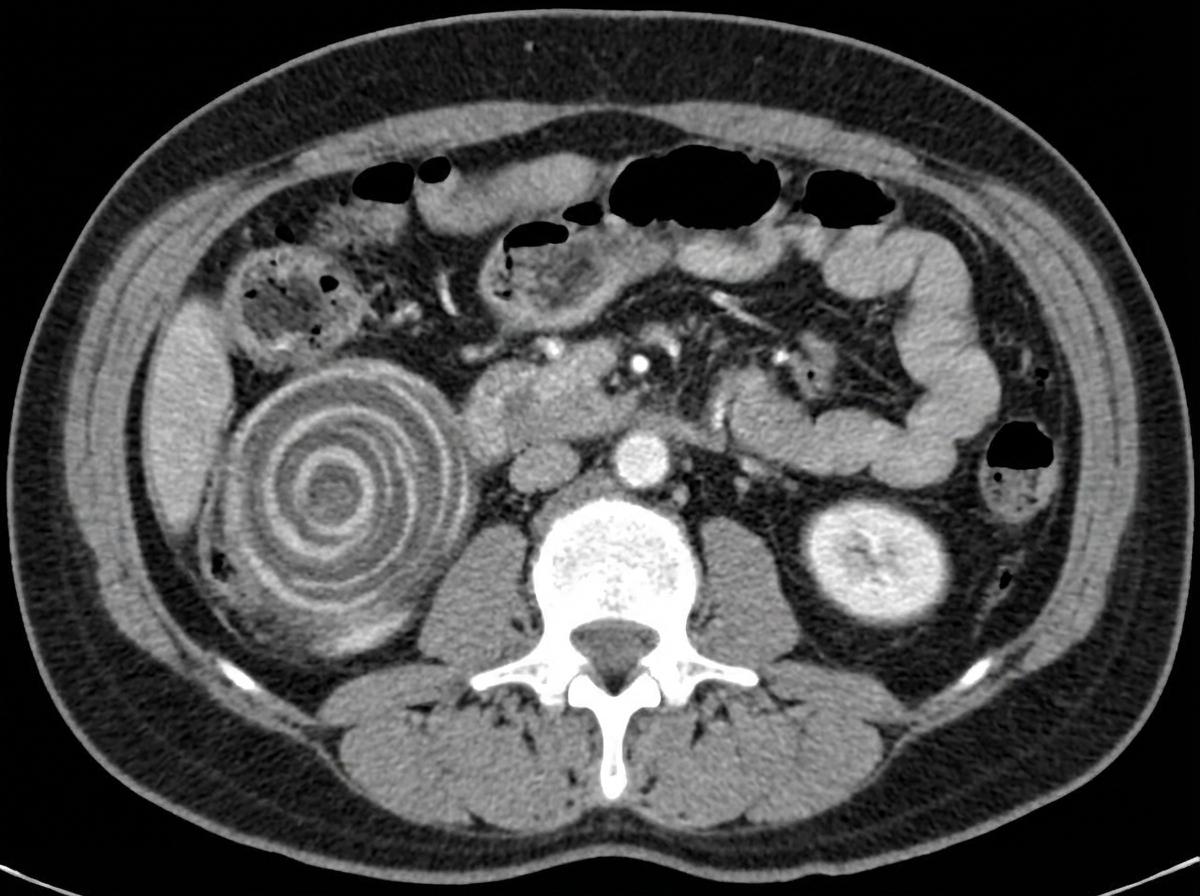
What is the initial imaging of choice for intussusception?
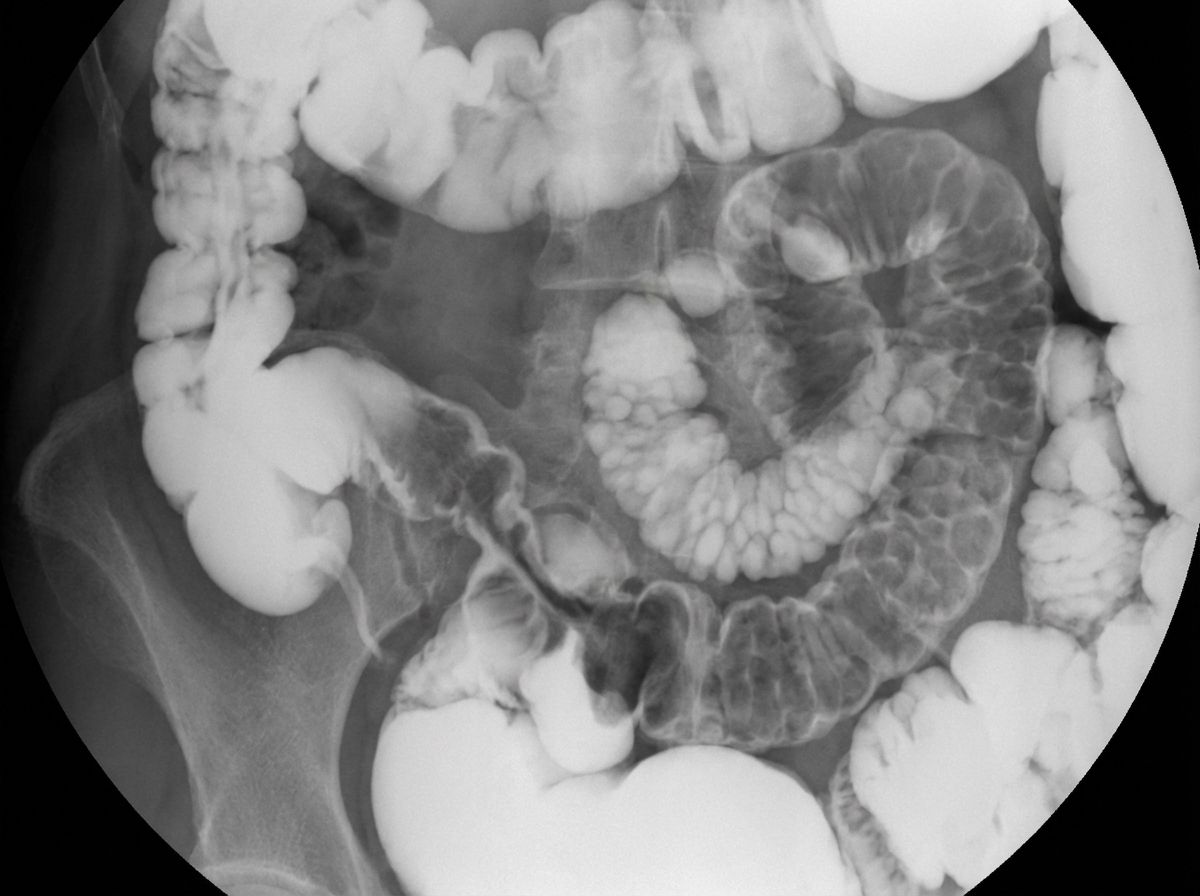
What is the characteristic radiological feature of ischemic colitis?
What does the Doges Cap Sign indicate?
Which of the following is true regarding the principles of MRCP?
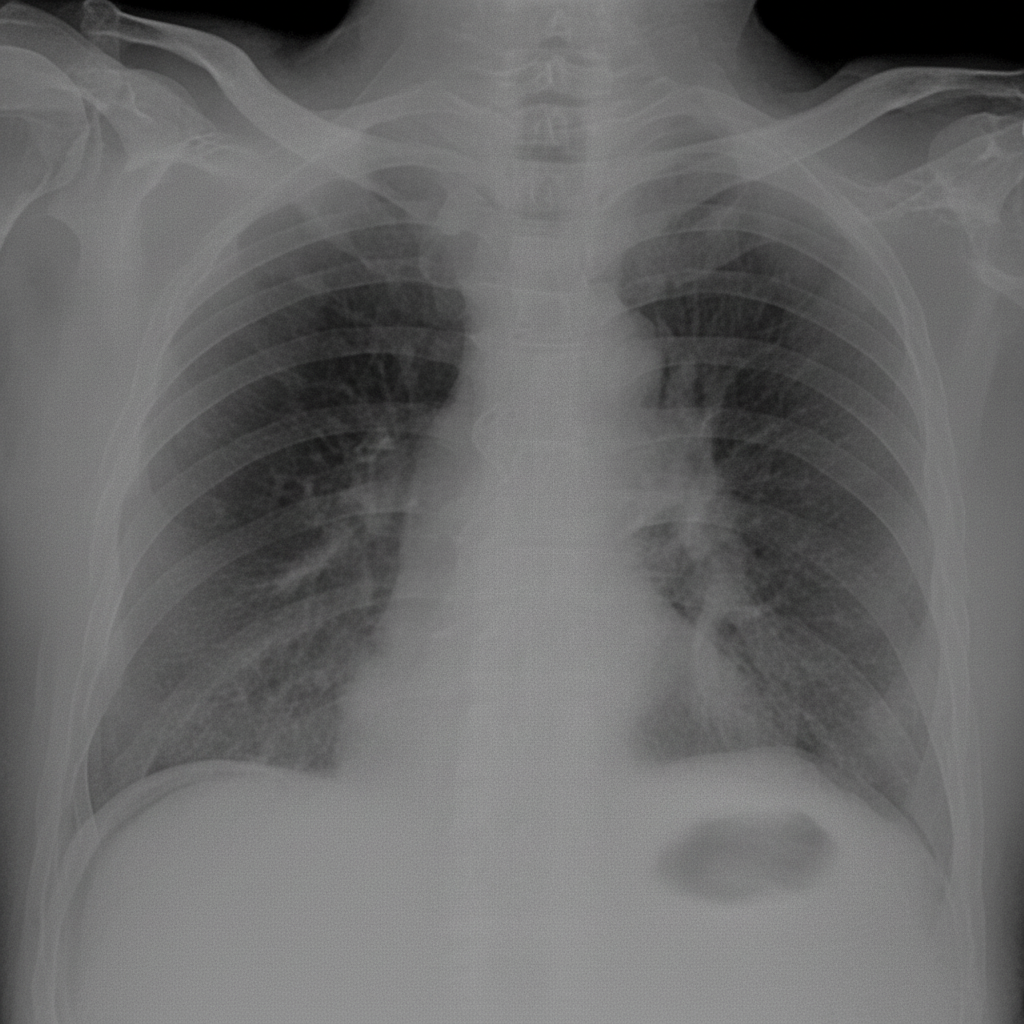
A plain radiograph of a patient with chronic abdominal pain is provided. What is the probable diagnosis based on the image?

A patient presents with right hypochondrium pain. Which of the following investigations should be done?
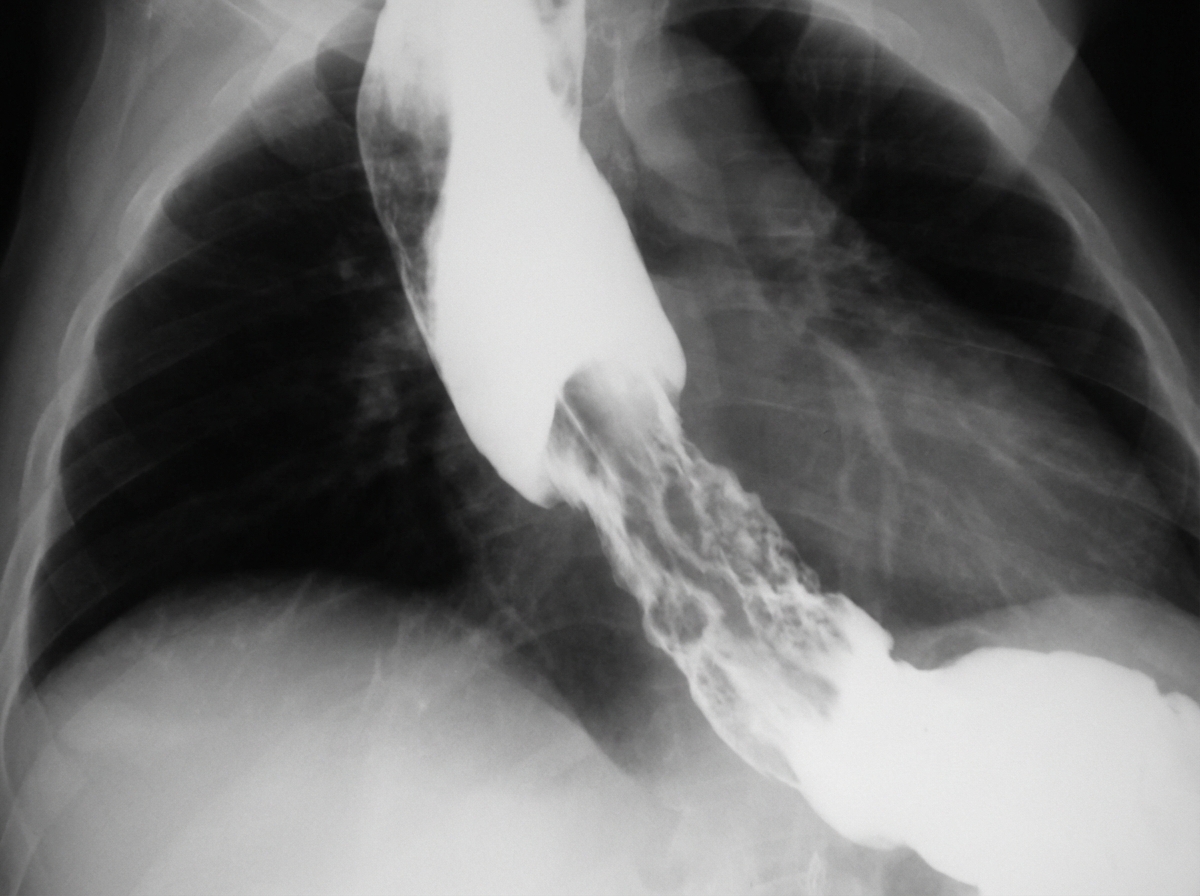
The 'apple core' sign observed in a barium enema is typically associated with which of the following conditions?
Calcific hepatic metastases are most commonly seen in which of the following primary tumors?
The 'Mercedes Benz sign' is seen in which of the following conditions?
Which investigation is useful for detecting extraadrenal pheochromocytoma?
Explanation: **Explanation:** **1. Why USG is the Correct Answer:** Ultrasonography (USG) is the **initial imaging modality of choice** and the gold standard for diagnosing intussusception due to its high sensitivity (98-100%) and specificity. It is non-invasive, avoids ionizing radiation (crucial in the pediatric population), and can identify lead points. * **Classic USG signs:** The **"Target sign"** or **"Donut sign"** (seen on transverse view) and the **"Pseudokidney sign"** or **"Hayfork sign"** (seen on longitudinal view). **2. Why Other Options are Incorrect:** * **A. X-ray:** Often the first test performed in an emergency to rule out perforation (pneumoperitoneum) or bowel obstruction, but it has low sensitivity for diagnosing intussusception itself. * **C. Barium Enema:** Historically the "Gold Standard" for both diagnosis and treatment. However, it has been replaced by USG for diagnosis because it involves radiation and carries a risk of barium peritonitis if perforation is present. It is now primarily used for **therapeutic reduction** (Hydrostatic reduction). * **D. CT Scan:** Highly accurate but not the initial choice in children due to high radiation doses. It is more commonly used in **adult intussusception**, where the cause is frequently a primary malignancy. **3. NEET-PG High-Yield Pearls:** * **Most common site:** Ileocolic. * **Most common cause:** Idiopathic (often following a viral URTI leading to Peyer’s patch hypertrophy). * **Clinical Triad:** Intermittent abdominal pain, palpable "sausage-shaped" mass, and **"red currant jelly" stools**. * **Treatment:** Non-surgical reduction (hydrostatic/pneumatic enema) is the first line if there are no signs of peritonitis or perforation. If these are present, immediate surgery is required.
Explanation: **Explanation:** **Ischemic Colitis** occurs due to a sudden reduction in colonic blood flow, most commonly affecting "watershed areas" like the splenic flexure (Griffith’s point) and the rectosigmoid junction (Sudek’s point). **Why "Thumb printing" is correct:** Thumb printing is the classic radiological sign seen on a plain X-ray or barium enema. It represents **focal submucosal edema and hemorrhage** caused by the ischemic insult. On imaging, these areas appear as rounded indentations protruding into the gas-filled colonic lumen, resembling the impression made by a thumb. **Analysis of Incorrect Options:** * **A. Saw toothing:** This refers to the serrated appearance of the colonic wall caused by circular muscle hypertrophy and herniation of mucosa, characteristic of **Diverticulosis**. * **B. Craggy popcorn appearance:** This is the classic description for **calcified uterine fibroids** (leiomyomas) or sometimes pulmonary hamartomas, but it is not a feature of bowel pathology. * **D. Cobble stone appearance:** This is a hallmark of **Crohn’s Disease**. it is caused by deep longitudinal and transverse ulcerations separated by areas of normal, edematous mucosa. **NEET-PG High-Yield Pearls:** * **Most common site:** Splenic flexure (Griffith’s point). * **Clinical presentation:** Sudden onset left-sided abdominal pain followed by bloody diarrhea in an elderly patient with cardiovascular risk factors. * **Gold Standard Diagnosis:** Colonoscopy (shows pale mucosa with petechial hemorrhages). * **CT Finding:** Circumferential wall thickening and the "target sign."
Explanation: ### Explanation The **Doge’s Cap Sign** (also known as the "Bicornuate Sign") is a classic radiological sign seen on a supine abdominal radiograph in patients with **pneumoperitoneum**. **1. Why the Correct Answer is Right:** In a supine position, the **Morison’s pouch** (the hepatorenal recess) is the most dependent part of the upper peritoneal cavity. When free intraperitoneal air is present, it can collect in this space. On a radiograph, this air appears as a **triangular or crescentic lucency** located in the right upper quadrant, lateral to the 11th and 12th ribs. Its shape resembles the "Doge’s Cap" (the traditional hat worn by the former Venetian magistrates), hence the name. **2. Analysis of Incorrect Options:** * **Option A (Air under the diaphragm):** This is the most common sign of pneumoperitoneum (Cupola sign) but is typically seen on an **erect** chest X-ray, not as the Doge’s Cap sign. * **Option C (Air on either side of the bowel wall):** This describes **Rigler’s sign**, another hallmark of pneumoperitoneum on a supine film where both the inner and outer walls of the bowel are visualized. * **Option D (Air under the central tendon):** This refers to the **Cupola sign**, where air accumulates under the central tendon of the diaphragm in the midline on a supine film. **3. Clinical Pearls for NEET-PG:** * **Supine signs of pneumoperitoneum:** Since many emergency patients cannot stand, look for the Doge’s Cap sign, Rigler’s sign, the **Football sign** (massive air outlining the entire cavity), and the **Falciform ligament sign**. * **Gold Standard:** While X-ray is the initial screening tool, **NCCT Abdomen** is the most sensitive modality for detecting even minute amounts of free air. * **Morison’s Pouch:** It is bounded by the liver (anteriorly) and the right kidney (posteriorly). It is also a critical area to check for fluid during a **FAST scan** in trauma.
Explanation: **Explanation:** **1. Why the correct answer is right:** Magnetic Resonance Cholangiopancreatography (MRCP) is a non-invasive imaging technique based on the principle of **heavily T2-weighted pulse sequences**. In T2-weighted imaging, fluids with long T2 relaxation times (like bile and pancreatic juice) appear hyperintense (bright/white), while background solid organs and flowing blood have shorter T2 relaxation times and appear hypointense (dark). This creates a "natural contrast" effect, allowing for the visualization of the biliary tree and pancreatic duct without the need for exogenous contrast agents. **2. Why the incorrect options are wrong:** * **Option A:** IV Gadolinium is used for MR Angiography or characterizing liver masses, but it is not required for standard MRCP. * **Option B:** Percutaneous instillation of contrast describes **PTC (Percutaneous Transhepatic Cholangiography)**, which is an invasive fluoroscopic procedure, not MRI. * **Option C:** Intraluminal dye is used in **ERCP (Endoscopic Retrograde Cholangiopancreatography)**. MRCP is entirely non-invasive and relies on the intrinsic properties of static fluids. **3. Clinical Pearls & High-Yield Facts for NEET-PG:** * **Gold Standard:** While MRCP is the best diagnostic tool for biliary anatomy, **ERCP** remains the gold standard for therapeutic interventions (e.g., stone extraction, stenting). * **Sequences used:** Common sequences include **SSFSE** (Single Shot Fast Spin Echo) and **HASTE** (Half-Fourier Acquisition Single-shot Turbo spin-Echo). * **Negative Contrast:** Sometimes, patients are asked to drink pineapple juice or blueberry juice before the scan. These act as "negative contrast agents" (due to manganese/iron) to darken the signal from the stomach and duodenum, preventing them from overlapping with the biliary tree. * **Indications:** Choledocholithiasis, Primary Sclerosing Cholangitis (beaded appearance), and anatomical variants like Pancreas Divisum.
Explanation: ***Pancreatitis*** - **Pancreatic calcifications** on plain abdominal X-ray are pathognomonic for chronic pancreatitis, appearing as rim-like or stippled densities in the epigastric region. - Chronic abdominal pain with **radiographic calcifications** strongly indicates chronic pancreatitis due to ductal obstruction and parenchymal fibrosis. *Pneumoperitoneum* - Characterized by **free gas under the diaphragm** (Rigler's sign) on upright chest or abdominal X-rays, not calcifications. - Typically presents with **acute onset** severe abdominal pain following bowel perforation, not chronic pain. *Hemoperitoneum* - Manifests as **loss of psoas shadow** and generalized **haziness** or ground-glass appearance on plain films. - Associated with **acute trauma** or **ruptured viscus**, presenting with hemodynamic instability rather than chronic pain. *Acute Appendicitis* - May show **appendicolith** (calcified deposit) in the **right iliac fossa** or localized gas pattern, not epigastric calcifications. - Presents with **acute onset** right lower quadrant pain with **McBurney's point tenderness**, not chronic abdominal pain.
Explanation: **Explanation:** **1. Why USG is the Correct Answer:** Ultrasonography (USG) is the **initial investigation of choice** for any patient presenting with right hypochondrium (RHC) pain. The most common causes of pain in this region are hepatobiliary in origin, such as gallstones (cholelithiasis), acute cholecystitis, or liver abscesses. USG is highly sensitive (up to 95-98%) for detecting gallstones, is non-invasive, cost-effective, radiation-free, and allows for real-time assessment (e.g., eliciting the **Sonographic Murphy’s sign**). **2. Why Other Options are Incorrect:** * **CT (Computed Tomography):** While excellent for complications (like perforation or gangrenous cholecystitis) and evaluating the pancreas, it is not the first-line tool. CT is less sensitive than USG for detecting cholesterol gallstones and involves ionizing radiation. * **MRI (MRCP):** Magnetic Resonance Cholangiopancreatography is the gold standard for visualizing the biliary tree and detecting common bile duct (CBD) stones (choledocholithiasis), but it is expensive, time-consuming, and reserved for complex cases or when USG is inconclusive. * **Cholecystogram:** This is an obsolete historical investigation. It has been entirely replaced by USG and HIDA scans in modern clinical practice. **Clinical Pearls for NEET-PG:** * **Investigation of Choice (IOC) for Gallstones:** USG. * **Gold Standard for Acute Cholecystitis:** Radionuclide scan (HIDA scan). * **IOC for Choledocholithiasis:** MRCP (Non-invasive) or ERCP (Invasive/Therapeutic). * **IOC for CBD stones in a patient with jaundice:** USG (Initial), then MRCP. * **Sonographic Murphy’s Sign:** Maximal tenderness over the gallbladder when compressed by the USG probe; a hallmark of acute cholecystitis.
Explanation: ### Explanation The **'apple core' sign** (also known as a napkin-ring sign) is a classic radiologic finding on a barium enema, pathognomonic for **annular, constricting carcinoma of the colon** (most commonly the sigmoid colon). **1. Why the Correct Answer is Right:** In colorectal carcinoma, the tumor grows circumferentially around the bowel wall. This leads to a short, irregular, and eccentric narrowing of the bowel lumen with "overhanging edges" or "shouldering" at the proximal and distal ends. On a barium study, the contrast fills the narrow central channel and the areas around the overhanging margins, resembling the core of an apple after the surrounding fruit has been eaten. **2. Analysis of Incorrect Options:** * **Ileocecal Tuberculosis:** Typically presents with the **'Stierlin sign'** (rapid emptying of the inflamed cecum) or the **'Goose neck deformity'** (shrunken, conical cecum with a wide-open ileocecal valve). * **Carcinoma of the Esophagus:** While it can cause irregular narrowing, the term 'apple core' is specific to the colon. Esophageal malignancy often shows an irregular "rat-tail" appearance or eccentric filling defects. * **Achalasia Cardia:** Characterized by a smooth, symmetric, tapered narrowing of the distal esophagus, known as the **'Bird’s beak'** or **'Rat-tail'** appearance. **3. Clinical Pearls for NEET-PG:** * **Most common site:** The sigmoid colon is the most frequent site for these annular lesions. * **Clinical presentation:** Left-sided colonic cancers (where apple core signs are common) typically present with **altered bowel habits** and intestinal obstruction, whereas right-sided cancers often present with iron deficiency anemia. * **Differential Diagnosis:** Chronic diverticulitis or Crohn's disease can occasionally mimic this sign, but they usually involve longer segments and lack the sharp "shouldering" of malignancy.
Explanation: **Explanation:** **Calcific hepatic metastases** are a specific radiological finding that can narrow the differential diagnosis in abdominal imaging. **1. Why Adenocarcinoma of the Colon is correct:** Mucinous adenocarcinomas, particularly those originating from the **colon and rectum**, are the most common cause of calcified liver metastases. The underlying mechanism is the production of **mucin** by the tumor cells; this mucin undergoes dystrophic calcification. On CT scans, these appear as fine, punctate, or granular calcifications within the metastatic lesions. **2. Analysis of Incorrect Options:** * **Carcinoid Tumors:** While these can occasionally calcify, they are more characteristically known for being **hypervascular** (enhancing brightly in the arterial phase) rather than primarily calcific. * **Renal Cell Carcinoma (RCC):** Metastases from RCC are typically hypervascular and prone to hemorrhage, but primary calcification is less common than in mucinous GI malignancies. * **Lymphoma:** Hepatic involvement in lymphoma usually presents as hepatomegaly or discrete non-calcified nodules. Calcification in lymphoma is rare and typically occurs only **after treatment** (post-chemotherapy). **3. NEET-PG High-Yield Pearls:** * **Mnemonic for Calcified Liver Metastases:** "Old Men Can Play" (**O**varian cystadenocarcinoma, **M**ucinous adenocarcinoma of colon, **C**arcinoid, **P**ancreatic islet cell tumors). * **Hypervascular Metastases:** Remember "MR. T" (**M**elanoma, **R**CC, **T**hyroid/Islet cell/Carcinoid). * **Hypovascular Metastases:** Lung, Breast, and non-mucinous GI cancers. * **Imaging Choice:** CT is the most sensitive modality for detecting these calcifications compared to Ultrasound or MRI.
Explanation: **Explanation:** The **Mercedes Benz sign** (also known as the triradiate nitrogen sign) is a classic radiological finding associated with **gallstones (cholelithiasis)**. It occurs when gas-filled fissures (containing nitrogen, oxygen, and carbon dioxide) form within the center of a gallstone. On an X-ray or CT scan, these radiolucent gas pockets arrange themselves in a triradiate pattern, mimicking the three-pointed star logo of Mercedes Benz. This phenomenon is often linked to the shrinkage of cholesterol crystals within the stone. **Analysis of Options:** * **Gallstone (Correct):** As described, the sign represents nitrogen gas trapped within the fissures of a stone. While most gallstones are radiolucent, this sign allows for their visualization on plain films. * **Renal stone:** These are typically solid and radiopaque (calcium oxalate/phosphate). They do not typically develop internal gas fissures. * **Calcified lymph node:** These appear as irregular, "popcorn-like" opacities, usually in the mesentery or hila, without a specific geometric gas pattern. * **Calcified fibroid:** These present as large, dense, "mulberry-like" calcifications in the pelvis. **High-Yield Clinical Pearls for NEET-PG:** * **Mercedes Benz Sign:** Seen in gallstones (gas in fissures). * **Limy Bile:** Excessive calcium carbonate in the gallbladder, making the entire gallbladder appear opaque on X-ray. * **Porcelain Gallbladder:** Intramural calcification of the gallbladder wall; associated with a risk of gallbladder carcinoma. * **Phrygian Cap:** A common anatomical variant where the gallbladder fundus is folded over the body.
Explanation: **Explanation:** **1. Why CECT is the Correct Answer:** Contrast-Enhanced Computed Tomography (CECT) is the **initial imaging modality of choice** for localizing pheochromocytomas, including extra-adrenal ones (paragangliomas). It offers excellent spatial resolution and high sensitivity (90–100%). Extra-adrenal pheochromocytomas are most commonly found in the **Organ of Zuckerkandl** (near the origin of the inferior mesenteric artery). On CECT, these tumors typically appear as well-defined, hypervascular masses with significant enhancement (>110 HU) and delayed washout. **2. Analysis of Other Options:** * **Ultrasound (USG):** While safe, it has low sensitivity for retroperitoneal structures and small extra-adrenal masses due to interference from bowel gas. * **MRI (T2-weighted):** MRI is highly sensitive and classically shows a **"Light Bulb Sign"** (hyperintensity) on T2W images. It is the preferred modality in children, pregnant women, or patients with contrast allergies. However, CECT remains the standard first-line investigation for localization in general adults. * **MIBG Scan:** This is a **functional/nuclear imaging** technique. While highly specific for confirming the diagnosis and detecting metastatic or multiple sites, it is not the primary investigation for initial localization due to lower spatial resolution compared to CT. **3. NEET-PG High-Yield Pearls:** * **Rule of 10s:** 10% are extra-adrenal, 10% bilateral, 10% malignant, and 10% pediatric. * **Biochemical Confirmation First:** Always perform 24-hour urinary metanephrines or plasma free metanephrines *before* imaging to avoid incidentaloma confusion. * **Pre-op Management:** Always start **Alpha-blockers** (e.g., Phenoxybenzamine) before Beta-blockers to prevent a hypertensive crisis. * **Extra-adrenal sites:** Most common is the Organ of Zuckerkandl; other sites include the bladder wall and carotid body.
Imaging of Liver
Practice Questions
Biliary Tract Imaging
Practice Questions
Pancreatic Imaging
Practice Questions
Spleen and Lymphatic System
Practice Questions
Gastrointestinal Tract Imaging
Practice Questions
Renal and Urinary Tract Imaging
Practice Questions
Adrenal Imaging
Practice Questions
Female Pelvic Imaging
Practice Questions
Male Pelvic Imaging
Practice Questions
Abdominal Trauma Imaging
Practice Questions
Acute Abdomen Imaging
Practice Questions
Imaging of Peritoneal Cavity and Retroperitoneum
Practice Questions
Get full access to all questions, explanations, and performance tracking.
Start For Free