A pseudo gestational sac is seen on ultrasonography in which of the following conditions?
Which of the following radiographic presentations cannot be seen in a patient with intussusception?
What is the first radiological sign of Crohn's disease in the terminal ileum?
Which of the following conditions typically presents with a 'pseudokidney sign' on ultrasound?
Which of the following is NOT a CT finding of acute pancreatitis?
Fluid levels are not visible in which of the following conditions?
What condition is indicated by the thumb print sign on an abdominal radiograph?
Which condition is characterized by a 'doughnut' sign and 'coiled spring' appearance on imaging?
What is the characteristic 'scrambled egg' appearance seen in?
What is the best imaging modality for diagnosing gall bladder stones?
Explanation: **Explanation:** In **Ectopic Gestation**, a **pseudo gestational sac** is a common sonographic pitfall. It represents an intra-uterine fluid collection (blood or secretions) surrounded by a single layer of decidua, mimicking an early pregnancy. Unlike a true gestational sac, it is **centrally located** within the endometrial cavity and lacks the "Double Decidual Sign" (the two concentric rings representing the decidua capsularis and decidua parietalis). **Analysis of Options:** * **Ectopic Gestation (Correct):** Hormonal changes in ectopic pregnancy cause the endometrium to undergo a decidual reaction. Fluid or blood trapped within this decidualized endometrium creates the pseudo-sac appearance. * **Missed Abortion:** This involves a non-viable **true** gestational sac (often with a fetal pole but no cardiac activity) that remains within the uterus. It is not a "pseudo" sac. * **Complete Abortion:** On ultrasound, this typically shows an empty uterus with a thin, regular endometrial stripe. No sac-like structures (true or pseudo) should be visible if the products of conception are entirely expelled. * **Hematometra:** This is a collection of blood within the uterine cavity, usually due to an imperforate hymen or cervical stenosis. While it is a fluid collection, it lacks the specific decidualized rim and clinical context of a pregnancy-related sac. **High-Yield Clinical Pearls for NEET-PG:** * **Double Decidual Sign:** The hallmark of a **true** intrauterine pregnancy (IUP) on USG. * **Yolk Sac:** Its presence is the first definitive sign of an IUP (visible at ~5.5 weeks). * **Intrauterine Fluid + Empty Adnexa:** In a patient with positive β-hCG, always differentiate between a very early IUP and a pseudo-sac of ectopic pregnancy. * **Location:** True sacs are usually **eccentric** (embedded in the decidua); pseudo-sacs are **central**.
Explanation: **Explanation:** Intussusception occurs when a proximal segment of the bowel (intussusceptum) invaginates into a distal segment (intussuscipiens). **Why Corkscrew Sign is the Correct Answer:** The **Corkscrew sign** is a classic radiological finding seen on a barium swallow or follow-through in cases of **Midgut Volvulus** (associated with malrotation). It represents the spiral appearance of the distal duodenum and jejunum as they wrap around the superior mesenteric artery (SMA). It is not a feature of intussusception. **Analysis of Incorrect Options:** * **Target Sign (or Bull’s eye sign):** This is a hallmark of intussusception. On a plain radiograph or CT, it represents the layers of the intussusceptum and intussuscipiens seen in cross-section. On ultrasound, it is often called the "Doughnut sign." * **Crescent Sign (Meniscus sign):** This occurs when the leading edge of the intussusceptum protrudes into a gas-filled pocket in the distal bowel, creating a crescent-shaped lucency. It is a highly specific sign for intussusception on plain X-rays. * **Normal Radiograph:** In the early stages of intussusception, up to **25% of plain abdominal radiographs can appear completely normal**. A normal X-ray does not rule out the diagnosis, which is why ultrasound is the gold standard for screening. **Clinical Pearls for NEET-PG:** * **Gold Standard Investigation:** Ultrasound (look for the "Pseudokidney" or "Target" sign). * **Classic Triad:** Colicky abdominal pain, palpable sausage-shaped mass, and "red currant jelly" stools (though the full triad is seen in <40% of cases). * **Treatment:** Non-operative reduction using **Hydrostatic (saline/barium)** or **Pneumatic (air) enema** is the first-line treatment in stable patients. * **Lead Point:** In children, it is usually idiopathic (hypertrophied Peyer’s patches); in adults, it is usually due to a pathological lead point (e.g., malignancy or Meckel’s diverticulum).
Explanation: ### Explanation **1. Why Aphthoid Ulceration is Correct:** Aphthoid ulcers are the **earliest detectable radiological sign** of Crohn’s disease. Pathologically, these represent small, superficial erosions occurring over enlarged lymphoid follicles (Peyer's patches). On a double-contrast barium study, they appear as tiny "punched-out" collections of barium surrounded by a radiolucent halo of edema (the "target" or "bull's eye" appearance). Because Crohn's is a transmural process that begins in the mucosa/submucosa, these superficial erosions precede more extensive structural changes. **2. Analysis of Incorrect Options:** * **B. Pseudo sacculation:** This occurs in more advanced stages. It refers to outpouchings of the antimesenteric border caused by asymmetric fibrosis and shortening of the mesenteric border. * **C. Cobblestone pattern:** This is a classic but **late sign**. It results from deep longitudinal and transverse ulcerations intersecting with islands of intact, edematous mucosa. * **D. Thickening of the bowel wall:** While common, this is a non-specific sign of transmural inflammation and typically follows the initial mucosal insult. **3. High-Yield Clinical Pearls for NEET-PG:** * **String Sign of Kantor:** Severe narrowing of the terminal ileum due to spasm or fibrosis (seen in advanced disease). * **Proud Flesh:** Widening of the space between bowel loops due to mesenteric fat proliferation ("Creeping Fat"). * **Skip Lesions:** Segmental involvement with intervening normal bowel (characteristic of Crohn's, unlike Ulcerative Colitis). * **Comb Sign:** Prominent, engorged vasa recta on CT, indicating active inflammation. * **Most common site:** Terminal ileum (Ileocolic region).
Explanation: ### Explanation The **'Pseudokidney sign'** is a classic ultrasonographic finding characterized by a hypoechoic (dark) peripheral rim and a central hyperechoic (bright) core. This appearance mimics the normal anatomy of a kidney (where the cortex is hypoechoic and the renal sinus is hyperechoic). **1. Why Carcinoma of the Stomach is Correct:** The sign occurs when there is significant **concentric or eccentric thickening of the gastrointestinal wall**. In gastric carcinoma, the thickened, infiltrated wall of the stomach represents the hypoechoic rim, while the narrowed lumen containing air, mucus, or debris represents the hyperechoic center. While most commonly associated with **intussusception**, it is a hallmark of **gastrointestinal malignancies** (stomach or colon) and inflammatory conditions like Crohn’s disease. **2. Analysis of Incorrect Options:** * **Trichobezoar (A):** Typically presents as a highly echogenic arcuate line with dense posterior acoustic shadowing (the "Stomach Wall-Gas-Interface" or "Shell" sign) rather than a kidney-like structure. * **Carcinoma of the Kidney (C):** This would present as a solid mass arising *from* the kidney, often distorting the normal renal architecture, rather than "mimicking" a kidney. * **Polycystic Kidney Disease (D):** This presents as bilateral, massively enlarged kidneys replaced by multiple thin-walled, anechoic cysts. It does not produce the specific "target" or "pseudokidney" morphology. **3. NEET-PG High-Yield Pearls:** * **Pseudokidney Sign:** Also known as the **"Target sign"** or **"Donut sign"** on transverse ultrasound/CT sections. * **Differential Diagnosis:** Intussusception (most common cause in children), Gastric/Colonic Adenocarcinoma (most common cause in elderly), Crohn’s disease, and Volvulus. * **Clinical Context:** If you see this sign in an elderly patient with weight loss, think **Malignancy**; in a child with red currant jelly stools, think **Intussusception**.
Explanation: ### Explanation In the context of **Acute Pancreatitis**, the primary pathology involves inflammation, edema, and enzymatic autodigestion of the pancreatic parenchyma. **1. Why Option A is the Correct Answer:** **Dilatation of the pancreatic duct** is typically a hallmark of **Chronic Pancreatitis** (often associated with chain-of-lakes appearance or intraductal calculi) or obstructive causes like pancreatic head tumors. In the acute phase, the duct is usually normal in caliber or may even be compressed due to the surrounding parenchymal edema. **2. Analysis of Incorrect Options (Typical CT findings in Acute Pancreatitis):** * **Edematous pancreas (Option D):** This is the earliest sign. The pancreas appears enlarged and swollen due to inflammatory exudate. * **Fuzzy outline of the pancreas (Option B):** Inflammation leads to the "blurring" of the normally sharp pancreatic margins and "stranding" of the peripancreatic fat. * **Parapancreatic fluid collection (Option C):** Leakage of pancreatic enzymes leads to acute fluid collections in the lesser sac or anterior pararenal spaces. **3. NEET-PG High-Yield Pearls:** * **Gold Standard Imaging:** Contrast-Enhanced CT (CECT) is the investigation of choice for assessing severity and complications (performed ideally 72–96 hours after symptom onset). * **Balthazar Scoring:** Used to grade the severity of acute pancreatitis based on CT findings (Grade A to E). * **Pancreatic Necrosis:** Identified on CECT as areas of non-enhancement (<30 HU) within the pancreatic parenchyma. * **Sentinel Loop:** A focal dilated loop of proximal jejunum seen on X-ray, representing localized ileus due to nearby inflammation.
Explanation: **Explanation:** The presence of air-fluid levels on an upright abdominal X-ray requires two components: gas and liquid of low viscosity. **1. Why Meconium Ileus is the Correct Answer:** In **Meconium Ileus** (commonly associated with Cystic Fibrosis), the meconium is pathologically thick, tenacious, and "sticky" due to protein-rich secretions and lack of pancreatic enzymes. Because this meconium is extremely viscous and lacks a significant liquid component, air bubbles become trapped within the thick mass rather than layering on top of it. This results in the characteristic **"Ground-glass" or "Soap-bubble" appearance (Neuhauser’s sign)** instead of distinct air-fluid levels. **2. Analysis of Incorrect Options:** * **Intussusception:** This is a mechanical bowel obstruction. Proximal to the site of intussusception, bowel loops dilate with gas and fluid, leading to visible air-fluid levels. * **Colon Pouch (Pouch Colon):** Associated with Anorectal Malformations (ARM), this involves a massive dilation of a colonic segment. It typically contains a large amount of air and liquid feces, frequently demonstrating a large, prominent air-fluid level. * **Duodenal Obstruction:** Whether due to atresia or stenosis, the stomach and proximal duodenum dilate with swallowed air and gastric secretions, resulting in the classic **"Double Bubble" sign** with two distinct air-fluid levels. **Clinical Pearls for NEET-PG:** * **Neuhauser’s Sign:** The "soap bubble" appearance in the right iliac fossa is pathognomonic for Meconium Ileus. * **Microcolon:** On contrast enema, Meconium Ileus typically shows a "disuse microcolon." * **Rule of Thumb:** If the intestinal content is too thick to flow (like putty), air-fluid levels will be absent despite clinical obstruction.
Explanation: **Explanation:** The **"Thumbprinting sign"** is a classic radiologic finding on a plain abdominal X-ray that represents **focal thickening of the colonic wall** due to submucosal edema and hemorrhage. On a radiograph, the haustral folds appear thickened and blunted, resembling the impression of a thumb pressed into the bowel wall. **Why "All of the above" is correct:** Thumbprinting is a non-specific sign of **severe colonic wall inflammation**. It occurs when any pathological process causes significant submucosal fluid accumulation: * **Ischemic Colitis (Option A):** This is the most common association. Reduced blood flow leads to submucosal hemorrhage and edema. * **Crohn’s Disease (Option B):** Transmural inflammation during an acute flare-up can cause significant wall thickening and edema. * **Pseudomembranous Colitis (Option C):** Severe *Clostridioides difficile* infection causes profound mucosal edema and "shaggy" wall thickening, often presenting with prominent thumbprinting. **Clinical Pearls for NEET-PG:** 1. **Differential Diagnosis:** Beyond the options provided, thumbprinting can also be seen in **Ulcerative Colitis**, **Amoebic Colitis**, and **Lymphoma**. 2. **Clinical Correlation:** While the sign is non-specific, the clinical context is key. Sudden onset abdominal pain in an elderly patient with thumbprinting highly suggests **Ischemic Colitis**. 3. **Next Step:** If thumbprinting is seen on a plain film, the next gold-standard imaging is usually a **CT scan with IV contrast** to better visualize bowel wall enhancement and mesenteric vessels. 4. **Lead Pipe Appearance:** Contrast this with the "Lead Pipe" colon (loss of haustrations), which is characteristic of chronic Ulcerative Colitis.
Explanation: ### Explanation **Correct Answer: A. Intussusception** Intussusception occurs when a proximal segment of the bowel (intussusceptum) invaginates into a distal segment (intussuscipiens). This creates characteristic imaging patterns: * **Doughnut/Target Sign:** On **ultrasound** (transverse view), the concentric layers of the bowel walls appear as a hypoechoic outer ring and a hyperechoic center. * **Coiled Spring Appearance:** On a **barium or air enema**, the contrast trickles into the narrow space between the intussusceptum and the intussuscipiens, resembling a coiled spring. * **Pseudokidney Sign:** On longitudinal ultrasound, the layered bowel resembles a kidney. **Why the other options are incorrect:** * **B. Meckel’s Diverticulum:** Typically diagnosed via a **Technetium-99m pertechnetate scan** (Meckel’s scan), which identifies ectopic gastric mucosa. It does not produce concentric ring signs. * **C. Intestinal Malrotation:** Characterized by the **Whirlpool sign** (SMV twisting around the SMA) on ultrasound/CT and a "corkscrew" appearance of the duodenum on upper GI contrast studies. * **D. Volvulus:** Sigmoid volvulus classically shows a **"Coffee Bean" sign** or "Omega" sign on X-ray and a "Bird’s Beak" appearance on contrast enema. **High-Yield Clinical Pearls for NEET-PG:** * **Classic Triad:** Intermittent abdominal pain, palpable "sausage-shaped" mass, and **"Red currant jelly" stools**. * **Lead Point:** In children, it is usually idiopathic (preceded by viral URTI/hypertrophied Peyer’s patches); in adults, it is often due to a malignancy. * **Treatment:** Non-operative reduction using **hydrostatic (saline) or pneumatic (air) enema** is the first-line treatment in stable pediatric cases.
Explanation: **Explanation:** The **'scrambled egg' appearance** is a classic radiological sign seen on **Barium meal** studies in cases of **Pancreatic carcinoma**, specifically when the tumor involves the head of the pancreas. As the pancreatic head enlarges due to malignancy, it causes extrinsic compression, displacement, and infiltration of the adjacent C-loop of the duodenum. This results in a combination of mucosal destruction, irregular filling defects, and tethering of the duodenal folds. On a barium study, this disorganized, mottled, and irregular appearance of the duodenal mucosa resembles scrambled eggs. **Analysis of Options:** * **Carcinoma of the stomach (A):** Typically presents with signs like the 'Leather bottle stomach' (Linitis Plastica) or 'Carman’s meniscus sign' for malignant ulcers. * **Carcinoma of the gallbladder (B):** Usually diagnosed via USG or CT showing a mass replacing the gallbladder or focal wall thickening; it does not produce this specific barium sign. * **Renal carcinoma (D):** Being a retroperitoneal organ, it may displace the bowel but does not typically cause the intrinsic mucosal destruction pattern described. **High-Yield Clinical Pearls for NEET-PG:** * **Frostberg’s Inverted '3' Sign:** Another classic barium sign for pancreatic head carcinoma caused by the fixation of the duodenal mucosa at the Ampulla of Vater. * **Widening of the Duodenal C-loop:** A common radiological finding in pancreatic head masses. * **Double Duct Sign:** Seen on ERCP/MRCP, representing simultaneous dilatation of the Common Bile Duct (CBD) and the Pancreatic Duct. * **Courvoisier’s Law:** In a patient with painless jaundice and a palpable gallbladder, the cause is unlikely to be gallstones (usually pancreatic head malignancy).
Explanation: **Explanation:** **Ultrasonography (USG)** is the investigation of choice and the gold standard for diagnosing gallstones (cholelithiasis). It offers high sensitivity (>95%) and specificity. The diagnosis is based on the presence of an **echogenic (bright) focus** within the gallbladder lumen that demonstrates **posterior acoustic shadowing** and moves with changes in patient positioning. USG is preferred because it is non-invasive, radiation-free, cost-effective, and can simultaneously evaluate for complications like cholecystitis (e.g., gallbladder wall thickening or pericholecystic fluid). **Analysis of Incorrect Options:** * **Oral Cholecystography (OCG):** Historically used to assess gallbladder function and stones, it has been replaced by USG. It requires the ingestion of contrast and a functioning gallbladder for opacification, making it slow and unreliable in patients with malabsorption or jaundice. * **Percutaneous Transhepatic Cholangiography (PTC):** An invasive procedure used primarily to visualize the biliary tree in cases of obstructive jaundice when ERCP is not possible. It is not a screening tool for simple gallstones. * **Intravenous Cholangiogram (IVC):** Once used to visualize the bile ducts, it is now obsolete due to high toxicity of the contrast media and the superiority of MRCP and USG. **High-Yield Clinical Pearls for NEET-PG:** * **WES Triad:** (Wall-Echo-Shadow) A classic USG sign seen when the gallbladder is completely filled with stones. * **Sludge:** Low-level echoes without shadowing, often a precursor to stone formation. * **MRCP:** The investigation of choice for **Choledocholithiasis** (stones in the common bile duct), whereas USG is best for **Cholelithiasis** (stones in the gallbladder). * **HIDA Scan:** The most sensitive test for **Acute Cholecystitis** (shows non-visualization of the gallbladder).
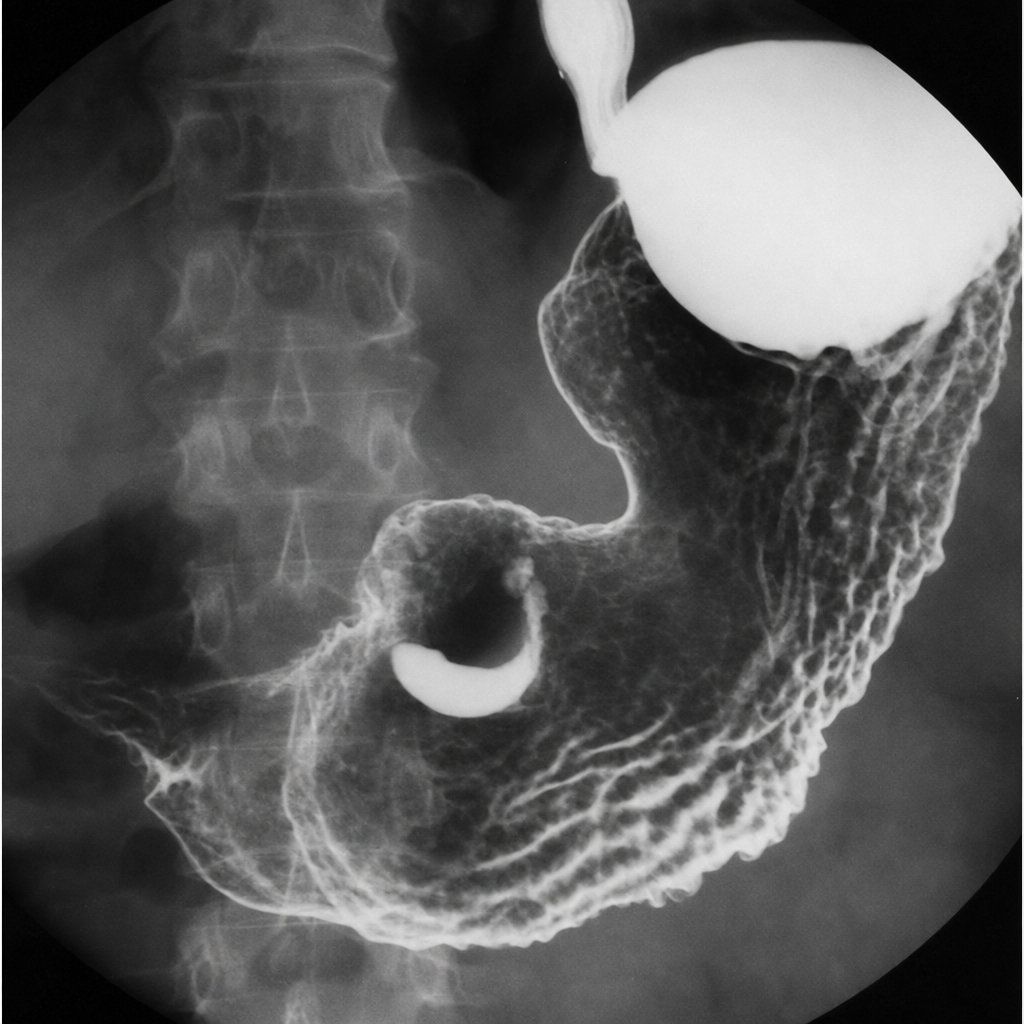
Explanation: ### Explanation In barium meal examinations, distinguishing between benign and malignant gastric ulcers is a high-yield topic for NEET-PG. **Why Option A is the Correct Answer:** Historically, it was taught that ulcers on the **greater curvature** were more likely to be malignant. However, modern radiology and endoscopy have proven that the **vast majority of ulcers on the greater curvature are actually benign** (often associated with NSAID use). Therefore, location on the greater curvature is **NOT** a reliable feature of malignancy. In fact, most gastric cancers (and thus malignant ulcers) occur on the **lesser curvature** or the antrum. **Analysis of Incorrect Options (Features of Malignancy):** * **Carman’s Meniscus Sign (Option B):** This is a classic sign of a large, infiltrating malignant ulcer. The ulcer crater is lenticular (semilunar) and convex toward the gastric lumen, trapped between the overhanging neoplastic edges. * **Radiating Folds (Option C):** In benign ulcers, mucosal folds are smooth and reach the very edge of the crater. In **malignant ulcers**, the folds are irregular, clubbed, or fused, and they **stop short** of the ulcer base due to tumor infiltration. * **Nodular Rim (Option D):** A malignant ulcer is typically an excavation within a tumor mass. This results in an irregular, nodular, or "heaped-up" margin (Kirklin’s complex), unlike the smooth, punched-out appearance of benign ulcers. **Clinical Pearls for NEET-PG:** * **Hampton’s Line:** A thin, lucent line at the neck of an ulcer indicating a **benign** etiology (representing intact undermined mucosa). * **Ulcer Collar:** A thick lucent band at the ulcer orifice, also suggesting a **benign** ulcer. * **Projecting vs. Intraluminal:** Benign ulcers typically project **beyond** the predicted gastric contour, whereas malignant ulcers often lie **within** the contour (intraluminal) because they are situated within a mass.
Explanation: ### **Explanation** **Pseudomyxoma Peritonei (PMP)** is a clinical syndrome characterized by the accumulation of abundant mucinous (gelatinous) ascites within the peritoneal cavity, most commonly secondary to a ruptured mucinous cystadenoma or cystadenocarcinoma of the appendix. **1. Why Option A is Correct:** The hallmark CECT finding of PMP is the **scalloping of the visceral surfaces** of solid organs, particularly the **liver and spleen**. Unlike simple serous ascites, which exerts uniform pressure, the dense, gelatinous nature of the mucinous implants exerts focal extrinsic pressure on the capsules of these organs, creating a characteristic "indented" or scalloped appearance. This is a high-yield diagnostic feature that distinguishes PMP from other causes of ascites. **2. Why Other Options are Incorrect:** * **Option B:** While PMP involves fluid accumulation, "increased HU units" (high-density ascites) is non-specific and can be seen in hemoperitoneum or chylous ascites. * **Option C:** Peritoneal seedlings (carcinomatosis) typically appear as nodular or plaque-like enhancements. While PMP involves peritoneal spread, "scalloping" is the more specific and "classic" radiological descriptor for this condition. * **Option D:** The **Pseudokidney sign** is a classic USG/CT finding for **Intussusception** or gastrointestinal tumors (like lymphoma), where the bowel wall thickening resembles a kidney. **3. NEET-PG High-Yield Pearls:** * **Primary Source:** Most commonly the **Appendix** (look for a dilated, mucocele-filled appendix on CT). * **Redistribution Phenomenon:** Mucinous fluid follows the flow of peritoneal fluid but tends to accumulate in stagnant areas (e.g., pelvis, paracolic gutters, and Morison’s pouch) while sparing the mobile small bowel loops. * **Treatment:** The gold standard is **Cytoreductive Surgery (CRS)** combined with **Hyperthermic Intraperitoneal Chemotherapy (HIPEC)**, often referred to as the "Sugarbaker Procedure."
Explanation: **Explanation:** The **Graham Cole test** is the historical eponym for **Oral Cholecystography (OCG)**. Introduced by Evarts Graham and Warren Cole in 1924, it was the first non-invasive method to visualize the gallbladder and revolutionized the diagnosis of gallstones before the advent of ultrasonography. **1. Why Oral Cholecystography is correct:** The test involves the oral administration of an iodinated contrast agent (e.g., iopanoic acid). The contrast is absorbed in the small intestine, conjugated in the liver, and excreted into the bile. It then concentrates in the gallbladder. A functioning gallbladder will opacify on X-ray, while a non-opacified gallbladder (the "negative" Graham Cole test) suggests cystic duct obstruction or chronic cholecystitis. **2. Why other options are incorrect:** * **Intravenous cholangiography (IVC):** Uses IV contrast (e.g., iodipamide) to visualize the bile ducts directly. It is faster but carries a higher risk of anaphylaxis. * **Pre-operative/Post-operative cholangiography:** These involve injecting contrast directly into the biliary tree during surgery (to check for stones) or via a T-tube after surgery (to ensure ductal patency). **High-Yield Clinical Pearls for NEET-PG:** * **Gold Standard:** Currently, **Ultrasonography** is the first-line investigation for gallstones. * **HIDA Scan:** The most sensitive test for **Acute Cholecystitis**. * **The "Double Dose" Test:** If the gallbladder fails to opacify after the first dose of OCG, a second dose is given; persistent non-visualization is diagnostic of gallbladder disease. * **Prerequisite:** For OCG to work, the patient must have a serum bilirubin **< 2 mg/dL**; otherwise, the liver cannot excrete the contrast.
Explanation: **Explanation:** The **"Lemon sign"** and **"Banana sign"** are classic sonographic markers of **Open Neural Tube Defects (ONTDs)**, specifically **Spina bifida**. These signs result from the **Arnold-Chiari Malformation Type II**, where the downward displacement of the hindbrain occurs due to low cerebrospinal fluid (CSF) pressure. 1. **Lemon Sign:** This refers to the scalloping or indentation of the frontal bones of the fetal skull. It occurs because the downward pull on the brain causes a decrease in intraspinal pressure, leading to the collapse of the frontal bones. 2. **Banana Sign:** This refers to the cerebellum being pulled downward into the foramen magnum, causing it to lose its typical dumbbell shape and appear curved like a banana. This is often associated with the obliteration of the **cisterna magna**. **Analysis of Incorrect Options:** * **Down Syndrome (Trisomy 21):** Associated with markers like increased nuchal translucency, absent nasal bone, and "double bubble" sign (duodenal atresia), but not cranial contour changes. * **Turner Syndrome (45, XO):** Characterized by cystic hygroma, increased nuchal translucency, and coarctation of the aorta. * **Periventricular Leukomalacia (PVL):** A form of white-matter brain injury typically seen in premature infants, appearing as echogenic areas or cysts near the lateral ventricles on ultrasound. **NEET-PG High-Yield Pearls:** * The **Lemon sign** is most sensitive in the second trimester (18–24 weeks) but may disappear later as the skull ossifies. * The **Banana sign** is more specific for spina bifida than the lemon sign and often persists into the third trimester. * **Maternal Serum Alpha-Fetoprotein (MSAFP):** Elevated levels are the primary biochemical screening tool for open spina bifida.
Explanation: **Explanation:** The correct answer is **A. HIDA scan** (Hepatobiliary Iminodiacetic Acid scan), also known as Cholescintigraphy. **Why HIDA scan is the correct answer:** The hallmark of acute cholecystitis is the **obstruction of the Cystic Duct**, usually by a gallstone. In a HIDA scan, a radioactive tracer (Technetium-99m labeled iminodiacetic acid) is injected intravenously, taken up by hepatocytes, and excreted into the bile. In a healthy individual, the tracer fills the gallbladder within 30–60 minutes. In acute cholecystitis, the cystic duct is blocked; therefore, the tracer enters the common bile duct and duodenum but **fails to enter (visualize) the gallbladder**, even on delayed images (up to 4 hours). This "non-visualization" is the diagnostic criterion. **Why other options are incorrect:** * **B. USG Abdomen:** This is the **investigation of choice (screening)** for acute cholecystitis. Findings include gallbladder wall thickening (>4mm), pericholecystic fluid, and a positive sonographic Murphy’s sign. The gallbladder is usually well-visualized and distended. * **C. CECT Abdomen:** Used primarily to detect complications like gangrene or perforation. It shows wall enhancement and fat stranding but does not rely on "non-visualization" for diagnosis. * **D. MRCP:** Excellent for visualizing biliary anatomy and detecting stones in the CBD (choledocholithiasis), but it is not the standard functional test for acute cholecystitis. **High-Yield Clinical Pearls for NEET-PG:** * **Gold Standard (Most Sensitive):** HIDA scan is the most sensitive imaging modality for diagnosing acute cholecystitis. * **False Positives in HIDA:** Can occur in prolonged fasting (TPN), severe liver disease, or chronic cholecystitis. * **Rim Sign:** Increased tracer uptake in the liver parenchyma adjacent to the gallbladder fossa on HIDA scan, suggesting gangrenous cholecystitis. * **Morphine Augmentation:** Administering low-dose morphine during a HIDA scan constricts the Sphincter of Oddi, increasing biliary pressure to force tracer into the gallbladder, shortening the study time.
Explanation: **Explanation:** The **"Saw-tooth appearance"** on a barium enema is the classic radiological hallmark of **Diverticulosis**, specifically when associated with muscular hypertrophy of the colonic wall (often seen in the sigmoid colon). This appearance is caused by two factors: the protrusion of mucosa through the muscular layers (forming diverticula) and the thickening of the circular muscle fibers (myochosis), which creates serrated, pointed indentations along the bowel wall. **Analysis of Options:** * **Diverticulosis (Correct):** The combination of thickened muscular folds and multiple small outpouchings creates the characteristic jagged, saw-tooth contour. * **Multiple Polyposis:** Typically presents as multiple rounded, smooth **intraluminal filling defects**. It does not cause a serrated wall pattern. * **Ischemic Colitis:** Characterized by **"Thumbprinting"** on X-ray, which represents focal submucosal edema and hemorrhage. * **Ulcerative Colitis:** In the acute phase, it may show fine mucosal ulcerations (granular appearance). In chronic stages, it leads to a **"Lead pipe appearance"** due to the loss of haustrations and shortening of the colon. **NEET-PG High-Yield Pearls:** * **Lead pipe colon:** Chronic Ulcerative Colitis. * **Thumbprinting:** Ischemic Colitis or severe IBD. * **Apple core lesion:** Colorectal Carcinoma (Annular type). * **Cobblestone appearance:** Crohn’s Disease (due to deep transverse and longitudinal ulcers). * **Bird’s beak appearance:** Sigmoid Volvulus (on barium enema).
Explanation: **Explanation:** **Mesenteroaxial gastric volvulus** is the correct answer because it involves rotation of the stomach around its short axis (a line connecting the mid-lesser curvature to the mid-greater curvature). In this condition, the antrum and pylorus rotate superiorly, while the fundus moves inferiorly. On a Barium meal, this results in the **"upside down" stomach** appearance, where the antrum lies above the fundus. This type is less common than organoaxial but is more frequently associated with acute presentation and ischemia. **Analysis of Incorrect Options:** * **Organoaxial gastric volvulus:** This is the most common type (60%). Rotation occurs around the long axis (connecting the cardia to the pylorus). It typically presents with the greater curvature lying superior to the lesser curvature, but not the classic "upside down" antrum-above-fundus configuration. * **Large gastric adenocarcinoma:** While it can cause gastric outlet obstruction and significant distension, it does not cause the anatomical rotation required to produce an "upside down" appearance. * **Rolling (Paraesophageal) hiatus hernia:** In this condition, the fundus herniates alongside the esophagus into the chest. While the stomach is displaced, it does not necessarily undergo the specific mesenteroaxial rotation that characterizes the "upside down" stomach. **Clinical Pearls for NEET-PG:** * **Borchardt’s Triad (Acute Volvulus):** 1. Sudden epigastric pain, 2. Violent unproductive retching, 3. Inability to pass a nasogastric tube. * **Organoaxial Volvulus:** Often associated with diaphragmatic defects (e.g., Bochdalek hernia). * **Mesenteroaxial Volvulus:** Often associated with laxity of gastric ligaments; less common but carries a higher risk of strangulation.
Explanation: **Explanation:** Magnetic Resonance Spectroscopy (MRS) is a functional imaging technique that measures the concentration of specific metabolites in tissues. In the context of prostate cancer, the diagnosis relies on the ratio of **Choline** and **Citrate**. * **Why Choline is Correct:** Choline is a marker of cell membrane turnover (phospholipid metabolism). In malignant tissues like prostate carcinoma, there is rapid cell proliferation and increased membrane synthesis, leading to a significant **elevation of Choline**. Conversely, healthy prostate tissue is rich in **Citrate** (produced by the glandular epithelium). Therefore, a high **(Choline + Creatine) / Citrate ratio** is highly suggestive of malignancy. * **Why other options are incorrect:** * **Citrate:** In prostate cancer, the normal glandular architecture is destroyed, leading to a **decrease** in Citrate levels. An increase in Citrate would suggest healthy or hyperplastic tissue. * **Acetate:** While Acetate can be used in PET imaging for prostate cancer, it is not a primary metabolite measured in standard clinical MRS for prostate evaluation. * **NAA (N-acetylaspartate):** This is a marker of neuronal integrity. It is the hallmark metabolite for **Brain MRS** (decreased in tumors/strokes) and has no relevance in prostate imaging. **High-Yield Clinical Pearls for NEET-PG:** * **Prostate MRS Signature:** ↑ Choline, ↓ Citrate. * **Brain MRS Signature (Glioma):** ↑ Choline, ↓ NAA, ↑ Lactate (if anaerobic metabolism/necrosis). * **Multiparametric MRI (mpMRI):** This is the current gold standard, combining T2-weighted imaging, Diffusion-Weighted Imaging (DWI), and Dynamic Contrast Enhancement (DCE). MRS is often used as an adjunct. * **PI-RADS:** The scoring system used to communicate the probability of clinically significant prostate cancer on MRI.
Explanation: ### Explanation **1. Why Option A is Correct:** The clinical presentation of sudden onset, severe, colicky abdominal pain is classic for **ureteric colic**. While Ultrasound (USG) is often the initial screening tool, it has limited sensitivity (approx. 70%) for detecting small ureteric stones, especially those in the mid-ureter or those not causing significant obstruction. **Non-Contrast Computed Tomography (NCCT) KUB** is the **gold standard** and the most appropriate next step because it has a sensitivity and specificity of >95% for detecting urolithiasis. In this case, the presence of hydronephrosis on USG is a secondary sign of obstruction, necessitating a CT scan to locate the stone and plan management. **2. Why Other Options are Incorrect:** * **Option B (Pyelonephritis):** Pyelonephritis typically presents with fever, chills, and flank pain rather than "colicky" pain. Furthermore, the negative urine culture and normal renal function make an infectious etiology less likely. * **Option C (Ample Hydration):** While hydration is part of supportive management, it is not a diagnostic "next step." One must first confirm the diagnosis and assess the size/location of the stone, as forced diuresis in the presence of a complete obstruction can worsen the pain and hydronephrosis. **3. Clinical Pearls for NEET-PG:** * **Gold Standard Investigation:** NCCT KUB is the investigation of choice for acute flank pain/ureteric colic. * **Radiolucent Stones:** All stones (including Uric acid and Xanthine stones) are **radio-opaque on CT**, except for Indinavir stones (seen in HIV patients). * **Secondary Signs on CT:** Look for the "Rim sign" (edema around the stone) and "Stranding" of perinephric fat. * **USG Limitation:** USG is excellent for identifying hydronephrosis and renal stones but poor at visualizing the mid-ureter.
Explanation: The correct answer is **B. Cullen's sign**. ### **Explanation** The distinction here lies between **radiological signs** (seen on imaging like X-ray or CT) and **clinical signs** (observed during physical examination). 1. **Why Cullen's sign is the correct answer:** Cullen’s sign is a **clinical sign** characterized by periumbilical ecchymosis (bruising) due to the tracking of hemoperitoneum into the falciform ligament. While it indicates severe necrotizing pancreatitis, it is a physical exam finding, not a radiological sign. 2. **Analysis of Radiological Signs (Incorrect Options):** * **Colon cut-off sign (Option A):** An abdominal X-ray finding where there is abrupt termination of gas in the splenic flexure. This occurs because inflammatory exudate from the pancreas spreads to the phrenicocolic ligament, causing functional spasm of the colon. * **Renal halo sign (Option C):** Seen on CT or X-ray, this represents edema or fluid collection in the pararenal space, which outlines the kidney, making it appear as if it has a "halo." * **Sentinel loop sign (Option D):** A localized paralytic ileus of a loop of small bowel (usually the jejunum) located near the inflamed pancreas. It appears as a single, dilated air-filled bowel loop in the left upper quadrant on X-ray. ### **NEET-PG High-Yield Pearls** * **Grey Turner’s sign:** Ecchymosis of the flanks (also a clinical sign of hemorrhagic pancreatitis). * **Gold Standard Imaging:** Contrast-Enhanced CT (CECT) is the investigation of choice for staging and detecting complications (best done 48–72 hours after symptom onset). * **Pancreatic Calcification:** The most specific radiological sign for **Chronic** Pancreatitis. * **Ground glass appearance:** May be seen on X-ray due to ascites or massive peripancreatic fluid collection.
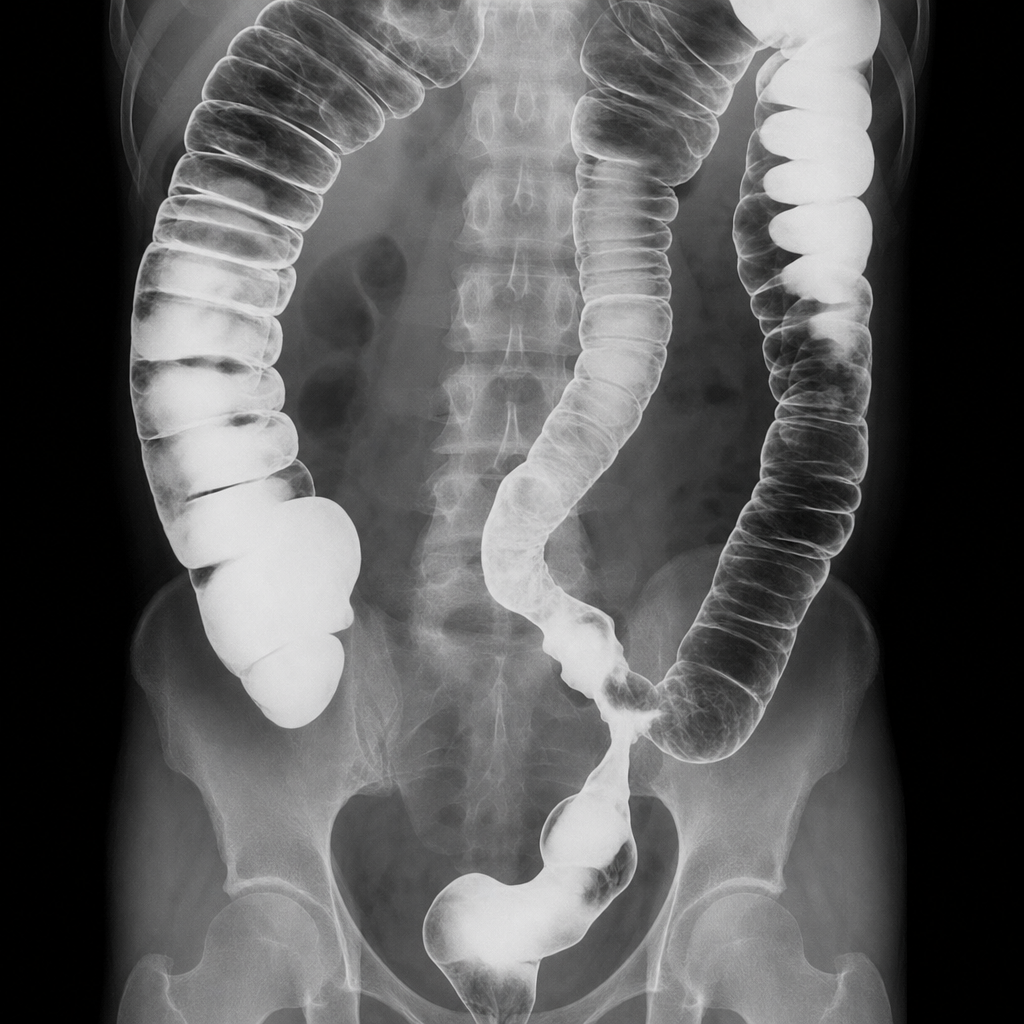
Explanation: **Explanation:** The **"Lead pipe appearance"** is a classic radiological sign seen on a double-contrast barium enema, characteristic of **chronic Ulcerative Colitis (UC)**. **Why Ulcerative Colitis is correct:** In chronic UC, repeated cycles of inflammation and healing lead to the loss of normal colonic **haustrations**. This is accompanied by shortening of the colon and narrowing of the lumen due to mural thickening and fibrosis (muscularis mucosae hypertrophy). The result is a featureless, rigid, and tubular-looking colon resembling a lead pipe. **Analysis of Incorrect Options:** * **Crohn’s Disease:** Characterized by "skip lesions," "string sign of Kantor" (due to terminal ileal spasm/stricture), and a "cobblestone appearance" (due to deep longitudinal ulcers). It rarely causes a uniform loss of haustrations. * **Schistosomiasis:** While it can cause colonic strictures and polyps, it typically presents with "sandy patches" or calcifications on imaging, not the classic lead pipe deformity. * **Carcinoma of the Colon:** Typically presents as an **"Apple core appearance"** (annular constricting lesion) with irregular overhanging edges (shouldering effect), rather than diffuse tubular involvement. **High-Yield Clinical Pearls for NEET-PG:** * **Backwash Ileitis:** Seen in 10-20% of UC cases where the terminal ileum is involved. * **Pseudopolyps:** Regenerating islands of mucosa amidst denuded areas, common in UC. * **Thumbprinting:** Suggests bowel wall edema, often seen in ischemic colitis or acute flares of IBD. * **Toxic Megacolon:** A life-threatening complication of UC where the colon diameter exceeds 6cm on a plain X-ray.
Explanation: **Explanation:** **Ultrasonography (USG)** is the gold standard and the initial investigation of choice for detecting gallstones (cholelithiasis). Its high sensitivity (>95%) and specificity are due to its ability to visualize even small, radiolucent stones. On USG, gallstones typically appear as **hyperechoic (bright) structures** within the gallbladder lumen that demonstrate **posterior acoustic shadowing** and move with changes in patient positioning. **Analysis of Incorrect Options:** * **Contrast-enhanced CT (CECT):** While excellent for detecting complications like gallbladder perforation or pancreatitis, CT is inferior to USG for stones. Many gallstones are "isodense" to bile, making them invisible on CT scans. * **X-ray:** Only about 10–15% of gallstones (primarily pigment stones or those with high calcium content) are radiopaque and visible on a plain abdominal radiograph. Most stones are cholesterol-based and radiolucent. * **Cholecystography:** Once a common practice (Oral Cholecystography), it has been rendered obsolete by the superior safety, speed, and accuracy of USG. **High-Yield Clinical Pearls for NEET-PG:** * **WES Triad:** In a gallbladder packed with stones, USG shows the **W**all-**E**cho-**S**hadow sign. * **Investigation of choice for Acute Cholecystitis:** USG (look for gallbladder wall thickening >3mm, pericholecystic fluid, and a positive **Sonographic Murphy’s Sign**). * **Gold Standard for Acute Cholecystitis:** HIDA scan (Radionuclide scan), used if USG is inconclusive. * **Gold Standard for Choledocholithiasis (CBD stones):** ERCP (Therapeutic) or MRCP (Diagnostic).
Explanation: The **Double Bubble Sign** is a classic radiological finding seen on a plain abdominal X-ray (erect or supine). It represents a dilated stomach and a dilated proximal duodenum, with a constriction in between (the pylorus). ### Why Annular Pancreas is Correct The double bubble sign indicates **proximal intestinal obstruction**, specifically at the level of the duodenum. In **Annular Pancreas**, a ring of pancreatic tissue encircles the second part of the duodenum, causing extrinsic compression and high-grade obstruction. This leads to gas distending the stomach (first bubble) and the first part of the duodenum (second bubble), with no gas distal to the obstruction. ### Why Other Options are Incorrect * **Ileal Atresia:** This is a distal small bowel obstruction. It typically presents with **multiple dilated loops** of bowel and multiple air-fluid levels, rather than just two bubbles. * **Anorectal Malformation:** This is a low intestinal obstruction. It presents with generalized bowel dilatation and a lack of gas in the rectum. ### High-Yield Clinical Pearls for NEET-PG * **Differential Diagnosis for Double Bubble Sign:** 1. Duodenal Atresia (Most common cause) 2. Annular Pancreas 3. Malrotation with Midgut Volvulus (Ladd’s bands) 4. Duodenal Web * **Association:** Duodenal atresia/annular pancreas is strongly associated with **Down Syndrome (Trisomy 21)** in approximately 30% of cases. * **Antenatal Finding:** On prenatal ultrasound, this presents as **polyhydramnios** due to the fetus's inability to swallow and absorb amniotic fluid. * **Management:** The definitive treatment for annular pancreas is a bypass procedure, typically a **duodenoduodenostomy**.
Explanation: ### Explanation The clinical significance of renal artery stenosis (RAS) is determined by whether the narrowing is severe enough to cause **renal ischemia**, which subsequently triggers the renin-angiotensin-aldosterone system (RAAS). **1. Why "Presence of collateral circulation" is correct:** In interventional radiology, the presence of **collateral vessels** (typically from the adrenal, capsular, or ureteric arteries) is the most reliable angiographic indicator of a hemodynamically significant stenosis. Collaterals only form when the pressure drop across a stenosis is substantial enough to create a pressure gradient that recruits alternative pathways. Their presence confirms that the kidney is "starved" for blood, making the lesion clinically significant regardless of the visual percentage of narrowing. **2. Why the other options are incorrect:** * **Option A (Percentage diameter >70%):** While a 70% stenosis is often used as a threshold, visual estimation is subjective and prone to inter-observer variability. A high percentage does not always equate to functional ischemia. * **Option C (Systolic pressure gradient >20 mm Hg):** While a trans-lesional pressure gradient is a physiological measure of significance, it is a **hemodynamic** sign, not a primary **angiographic** (visual) sign. * **Option D (Post-stenotic dilatation):** This is a common finding in RAS due to the Jet effect and turbulence beyond the narrowing, but it does not correlate directly with the severity of ischemia or the clinical impact on blood pressure. **Clinical Pearls for NEET-PG:** * **Gold Standard Investigation:** Digital Subtraction Angiography (DSA) remains the gold standard for diagnosing RAS. * **Most Common Cause:** Atherosclerosis (older males, proximal 1/3rd of the artery); Fibromuscular Dysplasia (younger females, distal 2/3rd, "string of beads" appearance). * **Screening Tool of Choice:** Doppler Ultrasound (look for "Tardus Parvus" pulse). * **Gold Standard for Functional Significance:** Renal vein renin assay (lateralization ratio >1.5).
Explanation: **Explanation:** **Medullary Cystic Kidney Disease (MCKD)**, now often classified under Autosomal Dominant Tubulointerstitial Kidney Disease (ADTKD), is characterized by tubulointerstitial fibrosis, tubular atrophy, and the formation of small cysts at the corticomedullary junction. **Why Biopsy is the Correct Answer:** While imaging can suggest the diagnosis, a **renal biopsy** is the definitive diagnostic tool. Histopathology reveals the hallmark features: thickened tubular basement membranes, interstitial fibrosis, and lymphocytic infiltration. Since the cysts in MCKD are often microscopic (ranging from 1 mm to 1 cm) and located deep within the medulla, they are frequently missed by conventional imaging. Therefore, tissue diagnosis remains the gold standard to differentiate it from other tubulointerstitial nephropathies. **Why Other Options are Incorrect:** * **Ultrasound:** Often the first-line investigation, but it frequently shows only small, shrunken kidneys with increased echogenicity. The characteristic small medullary cysts are often below the resolution limit of standard ultrasound. * **Urography (IVP):** This is largely obsolete for this condition. It may show "puddling" of contrast in cases of Medullary Sponge Kidney (MSK), but in MCKD, the kidneys are usually poorly functioning and small, leading to poor visualization. * **Nuclear Scan:** Useful for assessing differential renal function or scarring (DMSA), but it lacks the anatomical resolution to identify the specific cystic changes of MCKD. **High-Yield Clinical Pearls for NEET-PG:** * **MCKD vs. Medullary Sponge Kidney (MSK):** MCKD leads to **renal failure** and has a poor prognosis; MSK is generally benign, presents with stones/UTIs, and shows a "bouquet of flowers" or "paintbrush" appearance on IVP. * **Nephronophthisis:** The childhood/juvenile autosomal recessive equivalent of MCKD; it is the most common genetic cause of end-stage renal disease (ESRD) in children. * **Clinical Triad:** Polyuria, salt-wasting, and progressive renal failure with a bland urinary sediment.
Explanation: **Explanation:** The **'Drooping Water Lily' sign** is a classic radiological finding seen on an Intravenous Urogram (IVU). It occurs in the presence of a **duplex collecting system** or a large **upper pole renal mass** (such as a Wilms' tumor or a large cyst). **Why Option D is correct:** In a duplex kidney (specifically the Weigert-Meyer law), the upper pole moiety often becomes obstructed (due to an ectopic ureterocele), leading to hydronephrosis. This dilated upper pole system acts as a mass that displaces the functioning lower pole collecting system **downward and laterally**. On an IVU, the opacified lower pole calyces appear tilted and pushed away from the spine, resembling a wilted or "drooping water lily." **Why other options are incorrect:** * **A & B (Splenic/Liver tumors):** While these are upper abdominal masses, they are extrinsic to the renal fascia. They may displace the entire kidney inferiorly but do not typically cause the specific architectural distortion of the calyces required to produce this sign. * **C (Suprarenal mass):** An adrenal mass (like Neuroblastoma) typically displaces the entire kidney downward (caudad) without distorting the internal relationship between the upper and lower calyces in the same characteristic "drooping" fashion. **High-Yield Clinical Pearls for NEET-PG:** * **Weigert-Meyer Law:** In a duplex system, the ureter from the **upper** pole inserts **ectopically** (inferomedial to the normal orifice) and is prone to **obstruction/ureterocele**. The **lower** pole ureter inserts normally but is prone to **reflux**. * **Differential:** While classically associated with a duplex system, any large non-functioning upper pole mass (like a tumor) can produce this appearance. * **Maiden Hair Ureter:** Another high-yield sign seen in ureteric tuberculosis (long, thin, thread-like ureter).
Explanation: **Explanation:** The **"Mushroom Cap Sign"** is a classic MRI finding highly specific for **deep infiltrating endometriosis (DIE)** involving the rectum or rectosigmoid colon. **1. Why Rectal Endometriosis is Correct:** The sign occurs when an endometriotic plaque implants on the serosal surface of the bowel and infiltrates the muscularis propria. On T2-weighted MRI sequences, the hypertrophied, dark (hypointense) muscularis propria represents the "cap" of the mushroom. This contrasts with the displaced, hyperintense (bright) mucosa and submucosa, which represent the "stem" of the mushroom protruding into the bowel lumen. **2. Why Other Options are Incorrect:** * **Ileocecal Tuberculosis:** Typically presents with the "Stierlin sign" or "Fleischner sign" (inverted umbrella sign) on barium studies, characterized by a narrowed terminal ileum and a gaping ileocecal valve. * **Pulmonary Endometriosis:** Usually presents with catamenial pneumothorax or hemoptysis; imaging shows nonspecific nodules or ground-glass opacities, not the mushroom cap sign. * **Ovarian Endometriosis:** Characteristically presents as an **"Endometrioma"** (Chocolate cyst). On MRI, it shows the **"Shading Sign"** (T2-weighting shows loss of signal/darkening compared to T1 due to high iron/protein content). **3. High-Yield Clinical Pearls for NEET-PG:** * **Gold Standard for Endometriosis:** Laparoscopy with biopsy. * **MRI Sequence of Choice:** T2-weighted imaging (without fat suppression) is best for identifying the mushroom cap sign. * **Kissing Ovaries Sign:** Seen in severe pelvic endometriosis where ovaries are adhered to each other in the Pouch of Douglas. * **Powder-burn lesions:** The classic laparoscopic appearance of peritoneal endometriosis.
Explanation: **Explanation:** The **'double-bubble' sign** is a classic radiographic finding pathognomonic for **Duodenal Atresia**. It represents two air-fluid levels: one in the stomach (the first bubble) and one in the dilated proximal duodenum (the second bubble). This occurs because the congenital complete obstruction of the duodenum prevents gas from passing into the distal bowel, resulting in a gasless distal abdomen. **Analysis of Options:** * **Duodenal Atresia (Correct):** The most common cause of neonatal duodenal obstruction. It is frequently associated with **Down Syndrome (Trisomy 21)** and polyhydramnios in utero. * **Colon Carcinoma:** Typically presents in older adults with obstructive symptoms. Imaging would show a "napkin ring" sign or "apple core" lesion on a barium enema, not a double-bubble. * **Acute Pancreatitis:** On X-ray, this may show a "sentinel loop" (localized ileus) or the "colon cutoff sign," but not a double-bubble. * **Perforation:** Characterized by **pneumoperitoneum** (free air under the diaphragm), which appears as a thin crescent of lucency, not localized bubbles within the stomach and duodenum. **High-Yield Clinical Pearls for NEET-PG:** * **Differential Diagnosis:** While duodenal atresia is the most common cause, a double-bubble sign can also be seen in **annular pancreas**, **malrotation with midgut volvulus**, or **duodenal webs**. * **Associated Conditions:** Approximately 30% of infants with duodenal atresia have Down Syndrome. * **Management:** Initial management involves nasogastric decompression and IV fluids, followed by surgical repair (Duodenoduodenostomy). * **Vomiting:** The vomiting in duodenal atresia is typically **bilious** (since the obstruction is usually distal to the ampulla of Vater).
Explanation: **Explanation:** The presence of gas shadows within the fetal heart and great vessels on an abdominal X-ray of a pregnant woman is known as **Robert’s Sign**. This is a classic radiological indicator of **Intrauterine Fetal Death (IUFD)**. The underlying mechanism involves the decomposition of fetal blood, which releases gases (primarily nitrogen) into the circulatory system. This sign can appear as early as 12 hours after fetal demise and is considered one of the earliest radiological signs of IUFD. **Analysis of Options:** * **Intrauterine Death (IUD):** This is the correct answer. Robert’s Sign (intravascular gas) is a specific sign of fetal death. Note: In the context of this question, "IUD" refers to Intrauterine Death, not an Intrauterine Device. * **Stillbirth:** While a stillbirth involves fetal death, the term refers to the delivery of a dead fetus. Robert's Sign is a diagnostic sign used *in utero* to confirm death before delivery. * **Abortion:** This refers to the termination of pregnancy before viability. While gas can theoretically form in a dead embryo, Robert’s Sign is specifically described in later stages of pregnancy where the heart and vessels are well-developed. * **IUGR:** This refers to a living fetus that is small for gestational age. The presence of intravascular gas is incompatible with life. **High-Yield Clinical Pearls for NEET-PG:** * **Robert’s Sign:** Gas in fetal heart/vessels (Earliest sign, ~12 hours). * **Spalding’s Sign:** Overlapping of fetal skull bones due to loss of liquor and brain liquefaction (Appears after 24–48 hours). * **Deuel’s Halo Sign:** Edema of the fetal scalp causing elevation of the subcutaneous fat layer (indicates fetal distress/death). * **Curvature of Spine:** Extreme angulation or collapse of the fetal spine due to loss of muscle tone. * **Gold Standard:** Today, **Ultrasonography** (demonstrating absence of cardiac activity) has replaced X-ray as the definitive investigation for IUFD.
Explanation: **Explanation:** The **Apple-core sign** (also known as the napkin-ring sign) is the classic radiological hallmark of **annular carcinoma of the colon** (most commonly the left colon). It represents a short, irregular, circumferential narrowing with overhanging mucosal edges ("shouldering"). While tuberculosis can cause narrowing, it typically presents with different morphological features. **Analysis of Options:** * **Pulled up contracted angle (B):** In ileocecal TB, fibrosis and contraction of the mesentery lead to the cecum being pulled superiorly and medially. This results in an abnormally high position of the cecum, often referred to as the "conical cecum." * **Widening of the ileocecal angle (C):** Chronic inflammation and thickening of the ileocecal valve and surrounding tissues lead to a loss of the normal acute angle between the terminal ileum and the cecum, making it appear widened or obtuse. * **Strictures of the terminal ileum (D):** TB is a common cause of multiple, short, concentric strictures in the terminal ileum. This leads to the **"String sign"** (narrowing of the terminal ileum) and proximal dilatation. **High-Yield Clinical Pearls for NEET-PG:** * **Stierlin’s Sign:** Rapid emptying of the inflamed ileocecal segment (barium doesn't stay in the cecum due to irritability). * **Fleischner Sign:** A gaping, patulous ileocecal valve. * **Goose-neck deformity:** Loss of the normal ileocecal angle due to cecal contraction. * **Differential:** While TB causes "conical cecum," Crohn’s disease typically involves the terminal ileum but often spares the cecum or causes a "cobblestone" appearance.
Explanation: **Explanation:** **1. Why Sesta MIBI is correct:** Technetium-99m Sestamibi (99mTc-MIBI) is the gold standard radionuclide for localizing parathyroid adenomas. The physiological basis relies on the fact that parathyroid adenomas contain **mitochondria-rich oxyphil cells**. 99mTc-MIBI is a lipophilic cation that accumulates in mitochondria. While both the thyroid and parathyroid glands initially take up the tracer, it **washes out rapidly from normal thyroid tissue** but remains "sequestered" within the hyperfunctioning parathyroid adenoma. Delayed imaging (usually at 2 hours) typically shows a persistent "hot spot" representing the adenoma. **2. Why the other options are incorrect:** * **Iodine-123 scan:** This is used primarily for thyroid imaging (evaluating nodules or hyperthyroidism) as iodine is trapped and organified by thyroid follicular cells, not parathyroid tissue. * **99mTc-sulphur colloid:** This tracer is taken up by the reticuloendothelial system (RES). It is used for liver-spleen imaging, detecting gastrointestinal bleeds, or bone marrow scanning. * **Gallium-67 scan:** This is used to detect areas of chronic inflammation, infections (like sarcoidosis), or certain malignancies (like lymphoma), but it has no role in parathyroid localization. **Clinical Pearls for NEET-PG:** * **Dual-phase technique:** This is the most common method using MIBI alone (comparing early vs. delayed images). * **Subtraction technique:** MIBI (parathyroid + thyroid) minus Pertechnetate or I-123 (thyroid only) can also be used to isolate the parathyroid signal. * **Ectopic Parathyroid:** MIBI is particularly useful for identifying ectopic adenomas (e.g., in the mediastinum). * **SPECT/CT:** Combining MIBI with CT provides superior anatomical localization for the surgeon.
Explanation: **Explanation:** The gold standard and ideal investigation for fistula-in-ano is **Magnetic Resonance Imaging (MRI)**. **Why MRI is the Correct Choice:** MRI provides superior soft-tissue contrast, allowing for precise visualization of the anal sphincter complex (internal and external sphincters) and the levator ani muscle. It is highly accurate in identifying the primary tract, secondary extensions (branching), and associated abscesses. Most importantly, MRI is essential for classifying the fistula according to the **Parks Classification**, which guides surgical management and helps prevent recurrence or fecal incontinence. **Analysis of Incorrect Options:** * **Endoanal Ultrasound (EAUS):** While useful and portable, it has a limited field of view. It often struggles to differentiate between active inflammation and old scarring and may miss high supralevator extensions. * **Fistulography:** This involves injecting contrast into the external opening. It is largely obsolete because it cannot visualize the anal sphincters and often fails to show the internal opening or secondary tracks if they are plugged with debris. * **CT Scan:** CT has poor soft-tissue resolution for the pelvic floor. It is generally reserved for identifying large perirectal abscesses rather than mapping complex fistulous tracts. **High-Yield Clinical Pearls for NEET-PG:** * **St. James’s University Hospital Classification:** This is the specific MRI-based grading system used to assess the severity of fistulae. * **Goodsall’s Rule:** A clinical rule stating that tracts with an external opening posterior to the transverse anal line follow a curved path to the midline, while anterior openings usually follow a straight radial path. * **Gold Standard for Acute Abscess:** While MRI is best for fistulae, **Clinical Examination (EUA - Examination Under Anesthesia)** remains the primary way to manage acute perianal abscesses.
Explanation: **Explanation:** The presence of air on both the inner (luminal) and outer (serosal) surfaces of the bowel wall on an abdominal radiograph is known as the **Rigler sign** (also called the double-wall sign). Normally, only the inner wall of the bowel is visible because it is outlined by intraluminal gas. The outer wall remains invisible as it blends with the water density of adjacent soft tissues or fluid. When there is **pneumoperitoneum** (free intraperitoneal air), this air outlines the serosal surface, making the bowel wall appear as a distinct, thin line. This is a classic sign of hollow viscus perforation. **Analysis of Incorrect Options:** * **Air under diaphragm sign:** This refers to a crescent-shaped lucency between the liver/spleen and the diaphragm on an upright chest or abdominal X-ray. It is the most common sign of pneumoperitoneum but does not specifically describe the "double-wall" appearance. * **Cupola sign:** This refers to air trapped under the central tendon of the diaphragm, appearing as an inverted cup-shaped lucency overlying the lower thoracic vertebrae on a supine film. * **Doge’s cap sign (Morison’s pouch air):** This is a triangular collection of air in the hepatorenal recess (Morison’s pouch), often seen in supine radiographs. **High-Yield Pearls for NEET-PG:** * **Rigler Sign** is best appreciated on **supine** radiographs when an upright film cannot be obtained. * **Football sign:** A large oval lucency in the abdomen representing massive pneumoperitoneum (the abdominal cavity acts as the "ball" and the falciform ligament as the "laces"). * **Tell-tale Triangle sign:** A small triangular collection of air between three loops of bowel. * The most sensitive view for detecting free air is the **upright chest X-ray**, which can detect as little as 1–2 ml of air.
Explanation: **Explanation:** **1. Why CT Scan is the Correct Answer:** Computed Tomography (CT) is the gold standard and investigation of choice for evaluating retroperitoneal structures, including para-aortic lymph nodes. Its superiority lies in its high spatial resolution and ability to provide cross-sectional imaging without interference from overlying bowel gas. CT can accurately detect nodes as small as 5–10 mm, assess their morphology (loss of fatty hilum, necrosis), and determine their relationship to major vessels like the aorta and IVC. Contrast-enhanced CT (CECT) further helps in differentiating nodes from vascular structures. **2. Why Other Options are Incorrect:** * **Ultrasound (USG):** While useful for screening, USG is often limited by patient habitus and overlying bowel gas, which frequently obscures the retroperitoneum. It is less sensitive than CT for detecting small nodes (<1 cm). * **Lymphangiography:** Historically used to visualize the internal architecture of nodes, it is an invasive, technically difficult, and time-consuming procedure. It has been almost entirely replaced by CT and MRI in modern clinical practice. * **Arteriography:** This is a vascular imaging study used to visualize arterial anatomy or pathology (e.g., aneurysms, stenosis). It does not visualize lymph nodes. **3. High-Yield Clinical Pearls for NEET-PG:** * **Size Criteria:** In the abdomen, a lymph node is generally considered pathological if its short-axis diameter exceeds **10 mm**. * **PET-CT:** While CT is the investigation of choice for *detection* and size, **PET-CT** is superior for assessing the *metabolic activity* and viability of nodes (especially in lymphoma or post-treatment follow-up). * **MRI:** It is equivalent to CT in detection but is usually reserved for patients with contrast allergies or for specific pelvic malignancies (e.g., rectal or cervical cancer).
Explanation: The **"Spider Leg Appearance"** on an Intravenous Urography (IVU) is a classic radiological sign of **Autosomal Dominant Polycystic Kidney Disease (ADPKD)**. ### Why the correct answer is right: In ADPKD, the renal parenchyma is replaced by multiple large, expanding cysts. As these cysts grow, they exert pressure on the internal collecting system. This leads to the **elongation, narrowing, and stretching** of the renal calyces. On an IVU, the attenuated and stretched calyces resemble the long, thin legs of a spider, while the enlarged renal pelvis represents the spider's body. ### Why the other options are incorrect: * **Hydronephrosis:** Characterized by the **dilation** of the renal pelvis and calyces (clubbing), rather than the thinning and stretching seen in ADPKD. * **Renal stone:** Typically presents as a radiopaque shadow on a plain KUB film or a **filling defect** on IVU. It may cause secondary hydronephrosis but not the spider leg deformity. * **Renal cell carcinoma:** Usually presents as a localized mass causing focal displacement or distortion of a single calyx (the **"Dromedary hump"** or space-occupying lesion effect), rather than the diffuse, bilateral stretching seen in polycystic disease. ### High-Yield Clinical Pearls for NEET-PG: * **ADPKD:** Most common inherited kidney disease; associated with **PKD1 (Chr 16)** and **PKD2 (Chr 4)** mutations. * **Extra-renal manifestations:** Berry aneurysms (Circle of Willis), hepatic cysts (most common extra-renal site), and mitral valve prolapse. * **Swiss Cheese Appearance:** Seen on **Nephrotomography** in Polycystic Kidney Disease due to multiple radiolucent cysts. * **Flower Vase Appearance:** Seen in **Horseshoe Kidney** due to the anterior displacement of the lower poles.
Explanation: **Explanation:** **Ultrasonography (USG)** is the investigation of choice (IOC) and the initial screening modality for gallstones (cholelithiasis). It has a high sensitivity and specificity (>95%) for detecting stones. On USG, gallstones typically appear as **hyperechoic (bright) structures** within the gallbladder lumen that demonstrate **posterior acoustic shadowing** and move with changes in patient positioning. **Analysis of Options:** * **X-Ray (Option A):** Only about 10–15% of gallstones are radiopaque (contain enough calcium to be seen). Most stones are cholesterol-based and radiolucent, making X-ray an unreliable screening tool. * **Cholecystography (Option C):** Oral cholecystography was historically used but is now obsolete. It is invasive, time-consuming, and depends on the liver's ability to excrete contrast and the gallbladder's ability to concentrate it. * **CAT Scan (Option D):** While CT is excellent for identifying complications like gallbladder perforation or pancreatitis, it is less sensitive than USG for detecting gallstones. Pure cholesterol stones may be isodense to bile, making them "invisible" on a CT scan. **High-Yield Clinical Pearls for NEET-PG:** * **Gold Standard for Acute Cholecystitis:** HIDA scan (Radionuclide scan). * **IOC for Choledocholithiasis (CBD stones):** MRCP (Non-invasive) or ERCP (Invasive/Therapeutic). * **WES Triad:** (Wall-Echo-Shadow) A sonographic sign seen when the gallbladder is completely filled with stones. * **Sludge:** Low-level echoes without shadowing, often a precursor to stone formation.
Explanation: **Explanation:** **Caroli’s Disease** is a rare congenital disorder characterized by multifocal, segmental, non-obstructive dilatation of the large intrahepatic bile ducts. The **'Central Dot Sign'** is a pathognomonic radiological finding on contrast-enhanced CT or MRI. It represents a small, enhancing focus (the portal vein branch) surrounded by a large area of low-attenuation (the dilated bile duct). This occurs because the dilated ducts wrap around the fibrovascular bundles containing the portal vein and hepatic artery. **Analysis of Incorrect Options:** * **Primary Sclerosing Cholangitis (PSC):** Characterized by a "beaded appearance" (multifocal strictures and segments of focal dilatation) of the bile ducts, not the central dot sign. * **Polycystic Liver Disease:** Presents with multiple, discrete, simple cysts of varying sizes throughout the liver parenchyma. These cysts do not communicate with the biliary tree. * **Liver Hamartoma (Biliary Hamartoma/Von Meyenburg Complexes):** These are small, benign cystic lesions that do not communicate with the biliary tree and typically lack the specific portal vein relationship seen in Caroli’s. **High-Yield Clinical Pearls for NEET-PG:** * **Caroli’s Syndrome:** When Caroli’s disease is associated with **congenital hepatic fibrosis**, it is termed Caroli’s Syndrome (often presents with portal hypertension). * **Inheritance:** Usually follows an Autosomal Recessive pattern. * **Associations:** Frequently associated with **Autosomal Recessive Polycystic Kidney Disease (ARPKD)**. * **Complications:** Increased risk of cholelithiasis, cholangitis, and a significantly higher risk of **cholangiocarcinoma** (7-15%).
Explanation: **Explanation:** The **"Adder head"** (or "Cobra head") appearance is a classic radiological sign of a **Ureterocele**. A ureterocele is a congenital cystic dilatation of the distal-most intramural portion of the ureter. On an excretory urogram (IVP), the dilated ureteric end appears as a radiopaque bulbous area surrounded by a thin radiolucent halo (representing the ureterocele wall), mimicking the head of a cobra or an adder. **Analysis of Options:** * **Ureterocele (Correct):** The "halo" sign is created because the contrast-filled dilated ureter is separated from the contrast-filled bladder by the thin, non-opaque wall of the ureterocele. * **Hydronephrosis:** This refers to the dilatation of the renal pelvis and calyces. On IVP, it typically shows delayed excretion and dilated pelvicalyceal systems, but not the "adder head" sign. * **Infantile Polycystic Kidney (ARPKD):** This presents with bilateral enlarged kidneys and a characteristic **"Sunray" or "Spoke-wheel" appearance** due to contrast stasis in dilated collecting ducts. * **Horseshoe Kidney:** This is characterized by the fusion of lower poles. On IVP, it shows the **"Flower vase" appearance** (inverted calyces) and a low-lying vertical axis of the kidneys. **High-Yield Pearls for NEET-PG:** * **Cobra head sign:** Seen in simple (orthotopic) ureteroceles. * **Drooping Lily sign:** Seen in duplicated systems where an obstructed upper pole moiety displaces the lower pole moiety downwards. * **Ectopic Ureterocele:** More common in females and often associated with the upper pole of a duplicated collecting system (Weigert-Meyer Law). * **Negative Filling Defect:** If the bladder is filled with contrast but the ureterocele is not, it may appear as a radiolucent filling defect.
Explanation: **Explanation:** The presence of air-fluid levels on an abdominal radiograph requires two components: gas and liquid of low viscosity. **1. Why Meconium Ileus is the Correct Answer:** In **Meconium Ileus** (commonly associated with Cystic Fibrosis), the meconium is pathologically thick, tenacious, and "tar-like" due to a lack of pancreatic enzymes. Because this meconium is extremely viscid, it does not separate into distinct layers of gas and liquid. Consequently, air becomes trapped within the thick meconium, creating a **"soap-bubble" or "ground-glass" appearance (Neuhauser’s sign)** rather than discrete air-fluid levels. **2. Analysis of Incorrect Options:** * **Intussusception:** This is a form of mechanical bowel obstruction. As the proximal bowel dilates and fills with swallowed air and digestive secretions, classic air-fluid levels develop. * **Colon Pouch (Pouch Colon):** Associated with anorectal malformations, this condition involves a massive, localized dilation of the colon. The stagnant fecal matter and gas within the large pouch typically produce a prominent, large air-fluid level. * **Duodenal Obstruction:** Whether due to atresia, webs, or stenosis, this results in the **"Double Bubble" sign**. The dilated stomach and proximal duodenum contain both air and fluid, showing two distinct air-fluid levels on upright films. **Clinical Pearls for NEET-PG:** * **Neuhauser’s Sign:** The characteristic "soap bubble" appearance in the right iliac fossa for Meconium Ileus. * **Microcolon:** On contrast enema, Meconium Ileus typically shows a "disuse microcolon." * **Rule of Thumb:** If a neonate has features of distal intestinal obstruction but **no** fluid levels on X-ray, think Meconium Ileus.
Explanation: **Explanation:** **1. Why "Fine Mucosal Granularity" is correct:** Ulcerative Colitis (UC) is a mucosal disease that starts in the rectum and spreads proximally in a continuous fashion. On a Double Contrast Barium Enema (DCBE), the earliest detectable change is the loss of the normal smooth mucosal outline. This is replaced by a **fine, sand-like granularity** (stippling). This appearance is caused by mucosal edema and hyperemia, which creates a hazy or "pitted" surface before frank ulceration occurs. **2. Why the other options are incorrect:** * **Loss of haustrations:** This occurs as the disease progresses to a chronic stage. The bowel wall becomes thickened and fibrotic, leading to the disappearance of normal folds. * **Collar-button ulcers:** These represent deeper ulcerations where the inflammatory process penetrates through the mucosa into the submucosa, creating a "T-shaped" or "mushroom" appearance. This indicates more advanced, active disease rather than the earliest stage. * **Lead pipe colon:** This is a classic **late-stage/chronic** finding. It refers to a featureless, shortened, and rigid colon caused by chronic inflammation, fibrosis, and loss of haustrations. **3. Clinical Pearls for NEET-PG:** * **Distribution:** UC always involves the rectum (proctitis) and extends proximally without "skip lesions" (unlike Crohn’s). * **Backwash Ileitis:** Seen in ~10% of patients with pancolitis; the terminal ileum appears dilated and patulous. * **Pseudopolyps:** These are islands of regenerating normal mucosa surrounded by areas of denuded, ulcerated mucosa. * **Toxic Megacolon:** A life-threatening complication where the transverse colon diameter exceeds **6 cm** on a plain X-ray.
Explanation: **Explanation:** The clinical presentation of loin pain, pyrexia, and tenderness suggests an acute renal infection. The diagnosis of **Renal Abscess** is confirmed by the specific imaging triad described: 1. **Ultrasound:** A heterogeneous mass with **posterior acoustic enhancement** (indicating a fluid-filled/liquefied core) and internal debris (pus). 2. **CT Scan (Gold Standard):** Shows a well-defined, low-attenuation mass with **marginal (rim) enhancement** (the "ring-sign"). The presence of **air densities (gas)** within the collection is a classic, though not always present, sign of an abscess caused by gas-forming organisms. **Why other options are incorrect:** * **Emphysematous Pyelonephritis:** This is a life-threatening necrotizing infection characterized by *diffuse* gas within the renal parenchyma/collecting system, rather than a localized, rim-enhancing mass. * **Pyonephrosis:** This refers to infected, obstructed hydronephrosis. Imaging would show a dilated pelvicalyceal system with fluid-debris levels, rather than a parenchymal mass. * **Acute Pyelonephritis:** Typically shows an enlarged, edematous kidney with "striated nephrogram" on CT. It does not present as a localized, necrotic mass with rim enhancement unless it progresses to an abscess. **NEET-PG High-Yield Pearls:** * **CT scan** is the investigation of choice for renal abscess. * **Posterior acoustic enhancement** on USG is a key differentiator for fluid-filled structures (abscess/cyst) versus solid tumors. * Commonest causative organism: *Staphylococcus aureus* (via hematogenous spread) or *E. coli* (via ascending infection). * Management: Small abscesses (<3cm) respond to antibiotics; larger ones (>3cm) usually require percutaneous drainage.
Explanation: **Explanation:** **Renal Transplant (Correct Answer):** Ultrasound (USG) and Radionuclide studies are the mainstays for monitoring renal transplants because they are non-invasive, bedside-compatible, and avoid nephrotoxic contrast. * **USG with Color Doppler** is the initial investigation of choice to assess surgical complications (perinephric collections like hematomas or urinomas) and vascular complications (renal artery/vein thrombosis). * **Radionuclide scans (DTPA/MAG3)** are gold standards for assessing the functional status of the graft, helping differentiate between Acute Tubular Necrosis (ATN) and hyperacute/acute rejection based on perfusion and excretion patterns. **Why other options are incorrect:** * **Renal Trauma:** **Contrast-Enhanced CT (CECT)** is the gold standard. It accurately grades the severity of injury, detects active extravasation, and assesses the pedicle. USG (FAST) is used only for initial screening of hemoperitoneum. * **Renovascular Hypertension:** While Doppler can screen for Renal Artery Stenosis, **CT Angiography (CTA)** or **MR Angiography (MRA)** are the preferred diagnostic modalities. Digital Subtraction Angiography (DSA) remains the "gold standard." * **Renal Tuberculosis:** **Intravenous Urography (IVU)** or **CT Urography** are preferred to visualize the characteristic "moth-eaten" calyces, infundibular strictures, and phantom calyx. **High-Yield Clinical Pearls for NEET-PG:** * **Resistive Index (RI):** In a transplanted kidney, an RI > 0.7–0.8 on Doppler is a sensitive (though non-specific) indicator of graft dysfunction (e.g., rejection or obstruction). * **MAG3 Scan:** This is preferred over DTPA in transplants with poor function because it has higher extraction efficiency. * **Putty Kidney:** A classic radiological sign of end-stage Renal TB (autonephrectomy) seen on X-ray/CT.
Explanation: **Explanation:** **Contrast-Enhanced Computed Tomography (CECT)** is the gold standard and investigation of choice for diagnosing acute pancreatitis and its complications. The underlying medical concept relies on the assessment of **pancreatic perfusion**. In acute pancreatitis, areas of necrosis do not take up contrast, appearing hypodense compared to the enhancing viable parenchyma. CECT is essential for calculating the **CT Severity Index (CTSI)**, which predicts prognosis and identifies complications like pseudocysts, abscesses, or vascular involvement. **Why other options are incorrect:** * **Ultrasound (USG):** While often the initial screening tool to look for gallstones (a common cause), it is frequently limited by overlying bowel gas (ileus) which obscures the pancreas. It cannot reliably quantify necrosis. * **Plain CT Scan:** Without intravenous contrast, it is impossible to differentiate between viable pancreatic tissue and areas of necrosis. It is only useful for detecting calcifications in chronic pancreatitis. * **MRI Scan:** While highly sensitive (especially MRCP for biliary stones), it is time-consuming, expensive, and difficult to perform on unstable patients. It is usually reserved for patients with contraindications to CT contrast (e.g., renal failure). **High-Yield Clinical Pearls for NEET-PG:** * **Timing:** CECT should ideally be performed **72 hours after symptom onset**. Scanning too early (within 24 hours) may underestimate the extent of necrosis. * **Balthazar Score:** A grading system used on CT to assess the severity of pancreatitis based on inflammation and fluid collections. * **Sentinel Loop Sign:** A localized ileus of a jejunal loop seen on X-ray, suggestive of nearby inflammation (pancreatitis). * **Most sensitive enzyme:** Lipase (stays elevated longer and is more specific than Amylase).
Explanation: **Explanation:** **Rigler’s Sign (Correct Answer):** Rigler’s sign, also known as the **double-wall sign**, is a classic radiographic indicator of **pneumoperitoneum** (free intraperitoneal air). Under normal conditions, only the inner mucosal surface of the bowel wall is visible because it is outlined by intraluminal gas. When there is free air in the peritoneal cavity, it outlines the outer (serosal) surface of the bowel. When both the inner and outer margins of the bowel wall are clearly visualized on a plain X-ray, it confirms the presence of extraluminal air. **Analysis of Incorrect Options:** * **Seagull Sign:** This is a CT finding in the abdomen representing the normal anatomy of the **celiac trunk** branching into the hepatic and splenic arteries. (Note: In orthopedics, it can also refer to erosive osteoarthritis). * **Prehn Sign:** This is a **clinical sign** used to differentiate causes of testicular pain. A positive Prehn sign (relief of pain with elevation of the testes) suggests **epididymitis**, whereas it is typically negative in testicular torsion. * **Golden ‘S’ Sign:** This is a chest X-ray sign indicating **right upper lobe collapse** caused by a central mass (usually bronchogenic carcinoma). The "S" shape is formed by the upward displacement of the minor fissure and the convexity of the obstructing mass. **High-Yield Clinical Pearls for NEET-PG:** * **Most sensitive X-ray view** for pneumoperitoneum: **Left lateral decubitus** (can detect as little as 5-10ml of air). * **Most common X-ray view** used: **Erect Chest X-ray** (shows air under the diaphragm). * **Football Sign:** Another sign of massive pneumoperitoneum where the entire abdominal cavity is outlined by air, appearing like an American football. * **Cupola Sign:** Refers to air trapped under the central tendon of the diaphragm on a supine radiograph.
Explanation: **Explanation:** **Why ERCP is the Correct Answer:** Endoscopic Retrograde Cholangiopancreatography (ERCP) is traditionally considered the **gold standard** for diagnosing chronic pancreatitis because of its high sensitivity in detecting early ductal changes. It allows for the visualization of the "Chain of Lakes" appearance (alternating segments of dilation and stenosis in the main pancreatic duct). While MRCP is now the preferred non-invasive diagnostic tool, ERCP remains the "investigation of choice" in many classic MCQ formats due to its ability to provide detailed ductal anatomy and its therapeutic potential (stenting/stone removal). **Analysis of Incorrect Options:** * **A. Ultrasound (USG):** Often the initial screening tool. It can show calcifications or pseudocysts but lacks the sensitivity to detect early-stage chronic pancreatitis or subtle ductal changes. * **B. Abdominal X-ray:** Useful only for identifying **pancreatic calcifications** (seen in ~30% of cases), which is a pathognomonic sign. However, a negative X-ray does not rule out the disease. * **C. Barium Study:** This is obsolete for pancreatic pathology. It may indirectly show an "inverted 3 sign" (Frostberg’s sign) on the duodenum due to an enlarged pancreatic head, but it cannot diagnose the parenchyma or ducts. **High-Yield Clinical Pearls for NEET-PG:** * **Most sensitive non-invasive test:** Magnetic Resonance Cholangiopancreatography (MRCP) with Secretin enhancement. * **Most sensitive imaging for early changes:** Endoscopic Ultrasound (EUS). * **Pathognomonic finding:** Pancreatic calcifications on CT or X-ray. * **Classic Sign:** "Chain of Lakes" appearance (dilated duct with strictures). * **Triad of Chronic Pancreatitis:** Steatorrhea, Diabetes Mellitus, and Pancreatic Calcifications.
Explanation: **Explanation:** **Placentomegaly** is defined as an abnormally thick placenta, diagnosed on ultrasound when the placental thickness exceeds **40 mm (4 cm)** in the second or third trimester. 1. **Why 40 mm is correct:** The placenta typically grows in thickness at a rate of approximately 1 mm per week of gestation. However, it rarely exceeds 40 mm under normal physiological conditions. A measurement >40 mm is a sensitive, though non-specific, indicator of underlying maternal or fetal pathology. Measurement should be taken perpendicular to the placental plate at its thickest portion, excluding the retroplacental complex. 2. **Why other options are incorrect:** * **25 mm & 30 mm:** These are considered normal placental thicknesses during the second trimester (e.g., 25 mm at 25 weeks). * **35 mm:** While this is at the upper limit of normal for late pregnancy, it does not meet the formal diagnostic threshold for placentomegaly. **Clinical Pearls & High-Yield Facts for NEET-PG:** * **Common Causes of Placentomegaly:** * **Maternal:** Diabetes mellitus (most common), Rh isoimmunization (hydrops fetalis), and severe maternal anemia. * **Fetal:** Congenital infections (TORCH, especially Syphilis and CMV), chromosomal abnormalities (Triploidy), and Twin-to-Twin Transfusion Syndrome (recipient twin). * **Small Placenta (<1.5 cm):** Associated with Preeclampsia, IUGR, and Placental Infarction. * **Ground Glass Appearance:** Often seen in placentomegaly associated with Hydrops Fetalis. * **Jelly-like Placenta:** Associated with gestational diabetes.
Explanation: **Explanation:** The diagnosis of Mullerian Duct Anomalies (MDAs) requires a clear evaluation of both the **internal endometrial cavity** and the **external uterine contour**. **Why MRI is the Correct Answer:** MRI is the gold standard (investigation of choice) because of its superior soft-tissue contrast and multiplanar imaging capabilities. It allows for the simultaneous assessment of the uterine morphology, the presence of a septum, and, most importantly, the external fundal contour (e.g., distinguishing a septate uterus from a bicornuate uterus). Additionally, MRI is excellent for identifying associated renal anomalies and complex vaginal anomalies (like a rudimentary horn or hematocolpos) without using ionizing radiation. **Why Other Options are Incorrect:** * **Ultrasound (USG):** While 2D-USG is often the initial screening tool, it is operator-dependent and frequently fails to differentiate between complex anomalies. (Note: 3D-USG is highly accurate and comparable to MRI, but MRI remains the definitive choice in standard nomenclature). * **Hysterosalpingography (HSG):** HSG is excellent for assessing tubal patency and the internal cavity, but it **cannot see the external contour** of the uterus. It cannot reliably distinguish between a septate and a bicornuate uterus. * **Computed Tomography (CT):** CT has poor soft-tissue resolution for pelvic organs and involves significant radiation, making it unsuitable for evaluating reproductive anatomy in young patients. **High-Yield Clinical Pearls for NEET-PG:** * **Class I (Agenesis/Hypoplasia):** Most common presentation is Mayer-Rokitansky-Küster-Hauser (MRKH) syndrome. * **Septate Uterus (Class V):** The most common MDA and the one most associated with infertility/miscarriage. * **Bicornuate Uterus (Class IV):** Characterized by a fundal cleft >1 cm. * **Associated Anomalies:** Always screen the **Renal system** (e.g., renal agenesis) in patients with MDAs, as they share a common embryological timeline.
Explanation: **Explanation:** **Pneumobilia** (air in the biliary tract) occurs when there is an abnormal communication between the gastrointestinal tract and the biliary tree, or when gas-forming organisms are present. **Why Sclerosing Cholangitis is the correct answer:** Primary Sclerosing Cholangitis (PSC) is a chronic cholestatic liver disease characterized by inflammation, fibrosis, and strictures of the bile ducts. It results in a "beaded appearance" on imaging (MRCP/ERCP) due to multifocal narrowing. However, it **does not** typically cause air in the biliary tree because the sphincter of Oddi remains intact and there is no enteric fistula formation. **Analysis of Incorrect Options:** * **Gallstone Ileus:** This occurs when a large gallstone erodes through the gallbladder wall into the duodenum (cholecystoenteric fistula). Air from the gut enters the biliary tree, leading to **Rigler’s Triad** (small bowel obstruction, pneumobilia, and ectopic gallstone). * **Carcinoma of the Gallbladder:** Advanced malignancy can cause direct invasion and erosion into adjacent loops of the bowel (duodenum or colon), creating a fistula that allows air to enter the biliary system. * **Endoscopic Papillotomy:** During ERCP, the sphincter of Oddi is often cut (sphincterotomy) to facilitate stone removal. This destroys the one-way valve mechanism, allowing reflux of air from the duodenum into the biliary tract. **High-Yield Clinical Pearls for NEET-PG:** 1. **Rigler’s Triad:** Pathognomonic for Gallstone Ileus (Pneumobilia + SBO + Ectopic stone). 2. **Pneumobilia vs. Portal Venous Gas:** Air in the biliary tree is **central** (near the hilum), whereas portal venous gas is **peripheral** (carried by centrifugal blood flow). 3. **Common causes of Pneumobilia:** Recent ERCP/Sphincterotomy (most common), biliary-enteric surgical anastomosis (e.g., Whipple procedure), and emphysematous cholecystitis.
Explanation: **Explanation:** The gold standard for diagnosing an abnormally located placenta (Placenta Previa) is **Transvaginal Sonography (TVS)**. **1. Why TVS is the Correct Answer:** TVS provides superior resolution and allows for a more accurate measurement of the distance between the internal cervical os and the placental edge. Unlike other methods, it is not affected by maternal obesity or the position of the fetal head. It is proven to be safe and does not increase the risk of bleeding, provided the probe is not inserted into the cervical canal. **2. Why Other Options are Incorrect:** * **Transabdominal Sonography (TAS):** While often the initial screening tool, TAS has a high false-positive rate (up to 25%). It is limited by maternal habitus, acoustic shadowing from the fetal head, and "apparent" previa caused by an overdistended bladder compressing the lower uterine segment. * **Doppler Ultrasonography:** This is primarily used to detect **Placenta Accreta Spectrum** (morbidly adherent placenta) by visualizing hypervascularity at the bladder-uterine interface, rather than just the location of the placenta. * **MRI:** While highly accurate for posterior placentas and assessing the depth of invasion in accreta, it is expensive, not readily available, and reserved as a second-line modality when ultrasound results are inconclusive. **Clinical Pearls for NEET-PG:** * **Distance Rule:** A distance of **<2 cm** from the internal os defines a low-lying placenta; if it covers the os, it is placenta previa. * **Placental Migration:** A diagnosis of previa made in the first or second trimester often resolves by the third trimester due to the differential growth of the lower uterine segment. * **Safety:** TVS is the "Gold Standard" and is safe even in the presence of active vaginal bleeding.
Explanation: **Explanation:** **Achalasia Cardia (Correct Answer):** Achalasia is a primary esophageal motility disorder characterized by the failure of the Lower Esophageal Sphincter (LES) to relax and the absence of peristalsis in the distal esophagus. On a Barium Swallow, the proximal esophagus becomes dilated (mega-esophagus) due to retained food, while the distal end shows smooth, symmetrical, conical tapering at the level of the gastroesophageal junction. This classic appearance is known as the **'Bird Beak'** or **'Rat Tail'** sign. **Analysis of Incorrect Options:** * **Carcinoma Esophagus:** Typically presents with an **'Apple Core'** appearance or a 'Shouldering effect' due to irregular, eccentric luminal narrowing and mucosal destruction, unlike the smooth tapering seen in Achalasia. * **Hiatus Hernia:** Characterized by the protrusion of the stomach into the chest cavity. On barium swallow, it appears as a bulbous sac-like structure above the diaphragm with the presence of gastric folds. * **Nutcracker Esophagus:** This is a manometric diagnosis (high-amplitude peristaltic contractions). Barium swallow is usually **normal** or may show non-specific findings. It should not be confused with 'Corkscrew esophagus,' which is seen in Diffuse Esophageal Spasm (DES). **NEET-PG High-Yield Pearls:** * **Gold Standard Investigation:** Esophageal Manometry (shows incomplete LES relaxation and aperistalsis). * **Heller’s Myotomy:** The definitive surgical treatment. * **Sigmoid Esophagus:** The term used for the advanced, tortuous stage of Achalasia. * **Chagas Disease:** A secondary cause of Achalasia caused by *Trypanosoma cruzi*.
Explanation: In radiology, the visibility of a urinary stone on a plain X-ray (KUB) depends on its effective atomic number and density. Stones with high calcium content or heavy minerals attenuate X-rays and appear **radio-opaque** (white), while those composed of organic compounds without heavy atoms are **radiolucent** (invisible on X-ray). **Explanation of the Correct Answer:** * **C. Uric acid:** These are the classic **radiolucent** stones. They are composed of organic material with a low atomic number, making them invisible on plain radiographs. However, they can be visualized as "filling defects" on IVP or clearly seen on Non-Contrast CT (NCCT), where they typically show low Hounsfield Units (400–600 HU). **Explanation of Incorrect Options:** * **A. Calcium (Oxalate/Phosphate):** These are the **most radio-opaque** stones due to the high atomic number of calcium. They are easily seen on plain X-rays. * **B. Struvite (Triple Phosphate):** Composed of Magnesium Ammonium Phosphate, these are radio-opaque (though less dense than pure calcium). They are often associated with Proteus infections and can form large **Staghorn calculi**. * **C. Cystine:** These are often described as **"faintly radio-opaque"** or having a "ground-glass" appearance. While less dense than calcium, they contain sulfur atoms, which provide enough attenuation to be visible on a plain film. **NEET-PG High-Yield Pearls:** 1. **Mnemonic for Opacity (Decreasing order):** **C**alcium > **S**truvite > **C**ystine > **U**ric acid/Xanthine (**C**an **S**ome **C**ats **U**nderstand?). 2. **Pure Radiolucent Stones:** Uric acid, Xanthine, and Indinavir (protease inhibitor) stones. 3. **Gold Standard Investigation:** **NCCT (Non-Contrast CT) KUB** is the investigation of choice for urolithiasis as it detects all stones (except Indinavir). 4. **Management:** Uric acid stones are unique because they can often be dissolved via **medical alkalization** of urine (pH > 6.5).
Explanation: **Explanation:** The **Crown-Rump Length (CRL)** is the most accurate ultrasound parameter for dating a pregnancy. It is measured from the top of the fetal head (crown) to the bottom of the buttocks (rump) between **7 and 13 weeks + 6 days** of gestation. During this period, fetal growth is rapid and biological variation is minimal, allowing for a dating accuracy of within **±3 to 5 days**. **Analysis of Options:** * **Crown-Rump Length (CRL):** Correct. It is the gold standard for gestational age (GA) assessment in the first trimester. * **Gestational Sac Size (Mean Sac Diameter):** This is the earliest sign of pregnancy on USG (visible at ~5 weeks), but it is less accurate than CRL because sac shape can be distorted by bladder filling or uterine contractions. * **Femur Length (FL):** Along with Biparietal Diameter (BPD) and Abdominal Circumference (AC), this is used in the second and third trimesters. Accuracy decreases as pregnancy progresses (±2–3 weeks in the third trimester) due to genetic growth variations. * **Menstrual History (LMP):** While used to calculate the "Expected Date of Delivery" (Naegele’s rule), it is often unreliable due to irregular cycles, late ovulation, or poor patient recall. **High-Yield Clinical Pearls for NEET-PG:** * **First Trimester:** CRL is the most accurate. * **Second Trimester:** Biparietal Diameter (BPD) is the most common parameter used, but the combination of BPD, HC, AC, and FL is preferred. * **Rule of Thumb:** The earlier the ultrasound is performed, the more accurate the gestational age estimation. * **Transvaginal Sonography (TVS):** Can detect a gestational sac at a β-hCG level of **1,500–2,000 mIU/mL** (Discriminatory Zone).
Explanation: **Explanation:** **Reflux Nephropathy (RN)** is the result of chronic renal scarring caused by the retrograde flow of infected urine from the bladder into the kidneys, secondary to **Vesicoureteral Reflux (VUR)**. **Why Micturating Cystourethrogram (MCUG) is the Correct Answer:** MCUG (also known as Voiding Cystourethrogram/VCUG) is the **gold standard investigation** for diagnosing and grading VUR. It allows for the real-time visualization of the retrograde flow of contrast from the bladder into the ureters and renal pelvis during micturition. Identifying the presence and severity of reflux is the definitive step in diagnosing the underlying cause of reflux nephropathy. **Analysis of Incorrect Options:** * **X-ray KUB:** This is a plain radiograph primarily used to detect radiopaque calculi. It cannot visualize the ureters, bladder dynamics, or the presence of reflux. * **CT Scan:** While CT can show renal scarring or thinning of the cortex, it is not the primary modality for diagnosing VUR and involves high radiation exposure, which is undesirable in the pediatric population where RN is most commonly diagnosed. * **MRI Scan:** MR Urography can show structural changes, but it is expensive, often requires sedation in children, and is not the first-line diagnostic tool for reflux. **High-Yield Clinical Pearls for NEET-PG:** * **DMSA Scan:** While MCUG diagnoses the *reflux*, a **99mTc-DMSA scan** is the most sensitive investigation to detect the resulting **renal scarring** (the "nephropathy" component). * **Classic Presentation:** A child presenting with recurrent Urinary Tract Infections (UTIs) and hypertension. * **Radiological Sign:** Look for "clubbing" of the calyces and overlying cortical thinning on intravenous pyelography (IVP). * **Grading:** VUR is graded I to V based on the extent of contrast ascent and ureteral dilatation seen on MCUG.
Explanation: **Explanation:** The **"Spider leg appearance"** is a classic radiological sign seen on an **Intravenous Pyelogram (IVP)** in patients with **Autosomal Dominant Polycystic Kidney Disease (ADPKD)**. This appearance occurs because multiple large, fluid-filled cysts within the renal parenchyma compress, stretch, and elongate the renal calyces and pelvis. On imaging, these thinned and elongated calyces resemble the long, spindly legs of a spider. **Analysis of Options:** * **A. Adult Polycystic Kidney Disease (Correct):** As described, the bilateral enlargement of the kidneys by numerous cysts distorts the collecting system into the characteristic spider-leg configuration. * **B. Wilm’s Tumor:** Typically presents with a **"Claw sign"** or a "Cup-and-spill" appearance. It causes displacement and distortion of the calyces, but usually in a localized, distorted mass effect rather than the symmetrical elongation seen in ADPKD. * **C. Horseshoe Kidney:** Characterized by the **"Flower vase appearance"** (or Handshaking sign) on IVP due to the abnormal axis of the kidneys and the low-lying, medially placed lower poles. * **D. Vesicoureteral Reflux (VUR):** Best diagnosed via **Voiding Cystourethrogram (VCUG)**. It shows retrograde flow of urine into the ureters and may lead to hydronephrosis or "clubbing" of calyces in chronic cases, but not a spider-leg appearance. **High-Yield Facts for NEET-PG:** * **ADPKD:** Associated with Berry aneurysms (Circle of Willis), hepatic cysts, and mitral valve prolapse. * **Swiss Cheese Appearance:** Seen on Nephrogram phase of IVP in **Autosomal Recessive** Polycystic Kidney Disease (ARPKD). * **Malignant Spider Leg:** Occasionally, large renal cell carcinomas can mimic this sign, but it remains the classic hallmark for ADPKD in exams.
Explanation: ### Explanation **Correct Answer: C. Caroli's disease** The **'Central Dot Sign'** is a pathognomonic radiological finding seen on Contrast-Enhanced Computed Tomography (CECT) or MRI in patients with **Caroli’s disease**. * **Mechanism:** Caroli’s disease is a rare genetic disorder (Type V Choledochal cyst) characterized by multifocal, segmental saccular dilatation of the intrahepatic bile ducts. The "central dot" represents a small **portal vein branch** (and sometimes a tiny hepatic artery) that is completely surrounded by the dilated, fluid-filled bile duct. On imaging, this appears as a small, enhancing dot within the center of a non-enhancing cystic area. --- ### Analysis of Incorrect Options: * **A. Primary Sclerosing Cholangitis (PSC):** Characterized by a **"beaded appearance"** (string of pearls) due to alternating segments of strictures and dilatations of the bile ducts. It does not feature the central dot sign. * **B. Liver Hemangioma:** The classic finding is **peripheral globular enhancement** with centripetal fill-in on delayed scans. * **D. Polycystic Liver Disease (PLD):** While it involves multiple cysts, these are simple liver cysts that **do not communicate** with the biliary tree. In Caroli’s disease, the "cysts" are actually dilated bile ducts that communicate with the biliary system. --- ### High-Yield Clinical Pearls for NEET-PG: 1. **Caroli’s Syndrome:** When Caroli’s disease is associated with **Congenital Hepatic Fibrosis**, it is termed Caroli’s Syndrome (often presenting with portal hypertension). 2. **Genetics:** It is typically inherited in an **Autosomal Recessive** pattern and is frequently associated with Autosomal Recessive Polycystic Kidney Disease (ARPKD). 3. **Complications:** Patients are at high risk for recurrent cholangitis, pigment gallstones, and **Cholangiocarcinoma** (7-15% risk). 4. **Imaging Choice:** **MRCP** is the gold standard for diagnosis as it non-invasively demonstrates the communication between the cysts and the biliary tree.
Explanation: **Explanation:** The detection of pneumoperitoneum (free intraperitoneal gas) is a critical diagnostic step in cases of suspected hollow viscus perforation. **Why the Standing View is Correct:** The **Erect (Standing) Chest X-ray** is the most sensitive radiographic view for diagnosing free gas. Due to the physical principle of buoyancy, air is lighter than abdominal viscera and fluid; therefore, it rises to the highest point in the peritoneal cavity. In a standing position, this gas collects under the domes of the diaphragm, appearing as a thin, radiolucent (black) crescent between the diaphragm and the liver or stomach. **Analysis of Incorrect Options:** * **Left lateral recumbent view (Left Lateral Decubitus):** This is the **second-best** alternative if the patient cannot stand. Gas rises to the highest point, which in this position is the right flank (between the liver and the lateral chest wall). It is preferred over the right lateral view because gas is easier to distinguish against the solid liver than against the gastric bubble. * **Right lateral recumbent view:** This is rarely used because gas would collect over the stomach and spleen, making it difficult to differentiate free air from normal intraluminal gastric gas. * **Sitting position view:** While gas will still rise, the diaphragm is not as clearly visualized as in a true erect chest X-ray, and the sensitivity is lower compared to the standing view. **NEET-PG High-Yield Pearls:** * **Sensitivity:** As little as **1–2 ml** of free gas can be detected on a well-taken erect chest X-ray. * **Technique:** The patient should remain upright for at least **5–10 minutes** before the film is taken to allow gas to migrate upwards. * **Signs of Pneumoperitoneum:** Look for **Rigler’s Sign** (gas on both sides of the bowel wall) and the **Football Sign** (large volume pneumoperitoneum) on a supine film. * **Gold Standard:** While X-ray is the initial screening tool, **Non-contrast CT (NCCT)** is the most sensitive imaging modality overall for detecting pneumoperitoneum.
Explanation: **Explanation:** **Adenomyosis** is a common gynecological condition characterized by the ectopic presence of endometrial glands and stroma within the myometrium, leading to reactive hypertrophy of the surrounding smooth muscle. **Why Option D is the Correct Answer:** In the context of this specific question, **calcifications** are a recognized, though less common, feature of chronic adenomyosis. While MRI is the gold standard for diagnosis, CT can show a globular, enlarged uterus with punctate or coarse calcifications within the myometrium, representing areas of chronic hemorrhage or associated pathology. *Note: In clinical practice, MRI is superior, but for the purpose of this question, calcification is the designated diagnostic marker.* **Analysis of Incorrect Options:** * **Option A:** While a junctional zone (JZ) thickness **>12 mm** on T2W MRI is highly suggestive of adenomyosis, it is generally considered a "highly suggestive" or "major" criterion rather than the sole "diagnostic" feature in isolation, as physiological variations can occur. * **Option B:** The "Rain shower" appearance (acoustic shadowing) and coarsened echotexture are classic **Ultrasound (USG)** findings, but they are often considered non-specific as they can mimic or coexist with uterine fibroids (leiomyomas). * **Option C:** Linear striations (subendometrial lines/buds) and echogenic nodules are indeed USG features of adenomyosis, but they are often subtle and less definitive than the structural changes seen on advanced imaging. **Clinical Pearls for NEET-PG:** * **Gold Standard Imaging:** MRI (T2-weighted sequences). * **Pathognomonic MRI finding:** Junctional zone thickness >12 mm (JZ <8 mm rules it out). * **Classic USG signs:** "Venetian blind" or "Rain shower" shadowing, asymmetrical myometrial thickening, and subendometrial cysts. * **Clinical Triad:** Menorrhagia, Dysmenorrhea, and a symmetrically enlarged, "globular," tender uterus. * **Key Distinction:** Unlike fibroids, adenomyosis has ill-defined margins and does not distort the external contour of the uterus as significantly.
Explanation: **Explanation:** **Ulcerative Colitis (UC)** is the correct answer. The "Pipe stem" appearance (also known as the "Lead pipe" appearance) is a classic radiologic sign seen on barium enema in chronic cases of UC. This occurs due to the loss of normal colonic haustrations, shortening of the colon, and narrowing of the lumen. The underlying pathology involves chronic inflammation leading to mucosal thickening and muscularis propria hypertrophy/fibrosis, making the colon appear as a rigid, featureless tube. **Analysis of Incorrect Options:** * **Crohn’s Disease:** Characterized by "String sign of Kantor" (due to terminal ileal narrowing), "Cobblestone appearance" (due to deep longitudinal ulcers), and "Skip lesions." It is a transmural process, unlike the mucosal involvement of UC. * **Schistosomiasis:** While it can cause colonic strictures and polyps in chronic stages, it does not typically present with the classic diffuse loss of haustra seen in UC. * **Carcinoma Colon:** Typically presents with an "Apple core" appearance (annular constriction) or a focal filling defect, rather than a diffuse, continuous tubular deformity. **High-Yield Clinical Pearls for NEET-PG:** * **Lead Pipe Colon:** Chronic Ulcerative Colitis (loss of haustra). * **Thumbprinting:** Seen in Ischemic Colitis (due to submucosal edema/hemorrhage). * **Saw-tooth appearance:** Early stages of Ulcerative Colitis (due to multiple small ulcerations). * **Stove-pipe appearance:** Another synonym for the rigid, featureless colon in UC. * **Toxic Megacolon:** A life-threatening complication of UC where the colon diameter exceeds 6cm; barium enema is contraindicated in such cases due to perforation risk.
Explanation: ### Explanation The **"Colon Cut-off Sign"** is a classic radiographic finding associated with **Acute Pancreatitis**. **Why it occurs:** In acute pancreatitis, the inflammatory process and exudate spread from the pancreas into the **phrenicocolic ligament** via the transverse mesocolon. This inflammation causes localized spasm and functional obstruction (ileus) of the **splenic flexure** of the colon. On a plain abdominal X-ray, this appears as a gas-filled transverse colon that ends abruptly at the splenic flexure, with an absence of air in the descending and sigmoid colon. **Analysis of Incorrect Options:** * **B. Diverticulitis:** Typically presents with localized bowel wall thickening, pericolic fat stranding, or abscess formation on CT. It does not typically produce a proximal gas-distended colon with an abrupt distal cutoff. * **C. Appendicitis:** Common radiographic signs include a calcified appendicolith or a "sentinel loop" (localized ileus of the terminal ileum/cecum), but not the colon cut-off sign. * **D. Carcinoma of the colon:** While it causes mechanical obstruction with a transition point, the "colon cut-off sign" specifically refers to the **functional** ileus seen in inflammatory pancreatitis, not a physical neoplastic mass. **High-Yield Clinical Pearls for NEET-PG:** * **Sentinel Loop:** Another X-ray sign of acute pancreatitis, representing a localized ileus of a jejunal loop near the inflamed pancreas. * **Renal Halo Sign:** Peripancreatic fluid/edema outlining the kidneys, also seen in pancreatitis. * **Gold Standard Imaging:** Contrast-Enhanced CT (CECT) is the investigation of choice to assess the severity and complications (like necrosis) of pancreatitis, usually performed 48–72 hours after symptom onset.
Explanation: **Explanation:** To achieve **three-dimensional localization** of an object (like an ectopic tooth) using conventional radiography, one must apply the principle of **orthogonal imaging**. This requires two views taken at right angles (90 degrees) to one another to provide spatial data in the sagittal, coronal, and axial planes. **Why Option D is correct:** * **Water’s View (Occipitomental view):** This is the gold standard plain film for visualizing the maxillary sinuses. It provides a clear **coronal/frontal** perspective, showing the mediolateral and superoinferior position of the tooth without interference from the petrous temporal bones. * **Maxillary Occlusal Radiograph:** This view provides an **axial (top-down)** perspective. * **Combination:** Together, they allow the clinician to determine if the tooth is anterior/posterior (Occlusal) and medial/lateral or superior/inferior (Water’s), effectively localizing it in 3D space. **Analysis of Incorrect Options:** * **Option A:** IOPA films have a limited field of view and often fail to capture the superior extent of the maxillary sinus. * **Option B:** A Lateral Cephalogram provides a sagittal view but suffers from significant superimposition of the right and left maxillary structures, making side-specific localization difficult. * **Option C:** An OPG (Orthopantomogram) is a 2D tomographic slice. While it shows the whole jaw, it provides poor depth perception and is often distorted in the maxillary region. **NEET-PG High-Yield Pearls:** * **Water’s View:** Best for Maxillary Sinuses; the patient’s head is tilted back at 37° to the film. * **Caldwell’s View:** Best for Frontal and Ethmoid sinuses. * **SLOB Rule (Same Lingual, Opposite Buccal):** The primary radiographic principle used for localizing objects using two different horizontal tube angulations. * **Gold Standard:** While this question focuses on plain films, **CBCT (Cone Beam Computed Tomography)** is the modern gold standard for 3D localization in maxillofacial imaging.
Explanation: **Explanation:** The correct answer is **Simple Cyst**. In ultrasonography, a simple hepatic cyst typically presents as a well-circumscribed, **anechoic (hypoechoic)** lesion with thin, smooth walls. A defining characteristic is the absence of internal echoes, septae, or debris. Furthermore, simple cysts exhibit **posterior acoustic enhancement**, a high-yield USG finding where the area behind the fluid-filled structure appears brighter due to low attenuation of sound waves. **Why the other options are incorrect:** * **Hydatid Cyst (Echinococcus):** These typically present with internal features such as **daughter cysts**, "water lily sign" (detached membranes), or internal septations and wall calcifications. They are rarely simple and "clean." * **Caroli’s Disease:** This is characterized by multifocal, segmental **dilatation of the intrahepatic bile ducts**. On imaging, it shows a "central dot sign" (portal vein branch surrounded by dilated bile duct), rather than a solitary, isolated cyst. * **Liver Abscess:** These are usually "dirty" lesions. They present as ill-defined hypoechoic masses with **internal debris, echoes, or gas bubbles** (if pyogenic). Patients are also clinically symptomatic (fever, RUQ pain), unlike those with simple cysts. **NEET-PG High-Yield Pearls:** * **Simple Cyst:** Most common benign liver lesion; usually asymptomatic and requires no treatment. * **Posterior Acoustic Enhancement:** A hallmark of fluid-filled structures (cysts, gallbladder, bladder). * **Amoebic Liver Abscess:** Classically described as having an **"anchovy sauce"** appearance on aspiration; USG shows a round/oval hypoechoic lesion near the capsule in the right lobe. * **Hydatid Cyst:** Look for the **"Double-line sign"** or **"Floating membrane"** on USG.
Explanation: **Explanation:** In cholangiography (ERCP, MRCP, or T-tube cholangiography), a **Common Bile Duct (CBD) stone** typically appears as a **filling defect** within the contrast-filled duct. Because stones are usually rounded or oval, the contrast medium flows around the upper convexity of the stone, creating a characteristic concave, crescentic border known as the **Meniscus sign**. This sign is highly suggestive of an intraluminal filling defect like a calculus. **Analysis of Options:** * **A. Meniscus sign (Correct):** The rounded superior margin of a stone creates a "crescent" or "meniscus" appearance of the contrast, similar to the meniscus of fluid in a graduated cylinder. * **B. Cutoff sign:** This refers to an abrupt, complete termination of the contrast column. While a stone can cause an obstruction, a "rat-tail" or "abrupt" cutoff is more characteristic of **malignancy** (e.g., Cholangiocarcinoma or Pancreatic head cancer). * **C. Slight flow of dye from the sides:** While contrast may trickle past a non-obstructing stone, this is a descriptive finding rather than a named radiological sign. * **D. Ability to absorb water:** Gallstones are typically composed of cholesterol, bile pigments, and calcium salts; they do not "absorb" water or contrast in a way that defines their radiological appearance. **Clinical Pearls for NEET-PG:** * **Gold Standard:** MRCP is the non-invasive gold standard for diagnosing CBD stones (choledocholithiasis), showing them as signal voids on T2-weighted images. * **ERCP:** Remains the gold standard for **therapeutic** intervention (sphincterotomy and stone extraction). * **Differential Diagnosis:** A "Shouldering effect" or "Rat-tail appearance" on cholangiography should immediately raise suspicion for **malignant strictures**.
Explanation: **Explanation:** **Posterior Urethral Valve (PUV)** is the most common cause of lower urinary tract obstruction in male infants. It involves obstructing mucosal folds in the prostatic urethra. **1. Why Micturition Cystourethrogram (MCUG/VCUG) is the Correct Answer:** MCUG is the **gold standard** and investigation of choice because it captures the anatomy during the voiding phase. The classic findings on MCUG include: * **Dilatation and elongation of the posterior urethra** (proximal to the valve). * A sharp transition to a narrow caliber in the anterior urethra. * Secondary changes like a "Christmas tree" bladder (trabeculations) and **vesicoureteral reflux (VUR)**, which is seen in approximately 50% of cases. **2. Why Other Options are Incorrect:** * **Retrograde Urethrography (RGU):** This is primarily used to evaluate anterior urethral strictures in adults. It involves injecting dye against the flow of urine, which may fail to demonstrate the valve mechanism or the dilated posterior urethra effectively. * **Ultrasound:** While often the initial screening tool (showing bilateral hydronephrosis or a thick-walled bladder), it cannot definitively diagnose the valve or its exact location. The "keyhole sign" on prenatal USG is suggestive but not confirmatory. * **Intravenous Pyelogram (IVP):** This is rarely used in neonates due to immature renal concentrating ability and poor visualization. It does not provide the necessary detail of the urethral anatomy. **Clinical Pearls for NEET-PG:** * **Initial Management:** Catheterization (using a small feeding tube) to decompress the bladder. * **Definitive Treatment:** Endoscopic primary valve ablation (Fulguration). * **Keyhole Sign:** Refers to the dilated posterior urethra and thick-walled bladder seen on ultrasound. * **Most common cause** of chronic kidney disease (CKD) in children.
Explanation: **Explanation:** The **"Pipe stem colon"** (or Lead pipe appearance) is a classic radiological sign of **chronic Ulcerative Colitis (UC)**. This appearance occurs due to the loss of normal haustral markings, coupled with a shortened, narrowed, and rigid colonic lumen. The underlying pathology involves chronic inflammation leading to mucosal hypertrophy and fibrosis of the muscularis propria, making the colon resemble a smooth, rigid tube. **Analysis of Options:** * **Ulcerative Colitis (Correct):** Characterized by continuous, symmetrical involvement starting from the rectum. Chronic stages show the "lead pipe" appearance and "stove-pipe" deformity. * **Crohn’s Disease:** Typically presents with **"String sign of Kantor"** (due to terminal ileal narrowing), "Cobblestoning," and "Skip lesions." It is a transmural process, unlike the mucosal involvement of UC. * **Ischemic Colitis:** Often shows **"Thumbprinting"** on barium enema, which represents focal submucosal edema and hemorrhage, usually at splenic flexure (Griffith’s point). * **Amoebic Colitis:** Classically associated with **"Flask-shaped ulcers"** on pathology and may show a "Cone-shaped cecum" in chronic cases, but not a generalized pipe-stem appearance. **High-Yield Clinical Pearls for NEET-PG:** * **Collar button ulcers:** Deep undermined ulcers seen in acute UC. * **Pseudopolyps:** Islands of regenerating mucosa surrounded by denuded areas, common in UC. * **Toxic Megacolon:** A life-threatening complication of UC where the transverse colon diameter exceeds **6 cm**. * **Backwash Ileitis:** Involvement of the terminal ileum in UC (seen in ~10% of cases).
Explanation: **Explanation:** The correct answer is **Hydatid Cyst** (caused by *Echinococcus granulosus*). The CT findings described—multiseptate cystic areas and mural calcification—are classic hallmarks of this parasitic infection. **Why Hydatid Cyst is correct:** * **Multiseptate/Daughter Cysts:** As the mother cyst matures, internal budding produces daughter cysts, giving a "cyst-within-a-cyst" or "spoke-wheel" appearance. * **Eggshell Calcification:** Calcification occurs in the ectocyst (pericyst). While it can be seen in about 20-30% of cases, curvilinear or "eggshell" calcification is highly suggestive of a Hydatid cyst. * **Water Lily Sign:** Detachment of the endocyst membrane results in the "floating membrane" appearance on imaging. **Why other options are incorrect:** * **Hemangioma:** The most common benign liver tumor. On CT, it shows **peripheral globular enhancement** with centripetal fill-in (delayed enhancement). It is typically solid, not multiloculated cystic. * **Amebic Liver Abscess:** Usually presents as a single, poorly defined hypodense collection (often in the right lobe) with a "shaggy" wall. It lacks internal daughter cysts and eggshell calcification. * **Hepatocellular Carcinoma (HCC):** A solid tumor characterized by **arterial phase enhancement** and **venous phase washout**. While it can undergo central necrosis, it does not present as a multiseptate calcified cyst. **High-Yield Clinical Pearls for NEET-PG:** * **WHO Classification:** Uses the **Gharbi Classification** for ultrasound staging. * **Serology:** ELISA for IgG antibodies is the screening test of choice. * **Treatment:** PAIR (Puncture, Aspiration, Injection, Re-aspiration) is used for certain stages, always covered by **Albendazole** to prevent anaphylaxis from spillage.
Explanation: **Explanation:** Renovascular hypertension (RVH) is most commonly caused by atherosclerosis or fibromuscular dysplasia. The diagnosis involves identifying significant renal artery stenosis (RAS) that triggers the renin-angiotensin-aldosterone system. **Why Magnetic Resonance Angiography (MRA) is the correct answer:** MRA is considered highly specific and sensitive for detecting renal artery stenosis. Its primary advantage is the ability to provide high-resolution anatomical detail without the use of ionizing radiation or iodinated contrast (which is nephrotoxic). Gadolinium-enhanced MRA or non-contrast techniques (like Time-of-Flight) are excellent for visualizing the proximal renal arteries, making it a preferred non-invasive "gold standard" in clinical practice for confirming the diagnosis. **Analysis of Incorrect Options:** * **CT Angiography (CTA):** While highly sensitive and often the first-line choice due to availability, it requires iodinated contrast. This poses a risk of contrast-induced nephropathy, especially in patients with pre-existing renal insufficiency often seen in RVH. * **Captopril Radionuclide Scan:** This is a **functional** test, not an anatomical one. It assesses the physiological significance of a stenosis rather than providing a specific anatomical diagnosis. Its sensitivity decreases significantly in patients with bilateral disease or impaired baseline renal function. * **HRCT (High-Resolution CT):** This modality is used primarily for lung parenchyma (interstitial lung diseases) and has no role in vascular imaging of the renal arteries. **NEET-PG High-Yield Pearls:** * **Screening Test of Choice:** Color Doppler Ultrasound (non-invasive, but operator-dependent). * **Gold Standard (Definitive):** Digital Subtraction Angiography (DSA)—it is both diagnostic and therapeutic (angioplasty) but is invasive. * **Classic Sign:** "String of beads" appearance on angiography is pathognomonic for Fibromuscular Dysplasia. * **MRA Limitation:** It may overestimate the degree of stenosis due to "signal void" artifacts.
Explanation: **Explanation:** The clinical presentation of sudden loss of blood pressure control (suggestive of renovascular hypertension) combined with a significant size discrepancy between the kidneys and elevated creatinine (4.2 mg/dL) strongly points toward **Renal Artery Stenosis (RAS)** leading to ischemic nephropathy. **Why Ultrasound Doppler is correct:** In a patient with advanced renal failure (Creatinine > 3.0 mg/dL), the choice of imaging is dictated by safety. **Color Doppler Ultrasound** is the initial investigation of choice because it is non-invasive, does not require contrast, and carries no risk of nephrotoxicity. It can evaluate peak systolic velocity (PSV) and the resistive index to diagnose stenosis. **Why other options are incorrect:** * **Intravenous Pyelography (IVP):** This is contraindicated in patients with elevated creatinine due to the high risk of contrast-induced nephropathy (CIN). Furthermore, it is a poor modality for evaluating vascular structures. * **Magnetic Resonance Angiography (MRA):** While excellent for visualizing renal arteries, gadolinium-based contrast agents are contraindicated in patients with a GFR < 30 mL/min (Creatinine 4.2 mg/dL) due to the risk of **Nephrogenic Systemic Fibrosis (NSF)**. * **Retrograde Pyelography:** This is used to visualize the collecting system and ureters when there is an obstruction. Since the ultrasound already ruled out obstruction (hydronephrosis), this procedure is not indicated. **Clinical Pearls for NEET-PG:** * **Gold Standard for RAS:** Digital Subtraction Angiography (DSA). * **Screening Test for RAS:** Renal Doppler. * **Size Discrepancy:** A difference of >1.5 cm in renal longitudinal length is a significant indicator of unilateral renal artery stenosis. * **ACE Inhibitors:** These are contraindicated in bilateral renal artery stenosis as they can precipitate acute renal failure.
Explanation: **Explanation:** **1. Why Ultrasound (USG) is the Correct Answer:** Ultrasound is the **initial and best screening investigation (Investigation of Choice)** for acute cholecystitis. Its high sensitivity (85-95%) and specificity, combined with its non-invasive nature, lack of ionizing radiation, and cost-effectiveness, make it the gold standard for diagnosis. Key USG findings include: * **Gallstones** (usually impacted in the gallbladder neck). * **Gallbladder wall thickening** (>3-4 mm). * **Pericholecystic fluid.** * **Sonographic Murphy’s Sign:** Maximal tenderness elicited by the USG probe directly over the gallbladder (highly specific). **2. Analysis of Incorrect Options:** * **A. HIDA Scan (Cholescintigraphy):** This is the **most sensitive/accurate** test (Gold Standard for diagnosis). However, it is not the "investigation of choice" because it is time-consuming, involves radiation, and is not readily available in emergency settings. It is reserved for cases where USG is inconclusive. * **C. CT Scan:** While CT can detect complications (like perforation or gangrene), it is less sensitive than USG for detecting gallstones and is more expensive. It is usually the second-line imaging for evaluating "acute abdomen." * **D. Biopsy:** This is contraindicated in acute cholecystitis due to the risk of bile peritonitis and seeding; it has no role in the diagnosis of an acute inflammatory condition. **3. NEET-PG High-Yield Pearls:** * **IOC for Gallstones:** Ultrasound. * **Most Accurate Test for Acute Cholecystitis:** HIDA Scan (Positive result = Non-visualization of the gallbladder). * **IOC for Choledocholithiasis (CBD stones):** MRCP (Non-invasive) or ERCP (Gold standard/Therapeutic). * **Emphysematous Cholecystitis:** Best seen on CT (shows air in the GB wall); common in diabetics.
Explanation: ### Explanation The correct answer is **Esophageal cancer (Ca esophagus)**. **1. Why it is correct:** The description provided is a classic radiological presentation of a malignant growth at the gastroesophageal (GE) junction. * **Rat-tail tapering:** This refers to an irregular, eccentric, and abrupt narrowing of the esophageal lumen caused by an infiltrating circumferential tumor. This is in contrast to the "bird-beak" appearance seen in Achalasia, which is smooth and symmetrical. * **Lobulated mass in the gastric bubble:** This indicates that the esophageal tumor has extended inferiorly into the cardia or fundus of the stomach, creating a filling defect within the normal air-filled gastric bubble on a barium swallow. **2. Why the other options are incorrect:** * **Diffuse esophageal spasm:** Characterized by a **"Corkscrew esophagus"** or "Rosary bead" appearance due to tertiary non-peristaltic contractions. It does not present with a mass or rat-tail tapering. * **Hypertrophic pyloric stenosis:** This is a pediatric condition affecting the gastric outlet (pylorus), not the esophagus. Classic signs include the **"String sign"** or "Double track sign" on barium studies. * **Gastroesophageal reflux (GERD):** Chronic GERD may lead to peptic strictures, which typically show smooth, tapered narrowing, or Barrett’s esophagus, but not a lobulated mass or irregular rat-tail tapering. **3. NEET-PG Clinical Pearls:** * **Bird-beak appearance:** Achalasia Cardia (Smooth tapering). * **Rat-tail/Shouldering effect:** Esophageal Carcinoma (Irregular tapering). * **Corkscrew esophagus:** Diffuse Esophageal Spasm. * **Bread crumb appearance:** Seen in a barium swallow in cases of esophageal candidiasis. * **Most common histological type:** Squamous cell carcinoma (worldwide), though Adenocarcinoma is rising in the West due to Barrett’s esophagus.
Explanation: **Explanation:** The umbilical cord normally contains **two arteries and one vein**. A **Single Umbilical Artery (SUA)**, also known as a 2-vessel cord, occurs due to either primary agenesis of one artery or the secondary atrophy of a previously present vessel. **1. Why Option A is Correct:** SUA is a significant sonographic marker because it is associated with a **considerably increased incidence of major congenital malformations** (found in approximately 20–30% of affected fetuses). The most common associations include **genitourinary anomalies** (e.g., renal agenesis), cardiovascular defects, and gastrointestinal issues. It is also linked to chromosomal trisomies (especially Trisomy 18 and 13) and Intrauterine Growth Restriction (IUGR). **2. Why Other Options are Incorrect:** * **Option B:** SUA is not found in 10% of newborns; its incidence is much lower, occurring in approximately **0.5% to 1%** of singleton pregnancies and about 5% of twin pregnancies. * **Option C:** It is far from insignificant. While an "isolated" SUA in the absence of other markers often has a good prognosis, its discovery necessitates a detailed Level II anomaly scan and fetal echocardiography. * **Option D:** SUA is significantly **more common** (3–4 times higher incidence) in infants of **diabetic mothers** compared to non-diabetic mothers. **High-Yield Clinical Pearls for NEET-PG:** * **Best View:** SUA is best visualized in the **perivesical view** (axial section of the fetal pelvis) using color Doppler, showing only one artery flanking the fetal bladder. * **Most Common Association:** Renal anomalies are the most frequent systemic association. * **Management:** If SUA is detected, perform a thorough structural survey. If isolated, serial growth scans are recommended due to the risk of IUGR.
Explanation: **Explanation:** A **Micturating Cystourethrogram (MCUG)**, also known as a Voiding Cystourethrogram (VCUG), is a dynamic fluoroscopic study used primarily to evaluate the **lower urinary tract** (bladder and urethra) and the presence of **vesicoureteral reflux (VUR)**. **Why Renal Tumours is the Correct Answer:** Renal tumours (such as Wilms' tumour or Renal Cell Carcinoma) are pathologies of the **renal parenchyma**. The gold standard for evaluating renal masses is **Contrast-Enhanced CT (CECT)** or MRI. Since MCUG involves filling the bladder via a catheter to visualize the outflow tract, it provides no diagnostic information regarding the solid tissue of the kidney. **Analysis of Incorrect Options:** * **Hydronephrosis:** MCUG is a first-line investigation in pediatric hydronephrosis to rule out VUR or Posterior Urethral Valves (PUV) as the underlying cause. * **Urinary Obstruction:** It is the definitive test for diagnosing infravesical obstructions, most notably **Posterior Urethral Valves (PUV)** in male infants, showing a dilated posterior urethra. * **Recurrent UTI:** In children, recurrent UTIs necessitate an MCUG to check for VUR, which predisposes the kidneys to scarring and pyelonephritis. **High-Yield Clinical Pearls for NEET-PG:** * **Gold Standard:** MCUG is the gold standard for diagnosing **Vesicoureteral Reflux (VUR)** and **Posterior Urethral Valves (PUV)**. * **Timing:** It should ideally be performed 4–6 weeks after a UTI has resolved to avoid false positives due to bladder inflammation. * **Key Finding:** A "Christmas tree bladder" on MCUG/cystography suggests a **neurogenic bladder**. * **Prophylaxis:** Antibiotic coverage is mandatory before performing the procedure to prevent iatrogenic sepsis.
Explanation: **Explanation:** The evaluation of uterine anomalies (Müllerian duct anomalies) focuses on visualizing the external contour of the uterus and the internal shape of the endometrial cavity. **Why CT guided HSG is the correct answer:** Computed Tomography (CT) is **not** a standard modality for evaluating uterine anomalies. It provides poor soft-tissue contrast for the myometrium compared to MRI and involves significant ionizing radiation to the pelvis, which is contraindicated in women of reproductive age seeking fertility evaluation. There is no clinical procedure termed "CT guided HSG" used for this purpose. **Analysis of other options:** * **Hysterosalpingography (HSG):** Traditionally the first-line test for assessing the uterine cavity and tubal patency. While it cannot visualize the external uterine contour (making it difficult to differentiate between a septate and bicornuate uterus), it remains a core diagnostic tool. * **MRI (and MRI guided/enhanced techniques):** MRI is the **Gold Standard** for diagnosing uterine anomalies. It provides excellent soft-tissue characterization, allowing for clear visualization of both the internal cavity and the external fundal contour without radiation. * **Ultrasonography (USG):** 2D-USG is often the initial screening tool. **3D-USG** is highly accurate and is now considered comparable to MRI for classifying Müllerian duct anomalies. **High-Yield Clinical Pearls for NEET-PG:** * **Gold Standard for Uterine Anomalies:** MRI. * **Best Initial Investigation:** USG (specifically 3D-USG if available). * **Differentiating Septate vs. Bicornuate:** Look at the fundal contour. A fundal cleft >1 cm indicates a bicornuate uterus; a flat or convex fundus indicates a septate uterus. * **Most common anomaly associated with renal agenesis:** Didelphys uterus. * **Most common Müllerian anomaly:** Septate uterus (also associated with the highest rate of infertility/miscarriage).
Explanation: **Explanation:** The characteristic **"feathery appearance"** of the jejunum on a barium study is due to the **Valvulae conniventes** (also known as Plicae circulares or Kerckring folds). These are permanent mucosal folds that project into the intestinal lumen. In the jejunum, these folds are tall, thick, and numerous, creating a dense, feathered pattern when coated with contrast. **Analysis of Options:** * **Valvulae conniventes (Correct):** These folds are most prominent in the proximal small bowel (jejunum). On X-ray, they appear as thin lines that cross the **entire width** of the bowel lumen. In the ileum, they become sparse and shorter, leading to a smoother appearance. * **Haustrations:** These are characteristic of the **large intestine**. Unlike valvulae, haustral folds are incomplete and do **not** cross the entire diameter of the bowel. They give the colon a sacculated appearance, not a feathery one. * **Luminal gas:** Gas provides a negative contrast (black) on X-ray. While it can outline the bowel, it does not create the specific feathery mucosal pattern. * **Vascular network:** While the jejunum has a rich blood supply (vasa recta), these are located within the mesentery and wall; they are not responsible for the intraluminal mucosal pattern seen on contrast studies. **High-Yield NEET-PG Pearls:** 1. **Stack of Coins Appearance:** When the small bowel is dilated (as in obstruction), the valvulae conniventes become prominent and parallel, resembling a stack of coins. 2. **Jejunum vs. Ileum:** Jejunum is characterized by a "feathery" pattern; Ileum is characterized by a "featureless" or smooth appearance. 3. **Rule of 3-6-9:** Normal diameter limits are <3 cm for small bowel, <6 cm for colon, and <9 cm for the cecum. 4. **Moulage Sign:** Loss of the feathery pattern (appearing like "poured wax") is seen in Celiac disease due to mucosal atrophy.
Explanation: **Explanation:** The **"snowstorm appearance"** is the classic ultrasonographic hallmark of a **Hydatidiform Mole** (specifically a complete molar pregnancy). This appearance is caused by the presence of multiple small, hydropic (fluid-filled) chorionic villi that undergo cystic degeneration. On ultrasound, these vesicles appear as a complex pattern of numerous small, low-level echoes (hyperechoic areas) interspersed with tiny sonolucent (anechoic) spaces, resembling a snowstorm or "bunches of grapes." **Analysis of Options:** * **Hydatidiform Mole (Correct):** The absence of a fetus and the presence of a heterogeneous mass filling the uterine cavity with characteristic cystic spaces confirm this diagnosis. * **Tubal Pregnancy:** Typically presents as an adnexal mass (e.g., "blob sign" or "bagel sign") with an empty uterus. * **Abdominal Pregnancy:** Characterized by a fetus located outside the uterus, often with an empty uterine cavity and oligohydramnios. * **Fibroid:** Usually appears as a well-defined, hypoechoic, solid mass with whorled patterns and posterior acoustic shadowing. **High-Yield Clinical Pearls for NEET-PG:** * **Complete Mole:** 46 XX (most common), paternal origin, "snowstorm" appearance, no fetal parts, high risk of choriocarcinoma. * **Partial Mole:** 69 XXY (triploidy), fetal parts may be present, focal cystic changes in the placenta. * **Theca Lutein Cysts:** Often seen bilaterally in the ovaries due to extremely high levels of β-hCG associated with molar pregnancies. * **Clinical Triad:** Painless vaginal bleeding, uterus larger than gestational age, and hyperemesis gravidarum.
Explanation: **Explanation:** The size and volume of the ovaries are highly dynamic and depend primarily on the hormonal status of the woman. Post-menopause, the cessation of follicular development leads to progressive ovarian atrophy. **1. Why 2 mL is Correct:** In the postmenopausal period, the ovaries shrink significantly. While the average volume is often cited around **1.2 to 1.5 mL**, the established upper limit of normal for a woman more than 10–15 years post-menopause is **2 mL**. Any volume exceeding this, or a volume more than double that of the contralateral ovary, warrants further investigation to rule out malignancy. **2. Analysis of Incorrect Options:** * **A (1 mL):** While many postmenopausal ovaries are this small, it is the average/mean volume rather than the "maximum normal" threshold. * **C (8 mL):** This is the upper limit of normal for a **premenopausal** (reproductive age) woman. In a postmenopausal patient, an 8 mL ovary is considered significantly enlarged and suspicious. * **D (10 mL):** This is the standard upper limit for a normal ovary in a menstruating female. In postmenopause, this would be a clear indication for a surgical consult. **High-Yield Facts for NEET-PG:** * **Formula for Ovarian Volume:** $0.523 \times \text{length} \times \text{width} \times \text{thickness}$. * **Premenopausal Normal:** Up to 10 mL (mean 4–6 mL). * **Postmenopausal Normal:** Up to 2 mL (mean 1.2–1.5 mL). * **The "Rule of Two":** A simple way to remember postmenopausal limits is that the volume should be less than **2 mL** and the difference between the two ovaries should not exceed **2x**. * **Clinical Pearl:** Postmenopausal ovaries are often difficult to visualize on ultrasound due to their small size and lack of follicles; if they are easily seen and appear "prominent," it is a red flag.
Explanation: **Explanation:** In the clinical evaluation of an **acute abdomen**, the choice of imaging depends on the suspected pathology, but **Ultrasound (USG)** is considered the **initial investigation** of choice. This is primarily due to its high accessibility, lack of ionizing radiation, cost-effectiveness, and real-time imaging capabilities. It is particularly superior for evaluating the hepatobiliary system (e.g., acute cholecystitis), pelvic pathologies in females (e.g., ectopic pregnancy, ovarian torsion), and pediatric cases (e.g., intussusception, appendicitis). **Analysis of Options:** * **B & C (MDCT/CECT):** While **Contrast-Enhanced CT (CECT)** is the **Gold Standard** and the most sensitive investigation for most causes of acute abdomen (like acute pancreatitis, bowel ischemia, or perforation), it is not the *initial* step due to radiation exposure, cost, and potential nephrotoxicity of contrast. It is usually reserved for cases where USG is inconclusive. * **D (X-ray):** While an Erect Abdominal X-ray is useful for detecting pneumoperitoneum (free air under the diaphragm) or bowel obstruction, its sensitivity is much lower than USG for a broad range of abdominal pathologies. **High-Yield Clinical Pearls for NEET-PG:** * **Investigation of Choice (IOC) for Acute Cholecystitis:** USG. * **Gold Standard for Acute Pancreatitis:** CECT (performed after 48–72 hours for maximum accuracy). * **IOC for Ureteric Colic:** Non-Contrast CT (NCCT) KUB. * **IOC for Intestinal Perforation:** X-ray Chest PA view (Erect) to see free gas under the diaphragm. * **FAST (Focused Assessment with Sonography for Trauma):** The initial USG screening tool used in hemodynamically unstable blunt trauma patients.
Explanation: **Explanation:** The **Apple Core Appearance** (also known as the "napkin-ring" sign) is a classic radiologic finding on barium enema, most commonly associated with **annular, constricting colonic carcinoma** (typically of the descending or sigmoid colon). **1. Why Colonic Carcinoma is correct:** This appearance is caused by an infiltrating tumor that grows circumferentially around the lumen of the colon. The tumor causes focal, irregular narrowing of the bowel lumen with "overhanging edges" or "shouldering" at the proximal and distal ends. On a barium study, the contrast fills the narrow central channel, resembling the core of an apple after the outer fruit has been eaten. **2. Why other options are incorrect:** * **Fissure in ano:** This is a small tear in the lining of the anal canal. It is a clinical diagnosis and does not produce large-scale luminal narrowing or the apple core sign on imaging. * **Rectal carcinoma:** While rectal cancer is a malignancy, it usually presents as a bulky mass or an irregular filling defect. The specific "apple core" morphology is classically described for colonic segments where the circumferential growth can constrict the lumen symmetrically. * **Hemorrhoids:** These are vascular cushions in the anal canal. On imaging, they may appear as small, smooth filling defects but never cause circumferential constriction. **Clinical Pearls for NEET-PG:** * **Most common site:** The apple core sign is most frequently seen in the **sigmoid colon**. * **Differential Diagnosis:** While highly suggestive of malignancy, similar appearances can rarely be seen in chronic Crohn’s disease, ulcerative colitis with stricture, or ischemic colitis. * **Next Step:** The definitive investigation for a patient with an apple core sign is **Colonoscopy and Biopsy** to confirm malignancy.
Explanation: **Explanation:** The **Central Dot Sign** is a pathognomonic radiological finding for **Caroli’s disease**. Caroli’s disease is a rare congenital disorder characterized by multifocal, segmental, saccular dilatation of the large intrahepatic bile ducts. **Why it occurs:** The "central dot" represents a small **portal venous branch** (and sometimes a hepatic artery branch) that is completely surrounded by the markedly dilated, cystic bile ducts. On contrast-enhanced CT or MRI, the portal vein enhances brightly, appearing as a small, high-attenuation dot within the center of the low-attenuation (fluid-filled) dilated ducts. **Analysis of Incorrect Options:** * **Primary Sclerosing Cholangitis (PSC):** Characterized by a "beaded appearance" of the bile ducts due to alternating segments of strictures and dilatations. It does not involve the invagination of portal vessels into the ducts. * **Polycystic Liver Disease:** Presents with multiple, discrete cysts throughout the liver parenchyma that do not communicate with the biliary tree. There is no central vascular dot. * **Liver Hamartoma (Mesenchymal Hamartoma):** Typically presents as a large, multiloculated cystic mass in children, lacking the specific duct-vessel relationship seen in Caroli's. **High-Yield Facts for NEET-PG:** * **Caroli’s Syndrome:** When Caroli’s disease is associated with **Congenital Hepatic Fibrosis** (leads to portal hypertension). * **Inheritance:** Usually Autosomal Recessive (linked to ARPKD). * **Complications:** Recurrent pyogenic cholangitis, cholelithiasis (pigment stones), and a significantly increased risk of **Cholangiocarcinoma** (approx. 7%). * **Imaging:** The Central Dot Sign is best visualized on contrast-enhanced CT or MRCP.
Explanation: ### Explanation The **"Double Bubble" sign** is a classic radiological hallmark of **Duodenal Atresia**. This sign is seen on an abdominal skiagram (X-ray) and represents two air-filled pockets: 1. **The first bubble:** Represents the dilated stomach. 2. **The second bubble:** Represents the dilated proximal duodenum. The "double bubble" occurs because there is a complete obstruction in the duodenum (usually at the second part). Air swallowed by the neonate can fill the stomach and the proximal duodenum but cannot pass further into the distal bowel, resulting in a **gasless distal abdomen**. #### Analysis of Options: * **Duodenal Atresia (Correct):** The most common cause of this sign. It is frequently associated with **Down Syndrome** (Trisomy 21) and polyhydramnios in utero. * **Ileal Atresia:** This presents as a **"Triple Bubble" sign** or multiple dilated bowel loops with air-fluid levels, as the obstruction is much lower in the gastrointestinal tract. * **Anorectal Malformation:** This typically presents with features of distal large bowel obstruction. Diagnosis is usually clinical or via an **Invertogram** (Wangensteen-Rice view) to determine the level of the lesion. * **Bladder Calculi:** These appear as radiopaque (white) densities in the pelvic region, not as air-filled "bubbles." #### High-Yield Clinical Pearls for NEET-PG: * **Differential Diagnosis for Double Bubble:** While Duodenal Atresia is the most common, other causes include **Annular Pancreas**, **Malrotation with Midgut Volvulus** (Ladd’s bands), and **Duodenal Web**. * **Association:** Approximately 30% of infants with Duodenal Atresia have **Down Syndrome**. * **Clinical Presentation:** Neonates present with **bilious vomiting** within the first 24–48 hours of life (unless the atresia is pre-ampullary, which is rare). * **Management:** Initial stabilization with an orogastric tube followed by surgical repair (**Duodenoduodenostomy**).
Explanation: **Explanation:** **Virtual Colonoscopy (CT Colonography)** is a minimally invasive imaging technique used to screen for colorectal polyps and cancers. **Why Option A is correct:** While "image quality" can be subjective, in the context of radiology examinations, virtual colonoscopy provides superior **visualization of the entire colonic wall**, including areas behind folds (haustra) that might be missed by a conventional endoscope (the "blind spots"). It offers high-resolution 2D and 3D reconstructions that allow for precise localization of lesions and assessment of the extracolonic structures, which conventional colonoscopy cannot do. **Analysis of Incorrect Options:** * **Option B:** While MRI colonography exists, it is rarely used clinically due to cost and motion artifacts. Standard "Virtual Colonoscopy" refers almost exclusively to **CT Colonography**. * **Option C:** Virtual colonoscopy is significantly **faster**, typically taking only 10–15 minutes, whereas conventional colonoscopy can take 30–60 minutes plus recovery time from sedation. * **Option D:** This is a major disadvantage. Virtual colonoscopy is purely diagnostic. If a polyp is found, the patient must undergo a **conventional colonoscopy** for biopsy or polypectomy. **High-Yield Clinical Pearls for NEET-PG:** * **Requirement:** Requires bowel preparation and **colonic insufflation** (with CO2 or air) to distend the lumen. * **Indications:** Preferred in patients on anticoagulants, those with "failed" conventional colonoscopy (e.g., due to tortuous colons or strictures), or elderly patients who cannot tolerate sedation. * **Sensitivity:** Highly sensitive (>90%) for polyps >10 mm, but sensitivity drops for flat lesions or small polyps (<6 mm). * **Key Limitation:** Exposure to ionizing radiation and inability to perform therapeutic interventions.
Explanation: **Explanation:** The correct answer is **Renal artery stenosis (RAS)**. The size and contour of the kidney are determined by the adequacy of blood supply and the integrity of the renal parenchyma. **1. Why Renal Artery Stenosis is correct:** In RAS, the chronic reduction in renal blood flow leads to **ischemic atrophy**. Because the global blood supply is reduced, the kidney shrinks uniformly. This results in a **small, smooth-surfaced kidney**. It is typically unilateral if only one artery is affected (e.g., due to atherosclerosis or fibromuscular dysplasia). **2. Analysis of Incorrect Options:** * **Reflux Nephropathy:** This typically causes **unilateral small kidneys with irregular outlines**. The hallmark is polar scarring (usually at the poles) and associated calyceal clubbing, making the surface "bumpy" rather than smooth. * **Lobar Infarction:** An infarct leads to localized tissue death and subsequent scarring. This results in a **focal contour defect** or a "depressed scar" on the kidney surface, not a global smooth reduction in size. * **Chronic Glomerulonephritis:** While this causes small smooth kidneys, it is a systemic metabolic/immunological process that almost always affects both kidneys. Therefore, it presents as **bilateral** small smooth kidneys. **Clinical Pearls for NEET-PG:** * **Unilateral Small Smooth Kidney:** Renal artery stenosis, Congenital hypoplasia. * **Unilateral Small Irregular Kidney:** Chronic pyelonephritis, Reflux nephropathy, Renal infarction. * **Bilateral Small Smooth Kidneys:** Chronic glomerulonephritis, Hypertensive nephrosclerosis, Bilateral RAS. * **Goldblatt Kidney:** A classic experimental model of hypertension caused by unilateral renal artery constriction.
Explanation: **Explanation:** **Bilhemia** is a rare clinical condition characterized by the formation of a fistula between the biliary tree and the hepatic venous system (biliary-venous fistula). This leads to the direct passage of bile into the bloodstream, resulting in rapid-onset, severe conjugated hyperbilirubinemia. It most commonly occurs as a complication of percutaneous liver biopsy, transhepatic cholangiography, or blunt liver trauma. **Why ERCP is the Correct Answer:** ERCP (Endoscopic Retrograde Cholangiopancreatography) is considered the investigation of choice because it is both **diagnostic and therapeutic**. 1. **Diagnostic:** It can demonstrate the extravasation of contrast from the biliary tree into the venous system. 2. **Therapeutic:** The definitive management of bilhemia involves reducing the pressure within the biliary tree to allow the fistula to close. ERCP allows for **sphincterotomy and stent placement**, which facilitates bile drainage into the duodenum rather than the venous system. **Why Other Options are Incorrect:** * **MRCP:** While excellent for visualizing biliary anatomy non-invasively, it is purely diagnostic and cannot provide the immediate decompression required to treat the fistula. * **CT Scan:** Useful for detecting liver trauma or subcapsular hematomas, but it lacks the sensitivity to identify a small biliary-venous fistula and offers no therapeutic intervention. * **EUS (Endoscopic Ultrasound):** Useful for evaluating distal CBD stones or pancreatic masses, but it cannot visualize the intrahepatic fistula or provide the necessary biliary decompression. **High-Yield Clinical Pearls for NEET-PG:** * **Classic Presentation:** Sudden, extreme rise in serum bilirubin (often >10-15 mg/dL) within 24–48 hours following a liver procedure. * **Pathophysiology:** Bile flows into the veins because the biliary secretion pressure (approx. 20 cm H2O) exceeds the central venous pressure. * **Management Gold Standard:** Biliary decompression via **ERCP** is the first-line treatment. Surgery is reserved for cases where endoscopic management fails.
Explanation: **Explanation:** The correct answer is **MRI abdomen**. In the diagnostic workup of pheochromocytoma, imaging is performed only after biochemical confirmation (elevated catecholamines/metanephrines). **Why MRI is the Best Modality:** MRI is considered the imaging modality of choice for localizing a pheochromocytoma due to its superior contrast resolution and ability to characterize tissue. A classic diagnostic feature is the **"Light Bulb Sign"**—marked hyperintensity on **T2-weighted images** due to high water content/vascularity. MRI is preferred over CT because it avoids ionizing radiation and does not require iodinated contrast, which theoretically carries a risk of triggering a hypertensive crisis (though this is less common with modern non-ionic contrast). **Analysis of Incorrect Options:** * **MIBG Scintigraphy (I-123/I-131):** While highly specific, it is a functional imaging technique used primarily for detecting **extra-adrenal (paragangliomas)**, metastatic, or recurrent disease, rather than initial localization. * **Somatostatin Scintigraphy:** Used for neuroendocrine tumors, but it is less sensitive than MIBG or PET for pheochromocytoma. * **PET DOPA:** This is the most sensitive functional imaging for certain genetic syndromes (like SDHB mutations), but it is not the first-line "best" modality for initial anatomical localization in a standard clinical setting. **High-Yield Clinical Pearls for NEET-PG:** * **Rule of 10s:** 10% bilateral, 10% malignant, 10% extra-adrenal, 10% pediatric, 10% familial. * **CT Appearance:** Pheochromocytomas show high attenuation (>20 HU) on non-contrast CT and delayed washout. * **Associated Syndromes:** MEN 2A/2B, von Hippel-Lindau (VHL), and NF-1. * **Management:** Always give **Alpha-blockers (Phenoxybenzamine)** before Beta-blockers to avoid unopposed alpha-receptor stimulation.
Explanation: ### Explanation **Correct Answer: D. Gas in the portal vein** **Underlying Medical Concept:** The presence of gas within the bowel wall is termed **pneumatosis intestinalis**. When the integrity of the intestinal mucosa is compromised (due to ischemia, necrosis, or increased intraluminal pressure), gas enters the intramural space. From the bowel wall, this gas is drained by the mesenteric veins, which eventually carry it into the **portal venous system**. Therefore, pneumatosis intestinalis and portal venous gas are frequently seen together, particularly in life-threatening conditions like **Necrotizing Enterocolitis (NEC)** in neonates or mesenteric ischemia in adults. **Analysis of Incorrect Options:** * **A. Air in the biliary tract (Pneumobilia):** This is usually caused by a communication between the bowel and the bile duct (e.g., gallstone ileus, ERCP, or incompetent Sphincter of Oddi). Unlike portal gas, pneumobilia is typically located **centrally** near the hilum. * **B. Blood in the biliary tract (Hemobilia):** This presents with the triad of RUQ pain, jaundice, and GI bleed (Quincke's triad). It does not have a direct pathophysiological link to gas in the bowel wall. * **C. Gas in the hepatic veins:** This is a rare finding usually associated with trauma, gas-forming infections of the liver, or retrograde flow from the IVC. It is not a standard progression of pneumatosis intestinalis. **High-Yield Clinical Pearls for NEET-PG:** * **Radiological Appearance:** Portal venous gas is seen as branching radiolucencies extending to the **periphery** of the liver (carried by centrifugal blood flow), whereas pneumobilia is **central**. * **Most Common Cause (Neonates):** Necrotizing Enterocolitis (NEC). Look for the "Rigler sign" (gas on both sides of the bowel wall) if perforation occurs. * **Clinical Significance:** In the context of an acute abdomen, the combination of pneumatosis and portal venous gas is an ominous sign indicating bowel infarction.
Explanation: **Explanation:** **MRI (Magnetic Resonance Imaging)** is the gold standard for detecting and characterizing focal liver lesions. Its superiority lies in its **high soft-tissue contrast resolution** and the ability to use **Hepatobiliary-specific contrast agents** (e.g., Gadoxetate disodium/Primovist). These agents are taken up by functional hepatocytes, allowing for the differentiation between lesions containing hepatocytes (like FNH) and those that do not (like metastases or HCC), significantly increasing sensitivity and specificity. **Why other options are incorrect:** * **CT (Computed Tomography):** While excellent for staging and rapid assessment, CT has lower soft-tissue contrast than MRI. It relies heavily on vascularity patterns (Triple-phase CT) but may miss small or isodense lesions that MRI can easily detect. * **USG (Ultrasonography):** This is the **initial screening modality** of choice due to its cost-effectiveness and lack of radiation. However, it is operator-dependent and has limited sensitivity for very small lesions or lesions in cirrhotic livers. * **PET Scan:** Primarily used for detecting metabolic activity (metastases or recurrence). It is not the primary modality for initial detection or anatomical characterization of primary liver lesions. **High-Yield Clinical Pearls for NEET-PG:** * **Best Initial Investigation:** USG. * **Best Modality for Characterization:** MRI. * **IOC for Hemangioma:** MRI (shows peripheral globular enhancement with "filling in"). * **IOC for HCC:** Triple-phase CT or Dynamic MRI (shows arterial enhancement with venous "washout"). * **Steatosis:** MRI (In-phase and Out-of-phase imaging) is the most sensitive for quantifying hepatic fat.
Explanation: **Explanation:** **1. Why Ultrasound (USG) is the Correct Answer:** Ultrasound is the **initial and gold standard investigation of choice** for diagnosing hydronephrosis. It is highly sensitive (90-98%) in detecting dilatation of the renal pelvis and calyces. The primary reasons for its preference are: * **Non-invasive and Radiation-free:** Safe for all age groups, including pregnant women and children. * **Cost-effective and Accessible:** Widely available and provides real-time imaging. * **Anatomical Detail:** It can differentiate between obstructive hydronephrosis and non-obstructive causes (like parapelvic cysts) and can often identify the level of obstruction (e.g., PUJ obstruction or distal ureteric stones). **2. Why Other Options are Incorrect:** * **Excretory Urography (IVP):** Formerly common, it is now largely replaced by CT Urography. It involves ionizing radiation and iodinated contrast, which is contraindicated in patients with renal insufficiency—a common complication of bilateral hydronephrosis. * **Magnetic Resonance Imaging (MRI):** While excellent for soft tissue detail (MR Urography), it is expensive, time-consuming, and not used as a first-line screening tool. It is reserved for complex cases where USG and CT are inconclusive or contraindicated. * **Cystourethrography (VCUG):** This is the investigation of choice for **Vesicoureteral Reflux (VUR)** and Posterior Urethral Valves (PUV), not for generalized hydronephrosis screening. **3. High-Yield Clinical Pearls for NEET-PG:** * **Best Investigation for Ureteric Calculi:** Non-Contrast Computed Tomography (NCCT) KUB. * **Grading:** Hydronephrosis is graded from I to IV based on the degree of calyceal blunting and cortical thinning. * **False Positives on USG:** A full bladder or overhydration can mimic mild hydronephrosis; always repeat the scan after voiding. * **PUJ Obstruction:** The most common cause of congenital hydronephrosis.
Explanation: **Explanation:** **Achalasia Cardia (Correct Answer):** Achalasia is a primary esophageal motility disorder characterized by the failure of the Lower Esophageal Sphincter (LES) to relax and the absence of peristalsis in the distal esophagus. On a **Barium Swallow**, the classic finding is the **"Bird Beak" or "Rat Tail" appearance**. This represents a smooth, symmetric, tapered narrowing of the distal esophagus at the level of the gastroesophageal junction, with proximal esophageal dilatation (mega-esophagus). **Analysis of Incorrect Options:** * **Carcinoma Esophagus:** Typically presents with an **"Irregular Apple Core" appearance** or a "Shouldering effect." The narrowing is asymmetric, irregular, and has mucosal destruction, unlike the smooth tapering seen in Achalasia. * **Hiatus Hernia:** Characterized by the protrusion of the stomach through the diaphragmatic hiatus. Radiologically, it appears as a bulbous sac of barium above the diaphragm, often showing gastric mucosal folds. * **Diffuse Esophageal Spasm (DES):** Presents with uncoordinated, non-propulsive contractions. On Barium Swallow, this creates a **"Corkscrew Esophagus" or "Rosary Bead" appearance**. **High-Yield Clinical Pearls for NEET-PG:** * **Gold Standard Diagnosis:** Esophageal Manometry (shows incomplete LES relaxation and aperistalsis). * **Heller’s Myotomy:** The definitive surgical treatment. * **Chagas Disease:** A common secondary cause of Achalasia (caused by *Trypanosoma cruzi*). * **Sigmoid Esophagus:** The term used for the advanced, tortuous stage of esophageal dilatation in chronic Achalasia.
Explanation: **Explanation:** The correct answer is **Colovesical fistula**. Ulcerative Colitis (UC) is a mucosal disease characterized by continuous inflammation limited to the mucosa and submucosa. Because it does not involve transmural inflammation, the formation of fistulae (such as colovesical or perianal fistulae) is extremely rare. Fistula formation is a hallmark of **Crohn’s Disease**, which involves transmural inflammation. **Analysis of Options:** * **Fine mucosal granularity (A):** This is the earliest radiological sign of UC on a double-contrast barium enema. It represents edema and hyperemia of the mucosa. * **Pseudopolyps (B):** These are islands of regenerating or normal mucosa surrounded by areas of extensive mucosal ulceration and depletion. They are a common feature of chronic UC. * **Lead pipe colon (C):** This refers to a featureless, narrowed, and shortened colon. It occurs in chronic stages due to the loss of haustral markings, longitudinal shortening, and muscular hypertrophy. **High-Yield Clinical Pearls for NEET-PG:** * **Earliest sign on Barium Enema:** Fine mucosal granularity. * **Collar-button ulcers:** Deep ulcers formed when the inflammatory process undermines the mucosa (also seen in UC). * **Backwash Ileitis:** Involvement of the terminal ileum in UC (occurs in ~10% of cases of pancolitis); unlike Crohn's, the ileocecal valve is usually patent/incompetent. * **Toxic Megacolon:** A life-threatening complication of UC where the transverse colon diameter exceeds **6 cm** on plain X-ray.
Explanation: **Explanation:** The **Mercedes Benz sign** is the correct answer because it is a characteristic radiological feature of **cholelithiasis (gallstones)**, not hydatid disease. It represents the presence of triradiate, nitrogen-filled gas fissures within a gallstone, seen on a plain X-ray or CT scan. **Analysis of Hydatid Cyst Signs (Echinococcus granulosus):** * **Camalote sign (Water Lily sign):** This occurs when the endocyst ruptures, causing the germinal membrane to detach and float on the surface of the remaining cyst fluid. It is a classic sign seen on imaging (USG/CT/MRI). * **Floating membrane sign:** This is essentially the same mechanism as the Camalote sign, where detached membranes are seen undulating within the cyst cavity. * **Cartwheel (Ca wheel) appearance:** This occurs when multiple daughter cysts are arranged peripherally within the mother cyst, separated by internal septations (hydatid sand and matrix). This is characteristic of a **Type II hydatid cyst** (Gharbi classification). **High-Yield Clinical Pearls for NEET-PG:** * **Gharbi Classification:** Used to stage hydatid cysts (Type I: Pure fluid; Type II: Split wall/Membranes; Type III: Daughter cysts; Type IV: Solid/Heterogeneous; Type V: Calcified wall). * **Eggshell Calcification:** A common finding in the wall of a chronic hydatid cyst (Type V). * **Treatment:** The **PAIR** technique (Puncture, Aspiration, Injection of scolicidal agent, Re-aspiration) is a minimally invasive treatment option. * **Serology:** ELISA for Echinococcus IgG is the most common screening test.
Explanation: **Explanation:** The **"Cartwheel appearance"** (also known as the "spoke-wheel" or "honeycomb" appearance) is a classic radiological sign of a **Hydatid cyst** (caused by *Echinococcus granulosus*) on ultrasonography. This appearance occurs during the **WHO Stage CE2** (Active stage). It is produced by the presence of multiple **daughter cysts** separated by internal septations (representing the collapsed germinal membranes) within a larger mother cyst. **Why the other options are incorrect:** * **Intussusception:** Characteristically shows a **"Target sign"** or **"Donut sign"** on transverse sections and a **"Pseudokidney sign"** on longitudinal sections due to the telescoping of bowel loops. * **Hydatidiform mole:** Displays a characteristic **"Snowstorm appearance"** on ultrasound, caused by multiple hydropic villi appearing as tiny echogenic foci with interspersed cystic spaces. **High-Yield Clinical Pearls for NEET-PG:** 1. **Gharbi Classification:** Used for staging Hydatid cysts on USG. * **Type I:** Pure fluid collection (Anechoic). * **Type II:** Fluid collection with a split wall (**Water-lily sign** - detached endocyst). * **Type III:** Daughter cysts with septations (**Cartwheel/Honeycomb appearance**). * **Type IV:** Heterogeneous mass (Solid pattern). * **Type V:** Calcified wall (Inactive/Dead cyst). 2. **Treatment of Choice:** PAIR (Puncture, Aspiration, Injection, Re-aspiration) or surgical excision, usually covered with Albendazole. 3. **Serology:** ELISA is the most sensitive screening test for Hydatid disease.
Explanation: **Explanation:** The detection of pneumoperitoneum (free air under the diaphragm) is a critical step in diagnosing a perforated hollow viscus. **Why Option A is Correct:** The **Erect Chest X-ray (CXR)** is the gold standard and most sensitive plain radiographic view for detecting pneumoperitoneum. Due to the physical property of buoyancy, free intraperitoneal gas rises to the highest point of the abdominal cavity. In the upright position, this air collects under the domes of the diaphragm, appearing as a thin, radiolucent (black) crescent. A CXR is preferred over an abdominal film because the X-ray beam is centered higher, and the thinness of the diaphragm allows for better contrast against the air compared to the thicker abdominal organs. It can detect as little as **1–2 ml** of free air. **Why Other Options are Incorrect:** * **B. X-ray Abdomen:** While an erect abdominal X-ray can show air under the diaphragm, it is less sensitive than a CXR. A supine abdominal film is particularly poor for free air, often requiring secondary signs like **Rigler’s sign** (gas on both sides of the bowel wall). * **C. USG Abdomen:** Ultrasound can detect free air (showing the "enhanced peritoneal stripe" sign), but it is highly operator-dependent and not the primary screening modality. * **D. FAST Scan:** Focused Assessment with Sonography for Trauma is designed to detect **free fluid (blood)** in trauma patients, not free gas. **Clinical Pearls for NEET-PG:** * **Left Lateral Decubitus View:** If a patient is too ill to stand, this is the best alternative. The patient lies on their left side for 10–20 minutes; air will then collect between the liver and the right abdominal wall. * **Sensitivity:** CT scan is the *most* sensitive imaging modality overall, but Erect CXR remains the "best initial" and most practical screening tool. * **False Positives:** Chilaiditi syndrome (interposition of the colon between the liver and diaphragm) can mimic pneumoperitoneum.
Explanation: **Explanation:** The clinical presentation of right upper quadrant (RUQ) pain, vomiting, and leukocytosis in a middle-aged woman (fitting the "4F" profile: Female, Forty, Fertile, Fat) is highly suggestive of **Acute Cholecystitis** or symptomatic cholelithiasis. **Why Ultrasound is the Correct Answer:** Ultrasound (USG) is the **initial investigation of choice** for suspected gallbladder disease. It has high sensitivity (>90%) and specificity for detecting gallstones and signs of inflammation. Key sonographic findings of acute cholecystitis include gallbladder wall thickening (>3 mm), pericholecystic fluid, and the **Sonographic Murphy’s sign** (maximal tenderness over the gallbladder when compressed by the probe), which has a high positive predictive value. **Analysis of Incorrect Options:** * **A. CT Scan:** While useful for detecting complications (like perforation or gangrene) or alternative diagnoses, it is less sensitive than USG for detecting gallstones and involves ionizing radiation. * **C. HIDA Scan (Hepatobiliary Iminodiacetic Acid):** This is the **most sensitive (Gold Standard)** test for diagnosing acute cholecystitis (showing non-visualization of the gallbladder). However, it is not the *initial* test of choice because it is time-consuming, expensive, and involves nuclear medicine. * **D. MRI/MRCP:** These are excellent for visualizing the biliary tree (choledocholithiasis) but are not first-line due to cost and lack of immediate availability. **NEET-PG High-Yield Pearls:** * **Initial test for RUQ pain:** Ultrasound. * **Most sensitive/Gold Standard for Acute Cholecystitis:** HIDA Scan. * **Best test for Choledocholithiasis (CBD stones):** MRCP (Non-invasive) or ERCP (Invasive/Therapeutic). * **WES Triad on USG:** Wall-Echo-Shadow (indicates a gallbladder packed with stones).
Explanation: ### Explanation **1. Why CT Scan is the Correct Answer:** Contrast-Enhanced Computed Tomography (CECT) is the gold standard and investigation of choice for staging Renal Cell Carcinoma (RCC). It provides a comprehensive evaluation of the primary tumor, its local extension, and vascular involvement. Specifically, multi-detector CT (MDCT) with multiplanar reconstructions allows for precise visualization of **tumor thrombus** within the renal vein and its cephalad extension into the Inferior Vena Cava (IVC). It helps determine the level of the thrombus (infrahepatic, intrahepatic, or suprahepatic), which is critical for surgical planning. **2. Why Other Options are Incorrect:** * **Intravenous Pyelogram (IVP):** This is an outdated modality for RCC. It only shows indirect signs like distortion of the pelvicalyceal system ("spider leg appearance") but cannot visualize vascular structures or extraluminal spread. * **Ultrasound (USG):** While useful for initial screening and distinguishing solid masses from cysts, it is operator-dependent and often limited by bowel gas or patient habitus, making it unreliable for definitive staging. * **Color Doppler:** This is excellent for assessing blood flow and can detect thrombus; however, it lacks the anatomical detail and global staging capability (lymph nodes, distant metastasis) provided by CT. **3. Clinical Pearls for NEET-PG:** * **Staging:** RCC staging follows the TNM system. Involvement of the renal vein or IVC (below the diaphragm) classifies the tumor as **T3a**. * **MRI:** While CT is the investigation of choice, **MRI** is considered the most accurate imaging modality for determining the *proximal extent* of an IVC thrombus, especially if CT results are equivocal or if the patient has a contrast allergy. * **Classic Triad:** Hematuria, flank pain, and a palpable mass (seen in only 10% of cases). * **Most Common Subtype:** Clear cell carcinoma (associated with VHL syndrome).
Explanation: **Explanation:** The **Cobra Head sign** (also known as the Adder head sign) is a classic radiological finding seen on an Intravenous Pyelogram (IVP) or Contrast CT, diagnostic of an **orthotopic ureterocele**. 1. **Why Ureterocele is correct:** A ureterocele is a congenital cystic dilatation of the distal-most intramural portion of the ureter. On a contrast study, the dilated ureter is filled with contrast (the "head"), which is surrounded by a thin, radiolucent halo representing the wall of the ureterocele and the bladder mucosa. This appearance mimics the hood of a cobra. 2. **Why other options are wrong:** * **Vesical diverticula:** These appear as contrast-filled outpouchings from the bladder wall (Hutch diverticulum), not as a filling defect within the bladder. * **Carcinoma of the urinary bladder:** This typically presents as an irregular, fixed filling defect. If it involves the ureteric orifice, it may cause hydroureter, but not the smooth, cystic "cobra head" appearance. * **Urethral stricture:** This is a narrowing of the urethra, best visualized on a Retrograde Urethrogram (RGU), and does not affect the distal ureteric morphology. **High-Yield Clinical Pearls for NEET-PG:** * **Simple (Orthotopic) Ureterocele:** Located at the normal vesicoureteric junction; usually seen in adults and produces the Cobra Head sign. * **Ectopic Ureterocele:** Located at the bladder neck or urethra; more common in children and often associated with a **duplicated collecting system** (Weigert-Meyer Law). * **Negative Cobra Head Sign:** If the radiolucent halo is thick or irregular, suspect a "pseudoureterocele," which can be caused by a stone impacted at the UVJ or a bladder tumor infiltrating the ureteric orifice.
Explanation: ### Explanation The radiopacity of a renal stone on a plain X-ray (KUB) depends on its effective atomic number. Stones containing elements with high atomic numbers, like Calcium, appear **radio-opaque** (white), while those composed of organic compounds without heavy metals appear **radiolucent** (black/invisible). **1. Why Uric Acid is Correct:** Uric acid stones are composed of carbon, nitrogen, oxygen, and hydrogen. These elements have low atomic numbers, making the stones **radiolucent** on conventional radiography. However, they are easily visualized as "hyperdense" on a Non-Contrast CT (NCCT) scan, which is the gold standard for diagnosis. **2. Analysis of Incorrect Options:** * **Calcium Phosphate (Option B):** These are the most radio-opaque stones due to the high atomic number of Calcium. * **Cysteine (Option A):** These stones contain sulfur atoms. While they are less opaque than calcium stones, they are described as **"ground-glass"** or **faintly radio-opaque**, not radiolucent. * **All of the above (Option D):** Incorrect, as the degree of opacity varies significantly between chemical compositions. **3. Clinical Pearls for NEET-PG:** * **Mnemonic for Radiolucent Stones (PU):** **P**urine (Uric acid) and **U**ndissolved medications (like Indinavir). * **Gold Standard Investigation:** NCCT KUB (detects all stones except Indinavir stones). * **Struvite Stones (Triple Phosphate):** Associated with Proteus infections; they are radio-opaque and often form **Staghorn calculi**. * **Management Tip:** Uric acid stones are unique because they can often be dissolved via **urinary alkalinization** (maintaining pH > 6.5).
Explanation: **Explanation:** The **"chain of lakes"** appearance is a classic radiological sign of **Chronic Pancreatitis**. It refers to the irregular, beaded appearance of the Main Pancreatic Duct (MPD) caused by alternating segments of **strictures and dilatations**. This occurs due to chronic inflammation leading to fibrosis and ductal obstruction, often associated with intraductal calculi. This sign is best visualized using **MRCP** (Magnetic Resonance Cholangiopancreatography) or **ERCP**. **Analysis of Options:** * **Chronic Pancreatitis (Correct):** Characterized by the "chain of lakes" sign, pancreatic calcifications (most specific sign), and atrophy of the gland. * **Acute Pancreatitis:** Typically shows diffuse or focal enlargement of the pancreas with peripancreatic fluid collections and fat stranding. The ductal system does not usually show the chronic "beaded" pattern. * **Carcinoma Pancreas:** Usually presents with the **"Double Duct Sign"** (simultaneous dilatation of the common bile duct and the main pancreatic duct) due to a tumor in the head of the pancreas obstructing both. * **Strawberry Gallbladder:** This refers to **Cholesterolosis**, where there is a deposition of cholesterol esters in the lamina propria of the gallbladder wall, giving it a speckled appearance on gross pathology, not a ductal "chain of lakes." **High-Yield Pearls for NEET-PG:** * **Most specific sign of Chronic Pancreatitis:** Pancreatic calcifications on CT/X-ray. * **Investigation of choice (Non-invasive):** MRCP. * **Gold Standard (Invasive):** ERCP. * **Sentinel Loop Sign:** A localized ileus of a jejunal loop seen in Acute Pancreatitis. * **Colon Cut-off Sign:** Abrupt collapse of the colon at the splenic flexure, also seen in Acute Pancreatitis.
Explanation: **Explanation:** In **Autosomal Dominant Polycystic Kidney Disease (ADPKD)**, the kidneys are bilaterally enlarged due to the presence of multiple cysts of varying sizes within the renal parenchyma. On an **Intravenous Pyelogram (IVP)**, these cysts exert pressure on the renal pelvis and calyces. This leads to the stretching, elongation, and narrowing of the infundibula and calyces, resulting in the characteristic **"Spider leg deformity."** The stretched calyces resemble the long, thin legs of a spider. **Analysis of Incorrect Options:** * **A. Cobra head:** This refers to the **"Adder head"** or **"Cobra head"** sign, which is characteristic of a **Ureterocele**. It represents the cystic dilatation of the distal intramural portion of the ureter surrounded by a thin lucent halo (the ureteric wall). * **B. Dropping lily:** This is seen in a **Duplex Collecting System** with an obstructed upper pole moiety. The lower pole is displaced downward and outward by the dilated non-opacified upper pole, resembling a wilted flower. * **C. Flower vase appearance:** This is the classic description for **Horseshoe Kidney**. It occurs because the lower poles are fused, causing the ureters to arise anteriorly and pass over the isthmus, creating a vertical, vase-like orientation. **High-Yield Clinical Pearls for NEET-PG:** * **Swiss Cheese Appearance:** The nephrogram phase of IVP in ADPKD shows multiple radiolucent areas (cysts) against opacified parenchyma. * **Puddling effect:** Seen in Medullary Sponge Kidney (MSK) due to ectatic collecting ducts. * **ADPKD Associations:** Berry aneurysms (Circle of Willis), hepatic cysts, and mitral valve prolapse (MVP).
Explanation: The **'Mercedes Benz' sign** is a classic radiological finding associated with **gallstone disease (cholelithiasis)**. ### Explanation of the Correct Answer The sign is seen on a plain abdominal X-ray or CT scan when gas (usually nitrogen) accumulates within the internal fissures of a radiolucent gallstone. These fissures typically form a **tri-radiate pattern** resembling the Mercedes-Benz logo. This phenomenon is also known as the **"Vacuum Phenomenon"** within a calculus. While most gallstones are radiolucent, this sign allows for their visualization on plain films. ### Why Other Options are Incorrect * **Volvulus:** Sigmoid volvulus typically presents with the **'Coffee Bean' sign** or 'Omega' sign. Cecal volvulus often shows a 'fetal lamb' or 'comma' sign. * **Struvite calculus:** These are staghorn calculi found in the renal pelvis, often associated with Proteus infections. They are characterized by their **'Staghorn' appearance** on X-ray, mimicking the shape of the renal collecting system. * **Intussusception:** This condition is characterized by the **'Target' or 'Donut' sign** on ultrasound/CT and the **'Coiled Spring' appearance** on a barium enema. ### High-Yield Clinical Pearls for NEET-PG * **Mercedes Benz Sign:** Gas in gallstones (Nitrogen). * **WES Triad (Wall-Echo-Shadow):** A classic USG finding for a gallbladder packed with stones. * **Porcelain Gallbladder:** Intramural calcification of the gallbladder wall; associated with a risk of gallbladder carcinoma. * **Limy Bile:** Excessive calcium carbonate in the bile, making the entire gallbladder lumen radio-opaque on X-ray.
Explanation: ### Explanation **1. Why Sigmoid Volvulus is Correct:** The **"Coffee Bean" sign** (also known as the Omega sign or Frimann-Dahl sign) is the pathognomonic radiographic feature of **Sigmoid Volvulus**. This condition occurs when the sigmoid colon twists on its mesenteric axis, leading to a closed-loop obstruction. The resulting massive dilation of the sigmoid loop creates a smooth, U-shaped shadow that resembles a giant coffee bean. The "bean" typically points toward the right upper quadrant, and its "cleft" is formed by the two adjacent inner walls of the twisted loop. **2. Analysis of Incorrect Options:** * **Colon Carcinoma:** Typically presents with an **"Apple Core" lesion** (annular constriction) on a barium enema, rather than a single massive dilated loop. * **Duodenal Atresia:** Characterized by the **"Double Bubble" sign** on X-ray, representing air in the stomach and the proximal duodenum, usually seen in neonates. * **Acute Pancreatitis:** Common radiographic findings include the **"Sentinel Loop"** (localized ileus of a jejunal loop) or the **"Colon Cut-off sign"** (abrupt collapse of the colon near the splenic flexure), but not a coffee bean appearance. **3. High-Yield Clinical Pearls for NEET-PG:** * **Bird’s Beak Sign:** Seen on a barium enema at the site of the twist in sigmoid volvulus. * **Whirl Sign:** The classic appearance of twisted mesentery on a CT scan. * **Management:** Initial treatment is often **sigmoidoscopic detorsion** (unless gangrene is suspected), followed by elective surgery to prevent recurrence. * **Cecal Volvulus:** Unlike sigmoid, the dilated loop in cecal volvulus usually has only one air-fluid level and tends to point toward the left upper quadrant.
Explanation: ### Explanation **1. Why Achalasia Cardia is Correct:** Achalasia cardia is a primary esophageal motility disorder characterized by the failure of the Lower Esophageal Sphincter (LES) to relax and the absence of peristalsis. This leads to massive dilatation of the esophagus (megaesophagus). * **Retrocardiac Air-Fluid Level:** The dilated esophagus acts as a reservoir for undigested food and secretions. On a chest X-ray, this appears as a vertical air-fluid level behind the heart (in the posterior mediastinum). * **Absent Gastric Bubble:** Because the LES remains tonically contracted, air cannot pass from the esophagus into the stomach. Consequently, the normal gastric fundic gas bubble is absent or significantly diminished. **2. Analysis of Incorrect Options:** * **Carcinoma Esophagus:** While it causes obstruction, the esophagus is rarely dilated enough to produce a massive retrocardiac air-fluid level comparable to Achalasia. The gastric bubble is usually preserved unless the obstruction is absolute and acute. * **Esophageal Web:** These are thin mucosal folds (often in the upper esophagus, e.g., Plummer-Vinson syndrome). They cause dysphagia but do not result in the massive proximal dilatation or loss of the gastric bubble seen in Achalasia. * **Congenital Hypertrophic Pyloric Stenosis (CHPS):** This is a gastric outlet obstruction. It typically presents with a **distended, air-filled stomach** (large gastric bubble) and a "gasless abdomen" distally, which is the opposite of the finding described. **3. High-Yield Clinical Pearls for NEET-PG:** * **Barium Swallow Finding:** "Bird’s beak" or "Rat-tail" appearance (tapering at the GE junction). * **Chest X-ray Signs:** Mediastinal widening, retrocardiac air-fluid level, and absent gastric bubble. * **Gold Standard Diagnosis:** Esophageal Manometry (shows incomplete LES relaxation and aperistalsis). * **Heller’s Myotomy:** The definitive surgical treatment, often combined with a partial fundoplication.
Explanation: ### Explanation In barium meal examinations, distinguishing between benign and malignant gastric ulcers is a high-yield competency for NEET-PG. **Correct Answer: B. Carmen meniscus sign** The **Carmen meniscus sign** is the hallmark of a large, necrotic, malignant gastric ulcer (usually adenocarcinoma). It occurs when a large ulcerated mass projects into the gastric lumen. When manual compression is applied during the study, the barium is trapped in the central ulcer crater, which appears lenticular or crescent-shaped. The inner margin (the ulcer) is convex toward the gastric wall, while the outer margin is formed by the elevated, irregular neoplastic rim. **Analysis of Incorrect Options:** * **A. Hampton line:** This is a classic sign of a **benign** gastric ulcer. It is a thin (1–2 mm) radiolucent line across the neck of the ulcer crater, representing the undermined but intact gastric mucosa. * **C. Ulcer cap:** This is not a standard radiological term for malignancy; however, "ulcer collar" refers to a thick lucent band at the base of a benign ulcer caused by edematous mucosal margins. * **D. Ulcer crater:** This is a general term for the barium-filled niche. While both benign and malignant ulcers have craters, a malignant crater typically lies **within** the projected lumen of the stomach, whereas a benign crater projects **beyond** the gastric contour. **High-Yield Clinical Pearls for NEET-PG:** * **Benign Ulcer Features:** Hampton line, ulcer collar, and radiating mucosal folds that reach the very edge of the crater. * **Malignant Ulcer Features:** Carmen meniscus sign, **Kirklin complex** (the elevated neoplastic rim), and mucosal folds that are clubbed, fused, or stop short of the crater. * **Location:** Malignant ulcers are more common on the **greater curvature**, while benign ulcers are more frequent on the lesser curvature.
Explanation: **Explanation:** **1. Why Angiography is the Correct Answer:** Renal arterial hypertension (Renovascular hypertension) is most commonly caused by **Renal Artery Stenosis (RAS)** due to atherosclerosis or fibromuscular dysplasia. **Digital Subtraction Angiography (DSA)** remains the **Gold Standard** for diagnosis. It provides the highest spatial resolution to visualize the renal artery anatomy and, crucially, allows for simultaneous therapeutic intervention (angioplasty or stenting). While CT Angiography (CTA) and MR Angiography (MRA) are common non-invasive screening tools, formal catheter angiography is the definitive "ideal" modality for confirming the site and severity of the lesion. **2. Why Other Options are Incorrect:** * **Intravenous Pyelogram (IVP):** Historically used to look for delayed excretion or a small kidney, but it is insensitive and non-specific for vascular pathology. It has no role in the modern workup of hypertension. * **Ultrasound (USG):** While Duplex Doppler is a useful initial screening tool to measure peak systolic velocities, it is highly operator-dependent and often limited by patient habitus or bowel gas. It is not the definitive diagnostic modality. * **Renin Assay:** This is a biochemical test, not an imaging modality. While elevated plasma renin activity (PRA) suggests a renovascular cause, it does not localize the anatomical defect required for surgical or radiological planning. **Clinical Pearls for NEET-PG:** * **Most common cause of RAS:** Atherosclerosis (older males, proximal artery); Fibromuscular Dysplasia (younger females, distal artery/“string of beads” appearance). * **Screening Test of Choice:** Doppler Ultrasound or CTA. * **Gold Standard:** Conventional Angiography. * **Captopril Renography:** A nuclear medicine test (using DTPA/MAG3) that can be used to assess the functional significance of a known stenosis.
Explanation: ### Explanation **Correct Answer: A. Ureterocele** The **'Adder head' sign** (also known as the 'Cobra head' sign) is a classic radiological finding on an Intravenous Pyelogram (IVP) diagnostic of a **ureterocele**. A ureterocele is a congenital cystic dilatation of the distal-most intramural portion of the ureter. On an IVP, the dilated ureteric end appears as a radiopaque bulbous area surrounded by a thin radiolucent halo. The radiopaque center represents the contrast-filled dilated ureter, while the radiolucent halo represents the edematous wall of the ureterocele and the bladder mucosa protruding into the bladder lumen. This combination mimics the appearance of a cobra or adder head. **Why the other options are incorrect:** * **B. Cystocele:** This is the herniation of the urinary bladder into the vaginal canal due to pelvic floor weakness. On imaging, it appears as the bladder base dropping below the pubococcygeal line, not as a focal ureteric dilatation. * **C. Enterocele:** This refers to the herniation of the small bowel into the rectovaginal space. It is typically diagnosed via defecography or MRI, showing bowel loops descending between the vagina and rectum. * **D. Omentocele:** This is a type of hernia containing the omentum (fatty tissue), usually through the abdominal wall. It does not involve the urinary collecting system. **High-Yield Clinical Pearls for NEET-PG:** * **Ureterocele Association:** Often associated with a **duplicated collecting system** (Weigert-Meyer Law), where the ureterocele typically involves the ureter draining the **upper pole** of the kidney. * **Reverse Appearance:** On a voiding cystourethrogram (VCUG), a ureterocele may appear as a **filling defect** in the bladder. * **Differential Diagnosis:** A "pseudoureterocele" (lacking the lucent halo) can be caused by distal ureteric stones or bladder tumors.
Explanation: **Explanation:** **Computed Tomography (CT)**, specifically Contrast-Enhanced CT (CECT), is the **gold standard** and ideal imaging modality for evaluating hemodynamically stable patients with blunt abdominal trauma (BAT). 1. **Why CT is Correct:** CT offers superior sensitivity and specificity for identifying solid organ injuries (liver, spleen, kidneys), detecting retroperitoneal hemorrhages, and diagnosing hollow viscus perforations. It allows for "grading" of organ injuries, which guides the decision between conservative management and surgical intervention. Modern multidetector CT (MDCT) is also excellent at detecting "active contrast extravasation" (blush), indicating active bleeding. 2. **Why Other Options are Incorrect:** * **Ultrasonography (FAST):** While **Focused Assessment with Sonography for Trauma (FAST)** is the initial screening tool for unstable patients to detect free intraperitoneal fluid (hemoperitoneum), it cannot reliably grade organ injuries, visualize the retroperitoneum, or detect bowel injuries. * **Nuclear Scintigraphy:** This is too slow, lacks anatomical detail, and is not used in acute trauma settings. * **Magnetic Resonance Imaging (MRI):** Although highly detailed, MRI is impractical in trauma due to long scan times, difficulty in monitoring unstable patients, and incompatibility with many resuscitation equipments. **High-Yield Clinical Pearls for NEET-PG:** * **Hemodynamically Unstable + Positive FAST:** Proceed directly to **Laparotomy**. * **Hemodynamically Stable:** **CECT** is the investigation of choice. * **The "Triple Sign" on CT** (Pneumoperitoneum, bowel wall thickening, and free fluid without solid organ injury) suggests a **hollow viscus injury**. * **Splenic injury** is the most common organ injury in blunt trauma, followed by the liver.
Explanation: **Explanation:** The **'Bowler Hat' sign** is a classic radiological sign seen on a **double-contrast barium enema**. It represents a **sessile colonic polyp** or a pedunculated polyp viewed head-on. **Why it occurs:** When a polyp is coated with barium and surrounded by air, it projects into the lumen. Depending on the orientation of the polyp relative to the X-ray beam, the barium collects in the "moat" or the angle between the polyp and the colonic wall, creating a ring-like shadow. The "dome" of the hat represents the surface of the polyp, and the "brim" represents the barium at the base. * **Crucial distinction:** If the "hat" points **toward** the center of the lumen, it is a polyp. If it points **away** from the lumen, it represents a diverticulum. **Analysis of Incorrect Options:** * **Sigmoid Volvulus:** Characterized by the **'Coffee Bean' sign** or 'Omega' sign on X-ray, and the 'Bird’s Beak' sign on barium enema. * **Midgut Volvulus:** Classically shows the **'Whirlpool' sign** on Doppler USG/CT and a 'Corkscrew' appearance of the distal duodenum on contrast studies. * **Intussusception:** Associated with the **'Target' or 'Donut' sign** on USG and the **'Coiled Spring' appearance** on barium enema. **NEET-PG High-Yield Pearls:** * **Polyp <5mm:** Usually hyperplastic (low malignant potential). * **Polyp >2cm:** High risk of malignancy. * **Mexican Hat Sign:** Another name for the bowler hat sign when seen head-on. * **Apple Core Deformity:** Classic sign for annular Constricting Carcinoma of the colon.
Explanation: ### Explanation **1. Why Option A is Correct:** The **"Pseudo-kidney sign"** is a classic ultrasonographic finding where a segment of bowel mimics the appearance of a kidney. In a cross-sectional or longitudinal view, a **thickened bowel wall** (which is hypoechoic/dark) surrounds the **central mucosal/luminal contents** (which are hyperechoic/bright). This creates an appearance similar to the renal cortex surrounding the echogenic renal sinus. It is most commonly associated with: * **Intussusception** (Target or doughnut sign in transverse; pseudo-kidney in longitudinal). * **Gastrointestinal malignancies** (e.g., Adenocarcinoma of the colon or Lymphoma). * **Inflammatory Bowel Disease** (e.g., Crohn’s disease). **2. Why the Other Options are Incorrect:** * **Option B (Hydronephrosis):** This refers to the dilation of the renal pelvis and calyces due to obstruction. On USG, it appears as a branching, fluid-filled (anechoic) collecting system, not a bowel-like structure. * **Option C (Unascended kidney):** Also known as an **Ectopic Kidney** (e.g., Pelvic kidney). While the kidney is in an abnormal location, it is a true kidney, not a "pseudo" mimic. * **Option D (Undescended testes):** This refers to **Cryptorchidism**. On USG, an undescended testis appears as an oval, homogeneous, hypoechoic structure, usually located in the inguinal canal. **3. Clinical Pearls for NEET-PG:** * **Target/Doughnut Sign:** The transverse equivalent of the pseudo-kidney sign, highly characteristic of **Intussusception**. * **Hayfork Sign:** Another USG sign of intussusception seen in the longitudinal plane (representing the layers of the intussusceptum). * **High-Yield Tip:** If a "pseudo-kidney" is seen in an elderly patient with weight loss, think **Colonic Carcinoma**. If seen in a child with colicky pain, think **Intussusception**.
Explanation: **Explanation:** **Hypertrophic Pyloric Stenosis (HPS)** is a common cause of gastric outlet obstruction in infants (typically 3–6 weeks old) due to hypertrophy of the pyloric sphincter muscle. **Why Troseier Sign is the Correct Answer:** **Troisier sign** refers to the clinical finding of a hard, enlarged left supraclavicular lymph node (**Virchow’s node**). It is a classic sign of metastatic spread from an intra-abdominal malignancy, most commonly **gastric adenocarcinoma** in adults. It has no clinical or radiological association with congenital HPS. **Analysis of Incorrect Options (Signs of HPS):** The other options are classic radiological signs seen on **Barium Swallow/Meal** studies in HPS: * **String sign:** Represents a thin, elongated column of barium passing through the narrowed, constricted pyloric canal. * **Shoulder sign:** Occurs when the hypertrophied pyloric muscle bulges into the gastric antrum, creating a "shoulder" of barium. * **Double track sign:** Seen when barium is trapped between the folds of the redundant mucosa within the narrowed pyloric canal, appearing as two parallel lines. **Clinical Pearls for NEET-PG:** * **Clinical Presentation:** Non-bilious, projectile vomiting in a "hungry feeder." * **Physical Exam:** A palpable, firm, mobile "olive-shaped" mass in the epigastrium. * **Investigation of Choice:** **Ultrasound (USG)**. Diagnostic criteria include a pyloric muscle thickness **>3 mm** and a pyloric canal length **>14–15 mm**. * **Metabolic Abnormality:** Hypochloremic, hypokalemic metabolic alkalosis (paradoxical aciduria). * **Treatment:** Ramstedt’s pyloromyotomy.
Explanation: **Explanation:** The presence of **multiple air-fluid levels** on an erect abdominal X-ray is a hallmark sign of **distal small bowel obstruction**, such as **Ileal obstruction**. 1. **Why Ileal obstruction is correct:** In distal obstructions, a large segment of the small intestine (jejunum and ileum) proximal to the blockage fills with swallowed air and secreted fluid. On an upright film, gravity causes the fluid to settle, creating multiple "stair-step" air-fluid levels. Generally, more than 2–3 air-fluid levels are considered pathological in children. 2. **Why other options are incorrect:** * **Gastric obstruction:** Typically presents with a single large air-fluid level in the left upper quadrant (the dilated stomach) and a "gasless abdomen" distally. * **Duodenal obstruction:** Classically presents with the **"Double Bubble Sign"** (air in the stomach and proximal duodenum). There are usually only two air-fluid levels; the rest of the distal bowel is gasless. * **Esophageal atresia:** If there is no tracheoesophageal fistula (TEF), the abdomen will be completely gasless. If a distal TEF is present, there may be gas, but it does not typically present with multiple air-fluid levels unless a secondary lower obstruction exists. **NEET-PG High-Yield Pearls:** * **Double Bubble Sign:** Duodenal Atresia, Annular Pancreas, Midgut Volvulus. * **Triple Bubble Sign:** Jejunal Atresia. * **Step-ladder pattern:** Classic description for multiple air-fluid levels in small bowel obstruction. * **Coiled Spring Sign:** Seen on contrast studies in Intussusception. * **String Sign of Kantor:** Seen in Crohn’s disease (terminal ileum).
Explanation: **Explanation:** The **"rat tail" appearance** (also known as the "bird-beak" or "apple-core" sign in different contexts) on a barium swallow refers to the irregular, eccentric, and abrupt narrowing of the esophageal lumen. **1. Why Carcinoma Esophagus is Correct:** In esophageal malignancy, the tumor causes an asymmetrical, irregular infiltration of the esophageal wall. This leads to a **short-segment, irregular narrowing** with "shouldering" (abrupt edges) at the proximal end, resembling the thin, tapering tail of a rat. This is a classic radiological sign of a malignant stricture. **2. Why Other Options are Incorrect:** * **Achalasia Cardia:** Characterized by a **"Bird’s beak"** or **"Beak-like"** appearance. Unlike carcinoma, the narrowing in achalasia is smooth, symmetrical, and persistent due to the failure of the Lower Esophageal Sphincter (LES) to relax. * **Reflux Esophagitis:** Typically presents as a smooth, long-segment narrowing (peptic stricture) in the distal esophagus, without the irregular "rat tail" tapering. * **Hiatus Hernia:** Characterized by the protrusion of the stomach through the diaphragmatic hiatus. On barium swallow, it appears as a bulbous sac above the diaphragm (Schatzki ring may be present), not as a tapering stricture. **Clinical Pearls for NEET-PG:** * **Bird’s Beak sign:** Achalasia Cardia. * **Corkscrew Esophagus:** Diffuse Esophageal Spasm (DES). * **Shouldering Effect:** Highly suggestive of malignancy (Carcinoma). * **String Sign of Kantor:** Crohn’s disease (terminal ileum). * **Apple Core Sign:** Colorectal Carcinoma (Barium enema).
Explanation: ### Explanation The diagnosis of **cholecystitis** on ultrasonography relies on identifying specific morphological changes in the gallbladder wall and surrounding tissues. **Why the correct answer is right:** **Thickened gallbladder wall (>3 mm)** is a hallmark sign of cholecystitis. In **chronic cholecystitis**, recurrent inflammation leads to the replacement of normal muscular tissue with fibrous tissue, resulting in a **thick, fibrosed gallbladder wall**. While wall thickening can be seen in acute cases due to edema, the presence of fibrosis specifically points toward the chronic inflammatory process. **Analysis of other options:** * **Stone impacted at the neck:** While a common *cause* of acute cholecystitis (calculous cholecystitis), the presence of a stone alone is not a diagnostic "feature" of the inflammation itself; many patients have asymptomatic stones at the neck without active cholecystitis. * **Pericholecystic halo:** This refers to fluid or edema around the gallbladder. While it is a secondary sign of **acute** cholecystitis, it is less specific than wall thickening and can be seen in other conditions like hepatitis or heart failure. * **Increased vascularity:** Seen on Power Doppler, this indicates hyperemic flow in the gallbladder wall. While present in acute inflammation, it is not as definitive or classic a diagnostic criterion as the structural wall changes. **NEET-PG High-Yield Pearls:** 1. **Sonographic Murphy’s Sign:** The most specific sign for **acute cholecystitis** (maximal tenderness over the gallbladder when compressed by the USG probe). 2. **Wall Thickness:** Normal is **<3 mm**. Causes of "pseudo-thickening" include hepatitis, cirrhosis (ascites), and congestive heart failure. 3. **Emphysematous Cholecystitis:** Characterized by "dirty shadowing" or "ring-down artifacts" due to gas in the wall/lumen; it is a surgical emergency often seen in diabetics. 4. **Porcelain Gallbladder:** Intramural calcification of the gallbladder wall; associated with an increased risk of gallbladder carcinoma.
Explanation: ### Explanation Liver metastases are the most common malignant tumors of the liver. Their appearance on ultrasound depends on the vascularity, cellularity, and collagen content of the primary tumor. **1. Why Carcinoma of the Breast is correct:** Breast carcinoma metastases are typically **hypoechoic** because they are often highly cellular with minimal stroma or internal architecture. Hypoechoic lesions are the most common presentation for metastases from lymphomas and most solid organ primaries, including the breast and lung. **2. Analysis of Incorrect Options:** * **Carcinoma of the Colon (Option A):** These are characteristically **hyperechoic**. This is due to the high degree of vascularity or the presence of microcalcifications and fibrous tissue within the metastatic deposits. * **Carcinoma of the Bladder (Option C):** While variable, urothelial cell metastases often present with mixed echogenicity or hyperechoic patterns compared to the more consistently hypoechoic breast metastases. * **Mucinous Adenocarcinoma (Option D):** These typically appear **hyperechoic** or may show cystic components. The presence of mucin and associated calcifications increases the acoustic impedance, leading to a brighter (hyperechoic) appearance. **3. High-Yield Clinical Pearls for NEET-PG:** * **Hyperechoic Metastases:** Think "GI and Vascular"—Colon (most common), Renal Cell Carcinoma, Carcinoid, and Choriocarcinoma. * **Hypoechoic Metastases:** Think "Solid and Lymphatic"—Breast, Lung, and Lymphoma. * **Target/Bull’s Eye Sign:** A hypoechoic halo around a liver lesion is highly suggestive of malignancy (metastasis). * **Calcified Metastases:** Most commonly associated with **Mucinous Adenocarcinoma of the Colon**. * **Cystic Metastases:** Often seen in Cystadenocarcinoma of the ovary or pancreas, and Sarcomas (due to central necrosis).
Explanation: **Explanation:** **Placentomegaly** is defined as an abnormally thickened placenta measuring **>40 mm (4 cm)** in the anteroposterior (AP) diameter, measured perpendicular to the long axis of the placenta during the second or third trimester. 1. **Why 40 mm is correct:** The placental thickness (in millimeters) roughly corresponds to the gestational age (in weeks) up to 30 weeks. However, it should never exceed 40 mm at any point during pregnancy. A thickness exceeding this threshold indicates underlying pathology, often related to increased fluid content (edema) or compensatory hypertrophy. 2. **Why other options are incorrect:** * **25 mm & 30 mm:** These are considered normal placental thicknesses for the early second trimester (approx. 25 and 30 weeks respectively). * **35 mm:** While approaching the upper limit of normal, 35 mm is still considered within the physiological range for a late-third-trimester pregnancy. **High-Yield Clinical Pearls for NEET-PG:** * **Common Causes of Placentomegaly:** * **Maternal:** Diabetes Mellitus (most common), Rh-isoimmunization, Severe Anemia. * **Fetal:** Hydrops fetalis, Intrauterine infections (TORCH, especially Syphilis/CMV), Chromosomal anomalies (Triploidy). * **Placental:** Chorioangioma, Gestational Trophoblastic Disease (Molar pregnancy). * **Small Placenta (<15 mm):** Associated with Preeclampsia, IUGR, and Chronic Hypertension. * **Measurement Tip:** Always measure the thickness at the thickest portion, near the umbilical cord insertion, excluding the retroplacental complex.
Explanation: ### Explanation **Correct Answer: B. Intestinal barium meal** **1. Why Intestinal Barium Meal is Correct:** An **intestinal barium meal** (specifically a small bowel follow-through or enteroclysis) is the primary contrast study used to evaluate the small intestine. In cases of suspected **chronic or subacute intestinal obstruction**, it helps identify the site, degree, and potential cause of the blockage. By tracking the transit of barium through the jejunum and ileum, radiologists can visualize strictures, adhesions, or intraluminal masses that impede the flow of contrast. **2. Analysis of Incorrect Options:** * **A. Barium Swallow:** This study focuses exclusively on the **esophagus**. It is used for diagnosing dysphagia, esophageal webs, or motility disorders (e.g., Achalasia cardia) and does not visualize the distal intestinal segments where obstruction typically occurs. * **C. Stomach Barium Meal:** This focuses on the **stomach and duodenum** (upper GI). While it can detect gastric outlet obstruction, it is insufficient for diagnosing obstructions located in the distal small bowel. * **D. All of the above:** Since the studies are site-specific, they cannot be used interchangeably for generalized intestinal obstruction. **3. Clinical Pearls for NEET-PG:** * **Gold Standard/Initial Investigation:** For *acute* intestinal obstruction, the first-line investigation is an **Erect X-ray Abdomen**, which shows multiple air-fluid levels and dilated bowel loops. * **Contrast Choice:** In cases of *acute* obstruction where perforation is suspected, **Gastrografin** (water-soluble contrast) is preferred over Barium to avoid chemical peritonitis. * **Enteroclysis:** This is a specialized version of an intestinal barium meal where contrast is injected directly into the duodenum via a tube; it is the most sensitive contrast study for small bowel lesions. * **CT Abdomen:** Currently, Contrast-Enhanced CT (CECT) is the investigation of choice in clinical practice for identifying the "transition point" in bowel obstruction.
Explanation: **Explanation:** The **'reversed 3' sign** (also known as **Frostberg’s sign**) is a classic radiological finding seen on a barium meal or hypotonic duodenography. It occurs due to **Carcinoma of the head of the pancreas** or chronic pancreatitis. **1. Why it occurs:** As a tumor in the head of the pancreas enlarges, it invades or exerts pressure on the medial wall of the second part (descending) of the duodenum. The "3" shape is formed because the tumor fixes the duodenal wall at the point where the common bile duct and pancreatic duct enter (the Ampulla of Vater). The areas above and below this fixed point bulge outward due to edema or tumor mass, creating the appearance of a reversed number '3'. **2. Analysis of Incorrect Options:** * **Ampullary carcinoma:** While it occurs in the same anatomical region, it typically presents with filling defects or the "irregularity" of the papilla rather than the classic large-scale indentation of the reversed 3 sign. * **Carcinoma of the stomach:** This usually presents with signs like the "Leather bottle stomach" (Linitis plastica) or specific filling defects/ulcer craters, depending on the location. * **Insulinoma:** These are usually small, hypervascular functional neuroendocrine tumors. They are typically diagnosed via CT/MRI or endoscopic ultrasound and do not cause significant mass effect on the duodenum to produce this sign. **Clinical Pearls for NEET-PG:** * **Frostberg’s Sign:** Synonymous with the reversed 3 sign. * **Double Bubble Sign:** Seen in Duodenal Atresia. * **Pad Sign:** Indentation of the antrum of the stomach by a pancreatic mass. * **Courvoisier’s Law:** In a patient with painless obstructive jaundice and a palpable gallbladder, the cause is unlikely to be gallstones (usually pancreatic head malignancy).
Explanation: ### Explanation The **'Mexican hat sign'** is a classic radiological sign seen on a **double-contrast barium enema**. It represents a **pedunculated colonic polyp** viewed "en face" (head-on). **Why it occurs:** A pedunculated polyp consists of a head and a stalk. When the patient is positioned so that the X-ray beam passes vertically through the polyp, the barium coats the surface of both the head and the stalk. This creates two concentric rings: 1. The **outer ring** represents the barium coating the head of the polyp. 2. The **inner ring** represents the barium coating the stalk. Together, these resemble a traditional Mexican hat (sombrero). **Analysis of Incorrect Options:** * **Sigmoid volvulus:** Characterized by the **'Coffee bean sign'** on plain X-ray and the **'Bird’s beak sign'** on a barium enema. * **Midgut volvulus:** Classically shows the **'Whirlpool sign'** on Doppler ultrasound or CT, and a **'Corkscrew appearance'** of the duodenum on an upper GI series. * **Sessile colonic polyp:** These lack a stalk. On a double-contrast study, they typically appear as a single line or a **'Bowline sign'** (crescentic shadow) rather than concentric rings. **High-Yield Clinical Pearls for NEET-PG:** * **Target Sign / Bull’s Eye Sign:** Often used to describe intussusception on ultrasound/CT. * **Apple Core Lesion:** Characteristic of annular constricting carcinoma of the colon. * **Lead Pipe Colon:** Seen in chronic ulcerative colitis due to loss of haustrations. * **Thumbprinting:** Indicates bowel wall edema, classically seen in ischemic colitis.
Explanation: **Explanation:** The **"Keyhole appearance"** on antenatal or postnatal ultrasound is a pathognomonic sign of **Posterior Urethral Valves (PUV)**. **Why it occurs:** PUV is the most common cause of bladder outlet obstruction in male infants. The "keyhole" is formed by the combination of a **thick-walled, distended urinary bladder** (the head of the keyhole) and a **dilated posterior urethra** (the neck of the keyhole) situated superior to the obstructing valves. This appearance is best visualized in the transverse plane of the pelvis. **Analysis of Incorrect Options:** * **Polycystic Kidney:** Characterized by multiple cysts of varying sizes. In Autosomal Recessive PCKD, kidneys appear bilaterally enlarged and hyperechoic ("bright") on ultrasound. * **Hydronephrosis:** Refers to the dilatation of the renal pelvis and calyces. While PUV causes secondary hydronephrosis, the term "keyhole sign" specifically describes the bladder and urethral morphology. * **Intracapsular breast implant rupture:** This is associated with the **"Linguine sign"** (on MRI) or the **"Stepladder sign"** (on Ultrasound), representing the collapsed elastomer shell within the fibrous capsule. **High-Yield Clinical Pearls for NEET-PG:** * **PUV Triad:** Distended bladder, dilated posterior urethra, and bilateral hydroureteronephrosis. * **Gold Standard Investigation:** Voiding Cystourethrogram (VCUG) is the definitive test to diagnose PUV postnatally. * **Associated Findings:** Oligohydramnios (in utero) and "Potter sequence" (pulmonary hypoplasia, limb deformities, and abnormal facies) due to prolonged lack of amniotic fluid. * **Management:** Initial bladder drainage followed by endoscopic primary valve ablation.
Explanation: ### Explanation Splenic rupture is a common consequence of blunt abdominal trauma. On a plain abdominal X-ray, the **obliteration of the splenic shadow** is considered the most important and reliable sign. **1. Why "Obliteration of splenic shadow" is correct:** In a healthy individual, the spleen is often visible as a soft tissue density in the left upper quadrant, outlined by adjacent perisplenic fat. When the spleen ruptures, the resulting perisplenic hematoma and blood accumulation obscure these fat planes. This loss of definition (obliteration) of the splenic outline is the primary radiological indicator of injury on a plain film. **2. Analysis of Incorrect Options:** * **Obliteration of psoas shadow:** This is typically seen in retroperitoneal pathologies (e.g., psoas abscess, retroperitoneal hemorrhage, or renal trauma). Since the spleen is an intraperitoneal organ, its rupture does not consistently affect the psoas shadow unless there is massive associated retroperitoneal bleeding. * **Indentation of the left side air bubble:** While a large hematoma can displace or indent the gastric air bubble medially, this is a secondary/indirect sign and is less specific than the loss of the splenic shadow itself. * **Fracture of lower ribs on the left side:** This is a significant **clinical association** (present in about 25% of cases), but it is not a sign of the rupture itself. It indicates the *mechanism* of injury rather than the *diagnosis* of organ damage. **High-Yield Pearls for NEET-PG:** * **Gold Standard Investigation:** Contrast-Enhanced CT (CECT) is the investigation of choice for hemodynamically stable patients. * **FAST (Focused Assessment with Sonography for Trauma):** The initial screening tool used in the emergency room to detect free intraperitoneal fluid (hemoperitoneum). * **Kehr’s Sign:** Referred pain to the left shoulder due to diaphragmatic irritation by splenic blood (a classic clinical pearl). * **Ballance’s Sign:** Fixed dullness to percussion in the left flank and shifting dullness in the right flank.
Explanation: ### Explanation **Analgesic Nephropathy** is the correct answer. This condition results from chronic ingestion of large quantities of analgesics (traditionally phenacetin, aspirin, or NSAIDs). The primary pathology involves **renal papillary necrosis (RPN)** due to direct toxicity and ischemic injury to the vasa recta. As the necrotic papillae undergo dystrophic calcification, they appear as high-density shadows surrounding the renal sinus. On imaging, this classic appearance is described as a **"Garland pattern"** or a **"Ring sign"** (when calcified papillae are seen in cross-section). Over time, the kidney undergoes progressive scarring, leading to a characteristically **shrunken, atrophic kidney** with irregular contours. **Analysis of Incorrect Options:** * **Tuberculosis (TB):** While TB causes renal calcification, it typically presents as "Putty kidney" (autonephrectomy), which is a dense, amorphous, global calcification of the entire kidney, rather than a specific papillary garland pattern. * **Hypercalcemic Nephropathy:** This leads to **Nephrocalcinosis**, where calcification is primarily located in the renal medulla/parenchyma (medullary nephrocalcinosis), but it does not typically present with the specific "garland" papillary necrosis pattern or significant renal atrophy in early stages. * **Vesico-ureteric Reflux (VUR):** Chronic VUR leads to reflux nephropathy characterized by polar scarring and clubbing of calyces, but papillary calcification in a garland distribution is not a feature. **High-Yield Clinical Pearls for NEET-PG:** * **Ring Sign:** Seen on IVP when contrast surrounds a sloughed papilla. * **Lobulated Contour:** Analgesic nephropathy often shows a "bumpy" or "indentation over the columns of Bertin" appearance due to papillary loss. * **Increased Risk:** Patients with analgesic nephropathy have a significantly higher risk of developing **Transitional Cell Carcinoma (TCC)** of the renal pelvis or bladder.
Explanation: **Explanation:** A **renal pseudotumor** is a normal anatomical variation or a benign developmental condition that mimics a renal neoplasm on imaging (like ultrasound or CT) but consists of normal renal parenchyma. **Why Option D is correct:** A **Persistent calyceal impression** is not a pseudotumor. It refers to an indentation on the renal pelvis or calyces, usually caused by an adjacent normal structure like a blood vessel (vascular impression). It represents a filling defect or contour change in the collecting system rather than a parenchymal mass mimicking a tumor. **Analysis of Incorrect Options (True Pseudotumors):** * **Fetal Lobulations:** These are smooth indentations of the renal cortical surface between the medullary pyramids. They result from the failure of complete fusion of the fetal reniculi. They are a common normal variant and do not represent pathology. * **Hypertrophied Column of Bertin:** This is the most common renal pseudotumor. it is an extension of cortical tissue that indents the renal sinus. On imaging, it has the same echogenicity and enhancement patterns as the normal cortex. * **Dromedary Hump:** This is a focal bulge on the lateral aspect of the **left kidney**, caused by the splenic impression during development. It is composed of normal cortical tissue. **High-Yield Clinical Pearls for NEET-PG:** * **Key Diagnostic Feature:** The most important feature of a pseudotumor on CT/MRI is that it **enhances identically to the normal renal cortex** in all phases. * **Location:** Dromedary humps are almost exclusively seen on the **left** kidney. * **Splenic Encapsulation:** Sometimes a "Splenule" (accessory spleen) can also mimic a renal mass, but it follows splenic enhancement patterns.
Explanation: **Explanation:** The assessment of renal function in radiology is categorized into structural (anatomical) and functional imaging. **Radionuclide scanning (Nuclear Medicine)** is the gold standard for functional analysis because it utilizes radiopharmaceuticals that are specifically handled by the nephrons through glomerular filtration or tubular secretion. * **Why Radionuclide scanning is correct:** It provides quantitative data on **Differential Renal Function (DRF)** and dynamic processes. For example, **DTPA** scans measure the Glomerular Filtration Rate (GFR), while **MAG3** scans assess tubular secretion and are preferred for obstructive uropathy and renal transplants. Unlike other modalities, it can precisely calculate the percentage contribution of each kidney to total renal function. * **Why other options are incorrect:** * **Intravenous Pyelography (IVP):** While it gives a rough idea of excretion (visualizing the collecting system), it is primarily used for anatomical details of the ureters and pelvis. It is qualitative, not quantitative, and carries risks of contrast-induced nephropathy. * **Ultrasound:** This is the initial investigation of choice for renal morphology (size, cortex thickness, stones, and hydronephrosis) but cannot assess how well the kidney is functioning. * **MRI:** While MR Urography can show anatomy and some functional parameters, it is not the standard clinical tool for functional analysis due to cost and complexity. **High-Yield Clinical Pearls for NEET-PG:** * **DMSA Scan:** The "Static" scan; best for detecting **renal scars** and ectopic kidneys. * **DTPA/MAG3 Scan:** The "Dynamic" scans; best for **GFR** and **obstructive uropathy**. * **Best initial test for Renal Artery Stenosis:** Doppler Ultrasound. * **Gold Standard for Renal Artery Stenosis:** Renal Angiography.
Explanation: ### Explanation **Correct Answer: A. Annular pancreas** The **"Double Bubble" sign** on a plain abdominal X-ray is a classic radiological finding indicating **duodenal obstruction**. It is caused by the presence of two air-filled pockets: one in the stomach and the other in the proximal (pre-stenotic) duodenum. **Annular pancreas** occurs due to the failure of the ventral pancreatic bud to rotate properly, resulting in a ring of pancreatic tissue encircling the second part of the duodenum. This leads to extrinsic compression and subsequent high intestinal obstruction, manifesting as the double bubble sign. **Analysis of Incorrect Options:** * **B. Lobular pancreas:** This is a normal anatomical variation where the pancreas has a lobulated surface; it does not cause luminal obstruction. * **C. Ca pancreas:** While pancreatic cancer (especially in the head) can cause gastric outlet obstruction, it typically presents in older adults with jaundice and weight loss. It is not the "classic" association for the double bubble sign in a pediatric/neonatal context. * **D. Pancreatitis:** This usually presents with a "sentinel loop" (localized ileus) or the "colon cut-off sign," rather than a double bubble appearance. **High-Yield Clinical Pearls for NEET-PG:** * **Differential Diagnosis for Double Bubble Sign:** Annular pancreas, Duodenal atresia (most common), Duodenal web, and Malrotation with Ladd’s bands. * **Association:** Duodenal atresia and Annular pancreas are frequently associated with **Down Syndrome (Trisomy 21)**. * **Key Feature:** If the X-ray shows a double bubble with **distal gas**, it suggests partial obstruction (like Annular Pancreas or Stenosis); if there is **no distal gas**, it strongly suggests Duodenal Atresia. * **Management:** The surgical treatment of choice for annular pancreas causing obstruction is **Duodenoduodenostomy**.
Explanation: **Explanation:** **1. Why MRI is the Correct Answer:** Magnetic Resonance Imaging (MRI) is considered the most accurate and sensitive imaging modality for diagnosing hepatic hemangiomas. It boasts a sensitivity and specificity of >90%. On MRI, hemangiomas exhibit a characteristic **"Light Bulb Sign"**—appearing as a well-demarcated, markedly hyperintense lesion on T2-weighted sequences. When combined with gadolinium-enhanced dynamic imaging, they show the classic peripheral globular enhancement with centripetal fill-in, similar to CT but with superior soft-tissue contrast. **2. Analysis of Incorrect Options:** * **Ultrasound (USG):** Usually the initial screening tool. Hemangiomas typically appear as well-defined, homogeneous, hyperechoic masses. However, USG lacks the specificity to definitively differentiate them from other lesions like focal fatty infiltration or metastasis. * **CECT:** A highly reliable modality that shows peripheral, nodular, centripetal enhancement (the "fill-in" sign). While excellent, it is slightly less sensitive than MRI for very small lesions (<1 cm) and involves ionizing radiation. * **Hepatic Scintigraphy (Technetium-99m labeled RBC scan):** This was historically the "gold standard" for specificity due to the "hot spot" sign on delayed images. However, it has poor spatial resolution and has been largely superseded by MRI in modern clinical practice. **3. High-Yield Clinical Pearls for NEET-PG:** * **Most common** benign tumor of the liver. * **Centripetal Fill-in:** The hallmark enhancement pattern (from periphery to center). * **Giant Hemangioma:** Defined as a lesion >5 cm (some texts say >10 cm); may be associated with **Kasabach-Merritt Syndrome** (consumptive coagulopathy and thrombocytopenia). * **Management:** Most are asymptomatic and require no treatment unless they cause mass effect or complications.
Explanation: This question tests your knowledge of imaging modalities and radiological signs in pancreatic pathology, a high-yield area for NEET-PG. ### **Analysis of Statements:** 1. **CECT is the IOC for acute pancreatitis (TRUE):** Contrast-Enhanced Computed Tomography (CECT) is the gold standard for diagnosing acute pancreatitis, assessing its severity, and identifying complications like necrosis or pseudocysts. 2. **Modified Balthazar CTSI >6 indicates good prognosis (FALSE):** The CT Severity Index (CTSI) ranges from 0–10. A score of **7–10 (High)** indicates a poor prognosis with high morbidity and mortality. A score of 0–3 indicates a good prognosis. 3. **'Duct penetrating sign' is seen in adenocarcinoma (FALSE):** This sign (where the pancreatic duct is seen passing through a mass) is characteristic of **Autoimmune Pancreatitis (AIP)** or lymphoma. In adenocarcinoma, the duct is typically obstructed or obliterated. 4. **Colon cut-off sign is seen in acute pancreatitis (TRUE):** This is a classic X-ray finding where there is abrupt termination of gas in the splenic flexure due to inflammatory exudate spreading into the phrenicocolic ligament. 5. **IOC for chronic pancreatitis is MRCP (TRUE):** Magnetic Resonance Cholangiopancreatography (MRCP) is the investigation of choice as it non-invasively visualizes ductal irregularities, "chain of lakes" appearance, and side-branch involvement. ### **Clinical Pearls for NEET-PG:** * **Sentinel Loop:** A localized ileus of a jejunal loop near the pancreas (seen on X-ray). * **Double Duct Sign:** Simultaneous dilatation of the Common Bile Duct (CBD) and Main Pancreatic Duct; highly suggestive of **Pancreatic Head Carcinoma**. * **Timing of CECT:** Ideally performed **72–96 hours** after symptom onset to accurately assess the extent of pancreatic necrosis.
Explanation: **Explanation:** **1. Why USG is the Correct Answer:** Ultrasonography (USG) is the **initial imaging modality of choice** and the gold standard for diagnosing intussusception due to its high sensitivity (98-100%) and specificity. It is non-invasive, avoids ionizing radiation (crucial in the pediatric population), and can identify lead points. * **Classic USG signs:** The **"Target sign"** or **"Donut sign"** (seen on transverse view) and the **"Pseudokidney sign"** or **"Hayfork sign"** (seen on longitudinal view). **2. Why Other Options are Incorrect:** * **A. X-ray:** Often the first test performed in an emergency to rule out perforation (pneumoperitoneum) or bowel obstruction, but it has low sensitivity for diagnosing intussusception itself. * **C. Barium Enema:** Historically the "Gold Standard" for both diagnosis and treatment. However, it has been replaced by USG for diagnosis because it involves radiation and carries a risk of barium peritonitis if perforation is present. It is now primarily used for **therapeutic reduction** (Hydrostatic reduction). * **D. CT Scan:** Highly accurate but not the initial choice in children due to high radiation doses. It is more commonly used in **adult intussusception**, where the cause is frequently a primary malignancy. **3. NEET-PG High-Yield Pearls:** * **Most common site:** Ileocolic. * **Most common cause:** Idiopathic (often following a viral URTI leading to Peyer’s patch hypertrophy). * **Clinical Triad:** Intermittent abdominal pain, palpable "sausage-shaped" mass, and **"red currant jelly" stools**. * **Treatment:** Non-surgical reduction (hydrostatic/pneumatic enema) is the first line if there are no signs of peritonitis or perforation. If these are present, immediate surgery is required.
Explanation: **Explanation:** **Ischemic Colitis** occurs due to a sudden reduction in colonic blood flow, most commonly affecting "watershed areas" like the splenic flexure (Griffith’s point) and the rectosigmoid junction (Sudek’s point). **Why "Thumb printing" is correct:** Thumb printing is the classic radiological sign seen on a plain X-ray or barium enema. It represents **focal submucosal edema and hemorrhage** caused by the ischemic insult. On imaging, these areas appear as rounded indentations protruding into the gas-filled colonic lumen, resembling the impression made by a thumb. **Analysis of Incorrect Options:** * **A. Saw toothing:** This refers to the serrated appearance of the colonic wall caused by circular muscle hypertrophy and herniation of mucosa, characteristic of **Diverticulosis**. * **B. Craggy popcorn appearance:** This is the classic description for **calcified uterine fibroids** (leiomyomas) or sometimes pulmonary hamartomas, but it is not a feature of bowel pathology. * **D. Cobble stone appearance:** This is a hallmark of **Crohn’s Disease**. it is caused by deep longitudinal and transverse ulcerations separated by areas of normal, edematous mucosa. **NEET-PG High-Yield Pearls:** * **Most common site:** Splenic flexure (Griffith’s point). * **Clinical presentation:** Sudden onset left-sided abdominal pain followed by bloody diarrhea in an elderly patient with cardiovascular risk factors. * **Gold Standard Diagnosis:** Colonoscopy (shows pale mucosa with petechial hemorrhages). * **CT Finding:** Circumferential wall thickening and the "target sign."
Explanation: ### Explanation The **Doge’s Cap Sign** (also known as the "Bicornuate Sign") is a classic radiological sign seen on a supine abdominal radiograph in patients with **pneumoperitoneum**. **1. Why the Correct Answer is Right:** In a supine position, the **Morison’s pouch** (the hepatorenal recess) is the most dependent part of the upper peritoneal cavity. When free intraperitoneal air is present, it can collect in this space. On a radiograph, this air appears as a **triangular or crescentic lucency** located in the right upper quadrant, lateral to the 11th and 12th ribs. Its shape resembles the "Doge’s Cap" (the traditional hat worn by the former Venetian magistrates), hence the name. **2. Analysis of Incorrect Options:** * **Option A (Air under the diaphragm):** This is the most common sign of pneumoperitoneum (Cupola sign) but is typically seen on an **erect** chest X-ray, not as the Doge’s Cap sign. * **Option C (Air on either side of the bowel wall):** This describes **Rigler’s sign**, another hallmark of pneumoperitoneum on a supine film where both the inner and outer walls of the bowel are visualized. * **Option D (Air under the central tendon):** This refers to the **Cupola sign**, where air accumulates under the central tendon of the diaphragm in the midline on a supine film. **3. Clinical Pearls for NEET-PG:** * **Supine signs of pneumoperitoneum:** Since many emergency patients cannot stand, look for the Doge’s Cap sign, Rigler’s sign, the **Football sign** (massive air outlining the entire cavity), and the **Falciform ligament sign**. * **Gold Standard:** While X-ray is the initial screening tool, **NCCT Abdomen** is the most sensitive modality for detecting even minute amounts of free air. * **Morison’s Pouch:** It is bounded by the liver (anteriorly) and the right kidney (posteriorly). It is also a critical area to check for fluid during a **FAST scan** in trauma.
Explanation: **Explanation:** **1. Why the correct answer is right:** Magnetic Resonance Cholangiopancreatography (MRCP) is a non-invasive imaging technique based on the principle of **heavily T2-weighted pulse sequences**. In T2-weighted imaging, fluids with long T2 relaxation times (like bile and pancreatic juice) appear hyperintense (bright/white), while background solid organs and flowing blood have shorter T2 relaxation times and appear hypointense (dark). This creates a "natural contrast" effect, allowing for the visualization of the biliary tree and pancreatic duct without the need for exogenous contrast agents. **2. Why the incorrect options are wrong:** * **Option A:** IV Gadolinium is used for MR Angiography or characterizing liver masses, but it is not required for standard MRCP. * **Option B:** Percutaneous instillation of contrast describes **PTC (Percutaneous Transhepatic Cholangiography)**, which is an invasive fluoroscopic procedure, not MRI. * **Option C:** Intraluminal dye is used in **ERCP (Endoscopic Retrograde Cholangiopancreatography)**. MRCP is entirely non-invasive and relies on the intrinsic properties of static fluids. **3. Clinical Pearls & High-Yield Facts for NEET-PG:** * **Gold Standard:** While MRCP is the best diagnostic tool for biliary anatomy, **ERCP** remains the gold standard for therapeutic interventions (e.g., stone extraction, stenting). * **Sequences used:** Common sequences include **SSFSE** (Single Shot Fast Spin Echo) and **HASTE** (Half-Fourier Acquisition Single-shot Turbo spin-Echo). * **Negative Contrast:** Sometimes, patients are asked to drink pineapple juice or blueberry juice before the scan. These act as "negative contrast agents" (due to manganese/iron) to darken the signal from the stomach and duodenum, preventing them from overlapping with the biliary tree. * **Indications:** Choledocholithiasis, Primary Sclerosing Cholangitis (beaded appearance), and anatomical variants like Pancreas Divisum.
Explanation: **Explanation:** **1. Why USG is the Correct Answer:** Ultrasonography (USG) is the **initial investigation of choice** for any patient presenting with right hypochondrium (RHC) pain. The most common causes of pain in this region are hepatobiliary in origin, such as gallstones (cholelithiasis), acute cholecystitis, or liver abscesses. USG is highly sensitive (up to 95-98%) for detecting gallstones, is non-invasive, cost-effective, radiation-free, and allows for real-time assessment (e.g., eliciting the **Sonographic Murphy’s sign**). **2. Why Other Options are Incorrect:** * **CT (Computed Tomography):** While excellent for complications (like perforation or gangrenous cholecystitis) and evaluating the pancreas, it is not the first-line tool. CT is less sensitive than USG for detecting cholesterol gallstones and involves ionizing radiation. * **MRI (MRCP):** Magnetic Resonance Cholangiopancreatography is the gold standard for visualizing the biliary tree and detecting common bile duct (CBD) stones (choledocholithiasis), but it is expensive, time-consuming, and reserved for complex cases or when USG is inconclusive. * **Cholecystogram:** This is an obsolete historical investigation. It has been entirely replaced by USG and HIDA scans in modern clinical practice. **Clinical Pearls for NEET-PG:** * **Investigation of Choice (IOC) for Gallstones:** USG. * **Gold Standard for Acute Cholecystitis:** Radionuclide scan (HIDA scan). * **IOC for Choledocholithiasis:** MRCP (Non-invasive) or ERCP (Invasive/Therapeutic). * **IOC for CBD stones in a patient with jaundice:** USG (Initial), then MRCP. * **Sonographic Murphy’s Sign:** Maximal tenderness over the gallbladder when compressed by the USG probe; a hallmark of acute cholecystitis.
Explanation: ### Explanation The **'apple core' sign** (also known as a napkin-ring sign) is a classic radiologic finding on a barium enema, pathognomonic for **annular, constricting carcinoma of the colon** (most commonly the sigmoid colon). **1. Why the Correct Answer is Right:** In colorectal carcinoma, the tumor grows circumferentially around the bowel wall. This leads to a short, irregular, and eccentric narrowing of the bowel lumen with "overhanging edges" or "shouldering" at the proximal and distal ends. On a barium study, the contrast fills the narrow central channel and the areas around the overhanging margins, resembling the core of an apple after the surrounding fruit has been eaten. **2. Analysis of Incorrect Options:** * **Ileocecal Tuberculosis:** Typically presents with the **'Stierlin sign'** (rapid emptying of the inflamed cecum) or the **'Goose neck deformity'** (shrunken, conical cecum with a wide-open ileocecal valve). * **Carcinoma of the Esophagus:** While it can cause irregular narrowing, the term 'apple core' is specific to the colon. Esophageal malignancy often shows an irregular "rat-tail" appearance or eccentric filling defects. * **Achalasia Cardia:** Characterized by a smooth, symmetric, tapered narrowing of the distal esophagus, known as the **'Bird’s beak'** or **'Rat-tail'** appearance. **3. Clinical Pearls for NEET-PG:** * **Most common site:** The sigmoid colon is the most frequent site for these annular lesions. * **Clinical presentation:** Left-sided colonic cancers (where apple core signs are common) typically present with **altered bowel habits** and intestinal obstruction, whereas right-sided cancers often present with iron deficiency anemia. * **Differential Diagnosis:** Chronic diverticulitis or Crohn's disease can occasionally mimic this sign, but they usually involve longer segments and lack the sharp "shouldering" of malignancy.
Explanation: **Explanation:** **1. Why USG is the Correct Answer:** Ultrasonography (USG) is the **initial and gold-standard investigation of choice** for acute cholecystitis. It is highly sensitive (up to 95%) and specific. The primary medical concept relies on USG’s ability to visualize both anatomical changes and elicit clinical signs. Key diagnostic findings include: * **Gallstones:** Usually impacted in the cystic duct or gallbladder neck. * **Gallbladder wall thickening:** >3 mm. * **Pericholecystic fluid.** * **Sonographic Murphy’s Sign:** Pain elicited by pressure from the USG probe directly over the gallbladder (the most specific sign). **2. Why Other Options are Incorrect:** * **CT Scan:** While excellent for detecting complications (perforation, gangrene, or emphysematous cholecystitis), it is not the first-line study due to radiation, cost, and lower sensitivity for detecting gallstones compared to USG. * **Barium Studies:** These are used for luminal pathologies of the GI tract (e.g., ulcers, strictures) and have no role in diagnosing acute gallbladder inflammation. * **Plain Radiography:** Only 10-15% of gallstones are radiopaque (calcium-containing). An X-ray is generally non-specific, though it may rarely show a "Porcelain Gallbladder" or "Limy bile." **3. High-Yield Clinical Pearls for NEET-PG:** * **Most Sensitive Investigation:** HIDA Scan (Radionuclide scan). If HIDA is an option and the question asks for the *most sensitive* or *confirmatory* test, choose HIDA. If it asks for the *investigation of choice/initial test*, choose USG. * **Acalculous Cholecystitis:** Often seen in critically ill or post-operative patients; USG remains the first-line modality here as well. * **Emphysematous Cholecystitis:** Characterized by gas in the gallbladder wall; **CT scan** is the most sensitive for detecting this specific complication.
Explanation: **Explanation:** **Calcific hepatic metastases** are a specific radiological finding that can narrow the differential diagnosis in abdominal imaging. **1. Why Adenocarcinoma of the Colon is correct:** Mucinous adenocarcinomas, particularly those originating from the **colon and rectum**, are the most common cause of calcified liver metastases. The underlying mechanism is the production of **mucin** by the tumor cells; this mucin undergoes dystrophic calcification. On CT scans, these appear as fine, punctate, or granular calcifications within the metastatic lesions. **2. Analysis of Incorrect Options:** * **Carcinoid Tumors:** While these can occasionally calcify, they are more characteristically known for being **hypervascular** (enhancing brightly in the arterial phase) rather than primarily calcific. * **Renal Cell Carcinoma (RCC):** Metastases from RCC are typically hypervascular and prone to hemorrhage, but primary calcification is less common than in mucinous GI malignancies. * **Lymphoma:** Hepatic involvement in lymphoma usually presents as hepatomegaly or discrete non-calcified nodules. Calcification in lymphoma is rare and typically occurs only **after treatment** (post-chemotherapy). **3. NEET-PG High-Yield Pearls:** * **Mnemonic for Calcified Liver Metastases:** "Old Men Can Play" (**O**varian cystadenocarcinoma, **M**ucinous adenocarcinoma of colon, **C**arcinoid, **P**ancreatic islet cell tumors). * **Hypervascular Metastases:** Remember "MR. T" (**M**elanoma, **R**CC, **T**hyroid/Islet cell/Carcinoid). * **Hypovascular Metastases:** Lung, Breast, and non-mucinous GI cancers. * **Imaging Choice:** CT is the most sensitive modality for detecting these calcifications compared to Ultrasound or MRI.
Explanation: **Explanation:** The **Mercedes Benz sign** (also known as the triradiate nitrogen sign) is a classic radiological finding associated with **gallstones (cholelithiasis)**. It occurs when gas-filled fissures (containing nitrogen, oxygen, and carbon dioxide) form within the center of a gallstone. On an X-ray or CT scan, these radiolucent gas pockets arrange themselves in a triradiate pattern, mimicking the three-pointed star logo of Mercedes Benz. This phenomenon is often linked to the shrinkage of cholesterol crystals within the stone. **Analysis of Options:** * **Gallstone (Correct):** As described, the sign represents nitrogen gas trapped within the fissures of a stone. While most gallstones are radiolucent, this sign allows for their visualization on plain films. * **Renal stone:** These are typically solid and radiopaque (calcium oxalate/phosphate). They do not typically develop internal gas fissures. * **Calcified lymph node:** These appear as irregular, "popcorn-like" opacities, usually in the mesentery or hila, without a specific geometric gas pattern. * **Calcified fibroid:** These present as large, dense, "mulberry-like" calcifications in the pelvis. **High-Yield Clinical Pearls for NEET-PG:** * **Mercedes Benz Sign:** Seen in gallstones (gas in fissures). * **Limy Bile:** Excessive calcium carbonate in the gallbladder, making the entire gallbladder appear opaque on X-ray. * **Porcelain Gallbladder:** Intramural calcification of the gallbladder wall; associated with a risk of gallbladder carcinoma. * **Phrygian Cap:** A common anatomical variant where the gallbladder fundus is folded over the body.
Explanation: **Explanation:** **1. Why CECT is the Correct Answer:** Contrast-Enhanced Computed Tomography (CECT) is the **initial imaging modality of choice** for localizing pheochromocytomas, including extra-adrenal ones (paragangliomas). It offers excellent spatial resolution and high sensitivity (90–100%). Extra-adrenal pheochromocytomas are most commonly found in the **Organ of Zuckerkandl** (near the origin of the inferior mesenteric artery). On CECT, these tumors typically appear as well-defined, hypervascular masses with significant enhancement (>110 HU) and delayed washout. **2. Analysis of Other Options:** * **Ultrasound (USG):** While safe, it has low sensitivity for retroperitoneal structures and small extra-adrenal masses due to interference from bowel gas. * **MRI (T2-weighted):** MRI is highly sensitive and classically shows a **"Light Bulb Sign"** (hyperintensity) on T2W images. It is the preferred modality in children, pregnant women, or patients with contrast allergies. However, CECT remains the standard first-line investigation for localization in general adults. * **MIBG Scan:** This is a **functional/nuclear imaging** technique. While highly specific for confirming the diagnosis and detecting metastatic or multiple sites, it is not the primary investigation for initial localization due to lower spatial resolution compared to CT. **3. NEET-PG High-Yield Pearls:** * **Rule of 10s:** 10% are extra-adrenal, 10% bilateral, 10% malignant, and 10% pediatric. * **Biochemical Confirmation First:** Always perform 24-hour urinary metanephrines or plasma free metanephrines *before* imaging to avoid incidentaloma confusion. * **Pre-op Management:** Always start **Alpha-blockers** (e.g., Phenoxybenzamine) before Beta-blockers to prevent a hypertensive crisis. * **Extra-adrenal sites:** Most common is the Organ of Zuckerkandl; other sites include the bladder wall and carotid body.
Explanation: **Explanation:** The **"Tear drop bladder"** (or pear-shaped bladder) is a classic radiological sign where the urinary bladder is compressed from both sides, causing it to lose its normal rounded shape and appear elongated and narrow. **1. Underlying Medical Concept:** The bladder is a highly compliant organ located in the extraperitoneal space of the pelvis. Any process that causes **extrinsic compression** or symmetric accumulation of fluid, fat, or blood in the perivesical space (specifically the space of Retzius) will squeeze the bladder medially and superiorly, resulting in this characteristic shape. **2. Analysis of Options:** * **Pelvic Lipomatosis (Option B):** This is the most classic association. It is a benign condition characterized by the overgrowth of unencapsulated fat in the perivesical and perirectal spaces, which "squeezes" the bladder into a teardrop shape. * **Pelvic Abscess (Option A):** Large, bilateral, or diffuse pelvic collections (pus) can exert enough mass effect to compress the bladder. * **Bladder Rupture / Pelvic Hematoma (Option C):** In the context of trauma, a large **pelvic hematoma** (often associated with pelvic fractures) or extravasation of urine/blood into the perivesical space causes rapid compression, leading to the teardrop appearance. Since all three conditions involve extrinsic compression of the bladder, **Option D (All of the above)** is correct. **High-Yield Clinical Pearls for NEET-PG:** * **Other causes:** Inferior vena cava (IVC) obstruction, bilateral lymphadenopathy, and massive iliac artery aneurysms. * **Pelvic Lipomatosis association:** Often associated with **cystitis glandularis** and increased risk of bladder carcinoma. * **Imaging Modality:** Best visualized on **IVP (Intravenous Pyelogram)** or Contrast-enhanced CT. * **Differential Diagnosis:** Do not confuse with "Christmas tree bladder," which is seen in neurogenic bladder (detrusor-sphincter dyssynergia).
Explanation: **Explanation:** In obstetric ultrasonography, the parameters used to estimate gestational age (GA) change as the pregnancy progresses. By the **third trimester**, the accuracy of ultrasound for dating decreases significantly (margin of error ± 2–3 weeks). The most reliable estimation during this period is derived from a composite of multiple biometric measurements. **Why Option D is Correct:** The standard biometric parameters used in the late second and third trimesters include: 1. **Biparietal Diameter (BPD):** Measured at the level of the thalami and cavum septum pellucidum. 2. **Head Circumference (HC):** Often used alongside BPD. 3. **Abdominal Circumference (AC):** The most sensitive parameter for assessing fetal growth and nutrition (IUGR/Macrosomia). 4. **Femur Length (FL):** The most reliable long bone measurement for GA. **Why Other Options are Incorrect:** * **Crown-Rump Length (CRL):** This is the most accurate parameter for dating a pregnancy, but **only in the first trimester** (up to 13 weeks 6 days). After this, the fetus begins to curl/flex, making CRL measurements inaccurate. Since CRL is included in Options A, B, and C, they are incorrect for the third trimester. **High-Yield Clinical Pearls for NEET-PG:** * **Best parameter for 1st Trimester:** Crown-Rump Length (CRL). Accuracy: ± 3–5 days. * **Best parameter for 2nd Trimester:** Biparietal Diameter (BPD). * **Most sensitive parameter for IUGR:** Abdominal Circumference (AC). * **Transcerebellar Diameter:** A "gestational age independent" parameter; it remains reliable even in cases of IUGR or altered head shapes (dolichocephaly/brachycephaly). * **Rule of Thumb:** The earlier the ultrasound is performed, the more accurate the gestational age estimation.
Explanation: ### Explanation The correct answer is **Renal stone**. The key to solving this question lies in understanding the **retroperitoneal versus intraperitoneal** location of abdominal structures on a lateral X-ray. 1. **Why Renal Stone is Correct:** The kidneys are retroperitoneal organs located in the paravertebral gutters. On an **Anteroposterior (AP) view**, a renal stone appears as a radio-opaque density on the right or left side of the abdomen. On a **Lateral view**, because the kidneys are situated posteriorly, the stone will **overlie the vertebral bodies** or be located just posterior to the anterior margin of the spine. 2. **Why Other Options are Incorrect:** * **Gall stone:** The gallbladder is an intraperitoneal organ located anteriorly. On a lateral view, a gallstone would be seen **anterior to the spine**, typically in the space between the abdominal wall and the vertebral column. * **Calcified mesenteric nodes:** These are mobile and located within the mesentery (intraperitoneal). On a lateral view, they appear **anterior to the spine**, similar to gallstones, and often have a characteristic "popcorn" calcification appearance. * **Vertebral sphenoid process:** This is a distractor. While vertebral calcifications (like osteophytes or syndesmophytes) overlie the spine, they are part of the bone structure itself and would not typically be described as a separate "calcification on the right side" on an AP view in the context of abdominal pain. ### High-Yield Clinical Pearls for NEET-PG: * **Lateral View Rule:** If a calcification overlaps the spine on a lateral film, think **Renal/Ureteric**. If it is anterior to the spine, think **Gallbladder, Mesenteric, or Pancreatic**. * **Staghorn Calculi:** These are usually composed of **Struvite** (Magnesium Ammonium Phosphate) and are associated with Proteus infections. * **Phleboliths:** These are small, rounded pelvic vein calcifications with a **lucent center**, often confused with ureteric stones. Unlike stones, they are usually located below the level of the ischial spines.
Explanation: ### Explanation The key to solving this question lies in understanding the **retroperitoneal vs. intraperitoneal** anatomy as visualized on a lateral abdominal radiograph. **1. Why Renal Stones are Correct:** The kidneys are **retroperitoneal** structures located in the paravertebral gutters. On a lateral X-ray, retroperitoneal structures (like the kidneys and ureters) project **posteriorly**, often overlying or appearing just posterior to the anterior border of the vertebral bodies. Therefore, a calcification that overlies the spine on a lateral view is classically diagnostic of a renal or ureteric calculus. **2. Analysis of Incorrect Options:** * **Gallstones (A):** The gallbladder is an **intraperitoneal** organ located anteriorly. On a lateral view, gallstones appear **anterior to the spine**, usually in the space between the abdominal wall and the vertebral column. * **Calcified Mesenteric Nodes (B):** These are associated with the mesentery of the small bowel. They are highly mobile and typically appear **anterior to the spine** on a lateral view. They often have a characteristic "popcorn" appearance. * **Calcified Rib (D):** While ribs are posterior, a calcified costal cartilage or rib tip would typically follow the anatomical contour of the rib cage and would not specifically be described as "overlying the spine" in a way that mimics a visceral stone. **3. NEET-PG High-Yield Pearls:** * **Lateral View Rule:** * **Overlying/Posterior to spine:** Renal stones, Abdominal Aortic Aneurysm (calcified wall). * **Anterior to spine:** Gallstones, Pancreatic calcifications, Mesenteric lymph nodes. * **Phleboliths:** These are small calcifications in pelvic veins. They often have a **lucent center**, which helps distinguish them from ureteric stones (which are usually solid). * **Staghorn Calculi:** Most commonly composed of **Struvite** (Magnesium Ammonium Phosphate) and associated with Proteus infections.
Explanation: **Explanation:** **Vesicoureteric Reflux (VUR)** is the retrograde flow of urine from the bladder into the ureters and kidneys, primarily due to an incompetent vesicoureteric junction. **Why Micturating Cystourethrogram (MCUG/VCUG) is the Correct Answer:** MCUG is the **gold standard** investigation for diagnosing and grading VUR. The procedure involves catheterizing the bladder, filling it with radiopaque contrast, and taking fluoroscopic images during the act of voiding. This is crucial because VUR often occurs only during the high intravesical pressures generated during micturition. It allows for the International Grading of VUR (Grades I-V) based on the extent of reflux and ureteral dilatation. **Analysis of Incorrect Options:** * **A. Intravenous Urography (IVU):** This is an excretory study used to visualize the anatomy of the collecting system and renal function. It cannot reliably demonstrate reflux as it depends on the forward flow of contrast. * **C. Retrograde Pyelography (RGP):** This involves injecting contrast directly into the ureter via cystoscopy. It is used to visualize the ureter in cases of obstruction or non-visualized kidneys on IVU, but it is not used for VUR diagnosis. * **D. Ultrasonography (USG):** While USG is the initial screening tool for hydronephrosis or renal scarring, it has low sensitivity for detecting the reflux itself, especially in lower grades. **Clinical Pearls for NEET-PG:** * **Grading:** Grade I (ureter only) to Grade V (gross dilatation/tortuosity with loss of papillary impressions). * **Radionuclide Cystogram (RNC):** More sensitive than MCUG and involves less radiation; preferred for **follow-up** of VUR, but MCUG remains the choice for initial diagnosis due to better anatomical detail. * **DMSA Scan:** The investigation of choice to detect **renal scarring** (a complication of VUR/Pyelonephritis).
Explanation: ### Explanation The correct answer is **D (Any one of the above)** because a solitary lytic lesion in the mandible of an elderly patient is a non-specific finding that can represent inflammatory, metabolic, or neoplastic processes. **1. Residual Cyst (Option A):** This is an inflammatory odontogenic cyst that remains in the jaw after the tooth has been extracted. Given the patient is 60 years old and seeking denture adjustment, it is highly probable he has missing teeth. A residual cyst appears as a well-defined unilocular radiolucency in an edentulous area. **2. Hyperparathyroidism (Option B):** Primary or secondary hyperparathyroidism leads to increased osteoclastic activity. This can manifest in the jaws as a **"Brown Tumor"** (osteitis fibrosa cystica), which appears as a well-demarcated lytic lesion. Other classic signs include the loss of *lamina dura* around tooth roots and a "salt and pepper" appearance of the skull. **3. Carcinoma of the Prostate (Option C):** While prostate cancer is typically osteoblastic (sclerotic), approximately 5-10% of cases can present as osteolytic or mixed lesions. In an elderly male, any new lytic bone lesion must be evaluated for metastatic disease. The mandible is a known, though less common, site for distant metastasis. ### Clinical Pearls for NEET-PG: * **Most common odontogenic cyst:** Radicular cyst (if the tooth is present) or Residual cyst (if the tooth is extracted). * **Brown Tumor:** Not a true neoplasm; it is a giant cell lesion associated with hyperparathyroidism. * **Metastasis to Jaws:** Most common primary sites are the breast (females) and lung/prostate (males). * **Radiographic Differential for Lytic Jaw Lesions:** Remember the mnemonic **M-A-C-H-O** (Metastasis/Myeloma, Ameloblastoma, Cystic lesions, Hemangioma, Odontogenic keratocyst).
Explanation: ### Explanation **Correct Option: A (Ulcers)** Radiation proctitis is a common complication following pelvic radiotherapy (e.g., for cervical or prostate cancer). It is divided into acute and chronic phases. **Acute radiation proctitis** occurs within weeks of treatment due to direct mucosal injury. However, the question specifies a **3-month** timeframe, which marks the transition to **chronic radiation proctitis**. The underlying pathophysiology involves **obliterative endarteritis** (ischemia) and submucosal fibrosis. This ischemia leads to mucosal friability and the formation of **discrete or confluent ulcers**, which are a hallmark finding on endoscopy/imaging during this period. **Analysis of Incorrect Options:** * **B. Strictures at anal verge:** While radiation can cause strictures due to fibrosis, they typically occur much later (usually 6–24 months post-irradiation) and are more common in the sigmoid colon or upper rectum rather than the anal verge itself. * **C. Mucosa prolapse:** This is generally a mechanical or structural issue related to pelvic floor dysfunction or chronic straining, not a direct pathological feature of radiation injury. * **D. Multiple telangiectasis and polypoid tumor:** Telangiectasias are common in chronic radiation proctitis (causing painless bleeding), but they are usually associated with mucosal atrophy, not "polypoid tumors." Radiation does not acutely cause tumors; secondary malignancies take years to develop. **NEET-PG High-Yield Pearls:** * **Pathology:** The "hallmark" of chronic radiation injury is **obliterative endarteritis** leading to tissue hypoxia. * **Timeline:** Acute (<3 months) is due to mucosal sloughing; Chronic (>3 months to years) is due to ischemia and fibrosis. * **Most Common Site:** The rectum is the most common site of injury in pelvic radiation due to its fixed position. * **Management:** Sucralfate enemas or Argon Plasma Coagulation (APC) are preferred for bleeding telangiectasias.
Explanation: **Explanation:** The **'Bear Paw' sign** is a classic radiological hallmark of **Xanthogranulomatous Pyelonephritis (XGP)**, typically seen on Contrast-Enhanced Computed Tomography (CECT). **1. Why Xanthogranulomatous Pyelonephritis (XGP) is correct:** XGP is a chronic, destructive granulomatous inflammation of the renal parenchyma, usually resulting from long-term urinary tract obstruction and infection (often *Proteus* or *E. coli*). On CT, the renal pelvis is contracted around a central obstructing calculus (often a **staghorn calculus**), while the calyces become markedly dilated and filled with low-attenuation inflammatory/lipid-laden material (xanthoma cells). This arrangement of multiple rounded, low-density areas surrounding a central calcification resembles the pads of a bear's paw. **2. Why other options are incorrect:** * **IgA Nephropathy & Glomerulonephritis:** These are medical renal diseases involving the glomeruli. Imaging typically shows non-specific findings such as increased cortical echogenicity or normal-sized to shrunken kidneys; they do not produce focal caliceal dilatation. * **Liver Lacerations:** These appear as linear or branching low-attenuation areas within the liver parenchyma on CT, often associated with subcapsular hematomas or hemoperitoneum, but do not form the "paw" configuration. **3. High-Yield Clinical Pearls for NEET-PG:** * **Triad of XGP:** Non-functioning kidney, staghorn calculus, and recurrent UTI. * **Pathology:** Characterized by **lipid-laden foamy macrophages** (Xanthoma cells). * **Key CT finding:** The kidney is usually enlarged, and the inflammatory process often crosses Gerota’s fascia to involve the psoas muscle or adjacent organs. * **Treatment:** Total nephrectomy is usually required.
Explanation: **Explanation:** In MRI, the signal intensity of a tissue depends on the concentration of mobile hydrogen protons and the relaxation times (T1 and T2). **1. Why Hard Calcification is the Correct Answer:** Hard calcifications (and cortical bone) contain a very low density of mobile protons. Furthermore, the rigid crystalline structure causes extremely rapid dephasing of the transverse magnetization. Because there are virtually no mobile protons to emit a signal, calcified structures appear **hypointense (black/dark)** on both T1 and T2-weighted sequences. This is a classic "signal void." **2. Analysis of Incorrect Options:** * **CSF (Cerebrospinal Fluid):** On T2-weighted images, free-moving water/fluid has a long relaxation time, appearing **hyperintense (bright white)**. This is the hallmark of T2 imaging ("H2O is bright on T2"). * **Fat:** Fat has a relatively high signal on standard T2-weighted spin-echo sequences (appearing **intermediate to bright**), though it is typically less bright than fluid. * **Edema:** Edema represents increased extracellular fluid in tissues. Similar to CSF, this increased water content results in a **hyperintense (bright)** signal on T2-weighted images, making it useful for identifying pathology. **3. NEET-PG High-Yield Pearls:** * **"Mnemonic":** On **T2**, **H2O** is **2** bright (White). * **Signal Voids:** Besides calcification, other structures that appear dark on all sequences include **air** (lungs/bowel gas), **cortical bone**, and **rapidly flowing blood** (flow voids). * **Exceptions:** While most calcifications are dark, certain patterns of mineralization (like manganese or surface area effects) can occasionally show T1 hyperintensity, but T2 remains characteristically dark.
Explanation: **Explanation:** The presence of air in the biliary tree is known as **pneumobilia**. It occurs when there is an abnormal communication between the biliary system and the gastrointestinal tract or a loss of sphincter integrity. **Why Sclerosing Cholangitis is the correct answer:** Primary Sclerosing Cholangitis (PSC) is a chronic cholestatic liver disease characterized by inflammation, fibrosis, and strictures of the bile ducts. While it causes "beading" of the ducts on imaging (MRCP/ERCP), it does **not** typically involve the formation of a fistula or the reflux of air from the bowel. Therefore, pneumobilia is not a feature of this condition. **Analysis of Incorrect Options:** * **Gallstone Ileus:** This occurs when a large gallstone erodes through the gallbladder wall into the duodenum (cholecystoenteric fistula). Air travels from the gut into the biliary tree, forming part of **Rigler’s Triad** (Pneumobilia, Small bowel obstruction, Ectopic gallstone). * **Carcinoma of the Gallbladder:** Advanced malignancy can cause local invasion and necrosis, leading to a fistula between the gallbladder and adjacent bowel loops (duodenum or colon), resulting in pneumobilia. * **Endoscopic Papillotomy:** During ERCP, the Sphincter of Oddi is often cut (sphincterotomy). This destroys the natural valve mechanism, allowing enteric air to reflux freely into the common bile duct. **NEET-PG High-Yield Pearls:** * **Rigler’s Triad:** Pathognomonic for Gallstone Ileus (Pneumobilia + SBO + Gallstone in iliac fossa). * **Differential Diagnosis of Pneumobilia:** Recent ERCP/Sphincterotomy (most common), Cholecystoenteric fistula, Emphysematous cholecystitis, and Incompetent Sphincter of Oddi. * **Imaging:** On Ultrasound, pneumobilia appears as bright echogenic foci with "dirty" posterior shadowing within the bile ducts. On CT, air is seen in the dependent (anterior) portion of the left lobe of the liver.
Explanation: ### Explanation **Correct Answer: B. Chronic Pancreatitis** The **"chain of lakes"** appearance is a classic radiological sign of **Chronic Pancreatitis**. It refers to the irregular, beaded appearance of the main pancreatic duct caused by alternating segments of **strictures and dilatations**. This occurs due to chronic inflammation, fibrosis, and protein plugging within the ductal system. This sign is most commonly visualized using **ERCP** (Endoscopic Retrograde Cholangiopancreatography) or **MRCP** (Magnetic Resonance Cholangiopancreatography). **Analysis of Incorrect Options:** * **A. Acute Pancreatitis:** Imaging typically shows diffuse or focal enlargement of the gland with peripancreatic fluid collections or fat stranding. The ductal system does not show the chronic "beaded" remodeling seen in this sign. * **C. Carcinoma Pancreas:** Usually presents as a hypodense mass on CT. While it can cause proximal ductal dilatation (the "Double Duct Sign" if the common bile duct is also involved), it typically results in a single point of obstruction rather than alternating strictures. * **D. Strawberry Gallbladder:** This refers to **Cholesterolosis**, where there is an accumulation of cholesterol esters in the lamina propria of the gallbladder wall, giving it a speckled appearance on gross pathology, not a "chain of lakes" on ductal imaging. **High-Yield Clinical Pearls for NEET-PG:** * **Most common cause of Chronic Pancreatitis:** Alcohol (Adults), Cystic Fibrosis (Children). * **Classic Triad:** Pancreatic calcifications (most specific), steatorrhea, and diabetes mellitus. * **Double Duct Sign:** Simultaneous dilatation of the Common Bile Duct (CBD) and Main Pancreatic Duct; highly suggestive of pancreatic head carcinoma. * **Sentinel Loop:** A localized ileus (dilated bowel loop) near the pancreas seen on X-ray in Acute Pancreatitis.
Explanation: **Explanation:** The staging of cervical carcinoma has evolved significantly. While the FIGO staging was traditionally clinical, the 2018 revision now allows the use of advanced imaging to assign the stage. **Why PET-CT is the Correct Answer:** PET-CT (Positron Emission Tomography-Computed Tomography) is considered the superior modality for **staging**, particularly for detecting **extrapelvic disease and lymph node metastasis** (para-aortic and distant nodes). While MRI is excellent for evaluating the local extent of the primary tumor (size and parametrial invasion), PET-CT provides a whole-body assessment, which is crucial for accurate staging and planning radiotherapy or surgery. It has higher sensitivity and specificity than CT or MRI for identifying nodal involvement. **Analysis of Incorrect Options:** * **MRI:** This is the best modality for evaluating **local tumor extent** (T-staging), such as tumor size, vaginal involvement, and parametrial invasion, due to its superior soft-tissue contrast. However, for overall staging (including distant nodes), PET-CT is preferred. * **Sonosalpingography:** This is a specialized ultrasound technique used to evaluate the patency of fallopian tubes in infertility workups; it has no role in cancer staging. * **Doppler USG:** While it can assess vascularity within a mass, it lacks the anatomical detail and systemic reach required for staging cervical malignancy. **High-Yield Clinical Pearls for NEET-PG:** * **Best for Local Staging (Parametrial invasion):** MRI. * **Best for Nodal and Distant Metastasis:** PET-CT. * **FIGO 2018 Update:** Imaging (MRI/CT/PET-CT) is now formally incorporated into the staging system. * **Most common histological type:** Squamous cell carcinoma. * **Primary screening tool:** Pap smear (Cytology) or HPV DNA testing.
Explanation: This question pertains to the **International Classification of Vesicoureteral Reflux (VUR)**, which is based on the findings of a Voiding Cystourethrogram (VCUG). ### **Explanation of the Correct Answer** **Grade III** is characterized by reflux that reaches the renal pelvis and calyces, causing **mild to moderate dilatation** of the ureter and renal pelvis. Crucially, at this stage, there is minimal or no blunting of the fornices (the sharp angles of the calyces are mostly preserved). The description in the question—reflux filling the system with moderate dilatation—perfectly matches the criteria for Grade III. ### **Analysis of Incorrect Options** * **Grade I (Option A):** Reflux is limited to the **ureter only**; it does not reach the renal pelvis. * **Grade II (Option B):** Reflux reaches the renal pelvis and calyces, but there is **no dilatation** of the collecting system. The calyceal architecture remains normal. * **Grade IV (Option D):** Characterized by **gross dilatation** of the ureter and pelvis with **complete obliteration (blunting)** of the sharp calyceal fornices, though the papillary impressions are still visible. * *(Note: Grade V involves extreme dilatation, tortuosity of the ureter, and loss of papillary impressions).* ### **High-Yield Clinical Pearls for NEET-PG** * **Gold Standard Investigation:** Voiding Cystourethrogram (VCUG) is the investigation of choice for diagnosing and grading VUR. * **Initial Screening:** Ultrasound is often the first step to look for hydronephrosis, but it cannot rule out VUR. * **Management:** Grades I-II often resolve spontaneously with medical management (prophylactic antibiotics). Grades IV-V often require surgical intervention (e.g., ureteral reimplantation). * **Associated Risk:** VUR is a major risk factor for recurrent UTIs and **Reflux Nephropathy** (renal scarring), which can lead to secondary hypertension and chronic kidney disease.
Explanation: ### Explanation **1. Why Ureterocele is Correct:** A **ureterocele** is a congenital cystic dilatation of the distal-most intramural portion of the ureter. On an **Intravenous Urogram (IVU)**, this dilated segment projects into the bladder lumen. When the dilated ureter is filled with contrast and is surrounded by a thin, radiolucent halo (representing the ureterocele wall), it creates the classic **"adder head"** or **"cobra head"** appearance. This sign is typically seen in the adult (orthotopic) type of ureterocele. **2. Why the Other Options are Incorrect:** * **Duplication of ureter:** This is often associated with ureteroceles (Weigert-Meyer law), but the duplication itself presents as the "drooping lily" sign (displacement of the lower pole moiety). * **Urethral diverticulum:** This is an outpouching of the urethra, best visualized on a Voiding Cystourethrogram (VCUG) or MRI, and does not produce an intra-vesical filling defect. * **Megaureter:** This refers to a dilated ureter ( >7mm) due to reflux, obstruction, or idiopathic causes. It appears as a wide, tortuous ureter on imaging but lacks the specific distal cystic dilatation seen in ureteroceles. **3. NEET-PG High-Yield Pearls:** * **Cobra Head Sign:** Pathognomonic for an adult-type ureterocele. * **Radiolucent Halo:** If the halo (the wall of the ureterocele) becomes thick or irregular, one must suspect a **bladder carcinoma** mimicking a ureterocele (Pseudoureterocele). * **Weigert-Meyer Law:** In a duplicated system, the ureter from the **upper pole** moiety inserts **ectopically** (inferomedially) and is prone to **ureterocele** formation, while the lower pole moiety is prone to reflux.
Explanation: **Explanation:** **Carman’s meniscus sign** is a classic radiological finding seen during a barium meal study, specifically diagnostic of a **large, malignant gastric ulcer** (Carcinoma of the stomach). The sign occurs when a large ulcer sits on a flat, infiltrated surface. When manual compression is applied during the barium study, the edges of the ulcer (the tumor mass) project into the lumen, while the ulcer crater itself remains filled with barium. This creates a **crescent or meniscus shape**, with the concavity facing the gastric lumen. This is distinct from a benign ulcer, which typically projects beyond the gastric wall. **Analysis of Options:** * **A. Peptic Ulcer:** Benign peptic ulcers typically show the "Hampton’s line" or "Ulcer niche" projecting *outside* the normal contour of the stomach. They do not exhibit the meniscus sign. * **B. Cholecystitis:** This is an inflammatory condition of the gallbladder, usually diagnosed via Ultrasound (showing wall thickening/pericholecystic fluid), not barium studies. * **D. Meconium Ileus:** This is a neonatal intestinal obstruction (often associated with Cystic Fibrosis). Radiologically, it presents with a "soap bubble" appearance (Neuhauser sign) in the right iliac fossa. **High-Yield Clinical Pearls for NEET-PG:** * **Kirklin Complex:** This refers to the "bright rim" or radiolucent zone surrounding the Carman’s meniscus, representing the elevated malignant margin. * **Benign vs. Malignant:** Benign ulcers have smooth margins and radiating mucosal folds that reach the edge of the crater. Malignant ulcers have irregular margins and folds that stop short of the crater. * **Linitis Plastica:** Another presentation of gastric cancer ("Leather bottle stomach") characterized by a rigid, non-distensible stomach on barium swallow.
Explanation: ### Explanation **Correct Answer: A. Caroli's disease** The **"Central Dot Sign"** is a pathognomonic radiological finding on contrast-enhanced CT or MRI for **Caroli’s disease**. * **Mechanism:** Caroli’s disease is characterized by non-obstructive, saccular, or fusiform dilatation of the intrahepatic bile ducts. The "central dot" represents a small **portal vein branch** (and sometimes a hepatic artery branch) that is completely surrounded by these dilated bile ducts. On a cross-sectional contrast scan, the enhancing portal radical appears as a tiny bright dot within the center of the hypoattenuating dilated duct. --- ### Why the other options are incorrect: * **B. Primary Sclerosing Cholangitis (PSC):** Characterized by a **"beaded appearance"** (multifocal strictures and segments of dilatation) of the bile ducts. It does not typically feature the specific intraluminal portal vein configuration seen in Caroli's. * **C. Polycystic Liver Disease:** Presents as multiple, discrete, simple cysts throughout the liver parenchyma. Unlike Caroli’s, these cysts **do not communicate** with the biliary tree and do not surround portal radicals. * **D. Liver Hemangioma:** Shows a characteristic **peripheral globular enhancement** with centripetal fill-in on delayed phases. It is a vascular tumor, not a biliary dilatation. --- ### High-Yield Pearls for NEET-PG: * **Caroli’s Disease vs. Caroli’s Syndrome:** Caroli’s disease involves only the large intrahepatic ducts. **Caroli’s Syndrome** is more common and includes the addition of **Congenital Hepatic Fibrosis** (leading to portal hypertension and splenomegaly). * **Todani Classification:** Caroli’s disease is classified as **Type V** Choledochal cyst. * **Complications:** Patients are at high risk for recurrent pyogenic cholangitis, pigment stones, and **cholangiocarcinoma** (7-15% risk). * **Associations:** Frequently associated with Autosomal Recessive Polycystic Kidney Disease (ARPKD).
Explanation: **Explanation:** **Ureterocele** is a congenital cystic dilatation of the distal intramural portion of the ureter. On an Intravenous Pyelogram (IVP), this appears as a radiopaque, bulbous expansion of the distal ureter surrounded by a radiolucent halo (representing the ureteral wall and vesical mucosa). This classic radiological sign is known as the **"Adder head"** or **"Cobra head"** appearance. It is typically seen in the orthotopic (adult) type of ureterocele. **Analysis of Incorrect Options:** * **Hydronephrosis:** Characterized by dilatation of the renal pelvis and calyces. On IVP, it shows delayed excretion and a "clubbing" of calyces, not the cobra head sign. * **Horseshoe Kidney:** The most common fusion anomaly. It is characterized by a **"Flower vase"** appearance on IVP due to the lower poles being fused and the axes of the kidneys being reversed. * **Tubercular Cystitis:** Chronic tuberculosis of the bladder leads to a small, contracted, and scarred bladder known as a **"Thimble bladder."** It does not produce distal ureteral dilatation. **High-Yield Clinical Pearls for NEET-PG:** * **Ectopic Ureterocele:** More common in children and often associated with a **duplicated collecting system** (Weigert-Meyer Law: the upper pole ureter is the one that undergoes ectopic insertion and develops a ureterocele). * **Drooping Lily Sign:** Seen in the lower pole of a duplicated system when a large upper pole ureterocele causes mass effect/displacement. * **Negative Filling Defect:** A ureterocele can mimic a bladder stone or tumor on a cystogram, but the "halo" is pathognomonic.
Explanation: ### Explanation **1. Why the Correct Answer is Right:** **Leiomyoma** is the most common benign mesenchymal tumor of the esophagus, accounting for approximately 60-70% of all benign esophageal neoplasms. These are slow-growing, intramural, extramucosal lesions typically found in the distal two-thirds of the esophagus. On a **barium swallow**, they classically present as a smooth, crescent-shaped filling defect with "sharp" or "obtuse" angles against the esophageal wall, and the overlying mucosa remains intact (no ulceration). **2. Why the Incorrect Options are Wrong:** * **Option A:** In the esophagus, **malignant tumors (Squamous Cell Carcinoma and Adenocarcinoma) are significantly more common** than benign ones. Benign tumors represent less than 1% of all esophageal neoplasms. * **Option B:** Most benign esophageal tumors are **asymptomatic** and are often discovered incidentally. Symptoms like dysphagia usually only occur when the lesion exceeds 5 cm in diameter, typically in older adults. * **Option C:** A chest X-ray is rarely diagnostic for esophageal lesions unless they are large enough to cause mediastinal widening. **Barium swallow** is the initial screening tool of choice, while **Endoscopic Ultrasound (EUS)** is the gold standard for confirming the intramural nature of the lesion. **3. High-Yield Clinical Pearls for NEET-PG:** * **Most common benign mucosal tumor:** Squamous cell papilloma. * **Most common benign intramural tumor:** Leiomyoma. * **Biopsy Caution:** Biopsy of a suspected leiomyoma during endoscopy is generally **avoided** if surgery is planned, as it causes submucosal scarring, making surgical enucleation difficult and increasing the risk of mucosal perforation. * **Treatment:** Small asymptomatic leiomyomas are monitored; large or symptomatic ones are treated via **surgical enucleation**.
Explanation: **Explanation:** **Congenital Hypertrophic Pyloric Stenosis (CHPS)** is characterized by the hypertrophy of the circular muscle fibers of the pylorus, leading to gastric outlet obstruction. The **'Diamond Sign'** is a specific radiographic finding seen during a Barium swallow/Upper GI series. It represents a transient, diamond-shaped mucosal hypertrophy or a small amount of barium trapped between the thickened muscle folds at the proximal end of the pyloric canal. **Analysis of Options:** * **A. Congenital Pyloric Stenosis (Correct):** In addition to the Diamond sign, other classic radiological signs include the **String sign** (narrowed pyloric canal), **Beak sign** (tapered entrance to the canal), and **Double track sign** (barium trapped between mucosal folds). * **B. Esophageal Atresia:** Characterized by a "blind pouch" on X-ray (with a feeding tube coiled in the neck). If a tracheoesophageal fistula is present, gas will be seen in the abdomen. * **C. Intestinal Obstruction:** Typically presents with dilated bowel loops and multiple air-fluid levels on an erect abdominal X-ray. Specific signs include the "Double Bubble" sign (Duodenal atresia) or "Coffee bean" sign (Sigmoid volvulus). * **D. Colon Cancer:** Classically associated with the **"Apple Core" lesion** (annular constriction) on a Barium enema, particularly in the descending or sigmoid colon. **High-Yield Clinical Pearls for NEET-PG:** * **Clinical Presentation:** Non-bilious, projectile vomiting in a 3–6 week old infant. * **Physical Exam:** Palpable "olive-shaped" mass in the epigastrium and visible gastric peristalsis. * **Metabolic Abnormality:** Hypochloremic, hypokalemic metabolic alkalosis (Paradoxical aciduria). * **Investigation of Choice:** Ultrasonography (Criteria: Pyloric muscle thickness >3-4 mm or canal length >14-16 mm). * **Treatment:** Ramstedt’s Pyloromyotomy.
Explanation: ### Explanation **Correct Answer: D. Endoscopic Ultrasound (EUS)** #### Why EUS is the Correct Choice: In the context of suspected **choledocholithiasis** or **ampullary obstruction**, EUS is currently considered the most sensitive diagnostic modality. Because the EUS probe is placed in the immediate proximity of the duodenum (periampullary region), it provides high-resolution images of the distal common bile duct (CBD) and the ampulla of Vater. It is particularly superior to MRCP for detecting **small stones (<5 mm)** and microlithiasis, which are often missed by other imaging techniques. #### Analysis of Incorrect Options: * **A. Percutaneous Transhepatic Cholangiography (PTC):** This is an invasive procedure typically reserved for dilated intrahepatic ducts when ERCP is not feasible. It is not the first-line investigation for distal CBD stones. * **B. Magnetic Resonance Cholangiopancreatography (MRCP):** While MRCP is highly sensitive (approx. 90-95%) and non-invasive, it has a lower sensitivity than EUS for very small stones or sludge at the terminal end of the CBD. * **C. X-ray Abdomen:** Most gallstones (80-85%) are radiolucent (cholesterol stones). Only about 15% are radio-opaque, making X-ray a very poor screening tool for biliary obstruction. #### NEET-PG High-Yield Pearls: * **Gold Standard (Diagnostic + Therapeutic):** ERCP (Endoscopic Retrograde Cholangiopancreatography). However, due to the risk of pancreatitis, it is not the first-line *diagnostic* test. * **Most Sensitive Diagnostic Test:** EUS (especially for distal CBD/ampullary pathology). * **Best Non-invasive Screening Test:** MRCP. * **Initial Investigation of Choice:** Transabdominal Ultrasound (USG) is always the first step for suspected biliary pathology, though it often fails to visualize the distal CBD due to overlying bowel gas.
Explanation: **Explanation:** **1. Why Option C is Correct:** Endometriomas (also known as "chocolate cysts") are localized forms of endometriosis within the ovary. On ultrasound, the classic appearance is a **well-defined cystic mass** containing **diffuse, homogeneous, low-level internal echoes**. This appearance is often described as a **"ground-glass"** pattern. These echoes represent the hemorrhagic debris and old blood (hemosiderin) that accumulate within the cyst over multiple menstrual cycles. **2. Why Other Options are Incorrect:** * **Options A & B (Solid):** Endometriomas are fluid-filled (blood) structures, not solid tumors. While the echoes can sometimes be dense, they demonstrate **posterior acoustic enhancement**, confirming their cystic nature. * **Option D (Focal hyperechoic internal echoes):** This description is more characteristic of a **Mature Cystic Teratoma (Dermoid cyst)**, which often contains focal hyperechoic components like hair or sebum (Rokitansky nodules), rather than the uniform, diffuse echoes seen in endometriomas. **3. High-Yield Clinical Pearls for NEET-PG:** * **Ground-glass appearance:** The pathognomonic sonographic descriptor for endometrioma. * **Doppler:** Endometriomas typically show **no internal vascularity** on color Doppler (unlike malignant ovarian tumors). * **MRI Appearance:** Shows **"T2 shading"** (high signal on T1 due to blood, and low signal on T2 due to high iron/protein concentration). This is a classic board-exam favorite. * **Differential Diagnosis:** Hemorrhagic corpus luteum cysts can mimic endometriomas but usually resolve over 1–2 menstrual cycles, whereas endometriomas persist.
Explanation: **Explanation:** The **"Coffee Bean Sign"** (also known as the inverted U-loop or Frimann-Dahl’s sign) is a classic radiographic finding in **Sigmoid Volvulus**. It occurs when the sigmoid colon twists on its mesenteric axis, causing a closed-loop obstruction. The loop becomes massively dilated with gas; the two apposed inner walls of the dilated loop form a central dense line (the "cleft" of the bean), while the outer walls form the rounded contour of the bean. The apex of the "bean" typically points toward the right upper quadrant. **Analysis of Incorrect Options:** * **Hepatocellular Carcinoma:** Typically presents as a mass lesion on Ultrasound or a "wash-in/wash-out" pattern on Triphasic CT. It does not cause large bowel dilatation. * **Gallstones:** Characterized by radiopaque shadows in the right hypochondrium (if calcified) or "Mercedes-Benz sign" (gas within stones). * **Paralytic Ileus:** Shows generalized dilatation of both small and large bowel loops with multiple air-fluid levels, but lacks the specific closed-loop configuration of a volvulus. **High-Yield Clinical Pearls for NEET-PG:** * **Bird’s Beak Sign:** Seen on Barium Enema at the site of the twist in sigmoid volvulus. * **Whirl Sign:** The appearance of twisted mesentery and vessels on CT scan. * **Management:** Initial treatment is often sigmoidoscopic detorsion (if no gangrene), followed by elective surgery. * **Cecal Volvulus:** Unlike sigmoid, the "comma sign" is seen, and the apex usually points toward the left upper quadrant.
Explanation: **Explanation:** **Micturition Cystourethrogram (MCU/VCUG)** is the gold standard investigation for diagnosing and grading **Vesico-ureteric Reflux (VUR)**. The underlying medical concept relies on the fact that VUR is a dynamic process where urine flows retrograde from the bladder into the ureters. This is most likely to occur during the **voiding (micturition) phase** when intra-vesical pressure is at its highest. MCU allows real-time fluoroscopic visualization of the bladder filling and emptying, enabling the identification of the reflux and its severity (Grades I-V). **Why other options are incorrect:** * **Ascending Pyelogram (Retrograde Pyelogram):** This involves injecting contrast directly into the ureters via cystoscopy. It is used to visualize the ureteric anatomy and site of obstruction, not to assess functional reflux from the bladder. * **Cystogram (Static):** A static cystogram only visualizes the bladder. While it may show gross reflux during the filling phase, it often misses reflux that occurs only during the high-pressure voiding phase. * **Intravenous Urogram (IVU):** This is a functional study of the kidneys and excretion. While it may show secondary signs of chronic reflux (like hydroureteronephrosis or renal scarring), it cannot definitively diagnose or grade active VUR. **Clinical Pearls for NEET-PG:** * **Grading:** VUR is graded using the International System of Radiographic Grading (Grade I: ureter only; Grade V: gross dilatation and tortuosity with loss of papillary impressions). * **Radionuclide Cystogram (RNC):** This is more sensitive than MCU and involves less radiation; it is preferred for **follow-up** of known VUR, though MCU remains the initial choice for anatomical detail. * **Initial Screening:** In a child with the first episode of febrile UTI, **Ultrasound** is the initial screening tool, but MCU is the definitive test for VUR.
Explanation: **Explanation:** The initial investigation of choice for obstructive jaundice is **Ultrasonography (USG)**. It is preferred because it is non-invasive, cost-effective, radiation-free, and highly sensitive in detecting biliary tree dilatation. USG can reliably distinguish between medical (intrahepatic) and surgical (extrahepatic) jaundice by identifying dilated intrahepatic biliary radicles (IHBRD) and the Common Bile Duct (CBD). It is also the gold standard for detecting gallstones, a frequent cause of obstruction. **Why other options are incorrect:** * **CT Scan:** While excellent for staging malignancies (like periampullary carcinoma) and visualizing the distal CBD, it involves ionizing radiation and is more expensive. It is usually the *next* step if USG suggests a mass or if the cause of obstruction remains unclear. * **ERCP (Endoscopic Retrograde Cholangiopancreatography):** This is an invasive procedure. While it was once a diagnostic standard, it is now primarily reserved for **therapeutic interventions** (e.g., stone extraction or stenting) due to risks like pancreatitis. * **MRI (MRCP):** Magnetic Resonance Cholangiopancreatography is the most accurate non-invasive diagnostic tool for visualizing the entire biliary tree (the "Gold Standard" for diagnosis). However, due to high cost and limited availability, it is not the *initial* screening tool. **Clinical Pearls for NEET-PG:** * **Initial/Screening Investigation:** USG. * **Investigation of Choice (IOC) for Choledocholithiasis:** MRCP. * **Gold Standard for Biliary Anatomy:** ERCP (but MRCP is the non-invasive gold standard). * **Double Duct Sign:** Seen on CT/MRCP, characterized by simultaneous dilatation of the CBD and Pancreatic duct, typically indicating a head of pancreas or periampullary tumor.
Explanation: **Explanation:** The diagnosis of intrauterine fetal death (IUD) on X-ray is based on specific radiological signs that appear at different time intervals following fetal demise. **1. Why "Gas in vessels" is correct:** The **earliest** radiological sign of IUD is the presence of gas within the fetal heart and large vessels (e.g., aorta), known as **Robert’s Sign**. It can appear as early as **6 to 12 hours** after death. This occurs due to the release of gases (primarily nitrogen) from the decomposition of fetal blood. While X-rays are rarely used today due to the superiority of ultrasound, Robert's sign remains the earliest detectable radiographic feature. **2. Analysis of Incorrect Options:** * **Spalding’s Sign (Overlapping of cranial bones):** This is a classic sign of IUD but typically takes **4 to 7 days** to develop. It occurs due to the liquefaction of the brain and loss of intracranial pressure, leading to the collapse of the skull bones. * **Increased Flexion (Hartley’s Sign):** This refers to an exaggerated curvature of the fetal spine due to the loss of muscular tone. It usually takes several days to become apparent. * **Overlapping of cranial bones:** This is simply the description of Spalding's sign (Option C) and follows the same delayed timeline. **3. Clinical Pearls for NEET-PG:** * **Gold Standard:** Real-time **Ultrasonography** is the investigation of choice for IUD (demonstrating absence of fetal heart activity). * **Robert’s Sign:** Gas in fetal vessels (Earliest X-ray sign, ~12 hours). * **Spalding’s Sign:** Overlapping of skull bones (Most famous X-ray sign, ~4-7 days). * **Deuel’s Halo Sign:** Edema of the fetal scalp causing a "halo" appearance (due to fluid accumulation in subcutaneous tissues). * **Sphenoid Bone Sign:** Flattening of the sphenoid bone.
Explanation: **Explanation:** The correct answer is **A. Apple-core appearance**. This feature is the classic radiological hallmark of **Colorectal Carcinoma** (specifically annular constricting lesions), not tuberculosis. It represents a short, irregular, circumferential narrowing with "overhanging edges" (shouldering) caused by a malignant growth. **Analysis of Options:** * **Pulled-up contracted cecum:** In ileocecal TB, chronic inflammation and fibrosis lead to the contraction and shortening of the cecum. As it fibroses, it is pulled superiorly out of the iliac fossa, a sign often referred to as the **Stierlin sign** (when the cecum is so irritable it doesn't hold barium) or a "conical cecum." * **Widening of the ileocecal angle:** Fibrosis and thickening of the ileocecal valve and surrounding tissues cause the normal acute angle between the terminal ileum and cecum to become obtuse or "fixed and wide." This is known as the **Fleischner sign**. * **Strictures involving the terminal ileum:** TB is a granulomatous disease that frequently causes circumferential ulceration and subsequent healing by fibrosis, leading to multiple, smooth, "napkin-ring" strictures in the terminal ileum. **High-Yield Clinical Pearls for NEET-PG:** * **Sterling Sign:** Rapid emptying of the inflamed cecum (appears empty on barium). * **Fleischner Sign:** Incompetent, gaping ileocecal valve with a thickened terminal ileum. * **Goose-neck deformity:** Loss of the normal ileocecal angle due to fibrosis. * **Differential Diagnosis:** Crohn’s disease also involves the terminal ileum but typically spares the ileocecal valve more often than TB and presents with "string signs" or "cobblestoning."
Explanation: **Explanation:** The **'Central Dot Sign'** is a pathognomonic radiological finding for **Caroli’s disease**. It refers to the presence of small, enhancing dots (representing portal venous radicles) located within or adjacent to large, dilated intrahepatic bile ducts. On CT or MRI, the saccular or fusiform dilatation of the bile ducts surrounds these fibrovascular bundles, creating the appearance of a central dot. **Why the other options are incorrect:** * **Primary Sclerosing Cholangitis (PSC):** Characterized by a "beaded appearance" or "string of pearls" sign due to multifocal strictures and intervening segments of normal or dilated ducts. It does not typically show the central dot sign. * **Polycystic Liver Disease:** Presents as multiple, discrete, simple cysts of varying sizes throughout the liver parenchyma. These cysts do not communicate with the biliary tree and lack the central fibrovascular bundle. * **Liver Hamartoma (Biliary Hamartoma/Von Meyenburg Complexes):** These are small, irregular cystic lesions that do not communicate with the biliary tree and do not demonstrate the central dot sign. **High-Yield Clinical Pearls for NEET-PG:** * **Caroli’s Disease:** A Type V choledochal cyst (Todani classification). It involves only the intrahepatic bile ducts. * **Caroli’s Syndrome:** When Caroli’s disease is associated with **congenital hepatic fibrosis** (often leading to portal hypertension and renal cystic disease/ARPKD). * **Complications:** Recurrent pyogenic cholangitis, cholelithiasis, and a significantly increased risk of **cholangiocarcinoma** (approx. 7%). * **Imaging Modality of Choice:** MRCP is the gold standard for non-invasive diagnosis to demonstrate communication with the biliary tree.
Explanation: **Explanation:** **Transrectal Ultrasonography (TRUS)** is a specialized imaging modality that uses a high-frequency probe placed in the rectum to provide high-resolution images of the prostate gland and seminal vesicles. **Why Option C is Correct:** The primary and most important clinical application of TRUS is to provide **real-time image guidance for systematic prostate biopsies**. While TRUS can visualize the anatomy, it cannot reliably differentiate between malignant and benign tissue based on echogenicity alone. Therefore, its role is to ensure that biopsy needles are accurately and systematically placed (usually via a 12-core template) into different zones of the prostate to obtain tissue for histopathological diagnosis, which is the gold standard for confirming cancer. **Why Other Options are Incorrect:** * **Option A:** TRUS is **not a screening tool**. Screening for prostate cancer is primarily done using Digital Rectal Examination (DRE) and Serum Prostate-Specific Antigen (PSA) levels. * **Option B:** TRUS has low specificity for cancer. Many prostate cancers are isoechoic (invisible on USG), and benign conditions like prostatitis or BPH can mimic the hypoechoic appearance of a tumor. * **Option C:** Transurethral resection (TURP) is an endoscopic surgical procedure performed via the urethra; it does not require TRUS guidance. **High-Yield Clinical Pearls for NEET-PG:** * **Classic Appearance:** On TRUS, prostate cancer most commonly appears as a **hypoechoic lesion** in the **peripheral zone**. * **Biopsy Technique:** The standard is the **TRUS-guided 12-core systematic biopsy**. * **Emerging Trend:** Multiparametric MRI (mpMRI) followed by **MRI-TRUS fusion biopsy** is now becoming the preferred method for targeting suspicious lesions more accurately than TRUS alone. * **Other Uses:** TRUS is also excellent for evaluating **male infertility** (detecting ejaculatory duct obstruction or seminal vesicle cysts).
Explanation: **Explanation:** The presence of a radio-opaque shadow on an X-ray KUB (Kidney, Ureter, and Bladder) in a patient with recurrent UTIs most commonly signifies a **urinary calculus**. **1. Why Ureteric Pathology is Correct:** Recurrent UTIs lead to urinary stasis and provide a nidus (often bacteria or inflammatory debris) for stone formation. Approximately 90% of urinary stones are radio-opaque (e.g., Calcium oxalate, Calcium phosphate, and Struvite/Triple phosphate stones). A radio-opaque shadow along the anatomical course of the ureter (transverse processes of lumbar vertebrae, crossing the sacroiliac joint, and ending at the ischial spine) is highly suggestive of a **ureteral stone**. These stones cause obstruction, leading to stasis and further predisposing the patient to repeated infections. **2. Why Other Options are Incorrect:** * **Prostate pathology:** While prostatic calculi exist, they are usually small, multiple, and located behind the symphysis pubis. They rarely present as a single significant radio-opaque shadow causing recurrent UTI in a 45-year-old compared to ureteric stones. * **Testicular pathology:** The testes are located in the scrotum, which is generally outside the primary field of a standard KUB film. Testicular pathologies (like tumors or torsion) do not typically present with radio-opaque shadows on X-ray. * **Urethral stricture:** A stricture is a narrowing of the lumen and is a soft-tissue change; it is **radiolucent** and cannot be seen on a plain X-ray. It requires an Ascending Urethrogram (RGU) for visualization. **NEET-PG High-Yield Pearls:** * **Most common radio-opaque stone:** Calcium oxalate (Mulberry appearance). * **Struvite stones (Triple Phosphate):** Associated with *Proteus* infections; they form "Staghorn" calculi and are radio-opaque. * **Pure Uric Acid and Xanthine stones:** These are **radiolucent** and will not show up on a plain X-ray KUB. * **Investigation of Choice:** Non-Contrast Computed Tomography (NCCT) KUB is the gold standard for detecting all types of urinary stones.
Explanation: The **Mercedes-Benz sign** (also known as the **Seagull sign**) is a classic radiological finding associated with **Gallstones (Cholelithiasis)**. ### 1. Why Gallstones is Correct This sign is seen on an abdominal X-ray or CT scan. It occurs when **gas-filled fissures** (containing nitrogen, oxygen, and carbon dioxide) form within a radiolucent cholesterol gallstone. These fissures typically arrange themselves in a triradiate pattern, resembling the Mercedes-Benz logo or a seagull in flight. This phenomenon is known as the **Knutsson phenomenon**. While most gallstones are radiolucent (80-85%), the presence of these gas pockets allows them to be visualized on plain films. ### 2. Why Other Options are Incorrect * **Renal stones:** These are typically radio-opaque due to calcium content. They present as solid densities in the renal angle or along the ureteric course, not with triradiate gas patterns. * **Common bile duct (CBD) stones:** While composed of similar material to gallstones, they rarely exhibit the triradiate gas pattern. CBD stones are better visualized via USG, MRCP, or ERCP. * **Hydatid cyst:** This typically shows "curvilinear calcification" of the cyst wall or the "Water lily sign" (detached endocyst) on imaging, but not a triradiate gas pattern. ### 3. Clinical Pearls for NEET-PG * **Mercedes-Benz Sign:** Gallstones (Gas in fissures). * **Rim Sign:** Calcified periphery of a gallstone. * **WES Triad (Wall-Echo-Shadow):** USG finding indicating a gallbladder packed with stones. * **Porcelain Gallbladder:** Intramural calcification of the gallbladder wall (associated with chronic cholecystitis and increased risk of carcinoma). * **Stellate Sign:** Another name for the gas pattern in gallstones on X-ray.
Explanation: ### Explanation The clinical and radiological presentation is classic for a **Mesenteric Carcinoid Tumor**. **1. Why Option B is Correct:** Carcinoid tumors are neuroendocrine neoplasms that frequently secrete serotonin. When these tumors metastasize to the mesentery, they incite a profound **desmoplastic (fibrotic) reaction**. * **CT Findings:** The "stellate" or "spiculated" appearance is pathognomonic, representing a soft-tissue mass with radiating strands of fibrosis that pull on the mesentery. * **Barium Findings:** The serotonin-induced fibrosis causes kinking, tethering, and narrowing of the bowel loops, leading to the "stretched and fixed" appearance described. The enhancement on CT is due to the hypervascular nature of neuroendocrine tumors. **2. Why Other Options are Incorrect:** * **A. Jejunal Adenocarcinoma:** Typically presents as a short-segment, irregular "apple-core" narrowing or a polypoid mass. It does not usually cause a stellate mesenteric mass with extensive desmoplasia. * **C. Lymphoma:** Usually presents as bulky, "sandwich-like" mesenteric lymphadenopathy that encases vessels without causing significant desmoplasia or luminal narrowing. It is typically hypoattenuating and does not show a stellate pattern. * **D. Liposarcoma:** This is a large, fat-containing retroperitoneal mass. While it can displace bowel, it does not produce the specific spiculated, fibrotic mesenteric reaction seen here. **3. High-Yield Clinical Pearls for NEET-PG:** * **Most common site:** Ileum (for midgut carcinoids). * **Carcinoid Syndrome:** Occurs only after liver metastasis (flushing, diarrhea, right-sided heart failure). * **Biomarker:** 24-hour urinary **5-HIAA** (metabolite of serotonin). * **Imaging Sign:** "Spiculated mesenteric mass" = Carcinoid. * **Nuclear Medicine:** **Octreotide scan** (Somatostatin receptor scintigraphy) or Ga-68 DOTATATE PET/CT are the investigations of choice for localization.
Explanation: **Explanation:** The **'Bear-Claw' appearance** is a classic radiological sign seen on Contrast-Enhanced Computed Tomography (CECT) of the abdomen in cases of **hepatic laceration**. 1. **Why it occurs:** When the liver undergoes blunt trauma, parenchymal tears or lacerations occur. On CECT, these lacerations appear as linear or branching **hypodense (dark)** areas within the brightly enhancing liver parenchyma. These jagged, radiating tracks resemble the marks left by a bear’s claws, hence the name. They often follow the distribution of hepatic or portal veins. 2. **Analysis of Incorrect Options:** * **Pancreatic laceration:** While trauma can cause pancreatic tears, they typically appear as a vertical or transverse fracture line (often at the neck) rather than a multi-pronged claw pattern. * **Hepatocellular carcinoma (HCC):** HCC typically presents as a hypervascular mass with "early arterial enhancement" and "delayed venous washout." It does not produce linear laceration patterns. * **Renal cell carcinoma (RCC):** RCC appears as an enhancing renal mass, often with cystic or necrotic components. A specific sign associated with renal tumors is the "Claw Sign" (where the kidney parenchyma wraps around a slow-growing mass), which is distinct from the traumatic "Bear-Claw" appearance. **High-Yield Facts for NEET-PG:** * **Liver** is the most commonly injured organ in blunt abdominal trauma (followed by the spleen). * **AAST Grading:** Hepatic injuries are graded I to VI based on CT findings (hematoma size and laceration depth). * **Sentinel Clot Sign:** A high-attenuation blood clot seen adjacent to the injured organ, helping localize the site of bleeding. * **Claw Sign vs. Bear-Claw:** Do not confuse the two. The *Claw Sign* helps differentiate an intra-organ mass from an extra-organ mass, while the *Bear-Claw* signifies trauma.
Explanation: **Explanation:** The **Double-Bubble Sign** is a classic radiographic finding pathognomonic for **Duodenal Atresia**. It represents two air-filled pockets: the first is the **stomach** (proximal bubble) and the second is the **dilated proximal duodenum** (distal bubble). The "sign" occurs because there is a complete obstruction at the level of the duodenum, preventing gas from passing into the distal small bowel. **Why the other options are incorrect:** * **Colon Carcinoma:** Typically presents with signs of distal large bowel obstruction, such as peripheral bowel loop dilatation or a "bird's beak" sign on a barium enema, rather than proximal gastric/duodenal dilatation. * **Acute Pancreatitis:** May show a "Sentinel Loop" (localized ileus of a jejunal loop) or the "Colon Cut-off Sign," but not a double-bubble. * **Perforation:** Characterized by **Pneumoperitoneum** (free air under the diaphragm), not localized luminal gas bubbles. **High-Yield Clinical Pearls for NEET-PG:** * **Associations:** Duodenal atresia is strongly associated with **Down Syndrome (Trisomy 21)** in approximately 30% of cases. * **Antenatal Finding:** It is often suspected on prenatal ultrasound when **polyhydramnios** is present. * **Clinical Presentation:** The neonate typically presents with **bilious vomiting** within the first 24–48 hours of life (as the obstruction is usually distal to the Ampulla of Vater). * **Differential for Double-Bubble:** While Duodenal Atresia is the most common cause, other causes include **Annular Pancreas**, **Malrotation with Midgut Volvulus**, and **Duodenal Web**.
Explanation: **Explanation:** The **Step-ladder pattern** is a classic radiological sign seen on an erect abdominal X-ray in patients with **Small Bowel Obstruction (SBO)**. **1. Why Small Bowel Obstruction is correct:** When the small intestine is obstructed, gas and fluid accumulate proximally. As the bowel loops dilate, they arrange themselves one above the other in a staggered fashion. On an erect film, the fluid settles at the bottom of these loops, creating multiple **air-fluid levels**. Because the small bowel is suspended by a short, slanted mesentery, these loops appear stacked diagonally, resembling the rungs of a step-ladder. **2. Why other options are incorrect:** * **Acute appendicitis:** Typically shows non-specific gas patterns. A specific sign might be a calcified **appendicolith** or localized ileus in the right lower quadrant (sentinel loop), but not a step-ladder pattern. * **Diaphragmatic hernia:** Characterized by the presence of bowel loops or solid organs within the thoracic cavity, often causing a mediastinal shift. * **Intestinal perforation:** The hallmark is **pneumoperitoneum** (free air under the diaphragm on an erect X-ray), not air-fluid levels within the bowel. **3. Clinical Pearls for NEET-PG:** * **Valvulae Conniventes (Plicae Circulares):** These are mucosal folds that cross the *entire width* of the small bowel, giving it a "coiled spring" appearance. * **String of Beads Sign:** Small bubbles of gas trapped between valvulae conniventes in a fluid-filled small bowel; highly specific for SBO. * **Rule of 3/6/9:** Normal diameter limits are <3cm for small bowel, <6cm for colon, and <9cm for cecum. * **Large Bowel Obstruction:** Characterized by peripheral distribution of loops and **Haustrations** (folds that do *not* cross the entire width).
Explanation: **Explanation:** The correct answer is **Fatty liver (A)**. This question focuses on the concept of **attenuation** on Computed Tomography (CT). **1. Why Fatty Liver is Correct:** In Non-Alcoholic Fatty Liver Disease (NAFLD), there is an accumulation of triglycerides within the hepatocytes (**intracellular infiltration**). On a non-contrast CT scan, fat has a lower physical density than normal liver tissue. Consequently, the liver appears darker (hypodense), and its **attenuation value decreases** (typically <40 HU, or at least 10 HU less than the spleen). *Note: While the question phrasing "Increased liver attenuation" is technically a misnomer for fatty liver (which shows decreased attenuation), in the context of NEET-PG patterns, this question often tests the specific mechanism of intracellular infiltration. If the question intended to ask for "Increased Attenuation," the answer would be Hemochromatosis.* **2. Why the other options are incorrect:** * **Hemochromatosis:** This condition involves the deposition of iron. Iron has a high atomic number, which significantly **increases** liver attenuation (hyperdense liver, often >75 HU). * **Amyloidosis:** While amyloid can infiltrate the liver, it typically causes hepatomegaly with variable, often decreased or heterogeneous attenuation, but it is not the classic "intracellular infiltration" model taught for attenuation changes in this exam context. **3. High-Yield Clinical Pearls for NEET-PG:** * **Normal Liver Attenuation:** 50 to 60 HU (usually 8–10 HU higher than the spleen). * **Fatty Liver:** Liver attenuation < Spleen attenuation. * **Increased Liver Attenuation (Hyperdense Liver) Causes:** 1. Hemochromatosis/Hemosiderosis (Iron) 2. Amiodarone use (Iodine content) 3. Wilson’s Disease (Copper) 4. Glycogen Storage Diseases 5. Gold therapy * **Gold Standard for Fat Quantification:** MRI (In-phase and Out-of-phase imaging/Dixon sequence).
Explanation: **Explanation:** The **"Spider Leg Appearance"** on Intravenous Pyelogram (IVP) is a classic radiological sign of **Autosomal Dominant Polycystic Kidney Disease (ADPKD)**. This appearance occurs because multiple large, non-communicating cysts within the renal parenchyma exert pressure on the collecting system. This leads to the elongation, thinning, and stretching of the renal calyces, making them resemble the long, spindly legs of a spider. **Analysis of Options:** * **Polycystic Kidney (Correct):** As explained, the mechanical compression by numerous cysts causes the characteristic stretching of the infundibula and calyces. * **Hydronephrosis:** This results in the **"Clubbing of calyces"** due to the dilation of the collecting system from distal obstruction, rather than thinning/stretching. * **Medullary Sponge Kidney:** Characterized by the **"Bouquet of flowers"** or **"Paintbrush"** appearance due to ectasia (dilation) of the collecting tubules in the renal pyramids. * **Renal Cell Carcinoma:** Typically presents as a focal mass causing localized distortion or a "filling defect" in the collecting system, rather than the uniform bilateral stretching seen in ADPKD. **High-Yield Clinical Pearls for NEET-PG:** * **ADPKD:** Associated with Berry aneurysms (Circle of Willis), hepatic cysts, and mitral valve prolapse. * **Swiss Cheese Appearance:** The characteristic appearance of ADPKD on a nephrogram (multiple radiolucent areas). * **Flower Vase Appearance:** Seen in Horseshoe kidney due to the lower poles being fused and the axes of the kidneys being reversed. * **Rim Sign:** Seen in severe hydronephrosis (opacification of the compressed parenchyma).
Explanation: **Explanation:** The correct answer is **Chronic obstructive nephropathy**. This phenomenon occurs during Intravenous Urography (IVU) due to long-standing hydronephrosis. **1. Why Chronic Obstructive Nephropathy is correct:** In chronic obstruction, the renal pelvis and calyces are massively dilated, leading to severe thinning of the renal parenchyma. * **Rim Nephrogram:** This represents the thin shell of remaining functional renal parenchyma (cortex and medulla) being opacified by contrast, surrounding the dilated, non-opacified calyces. * **Ball Nephrogram:** This occurs when the contrast eventually enters the dilated, clubbed calyces, appearing as rounded "balls" of opacification. **2. Why the other options are incorrect:** * **Normal kidneys:** A normal nephrogram is uniform and homogenous, appearing within 1 minute of contrast injection, followed by rapid excretion into the pelvicalyceal system. * **Acute obstructive nephropathy:** This typically presents with an **"Increasingly Dense Nephrogram."** The kidney is swollen, and contrast accumulates in the tubules because of high intratubular pressure, but it is not excreted promptly. * **Chronic renal failure:** In end-stage renal disease, the kidneys are usually small and shrunken with poor contrast uptake, leading to a **faint or absent nephrogram**. **3. Clinical Pearls for NEET-PG:** * **Negative Pyelogram:** In the early phase of IVU in chronic obstruction, the dilated, water-filled calyces appear as lucent areas against the opacified parenchyma. * **Crescent Sign:** A high-yield finding in hydronephrosis where contrast is concentrated in collecting tubules that have been displaced and flattened into a crescent shape by dilated calyces. * **Delayed Films:** In cases of obstruction, delayed films (up to 24 hours) are essential to visualize the site of obstruction.
Explanation: ### Explanation A **"gasless abdomen"** on a plain X-ray refers to a paucity or complete absence of bowel gas distal to the stomach or duodenum. This occurs when there is a high-grade proximal obstruction or when the stomach contents cannot pass into the distal intestines. **1. Why Meckel’s Diverticulum is the Correct Answer:** Meckel’s diverticulum is a vestigial remnant of the vitellointestinal duct located in the distal ileum. In its uncomplicated state, it does not cause obstruction and has no effect on the distribution of bowel gas. Even if it causes complications like intussusception or volvulus, it typically results in **dilated bowel loops** (distal obstruction) rather than a gasless abdomen. Therefore, it is the "except" in this list. **2. Analysis of Incorrect Options:** * **Annular Pancreas & Duodenal Atresia:** Both conditions cause high intestinal obstruction at the level of the duodenum. If the obstruction is complete and occurs early (or if the infant has vomited all swallowed air), the distal bowel will contain no gas. These typically present with the classic **"Double Bubble" sign**, with a gasless distal abdomen. * **Pyloric Stenosis:** While the classic description is a "distended stomach," severe cases with persistent vomiting can lead to a gasless appearance of the distal intestines because air is unable to pass through the stenosed pyloric canal. **Clinical Pearls for NEET-PG:** * **Double Bubble Sign:** Diagnostic of Duodenal Atresia, Annular Pancreas, or Midgut Volvulus. * **Single Bubble Sign:** Seen in Pyloric Stenosis. * **Triple Bubble Sign:** Seen in Jejunal Atresia. * **Other causes of Gasless Abdomen:** Acute pancreatitis (due to vomiting/ileus), high-grade esophageal atresia (without fistula), and midgut volvulus (early stage).
Explanation: **Explanation:** Renovascular hypertension (RVH) is most commonly caused by renal artery stenosis (RAS). On Intravenous Urography (IVU), the characteristic findings are driven by reduced renal blood flow and the subsequent compensatory increase in water reabsorption by the affected kidney. **Why "Filling defect in calyces" is the correct answer:** A filling defect in the calyces typically indicates a space-occupying lesion such as a **transitional cell carcinoma (TCC)**, a radiolucent stone, or a blood clot. It is not a physiological or anatomical consequence of renal artery stenosis. **Analysis of other options:** * **Delayed 'wash-out' of contrast:** In RAS, the reduced flow leads to increased water reabsorption in the tubules, which concentrates the contrast medium. This results in a "hyperconcentrated" nephrogram that persists longer (delayed washout) compared to the healthy side. * **Ureteral kinking:** Also known as the **"Stiff Wire" sign** or ureteral notching, this occurs due to collateral circulation. When the main renal artery is stenosed, peri-ureteral arteries enlarge to provide collateral flow, causing extrinsic indentations or "kinking" of the ureter. * **Normal or small-sized kidney:** Chronic ischemia leads to renal atrophy. A disparity in kidney size (typically >1.5 cm difference) is a classic screening sign for unilateral RAS. **High-Yield Clinical Pearls for NEET-PG:** 1. **Classic IVU Triad for RAS:** 1) Delayed appearance of contrast (early films), 2) Paradoxical hyperconcentration (late films), and 3) Small kidney size. 2. **Gold Standard Investigation:** Digital Subtraction Angiography (DSA) remains the gold standard for diagnosing renal artery stenosis. 3. **Most Common Cause:** Atherosclerosis (elderly) and Fibromuscular Dysplasia (young females). 4. **Medical Management:** ACE inhibitors are contraindicated in bilateral renal artery stenosis as they can precipitate acute renal failure.
Explanation: **Explanation:** **Ultrasonography (USG)** is the gold standard and the primary imaging modality for diagnosing hydatidiform mole (molar pregnancy). The diagnosis is based on characteristic sonographic patterns: * **Complete Mole:** Classically presents as a **"Snowstorm appearance"** or "bunch of grapes" appearance. This represents a complex intrauterine echogenic mass with multiple small cystic spaces (hydropic villi) and the absence of fetal parts or an amniotic sac. * **Partial Mole:** May show a thickened placenta with cystic spaces and the presence of identifiable fetal tissues or a gestational sac. **Why other options are incorrect:** * **Computed Tomography (CT):** CT involves significant ionizing radiation, which is contraindicated in suspected pregnancy. While it may be used to stage gestational trophoblastic neoplasia (GTN) for distant metastasis (e.g., lungs or liver), it is not the primary diagnostic tool for the mole itself. * **Plain X-ray Abdomen:** This has no role in modern diagnosis. It cannot visualize soft tissue structures or early pregnancy and exposes the patient to unnecessary radiation. * **Magnetic Resonance Imaging (MRI):** While MRI provides excellent soft-tissue contrast and can help assess myometrial invasion in malignant cases (Choriocarcinoma), it is expensive, time-consuming, and unnecessary for the initial diagnosis when USG is highly sensitive. **High-Yield Clinical Pearls for NEET-PG:** * **Biochemical Marker:** Quantitative **beta-hCG** levels are disproportionately high for the gestational age. * **Theca Lutein Cysts:** Often seen on USG as bilateral, multiloculated ovarian cysts due to high hCG levels. * **Treatment of Choice:** Suction and Evacuation (S&E). * **Follow-up:** Weekly beta-hCG monitoring until three consecutive normal values are obtained to rule out persistent trophoblastic disease.
Explanation: ### Explanation **Hysterosalpingography (HSG)** is the gold standard initial investigation for evaluating the uterine cavity and fallopian tube patency in cases of infertility. **1. Why Hydrosalpinx is Correct:** Hydrosalpinx refers to a fallopian tube that is distended and filled with fluid, usually due to distal tubal occlusion (often from pelvic inflammatory disease). On HSG, tubal patency is confirmed by the **free spill** of contrast into the peritoneal cavity. In hydrosalpinx, the contrast enters the tube but fails to spill, instead collecting in a dilated, club-shaped ampullary portion. This directly indicates a **tubal patency issue**. **2. Why Other Options are Incorrect:** * **Uterus Didelphys:** This is a congenital Müllerian duct anomaly resulting in a double uterus and double cervix. While HSG can diagnose this, it is a structural uterine anomaly, not a primary "tubal patency" issue. * **Adenomyosis:** This is the presence of endometrial tissue within the myometrium. It is best diagnosed via MRI or Transvaginal Ultrasound (TVUS). HSG may show non-specific findings like "diverticula" extending into the myometrium, but it is not a test for tubal patency. * **Endometriosis:** While endometriosis can cause tubal adhesions, the disease itself is a clinical/laparoscopic diagnosis. HSG cannot visualize endometrial implants on the ovaries or peritoneum. **Clinical Pearls for NEET-PG:** * **Best time for HSG:** Proliferative phase (Day 7 to Day 10 of the menstrual cycle) to ensure the endometrium is thin and the patient is not pregnant. * **Beaded appearance of tubes:** Highly suggestive of **Genital Tuberculosis**. * **Intravasation of contrast:** If contrast enters the uterine venous/lymphatic plexus, it may indicate high injection pressure or recent uterine trauma. * **Therapeutic effect:** HSG can sometimes clear minor tubal blockages (mucus plugs), slightly increasing pregnancy rates immediately following the procedure.
Explanation: ### Explanation **Correct Option: C. Barium meal upper GI in Trendelenburg position** A hiatus hernia occurs when a portion of the stomach herniates through the esophageal hiatus of the diaphragm into the chest. While a standard Barium meal can visualize the anatomy, many hiatus hernias are **sliding hernias**, meaning they are intermittent and may reduce spontaneously when the patient is upright. The **Trendelenburg position** (head-down tilt) is the maneuver of choice because it increases intra-abdominal pressure and utilizes gravity to displace the stomach superiorly. This "stresses" the hiatus, forcing the herniation to occur or become more prominent, thereby increasing the sensitivity of the test for diagnosis. **Analysis of Incorrect Options:** * **A. Barium meal follow-through:** This is primarily used to evaluate the small intestine (jejunum and ileum). It is not specific for the gastroesophageal junction. * **B. Barium meal upper GI:** While this evaluates the stomach and esophagus, performing it in a neutral or upright position may miss a sliding hiatus hernia that has reduced. * **D. Barium meal double contrast:** Double contrast (using gas-producing crystals) is excellent for visualizing mucosal lesions like ulcers or early gastric cancer, but it does not provide the positional advantage required to provoke a sliding hernia. **Clinical Pearls for NEET-PG:** * **Gold Standard for Diagnosis:** While Barium swallow/meal in Trendelenburg is the traditional investigation of choice for *demonstrating* the hernia, **High-Resolution Manometry** is the most sensitive for diagnosing the type and functional impact. * **Schatzki Ring:** Often associated with sliding hiatus hernias; it is a mucosal ring at the squamocolumnar junction. * **Cameron Ulcers:** Linear erosions/ulcers found on the mucosal folds of the stomach where it is constricted by the diaphragm in patients with large hiatus hernias. * **Rolling vs. Sliding:** Sliding (Type I) is the most common (95%); Rolling (Paraesophageal/Type II) is more prone to volvulus and strangulation.
Explanation: **Explanation:** **Ultrasonography (USG)** is the investigation of choice (IOC) and the initial screening modality for cholelithiasis (gallstones) due to its high sensitivity (>95%) and specificity. It is non-invasive, cost-effective, lacks ionizing radiation, and can easily detect small stones. On USG, gallstones typically appear as **hyperechoic (bright) structures** within the gallbladder lumen that demonstrate **posterior acoustic shadowing** and move with changes in patient positioning. **Why other options are incorrect:** * **X-ray:** Only about 10–15% of gallstones are radiopaque (contain enough calcium to be seen). Most stones are cholesterol-based and radiolucent, making X-ray an unreliable screening tool. * **CT Scan:** While excellent for detecting complications like gallbladder perforation or pancreatitis, CT is inferior to USG for detecting gallstones. Pure cholesterol stones may be isodense to bile, making them "invisible" on a CT scan. * **MRI (MRCP):** While highly sensitive, MRI is expensive and time-consuming. It is the investigation of choice for **choledocholithiasis** (stones in the common bile duct) but is not used as the primary tool for simple gallbladder stones. **High-Yield Clinical Pearls for NEET-PG:** * **IOC for Cholelithiasis:** USG. * **IOC for Choledocholithiasis:** MRCP (Non-invasive) or ERCP (Gold standard/Therapeutic). * **IOC for Acute Cholecystitis:** USG (Initial); **HIDA Scan** (Most sensitive/Gold standard). * **WES Triad on USG:** Wall-Echo-Shadow; seen when the gallbladder is completely filled with stones. * **Wall thickness:** A gallbladder wall >3 mm is considered thickened, often seen in cholecystitis.
Explanation: **Explanation:** **Contrast-enhanced Computed Tomography (CT)** is the investigation of choice and the most sensitive imaging modality for diagnosing chronic pancreatitis among the given options. The diagnosis of chronic pancreatitis relies on identifying structural changes in the pancreatic parenchyma and ductal system. CT is highly effective at detecting the classic triad of chronic pancreatitis: **pancreatic calcifications** (the most specific sign), **ductal dilatation**, and **parenchymal atrophy**. It also helps in identifying complications like pseudocysts, portal vein thrombosis, and arterial pseudoaneurysms. **Why other options are incorrect:** * **Ultrasound (USG):** While often the initial screening tool, USG is operator-dependent and frequently limited by overlying bowel gas. It is less sensitive than CT for detecting subtle calcifications or early parenchymal changes. * **Serum Lipase and Amylase:** These are biochemical markers used for **Acute Pancreatitis**. In chronic pancreatitis, the progressive destruction of acinar tissue often leads to normal or even low levels of these enzymes; therefore, they have no diagnostic value for chronic disease. **High-Yield Clinical Pearls for NEET-PG:** * **Most specific sign of Chronic Pancreatitis:** Pancreatic calcifications. * **Gold Standard for early/subtle changes:** Endoscopic Ultrasound (EUS) or Secretin-enhanced MRCP (though CT remains the practical first-line diagnostic imaging). * **Chain of Lakes appearance:** Refers to the beaded appearance of the main pancreatic duct due to multiple strictures and dilatations, best seen on MRCP or ERCP. * **Most common cause:** Alcohol abuse (Chronic), whereas Gallstones are the most common cause of Acute Pancreatitis.
Explanation: **Explanation:** The **Contrast-Enhanced Computed Tomography (CECT)** is the gold standard and investigation of choice for evaluating a renal mass. Its superiority lies in its ability to provide high-resolution anatomical detail, characterize the density of the mass (Hounsfield units), and assess for enhancement. A key diagnostic criterion for Renal Cell Carcinoma (RCC) is an increase in attenuation of >15–20 HU post-contrast. CECT also allows for accurate **TNM staging** by evaluating local extension, renal vein/IVC involvement, and regional lymphadenopathy. **Analysis of Incorrect Options:** * **Plain X-ray (KUB):** This has very low sensitivity. It may only show indirect signs like an altered renal contour or "stippled" calcifications (seen in 10% of RCC cases), but it cannot characterize a mass. * **Intravenous Pyelogram (IVP):** Historically used to see "stretching" of the calyces (Spider leg appearance), it has been replaced by CT. It cannot differentiate between a solid mass and a cystic lesion. * **Renal Scintigraphy:** Nuclear medicine (DMSA/DTPA) is used to assess functional renal parenchyma and glomerular filtration rate (GFR), not for the primary morphological evaluation of a mass. **High-Yield Clinical Pearls for NEET-PG:** * **Bosniak Classification:** Used on CT to categorize renal cysts and determine the risk of malignancy. * **MRI:** Preferred if the patient has a contrast allergy, is pregnant, or if there is a need to better visualize the extent of a tumor thrombus in the IVC. * **USG:** Usually the **initial** investigation (screening) to differentiate between a simple cyst and a solid mass. * **Triphasic CT:** Essential for suspected RCC (includes arterial, nephrographic, and excretory phases).
Explanation: **Explanation:** **Sigmoid Volvulus** is a common cause of large bowel obstruction occurring when the sigmoid colon twists on its mesenteric axis. **Why the Cupola Sign is the Correct Answer:** The **Cupola sign** is a radiological feature of **pneumoperitoneum** (perforated viscus), not volvulus. It refers to an arcuate lucency seen on a supine chest or abdominal radiograph, representing air trapped under the central tendon of the diaphragm. **Analysis of Incorrect Options (Features of Sigmoid Volvulus):** * **Inverted U-shaped loop:** This is the classic appearance of the massively dilated sigmoid colon, which loses its haustrations and rises out of the pelvis, often reaching the diaphragm. * **Liver Overlap Sign:** This occurs when the gas-distended sigmoid loop extends superiorly and overlaps the liver shadow. This helps differentiate sigmoid volvulus from cecal volvulus (where the cecum usually stays to the left and does not overlap the liver). * **Bird of Prey Sign:** Seen on a **Barium Enema**, it represents the tapering of the contrast at the site of the twist, resembling a bird's beak or "ace of spades." **NEET-PG High-Yield Pearls:** * **Coffee Bean Sign:** The most common X-ray sign of sigmoid volvulus (the two walls of the dilated loop form the "cleft" of the bean). * **Frimann-Dahl Sign:** Three dense lines (the walls of the sigmoid) converging toward the site of obstruction in the pelvis. * **Whirl Sign:** The pathognomonic finding on **CT scan**, representing the twisting of the mesentery and vessels. * **Management:** Initial treatment is usually endoscopic detorsion (Rigid Proctosigmoidoscopy) unless gangrene is suspected.
Explanation: ### Explanation **Correct Answer: B. Achalasia** **Mechanism:** Achalasia cardia is a primary esophageal motility disorder characterized by the failure of the Lower Esophageal Sphincter (LES) to relax and the absence of peristalsis in the distal esophagus. This occurs due to the degeneration of the **myenteric (Auerbach’s) plexus**. On a barium swallow, the esophagus becomes dilated (megaesophagus) due to retained food, while the persistently contracted LES creates a smooth, tapered narrowing at the gastroesophageal junction. This classic radiological sign is known as the **'Bird Beak'** or **'Rat Tail'** appearance. **Analysis of Incorrect Options:** * **A. Carcinoma of the Esophagus:** Typically presents with an **'Irregular Apple Core'** appearance or a 'Shouldering' effect due to malignant strictures and mucosal destruction, rather than the smooth tapering seen in achalasia. * **C. Diffuse Esophageal Spasm (DES):** Characterized by uncoordinated tertiary contractions, leading to a **'Corkscrew'** or **'Rosary Bead'** esophagus on barium swallow. * **D. Tracheoesophageal Fistula (TEF):** Usually diagnosed in neonates. Radiologically, it is identified by the presence of air in the stomach (in the most common Type C) or the failure of a nasogastric tube to pass, coiling in the esophageal pouch. **High-Yield Clinical Pearls for NEET-PG:** * **Gold Standard Investigation:** Esophageal **Manometry** (shows incomplete LES relaxation and aperistalsis). * **Heller’s Myotomy:** The surgical treatment of choice. * **Chagas Disease:** A secondary cause of achalasia caused by *Trypanosoma cruzi*. * **Pseudo-achalasia:** Always rule out gastric cardia carcinoma in elderly patients presenting with a "bird beak" appearance and rapid weight loss.
Explanation: **Explanation:** The visibility of renal stones on a plain X-ray (KUB) depends on their **atomic number** and **density** relative to surrounding tissues. Stones containing calcium are radiopaque, while those lacking heavy elements are radiolucent. **Why Uric Acid is the Correct Answer:** Uric acid stones are composed of organic compounds with low atomic numbers. They do not contain calcium or other heavy minerals, making them **radiolucent** on conventional radiography. They are typically visualized using Ultrasound or Non-Contrast Computed Tomography (NCCT), where they appear hyperdense. **Analysis of Incorrect Options:** * **Oxalate (Calcium Oxalate):** These are the most common renal stones. Due to their high calcium content, they are **highly radiopaque** and easily seen on X-ray. * **Cystine:** These stones contain sulfur atoms. While they are less dense than calcium stones, they are **faintly radiopaque** (often described as having a "ground-glass" appearance). * **Struvite (Triple Phosphate):** Composed of Magnesium Ammonium Phosphate, these often form "staghorn" calculi. They contain enough mineral content to be **radiopaque**, though usually less so than pure calcium oxalate. **High-Yield Clinical Pearls for NEET-PG:** * **Mnemonic for Radiolucent Stones (SULI):** **S**ulfonamides, **U**ric acid, **L**euvonir/Indinavir (HIV drugs), **I**ndinavir. * **Gold Standard Investigation:** Non-Contrast CT (NCCT) is the investigation of choice for all renal stones as it can detect almost all types, including radiolucent uric acid stones (except Indinavir stones). * **Pure Matrix stones** are also radiolucent. * **Cystine stones** are unique for being hexagonal on microscopy and faintly opaque on X-ray.
Explanation: **Explanation:** The **"3" sign** (also known as **Frostberg’s inverted 3 sign**) is a classic radiological finding seen on a barium meal or hypotonic duodenography. It occurs in **Carcinoma of the head of the pancreas**. **1. Why it occurs:** As a pancreatic head tumor enlarges, it invades or exerts pressure on the medial wall of the second part (descending) of the duodenum. The "3" shape is formed because the duodenum is fixed at the point where the common bile duct and pancreatic duct enter (the Ampulla of Vater). The tumor causes the duodenal mucosa above and below this fixed point to bulge into the lumen, while the ampullary attachment creates a central indentation or "tethering," resulting in the appearance of a reverse or inverted "3." **2. Analysis of Incorrect Options:** * **Ampullary carcinoma:** While this occurs in the same region, it typically presents with the "Aiken’s sign" or filling defects, but not the classic inverted 3 indentation caused by a bulky extrinsic pancreatic mass. * **Insulinoma:** These are usually small, hypervascular neuroendocrine tumors. They do not typically grow large enough to cause significant mass effect or indentation on the duodenal loop. * **Carcinoma of the stomach:** This may show signs like the "Leather bottle stomach" (Linitis plastica) or "Carman’s meniscus sign" (for malignant ulcers), but it does not affect the duodenal C-loop in this specific configuration. **3. High-Yield Clinical Pearls for NEET-PG:** * **Double Duct Sign:** Seen on ERCP/MRCP in pancreatic head cancer (simultaneous dilatation of the common bile duct and main pancreatic duct). * **Courvoisier’s Law:** In a patient with painless obstructive jaundice, a palpable gallbladder is unlikely to be due to gallstones; it is more likely due to malignancy (e.g., pancreatic head cancer). * **Investigation of Choice:** Contrast-Enhanced CT (CECT) is the gold standard for diagnosing and staging pancreatic carcinoma.
Explanation: **Explanation:** **Abernethy Malformation** is a rare congenital anomaly characterized by a portosystemic shunt, where portal blood bypasses the liver and drains directly into the systemic venous system. It is classified into two main types: 1. **Type I (Complete Shunt):** There is a total absence of the intrahepatic portal vein. Portal blood drains completely into the IVC or renal veins. This is more common in females and often associated with other congenital anomalies (e.g., polysplenia). 2. **Type II (Partial Shunt):** The intrahepatic portal vein is **present** but hypoplastic. A portion of the portal blood is diverted into the systemic circulation via a side-to-side shunt. The most common site for this drainage is into the **suprahepatic veins** or the IVC. Therefore, **Option A** is the correct description of a Type II malformation. **Analysis of Incorrect Options:** * **Option B:** While it involves the portal vein, the term "portal shunt of portal vein" is redundant and does not specify the systemic connection required for Abernethy. * **Option C:** Shunts between renal and hepatic veins are not the defining feature of Abernethy malformation; these are typically seen in acquired conditions like portal hypertension (splenorenal shunts). * **Option D:** Hepatic veins draining into the splenic vein is anatomically incorrect for this malformation; the flow in Abernethy is from the portal system *to* the systemic system. **Clinical Pearls for NEET-PG:** * **Imaging Gold Standard:** CT Angiography or MR Portography. * **Complications:** Hepatic encephalopathy (due to ammonia bypassing the liver) and **Hepatocellular Carcinoma (HCC)** or Hepatoblastoma (due to altered hepatic trophic factors). * **Management:** Type I requires liver transplantation (since no portal vein exists); Type II can often be treated with surgical or radiological closure of the shunt.
Explanation: ### Explanation **1. Why the Correct Answer is Right:** The most common location for an ectopic kidney is the **pelvis**. During embryogenesis, the kidneys normally develop in the pelvic cavity (sacral levels) and ascend to their adult position in the upper lumbar region (T12–L3) by the 9th week of gestation. Renal ectopia occurs when this cephalad migration is interrupted. A **pelvic kidney** is usually found opposite the sacrum or below the aortic bifurcation. It is often smaller, malrotated, and receives its blood supply from adjacent vessels (e.g., internal or common iliac arteries) rather than the abdominal aorta. **2. Analysis of Incorrect Options:** * **Option A (Adjacent to the gallbladder):** While a "high" ectopic kidney (intrathoracic) can occur, it is extremely rare. Ectopic kidneys are almost always found lower than their normal anatomical position, not higher. * **Option B (Attached to the left adrenal gland):** The adrenal glands develop independently from the kidneys. Even in renal agenesis or ectopia, the adrenal gland usually remains in its normal orthotopic position (the "lying down adrenal" sign). * **Option C (Fused laterally with the contralateral kidney):** This describes a specific type of ectopia called **Crossed Fused Ectopia**. While it is a known anomaly, simple pelvic ectopia is statistically more common and is the "expected" default location when the term "ectopic kidney" is used generally. **3. High-Yield Facts for NEET-PG:** * **Most common renal fusion anomaly:** Horseshoe kidney (fused at the lower poles; gets "hooked" under the Inferior Mesenteric Artery). * **Most common renal ectopia:** Pelvic kidney. * **Adrenal Gland Position:** In renal ectopia/agenesis, the adrenal gland is typically present and normally located but appears elongated or "pancake-shaped" on imaging. * **Clinical Significance:** Ectopic kidneys are often asymptomatic but have a higher incidence of **vesicoureteral reflux (VUR)**, nephrolithiasis, and hydronephrosis due to the malrotated pelvis and short ureters.
Explanation: **Explanation:** The **Central Dot Sign** is a pathognomonic radiological finding for **Caroli’s Disease**. Caroli’s disease is a rare congenital condition characterized by non-obstructive, saccular, or fusiform dilatation of the intrahepatic bile ducts (Type V Choledochal cyst). **Why it occurs:** The "central dot" represents a small **portal venous branch** (and sometimes a hepatic artery branch) that is completely surrounded by the markedly dilated intrahepatic bile duct. On a contrast-enhanced CT or MRI, this portal radical appears as a small, enhancing dot within the center of the large, water-density cystic spaces. **Analysis of Incorrect Options:** * **Primary Sclerosing Cholangitis (PSC):** Characterized by a "beaded appearance" (multifocal strictures and segments of dilatation) of both intra- and extrahepatic ducts, not isolated saccular dilatation with central vessels. * **Liver Hamartoma (Mesenchymal Hamartoma):** Typically presents as a large, multiloculated cystic mass in pediatric patients. It does not show the specific relationship with portal radicals seen in Caroli’s. * **Polycystic Liver Disease:** Associated with ADPKD, it presents with multiple cysts of varying sizes. However, these cysts do not communicate with the biliary tree, and the central dot sign is absent. **High-Yield Clinical Pearls for NEET-PG:** * **Caroli’s Syndrome:** When Caroli’s disease is associated with **Congenital Hepatic Fibrosis**, it is termed Caroli’s Syndrome (presents with portal hypertension). * **Complications:** Recurrent pyogenic cholangitis, pigment gallstones, and a significantly increased risk of **Cholangiocarcinoma** (approx. 7%). * **Inheritance:** Usually Autosomal Recessive. * **Key Imaging:** MRCP is the gold standard to demonstrate communication between the cysts and the biliary tree.
Explanation: **Explanation:** The management of rectal cancer depends heavily on accurate **locoregional staging**, specifically the **T-stage** (depth of wall penetration) and **N-stage** (nodal involvement). **Why MRI is the Correct Answer:** High-resolution **MRI with a dedicated rectal protocol** (using phased-array coils) is the investigation of choice for local staging. It provides superior soft-tissue contrast, allowing for precise visualization of the layers of the rectal wall and the **mesorectal fascia (MRF)**. It is highly accurate in identifying the "circumferential resection margin" (CRM) and detecting perirectal lymph nodes, which are critical factors in deciding between primary surgery and neoadjuvant chemoradiotherapy. **Analysis of Incorrect Options:** * **Transrectal Ultrasound (TRUS):** While TRUS is excellent for distinguishing early T1 from T2 lesions, it is operator-dependent, has a limited field of view, and cannot accurately assess the mesorectal fascia or distant lymph nodes. * **CT Scan:** CT is the modality of choice for detecting **distant metastasis** (M-stage), such as liver or lung involvement. However, it lacks the soft-tissue resolution required to differentiate the layers of the rectal wall or accurately assess the depth of penetration. * **Double Contrast Barium Enema:** This is a luminal study used for detecting mucosal lesions or "apple-core" strictures. It has no role in assessing the depth of wall invasion or nodal status. **High-Yield Clinical Pearls for NEET-PG:** * **IOC for Local Staging (T & N):** MRI (Phased-array). * **IOC for Distant Metastasis (M):** CT Chest/Abdomen/Pelvis. * **Most sensitive for early T1 lesions:** TRUS. * **Gold Standard for follow-up/recurrence:** PET-CT. * **Carcinoembryonic Antigen (CEA):** Used for monitoring recurrence, not for primary diagnosis.
Explanation: **Explanation:** Ischemic colitis occurs due to a sudden reduction in blood flow to the colon, most commonly at "watershed areas" like the splenic flexure (Griffith’s point). **Why "Dilution of Barium" is the correct answer:** Dilution of barium is a characteristic radiological feature of **Malabsorption syndromes** (like Celiac disease) or **Small Bowel Obstruction**, where excessive intraluminal fluid mixes with the contrast. It is not a feature of ischemic colitis, which primarily involves mural changes rather than hypersecretion or fluid accumulation. **Analysis of Incorrect Options:** * **Thumb printing (Option A):** This is the **most characteristic** early sign of ischemic colitis on a barium enema or CT. It represents localized submucosal hemorrhage and edema, appearing as rounded indentations on the bowel lumen. * **Increased mucosal fold thickness (Option C):** Ischemia leads to inflammatory edema and congestion of the bowel wall, resulting in thickened, blunted, or distorted mucosal folds. * **Serrated mucosa (Option B):** As ischemia progresses, superficial mucosal ulcerations occur. When barium fills these small ulcers, it gives the bowel margin a "serrated" or "saw-tooth" appearance. **High-Yield Clinical Pearls for NEET-PG:** * **Most common site:** Splenic flexure (Griffith’s point) followed by the rectosigmoid junction (Sudeck’s point). * **Gold Standard Diagnosis:** Colonoscopy (shows pale mucosa, petechiae, or "Single Stripe Sign"). * **Imaging:** CT shows "Target Sign" (concentric wall thickening). * **Clinical Presentation:** Sudden onset left-sided abdominal pain followed by bloody diarrhea in an elderly patient with cardiovascular risk factors.
Explanation: **Explanation:** **String sign of Cantor** is a classic radiological feature of **Crohn’s disease**, typically seen on a Barium meal follow-through. It represents severe narrowing of the terminal ileum caused by transmural inflammation, edema, and subsequent fibrosis (cicatrization). The lumen becomes so constricted that it appears as a thin, thread-like "string" of contrast. **Analysis of Incorrect Options:** * **Pipestem appearance (Lead pipe colon):** This is characteristic of **Ulcerative Colitis (UC)**. It occurs due to the loss of normal haustral markings and shortening of the colon from chronic inflammation and fibrosis, making the bowel appear like a rigid tube. * **Pseudo polyps:** These are islands of normal, regenerating mucosa surrounded by areas of extensive ulceration. While they can occur in Crohn’s, they are much more characteristic and prominent in **Ulcerative Colitis**. * **Backwash ileitis:** This refers to inflammatory changes in the terminal ileum seen in patients with **Ulcerative Colitis** (pancolitis). It occurs due to the reflux of colonic contents through an incompetent ileocecal valve, not primary ileal disease. **Clinical Pearls for NEET-PG:** * **Kantor’s String Sign:** Terminal ileum (Crohn’s). * **Stierlin’s Sign:** Rapid emptying of the cecum due to irritability (seen in Ileocecal Tuberculosis and Crohn’s). * **Proud Flesh:** Inflammatory polyps at the edge of an ulcer (Crohn’s). * **Cobblestone Appearance:** Deep longitudinal and transverse ulcers separated by areas of edema (Crohn’s). * **Creeping Fat:** Mesenteric fat wrapping around the bowel wall is a pathognomonic surgical finding in Crohn’s.
Explanation: **Explanation:** The **corkscrew appearance** (also known as rosary bead esophagus) is the classic radiographic hallmark of **Diffuse Esophageal Spasm (DES)**. This appearance occurs due to high-amplitude, non-peristaltic, uncoordinated tertiary contractions of the esophageal smooth muscle. On a barium swallow, these simultaneous contractions compartmentalize the esophagus into multiple segments, mimicking the spiral shape of a corkscrew. **Analysis of Options:** * **Diffuse Esophageal Spasm (Correct):** Characterized by intermittent chest pain and dysphagia. The uncoordinated contractions lead to the "corkscrew" or "rosary bead" deformity. * **Achalasia Cardia:** Typically presents with a **"Bird’s beak"** or "Rat-tail" appearance due to the failure of the Lower Esophageal Sphincter (LES) to relax and proximal esophageal dilatation. * **Carcinoma Esophagus:** Usually presents with an **"Apple-core"** appearance or an irregular, eccentric filling defect with mucosal destruction (shouldering effect). * **Hiatus Hernia:** Characterized by the protrusion of the stomach through the diaphragmatic hiatus, often appearing as a retrocardiac gas-fluid level or a "Schatzki ring" at the squamocolumnar junction. **High-Yield Clinical Pearls for NEET-PG:** * **Manometry** is the gold standard for diagnosing DES (showing simultaneous, high-amplitude contractions in >20% of swallows). * **Nutcracker Esophagus:** High-pressure peristaltic waves (hypertensive peristalsis) but with normal coordination; barium swallow is usually normal. * **Pseudo-corkscrew appearance** can sometimes be seen in elderly patients (Presbyesophagus) due to tertiary contractions, but it is less severe than in DES.
Explanation: **Explanation:** The core concept in this question is the assessment of pancreatic viability using Contrast-Enhanced Computed Tomography (CECT). **1. Why Pancreatic Necrosis is Correct:** According to the **Revised Atlanta Classification**, pancreatic necrosis is defined as diffuse or focal areas of non-enhancing pancreatic parenchyma. In a normal CECT, the pancreas enhances brightly due to its rich blood supply. The absence of enhancement (typically <30 Hounsfield Units) indicates a lack of perfusion, which is the hallmark of tissue death or necrosis. This is best evaluated 72–96 hours after the onset of symptoms. **2. Why the Other Options are Incorrect:** * **Pseudocyst (A):** This is a circumscribed collection of fluid with a well-defined wall, occurring >4 weeks after *interstitial edematous pancreatitis*. Crucially, it contains no solid/necrotic components. * **Walled-off Pancreatic Necrosis (B):** While WON involves necrosis, it refers specifically to a mature, encapsulated collection of pancreatic/peripancreatic necrosis that has developed a thick inflammatory wall (usually >4 weeks after onset). The question asks for the parenchymal finding itself, not the late-stage encapsulated collection. * **Acute Peripancreatic Fluid Collection (C):** This occurs within the first 4 weeks of *edematous* pancreatitis. It is limited to the peripancreatic spaces and does not involve parenchymal necrosis. **Clinical Pearls for NEET-PG:** * **Gold Standard Imaging:** CECT is the modality of choice for diagnosing and grading the severity of acute pancreatitis. * **Timing:** CECT performed too early (<48 hours) may underestimate the extent of necrosis. * **Balthazar Score:** Used to grade the severity of pancreatitis based on CT findings. * **Infected Necrosis:** Suggested by the presence of **extraluminal gas** within the necrotic area on CT.
Explanation: ### Explanation **Correct Answer: A. Chronic Pancreatitis** The **"Chain of Lakes"** appearance is a classic radiological sign of **Chronic Pancreatitis**. It refers to the irregular, beaded appearance of the main pancreatic duct. This occurs due to alternating segments of **strictures** (narrowing) and **ectasia** (dilatation) within the ductal system. This sign is most commonly visualized using ERCP (Endoscopic Retrograde Cholangiopancreatography) or MRCP. **Why the other options are incorrect:** * **B. Acute Pancreatitis:** This is an inflammatory process characterized by edema and fluid collections. Radiological signs include the "Sentinel loop" (localized ileus) or "Colon cut-off sign," but not chronic ductal remodeling. * **C. Carcinoma head of pancreas:** This typically presents with the **"Double Duct Sign"** (simultaneous dilatation of the common bile duct and the pancreatic duct) due to obstruction by the tumor mass. * **D. Adenocarcinoma:** While this is the most common pancreatic malignancy, it usually causes abrupt ductal cutoff or proximal dilatation rather than the beaded "chain of lakes" pattern. **High-Yield Clinical Pearls for NEET-PG:** * **Most common cause of Chronic Pancreatitis:** Alcoholism (Adults), Cystic Fibrosis (Children). * **Triad of Chronic Pancreatitis:** Steatorrhea, Diabetes Mellitus, and Pancreatic Calcifications. * **Most sensitive initial imaging:** CT scan (to detect calcifications). * **Gold standard for ductal anatomy:** MRCP (non-invasive) or ERCP. * **Puestow Procedure:** A surgical "lateral pancreaticojejunostomy" performed specifically to drain the "chain of lakes" ductal system.
Explanation: ### Explanation In the context of **Acute Pancreatitis**, the diagnosis is primarily clinical and biochemical (elevated amylase/lipase). Imaging, specifically Contrast-Enhanced CT (CECT), is the gold standard for assessing severity and complications rather than making the initial diagnosis. **Why "Dilated main pancreatic duct" is the correct answer:** A dilated pancreatic duct is a hallmark feature of **Chronic Pancreatitis**, often caused by ductal strictures or intraductal calculi. In acute pancreatitis, the inflammatory process leads to interstitial edema and swelling of the pancreatic parenchyma, which typically results in the **compression** of the duct rather than its dilation. **Analysis of Incorrect Options:** * **Enlargement of the pancreas:** This is one of the earliest signs of acute pancreatitis due to diffuse or focal inflammatory edema (interstitial edematous pancreatitis). * **Ill-defined outline of the pancreas:** Inflammation causes "shaggy" margins and blurring of the peripancreatic fat planes (fat stranding) due to the release of proteolytic enzymes. * **Poor contrast enhancement:** This indicates areas of **pancreatic necrosis**. Viable pancreatic tissue enhances brightly; lack of enhancement (usually <30 HU) signifies a loss of blood supply and tissue death, which is a critical prognostic factor. **High-Yield Clinical Pearls for NEET-PG:** * **Timing of CT:** CECT is most accurate for assessing necrosis **72 hours** after the onset of symptoms. * **Balthazar Scoring:** A CT-based grading system used to assess the severity of acute pancreatitis based on peripancreatic fluid collections and necrosis. * **Sentinel Loop Sign:** A dilated loop of proximal jejunum seen on X-ray, representing localized ileus near the inflamed pancreas. * **Colon Cut-off Sign:** Abrupt collapse of the colon near the splenic flexure due to inflammatory exudate spreading along the phrenicocolic ligament.
Explanation: **Explanation:** The **"Thumbprinting sign"** is a classic radiological finding on a barium enema or plain abdominal X-ray. It represents **submucosal edema and hemorrhage** caused by an acute vascular insult to the bowel wall. **1. Why Ischemic Colitis is Correct:** In ischemic colitis, the sudden loss of blood flow leads to capillary leakage and focal thickening of the colonic folds. On a barium study, these thickened, edematous folds protrude into the intestinal lumen, creating smooth, rounded indentations that resemble the impression of a thumb. This is most commonly seen at "watershed areas" like the splenic flexure (Griffith’s point). **2. Why Other Options are Incorrect:** * **Duodenal Ulcer:** Typically presents with a "crater" or "niche" (barium collection) or a "cloverleaf deformity" in chronic cases due to scarring. * **Carcinoma Stomach:** Characterized by irregular filling defects, "apple-core" narrowing (if involving the pylorus), or a rigid "leather bottle" appearance (Linitis plastica). * **Carcinoma Head of Pancreas:** Classically shows the **"Frostberg’s inverted 3 sign"** on a barium meal follow-through due to the tumor indenting the medial wall of the duodenum. **Clinical Pearls for NEET-PG:** * **Differential Diagnosis:** While most classic for **Ischemic Colitis**, thumbprinting can also be seen in ulcerative colitis (acute phase), Crohn’s disease, and submucosal hemorrhage (e.g., in patients on anticoagulants). * **Lead Pipe Colon:** Feature of chronic Ulcerative Colitis (loss of haustrations). * **Stacked Coin Appearance:** Feature of small bowel intramural hematoma. * **String Sign of Kantor:** Associated with Crohn’s disease (terminal ileum).
Explanation: **Explanation:** Acute cholecystitis is an inflammatory condition typically caused by cystic duct obstruction. On imaging, the hallmark of acute inflammation is **gallbladder distension** (transverse diameter >4 cm) rather than contraction. **1. Why "Contracted gallbladder" is the correct answer:** A **contracted gallbladder** is a feature of chronic cholecystitis or a post-prandial state. In acute cholecystitis, the gallbladder is almost always **distended** due to the accumulation of mucus and inflammatory exudate behind an obstructed duct (hydrops). **2. Analysis of incorrect options:** * **Pericholecystic fluid (Option A):** This is a specific sign of inflammation or localized perforation and is a classic CT finding in acute cholecystitis. * **Presence of gallstones (Option B):** While CT is not the gold standard for stones (Ultrasound is better), the presence of a stone lodged in the gallbladder neck is the primary inciting factor in 90-95% of cases (calculous cholecystitis). * **Air in the gallbladder wall (Option D):** This signifies **Emphysematous Cholecystitis**, a surgical emergency and a severe variant of acute cholecystitis caused by gas-forming organisms (e.g., *Clostridium perfringens*), common in diabetic patients. **High-Yield Clinical Pearls for NEET-PG:** * **Gold Standard Investigation:** Radionuclide scan (**HIDA scan**)—failure to visualize the gallbladder confirms cystic duct obstruction. * **Investigation of Choice (Initial):** **Ultrasound**, showing wall thickening (>3mm), distension, and a **Positive Sonographic Murphy’s Sign**. * **CT Findings:** Wall thickening, pericholecystic fat stranding, and "rim enhancement" of the gallbladder wall.
Explanation: **Explanation:** **Ultrasound (USG)** is the investigation of choice (gold standard screening tool) for gallbladder stones (cholelithiasis) due to its high sensitivity (>95%) and specificity. It is non-invasive, cost-effective, lacks ionizing radiation, and can detect stones as small as 1-2 mm. On USG, stones typically appear as **hyperechoic (bright) structures** with a characteristic **posterior acoustic shadow** that move with changes in patient position. **Analysis of Incorrect Options:** * **X-ray Abdomen:** Only 10-15% of gallstones are radiopaque (contain enough calcium to be seen). Most stones are cholesterol-based and radiolucent, making X-ray an unreliable screening tool. * **Oral Cholecystography (OCG):** Historically used to assess gallbladder function and stones, it has been entirely replaced by USG. It requires the ingestion of contrast and a functional gallbladder to concentrate it, making it slow and less accurate. * **Intravenous Cholangiography:** Formerly used to visualize the biliary tree, it carries a risk of contrast reactions and is inferior to modern MRCP (Magnetic Resonance Cholangiopancreatography) or USG. **High-Yield Clinical Pearls for NEET-PG:** * **WES Triad:** (Wall-Echo-Shadow) is a USG finding seen when the gallbladder is completely filled with stones. * **Investigation of choice for Acute Cholecystitis:** USG (initial); **HIDA scan** (most sensitive/confirmatory). * **Investigation of choice for Choledocholithiasis (CBD stones):** **ERCP** (Gold standard/Therapeutic); **MRCP** (Best non-invasive diagnostic). * **Sludge:** Low-level echoes without shadowing, often a precursor to stone formation.
Explanation: **Explanation:** The presence of free gas under the diaphragm on an erect chest or abdominal X-ray is the hallmark sign of **Pneumoperitoneum**, most commonly caused by a **peritoneal (hollow viscus) perforation**. **1. Why the correct answer is right:** When a hollow organ (like the stomach or duodenum) perforates, air escapes into the peritoneal cavity. Because air is lighter than solid organs and fluid, it rises to the highest point of the abdominal cavity. In an erect position, this air collects between the liver/spleen and the diaphragm, appearing as a thin, radiolucent (black) crescent-shaped shadow known as the **"Crescent Sign."** **2. Why the incorrect options are wrong:** * **Intestinal obstruction:** Typically presents with dilated bowel loops and multiple air-fluid levels on an erect film, but the gas remains *intraluminal* (inside the bowel). * **Paralytic ileus:** Characterized by generalized gaseous distension of both the small and large intestines. Air is contained within the bowel, not free in the peritoneum. * **Intussusception:** Radiological features include a "Target sign" or "Meniscus sign" on X-ray/USG. It does not cause subdiaphragmatic gas unless it leads to secondary gangrene and perforation. **3. High-Yield Clinical Pearls for NEET-PG:** * **Most sensitive view:** An **Erect Chest X-ray** is more sensitive than an abdominal X-ray for detecting small amounts of free air (as little as 1-2 ml). * **Alternative view:** If the patient cannot stand, a **Left Lateral Decubitus** view is preferred (look for air between the liver and the right abdominal wall). * **Rigler’s Sign:** Seeing both the inner and outer walls of the bowel due to free intraperitoneal gas. * **Football Sign:** A large oval radiolucency seen in massive pneumoperitoneum (common in neonatal necrotizing enterocolitis). * **Chilaiditi Syndrome:** A common mimic where the colon is transposed between the liver and diaphragm; look for haustral markings to differentiate it from true perforation.
Explanation: **Explanation:** **1. Why CT Scan is the Correct Answer:** Contrast-Enhanced Computed Tomography (CECT) is the **gold standard** and investigation of choice for hemodynamically stable patients with suspected splenic trauma. It is highly sensitive and specific for detecting parenchymal lacerations, subcapsular hematomas, and active extravasation of contrast ("blush"). Crucially, CT allows for the **grading of splenic injury** (AAST Grading), which dictates whether the patient can be managed conservatively or requires surgical intervention. **2. Why Other Options are Incorrect:** * **Ultrasound (USG/FAST):** While FAST (Focused Assessment with Sonography for Trauma) is the initial screening tool to detect free intraperitoneal fluid (hemoperitoneum), it is **insensitive to organ-specific injuries** and cannot accurately grade the severity of a splenic tear. * **MRI Scan:** Although highly accurate, MRI is impractical in acute trauma settings due to long acquisition times, difficulty in monitoring unstable patients, and incompatibility with metallic resuscitation equipment. * **Peritoneal Lavage (DPL):** This is an invasive procedure used to detect blood in the peritoneum. It has largely been replaced by FAST and CT as it cannot identify the specific organ injured or the grade of injury. **3. Clinical Pearls for NEET-PG:** * **Kehr’s Sign:** Referred pain to the left shoulder due to diaphragmatic irritation from a ruptured spleen. * **Ballance’s Sign:** Fixed dullness to percussion in the left flank and shifting dullness in the right flank. * **Management Rule:** If the patient is **hemodynamically unstable**, the next step is **Emergency Laparotomy**, not a CT scan. * **Most Common Organ Injured:** The spleen is the most frequently injured organ in blunt abdominal trauma.
Explanation: **Explanation:** **1. Why Mucosal Granularity is Correct:** In Ulcerative Colitis (UC), the disease process starts in the mucosa of the rectum and extends proximally. The **earliest radiological sign** detectable on a double-contrast barium enema is **mucosal granularity**. This occurs due to edema and hyperemia of the mucosa, which transforms the normally smooth, glistening surface into a fine, sand-like, or "stippled" appearance. As the disease progresses, these granules may enlarge into superficial erosions and ulcers. **2. Analysis of Incorrect Options:** * **B. Pseudo polyps:** These are islands of regenerating or inflamed mucosa surrounded by areas of ulceration. They represent a more advanced or chronic stage of the disease, not the earliest sign. * **C. Thumb printing:** This is a sign of severe submucosal edema and hemorrhage, typically seen in **Ischemic Colitis** or very severe acute flares of IBD. It is not a characteristic early feature of UC. * **D. Loss of haustral folds:** This occurs due to chronic inflammation and muscular hypertrophy, leading to the classic **"Lead Pipe" appearance**. This indicates chronicity and significant bowel wall thickening, rather than early-stage disease. **3. NEET-PG High-Yield Pearls:** * **Distribution:** UC is a continuous disease that always involves the rectum (proctitis) and moves proximally. * **Collar-button ulcers:** Deep ulcers that occur when the inflammatory process penetrates the lamina propria (seen in more advanced stages). * **Backwash Ileitis:** Involvement of the terminal ileum in UC (seen in ~10% of cases with pancolitis). * **Toxic Megacolon:** A life-threatening complication where the colon diameter exceeds **6 cm** on a plain X-ray. * **Investigation of Choice:** Colonoscopy with biopsy is the gold standard for diagnosis, but Barium Enema is classically tested for radiological signs.
Explanation: **Explanation:** The **central dot sign** is a pathognomonic radiological finding for **Caroli’s disease**. Caroli’s disease is a rare congenital disorder characterized by multifocal, segmental saccular dilatation of the large intrahepatic bile ducts. On contrast-enhanced CT or MRI, the "central dot" represents a small **portal venous branch** (the dot) surrounded by the dilated, fluid-filled bile ducts. This occurs because the dilated ducts wrap around the fibrovascular bundles containing the portal vein and hepatic artery. **Analysis of Options:** * **Primary Sclerosing Cholangitis (PSC):** Characterized by a "beaded appearance" or "string of pearls" sign due to alternating segments of strictures and focal dilatations of the bile ducts. It does not involve the invagination of portal vessels. * **Polycystic Liver Disease:** Presents as multiple simple cysts throughout the liver parenchyma. Unlike Caroli’s, these cysts do **not** communicate with the biliary tree and do not show the central dot sign. * **Liver Hamartoma (Mesenchymal Hamartoma):** Typically presents as a large, multiloculated cystic mass in pediatric patients. It lacks the specific ductal-vascular relationship seen in Caroli’s. **High-Yield Clinical Pearls for NEET-PG:** * **Caroli’s Syndrome:** When Caroli’s disease is associated with **Congenital Hepatic Fibrosis** (leading to portal hypertension). * **Genetics:** Often associated with Autosomal Recessive Polycystic Kidney Disease (ARPKD) and mutations in the *PKHD1* gene. * **Complications:** Recurrent pyogenic cholangitis, cholelithiasis (intrahepatic stones), and a significantly increased risk of **Cholangiocarcinoma** (approx. 7%). * **Imaging Choice:** MRCP is the non-invasive gold standard to demonstrate communication between the cysts and the biliary tree.
Explanation: ### Explanation **Correct Option: B. Prediverticulosis** The "saw tooth appearance" is a classic radiological sign of **prediverticulosis** (the early stage of diverticular disease). This appearance is caused by **circular muscle hypertrophy** and thickening of the *taeniae coli* in the sigmoid colon. This muscular thickening results in a narrowed lumen and a series of sharp, serrated indentations along the bowel wall on a barium enema, resembling the teeth of a saw. It represents the spastic phase before the actual herniation of mucosa (diverticula) occurs. **Analysis of Incorrect Options:** * **A. Multiple polyposis:** Characterized by multiple small, rounded **filling defects** within the barium column, often described as a "carpet of polyps." * **C. Ischemic colitis:** Typically presents with **"thumbprinting"** (indentations caused by submucosal edema/hemorrhage), usually at the splenic flexure or Griffith’s point. * **D. Ulcerative colitis:** Early stages show fine mucosal granularity; chronic stages show loss of haustrations, leading to a smooth, rigid **"lead pipe"** appearance. **High-Yield Clinical Pearls for NEET-PG:** * **Diverticulosis:** The most common site is the **sigmoid colon**. The gold standard for diagnosing *acute diverticulitis* is a **Contrast-Enhanced CT (CECT)**, not a barium enema (due to perforation risk). * **Lead Pipe Appearance:** Chronic Ulcerative Colitis. * **Cobblestone Appearance/String Sign of Kantor:** Crohn’s Disease. * **Apple Core Appearance:** Colorectal Carcinoma (specifically annular lesions). * **Bird’s Beak Appearance:** Achalasia Cardia (on barium swallow) or Sigmoid Volvulus (on barium enema).
Explanation: **Explanation:** **Gastric volvulus** is a surgical emergency characterized by the rotation of the stomach (more than 180°) around its longitudinal or transverse axis, leading to obstruction and potential ischemia. 1. **Why Option B is correct:** In gastric volvulus, the stomach becomes **enlarged** because the rotation creates a closed-loop or high-grade obstruction. This prevents the passage of gastric contents and swallowed air into the duodenum, while the proximal esophagus may also be obstructed. Consequently, the stomach becomes massively distended with fluid and gas. CT imaging typically reveals a dilated stomach in an abnormal position, often with two separate air-fluid levels and a "whirl sign" representing the twisted mesentery. 2. **Why other options are incorrect:** * **Option A & C:** A small or normally sized stomach is inconsistent with a volvulus. The hallmark of the condition is the mechanical obstruction; without distension (enlargement), the diagnosis of a clinically significant volvulus is unlikely. **High-Yield Clinical Pearls for NEET-PG:** * **Borchardt’s Triad:** The classic clinical presentation includes: 1. Sudden epigastric pain/distension, 2. Violent unproductive retching (inability to vomit), and 3. Inability to pass a nasogastric tube. * **Types:** * **Organo-axial (Most common):** Rotation around the long axis (connecting cardia and pylorus). Often associated with paraesophageal hernias. * **Mesentero-axial:** Rotation around the short axis (connecting lesser and greater curvatures). More common in children and associated with wandering spleen. * **Imaging Gold Standard:** While CT is excellent for complications, a **Barium Swallow** is often used to confirm the anatomy of the twist. * **Complication:** Ischemia can lead to gastric necrosis and perforation (high mortality).
Explanation: **Explanation:** Achalasia Cardia is a primary esophageal motility disorder characterized by the failure of the Lower Esophageal Sphincter (LES) to relax and the absence of esophageal peristalsis. This leads to progressive proximal dilatation and stasis. **Why "All of the above" is correct:** * **Absence of gastric air bubble:** Due to the hypertensive LES that fails to relax, air cannot pass from the esophagus into the stomach. On a chest X-ray (CXR), the normal gastric fundic bubble is often missing. * **Air-fluid level in the mediastinum:** As the esophagus dilates, it acts as a reservoir for undigested food and saliva. On an upright CXR, this appears as a retrocardiac air-fluid level within the dilated esophagus (widened mediastinum). * **Sigmoid esophagus:** In long-standing, end-stage achalasia, the esophagus becomes massively dilated (mega-esophagus) and tortuous, assuming an "S" shape similar to the sigmoid colon. **High-Yield Clinical Pearls for NEET-PG:** 1. **Barium Swallow (Investigation of Choice):** Classically shows the **"Bird’s Beak"** or "Rat-tail" appearance (smooth tapering at the GE junction). 2. **Manometry (Gold Standard):** Confirms the diagnosis by showing incomplete LES relaxation (residual pressure >10 mmHg) and aperistalsis. 3. **Heller’s Myotomy:** The definitive surgical treatment, often combined with a partial fundoplication to prevent reflux. 4. **Chagas Disease:** A common secondary cause of achalasia-like symptoms (pseudo-achalasia) due to destruction of the myenteric plexus by *Trypanosoma cruzi*.
Explanation: **Explanation:** The gold standard and most reliable investigation for diagnosing bladder rupture is a **Retrograde Cystogram**. **Why Retrograde Cystogram is the Correct Choice:** In cases of suspected bladder trauma (often associated with pelvic fractures), the goal is to visualize the integrity of the bladder wall. A retrograde cystogram involves instilling water-soluble contrast directly into the bladder via a catheter under gravity (usually 300-400 mL). This provides adequate distention, allowing for the detection of contrast extravasation. It can differentiate between **extraperitoneal rupture** (molar tooth sign/sunburst pattern) and **intraperitoneal rupture** (contrast outlining bowel loops). **Analysis of Incorrect Options:** * **Intravenous Pyelogram (IVP):** While IVP visualizes the upper urinary tract (kidneys and ureters), the concentration of contrast reaching the bladder is often insufficient to detect small leaks or provide the distention necessary to diagnose a rupture. * **Cystoscopy:** This is an invasive endoscopic procedure. It is technically difficult in an acute trauma setting due to poor visibility (hematuria) and the risk of converting a partial tear into a complete one. * **Catheterisation:** While the presence of gross hematuria upon catheterization is a strong clinical indicator of bladder injury, it is a diagnostic sign, not a definitive radiological investigation to confirm the site or type of rupture. **High-Yield Clinical Pearls for NEET-PG:** 1. **CT Cystography** is now often preferred in multi-trauma patients as it can be performed alongside a trauma CT, but "Retrograde Cystogram" remains the classic textbook answer for the "most reliable" test. 2. **Management Rule:** Extraperitoneal ruptures are usually managed **conservatively** (catheter drainage), whereas intraperitoneal ruptures require **emergency surgical repair** due to the risk of chemical peritonitis. 3. **Triad of Bladder Rupture:** Pelvic fracture, gross hematuria, and inability to void.
Explanation: **Explanation:** In radiology, the visibility of gallstones on a plain X-ray (KUB) depends entirely on their calcium content. Approximately **10% of gallstones** contain enough calcium salts (calcium carbonate or bilirubinate) to be visualized as **radio-opaque** structures. The remaining 90% are primarily composed of cholesterol, which is radiolucent and therefore invisible on conventional radiography. * **Option A (10%) is Correct:** This is the classic teaching in surgical radiology. While some modern studies suggest a range of 10-15%, "10%" remains the standard high-yield fact for competitive exams like NEET-PG. * **Options B, C, and D (20%, 30%, 40%) are Incorrect:** These percentages overestimate the prevalence of calcified gallstones. It is important to contrast this with **renal stones (urolithiasis)**, where approximately **80-90% are radio-opaque**, making X-ray a much more useful screening tool for kidney stones than for gallstones. **Clinical Pearls for NEET-PG:** 1. **Investigation of Choice (IOC):** Because 90% of gallstones are radiolucent, **Ultrasonography (USG)** is the gold standard and initial investigation for cholelithiasis (sensitivity >95%). 2. **Mercedes-Benz Sign:** A classic radiological sign where nitrogen gas fills the fissures within a radiolucent cholesterol stone, appearing as a tri-radiate lucency on X-ray or CT. 3. **Porcelain Gallbladder:** Extensive calcification of the gallbladder wall (not the stones), which carries an increased risk of gallbladder carcinoma. 4. **Milk of Calcium Bile:** A rare condition where the gallbladder lumen is filled with a semi-solid paste of calcium carbonate, appearing opaque on X-ray.
Explanation: ### Explanation **Correct Option: A. Meconium ileus** **Why it is correct:** "Snow storm ascites" is a classic radiological and ultrasonographic sign associated with **Meconium Peritonitis**, which is a frequent complication of **Meconium Ileus** (often seen in Cystic Fibrosis). When the fetal bowel perforates in utero due to distal obstruction (meconium ileus), sterile meconium escapes into the peritoneal cavity. This leads to an intense chemical inflammatory response. On ultrasound, the presence of meconium flakes and debris suspended in the ascitic fluid creates a characteristic speckled, hyperechoic appearance resembling a **"snow storm."** **Why the other options are incorrect:** * **B. Hirschsprung disease:** While this can cause neonatal bowel obstruction and potential perforation, it typically presents with a "transition zone" on contrast enema. It does not characteristically produce the "snow storm" appearance unless complicated by a specific type of antenatal perforation, but it is not the classic association. * **C. Ileocaecal tuberculosis:** This typically presents with "Stierlin’s sign" or "inverted T-junction" on barium studies, and "wet-type" TB peritonitis shows high-density ascites with fine septations (stranding), not a snow storm pattern. * **D. Pseudomyxoma peritonei:** This condition is characterized by "scalloping of the liver and splenic margins" due to mucinous ascites. While the fluid is gelatinous, it is described as having a "starry sky" or multiloculated appearance rather than a "snow storm." **High-Yield Clinical Pearls for NEET-PG:** * **Meconium Ileus:** The earliest manifestation of **Cystic Fibrosis** (seen in ~15-20% of cases). * **X-ray findings:** "Soap bubble" appearance (Neuhauser sign) in the right iliac fossa due to air mixing with thick meconium. * **Meconium Peritonitis:** Look for **scattered peritoneal calcifications** on a plain abdominal X-ray of a newborn; this is a pathognomonic sign of healed or active antenatal perforation. * **Management:** Gastrografin enema is both diagnostic and therapeutic (hyperosmolar contrast helps pull water into the bowel to flush the meconium).
Explanation: **Explanation:** **Ultrasound (USG)** is the investigation of choice (IOC) for the gallbladder because it is highly sensitive (up to 95-98%) for detecting gallstones, non-invasive, cost-effective, and involves no ionizing radiation. It provides excellent visualization of the gallbladder wall thickness, pericholecystic fluid, and biliary sludge. Furthermore, it allows for the assessment of the **Sonographic Murphy’s Sign**, which is a highly specific clinical indicator of acute cholecystitis. **Analysis of Incorrect Options:** * **CT Scan:** While excellent for detecting complications (like perforation or gangrene) and evaluating the distal common bile duct, CT is less sensitive than USG for detecting radiolucent gallstones and is more expensive with significant radiation exposure. * **Plain X-ray:** Only about 10-15% of gallstones are radiopaque (calcium-containing) and visible on X-ray. It is largely obsolete for primary gallbladder evaluation. * **Oral Cholecystogram:** Historically used to assess gallbladder function and stones, it has been entirely replaced by USG due to its slow results, requirement for contrast ingestion, and poor reliability in patients with jaundice or malabsorption. **High-Yield Clinical Pearls for NEET-PG:** * **IOC for Gallstones/Cholecystitis:** Ultrasound. * **Gold Standard for Acute Cholecystitis:** HIDA Scan (Cholescintigraphy) – shows non-visualization of the GB. * **IOC for Choledocholithiasis (CBD stones):** MRCP (Magnetic Resonance Cholangiopancreatography). * **Gold Standard for CBD stones:** ERCP (Endoscopic Retrograde Cholangiopancreatography) – as it is both diagnostic and therapeutic. * **WES Triad (Wall-Echo-Shadow):** A classic USG finding indicating a gallbladder packed with stones.
Explanation: **Explanation:** In the context of Chronic Kidney Disease (CKD), ultrasound findings are diverse and depend entirely on the underlying etiology. While the classic description of CKD is a **shrunken, echogenic kidney**, this is not a universal finding. 1. **Shrunken Kidney (Option C):** This is the most common finding in end-stage renal disease (ESRD) resulting from chronic glomerulonephritis, hypertensive nephrosclerosis, or chronic interstitial nephritis. It is characterized by a bipolar length of <9 cm and increased cortical echogenicity with loss of corticomedullary differentiation. 2. **Enlarged Kidney (Option A):** Certain chronic conditions lead to renal enlargement despite progressive loss of function. High-yield examples include **Autosomal Dominant Polycystic Kidney Disease (ADPKD)**, **Diabetic Nephropathy** (in early to mid-stages), **Amyloidosis**, and **HIV-associated nephropathy**. 3. **Normal Kidney (Option B):** In early stages of chronic disease or specific conditions like acute-on-chronic presentations, the kidney size may remain within normal limits (9–12 cm). **Conclusion:** Since CKD can present with small, normal, or large kidneys depending on the pathology, **"All of the above"** is the correct answer. **High-Yield Clinical Pearls for NEET-PG:** * **Most reliable USG sign of CKD:** Increased cortical echogenicity (kidney appears brighter than the liver/spleen). * **CKD with Large Kidneys (Mnemonic: "SHAD"):** **S**cleroderma, **H**IV Nephropathy, **A**myloidosis, **D**iabetes, and **D**ominant Polycystic Kidney Disease. * **Exception:** In Diabetic Nephropathy, kidneys are initially enlarged due to hyperfiltration and only shrink in the very terminal stages.
Explanation: **Explanation:** Renovascular hypertension (RVH) is caused by renal artery stenosis (RAS), which leads to decreased renal perfusion. This triggers the Renin-Angiotensin-Aldosterone System (RAAS). On an Intravenous Urogram (IVU), the findings reflect the physiological consequences of reduced blood flow and slower glomerular filtration. **Why "Filling defect in calyces" is the correct answer:** A filling defect in the calyces typically indicates a space-occupying lesion such as a **transitional cell carcinoma (TCC)**, a blood clot, or a radiolucent stone. It is not a feature of renovascular hypertension, which affects the global hemodynamics and concentration ability of the kidney rather than creating focal intraluminal masses. **Analysis of other options:** * **Delayed wash out of contrast:** In RAS, the transit time of the filtrate is slowed. This leads to increased water reabsorption in the tubules, causing the contrast to remain concentrated and "linger" longer in the collecting system compared to the healthy side. * **Ureteral kinking:** Also known as the **"Stansel’s sign,"** this occurs due to the development of collateral peri-ureteral vessels (notably from the lumbar or gonadal arteries) that attempt to bypass the stenosis, causing extrinsic impressions or "notching" on the ureter. * **Normal or small sized kidney:** Chronic ischemia leads to renal atrophy. A discrepancy in kidney size (usually **>1.5 cm difference**) is a classic screening sign for unilateral renal artery stenosis. **High-Yield Clinical Pearls for NEET-PG:** 1. **Classic IVU Triad for RAS:** Delayed appearance of contrast (early films), small kidney size, and hyperconcentration/delayed washout (late films). 2. **Gold Standard Investigation:** Digital Subtraction Angiography (DSA). 3. **Best Screening Tool:** Doppler Ultrasound or CT Angiography. 4. **Medical Management:** ACE inhibitors are contraindicated in bilateral renal artery stenosis as they can precipitate acute renal failure.
Explanation: **Explanation:** The **'Mercedes Benz' sign** is a classic radiological finding associated with **cholelithiasis (gallstones)**. It refers to the presence of star-shaped, radiolucent gas fissures within a gallstone. These fissures occur due to the shrinkage of cholesterol crystals or the entrapment of gas (nitrogen, oxygen, and carbon dioxide) within the stone's core. On an X-ray or CT scan, these gas-filled clefts resemble the three-pointed star logo of the Mercedes-Benz brand. **Analysis of Options:** * **Volvulus:** Sigmoid volvulus typically presents with the **'Coffee Bean' sign** or 'Omega' sign, representing a massively dilated loop of bowel. * **Struvite calculus:** These are staghorn calculi found in the renal pelvis, often associated with Proteus infections. They appear as large, radiopaque branching structures on a KUB (Kidney-Ureter-Bladder) film. * **Intussusception:** This condition is characterized by the **'Target' sign** or 'Doughnut' sign on ultrasound/CT, representing the telescoping of one bowel segment into another. **High-Yield Clinical Pearls for NEET-PG:** * **Gas in Gallstones:** The Mercedes Benz sign is seen in approximately 50% of gallstones on CT but is less common on plain X-rays. * **Limy Bile:** This refers to excessive calcium carbonate in the gallbladder, making the entire gallbladder appear radiopaque. * **Porcelain Gallbladder:** Intramural calcification of the gallbladder wall, often associated with chronic cholecystitis and an increased risk of gallbladder carcinoma. * **Rigler’s Triad:** (Seen in Gallstone Ileus) 1. Pneumobilia, 2. Small bowel obstruction, 3. Ectopic gallstone in the iliac fossa.
Explanation: In abdominal radiology, the **"3-6-9 Rule"** is the standard clinical guideline used to identify abnormal bowel dilatation on a plain X-ray. According to this rule, the upper limits of normal diameter for the bowel segments are: * **Small Bowel:** < 3 cm * **Large Bowel (Colon):** < 6 cm * **Cecum:** < 9 cm **Why 3 cm is correct:** A small bowel loop is considered pathologically dilated if its diameter measures **3 cm or more**. In the context of intestinal obstruction, this dilatation occurs due to the accumulation of gas and fluid proximal to the site of the block. On X-ray, this is often accompanied by the "valvulae conniventes" (plicae circulares) crossing the entire width of the lumen, giving a "stacked coin" appearance. **Analysis of incorrect options:** * **2 cm (Option A):** This is within the normal physiological range for small bowel loops. * **4 cm (Option C):** While 4 cm is definitely dilated, it is not the threshold value. The diagnostic cutoff starts at 3 cm. * **5 cm (Option D):** This represents significant dilatation but is closer to the threshold for the large bowel (6 cm). **High-Yield Clinical Pearls for NEET-PG:** * **Step-ladder pattern:** Characteristic of small bowel obstruction due to multiple fluid levels. * **String of beads sign:** Small bubbles of gas trapped between valvulae conniventes in a fluid-filled small bowel. * **Coffee bean sign:** Classic for sigmoid volvulus (large bowel). * **Rigler’s sign:** Seeing both sides of the bowel wall, indicating pneumoperitoneum.
Explanation: ### Explanation **Renal pseudotumors** are anatomical variants of normal renal parenchyma that mimic a neoplasm on imaging. Understanding these is crucial to avoid unnecessary invasive procedures. **1. Why Option A is the correct answer:** Renal pseudotumors are **benign anatomical variants**, not true pathologies. They consist of normal, healthy renal tissue (cortex and glomeruli). Therefore, they **do not require surgical intervention** or biopsy. Management is purely conservative, usually involving confirmation via Doppler US, CT, or nuclear medicine (DMSA scan) to rule out a true malignancy. **2. Analysis of Incorrect Options:** * **Option B (Hypertrophied Column of Bertin):** This is the most common type of pseudotumor. It occurs when cortical tissue indents the renal sinus, often appearing as a "mass" between the upper and middle poles. * **Option C (Dromedary Hump):** This is a focal bulge on the lateral border of the left kidney caused by the splenic impression during development. It is a classic example of a pseudotumor. * **Option D (No clinical significance):** Since these are normal variants, they do not cause symptoms, hematuria, or functional impairment. Their only "significance" is the potential for being misdiagnosed as a renal cell carcinoma (RCC). **Clinical Pearls for NEET-PG:** * **Gold Standard Investigation:** A **Technetium-99m DMSA scan** is the most definitive way to differentiate a pseudotumor from a tumor. A pseudotumor will show **normal or increased uptake** (as it contains functioning nephrons), whereas a true tumor will appear as a "cold" spot. * **Imaging Clue:** On CT, a pseudotumor shows the **same enhancement pattern** as the rest of the renal cortex in all phases. * **Common Sites:** Columns of Bertin are typically found at the junction of the upper and middle thirds of the kidney.
Explanation: **Explanation:** The **"Adder head"** (or Cobra head) appearance is a classic radiological sign of a **Ureterocele**. **1. Why Ureterocele is correct:** A ureterocele is a congenital cystic dilatation of the distal-most intramural portion of the ureter. On an Intravenous Pyelogram (IVP), the dilated terminal ureter appears as a radiopaque bulbous area surrounded by a thin radiolucent halo (representing the ureterocele wall). This combination resembles the head of a cobra or an adder snake. This sign is typically seen in **orthotopic (simple) ureteroceles** in adults. **2. Why other options are incorrect:** * **Polycystic Kidney Disease (ADPKD):** Characterized by the **"Swiss Cheese"** appearance due to multiple radiolucent cysts stretching and distorting the pelvicalyceal system. * **Horseshoe Kidney:** Characterized by the **"Flower vase"** appearance. The lower poles are fused, causing the axes of the kidneys to be reversed (lower poles more medial than upper poles). * **Hydronephrosis:** Presents as dilatation of the renal pelvis and calyces. If severe, it may show the **"Clubbing of calyces"** or the **"Rim sign"** on delayed films, but not an adder head. **Clinical Pearls for NEET-PG:** * **Cobra head sign:** If the radiolucent halo (the "wall") is thick or irregular, suspect a **pseudoureterocele** (often secondary to a bladder tumor or impacted stone). * **Drooping Lily Sign:** Seen in a duplicated collecting system where an obstructed upper pole ureterocele displaces the lower pole moiety downwards and outwards. * **Weigert-Meyer Law:** In duplication, the upper pole ureter inserts ectopically (inferomedial to the normal orifice) and is prone to obstruction/ureterocele.
Explanation: **Explanation:** The **"spider leg" appearance** is a classic radiological sign seen on an Intravenous Urogram (IVU) in patients with **Autosomal Dominant Polycystic Kidney Disease (ADPKD)**. This appearance occurs because multiple large, fluid-filled cysts within the renal parenchyma exert pressure on the collecting system. This pressure causes the renal calyces to become elongated, thinned, and stretched, resembling the long, thin legs of a spider. **Analysis of Options:** * **Polycystic Kidney Disease (Correct):** As the cysts enlarge, they distort the normal architecture, stretching the infundibula and splaying the calyces. * **Pyelonephritis:** Typically shows non-specific findings on IVU, such as renal enlargement or decreased contrast excretion. Chronic cases may show "clubbing" of calyces due to scarring, but not the spider leg sign. * **Hydronephrosis:** Characterized by the dilation of the renal pelvis and calyces. Instead of being thinned and stretched, the calyces appear "ballooned" or "clubbed." * **Renal Artery Stenosis:** This is a vascular pathology. On IVU, it may present as a small kidney with delayed contrast opacification (delayed nephrogram) and hyperconcentration of contrast in later films, but it does not distort the calyceal shape into a spider-like pattern. **NEET-PG High-Yield Pearls:** * **ADPKD:** Associated with Berry aneurysms (Circle of Willis) and hepatic cysts. * **Swiss Cheese Appearance:** The characteristic appearance of Polycystic Kidney Disease on a **nephrogram** phase (due to multiple radiolucent cysts). * **Mnemonic:** Remember **"Spider = Stretching"** of the calyces by cysts.
Explanation: **Explanation:** The **'Thumbprint' appearance** (or thumbprinting) is a classic radiologic sign seen on a Barium enema or plain abdominal X-ray. It represents **focal submucosal edema and hemorrhage** caused by an acute insult to the bowel wall, most commonly **Ischemic Colitis**. When the bowel wall becomes congested, the thickened folds protrude into the air or contrast-filled lumen, creating indentations that resemble the impression of a thumb. **Analysis of Options:** * **Bowel Ischemia (Correct):** This is the most common cause. The submucosal hemorrhage creates the characteristic scalloped appearance of the colonic wall. It is typically seen in the "watershed" areas like the splenic flexure (Griffith’s point). * **Volvulus:** Characterized by a **'Coffee bean' sign** (sigmoid volvulus) or a **'Bird’s beak' appearance** on a barium enema at the site of the twist. * **Gastric Ulcer:** Typically evaluated via endoscopy or upper GI series. Signs include an **ulcer crater** or **Hampton’s line**, but not thumbprinting, which is a colonic sign. * **Intussusception:** Classically presents with a **'Coiled spring' appearance** or **'Cup-shaped' defect** on a barium enema as the contrast trickles between the intussusceptum and intussuscipiens. **High-Yield Clinical Pearls for NEET-PG:** * **Other causes of thumbprinting:** Ulcerative Colitis (acute flare), Crohn’s disease, and submucosal lymphoma. * **Ischemic Colitis vs. Mesenteric Ischemia:** Thumbprinting is more specific to Ischemic Colitis (mucosal/submucosal injury) rather than acute mesenteric ischemia (which often shows a normal X-ray initially). * **Lead pipe appearance:** Seen in chronic Ulcerative Colitis due to loss of haustrations.
Explanation: ### Explanation The **"Spider Leg" appearance** on an Intravenous Pyelogram (IVP) is a classic radiological sign of a **Renal Cyst**. **1. Why Renal Cyst is correct:** A large simple renal cyst originating within the parenchyma exerts pressure on the adjacent collecting system. As the cyst expands, it causes **stretching, elongation, and narrowing** of the renal calyces. On an IVP, these thinned, elongated calyces resemble the long, spindly legs of a spider. The renal pelvis may also be flattened or displaced, but the hallmark is this attenuated calyceal pattern. **2. Why the other options are incorrect:** * **Renal Carcinoma (RCC):** While RCC can also displace calyces, it typically presents with a **"moth-eaten" appearance** or irregular destruction/amputation of the calyces due to its invasive nature, rather than smooth stretching. * **Renal Tuberculosis:** Characterized by "moth-eaten" calyces (early) and eventually **"Putty kidney"** (autonephrectomy) or infundibular strictures leading to a **"Daisy flower"** or **"Rosette"** appearance. * **Hydronephrosis:** Presents with **dilatation** of the pelvis and calyces. Early signs include "blunting" or "clubbing" of the calyces, progressing to a "ballooning" appearance, which is the opposite of the thinning seen in the spider leg sign. **3. High-Yield Clinical Pearls for NEET-PG:** * **Simple Cyst:** Most common renal mass; follows **Bosniak Classification** on CT. * **Hand-in-Glove Appearance:** Also refers to the stretching of calyces by a large cyst or tumor. * **Flower-vase appearance:** Seen in **Horseshoe Kidney** due to the anterior displacement of ureters. * **Drooping Lily sign:** Seen in the lower pole moiety of a **Duplex Collecting System** (due to an obstructed upper pole).
Explanation: ### Explanation **Correct Option: C. Sigmoid Volvulus** The **"Bird of Prey" sign** (also known as the "Bird’s Beak" sign) is a classic radiological finding seen on a barium enema in cases of **sigmoid volvulus**. This occurs when the sigmoid colon twists around its mesenteric axis, leading to a closed-loop obstruction. As the barium contrast is introduced rectally, it flows up to the point of the twist, where the lumen narrows acutely and tapers to a point, resembling the beak of a bird. **Analysis of Incorrect Options:** * **A. Gastric Volvulus:** Typically presents with **Borchardt’s Triad** (epigastric pain, inability to vomit, and inability to pass a nasogastric tube). Radiographically, it may show two air-fluid levels, but not the "Bird of Prey" sign. * **B. Intussusception:** Characterized by the **"Coiled Spring" sign** on barium enema or the **"Target/Donut" sign** on ultrasonography. * **C. Cecal Volvulus:** Usually presents with a **"Coffee Bean" sign** (similar to sigmoid, but the apex points toward the left upper quadrant). On barium enema, it may show a "beak," but the "Bird of Prey" terminology is classically reserved for the sigmoid colon. **High-Yield Clinical Pearls for NEET-PG:** * **Sigmoid Volvulus:** Most common site of volvulus. X-ray shows the **"Coffee Bean" sign** (apex points to the right upper quadrant) or **"Omega" sign**. * **Management:** The initial treatment of choice for stable sigmoid volvulus is **sigmoidoscopic detorsion** (decompression). If gangrene is suspected or detorsion fails, emergency surgery (Hartmann’s procedure) is required. * **Predisposing Factors:** Chronic constipation, high-fiber diet, and neuropsychiatric disorders (due to anticholinergic medications).
Explanation: **Explanation:** **Ulcerative Colitis (UC)** is the correct answer. The "scalloping" or "serrated" appearance of the colonic edge on a barium enema is a classic early radiological sign of UC. This occurs due to multiple small, superficial **mucosal ulcerations** and inflammatory changes. As the disease progresses, these ulcers may deepen (forming "collar-stud" ulcers) or lead to the formation of inflammatory pseudopolyps. In chronic stages, the loss of haustration and bowel shortening leads to the characteristic "lead-pipe" appearance. **Analysis of Incorrect Options:** * **Pseudomembranous Colitis:** Typically shows significant mucosal thickening and "thumbprinting" due to severe edema. On contrast studies, it may show the **"Accordion sign"** (trapped contrast between thickened haustral folds). * **Intussusception:** Characterized by the **"Coiled-spring appearance"** or "Cupola sign," where the barium outlines the intussusceptum within the intussuscipiens. * **Ischemic Colitis:** Classically presents with **"Thumbprinting"** (indentations on the barium column) caused by submucosal hemorrhage and edema, usually at the splenic flexure (Griffith’s point). **High-Yield Pearls for NEET-PG:** * **Lead-pipe Colon:** Feature of chronic Ulcerative Colitis (loss of haustra). * **String Sign of Kantor:** Seen in Crohn’s Disease (terminal ileal narrowing). * **Cobblestone Appearance:** Characteristic of Crohn’s Disease (deep longitudinal and transverse ulcers). * **Double-Duct Sign:** Seen in Periampullary Carcinoma/Carcinoma Head of Pancreas. * **Apple-core Lesion:** Classic for Colorectal Carcinoma.
Explanation: In cases of intestinal obstruction, distinguishing between the small and large bowel on a plain abdominal X-ray is crucial for diagnosis and management. **Explanation of the Correct Answer:** The **Valvulae conniventes** (also known as Plicae circulares or Kerckring folds) are the mucosal folds of the **small intestine**. They are characterized by thin, closely spaced lines that **traverse the entire width** of the bowel lumen. This "complete" appearance is the hallmark radiological feature used to identify small bowel loops, especially in the jejunum where they are most prominent. **Analysis of Incorrect Options:** * **A. Haustrations:** These are the sacculations characteristic of the **large intestine**. Unlike valvulae conniventes, haustral folds are thicker, further apart, and **do not span the entire diameter** of the bowel (they appear as incomplete indentations). * **C & D:** These are incorrect because the anatomical differences in mucosal folding allow for clear radiological differentiation in most clinical scenarios. **High-Yield Clinical Pearls for NEET-PG:** * **The 3-6-9 Rule:** Normal bowel diameter should not exceed **3 cm** for the small bowel, **6 cm** for the colon, and **9 cm** for the cecum. * **Location:** Small bowel loops tend to be **central**, while large bowel loops are located **peripherally** along the flanks. * **Step-ladder Appearance:** This refers to multiple dilated small bowel loops with air-fluid levels, typically seen on an erect film in small bowel obstruction. * **String of Beads Sign:** Small bubbles of gas trapped between valvulae conniventes in a fluid-filled small bowel; highly suggestive of obstruction.
Explanation: **Explanation:** **Pyonephrosis** is a surgical emergency characterized by the presence of infected, purulent material (pus) within an obstructed collecting system. Prompt diagnosis is critical to prevent urosepsis and permanent renal damage. **Why Ultrasound (USG) is the correct answer:** Ultrasound is the **initial imaging modality of choice** because it is rapid, non-invasive, bedside-compatible, and highly sensitive (up to 90%) for detecting both hydronephrosis and the presence of debris. The classic sonographic hallmark of pyonephrosis is the presence of **low-level internal echoes (layering debris)** within a dilated collecting system. It also allows for immediate therapeutic intervention via ultrasound-guided percutaneous nephrostomy (PCN). **Why other options are incorrect:** * **Contrast-enhanced CT (CECT):** While CT is more sensitive for identifying the *cause* of obstruction (e.g., stones) and assessing the renal parenchyma, it is generally considered the second-line or confirmatory investigation. The use of IV contrast may also be risky in patients with potential renal impairment due to obstruction. * **Intravenous Pyelogram (IVP):** This is largely obsolete in acute settings. In pyonephrosis, the affected kidney often shows "delayed or absent excretion," providing little diagnostic information regarding the nature of the fluid. * **MRI:** Though sensitive, MRI is time-consuming, expensive, and not practical for an emergency diagnosis. **High-Yield Clinical Pearls for NEET-PG:** * **Triad of Pyonephrosis:** Fever, flank pain, and hydronephrosis. * **Gold Standard for Diagnosis:** Aspiration of pus from the collecting system (usually during PCN). * **Key USG Finding:** Persistent low-level echoes in the dependent portion of the dilated calyces (fluid-debris level). * **Management:** Emergency drainage (PCN or retrograde stenting) is mandatory; antibiotics alone are insufficient.
Explanation: **Explanation:** This question requires distinguishing between **true pneumoperitoneum** (free air in the peritoneal cavity) and **pseudopneumoperitoneum** (mimics of free air on imaging). **Why the Correct Answer is Laparoscopy:** Actually, there is a technical nuance in the question provided. **Laparoscopy is a well-known cause of true pneumoperitoneum** because CO2 is intentionally insufflated into the cavity. However, in the context of "causes of pneumoperitoneum" in radiology exams, the question often asks to identify a **mimic** (pseudopneumoperitoneum) versus a **true presence of air**. If the question identifies Laparoscopy as the "NOT" cause, it is likely referring to the fact that it is an *expected* iatrogenic finding rather than a *pathological* rupture, or there is a clerical error in the provided key. *Note: In standard radiology, Options A, C, and D are classic mimics (Pseudopneumoperitoneum), whereas Laparoscopy is True Pneumoperitoneum.* **Analysis of Options:** * **Subdiaphragmatic fat (A):** A mimic. Low-density fat between the liver and diaphragm can appear radiolucent, simulating free air. * **Chilaiditi syndrome (C):** A mimic. This is the transposition of a loop of colon (usually hepatic flexure) between the liver and the diaphragm. Haustral markings help distinguish it from free air. * **Subphrenic abscess (D):** A mimic. Gas-forming organisms within an abscess collection under the diaphragm can simulate free air, but the air is contained within the abscess wall. **NEET-PG High-Yield Pearls:** 1. **Most common cause of pneumoperitoneum:** Perforation of a hollow viscus (Peptic ulcer is #1). 2. **Best View:** Erect Chest X-ray (can detect as little as 1–2 ml of air). 3. **Signs on X-ray:** Rigler’s sign (double wall sign), Football sign (large volume air), and Cupola sign (air under central tendon of diaphragm). 4. **Pseudopneumoperitoneum mimics:** Chilaiditi syndrome, subdiaphragmatic fat, basal atelectasis, and irregular diaphragm.
Explanation: **Explanation:** The **C-loop of the duodenum** is the anatomical segment that cradles the head of the pancreas. Any pathological enlargement or mass in the pancreatic head will exert outward pressure on the inner curvature of the duodenum, leading to the classic radiological sign of **"Widening of the C-loop."** **1. Why Carcinoma of the head of the pancreas is correct:** This is the most common cause of a significant mass effect in this region. As the tumor grows, it displaces the second (descending) part of the duodenum laterally and the third (horizontal) part inferiorly, resulting in an increased diameter of the duodenal sweep. This is often associated with the **"Frostberg’s inverted 3 sign"** on a barium swallow, caused by the tumor fixing the ampulla while the surrounding duodenal wall is pushed outward. **2. Why other options are incorrect:** * **Chronic Pancreatitis:** While it can cause some enlargement during acute inflammatory phases, chronic pancreatitis typically leads to **atrophy** and fibrotic shrinking of the gland, which would not characteristically widen the C-loop. * **Periampullary Carcinoma:** These tumors arise from the ampulla of Vater, distal CBD, or duodenal mucosa. While they cause early jaundice, they are usually small at the time of presentation and do not typically reach a size sufficient to widen the entire duodenal loop. * **Calculi in the ampullary junction:** These are small intraluminal pathologies. They cause biliary obstruction and pain but do not create a mass effect on the duodenal sweep. **High-Yield Clinical Pearls for NEET-PG:** * **Frostberg’s Inverted 3 Sign:** Highly suggestive of pancreatic head carcinoma or severe pancreatitis. * **Courvoisier’s Law:** In a patient with painless obstructive jaundice and a palpable gallbladder, the cause is unlikely to be gallstones and is more likely to be a malignancy (e.g., Pancreatic Head CA). * **Double Duct Sign:** On MRCP/ERCP, simultaneous dilatation of the Common Bile Duct and the Pancreatic Duct is a classic sign of pancreatic head malignancy.
Explanation: **Explanation:** **Contrast-Enhanced Computed Tomography (CECT) of the abdomen with pancreatic protocol** is the gold standard and primary imaging modality for evaluating suspected acute pancreatitis and its complications. The "pancreatic protocol" involves thin-section imaging during the late arterial (pancreatic) phase and portal venous phase. This allows for the precise assessment of pancreatic parenchymal enhancement to identify **necrosis** (non-enhancing areas), peripancreatic fluid collections, and vascular complications like pseudoaneurysms. **Analysis of Options:** * **MRI Abdomen:** While highly sensitive for detecting early pancreatitis and choledocholithiasis (via MRCP), it is not the primary choice due to higher costs, longer scan times, and limited availability in emergency settings. * **USG Abdomen:** This is usually the **initial** screening tool to look for gallstones (the most common etiology), but it is poor at visualizing the pancreas itself due to overlying bowel gas and cannot reliably quantify necrosis. * **MR Enterography:** This is specifically used for evaluating small bowel pathology, such as Crohn’s disease, and has no role in the acute management of pancreatitis. **High-Yield Clinical Pearls for NEET-PG:** * **Timing:** CECT is most accurate when performed **72–96 hours** after symptom onset. Imaging done too early (<48 hours) may underestimate the extent of pancreatic necrosis. * **Balthazar Score:** A CT-based grading system used to assess the severity of acute pancreatitis. * **CT Severity Index (CTSI):** Combines the Balthazar grade with the percentage of pancreatic necrosis to predict patient prognosis and mortality. * **Sentinel Loop Sign:** A dilated loop of proximal jejunum seen on X-ray, indicating localized ileus due to nearby inflammation.
Explanation: **Explanation:** The clinical presentation of right upper quadrant pain, dyspepsia, and an edematous gallbladder wall on ultrasound strongly suggests **Acute Cholecystitis**. **Why HIDA Scan is the Correct Answer:** While Ultrasonography (USG) is the initial investigation of choice due to its availability and lack of radiation, the **Hepatobiliary iminodiacetic acid (HIDA) scan** is the **most sensitive (97%) and specific (90%)** investigation for confirming acute cholecystitis. * **Mechanism:** The HIDA scan (Cholescintigraphy) involves the intravenous injection of a radioactive tracer that is excreted by the liver into the bile. In a healthy individual, the tracer fills the gallbladder. * **Diagnostic Finding:** In acute cholecystitis, the cystic duct is typically obstructed by a stone. Therefore, the **non-visualization of the gallbladder** after 60 minutes (or up to 4 hours) despite visualization of the common bile duct and duodenum confirms the diagnosis. **Why Other Options are Incorrect:** * **CECT (A):** Useful for identifying complications like gangrene, perforation, or abscess, but it is less sensitive than USG or HIDA for early acute cholecystitis. * **MRI/MRCP (C):** Highly accurate for detecting choledocholithiasis (CBD stones) but is not the primary or most sensitive tool for confirming simple acute cholecystitis. * **ERCP (D):** An invasive procedure used primarily for therapeutic intervention (e.g., stone extraction from the CBD), not for diagnosing cholecystitis. **NEET-PG High-Yield Pearls:** * **IOC (Investigation of Choice):** USG Abdomen (shows wall thickening >4mm, pericholecystic fluid, and sonographic Murphy’s sign). * **Gold Standard/Most Sensitive:** HIDA Scan. * **Rim Sign on HIDA:** Increased tracer uptake in the liver parenchyma surrounding the gallbladder fossa; suggests gangrenous cholecystitis.
Explanation: **Explanation:** The **'Stipple Sign'** is a classic radiological feature of **Transitional Cell Carcinoma (TCC)** of the renal pelvis or ureter. It occurs when contrast material becomes trapped within the papillary projections or fronds of a cauliflower-like tumor. 1. **Why Intravenous Urography (IVU) is correct:** IVU (or IVP) is the traditional gold standard for visualizing the mucosal surface of the collecting system. As the contrast flows over the tumor, it fills the tiny interstices between the papillary fronds. When the tumor is viewed "en face" (head-on), these small pockets of contrast appear as multiple punctate radiopaque spots or "stippling" against the radiolucent mass. 2. **Why other options are incorrect:** * **Retrograde Pyeloureterography:** While it provides excellent detail of the collecting system, the high pressure and density of the injected contrast often obscure the subtle stippling effect, usually showing a simple filling defect instead. * **Radionuclide Scan:** This is a functional study (e.g., DTPA/MAG3) used to assess renal perfusion and drainage; it lacks the spatial resolution to identify mucosal surface patterns. * **Ultrasound Scan:** Ultrasound is useful for identifying a solid mass within a dilated collecting system but cannot demonstrate the specific contrast-trapping pattern required for the stipple sign. **Clinical Pearls for NEET-PG:** * **TCC Presentation:** Most common symptom is painless gross hematuria. * **Other IVU signs for TCC:** "Goblet sign" or "Bergman’s sign" (dilatation of the ureter distal to a tumor). * **Differential Diagnosis:** A "filling defect" in the renal pelvis can be TCC, a radiolucent stone (uric acid), a blood clot, or a sloughed papilla. The stipple sign specifically points toward the papillary nature of TCC.
Explanation: **Explanation:** The **"pipe stem" colon** (also known as the "lead pipe" appearance) is a classic radiological sign seen in **Ulcerative Colitis (UC)**. **1. Why Ulcerative Colitis is correct:** In chronic Ulcerative Colitis, recurrent cycles of inflammation and healing lead to significant changes in the colonic wall. The "pipe stem" appearance on a barium enema is caused by: * **Loss of haustral markings:** The normal sacculations of the colon disappear. * **Shortening of the colon:** Due to longitudinal muscle fibrosis. * **Narrowing of the lumen:** The colon becomes a rigid, featureless, and symmetric tube. **2. Why other options are incorrect:** * **Carcinoma colon:** Typically presents with an **"Apple core" lesion** (annular constriction) due to localized, irregular narrowing, rather than diffuse tubular rigidity. * **Crohn's disease:** Characterized by **"String sign of Kantor"** (terminal ileum narrowing), "Cobblestone appearance," and "Skip lesions." It is a transmural process that rarely results in uniform pipe-like rigidity. * **Whipple’s disease:** Primarily affects the small intestine, showing thickened mucosal folds (malabsorption pattern), not the characteristic colonic rigidity of UC. **3. High-Yield Clinical Pearls for NEET-PG:** * **Barium Enema Findings in UC:** Lead pipe colon, pseudopolyps, and "collar button" ulcers. * **Toxic Megacolon:** A life-threatening complication of UC where the colon diameter exceeds 6 cm on X-ray. * **Stove-pipe vs. Lead-pipe:** Both terms refer to the same rigid, featureless appearance in chronic UC. * **Backwash Ileitis:** Involvement of the terminal ileum in UC (seen in ~10-20% of cases).
Explanation: **Explanation:** Right Upper Quadrant (RUQ) calcifications are frequently encountered on plain abdominal radiographs (KUB). The correct answer is **"All of the above"** because various anatomical structures located in the RUQ can undergo calcification, necessitating a systematic approach to differential diagnosis. 1. **Gallstones (Cholelithiasis):** While only about 10-15% of gallstones are radiopaque (due to calcium carbonate or bilirubinate), they typically appear as faceted or laminated calcifications in the RUQ. 2. **Renal Stones (Nephrolithiasis):** Approximately 85-90% of renal stones are radiopaque (e.g., Calcium oxalate/phosphate). These are located more posteriorly and medially compared to gallstones. 3. **Vascular Calcifications:** Calcification of the abdominal aorta or the **renal artery** can appear in the RUQ. Atherosclerotic plaques often present as linear or "track-like" opacities. **Why other options are part of the whole:** Options A, B, and C are all common causes. In clinical practice, a lateral decubitus or lateral view X-ray helps differentiate them: gallstones move anteriorly, while renal stones remain posterior (overlying the spine). **High-Yield Clinical Pearls for NEET-PG:** * **Porcelain Gallbladder:** Intramural calcification of the gallbladder wall; associated with a high risk of gallbladder carcinoma. * **Mercedes-Benz Sign:** Radiolucent gas-filled clefts within a gallstone. * **Staghorn Calculus:** Large stone filling the renal pelvis and calyces, usually composed of struvite (Magnesium Ammonium Phosphate). * **Phleboliths:** Small, rounded venous calcifications with a lucent center, often seen in the pelvis but can occur in the RUQ (hemangiomas), helping differentiate them from ureteric stones.
Explanation: **Explanation:** **Hepatocellular Carcinoma (HCC)** is the most common cause of malignant portal vein thrombosis (PVT). This occurs due to the unique biological propensity of HCC for **angioinvasion**. HCC cells frequently invade the small branches of the portal vein, eventually extending into the main portal vein trunk. On imaging (Triphasic CT/MRI), malignant thrombus is characterized by expansion of the vessel lumen and "neovascularity" (the **"Thread and Streaks" sign**), where the thrombus itself shows arterial phase enhancement, mimicking the primary tumor. **Analysis of Incorrect Options:** * **Renal Cell Carcinoma (RCC):** While RCC is notorious for venous invasion, it characteristically involves the **Renal Vein** and extends into the **Inferior Vena Cava (IVC)**, rather than the portal system. * **Carcinoma of the Prostate:** This typically spreads via the Batson venous plexus to the spine or via lymphatics; it does not have a primary association with portal vein invasion. * **Carcinoma of the Colon:** While colorectal cancer frequently metastasizes to the liver via the portal vein, it rarely causes a direct malignant thrombus within the vein itself. It is more commonly associated with *bland* (non-malignant) thrombosis due to hypercoagulability. **High-Yield Clinical Pearls for NEET-PG:** * **Imaging Gold Standard:** Contrast-enhanced CT/MRI. A malignant thrombus will show **enhancement** (matching the HCC), whereas a bland thrombus will not. * **Doppler Ultrasound:** Malignant thrombi often show **pulsatile flow** (arterialization) within the thrombus. * **Bland vs. Malignant:** Bland thrombus is common in cirrhosis/portal hypertension; malignant thrombus is a hallmark of advanced HCC and significantly worsens the prognosis (BCLC Stage C).
Explanation: In radiology, the visibility of a urinary stone on a plain X-ray (KUB) depends on its **effective atomic number** and density compared to surrounding tissues. **Correct Answer: B. Uric acid** Uric acid stones are composed of organic compounds with low atomic numbers (Carbon, Nitrogen, Oxygen). Because they do not significantly attenuate X-ray beams, they are **radiolucent** on plain films. However, they are visible on Non-Contrast CT (NCCT), where they typically show low Hounsfield Units (400–600 HU). **Explanation of Incorrect Options:** * **A. Oxalate:** Calcium oxalate (monohydrate and dihydrate) is the most common type of urinary stone. Due to the high atomic number of Calcium, these stones are **highly radioopaque** and easily seen on X-ray. * **C. Cystine:** These stones contain sulfur atoms. While they are less dense than calcium stones, they are considered **faintly radioopaque** (often described as having a "ground-glass" appearance). They are NOT radiolucent. * **D. Mixed:** Most mixed stones contain a calcium component (e.g., calcium phosphate or oxalate), which renders the entire stone **radioopaque** on imaging. **NEET-PG High-Yield Pearls:** 1. **Mnemonic for Radiolucent Stones:** **"U S"** – **U**ric acid and **S**anthine (Xanthine). (Note: Indinavir stones are also radiolucent). 2. **Order of Opacity (Highest to Lowest):** Calcium Phosphate > Calcium Oxalate > Magnesium Ammonium Phosphate (Struvite) > Cystine > Uric Acid/Xanthine. 3. **Gold Standard Investigation:** NCCT (Non-Contrast Computed Tomography) is the investigation of choice for urolithiasis as it detects all stones except Indinavir stones. 4. **Struvite Stones:** Associated with Proteus infections and often form "Staghorn" calculi.
Explanation: **Explanation:** The clinical triad of vomiting, abdominal distension, and constipation/obstipation is the hallmark of **Small Bowel Obstruction (SBO)**. Radiologically, the **"string of beads" (or "string of pearls") sign** is highly specific for SBO. It occurs when the bowel loops are almost entirely filled with fluid, leaving only small bubbles of gas trapped between the valvulae conniventes (circular folds). On a horizontal beam or upright X-ray, these small gas bubbles appear as a row of translucent beads. **Analysis of Options:** * **Duodenal Atresia:** Characterized by the **"double bubble" sign** (gas in the stomach and proximal duodenum) and typically presents in neonates with bilious vomiting, not a string of beads. * **Large Bowel Obstruction:** Presents with peripheral bowel dilatation and the presence of haustrations (which do not cross the entire width of the bowel). It typically lacks the string of beads sign, which is specific to the valvulae conniventes of the small intestine. * **Gastric Volvulus:** Usually presents with **Borchardt’s triad** (epigastric pain, unproductive retching, and inability to pass a nasogastric tube). X-ray shows a single, massively dilated retrocardiac or epigastric air-fluid level. **High-Yield NEET-PG Pearls:** * **Step-ladder pattern:** Another classic sign of SBO, representing multiple air-fluid levels at different heights in dilated loops. * **Valvulae Conniventes (Plicae circulares):** These folds cross the **entire width** of the small bowel, helping differentiate it from the large bowel (haustra). * **Most common cause of SBO:** Post-operative adhesions (overall) and incarcerated hernias (worldwide in some regions).
Explanation: ### Explanation **Correct Answer: D. Diverticulosis** The **"Saw-tooth" appearance** on a barium enema is a classic radiological sign of **diverticulosis**, specifically when associated with muscular hypertrophy of the colonic wall (often seen in the sigmoid colon). This appearance is caused by two factors: 1. **Circular muscle thickening:** The muscle layers become redundant and thickened. 2. **Mucosal herniation:** Multiple small outpocketings (diverticula) protrude through the weakened muscle layers. Together, these create a jagged, serrated contour on the barium column resembling the teeth of a saw. **Analysis of Incorrect Options:** * **A. Crohn’s Disease:** Characterized by **"String sign of Kantor"** (due to terminal ileum narrowing), **"Cobblestone appearance"** (due to deep longitudinal fissures and transverse ulcers), and **"Skip lesions."** * **B. Carcinoma of the Colon:** Typically presents with an **"Apple-core deformity"** or "Napkin-ring sign," representing a short, irregular circumferential narrowing with overhanging edges (shouldering). * **C. Ulcerative Colitis:** In the chronic stage, it shows a **"Lead-pipe" or "Stove-pipe" appearance** due to the loss of haustral folds, shortening of the colon, and mural thickening. **Clinical Pearls for NEET-PG:** * **Diverticulosis** is the most common cause of massive lower GI bleeding in the elderly. * **Contrast Choice:** In suspected *acute diverticulitis* (inflammation), a barium enema is **contraindicated** due to the risk of perforation; Water-soluble contrast (Gastrografin) or CT scan is preferred. * **Thumbprinting:** Suggests ischemic colitis (due to submucosal edema/hemorrhage). * **Bird’s Beak Sign:** Characteristic of Sigmoid Volvulus on barium enema.
Explanation: **Explanation:** **1. Why Ultrasound (USG) is the Correct Answer:** In the context of diagnosing common bile duct (CBD) stones (choledocholithiasis), **Ultrasound (USG) is the initial investigation of choice.** It is non-invasive, widely available, cost-effective, and involves no radiation. While its sensitivity for directly visualizing CBD stones is lower than MRCP (approx. 50-80%), it is highly sensitive for detecting **biliary ductal dilatation** (CBD >6mm), which serves as a strong indirect indicator of obstruction. In the standard diagnostic algorithm for jaundice or biliary colic, USG is always the first step. **2. Why the Other Options are Incorrect:** * **ERCP:** While ERCP is the **Gold Standard** for diagnosis and allows for therapeutic intervention (stone extraction), it is an invasive procedure with risks like pancreatitis. It is no longer used for purely diagnostic purposes if non-invasive options are available. * **Endoscopy:** Standard upper GI endoscopy visualizes the esophagus, stomach, and duodenum but cannot see inside the biliary tree. * **Intravenous Cholangiography:** This is an obsolete technique. It has been replaced by modern imaging like MRCP and CT due to poor image quality and the risk of contrast reactions. **Clinical Pearls for NEET-PG:** * **Initial Investigation:** Ultrasound (USG). * **Best Non-Invasive Investigation (Gold Standard for Diagnosis):** MRCP (Magnetic Resonance Cholangiopancreatography). * **Gold Standard (Overall/Invasive):** ERCP (reserved for when intervention is planned). * **Most Sensitive Imaging for small stones:** Endoscopic Ultrasound (EUS). * **Classic USG finding:** Echogenic focus with posterior acoustic shadowing within the CBD.
Explanation: **Explanation:** The investigation of choice for evaluating a renal mass is a **Contrast-Enhanced Computed Tomography (CECT)** scan. CT is the gold standard because it provides superior anatomical detail, allowing for the characterization of the mass (solid vs. cystic), assessment of enhancement patterns (crucial for diagnosing Renal Cell Carcinoma), and staging (evaluation of local extension, lymphadenopathy, and venous involvement like renal vein or IVC thrombus). **Analysis of Options:** * **CT Scan (Correct):** It is highly sensitive and specific. A mass showing enhancement of >15–20 Hounsfield Units (HU) post-contrast is highly suggestive of malignancy (RCC). * **Plain X-ray (Incorrect):** It has very low sensitivity. It may only show indirect signs like an altered renal contour or incidental calcifications, but cannot characterize a mass. * **Intravenous Pyelogram (IVP) (Incorrect):** Historically used to visualize the collecting system, IVP is poor at evaluating parenchymal masses and has been largely replaced by CT Urography. * **Renal Scintigraphy (Incorrect):** Nuclear medicine (e.g., DMSA, DTPA) is used to assess renal function and scarring, not for the primary morphological evaluation of a suspected tumor. **High-Yield Clinical Pearls for NEET-PG:** * **Bosniak Classification:** Used on CT to categorize renal cysts (I and II are benign; III and IV require surgery). * **MRI:** Reserved for patients with contrast allergies, renal failure, or when evaluating the cephalad extent of an IVC thrombus. * **USG:** Usually the *initial* investigation (screening), but CT is the *investigation of choice* for definitive evaluation. * **Triphasic CT:** The protocol includes non-contrast, corticomedullary, and nephrographic phases for optimal lesion detection.
Explanation: **Explanation:** The correct answer is **Worm in biliary tree (C)**. On Endoscopic Retrograde Cholangiopancreatography (ERCP), the presence of a **linear, smooth, longitudinal filling defect** within the common bile duct (CBD) is a classic radiologic sign of biliary ascariasis (*Ascaris lumbricoides*). These worms are typically long and cylindrical; when contrast is injected, they appear as radiolucent (dark) strips against the opacified bile duct. Occasionally, a thin central line of contrast may be seen within the worm itself, representing its enteric canal (the "inner tube" sign). **Analysis of Incorrect Options:** * **Bile duct stone (A):** Typically presents as a **filling defect with a convex upper border** (crescent sign) or a rounded/oval "filling defect" that may be mobile. They are rarely linear. * **Pancreatic duct stone (B):** These appear as focal, often calcified opacities or filling defects within the Duct of Wirsung, but they do not typically present as long linear structures. * **Stricture (D):** A stricture appears as a **segmental narrowing** or "tapering" of the ductal lumen (e.g., "apple-core" appearance in malignancy or "beaded" appearance in PSC), rather than a filling defect within a patent duct. **Clinical Pearls for NEET-PG:** * **Biliary Ascariasis:** Most common helminthic infection of the biliary tree. It can cause biliary colic, cholecystitis, or pancreatitis. * **Ultrasound Findings:** On USG, it appears as a "double-tube" sign or "railway track" sign (non-shadowing echogenic strips). * **Management:** Most cases are managed conservatively with anthelmintics (Albendazole); ERCP is reserved for extraction if the worm is dead or causing persistent obstruction.
Explanation: **Explanation:** Renal Papillary Necrosis (RPN) is a condition characterized by ischemic necrosis of the renal papillae, most commonly associated with Diabetes Mellitus, Analgesic abuse, Sickle cell disease, and Pyelonephritis (Mnemonic: **POSTCARD**). **Why "Hyperdense Nephrogram" is the correct answer:** A hyperdense (or persistent) nephrogram is typically seen in conditions of acute tubular obstruction or stasis, such as **Acute Ureteral Obstruction** (e.g., stone), **Acute Tubular Necrosis (ATN)**, or **Contrast-induced Nephropathy**. It is not a feature of RPN. In RPN, the pathology involves the sloughing of papillae into the collecting system, leading to filling defects rather than a generalized increase in parenchymal density. **Analysis of Incorrect Options:** * **Egg in cup appearance:** This occurs in the "medullary" type of RPN where the central part of the papilla is necrotic, creating a cavity that fills with contrast, resembling an egg sitting in a cup-shaped calyx. * **Calyceal horns:** This refers to the extension of contrast into the tracks of the necrotic papilla, appearing as sharp, horn-like projections from the calyx. * **Ring shadows:** This is a classic sign seen on Intravenous Urography (IVU) when a sloughed papilla becomes detached and is surrounded by contrast medium in the calyx. **NEET-PG High-Yield Pearls:** * **Lobster Claw Sign:** Another name for the appearance of contrast tracking around a partially sloughed papilla. * **Ball-on-tee appearance:** Seen in the papillary type of RPN. * **Most common cause:** Diabetes Mellitus is the most frequent clinical association. * **Differential for Ring Shadows:** Sloughed papilla, non-opaque calculi, and blood clots.
Explanation: **Explanation:** The **"Apple Core" appearance** (also known as the napkin-ring sign) is the classic radiologic hallmark of **annular constricting Carcinoma of the Colon**, most commonly seen in the sigmoid colon. This appearance is caused by a circumferential, short-segment narrowing of the bowel lumen with overhanging edges (shouldering). The "core" represents the narrowed lumen due to the infiltrating tumor, while the "shoulders" represent the abrupt transition from normal tissue to the mass. **Analysis of Options:** * **A. Carcinoma of the Colon (Correct):** The irregular, eccentric narrowing and mucosal destruction are characteristic of malignancy. * **B. Tuberculous Caecum:** Typically presents with a **"Conical Caecum"** or the **"Stierlin Sign"** (rapid emptying of the inflamed segment). It involves the ileocecal junction rather than a short-segment annular constriction. * **C. Crohn’s Disease:** Characterized by the **"String Sign of Kantor"** (long, thin segment of barium due to spasm/fibrosis) and "Skip Lesions." * **D. Ulcerative Colitis:** Chronic cases show a loss of haustrations, leading to a **"Lead Pipe"** or "Garden Hose" appearance. **NEET-PG High-Yield Pearls:** * **Most common site for Apple Core sign:** Sigmoid colon. * **Differential Diagnosis:** While usually malignant, focal diverticulitis or chronic ischemia can sometimes mimic this appearance (though they typically have longer segments and smoother transitions). * **Clinical Correlation:** Patients often present with altered bowel habits, occult blood in stools, or intestinal obstruction.
Explanation: **Explanation:** The investigation of choice for **choledocholithiasis** (stones in the common bile duct) is **CT (specifically Multidetector CT or CT Cholangiography)**. While Ultrasound is often the first-line screening tool, CT has higher sensitivity and specificity for detecting CBD stones, especially those located in the distal portion which may be obscured by bowel gas on ultrasound. **Why the other options are incorrect:** * **USG (Ultrasound):** This is the **initial/screening investigation** for biliary pathologies. It is excellent for detecting gallbladder stones (cholelithiasis) and CBD dilation, but it has low sensitivity (approx. 20-50%) for directly visualizing stones within the CBD itself. * **PET Scan:** This is a functional imaging modality used primarily for oncology (detecting metastases) and inflammatory processes; it has no role in the mechanical diagnosis of gallstones. * **HIDA Scan:** This is a nuclear medicine study used to assess gallbladder function and cystic duct patency. It is the **gold standard for diagnosing Acute Cholecystitis**, but it cannot visualize stones. **High-Yield Clinical Pearls for NEET-PG:** 1. **Initial Investigation:** USG Abdomen. 2. **Investigation of Choice (Non-invasive):** MRCP (Magnetic Resonance Cholangiopancreatography) is often considered the "Gold Standard" non-invasive test, but among the provided options, CT is the most definitive diagnostic tool. 3. **Gold Standard (Invasive/Therapeutic):** ERCP (Endoscopic Retrograde Cholangiopancreatography). It allows for both diagnosis and stone extraction. 4. **IOC for Acute Cholecystitis:** HIDA Scan. 5. **IOC for Cholelithiasis (Gallbladder stones):** USG.
Explanation: **Explanation:** The **Double Bubble Sign** is a classic radiological finding on an abdominal X-ray representing a dilated stomach and a dilated proximal duodenum. This occurs due to a complete or high-grade obstruction at the level of the second part of the duodenum. **Why Diaphragmatic Hernia is correct:** In the context of this specific question, **Congenital Diaphragmatic Hernia (CDH)**, particularly the Bochdalek type, can lead to a double bubble appearance if the stomach and duodenum are herniated into the thorax or if there is associated malrotation/volvulus causing duodenal obstruction. While Duodenal Atresia is the most common cause overall, CDH is a recognized cause of high intestinal obstruction in neonates. **Analysis of Incorrect Options:** * **Lad’s Band:** These are fibrous stalks associated with intestinal malrotation. While they can compress the duodenum and cause a "double bubble" or "triple bubble" sign, they usually cause partial obstruction. In many exam patterns, if Duodenal Atresia or CDH is present, they are considered more "classic" representations of the sign. * **Annular Pancreas:** This is a congenital anomaly where pancreatic tissue encircles the duodenum. While it *can* cause a double bubble sign, it is a less common cause compared to atresia or major structural defects like CDH in neonatal presentations. * **Pancreatic Pseudocyst:** This is an acquired collection of fluid following pancreatitis. It typically causes displacement of the stomach or widening of the duodenal C-loop, but not the classic "double bubble" of neonatal obstruction. **Clinical Pearls for NEET-PG:** * **Most Common Cause:** Duodenal Atresia (strongly associated with **Down Syndrome/Trisomy 21**). * **Differential Diagnosis:** Duodenal atresia, duodenal web, annular pancreas, malrotation with midgut volvulus, and diaphragmatic hernia. * **Triple Bubble Sign:** Associated with **Jejunal Atresia**. * **Gasless Abdomen:** Often seen in esophageal atresia without a tracheoesophageal fistula.
Explanation: **Explanation:** The **Cobra Head appearance** (also known as the **Adder head sign**) is a classic radiological finding on Intravenous Urogram (IVU) or Contrast-Enhanced CT (CECT) diagnostic of a **simple ureterocele**. 1. **Why Ureterocele is correct:** A ureterocele is a congenital cystic dilatation of the distal-most intramural portion of the ureter. On an IVU, the dilated distal ureter appears as a radiopaque bulbous area (the "head"). This is surrounded by a thin, radiolucent halo (the "hood"), which represents the edematous wall of the ureter and the bladder mucosa. Together, these create the appearance of a cobra ready to strike. 2. **Why other options are incorrect:** * **Ureteric fistula:** Typically presents with contrast extravasation outside the urinary tract into adjacent structures (e.g., vagina or bowel), not a specific filling defect. * **Retrocaval ureter:** Characterized by a **"Fish-hook"** or **"J-shaped"** ureteric deformity due to the ureter passing behind the Inferior Vena Cava (IVC). * **Urethral stricture:** Best visualized on a Retrograde Urethrogram (RGU) as a focal narrowing of the urethral lumen, often in the bulbar region. **High-Yield Clinical Pearls for NEET-PG:** * **Simple Ureterocele:** Usually seen in adults; associated with a single ureter. * **Ectopic Ureterocele:** More common in children; often associated with the upper pole of a **duplicated collecting system** (Weigert-Meyer Law). * **Differential Diagnosis:** A "Pseudo-cobra head" appearance can occur due to bladder tumors or stones at the UVJ, but these lack the uniform radiolucent halo. * **Management:** Endoscopic incision is the treatment of choice for symptomatic cases.
Explanation: **Explanation:** **String Sign of Kantor (Correct Answer):** This is a classic radiological sign seen on a Barium meal follow-through (BMFT) in patients with **Crohn’s disease**. It represents severe narrowing of the terminal ileum due to transmural inflammation, persistent spasm, and eventually, cicatricial fibrosis. The lumen becomes so constricted that it resembles a thin "string" of barium. It is most commonly associated with the stenotic phase of Crohn’s. **Analysis of Incorrect Options:** * **Strout’s Sign:** This refers to the thickening and straightening of the mucosal folds of the small bowel, often seen in **Malabsorption syndromes** (like Celiac disease) or Giardiasis. * **Pincer Sign (Claw Sign):** This is the characteristic appearance of **Intussusception** on a Barium enema. It occurs when the contrast outlines the leading edge of the intussusceptum (the prolapsed segment). * **Inverted 3 Sign (Frostberg’s Sign):** This is seen on a barium study of the duodenum in cases of **Carcinoma of the Head of the Pancreas** or chronic pancreatitis. The "3" shape is formed by the pressure of the enlarged pancreas on the medial wall of the duodenum. **High-Yield Clinical Pearls for NEET-PG:** * **Crohn’s Disease:** Other key signs include **Cobblestoning** (longitudinal/transverse ulcers), **Proud Flesh** (polypoid regeneration), and **Skip Lesions**. * **Ulcerative Colitis:** Look for the **Lead Pipe appearance** (loss of haustrations) and **Thumbprinting** (due to mucosal edema). * **Comb Sign:** On CT, this refers to prominent vasa recta in the mesentery, indicating active Crohn’s disease.
Explanation: ### Explanation The **'Keyhole Sign'** is a classic sonographic finding seen in male fetuses, representing a dilated posterior urethra and a thick-walled, distended urinary bladder. **1. Why the Correct Answer is Right:** The sign is most commonly associated with **Posterior Urethral Valves (PUV)**, the most frequent cause of **Bladder Outlet Obstruction** in male infants. The "keyhole" appearance is formed by the combination of: * The **round, distended bladder** (the head of the keyhole). * The **dilated posterior urethra** proximal to the obstruction (the neck of the keyhole). This finding is often accompanied by bilateral hydroureteronephrosis and oligohydramnios. **2. Why the Incorrect Options are Wrong:** * **Polycystic Kidney Disease:** Characterized by bilateral enlarged, echogenic kidneys with multiple cysts (Autosomal Dominant) or microcysts (Autosomal Recessive). It does not involve urethral dilation. * **Renal Agenesis:** This is the congenital absence of one or both kidneys. In bilateral cases, the bladder is typically absent or non-visualized due to a lack of urine production. * **Ureteropelvic Junction (UPJ) Obstruction:** This is the most common cause of neonatal hydronephrosis. However, the obstruction is at the level of the kidney; therefore, the ureters and bladder remain normal in caliber. **3. Clinical Pearls for NEET-PG:** * **PUV** is the most common cause of bladder outlet obstruction in male newborns. * **Gold Standard Investigation:** Voiding Cystourethrogram (VCUG) is the definitive test to diagnose PUV postnatally. * **Associated Finding:** Look for "thickening of the bladder wall" (>2mm) on ultrasound. * **Differential:** Prune Belly Syndrome can also present with a dilated bladder, but it lacks the mechanical obstruction seen in PUV.
Explanation: ### **Explanation** **1. Why Acute Pancreatitis is the Correct Answer:** A **sentinel loop** refers to a localized segment of paralyzed, dilated small bowel (paralytic ileus) occurring adjacent to an inflamed organ. In the context of **acute pancreatitis**, the intense inflammatory process in the retroperitoneum spreads to the nearby jejunal loops. This irritation causes local aperistalsis and subsequent gas accumulation. On an abdominal X-ray, this typically appears as a single or double dilated loop of small bowel in the **left upper quadrant** or epigastrium. **2. Analysis of Incorrect Options:** * **Meckel's Diverticulum:** Usually asymptomatic or presents with painless lower GI bleeding or intestinal obstruction (intussusception/volvulus). It does not typically cause a localized sentinel loop on X-ray. * **Acute Cholecystitis:** While inflammation of the gallbladder can occasionally cause a sentinel loop in the **right upper quadrant**, it is far less common than in pancreatitis. The classic X-ray finding for cholecystitis (if any) is gallstones or rarely "emphysematous cholecystitis" (gas in the gallbladder wall). * **Acute Mesenteric Adenitis:** This mimics appendicitis and involves inflammation of mesenteric lymph nodes. It does not typically result in localized ileus or the sentinel loop sign. **3. Clinical Pearls & High-Yield Facts for NEET-PG:** * **Colon Cut-off Sign:** Another classic X-ray sign of acute pancreatitis; it refers to abrupt collapse of the colon at the splenic flexure due to inflammation spreading along the phrenicocolic ligament. * **Gold Standard Imaging:** While X-ray shows these supportive signs, **Contrast-Enhanced CT (CECT)** is the investigation of choice for diagnosing complications and assessing the severity (Balthazar score) of acute pancreatitis. * **Sentinel Loop Locations:** * LUQ: Pancreatitis * RUQ: Cholecystitis * RLQ: Appendicitis
Explanation: **Explanation:** **1. Why Horseshoe Kidney is Correct:** Horseshoe kidney is the most common renal fusion anomaly, where the lower poles are typically joined by a midline parenchymal or fibrous isthmus. Because the isthmus lies anterior to the aorta and inferior to the origin of the Inferior Mesenteric Artery (IMA), the kidneys are prevented from ascending and rotating normally. On an Intravenous Pyelogram (IVP), the lower poles are oriented medially, and the ureters are displaced laterally as they pass over the isthmus. This specific configuration—lower poles pointing inward and ureters bowing outward—creates the characteristic **"Flower Vase"** or **"Handshake" appearance.** **2. Why Other Options are Incorrect:** * **Polycystic Kidney Disease:** Typically shows bilateral enlarged kidneys with a **"Spider Leg" appearance** due to the elongation and stretching of the calyces by multiple cysts. * **Pyonephrosis:** Characterized by an obstructed, infected collecting system. Radiologically, it shows poor or absent excretion on IVP and internal echoes/debris on ultrasound, but not a specific vase-like shape. * **Congenital Megaureter:** Presents as a dilated ureter (usually distal) due to a functional or anatomical obstruction at the vesicoureteric junction. It does not alter the axis of the renal poles. **3. High-Yield Clinical Pearls for NEET-PG:** * **Level of Isthmus:** Usually at **L3-L5** (trapped by the Inferior Mesenteric Artery). * **Associated Complications:** Increased risk of nephrolithiasis (due to stasis), PUJ obstruction, and **Wilms tumor** (in children) or Renal Cell Carcinoma. * **Trauma:** Horseshoe kidneys are more susceptible to blunt abdominal trauma as the isthmus is compressed against the vertebral column. * **Other IVP Signs:** Look for **"Reverse Pyelogram"** or vertical/medial orientation of the long axis of the kidneys.
Explanation: **Explanation:** **Retroperitoneal Fibrosis (RPF)**, also known as Ormond’s disease, is characterized by the proliferation of aberrant fibro-inflammatory tissue in the retroperitoneum. **Why the Ureter is the correct answer:** The hallmark of RPF is the entrapment and compression of retroperitoneal structures. The **ureters** are the most commonly involved organs. The fibrotic plaque typically begins around the infrarenal aorta and spreads laterally, pulling the ureters medially (**medial deviation of ureters**). This leads to extrinsic compression, resulting in hydroureteronephrosis and potential renal failure, which is the most common clinical presentation requiring intervention. **Analysis of Incorrect Options:** * **A. Aorta:** While the fibrotic process usually originates around the anterolateral aspect of the abdominal aorta (periaortitis), the aorta itself is resistant to compression due to its thick, muscular wall and high intraluminal pressure. * **C. Inferior Vena Cava (IVC):** The IVC is frequently enveloped by the fibrosis and, unlike the aorta, can be compressed or thrombosed. However, symptomatic ureteral obstruction occurs more frequently and is the primary diagnostic feature. * **D. Sympathetic nerve plexus:** These nerves are often embedded within the mass, contributing to the characteristic dull back/flank pain, but they are not the primary "organ" of involvement or the most common cause of morbidity. **NEET-PG High-Yield Pearls:** * **Classic Triad on IVP:** Medial deviation of the middle third of the ureters, hydronephrosis, and extrinsic ureteral compression at the L4-L5 level. * **Etiology:** 70% are idiopathic; 30% are secondary to drugs (Methysergide, Beta-blockers), malignancy, or infections. * **Association:** Strongly linked with **IgG4-related disease**. * **CT/MRI finding:** A soft tissue mass enveloping the aorta and IVC that **does not** displace the aorta anteriorly (unlike lymphoma, which lifts the aorta off the spine—the "CT psoas sign" or "floating aorta sign").
Explanation: ### Explanation The correct answer is **C. String sign of Kantor**, which is a classic radiological feature of **Crohn’s Disease**, not Ulcerative Colitis (UC). #### Why String Sign of Kantor is the Correct Answer: The "String sign of Kantor" refers to the terminal ileum becoming severely narrowed due to transmural inflammation, edema, and spasm. On a barium study, this appears as a thin, string-like opacification. Since UC is a mucosal disease that primarily affects the colon and involves the terminal ileum only via "backwash ileitis" (which results in a dilated, patulous ileum), the string sign is characteristic of Crohn’s. #### Analysis of Incorrect Options: * **A. Fine mucosal granularity:** This is the **earliest** radiological sign of UC. It represents mucosal edema and hyperemia, giving the bowel wall a "sandpaper" appearance on double-contrast barium enema. * **B. Pseudopolyps:** These are islands of normal or regenerating mucosa surrounded by areas of extensive ulceration. They are a hallmark of chronic UC. * **C. Lead pipe appearance:** This occurs in the chronic stage of UC. Due to repeated cycles of inflammation and healing, the colon loses its haustrations, shortens, and becomes rigid, resembling a lead pipe. #### NEET-PG High-Yield Pearls: * **Distribution:** UC is continuous and starts from the rectum (rectum is always involved). Crohn’s has "skip lesions" and is transmural. * **Thumbprinting:** Seen in acute phases of UC or ischemic colitis due to severe mucosal edema. * **Collar Button Ulcers:** Deep, undermining ulcers seen in UC when the ulceration penetrates the lamina propria. * **Stovepipe Colon:** Another name for the "Lead pipe" appearance. * **Cobblestone Appearance:** Characteristic of Crohn’s Disease (due to longitudinal and transverse ulcers).
Explanation: **Explanation:** The gold standard for diagnosing and assessing the functional significance of **Pelvi-Ureteric Junction Obstruction (PUJO)** is **Nuclear Imaging**, specifically **Diuretic Renography (DTPA or MAG3 scan)**. 1. **Why Nuclear Imaging is Correct:** While anatomical imaging can show dilatation, it cannot reliably differentiate between a "dilated but non-obstructed" system and a "true mechanical obstruction." Nuclear medicine provides a **functional assessment**. By administering a diuretic (Furosemide), clinicians can observe the "washout" rate of the radiotracer. A **T½ (half-life of drainage) > 20 minutes** is diagnostic of true mechanical obstruction. MAG3 is generally preferred over DTPA in patients with impaired renal function. 2. **Why other options are incorrect:** * **Ultrasound:** This is the **initial screening modality** of choice. It identifies hydronephrosis but cannot confirm if the cause is an active obstruction or a functional delay. * **Excretory Urogram (IVP):** Historically used to show the "Pelvic Box" deformity, it is now largely obsolete due to radiation and the inability to quantify the degree of obstruction or differential renal function. * **Retrograde Pyelography (RGP):** This is an invasive procedure used to delineate anatomy before surgery or if the site of obstruction is unclear; it is not the primary diagnostic tool. **High-Yield Clinical Pearls for NEET-PG:** * **Most common cause of neonatal hydronephrosis:** PUJO. * **Best initial test:** Ultrasound. * **Best confirmatory/functional test:** Diuretic Renography (MAG3/DTPA). * **Dietl’s Crisis:** Episodic loin pain after fluid intake (alcohol/caffeine) associated with PUJO. * **Crossing Vessel:** An aberrant lower pole renal artery is a common extrinsic cause of PUJO.
Explanation: **Explanation:** **Hydatidiform mole** (a type of Gestational Trophoblastic Disease) is characterized by the proliferation of trophoblastic tissue and hydropic degeneration of chorionic villi. On ultrasonography, these multiple small, hydropic vesicles (cysts) create a classic **"Snowstorm pattern."** This appearance is due to the presence of numerous echogenic areas interspersed with small sonolucent (cystic) spaces, representing the swollen villi and intrauterine hemorrhage, without a viable fetus in a complete mole. **Analysis of Incorrect Options:** * **B. Snow-driven pattern:** This is a distractor term not used in standard radiological nomenclature for molar pregnancy. * **C. Cotton wool appearance:** This is a classic radiological description for **Paget’s disease of the bone** (specifically the skull), representing thickened calvarium with disorganized sclerotic and lytic patches. * **D. Polka dot sign:** This is the characteristic CT/MRI appearance of a **Vertebral Hemangioma**, caused by thickened vertical trabeculae seen in cross-section. **High-Yield Clinical Pearls for NEET-PG:** * **Gold Standard Investigation:** Ultrasonography is the primary modality for diagnosis. * **Biochemical Marker:** Markedly elevated **serum β-hCG** levels (often >100,000 mIU/mL) are characteristic. * **Theca Lutein Cysts:** Large, multiloculated ovarian cysts are frequently seen bilaterally due to high hCG stimulation. * **Management:** The treatment of choice is **Suction and Evacuation**. * **The "Bunch of Grapes" appearance:** This refers to the macroscopic/gross pathological appearance of the vesicles.
Explanation: **Explanation:** **Achalasia Cardia** is a primary esophageal motility disorder characterized by the failure of the Lower Esophageal Sphincter (LES) to relax and the absence of peristalsis in the distal esophagus. On a **Barium Swallow**, this results in a classic appearance where the distal esophagus shows smooth, symmetrical, conical narrowing at the level of the gastroesophageal junction. This appearance is famously described as the **'Pencil tip'**, **'Bird’s beak'**, or **'Rat-tail'** deformity. The proximal esophagus often shows compensatory dilatation (megaesophagus). **Analysis of Options:** * **Carcinoma of the Esophagus:** Typically presents with an **'Irregular, eccentric narrowing'** or a **'Shouldering effect'** (Apple-core appearance) due to the malignant mass. The narrowing is usually abrupt and irregular, unlike the smooth tapering seen in Achalasia. * **Barrett's Esophagus:** This is a premalignant condition (metaplasia). Radiologically, it may show signs of gastroesophageal reflux, such as ulcerations or a mid-esophageal stricture, but it does not produce the characteristic pencil-tip tapering. **High-Yield Clinical Pearls for NEET-PG:** * **Gold Standard Investigation:** Esophageal Manometry (shows incomplete LES relaxation and aperistalsis). * **Heller’s Myotomy:** The surgical treatment of choice. * **Chagas Disease:** A secondary cause of Achalasia (caused by *Trypanosoma cruzi*). * **Chest X-ray:** May show an absent gastric air bubble and a widened mediastinum with an air-fluid level.
Explanation: This question tests the ability to differentiate between **Chronic Pancreatitis (CP)** and **Pancreatic Adenocarcinoma**, a common diagnostic challenge in radiology. ### **Explanation of the Correct Answer** **Option C (Duct/gland width ratio <0.5)** is the correct answer because a ratio **>0.5** is actually suggestive of chronic pancreatitis. * **The Concept:** In chronic pancreatitis, the pancreatic duct dilates while the surrounding parenchyma undergoes atrophy (thinning). This results in a high duct-to-gland ratio. * In contrast, in **Pancreatic Cancer**, the gland often appears enlarged or "full" due to the presence of a mass, leading to a **lower ratio (<0.5)**. Therefore, a ratio <0.5 is a feature of cancer, not the underlying chronic pancreatitis itself. ### **Analysis of Incorrect Options** * **A. Calcification:** This is the hallmark of chronic pancreatitis. While cancer can occasionally develop in a calcified gland, the presence of diffuse parenchymal calcification strongly points toward a benign chronic inflammatory process. * **B. Duct penetrating sign:** This is a classic radiologic sign of **Chronic Pancreatitis**. It refers to the visualization of a non-obstructed main pancreatic duct passing through a mass-like inflammatory head. In pancreatic cancer, the duct is typically completely obliterated or "cutoff" by the tumor. * **D. Dilation of bile and pancreatic duct:** Known as the **"Double Duct Sign,"** this occurs when a lesion in the head of the pancreas obstructs both the Common Bile Duct (CBD) and the Main Pancreatic Duct. While highly suspicious for cancer, it is also a recognized feature of chronic pancreatitis due to inflammatory strictures. ### **High-Yield Clinical Pearls for NEET-PG** * **Double Duct Sign:** Most commonly associated with Pancreatic Head Carcinoma, but can be seen in Ampullary Carcinoma and Chronic Pancreatitis. * **Chain of Lakes Appearance:** Refers to the irregular, beaded dilatation of the pancreatic duct in chronic pancreatitis. * **Trousseau Sign:** Migratory thrombophlebitis associated with pancreatic malignancy. * **Courvoisier’s Law:** A palpable, non-tender gallbladder in a jaundiced patient suggests malignant obstruction (e.g., pancreatic cancer) rather than gallstones.
Explanation: **Explanation:** Multiphasic CT/MRI of the liver is the gold standard for evaluating hypervascular lesions like Hepatocellular Carcinoma (HCC). It relies on the dual blood supply of the liver: the **portal vein (75%)** and the **hepatic artery (25%)**. **Why "Capillary Phase" is the correct answer:** In hepatic imaging, there is no distinct "capillary phase" used for diagnostic protocols. While capillary exchange occurs physiologically, it is not a defined temporal window in multiphasic imaging. Instead, the transition between arterial and venous phases is captured through specific parenchymal enhancements. **Analysis of Incorrect Options:** * **Early Arterial Phase (15–25 sec):** Used primarily for CT angiography. It visualizes arterial anatomy and identifies active bleeding or pseudoaneurysms. * **Hepatic Parenchymal Phase (Late Arterial Phase, 35–45 sec):** This is the **most critical phase** for detecting hypervascular tumors (e.g., HCC, FNH, Adenoma). These lesions derive their blood supply from the hepatic artery and "light up" (enhance) against the yet-to-enhance liver parenchyma. * **Portal Venous Inflow Phase (60–80 sec):** The liver parenchyma reaches maximal enhancement as blood returns via the portal vein. This phase is best for detecting hypovascular metastases (e.g., from colon cancer) which appear dark against the bright liver. **High-Yield Clinical Pearls for NEET-PG:** * **HCC Classic Pattern:** Arterial phase enhancement (wash-in) followed by portal venous/delayed phase "wash-out" and a pseudocapsule. * **Hemangioma Pattern:** Peripheral globular enhancement with centripetal fill-in (progressive filling toward the center). * **Delayed Phase (3–5 mins):** Useful for identifying "wash-out" in HCC and "pooling" in hemangiomas.
Explanation: **Explanation:** **Why Option C is Correct:** While CECT is the gold standard for assessing the complications and severity of acute pancreatitis, it has a significant limitation in identifying the etiology, specifically **gallstones**. Most gallstones are **isodense** to bile on CT, making them difficult to visualize within the gallbladder or common bile duct. Therefore, **Transabdominal Ultrasonography (USG)** remains the initial investigation of choice for diagnosing gallstone-induced pancreatitis, as it has a much higher sensitivity for detecting cholelithiasis. **Analysis of Incorrect Options:** * **Option A & B:** CECT is excellent for assessing both severity and prognosis. Using the **Modified CT Severity Index (MCTSI)** or Balthazar score, radiologists can quantify pancreatic necrosis and inflammation, which directly correlates with patient outcomes and organ failure risk. * **Option D:** CECT is highly sensitive in detecting and characterizing **peripancreatic fluid collections (APFC)**, as well as distinguishing them from walled-off necrosis (WON) or pseudocysts in later stages. **High-Yield Clinical Pearls for NEET-PG:** * **Timing:** CECT should ideally be performed **72–96 hours** after the onset of symptoms. Scanning too early may underestimate the extent of pancreatic necrosis. * **Gold Standard:** CECT is the investigation of choice for diagnosing **pancreatic necrosis**. * **MRCP:** This is the most sensitive non-invasive modality for detecting **choledocholithiasis** (stones in the CBD) if USG is inconclusive. * **Sentinel Loop Sign:** A high-yield X-ray finding in acute pancreatitis representing localized ileus of a jejunal loop.
Explanation: **Explanation:** **Contrast-Enhanced Computed Tomography (CECT)** is the gold standard and the best initial diagnostic method for pancreatic cancer. The preferred protocol is a **multidetector CT (MDCT)** using a dedicated pancreatic protocol (dual-phase: arterial and venous). Pancreatic adenocarcinoma is typically **hypovascular**, appearing as a hypoattenuating (darker) mass compared to the brightly enhancing normal pancreatic parenchyma during the late arterial phase. CT is superior because it not only detects the primary tumor but also accurately assesses vascular invasion (resectability) and distant metastasis. **Why other options are incorrect:** * **Ultrasound (A):** Often the first-line screening tool for jaundice, but it is limited by overlying bowel gas and has low sensitivity for small tumors (<2 cm). * **ERCP (B):** Primarily a therapeutic tool (for stenting) rather than diagnostic. While it can show the "Double Duct Sign," it is invasive and cannot assess tumor staging or extra-pancreatic spread. * **Angiography (D):** Historically used to assess vascular involvement, it has been entirely replaced by non-invasive CT angiography. **High-Yield Clinical Pearls for NEET-PG:** * **Double Duct Sign:** Simultaneous dilatation of the Common Bile Duct (CBD) and the Pancreatic Duct, classically seen in tumors of the head of the pancreas. * **Tumor Marker:** **CA 19-9** is the most specific marker for monitoring treatment and recurrence (not for primary screening). * **Courvoisier’s Law:** In a patient with painless obstructive jaundice, a palpable gallbladder is likely due to malignancy (e.g., pancreatic head) rather than gallstones.
Explanation: **Explanation:** **Carman’s Meniscus Sign** is a classic radiological sign observed during a barium meal study, specifically indicating a **large, malignant gastric ulcer**, most commonly a gastric adenocarcinoma. **Why it occurs:** In a malignant ulcer, the crater is surrounded by a heaped-up, irregular, and firm tumor margin (the "rim"). When manual compression is applied during a barium study, the barium is trapped within the large, lenticular-shaped ulcer crater. The displaced barium takes on a **crescent or meniscus shape**, with the concavity facing the gastric lumen. This occurs because the malignant mass is so rigid that it does not flatten under pressure, unlike the soft edges of a benign ulcer. **Analysis of Options:** * **Option A (Benign Gastric Ulcer):** Benign ulcers typically show the **Hampton’s Line** (a thin lucent line at the neck) or **Ulcer Pointing** (radiating mucosal folds reaching the very edge of the crater). They project *outside* the predicted lumen of the stomach, whereas malignant ulcers (Carman's) are located *within* the original contour of the stomach. * **Option D (Intestinal Obstruction):** This is characterized by dilated bowel loops and multiple air-fluid levels on an erect X-ray, unrelated to the meniscus sign. **High-Yield Clinical Pearls for NEET-PG:** * **Kirklin Complex:** This refers to the translucent zone (representing the elevated neoplastic rim) surrounding the meniscus in Carman’s sign. * **Location:** Carman’s sign is most frequently seen in ulcers located on the **lesser curvature** of the stomach. * **Benign vs. Malignant:** Remember, "Benign projects Beyond" (the gastric wall), while "Malignant is Medial" (within the lumen).
Explanation: **Explanation:** The primary goal in evaluating a palpable prostatic nodule in an elderly patient is to differentiate between benign conditions and prostate cancer. **Transrectal ultrasound (TRUS)** is the investigation of choice because it provides high-resolution imaging of the prostate's zonal anatomy, particularly the peripheral zone where most cancers originate. More importantly, TRUS is the standard modality used to **guide needle biopsies**, which are essential for a definitive histopathological diagnosis. **Analysis of Options:** * **CT scan pelvis (A):** CT has poor soft-tissue contrast for intra-prostatic architecture. It cannot reliably distinguish between benign prostatic hyperplasia (BPH) and malignancy; its role is primarily for staging (detecting lymphadenopathy) once cancer is confirmed. * **Intravenous pyelogram (B):** IVP is an outdated modality for this indication. It visualizes the collecting system and bladder but provides no information regarding the internal structure of the prostate. * **Prostatic massage (C):** This is used to obtain "expressed prostatic secretions" (EPS) for diagnosing chronic prostatitis. It is contraindicated if malignancy is suspected as it provides no diagnostic value for cancer and could theoretically promote seeding. **Clinical Pearls for NEET-PG:** * **Multiparametric MRI (mpMRI):** While TRUS is the standard for biopsy guidance, mpMRI is currently the "Gold Standard" for **localizing** suspicious lesions and staging (T-staging) before biopsy. * **PSA + DRE:** The combination of Digital Rectal Examination (DRE) and Prostate-Specific Antigen (PSA) levels remains the initial screening protocol. * **TRUS Findings:** Malignant nodules typically appear **hypoechoic** and are located in the **peripheral zone**.
Explanation: **Explanation:** **Intussusception** occurs when a proximal segment of the bowel (intussusceptum) telescopes into the lumen of an adjacent distal segment (intussuscipiens). 1. **Why "Coiled Spring Sign" is correct:** On a barium enema, as the contrast material trickles into the narrow space between the intussusceptum and the intussuscipiens, it creates a characteristic appearance of concentric rings or streaks. This resembles a **coiled spring**. Another classic barium enema finding is the **Claw sign**, where the contrast column ends abruptly, outlining the head of the intussusceptum. 2. **Analysis of Incorrect Options:** * **Meniscus sign (A):** While sometimes used to describe the rounded end of the barium column, it is more classically associated with a semi-lunar appearance in the lungs (Air-crescent sign) or meniscus tears in MSK radiology. * **Pseudo kidney sign (B):** This is an **Ultrasound** finding. It represents the longitudinal view of the intussusception, where the edematous bowel walls resemble a kidney. * **Target sign (D):** This is also primarily an **Ultrasound or CT** finding. It represents the transverse (axial) cross-section of the layers of the bowel, appearing as concentric rings. **High-Yield Clinical Pearls for NEET-PG:** * **Most common site:** Ileocolic. * **Clinical Triad:** Intermittent abdominal pain, palpable "sausage-shaped" mass, and "red currant jelly" stools. * **Investigation of Choice (IOC):** Ultrasound (look for Target/Donut sign). * **Treatment:** Hydrostatic (Barium/Saline) or Pneumatic (Air) reduction is the initial management of choice in stable patients.
Explanation: **Explanation:** **Budd-Chiari Syndrome (BCS)** is characterized by the obstruction of hepatic venous outflow, occurring at any level from the small hepatic veins to the junction of the inferior vena cava (IVC) and the right atrium. **Why Ultrasound is the Correct Choice:** **Ultrasound (USG) with Color Doppler** is the **initial investigation of choice** because it is non-invasive, widely available, and highly sensitive (up to 85-90%). It allows for real-time visualization of: * Absence or reversal of flow in hepatic veins. * Intraluminal thrombus or stenosis of the IVC. * Development of intrahepatic collaterals (e.g., "spiderweb" appearance). * Morphological changes like **caudate lobe hypertrophy** (due to its independent venous drainage directly into the IVC). **Analysis of Incorrect Options:** * **A. Echocardiography:** While used to rule out right-sided heart failure (which can mimic BCS symptoms), it is not the primary tool for diagnosing hepatic venous obstruction. * **C. CECT Abdomen:** CECT is excellent for showing the "nutmeg liver" (patchy enhancement) and mapping anatomy for surgery, but it is usually a second-line investigation due to radiation and contrast risks. * **D. Upper GI Endoscopy:** This is used to screen for complications like esophageal varices (portal hypertension) but cannot diagnose the underlying venous obstruction. **High-Yield Clinical Pearls for NEET-PG:** * **Gold Standard Investigation:** Digital Subtraction Angiography (Venography) – used if non-invasive tests are inconclusive or if intervention is planned. * **Classic Triad:** Abdominal pain, ascites, and hepatomegaly. * **Most Common Cause (Global):** Hypercoagulable states (e.g., Polycythemia vera, Factor V Leiden). * **Imaging Sign:** "Nutmeg liver" appearance on CT/MRI (also seen in chronic passive congestion).
Explanation: In cases of intestinal obstruction, distinguishing between the small and large bowel on a plain abdominal X-ray is crucial for diagnosis and management. ### **Why Valvulae Conniventes is Correct** The **small intestine** is characterized by the presence of **Valvulae conniventes** (also known as Plicae circulares or Kerckring folds). These are mucosal folds that are permanent and **extend across the entire width of the bowel lumen**. In a dilated small bowel (obstruction), these folds create a "stepladder" appearance. Their presence across the full diameter is the definitive radiological feature that identifies the small intestine. ### **Analysis of Incorrect Options** * **A. Haustra:** These are characteristic of the **large intestine**. Unlike valvulae conniventes, haustral folds are incomplete and **do not span the entire width** of the bowel. They are spaced further apart and give the large bowel its sacculated appearance. * **C. Cannot be distinguished:** This is incorrect. They are easily distinguished by their anatomical location (small bowel is central; large bowel is peripheral) and their mucosal fold patterns (valvulae vs. haustra). * **D. None of the above:** Incorrect, as a specific anatomical marker exists. ### **High-Yield Clinical Pearls for NEET-PG** * **The 3-6-9 Rule:** Normal bowel diameter should not exceed **3 cm** (Small bowel), **6 cm** (Large bowel), and **9 cm** (Cecum). Anything above this suggests obstruction or ileus. * **Location:** Small bowel loops tend to be **central**, while large bowel loops are located **peripherally** along the flanks. * **String of Beads Sign:** Highly specific for small bowel obstruction; it represents small pockets of gas trapped between valvulae conniventes in a fluid-filled loop. * **Coffee Bean Sign:** Classic radiological finding for Sigmoid Volvulus (large bowel).
Explanation: **Congenital Hypertrophic Pyloric Stenosis (CHPS)** is a condition characterized by hypertrophy of the circular muscle of the pylorus, leading to gastric outlet obstruction. Diagnosis is primarily made via ultrasound, where several classic radiological signs are observed: 1. **Target Sign:** On a **transverse** (short-axis) ultrasound scan, the hypertrophied, hypoechoic muscle surrounding the echogenic mucosa resembles a target or a doughnut. 2. **Antral Nipple Sign:** This refers to the protrusion of redundant pyloric mucosa into the gastric antrum, creating a nipple-like appearance on imaging. 3. **Cervix Sign:** On a **longitudinal** scan, the elongated pylorus indenting the fluid-filled antrum resembles the appearance of the uterine cervix protruding into the vagina. **Why "All of the Above" is correct:** All three signs are classic sonographic descriptions of the anatomical changes in CHPS (muscle thickening and mucosal elongation). Since options A, B, and C are all recognized features, D is the correct choice. **High-Yield Clinical Pearls for NEET-PG:** * **Clinical Presentation:** Non-bilious, projectile vomiting in an infant (typically 3–6 weeks old) with a palpable "olive-shaped" mass in the epigastrium. * **Metabolic Abnormality:** Hypochloremic, hypokalemic metabolic alkalosis (due to loss of HCl from vomiting). * **Ultrasound Criteria:** Pyloric muscle thickness **>3 mm** and pyloric canal length **>14–15 mm**. * **Barium Swallow Sign:** "String sign" (narrowed canal) and "Beak sign" (tapering at the antrum). * **Treatment:** Ramstedt’s pyloromyotomy.
Explanation: **Explanation:** In Renal Cell Carcinoma (RCC), the tumor has a unique propensity to extend into the renal vein and subsequently into the Inferior Vena Cava (IVC). Assessing the presence and extent of this tumor thrombus is critical for surgical planning. **Why Color Doppler Ultrasound is the Correct Answer:** Color Doppler ultrasound is considered the **investigation of choice (IOC)** for evaluating the patency of the renal vein and IVC in RCC. It is highly sensitive and specific for detecting the presence of a thrombus, determining its cephalad extent, and differentiating between a bland thrombus and a tumor thrombus (by demonstrating internal vascularity). Its real-time nature allows for excellent visualization of blood flow dynamics without the need for contrast or radiation. **Analysis of Incorrect Options:** * **Intravenous Pyelogram (IVP):** This is an outdated modality for RCC. It evaluates the collecting system but cannot visualize the internal structure of the renal veins or IVC. * **Ultrasound (USG):** While gray-scale USG can detect a mass, it lacks the hemodynamic information provided by Color Doppler, making it less reliable for confirming the presence of a thrombus. * **CT Scan:** Contrast-enhanced CT (CECT) is the **gold standard for staging** the primary tumor and detecting distant metastasis. However, for the specific evaluation of venous extension, Color Doppler is preferred as the initial targeted investigation. **High-Yield Clinical Pearls for NEET-PG:** * **Staging:** Venous involvement in RCC (Renal vein or IVC below the diaphragm) classifies the tumor as **Stage T3a**. * **Gold Standard for Thrombus Extent:** While Doppler is the IOC, **MRI** is considered the most accurate non-invasive modality for determining the exact superior limit of an IVC thrombus, especially if it extends above the diaphragm. * **Classic Triad of RCC:** Hematuria, flank pain, and a palpable mass (seen in only 10% of cases).
Explanation: **Explanation:** **Ischemic Colitis** occurs due to a sudden reduction in blood flow to the colon, most commonly affecting "watershed areas" like the splenic flexure (Griffith’s point) and the rectosigmoid junction (Sudeck’s point). **Why "Thumb printing" is correct:** The characteristic radiological sign of ischemic colitis on a plain abdominal X-ray or CT scan is **thumb printing**. This appearance is caused by severe **submucosal edema and hemorrhage** into the bowel wall. These focal areas of swelling protrude into the air-filled colonic lumen, creating indentations that resemble the impression of a thumb. **Analysis of Incorrect Options:** * **A. Saw toothing:** This refers to the serrated appearance of the colonic wall seen in **Diverticulosis**, caused by circular muscle hypertrophy. * **B. Craggy popcorn appearance:** This is a classic radiological description for **calcified uterine fibroids** (leiomyomas) or certain pulmonary hamartomas. * **C. Cobble stone appearance:** This is a hallmark of **Crohn’s Disease**. it results from deep longitudinal and transverse ulcerations separated by areas of edematous, normal-looking mucosa. **NEET-PG High-Yield Pearls:** * **Most common site:** Splenic flexure (Griffith’s point). * **Clinical presentation:** Sudden onset of left-sided abdominal pain followed by bloody diarrhea in an elderly patient with cardiovascular risk factors. * **CT Findings:** Apart from thumb printing, look for "Target sign" (bowel wall thickening with alternating layers of attenuation). * **Pneumatosis intestinalis:** Presence of gas within the bowel wall; a late and ominous sign indicating bowel infarction/necrosis.
Explanation: **Explanation:** **Pneumoperitoneum** refers to the presence of free air within the peritoneal cavity, most commonly due to a perforated hollow viscus. This is a surgical emergency and a high-yield topic for NEET-PG. **Why "Candy Cone appearance" is the correct answer:** The **Candy Cone appearance** (or Candy Cane sign) is not a sign of pneumoperitoneum. Instead, it is a radiological finding associated with **jejunal diverticulosis** or a specific complication post-Roux-en-Y gastric bypass (Candy Cane Syndrome), where a long redundant blind afferent limb causes pain and reflux. It does not represent free intraperitoneal air. **Analysis of incorrect options (Signs of Pneumoperitoneum):** * **Visualization of Falciform Ligament:** Normally invisible, this ligament becomes outlined by air on both sides in massive pneumoperitoneum, appearing as a vertical linear opacity in the upper abdomen. * **Football Sign:** Seen on a supine radiograph when a large amount of air outlines the entire peritoneal cavity, making the abdomen appear like an American football. The "seams" of the football are represented by the falciform and urachal ligaments. * **Cupola Sign:** Refers to an arcuate (dome-shaped) lucency seen overlying the lower thoracic spine and heart shadow, representing air trapped under the central tendon of the diaphragm. **High-Yield Clinical Pearls:** * **Rigler’s Sign:** Visualization of both the inner and outer walls of the bowel loop (Double wall sign). * **Doge’s Cap Sign:** Air in the Morison’s pouch (Right subhepatic space). * **Gold Standard:** The most sensitive plain radiograph for detecting free air is the **Erect Chest X-ray**, which can detect as little as 1–2 ml of air under the diaphragm. * **Left Lateral Decubitus:** The preferred position if the patient cannot stand; air collects between the liver and the right chest wall.
Explanation: **Explanation:** The normal gallbladder (GB) wall thickness on ultrasonography (USG) is **less than 3 mm**. A thickness of **≥ 3 mm** is considered "thickened" and is a common but non-specific radiological finding seen in various hepatobiliary and systemic conditions. * **Acute Cholecystitis:** This is the most common inflammatory cause. The wall becomes thickened due to edema and inflammation. Associated USG findings include a positive sonographic Murphy’s sign, pericholecystic fluid, and gallstones. * **Mucosal Thickening:** This occurs in chronic cholecystitis or as a reaction to systemic conditions like hypoalbuminemia, congestive heart failure, or cirrhosis. In these cases, the thickening is often diffuse and "layered" due to interstitial edema. * **Cholesterosis:** While often presenting as "Strawberry Gallbladder" with small polyps, diffuse cholesterosis can lead to irregular mucosal thickening and a "fuzzy" appearance of the wall on USG. **Why "All of the above" is correct:** Gallbladder wall thickening is categorized into **primary (intrinsic)** causes like cholecystitis, GB carcinoma, and adenomyomatosis, and **secondary (extrinsic)** causes like hepatitis, pancreatitis, and renal failure. Since all listed options can result in a wall measurement > 3 mm, they are all correct. **High-Yield Clinical Pearls for NEET-PG:** * **Most common cause of GB wall thickening:** Acute Cholecystitis. * **Most common non-biliary cause:** Acute Hepatitis (often shows very marked thickening). * **Adenomyomatosis:** Characterized by wall thickening with **Rokitansky-Aschoff sinuses** (seen as "comet-tail" artifacts on USG). * **Porcelain Gallbladder:** Intramural calcification of the GB wall; it is a risk factor for GB carcinoma.
Explanation: **Explanation:** Placenta accreta spectrum (PAS) refers to the abnormal adherence of the placenta to the underlying myometrium due to the partial or total absence of the decidua basalis. Diagnosis relies heavily on specific sonographic markers. **Why Option C is correct:** The two findings mentioned are highly specific for PAS: 1. **Reduced Myometrial Thickness:** A distance of **<1 mm** between the retroplacental vessels and the uterine serosa-bladder interface indicates extreme thinning or absence of the myometrium, suggesting deep invasion. 2. **Abnormal Placental Lacunae (Lakes):** The presence of large, irregular, "moth-eaten" intraplacental lakes with high-velocity turbulent flow is the most sensitive sonographic sign for placenta accreta. **Why other options are incorrect:** * **Option A & B:** While large lakes and thin serosa-bladder interfaces are predictive, **placental location** (fundal or lateral) is not a primary diagnostic criterion for accreta. In fact, the most significant risk factor for PAS is a **low-lying placenta or placenta previa** in a patient with a previous Cesarean section scar. Fundal or lateral placements are less commonly associated with the pathology compared to lower segment implantation. **High-Yield Clinical Pearls for NEET-PG:** * **Most Common Risk Factor:** Previous Cesarean section + Placenta Previa. * **Gold Standard Imaging:** Transvaginal Ultrasound (TVUS) is the primary modality; MRI is reserved for posterior placentas or assessing the depth of parametrial invasion. * **Key USG Signs:** * Loss of the "retroplacental hypoechoic zone." * Bladder wall interruption/irregularity. * **Exophytic mass:** Seen in placenta percreta (invasion through the serosa into adjacent organs). * **Color Doppler:** Shows "bridging vessels" extending from the placenta to the uterine serosa or bladder.
Explanation: **Explanation:** **Mesenteric panniculitis** is a chronic, non-specific inflammatory and fibrotic process involving the adipose tissue of the mesentery. On CT, it typically presents as a "misty mesentery" (increased attenuation of mesenteric fat). The **"Fat Ring Sign"** (also known as the fat halo sign) refers to the preservation of normal, low-attenuation fat immediately surrounding the mesenteric vessels and lymph nodes within the inflamed mass. This occurs because the inflammatory process spares the fat directly adjacent to the vessels. **Analysis of Options:** * **A. Mesenteric Panniculitis (Correct):** Characterized by the "Fat Ring Sign" and the "Tumoral Pseudocapsule" (a peripheral band of soft tissue limiting the mass from normal surrounding fat). * **B. Lymphoma:** Typically presents as bulky, homogeneous lymphadenopathy that may encase vessels (the "sandwich sign"), but it lacks the specific sparing of perivascular fat seen in panniculitis. * **C. Carcinoid Tumor:** Characteristically presents as a solid, calcified mesenteric mass with a **desmoplastic reaction**, leading to "sunburst" radiating soft tissue strands. It does not show the fat ring sign. * **D. Desmoid Tumor:** These are benign but aggressive fibroblastic proliferations. On CT, they appear as well-defined or infiltrative solid masses, often occurring post-surgery or in patients with Gardner Syndrome. **NEET-PG High-Yield Pearls:** * **Fat Ring Sign vs. Sandwich Sign:** Fat Ring Sign = Mesenteric Panniculitis; Sandwich Sign = Mesenteric Lymphoma (nodes flanking the SMA). * **Misty Mesentery:** A broad differential including panniculitis, edema (heart failure/cirrhosis), hemorrhage, and trauma. * **Clinical Presentation:** Often asymptomatic and found incidentally, but can cause vague abdominal pain or bowel obstruction.
Explanation: ### Explanation **Correct Answer: D. Simple cyst** **Why it is correct:** A simple hepatic cyst is a congenital lesion lined by biliary epithelium. On ultrasound, it classically presents as a **well-defined, anechoic (hypoechoic) lesion** with smooth, thin walls. The hallmark features are the **absence of internal echoes, septations, or debris**, along with **posterior acoustic enhancement** (due to the fluid content). In the context of a solitary lesion lacking any internal complexity, a simple cyst is the most probable diagnosis. **Why the other options are incorrect:** * **Hydatid Cyst (Echinococcus granulosus):** These typically exhibit internal complexity. Characteristic ultrasound findings include the "Water lily sign" (detached germinal membrane), internal septations ("honeycomb" or "spoke-wheel" appearance), or daughter cysts. * **Caroli’s Disease:** This is characterized by multifocal, segmental dilatation of the intrahepatic bile ducts. On imaging, it appears as multiple cystic structures communicating with the biliary tree, often showing the "central dot sign" (portal vein branch surrounded by dilated bile duct). * **Liver Abscess:** Abscesses are usually "dirty" cysts. They contain internal echoes, debris, or gas bubbles (hyperechoic foci) and often have thick, irregular, or shaggy walls. Patients are typically symptomatic (fever, RUQ pain). **High-Yield Clinical Pearls for NEET-PG:** * **Simple Cyst:** Most common benign liver lesion; usually asymptomatic; no treatment required unless very large/symptomatic. * **Posterior Acoustic Enhancement:** A key USG feature of fluid-filled structures (cysts, gallbladder, bladder). * **Gharbi Classification:** Used for staging Hydatid cysts on ultrasound. * **Polycystic Liver Disease:** Often associated with Autosomal Dominant Polycystic Kidney Disease (ADPKD).
Explanation: **Explanation:** The **"Coiled Spring Appearance"** is a classic radiological sign of **Intussusception**, a condition where a proximal segment of the bowel (intussusceptum) telescopes into a distal segment (intussuscepiens). On a barium enema, the contrast material coats the space between the mucosal surfaces of the two overlapping segments. The barium fills the thin, circular recesses between the intussusceptum and the intussuscepiens, creating a series of concentric rings that resemble a coiled spring or a slinky. **Analysis of Options:** * **Intussusception (Correct):** Besides the coiled spring sign, it also presents with the **"Claw Sign"** (contrast outlining the leading edge of the intussusceptum) and the **"Target Sign"** or **"Pseudokidney Sign"** on ultrasound. * **Carcinoma Colon:** Typically presents with an **"Apple Core Appearance"** (napkin-ring sign) due to circumferential, irregular narrowing of the lumen. * **Sigmoid Volvulus:** Characterized by a **"Coffee Bean Sign"** on X-ray and a **"Bird’s Beak Appearance"** on barium enema at the site of the twist. * **Ileal Atresia:** Presents with a **"Microcolon"** on barium enema (due to disuse) and multiple dilated loops of small bowel with air-fluid levels on X-ray. **High-Yield Clinical Pearls for NEET-PG:** * **Triad of Intussusception:** Intermittent abdominal pain, palpable sausage-shaped mass (usually in the right upper quadrant), and **"Red Currant Jelly"** stools. * **Management:** Hydrostatic (barium/saline) or pneumatic (air) reduction is both diagnostic and therapeutic in stable pediatric patients. * **Dance’s Sign:** Emptiness in the Right Iliac Fossa (RIF) due to the migration of the cecum.
Explanation: **Explanation:** The hallmark of **Cavernous Hemangioma**, the most common benign liver tumor, is its characteristic vascular enhancement pattern on dynamic contrast-enhanced CT or MRI. 1. **Why Hemangioma is correct:** Hemangiomas consist of large, blood-filled endothelial-lined spaces (caverns) with slow internal flow. On dynamic imaging, they exhibit **peripheral globular enhancement** during the arterial phase. In the venous and delayed phases, the contrast gradually moves inward to fill the lesion. This is known as **delayed centripetal filling** or the "filling-in" phenomenon. Eventually, the lesion becomes isodense or hyperdense relative to the liver parenchyma. 2. **Why the other options are incorrect:** * **Hepatocellular Carcinoma (HCC):** Characterized by **"Arterial Bright, Venous Washout."** It shows intense enhancement in the arterial phase followed by rapid washout in the portal venous/delayed phases, often with a pseudocapsule. * **Metastasis:** Most metastases (especially from the GI tract) are hypovascular and show **peripheral "rim" enhancement** (target sign), but they do not typically show centripetal filling. Hypervascular metastases (e.g., RCC, thyroid) enhance early but also show washout. * **Hepatic Cysts:** These are fluid-filled structures and show **no enhancement** across any phase of the study. **High-Yield Clinical Pearls for NEET-PG:** * **Investigation of Choice:** MRI is the most sensitive modality for diagnosing hemangiomas (shows "light bulb" appearance on T2W images). * **Giant Hemangioma:** Defined as a lesion >4–5 cm; these may show incomplete central filling due to internal fibrosis or thrombosis. * **Key Buzzword:** "Peripheral globular enhancement" followed by "centripetal fill-in."
Explanation: **Explanation:** **Ultrasonography (USG)** is the investigation of choice (IOC) and the initial screening modality for hydronephrosis. Its primary advantages include high sensitivity for detecting collecting system dilatation, lack of ionizing radiation, and non-invasiveness. It effectively differentiates obstructive uropathy from medical renal disease and can often identify the level of obstruction (e.g., PUJ obstruction or bladder outlet obstruction). **Analysis of Options:** * **Excretory Urography (IVP):** Historically used to visualize the anatomy of the urinary tract, it is no longer the first-line investigation due to the risk of contrast-induced nephropathy and radiation exposure. It is contraindicated in patients with renal failure. * **MRI:** While highly sensitive (MR Urography), it is expensive, time-consuming, and not readily available. It is reserved for complex cases or when CT/USG are inconclusive, particularly in pregnant patients. * **Cystourethrography (MCU/RGU):** These are specialized fluoroscopic studies used to evaluate the urethra and bladder (e.g., VUR or urethral strictures). They do not directly evaluate the renal parenchyma or proximal collecting system. **High-Yield Clinical Pearls for NEET-PG:** * **Gold Standard for Urolithiasis:** Non-Contrast CT (NCCT) KUB is the gold standard for detecting renal and ureteric stones. * **Grading:** Hydronephrosis is graded from I to IV based on the degree of calyceal dilatation and cortical thinning. * **False Positives on USG:** A full bladder or a "distended" pelvis (overhydration) can mimic hydronephrosis; always ask the patient to void and re-scan if in doubt. * **Functional Assessment:** If obstruction is confirmed on USG, a **DTPA or MAG3 Renogram** is the investigation of choice to assess the functional significance of the obstruction.
Explanation: **Explanation:** The **"saw-tooth" appearance** is a classic radiological sign of **Colonic Diverticulosis**, most commonly observed in the sigmoid colon. This appearance is not caused by the diverticula (outpouchings) themselves, but rather by the **circular muscle hypertrophy** and shortening of the taeniae coli that often accompany the condition. This leads to a series of sharp, serrated indentations along the colonic wall, resembling the teeth of a saw. **Analysis of Options:** * **Colonic Diverticulosis (Correct):** Muscle thickening and spasm create the characteristic serrated or "saw-tooth" contour on barium enema. * **Colonic Volvulus:** Typically presents with a **"bird-beak"** sign (at the site of twist) or a **"coffee bean"** sign (on plain X-ray) in sigmoid volvulus. * **Colonic Carcinoma:** Classically presents with an **"apple-core"** lesion or a "napkin-ring" sign, representing a short-segment, irregular circumferential narrowing with overhanging edges. * **Ulcerative Colitis:** In the chronic stage, it presents with a **"lead-pipe"** appearance due to the loss of haustral folds and shortening of the colon. In acute phases, "collar-stud" ulcers may be seen. **High-Yield Clinical Pearls for NEET-PG:** * **Most common site for diverticula:** Sigmoid colon (due to high intraluminal pressure). * **Diverticulitis:** Barium enema is generally **avoided** in the acute phase due to the risk of perforation; **CECT** is the investigation of choice. * **True vs. False Diverticula:** Colonic diverticula are "false" diverticula (pseudodiverticula) because they consist only of mucosa and submucosa herniating through the muscularis layer.
Explanation: ### Explanation **1. Why the Correct Answer is Right:** The **"apple core" sign** (also known as the napkin-ring sign) is a classic radiologic finding on a barium enema. It represents a short, circumferential, and irregular narrowing of the colonic lumen with overhanging edges (shouldering). This appearance is caused by an **annular constricting adenocarcinoma**, most commonly found in the **descending and sigmoid colon**. The "core" represents the narrowed lumen due to the tumor mass, while the "shoulders" represent the abrupt transition from normal tissue to the malignant growth. **2. Why the Incorrect Options are Wrong:** * **Ulcerative Colitis:** Characterized by the **"lead pipe" appearance** in chronic stages, which is a featureless, shortened, and narrowed colon due to the loss of haustral folds, rather than a localized annular mass. * **Tuberculosis:** Typically involves the ileocecal region. Common signs include the **"Stierlin sign"** (rapid emptying of the inflamed cecum) or the **"Goose neck deformity"** (shrunken, conical cecum). * **Diverticulitis:** While it can cause luminal narrowing due to inflammation or muscular hypertrophy (saw-tooth appearance), it typically involves a longer segment of the colon with preserved mucosal patterns and associated diverticula, lacking the sharp "shouldering" of malignancy. **3. Clinical Pearls for NEET-PG:** * **Most common site:** The apple core sign is most frequently associated with **left-sided colonic lesions** (descending/sigmoid) because these tumors tend to be scirrhous and circumferential. * **Clinical presentation:** Left-sided lesions often present early with **altered bowel habits** or intestinal obstruction, whereas right-sided lesions (caecum) are usually fungating and present with **iron deficiency anemia**. * **Differential Diagnosis:** While highly suggestive of malignancy, a "pseudo-apple core" sign can rarely be seen in focal Crohn’s disease, lymphoma, or chronic ischemia.
Explanation: **Explanation:** **Renal Papillary Necrosis (RPN)** is a clinicopathologic entity characterized by ischemic necrosis of the renal papillae. On excretory urography (IVP), the findings depend on the stage of the disease (medullary vs. papillary) and the degree of sloughing. **Why "Increased dense nephrogram" is the correct answer:** An **increased dense (persistent) nephrogram** is a hallmark of **Acute Tubular Necrosis (ATN)**, acute ureteric obstruction, or renal vein thrombosis. It is not a feature of papillary necrosis. In RPN, the primary pathology involves the destruction of the papilla and the formation of cavities that communicate with the collecting system, rather than a generalized delay in contrast excretion. **Analysis of Incorrect Options:** * **Tracks and horns:** These represent the early "medullary" type of necrosis where contrast tracks into the necrotic papilla from the fornices, creating a "lobster claw" or "horn" appearance. * **Ring shadow:** This occurs when a necrotic papilla sloughs off entirely and is surrounded by contrast medium within the calyx. * **Egg in cup appearance:** This refers to the "papillary" type of necrosis where the entire central portion of the papilla sloughs off, leaving a hollowed-out, clubbed calyx (the "cup") containing the necrotic debris (the "egg"). **Clinical Pearls for NEET-PG:** * **Mnemonic for Causes (POSTCARDS):** **P**yelonephritis, **O**bstruction, **S**ickle cell disease, **T**uberculosis, **C**irrhosis, **A**nalgesic abuse (most common), **R**enal vein thrombosis, **D**iabetes mellitus, **S**ystemic lupus erythematosus. * **Ball-on-tee appearance:** Another classic description of RPN where contrast fills a central cavity in the papilla. * **Differential Diagnosis:** RPN can mimic **Renal Tuberculosis**, but TB usually presents with more extensive strictures and "putty kidney" (autonephrectomy).
Explanation: **Explanation:** The clinical presentation of fever and right upper quadrant (RUQ) pain triggered by food intake (post-prandial) is highly suggestive of **Acute Cholecystitis** or symptomatic cholelithiasis. **Why Ultrasound is the Correct Answer:** Ultrasound (USG) is the **initial investigation of choice** for any patient presenting with RUQ pain. It is highly sensitive (up to 95%) and specific for detecting gallstones and gallbladder wall thickening. It is non-invasive, cost-effective, lacks ionizing radiation, and allows for the assessment of the **Sonographic Murphy’s Sign** (maximal tenderness over the gallbladder when compressed by the transducer), which has a high predictive value for acute cholecystitis. **Why Other Options are Incorrect:** * **CECT (Contrast-Enhanced CT):** While excellent for identifying complications (like perforation or gangrene) or alternative diagnoses (like pancreatitis), it is less sensitive than USG for detecting gallstones and involves radiation. * **MRI/MRCP:** These are highly accurate but are generally reserved for suspected common bile duct (CBD) stones (choledocholithiasis) or when USG results are equivocal. They are too time-consuming and expensive for initial screening. * **HRCT (High-Resolution CT):** This is a specialized imaging modality for lung parenchyma (interstitial lung diseases) and has no role in evaluating abdominal pain. **Clinical Pearls for NEET-PG:** * **Gold Standard for Acute Cholecystitis:** HIDA Scan (Cholescintigraphy) is the most accurate test if USG is inconclusive. * **Investigation of Choice for Choledocholithiasis:** MRCP (Non-invasive) or ERCP (if therapeutic intervention is needed). * **USG Findings in Acute Cholecystitis:** Gallstones, GB wall thickening (>3mm), pericholecystic fluid, and a positive Sonographic Murphy’s Sign.
Explanation: ### Explanation **Correct Option: A. Ultrasound (USG)** The key to this question lies in the phrase **"detection"** within a **"high-risk population."** In clinical practice, detection refers to **screening and surveillance**. According to the American Association for the Study of Liver Diseases (AASLD) and EASL guidelines, patients at high risk for Hepatocellular Carcinoma (HCC)—specifically those with cirrhosis or chronic Hepatitis B—should undergo surveillance every 6 months. **Ultrasound (USG)** is the modality of choice for this purpose because it is non-invasive, cost-effective, lacks ionizing radiation, and is widely available. While CT and MRI have higher sensitivity, they are not practical or cost-efficient for mass screening of a high-risk population. --- ### Why other options are incorrect: * **B. Computed Tomography (CT):** Multiphase (Triple-phase) CT is excellent for **characterization and staging** of a lesion once detected, showing the classic "arterial enhancement with venous washout." However, it is not used for primary detection/screening due to radiation exposure and cost. * **C. Magnetic Resonance Imaging (MRI):** MRI (especially with gadoxetate disodium) is the **most sensitive and specific** modality for diagnosing HCC. However, its high cost and long scan times make it unsuitable for routine screening/detection in large populations. * **D. Positron Emission Tomography (PET):** PET scans have limited utility in HCC because many well-differentiated tumors are not FDG-avid. It is primarily used to detect extrahepatic metastasis. --- ### High-Yield Clinical Pearls for NEET-PG: * **Surveillance Protocol:** USG + Alpha-fetoprotein (AFP) levels every 6 months. * **Hallmark of HCC on Imaging:** Intense enhancement in the **Arterial phase** followed by "washout" in the **Portal Venous/Delayed phases**. * **LI-RADS:** The Liver Imaging Reporting and Data System is used to standardize the reporting of CT and MRI findings in patients at risk for HCC.
Explanation: **Explanation:** The **Hand joining sign** is a classic radiological sign seen in a **Horseshoe kidney**. This sign is observed on an intravenous pyelogram (IVP) or CT scan. It refers to the appearance of the lower poles of the kidneys as they curve medially and fuse across the midline, typically anterior to the aorta and IVC. This fusion creates a visual effect resembling two hands joined together at the fingers or palms. **Why the correct answer is right:** In a horseshoe kidney, the fusion most commonly occurs at the **lower poles** (90% of cases). Because the kidneys are trapped by the **inferior mesenteric artery (IMA)** during their embryonic ascent, they remain lower in the pelvis and are rotated medially. This anatomical configuration results in the characteristic "Hand joining" appearance on imaging. **Why the incorrect options are wrong:** * **Pelvic duplication & Ureteral duplication:** These refer to anomalies of the collecting system (e.g., duplex kidney). While they may show a "drooping lily" sign (in cases of obstructed upper poles), they do not involve the fusion of renal parenchymal poles across the midline. * **Ureterocele:** This is a cystic dilatation of the distal intramural portion of the ureter. On IVP, it presents with the **"Cobra head"** or "Adder head" sign, not the hand joining sign. **High-Yield Clinical Pearls for NEET-PG:** * **Most common site of fusion:** Lower poles. * **Vascular constraint:** Ascent is arrested by the **Inferior Mesenteric Artery (IMA)** at the level of L3-L4. * **Associated Complications:** Increased risk of nephrolithiasis (due to stasis), hydronephrosis (UPJ obstruction), and a higher incidence of **Wilms tumor** and **Renal Cell Carcinoma**. * **Other Signs:** "Flower vase" appearance (due to the orientation of the axes of the calyces).
Explanation: **Explanation:** The **C-loop of the duodenum** is the anatomical space formed by the first, second, and third parts of the duodenum, which snugly cradles the **head of the pancreas**. **Why Option B is Correct:** In **Carcinoma of the head of the pancreas**, the tumor mass causes a significant focal enlargement of the pancreatic head. As the mass expands, it exerts outward pressure on the inner curvature of the descending (2nd) and horizontal (3rd) parts of the duodenum. This results in the classic radiological sign known as **"Widening of the C-loop."** On a Barium swallow/meal, this may also be associated with the **"Frostberg’s inverted 3 sign,"** caused by the tumor fixing the ampulla while the rest of the duodenum is pushed outward. **Why Other Options are Incorrect:** * **Chronic Pancreatitis (A):** While it can cause some contour changes due to fibrosis or pseudocysts, it typically leads to a shrunken, atrophic pancreas rather than a massive expansion that widens the C-loop. * **Periampullary Carcinoma (C):** These tumors arise near the ampulla of Vater. While they cause early biliary obstruction (jaundice), they are usually small at the time of presentation and do not typically reach a size sufficient to displace the entire duodenal sweep. * **Calculi in the Ampulla (D):** Stones cause ductal obstruction and pain but do not create a space-occupying mass effect. **NEET-PG High-Yield Pearls:** * **Rose-Thorn Appearance:** Seen in the duodenum in cases of Crohn’s disease. * **Double Bubble Sign:** Classic for Duodenal Atresia. * **Coiled Spring Appearance:** Seen in intramural duodenal hematoma. * **Pad Sign:** Indentation on the antrum of the stomach or duodenum due to a pancreatic mass.
Explanation: ### Explanation **Sigmoid Volvulus (Correct Answer)** Sigmoid volvulus is a surgical emergency where the sigmoid colon twists on its mesenteric axis. A plain abdominal X-ray is the **initial investigation of choice** and is often diagnostic. The characteristic finding is a massively dilated, air-filled loop of sigmoid colon rising out of the pelvis, known as the **"Coffee Bean sign"** or **"Omega sign."** The absence of haustral markings and the presence of two fluid levels within the loop are classic radiographic features. **Why other options are incorrect:** * **Acute Pancreatitis:** While X-rays may show non-specific signs like a "sentinel loop" (localized ileus) or the "colon cut-off sign," they are not diagnostic. **Contrast-Enhanced CT (CECT)** is the gold standard for diagnosing complications and assessing severity. * **Cholesterol Stones:** Approximately 80-85% of gallstones are radiolucent (cholesterol-rich) and cannot be seen on a plain X-ray. **Ultrasonography (USG)** is the investigation of choice for cholelithiasis. * **Caecum Cancer:** Plain X-rays lack the soft-tissue resolution to identify colonic masses. Diagnosis requires **Colonoscopy** (for biopsy) or **CT Colonography**. X-rays would only be useful if the cancer caused a secondary bowel obstruction. **High-Yield Clinical Pearls for NEET-PG:** 1. **Sigmoid Volvulus:** Look for the "Coffee Bean sign." On Gastrografin enema, it shows a **"Bird’s Beak"** or **"Ace of Spades"** appearance. 2. **Cecal Volvulus:** Shows a "fetal lamb" or "comma-shaped" air shadow; unlike sigmoid volvulus, the apex usually points toward the left upper quadrant. 3. **Pneumoperitoneum:** The most sensitive plain X-ray sign for hollow viscus perforation is free air under the right diaphragm on an **erect chest X-ray**. 4. **Rigler’s Sign:** Seeing both sides of the bowel wall on an X-ray, indicating pneumoperitoneum.
Explanation: ### Explanation The diagnosis of ectopic pregnancy relies on the correlation of clinical findings, quantitative β-hCG levels, and ultrasonography (USG). **1. Why Option A is Correct:** The **absence of an intrauterine gestational sac** in a patient with a positive pregnancy test (especially when β-hCG is above the **discriminatory zone**, typically 1,500–2,000 mIU/mL for transvaginal sonography) is the most fundamental finding. While seeing an extrauterine embryo with a heartbeat is 100% specific, it is only seen in a minority of cases. Therefore, the "empty uterus" sign is the primary red flag that necessitates a thorough search for an ectopic gestation. **2. Analysis of Incorrect Options:** * **Option B:** While a **complex adnexal mass** (the "blob sign") is the most common USG finding in ectopic pregnancy (present in ~60-80% of cases), it is not as definitive as the absence of an intrauterine sac, as it can be confused with a corpus luteum or inflammatory mass. * **Option C:** Ectopic pregnancies typically show **low resistance flow** (high diastolic flow) on color Doppler, often referred to as the **"Ring of Fire"** sign. Increased resistance is incorrect. * **Option D:** **Free fluid** (hemoperitoneum) in the Pouch of Douglas is a common finding, especially in ruptured ectopics, but it is non-specific and can occur with ruptured hemorrhagic cysts or ovulation. **Clinical Pearls for NEET-PG:** * **Pseudogestational Sac:** A midline fluid collection in the uterus (without a yolk sac or double decidual sign) seen in 10% of ectopics. Do not mistake this for a normal pregnancy. * **Double Decidual Sac Sign:** A feature of a true intrauterine pregnancy; its absence helps confirm an ectopic. * **Gold Standard:** Laparoscopy remains the gold standard for diagnosis, though USG + β-hCG is the standard initial approach. * **Most Common Site:** The **Ampulla** of the Fallopian tube.
Explanation: **Explanation:** **Ultrasound (USG)** is the **initial and best imaging modality** for evaluating the gallbladder. Its superiority stems from its high sensitivity (up to 95%) for detecting gallstones, lack of ionizing radiation, cost-effectiveness, and real-time imaging capabilities. It allows for the assessment of the gallbladder wall thickness, pericholecystic fluid, and the presence of the "Sonographic Murphy’s Sign," which is highly specific for acute cholecystitis. **Analysis of Incorrect Options:** * **Operative Cholangiogram (OCG):** This is an invasive procedure performed during surgery (e.g., cholecystectomy) to identify stones in the common bile duct (CBD) or to delineate biliary anatomy. It is not used for primary gallbladder evaluation. * **Percutaneous Transhepatic Cholangiogram (PTC):** This is an invasive procedure used primarily for visualizing the biliary tree when there is proximal ductal dilatation or when ERCP is not feasible. It is a therapeutic/diagnostic tool for obstructive jaundice, not for gallbladder screening. * **Intravenous Cholangiogram:** This is an obsolete technique formerly used to visualize the bile ducts. It has been replaced by safer, non-invasive modalities like MRCP and USG due to the high risk of contrast reactions and poor visualization in jaundiced patients. **High-Yield Clinical Pearls for NEET-PG:** * **Investigation of Choice (IOC) for Gallstones:** Ultrasound. * **IOC for Acute Cholecystitis:** Ultrasound (Initial); **HIDA Scan** (Gold Standard/Most Accurate). * **IOC for Choledocholithiasis (CBD stones):** **ERCP** (Gold Standard/Therapeutic); **MRCP** (Best non-invasive diagnostic). * **Porcelain Gallbladder:** A calcified gallbladder wall seen on X-ray/CT, associated with an increased risk of gallbladder carcinoma.
Explanation: **Explanation:** In a normal, healthy individual, a limited number of air-fluid levels are considered physiological when seen on an erect abdominal X-ray. These occur in areas where gas and liquid naturally coexist. **Why Option D is Correct:** Under normal conditions, **three to five (commonly cited as 3–4)** air-fluid levels are acceptable. These are typically located in: 1. **The Stomach:** The most common site (gastric bubble). 2. **The Duodenal Bulb:** Often seen in the first part of the duodenum. 3. **The Terminal Ileum/Cecum:** Occasional levels may be seen here due to the transition of liquid chyme. **Why Other Options are Incorrect:** * **Option A (Zero):** This is incorrect because the stomach almost always contains a fluid level in the erect position. * **Option B & C (One or Two):** While these are not "abnormal," they do not represent the upper limit of what is considered a normal physiological finding. **Clinical Pearls for NEET-PG:** * **Pathological Air-Fluid Levels:** More than 5 air-fluid levels, or levels broader than 2.5 cm, are highly suggestive of **Intestinal Obstruction**. * **Step-ladder Pattern:** Multiple air-fluid levels arranged centrally in the abdomen are a classic sign of **Small Bowel Obstruction**. * **String of Beads Sign:** Small bubbles of gas trapped between valvulae conniventes in a fluid-filled small bowel; pathognomonic for small bowel obstruction. * **Positioning:** An erect film is essential to visualize air-fluid levels. If the patient cannot stand, a **Left Lateral Decubitus** view is the preferred alternative to detect free air (pneumoperitoneum).
Explanation: ### Explanation In early pregnancy, ultrasound findings follow a predictable chronological sequence based on gestational age. The **yolk sac** is the correct answer as it is the first structure to appear within the gestational sac, confirming an intrauterine pregnancy. **1. Why Yolk Sac is Correct:** The yolk sac is the first functional structure visible inside the gestational sac. On Transvaginal Sonography (TVS), it typically appears at **5 weeks** of gestation. It serves as a critical landmark; its presence confirms an intrauterine pregnancy and precedes the appearance of the embryo. **2. Analysis of Incorrect Options:** * **Fetal Heart (B):** Cardiac activity is usually detected at **5.5 to 6 weeks** via TVS, shortly after the fetal pole (embryo) becomes visible. It is the first sign of a viable pregnancy but appears after the yolk sac. * **Chorion (C):** While the chorionic sac (gestational sac) is technically the very first sign of pregnancy (visible at 4.5 weeks), it is often considered a "sac" rather than a distinct internal structure. Among the specific structures listed, the yolk sac is the earliest internal landmark. * **Placenta (D):** The definitive placenta begins to form later and is typically clearly visualized as a distinct thickened area on the uterine wall around **9–10 weeks**. **3. High-Yield Clinical Pearls for NEET-PG:** * **Order of Appearance (TVS):** Gestational Sac (4.5 weeks) → Yolk Sac (5 weeks) → Fetal Pole/Heartbeat (5.5–6 weeks). * **Discriminatory Zone:** The hCG level at which a gestational sac should be visible is **1,500–2,000 mIU/mL** (TVS). * **Double Decidual Sign:** This is the earliest sign of an intrauterine pregnancy before the yolk sac appears, helping to differentiate a true gestational sac from a pseudogestational sac seen in ectopic pregnancies. * **Yolk Sac Size:** A diameter **>6 mm** is often associated with an abnormal pregnancy outcome.
Explanation: **Explanation:** **1. Why Mucosal Granularity is Correct:** In Ulcerative Colitis (UC), the disease process is continuous and primarily involves the mucosa. The **earliest radiological sign** seen on a double-contrast barium enema is **mucosal granularity**. This occurs due to edema and hyperemia of the mucosa, which creates a fine, sand-like or "stippled" appearance on the X-ray. As the disease progresses, these granules may coalesce to form superficial ulcers. **2. Analysis of Incorrect Options:** * **Loss of haustration:** This is a feature of **chronic** or long-standing UC. The colon becomes rigid, shortened, and loses its normal pouch-like haustrations, leading to the classic **"Lead-pipe appearance."** * **Aphthous ulcerations:** These are small, "punched-out" ulcers on a background of normal mucosa. They are the hallmark early sign of **Crohn’s Disease**, not Ulcerative Colitis. * **Skip lesions:** This refers to discontinuous areas of inflammation with intervening normal bowel. This is a characteristic feature of **Crohn’s Disease**. UC involves the rectum and extends proximally in a continuous fashion. **3. High-Yield Clinical Pearls for NEET-PG:** * **Collar-button ulcers:** Deep, undermining ulcers seen in severe UC as the disease penetrates the lamina propria. * **Pseudopolyps:** Islands of regenerating mucosa surrounded by areas of ulceration; seen in chronic UC. * **Toxic Megacolon:** A life-threatening complication of UC characterized by transverse colon dilatation >6 cm on plain X-ray. * **Backwash Ileitis:** Involvement of the terminal ileum in UC (seen in ~10-20% of cases with pancolitis).
Explanation: **Explanation:** The **"Spider Leg Appearance"** on Intravenous Pyelogram (IVP) is a classic radiological sign of **Autosomal Dominant Polycystic Kidney Disease (ADPKD)**. **1. Why Polycystic Kidney Disease is correct:** In ADPKD, the renal parenchyma is replaced by multiple large, expanding cysts. These cysts exert pressure on the renal collecting system, causing the renal pelvis and calyces to become **stretched, elongated, and narrowed**. On an IVP, these thinned, elongated calyces resemble the long, spindly legs of a spider. This finding is typically **bilateral**, reflecting the systemic nature of the disease. **2. Why the other options are incorrect:** * **Renal Stone:** Usually presents as a radiopaque shadow (on KUB) or a filling defect (on IVP). It may cause proximal dilatation but not the characteristic elongation of calyces. * **Hypernephroma (RCC):** While a large tumor can distort the calyces (often called the "Dromedary Hump" or "Bulge"), the distortion is typically **unilateral** and localized to the site of the mass, rather than the diffuse, bilateral "spider leg" pattern. * **Hydronephrosis:** Characterized by the **ballooning or blunting** of the calyces (clubbing) due to obstruction, which is the morphological opposite of the thinned, stretched appearance seen in ADPKD. **High-Yield Clinical Pearls for NEET-PG:** * **Swiss Cheese Appearance:** The nephrogram phase of an IVP in ADPKD shows multiple radiolucent areas (cysts) against the enhancing parenchyma. * **USG:** The investigation of choice for screening and diagnosis of ADPKD. * **Associated Findings:** Look for berry aneurysms (Circle of Willis), hepatic cysts, and mitral valve prolapse (MVP) in clinical vignettes. * **Painless Hematuria + Bilateral Palpable Flank Masses + Hypertension** is the classic clinical triad for ADPKD.
Explanation: ### Explanation **1. Why the Erect View is Correct:** The **Erect Chest X-ray (CXR)** or **Erect Abdominal X-ray** is the gold standard for detecting minimal pneumoperitoneum. The underlying principle is **buoyancy**: free air is less dense than abdominal viscera and fluid, causing it to rise to the highest point of the peritoneal cavity. In the upright position, air collects under the **diaphragm** (subdiaphragmatic space), appearing as a thin, radiolucent crescent. An erect CXR is often preferred over an erect abdominal film because the diaphragm is better visualized and the beam is centered higher, allowing detection of as little as **1–2 ml** of free air. **2. Analysis of Incorrect Options:** * **AP View (Supine):** In a supine patient, air collects anteriorly and spreads out, making it difficult to see unless the volume is large. Signs like *Rigler’s sign* (double wall sign) or the *Falciform ligament sign* appear here but require significant air. * **Right Lateral Decubitus:** If the patient lies on their right side, air rises to the left. However, it can get trapped between the stomach and the spleen, making it difficult to distinguish from gastric bubbles. * **Left Lateral Decubitus:** This is the **second-best view** if the patient cannot stand. Air rises and collects between the **liver and the right lateral abdominal wall**, where there are no gas-filled organs to mimic the appearance of free air. **3. Clinical Pearls for NEET-PG:** * **Sensitivity:** Erect CXR can detect ~1–2 ml of air; Supine films require ~1000 ml for clear visualization. * **Positioning:** The patient should remain upright for **10–20 minutes** before the X-ray to allow air to migrate upwards. * **Gold Standard Imaging:** While X-ray is the initial screening tool, **Non-contrast CT (NCCT)** is the most sensitive imaging modality overall for detecting pneumoperitoneum. * **Differential:** Always rule out **Chilaiditi syndrome** (interposition of the colon between the liver and diaphragm), which mimics pneumoperitoneum but shows haustral markings.
Explanation: **Explanation:** In **Ulcerative Colitis (UC)**, the disease process begins in the rectum and spreads proximally in a continuous, symmetrical fashion, primarily affecting the mucosa and submucosa. **1. Why "Loss of Haustration" is correct:** The earliest radiological sign visible on a barium enema is the **loss of haustral folds**. This occurs due to mucosal edema and spasm of the muscularis mucosae. As the haustra flatten, the colon begins to appear smooth, a phenomenon often referred to as the **"Stove-pipe" or "Lead-pipe" appearance** in later stages. However, the initial blunting and disappearance of these folds represent the earliest detectable change. **2. Why other options are incorrect:** * **Pseudopolyps (B):** These are islands of regenerating mucosa surrounded by areas of ulceration. They represent a more advanced, chronic stage of the disease rather than the earliest finding. * **Rigid contracted tube (C):** This is a **late-stage finding** (Lead-pipe colon) resulting from chronic inflammation leading to fibrosis, shortening of the bowel, and complete loss of redundancy. * **Irregular colon wall (D):** While mucosal irregularities (like "fine serrations" or "ulcerations") occur early, the systematic loss of the normal haustral architecture is classically taught as the hallmark early sign on barium studies. **Clinical Pearls for NEET-PG:** * **Lead-pipe Colon:** Classic sign of chronic UC due to loss of haustra and shortening. * **Thumbprinting:** Suggests severe mucosal edema (often seen in ischemic colitis but can occur in acute UC). * **Backwash Ileitis:** Involvement of the terminal ileum in UC (seen in ~10% of cases). * **Contraindication:** Barium enema should be avoided during **Toxic Megacolon** due to the high risk of perforation.
Explanation: The **'Prey Sign'** (also known as the 'Bird of Prey' sign or 'Beak' sign) is a classic radiologic feature of **Sigmoid Volvulus**. ### 1. Why Volvulus is Correct Sigmoid volvulus occurs when the sigmoid colon twists around its mesentery. On a **Barium Enema**, the contrast material flows through the rectum but narrows sharply at the site of the torsion. This tapered, pointed appearance of the contrast column resembles the **beak of a bird of prey**, hence the name. This sign is pathognomonic for the site of obstruction in a volvulus. ### 2. Why Other Options are Incorrect * **Pyloric Obstruction:** Typically presents with a "String sign" or "Beak sign" (in HPS), but the term 'Prey sign' specifically refers to the colonic appearance in volvulus. In adults, it shows a "Mushroom sign" or simple gastric outlet obstruction. * **Intussusception:** Characterized by the **"Coiled Spring"** sign or "Target/Donut" sign on ultrasound/CT. It represents one segment of the bowel invaginating into another. * **Intestinal Obstruction:** General small bowel obstruction typically shows "dilated loops" and "multiple air-fluid levels" (Step-ladder pattern) on an erect X-ray, rather than a specific tapered beak sign. ### 3. NEET-PG High-Yield Pearls * **Coffee Bean Sign:** The classic appearance of sigmoid volvulus on a plain abdominal X-ray. * **Whirlpool Sign:** The appearance of twisted mesentery and vessels on a CT scan. * **Treatment:** Initial management is often **Rigid Sigmoidoscopy** for detorsion/decompression, followed by elective surgery to prevent recurrence. * **Demographics:** Common in elderly, institutionalized patients or those with chronic constipation.
Explanation: **Explanation:** **Pseudo-obstruction (Ogilvie’s Syndrome)** is characterized by massive dilation of the colon (usually the cecum and right colon) in the absence of a mechanical cause. It typically occurs in critically ill or elderly patients due to an imbalance in the autonomic nervous system. **Why Water-Soluble Contrast Enema (Gastrografin) is the Correct Choice:** 1. **Diagnostic & Therapeutic:** It is the gold standard for differentiating pseudo-obstruction from a true mechanical obstruction (like a tumor or volvulus). Beyond diagnosis, the hyperosmolar nature of the water-soluble contrast draws fluid into the lumen, stimulating peristalsis and often resolving the obstruction therapeutically. 2. **Safety:** Unlike barium, water-soluble contrast is safe if there is an occult perforation, as it does not cause chemical peritonitis. **Analysis of Incorrect Options:** * **A. Barium Enema:** Contraindicated if perforation is suspected (a risk in massive cecal dilation). Barium can also become inspissated (hardened) proximal to an obstruction, worsening the condition. * **B. CECT:** While excellent for identifying mechanical causes and bowel wall ischemia, it lacks the therapeutic benefit of a contrast enema and is not the specific "investigation of choice" for confirming pseudo-obstruction. * **C. Colonoscopy:** Usually reserved as a second-line treatment for decompression if conservative management and pharmacological interventions (Neostigmine) fail. It carries a high risk of perforation in a distended, friable colon. **High-Yield Clinical Pearls for NEET-PG:** * **Initial Management:** Conservative (NPO, NG tube, rectal tube). * **Drug of Choice:** **Neostigmine** (Acetylcholinesterase inhibitor) is the pharmacological treatment of choice. * **Critical Value:** A cecal diameter **>10–12 cm** indicates a high risk of perforation and requires urgent intervention. * **Radiological Sign:** Plain X-ray shows massive colonic distension, often ending abruptly at the splenic flexure (the "cutoff" sign).
Explanation: **Explanation:** **Ultrasonography (USG)** is the gold standard and investigation of choice for gallstones (cholelithiasis). It offers high sensitivity and specificity (>95%) for detecting stones as small as 2 mm. On USG, gallstones typically appear as **hyperechoic (bright) foci** within the gallbladder lumen that demonstrate **posterior acoustic shadowing** and move with changes in patient positioning. **Analysis of Options:** * **X-ray:** Only 10–15% of gallstones are radiopaque (contain enough calcium to be seen). Most stones are cholesterol-based and radiolucent, making X-ray an unreliable screening tool. * **Cholecystography:** Historically used (Oral Cholecystography), this involves ingesting radiopaque dye. It is now obsolete due to its time-consuming nature, radiation exposure, and the superiority of USG. * **CAT Scan (CT):** While CT is excellent for identifying complications like gallbladder perforation or pancreatitis, it is less sensitive than USG for detecting gallstones, as many stones are "iso-attenuating" (same density as bile) and thus invisible on CT. **High-Yield Clinical Pearls for NEET-PG:** * **WES Triad:** (Wall-Echo-Shadow) is a USG sign seen when the gallbladder is completely filled with stones. * **Investigation of choice for Acute Cholecystitis:** USG (Initial); **HIDA scan** (Most accurate/Gold standard). * **Investigation of choice for Choledocholithiasis (CBD stones):** **ERCP** (Gold standard/Therapeutic); **MRCP** (Best non-invasive diagnostic). * **Sludge:** Appears as low-level echoes without shadowing that shift slowly with gravity.
Explanation: ### Explanation The **'bull’s eye' lesion** (also known as a **target lesion**) on a barium meal refers to a central collection of barium (representing an ulcer or umbilication) surrounded by a radiolucent halo (representing a mass or elevated mucosal rim). #### Why Magenstrasse is the Correct Answer **Magenstrasse** (German for "stomach road") is a normal anatomical variant. It refers to the longitudinal mucosal folds along the **lesser curvature** of the stomach that form a physiological channel for the passage of liquids. It is a normal finding and does **not** produce a target or bull's eye appearance. #### Analysis of Incorrect Options (Causes of Bull's Eye Lesion) * **Gastrointestinal Stromal Tumour (GIST):** These are intramural mesenchymal tumours that often undergo central necrosis or pressure necrosis of the overlying mucosa, leading to a central ulceration on a subepithelial mass. * **Melanoma Metastases:** Melanoma is the most common source of hematogenous metastases to the GI tract. These typically present as multiple submucosal nodules with central ulceration, creating the classic "target" appearance. * **Gastric Carcinoma:** While less common than GIST or metastases, a necrotic polypoid adenocarcinoma or a primary gastric lymphoma can present with central ulceration mimicking a bull's eye. #### NEET-PG High-Yield Pearls * **Differential Diagnosis for Bull’s Eye Lesion:** 1. **Metastases:** Melanoma (most common), Breast, Lung. 2. **Subepithelial Tumours:** GIST, Leiomyoma, Neurofibroma. 3. **Inflammatory:** Eosinophilic granuloma, Kaposi sarcoma (in HIV patients). * **Magenstrasse** is significant because it is the site where most gastric ulcers occur, but it is not a "lesion" itself. * **Barium Meal Tip:** A "double-contoured" appearance or "target sign" always suggests a central ulceration within a mass.
Explanation: **Explanation:** **Medusa lock appearance** (also known as the "spaghetti appearance") is a classic radiological sign seen in **Ascariasis** (*Ascaris lumbricoides*). This occurs when a large bolus of adult worms becomes intertwined within the intestinal lumen. On a plain abdominal X-ray, these worms appear as multiple elongated, curvilinear, radiopaque structures against the background of intestinal gas. If a barium study is performed, the worms appear as filling defects, and sometimes the barium is ingested by the worm, outlining its central alimentary canal (the "string sign"). **Analysis of Options:** * **A. Ascariasis (Correct):** Due to the large size (15–35 cm) and tendency of these worms to form tangled masses, they create the characteristic Medusa lock or "bundle of sticks" appearance. * **B. Tapeworm:** These are flat and ribbon-like. While they can be long, they do not typically form the dense, tangled boluses seen in Ascaris. On imaging, they may appear as thin, translucent filling defects but lack the Medusa lock morphology. * **C. Hookworm:** These are very small (approx. 1 cm) and are generally not visible on plain X-rays. * **D. Ascariasis and tapeworm:** Incorrect, as the sign is specific to the morphology of Ascaris. **High-Yield Clinical Pearls for NEET-PG:** * **Barium Study Signs of Ascariasis:** * **Whirlpool sign:** Seen on ultrasound or CT when worms are viewed in cross-section. * **Target sign:** Cross-sectional view on CT. * **Loeffler’s Syndrome:** Transient pulmonary infiltrates with eosinophilia caused by the larval migration of *Ascaris lumbricoides* through the lungs. * **Complications:** Ascaris is a leading cause of mechanical small bowel obstruction and biliary colic (due to migration into the Common Bile Duct).
Explanation: **Explanation:** The presence of **gas under the diaphragm** on an erect X-ray is the hallmark sign of **pneumoperitoneum** (free intraperitoneal air). In a pediatric patient, this finding can result from various pathological, anatomical, or procedural causes. 1. **Enteric Fever (Typhoid):** This is a common cause of secondary peritonitis in children in developing countries. *Salmonella typhi* causes hyperplasia and subsequent necrosis of Peyer's patches in the terminal ileum, leading to **intestinal perforation**, typically in the second or third week of illness. 2. **Chilaiditi’s Syndrome:** This is a "pseudopneumoperitoneum." It occurs when a loop of colon (usually the hepatic flexure) is transposed between the liver and the right hemidiaphragm. On X-ray, it mimics gas under the diaphragm, but can be distinguished by the presence of **haustral markings** within the gas shadow. 3. **Iatrogenic Pneumoperitoneum:** This refers to air introduced during medical interventions, such as recent abdominal surgery, laparoscopy, or even aggressive mechanical ventilation (leading to air tracking from the thorax). **Why "All of the above" is correct:** All three conditions can present with the radiographic appearance of air (or apparent air) beneath the diaphragm. In a clinical exam setting, unless specific symptoms (like fever or recent surgery) are provided, all these etiologies remain differential diagnoses. **Clinical Pearls for NEET-PG:** * **Most sensitive view for pneumoperitoneum:** Left lateral decubitus (can detect as little as 1-2 ml of air). * **Rigler’s Sign:** Seeing both sides of the bowel wall due to free intraperitoneal air. * **Football Sign:** A large collection of air outlining the entire peritoneal cavity (common in neonatal bowel perforation). * **Cupola Sign:** Air trapped under the central tendon of the diaphragm.
Explanation: ### Explanation **Correct Answer: B. Radicular cyst** The clinical presentation describes a non-vital tooth (negative EPT response) with caries and periapical changes. A **Radicular cyst** (also known as a Periapical cyst) is the most common odontogenic cyst. It arises from the **epithelial rests of Malassez** in the periodontal ligament as a result of inflammation following pulp necrosis (due to caries or trauma). **Why it is the correct answer:** * **Pathogenesis:** Caries → Pulpitis → Pulp Necrosis (Non-vital tooth) → Periapical Periodontitis → Radicular Cyst. * **Radiology:** It typically appears as a well-defined, unilocular radiolucency at the apex of a non-vital tooth. * **Clinical Clue:** The negative Electric Pulp Test (EPT) is the definitive sign of a non-vital tooth, which is a prerequisite for a radicular cyst. **Why other options are incorrect:** * **Apical Granuloma:** While also associated with non-vital teeth, granulomas are usually smaller (<1.5 cm) and lack the distinct epithelial lining and cortical expansion often seen in larger cysts. Differentiation often requires histopathology. * **Odontogenic Keratocyst (OKC):** These typically arise from the dental lamina, are often associated with impacted teeth (especially third molars), and the involved teeth are usually **vital**. * **Lateral Periodontal Cyst:** These occur on the lateral aspect of the root and are associated with **vital** teeth. They arise from the remnants of the dental lamina. **High-Yield NEET-PG Pearls:** * **Most common odontogenic cyst:** Radicular Cyst. * **Origin:** Epithelial rests of Malassez. * **Key Diagnostic Feature:** Must be associated with a **non-vital tooth**. * **Histology:** Characterized by Rushton bodies (eosinophilic linear/curved inclusions). * **Treatment:** Root canal treatment (RCT) or extraction with cyst enucleation.
Explanation: **Explanation:** **Loss of haustrations** is the earliest radiological sign of Ulcerative Colitis (UC) visible on a barium enema. This occurs due to mucosal edema and spasm of the muscularis propria, leading to a smoothening of the colonic outlines. As the disease progresses, this loss of haustrations becomes more pronounced, eventually leading to the classic "Lead Pipe" appearance. **Analysis of Options:** * **A. Pseudopolyp formation:** These are islands of regenerating mucosa surrounded by areas of ulceration. They are a feature of **chronic/established** disease, not the earliest sign. * **C. Tubular colon:** This is a **late-stage** finding where the colon becomes shortened, narrowed, and rigid (Lead Pipe colon) due to chronic inflammation and fibrosis. * **D. Increased retrorectal space:** This is a specific sign seen on lateral views of the rectum (normal space is <1 cm). While it is a characteristic feature of UC, it indicates significant rectal involvement and is not typically the "first" sign. **High-Yield Clinical Pearls for NEET-PG:** * **Earliest Sign overall:** Mucosal granularity (best seen on double-contrast barium enema). * **Lead Pipe Colon:** Classic description for a rigid, featureless, and shortened colon in chronic UC. * **Collar Button Ulcers:** Deep ulcers that penetrate the mucosa (also seen in Crohn’s, but classic for UC). * **Thumbprinting:** Indicates severe mucosal edema/hemorrhage (more common in Ischemic Colitis). * **Backwash Ileitis:** Involvement of the terminal ileum in UC (seen in ~10% of cases).
Explanation: **Explanation:** In Renal Cell Carcinoma (RCC), the tumor has a unique propensity for intravascular extension, often growing as a tumor thrombus into the renal vein and subsequently the Inferior Vena Cava (IVC). **Why Color Doppler is the Correct Answer:** Color Doppler ultrasonography is considered the **initial investigation of choice** for evaluating venous involvement in RCC. It is highly sensitive and specific for detecting the presence, extent, and nature (bland vs. tumor thrombus) of the clot. It allows for real-time assessment of blood flow patterns and can determine if the thrombus is causing complete or partial obstruction without the need for ionizing radiation or contrast agents. **Analysis of Incorrect Options:** * **A. Intravenous Pyelogram (IVP):** This provides functional and anatomical details of the collecting system but cannot visualize the lumen of the renal vein or IVC. It is largely obsolete in modern oncology staging. * **C. Ultrasonography (USG):** While gray-scale USG can detect a mass, it lacks the hemodynamic information provided by Doppler, making it less reliable for distinguishing slow flow from a true thrombus. * **D. CT Scan:** While Contrast-Enhanced CT (CECT) is the gold standard for **staging the primary tumor** and detecting distant metastasis, Color Doppler remains the preferred initial focused tool for venous thrombus evaluation due to its dynamic flow assessment. **High-Yield Clinical Pearls for NEET-PG:** * **Gold Standard for Venous Extension:** While Doppler is the initial choice, **MRI** is considered the most accurate (Gold Standard) for determining the exact cephalad extent of an IVC thrombus. * **Staging:** Venous involvement (Renal vein or IVC) automatically places the tumor in **Stage T3**. * **Classic Triad of RCC:** Hematuria, flank pain, and palpable mass (seen in only 10% of cases). * **Most Common Subtype:** Clear cell carcinoma (associated with VHL gene on chromosome 3p).
Explanation: **Explanation:** The **"string of beads"** appearance is a classic radiological sign pathognomonic for **Fibromuscular Dysplasia (FMD)**. **1. Why Fibromuscular Dysplasia is correct:** FMD is a non-inflammatory, non-atherosclerotic vascular disease that leads to abnormal cell growth in the arterial walls. The most common type is **medial fibroplasia**, where alternating areas of thinning (aneurysmal dilation) and thickened fibromuscular ridges (stenosis) occur. On angiography, the dilated segments appear as "beads" and the stenotic segments as the "string." It most commonly affects the **renal arteries** (leading to secondary hypertension) and the internal carotid arteries. **2. Why other options are incorrect:** * **Renal and Bladder stones:** These are radiopaque or radiolucent calcifications within the urinary collecting system. On imaging (X-ray or CT), they appear as focal densities. They do not involve the arterial wall architecture and therefore cannot produce an angiographic "string of beads" sign. **Clinical Pearls for NEET-PG:** * **Demographics:** FMD is most commonly seen in **young to middle-aged females**. * **Clinical Presentation:** Often presents as **resistant hypertension** (due to renal artery involvement) or a carotid bruit/stroke in young patients. * **Treatment:** Percutaneous transluminal angioplasty (PTA) **without stenting** is the treatment of choice for renal FMD. * **Differential Diagnosis:** Do not confuse "string of beads" (FMD) with the **"string sign"** (seen in Crohn’s disease or Pyloric stenosis) or the **"beaded appearance of the bile duct"** (seen in Primary Sclerosing Cholangitis).
Explanation: **Explanation:** **Omental Caking** is a classic radiological sign characterized by the infiltration of the greater omentum by solid soft-tissue masses, replacing the normal low-attenuation omental fat. On a CT scan, this appears as a thickened, nodular, or pancake-like soft tissue layer between the anterior abdominal wall and the bowel loops. **Why Ovarian Tumor is the Correct Answer:** The most common cause of omental caking is **peritoneal carcinomatosis**. Among all malignancies, **epithelial ovarian cancer** (especially serous cystadenocarcinoma) is the most frequent cause. This occurs because ovarian cancer cells shed directly into the peritoneal cavity and follow the natural flow of peritoneal fluid, eventually seeding and proliferating on the omentum. **Analysis of Incorrect Options:** * **A, B, and C (Colon, Pancreas, and Stomach Carcinoma):** While these gastrointestinal malignancies can lead to peritoneal seeding and omental involvement, they are statistically less common causes of a classic "omental cake" compared to ovarian cancer. These tumors more frequently present with localized nodal spread or hematogenous metastasis (e.g., to the liver) before extensive peritoneal thickening occurs. **High-Yield Clinical Pearls for NEET-PG:** * **Differential Diagnosis:** Apart from ovarian cancer, omental caking can also be seen in **Tuberculous Peritonitis** (look for high-adenosine deaminase levels and "wet" vs. "dry" patterns) and **Lymphoma**. * **Imaging Feature:** On CT, look for the "Smudged Fat" sign, which is an early precursor to a full omental cake. * **Management:** In the context of ovarian cancer, the presence of omental caking often necessitates an **omentectomy** as part of cytoreductive surgery. * **Psammoma Bodies:** If the primary is a serous ovarian tumor, the omental cake may show fine, sand-like calcifications on CT.
Explanation: **Explanation:** The **Balthazar Score** (CT Severity Index - CTSI) is the gold standard for assessing the severity of acute pancreatitis using contrast-enhanced CT. It combines two parameters to predict morbidity and mortality: 1. **Balthazar Grade (0–4 points):** Evaluates peripancreatic inflammation and fluid collections (Grades A to E). 2. **Pancreatic Necrosis (0–6 points):** Quantifies the percentage of non-enhancing pancreatic parenchyma. A total score of 7–10 indicates severe disease with a high risk of complications and mortality. **Analysis of Incorrect Options:** * **B. Mengini:** Refers to the **Menghini technique**, which is a "one-second" needle biopsy method used primarily for liver biopsies. * **C. Chapman:** There is no standard "Chapman" scoring system in radiology; however, Chapman’s points are used in osteopathic medicine to denote viscerosomatic reflexes. * **D. Napelon:** This is a distractor and does not correspond to any recognized medical classification or scoring system. **High-Yield Facts for NEET-PG:** * **Modified CTSI (Mortele et al.):** An updated version that includes extrapancreatic complications (e.g., pleural effusion, ascites, vascular complications) and simplifies necrosis assessment. * **Timing:** CT is most accurate for assessing necrosis **72–96 hours** after the onset of symptoms. * **Balthazar Grade E:** Defined by the presence of two or more fluid collections or gas within the pancreas/retroperitoneum. * **Clinical Correlation:** While CTSI assesses local complications, the **Ranson Criteria** or **APACHE II** scores are used for clinical/systemic severity.
Explanation: **Explanation:** The spleen is the most commonly injured organ in blunt abdominal trauma. Because the spleen is located in the left upper quadrant, protected by the lower rib cage, a **fracture of the left 9th, 10th, or 11th ribs** is a highly significant indirect sign of splenic injury. The force required to break these ribs is often sufficient to cause underlying splenic laceration or hematoma. **Analysis of Options:** * **Rib fracture (Correct):** This is the most reliable radiographic sign associated with splenic trauma. While not definitive for the injury itself, its presence in a trauma setting strongly necessitates further evaluation (like CT) for splenic involvement. * **Half stomach shadow:** This refers to the "indented" appearance of the gastric bubble due to a perisplenic hematoma. While a classic sign, it is less frequently seen and less specific than the presence of associated rib fractures. * **Obliteration of splenic shadow:** While a large hematoma can obscure the splenic outline, this is a subjective and unreliable finding on plain X-rays, as bowel gas often masks the area. * **Gas under diaphragm:** This indicates a **pneumoperitoneum**, which signifies a perforated hollow viscus (like the stomach or intestine), not a solid organ injury like a splenic rupture. **High-Yield Clinical Pearls for NEET-PG:** * **Gold Standard Investigation:** Contrast-Enhanced CT (CECT) is the investigation of choice for diagnosing and grading splenic injury in stable patients. * **Kehr’s Sign:** Referred pain to the left shoulder due to diaphragmatic irritation by splenic blood. * **Ballance’s Sign:** Fixed dullness to percussion in the left flank and shifting dullness in the right flank. * **Management:** Hemodynamically stable patients are managed conservatively; unstable patients require urgent laparotomy.
Explanation: **Explanation:** The **corkscrew appearance** (also known as a "rosary bead" esophagus) is the classic radiological hallmark of **Diffuse Esophageal Spasm (DES)**. This appearance occurs due to simultaneous, non-peristaltic, and high-amplitude tertiary contractions of the esophageal smooth muscle. These uncoordinated contractions compartmentalize the esophagus into multiple segments, creating the characteristic undulating or spiraled contour on a barium swallow. **Analysis of Options:** * **Achalasia Cardia:** Characterized by a failure of the Lower Esophageal Sphincter (LES) to relax and absent peristalsis. The classic barium swallow finding is a **"Bird’s beak"** or "Rat-tail" appearance due to persistent narrowing at the gastroesophageal junction with proximal dilatation. * **Carcinoma Esophagus:** Typically presents with an **"Irregular apple-core"** appearance or a jagged, eccentric stricture with "shouldering" of the margins, representing malignant infiltration. * **Hiatus Hernia:** Appears as a bulbous protrusion of the stomach above the diaphragmatic hiatus. A **Schatzki ring** (mucosal ring) is often associated with sliding hiatus hernias at the squamocolumnar junction. **High-Yield Clinical Pearls for NEET-PG:** * **Clinical Presentation:** DES typically presents with intermittent chest pain (mimicking angina) and dysphagia to both solids and liquids. * **Manometry:** This is the **gold standard** for diagnosis, showing repetitive, high-amplitude, simultaneous contractions (>20% of swallows). * **Treatment:** Initial management involves Nitrates or Calcium Channel Blockers (CCBs) to relax the smooth muscle; refractory cases may require a long esophagomyotomy. * **Nutcracker Esophagus:** Often confused with DES, it shows high-pressure peristaltic waves but *normal* coordination (no corkscrew appearance).
Explanation: **Explanation:** **1. Why Ultrasound (USG) is the Correct Choice:** Ultrasound is the **Investigation of Choice (IOC)** and the primary screening tool for Polycystic Kidney Disease (PKD), particularly Autosomal Dominant PKD (ADPKD). It is preferred because it is non-invasive, cost-effective, widely available, and involves **no ionizing radiation**—which is crucial since patients require lifelong monitoring. The diagnosis is based on the **Ravine Criteria** (modified as Pei-Levy criteria), which uses the number of cysts relative to the patient's age to confirm the diagnosis. **2. Why Other Options are Incorrect:** * **MRI:** While MRI is the most *sensitive* modality for detecting very small cysts (<2mm) and is the gold standard for measuring **Total Kidney Volume (TKV)** to predict disease progression, it is not the initial IOC due to high cost and limited accessibility. * **CECT:** CECT provides excellent anatomical detail but is not preferred for routine diagnosis due to radiation exposure and the risk of **Contrast-Induced Nephropathy (CIN)** in patients who may already have declining renal function. * **IVU:** This is an outdated modality. While it may show a "Swiss Cheese" appearance or "Spider Leg" deformity of the calyces, it has been entirely replaced by cross-sectional imaging. **3. High-Yield Clinical Pearls for NEET-PG:** * **ADPKD:** Associated with **PKD1** (Chr 16 - more severe) and **PKD2** (Chr 4) mutations. * **Extra-renal manifestations:** Most common is **Liver cysts**; most serious is **Berry Aneurysm** (Circle of Willis). * **ARPKD:** Presents in infancy with bilateral enlarged echogenic kidneys and is associated with **Congenital Hepatic Fibrosis**. * **Imaging Sign:** On USG, ADPKD shows large kidneys with multiple bilateral cysts of varying sizes. On IVU, it shows the **"Swiss Cheese" appearance**.
Explanation: **Explanation:** The core concept tested here is the anatomical distinction between **intraperitoneal** and **extraperitoneal (retroperitoneal/subperitoneal)** structures. **Why Ovary is Correct:** The **ovaries** are unique because they are the only organs in the human body that are truly "intraperitoneal" but not covered by visceral peritoneum (they are covered by germinal epithelium). They are suspended within the peritoneal cavity by the mesovarium. When contrast material is injected into the peritoneal cavity (intraperitoneal contrast), it surrounds and outlines all structures located within that space. Therefore, the ovary will be clearly outlined by the contrast. **Why the other options are incorrect:** * **Prostate:** This is a **subperitoneal** (extraperitoneal) organ located below the pelvic floor. It is separated from the peritoneal cavity by the rectovesical pouch in males. * **Rectum:** The middle and lower thirds of the rectum are extraperitoneal. While the upper third is covered by peritoneum anteriorly and laterally, the rectum as a whole is considered a retroperitoneal/subperitoneal structure. * **Seminal Vesicles:** These are located extraperitoneally, situated between the base of the bladder and the rectum. **High-Yield Clinical Pearls for NEET-PG:** * **Intraperitoneal Organs:** Stomach, Spleen, Liver, First part of Duodenum, Jejunum, Ileum, Transverse Colon, Sigmoid Colon, and Ovaries. * **Retroperitoneal Organs (Mnemonic: SAD PUCKER):** **S**uprarenal glands, **A**orta/IVC, **D**uodenum (2nd/3rd parts), **P**ancreas (except tail), **U**reters, **C**olon (Ascending/Descending), **K**idneys, **E**sophagus, **R**ectum. * **Imaging Note:** Intraperitoneal contrast (CT Peritoneography) is often used to evaluate peritoneal dialysis complications or to detect occult hernias.
Explanation: **Explanation:** **Colonic diverticulosis** refers to the presence of multiple outpouchings (diverticula) of the colonic mucosa and submucosa through the muscular layer. 1. **Why Barium Enema is the correct answer:** Historically and classically, **Barium Enema** is considered the "gold standard" for diagnosing uncomplicated diverticulosis. It provides excellent mucosal detail and high sensitivity for detecting the characteristic "saw-tooth" appearance or flask-shaped outpouchings. It allows for the visualization of the entire colon, including the size, number, and distribution of diverticula. 2. **Why other options are incorrect:** * **Colonoscopy:** While it can visualize diverticula, it is not the primary diagnostic tool. It is often used to rule out malignancy or when bleeding is present. In cases of acute inflammation (diverticulitis), colonoscopy is **contraindicated** due to the high risk of perforation. * **Nuclear Scan:** Technetium-99m labeled RBC scans are used to localize the site of **active bleeding** in diverticular disease, but they cannot diagnose the presence of diverticula themselves. * **CT Scan:** This is the **investigation of choice for acute diverticulitis** (to look for wall thickening, fat stranding, or abscesses), but it is less sensitive than barium studies for detecting small, uncomplicated diverticula. **High-Yield Clinical Pearls for NEET-PG:** * **Most common site:** Sigmoid colon (due to high intraluminal pressure). * **Investigation of choice for Diverticulitis:** Contrast-enhanced CT (CECT). * **Most common complication:** Diverticulitis; however, diverticulosis is the most common cause of **massive lower GI bleeding** in the elderly. * **Dietary recommendation:** High-fiber diet is preventative for diverticulosis.
Explanation: ### Explanation The correct answer is **Option D: Hyperechoic on USG, hyperintense on MRI, hypodense on CT.** This question tests the fundamental understanding of how fat tissue interacts with different imaging modalities. A lipoma is a benign tumor composed of mature adipose tissue, and its appearance is dictated by the physical properties of fat: 1. **Ultrasound (USG):** Lipomas are typically **hyperechoic** (bright) relative to adjacent muscle. This is due to the multiple internal interfaces between fat lobules and connective tissue septa, which reflect the sound waves. 2. **MRI:** Fat has a short T1 relaxation time and a relatively long T2 relaxation time. Therefore, lipomas appear **hyperintense** (bright) on both T1 and T2-weighted images. A definitive diagnostic feature is the loss of signal (becoming dark) on fat-suppression sequences (STIR or Fat-Sat). 3. **CT Scan:** Fat has a lower physical density than water. On CT, lipomas are characteristically **hypodense**, typically measuring between **-60 to -120 Hounsfield Units (HU)**. #### Why other options are incorrect: * **Options A & C:** Incorrect because lipomas are not hypointense on MRI (they are bright) and not hyperdense on CT (they are darker than water/muscle). * **Option B:** Incorrect because it describes a "hyperdense" appearance on CT. Only calcified or highly vascular structures/hemorrhage appear hyperdense on CT; fat is always significantly hypodense. #### High-Yield Clinical Pearls for NEET-PG: * **CT Density:** The most specific feature of a lipoma is a CT attenuation value of **< -30 HU**. * **MRI "India Ink" Artifact:** On out-of-phase sequences, a dark line may be seen at the fat-water interface of a lipoma. * **Differentiating Liposarcoma:** Look for thick septations (>2mm), nodularity, or significant non-adipose components; a simple lipoma should be homogeneous and follow the signal of subcutaneous fat perfectly.
Explanation: **Explanation:** The gold standard and investigation of choice for ureteric stones is **Non-Contrast Computed Tomography (NCCT) of the Kidney, Ureter, and Bladder (KUB)**. **Why CT is the Correct Answer:** NCCT KUB has a sensitivity and specificity exceeding 95-98%. It can detect almost all types of stones (including radiolucent uric acid stones, which are invisible on X-ray) regardless of their location in the ureter. It also provides crucial information such as stone size, precise location, and secondary signs of obstruction like hydroureteronephrosis or "stranding" of perinephric fat. **Why Other Options are Incorrect:** * **USG (Ultrasonography):** While safe and radiation-free, it is operator-dependent and often fails to visualize the mid-ureter due to overlying bowel gas. It is the first-line investigation in pregnant women and children. * **X-ray KUB:** It can only detect radiopaque stones (e.g., Calcium oxalate). It misses radiolucent stones and small stones obscured by bony structures or fecal matter. * **IVP (Intravenous Pyelogram):** Historically the gold standard, it has been replaced by CT. It requires contrast injection (risk of anaphylaxis/nephrotoxicity) and is time-consuming. **High-Yield Clinical Pearls for NEET-PG:** 1. **Stone Density:** Measured in **Hounsfield Units (HU)** on CT. Stones >1000 HU (like Calcium Oxalate Monohydrate) are harder and less responsive to ESWL. 2. **The "Rim Sign":** An edematous ureteric wall surrounding a stone on CT, helping differentiate a stone from a phlebolith (which shows a "Tail Sign"). 3. **Indinavir Stones:** These are the only stones that may be **radiolucent even on CT scan**. 4. **Order of Radiopacity:** Calcium Phosphate > Calcium Oxalate > Magnesium Ammonium Phosphate (Struvite) > Cystine > Uric Acid (Radiolucent).
Explanation: ### Explanation **1. Why the Correct Answer is Right:** Sigmoid volvulus occurs when the sigmoid colon twists around its mesenteric axis. Because the sigmoid colon is a mobile, redundant loop attached to a fixed base in the left iliac fossa, it distends massively when obstructed. As it expands, it follows the path of least resistance, moving **upward and toward the opposite side** of its origin. Consequently, the apex of the distended loop typically points toward the **Right Hypochondrium** (the right upper quadrant). This creates the characteristic **"Coffee Bean Sign"** or "Omega Sign" on a plain X-ray, where the two limbs of the loop are seen meeting at the site of the twist. **2. Why the Incorrect Options are Wrong:** * **Left Iliac Fossa (B):** This is the anatomical origin of the sigmoid colon. In a volvulus, the loop distends *away* from this site. * **Right Iliac Fossa (A):** This is the typical location for the apex of a **Cecal Volvulus**. In cecal volvulus, the cecum twists and displaces toward the left upper quadrant or epigastrium, whereas sigmoid volvulus moves toward the right upper quadrant. * **Left Hypochondrium (C):** The sigmoid loop rarely points here as it is already situated on the left; the massive distension forces it across the midline toward the right. **3. NEET-PG High-Yield Pearls:** * **Classic Signs:** "Coffee Bean Sign," "Omega Sign," or "Bent Inner Tube Sign." * **Barium Enema Finding:** "Bird’s Beak" or "Ace of Spades" appearance at the site of the twist. * **Demographics:** More common in elderly, institutionalized patients, or those with chronic constipation (megacolon). * **Management:** Initial treatment is often **sigmoidoscopic detorsion** (if no gangrene), followed by elective surgery to prevent recurrence.
Explanation: **Explanation:** **Choledocholithiasis** refers to the presence of gallstones within the Common Bile Duct (CBD). Selecting the "preferred" modality depends on whether the goal is initial screening, non-invasive confirmation, or therapeutic intervention. **1. Why MRCP is the Correct Answer:** MRCP is currently considered the **gold standard non-invasive investigation** for confirming choledocholithiasis. It utilizes T2-weighted MRI sequences where static fluid (bile) appears bright, and stones appear as signal voids. It boasts a sensitivity and specificity of over 90–95%. It is preferred for confirmation because it provides high-resolution anatomical detail without the risks of radiation or invasive complications like pancreatitis. **2. Analysis of Incorrect Options:** * **Ultrasound (USG):** This is the **initial investigation of choice** for biliary disease. While excellent for detecting gallstones (cholelithiasis), it has low sensitivity (~50%) for CBD stones due to overlying bowel gas. * **ERCP:** This was historically the gold standard. However, because it is invasive and carries a 5–10% risk of complications (post-ERCP pancreatitis, bleeding, perforation), it is now reserved as a **therapeutic modality** (for stone extraction) rather than a primary diagnostic tool. * **HIDA Scan:** This is the most sensitive test for **Acute Cholecystitis** (demonstrating gallbladder non-visualization). It is not the primary modality for visualizing CBD stones. **High-Yield Clinical Pearls for NEET-PG:** * **Initial/Screening Test:** USG Abdomen. * **Best Non-invasive/Confirmatory Test:** MRCP. * **Gold Standard (Invasive/Therapeutic):** ERCP. * **IOC for Acute Cholecystitis:** USG (Initial); HIDA (Most Sensitive). * **IOC for CBD Dilation (post-cholecystectomy):** MRCP.
Explanation: ### Explanation A **gastrojejunocolic fistula** is a late and serious complication of peptic ulcer surgery (typically following a Billroth II reconstruction), where a marginal ulcer erodes into the transverse colon. #### Why Barium Enema is the Correct Answer The **Barium Enema** is the gold standard and most sensitive imaging modality for diagnosing this condition. This is due to the **pressure gradient and valvular anatomy**. When contrast is introduced via the rectum, the high hydrostatic pressure easily forces the barium through the fistula from the colon into the stomach or jejunum. Conversely, antegrade studies (swallow/meal) often fail because the mucosal folds of the jejunum and the direction of peristalsis act as a "valve," preventing the contrast from entering the colon through the small fistulous tract. #### Analysis of Incorrect Options * **A & B. Barium Swallow/Meal:** These antegrade studies have a very low sensitivity (often <30%). The contrast tends to follow the path of least resistance down the efferent limb of the jejunum rather than entering the narrow fistulous communication. * **D. Barium Follow-through:** Similar to the meal, by the time the contrast reaches the site of the fistula, it is often too dilute or obscured by overlying small bowel loops to demonstrate a clear communication with the colon. #### NEET-PG High-Yield Pearls * **Clinical Presentation:** Classically presents with the triad of **diarrhea, weight loss, and fecaloid vomiting** (due to colonic contents entering the stomach). * **Pathogenesis:** Usually results from an inadequate gastrectomy or incomplete vagotomy leading to a stomal/marginal ulcer. * **Imaging Sign:** On Barium Enema, the rapid appearance of contrast in the stomach and small bowel immediately after filling the transverse colon is diagnostic. * **Alternative Modality:** While CT with oral and rectal contrast is used in modern practice, the Barium Enema remains the classic "textbook" answer for the highest pickup rate.
Explanation: **Explanation:** The **"paint brush" appearance** is a classic radiological sign seen on Intravenous Urography (IVU) in patients with **Medullary Sponge Kidney (MSK)**. **1. Why Medullary Sponge Kidney is correct:** MSK is characterized by congenital ectasia (dilatation) of the papillary collecting ducts. During an IVU, the contrast medium fills these dilated, cystic collecting ducts in the renal pyramids. This creates linear streaks of contrast radiating from the papilla into the medulla, resembling the bristles of a paintbrush or a "bouquet of flowers." **2. Why the other options are incorrect:** * **Medullary Cystic Kidney Disease (MCKD) & Nephronophthisis:** These are part of the same disease spectrum involving tubulointerstitial nephritis and cyst formation at the corticomedullary junction. Unlike MSK, these conditions typically result in **small, shrunken kidneys** with poor contrast excretion, rather than the characteristic ductal dilatation seen in MSK. * **Polycystic Kidney Disease (ADPKD):** This presents with massively enlarged kidneys and multiple large cysts throughout the cortex and medulla. On IVU, it shows the **"Spider Leg" appearance** due to the stretching and compression of the renal calyces by large cysts. **3. High-Yield Clinical Pearls for NEET-PG:** * **MSK Association:** Often associated with **Nephrocalcinosis** (calcium deposits in the pyramids) and recurrent calcium oxalate stones. * **Benign Course:** MSK is usually a benign, sporadic condition, unlike the progressive renal failure seen in MCKD or ADPKD. * **Radiological Mimic:** On plain X-ray, the clusters of stones in the dilated ducts may resemble "bunches of grapes."
Explanation: ### Explanation **Correct Answer: B. Abernethy Malformation** **Abernethy Malformation** is a rare congenital vascular anomaly where the portal venous blood bypasses the liver and drains directly into the systemic venous system (most commonly the inferior vena cava or hepatic veins). * **Type I:** There is a complete absence of the intrahepatic portal vein; the entire portal flow is diverted into the systemic circulation. This is more common in females and often associated with other congenital anomalies. * **Type II:** The intrahepatic portal vein is present, but a portion of the blood is shunted into the systemic circulation via a side-to-side communication. **Why other options are incorrect:** * **Sturge-Weber Syndrome:** A neurocutaneous disorder characterized by a facial port-wine stain (capillary malformation), leptomeningeal angiomas, and glaucoma. It does not involve porto-systemic shunts. * **Courvoisier Syndrome:** States that in the presence of a palpably enlarged gallbladder which is nontender and accompanied by mild painless jaundice, the cause is unlikely to be gallstones (usually indicates malignancy like periampullary carcinoma). * **Stockholm Syndrome:** A psychological phenomenon where hostages develop an emotional bond with their captors; it has no relevance to radiology or vascular anatomy. **High-Yield Clinical Pearls for NEET-PG:** * **Imaging Gold Standard:** CT angiography or MR angiography is used to visualize the shunt. * **Clinical Presentation:** Patients may present with hepatic encephalopathy (due to ammonia bypassing the liver), hepatopulmonary syndrome, or liver tumors (like Focal Nodular Hyperplasia) due to altered hepatic perfusion. * **Key Association:** Often associated with **polysplenia** and congenital heart disease.
Explanation: ### Explanation **Correct Answer: A. Achalasia cardiae** **Why it is correct:** Achalasia cardiae is a primary esophageal motility disorder characterized by the failure of the Lower Esophageal Sphincter (LES) to relax and the absence of peristalsis in the distal esophagus. On a **Barium Swallow**, the classic finding is a smooth, symmetric, tapered narrowing of the distal esophagus at the level of the gastroesophageal junction, resembling a **"Bird’s Beak"** or **"Rat’s Tail."** This occurs because the tonic contraction of the LES prevents the passage of barium, while the proximal esophagus becomes dilated (megaesophagus) due to retained food and liquid. **Analysis of Incorrect Options:** * **B. Carcinoma of the Esophagus:** Typically presents with an **"Irregular Apple-Core"** appearance or "Shouldering" effect due to eccentric luminal narrowing and mucosal destruction. * **C. Hiatus Hernia:** Characterized by the protrusion of the stomach through the diaphragmatic hiatus. Radiologically, it appears as a retrocardiac gas-fluid level or a "Schatzki ring" at the squamocolumnar junction. * **D. Diffuse Esophageal Spasm (DES):** Presents with uncoordinated, non-peristaltic contractions, giving a characteristic **"Corkscrew Esophagus"** or "Rosary Bead" appearance on barium swallow. **High-Yield Clinical Pearls for NEET-PG:** * **Gold Standard Investigation:** Esophageal Manometry (shows incomplete LES relaxation and aperistalsis). * **Heller’s Myotomy:** The surgical treatment of choice. * **Chagas Disease:** A secondary cause of achalasia caused by *Trypanosoma cruzi*. * **Sigmoid Esophagus:** The term used for the advanced, tortuous stage of esophageal dilation in chronic achalasia.
Explanation: **Explanation:** Achalasia cardia is a primary esophageal motility disorder characterized by the failure of the Lower Esophageal Sphincter (LES) to relax and the absence of esophageal peristalsis. This leads to progressive proximal dilatation and stasis. **Why "All of the Above" is correct:** * **Absence of gastric air bubble:** Due to the tonically contracted LES, air cannot pass from the esophagus into the stomach. On a chest or abdominal X-ray, the normal gastric fundic bubble is often missing. * **Air-fluid level in the mediastinum:** As the esophagus dilates, it acts as a reservoir for undigested food and saliva. On an upright chest X-ray, this appears as a retrocardiac air-fluid level within the dilated esophagus (widened mediastinum). * **Sigmoid esophagus:** In long-standing, end-stage achalasia, the esophagus becomes massively dilated (mega-esophagus) and tortuous, assuming a "sigmoid" or "S-shaped" configuration. **High-Yield Clinical Pearls for NEET-PG:** * **Barium Swallow (Investigation of Choice):** Classically shows the **"Bird’s Beak"** or "Rat-tail" appearance (smooth tapering at the GE junction). * **Manometry (Gold Standard):** Confirms diagnosis by showing incomplete LES relaxation (residual pressure >10 mmHg) and aperistalsis. * **Chest X-ray findings:** Look for a widened mediastinum, double right heart border (due to the dilated esophagus), and absence of the gastric bubble. * **Complication:** Increased risk of Squamous Cell Carcinoma of the esophagus due to chronic stasis and irritation. * **Heller’s Myotomy:** The definitive surgical treatment, usually combined with a partial fundoplication.
Explanation: ### Explanation **Correct Answer: D. 7 days** **1. Understanding the Medical Concept** The **Spalding sign** is a classic radiological indicator of **intrauterine fetal death (IUFD)**. It refers to the overlapping of the fetal skull bones (calvarium) caused by the liquefaction of the brain matter and the subsequent loss of intracranial pressure following fetal demise. While fetal death occurs immediately, the structural collapse of the skull is not instantaneous. It requires a significant decrease in intracranial volume and the softening of sutural ligaments. In clinical practice and radiology textbooks, the Spalding sign typically becomes evident on ultrasound or X-ray **no earlier than 4 to 7 days** after fetal death. For the purpose of NEET-PG, **7 days** is the standard recognized duration for this sign to manifest reliably. **2. Analysis of Incorrect Options** * **A & B (3-4 days):** These are too early. While some minor molding may begin, the definitive overlapping required to diagnose Spalding sign is rarely visible this soon. * **C (6 days):** While closer to the timeline, 7 days is the classically taught "earliest" threshold in standardized medical examinations for a definitive presentation. **3. Clinical Pearls & High-Yield Facts for NEET-PG** * **Robert’s Sign:** The appearance of gas in the fetal heart and great vessels. This is the **earliest** radiological sign of IUFD, often seen within 12–24 hours. * **Deuel’s Halo Sign:** Scalp edema leading to an "elevation" of the subcutaneous fat layer around the fetal skull, resembling a halo. * **Curvature of Spine:** Extreme angulation or collapse of the fetal spine due to loss of muscle tone. * **Clinical Context:** In this question, the patient has **SLE (Systemic Lupus Erythematosus)**, which is a high-risk factor for IUFD due to complications like Congenital Heart Block or Antiphospholipid Syndrome (APS). * **Gold Standard:** Today, the definitive diagnosis of IUFD is the **absence of fetal cardiac activity** on real-time ultrasonography, rather than relying on secondary skeletal signs.
Explanation: To differentiate between benign and malignant gastric ulcers on a barium meal, one must evaluate the ulcer's location, the surrounding mucosal folds, and the relationship of the ulcer crater to the gastric wall. **Explanation of the Correct Answer:** **Option D** is the correct answer because a **nodular rim** (irregular, thickened edges) is a classic feature of **malignancy**. While benign ulcers are more common on the lesser curvature, malignant ulcers can also occur there. However, the presence of a nodular, irregular border strongly suggests a malignant process rather than a benign one. In the context of this question, the phrasing implies that a "nodular rim" is a feature of malignancy, making it a "common feature" (thus making the statement true, but the question asks for what is NOT a feature—there is a slight ambiguity in the question's logic, but in NEET-PG, we identify the most definitive pathological sign). *Note: In many standard texts, Option D is actually a feature of malignancy; however, if the question asks for what is NOT common, it implies that benign ulcers are the ones typically associated with the lesser curvature, whereas malignant ones are more common elsewhere.* **Analysis of Other Options:** * **Option A (Greater Curvature):** Benign ulcers are rare on the greater curvature; an ulcer here is considered malignant until proven otherwise. * **Option B (Carman’s Meniscus Sign):** This is a pathognomonic sign of a large, infiltrating malignant gastric ulcer where the ulcer crater is trapped between the overhanging edges of the tumor, forming a semicircular (meniscus) shape. * **Option C (Radiating folds):** In malignant ulcers, mucosal folds are thickened, irregular, and **do not reach the ulcer crater** because they are destroyed by the tumor. In benign ulcers, folds are smooth and reach the very edge of the crater. **NEET-PG High-Yield Pearls:** * **Hampton’s Line:** A thin lucent line at the neck of the ulcer (indicates a **benign** ulcer). * **Ulcer Collar:** A thick lucent band at the neck (indicates a **benign** ulcer). * **Projecting Crater:** Benign ulcers project *outside* the predicted lumen; malignant ulcers (craters) stay *within* the predicted lumen.
Explanation: **Explanation:** The **Apple core sign** (or napkin-ring sign) is the classic radiological hallmark of **Colorectal Carcinoma**, particularly of the descending and sigmoid colon. It represents a short-segment, concentric, irregular luminal narrowing with overhanging edges (shouldering). While tuberculosis can cause strictures, the "Apple core" appearance is highly specific to malignancy. **Analysis of Options:** * **A. Narrowing of terminal ileum:** In ileocaecal TB, the terminal ileum often shows ulceration and narrowing. This is known as the **Kantor’s String Sign** (also seen in Crohn’s disease), where the terminal ileum appears as a thin, string-like shadow. * **B. Obliteration of ileocaecal angle:** Chronic inflammation and fibrosis in TB lead to the contraction of the caecum and terminal ileum. This results in the loss of the normal right-angled junction between the two, known as the **Fleischner Sign** (inverted-T appearance). * **C. Caecum ascends up:** Due to extensive fibrosis and longitudinal shortening of the ascending colon, the caecum becomes shrunken, conical, and pulled upward into the subhepatic position. This is referred to as a **High-placed caecum** or **Purse-string caecum**. **High-Yield Clinical Pearls for NEET-PG:** * **Stierlin Sign:** Rapid emptying of the inflamed ileocaecal segment (barium does not stay in the diseased area). * **Goose-neck deformity:** Fixed patency of the ileocaecal valve with a narrowed terminal ileum. * **Most common site:** The ileocaecal region is the most common site for intestinal TB due to the abundance of lymphoid tissue (Peyer's patches) and physiological stasis. * **Differential Diagnosis:** Crohn’s disease is the closest mimic; however, TB typically involves the ileocaecal valve, whereas Crohn’s often spares it.
Explanation: **Explanation:** **1. Why Achalasia Cardia is Correct:** Achalasia cardia is a primary esophageal motility disorder characterized by the failure of the Lower Esophageal Sphincter (LES) to relax and the absence of peristalsis. In long-standing, untreated cases, the chronic obstruction at the LES leads to massive proximal dilatation and elongation of the esophagus. The esophagus becomes tortuous and redundant, taking on an "S-shaped" appearance on a Barium swallow, known as the **Sigmoid Esophagus**. This represents the end-stage of the disease. **2. Why Other Options are Incorrect:** * **Scleroderma:** Characterized by "Patulous" or wide-open LES due to fibrosis, leading to severe reflux. The esophagus is dilated but typically straight, not sigmoid. * **Diffuse Esophageal Spasm (DES):** Presents with uncoordinated tertiary contractions. On Barium swallow, this appears as a **"Corkscrew esophagus"** or "Rosary bead esophagus." * **Carcinoma Esophagus:** Typically shows an irregular, eccentric luminal narrowing with mucosal destruction, often described as a **"Rat-tail appearance"** or "Apple-core lesion" (if circumferential). **3. High-Yield Clinical Pearls for NEET-PG:** * **Classic Sign:** The early/standard Barium swallow finding in Achalasia is the **"Bird’s Beak"** or "Rat-tail" appearance (smooth tapering). * **Gold Standard Investigation:** Esophageal **Manometry** (shows incomplete LES relaxation and aperistalsis). * **Heller’s Myotomy:** The surgical treatment of choice. * **Chagas Disease:** A common secondary cause of Achalasia-like symptoms globally. * **Important Distinction:** In Achalasia, the narrowing is smooth; in Carcinoma, the narrowing is irregular/shouldered.
Explanation: **Explanation:** **1. Why Enteroclysis is the Correct Answer:** Enteroclysis (Small Bowel Enema) is considered the gold standard for evaluating **intermittent or low-grade small bowel obstruction**. Unlike conventional studies, it involves the placement of a nasojejunal tube (passed beyond the ligament of Treitz) to inject contrast and methylcellulose directly into the small bowel. This creates **controlled luminal distension**, which allows for the visualization of subtle abnormalities, such as adhesions, small tumors, or strictures, that might be missed when the bowel is collapsed or intermittently obstructed. **2. Why the Other Options are Incorrect:** * **X-ray (Option A):** While useful for acute, complete obstruction (showing dilated loops and air-fluid levels), it is often normal or non-specific in intermittent cases. * **USG (Option B):** Ultrasound is operator-dependent and limited by overlying bowel gas. It is better suited for identifying intussusception or pyloric stenosis rather than general intermittent obstruction. * **Barium Meal Follow-Through (BMFT) (Option D):** In BMFT, contrast is ingested orally. The transit is passive and depends on gastric emptying. The contrast often becomes diluted and the bowel loops overlap, making it less sensitive than enteroclysis for detecting the specific transition point in intermittent obstruction. **3. Clinical Pearls for NEET-PG:** * **IOC for Acute Intestinal Obstruction:** Contrast-Enhanced CT (CECT) of the Abdomen. * **IOC for Intermittent/Low-grade Obstruction:** Enteroclysis (CT Enteroclysis is increasingly preferred over conventional fluoroscopic enteroclysis). * **Double Contrast:** In enteroclysis, **Methylcellulose** is used as the second contrast agent to provide a "double-contrast" effect, improving mucosal detail. * **Contraindication:** Enteroclysis should **not** be performed if a complete/high-grade obstruction or bowel perforation is suspected.
Explanation: **Explanation:** The investigation of choice for diagnosing congenital uterine malformations (Müllerian duct anomalies) is **Magnetic Resonance Imaging (MRI)**. **Why MRI is the Correct Answer:** MRI provides excellent soft-tissue contrast and multiplanar imaging capabilities. It allows for the simultaneous evaluation of the **uterine contour (serosal surface)** and the **internal endometrial cavity**. This distinction is critical; for example, MRI can accurately differentiate between a septate uterus (normal convex/flat fundal contour) and a bicornuate uterus (cleft/concave fundal contour), which is essential because their surgical management differs significantly. MRI is also non-ionizing and can detect associated renal anomalies. **Why Other Options are Incorrect:** * **Hysterosalpingography (HSG):** While excellent for assessing tubal patency, HSG only visualizes the internal cavity. It cannot see the external fundal contour, making it impossible to distinguish between a septate and a bicornuate uterus. * **Ultrasound (USG):** 2D-USG is often the initial screening tool but is operator-dependent and has lower sensitivity for complex anomalies. (Note: **3D-USG** is highly accurate and comparable to MRI, but if "MRI" is an option in a general context, it remains the gold standard). * **Computed Tomography (CT):** CT involves significant ionizing radiation to the pelvis and lacks the soft-tissue resolution required to detail uterine anatomy compared to MRI. **High-Yield Clinical Pearls for NEET-PG:** * **Gold Standard:** MRI is the overall gold standard for non-invasive diagnosis. * **Screening Tool:** 2D-Ultrasound is the initial investigation. * **Associated Anomalies:** Always screen the **Renal system** (e.g., renal agenesis) in patients with Müllerian duct anomalies, as they share a common embryological origin. * **Septate Uterus:** Most common anomaly; associated with the highest rate of infertility/miscarriage. * **Bicornuate Uterus:** Results from partial failure of fusion of Müllerian ducts.
Explanation: **Explanation:** Splenic rupture typically leads to hemoperitoneum (accumulation of blood in the peritoneal cavity), which manifests as specific indirect signs on a plain X-ray of the abdomen. **Why Option C is the Correct Answer:** Splenic rupture does **not** obliterate the colonic air bubble; instead, it causes **indentation or downward displacement** of the splenic flexure of the colon and the gastric air bubble due to the mass effect of the perisplenic hematoma. This is known as the "splenic shadow sign" or "displacement sign." **Analysis of Other Options:** * **A. Obliteration of psoas shadow:** Hemoperitoneum or retroperitoneal blood accumulation increases the overall density in the flank, which masks the interface between the psoas muscle and the adjacent fat, leading to its obliteration. * **B. Obliteration of splenic outline:** In a healthy state, the splenic silhouette is visible due to adjacent fat. Hemorrhage surrounds the organ with fluid of similar radiodensity, causing the borders to become indistinguishable. * **C. Elevation of the left hemidiaphragm:** Irritation of the diaphragm by blood (phrenic nerve irritation) or the presence of a large subphrenic hematoma often leads to a reactive elevation of the left hemidiaphragm and restricted movement. **NEET-PG High-Yield Pearls:** * **Kehr’s Sign:** Referred pain to the left shoulder due to diaphragmatic irritation from splenic rupture. * **Ballance’s Sign:** Fixed dullness to percussion in the left flank and shifting dullness in the right flank. * **Gold Standard Investigation:** For hemodynamically stable patients, **Contrast-Enhanced CT (CECT)** is the investigation of choice. For unstable patients, **FAST** (Focused Assessment with Sonography for Trauma) is preferred.
Explanation: **Explanation:** The **pancreas** is considered the abdominal organ best visualized and most accurately evaluated by CT scanning. This is because the pancreas is a retroperitoneal organ with a complex, oblique orientation that makes it difficult to visualize entirely via ultrasonography (USG) due to overlying bowel gas and patient habitus. Contrast-Enhanced Computed Tomography (CECT) provides excellent spatial resolution, allowing for the precise assessment of the pancreatic parenchyma, the pancreatic duct, and peripancreatic fat planes, which is crucial for staging pancreatitis and detecting neoplasms. **Analysis of Options:** * **Liver (A):** While CT is excellent for liver lesions, USG is often the first-line screening tool, and MRI (with gadolinium) is superior for characterizing specific focal liver lesions like hemangiomas or FNH. * **Gallbladder (B):** **Ultrasonography is the gold standard** for the gallbladder. It is highly sensitive for detecting gallstones (cholelithiasis) and gallbladder wall thickening, often outperforming CT in these areas. * **Kidneys (D):** While CT (specifically CT Urography) is excellent for stones and tumors, the kidneys are also very well visualized by USG and MRI. The pancreas remains the organ where CT provides the most significant diagnostic advantage over other modalities. **High-Yield Clinical Pearls for NEET-PG:** * **Gold Standard for Acute Pancreatitis:** CECT (performed 48–72 hours after symptom onset to assess for necrosis). * **Double Duct Sign:** Dilatation of both the common bile duct and pancreatic duct on CT, highly suggestive of pancreatic head carcinoma. * **Best Initial Investigation for Gallstones:** Ultrasonography. * **Modality of Choice for Renal Calculi:** Non-Contrast CT (NCCT) KUB.
Explanation: **Explanation:** Acute pancreatitis is primarily a clinical and biochemical diagnosis, but abdominal X-rays (AXR) are often performed to rule out other causes of acute abdomen (like perforation). The correct answer is **C. Scrambled egg sign**, as this is not a radiological feature of pancreatitis. **1. Why "Scrambled Egg Sign" is the correct answer:** The "scrambled egg sign" is a classic radiological description for **Pneumatosis Cystoides Intestinalis** (multiple gas-filled cysts in the bowel wall) or certain appearances of **ovarian teratomas/dermoid cysts** on ultrasound. It has no clinical association with the inflammatory process of the pancreas. **2. Analysis of Incorrect Options (Signs seen in Pancreatitis):** * **Colon Cut-off Sign (A):** This occurs when inflammatory exudate from the pancreas spreads to the phrenicocolic ligament, causing functional spasm/narrowing of the splenic flexure. On X-ray, there is gas in the ascending and transverse colon with an abrupt termination at the splenic flexure. * **Sentinel Loop Sign (B):** This represents a localized paralytic ileus of a loop of jejunum located near the inflamed pancreas (usually in the LUQ). It appears as a single, dilated, gas-filled small bowel loop. * **Ground Glass Appearance (D):** In severe necrotizing pancreatitis, a large amount of peritoneal fluid (ascites) or a massive pseudocyst can accumulate, leading to a hazy, "ground glass" opacification of the abdomen on AXR. **Clinical Pearls for NEET-PG:** * **Most common X-ray finding in Acute Pancreatitis:** Is actually a **normal** X-ray. * **Gas in the pancreatic bed:** Suggests an abscess or infection by gas-forming organisms (Emphysematous pancreatitis). * **Gold Standard Imaging:** Contrast-Enhanced CT (CECT) is the investigation of choice to assess necrosis and complications (ideally performed 72-96 hours after symptom onset).
Explanation: ### Explanation **Correct Answer: D. Internal duodenal diverticulum** The **'windsock' appearance** is the classic radiological sign of an **intraluminal duodenal diverticulum (IDD)**. This condition is a rare congenital anomaly where a circumferential web or diaphragm forms within the second part of the duodenum. Over time, the pressure of peristalsis and food boluses causes this web to stretch distally, creating a pouch-like sac. On a barium swallow, the contrast fills this sac, which is surrounded by a thin radiolucent line (the wall of the web) and further surrounded by contrast in the duodenal lumen, mimicking the appearance of a windsock or a "halo." **Analysis of Incorrect Options:** * **A. Duodenal perforation:** Typically presents with "pneumoperitoneum" (free air under the diaphragm) on an erect X-ray. Barium is contraindicated; Gastrografin is used if a leak is suspected. * **B. Duodenal ulcer:** Characterized by a "crater" or "niche" (persistent collection of barium) often associated with radiating mucosal folds. * **C. Brunner gland hyperplasia:** Presents as multiple small, well-defined nodular filling defects in the proximal duodenum, often described as a **"cobblestone"** or **"Swiss cheese"** appearance. **High-Yield Clinical Pearls for NEET-PG:** * **Location:** Most IDDs occur in the **second part of the duodenum**, near the Ampulla of Vater. * **Complications:** While often asymptomatic, they can cause gastric outlet obstruction, pancreatitis, or biliary stasis (Lemmel Syndrome). * **Differential Sign:** Do not confuse the "windsock sign" with the **"string sign of Kantor"** (Crohn’s disease) or the **"coiled spring appearance"** (intussusception).
Explanation: ### Explanation **Uterus didelphys** is a Class III Mullerian duct anomaly resulting from the complete failure of the Mullerian ducts to fuse. This leads to two entirely separate uterine horns, two distinct cervices, and often a longitudinal vaginal septum. **Why Hysterosalpingography (HSG) is the correct answer:** HSG is traditionally considered the gold standard for evaluating the **internal morphology** of the uterine cavity. In uterus didelphys, HSG characteristically demonstrates two widely divergent, separate fusiform uterine cavities, each communicating with its own fallopian tube. The wide angle of divergence (typically >90°) between the two horns is a hallmark finding that helps differentiate it from a bicornuate uterus. **Analysis of Incorrect Options:** * **Laparoscopy (A):** While laparoscopy can visualize the external contour of the uterus (showing two separate fundi), it is an invasive surgical procedure. It is usually reserved for cases where differentiation between a bicornuate and septate uterus is unclear, rather than as the primary diagnostic tool for didelphys. * **Intravenous Pyelogram (B):** IVP is used to evaluate the renal system. While renal anomalies (like renal agenesis) are frequently associated with Mullerian anomalies, IVP cannot diagnose the uterine structure itself. * **Ultrasonography (D):** USG is often the initial screening tool. While 3D-USG is highly accurate, routine 2D-USG lacks the sensitivity of HSG for detailed cavity mapping and may miss the dual cervical canals. **NEET-PG High-Yield Pearls:** * **Gold Standard for Uterine Anatomy:** MRI is now considered the overall non-invasive gold standard for Mullerian anomalies because it evaluates both the **internal cavity** and the **external fundal contour**. However, among the provided options, HSG remains the classic procedural choice. * **Clinical Presentation:** Patients often present with dysmenorrhea (if a vaginal septum causes obstruction) or repeated pregnancy loss. * **Associated Anomaly:** Always screen for **renal anomalies** (ipsilateral renal agenesis) in patients with Mullerian duct malformations.
Explanation: ### Explanation The correct answer is **C. Biopsy guidance**. While Ultrasound (USG) is the primary imaging modality for the prostate, a standard **USG KUB (transabdominal approach)** is insufficient for guiding a prostate biopsy. 1. **Why Biopsy Guidance is the correct answer:** Prostate biopsies require high-resolution visualization of the peripheral zone and precise needle placement. This is performed using **Transrectal Ultrasound (TRUS)**, not a transabdominal USG KUB. TRUS allows the probe to be in close proximity to the gland, enabling the standard 12-core systematic biopsy or MRI-fusion biopsy. 2. **Analysis of Incorrect Options:** * **Residual Volume (B):** USG KUB is the gold standard for measuring Post-Void Residual (PVR) volume. In prostate cancer, bladder outlet obstruction is common, and measuring PVR helps assess the degree of compensation or decompensation of the bladder. * **Hydronephrosis (D):** Advanced prostate cancer can cause ureteric orifice obstruction or bladder wall infiltration. USG KUB is the initial screening tool to detect hydroureteronephrosis, which signifies Stage T4 disease or significant local spread. * **Lymph Node Involvement (A):** While CT/MRI are superior, a thorough USG KUB can detect significant pelvic or para-aortic lymphadenopathy, aiding in the initial staging of the disease. ### Clinical Pearls for NEET-PG: * **Best Initial Investigation for Prostate:** Transrectal Ultrasound (TRUS). * **Gold Standard for Staging (Local Spread & Nodes):** Multiparametric MRI (mpMRI). * **Osteoblastic Metastases:** Prostate cancer characteristically spreads to the bone (lumbar spine), best visualized on a **Radionuclide Bone Scan** (Technetium-99m MDP). * **PSA Levels:** A value >4 ng/mL is suspicious, but >10 ng/mL significantly increases the risk of malignancy.
Explanation: **Explanation:** The correct answer is **B. Apple core appearance**. This is a classic radiological sign of **Colorectal Carcinoma** (annular type), caused by circumferential narrowing of the lumen with overhanging edges (shouldering). While tuberculosis can cause strictures, it typically does not present with this specific morphology. **Why the other options are features of Ileocaecal Tuberculosis:** Ileocaecal tuberculosis (the most common site of GI TB due to the abundance of lymphoid tissue/Peyer's patches) presents with several characteristic signs on Barium studies: * **Pulled up caecum (Option A):** Chronic inflammation leads to fibrosis and contraction of the mesentery, which physically pulls the caecum superiorly into the subhepatic position. * **Obliteration of the ileocaecal angle (Option C):** Fibrosis at the ileocaecal junction causes the angle between the terminal ileum and the medial wall of the caecum to become obtuse or disappear, leading to a "T-shaped" or "Goose-neck" appearance. * **Narrowing of the distal caecum (Option D):** Conical contraction of the caecum occurs due to transmural inflammation and subsequent cicatrization. **High-Yield Clinical Pearls for NEET-PG:** * **Stierlin’s Sign:** Rapid emptying of the inflamed terminal ileum into the caecum (seen as a narrow string of barium). * **Kantor’s String Sign:** Classically associated with **Crohn’s Disease**, though it can rarely be seen in TB. * **Fleischner Sign:** An inverted umbrella appearance due to a thickened, gaping ileocaecal valve. * **Sterling Sign:** A rigid, narrowed terminal ileum entering a contracted caecum at a right angle.
Explanation: **Explanation:** **Neuroblastoma** is the most common extracranial solid tumor of childhood and the most frequent cause of an abdominal mass in infants. A hallmark radiologic feature of neuroblastoma is the presence of **calcification**, which occurs in approximately 80–90% of cases. While often unilateral, neuroblastoma can present with bilateral adrenal involvement, especially in metastatic or hereditary cases. On MRI or CT, these calcifications appear as stippled or coarse densities within the mass. **Analysis of Incorrect Options:** * **Pheochromocytoma:** While these are "10% tumors" (10% bilateral, 10% extra-adrenal), calcification is rare (less than 10%). They typically present with paroxysmal hypertension and "light bulb" bright appearance on T2-weighted MRI. * **Adrenal Incidentaloma:** This is a clinical term for an unsuspected adrenal mass found on imaging. Most are non-functioning adenomas which rarely calcify. * **Medullary Thyroid Cancer (MTC):** While MTC is associated with MEN 2A and 2B (which include pheochromocytoma), MTC itself is a thyroid malignancy, not an adrenal mass. **Clinical Pearls for NEET-PG:** * **Crossing the Midline:** Unlike Wilms' tumor, Neuroblastoma frequently **crosses the midline** and encases (rather than invades) major vessels. * **VMA/HVA:** 90% of neuroblastomas produce catecholamines, leading to elevated urinary Vanillylmandelic acid (VMA) and Homovanillic acid (HVA). * **Opsoclonus-Myoclonus Syndrome:** A high-yield paraneoplastic syndrome associated with neuroblastoma ("dancing eyes, dancing feet"). * **Bilateral Adrenal Calcification (Other causes):** In neonates, consider **Adrenal Hemorrhage**; in adults, consider **Tuberculosis** or **Waterhouse-Friderichsen Syndrome**.
Explanation: **Explanation:** **Liver Hemangioma** is the most common benign tumor of the liver and the most frequently encountered **incidentaloma** (a lesion found incidentally during imaging for unrelated reasons). It is a vascular malformation composed of blood-filled cavernous spaces. Most are asymptomatic, small (<5 cm), and do not require treatment unless they become "giant" and cause mass-effect symptoms. **Analysis of Options:** * **B. Haemangioma (Correct):** It has a prevalence of up to 20% in autopsy series. On imaging, it shows a characteristic **peripheral globular enhancement** with a centripetal fill-in pattern on delayed phases (CT/MRI). * **A. Focal Nodular Hyperplasia (FNH):** The second most common benign liver tumor. It is a regenerative response to a pre-existing vascular malformation, characterized by a **central stellate scar**. * **C. Hepatocellular Adenoma:** Much rarer than hemangiomas. It is strongly associated with **oral contraceptive use** and carries a risk of rupture or malignant transformation, unlike hemangiomas. * **D. Hydatid Cyst:** An infectious etiology caused by *Echinococcus granulosus*. While common in endemic areas, it is not a "tumor" and is typically symptomatic or suspected based on history, rather than being a true incidentaloma. **High-Yield Clinical Pearls for NEET-PG:** * **Most common benign liver tumor:** Hemangioma. * **Most common primary malignant liver tumor:** Hepatocellular Carcinoma (HCC). * **Most common liver malignancy overall:** Metastasis (usually from the GI tract). * **Investigation of Choice:** **MRI** is the most sensitive and specific for diagnosing hemangiomas (shows "light bulb" appearance on T2-weighted images). * **Biopsy Contraindication:** Percutaneous biopsy of a suspected hemangioma is generally avoided due to the risk of hemorrhage.
Explanation: ### Explanation The gold standard and most sensitive investigation for the diagnosis of ureteric stones is a **Non-Contrast Computed Tomography (NCCT) of the Kidney, Ureter, and Bladder (KUB)**. **Why NCCT KUB is the Correct Answer:** NCCT has a sensitivity of **95-98%** and a specificity of **96-98%**. Its superiority lies in its ability to detect virtually all types of stones, including radiolucent ones (like uric acid stones) that are invisible on X-rays. It can precisely determine stone size, location, and density (Hounsfield units), which helps predict the success of lithotripsy. Furthermore, it can identify secondary signs of obstruction (e.g., hydroureter, "rim sign") and alternative diagnoses for acute flank pain. **Why Other Options are Incorrect:** * **Ultrasound (USG):** While safe and radiation-free, USG is operator-dependent and often misses small stones, especially in the mid-ureter, due to overlying bowel gas. It is better at detecting hydronephrosis than the stone itself. * **Intravenous Pyelogram (IVP):** Formerly the gold standard, it has been replaced by CT. It requires contrast injection (risk of anaphylaxis/nephrotoxicity) and takes longer to perform. * **X-ray KUB:** It has low sensitivity (approx. 60%) because it misses radiolucent stones, small calculi, or those overlying bony structures (sacrum). **High-Yield Clinical Pearls for NEET-PG:** 1. **Only stone not seen on NCCT:** Pure **Indinavir stones** (protease inhibitor used in HIV) are the only stones that are radiolucent even on CT. 2. **Rim Sign:** An edematous ureteric wall surrounding a stone on CT, helping differentiate a stone from a phlebolith. 3. **First-line in Pregnancy:** Ultrasound is the initial investigation of choice to avoid radiation; MRI is the second-line. 4. **Phleboliths vs. Stones:** Phleboliths often have a lucent center and are located below the level of the ischial spines, whereas stones are usually solid and follow the ureteric course.
Explanation: **Explanation:** A **gasless abdomen** on a plain X-ray refers to a significant reduction or total absence of normal bowel gas patterns. This occurs when the bowel is either empty, fluid-filled, or displaced. **1. High Intestinal Obstruction:** In cases of proximal obstruction (e.g., pyloric stenosis or duodenal atresia), gas cannot pass into the distal small and large intestines. If the patient vomits the swallowed air, the distal bowel collapses, leading to a gasless appearance below the site of obstruction. **2. Acute Pancreatitis:** While the "sentinel loop" (localized ileus) is a common sign, severe acute pancreatitis can present with a gasless abdomen. This occurs because the intense retroperitoneal inflammation causes the bowel loops to fill with fluid (exudate) rather than air, or due to persistent vomiting. **3. Congenital Diaphragmatic Hernia (CDH):** In CDH (specifically Bochdalek), the abdominal viscera herniate into the thoracic cavity. Consequently, the abdominal cavity appears scaphoid and "gasless" because the air-filled bowel loops are located in the chest rather than the abdomen. **Clinical Pearls for NEET-PG:** * **Other causes of gasless abdomen:** Acute gastroenteritis (due to hyperperistalsis and vomiting), midgut volvulus (early stage), and mesenteric ischemia. * **Normal Bowel Gas:** In adults, gas is normally seen in the stomach and colon. Small bowel gas is minimal (<2.5 cm diameter). * **Differential Diagnosis:** If you see a gasless abdomen in a neonate with respiratory distress, immediately suspect **CDH**. If seen in an adult with severe epigastric pain, consider **Acute Pancreatitis**.
Explanation: **Explanation:** **Correct Answer: C. Aphthous lesions** In Crohn's disease, the earliest macroscopic radiological finding is the **aphthous ulcer**. These appear on a double-contrast barium enema as small, superficial, punctate collections of barium surrounded by a radiolucent halo of edema (the "target" or "bull's eye" sign). They typically occur over lymphoid follicles and represent the initial stage of mucosal inflammation before deeper ulceration occurs. **Analysis of Incorrect Options:** * **A. Cobblestone appearance:** This is a characteristic but **late** finding. It results from deep longitudinal and transverse ulcers intersecting, leaving islands of relatively normal, edematous mucosa between them. * **B. Raspberry appearance:** This is a classic radiological description for **Schistosomiasis** of the colon, not Crohn's disease. * **D. String sign of Kantor:** This refers to the severe narrowing of the terminal ileum due to transmural inflammation and spasm. While highly characteristic of Crohn's, it indicates **advanced** fibrostenotic disease rather than early changes. **NEET-PG High-Yield Pearls:** * **Distribution:** Crohn's is characterized by "skip lesions" (discontinuous involvement) and most commonly affects the terminal ileum. * **Proud Flesh:** These are inflammatory polyps (pseudopolyps) seen between areas of ulceration. * **Comb Sign:** On CT/MRI, this refers to the prominence of the vasa recta due to hypervascularity in the mesentery, indicating active inflammation. * **Creeping Fat:** The extension of mesenteric fat around the bowel wall is a pathognomonic surgical/radiological feature.
Explanation: **Explanation:** Hysterosalpingography (HSG) is a fluoroscopic procedure used primarily to evaluate tubal patency and the uterine cavity. Understanding its contraindications is crucial for NEET-PG. **Why Mullerian Anomalies is the Correct Answer:** Mullerian anomalies (such as a septate, bicornuate, or unicornuate uterus) are actually an **indication** for performing an HSG, not a contraindication. HSG is a primary diagnostic tool used to delineate the internal architecture of the uterus to identify these structural malformations. **Analysis of Incorrect Options (Absolute Contraindications):** * **Pregnancy (A):** Performing an HSG during pregnancy is strictly contraindicated as the procedure involves ionizing radiation and the injection of contrast medium, which can lead to fetal harm or miscarriage. * **Pelvic Inflammatory Disease (B):** HSG is contraindicated in the presence of acute pelvic infection. The procedure involves injecting contrast under pressure, which can cause the retrograde spread of bacteria into the peritoneal cavity, potentially leading to peritonitis or sepsis. * **Genital Tuberculosis (D):** Active genital TB is considered a contraindication because the procedure can cause a flare-up or hematogenous spread of the infection. **High-Yield Clinical Pearls for NEET-PG:** * **Timing:** HSG should be performed during the **proliferative phase** (Day 7 to Day 10 of the menstrual cycle) to ensure the endometrium is thin (better visualization) and to avoid an early undiagnosed pregnancy. * **Water-soluble vs. Oil-based contrast:** Water-soluble contrast (e.g., Iohexol) is preferred today due to faster absorption and lower risk of granuloma formation. * **Therapeutic Effect:** HSG can sometimes have a "flushing" effect, slightly increasing conception rates in the months following the procedure.
Explanation: **Explanation:** The correct answer is **Teratoma (Mature Cystic Teratoma/Dermoid Cyst)**. **1. Why Teratoma is correct:** Mature cystic teratomas are germ cell tumors composed of well-differentiated derivatives from at least two of the three germ layers (ectoderm, mesoderm, and endoderm). The presence of **mesodermal elements**, specifically **formed teeth and bone**, results in high-density areas on imaging. These calcified structures produce a significantly **radiopaque shadow** on conventional X-rays and high-attenuation foci on CT scans. Additionally, the presence of sebaceous material (fat) creates a characteristic "fat-fluid level" or "Rokitansky protuberance" (dermoid plug). **2. Why the other options are incorrect:** * **Dysgerminoma:** While these may show speckled calcifications in rare cases, they are typically solid, fleshy tumors that appear as soft tissue masses rather than dense radiopaque structures. * **Mucinous cystadenoma:** These are large, multiloculated cystic masses. While the wall may occasionally calcify, they lack the dense bony or dental elements characteristic of teratomas. * **Granulosa cell tumor:** These are sex cord-stromal tumors often associated with estrogen production. They typically appear as complex solid-cystic masses without significant radiopaque components. **3. NEET-PG High-Yield Pearls:** * **Dermoid Plug (Rokitansky Protuberance):** A solid prominence within the cyst containing hair follicles, fat, or teeth. * **Tip of the Iceberg Sign:** On ultrasound, the highly echogenic sebaceous material and hair cause posterior acoustic shadowing, obscuring the deeper parts of the mass. * **Most common ovarian tumor in young women:** Mature cystic teratoma. * **Complication:** Ovarian torsion is the most common complication due to the tumor's weight and mobility.
Explanation: ### Explanation The clinical presentation of severe right upper quadrant (RUQ) pain, nausea, vomiting, and tenderness exacerbated by inspiration (positive **Murphy’s sign**) is classic for **Acute Cholecystitis**. **Why Ultrasonography (USG) is the Correct Answer:** USG is the **initial investigation of choice** for suspected acute cholecystitis and biliary pathologies. It is highly sensitive (up to 95%) and specific. Key diagnostic findings on USG include: * Gallbladder wall thickening (>3 mm). * Pericholecystic fluid. * Presence of gallstones (cholelithiasis). * **Sonographic Murphy’s sign:** Maximal tenderness when the USG probe is pressed directly over the gallbladder (more specific than the physical exam sign). **Why Other Options are Incorrect:** * **B. CT Scan:** While CT is excellent for identifying complications (like perforation or gangrene) and evaluating the entire abdomen, it is less sensitive than USG for detecting gallstones and is more expensive with radiation exposure. * **C. MRI (MRCP):** Highly accurate for detecting ductal stones (choledocholithiasis) but is time-consuming, expensive, and not used as a first-line emergency tool. * **D. X-ray:** Only 10–15% of gallstones are radiopaque (calcium-containing). A plain radiograph is generally non-diagnostic for cholecystitis. **High-Yield Clinical Pearls for NEET-PG:** * **Gold Standard Investigation:** While USG is the *initial* choice, **HIDA scan (Cholescintigraphy)** is the most sensitive/gold standard for diagnosing acute cholecystitis (showing non-visualization of the gallbladder). * **Emphysematous Cholecystitis:** Look for "gas in the gallbladder wall" on X-ray or CT; this is a surgical emergency often seen in diabetic patients. * **WES Triad (Wall-Echo-Shadow):** A USG sign indicating a gallbladder packed with stones.
Explanation: **Explanation:** The **Phrygian cap** is the most common congenital anatomical variant of the gallbladder. It occurs when there is a fold or septum at the junction of the **gallbladder fundus and the body**. The name is derived from its resemblance to the "Phrygian cap" (a soft conical cap with the top pulled forward) worn by ancient inhabitants of Phrygia. **Why the correct answer is right:** * **Option A:** This is the precise anatomical definition. The fold causes the fundus to "cap" over the body. On imaging (Ultrasound or CT), it may mimic a mass or a septated gallbladder, but it is a benign finding with no pathological significance. **Why the incorrect options are wrong:** * **Option B:** Agenesis refers to the complete absence of the gallbladder due to failure of the cystic bud to develop. * **Option C:** An abnormally large gallbladder is termed "cholecystomegaly" or "hydrops," often seen in conditions like Kawasaki disease or cystic duct obstruction. * **Option D:** Duplication of the gallbladder is a rare congenital anomaly where two separate gallbladder cavities (and usually two cystic ducts) are present. **High-Yield Clinical Pearls for NEET-PG:** * **Clinical Significance:** It is a **normal variant**. It does not predispose a patient to cholelithiasis (gallstones) or cholecystitis. * **Imaging:** On Cholescintigraphy (HIDA scan), it may cause a filling delay, but it should not be mistaken for pathology. * **Differential Diagnosis:** It must be distinguished from **adenomyomatosis**, which involves thickening of the gallbladder wall and Rokitansky-Aschoff sinuses (comet-tail artifact).
Explanation: ### Explanation The **"Double Bubble" sign** is a classic radiographic finding seen on an abdominal X-ray, representing a dilated stomach and a dilated proximal duodenum. **1. Why Duodenal Atresia is Correct:** In duodenal atresia, there is a complete congenital obstruction of the duodenum. Air swallowed by the newborn can fill the stomach and the proximal duodenum (the first "bubble" and second "bubble," respectively) but cannot pass beyond the point of atresia. Consequently, there is a total absence of distal bowel gas. This condition is frequently associated with **Down Syndrome (Trisomy 21)**. **2. Why the Other Options are Incorrect:** * **Jejunal Atresia:** This typically presents with a **"Triple Bubble" sign** (stomach, duodenum, and proximal jejunum) or multiple air-fluid levels, as the obstruction is more distal. * **Pyloric Stenosis:** This presents with a large single gastric bubble and a "string sign" on contrast studies. It usually manifests at 3–6 weeks of life with non-bilious projectile vomiting, unlike the immediate bilious vomiting seen in duodenal atresia. * **Hirschsprung Disease:** This is a distal colonic obstruction. X-rays show dilated loops of large and small bowel with an absence of gas in the rectum. **3. High-Yield Clinical Pearls for NEET-PG:** * **Differential for Double Bubble:** While duodenal atresia is the most common cause, it can also be seen in **Annular Pancreas**, **Malrotation with Midgut Volvulus**, and **Duodenal Stenosis**. * **Antenatal Ultrasound:** May show polyhydramnios and two fluid-filled structures in the fetal abdomen. * **Management:** Initial decompression with a nasogastric tube followed by surgical repair (**Duodenoduodenostomy**). * **Vomiting:** In duodenal atresia, vomiting is typically **bilious** because the obstruction is usually distal to the ampulla of Vater.
Explanation: The correct answer is **D. USG enteroclysis**. ### **Explanation** The term **"Enteroclysis"** refers to a specialized technique where a tube (Naso-jejunal tube) is passed into the small bowel to infuse contrast or fluid directly, allowing for controlled distension and better visualization of the mucosal folds. 1. **Why USG enteroclysis is the correct answer:** While Ultrasound (USG) is used to evaluate the small bowel (e.g., looking for intussusception or wall thickening in Crohn’s), there is no standardized clinical procedure known as "USG enteroclysis." The presence of gas in the small bowel acts as a significant barrier to ultrasound waves, making it an impractical modality for a formal enteroclysis study. 2. **Analysis of other options:** * **Enteroclysis (Conventional):** Uses fluoroscopy and barium/methylcellulose. It is excellent for detecting small bowel obstructions and mucosal lesions. * **Radionuclide scan:** Used for specific small bowel pathologies. For example, a **Technetium-99m pertechnetate scan** (Meckel’s scan) is the investigation of choice for detecting ectopic gastric mucosa in a Meckel’s diverticulum. * **CT enteroclysis:** Combines the high-volume distension of enteroclysis with the cross-sectional capabilities of CT. It is highly sensitive for diagnosing small bowel tumors and Crohn’s disease. ### **High-Yield Clinical Pearls for NEET-PG** * **Gold Standard for Small Bowel Obstruction:** Contrast-enhanced CT (CECT). * **Investigation of Choice (IOC) for Meckel’s Diverticulum:** Radionuclide scan (Meckel’s scan). * **IOC for Crohn’s Disease:** MR Enterography (preferred over CT to avoid radiation in young patients). * **String Sign of Kantor:** Classic radiological finding in Crohn's disease (terminal ileum). * **Stack of Coins Appearance:** Seen on X-ray in small bowel obstruction due to prominent valvulae conniventes.
Explanation: ### Explanation **1. Why Small Bowel Obstruction (SBO) is Correct:** The **'string of beads'** (or 'string of pearls') sign is a classic radiological finding on an erect abdominal X-ray in patients with **Small Bowel Obstruction**. It occurs when the bowel loops are almost entirely filled with fluid, leaving only small pockets of gas trapped between the **valvulae conniventes** (circular folds). These small gas bubbles appear as a row of radiolucent "beads" along the superior wall of the fluid-filled bowel loop. This sign is highly suggestive of a mechanical obstruction rather than a functional ileus. **2. Why the Incorrect Options are Wrong:** * **Large Bowel Obstruction:** Typically presents with peripheral bowel dilatation and the presence of **haustrations** (which do not cross the entire width of the bowel). The 'string of beads' is specific to the anatomy of the small intestine. * **Carcinoma of the Stomach:** This usually presents with a filling defect on barium studies or a soft tissue mass on CT. It does not typically produce the specific gas-fluid pattern seen in SBO. * **Gastric Outlet Obstruction:** This results in a massively dilated stomach (often seen as a large "single bubble" with a fluid level in the left upper quadrant), but it does not produce the multiple small gas pockets characteristic of the 'string of beads' sign. **3. NEET-PG High-Yield Pearls:** * **Step-ladder pattern:** Another classic sign of SBO on erect films, representing multiple air-fluid levels. * **Valvulae Conniventes (Plicae Circulares):** These cross the *entire* diameter of the small bowel, helping distinguish it from the large bowel. * **Coffee Bean Sign:** Characteristic of Sigmoid Volvulus. * **Bird’s Beak Sign:** Seen on barium swallow in Achalasia Cardia or barium enema in Sigmoid Volvulus. * **Gold Standard Investigation:** While X-ray is the initial screening tool, **Contrast-Enhanced CT (CECT)** is the investigation of choice for diagnosing the site and cause of bowel obstruction.
Explanation: **Explanation:** The investigation of choice for diagnosing a hiatus hernia is a **Barium meal upper GI study performed in the Trendelenburg position**. **Why the Trendelenburg position?** A hiatus hernia occurs when a portion of the stomach protrudes through the esophageal hiatus of the diaphragm into the mediastinum. In many patients, this herniation is "sliding" (Type I) and intermittent. Placing the patient in the **Trendelenburg position** (head-down tilt) increases intra-abdominal pressure and utilizes gravity to displace the stomach upwards. This maneuver "provokes" the herniation, making it visible on fluoroscopy and allowing the radiologist to identify the position of the gastroesophageal junction relative to the diaphragm. **Analysis of Incorrect Options:** * **Barium meal follow-through (A):** This is primarily used to evaluate the small intestine (jejunum and ileum). It is not specific for the gastroesophageal junction. * **Barium meal upper GI (B):** While this looks at the stomach and esophagus, a standard upright or supine study may miss a sliding hiatus hernia that reduces spontaneously. * **Barium meal double contrast (D):** Double contrast (using gas-producing crystals) is excellent for visualizing mucosal lesions like ulcers or tumors, but it is not the specific provocative technique required to demonstrate the mechanical displacement of a hernia. **High-Yield Clinical Pearls for NEET-PG:** * **Schatzki Ring:** A mucosal ring at the squamocolumnar junction, often associated with a sliding hiatus hernia. * **Cameron Ulcers:** Linear erosions found on the crest of mucosal folds at the level of the diaphragm in patients with large hiatus hernias; a known cause of iron deficiency anemia. * **Rolling Hernia (Paraesophageal):** The gastroesophageal junction remains in its normal position, but the fundus protrudes. This carries a high risk of **volvulus and strangulation**, unlike sliding hernias.
Explanation: ### Explanation The **Cupola Sign** is a classic radiological sign of **pneumoperitoneum** (free intraperitoneal air) seen on a **supine** abdominal radiograph. It refers to an arcuate (cup-shaped) lucency seen overlying the lower thoracic spine and the central portion of the diaphragm. **1. Why the Correct Answer is Right:** In the supine position, free air rises to the highest point of the peritoneal cavity. This air accumulates under the central tendon of the diaphragm (the "cupola"). Because the central tendon is located anteriorly and superiorly, the air outlines its undersurface, creating a curved radiolucency that crosses the midline, often appearing just above the heart's apex or over the lower vertebrae. **2. Analysis of Incorrect Options:** * **Option B:** Pneumothorax in a supine patient is typically identified by the **Deep Sulcus Sign** (an abnormally deep and lucent costophrenic angle), not the Cupola sign. * **Option C:** Air in Morison’s pouch (the posterior subhepatic space) is known as the **Doge’s Cap sign**. * **Option D:** Visualization of both the inner and outer walls of the bowel due to free air is known as **Rigler’s Sign** (also a sign of pneumoperitoneum, but distinct from the Cupola sign). **3. High-Yield Clinical Pearls for NEET-PG:** * **Gold Standard for Pneumoperitoneum:** Erect Chest X-ray (can detect as little as 1–2 ml of air). * **Other Supine Signs of Pneumoperitoneum:** * **Rigler’s Sign:** Double wall sign. * **Football Sign:** Large amount of air outlining the entire peritoneal cavity. * **Falciform Ligament Sign:** Air outlining the falciform ligament (longitudinal linear opacity in the right upper quadrant). * **Inverted V Sign:** Air outlining the lateral umbilical ligaments.
Explanation: **Explanation:** The **"Spider-leg appearance"** is a classic radiological sign seen on an **Intravenous Urogram (IVU)** in patients with **Autosomal Dominant Polycystic Kidney Disease (ADPKD)**. **1. Why Polycystic Kidney is correct:** In ADPKD, the renal parenchyma is replaced by numerous large, fluid-filled cysts. As these cysts expand, they exert pressure on the internal collecting system. This causes the renal pelvis and calyces to become **stretched, elongated, and narrowed**. On an IVU, these thinned, elongated calyces resemble the long, spindly legs of a spider. **2. Why the other options are incorrect:** * **Pyelonephritis:** Acute pyelonephritis usually shows a normal IVU or generalized renal swelling. Chronic pyelonephritis is characterized by cortical scarring and "clubbing" of the calyces, not elongation. * **Renal Artery Stenosis:** This is a vascular pathology. On IVU, it may show a small kidney with delayed contrast excretion and "hyperconcentration" of contrast in later films, but it does not distort the calyces into a spider-leg shape. * **Ureteric Stones:** These typically cause obstructive uropathy, leading to **hydronephrosis** (dilatation of the pelvis and calyces) and a "standing column" of contrast, which is the opposite of the narrowing seen in ADPKD. **High-Yield Clinical Pearls for NEET-PG:** * **ADPKD Association:** Often associated with **Berry aneurysms** (Circle of Willis) and **Polycystic Liver Disease**. * **Swiss Cheese Appearance:** This is the characteristic appearance of ADPKD on a **CT scan** or **Ultrasound** due to multiple non-communicating cysts. * **Pancake Kidney:** Refers to a fused pelvic kidney (not to be confused with the spider-leg sign). * **Mnemonic:** Remember **"Spider-Legs = Stretched Calyces"** due to bulky cysts.
Explanation: **Explanation:** **Pelvic Lipomatosis** is a rare, benign condition characterized by the excessive deposition of non-encapsulated mature adipose tissue within the perivesical and perirectal spaces of the pelvic cavity. This fat accumulation exerts extrinsic pressure on the pelvic organs, leading to characteristic radiological findings. **Why "Thickening of the colon" is the correct answer:** In pelvic lipomatosis, the colon is not pathologically thickened. Instead, the rectosigmoid colon is **displaced, elongated, and narrowed** due to external compression by the surrounding fat. The bowel wall itself remains intact and of normal thickness. Therefore, "thickening of the colon" is not part of the classic triad or clinical presentation. **Analysis of Incorrect Options:** * **A. Pelvic radiolucency:** On a plain X-ray, the excessive deposition of fat (which has low attenuation) appears as increased radiolucency (darker areas) in the pelvic region. * **B. Elevation of an intact rectosigmoid:** The massive amount of pelvic fat pushes the rectum and sigmoid colon superiorly and straightens them. This is a hallmark feature. * **C. Pear-shaped bladder:** The bladder is compressed laterally and elongated vertically by the pelvic fat, resulting in a characteristic "pear-shaped" or "inverted teardrop" appearance on intravenous pyelogram (IVP) or CT. **NEET-PG High-Yield Pearls:** * **Classic Triad:** 1. Pear-shaped bladder, 2. Straightened/Elevated rectosigmoid, 3. Increased pelvic radiolucency. * **Demographics:** Most commonly seen in middle-aged African American males. * **Clinical Presentation:** Often asymptomatic but can present with urinary frequency, constipation, or hydronephrosis due to ureteral compression. * **Association:** Strongly associated with **cystitis glandularis** (a premalignant condition of the bladder). * **Imaging Gold Standard:** **CT scan** is the investigation of choice, showing fat attenuation (-60 to -100 Hounsfield Units) filling the pelvic space.
Explanation: ### Explanation **Correct Answer: B. Duodenal Atresia** The **Double Bubble Sign** is a classic radiological finding seen on a plain abdominal X-ray. It represents the simultaneous dilatation of the **stomach** and the **proximal duodenum**. * **Mechanism:** In duodenal atresia, there is a complete congenital obstruction of the second part of the duodenum. Air swallowed by the neonate distends the stomach (first bubble) and the proximal duodenum (second bubble). * **Key Feature:** Because the obstruction is complete, there is typically a total absence of gas in the distal bowel (distal gasless abdomen). --- ### Why the other options are incorrect: * **A. Pyloric Stenosis:** Presents with a "Single Bubble" (distended stomach) and a gasless distal abdomen. Clinically, it presents later (3–6 weeks) with non-bilious projectile vomiting and an "olive-shaped" mass. * **C. Hirschsprung’s Disease:** This is a distal colonic obstruction. X-rays show multiple dilated loops of bowel (low intestinal obstruction) and a transition zone on contrast enema, not a double bubble. * **D. Necrotizing Enterocolitis (NEC):** The hallmark radiological finding is **Pneumatosis Intestinalis** (gas within the bowel wall). You may also see portal venous gas or pneumoperitoneum if perforation occurs. --- ### High-Yield Clinical Pearls for NEET-PG: * **Association:** Approximately 30% of infants with duodenal atresia have **Down Syndrome (Trisomy 21)**. * **Antenatal Ultrasound:** May show polyhydramnios and two fluid-filled structures in the fetal abdomen. * **Vomiting:** Since the obstruction is usually distal to the ampulla of Vater, the vomiting is typically **bilious**. * **Differential for Double Bubble:** While duodenal atresia is the most common cause, a double bubble can also be seen in **Annular Pancreas**, **Malrotation with Midgut Volvulus**, or **Duodenal Web**.
Explanation: **Explanation:** **Dual-source CT (DSCT)**, a form of Dual-Energy CT (DECT), is the gold standard for the non-invasive characterization of kidney stone composition. It utilizes two X-ray sources operating at different energy levels (typically 80 kVp and 140 kVp) simultaneously. Because different chemical elements (e.g., Calcium vs. Uric Acid) attenuate X-rays differently at varying energy levels, the scanner can calculate the **effective atomic number (Z-eff)** of the stone. This allows clinicians to differentiate between uric acid stones and non-uric acid stones (calcium oxalate, cystine, or struvite), which is vital for management, as uric acid stones can often be dissolved medically (alkalinization) without surgery. **Analysis of Incorrect Options:** * **Spiral (Helical) CT:** This refers to the continuous rotation of the X-ray tube as the patient moves through the gantry. While it is the standard for detecting the *presence* and *location* of stones (NCCT KUB), it cannot determine chemical composition. * **Multidetector CT (MDCT):** This refers to a scanner with multiple rows of detectors. It provides high-speed, thin-slice imaging but, like Spiral CT, relies on a single energy source, making it unable to distinguish between stones of similar densities but different chemical makeups. * **HRCT (High-Resolution CT):** This technique uses very thin slices and specific reconstruction algorithms to visualize fine structural details, primarily used for **interstitial lung diseases**, not for abdominal stone analysis. **Clinical Pearls for NEET-PG:** * **Gold Standard for Stone Detection:** Non-Contrast CT (NCCT) is the most sensitive test for urolithiasis. * **Hounsfield Units (HU):** While HU can suggest stone hardness (e.g., >1000 HU suggests Calcium Oxalate Monohydrate), it often overlaps between stone types. DSCT is far more specific. * **Indinavir Stones:** These are the only kidney stones that are typically **radiolucent on CT scan**.
Explanation: **Explanation:** The correct answer is **D. Radionuclide scan**. **Why it is correct:** Meckel’s diverticulum is the most common congenital anomaly of the gastrointestinal tract. Approximately 50% of symptomatic cases contain **ectopic gastric mucosa**. This ectopic tissue secretes acid, leading to peptic ulceration of the adjacent ileal mucosa and painless lower GI bleeding. The **Technetium-99m (99mTc) pertechnetate scan**, commonly known as the **Meckel’s scan**, is the investigation of choice. The pertechnetate ion is selectively taken up and secreted by the mucous cells of the gastric mucosa, allowing the diverticulum to be visualized as a "hot spot" in the right lower quadrant. **Why other options are incorrect:** * **A. Fluoroscopy:** Barium studies (like enteroclysis) may occasionally show a diverticulum as a blind-ending pouch, but they cannot identify ectopic gastric mucosa and have low sensitivity. * **B. Occult blood test:** While this confirms the presence of GI bleeding, it is non-specific and cannot localize the source or identify the underlying pathology. * **C. Ultrasound abdomen:** Ultrasound is useful for diagnosing complications like intussusception or diverticulitis (appearing as a blind-ended tube), but it is not the primary modality for detecting ectopic gastric mucosa. **High-Yield Clinical Pearls for NEET-PG:** * **Rule of 2s:** 2% of the population, 2 inches long, 2 feet from the ileocecal valve, 2 types of ectopic tissue (Gastric > Pancreatic), and usually presents by age 2. * **Sensitivity Enhancement:** The sensitivity of the Meckel’s scan can be increased using **Pentagastrin** (increases uptake), **H2 blockers like Cimetidine** (inhibits release from cells), or **Glucagon** (decreases peristalsis). * **Most common presentation:** Painless rectal bleeding (hematochezia) in a child.
Explanation: **Explanation:** **1. Why CT Scan is the Correct Answer:** Contrast-Enhanced Computed Tomography (CECT) of the abdomen and pelvis is the **investigation of choice** and the gold standard for evaluating retroperitoneal soft tissue sarcomas (STS). Its superiority lies in its ability to provide high-resolution anatomical detail, determine the organ of origin, and assess the relationship of the tumor to major retroperitoneal vessels (like the aorta and IVC). It is also essential for staging, as it can simultaneously detect common sites of metastasis (e.g., lungs) and evaluate the contralateral kidney's function. **2. Why Other Options are Incorrect:** * **MRI (Option A):** While MRI offers superior soft-tissue contrast and is preferred for sarcomas of the **extremities** or pelvic floor, it is generally considered a second-line or adjunct modality in the retroperitoneum due to motion artifacts and longer acquisition times. * **USG (Option B):** Ultrasound is often the initial screening tool for an abdominal mass, but it lacks the depth of penetration and detail required to map the extent of a retroperitoneal tumor or plan surgical resection. * **PET Scan (Option D):** PET scans are not used for primary diagnosis. They are reserved for grading high-grade tumors, detecting distant recurrence, or monitoring response to chemotherapy. **3. High-Yield Clinical Pearls for NEET-PG:** * **Most common retroperitoneal sarcoma:** Liposarcoma (followed by Leiomyosarcoma). * **Biopsy Protocol:** If a biopsy is required, a **CT-guided core needle biopsy** is preferred. Fine Needle Aspiration (FNA) is generally avoided as it cannot provide the tissue architecture needed for grading. * **Surgical Goal:** The mainstay of treatment is "En-bloc" surgical resection with negative margins (R0 resection). * **Key Landmark:** The retroperitoneal space is located behind the posterior parietal peritoneum; displacement of the ureters or major vessels anteriorly is a classic radiological sign of a retroperitoneal mass.
Explanation: **Explanation:** The clinical presentation of altered bowel habits and rectal bleeding in a 61-year-old is highly suspicious for **Colorectal Carcinoma (CRC)**. While colonoscopy is the gold standard for diagnosis and biopsy, **CT Colonography (CTC)**, also known as "Virtual Colonoscopy," is the preferred alternative when a patient refuses or cannot tolerate conventional colonoscopy. **Why CT Colonography is the Correct Choice:** * **High Sensitivity:** CTC uses thin-slice CT data and 3D reconstruction to detect polyps and masses >10mm with sensitivity comparable to optical colonoscopy. * **Non-Invasive:** It does not require sedation and carries a much lower risk of perforation compared to traditional colonoscopy. * **Staging Capability:** Unlike barium studies, CTC can simultaneously evaluate the bowel wall, extraluminal extension, and distant metastases (TNM staging). **Analysis of Incorrect Options:** * **B. CT Abdomen and Pelvis:** A standard contrast-enhanced CT without specific colonic distension (air/CO2) has poor sensitivity for detecting small mucosal lesions or early-stage tumors. * **C. Barium Enema:** Historically used, but now largely replaced by CTC. It has lower sensitivity for small polyps and cannot provide information regarding extraluminal spread or lymphadenopathy. * **D. Barium Meal Follow-Through:** This is used to evaluate the **small intestine** (e.g., Crohn’s disease). It is not an appropriate investigation for suspected rectal or colonic pathology. **High-Yield Clinical Pearls for NEET-PG:** * **Apple Core Sign:** The classic radiological appearance of annular constricting colorectal carcinoma on barium studies. * **Screening:** In average-risk individuals, screening for CRC should begin at age 45. * **Contraindication:** CTC is contraindicated in patients with acute diverticulitis or recent bowel surgery due to the risk of perforation during insufflation.
Explanation: ### Explanation **Correct Option: A. Ureteric pathology** The presence of a **radio-opaque shadow** on an X-ray KUB (Kidney, Ureter, Bladder) in a patient with recurrent urinary tract infections (UTIs) most commonly signifies a **urinary calculus**. Since the ureter lies within the anatomical field of a KUB film, a stone lodged in the ureter (ureterolithiasis) will appear as an opacity. Recurrent UTIs are a frequent complication of urolithiasis due to urinary stasis and nidus formation for bacteria. **Why other options are incorrect:** * **B. Prostate pathology:** While prostatic calculi exist, they are usually small, multiple, and located behind the symphysis pubis. Most common prostate pathologies (like BPH or Cancer) are soft-tissue changes not visible as distinct radio-opaque shadows on a standard X-ray. * **C. Testicular pathology:** The testes are located in the scrotum, which is generally outside the primary field of a standard KUB. Testicular pathologies (like tumors or torsion) are evaluated via Ultrasound/Doppler, not X-ray. * **D. Stricture urethra:** A stricture is a narrowing of the urethral lumen. It is a soft-tissue abnormality and is **radiolucent**. It requires a Retrograde Urethrogram (RGU) for visualization, not a plain X-ray. **High-Yield Clinical Pearls for NEET-PG:** * **90% of urinary stones** are radio-opaque (Calcium oxalate > Calcium phosphate > Magnesium ammonium phosphate/Struvite). * **Pure Uric Acid, Xanthine, and Indinavir stones** are radiolucent (not seen on X-ray). * **Phleboliths** (calcified pelvic veins) are the most common mimics of ureteric stones; they often have a "lucent center." * **Investigation of Choice:** Non-contrast CT (NCCT) KUB is the gold standard for detecting all types of urinary stones.
Explanation: **Explanation:** Ileocecal tuberculosis (TB) is the most common form of intestinal TB, primarily affecting the ileocecal junction due to the abundance of lymphoid tissue (Peyer's patches) and physiological stasis. **1. Why "String Sign" is correct:** The **String Sign of Kantor** refers to a persistent, narrow, thread-like appearance of the terminal ileum on a barium study. This occurs due to intense irritability and spasm of the inflamed segment, which prevents the lumen from filling completely. While also seen in Crohn’s disease, it is a classic radiological feature of ileocecal TB. **2. Analysis of Incorrect Options:** * **Goose neck sign:** This is incorrect because the characteristic finding in TB is the **Goose-head appearance** (or inverted umbrella sign), where the terminal ileum enters a contracted, shrunken cecum at a right angle. "Goose neck" is not a standard term for this pathology. * **Right-sided obstruction:** While TB can cause strictures, the barium study typically shows rapid emptying of the irritable segment (Stierlin’s sign) rather than a simple right-sided obstruction pattern. * **Pulled up cecum:** While the cecum does become contracted and fibrosed (conical cecum), the term "pulled up" is less specific than the physiological spasm represented by the String Sign in the context of this question's focus on barium dynamics. **High-Yield Clinical Pearls for NEET-PG:** * **Stierlin’s Sign:** Rapid emptying of the inflamed terminal ileum into the cecum due to irritability (the segment appears empty or poorly filled). * **Fleischner Sign:** An inverted umbrella appearance caused by a thickened ileocecal valve protruding into a narrowed cecum. * **Conical Cecum:** A shrunken, fibrosed cecum that has lost its normal pouch-like contour. * **Differential Diagnosis:** Always differentiate from **Crohn’s Disease**. TB typically involves the ileocecal valve (making it incompetent), whereas Crohn’s often spares the valve.
Explanation: **Explanation:** The **"Spider Leg Appearance"** on Intravenous Pyelogram (IVP) is a classic radiological sign of **Autosomal Dominant Polycystic Kidney Disease (ADPKD)**. This appearance occurs because multiple large, fluid-filled cysts within the renal parenchyma exert pressure on the collecting system. This causes the renal pelvis and calyces to become elongated, stretched, narrowed, and attenuated, mimicking the thin, spindly legs of a spider. **Analysis of Options:** * **Polycystic Kidney Disease (Correct):** As explained, the bilateral enlargement of the kidney by numerous cysts distorts the calyces into elongated, thin structures. * **Hydronephrosis:** This condition presents with **dilatation** of the renal pelvis and calyces (clubbing of calyces), rather than the stretching/thinning seen in ADPKD. * **Medullary Sponge Kidney:** Characterized by the **"Paintbrush appearance"** or "Bouquet of flowers" due to ectasia (dilatation) of the collecting ducts in the renal pyramids. * **Renal Cell Carcinoma:** While it can cause stretching of calyces, it is typically **unilateral** and presents as a localized mass effect rather than the diffuse, bilateral "spider leg" deformity. **High-Yield Clinical Pearls for NEET-PG:** * **ADPKD:** Associated with Berry aneurysms (Circle of Willis), hepatic cysts, and mitral valve prolapse. * **Swiss Cheese Appearance:** The characteristic appearance of ADPKD on a Nephrogram. * **Pancake Kidney:** A fusion anomaly where both kidneys are fused into a single mass in the pelvis. * **Rim Sign:** Seen in severe hydronephrosis on IVP.
Explanation: **Explanation:** The diagnosis of intestinal obstruction relies heavily on the **"3-6-9 Rule"** and specific radiographic patterns. **Why Option C is the correct answer (The False Statement):** While certain conditions like sigmoid volvulus show a classic "coffee bean sign," **mesenteric ischemia** is notoriously difficult to diagnose on plain abdominal films. In its early, critical stages, the X-ray is often normal or shows non-specific gas patterns. Characteristic signs like *pneumatosis intestinalis* (air in the bowel wall) or portal venous gas are late, pre-terminal findings. Therefore, plain films lack the sensitivity and specificity required to diagnose mesenteric ischemia reliably; CT angiography is the gold standard. **Analysis of Incorrect Options (True Statements):** * **Option A & B:** These follow the **3-6-9 Rule** for bowel dilatation: Small bowel >3 cm, Large bowel >6 cm (distal/colon), and Cecum >9 cm (proximal). These are standard diagnostic thresholds on imaging. * **Option D:** Air-fluid levels are best seen on **erect** films. A **supine** radiograph may only show dilated, gas-filled loops without clear fluid levels. Furthermore, in "closed-loop" or "fluid-filled" obstructions, there may be very little intraluminal gas, making air-fluid levels absent despite a high-grade obstruction. **NEET-PG High-Yield Pearls:** * **Step-ladder pattern:** Classic sign of small bowel obstruction on erect films (multiple air-fluid levels). * **Valvulae Conniventes:** Thin mucosal folds crossing the full width of the small bowel (distinguishes it from haustra). * **String of Beads sign:** Small bubbles of gas trapped between valvulae conniventes in a fluid-filled small bowel; highly specific for obstruction. * **Coffee Bean Sign:** Pathognomonic for Sigmoid Volvulus. * **Bird’s Beak Sign:** Seen on contrast enema in Volvulus.
Explanation: ### Explanation **Correct Answer: B. Hypertrophic Pyloric Stenosis (HPS)** The **"String Sign"** is a classic radiological finding in Hypertrophic Pyloric Stenosis (HPS). It is seen on a Barium swallow study when the contrast passes through a severely narrowed and elongated pyloric canal. The hypertrophy of the circular muscle of the pylorus causes luminal constriction, leaving only a thin "string" of contrast visible. **Analysis of Incorrect Options:** * **A. Toxic Megacolon:** Characterized by massive colonic dilation (usually >6 cm) and loss of haustral markings. The classic sign is a "distended, air-filled colon" on a plain X-ray, not a string sign. * **C. Ulcerative Colitis:** Chronic inflammation leads to the loss of haustral folds and shortening of the colon, resulting in the **"Lead Pipe"** appearance. (Note: A "String Sign" can be seen in **Crohn’s Disease** due to terminal ileum narrowing, but it is not a feature of Ulcerative Colitis). * **D. Irritable Bowel Syndrome (IBS):** This is a functional disorder; imaging is typically normal and does not show structural narrowing or the string sign. **High-Yield Clinical Pearls for NEET-PG:** * **HPS Presentation:** Typically occurs in first-born males (3–6 weeks old) with **non-bilious, projectile vomiting**. * **Physical Exam:** A palpable, firm, mobile mass in the epigastrium known as the **"Olive sign."** * **Metabolic Profile:** Hypochloremic, hypokalemic metabolic alkalosis (due to loss of HCl from vomiting). * **Other HPS Signs:** * **Beak Sign:** Contrast entering the proximal end of the narrowed canal. * **Shoulder Sign:** Bulging of the pyloric muscle into the antrum. * **Double Track Sign:** Two thin streaks of barium separated by a radiolucent mucosal fold. * **Investigation of Choice:** Ultrasound (Criteria: Pyloric muscle thickness >3-4 mm or length >14-16 mm).
Explanation: **Explanation:** The elevation of a hemidiaphragm on a chest or abdominal X-ray is typically caused by either **phrenic nerve palsy**, **intrathoracic volume loss** (e.g., collapse), or **intra-abdominal pathology** that exerts upward pressure or causes reactive irritation of the diaphragmatic muscle. **Why Acute Cholecystitis is the Correct Answer:** In **Acute Cholecystitis**, the inflammation is localized to the gallbladder, which is situated on the inferior surface of the liver, well away from the diaphragmatic pleura. While it causes significant right hypochondrial pain and tenderness (Murphy’s sign), it typically does not involve the superior surface of the liver or the subphrenic space. Therefore, it does not cause the mass effect or diaphragmatic irritation required to elevate the hemidiaphragm. **Analysis of Incorrect Options:** * **Subphrenic Abscess (Option A):** An accumulation of infected fluid between the liver and the diaphragm directly pushes the diaphragm upward and causes reactive paralysis/splinting. * **Pyogenic & Amoebic Liver Abscesses (Options C & D):** Large abscesses, especially those located in the superior segments of the right lobe of the liver, cause hepatomegaly and localized inflammatory changes that frequently result in an elevated right hemidiaphragm and occasionally a reactive pleural effusion. **NEET-PG High-Yield Pearls:** * **Eventration of Diaphragm:** A congenital condition where the diaphragm is thin/weak (muscular aplasia), leading to permanent elevation. * **Phrenic Nerve Palsy:** Most common cause of a newly elevated hemidiaphragm; confirmed by the **Sniff Test** (paradoxical upward movement of the paralyzed side during inspiration under fluoroscopy). * **Amoebic Liver Abscess:** Classically presents with "anchovy sauce" pus; elevation of the right hemidiaphragm is a classic radiological sign.
Explanation: **Explanation:** **Thumbprinting** is a classic radiologic sign seen on plain abdominal X-rays or barium studies. It represents **submucosal edema and hemorrhage**, which causes the bowel wall to bulge into the lumen, creating indentations that resemble thumbprints. **Why Ischemic Colitis is Correct:** In **Ischemic Colitis**, sudden hypoperfusion leads to capillary leakage and intramural hemorrhage. This most commonly occurs at "watershed areas" like the splenic flexure (Griffith’s point) or the rectosigmoid junction (Sudeck’s point). The resulting focal submucosal thickening produces the characteristic thumbprinting appearance. **Analysis of Incorrect Options:** * **Crohn's Disease:** Characterized by transmural inflammation, "skip lesions," and a "string sign" (due to strictures) or "cobblestone appearance" (due to deep longitudinal ulcers). * **Ulcerative Colitis:** Typically presents with a "lead pipe" appearance in chronic stages due to the loss of haustral markings and shortening of the colon. * **Lymphogranuloma venereum (LGV):** A sexually transmitted infection that primarily causes proctocolitis and strictures in the rectum, but does not typically present with acute submucosal edema/thumbprinting. **NEET-PG High-Yield Pearls:** 1. **Most common site for Ischemic Colitis:** Splenic flexure (Griffith’s point). 2. **Other causes of Thumbprinting:** While ischemic colitis is the classic answer, it can also be seen in severe ulcerative colitis (toxic megacolon), pseudomembranous colitis, and bowel wall hematomas. 3. **Clinical Presentation:** Typically an elderly patient with sudden onset left-sided abdominal pain followed by bloody diarrhea (hematochezia).
Explanation: **Explanation:** The small intestine has traditionally been difficult to image due to its length and overlapping loops. **Enteroclysis** is a specialized technique where a tube (e.g., Bilbao-Dotter or Sellink tube) is passed through the nose or mouth into the duodenum/jejunum to infuse contrast directly. This achieves superior distension compared to oral ingestion. **Why Option A is the Correct Answer:** The question asks which is **NOT** an investigation for the small intestine. While CT, MRI, and USG enteroclysis are established modalities, **Radionuclide Enteroclysis** does not exist as a clinical investigation. Nuclear medicine studies for the small bowel (like Technetium-99m pertechnetate scans for Meckel’s diverticulum or labeled RBC scans for GI bleeds) rely on intravenous injection of tracers, not direct intubation and infusion into the small bowel lumen. Therefore, the inclusion of "Radionuclide enteroclysis" makes this option the incorrect set of investigations. **Analysis of Other Options:** Options B, C, and D contain various combinations of letters (ABD, ABCD, ACDE) which appear to be distractors or typographical placeholders in the question format. In the context of radiology exams, "Enteroclysis" (Fluoroscopic, CT, or MR) remains a gold standard for mucosal detail and luminal distension. **High-Yield Clinical Pearls for NEET-PG:** * **CT Enteroclysis:** Best for evaluating "mural" pathologies (e.g., Crohn’s disease) and extraluminal complications like fistulas or abscesses. * **MR Enteroclysis:** Preferred in young patients (e.g., chronic Crohn’s) to avoid ionizing radiation; offers excellent soft tissue contrast. * **Capsule Endoscopy:** The investigation of choice for "obscure" GI bleeding. * **Meckel’s Scan:** Uses **Tc-99m Pertechnetate**, which is taken up by ectopic gastric mucosa. * **String Sign of Kantor:** Classic radiological sign of Crohn’s disease seen on small bowel follow-through (SBFT) or enteroclysis.
Explanation: **Explanation:** The investigation of choice for a pregnant patient with an upper abdominal mass is **Ultrasound (USG)**. This is primarily due to the **ALARA principle** (As Low As Reasonably Achievable), which prioritizes non-ionizing radiation to protect the developing fetus. **Why Ultrasound is the Correct Choice:** * **Safety:** USG uses high-frequency sound waves rather than ionizing radiation, making it safe for both the mother and the fetus throughout all trimesters. * **Efficacy:** It is highly effective at differentiating between cystic and solid masses and can accurately localize the origin of the mass (e.g., hepatic, pancreatic, or obstetric). * **Accessibility:** It is portable, cost-effective, and allows for real-time evaluation. **Why Other Options are Incorrect:** * **X-ray (B):** Involves ionizing radiation. While a single chest X-ray has low fetal exposure, it provides poor soft-tissue resolution for abdominal masses and is generally avoided unless necessary. * **CT Scan (C):** Contraindicated as a first-line tool due to high doses of ionizing radiation, which poses risks of teratogenesis and childhood carcinogenesis (especially in the first trimester). * **MRI (D):** While safe (non-ionizing) and excellent for soft tissue, it is expensive and less accessible. It is considered the **second-line** investigation if USG results are inconclusive. **High-Yield Clinical Pearls for NEET-PG:** * **IOC for Gallstones/Appendicitis in pregnancy:** Ultrasound. * **IOC for Nephrolithiasis in pregnancy:** Ultrasound. * **MRI in Pregnancy:** Generally avoided in the 1st trimester if possible; Gadolinium contrast is contraindicated as it crosses the placenta. * **Rule of Thumb:** For any acute abdominal or pelvic condition in a pregnant female, **USG is always the initial investigation.**
Explanation: **Explanation:** The **inverted "3" sign** (also known as **Frostberg’s sign**) is a classic radiological sign seen on a barium meal follow-through or hypotonic duodenography. It occurs in **Carcinoma of the head of the pancreas**. **Why it occurs:** The sign is produced when a mass in the head of the pancreas enlarges and invades or exerts pressure on the medial wall of the second part (descending) of the duodenum. The "3" shape is formed because the duodenum is fixed at the point where the common bile duct and pancreatic duct enter (the Ampulla of Vater). The pressure from the tumor causes the duodenal segments above and below the ampulla to bulge outward, while the ampulla remains tethered, creating the central indentation of the "3". **Analysis of Incorrect Options:** * **Ampullary carcinoma:** While it can cause duodenal changes, it typically presents with a filling defect or "irregularity" rather than the classic inverted "3" configuration. * **Insulinoma:** These are usually small, hypervascular functional neuroendocrine tumors that do not typically grow large enough to cause significant extrinsic compression or the Frostberg sign. * **Carcinoma of the stomach:** This usually presents with signs like the "Leather bottle stomach" (Linitis plastica) or "Carman’s meniscus sign" (for gastric ulcers), but does not affect the duodenal sweep in this specific pattern. **High-Yield Clinical Pearls for NEET-PG:** * **Frostberg’s Sign:** Inverted "3" sign = Pancreatic Head Carcinoma. * **Double Bubble Sign:** Duodenal Atresia. * **Rose-thorn appearance:** Crohn’s disease (deep ulcers). * **Coiled Spring appearance:** Intussusception. * **Courvoisier’s Law:** In a patient with painless obstructive jaundice and a palpable gallbladder, the cause is unlikely to be gallstones and is more likely to be a malignancy (like pancreatic head CA).
Explanation: **Explanation:** **Ultrasound (USG)** is the investigation of choice (IOC) for suspected gallbladder stones (cholelithiasis) due to its high sensitivity (>95%) and specificity. The underlying medical concept relies on the fact that gallstones appear as **hyperechoic (bright) structures** within the gallbladder lumen that demonstrate **posterior acoustic shadowing** and move with changes in patient positioning. USG is non-invasive, radiation-free, cost-effective, and can simultaneously evaluate for complications like cholecystitis (e.g., gallbladder wall thickening or pericholecystic fluid). **Why other options are incorrect:** * **X-ray:** Only about 10–15% of gallstones are radiopaque (contain enough calcium to be seen). Most gallstones are cholesterol-based and radiolucent, making X-ray an unreliable screening tool. * **Barium study:** This is used to visualize the gastrointestinal lumen (esophagus, stomach, or bowel). It has no role in visualizing the interior of the gallbladder. * **Oral Cholecystography (OCG):** Historically used to assess gallbladder function and stones, it has been entirely replaced by USG because it is time-consuming, requires contrast ingestion, and depends on adequate hepatic function and intestinal absorption. **Clinical Pearls for NEET-PG:** * **Gold Standard for Choledocholithiasis (CBD stones):** ERCP (Therapeutic) or MRCP (Diagnostic). * **IOC for Acute Cholecystitis:** Ultrasound (look for Murphy’s sign under the probe). * **Most Sensitive/Gold Standard for Acute Cholecystitis:** HIDA scan (Radionuclide scan). * **WES Triad (Wall-Echo-Shadow):** A classic USG finding seen when the gallbladder is completely filled with stones.
Explanation: **Explanation:** In the diagnostic workup of obstructive jaundice, **Ultrasound (USG) of the abdomen** is the **initial investigation of choice**. Its primary role is to differentiate between medical (intrahepatic) and surgical (extrahepatic) jaundice. USG is highly sensitive in detecting biliary tree dilatation (the "double duct" sign or "shotgun" sign) and can often identify the level and cause of obstruction, such as gallstones or pancreatic masses. It is preferred because it is non-invasive, cost-effective, radiation-free, and widely available. **Analysis of Options:** * **ERCP (Endoscopic Retrograde Cholangiopancreatography):** While once a diagnostic standard, it is now primarily a **therapeutic** tool (e.g., for stenting or stone extraction). It is invasive and carries risks like pancreatitis, making it the "Gold Standard" for intervention, but not the first-line investigation. * **Cholecystography:** This is an obsolete technique formerly used to visualize the gallbladder. It has no role in the modern evaluation of obstructive jaundice. * **X-ray:** Plain radiographs have very low sensitivity (only 15-20% of gallstones are radiopaque) and cannot visualize the biliary anatomy or ductal dilatation. **High-Yield Clinical Pearls for NEET-PG:** * **Initial Investigation:** Ultrasound. * **Best Non-invasive Diagnostic (Gold Standard for Anatomy):** MRCP (Magnetic Resonance Cholangiopancreatography). * **Best for Distal CBD Stones/Microlithiasis:** Endoscopic Ultrasound (EUS). * **Gold Standard for Therapy:** ERCP. * **Investigation of choice for Periampullary Carcinoma:** Contrast-Enhanced CT (CECT) abdomen (Triple phase).
Explanation: **Explanation:** **Rigler’s Triad** is a classic radiological finding diagnostic of **Gallstone Ileus**. This condition occurs when a large gallstone erodes through the gallbladder wall into the adjacent bowel (usually the duodenum) via a cholecystoenteric fistula. The stone then travels distally until it impacts, typically at the narrowest part of the small bowel—the **ileocecal valve**. The triad consists of: 1. **Pneumobilia:** Air within the biliary tree (due to the fistula). 2. **Small Bowel Obstruction:** Dilated loops of small bowel with fluid levels. 3. **Ectopic Gallstone:** A radiopaque stone visible in the right iliac fossa or pelvis. *(Note: Presence of two out of three signs is often sufficient for diagnosis on imaging.)* **Analysis of Incorrect Options:** * **A. Pneumoperitoneum:** Characterized by **Rigler’s Sign** (not triad), where air on both sides of the bowel wall makes the wall clearly visible. * **B. Intestinal Obstruction:** While gallstone ileus causes obstruction, "Rigler’s triad" is specific to the etiology involving a gallstone. Simple obstruction lacks pneumobilia. * **D. Ulcerative Colitis:** Associated with "Lead pipe appearance" (loss of haustrations) or "Toxic megacolon," but not Rigler’s triad. **High-Yield Pearls for NEET-PG:** * **Rigler’s Sign vs. Rigler’s Triad:** Do not confuse them. Sign = Pneumoperitoneum; Triad = Gallstone ileus. * **Most common site of impaction:** Terminal ileum. * **Most common fistula:** Cholecystoduodenal fistula. * **Gold standard investigation:** CT Abdomen (more sensitive than X-ray for identifying the triad).
Explanation: ### Explanation The visibility of renal stones on a plain X-ray (KUB) depends on their atomic weight and density. Stones containing calcium are the most **radio-opaque**, while those composed of pure organic compounds are **radio-lucent**. **1. Why Option A is Correct:** * **Uric Acid Stones:** These are the classic example of **completely radio-lucent** stones. They are formed in acidic urine and do not contain heavy metallic elements, making them invisible on X-ray but visible on Non-Contrast CT (NCCT) or Ultrasound. * **Cysteine Stones:** These are often described as **"ground-glass"** or **faintly radio-opaque** due to the presence of sulfur atoms. However, in the context of standard MCQ classifications (and compared to calcium stones), they are frequently grouped with lucent stones or categorized as poorly opaque. * *Note:* While the question lists Cysteine as lucent, it is technically "semi-opaque." However, among the given choices, Option A contains the two most recognized non-calcium stones. **2. Why Other Options are Wrong:** * **Calcium Phosphate (Options B & C):** These are the **most radio-opaque** stones. Calcium has a high atomic number, which absorbs X-rays significantly. * **Xanthine (Options C & D):** These are extremely rare and **completely radio-lucent**. While Xanthine is lucent, the presence of Calcium Phosphate in Option C makes it incorrect. **3. High-Yield Clinical Pearls for NEET-PG:** * **Gold Standard Investigation:** **NCCT Abdomen** (Non-Contrast Computed Tomography) is the investigation of choice for urolithiasis as it detects all stones (except Indinavir stones). * **Mnemonic for Opacity (Decreasing order):** **I** **C**an **S**ee **U**seless **X**-rays * **I**ron/Calcium (Most Opaque) * **C**ystine (Semi-opaque/Ground glass) * **S**truvite (Semi-opaque) * **U**ric Acid (Lucent) * **X**anthine (Lucent) * **Indinavir Stones:** These are the only stones truly lucent even on CT scan (seen in HIV patients). * **Struvite Stones:** Associated with Proteus infections and form "Staghorn" calculi.
Explanation: **Explanation:** **1. Why CT Abdomen is the Correct Answer:** While conventional radiography is often the first step in clinical practice, **CT Abdomen is the "Gold Standard" and the investigation of choice** for pneumoperitoneum. It is the most sensitive imaging modality, capable of detecting as little as **1 mL of free intraperitoneal air**. Beyond mere detection, CT is superior because it can often identify the specific site and cause of perforation (e.g., perforated peptic ulcer, diverticulitis, or bowel ischemia), which X-rays cannot do. **2. Analysis of Incorrect Options:** * **Chest X-ray Erect:** This is the **most sensitive plain radiograph** for detecting free air under the diaphragm. It is often the initial screening tool, but its sensitivity is lower than CT, especially for small volumes of air. * **Abdominal X-ray Erect:** This is less sensitive than an erect Chest X-ray because the diaphragm is higher and the lung-air interface in a chest film provides better contrast for small amounts of subdiaphragmatic air. * **Left Lateral Decubitus X-ray:** This is used when a patient is too ill to stand. Air collects between the liver and the right abdominal wall. While useful, it remains less sensitive than CT. **3. High-Yield Clinical Pearls for NEET-PG:** * **Most sensitive radiograph:** Chest X-ray Erect (can detect ~5 mL of air). * **Most sensitive overall (Gold Standard):** CT Scan. * **Minimum time for air to rise:** Patients should remain upright for at least **5–10 minutes** before the X-ray is taken to allow air to migrate. * **Signs on X-ray:** Look for the **Rigler Sign** (gas on both sides of the bowel wall) and the **Football Sign** (large volume pneumoperitoneum outlining the peritoneal cavity).
Explanation: **Explanation:** The gallbladder (GB) wall is considered thickened when it measures **>3 mm** on ultrasonography. **Why Cholesterosis is the Correct Answer (in the context of this specific question):** Cholesterosis (Strawberry Gallbladder) is characterized by the deposition of cholesterol esters within the lamina propria (macrophages). On USG, this typically presents as **multiple, small, non-shadowing echogenic foci** attached to the wall (cholesterol polyps). While it does not cause generalized wall thickening, it represents a form of **mucosal thickening/irregularity**. *Note:* This question is a classic "except" style or "least likely" variant often seen in older patterns. In clinical practice, Acute Cholecystitis and Ascites are major causes of wall thickening. However, in many academic MCQ banks, Cholesterosis is highlighted because it involves **intramural deposition** rather than simple edema or inflammation. **Analysis of Other Options:** * **Acute Cholecystitis:** A primary cause of GB wall thickening due to inflammation and edema. Associated findings include gallstones, pericholecystic fluid, and a positive sonographic Murphy’s sign. * **Ascites:** A common **extrabiliary cause** of wall thickening. The wall becomes thickened and edematous due to increased portal pressure or hypoalbuminemia, not primary GB disease. * **Mucosal Thickening:** This is a descriptive term for the physical change seen in various pathologies (like chronic cholecystitis or polyps) that leads to a measured increase in wall thickness. **High-Yield Clinical Pearls for NEET-PG:** * **Most common cause of GB wall thickening:** Acute Cholecystitis. * **Extrabiliary causes:** Congestive heart failure, Cirrhosis (Ascites), Chronic renal failure, and Hypoalbuminemia. * **Comet-tail artifact:** Pathognomonic for **Adenomyomatosis** (thickening due to Rokitansky-Aschoff sinuses). * **Porcelain Gallbladder:** Calcification of the GB wall; highly associated with GB carcinoma.
Explanation: **Explanation** **1. Why Option A is Correct:** Transvaginal Ultrasonography (TVUS) is the **gold standard and first-line imaging modality** for suspected ectopic pregnancy. It offers superior resolution compared to transabdominal scans, allowing for earlier detection of an intrauterine pregnancy (IUP) or an adnexal mass. Diagnosis is typically based on the "discriminatory zone" of beta-hCG (usually 1,500–2,000 mIU/mL), where an IUP should be visible on TVUS. **2. Analysis of Incorrect Options:** * **Option B:** While a decidual reaction (thickening of the endometrium) occurs, it is **not specific** to ectopic pregnancy. It occurs in normal IUPs and even in some non-pregnant states. A more characteristic but non-specific finding is the "pseudogestational sac." * **Option C:** While Doppler can show the "Ring of Fire" (hypervascularity around the adnexal mass), this sign is **not pathognomonic** as it is also seen in a normal Corpus Luteum. Diagnosis primarily relies on B-mode morphology and hCG correlation. * **Option D:** The "interstitial ring sign" is a distractor. The characteristic sign for an interstitial (cornual) pregnancy is the **"interstitial line sign"**—an echogenic line extending from the endometrial canal to the center of the ectopic sac. **3. High-Yield Clinical Pearls for NEET-PG:** * **Most common site:** Ampulla of the Fallopian tube (>70%). * **Most dangerous site:** Interstitial/Cornual (risk of massive hemorrhage due to proximity to uterine arteries). * **Tubal Ring Sign:** An adnexal bag/ring (gestational sac) separate from the ovary; it is the most common USG finding. * **Heterotopic Pregnancy:** Coexistence of an IUP and an ectopic pregnancy (increased risk with IVF).
Explanation: **Explanation:** The correct answer is **A. Apple core appearance**. This is because the "apple core" or "napkin ring" sign is the classic radiological hallmark of **Colorectal Carcinoma** (specifically annular constricting lesions), not tuberculosis. It represents an irregular, circumferential narrowing of the bowel lumen with overhanging edges (shouldering). **Analysis of other options (Features of Ileocecal TB):** * **Pulled up or contracted cecum:** Chronic inflammation and longitudinal fibrosis in tuberculosis cause the cecum to shrivel and move superiorly. This is often referred to as a **conical cecum**. * **Widening of the ileocecal angle:** Fibrosis and contraction of the terminal ileum and cecum lead to the loss of the normal acute angle between them, making it obtuse or "widened." * **Stricture involving the terminal ileum:** TB is a granulomatous disease that frequently causes circumferential thickening and fibrosis, leading to short or long-segment strictures. **High-Yield Clinical Pearls for NEET-PG:** * **Stierlin’s Sign:** Rapid emptying of the inflamed terminal ileum into the cecum (appears as a narrow streak of barium). * **Kantor’s String Sign:** A thin string-like appearance of the terminal ileum (also seen in Crohn’s disease). * **Fleischner Sign:** A gaping, thickened, and incompetent ileocecal valve. * **Sterling Sign:** A sign of irritability where the cecum is empty but the terminal ileum and ascending colon are filled with barium. * **Differential Diagnosis:** The primary differential for ileocecal TB is **Crohn’s Disease**. TB typically involves the ileocecal valve and causes a "pulled-up" cecum, whereas Crohn’s often spares the valve and involves "skip lesions."
Explanation: **Explanation:** **Retroperitoneal Fibrosis (RPF)**, also known as Ormond’s disease, is characterized by the proliferation of aberrant fibro-inflammatory tissue in the retroperitoneum. **Why Ureter is the correct answer:** The fibrous plaque typically begins around the infrarenal aorta and expands laterally. The **ureters** are the most commonly involved structures because they lie in close proximity to the great vessels within the retroperitoneal space. The fibrosis characteristically encases the ureters and pulls them medially (**medial deviation of ureters**), leading to extrinsic compression and obstructive uropathy (hydronephrosis), which is the most frequent clinical presentation. **Analysis of Incorrect Options:** * **Aorta:** While the fibrosis often originates around the aorta (periaortitis), the aorta is a thick-walled, high-pressure vessel that is rarely compressed or functionally compromised by the plaque. * **Inferior Vena Cava (IVC):** The IVC can be involved and compressed, leading to lower limb edema or DVT, but this occurs less frequently than ureteric involvement. * **Sympathetic nerve plexus:** These nerves can be encased, potentially causing vague back pain, but they are not the primary "organ" of clinical concern or the most common site of involvement compared to the urinary tract. **High-Yield Clinical Pearls for NEET-PG:** * **Etiology:** 70% are idiopathic; 30% are secondary (drugs like Methysergide, Ergotamine; infections; or malignancy). * **IgG4-Related Disease:** Idiopathic RPF is now frequently recognized as part of the IgG4-related systemic disease spectrum. * **Radiological Sign:** Medial deviation of the middle third of the ureters on IVP (Intravenous Pyelogram). * **Treatment:** Corticosteroids are the first-line medical management; ureteric stenting or surgery (ureterolysis) may be required for obstruction.
Explanation: **Explanation:** **1. Why Non-Contrast CT (NCCT) is the Correct Answer:** Non-contrast CT of the Kidney, Ureter, and Bladder (NCCT KUB) is the **gold standard** and **Imaging of Choice (IOC)** for acute ureteric colic. Its superiority lies in its high sensitivity (95-97%) and specificity (96-98%). * **Medical Concept:** Almost all urinary stones (including uric acid stones, which are radiolucent on X-ray) appear **hyperdense (opaque)** on CT. NCCT can detect stones as small as 1-2 mm, determine their exact location, size, and Hounsfield Unit (density), and identify secondary signs of obstruction like hydroureteronephrosis or "stranding" of perinephric fat. **2. Why Other Options are Incorrect:** * **Ultrasound (USG):** While safe and radiation-free, USG is operator-dependent and often misses small ureteric stones, especially in the mid-ureter, due to overlying bowel gas. It is the IOC for pregnant women and children, but not the general population. * **X-ray KUB:** Approximately 10-15% of stones (uric acid, cysteine, or very small stones) are **radiolucent** and invisible on X-ray. It also cannot reliably distinguish between a phlebolith and a stone. * **Contrast CT:** Intravenous contrast is generally avoided in acute colic because the excreted contrast in the collecting system has high density, which can "mask" or hide the stone, making it difficult to visualize. **3. High-Yield Clinical Pearls for NEET-PG:** * **IOC for Urolithiasis in Pregnancy:** Ultrasound (MRI is second-line). * **Most common site for stone lodgment:** Vesicoureteric Junction (VUJ). * **Hardest stone on CT:** Calcium Oxalate Monohydrate (Highest HU). * **Softest stone on CT:** Uric acid (Lowest HU). * **Indication for IVP (Intravenous Pyelogram):** Now largely replaced by CT Urography; used to study the anatomy of the pelvicalyceal system.
Explanation: ### Explanation The **'bird of prey' sign** (also known as the 'bird's beak' sign) is a classic radiological finding in **sigmoid volvulus** during a barium enema examination. **1. Why Sigmoid Volvulus is correct:** Sigmoid volvulus occurs when the sigmoid colon twists around its mesentery. This torsion creates a high-grade mechanical obstruction. When barium contrast is introduced via the rectum, it flows up to the point of the twist but cannot pass through. The narrowing of the barium column at the site of the torsion tapers into a point, resembling the **beak of a bird** or a **bird of prey**. **2. Why the other options are incorrect:** * **Gastric volvulus:** Typically presents with the **'Upside-down stomach'** on X-ray or Borchardt's triad clinically. While a 'beak' can sometimes be seen at the GE junction, the term 'bird of prey' is classically reserved for sigmoid volvulus. * **Intussusception:** Characterized by the **'Coiled spring' appearance** or 'Cupola sign' on barium enema, and the 'Target' or 'Pseudokidney' sign on ultrasound. * **Cecal volvulus:** Usually shows a **'Coffee bean'** or 'Comma-shaped' air-filled loop in the mid-abdomen/RUQ on plain X-ray. On barium enema, it may show a 'beak' at the ascending colon, but the 'bird of prey' nomenclature specifically points to the sigmoid. **3. Clinical Pearls for NEET-PG:** * **Plain X-ray finding:** The most common sign for sigmoid volvulus is the **'Coffee bean sign'** (inverted U-shape). * **Predisposing factors:** Chronic constipation, high-fiber diet, and redundant sigmoid colon (common in the elderly). * **Management:** Sigmoidoscopic detorsion is the initial treatment of choice if there is no gangrene; otherwise, emergency surgery (Hartmann’s procedure) is required.
Explanation: ### Explanation **1. Why Polycystic Kidney Disease (PKD) is Correct:** In Autosomal Dominant Polycystic Kidney Disease (ADPKD), the renal parenchyma is replaced by multiple large, expanding cysts. On an **Excretory Urogram (IVP)**, these cysts exert extrinsic pressure on the renal collecting system. This causes the renal calyces to become **stretched, elongated, and narrowed**, resembling the thin, splayed legs of a spider. This classic sign is known as the **"Spider’s leg" deformity**. Additionally, the renal outline appears enlarged with a "moth-eaten" appearance of the nephrogram. **2. Why the Other Options are Incorrect:** * **Hydronephrosis:** Characterized by the dilation of the renal pelvis and calyces. On IVP, this appears as "clubbing" of the calyces (loss of normal cupping) rather than elongation. * **Ureterocele:** This is a cystic dilatation of the distal intramural ureter. It produces the classic **"Cobra head"** or "Adder head" appearance (a radiolucent halo around a dilated distal ureter) on IVP. * **Renal Agenesis:** This refers to the congenital absence of one or both kidneys. IVP would show a complete absence of a nephrogram and collecting system on the affected side, with compensatory hypertrophy of the contralateral kidney. **3. High-Yield Clinical Pearls for NEET-PG:** * **ADPKD:** Most common inherited kidney disease; associated with **berry aneurysms** (Circle of Willis) and hepatic cysts. * **Swiss Cheese Appearance:** The characteristic appearance of PKD on a nephrogram due to multiple radiolucent cysts. * **Flower-vase Appearance:** Seen in **Horseshoe Kidney** due to the inversion of the lower pole calyces. * **Maiden Waist Deformity:** Refers to the inward deviation of the ureters, also seen in Horseshoe Kidney.
Explanation: **Explanation:** The presence of gas in the great vessels (aorta, vena cava, or heart) of a fetus is known as **Robert’s Sign**. This is a classic radiological sign of **intrauterine fetal death (IUFD)**. **Why the correct answer is right:** Robert’s Sign occurs due to the decomposition of fetal blood, which leads to the release of gases (primarily nitrogen) into the circulatory system. It is one of the earliest radiological signs of fetal demise, often appearing within 12 to 24 hours after death. It is best visualized on a plain X-ray or ultrasound as echogenic foci with shadowing within the fetal heart or large vessels. **Why the incorrect options are wrong:** * **Fetal distress (A):** This is a clinical state (often diagnosed via heart rate monitoring or Doppler) where the fetus is compromised but alive. Gas formation does not occur in a living fetus. * **Postmature fetus (B):** A fetus beyond 42 weeks gestation may show signs of placental insufficiency or meconium staining, but gas in the vessels is not a feature of postmaturity. * **Premature fetus (D):** Prematurity refers to early birth. While premature fetuses are at higher risk, the presence of intravascular gas specifically indicates death, not the gestational age. **High-Yield Clinical Pearls for NEET-PG:** Other radiological signs of fetal death include: 1. **Spalding’s Sign:** Overlapping of fetal skull bones due to loss of liquor and brain liquefaction (usually appears 4–7 days after death). 2. **Deuel’s Halo Sign:** Elevation of the fetal scalp fat due to edema, creating a "halo" appearance. 3. **Brakeman’s Sign:** Abnormal angulation or collapse of the fetal spine. 4. **Ultrasound (Gold Standard):** The definitive diagnosis of IUFD is the absence of fetal cardiac activity on real-time ultrasound.
Explanation: ### Explanation The clinical presentation of acute abdominal distention and vomiting in a patient with a known history of **Ulcerative Colitis (UC)** is highly suspicious for **Toxic Megacolon**, a life-threatening complication. **1. Why Abdominal X-ray is the Correct Answer:** An **Erect and Supine Abdominal X-ray** is the initial investigation of choice for suspected toxic megacolon or intestinal obstruction. In UC, it is used to measure the colonic diameter; a transverse colon diameter **>6 cm** (along with clinical signs of toxicity) confirms the diagnosis. It is also the fastest way to rule out **perforation** by looking for pneumoperitoneum (free air under the diaphragm). **2. Why Other Options are Incorrect:** * **Ultrasound (USG):** While useful for gallstones or ascites, USG is limited by bowel gas, which is abundant in distended loops, making it non-diagnostic for megacolon or obstruction. * **CT Scan:** Although CT is more sensitive for detecting complications like abscesses or subtle perforations, it is not the *first* step. The patient is often unstable, and a quick X-ray provides immediate actionable data. * **MRI Abdomen:** MRI is time-consuming, expensive, and has no role in the acute management of suspected bowel perforation or toxic megacolon. **3. NEET-PG High-Yield Pearls:** * **Toxic Megacolon Criteria:** Colonic dilatation >6 cm + Systemic toxicity (Fever, Tachycardia, Leukocytosis). * **Lead Pipe Appearance:** Seen on Barium Enema in chronic UC due to loss of haustrations (Note: Barium studies are **contraindicated** in acute phases due to perforation risk). * **Thumbprinting:** Radiographic sign on X-ray indicating mucosal edema/inflammation. * **Management:** Initial management is NPO, IV fluids, and steroids; if no improvement in 24-48 hours or if perforation occurs, emergency **Total Proctocolectomy** is indicated.
Explanation: **Explanation:** **Fleischner sign** is a classic radiological finding in **Ileocecal Tuberculosis**. It refers to a gaping, patulous, and incompetent ileocecal valve caused by extensive ulceration and subsequent cicatrization (scarring) of the terminal ileum and cecum. This leads to a thickened, inverted valve that appears as a prominent filling defect on a barium study. **Why the correct answer is right:** In abdominal TB, the ileocecal region is the most common site of involvement due to the abundance of lymphoid tissue (Peyer's patches) and physiological stasis. The chronic inflammatory process leads to the destruction of the ileocecal valve's muscular tone, resulting in the "patulous" appearance characteristic of the Fleischner sign. **Why the incorrect options are wrong:** * **Crohn's Disease:** While it also affects the terminal ileum, it typically presents with the **"String Sign of Kantor"** (narrowing of the terminal ileum) or "Cobblestone appearance." It rarely causes the specific patulous valve seen in TB. * **Small Bowel Carcinoid:** Usually presents with a kinking or angulation of the bowel loops due to a desmoplastic reaction, not a patulous ileocecal valve. * **Typhoid Fever:** Primarily causes longitudinal ulcers in the ileum and may lead to perforation, but it does not produce the chronic fibrotic changes associated with the Fleischner sign. **High-Yield Clinical Pearls for NEET-PG:** * **Stierlin Sign:** Rapid emptying of the inflamed/ulcerated segment (cecum) while the proximal and distal segments remain filled with barium. * **Sterling Sign:** Another name for the Stierlin sign, often used interchangeably in exams. * **Conical Cecum:** Shrunken, narrow, and retracted cecum due to fibrosis, often pulling the ileum superiorly (Goose-neck deformity). * **Differential:** If the question mentions "String Sign," think Crohn's; if it mentions "Fleischner" or "Stierlin," think TB.
Explanation: **Explanation:** The detection of **pneumoperitoneum** (free intraperitoneal air) is a critical step in diagnosing hollow viscus perforation. **Why Plain X-ray Chest (Erect) is the correct answer:** While CT scan is the most *sensitive* overall, the **Erect Chest X-ray (CXR)** is considered the **best initial screening investigation** and the standard clinical answer for this question. The reasons are: 1. **Anatomy:** The highest point of the abdominal cavity in the erect position is the space under the diaphragm. 2. **Sensitivity:** An erect CXR can detect as little as **1–2 ml** of free air, which appears as a thin, radiolucent crescent under the right hemidiaphragm (subdiaphragmatic air). 3. **Comparison:** It is superior to an erect abdominal film because the X-ray beam is centered on the diaphragm, providing better tangential visualization of the air-fluid interface. **Analysis of Incorrect Options:** * **A. Plain X-ray abdomen, erect:** Less sensitive than CXR because the diaphragm is at the periphery of the film, leading to parallax error and poorer resolution of small amounts of air. * **B. Left lateral decubitus film:** This is the investigation of choice only if the patient is **too ill to stand**. Air is seen over the liver shadow. It requires the patient to lie on their left side for 10–20 minutes before the film. * **D. CT Scan:** This is the **most sensitive** investigation (detecting <1 ml of air), but it is not the "best" first-line screening tool due to cost, radiation, and lack of immediate availability in emergency settings. **High-Yield Clinical Pearls for NEET-PG:** * **Rigler’s Sign:** Seeing both sides of the bowel wall due to free air (indicates large pneumoperitoneum). * **Football Sign:** Large amount of air outlining the entire peritoneal cavity. * **Cupola Sign:** Air trapped under the central tendon of the diaphragm. * **False Positive:** Chilaiditi syndrome (interposition of colon between liver and diaphragm).
Explanation: ### Explanation **1. Correct Answer: Ischemic Colitis** The **'thumbprinting' sign** is a classic radiologic finding seen on plain abdominal X-rays or CT scans. It represents **focal submucosal edema and hemorrhage** caused by an acute vascular insult to the colon. On imaging, these areas of localized swelling bulge into the intestinal lumen, creating an appearance reminiscent of thumb indentations along the bowel wall. While most commonly associated with **Ischemic Colitis**, it can also be seen in other forms of severe colitis (e.g., ulcerative colitis, pseudomembranous colitis). **2. Analysis of Incorrect Options:** * **B. Colon Cancer:** Typically presents with the **'Apple-core' lesion** (annular constriction) on barium enema, representing a stenosing malignancy. * **C. Sigmoid Volvulus:** Characterized by the **'Coffee bean' sign** or 'Omega' sign on X-ray, representing a massively dilated sigmoid loop. On contrast enema, it shows a **'Bird’s beak' appearance**. * **D. Achalasia Cardiae:** A motility disorder of the esophagus. Barium swallow classically shows a **'Bird’s beak'** or 'Rat-tail' appearance at the lower esophageal sphincter. **3. NEET-PG High-Yield Pearls:** * **Ischemic Colitis Location:** Most common at "watershed areas" like **Griffith’s point** (splenic flexure) and **Sudek’s point** (rectosigmoid junction). * **CT Finding:** Beyond thumbprinting, CT may show "target sign" (mucosal enhancement with submucosal edema). * **Lead Pipe Colon:** Seen in chronic Ulcerative Colitis due to loss of haustrations. * **Stacked Coin Appearance:** Seen in small bowel intramural hemorrhage/hematoma.
Explanation: **Explanation:** **Pneumoperitoneum** refers to the presence of free air within the peritoneal cavity, usually signifying a perforated hollow viscus—a surgical emergency. **Why Tillaux Sign is the Correct Answer:** **Tillaux sign** is a clinical sign associated with **mesenteric cysts**. It refers to a zone of resonance (tympanity) found on percussion over the center of the cyst, surrounded by a zone of dullness. This occurs because the cyst displaces the air-filled bowel loops to the periphery. It is not a radiographic sign of free air. **Analysis of Incorrect Options (Radiographic Signs of Pneumoperitoneum):** * **Football Sign:** Seen on a supine radiograph when a large amount of free air collects under the anterior abdominal wall, outlining the entire peritoneal cavity in an oval shape resembling an American football. * **Rigler’s Sign (Double Wall Sign):** Occurs when air is present on both the inside (intraluminal) and outside (extraluminal) of the bowel wall, making the bowel wall clearly visible as a discrete line. * **Cupola Sign:** Refers to an arcuate lucency seen on a supine chest or abdominal X-ray, representing air trapped under the central tendon of the diaphragm (the "cupola"). **NEET-PG High-Yield Pearls:** * **Gold Standard/Most Sensitive View:** The **Upright (Erect) Chest X-ray** is the most sensitive plain film for detecting free air under the diaphragm (as little as 1–2 ml). * **Alternative View:** If the patient cannot stand, the **Left Lateral Decubitus** view is preferred (air collects over the liver shadow). * **Doge’s Cap Sign:** Another name for air in the Morison’s pouch. * **Falciform Ligament Sign:** Visualization of the falciform ligament due to free air outlining it on both sides.
Explanation: **Explanation:** **Voiding Cystourethrogram (VCUG)** is the gold standard and investigation of choice for diagnosing and grading **Vesicoureteral Reflux (VUR)**. The procedure involves catheterizing the bladder, filling it with radiopaque contrast, and taking fluoroscopic images during micturition. It is the only modality that reliably demonstrates the retrograde flow of urine into the ureters and allows for the International Grading of VUR (Grades I-V), which is essential for determining management. **Why other options are incorrect:** * **Cystoscopy:** This is an invasive endoscopic procedure used to visualize the bladder mucosa and ureteric orifices. While it can identify anatomical predispositions (like a "golf-hole" ureter), it cannot dynamically diagnose or grade the reflux itself. * **Ultrasound:** While often the first-line screening tool for hydronephrosis or renal scarring, USG has low sensitivity for detecting VUR, especially lower grades. A normal ultrasound does not rule out VUR. * **MRI (MRU):** Magnetic Resonance Urography provides excellent anatomical detail but is expensive, requires sedation in children, and is not the primary diagnostic tool for VUR. **High-Yield Clinical Pearls for NEET-PG:** * **Radionuclide Cystogram (RNC):** This is more sensitive than VCUG and involves less radiation; however, it provides poor anatomical detail and is primarily used for **follow-up** of known VUR rather than initial diagnosis. * **DMSA Scan:** The investigation of choice for detecting **renal scarring** (sequelae of VUR and recurrent UTIs). * **Grading:** Grade I (reflux into ureter only) to Grade V (gross dilation/tortuosity of ureter with loss of papillary impressions).
Explanation: **Explanation:** The **'Spider leg' appearance** on an Intravenous Pyelogram (IVP) is a classic radiological sign of **Autosomal Dominant Polycystic Kidney Disease (ADPKD)**. This appearance occurs because multiple large, fluid-filled cysts within the renal parenchyma exert pressure on the collecting system. This leads to the **elongation, narrowing, and stretching** of the renal calyces, making them resemble the long, thin legs of a spider. **Analysis of Options:** * **Polycystic Kidney (Correct):** As explained, the bilateral enlargement of the kidneys by multiple cysts distorts the pelvicalyceal system into thin, elongated structures. * **Renal Stone:** Typically presents as a radiopaque shadow (on KUB) or a filling defect (on IVP). It may cause proximal dilatation but does not cause the characteristic stretching of calyces. * **Hypernephroma (Renal Cell Carcinoma):** Usually presents as a localized mass causing focal displacement or amputation of a single calyx (distortion), rather than the generalized "spider leg" stretching seen in polycystic disease. * **Hydronephrosis:** Characterized by the **ballooning or blunting** of the calyces (clubbing) due to obstruction, which is the morphological opposite of the thinned "spider legs." **High-Yield Clinical Pearls for NEET-PG:** * **Swiss Cheese Appearance:** The nephrogram phase of an IVP in ADPKD shows multiple radiolucent areas (cysts) against the enhancing parenchyma. * **ADPKD Associations:** Berry aneurysms (Circle of Willis), hepatic cysts (most common extra-renal site), and mitral valve prolapse. * **Imaging Choice:** While IVP shows the 'spider leg' sign, **Ultrasonography** is the screening modality of choice, and **CT/MRI** are more sensitive for characterization.
Explanation: **Explanation:** The characteristic finding of a **linear filling defect** on Endoscopic Retrograde Cholangiopancreatography (ERCP) is highly suggestive of **Biliary Ascariasis** (*Ascaris lumbricoides*). These worms are long, cylindrical nematodes that can migrate from the duodenum into the common bile duct (CBD). On imaging, they appear as smooth, longitudinal, non-shadowing filling defects that may sometimes show movement. **Analysis of Options:** * **Worm in the biliary tree (Correct):** *Ascaris* typically presents as a long, linear, or "spaghetti-like" filling defect. If the contrast enters the worm's alimentary canal, it may create a "double-tube" sign. * **Bile duct stone:** These typically appear as **rounded or faceted** filling defects, often with a meniscus sign. They are usually mobile but not linear. * **Pancreatic duct stone:** These are usually radio-opaque on plain X-ray and appear as irregular filling defects within the pancreatic duct, often associated with chronic pancreatitis, rather than linear shapes in the biliary tree. * **Stricture:** A stricture presents as a **segmental narrowing** or "cutoff" of the duct (e.g., the "rat-tail" appearance in malignancy) rather than a filling defect within a patent lumen. **NEET-PG High-Yield Pearls:** * **USG Finding:** The "Strip sign" or "Inner tube sign" (a thick-walled tube with a central canal) is the classic sonographic appearance of Biliary Ascariasis. * **Clinical Presentation:** Often presents as biliary colic in a patient from an endemic area, sometimes triggered by pregnancy or prior cholecystectomy. * **Management:** Most cases are managed conservatively with anthelmintics; ERCP is reserved for extraction if the worm fails to migrate back to the intestine.
Explanation: **Explanation:** The **invertogram** (Wangensteen-Rice view) is a specialized radiographic technique used to assess the level of atresia in newborns with **Anorectal Malformations (ARM)**. **Why 6 hours is the correct timing:** In a newborn, the gastrointestinal tract is initially empty of air. After birth, the infant swallows air, which must travel through the entire length of the bowel to reach the distal-most rectal pouch. It takes approximately **6 to 12 hours** for swallowed air to reach the rectum. Performing the X-ray before this period may lead to a false-positive diagnosis of a "high" lesion, as the air column has not yet reached its most distal point, potentially leading to incorrect surgical planning. **Analysis of Incorrect Options:** * **A, B, and C (Immediately, 2 hours, 4 hours):** These timeframes are too early. At these stages, the air is likely still in the stomach or small intestine. An invertogram performed during this window would show a large gap between the gas bubble and the perineal skin marker, inaccurately suggesting a high-level atresia. **Clinical Pearls for NEET-PG:** * **Positioning:** The infant is held upside down for 3–5 minutes before the X-ray (with a radio-opaque marker on the anal dimple) to allow air to displace any meconium and reach the end of the pouch. * **Key Landmark:** The **PC line** (Pubococcygeal line) is used to classify the malformation. If the gas bubble is above this line, it is a "High" lesion; if below, it is "Low." * **Modern Alternative:** Prone cross-table lateral radiography is now often preferred over the invertogram as it is less stressful for the neonate and avoids respiratory compromise. * **Associated Anomalies:** Always remember the **VACTERL** association when a case of ARM is presented.
Explanation: The endometrial appearance on ultrasound changes predictably according to the menstrual cycle. This question tests the distinction between the **proliferative** and **secretory** phases. ### **Explanation of the Correct Answer** **Option C (Maximum thickness)** is the correct answer because the endometrium reaches its **maximum thickness during the secretory phase** (luteal phase), not the proliferative phase. Under the influence of progesterone, the endometrium becomes edematous and glycogen-rich, typically measuring between **7–14 mm**. In contrast, the proliferative phase endometrium is thinner, usually measuring 4–8 mm. ### **Analysis of Incorrect Options** * **B & D (Trilaminar appearance & Hypoechoic stratum functionale):** During the late proliferative phase (periovulatory period), the endometrium classically appears as a **"triple-line" (trilaminar)** structure. This consists of a central echogenic line (uterine cavity), surrounded by two **hypoechoic layers (stratum functionale)**, which are bounded by the outer echogenic lines. * **A (Echogenic stratum basale):** The outermost layers of the trilaminar appearance represent the stratum basale and the interface with the myometrium, which appear echogenic (bright) on ultrasound. ### **NEET-PG High-Yield Pearls** * **Early Proliferative Phase:** Thin, bright echogenic line (2–4 mm). * **Late Proliferative (Periovulatory):** Classic **Trilaminar** appearance. * **Secretory Phase:** Uniformly **hyperechoic** (bright) and thick due to mucus and glycogen storage; the "triple-line" disappears. * **Post-menopausal thickness:** Should ideally be **<5 mm**. If >5 mm or if there is post-menopausal bleeding, an endometrial biopsy is indicated to rule out malignancy. * **Best time for USG:** To evaluate for polyps or fibroids, the early proliferative phase (Day 5–10) is best as the endometrium is thinnest.
Explanation: **Explanation:** The correct answer is **PET scan (Positron Emission Tomography)**, specifically PET-CT, which is now considered the gold standard for planning radiotherapy in esophageal carcinoma. **Why PET Scan is Correct:** Radiotherapy planning requires precise **Target Volume Delineation**. PET scans utilize 18F-FDG uptake to differentiate viable tumor tissue from peritumoral edema, atelectasis, or normal tissue. This functional imaging allows for more accurate identification of the "Gross Tumor Volume" (GTV) and involved lymph nodes compared to anatomical imaging alone. Studies show that PET-CT significantly alters the radiation field in up to 30-40% of patients, preventing "geographical miss" of the tumor and sparing healthy surrounding tissues (like the heart and lungs) from unnecessary radiation. **Why Other Options are Incorrect:** * **CT Scan:** While CT is excellent for anatomical mapping and dose calculation, it often fails to distinguish the exact longitudinal extent of the tumor or identify small involved lymph nodes, leading to less precise targeting. * **Ultrasound:** Transabdominal ultrasound has no role in esophageal staging or RT planning. While **Endoscopic Ultrasound (EUS)** is the best for T and N staging, it cannot be used for radiotherapy contouring or detecting distant metastasis. * **MRI:** MRI provides superior soft-tissue contrast but is not the primary modality for RT planning in the esophagus due to motion artifacts (respiratory/cardiac) and lack of standardized protocols compared to PET-CT. **Clinical Pearls for NEET-PG:** * **Best for T and N staging:** Endoscopic Ultrasound (EUS). * **Best for M (Metastasis) staging:** PET-CT. * **Best for RT Planning:** PET-CT. * **Initial investigation of choice:** Barium swallow (shows "Rat-tail" or "Bird-beak" appearance depending on pathology). * **Definitive diagnosis:** Endoscopic biopsy.
Explanation: **Explanation:** The correct answer is **D**. This option describes the classic MRI features of **Adenomyosis**, not uterine fibroids (leiomyomas). In adenomyosis, there is ectopic endometrial tissue within the myometrium, which causes a diffuse or focal thickening of the **junctional zone** (typically >12 mm) and often results in its ill-defined appearance or interruption. **Analysis of Options:** * **Option A:** Fibroids often undergo various types of degeneration. **Calcification** (popcorn calcification) is common, especially in postmenopausal women, and appears as echogenic foci with posterior acoustic shadowing on Ultrasound (USG). * **Option B:** **Red degeneration** (necrobiosis) usually occurs during pregnancy. On MRI, it characteristically shows a **high signal intensity rim on T1-weighted images** due to the presence of methemoglobin or proteinaceous fluid within obstructed peripheral veins. * **Option C:** On USG, the appearance of a fibroid is highly variable. While most are **hypoechoic** compared to the myometrium, they can be isoechoic or even hyperechoic depending on the degree of fibrous tissue, fat, or calcification present. **High-Yield Clinical Pearls for NEET-PG:** * **Gold Standard Investigation:** MRI is the most sensitive and specific imaging modality for characterizing fibroids and differentiating them from adenomyosis. * **Classic MRI Appearance:** A typical non-degenerated fibroid is **well-circumscribed** and shows **low signal intensity** (dark) on both T1 and T2-weighted images. * **Adenomyosis vs. Fibroid:** Fibroids displace the junctional zone and have clear borders (pseudocapsule), whereas adenomyosis invades/thickens the junctional zone and has indistinct margins.
Explanation: **Explanation:** The **"Spider Leg Deformity"** on Intravenous Pyelogram (IVP) is a classic radiological sign of **Hypernephroma** (Renal Cell Carcinoma). **Why Hypernephroma is correct:** Hypernephroma is a solid parenchymal tumor that originates from the renal cortex. As the tumor grows, it exerts a mass effect on the adjacent collecting system. This leads to the **elongation, narrowing, and stretching** of the renal calyces. On an IVP, these stretched, thin calyces resemble the long, spindly legs of a spider. **Analysis of Incorrect Options:** * **Hydronephrosis:** Characterized by the dilation of the pelvis and calyces. Early signs include "cupping" loss, followed by "clubbing" and eventually "ballooning" of calyces, rather than stretching. * **Wilm’s Tumor:** While it also causes mass effect, it typically presents as a large intrarenal mass that causes **distortion and displacement** of the entire kidney and collecting system, often described as a "claw sign" or "mangled" appearance, rather than the specific spider leg pattern. * **Pyelonephritis:** Acute pyelonephritis often shows a normal IVP or generalized swelling. Chronic pyelonephritis is characterized by **cortical scarring** overlying a clubbed calyx. **High-Yield Clinical Pearls for NEET-PG:** * **Triad of RCC:** Hematuria (most common), flank pain, and palpable mass (seen in only 10% of cases). * **Stauffer Syndrome:** Reversible hepatic dysfunction associated with RCC (a common paraneoplastic syndrome). * **Investigation of Choice:** Contrast-Enhanced CT (CECT) is the gold standard for diagnosing and staging RCC. * **Other IVP Signs:** "Flower-vase appearance" is seen in Horseshoe kidney; "Cobra head sign" is seen in Ureterocele.
Explanation: **Explanation:** The presence of gas under the diaphragm on an upright chest X-ray is the hallmark of **pneumoperitoneum** (free intraperitoneal air). This occurs when air escapes from a hollow viscus or is introduced into the peritoneal cavity. * **Enteric Fever (Typhoid):** Intestinal perforation is a dreaded complication of enteric fever, typically occurring in the 3rd week of illness due to necrosis of Peyer's patches in the terminal ileum. This leads to the escape of bowel gas into the peritoneum, appearing as a radiolucent crescent under the diaphragm. * **Chilaiditi’s Syndrome:** This is a **pseudopneumoperitoneum**. It occurs when a loop of colon (usually the hepatic flexure) is interposed between the liver and the right hemidiaphragm. While it is not "free air," it radiographically presents as gas under the diaphragm. It is distinguished by the presence of **haustral markings** within the gas shadow. * **Iatrogenic Pneumoperitoneum:** Air is commonly introduced into the abdominal cavity during laparoscopy (insufflation with $CO_2$) or laparotomy. This air can persist for several days post-surgery and is a normal postoperative finding. **Clinical Pearls for NEET-PG:** 1. **Best View:** An **upright (erect) chest X-ray** is the most sensitive plain film for detecting pneumoperitoneum (can detect as little as 1–2 ml of air). 2. **Alternative View:** If the patient cannot stand, a **left lateral decubitus** view is preferred (air rises to sit between the liver and the right lateral abdominal wall). 3. **Rigler’s Sign:** Seeing both sides of the bowel wall due to free air (indicates large volume pneumoperitoneum). 4. **Cupola Sign:** Air trapped under the central tendon of the diaphragm in the midline.
Explanation: **Explanation:** **1. Why Intussusception is Correct:** The **Claw sign** (also known as the **Pincer sign**) is a classic radiological finding seen on a Barium Enema or Contrast CT. It occurs when the advancing head of the intussusceptum (the prolapsing segment) invaginates into the intussuscipiens (the receiving segment). The contrast material outlines the space between these two layers, creating two "prongs" or a "claw" appearance around the intussusceptum. This is a pathognomonic sign for **Intussusception**. **2. Analysis of Incorrect Options:** * **Ischemic Colitis:** Typically presents with **"Thumbprinting"** on imaging, which represents focal submucosal edema and hemorrhage. * **Ileocaecal TB:** Characterized by a **"Conical Caecum"** (shrunken, retracted caecum) and the **"Stierlin Sign"** (rapid emptying of the inflamed terminal ileum). * **Volvulus:** Sigmoid volvulus classically shows the **"Coffee Bean sign"** on X-ray and the **"Whirlpool sign"** or **"Bird’s Beak sign"** on contrast studies. **3. NEET-PG High-Yield Pearls:** * **Ultrasound (Investigation of Choice):** Look for the **Target sign** (or Donut sign) in transverse section and the **Pseudokidney sign** in longitudinal section. * **Clinical Triad:** Intermittent abdominal pain, "currant jelly" stools, and a sausage-shaped palpable mass. * **Treatment:** Non-operative reduction using **Hydrostatic (saline/contrast) or Pneumatic (air) enemas** is the first-line treatment in stable children. * **Lead Point:** In adults, intussusception is usually secondary to a pathological lead point (e.g., malignancy), whereas in children, it is often idiopathic (associated with lymphoid hyperplasia).
Explanation: ### Explanation In barium studies, the differentiation between benign and malignant gastric ulcers is a high-yield topic for NEET-PG. **Correct Answer: B. Carman Meniscus Sign** The **Carman meniscus sign** is a classic radiological feature of a large, necrotic, malignant gastric ulcer (usually adenocarcinoma). It occurs when a lenticular-shaped ulcer sits on a large, elevated mass. When manual compression is applied during a barium meal, the barium is trapped in the ulcer crater, appearing as a **crescent (meniscus)** with its convexity directed toward the gastric wall. The "Kirklin complex" refers to the elevated, nodular neoplastic rim surrounding this meniscus. **Analysis of Incorrect Options:** * **A. Hampton Line:** This is a thin (1 mm), sharp, radiolucent line across the neck of an ulcer crater, representing the undermined mucosal edge. It is a hallmark of a **benign** gastric ulcer. * **C. Ulcer Cap:** This is not a standard radiological term for malignancy. However, a "summit lesion" or "ulcer on a mound" can be seen in both, but the specific morphology of the mound determines the nature. * **D. Ulcer Crater:** This is a general term for the barium-filled niche. In benign ulcers, the crater typically projects **beyond** the predicted gastric contour, whereas in malignant ulcers, the crater lies **within** the contour. **High-Yield Clinical Pearls for NEET-PG:** * **Benign Ulcer Features:** Hampton line, Ulcer collar (edematous rim), and radiating mucosal folds that reach the very edge of the crater. * **Malignant Ulcer Features:** Carman meniscus sign, irregular/nodular base, and mucosal folds that stop short or are clubbed/fused before reaching the crater. * **Location:** Benign ulcers are most common on the lesser curvature; malignant ulcers can occur anywhere but are suspicious if located on the greater curvature.
Explanation: **Explanation:** The earliest radiological manifestation of **Ulcerative Colitis (UC)** on a barium enema is **fine mucosal granularity**. This appearance is caused by edema and hyperemia of the mucosa, which creates a "sandpaper" or stippled texture. As the disease progresses, these tiny erosions may coalesce into larger ulcers. **Analysis of Options:** * **A. Loss of haustrations:** This is a feature of **chronic** or long-standing UC. The colon becomes shortened and smooth due to muscular hypertrophy and fibrosis, rather than acute inflammation. * **C. Pipe stem colon:** This refers to a rigid, featureless, and narrowed colon. Like the loss of haustrations, this is a **late-stage** finding of chronic UC. * **D. Collar button ulcers:** These occur when superficial ulcers penetrate deeper into the submucosa and spread laterally. While characteristic of UC, they represent **active/progression** of the disease rather than the very first sign. **NEET-PG High-Yield Pearls:** * **Distribution:** UC always involves the rectum (proctitis) and extends proximally in a **continuous** fashion without skip lesions. * **Lead Pipe Sign:** The classic description for the rigid, ahaustral colon seen in chronic cases. * **Pseudopolyps:** These are islands of normal regenerating mucosa surrounded by areas of ulceration, seen in the subacute/chronic phase. * **Toxic Megacolon:** A life-threatening complication where the transverse colon dilates >6 cm; barium enema is **contraindicated** in acute severe colitis due to the risk of perforation.
Explanation: **Explanation:** **1. Why Intravenous Pyelogram (IVP) is the Correct Answer:** Renal tuberculosis (TB) is a "disease of the calyces." The earliest pathological changes occur at the renal papillae (papillitis), leading to erosion and ulceration. **Intravenous Pyelogram (IVP)** is the most sensitive modality for detecting these subtle, early mucosal changes. The earliest radiological sign of renal TB on IVP is **"moth-eaten" calyces**, which represents irregular ulceration of the papillary tips. As the disease progresses, IVP can also demonstrate "Phantom Calyx" (infundibular stricture causing non-visualization of a calyx). **2. Why Other Options are Incorrect:** * **CT Scan:** While Contrast-Enhanced CT (CECT) is the "Gold Standard" for staging and assessing the extent of advanced renal TB (showing "Putty Kidney" or calcifications), it lacks the spatial resolution required to detect the very earliest mucosal ulcerations seen on IVP. * **Ultrasonography (USG):** USG is non-specific. It may show hydronephrosis or debris, but it cannot visualize early papillary erosions or subtle calyceal distortions. * **Angiography:** This is an invasive procedure used to assess vascularity. It has no role in the early diagnosis of renal TB and would only show non-specific findings like decreased perfusion in end-stage "autonephrectomy." **3. High-Yield Clinical Pearls for NEET-PG:** * **Earliest Sign on IVP:** Moth-eaten calyces. * **Most Common Sign on IVP:** Hydrocalycosis (due to strictures). * **Putty Kidney:** A small, shrunken, non-functioning kidney with autonephrectomy (seen in end-stage TB). * **Thimble Bladder:** A small-capacity, fibrotic bladder resulting from chronic TB cystitis. * **Kerr’s Kink:** A characteristic narrowing at the pelviureteric junction (PUJ) seen in renal TB.
Explanation: ### **Explanation** The clinical presentation and imaging findings (wedge-shaped area with minimal enhancement on CT) are classic for **Acute Focal Bacterial Nephritis (AFBN)**, also known as **lobar nephronia**. #### **1. Why the Correct Answer is Right** AFBN is an interstitial localized bacterial infection that represents an intermediate stage between uncomplicated pyelonephritis and a renal abscess. While pyelonephritis usually responds to 10–14 days of antibiotics, AFBN is more aggressive. Patients often remain febrile despite 48–72 hours of appropriate therapy. The standard management for AFBN is **prolonged antibiotic therapy** (typically 3 weeks) to ensure complete resolution and prevent the progression into a frank renal abscess. #### **2. Why Incorrect Options are Wrong** * **Option B:** Routine treatment (10–14 days) is insufficient for AFBN and carries a high risk of treatment failure or abscess formation. * **Option C:** Surgical consultation is not indicated as AFBN is a medical condition. Surgery (or drainage) is reserved for organized renal abscesses that fail to respond to antibiotics. * **Option D:** DMSA scans are excellent for detecting cortical scarring or acute pyelonephritis, but in this acute febrile phase, the CT has already provided the diagnosis. A DMSA would not change the immediate management. #### **3. High-Yield Clinical Pearls for NEET-PG** * **Imaging Gold Standard:** **Contrast-enhanced CT** is the most sensitive modality for AFBN, showing a characteristic **wedge-shaped, hypoperfused (low-attenuation) zone** that does not distort the renal contour (unlike an abscess). * **Differential Diagnosis:** On ultrasound, AFBN may mimic a renal mass; however, the clinical context of fever and E. coli infection points toward an inflammatory etiology. * **Progression:** Pyelonephritis → AFBN (Lobar Nephronia) → Renal Abscess. * **Management Rule:** If a child with pyelonephritis remains febrile after 48-72 hours of IV antibiotics, always rule out AFBN or an abscess via imaging.
Explanation: **Explanation:** The **Coffee Bean Sign** (also known as the U-loop sign or bent inner tube sign) is the classic radiographic hallmark of **Sigmoid Volvulus**. **1. Why Volvulus is correct:** Sigmoid volvulus occurs when the sigmoid colon twists on its mesenteric axis. This creates a closed-loop obstruction where the affected segment becomes massively dilated with gas. The two medial walls of the dilated loop pressed against each other form the "cleft" of the coffee bean, while the lateral walls form the outer borders. The "apex" of the bean usually points toward the right upper quadrant. **2. Why other options are incorrect:** * **Pyloric Obstruction:** Typically presents with a "Single Bubble" sign (dilated stomach) and a lack of distal bowel gas. * **Intussusception:** Characterized by the **"Target sign"** or **"Doughnut sign"** on ultrasound and a **"Claw sign"** or **"Coiled spring appearance"** on a contrast enema. * **Intestinal Obstruction:** Small bowel obstruction typically shows multiple dilated central loops with **valvulae conniventes** (step-ladder pattern) and multiple air-fluid levels, rather than a single massive "bean-shaped" loop. **3. Clinical Pearls for NEET-PG:** * **Frimann-Dahl’s Sign:** The visualization of three dense lines (the walls of the sigmoid loop) converging towards the site of obstruction. * **Bird’s Beak Sign:** Seen on a contrast enema (Gastrografin) as the tapering of the rectum at the site of the twist. * **Management:** The initial treatment of choice for stable patients is **sigmoidoscopic detorsion** (decompression), though recurrence is common without definitive surgery. * **Cecal Volvulus:** Unlike sigmoid volvulus, the "bean" in cecal volvulus usually has only one air-fluid level and the apex points toward the left upper quadrant.
Explanation: **Explanation:** The **'Target lesion'** (also known as the **'Bull’s eye' lesion**) on a barium study or CT scan refers to a large, solitary or multiple submucosal nodules with a central crater or umbilication. This central depression is caused by ulceration at the apex of the mass. **1. Why Melanoma is Correct:** Metastatic **Melanoma** is the most common cause of multiple target lesions in the gastrointestinal tract, particularly the stomach. Melanoma has a high predilection for hematogenous spread to the submucosa of the GI tract. As the submucosal nodule grows, it outstrips its blood supply, leading to central necrosis and ulceration, which creates the classic "bull's eye" appearance when barium fills the central crater. **2. Analysis of Incorrect Options:** * **Carcinoid:** While carcinoid tumors are submucosal, they typically present as small, firm, yellowish nodules and rarely ulcerate to form a classic target lesion compared to melanoma. * **Lymphoma:** Gastric lymphoma usually presents with markedly thickened rugal folds or large infiltrating masses. While it can occasionally ulcerate, it is not the "most common" cause of this specific radiological sign. * **Fibroma:** These are rare benign mesenchymal tumors. They are usually smooth and do not typically undergo central umbilication. **3. Clinical Pearls for NEET-PG:** * **Differential Diagnosis of Target Lesions:** Metastatic melanoma (most common), Kaposi sarcoma, Lymphoma, and occasionally GIST (Gastrointestinal Stromal Tumor). * **Ectopic Pancreas:** If a target lesion is seen specifically in the **antrum** of the stomach, an ectopic pancreas (pancreatic rest) is a high-yield differential. * **Key Imaging Sign:** The "Target sign" in **ultrasound** is different; it typically refers to **Intussusception** (concentric rings of bowel). Always distinguish between the "Target lesion" on barium/CT (ulcerated mass) and the "Target sign" on USG.
Explanation: **Explanation:** The **Seagull sign** in abdominal radiology refers to the characteristic appearance of **gas within the biliary tree (pneumobilia)**. In the context of **Gallstone ileus**, this occurs because a large gallstone erodes through the gallbladder wall into the duodenum (cholecystoenteric fistula). This fistula allows air from the bowel to enter the biliary tract, appearing on an X-ray or CT as Y-shaped or branching lucencies in the right upper quadrant, resembling a seagull in flight. Gallstone ileus is classically defined by **Rigler’s Triad** on a plain abdominal radiograph: 1. **Pneumobilia** (Seagull sign) 2. **Small bowel obstruction** (dilated loops) 3. **Ectopic gallstone** (usually in the ileocecal valve) **Analysis of Incorrect Options:** * **Chronic pancreatitis:** Characterized by "Chain of Lakes" appearance (ductal dilatation) or speckled calcifications on X-ray/CT. * **Appendicitis:** Associated with an appendicolith (fecalith) or the "Target sign" on ultrasound/CT, but not pneumobilia. * **Acute cholecystitis:** Typically shows gallbladder wall thickening, pericholecystic fluid, or a positive sonographic Murphy’s sign. **NEET-PG Clinical Pearls:** * **Rigler’s Triad** is a high-yield diagnostic cluster for Gallstone ileus. * The most common site of obstruction in gallstone ileus is the **ileum** (narrowest part of the small bowel). * **Bouveret Syndrome** is a specific variant where the gallstone impacts in the duodenum, causing gastric outlet obstruction. * *Note:* In vascular radiology, the "Seagull sign" can also refer to the celiac trunk and its branches (hepatic and splenic arteries) on CT/US, but in the context of abdominal pathology questions, it almost always refers to pneumobilia.
Explanation: **Explanation:** The **"Corkscrew esophagus"** (also known as rosary bead esophagus) is the classic radiographic hallmark of **Diffuse Esophageal Spasm (DES)**. **1. Why Diffuse Esophageal Spasm (DES) is correct:** DES is a motility disorder characterized by high-amplitude, non-peristaltic, uncoordinated contractions of the esophagus. On a Barium Swallow, these simultaneous contractions cause the esophageal lumen to compartmentalize into segments, creating the appearance of a corkscrew or a string of beads. Clinically, patients present with intermittent chest pain (simulating angina) and dysphagia to both solids and liquids. **2. Why other options are incorrect:** * **Achalasia Cardia:** Characterized by a failure of the Lower Esophageal Sphincter (LES) to relax and absent peristalsis. The classic Barium Swallow finding is a dilated esophagus with a smooth, tapered narrowing at the distal end, known as the **"Bird’s beak"** or "Rat-tail" appearance. * **Reflux Esophagitis:** Typically shows mucosal irregularities, erosions, or strictures in the distal esophagus. It does not produce the rhythmic, segmented contractions seen in DES. * **Esophageal Carcinoma:** Usually presents as an irregular, eccentric narrowing with mucosal destruction and "shouldering" of the margins, known as the **"Apple-core"** appearance. **High-Yield Clinical Pearls for NEET-PG:** * **Manometry:** The gold standard for diagnosing DES (shows repetitive, high-amplitude, simultaneous contractions). * **Nutcracker Esophagus:** High-pressure *peristaltic* contractions (unlike the uncoordinated contractions in DES). * **Treatment of DES:** Nitrates, Calcium Channel Blockers (CCBs), or Botox injections to relax the smooth muscle.
Explanation: ### Explanation **Correct Answer: A. Hydatid Cyst** Hydatid disease, caused by *Echinococcus granulosus*, typically presents as a well-defined cystic lesion in the liver. The characteristic CT feature is a **multiloculated appearance**, often described as a **"cyst-within-a-cyst."** This occurs due to the formation of **daughter cysts** within a larger mother cyst. Other classic imaging findings include internal septations (honeycomb pattern), a detached germinal membrane (water-lily sign), and curvilinear "eggshell" calcification of the cyst wall. **Why the other options are incorrect:** * **B. Necrotic mass:** While a necrotic tumor can have fluid components, it usually presents as a central area of low attenuation with irregular, thick, and ragged walls, rather than organized internal daughter cysts. * **C. Hepatocellular carcinoma (HCC):** HCC is typically a solid hypervascular lesion. On contrast-enhanced CT, it shows characteristic **"arterial phase enhancement"** with **"venous phase washout."** It is not primarily a multiloculated cystic lesion. * **D. Metastasis:** Most liver metastases are solid. While some (e.g., from cystadenocarcinoma) can be cystic, they typically present as multiple discrete lesions rather than a single multiloculated cyst with internal daughter vesicles. **High-Yield Clinical Pearls for NEET-PG:** * **Gharbi Classification:** Used to stage Hydatid cysts based on ultrasound/CT findings (Type II is the classic multivesicular/multiloculated stage). * **Water-lily sign:** Seen when the endocyst detaches from the pericyst due to rupture or death of the parasite. * **Management:** The **PAIR** technique (Puncture, Aspiration, Injection, Re-aspiration) is a minimally invasive treatment option, though contraindicated in superficial or heavily calcified cysts. * **Serology:** ELISA for echinococcal antibodies is the most common confirmatory laboratory test.
Explanation: **Explanation:** **Contrast-Enhanced Computed Tomography (CECT)** is the gold standard for diagnosing **Acute Mesenteric Venous Thrombosis (MVT)**. In MVT, CECT demonstrates a high sensitivity (>90%) by showing a filling defect (hypodensity) within the superior mesenteric vein (SMV), often associated with significant bowel wall thickening, "target sign" enhancement, and mesenteric stranding due to venous congestion. **Why the other options are incorrect:** * **A & B (Embolic Occlusion & Arterial Thrombosis):** While CECT can detect arterial occlusions, **CT Angiography (CTA)** with thin-section arterial phase reconstruction is the preferred modality for arterial causes. Embolic events often occur at the origin of the SMA or distal to the middle colic artery, requiring high-resolution arterial imaging to visualize the "cutoff" sign. * **C (Non-occlusive Mesenteric Ischemia - NOMI):** NOMI is caused by low-flow states (e.g., shock, vasopressors). CECT findings are often non-specific or normal in early stages. **Digital Subtraction Angiography (DSA)** remains the gold standard for NOMI as it allows for both diagnosis (showing "string-of-beads" appearance) and therapeutic infusion of vasodilators like papaverine. **High-Yield Clinical Pearls for NEET-PG:** * **MVT Hallmark:** Look for the **"Target Sign"** or **"Halo Sign"** on CECT, representing submucosal edema. * **Pneumatosis Intestinalis:** Presence of air in the bowel wall on CT indicates advanced ischemia/infarction (poor prognosis). * **SMA vs. SMV:** Arterial ischemia (SMA) usually presents with "paper-thin" bowel walls due to lack of inflow, whereas venous ischemia (SMV) presents with "thickened" walls due to congestion. * **Gold Standard for Arterial Ischemia:** CT Angiography (CTA).
Explanation: **Explanation:** In **Autosomal Dominant Polycystic Kidney Disease (ADPKD)**, the kidneys are bilaterally enlarged due to the presence of multiple cysts of varying sizes within the renal parenchyma. On an **Intravenous Pyelogram (IVP)**, these cysts exert pressure on the renal pelvis and calyces. This leads to the elongation, narrowing, and stretching of the calyces, creating the characteristic **"Spider leg deformity."** **Analysis of Options:** * **Spider leg deformity (Correct):** Caused by the extrinsic compression and stretching of the pelvicalyceal system by multiple parenchymal cysts in ADPKD. * **Cobra head appearance:** This is the classic sign of a **Ureterocele** (specifically the "adult" or orthotopic type), where there is cystic dilatation of the distal intramural ureter surrounded by a radiolucent halo. * **Dropping lily appearance:** Seen in a **Duplex Collecting System** with an obstructed upper pole moiety. The opacified lower pole is displaced downward and outward by the non-visualized, hydronephrotic upper pole. * **Flower base (or Vase) appearance:** This is characteristic of **Horseshoe Kidney**, where the lower poles are fused, causing the axes of the kidneys to be reversed and the lower calyces to point medially. **High-Yield Clinical Pearls for NEET-PG:** * **Swiss Cheese Appearance:** The nephrogram phase of IVP in ADPKD shows multiple radiolucent areas (cysts) against opacified parenchyma. * **Best Initial Investigation:** Ultrasonography (USG) is the screening modality of choice for ADPKD. * **Associated Findings:** Look for liver cysts (most common extra-renal manifestation) and Berry aneurysms (Circle of Willis), which can lead to Subarachnoid Hemorrhage (SAH).
Explanation: **Explanation:** **Ultrasound (USG)** is the investigation of choice (gold standard) for diagnosing gallstones (cholelithiasis). It has a sensitivity and specificity exceeding 95%. The underlying medical concept relies on the fact that stones are dense structures that reflect sound waves, appearing as **hyperechoic** (bright) foci within the anechoic (dark) gallbladder lumen. A hallmark diagnostic feature is the presence of **posterior acoustic shadowing** and movement of the stones with changes in patient positioning. **Analysis of Incorrect Options:** * **X-ray Abdomen:** Only 10-15% of gallstones are radiopaque (contain enough calcium to be seen). Most stones are cholesterol-based and radiolucent, making X-rays unreliable. * **Oral Cholecystography (OCG):** Once the gold standard, it is now obsolete. It required the ingestion of contrast and a functional gallbladder to concentrate it; it is time-consuming and less accurate than USG. * **Intravenous Cholangiogram:** Historically used to visualize the bile ducts, it has been replaced by non-invasive MRCP or therapeutic ERCP. It is not used for primary gallbladder stone screening. **High-Yield Clinical Pearls for NEET-PG:** * **WES Triad:** (Wall-Echo-Shadow) is seen on USG when the gallbladder is completely filled with stones. * **Acute Cholecystitis:** USG is also the initial investigation, but **HIDA scan** (Radionuclide scan) is the most sensitive/conflicting "gold standard" for diagnosis. * **Choledocholithiasis (CBD stones):** **ERCP** is the gold standard (diagnostic + therapeutic), while **MRCP** is the investigation of choice for diagnosis alone.
Explanation: **Explanation:** **CT scan (specifically Multidetector Helical CT or MDCT)** is the investigation of choice and the most sensitive modality for diagnosing and staging pancreatic carcinoma. Its high sensitivity (95–100%) stems from its ability to provide thin-section, multiphasic imaging (pancreatic and portal venous phases). This allows for the detection of small hypoattenuating masses, assessment of vascular invasion (resectability), and identification of distant metastases or lymphadenopathy in a single study. **Why other options are incorrect:** * **Angiography:** Historically used to detect vascular involvement, it is invasive and has been entirely replaced by non-invasive CT angiography. * **ERCP:** While highly sensitive for detecting biliary or pancreatic ductal obstruction (showing the "Double Duct Sign"), it is an invasive procedure. It is now primarily reserved for therapeutic interventions (stenting) rather than primary diagnosis. * **Ultrasound:** Often the initial screening tool for jaundice, but its sensitivity is limited by overlying bowel gas and body habitus. It cannot reliably stage the tumor or detect small lesions in the pancreatic tail. **Clinical Pearls for NEET-PG:** * **Investigation of Choice:** MDCT (Dual-phase CT). * **Most Sensitive for Small Tumors (<2cm):** Endoscopic Ultrasound (EUS) is technically more sensitive than CT for very small lesions and allows for FNA, but CT remains the standard "best" initial investigation for diagnosis and staging. * **Classic Sign:** "Double Duct Sign" (dilatation of both common bile duct and pancreatic duct) on imaging suggests a tumor in the head of the pancreas. * **Tumor Marker:** CA 19-9 (used for monitoring recurrence, not for primary screening).
Explanation: **Explanation:** Pelvic Inflammatory Disease (PID) is an infectious and inflammatory process. The hallmark of any acute inflammation is **hyperemia** (increased blood flow). Therefore, on Color Doppler, the walls of the fallopian tubes and the surrounding adnexal tissues will show **increased vascularity** (hypervascularity), not decreased. This makes **Option C** the correct answer as the "except" statement. **Analysis of other options:** * **Fallopian tube wall thickening:** In acute salpingitis, the tubal walls become edematous and thickened (typically >5 mm). This is one of the earliest sonographic signs of PID. * **Cog-wheel appearance:** This is a classic high-yield sign. In the cross-sectional view of a fallopian tube with endosalpingeal edema, the thickened mucosal folds protrude into the lumen, resembling the teeth of a cog-wheel. * **Distended tube with echogenic fluid:** As the infection progresses, the tube becomes occluded and distended with pus (**Pyosalpinx**). On ultrasound, this appears as a fluid-filled structure containing low-level internal echoes (debris/echogenic fluid). **Clinical Pearls for NEET-PG:** * **Bead-on-a-string sign:** Seen in chronic PID (Hydrosalpinx), representing small mural nodules (remnants of endosalpingeal folds) along the thin wall of the distended tube. * **Indefinite Uterus Sign:** Blurring of the uterine borders due to surrounding inflammatory exudate. * **Tubo-ovarian Abscess (TOA):** Occurs when the ovary and tube cannot be visualised separately, forming a complex multiloculated adnexal mass. * **Gold Standard for Diagnosis:** While Ultrasound is the first-line imaging, **Laparoscopy** remains the gold standard for the diagnosis of PID.
Explanation: **Explanation:** The correct answer is **D. USG enteroclysis**. In clinical practice, **enteroclysis** refers to a technique where a large volume of contrast or fluid is infused directly into the small bowel via a nasojejunal tube (passed beyond the ligament of Treitz) to achieve controlled distension. While USG is excellent for screening bowel wall thickening or intussusception, "USG enteroclysis" is not a standard or recognized clinical investigation for small bowel abnormalities. **Analysis of Options:** * **Enteroclysis (Conventional):** This is the traditional fluoroscopic method using barium and methylcellulose (double-contrast). It is highly sensitive for detecting mucosal lesions, strictures, and small bowel tumors. * **Radionuclide Imaging:** Nuclear medicine plays a specific role in small bowel pathology. For example, a **Technetium-99m pertechnetate scan** (Meckel’s scan) is the investigation of choice for detecting ectopic gastric mucosa in Meckel’s diverticulum, and **99mTc-labeled RBC scans** are used to localize obscure gastrointestinal bleeding. * **CT Enteroclysis:** This combines the distension of enteroclysis with the cross-sectional capabilities of MDCT. It is considered the gold standard for diagnosing small bowel obstructions and Crohn’s disease as it visualizes both the lumen and the extraluminal extent of the disease. **High-Yield Clinical Pearls for NEET-PG:** * **Investigation of Choice (IOC)** for Small Bowel Obstruction: **CT Enteroclysis/Enterography.** * **IOC for Meckel’s Diverticulum:** **99mTc-pertechnetate scan.** * **IOC for Celiac Disease:** Upper GI Endoscopy with D2 (duodenal) biopsy. * **String Sign of Kantor:** Classic radiological finding in Crohn’s disease (terminal ileum) seen on barium studies.
Explanation: **Explanation:** **Paralytic ileus** (also known as adynamic ileus) is a condition characterized by the failure of intestinal peristalsis without the presence of a mechanical obstruction. It is commonly triggered by abdominal surgery, electrolyte imbalances (hypokalemia), medications (opioids), or systemic infections like pneumonia (as seen in this patient). 1. **Why the correct answer is right:** In paralytic ileus, there is a global "stunning" or inhibition of the enteric nervous system and smooth muscle activity. Since there is no peristaltic movement to propel gas and fluid through the bowel loops, the characteristic physical finding is **absent or significantly diminished bowel sounds** on auscultation. 2. **Why the incorrect options are wrong:** * **Increased bowel sounds & Borborygmi (Options A & C):** These are characteristic of **Mechanical Small Bowel Obstruction (SBO)**. In mechanical obstruction, the proximal bowel hyper-perfuses and contracts vigorously to overcome the blockage, leading to high-pitched, "tinkling" sounds or loud rumbling (borborygmi). * **Crampy abdominal pain (Option D):** While patients with ileus experience discomfort and bloating, the pain is typically **dull and diffuse**. Sharp, colicky, or "crampy" paroxysmal pain is the hallmark of mechanical obstruction, reflecting the bowel's rhythmic attempts to push against a physical barrier. **High-Yield NEET-PG Pearls:** * **Radiology:** X-ray shows uniform dilatation of both the small and large intestines with gas seen in the rectum. In contrast, mechanical obstruction shows a "cut-off" sign with no gas in the rectum. * **Commonest Cause:** Post-operative state (Physiological ileus is expected for 24–72 hours). * **Electrolyte Trigger:** Hypokalemia is the most frequent metabolic cause. * **Management:** Usually conservative (NPO, IV fluids, and treating the underlying cause).
Explanation: The clinical presentation and imaging findings described are classic for **Gallstone Ileus**, a mechanical small bowel obstruction caused by a large gallstone impacting the intestinal lumen (usually at the ileocecal valve). ### **Why Gallstone Ileus is Correct** The diagnosis is confirmed by the presence of **Rigler’s Triad** on imaging: 1. **Small Bowel Obstruction (SBO):** Dilated loops (>3 cm) and vomiting. 2. **Pneumobilia:** The "linear gas-filled structure with short branches" in the RUQ represents air in the biliary tree, occurring because the stone creates a cholecystoenteric fistula to enter the bowel. 3. **Ectopic Gallstone:** (Though not explicitly mentioned here, it is the third component). ### **Analysis of Incorrect Options** * **A. Acute mesenteric ischemia:** While it can cause SBO and gas in the portal vein, portal venous gas typically extends to the **periphery** of the liver, whereas pneumobilia (seen here) is **central**. * **B. Emphysematous cholecystitis:** This involves gas within the gallbladder wall or lumen, but it does not typically cause generalized small bowel obstruction unless complicated by ileus. * **C. Obstructed right inguinal hernia:** This is a common cause of SBO in the elderly, but it would not explain the pneumobilia (air in the biliary tree). ### **NEET-PG Clinical Pearls** * **Rigler’s Triad:** Pneumobilia, Small bowel obstruction, and Ectopic gallstone (visible in ~30% of X-rays). * **Demographics:** Classically affects elderly females with a history of cholelithiasis. * **Site of Obstruction:** The most common site is the **ileum** (narrowest part of the small bowel). * **Pneumobilia vs. Portal Venous Gas:** Pneumobilia is **central** (due to bile flow); Portal venous gas is **peripheral** (due to centrifugal blood flow).
Explanation: **Explanation:** The **Mercedes Benz sign** (also known as the **Seagull sign**) is a classic radiological finding associated with **Gallstones (Cholelithiasis)**. **Why it occurs:** This sign is seen on a plain abdominal X-ray or CT scan when there are **radiolucent gas-filled fissures** (containing nitrogen, oxygen, and carbon dioxide) within a gallstone. These fissures typically form a tri-radiate pattern resembling the Mercedes Benz logo or a seagull in flight. This phenomenon occurs due to the shrinkage of cholesterol crystals within the stone, creating vacuum clefts. **Analysis of Incorrect Options:** * **B. Renal stones:** These are typically radio-opaque (calcium oxalate/phosphate) and appear as solid white densities. They do not contain internal gas fissures. * **C. Common bile duct (CBD) stones:** While composed of similar material to gallstones, they rarely exhibit this specific gas-fissure pattern and are usually diagnosed via USG or MRCP. * **D. Hydatid cyst:** This condition is associated with signs like the *Water Lily sign* (detached endocyst) or *Floating Membrane sign*, but not the Mercedes Benz sign. **High-Yield Clinical Pearls for NEET-PG:** * **Mercedes Benz Sign:** Gas in gallstones (X-ray/CT). * **WES Triad (Wall-Echo-Shadow):** Classic ultrasound finding for a gallbladder packed with stones. * **Porcelain Gallbladder:** Intramural calcification of the gallbladder wall; associated with a high risk of gallbladder carcinoma. * **Limy Bile:** Excessive calcium carbonate in the gallbladder, making the entire gallbladder lumen appear radio-opaque on X-ray.
Explanation: **Explanation:** **1. Why Meconium Peritonitis is Correct:** Meconium peritonitis is a sterile chemical peritonitis resulting from intrauterine bowel perforation. When meconium escapes into the peritoneal cavity, it triggers an intense inflammatory response. Because meconium contains high concentrations of enzymes and minerals, it undergoes **dystrophic calcification** rapidly (often within 24–48 hours). On a plain X-ray, this typically manifests as **scattered, irregular, or linear calcifications** across the abdomen or scrotum (via the processus vaginalis). It is the most common cause of neonatal intra-abdominal calcification. **2. Analysis of Incorrect Options:** * **Meconium Ileus:** This is a distal small bowel obstruction caused by inspissated meconium (highly associated with Cystic Fibrosis). While it shows a "soap-bubble" appearance (Neuhauser sign) due to air mixing with meconium, it **does not** typically show calcification unless a complication like perforation (leading to peritonitis) occurs. * **Meconium Plug Syndrome:** This is a functional colonic obstruction due to an immature colon. It presents with failure to pass meconium but lacks the inflammatory process required for calcification. * **Necrotizing Enterocolitis (NEC):** The hallmark radiological finding in NEC is **Pneumatosis Intestinalis** (air within the bowel wall) or portal venous gas. While it is a serious neonatal condition, intra-abdominal calcification is not a primary or frequent feature. **Clinical Pearls for NEET-PG:** * **Most common cause of neonatal bowel perforation:** Meconium peritonitis (often secondary to atresia or volvulus). * **Radiological Sign:** Look for "Snow-flake" or "Curvilinear" calcifications. * **Scrotal Calcification:** If you see calcification in the scrotum of a newborn, think of healed meconium peritonitis. * **Association:** Approximately 15-40% of cases are associated with **Cystic Fibrosis**.
Explanation: ### Explanation The **"Double Bubble" sign** is a classic radiographic finding seen on a plain abdominal X-ray. It represents the simultaneous dilatation of the **stomach** (first bubble) and the **proximal duodenum** (second bubble), with a lack of distal bowel gas. #### Why "All of the Above" is Correct: The sign occurs whenever there is a **complete or near-complete high intestinal obstruction** at the level of the duodenum. 1. **Duodenal Atresia:** The most common cause. There is a congenital failure of recanalization of the duodenum, leading to a complete blind end. 2. **Annular Pancreas:** A developmental anomaly where a ring of pancreatic tissue encircles the second part of the duodenum, causing extrinsic compression and obstruction. 3. **Duodenal Diaphragm (Web):** An intraluminal membrane with or without a small central aperture (fenestrated web) that obstructs the lumen. Since all three conditions cause obstruction at the same anatomical level (pre-vateric or post-vateric duodenum), they all manifest the "Double Bubble" sign. #### Clinical Pearls for NEET-PG: * **Associated Condition:** Duodenal atresia is strongly associated with **Down Syndrome (Trisomy 21)** in approximately 30% of cases. * **Antenatal Ultrasound:** The sign can be detected in utero, often accompanied by **polyhydramnios** (due to the fetus's inability to swallow and absorb amniotic fluid). * **Differential Diagnosis:** If distal gas is present along with a double bubble, consider **Malrotation with Midgut Volvulus**—a surgical emergency. * **Management:** Initial management involves nasogastric decompression and IV fluids, followed by surgical correction (e.g., Duodenoduodenostomy).
Explanation: The **sigmoid colon** is the most challenging segment to visualize during barium studies (Barium Enema) due to its unique anatomy. ### Why Sigmoid Colon is the Correct Answer: 1. **Redundancy and Overlapping:** The sigmoid colon is an intraperitoneal, S-shaped structure with a long mesentery (sigmoid mesocolon). This results in multiple redundant loops that frequently overlap one another on a standard 2D radiograph, obscuring mucosal detail and small lesions like polyps or early diverticula. 2. **Pelvic Location:** Its deep position within the bony pelvis further complicates visualization due to overlying pelvic structures. 3. **Technical Requirement:** To overcome this, specialized views like the **Chassard-Lapine view** or "angled" sigmoid views are required to "uncoil" the loops. ### Why Other Options are Incorrect: * **Hepatic and Splenic Flexures:** While these areas can be tricky due to their high anatomical position and potential overlap with the ribs or liver/spleen, they are generally fixed in position. Proper patient positioning (oblique views) easily clears these areas. * **Caecum:** As the most proximal part of the large bowel, the caecum is a large, relatively fixed pouch. Once barium reaches the caecum and refluxes into the terminal ileum (the hallmark of a complete study), it is usually well-visualized in the right iliac fossa. ### High-Yield Clinical Pearls for NEET-PG: * **"Coffee Bean" Appearance:** Classic radiological sign of **Sigmoid Volvulus**. * **Apple Core Sign:** Characteristic of annular constricting carcinoma, most commonly seen in the **sigmoid colon**. * **Investigation of Choice:** While barium enema was historical, **Colonoscopy** is now the gold standard for visualizing the sigmoid colon, as it allows for direct visualization and biopsy. * **Water-soluble contrast (Gastrografin):** Used instead of Barium if perforation is suspected.
Explanation: **Explanation:** **Porcelain Gallbladder** is the correct answer because it is characterized by **intramural calcification** of the gallbladder wall. On a plain abdominal X-ray, this appears as a continuous or interrupted curvilinear radiopaque rim outlining the gallbladder in the right upper quadrant. Historically, this finding was considered a strong indication for prophylactic cholecystectomy due to a reported high association with **gallbladder carcinoma** (up to 25%). While recent studies suggest the risk may be lower (approx. 5-7%), it remains a significant radiographic finding that warrants surgical consideration in many clinical guidelines. **Incorrect Options:** * **Cholesterosis (Strawberry Gallbladder):** This involves the deposition of cholesterol esters within the lamina propria. It does not involve calcification and is radiolucent; it is typically diagnosed via ultrasound or pathology. * **Limey Bile (Milk of Calcium Bile):** This refers to thick, paste-like bile containing high concentrations of calcium carbonate. While it is radiopaque on X-ray, it fills the *lumen* rather than the wall and is generally managed based on symptoms (cholecystitis) rather than being an independent indication for surgery due to malignancy risk. * **Diverticulosis (Adenomyomatosis):** This involves mucosal proliferation and invagination (Rokitansky-Aschoff sinuses). It is best diagnosed via Ultrasound (comet-tail artifact) or MRI/MRCP, not plain X-ray. **High-Yield Clinical Pearls for NEET-PG:** * **Porcelain GB:** Associated with chronic cholecystitis and gallstones (95% of cases). * **Imaging:** "Eggshell calcification" in the RUQ. * **Management:** Prophylactic cholecystectomy is recommended, especially if the calcification is "patchy" or "incomplete," as these patterns carry a higher risk of malignancy compared to continuous calcification.
Explanation: The **Colon Cut-off Sign** is a classic radiological finding in **Acute Pancreatitis**. ### Why it occurs (Pathophysiology) In acute pancreatitis, inflammatory exudate and enzymes track from the pancreas into the **phrenicocolic ligament** via the transverse mesocolon. This causes localized inflammation and intense spasm of the **splenic flexure** of the colon. On a plain abdominal X-ray, this appears as a gas-filled transverse colon that ends abruptly at the splenic flexure, with an absence of air in the descending and sigmoid colon. ### Analysis of Options * **A. Acute Pancreatitis (Correct):** The sign is a direct result of acute peripancreatic inflammation affecting the adjacent large bowel. * **B. Chronic Pancreatitis:** This condition is characterized by fibrosis and calcification (e.g., "chain of lakes" appearance on ERCP). It does not typically present with the acute inflammatory ileus required to produce the cut-off sign. * **C. Pancreatic Carcinoma:** While it can cause biliary or gastric outlet obstruction, it rarely presents with this specific functional colonic spasm. * **D. Ulcerative Colitis:** This typically presents with "lead pipe" appearance (loss of haustrations) or toxic megacolon, not a localized cut-off at the splenic flexure. ### High-Yield Pearls for NEET-PG * **Sentinel Loop:** Another X-ray finding in acute pancreatitis representing localized ileus of a jejunal loop in the LUQ. * **Phrenicocolic Ligament:** The anatomical structure that conducts inflammation from the pancreas to the colon. * **Gold Standard Investigation:** Contrast-Enhanced CT (CECT) is the investigation of choice for diagnosing and staging acute pancreatitis (usually performed after 72 hours). * **Other "Cut-off" Signs:** Do not confuse this with the "Vascular Cut-off Sign" seen in pulmonary embolism (Westermark sign).
Explanation: **Explanation:** The measurement of Glomerular Filtration Rate (GFR) and Effective Renal Plasma Flow (ERPF) is a high-yield topic in nuclear medicine. While Inulin clearance is the "gold standard" for GFR, it is impractical for routine clinical use. Among the radiopharmaceuticals listed, **Tc99m-MAG3 (Mercaptoacetyltriglycine)** is considered the best method for estimating renal function in clinical practice, particularly in patients with impaired renal function. **Why Tc99m-MAG3 is the correct answer:** Tc99m-MAG3 is primarily secreted by the proximal tubules (95%) with minimal glomerular filtration. It has a high extraction fraction and rapid clearance, providing a high target-to-background ratio. This makes it superior for calculating the **ERPF** and, by extension, providing the most reliable assessment of overall renal function and drainage, especially in pediatric patients or those with renal insufficiency. **Analysis of Incorrect Options:** * **Iodohippurate (I-131 OIH):** Historically used to measure ERPF. However, it is rarely used today due to the high radiation dose from I-131 and poor image quality. * **Tc99m-DTPA (Diethylene Triamine Pentaacetic Acid):** This agent is filtered solely by the glomerulus. While it is used to measure **GFR**, its extraction fraction is low (only 20%), making it less accurate than MAG3 in patients with poor renal function or obstructive uropathy. * **Tc99m-DMSA (Dimercaptosuccinic Acid):** This is a **static** renal imaging agent. It binds to the proximal convoluted tubules and is used to visualize the renal cortex (e.g., detecting scars or pyelonephritis), not for measuring GFR or ERPF. **Clinical Pearls for NEET-PG:** * **Best agent for GFR:** Tc99m-DTPA (though MAG3 is clinically preferred for overall function). * **Best agent for ERPF:** Tc99m-MAG3 (replaced I-131 OIH). * **Best agent for Renal Morphology/Scarring:** Tc99m-DMSA. * **Diuretic Renography (Lasix Scan):** Usually performed with MAG3 to differentiate between obstructive and non-obstructive hydronephrosis.
Explanation: **Explanation:** **Pneumobilia** refers to the presence of gas within the biliary tree. It is a hallmark finding in conditions where there is an abnormal communication between the gastrointestinal tract and the biliary system. **Why Gallstone Ileus is correct:** Gallstone ileus occurs when a large gallstone erodes through the gallbladder wall into the adjacent duodenum, creating a **cholecystoenteric fistula**. This allows air from the bowel to enter the biliary tree (pneumobilia). The stone then travels distally and typically causes mechanical obstruction at the ileocecal valve. This condition is characterized by the classic **Rigler’s Triad** on imaging: 1. Pneumobilia 2. Small bowel obstruction 3. Ectopic gallstone (usually in the right iliac fossa) **Why other options are incorrect:** * **Mirizzi’s Syndrome:** This involves extrinsic compression of the common hepatic duct by a stone impacted in the cystic duct or gallbladder neck. While it causes obstructive jaundice, it does not typically involve a fistula to the bowel, so pneumobilia is absent. * **Acute Pancreatitis:** This is an inflammatory process of the pancreas. While it can cause localized ileus or biliary ductal dilation (due to edema), it does not create a communication with the gut lumen to cause pneumobilia. * **Carcinoma of the Gallbladder:** While advanced malignancy can cause biliary obstruction or local invasion, it does not characteristically present with pneumobilia unless it leads to a rare malignant fistula. **High-Yield Clinical Pearls for NEET-PG:** * **Most common cause of pneumobilia:** Recent biliary instrumentation (e.g., ERCP, sphincterotomy). * **Most common site of obstruction in Gallstone Ileus:** Terminal Ileum. * **Imaging Sign:** On X-ray/CT, pneumobilia appears as linear branching lucencies in the **central** portion of the liver (unlike portal venous gas, which is peripheral).
Explanation: **Explanation:** **Why Intravenous Urography (IVU) is the Correct Answer:** Intravenous Urography remains the investigation of choice for Urinary Tract Tuberculosis (UTB) because it provides superior visualization of the **collecting system** and subtle morphological changes. UTB is characterized by its ability to cause multifocal strictures and erosions. IVU is highly sensitive in detecting early "moth-eaten" appearances of the calyces (due to papillary necrosis) and the characteristic "beaded" or "corkscrew" appearance of the ureter. It allows for the assessment of the functional status of the kidney alongside detailed anatomical mapping of the pelvicalyceal system. **Why Other Options are Incorrect:** * **Plain X-ray (KUB):** While it can show "putty kidney" (autonephrectomy) or calcifications in advanced stages, it lacks the sensitivity to diagnose early or active disease. * **Ultrasound:** Useful for screening hydronephrosis or identifying renal masses, but it cannot visualize the fine mucosal details or the extent of ureteric strictures required for a definitive UTB diagnosis. * **Computed Tomography (CT):** While CT Urography is increasingly used for its excellent anatomical detail and ability to see extra-renal spread, traditional teaching and NEET-PG standards still prioritize **IVU** for its specific ability to demonstrate the subtle calyceal distortions pathognomonic of TB. **High-Yield Clinical Pearls for NEET-PG:** * **Earliest sign on IVU:** "Moth-eaten" appearance of calyces (calyceal erosion). * **Putty Kidney:** A small, shrunken, non-functioning, and autocalcified kidney (end-stage TB). * **Thimble Bladder:** A small-capacity, fibrotic, and contracted bladder. * **Golf-hole Ureter:** A gaping, rigid ureteric orifice due to chronic inflammation and fibrosis. * **Kerr’s Kink:** A sharp angulation at the pelviureteric junction seen in renal TB.
Explanation: ### Explanation The characteristic finding of a common bile duct (CBD) stone (choledocholithiasis) on cholangiography (ERCP, MRCP, or T-tube cholangiogram) is a **Meniscus appearance**. **1. Why "Meniscus appearance" is correct:** A gallstone is typically a spherical or ovoid intraluminal filling defect. When contrast material flows around the convex upper border of the stone, it creates a crescent-shaped or "meniscus" interface. This indicates an intraluminal, non-adherent mass. **2. Analysis of Incorrect Options:** * **Sudden cut off:** This appearance is characteristic of **malignant obstruction**, such as Cholangiocarcinoma or Periampullary carcinoma. The tumor completely occludes the lumen abruptly. * **Smooth tapering:** Also known as the "Rat-tail" or "Beaked" appearance, this is classic for **Achalasia Cardia** (in the esophagus) or **Benign Biliary Strictures** (post-inflammatory or post-surgical). * **Eccentric occlusion:** This suggests an **extrinsic compression** on the duct, such as from an adjacent lymph node or a pancreatic pseudocyst, rather than an intraluminal stone. **3. High-Yield Clinical Pearls for NEET-PG:** * **Gold Standard Investigation:** For diagnosing CBD stones, **ERCP** is the gold standard as it is both diagnostic and therapeutic (sphincterotomy + stone extraction). * **Investigation of Choice (Non-invasive):** **MRCP** is the preferred non-invasive modality (highly sensitive for stones). * **Double Duct Sign:** Dilation of both the CBD and the Pancreatic duct, typically seen in **Carcinoma of the Head of the Pancreas**. * **Shouldering Effect:** Seen in malignant strictures where the duct dilates significantly above the abrupt narrowing.
Explanation: ### Explanation The evaluation of liver malignancies requires a multimodality approach to achieve accurate diagnosis, staging, and treatment planning. The correct answer is **All of the above** because each modality offers unique diagnostic advantages: 1. **Ultrasound (USG):** This is typically the **first-line screening tool**. It is excellent for differentiating between solid and cystic lesions and utilizing Doppler to assess vascular invasion (e.g., portal vein thrombosis in Hepatocellular Carcinoma). 2. **Computed Tomography (CT):** Specifically, **Triple-phase (or Quadruple-phase) Contrast-Enhanced CT** is the gold standard for diagnosing HCC. It identifies the classic "wash-in" (arterial enhancement) and "wash-out" (venous/delayed phase) patterns. 3. **Radionuclear Study (Nuclear Medicine):** While less common for primary diagnosis, specific scans are vital. **Technetium-99m sulfur colloid** scans show "cold spots" in most tumors, while **99mTc-labeled RBC scans** are the most specific for Hemangiomas. **PET-CT** is increasingly used to detect extrahepatic metastases and monitor recurrence. **Why other options are not "wrong" but incomplete:** Options A, B, and C are all valid tools used in clinical practice. Since the question asks which modalities *can* be used, and all three play a role in the diagnostic algorithm, "All of the above" is the most comprehensive choice. **High-Yield Clinical Pearls for NEET-PG:** * **HCC Hallmark:** Arterial phase enhancement with portal venous/delayed phase washout. * **MRI:** The most sensitive modality for detecting small lesions (<2cm) and characterizing focal nodular hyperplasia (FNH) using hepatobiliary-specific agents like Gadoxetate disodium (Eovist). * **Alpha-Fetoprotein (AFP):** The primary tumor marker used in conjunction with imaging for HCC surveillance. * **"Hot spot" on Sulfur Colloid Scan:** Characteristic of Focal Nodular Hyperplasia (FNH) due to the presence of Kupffer cells.
Explanation: **Explanation:** The **Mercedes Benz sign** is a classic radiological finding associated with **gallstones (cholelithiasis)**. It refers to a triradiate, star-shaped pattern of radiolucency (gas) seen within a gallstone on an X-ray or CT scan. **1. Why Gallstones is correct:** This sign occurs due to the formation of **nitrogen-filled fissures** within a cholesterol gallstone. As the stone forms, small cracks or clefts develop in its center; these voids are filled with gas (primarily nitrogen). On imaging, these gas-filled fissures resemble the three-pointed star logo of the Mercedes-Benz motor company. This phenomenon is also known as the **vacuum phenomenon** within a calculus. **2. Why other options are incorrect:** * **Pneumoperitoneum:** Characterized by signs like the *Rigler sign* (gas on both sides of the bowel wall) or the *Football sign* (large volume of free air), but not a triradiate gas pattern within a structure. * **Ileocecal Tuberculosis:** Typically presents with the *Stierlin sign* (rapid emptying of the inflamed cecum) or the *Goose-neck deformity* on barium studies. * **Acute Pancreatitis:** Associated with the *Sentinel loop* (localized ileus) or the *Colon cut-off sign* on plain X-rays, and fat stranding or necrosis on CT. **3. High-Yield Clinical Pearls for NEET-PG:** * **Mercedes Benz Sign:** Nitrogen gas in cholesterol gallstones. * **Phrygian Cap:** A common anatomical variant where the gallbladder fundus is folded over the body. * **Porcelain Gallbladder:** Intramural calcification of the gallbladder wall; associated with an increased risk of gallbladder carcinoma. * **WES Triad (Wall-Echo-Shadow):** The classic USG finding for a gallbladder packed with stones.
Explanation: **Explanation:** The **"Pipe stem" (or Lead pipe) appearance** is a classic radiological sign of **Chronic Ulcerative Colitis (UC)** seen on a barium enema. This appearance occurs due to the loss of normal haustral markings, shortening of the colon, and narrowing of the bowel lumen. The underlying pathology involves chronic inflammation leading to mucosal hypertrophy and fibrosis of the muscularis propria, making the colon appear as a rigid, featureless tube. **Analysis of Options:** * **Ulcerative Colitis (Correct):** In the chronic stage, the colon loses its redundancy and haustra, resulting in the "lead pipe" look. Other findings include "granular mucosa" (early) and "pseudopolyps." * **Crohn’s Disease:** Characterized by "String sign of Kantor" (due to terminal ileal spasm/stricture), "Cobblestone appearance" (due to deep longitudinal fissures), and "Skip lesions." It typically involves the entire bowel wall (transmural). * **Schistosomiasis:** While it can cause colonic strictures and polyps, it does not typically present with the diffuse, symmetrical loss of haustra seen in UC. * **Carcinoma of the Colon:** Classically presents as an **"Apple core lesion"** or a "Napkin ring sign," representing a short, irregular, circumferential narrowing of the lumen with overhanging edges. **High-Yield Clinical Pearls for NEET-PG:** * **Backwash Ileitis:** Involvement of the terminal ileum in UC (occurs in ~10% of cases). * **Toxic Megacolon:** A life-threatening complication of UC where the colon diameter exceeds 6 cm. * **Stove-pipe appearance:** Another synonym for the lead pipe appearance in chronic UC. * **Thumbprinting:** Seen in Ischemic Colitis due to mucosal edema/hemorrhage.
Explanation: **Explanation:** **1. Why Erect Chest X-ray is the Correct Answer:** The Erect Chest X-ray (CXR) is the gold standard and most sensitive initial screening tool for detecting pneumoperitoneum. Free air in the peritoneal cavity (extraluminal air) naturally rises to the highest point due to gravity. In the upright position, this air collects under the domes of the diaphragm, appearing as a thin, radiolucent crescent (the **"Gas under Diaphragm"** sign). An erect CXR is preferred over an erect abdominal film because the diaphragm is better visualized, and even as little as **1–2 ml of free air** can be detected. **2. Analysis of Incorrect Options:** * **Left lateral decubitus with horizontal beam (Option B):** This is the **second-best** alternative. It is used when the patient is too unstable to stand or sit. Air rises to collect between the liver and the right lateral abdominal wall. * **Right lateral decubitus with horizontal beam (Option A):** This is incorrect because air would collect between the stomach/spleen and the left lateral wall. This makes it difficult to distinguish free air from the normal gastric fundus gas bubble. * **Left lateral decubitus with vertical beam (Option D):** A vertical beam in a decubitus position does not allow air to layer against the body wall in a way that creates a tangential interface, making it ineffective for detecting small amounts of free air. **3. High-Yield Clinical Pearls for NEET-PG:** * **Rigler’s Sign:** Visualization of both the inner and outer walls of the bowel loop due to free air (requires large amounts of air). * **Football Sign:** A large ovoid radiolucency seen on a supine film in massive pneumoperitoneum. * **Cupola Sign:** Air trapped under the central tendon of the diaphragm. * **Positioning:** For a lateral decubitus film, the patient should remain in that position for **10–20 minutes** before the X-ray to allow air to migrate.
Explanation: **Explanation:** The **Central Dot Sign** is a pathognomonic radiological finding for **Caroli’s disease**. Caroli’s disease is a rare congenital disorder characterized by multifocal, segmental, saccular dilatation of the large intrahepatic bile ducts. On contrast-enhanced CT or MRI, the "central dot" represents a small **portal vein branch** (and its associated hepatic artery) surrounded by the dilated, fluid-filled bile ducts. This appearance occurs because the dilated ducts wrap around the fibrovascular portal bundles. **Analysis of Options:** * **Caroli’s Disease (Correct):** The saccular dilatations of the intrahepatic ducts surrounding the portal radicles create the classic central dot appearance. * **Primary Sclerosing Cholangitis (PSC):** Characterized by a **"beaded appearance"** due to alternating segments of strictures and dilatations of the bile ducts, rather than saccular dilatation around portal vessels. * **Liver Hemangioma:** Typically shows **peripheral globular enhancement** with centripetal fill-in on dynamic contrast studies. * **Polycystic Liver Disease:** Presents as multiple, discrete, simple cysts throughout the liver parenchyma that do not communicate with the biliary tree and do not surround portal radicals. **High-Yield Clinical Pearls for NEET-PG:** * **Caroli’s Syndrome:** When Caroli’s disease is associated with **congenital hepatic fibrosis**, it is termed Caroli’s Syndrome (often leading to portal hypertension). * **Todani Classification:** Caroli’s disease is classified as a **Type V Choledochal cyst**. * **Complications:** Patients are at high risk for recurrent cholangitis, cholelithiasis (intrahepatic stones), and **cholangiocarcinoma** (7-15% risk). * **Imaging Modality:** MRCP is the gold standard for non-invasive diagnosis to demonstrate communication with the biliary tree.
Explanation: **Explanation:** The correct answer is **C. Bispinous diameter**. **Why Bispinous diameter is the correct answer:** Pelvimetry via X-ray is performed in two main views: the **Lateral view** and the **Anteroposterior (AP) view**. The bispinous diameter (the distance between the two ischial spines) represents the narrowest part of the pelvic outlet in the **transverse plane**. Because this measurement runs from left to right across the pelvis, it can only be visualized and measured on an **AP view** (specifically the Chassard-Lapiné view or Thoms’ view). On a lateral plate, the two ischial spines are superimposed on each other, making it impossible to measure the distance between them. **Why the other options are incorrect:** The lateral plate X-ray is excellent for evaluating the **sagittal plane** of the pelvis: * **Sacral curve:** The lateral view clearly shows the hollow of the sacrum and its curvature (e.g., flat vs. well-curved). * **True conjugate:** This is the anteroposterior diameter of the pelvic inlet (from the sacral promontory to the upper inner margin of the symphysis pubis), which is best measured on a lateral film. * **Inclination of the pelvis:** This refers to the angle the pelvic inlet makes with the horizontal plane, easily assessed from the side. **Clinical Pearls for NEET-PG:** * **Obstetric Conjugate:** The most important AP diameter of the inlet; it is the shortest distance between the promontory and the symphysis (usually 10.5 cm). * **Intertuberous diameter:** Measured clinically using the closed fist (Knuckle test) between the ischial tuberosities. * **Clinical Status:** Routine X-ray pelvimetry is now largely obsolete in modern obstetrics due to radiation concerns and poor predictive value for cephalopelvic disproportion (CPD); MRI pelvimetry is the preferred imaging modality if required.
Explanation: **Explanation:** The **Bear Claw Sign** is a classic radiological sign seen on a CT scan of the abdomen in the setting of blunt trauma. It refers to the appearance of multiple, parallel, linear low-attenuation tracks (lacerations) within the liver parenchyma. These tracks resemble the marks left by a bear's claws. * **Why Liver Lacerations is correct:** In blunt abdominal trauma, the liver is one of the most commonly injured organs. On a contrast-enhanced CT (CECT), these lacerations appear as jagged, non-enhancing linear or branching zones. When multiple such lacerations are grouped together, they create the "Bear Claw" appearance, indicating significant parenchymal disruption. **Analysis of Incorrect Options:** * **IgA Nephropathy & Glomerular Nephritis:** These are medical renal diseases. Diagnosis is primarily clinical and histological (via biopsy). Radiology typically shows non-specific findings like increased cortical echogenicity on ultrasound, not "claw" signs. * **Xanthogranulomatous Pyelonephritis (XGP):** This condition is associated with the **"Bear Paw Sign"** (not Bear Claw). In XGP, the renal pelvis is contracted by a staghorn calculus, and the dilated calyces filled with inflammatory debris resemble the pads of a bear's paw on CT. **Clinical Pearls for NEET-PG:** * **Bear Claw Sign:** Liver Laceration (Trauma). * **Bear Paw Sign:** Xanthogranulomatous Pyelonephritis (Chronic Infection). * **Liver Trauma Grading:** Uses the AAST (American Association for the Surgery of Trauma) scale; CT is the gold standard for stable patients. * **Most common organ injured in blunt trauma:** Spleen (overall), though some series suggest Liver is equally common. In penetrating trauma, the Liver is most common.
Explanation: ### Explanation **Correct Answer: B. Polycystic kidney disease** The **'Spider leg' appearance** is a classic radiological sign seen on an Excretory Urogram (IVP) in patients with **Autosomal Dominant Polycystic Kidney Disease (ADPKD)**. **Pathophysiology:** In ADPKD, the renal parenchyma is replaced by multiple large, expanding cysts. These cysts exert pressure on the internal collecting system, leading to the **elongation, thinning, and stretching** of the renal calyces. On a contrast study, these stretched, spindly calyces resemble the long, thin legs of a spider. **Analysis of Incorrect Options:** * **A. Hydronephrosis:** Characterized by the **'Clubbing' of calyces**. The minor calyces lose their normal concavity (cupping) and become convex or globular due to backpressure. * **C. Ureterocele:** Classically shows a **'cobra head' or 'spring onion' sign**, representing the cystic dilatation of the distal intramural ureter protruding into the bladder. * **D. Renal agenesis:** This refers to the congenital absence of a kidney; therefore, no collecting system would be visualized on an IVP to form any deformity. **High-Yield Clinical Pearls for NEET-PG:** * **ADPKD Associations:** Often associated with **Berry aneurysms** (Circle of Willis), hepatic cysts, and mitral valve prolapse. * **Swiss Cheese Appearance:** The characteristic appearance of polycystic kidneys on **nephrotomography**. * **Reversed '3' or 'E' sign:** Seen on the medial border of the duodenum in cases of associated pancreatic cysts (rare). * **Imaging Choice:** While IVP shows the spider leg deformity, **Ultrasonography** is the initial screening modality of choice, and **MRI** is the most sensitive for monitoring cyst volume.
Explanation: **Explanation:** The **"Medusa head appearance"** (also known as the "whirlpool sign" or "bundle of sticks") is a classic radiological sign of **Ascariasis (Roundworm)** infestation caused by *Ascaris lumbricoides*. **Why Roundworm is Correct:** When a large number of adult roundworms aggregate within the lumen of the small intestine, they can be visualized on a plain abdominal X-ray. The worms appear as elongated, tubular filling defects. When seen in a tangled mass or longitudinal bundles, they mimic the hair of the Greek mythological figure Medusa. If the patient has recently ingested barium, the contrast may enter the enteric canal of the worms, making them appear as thin white lines within the intestinal lumen. **Why Other Options are Incorrect:** * **Tapeworm (Taenia):** These are flat, segmented worms. While they can be long, they do not typically form the dense, tubular bundles required to produce the Medusa head appearance on X-ray. * **Amoebiasis:** This is caused by a protozoan (*Entamoeba histolytica*). It primarily affects the colon, leading to ulcers or an "amoeboma" (a mass-like lesion), but it does not present as discrete worm-like structures on imaging. **High-Yield Clinical Pearls for NEET-PG:** * **Barium Study Signs:** Look for the **"Railway track sign"** (two parallel lines of barium) or the **"String sign"** (barium within the worm's gut). * **Complications:** Ascaris is a leading cause of **mechanical bowel obstruction** in children in endemic areas. * **Ultrasonography:** On USG, roundworms show a **"Target sign"** in cross-section and a **"Trident sign"** or "Tube-within-a-tube" appearance in longitudinal section. * **Loeffler’s Syndrome:** Transient pulmonary infiltrates with peripheral eosinophilia caused by the migration of Ascaris larvae through the lungs.
Explanation: ### Explanation **1. Why Acute Appendicitis is Correct:** The **Arrowhead Sign** is a specific CT finding in acute appendicitis. It is visualized when oral or rectal contrast is administered and pools in the cecal apex, pointing directly toward the orifice of the occluded appendix. The sign is created by the focal thickening of the cecal wall (typhlitis) at the base of the appendix, which funnels the contrast into an arrowhead shape. This indicates that the appendiceal lumen is obstructed, preventing contrast from entering the appendix itself. **2. Why the Other Options are Incorrect:** * **Ileocecal Tuberculosis:** Typically presents with a "Conical Cecum" (shrunken, narrow cecum) or the "Fleischner Sign" (inverted umbrella appearance of the ileocaecal valve) due to fibrosis and ulceration. * **Crohn’s Disease:** Characteristic CT findings include the "String Sign" (marked luminal narrowing), "Comb Sign" (prominent vasa recta), and "Fat Halo Sign" (submucosal fat deposition). * **Chronic Pelvic Inflammatory Disease:** Often shows hydrosalpinx or a "Tubovarian Complex/Abscess" on imaging, but does not involve the cecal arrowhead configuration. **3. Clinical Pearls for NEET-PG:** * **Cecal Bar Sign:** Another CT sign of appendicitis where a curved soft tissue band separates the contrast-filled cecum from the appendiceal base. * **Most Sensitive Imaging:** While Ultrasound is the initial investigation (especially in children/pregnant women), **Contrast-Enhanced CT (CECT)** is the gold standard for diagnosing appendicitis in adults (Sensitivity >95%). * **Key CT Criteria:** Appendiceal diameter **>6 mm**, wall thickening, and periappendiceal fat stranding.
Explanation: **Explanation:** **1. Why USG is the Correct Answer:** Ultrasonography (USG) is the **initial investigation of choice** and the gold standard screening tool for acute cholecystitis. It is preferred due to its high sensitivity (approx. 88%) and specificity (approx. 80%), wide availability, lack of ionizing radiation, and cost-effectiveness. * **Key Diagnostic Findings on USG:** Gallstones (usually impacted in the neck), gallbladder wall thickening (>3 mm), pericholecystic fluid, and the **Sonographic Murphy’s Sign** (maximal tenderness elicited by the probe over the gallbladder), which has a high predictive value. **2. Analysis of Incorrect Options:** * **A. OCG (Oral Cholecystography):** This is an obsolete investigation. It requires a functioning gallbladder to concentrate dye and is not useful in acute settings where the cystic duct is often obstructed. * **B. HIDA Scan (Radionuclide Scan):** This is the **most sensitive/accurate** investigation for acute cholecystitis. However, it is not the "investigation of choice" because it is time-consuming, involves radiation, and is not always available. It is reserved for cases where USG is inconclusive. * **D. CT Scan:** While CT is excellent for identifying complications (like perforation, gangrene, or emphysematous cholecystitis), it is less sensitive than USG for detecting gallstones and is not the first-line choice. **3. High-Yield Clinical Pearls for NEET-PG:** * **IOC for Gallstones:** USG. * **Most Sensitive/Accurate Test for Acute Cholecystitis:** HIDA Scan (Positive result = Non-visualization of the gallbladder). * **IOC for Choledocholithiasis (CBD stones):** MRCP (Non-invasive) or ERCP (Gold standard/Therapeutic). * **IOC for Carcinoma Gallbladder:** Contrast-Enhanced CT (CECT).
Explanation: The **'coffee bean sign'** (also known as the Frimann-Dahl sign) is a classic radiographic hallmark of **Sigmoid Volvulus**. ### 1. Why Volvulus is Correct Sigmoid volvulus occurs when the sigmoid colon twists on its mesenteric axis. This creates a closed-loop obstruction where the affected loop becomes massively dilated with gas. On a supine abdominal X-ray, the two apposed inner walls of the dilated loop form a central dense line (the "cleft" of the bean), while the outer walls form the rounded perimeter, mimicking the shape of a coffee bean. The "apex" of the bean usually points toward the right upper quadrant. ### 2. Why Other Options are Incorrect * **Pyloric Obstruction:** Typically presents with a "single bubble" sign (dilated stomach) and a lack of distal bowel gas. * **Intussusception:** Characterized by the "target sign" or "pseudokidney sign" on ultrasound, and the "meniscus sign" or "claw sign" on contrast enema. * **Intestinal Obstruction:** While volvulus is a type of obstruction, general small bowel obstruction presents with multiple dilated central loops and "valvulae conniventes" (step-ladder pattern), not the specific coffee bean morphology. ### 3. NEET-PG High-Yield Pearls * **Cecal Volvulus:** Unlike sigmoid, this usually shows a "comma" or "fetal" shape and points toward the left upper quadrant. * **Bird’s Beak Sign:** The characteristic appearance of the tapering site of the twist seen on a Barium Enema or CT scan. * **Management:** Initial treatment for sigmoid volvulus is often endoscopic detorsion (sigmoidoscopy), whereas cecal volvulus usually requires immediate surgery.
Explanation: **Explanation:** The **Coronal view** is the gold standard for evaluating the paranasal sinuses (PNS), particularly for inflammatory conditions like polyps. This is because the coronal plane provides an anatomical perspective that mimics the surgical approach used in Functional Endoscopic Sinus Surgery (FESS). It is the best view for visualizing the **Osteomeatal Complex (OMC)**—the critical drainage pathway for the frontal, maxillary, and anterior ethmoid sinuses—and for assessing the relationship of polyps to the skull base (cribriform plate) and the medial orbital wall. **Analysis of Options:** * **Axial View:** While excellent for evaluating the anterior and posterior walls of the frontal/sphenoid sinuses and the relationship of the optic nerve to the posterior ethmoid cells, it is less effective for visualizing the vertical drainage pathways and the roof of the ethmoid sinuses. * **Sagittal View:** Primarily used to assess the frontal sinus outflow tract and the extent of disease along the anterior-posterior axis, but it is not the primary diagnostic plane for polyps. * **3D Reconstruction:** Useful for complex maxillofacial trauma or preoperative planning for extensive tumors, but it lacks the internal mucosal detail required to characterize simple polyps. **High-Yield Clinical Pearls for NEET-PG:** * **PNS CT Protocol:** Usually performed as a non-contrast study (NCCT) with thin sections (≤1-2 mm). * **Haller Cells:** Infraorbital ethmoid air cells seen on coronal views; if enlarged, they can narrow the maxillary ostium. * **Onodi Cells:** Sphenoethmoidal cells (best seen on axial/sagittal) that lie lateral or superior to the sphenoid sinus, placing the optic nerve at risk during surgery. * **Antrochoanal Polyp:** A specific type of polyp that originates in the maxillary sinus and extends through the ostium into the choana; the coronal view best demonstrates its "dumbbell" shape.
Explanation: **Explanation:** In barium studies, distinguishing between benign and malignant gastric ulcers is a high-yield topic. The correct answer is **D** because a **lesser curvature ulcer with a nodular rim** is actually a classic description of a **malignant** gastric ulcer. The question asks for which feature is *NOT* common; however, in the context of standard NEET-PG patterns, this option is often used to highlight that while the lesser curvature is the most common site for *benign* ulcers, a nodular, irregular rim at that location strongly suggests malignancy. **Breakdown of Options:** * **Option A (Greater Curvature):** Benign ulcers are rare on the greater curvature. Any ulcer found here is considered malignant until proven otherwise. * **Option B (Carman’s Meniscus Sign):** This is a pathognomonic sign of a large, infiltrating malignant gastric ulcer. It occurs when the ulcer crater is trapped between the overhanging neoplastic edges, forming a lens-shaped (meniscus) appearance when compressed. * **Option C (Radiating folds):** In benign ulcers, mucosal folds are smooth and reach the very edge of the crater. In **malignancy**, the folds are thickened, clubbed, or fused and stop short of the ulcer base due to tumor infiltration. * **Option D (Correct Answer Context):** While the lesser curvature is a common site for both, a "nodular rim" is a hallmark of malignancy. (Note: In some exam versions, this question is framed to highlight that benign ulcers are *more* common on the lesser curvature, but the presence of a nodular/irregular rim always shifts the diagnosis toward malignancy). **Clinical Pearls for NEET-PG:** * **Hampton’s Line:** A thin, lucent line at the neck of a gastric ulcer indicating a **benign** etiology (representing intact mucosa). * **Ulcer Projection:** Benign ulcers project **beyond** the predicted lumen; malignant ulcers (in-falling) appear to stay **within** the lumen. * **Double Contrast:** Best for visualizing mucosal details and early gastric cancer.
Explanation: The **"String Sign"** is a classic radiological finding characterized by a thin, thread-like appearance of a contrast-filled lumen, indicating severe narrowing or spasm. ### **Explanation of Options:** 1. **Crohn’s Disease (Kantor’s String Sign):** This is the most classic association. It occurs due to severe inflammation, edema, and subsequent fibrosis of the terminal ileum. The luminal narrowing is so significant that only a thin "string" of barium passes through. 2. **Tuberculosis (Ileocecal TB):** Similar to Crohn’s, intestinal TB causes circumferential thickening and cicatrization (scarring) of the ileocecal region. This leads to a narrowed terminal ileum, often seen alongside the *Stierlin sign* (rapid emptying of the cecum). 3. **Idiopathic Hypertrophic Pyloric Stenosis (IHPS):** In infants, hypertrophy of the pyloric muscle causes extreme narrowing of the pyloric canal. On a barium meal, the elongated, narrowed canal appears as a "string." ### **High-Yield Clinical Pearls for NEET-PG:** * **Kantor’s String Sign:** Specifically refers to Crohn’s disease (Terminal Ileum). * **String Sign of Pylorus:** Associated with IHPS; also look for the **"Shoulder sign"** and **"Double track sign"** on ultrasound. * **Carcinoma Colon:** Can also present with a string-like appearance, though it is more commonly described as the **"Apple Core"** lesion. * **Differential Diagnosis:** When you see "String Sign" in a question, always check if the location is specified (Ileum vs. Pylorus). If the question asks for "all of the above," it refers to the shared radiological morphology of a narrowed lumen across these different pathologies.
Explanation: ### Explanation **Correct Answer: D. Urethral obstruction** The prostate gland is primarily evaluated using **Transrectal Ultrasound (TRUS)**. In the context of this question, a hypoechoic lesion is a classic sonographic finding associated with **Prostatic Abscess**, which frequently presents clinically with acute urinary retention or **urethral obstruction**. An abscess appears as a localized, fluid-filled, hypoechoic, or anechoic area with internal echoes and peripheral enhancement. **Analysis of Options:** * **A. Adenocarcinoma:** While 70% of prostate cancers are **hypoechoic** and located in the peripheral zone, the question specifically points toward "Urethral obstruction" as the primary clinical association in this specific MCQ context. In many standardized exams, if an abscess (causing obstruction) and cancer are both possibilities, the clinical presentation of obstruction often steers the diagnosis toward inflammatory/obstructive pathologies. * **B. Normal prostate tissue:** The normal prostate typically exhibits a homogeneous, medium-level echogenicity. It is not characterized by focal hypoechoic lesions. * **C. Infertility:** While prostatic issues (like ejaculatory duct cysts) can cause infertility, they are usually midline anechoic structures rather than simple hypoechoic lesions within the parenchyma. **NEET-PG High-Yield Pearls:** 1. **Zonal Anatomy (McNeal):** The **Peripheral Zone** is the most common site for **Carcinoma** (70%) and is best seen as a hypoechoic lesion on TRUS. 2. **Transition Zone:** The most common site for **Benign Prostatic Hyperplasia (BPH)**. 3. **Prostatic Abscess:** Most commonly occurs in the setting of poorly treated prostatitis or in diabetic patients; TRUS is the investigation of choice. 4. **PSA Levels:** Always correlate hypoechoic lesions with PSA. If PSA is >4 ng/mL, a TRUS-guided biopsy is indicated to rule out malignancy.
Explanation: **Explanation:** **Frostberg’s Reverse 3 Sign** (also known as the "Epsilon sign") is a classic radiological finding observed during a **Barium Swallow/Meal** (specifically hypotonic duodenography). It is characterized by a "3" shape appearing in reverse along the medial border of the second part (descending) of the duodenum. **1. Why Carcinoma of the Head of the Pancreas is Correct:** The sign is caused by a mass in the head of the pancreas that infiltrates or exerts pressure on the duodenum. The "indentations" forming the reverse 3 occur because the pancreatic mass pushes the duodenal wall outward above and below the point where the **Ampulla of Vater** is tethered. The central limb of the "3" represents the fixed point at the Ampulla, which is relatively resistant to displacement compared to the adjacent duodenal wall. **2. Analysis of Incorrect Options:** * **Periampullary Carcinoma:** While this occurs in the same anatomical region, it typically presents with irregular filling defects or "shouldering" rather than the specific reverse 3 configuration. * **Annular Pancreas:** This is a congenital anomaly where a ring of pancreatic tissue encircles the duodenum, typically causing a smooth, circumferential narrowing (extrinsic constriction) rather than the specific bi-lobed indentation of Frostberg’s sign. **3. High-Yield Clinical Pearls for NEET-PG:** * **Double Bubble Sign:** Seen in Duodenal Atresia and Annular Pancreas (on X-ray). * **Courvoisier’s Law:** In a patient with painless obstructive jaundice, a palpable gallbladder is unlikely to be due to gallstones; it is more likely due to malignancy (e.g., Carcinoma Head of Pancreas). * **Investigation of Choice:** For staging and diagnosis of Pancreatic Carcinoma, **Contrast-Enhanced CT (CECT)** using a pancreatic protocol is the gold standard. * **Tumor Marker:** **CA 19-9** is the most specific marker for monitoring treatment response.
Explanation: **Explanation:** **Osteogenesis Imperfecta (OI)**, specifically **Type II (Perinatal Lethal)**, is the most common cause of multiple fractures detected in utero. It is a genetic disorder characterized by a defect in Type I collagen synthesis. On antenatal ultrasound, the presence of multiple long bone fractures, "crumpled" or "accordion-like" femurs, and a soft, compressible skull (due to poor mineralization) are hallmark findings. The ribs may also show "beading" due to multiple healing fractures. **Analysis of Incorrect Options:** * **Achondroplasia:** This is the most common non-lethal skeletal dysplasia. It is characterized by rhizomelic (proximal) limb shortening and a large head with frontal bossing, but **not** by bone fragility or fractures. * **Marfan’s Syndrome:** This is a connective tissue disorder affecting fibrillin-1. While it involves skeletal abnormalities like arachnodactyly and pectus deformities, it does not cause prenatal bone fractures. * **Chondrodysplasia Punctata:** This group of disorders is characterized by "stippled epiphyses" (calcific spotting) on imaging. While it involves limb shortening, it is not typically associated with spontaneous intrauterine fractures. **High-Yield Clinical Pearls for NEET-PG:** * **OI Type II** is the most severe/lethal form; **OI Type I** is the mildest and most common. * **Blue sclera** and **dentinogenesis imperfecta** are classic clinical associations of OI. * **Hypophosphatasia** is another differential for prenatal fractures but is distinguished by near-total absence of ossification. * **Thanatophoric Dysplasia** is the most common *lethal* skeletal dysplasia (look for "cloverleaf skull" and "telephone receiver" femurs).
Explanation: **Explanation:** The investigation of choice (initial/screening modality) for obstructive jaundice is **Ultrasonography (USG)**. **Why USG is the Correct Answer:** USG is the first-line investigation because it is non-invasive, cost-effective, radiation-free, and highly sensitive in detecting **biliary tree dilatation**. It effectively differentiates between medical jaundice (parenchymal disease) and surgical/obstructive jaundice (ductal dilation). It can identify the level of obstruction (e.g., intrahepatic vs. extrahepatic) and often the cause, such as gallstones (cholelithiasis) or choledocholithiasis. **Analysis of Incorrect Options:** * **A. CXR (Chest X-ray):** This has no role in evaluating the biliary system or jaundice. It is primarily used for cardiopulmonary assessment. * **C. CT (Computed Tomography):** While excellent for staging periampullary or pancreatic tumors, it is not the initial test. It involves ionizing radiation and is less sensitive than USG for detecting radiolucent gallstones. * **D. MRI (MRCP):** Magnetic Resonance Cholangiopancreatography (MRCP) is the **gold standard diagnostic** investigation for visualizing the biliary anatomy and identifying the exact site/cause of obstruction. However, due to its high cost and limited availability, it is not the "investigation of choice" (initial step). **High-Yield Clinical Pearls for NEET-PG:** * **Initial Investigation of Choice:** USG Abdomen. * **Gold Standard Diagnostic (Non-invasive):** MRCP. * **Gold Standard (Invasive/Therapeutic):** ERCP (Endoscopic Retrograde Cholangiopancreatography) – used when intervention (stenting/stone removal) is required. * **Double Duct Sign:** Seen on USG/CT/MRCP, indicating simultaneous dilatation of the Common Bile Duct (CBD) and Pancreatic Duct, highly suggestive of **Carcinoma Head of Pancreas**.
Explanation: **Explanation:** A **sliding hernia** occurs when an abdominal viscus (most commonly the bladder or a portion of the colon) forms part of the wall of the hernial sac. In females, the most common organs involved in a sliding inguinal hernia are the **ovaries and fallopian tubes**. **Why Barium Meal is the Correct Answer:** A **Barium meal** (specifically a Barium meal follow-through or Barium enema depending on the suspected organ) is traditionally considered the most useful investigation for diagnosing a sliding hernia involving the gastrointestinal tract. It allows for the dynamic visualization of the bowel loops as they descend into the hernial sac. It helps in identifying the "sliding" component by demonstrating the relationship between the bowel and the sac, which is crucial for surgical planning to avoid accidental injury to the visceral wall. **Analysis of Incorrect Options:** * **A. Fluoroscopy:** While fluoroscopy is used during a barium study, it is the contrast medium (Barium) that provides the necessary anatomical detail to identify the hernia. * **C. Palpation method:** This is a clinical examination technique. While it can diagnose the presence of a hernia, it cannot definitively identify the "sliding" nature or the specific visceral wall involvement. * **D. Ultrasound:** Although useful for identifying ovaries in a pediatric or female inguinal hernia, it is operator-dependent and less definitive than contrast studies for characterizing the relationship of the bowel wall to the sac in sliding hernias. **Clinical Pearls for NEET-PG:** * **Definition:** In a sliding hernia, the retroperitoneal organ slides down such that the visceral peritoneum forms part of the sac. * **Most common organ (General):** Sigmoid colon (left side), Cecum (right side). * **Most common organ (Females):** Ovary and Fallopian tube. * **Surgical Note:** The "Bevan’s technique" is a classic surgical approach used for the repair of sliding hernias. Never attempt to separate the "sac" from a sliding hernia, as you may devascularize or enter the lumen of the involved organ.
Explanation: **Explanation:** The diagnosis of intestinal obstruction is primarily clinical, but imaging is essential for confirmation. The **X-ray abdomen (Supine view)** is the initial investigation of choice because it provides the most detailed view of the distribution of gas and the caliber of the bowel loops. * **Why Option B is correct:** In a supine film, gas spreads out within the bowel, allowing for the measurement of bowel diameter (3-6-9 rule) and identification of the site of obstruction. It helps differentiate between small bowel (central loops, valvulae conniventes) and large bowel (peripheral loops, haustrations) dilatation. * **Why Option A is incorrect:** While an **Erect Chest X-ray** is often performed alongside an abdominal series, its primary purpose is to rule out perforation (pneumoperitoneum) by looking for free air under the diaphragm, rather than diagnosing the obstruction itself. * **Why Option C is incorrect:** Lateral views are rarely used in routine practice for obstruction; they are occasionally used in neonates (invertogram) or to look for specific signs like the "coffee bean" in volvulus, but they are not the standard initial investigation. * **Why Option D is incorrect:** Barium meal is contraindicated in acute intestinal obstruction. If barium is given orally and fails to pass an obstruction, it can inspissate (harden), worsening the block or causing peritonitis if a perforation occurs. **High-Yield Clinical Pearls for NEET-PG:** * **Gold Standard:** Contrast-Enhanced CT (CECT) is the most accurate investigation to determine the cause and site of obstruction. * **3-6-9 Rule:** Normal upper limit for bowel diameter is 3 cm (Small bowel), 6 cm (Large bowel), and 9 cm (Cecum). * **Erect Abdomen X-ray:** Classically shows **multiple air-fluid levels** (more than 5 is significant). * **Step-ladder pattern:** Characteristic radiological sign of small bowel obstruction on an erect film.
Explanation: The **CT Severity Index (CTSI)**, also known as the **Balthazar Score**, is a validated scoring system used to assess the severity and prognosis of **Acute Pancreatitis**. ### 1. Why Pancreatitis is Correct The CTSI combines two parameters to predict the morbidity and mortality of acute pancreatitis: * **Balthazar Grade (0–4 points):** Evaluates the degree of pancreatic and peripancreatic inflammation (Grade A to E). * **Pancreatic Necrosis (0–6 points):** Evaluates the percentage of non-enhancing pancreatic parenchyma on contrast-enhanced CT (CECT). * **Calculation:** A total score out of 10 is calculated. A score of 7–10 indicates severe disease with a high risk of complications and mortality. ### 2. Why Other Options are Incorrect * **Hepatitis:** Diagnosis is primarily clinical and biochemical (elevated transaminases). Imaging is used to rule out biliary obstruction but does not use a CTSI. * **Cerebral Trauma:** Severity is assessed using the **Glasgow Coma Scale (GCS)** clinically and the **Marshall or Rotterdam Scales** on CT. * **Meningitis:** This is a clinical and laboratory diagnosis (Lumbar Puncture/CSF analysis). CT is used only to rule out raised intracranial pressure or focal deficits before a tap. ### 3. High-Yield Clinical Pearls for NEET-PG * **Timing:** The best time to perform a CECT for scoring is **72–96 hours** after the onset of symptoms, as necrosis may not be fully evident earlier. * **Modified CTSI:** A newer version that includes extrapancreatic complications (e.g., pleural effusion, ascites) to better correlate with clinical outcomes. * **Balthazar Grade E:** Defined by the presence of two or more peripancreatic fluid collections or gas within the pancreas/retroperitoneum.
Explanation: **Explanation:** The correct answer is **Ultrasound (USG)**. The key to this question lies in the phrase "best detected," which in the context of a high-risk population (e.g., patients with Cirrhosis or Chronic Hepatitis B/C) refers to **screening and surveillance**. 1. **Why Ultrasound is Correct:** According to international guidelines (AASLD/EASL), USG is the primary screening modality for HCC. It is preferred because it is non-invasive, cost-effective, widely available, and lacks ionizing radiation. When combined with serum **Alpha-fetoprotein (AFP)** levels every 6 months, it provides the best balance of sensitivity and specificity for early detection in asymptomatic high-risk individuals. 2. **Why Other Options are Incorrect:** * **CT and MRI:** While Triple-phase (Multidetector) CT and Dynamic MRI are significantly more sensitive and specific than USG for **characterizing and diagnosing** a lesion once found, they are not used for initial detection/screening due to high cost, radiation (CT), and lack of feasibility for biannual follow-up. * **PET Scan:** HCC is often not FDG-avid (due to high glucose-6-phosphatase levels in well-differentiated tumors), making PET scans unreliable for primary detection. **Clinical Pearls for NEET-PG:** * **Gold Standard for Diagnosis:** Dynamic MRI or Triple-phase CT (showing "Arterial enhancement with venous washout"). * **Screening Interval:** Every 6 months for high-risk patients. * **LI-RADS:** The system used to standardize reporting of liver nodules in patients at risk for HCC. * **Fibrolamellar HCC:** Occurs in young patients without cirrhosis; typically shows a central stellate scar that is T2-hypointense (unlike Hemangioma/FNH).
Explanation: **Explanation:** **1. Why Barium Follow-Through (BFT) is the Correct Answer:** In the context of traditional radiology teaching for exams like NEET-PG, **Barium Follow-Through** remains the investigation of choice for visualizing small intestinal mucosal lesions and tumors. It involves the ingestion of barium sulfate followed by serial radiographs as the contrast moves through the jejunum and ileum. It is highly effective at identifying luminal narrowing, filling defects (intraluminal tumors), and "apple-core" lesions or mucosal irregularities characteristic of small bowel malignancies (like adenocarcinoma or lymphoma). **2. Analysis of Incorrect Options:** * **B. Echocardiography:** This is an ultrasound of the heart. It has no role in evaluating the gastrointestinal tract or detecting small bowel tumors. * **C. X-ray Abdomen:** Plain radiographs are primarily used to detect bowel obstruction (air-fluid levels) or perforation (pneumoperitoneum). They lack the soft tissue resolution to identify a specific tumor mass. * **D. CT Scan with Contrast:** While CT Enterography is increasingly used in modern clinical practice for staging and detecting extraluminal spread, classic academic questions still prioritize Barium studies for the primary detection of mucosal small bowel pathology. **3. Clinical Pearls & High-Yield Facts:** * **Gold Standard for Mucosal Detail:** Enteroclysis (double-contrast) is technically superior to BFT for small bowel imaging as it provides better distension, but BFT is the more common exam answer. * **Most Common Site:** The most common site for small bowel adenocarcinoma is the **duodenum**, whereas Carcinoid tumors are most common in the **ileum**. * **"Apple-core" lesion:** While most famous in the colon, this sign on a barium study indicates a constricting malignancy. * **Modern Shift:** In current clinical practice, **CT Enterography** or **Capsule Endoscopy** are often preferred, but for the purpose of the NEET-PG, Barium Follow-Through is the established classic answer.
Explanation: ### Explanation The correct answer is **Renal stones**. The key to solving this question lies in understanding the **retroperitoneal vs. intraperitoneal** anatomy as visualized on a lateral abdominal radiograph. **1. Why Renal Stones are correct:** The kidneys are retroperitoneal structures located in the paravertebral gutters. On a lateral X-ray, the kidneys (and any stones within them) are positioned posteriorly. Therefore, a **renal stone** will typically **overlie the vertebral bodies** or be located just posterior to the anterior border of the spine. **2. Why the other options are incorrect:** * **Gallstones:** The gallbladder is an anterior structure. On a lateral view, gallstones are seen **anterior to the spine**, usually in the right upper quadrant. * **Calcified mesenteric nodes:** These are located within the mesentery of the small bowel. Because the mesentery is mobile and anterior to the retroperitoneum, these calcifications appear **anterior to the spine** and often change position on serial films. * **Calcified rib:** While a rib calcification would be on the right side, it would follow the anatomical contour of the thoracic cage and would not typically be described as "overlying the spine" in a way that mimics a visceral stone. **Clinical Pearls for NEET-PG:** * **Lateral View Rule:** If a calcification is **anterior** to the spine, think Gallstones or Mesenteric nodes. If it **overlaps** the spine, think Renal stones. * **Phleboliths:** These are small, rounded calcifications with lucent centers (pelvic vein stones) seen in the lower pelvis, often confused with ureteric stones. * **Staghorn Calculi:** These are large renal stones (usually struvite) that take the shape of the renal pelvis and calyces. * **90% Rule:** Approximately 90% of renal stones are radio-opaque (Calcium oxalate/phosphate), whereas only 10-15% of gallstones are radio-opaque.
Explanation: **Explanation:** Renovascular hypertension (RVH) is most commonly caused by renal artery stenosis (RAS). While **Digital Subtraction Angiography (DSA)** remains the "gold standard" for diagnosis, it is invasive. Among non-invasive screening modalities, **Magnetic Resonance Angiography (MRA)**, particularly Gadolinium-enhanced MRA, is considered highly sensitive (90-100%) and specific (95-99%). It provides excellent anatomical detail of the renal arteries without the risk of ionizing radiation or the nephrotoxicity associated with iodinated contrast used in CT. **Analysis of Options:** * **MRI (Correct):** MRA is the preferred screening tool due to its high diagnostic accuracy and ability to visualize the entire length of the renal artery, including accessory arteries. * **CT Guided Angiography (Incorrect):** While highly accurate, it requires iodinated contrast, which poses a risk of contrast-induced nephropathy (CIN) in patients who often already have compromised renal function due to RVH. * **Captopril Radionuclide Scan (Incorrect):** This is a functional test using DTPA or MAG3. While historically popular, its sensitivity is lower than MRA, especially in patients with bilateral disease or renal insufficiency. * **HRCT (Incorrect):** High-Resolution CT is primarily used for lung parenchyma imaging and has no role in evaluating vascular structures like the renal arteries. **Clinical Pearls for NEET-PG:** * **Gold Standard:** Digital Subtraction Angiography (DSA). * **Most Common Cause:** Atherosclerosis (older males) and Fibromuscular Dysplasia (young females; "string of beads" appearance). * **First-line Screening (Cost-effective):** Duplex Doppler Ultrasound (though operator-dependent). * **Contraindication:** Gadolinium should be avoided in patients with a GFR <30 mL/min due to the risk of **Nephrogenic Systemic Fibrosis (NSF)**.
Explanation: The appearance of the endometrium on ultrasound changes predictably according to the phases of the menstrual cycle. **Explanation of the Correct Answer:** After ovulation, the corpus luteum produces **progesterone**, which initiates the **secretory phase**. Under the influence of progesterone, the endometrial glands become tortuous and filled with glycogen-rich secretions, and the stroma becomes edematous. This increased vascularity and fluid content make the endometrium **hyperechoic (bright)** and thick. Because this tissue is fluid-rich and uniform, it allows sound waves to pass through easily with minimal attenuation, leading to **prominent posterior acoustic enhancement** (increased brightness behind the uterus). **Analysis of Incorrect Options:** * **A. Single hyperechoic thin line:** This is characteristic of the **menstrual phase** or the early proliferative phase, where the functional layer has shed, leaving only the thin basal layer. * **B. Three line sign:** This is the classic appearance of the **late proliferative (pre-ovulatory) phase**. It consists of a central echogenic line (uterine cavity) surrounded by two hypoechoic layers (functional zone) and two outer echogenic lines (basal layer). * **C. Prominent halo:** A hypoechoic subendometrial halo is often seen in the proliferative phase due to the compact nature of the inner myometrium; it is not a specific feature of the post-ovulatory phase. **NEET-PG High-Yield Pearls:** * **Proliferative Phase (Estrogen):** "Three-line sign" (Trilaminar appearance). * **Secretory Phase (Progesterone):** Uniformly hyperechoic, thick endometrium with posterior enhancement. * **Post-menopausal Endometrium:** Should normally be **< 5 mm**. If > 5 mm or bleeding is present, a biopsy is required to rule out endometrial carcinoma. * **Dating:** Ultrasound is most accurate for dating the cycle based on endometrial morphology rather than just thickness.
Explanation: **Explanation:** **Fleischner sign** refers to a prominent, gaping, and patulous ileocecal valve (ICV) caused by the thickening of the lips of the valve and terminal ileum. It is a classic radiological finding in **Ileocecal Tuberculosis (TB)**, typically seen on a Barium enema. 1. **Why Ileocecal TB is correct:** In intestinal TB, the ileocecal region is the most common site of involvement due to the abundance of lymphoid tissue (Peyer’s patches). Inflammation and subsequent fibrosis lead to a rigid, wide-open ICV (Fleischner sign). This is often associated with the **Stierlin sign** (rapid emptying of the inflamed segment, leaving a narrow string of barium). 2. **Why other options are incorrect:** * **Ulcerative Colitis:** Characterized by "Lead pipe" appearance (loss of haustrations) and "Backwash ileitis," but the ICV is typically incompetent rather than thickened/patulous. * **Crohn’s Disease:** Features "String sign of Kantor" (marked narrowing of the terminal ileum) and "Cobblestone appearance." While it involves the ileum, the specific patulous valve sign is not characteristic. * **Ischaemic Colitis:** Classically presents with "Thumbprinting" on X-ray/CT due to submucosal edema and hemorrhage, usually at splenic flexure (Griffith’s point). **High-Yield Clinical Pearls for NEET-PG:** * **Sterling Sign:** Rapid emptying of the terminal ileum due to irritability (seen in TB). * **Conical Cecum:** Shrunken, inverted cecum due to fibrosis in TB. * **Goose-neck deformity:** Seen in TB when the terminal ileum enters a contracted cecum at an abnormal angle. * **Key differentiator:** TB often involves the **ileocecal angle**, whereas Crohn’s more commonly involves the **terminal ileum** while sparing the cecum initially.
Explanation: **Explanation:** **Meckel’s diverticulum** is the most common congenital anomaly of the gastrointestinal tract, resulting from the incomplete obliteration of the vitelline duct. **Why Technetium-99m (Tc-99m) Pertechnetate Scan is the Correct Answer:** The "Meckel’s scan" is the investigation of choice because approximately 50% of all Meckel’s diverticula (and nearly 80-90% of those that become symptomatic/bleed) contain **ectopic gastric mucosa**. The Tc-99m pertechnetate isotope is selectively taken up by the mucous-secreting cells of the gastric mucosa. When the isotope accumulates in the right lower quadrant simultaneously with the stomach, it confirms the diagnosis. Its sensitivity is significantly higher in the pediatric population. **Analysis of Incorrect Options:** * **A. X-ray:** Plain radiographs are non-specific. They may show signs of bowel obstruction or pneumoperitoneum if perforation occurs, but they cannot definitively identify a diverticulum. * **B. Ultrasound:** While USG can sometimes identify a "blind-ending pouch," it is highly operator-dependent and often obscured by overlying bowel gas. * **C. CT Scan:** CT is excellent for diagnosing complications like diverticulitis or enteroliths, but it lacks the functional specificity of the isotope scan for identifying ectopic tissue. **High-Yield Clinical Pearls for NEET-PG:** * **Rule of 2s:** 2% of the population, 2 inches long, 2 feet from the ileocecal valve, 2 types of ectopic tissue (Gastric > Pancreatic), and presents before age 2. * **Pharmacological Augmentation:** To increase the sensitivity of the Tc-99m scan, clinicians may use **Pentagastrin** (increases uptake), **H2 blockers/Cimetidine** (prevents release of isotope from cells), or **Glucagon** (decreases peristalsis). * **Most common presentation:** Painless lower GI bleeding (painless melena) in a child.
Explanation: ### Explanation **Correct Answer: C. Cavernous Hemangiomas** **Understanding Phleboliths** Phleboliths are small, rounded calcifications within a vein, resulting from the calcification of a localized thrombus. They are a hallmark radiographic feature of **slow-flow vascular malformations**, most notably **Cavernous Hemangiomas**. In these lesions, stagnant blood flow leads to thrombus formation, which subsequently undergoes dystrophic calcification. On imaging (X-ray or CT), they appear as focal, radiopaque densities, often with a characteristic "lucent center." **Analysis of Incorrect Options:** * **A. Dental Pulp:** Calcifications here are known as **Pulp Stones** (denticles). They are associated with aging or chronic irritation but are not venous in origin. * **B. Salivary Gland Duct:** Calcifications in the salivary system are called **Sialoliths**. These are typically composed of calcium phosphate and form due to salivary stasis or inflammation within the ductal system (most common in the Submandibular gland). * **D. Subepithelial Bulla:** This refers to a fluid-filled blister (seen in conditions like Pemphigoid). While they may scar or secondarily infect, they do not characteristically form phleboliths. **NEET-PG High-Yield Pearls:** * **Pelvic Phleboliths:** Extremely common on abdominal X-rays. They are located below the level of the ischial spines and must be differentiated from **ureteric calculi** (which are usually higher and more medial). * **Soft Tissue Hemangiomas:** The presence of phleboliths in a soft tissue mass is a highly specific diagnostic sign for a hemangioma. * **Maffucci Syndrome:** A rare disorder characterized by multiple enchondromas and soft tissue hemangiomas containing phleboliths. * **Imaging Appearance:** On CT, phleboliths often show a "tail sign" (a tapering soft tissue extension representing the parent vein).
Explanation: ### Explanation In the context of acute pancreatitis, CT imaging is primarily used to assess the severity, identify complications, and rule out other causes of acute abdomen. **Why Option A is the Correct Answer:** **Dilation of the pancreatic duct** is typically a hallmark of **chronic pancreatitis** or obstructive pathologies (such as a periampullary tumor or a stone in the distal CBD). In acute pancreatitis, the inflammatory process leads to interstitial edema and swelling of the pancreatic parenchyma, which tends to **compress** the duct rather than dilate it. **Analysis of Incorrect Options:** * **B. Fuzzy outline of the pancreas:** This represents peripancreatic fat stranding. It is one of the earliest signs of inflammation as the proteolytic enzymes leak into the surrounding retroperitoneal fat. * **C. Peripancreatic fluid collection:** This is a common feature of acute pancreatitis (Balthazar Grade D/E). These collections occur due to inflammation and vascular leakage and can later evolve into pseudocysts or walled-off necrosis. * **D. Edematous pancreas:** This refers to the diffuse or focal enlargement of the gland due to inflammatory exudate, which is the defining radiological feature of interstitial edematous pancreatitis. **NEET-PG High-Yield Pearls:** 1. **Balthazar Scoring System:** Used to grade the severity of acute pancreatitis based on CT findings (A: Normal, B: Focal/diffuse enlargement, C: Peripancreatic inflammation, D: Single fluid collection, E: Two or more collections/gas). 2. **CT Severity Index (CTSI):** Combines the Balthazar grade with the degree of pancreatic necrosis. 3. **Timing:** The best time to perform a CECT to assess for necrosis is **72 hours** after the onset of symptoms; scans done earlier may underestimate the extent of tissue death. 4. **Sentinel Loop:** A classic X-ray finding in acute pancreatitis representing a localized ileus of a jejunal loop near the pancreas.
Explanation: **Explanation:** The investigation of choice for recurrent or chronic sinusitis is a **Non-Contrast Computed Tomography (NCCT) of the Paranasal Sinuses (PNS)**. **1. Why CT Scan is the Correct Answer:** CT is considered the "gold standard" because it provides superior bony detail and anatomical resolution. It is essential for evaluating the **Osteomeatal Complex (OMC)**, the critical area where the maxillary, ethmoid, and frontal sinuses drain. In recurrent sinusitis, CT helps identify anatomical variations (e.g., deviated nasal septum, Concha bullosa, or Haller cells) that predispose a patient to repeated infections. It is also the mandatory "road map" used by surgeons before performing Functional Endoscopic Sinus Surgery (FESS). **2. Why Other Options are Incorrect:** * **X-ray PNS (Waters and Caldwell views):** While historically used for screening acute sinusitis (showing air-fluid levels), they are inadequate for recurrent cases. They suffer from the superimposition of bony structures and cannot visualize the ethmoid air cells or the OMC effectively. * **MRI:** While MRI is excellent for soft tissue, it is not the first-line investigation for routine recurrent sinusitis. It is reserved for suspected **complications**, such as intracranial extension, orbital cellulitis, or fungal sinusitis (where it shows a characteristic "signal void"). **Clinical Pearls for NEET-PG:** * **Best View for Maxillary Sinus:** Waters View (Occipitomental). * **Best View for Frontal Sinus:** Caldwell View (Occipitofrontal). * **Most common sinus involved in adults:** Maxillary sinus. * **Most common sinus involved in children:** Ethmoid sinus. * **Investigation of choice for Fungal Sinusitis:** MRI (to check for dural invasion).
Explanation: **Explanation:** The correct answer is **A. Raspberry appearance**, as this is a classic radiological sign of **Schistosomiasis** (caused by *Schistosoma mansoni*), not Ulcerative Colitis (UC). In Schistosomiasis, the "raspberry" appearance refers to the multiple, small, rounded filling defects seen on a barium enema due to granulomatous polyps. **Analysis of other options:** * **Lead Pipe appearance:** This is a hallmark sign of chronic UC. It occurs due to the loss of normal haustral markings, bowel shortening, and mural thickening, making the colon appear as a smooth, rigid tube. * **Toxic megacolon:** A life-threatening complication of UC characterized by total or segmental non-obstructive colonic dilatation (usually >6 cm) associated with systemic toxicity. * **Pseudopolyps:** These are islands of regenerating or normal mucosa surrounded by areas of extensive ulceration and inflammation. On imaging, they appear as multiple small filling defects. **High-Yield Clinical Pearls for NEET-PG:** * **Stove-pipe colon:** Another name for the Lead Pipe appearance. * **Collar-button ulcers:** Deep, flask-shaped ulcers seen in acute UC when the ulceration penetrates the muscularis mucosa. * **Backwash ileitis:** Involvement of the terminal ileum in UC (seen in ~10-20% of cases with pancolitis). * **String Sign of Kantor:** Associated with **Crohn’s Disease**, not UC (due to terminal ileal narrowing). * **Thumbprinting:** Suggests bowel wall edema, commonly seen in ischemic colitis or severe UC.
Explanation: ### Explanation **Correct Answer: A. Achalasia cardia** **Why it is correct:** Achalasia cardia is a primary esophageal motility disorder characterized by the failure of the Lower Esophageal Sphincter (LES) to relax and the absence of peristalsis in the distal esophagus. On a **Barium Swallow**, the hallmark finding is the **"Bird Beak" appearance** (or "Rat-tail" appearance). This represents the persistent, smooth, symmetrical narrowing of the distal esophagus at the level of the gastroesophageal junction, with proximal dilatation of the esophageal body. **Why the other options are incorrect:** * **B. Reflux esophagitis:** Typically presents with mucosal irregularities, erosions, or strictures. Chronic reflux may lead to a "Peptic Stricture," which is usually higher up and lacks the classic tapering seen in achalasia. * **C. Carcinoma esophagus:** Characterized by an **"Apple core" appearance** or "Shouldering effect." The narrowing is typically irregular, eccentric, and has mucosal destruction, unlike the smooth tapering of achalasia. * **D. Hiatus hernia:** Presents as a bulbous protrusion of the stomach above the diaphragm. The characteristic radiological sign is the presence of gastric mucosal folds above the diaphragmatic hiatus. **NEET-PG High-Yield Pearls:** * **Gold Standard Diagnosis:** Esophageal Manometry (shows incomplete LES relaxation and aperistalsis). * **Sigmoid Esophagus:** Refers to the massive dilatation and tortuosity of the esophagus in advanced achalasia. * **Heller’s Myotomy:** The definitive surgical treatment. * **Pseudo-achalasia:** A condition mimicking achalasia caused by a tumor at the GE junction; it must be ruled out in older patients with rapid weight loss.
Explanation: **Explanation:** The significance of renal artery stenosis (RAS) is determined by its functional impact on renal perfusion rather than just the anatomical degree of narrowing. **1. Why "Presence of Collaterals" is correct:** The development of collateral circulation is the most definitive angiographic evidence of a **hemodynamically significant** stenosis. Collaterals (typically from the adrenal, capsular, or ureteric arteries) only form when there is a persistent, significant pressure drop across the primary vessel. Their presence indicates that the stenosis is severe enough to have triggered compensatory mechanisms to maintain renal blood flow, making it the most reliable "sign of significance" on a static angiogram. **2. Why other options are incorrect:** * **Percentage diameter stenosis > 70%:** While a 70% narrowing is often used as a threshold for intervention, anatomical measurement alone can be misleading due to vessel overlap, eccentric plaques, or vasospasm. It does not guarantee functional impairment. * **Post-stenotic dilatation:** This is a common finding due to the "Jet effect" and turbulence distal to a narrowing, but it can occur even with non-significant stenosis and does not correlate directly with the severity of ischemia. * **Systolic pressure gradient > 20 mm Hg:** While this is a physiological marker of significance, it is a **hemodynamic measurement**, not an "angiographic sign" visible on a standard film without pressure wire manometry. **Clinical Pearls for NEET-PG:** * **Gold Standard Investigation:** Digital Subtraction Angiography (DSA) remains the gold standard for diagnosing RAS. * **Screening Tool:** Doppler Ultrasound (look for "Tardus Parvus" pulse) or CT Angiography. * **Common Causes:** Atherosclerosis (most common, involves the ostium/proximal 1/3) and Fibromuscular Dysplasia (classic "string of beads" appearance, involves the distal 2/3). * **Goldblatt Kidney:** The physiological model explaining renovascular hypertension due to RAS.
Explanation: ### Explanation The **celiac trunk** originates from the ventral surface of the abdominal aorta at the level of the **T12-L1 vertebrae**. Understanding the cross-sectional anatomy at this level is crucial for identifying key abdominal structures. **1. Why Option A is Correct:** * **Pancreas:** The body and tail of the pancreas lie at the T12-L1 level, situated anterior to the celiac axis and the splenic vein. * **Inferior Vena Cava (IVC):** The IVC ascends to the right of the aorta and is consistently visible in upper abdominal cross-sections. * **Portal Vein:** The formation of the portal vein (union of the superior mesenteric and splenic veins) occurs posterior to the neck of the pancreas at the L1 level, making it visible at the celiac trunk's origin. **2. Why Other Options are Incorrect:** * **Duodenum (Options B, C, D):** The majority of the duodenum (specifically the 2nd, 3rd, and 4th parts) lies lower, between **L2 and L3**. While the 1st part starts at L1, it is usually seen slightly inferior to the celiac trunk's takeoff. * **Gallbladder (Option B):** The gallbladder is typically located at the **L2-L3 level**, tucked under the inferior border of the liver. It is not seen at the high T12-L1 level of the celiac trunk. **3. Clinical Pearls for NEET-PG:** * **"Seagull Sign":** On a CT scan, the celiac trunk and its branches (splenic and common hepatic arteries) form a shape resembling a seagull. * **Vertebral Levels:** * **Celiac Trunk:** T12-L1 * **SMA:** L1 (just below the celiac) * **Renal Arteries:** L2 * **IMA:** L3 * **Transpyloric Plane (L1):** This is a high-yield landmark where the hila of the kidneys, the neck of the pancreas, and the origin of the portal vein are located.
Explanation: **Explanation:** The small bowel is notoriously difficult to image due to its length and overlapping loops. **Enteroclysis** is considered the gold standard and most preferred investigation for small bowel tumors because it provides superior mucosal detail and luminal distension. **Why Enteroclysis is Correct:** Enteroclysis involves the administration of contrast (barium and methylcellulose) directly into the proximal jejunum via a nasojejunal tube (Bilbao-Dotter tube). This bypasses the stomach and creates high intraluminal pressure, which distends the bowel loops and thins out the mucosal folds. This allows for the detection of subtle, small, or early-stage tumors (like carcinoids or small polyps) that might be missed by conventional transit studies. **Why Other Options are Incorrect:** * **Barium Meal Follow-Through (BMFT):** This is a passive study. It often results in suboptimal distension and overlapping of loops, which can mask small lesions. It has a lower sensitivity compared to enteroclysis. * **CT/MRI:** While CT Enterography (CTE) is increasingly used for inflammatory conditions (like Crohn’s), conventional CT lacks the mucosal detail required to identify very small endoluminal masses. MRI is generally reserved for specific cases due to cost and motion artifacts. **High-Yield Clinical Pearls for NEET-PG:** * **Most common benign tumor of small bowel:** Leiomyoma. * **Most common malignant tumor of small bowel:** Adenocarcinoma (overall), though Carcinoid is most common in the ileum. * **CT Enteroclysis:** Combines the distension of enteroclysis with the cross-sectional benefits of CT; it is the investigation of choice for suspected small bowel obstruction or occult GI bleed. * **Gold Standard for Mucosal Visualization:** Capsule Endoscopy (but it cannot perform biopsies or therapeutic interventions).
Explanation: **Explanation:** The **"saw tooth" appearance** is a classic radiological sign seen on a barium enema in patients with **Diverticulosis**, specifically during the stage of muscular hypertrophy (prediverticular phase). 1. **Why Diverticulosis is correct:** The appearance is caused by two factors: the thickening and shortening of the *taeniae coli* (longitudinal muscle bands) and the circular muscle hypertrophy. This creates a series of sharp, serrated indentations along the colonic wall, resembling the teeth of a saw. This is most commonly observed in the sigmoid colon. 2. **Why other options are incorrect:** * **Cholecystitis:** Typically diagnosed via ultrasound (thickened gallbladder wall, pericholecystic fluid). A specific radiological sign is the "Rim sign" on HIDA scan or "Champagne sign" (emphysematous cholecystitis). * **Appendicitis:** Characterized by a dilated appendix (>6mm) and an "appendicolith" on CT. It does not produce a saw-tooth pattern. * **Hiatus hernia:** Identified by the presence of the stomach above the diaphragm on a barium swallow, often showing a "Schatzki ring" or "retrocardiac air-fluid level" on X-ray. **High-Yield Clinical Pearls for NEET-PG:** * **Diverticulosis:** Most common site is the **Sigmoid Colon**. It is a "false diverticulum" (only mucosa and submucosa herniate). * **Imaging of Choice:** **CT scan** is the gold standard for *acute diverticulitis* (to avoid perforation risk with barium). Barium enema is used for chronic diverticulosis. * **Other "Tooth" Signs:** Do not confuse this with the "Molar tooth sign" seen in **Joubert Syndrome** (Midbrain-hindbrain malformation).
Explanation: **Explanation:** The investigation of choice for demonstrating **Vesico-ureteral Reflux (VUR)** is a **Micturating Cysto-Urethrogram (MCU)**, also known as a Voiding Cysto-Urethrogram (VCUG). **Why MCU is the Correct Choice:** VUR is the retrograde flow of urine from the bladder into the ureters. MCU is the gold standard because it provides excellent anatomical detail, allowing for the **grading of reflux (Grades I-V)** based on the International Reflux Study in Children. It is performed by instilling water-soluble contrast into the bladder via a catheter and taking fluoroscopic images during micturition, which is when intravesical pressure is highest and reflux is most likely to occur. **Analysis of Incorrect Options:** * **Isotope Cystogram (Radionuclide Cystogram):** While highly sensitive and involving lower radiation than MCU, it lacks anatomical detail. It is primarily used for **follow-up** of known VUR or screening siblings, rather than initial diagnosis and grading. * **Intravenous Pyelogram (IVP):** This is an antegrade study (contrast moves from kidneys to bladder). It is poor at detecting VUR and is no longer the primary investigation for pediatric reflux due to radiation and low sensitivity. * **Cystoscopy:** This is an invasive endoscopic procedure. While it can show lateralization of ureteric orifices (suggestive of VUR), it is not a primary diagnostic imaging modality. **High-Yield Clinical Pearls for NEET-PG:** * **Grading:** Grade I (ureter only) to Grade V (gross dilation/tortuosity of ureter and renal pelvis with loss of papillary impressions). * **Associated Condition:** VUR is the most common cause of recurrent Urinary Tract Infections (UTIs) in children. * **Posterior Urethral Valves (PUV):** MCU is also the investigation of choice to diagnose PUV in male infants (showing a dilated posterior urethra).
Explanation: Acute pancreatitis is an inflammatory condition where Contrast-Enhanced Computed Tomography (CECT) is the gold standard for diagnosis and staging (ideally performed 72–96 hours after symptom onset). **Explanation of Findings:** * **Fuzzy outline of pancreas:** In the early stages, inflammation causes interstitial edema, leading to a loss of the sharp, lobulated borders of the pancreas. This is often described as "shaggy" or "fuzzy" contours. * **Dilatation of pancreatic duct system:** While more common in chronic pancreatitis, acute inflammation or an obstructing gallstone (the most common cause) can lead to transient dilatation of the Main Pancreatic Duct (MPD). * **Peripancreatic fluid collection:** Inflammatory exudates leak into the retroperitoneal spaces (specifically the anterior pararenal space), appearing as areas of low attenuation surrounding the gland. **Why "All of the above" is correct:** Acute pancreatitis is a spectrum. Early/mild cases show gland enlargement and **fuzzy outlines** (Option A). As the disease progresses, enzymatic leak leads to **fluid collections** (Option C). If the etiology is obstructive or if there is significant head edema, **ductal dilatation** (Option B) occurs. Therefore, all three are recognized CT features. **NEET-PG High-Yield Pearls:** 1. **Modified CT Severity Index (MCTSI):** Used to assess prognosis based on pancreatic inflammation, necrosis, and extrapancreatic complications. 2. **Balthazar Grading:** A classic CT grading system (A to E) based on the presence of inflammation and fluid collections. 3. **Timing:** CECT is not usually indicated in the first 24 hours unless the diagnosis is uncertain, as necrosis may not be visible yet. 4. **Sentinel Loop:** A classic X-ray finding (dilated proximal jejunal loop) seen in acute pancreatitis.
Explanation: **Explanation:** The **'Cobra head'** or **'Adder head'** appearance is a classic radiological sign of a **Ureterocele** (specifically the intravesical type). **1. Why Ureterocele is correct:** A ureterocele is a congenital cystic dilatation of the distal-most intramural portion of the ureter. On an Intravenous Pyelogram (IVP) or contrast CT, the dilated terminal ureter appears as a radiopaque bulbous area surrounded by a thin radiolucent halo (representing the ureteric wall and bladder mucosa). This combination mimics the head of a cobra. **2. Why the other options are incorrect:** * **Rectocele:** This is a herniation of the rectum into the posterior vaginal wall, typically diagnosed via defecography or clinical exam; it does not produce a cobra-head sign. * **Posterior Urethral Valve (PUV):** This is characterized by the **'Keyhole sign'** on ultrasound (dilated posterior urethra and thick-walled bladder) in male infants. * **Bladder Tumor:** While a tumor can cause a filling defect in the bladder, it is usually irregular and lacks the characteristic symmetrical lucent halo of a ureterocele. **3. High-Yield Clinical Pearls for NEET-PG:** * **Radiological Signs:** The 'Cobra head' sign is seen on **IVP/Excretory Urography**. On ultrasound, it appears as a "cyst within a cyst." * **Ectopic Ureterocele:** Often associated with a **duplicated collecting system** (Weigert-Meyer Law), where the ureter from the upper pole inserts ectopically and prone to ureterocele formation. * **Differential Diagnosis:** If the radiolucent halo is thick or irregular, consider a **'Pseudoureterocele'**, which can be caused by a bladder tumor or an impacted stone at the UVJ.
Explanation: **Explanation:** Tuberous Sclerosis Complex (TSC) is an autosomal dominant neurocutaneous syndrome (phakomatosis) caused by mutations in the **TSC1 (Hamartin)** or **TSC2 (Tuberin)** genes. It is characterized by the development of benign tumors (hamartomas) in multiple organs. **Why Arachnoid Cysts are the correct answer:** Arachnoid cysts are **not** a characteristic feature of Tuberous Sclerosis. The classic intracranial findings in TSC include **cortical tubers**, **subependymal nodules (SENs)**, and **Subependymal Giant Cell Astrocytomas (SEGAs)**. Arachnoid cysts are more commonly associated with other conditions or occur sporadically. **Analysis of Incorrect Options:** * **Renal Angiomyolipomas (AMLs):** These are the most common renal manifestation of TSC (seen in ~70-80% of patients). They are often bilateral, multiple, and carry a risk of hemorrhage (Wunderlich syndrome). * **Multiple Renal Cysts:** These occur in about 20% of TSC patients. Notably, the TSC2 gene is adjacent to the **PKD1** gene on chromosome 16; a contiguous gene syndrome can lead to severe, early-onset polycystic kidney disease. * **Renal Cell Carcinoma (RCC):** While less common than AMLs, patients with TSC have an increased risk of developing RCC, often at a younger age than the general population. **High-Yield Clinical Pearls for NEET-PG:** * **Vogt’s Triad:** Adenoma sebaceum (facial angiofibromas), mental retardation, and seizures (present in only ~30%). * **Dermatological markers:** Ash-leaf spots (earliest sign), Shagreen patches, and periungual fibromas (Koenen tumors). * **Cardiac:** Rhabdomyomas (often regress spontaneously). * **Pulmonary:** Lymphangioleiomyomatosis (LAM) – typically in females. * **Radiology "Hot Tip":** On CT, Subependymal Nodules often show calcification ("candle guttering" appearance).
Explanation: **Explanation:** The **"Spider leg appearance"** on an Intravenous Pyelogram (IVP) is a classic radiological sign of a **Renal Cyst**. This appearance occurs when a large, simple cortical cyst exerts pressure on the renal collecting system. The cyst causes elongation, thinning, and stretching of the renal calyces without destroying them, making them resemble the long, thin legs of a spider. **Analysis of Options:** * **Renal Cyst (Correct):** As the cyst expands, it displaces the infundibula and calyces. Because the cyst is smooth and benign, it stretches the structures rather than invading them, leading to the characteristic "spider leg" deformity. * **Renal Carcinoma:** While it can also displace calyces, Renal Cell Carcinoma (RCC) is more likely to cause irregular destruction, amputation of calyces, or a "moth-eaten" appearance due to its invasive nature. * **Renal Tuberculosis:** Typically presents with "moth-eaten" calyces (early stage) or a "Putty kidney" (autonephrectomy) in late stages. It is characterized by strictures and cavitation rather than simple stretching. * **Hydronephrosis:** This results in the dilation and blunting of the calyces (clubbing), eventually leading to a "ballooned" appearance of the pelvis, which is the opposite of the thinning seen in the spider leg sign. **High-Yield Clinical Pearls for NEET-PG:** * **Spider leg appearance:** Renal Cyst (most common) or Polycystic Kidney Disease (PKD). * **Moth-eaten calyces:** Early Renal TB. * **Flower-vase appearance:** Horseshoe Kidney. * **Maiden-waist deformity:** Retrocaval Ureter. * **Drooping lily sign:** Duplex collecting system (obstructed upper pole). * **Rim sign:** Severe Hydronephrosis.
Explanation: **Explanation:** **1. Why DMSA scan is the correct answer:** The **DMSA (Dimercaptosuccinic Acid)** scan is a static renal scintigraphy study and is considered the **gold standard** for detecting renal cortical scarring and assessing differential renal function. DMSA binds to the sulfhydryl groups in the proximal convoluted tubules of the renal cortex. Areas of scarring appear as "cold spots" (photopenic areas) due to the lack of functioning cortical tissue. It is highly sensitive for diagnosing both acute pyelonephritis and chronic permanent scarring. **2. Why the other options are incorrect:** * **DTPA scan (Diethylene Triamine Pentaacetic Acid):** This is a **dynamic** scan used primarily to assess the Glomerular Filtration Rate (GFR) and evaluate obstructive uropathy. It is filtered by the glomerulus and cleared quickly, making it unsuitable for detailed cortical imaging. * **DEXA scan (Dual-Energy X-ray Absorptiometry):** This is used to measure **Bone Mineral Density (BMD)** for diagnosing osteoporosis; it has no role in renal imaging. * **MCU (Micturating Cystourethrogram):** This is the investigation of choice for diagnosing **Vesicoureteral Reflux (VUR)** and Posterior Urethral Valves (PUV). While VUR causes scarring, the MCU itself visualizes the anatomy of the bladder and urethra, not the renal parenchyma. **Clinical Pearls for NEET-PG:** * **Acute Pyelonephritis:** DMSA is the most sensitive test, but diagnosis is usually clinical. * **Timing:** To differentiate acute inflammation from permanent scarring, a DMSA scan should be repeated **6 months** after an episode of Urinary Tract Infection (UTI). * **MAG3 Scan:** Often preferred over DTPA in pediatric patients or those with impaired renal function for assessing drainage and obstruction.
Explanation: ### Explanation **Correct Answer: A. Acute viral hepatitis** The **"Starry Sky" appearance** on ultrasound is a classic radiological sign of **Acute Viral Hepatitis**. This pattern is created by two concurrent pathological processes: 1. **Decreased Liver Echogenicity:** Due to diffuse hepatocellular edema, the liver parenchyma becomes darker (hypoechoic). 2. **Increased Portal Triad Echogenicity:** The walls of the portal venous branches appear bright (hyperechoic) and more prominent against the dark background of the edematous liver. **Analysis of Incorrect Options:** * **B & C (Primary Biliary Cirrhosis & Primary Sclerosing Cholangitis):** These are chronic cholestatic diseases. They typically present with features of cirrhosis (nodular surface, coarse echotexture) or biliary tree abnormalities (beading of ducts in PSC), rather than the starry sky pattern. * **D (Hydatid Cyst):** This presents with characteristic cystic patterns, such as the **"Water Lily sign"** (detached endocyst) or a **"Wheel-spoke appearance"** (daughter cysts), rather than diffuse parenchymal changes. **High-Yield Clinical Pearls for NEET-PG:** * **Sensitivity:** While "Starry Sky" is a classic textbook sign, it is not highly sensitive; many patients with acute hepatitis have a normal-looking liver on USG. * **Differential Diagnosis:** A similar appearance can occasionally be seen in **Leukemic infiltration** of the liver, toxic shock syndrome, or fasting. * **Gallbladder involvement:** In acute hepatitis, look for **diffuse gallbladder wall thickening** with a small lumen (due to decreased bile production). * **Contrast:** The opposite of the starry sky is the **"Bright Liver,"** seen in **Fatty Liver (Steatosis)**, where the parenchyma is hyperechoic and portal vein walls are poorly visualized.
Explanation: **Explanation:** **Gallstone ileus** is a mechanical small bowel obstruction caused by the impaction of a large gallstone that has migrated through a cholecysto-enteric fistula (most commonly into the duodenum). **Why Option B is the correct answer:** For a gallstone to cause a mechanical obstruction (ileus), it typically needs to be **at least 2.5 cm** in diameter. Smaller stones usually pass through the ileocecal valve without causing obstruction. Therefore, a stone smaller than 2.5 cm is not a classic diagnostic feature of this pathology; rather, the presence of a **large** ectopic stone is the hallmark. **Analysis of Incorrect Options (Rigler’s Triad):** The diagnosis of gallstone ileus on a plain radiograph is based on **Rigler’s Triad**, which includes: * **Option A (Ectopic gallstone):** A calcified stone seen outside the gallbladder fossa, often in the right iliac fossa (the ileum is the narrowest part of the small bowel). * **Option C (Small bowel obstruction):** Dilated small bowel loops with air-fluid levels due to the mechanical blockage. * **Option D (Pneumobilia):** Gas within the biliary tree occurs because the fistula allows air from the gut to enter the bile ducts. **NEET-PG High-Yield Pearls:** * **Rigler’s Triad:** Pneumobilia + Small bowel obstruction + Ectopic gallstone (seen in ~30-35% of cases on X-ray). * **Most common site of impaction:** Terminal ileum (narrowest part). * **Most common fistula:** Cholecystoduodenal fistula. * **Bouveret Syndrome:** A specific type of gallstone ileus where the stone impacts in the duodenum, causing gastric outlet obstruction. * **Investigation of Choice:** CT abdomen (highly sensitive for identifying the stone and the fistula).
Explanation: **Explanation:** The diagnosis of Renovascular Hypertension (RVH) requires identifying both a significant renal artery stenosis (RAS) and the functional activation of the renin-angiotensin system. **Why MRI is the correct answer:** Magnetic Resonance Angiography (MRA), particularly **Gadolinium-enhanced MRA**, is currently considered the most sensitive and specific non-invasive investigation for renal artery stenosis. It provides high-resolution anatomical detail of the renal arteries and can detect stenotic lesions even in the presence of calcification, which often limits CT. Furthermore, MRI can assess functional parameters like renal perfusion and glomerular filtration rate (GFR) without the risk of ionizing radiation. **Analysis of Incorrect Options:** * **Captopril-enhanced renal scan:** While historically popular for assessing the functional significance of a known stenosis, it has lower sensitivity and specificity compared to MRA, especially in patients with bilateral disease or renal insufficiency. * **Doppler Ultrasound:** Though useful as a screening tool because it is inexpensive and non-invasive, it is highly operator-dependent and often limited by patient habitus or overlying bowel gas. * **CT Scan:** CT Angiography (CTA) is highly accurate but carries the risk of contrast-induced nephropathy (CIN) and involves significant radiation exposure. In many clinical guidelines, MRA is preferred over CTA when available due to its superior safety profile in patients with potentially compromised renal function. **NEET-PG High-Yield Pearls:** * **Gold Standard:** Digital Subtraction Angiography (DSA) remains the "Gold Standard" (invasive) for diagnosis and allows for simultaneous intervention (angioplasty). * **Most Common Cause:** Atherosclerosis (older males, proximal artery) followed by Fibromuscular Dysplasia (younger females, distal artery/string of beads appearance). * **Screening Choice:** Doppler is often the initial screening test, but MRA is the most definitive non-invasive diagnostic tool.
Explanation: **Explanation:** **Medullary Cystic Kidney Disease (MCKD)**, now often classified under Autosomal Dominant Tubulointerstitial Kidney Disease (ADTKD), is a genetic condition characterized by tubulointerstitial fibrosis, tubular atrophy, and the formation of cysts specifically at the corticomedullary junction. 1. **Why Biopsy is the Correct Answer:** The definitive diagnosis of MCKD relies on **histopathology**. While imaging may suggest the disease, a renal biopsy is the "gold standard" because it demonstrates the pathognomonic features: thickened tubular basement membranes, interstitial fibrosis, and chronic inflammatory infiltrates. Since the cysts are often microscopic (ranging from 1mm to 1cm) and located deep within the medulla, they are frequently missed by non-invasive imaging, making tissue diagnosis essential for confirmation. 2. **Why Other Options are Incorrect:** * **Ultrasound:** While it can show small, shrunken kidneys or increased echogenicity, it often fails to visualize the small medullary cysts. It is used for screening but is not diagnostic. * **Nuclear Scan:** This assesses renal perfusion and functional excretion (e.g., DTPA/MAG3) but lacks the anatomical resolution to identify specific medullary cystic changes. * **Urography (IVP):** This is largely obsolete for this condition. It may show "stretching" of calyces in advanced cases, but it cannot differentiate MCKD from other causes of chronic interstitial nephritis. **NEET-PG High-Yield Pearls:** * **Clinical Presentation:** Patients typically present in adulthood with polyuria, polydipsia, and salt-wasting, leading to progressive renal failure. * **Imaging Hallmark:** Small, shrunken kidneys with cysts at the **corticomedullary junction** (unlike Polycystic Kidney Disease where kidneys are enlarged). * **Differential Diagnosis:** Must be distinguished from **Medullary Sponge Kidney**, which is usually asymptomatic, presents with nephrocalcinosis, and shows a "bouquet of flowers" appearance on IVP.
Explanation: Thickened gastric folds (hypertrophic gastropathy) are a significant radiological and endoscopic finding characterized by rugae exceeding 5 mm in width. This appearance results from infiltration of the gastric wall by inflammatory cells, malignant cells, or excessive mucosal proliferation. **Explanation of Options:** * **Lymphoma (Option A):** Gastric lymphoma (most commonly MALToma or DLBCL) typically presents with massive, irregular, and "soft" fold thickening. Unlike adenocarcinoma, lymphoma often preserves gastric pliability and distensibility despite extensive infiltration. * **Menetrier’s Disease (Option B):** This is a protein-losing gastropathy characterized by massive hyperplasia of surface mucous cells and atrophy of parietal cells. It classically involves the **fundus and body**, sparing the antrum, and presents with "giant" folds resembling cerebral convolutions. * **Carcinoma (Option C):** Specifically, **Linitis Plastica** (diffuse-type adenocarcinoma) causes significant wall thickening and fold distortion. In these cases, the stomach becomes rigid and non-distensible (the "leather bottle" appearance). **Why "All of the Above" is Correct:** All three conditions involve pathological processes—neoplastic infiltration (Lymphoma/Carcinoma) or mucosal hyperplasia (Menetrier’s)—that increase the volume of the gastric wall layers, leading to the radiological appearance of thickened folds. **NEET-PG High-Yield Pearls:** * **Zollinger-Ellison Syndrome:** Another classic cause of thickened folds due to hypergastrinemia-induced parietal cell hyperplasia. * **Menetrier’s Disease Triad:** Giant gastric folds + Hypoalbuminemia (protein loss) + Achlorhydria. * **Imaging Modality:** While Barium swallow shows "filling defects" or "cobblestone" patterns, **CT scan** is the preferred modality to assess wall thickness and extragastric extension.
Explanation: ### Explanation The **"rat-tail" appearance** (also known as the "bird-beak" or "apple-core" appearance in different contexts) on a barium swallow refers to a short, irregular, and eccentric narrowing of the distal esophagus. **1. Why Carcinoma Esophagus is correct:** In esophageal malignancy, the tumor causes asymmetric, transmural infiltration of the esophageal wall. This leads to an **abrupt, irregular narrowing** with "shouldering" of the margins, creating a ragged, tapered look resembling a rat’s tail. This reflects the destructive and stenotic nature of the growth. **2. Analysis of Incorrect Options:** * **Achalasia Cardia:** This condition typically shows a **"bird-beak"** or **"mouse-tail"** appearance. Unlike the rat-tail of cancer, the narrowing in achalasia is **smooth, symmetric, and persistent**, representing a failure of the lower esophageal sphincter (LES) to relax. * **Hiatus Hernia:** This is characterized by the protrusion of the stomach through the diaphragmatic hiatus. On barium swallow, it appears as a bulbous sac above the diaphragm with the presence of gastric folds (Schatzki ring may also be seen). * **Diffuse Esophageal Spasm (DES):** This presents with a **"corkscrew esophagus"** or **"rosary bead"** appearance due to simultaneous, non-peristaltic tertiary contractions. **3. NEET-PG High-Yield Pearls:** * **Bird-beak/Mouse-tail:** Achalasia Cardia (Smooth tapering). * **Rat-tail/Apple-core:** Carcinoma Esophagus (Irregular tapering). * **Corkscrew/Rosary bead:** Diffuse Esophageal Spasm. * **Shaggy/Moth-eaten:** Candida Esophagitis. * **Multiple small ulcers (Halo sign):** Herpes Esophagitis. * **Stepladder appearance:** Corrosive injury (strictures).
Explanation: The **"collar button" sign** is a classic radiological finding in **Ulcerative Colitis (UC)**, typically seen on a double-contrast barium enema. ### 1. Why Ulcerative Colitis is Correct In the acute phase of UC, inflammation leads to the formation of deep, penetrating ulcers. These ulcers extend through the mucosa and undermine the submucosa. On a barium study, the contrast fills these ulcers, appearing as a narrow neck (at the mucosal level) that expands into a wider base (in the submucosa). This shape resembles a traditional shirt collar button or a "T-shaped" projection. ### 2. Why Other Options are Incorrect * **Hirschsprung disease:** Characterized by a "transition zone" on barium enema, where a narrow aganglionic distal segment leads to a dilated proximal colon (megacolon). * **Plummer-Vinson syndrome:** Associated with esophageal webs, iron deficiency anemia, and dysphagia. On imaging, it shows a thin, horizontal shelf-like projection in the upper esophagus. * **Chilaiditi syndrome:** A radiological curiosity where a loop of colon (usually the hepatic flexure) is interposed between the liver and the diaphragm, mimicking pneumoperitoneum. ### 3. NEET-PG High-Yield Pearls * **Lead Pipe Colon:** Seen in chronic UC due to loss of haustrations and bowel shortening. * **Pseudopolyps:** Islands of regenerating mucosa surrounded by areas of ulceration. * **Thumbprinting:** Seen in ischemic colitis (due to submucosal edema/hemorrhage). * **String Sign of Kantor:** Associated with Crohn’s disease (terminal ileum narrowing). * **Cobblestone Appearance:** Classic for Crohn’s disease due to longitudinal and transverse ulcers.
Explanation: The **trifoliate appearance** (also known as the **cloverleaf deformity**) is a classic radiological sign seen on a Barium meal study in patients with a chronic **duodenal ulcer** (a type of peptic ulcer). ### Why Peptic Ulcer is Correct: When a chronic ulcer occurs in the duodenal bulb, it undergoes repeated cycles of healing and scarring. This leads to: 1. **Central Crater:** The active ulcer niche. 2. **Pseudodiverticula:** The surrounding duodenal wall puckers and outpouches due to cicatricial (scar) contraction. The combination of the central ulcer niche and the symmetrical outpouchings of the bulb creates a shape resembling a three-leaf clover or a "trifoliate" pattern. ### Why Other Options are Incorrect: * **Pyloric Stenosis:** Typically presents with the **"String sign"** (narrowed pyloric canal), **"Beak sign,"** or **"Mushroom sign"** on Barium studies. It does not produce a cloverleaf shape. * **Carcinoma Head of Pancreas:** Classically associated with the **"Frostberg’s inverted 3 sign"** on Barium swallow/meal, caused by the tumor indenting the medial wall of the duodenum. ### High-Yield Clinical Pearls for NEET-PG: * **Cloverleaf Deformity:** Chronic Duodenal Ulcer (specifically the bulb). * **Frostberg’s Sign:** Carcinoma Head of Pancreas. * **Double Bubble Sign:** Duodenal Atresia (X-ray). * **Single Bubble Sign:** Pyloric Stenosis (X-ray). * **Coffee Bean Sign:** Sigmoid Volvulus. * **Bird’s Beak Appearance:** Achalasia Cardia (Barium Swallow).
Explanation: **Explanation:** The gold standard for the functional evaluation of the kidneys is **Radionuclide scanning (Nuclear Medicine)**. Unlike anatomical imaging, nuclear scans utilize radiopharmaceuticals (like DTPA, MAG3, or DMSA) that are handled by the kidneys through specific physiological processes—glomerular filtration or tubular secretion. By measuring the rate of uptake and excretion of these tracers over time, clinicians can calculate the **Split Renal Function (SRF)** and the **Glomerular Filtration Rate (GFR)** with high precision. **Analysis of Options:** * **Intravenous Pyelography (IVP):** While IVP provides a "rough" estimate of function (visualizing contrast excretion), it is primarily used for anatomical assessment of the collecting system. It is qualitative rather than quantitative and is largely replaced by CT Urography. * **Ultrasound:** This is the initial screening modality for renal size, cortical thickness, and hydronephrosis. It provides excellent **anatomical** detail but offers no direct information regarding renal function or GFR. * **MRI:** MR Urography can assess function (Dynamic Contrast-Enhanced MRI), but it is expensive, not widely available for routine functional assessment, and carries the risk of Nephrogenic Systemic Fibrosis (NSF) in patients with pre-existing renal failure. **High-Yield Clinical Pearls for NEET-PG:** * **99mTc-DTPA:** Best for evaluating **GFR** (filtered by the glomerulus). * **99mTc-MAG3:** Best for evaluating renal function in patients with **renal failure** (secreted by tubules). * **99mTc-DMSA:** The gold standard for detecting **renal scarring** and cortical morphology (it binds to the proximal tubules and stays in the cortex). * **Diuretic Renogram (Lasix Scan):** Used to differentiate between obstructive and non-obstructive hydronephrosis.
Explanation: **Explanation:** **Autosomal Recessive Polycystic Kidney Disease (ARPKD)** is a genetic disorder characterized by the non-obstructive ectasia (dilation) of the renal collecting ducts. **Why Option D is the Correct Answer:** In ARPKD, the cysts are microscopic (usually <2 mm) because they represent dilated collecting ducts. On ultrasound, these myriad tiny interfaces reflect the sound beam, making the kidneys appear **diffusely hyperechoic and enlarged**. Large, discrete cysts (>3 cm) are characteristic of **Autosomal Dominant Polycystic Kidney Disease (ADPKD)** or simple renal cysts, but are not a feature of the infantile/neonatal presentation of ARPKD. **Analysis of Incorrect Options:** * **Option A:** Despite massive enlargement, the kidneys typically **retain their reniform (kidney-like) shape** because the dilation is uniform across the collecting system. * **Option B:** Since the kidneys are dysfunctional in utero, there is decreased fetal urine production, leading to **oligohydramnios**, which can result in Potter sequence (pulmonary hypoplasia, clubbed feet, and flattened facies). * **Option C:** The diffuse involvement of the collecting ducts throughout the parenchyma leads to a **loss of corticomedullary differentiation**, as the entire kidney becomes uniformly hyperechoic. **High-Yield Clinical Pearls for NEET-PG:** * **Genetics:** Mutation in the **PKHD1 gene** on chromosome 6, encoding the protein **fibrocystin**. * **Liver Involvement:** ARPKD is invariably associated with **Congenital Hepatic Fibrosis**. On imaging, look for biliary hamartomas or Caroli disease. * **Classic USG Sign:** "Large echogenic kidneys" in a neonate. * **Contrast Imaging:** On IVP, it may show a "sunburst" or "radial streaking" appearance due to contrast filling the dilated tubules.
Explanation: ### Explanation **Correct Answer: D. Medullary Sponge Kidney (MSK)** **The Medical Concept:** Medullary Sponge Kidney is a congenital condition characterized by ectasia (dilatation) of the **pre-calyceal collecting ducts** in the renal pyramids. On an **Intravenous Urogram (IVU)**, the contrast medium fills these dilated tubules. This creates a characteristic streaky or brush-like appearance. When these dilated tubules are filled with contrast and surround the minor calyces, it resembles a **"Bouquet of Flowers"** or a **"Paintbrush"** appearance. **Why the other options are incorrect:** * **ADPKD:** Characterized by large, distorted kidneys with multiple cysts of varying sizes throughout the cortex and medulla. On imaging, it shows a "Swiss Cheese" appearance or "Spider Leg" deformity of the calyces due to stretching. * **ARPKD:** Typically presents in infancy with bilaterally enlarged, echogenic kidneys. On IVU, it shows a "Sunburst" or "Radial Spoke" pattern due to contrast filling elongated, radially oriented cysts. * **Horseshoe Kidney:** This is a fusion anomaly (usually at the lower poles). The classic radiological sign is the "Handshaking" appearance or abnormal axis of the kidneys (lower poles pointing medially). **High-Yield Clinical Pearls for NEET-PG:** * **MSK Associations:** Often associated with **Nephrocalcinosis** (calcium phosphate/oxalate stones) and recurrent UTIs. * **Hypercalciuria:** MSK is a common cause of idiopathic hypercalciuria and stone formation in young adults. * **Imaging Gold Standard:** While CT Urography is now common, the "Bouquet of Flowers" is a classic **IVU** description. * **Key Differential:** Do not confuse the "Paintbrush" of MSK with the "Papillary Necrosis" (Ring sign/Lobster claw sign).
Explanation: **Explanation:** The presence of air in the biliary tree is known as **pneumobilia**. It typically occurs when there is an abnormal communication between the biliary system and the gastrointestinal tract or following surgical/endoscopic intervention. **Why Sclerosing Cholangitis is the correct answer:** Primary Sclerosing Cholangitis (PSC) is characterized by chronic inflammation, fibrosis, and strictures of the bile ducts. It leads to a "beaded appearance" on imaging but **does not** typically cause air to enter the biliary tree. Pneumobilia requires a patent or fistulous opening to the gut, which is not a feature of the stenotic pathology seen in PSC. **Analysis of Incorrect Options:** * **Gallstone Ileus:** This is a classic cause of pneumobilia. A large gallstone erodes through the gallbladder wall into the duodenum (cholecystenteric fistula), allowing air to travel from the bowel into the biliary tree. It is part of **Rigler’s Triad** (Pneumobilia, Small bowel obstruction, Ectopic gallstone). * **Carcinoma Gallbladder:** Advanced malignancy can cause direct invasion and erosion into adjacent loops of the bowel (duodenum or colon), creating a fistula that results in pneumobilia. * **Endoscopic Papillotomy:** During ERCP, the sphincter of Oddi is incised (sphincterotomy). This destroys the natural valve mechanism, allowing reflux of air and contents from the duodenum into the common bile duct. **High-Yield Clinical Pearls for NEET-PG:** 1. **Rigler’s Triad:** Diagnostic for Gallstone Ileus on a plain abdominal X-ray. 2. **Pneumobilia vs. Portal Venous Gas:** Pneumobilia is usually **central** (near the hilum) because bile flows toward the liver. Portal venous gas is usually **peripheral** (near the liver capsule) because of the centrifugal flow of blood. 3. **Most common cause:** Currently, iatrogenic causes (ERCP/Sphincterotomy) are the most common reasons for pneumobilia.
Explanation: **Explanation:** **1. Why Intestinal Obstruction is Correct:** The presence of **multiple air-fluid levels** on an erect abdominal X-ray is a classic radiological hallmark of **mechanical intestinal obstruction**. When the normal forward flow of contents is blocked, gas and liquid accumulate in the dilated loops of the bowel. Gravity causes the fluid to settle at the bottom while gas rises to the top, creating a distinct horizontal interface (the fluid level). * **Small Bowel Obstruction (SBO):** Typically shows multiple central loops with a "step-ladder" appearance. More than 2–3 fluid levels are considered pathological. * **Large Bowel Obstruction:** Shows peripheral loops with haustral markings. **2. Why Other Options are Incorrect:** * **B. Hollow Viscus Perforation:** The characteristic radiological finding here is **pneumoperitoneum** (free air under the diaphragm on an erect chest/abdominal X-ray), not multiple fluid levels within the bowel. * **C. Pyoperitoneum:** This refers to pus in the peritoneal cavity. While it may cause a generalized "ground-glass" haziness (ascites appearance) or an adynamic ileus, it does not typically present with the classic multiple fluid levels seen in mechanical obstruction. **3. NEET-PG High-Yield Pearls:** * **Step-ladder pattern:** Classic sign of SBO on an erect film. * **String of beads/pearls sign:** Small bubbles of gas trapped between valvulae conniventes in a fluid-filled small bowel; highly suggestive of SBO. * **Coffee bean sign:** Pathognomonic for Sigmoid Volvulus. * **Coiled spring appearance:** Seen on contrast studies/ultrasound in Intussusception. * **Rule of 3-6-9:** Normal bowel diameter is <3cm (Small bowel), <6cm (Large bowel), and <9cm (Cecum). Anything above this suggests dilatation/obstruction.
Explanation: **Explanation:** **1. Why Ultrasound (USG) is the Correct Answer:** Ultrasound is the most sensitive and preferred initial modality for detecting minimal ascites. It can detect as little as **5–10 mL** of fluid in the peritoneal cavity. Its high sensitivity is due to the fact that fluid is anechoic (black), providing a sharp contrast against the echogenic (bright) surfaces of the liver and pelvic organs. The best site to detect minimal fluid in a supine patient is **Morison’s pouch** (hepatorenal recess) or the **Pouch of Douglas** in the pelvis. **2. Why Other Options are Incorrect:** * **Plain X-ray Abdomen:** This is the least sensitive modality. Ascites only becomes visible on X-ray when the volume exceeds **500–1000 mL**. Signs like "ground-glass appearance" or "Dog’s ear sign" (fluid in the paravesical fossae) indicate massive, not minimal, ascites. * **CT Scan:** While CT is highly accurate and can detect small amounts of fluid (approx. 30 mL), it is not the "best" first-line choice due to ionizing radiation, higher cost, and the fact that USG is more sensitive for trace amounts of free fluid. * **MRI:** Although sensitive, MRI is never the primary modality for detecting ascites due to its high cost, lack of portability, and long scan times. **3. High-Yield Clinical Pearls for NEET-PG:** * **Minimum fluid for clinical detection:** 500–1500 mL (via shifting dullness). * **Puddle Sign:** A physical exam maneuver used to detect small amounts of fluid (approx. 120 mL), though USG remains superior. * **FAST Scan (Focused Assessment with Sonography for Trauma):** Uses USG to quickly identify hemoperitoneum (blood) in the perihepatic, perisplenic, pelvic, and pericardial spaces. * **Order of sensitivity for fluid detection:** USG > CT > Clinical Exam > X-ray.
Explanation: **Explanation:** The **"Spider leg appearance"** is a classic radiological sign seen on an **Intravenous Pyelogram (IVP)** in patients with **Autosomal Dominant Polycystic Kidney Disease (ADPKD)**. **1. Why Polycystic Kidney is correct:** In ADPKD, the renal parenchyma is replaced by multiple large, expanding cysts. These cysts exert extrinsic pressure on the renal collecting system. As the cysts grow, they stretch, elongate, and narrow the renal calyces and the renal pelvis. On an IVP, these thinned, elongated, and splayed calyces resemble the long, thin legs of a spider. **2. Why the other options are incorrect:** * **Pyelonephritis:** Acute pyelonephritis usually shows a normal IVP or generalized renal swelling with a faint nephrogram. Chronic pyelonephritis is characterized by cortical scarring and "clubbing" of calyces. * **Hydronephrosis:** This involves the dilation of the renal pelvis and calyces due to obstruction. Instead of being thinned and elongated, the calyces appear "ballooned" or "clubbed." * **Renal Artery Stenosis:** This is a vascular pathology. On IVP, it may show a small kidney on the affected side with delayed appearance but hyper-concentration of contrast (delayed/dense nephrogram). **Clinical Pearls for NEET-PG:** * **ADPKD:** Associated with Berry aneurysms (Circle of Willis), hepatic cysts, and mitral valve prolapse. * **Swiss Cheese Appearance:** Seen on IVP in **Medullary Sponge Kidney** (due to ectatic collecting ducts). * **Flower-basket appearance:** Seen in **Horseshoe kidney** (due to low-lying, malrotated kidneys). * **Maiden Waist Deformity:** Seen in **Retroperitoneal Fibrosis** (medial deviation of ureters).
Explanation: **Explanation:** The **Balthazar score** is a radiological grading system used to assess the severity of **acute pancreatitis** specifically based on **Contrast-Enhanced Computed Tomography (CECT)** findings. It evaluates the presence of pancreatic inflammation and peripancreatic fluid collections to predict prognosis and the risk of complications. **Why CT is the correct answer:** CECT is the gold standard for diagnosing complications of acute pancreatitis. The Balthazar grading (Grades A to E) assesses the size, shape, and contour of the pancreas along with the number of fluid collections. When combined with the degree of pancreatic necrosis, it forms the **CT Severity Index (CTSI)**, which correlates strongly with patient morbidity and mortality. **Why other options are incorrect:** * **Ultrasound (USG):** While often the first-line investigation to look for gallstones (etiology), USG is limited by overlying bowel gas and cannot accurately grade the severity or necrosis of the pancreas. * **MRI:** Though MRI (MRCP) is excellent for visualizing the biliary tree and detecting "walled-off necrosis," the Balthazar score was historically developed and validated specifically for CT. * **ERCP:** This is an invasive therapeutic procedure used to remove ductal stones or place stents; it is not a diagnostic grading tool for parenchymal inflammation. **High-Yield Clinical Pearls for NEET-PG:** * **Balthazar Grades:** A (Normal), B (Enlargement), C (Inflammation/Peripancreatic fat stranding), D (Single fluid collection), E (Two or more collections or gas). * **CT Severity Index (CTSI):** Balthazar Score (0–4 points) + Necrosis Score (0–6 points). A score of 7–10 indicates severe disease. * **Timing:** CECT is most accurate for assessing necrosis **48–72 hours** after the onset of symptoms. * **Modified CTSI:** A newer version that includes extrapancreatic complications (e.g., pleural effusion, ascites).
Explanation: **Explanation:** The assessment of the biliary system requires a multi-modal approach to evaluate both **anatomy** (structure) and **physiology** (function). 1. **Ultrasound (USG):** This is the **initial investigation of choice** for the biliary system. It is highly sensitive for detecting anatomical abnormalities such as gallstones (cholelithiasis), gallbladder wall thickening (cholecystitis), and biliary ductal dilatation. By observing gallbladder contraction after a fatty meal, it also provides a basic assessment of function. 2. **CT Scan:** While less sensitive than USG for gallstones, CT is superior for evaluating the distal common bile duct, detecting peri-ampullary tumors, and identifying complications like perforation or abscess formation. It assesses the patency and flow within the biliary tree. 3. **HIDA Scan (Hepatobiliary Iminodiacetic Acid Scan):** This is a nuclear medicine study and is the **gold standard for assessing biliary function**. It tracks the production and flow of bile from the liver into the gallbladder and small intestine. It is specifically used to diagnose **Acute Cholecystitis** (demonstrated by non-visualization of the gallbladder) and **Biliary Atresia** in neonates. Since all three modalities contribute essential information regarding the structural integrity and functional patency of the biliary tract, **Option D** is the correct answer. **High-Yield Clinical Pearls for NEET-PG:** * **IOC (Investigation of Choice) for Gallstones:** Ultrasound. * **Most Sensitive/Gold Standard for Acute Cholecystitis:** HIDA Scan. * **Best for Biliary Atresia:** HIDA Scan (after 5 days of Phenobarbitone priming). * **Best for Choledocholithiasis (Non-invasive):** MRCP (Magnetic Resonance Cholangiopancreatography).
Explanation: **Explanation:** The correct answer is **Hydatid cyst** (caused by *Echinococcus granulosus*). **Why Hydatid Cyst is Correct:** Calcification occurs in approximately 20–30% of hepatic hydatid cysts, usually signifying quiescence or death of the parasite. The characteristic **"crumbled eggshell"** or curvilinear calcification represents the calcification of the **pericyst** (the outermost host-derived layer). When the cyst wall collapses or becomes irregular, it takes on this classic appearance on a plain X-ray or CT scan. **Analysis of Incorrect Options:** * **Hemangioma:** Typically shows a "peripheral globular enhancement" with centripetal fill-in on dynamic CT. Calcification is rare but, if present, is usually a central **phlebolith**. * **Hepatoma (HCC):** Calcification is uncommon (seen in <10% of cases). When present, it is usually dystrophic, chunky, or punctate, rather than a thin shell. * **Liver Abscess:** Pyogenic or amoebic abscesses rarely calcify. If they do, it is usually a late, non-specific finding during the healing phase. **NEET-PG High-Yield Pearls:** * **Water Lily Sign:** Seen on MRI/CT when the endocyst ruptures and membranes float in the pericyst. * **Dot-in-Cyst Sign:** Represents the scolex within the cyst. * **Gharbi Classification:** Used for ultrasound staging of hydatid cysts (Type I: Pure fluid; Type II: Fluid with split wall; Type III: Daughter cysts/Honeycomb; Type IV: Heterogeneous; Type V: Calcified wall). * **Treatment of Choice:** PAIR (Puncture, Aspiration, Injection, Re-aspiration) or surgical resection, always covered with Albendazole.
Explanation: **Explanation:** The **Nephrogram Phase** is the initial stage of an Intravenous Pyelogram (IVP), occurring within 1–3 minutes after the injection of contrast medium. **Why Proximal Convoluted Tubules (PCT) is correct:** The contrast used in IVP (water-soluble iodinated contrast) is filtered by the glomerulus. Once filtered, it enters the renal tubules. The "blush" or opacification of the renal parenchyma seen during the nephrogram phase is primarily due to the high concentration of contrast medium within the **proximal convoluted tubules**. Because the PCTs make up the bulk of the renal cortex, their opacification creates the characteristic dense appearance of the kidney before the dye moves into the drainage system. **Analysis of Incorrect Options:** * **Renal Pelvis:** Opacification of the renal pelvis occurs during the **Pyelogram Phase** (usually after 5–10 minutes), representing the excretory stage where contrast collects in the calyces and pelvis. * **Nephron:** While the PCT is part of the nephron, "Nephron" is too broad a term. The nephrogram specifically highlights the tubular concentration, particularly in the cortex (PCT). * **Collecting Tubules:** These are located deeper in the medulla and lead to the renal papillae. Contrast reaches these later than the PCT; their opacification contributes more to the late nephrogram and early pyelogram phase. **High-Yield Clinical Pearls for NEET-PG:** * **Immediate/Early Nephrogram:** Seen in acute ureteric obstruction (e.g., calculus). * **Persistent/Increasingly Dense Nephrogram:** Classic sign of **Acute Tubular Necrosis (ATN)** or severe hypotension. * **Rim Nephrogram:** Characteristic of **Hydronephrosis** (contrast outlines the compressed parenchyma). * **Striated Nephrogram:** Often seen in **Acute Pyelonephritis** or renal vein thrombosis.
Explanation: **Explanation:** The **"Chain of Lakes"** appearance is a classic radiological sign of **Chronic Pancreatitis** seen on ERCP (Endoscopic Retrograde Cholangiopancreatography) or MRCP. **1. Why Chronic Pancreatitis is correct:** Chronic pancreatitis is characterized by progressive inflammation leading to irreversible fibrosis of the pancreatic parenchyma. This results in the **irregular dilatation and beaded appearance** of the main pancreatic duct. The "Chain of Lakes" (or "String of Pearls") effect is created by alternating segments of strictures (narrowing due to fibrosis) and ectasia (dilatation) of the duct. **2. Why the other options are incorrect:** * **Acute Pancreatitis:** This is an acute inflammatory process. Imaging typically shows diffuse or focal enlargement of the gland with peripancreatic fluid collections, not chronic ductal architectural changes. * **Carcinoma Pancreas:** The classic sign here is the **"Double Duct Sign,"** where there is simultaneous obstruction and dilatation of both the Common Bile Duct (CBD) and the Pancreatic Duct. * **Ductal Adenoma:** These are rare and typically present as a focal mass or localized ductal obstruction rather than the diffuse, beaded appearance seen in chronic inflammatory disease. **High-Yield Clinical Pearls for NEET-PG:** * **Most common cause of Chronic Pancreatitis:** Alcohol (Adults), Cystic Fibrosis (Children). * **Classic Triad:** Pancreatic calcifications (most specific), Steatorrhea, and Diabetes Mellitus. * **Investigation of Choice:** **MRCP** is the non-invasive gold standard; **CT scan** is best for detecting pancreatic calcifications. * **Puestow Procedure:** A surgical treatment (Lateral Pancreaticojejunostomy) used when the duct is dilated (>6mm) in a "chain of lakes" pattern.
Explanation: **Explanation:** **Why Ultrasound (USG) is the Correct Answer:** Ultrasonography is the **investigation of choice (IOC)** and the initial screening modality for suspected cholelithiasis (gallbladder stones). It has a high sensitivity and specificity (>95%). On USG, stones typically appear as **hyperechoic (bright) intraluminal structures** that demonstrate **posterior acoustic shadowing** and move with changes in patient positioning. USG is preferred because it is non-invasive, radiation-free, cost-effective, and can simultaneously evaluate the gallbladder wall and biliary tree. **Analysis of Incorrect Options:** * **B. X-Ray:** Only about 10–15% of gallstones are radiopaque (contain enough calcium to be seen). Most stones are cholesterol-based and radiolucent, making X-ray an unreliable screening tool. * **C. Barium Study:** This is used to evaluate the gastrointestinal lumen (e.g., esophagus, stomach). It has no role in the direct visualization of gallbladder stones. * **D. Oral Cholecystography (OCG):** Historically used to visualize the gallbladder, it has been entirely replaced by USG. It is slow, requires the ingestion of contrast, and depends on hepatic function and gallbladder concentration ability. **High-Yield Clinical Pearls for NEET-PG:** * **WES Triad:** (Wall-Echo-Shadow) refers to a gallbladder packed with stones where the wall is seen, followed by the echo of the stone and a prominent posterior shadow. * **Acute Cholecystitis:** USG is also the initial investigation; however, **HIDA scan (Cholescintigraphy)** is the most sensitive/Gold Standard for diagnosis. * **Choledocholithiasis (CBD stones):** **MRCP** is the investigation of choice (non-invasive), while **ERCP** is the Gold Standard (therapeutic).
Explanation: **Explanation:** The **"chain of lakes"** appearance is a classic radiological sign of **Chronic Pancreatitis**. It refers to the irregular, beaded appearance of the Main Pancreatic Duct (MPD) caused by alternating segments of **strictures and dilatations**. This occurs due to chronic inflammation, fibrosis, and the presence of intraductal calculi, which lead to obstructive changes. This sign is most commonly visualized on **MRCP** (Magnetic Resonance Cholangiopancreatography) or **ERCP**. **Analysis of Options:** * **Acute Pancreatitis:** Characterized by diffuse edema, peripancreatic fluid collections, or necrosis. The ductal system is usually not chronically dilated or beaded. * **Carcinoma Pancreas:** Typically presents with the **"Double Duct Sign"** (simultaneous dilatation of the MPD and Common Bile Duct) due to a tumor in the pancreatic head. It usually causes a single, abrupt cutoff of the duct rather than multiple alternating strictures. * **Strawberry Gallbladder (Cholesterolosis):** Refers to the deposition of cholesterol esters in the lamina propria of the gallbladder wall, creating a speckled appearance on gross pathology, not a ductal "chain of lakes." **High-Yield Clinical Pearls for NEET-PG:** * **Most common cause of Chronic Pancreatitis:** Alcohol (Adults), Cystic Fibrosis (Children). * **Classic Triad:** Pancreatic calcifications, steatorrhea, and diabetes mellitus. * **Imaging Gold Standard:** MRCP is the non-invasive investigation of choice to visualize the "chain of lakes." * **Sentinel Loop Sign:** A dilated loop of proximal jejunum seen on X-ray in *Acute* Pancreatitis.
Explanation: **Explanation:** The **'Adderhead' appearance** (also known as the **Cobra-head sign**) is a classic radiological finding seen on an Intravenous Pyelogram (IVP) or contrast-enhanced CT. It represents a **simple ureterocele**, which is a congenital cystic dilatation of the distal-most intramural portion of the ureter. **Why it occurs:** The appearance is created by the contrast-filled, dilated distal ureter (the "head" of the cobra/adder) surrounded by a thin, radiolucent halo. This halo represents the combined thickness of the ureteral wall and the bladder mucosa, protruding into the bladder lumen. **Analysis of Incorrect Options:** * **Vesical diverticula:** These appear as contrast-filled outpouchings extending *outside* the bladder wall, often described as "ears" in children (bladder ears). * **Carcinoma of the urinary bladder:** Typically presents as an irregular, fixed filling defect within the bladder lumen, lacking the characteristic symmetrical halo of a ureterocele. * **Urethral stricture:** This is an obstructive lesion of the urethra, best visualized on a Retrograde Urethrogram (RGU) as a segment of narrowing, not as a bladder filling defect. **High-Yield Clinical Pearls for NEET-PG:** * **Cobra-head sign:** Pathognomonic for **simple (adult-type)** ureteroceles. * **Ectopic ureteroceles:** More common in children and often associated with a **duplicated collecting system** (Weigert-Meyer Law: the upper pole ureter inserts ectopically and prone to ureterocele). * **Reverse Cobra-head sign:** Can be seen in cases of bladder tumors or stones mimicking the appearance, but the lucent halo is usually thicker or irregular. * **Management:** Asymptomatic cases require no treatment; symptomatic cases (UTI, stones) are managed via endoscopic transurethral incision.
Explanation: **Explanation:** The correct answer is **Fatty liver**. This question focuses on the correlation between tissue composition and attenuation on Computed Tomography (CT). **1. Why Fatty Liver is Correct:** In fatty liver (steatosis), there is an **intracellular accumulation** of triglycerides within hepatocytes. On a CT scan, fat has a lower physical density than normal liver parenchyma. Consequently, as fat content increases, the overall **liver attenuation decreases** (measured in Hounsfield Units, HU). A non-contrast CT showing liver attenuation at least 10 HU less than the spleen, or absolute values below 40 HU, is diagnostic of fatty liver. **2. Why Other Options are Incorrect:** * **Hemochromatosis:** This involves the deposition of iron (a high-atomic-number element) within hepatocytes. Iron significantly **increases** liver attenuation (often >75 HU), making the liver appear "hyperdense" or brighter on CT. * **Amyloidosis:** While amyloid is an intracellular/extracellular protein infiltration, it typically results in **decreased** attenuation or hepatomegaly, but it is not the classic or most common cause associated with the specific "intracellular infiltration" pattern described in standard radiology teaching for this context. * **All:** Since Hemochromatosis increases attenuation while Fatty Liver decreases it, they cannot both be correct. **High-Yield Clinical Pearls for NEET-PG:** * **Normal Liver Attenuation:** Typically ranges from **50 to 60 HU** (slightly higher than the spleen). * **Gold Standard for Fat Quantification:** **MRI (Proton Density Fat Fraction - PDFF)** is more sensitive than CT for detecting early steatosis. * **Amiodarone Toxicity:** Another high-yield cause of **increased** liver attenuation (due to iodine content in the drug). * **Wilson’s Disease:** Can show variable attenuation but is often associated with decreased attenuation if fatty change predominates.
Explanation: **Explanation:** The **'Saw-tooth' appearance** is a classic radiographic sign of **Diverticulosis**, specifically when associated with muscular hypertrophy of the colonic wall (often seen in the pre-diverticular stage or in diverticular disease). This appearance is caused by two factors: 1. **Circular muscle hypertrophy:** The thickening of the muscle layers creates deep haustral folds. 2. **Mucosal herniation:** Multiple small outpocketings (diverticula) filled with barium protrude between these thickened muscle bands, creating a jagged, serrated contour resembling the teeth of a saw. **Analysis of Incorrect Options:** * **A. Intussusception:** Characterized by the **'Coiled spring' appearance** or 'Claw sign' on barium enema, representing barium trapped between the intussusceptum and the intussuscipiens. * **B. Ileocecal Tuberculosis:** Typically presents with a **'Conical cecum'** (shrunken cecum), **'Stierlin sign'** (rapid emptying of the inflamed segment), or **'Fleischner sign'** (inverted umbrella appearance of the ileocecal valve). * **C. Ischemic Colitis:** Classically shows **'Thumbprinting'** on a plain radiograph or barium study, which represents focal submucosal edema and hemorrhage. **High-Yield Clinical Pearls for NEET-PG:** * **Most common site for Diverticulosis:** Sigmoid colon (due to high intraluminal pressure). * **Investigation of Choice (IOC) for Acute Diverticulitis:** Contrast-Enhanced CT (CECT). Barium enema and colonoscopy are **contraindicated** in the acute phase due to the risk of perforation. * **Lead Pipe Appearance:** Seen in Chronic Ulcerative Colitis (loss of haustrations). * **Apple Core Sign:** Characteristic of Colorectal Carcinoma.
Explanation: **Explanation:** The **"Lead Pipe" appearance** is a classic radiological sign seen on a double-contrast barium enema in patients with chronic **Ulcerative Colitis (UC)**. **1. Why Ulcerative Colitis is correct:** In chronic UC, repeated cycles of inflammation and healing lead to the loss of normal colonic **haustrations**. This is accompanied by shortening of the bowel and narrowing of the lumen due to longitudinal muscle retraction and submucosal fibrosis. The resulting colon appears as a rigid, featureless, smooth-walled tube, resembling a "lead pipe." **2. Analysis of Incorrect Options:** * **Crohn’s Disease:** Characterized by "String sign of Kantor" (terminal ileal narrowing), "Cobblestone appearance" (deep transverse and longitudinal ulcers), and "Skip lesions." It typically preserves haustrations in the non-involved segments. * **Schistosomiasis:** While it can cause colonic strictures and polyps, it does not typically present with the diffuse, featureless "lead pipe" morphology seen in UC. * **Carcinoma of the Colon:** Classically presents with an **"Apple Core" appearance** (annular constricting lesion with overhanging edges), representing localized malignancy rather than diffuse loss of haustrations. **3. High-Yield Clinical Pearls for NEET-PG:** * **Stove-pipe appearance:** Another name for the lead pipe appearance. * **Backwash Ileitis:** Involvement of the terminal ileum in UC (seen in ~10% of cases). * **Thumbprinting:** Seen in Ischemic Colitis due to submucosal edema/hemorrhage. * **Toxic Megacolon:** A life-threatening complication of UC where the colon diameter exceeds 6 cm on a plain X-ray. * **Pseudopolyps:** Islands of regenerating mucosa surrounded by areas of ulceration, commonly seen in UC.
Explanation: **Explanation:** The **Whirlpool Sign** is a classic radiological finding most commonly associated with **Midgut Volvulus**. It occurs when the bowel loops and the mesenteric vessels (specifically the Superior Mesenteric Vein and its tributaries) wrap around the narrow stalk of the Superior Mesenteric Artery (SMA). On Ultrasound or CT, this creates a swirling, clockwise pattern of soft tissue and vessel shadows. **Why the correct answer is right:** * **Midgut Volvulus:** In cases of intestinal malrotation, the mesentery has a narrow base, making it prone to twisting. The "whirlpool" represents the torsion of the mesentery and the SMV around the fixed SMA. This is a surgical emergency often presenting in neonates with bilious vomiting. **Why the other options are wrong:** * **Sigmoid Volvulus:** Characterized by the **"Coffee Bean Sign"** or **"Omega Sign"** on X-ray. While a "whirl" can sometimes be seen on CT, the "Whirlpool Sign" is the hallmark description for Midgut Volvulus in medical exams. * **Intussusception:** Classically presents with the **"Target Sign"** or **"Donut Sign"** on transverse USG/CT and the **"Pseudokidney Sign"** on longitudinal views. * **Diverticulosis:** Typically presents with small, out-pouchings of the colonic wall (saw-tooth appearance) and does not involve mesenteric torsion. **High-Yield Clinical Pearls for NEET-PG:** * **Gold Standard Investigation:** Upper GI Contrast Study (Barium Swallow/Meal) showing a **"Corkscrew appearance"** of the duodenum. * **Ladd’s Procedure:** The definitive surgical treatment for malrotation/volvulus. * **Vessel Orientation:** On Ultrasound, a reversal of the normal relationship between the SMA and SMV (SMV located to the left of SMA) is highly suggestive of malrotation.
Explanation: ### Explanation **Achalasia Cardia** is a primary esophageal motility disorder characterized by the failure of the Lower Esophageal Sphincter (LES) to relax and the **absence of progressive peristalsis** (aperistalsis) in the distal esophagus. #### Why "Exaggerated peristalsis" is the correct answer: In Achalasia, the degeneration of the myenteric (Auerbach’s) plexus leads to a complete lack of coordinated peristaltic waves. Instead of exaggerated movement, the esophagus becomes **aperistaltic** and flaccid. While "vigorous achalasia" exists, it involves high-amplitude non-peristaltic contractions, not true exaggerated peristalsis. #### Analysis of Incorrect Options: * **A. Smooth narrowing of the esophagus:** On a Barium swallow, the failure of the LES to relax creates a characteristic smooth, tapered narrowing at the gastroesophageal junction, known as the **"Bird’s beak"** or **"Rat-tail"** appearance. * **B. Dilated and tortuous esophagus:** Chronic obstruction at the LES leads to proximal stasis of food. Over time, the esophagus dilates significantly (Megaesophagus) and may become tortuous, resembling a **"Sigmoid esophagus."** * **C. Absence of air in the gastric fundus:** Because the LES remains tonically contracted, air cannot pass from the esophagus into the stomach. The absence of the normal **gastric air bubble** on a chest X-ray is a classic radiological sign. #### High-Yield Clinical Pearls for NEET-PG: * **Gold Standard Diagnosis:** Esophageal **Manometry** (shows incomplete LES relaxation and aperistalsis). * **Chest X-ray findings:** Mediastinal widening (due to dilated esophagus) and an air-fluid level behind the heart. * **Heller’s Myotomy:** The surgical treatment of choice. * **Chagas Disease:** A common secondary cause of achalasia-like symptoms (caused by *Trypanosoma cruzi*). * **Rule out Pseudoachalasia:** In elderly patients with rapid weight loss, always rule out gastric cardia carcinoma.
Explanation: **Explanation:** The correct answer is **Tuberculosis (A)**. In **Genitourinary Tuberculosis (GUTB)**, the *Mycobacterium tuberculosis* bacilli cause chronic granulomatous inflammation. As these lesions heal, they lead to extensive **fibrosis and stricture formation**. When a stricture involves the neck of a minor or major calyx (infundibulum), it leads to complete obstruction. On an Intravenous Urogram (IVU), the contrast cannot enter the obstructed calyx, making it appear missing or "cut off." This radiological sign is termed a **"phantom calyx"** or **"amputated calyx."** **Why the other options are incorrect:** * **Hydronephrosis (B):** This typically presents with dilatation of the pelvicalyceal system and "clubbing" of the calyces, rather than their disappearance or amputation. * **Bilharziasis (Schistosomiasis) (C):** While it causes strictures, it primarily affects the **lower ureter** and bladder. Characteristic findings include "ground glass" calcification of the bladder wall and ureteric strictures, but not typically a phantom calyx. * **UPJ Obstruction (D):** This leads to massive dilatation of the renal pelvis (ballooning) with associated calyceal clubbing, but the calyces remain visible and opacified on delayed films. **High-Yield Clinical Pearls for NEET-PG:** * **Earliest sign of GUTB on IVU:** "Moth-eaten" appearance of the calyces (due to cortical erosions). * **Putty Kidney:** A small, shrunken, autonephrectomized kidney with caseous calcification. * **Golf-hole Ureter:** A gaping, rigid ureteric orifice due to fibrosis. * **Thimble Bladder:** A small-capacity, fibrotic bladder.
Explanation: **Explanation:** **CT scan** is the investigation of choice for detecting small para-aortic lymph nodes because of its superior spatial resolution and ability to visualize the retroperitoneum without interference from overlying bowel gas. It allows for precise measurement of the short-axis diameter of nodes (typically considered pathological if >10 mm) and can detect changes in nodal density or morphology. Contrast-enhanced CT (CECT) further helps in differentiating lymph nodes from adjacent vascular structures. **Why other options are incorrect:** * **Ultrasound scan:** While useful for screening, it is highly operator-dependent. It often fails to visualize the para-aortic region adequately due to interference from overlying bowel gas or patient habitus (obesity). * **Lymphangiography:** Historically, this was the gold standard for evaluating nodal internal architecture. However, it is an invasive, technically difficult procedure involving the injection of oil-based contrast into lymphatic vessels. It has been almost entirely replaced by non-invasive cross-sectional imaging (CT/MRI). * **Arteriography:** This is used to visualize the lumen of arteries. While it may show displacement of vessels by massive nodal bulk, it cannot visualize the lymph nodes themselves. **Clinical Pearls for NEET-PG:** * **Gold Standard for Nodal Staging:** While CT is the "investigation of choice" for size and location, **PET-CT** is superior for detecting metastasis in normal-sized nodes (functional imaging). * **MRI:** Preferred over CT in patients with contrast allergies or for specific pelvic malignancies (e.g., Rectal or Cervical cancer) due to better soft-tissue contrast. * **Nodal Size Cut-off:** In the abdomen, a short-axis diameter **>10 mm** is generally the threshold for considering a lymph node suspicious for malignancy or infection.
Explanation: The grading of **Vesicoureteral Reflux (VUR)** is based on the International Reflux Study in Children, primarily assessed via Voiding Cystourethrogram (VCUG). ### **Why Grade III is Correct** In **Grade III**, reflux reaches the renal pelvis and calyces. The key diagnostic features are **mild dilatation** of the ureter and renal pelvis, with **minimal blunting (effacement) of the calyceal fornices**. The papillary impressions are still visible, but the sharp "cupping" of the calyces begins to round off. ### **Analysis of Incorrect Options** * **Grade I (Option D):** Reflux is limited to the **ureter only**; it does not reach the renal pelvis. * **Grade II (Option A):** Reflux reaches the pelvis and calyces, but there is **no dilatation**. The calyceal fornices remain sharp and normal in configuration. * **Grade IV (Option C):** Characterized by **moderate dilatation** and tortuosity of the ureter and pelvis. The sharp angle of the fornices is completely lost, though papillary impressions may still be faintly visible. * **Grade V:** Severe dilatation and gross tortuosity of the ureter and pelvis. There is a complete loss of papillary impressions (intrarenal reflux). ### **High-Yield Clinical Pearls for NEET-PG** * **Investigation of Choice:** Voiding Cystourethrogram (**VCUG**) is the gold standard for grading VUR. * **Radionuclide Cystogram (RNC):** More sensitive for follow-up and screening siblings due to lower radiation dose, but provides poor anatomical detail. * **Management:** Grades I-II often resolve spontaneously with medical management (prophylactic antibiotics). Grades IV-V or breakthrough infections often require surgical intervention (e.g., Ureteral Reimplantation). * **Associated Pathology:** VUR is a major risk factor for **Pyelonephritis** and subsequent **Renal Scarring** (Reflux Nephropathy).
Explanation: **Explanation:** The **Spoked Wheel Appearance** is a classic radiological and pathological descriptor for **Renal Oncocytoma**, a benign epithelial tumor of the kidney. **1. Why Oncocytoma is correct:** The "spoke-wheel" pattern refers to the specific vascular arrangement seen on angiography or contrast-enhanced CT. It is caused by the presence of a **central stellate scar** with vessels radiating peripherally toward the tumor capsule. While highly characteristic, it is not pathognomonic, as it can occasionally be seen in Renal Cell Carcinoma (RCC), making pre-operative differentiation challenging. **2. Why the other options are incorrect:** * **Wilm’s Tumor (Nephroblastoma):** Typically presents as a large, heterogeneous mass in children. Its classic radiological sign is the **"Claw Sign"** (normal kidney parenchyma wrapping around the tumor). * **Hydronephrosis:** Characterized by the dilatation of the renal pelvis and calyces. On imaging, it appears as a fluid-filled branching structure, often described as a **"Bear Paw Appearance"** in severe cases (specifically Xanthogranulomatous Pyelonephritis). * **Polycystic Kidney Disease (ADPKD):** Presents as bilateral, massively enlarged kidneys replaced by multiple cysts of varying sizes. It does not exhibit a radial vascular pattern. **Clinical Pearls for NEET-PG:** * **Oncocytoma:** Originates from **intercalated cells** of collecting ducts. On Gross pathology, it shows a mahogany brown color due to excessive mitochondria. * **Angiography:** The "Spoke-wheel" sign is best visualized during the arterial phase of a renal angiogram. * **Differential Diagnosis:** The most important mimic is **Chromophobe RCC**; both share similar histological features (eosinophilic cytoplasm).
Explanation: **Explanation:** **Non-contrast Computed Tomography (NCCT)** of the abdomen and pelvis, specifically using a spiral (helical) technique, is the gold standard and investigation of choice for **acute ureteric colic**. 1. **Why Option A is Correct:** NCCT has a sensitivity and specificity of over 95% for detecting urolithiasis. It can identify almost all types of stones (including radiolucent stones like uric acid stones, which are missed on X-ray KUB) as they appear hyperdense. The spiral technique allows for rapid imaging without respiratory gaps, enabling the detection of even tiny calculi and secondary signs of obstruction like hydroureter, hydronephrosis, or "stranding" of perinephric fat. 2. **Why Other Options are Incorrect:** * **Acute Pulmonary Embolism:** The investigation of choice is **CT Pulmonary Angiography (CTPA)**, which requires intravenous (IV) iodinated contrast to opacify the pulmonary arteries. * **Acute Mesenteric Ischemia:** The gold standard is **CT Angiography** (with IV contrast) to visualize arterial occlusions, venous thrombosis, and bowel wall enhancement patterns. * **Acute Prolapsed Intervertebral Disc (PIVD):** **MRI** is the investigation of choice due to its superior soft-tissue contrast, allowing for better visualization of the nerve roots, thecal sac, and the disc material itself. **High-Yield Clinical Pearls for NEET-PG:** * **Only stone not seen on NCCT:** Indinavir stones (protease inhibitor-induced) are the only urinary stones that are typically isodense to urine and may not be seen on CT. * **Phleboliths vs. Calculi:** On NCCT, a "comet tail sign" suggests a phlebolith (pelvic vein calcification), while a "rim sign" (edema around the stone) confirms a ureteric calculus. * **Radiation Safety:** For follow-up or in pregnant/pediatric patients, Ultrasound is the initial screening tool, though NCCT remains the most definitive.
Explanation: In abdominal radiology, the diagnosis of intestinal obstruction relies on identifying specific gas and fluid patterns. The correct answer is **All of the above** because each option represents a classic radiological sign of different stages or types of obstruction. ### Explanation of Patterns: * **Step ladder pattern (Option A):** This is the hallmark of **Small Bowel Obstruction (SBO)**. It occurs when dilated loops of small bowel (diameter >3 cm) stack on top of each other. On an erect film, multiple air-fluid levels are seen at different heights within the same loop. * **String of beads pattern (Option B):** This sign is highly specific for **SBO with predominantly fluid-filled loops**. Small bubbles of gas get trapped between the valvulae conniventes (circular folds) along the superior wall of the bowel, resembling a string of pearls or beads. * **Diffuse ground glass opacity (Option C):** This occurs in **late-stage obstruction** or "closed-loop" obstruction where the bowel loops are entirely filled with fluid (the "fluid-filled" sign). The lack of gas results in a featureless, hazy, or "ground glass" appearance on the radiograph, often associated with ascites or strangulation. ### NEET-PG High-Yield Clinical Pearls: * **3-6-9 Rule:** Normal diameters are <3 cm (Small bowel), <6 cm (Large bowel), and <9 cm (Cecum). Anything above this suggests obstruction or ileus. * **Valvulae Conniventes vs. Haustra:** Small bowel folds (valvulae) cross the entire width of the lumen, whereas large bowel haustra do not. * **Coffee Bean Sign:** Pathognomonic for Sigmoid Volvulus. * **Bird’s Beak Sign:** Seen on barium swallow for Achalasia or barium enema for Volvulus.
Explanation: **Explanation:** The **"lead-pipe" appearance** is a classic radiological sign of **chronic Ulcerative Colitis (UC)**. This appearance occurs due to the loss of normal haustral markings, shortening of the colon, and narrowing of the luminal diameter. The underlying pathology involves chronic inflammation leading to mucosal thickening and muscularis propria hypertrophy, resulting in a rigid, featureless, tube-like colon. **Analysis of Options:** * **Ulcerative Colitis (Correct):** Chronic UC leads to a "burnt-out" colon characterized by the loss of haustrations (aperistaltic) and a shortened, narrow bowel. * **Amebiasis:** Typically presents with "flask-shaped" ulcers. On barium enema, it may show a "conical cecum" or "thumbprinting" due to edema, but not a lead-pipe appearance. * **Tuberculosis (TB) of the colon:** Characteristically involves the ileocecal region. Key signs include the "Stierlin sign" (rapid emptying of the inflamed cecum) and the "Goose-neck deformity" (contracted cecum). * **Granulomatous polyposis:** This is not a standard term for a specific disease entity, though Crohn’s disease (a granulomatous condition) typically shows "string signs" or "cobblestoning," rather than a lead-pipe appearance. **High-Yield Clinical Pearls for NEET-PG:** * **Backwash Ileitis:** Involvement of the terminal ileum in UC (seen in ~10% of cases). * **Collar-button ulcers:** Deep ulcers seen in acute UC on barium studies. * **Toxic Megacolon:** A life-threatening complication of UC where the colon diameter exceeds 6 cm on a plain X-ray. * **Pseudopolyps:** Islands of regenerating mucosa surrounded by areas of ulceration, common in UC.
Explanation: **Explanation:** **Correct Answer: D. Central dot sign** **Understanding the Central Dot Sign:** Caroli’s disease is a rare congenital disorder characterized by multifocal, segmental, saccular dilatation of the large intrahepatic bile ducts. On contrast-enhanced CT or MRI, the **"Central Dot Sign"** is a pathognomonic finding. It represents small, enhancing portal venous branches (the "dot") surrounded by large areas of dilated, non-enhancing intrahepatic bile ducts. This occurs because the dilated ducts wrap around the fibrovascular bundles containing the portal vein and hepatic artery. **Analysis of Incorrect Options:** * **A. Urachus sign:** Not a standard radiological term for a specific sign; however, the Urachus is related to midline bladder anomalies (e.g., Urachal cyst). * **B. Football sign:** Seen in **Pneumoperitoneum**. It refers to a large oval radiolucency on a supine abdominal X-ray, where the entire peritoneal cavity is outlined by free air, resembling an American football. * **C. Saddlebag sign:** Typically refers to a specific appearance of a massive pulmonary embolism straddling the bifurcation of the pulmonary artery, or occasionally used in pelvic imaging for certain bladder configurations, but is unrelated to biliary pathology. **High-Yield Clinical Pearls for NEET-PG:** * **Caroli’s Disease vs. Caroli’s Syndrome:** Caroli’s disease involves only ductal dilatation. **Caroli’s Syndrome** is more common and includes ductal dilatation plus **Congenital Hepatic Fibrosis** (leading to portal hypertension and splenomegaly). * **Inheritance:** Usually Autosomal Recessive (associated with ARPKD). * **Complications:** Recurrent pyogenic cholangitis, cholelithiasis (pigment stones), and a significantly increased risk of **Cholangiocarcinoma** (7-15%). * **Todani Classification:** Caroli’s disease is classified as a **Type V Choledochal cyst**.
Explanation: **Explanation:** **Contrast-Enhanced Computed Tomography (CECT)** is the investigation of choice for acute pancreatitis. While the diagnosis is primarily clinical (based on typical abdominal pain and a 3-fold rise in serum amylase/lipase), CECT is the gold standard for assessing the severity, identifying complications (like necrosis, pseudocysts, or abscesses), and staging the disease using the Balthazar score or CT Severity Index (CTSI). **Analysis of Options:** * **X-ray Abdomen (Option A):** Generally non-specific. It may show indirect signs like a "Sentinel loop" (localized ileus) or "Colon cut-off sign," but it cannot diagnose or grade the severity of pancreatitis. * **USG (Option C):** Often the initial screening tool to look for gallstones (the most common etiology), but it is frequently limited by overlying bowel gas and cannot accurately quantify pancreatic necrosis. * **ERCP (Option D):** This is an invasive therapeutic procedure, not a primary diagnostic tool. It is indicated only if there is concomitant biliary obstruction or cholangitis. **High-Yield Clinical Pearls for NEET-PG:** * **Timing of CT:** CECT is most accurate when performed **72 hours after symptom onset**. Scanning too early may underestimate the extent of pancreatic necrosis. * **Balthazar Grading:** Grade A (Normal) to Grade E (Two or more gas collections/peripancreatic fluid). * **IOC for Gallstone Pancreatitis:** USG (to detect stones). * **Most Sensitive Lab Marker:** Serum Lipase (more specific and remains elevated longer than Amylase). * **MRI/MRCP:** Preferred in patients with renal failure (where CT contrast is contraindicated) or to evaluate ductal anatomy.
Explanation: **Explanation:** The gold standard and most sensitive imaging modality for the diagnosis of acute ureteric colic is a **Non-contrast CT scan (NCCT) of the abdomen and pelvis**, often referred to as a "CT KUB." **1. Why NCCT is the Correct Answer:** NCCT has a sensitivity and specificity exceeding 95-98% for detecting urolithiasis. Its superiority lies in its ability to detect virtually all types of stones (including radiolucent uric acid stones, which are missed on X-rays) regardless of their location in the ureter. It also provides secondary signs of obstruction, such as hydroureter, hydronephrosis, and "stranding" of the perinephric fat, which help confirm the diagnosis even if a stone has already passed. **2. Why Other Options are Incorrect:** * **X-ray KUB:** It has low sensitivity (approx. 45-60%) because many stones are small, radiolucent (uric acid/crixivan), or obscured by overlying bowel gas and bony structures. * **Abdominal Ultrasound:** While safe (no radiation), it is operator-dependent and poor at visualizing stones in the mid-ureter. It is primarily used as a first-line screening tool in pregnant patients and children. * **Contrast-enhanced CT (CECT):** Intravenous contrast is generally avoided in acute colic because the excreted contrast (which appears white) can mask the high density of a stone, making it difficult to identify. **Clinical Pearls for NEET-PG:** * **Stone Density:** On CT, almost all stones are hyperdense (radio-opaque), except for **Indinavir stones** (protease inhibitors), which are the only truly "radiolucent" stones on CT. * **Hounsfield Units (HU):** CT can help predict stone composition; for example, uric acid stones typically have lower HU (<500) compared to calcium oxalate stones (>1000). * **Phleboliths vs. Stones:** NCCT helps differentiate pelvic phleboliths from ureteric stones by identifying the **"soft tissue rim sign"** (edematous ureteric wall surrounding a stone).
Explanation: **Explanation:** The **"chain of lakes"** appearance is a classic radiological sign of **Chronic Pancreatitis**. It refers to the irregular, beaded appearance of the main pancreatic duct caused by alternating segments of **strictures (narrowing)** and **ectasia (dilatation)**. This occurs due to chronic inflammation, fibrosis, and the presence of intraductal calculi (stones) that obstruct the flow of pancreatic secretions. This sign is best visualized using **MRCP** (Magnetic Resonance Cholangiopancreatography) or **ERCP** (Endoscopic Retrograde Cholangiopancreatography). **Analysis of Incorrect Options:** * **Acute Pancreatitis:** Characterized by diffuse enlargement of the gland, peripancreatic fluid collections, and fat stranding. The ductal system is usually not chronically deformed in the acute phase. * **Carcinoma of the Pancreas:** Typically presents with the **"Double Duct Sign"** (simultaneous dilatation of the common bile duct and the pancreatic duct) due to a tumor in the head of the pancreas. It usually causes a single, abrupt obstruction rather than multiple alternating segments. * **Ductal Adenoma:** These are rare benign tumors that may cause localized ductal obstruction but do not produce the diffuse, beaded "chain of lakes" pattern seen in chronic inflammatory disease. **High-Yield Clinical Pearls for NEET-PG:** * **Most common cause of Chronic Pancreatitis:** Alcoholism (Adults), Cystic Fibrosis (Children). * **Classic Triad:** Pancreatic calcifications, Steatorrhea, and Diabetes Mellitus. * **Imaging Gold Standard:** MRCP is the non-invasive investigation of choice; CT is best for detecting parenchymal calcifications. * **Sentinel Loop Sign:** A localized ileus (dilated bowel loop) seen in **Acute Pancreatitis** on X-ray.
Explanation: **Explanation:** The correct answer is **Thumb printing** because it is a classic radiological sign of **Ischemic Colitis**, not Crohn’s disease. **1. Why "Thumb printing" is the correct answer:** Thumb printing refers to smooth, rounded indentations on the intestinal wall seen on a barium study or CT. It is caused by **submucosal hemorrhage and edema**, most commonly seen in acute ischemic colitis. While it can occasionally appear in severe ulcerative colitis or infectious colitis, it is not a characteristic feature of Crohn's disease. **2. Analysis of Incorrect Options (Signs of Crohn's Disease):** * **String sign of Kantor:** This represents severe narrowing of the terminal ileum due to transmural inflammation and spasm. It appears as a thin, string-like opacification of the lumen. * **Creeping fat sign:** A pathognomonic CT/surgical finding where mesenteric fat wraps around the bowel wall due to chronic transmural inflammation. * **Cobblestone appearance:** This occurs due to deep longitudinal and transverse ulcerations (fissures) intersecting with islands of edematous, intact mucosa. **High-Yield Clinical Pearls for NEET-PG:** * **Skip Lesions:** Crohn's is characterized by discontinuous involvement (unlike the continuous involvement of Ulcerative Colitis). * **Proud Flesh:** Refers to the inflammatory polyps seen in Crohn’s. * **Comb Sign:** On CT, this refers to prominent, dilated mesenteric vessels (vasa recta) supplying the inflamed bowel segment. * **Lead Pipe Appearance:** A classic sign of **Ulcerative Colitis** (loss of haustrations), often tested as a distractor for Crohn's.
Explanation: **Explanation:** **Ultrasonography (USG)** is the investigation of choice (IOC) for gallbladder stones (cholelithiasis) due to its high sensitivity (>95%) and specificity. It is non-invasive, cost-effective, lacks ionizing radiation, and can detect stones as small as 1-2 mm. On USG, stones typically appear as **hyperechoic foci** with a characteristic **posterior acoustic shadow** that move with changes in patient position. **Analysis of Incorrect Options:** * **OCG (Oral Cholecystography):** Historically used to assess gallbladder function and stones, it has been entirely replaced by USG. It requires the ingestion of contrast and a functional gallbladder to concentrate it, making it unreliable in patients with jaundice or malabsorption. * **PTC (Percutaneous Transhepatic Cholangiography):** This is an invasive procedure used primarily to visualize the biliary tree in cases of obstructive jaundice when ERCP is not possible. It is not used for routine gallbladder stone screening. * **X-ray:** Only about 10-15% of gallstones are radiopaque (contain enough calcium to be seen). Most gallstones are cholesterol-based and radiolucent, making X-ray a poor screening tool. **High-Yield Clinical Pearls for NEET-PG:** * **WES Sign (Wall-Echo-Shadow):** Seen on USG when a gallbladder is completely filled with stones; it consists of the gallbladder wall, the echo from the stone, and the posterior shadow. * **IOC for Acute Cholecystitis:** USG (Initial); **HIDA scan** (Most sensitive/Gold Standard). * **IOC for Choledocholithiasis (CBD stones):** **ERCP** (Gold standard/Therapeutic) or **MRCP** (Diagnostic IOC). * **Porcelain Gallbladder:** Intramural calcification of the GB wall; associated with an increased risk of gallbladder carcinoma.
Explanation: ### Explanation The management of rectal cancer depends heavily on accurate **locoregional staging**, which involves assessing the depth of tumor invasion (T-stage) and the involvement of mesorectal lymph nodes (N-stage). **Why MRI Scan is the Correct Answer:** High-resolution **Multiparametric MRI (using a dedicated rectal protocol)** is the gold standard for rectal cancer staging. It provides superior soft-tissue contrast, allowing for precise visualization of the **mesorectal fascia (MRF)**. It is the investigation of choice for: 1. **T-staging:** Assessing the depth of penetration through the muscularis propria. 2. **N-staging:** Identifying perirectal and pelvic lymphadenopathy. 3. **Circumferential Resection Margin (CRM):** Predicting if the surgical margin will be clear, which is the most important prognostic factor for local recurrence. **Analysis of Incorrect Options:** * **Transrectal Ultrasound (TRUS):** While excellent for very early (T1) lesions and distinguishing between T1 and T2 stages, it is operator-dependent, has a limited field of view, and cannot accurately assess the mesorectal fascia or distant pelvic nodes. * **CT Scan Pelvis:** CT has poor soft-tissue resolution for the rectal wall layers. Its primary role is **systemic staging** (detecting distant metastases to the liver or lungs), not local T-staging. * **Double Contrast Barium Enema:** This is a luminal study used to detect mucosal lesions or "apple-core" strictures. It cannot visualize the depth of wall penetration or lymph nodes. **High-Yield Clinical Pearls for NEET-PG:** * **Investigation of choice for distant metastasis:** Contrast-Enhanced CT (CECT) Chest and Abdomen. * **Most important prognostic factor for recurrence:** Involvement of the Circumferential Resection Margin (CRM) on MRI. * **Distance from Anal Verge:** Crucial for deciding between Low Anterior Resection (LAR) and Abdominoperineal Resection (APR). * **Rectal MRI Protocol:** Usually performed without endorectal coils today; high-resolution T2-weighted sequences are the mainstay.
Explanation: **Explanation:** The **"Eggshell pattern"** (or eggshell calcification) on an abdominal X-ray in a neonate is a classic radiological sign of **Meconium Peritonitis**, which is a frequent complication of **Meconium Ileus**. 1. **Why Meconium Ileus is correct:** In patients with cystic fibrosis, thick and inspissated meconium causes an intestinal obstruction (Meconium Ileus). If this leads to an antenatal bowel perforation, meconium escapes into the peritoneal cavity. This sterile chemical peritonitis results in the deposition of calcium salts on the surface of the peritoneum and scrotal sac. On X-ray, these curvilinear or rim-like calcifications resemble an eggshell. 2. **Why other options are incorrect:** * **Testicular Torsion:** This is a surgical emergency characterized by the twisting of the spermatic cord. Diagnosis is primarily clinical and confirmed via Doppler Ultrasound (showing absent blood flow). It does not typically present with calcifications on an abdominal X-ray. * **Hydrocele:** This is a collection of fluid within the tunica vaginalis. While a "meconium hydrocele" (healed meconium peritonitis where calcified meconium tracks into the scrotum) can show eggshell calcification, a simple hydrocele is translucent and does not show calcification on X-ray. **High-Yield Clinical Pearls for NEET-PG:** * **Meconium Ileus:** The earliest manifestation of **Cystic Fibrosis**. * **Ground-glass appearance (Neuhauser sign):** Seen in meconium ileus due to tiny air bubbles trapped in thick meconium. * **Microcolon:** Characteristically seen on contrast enema in meconium ileus. * **Differential for Eggshell Calcification (General Radiology):** Silicosis (hilar lymph nodes), Coal worker's pneumoconiosis, and occasionally in treated Lymphoma or Hydatid cysts.
Explanation: **Explanation:** **Vesicoureteric Reflux (VUR)** is the retrograde flow of urine from the bladder into the ureters and potentially the kidneys, primarily due to an incompetent vesicoureteric junction. **Why Micturating Cystourethrography (MCU/VCUG) is the Correct Answer:** MCU is the **Gold Standard** investigation for diagnosing and grading VUR. The procedure involves catheterizing the bladder, filling it with radiopaque contrast, and taking fluoroscopic images during the act of micturition. This is crucial because VUR often occurs only when intravesical pressure rises during voiding. It allows for the definitive visualization of contrast moving backward into the ureters and helps in grading the severity (Grades I-V). **Analysis of Incorrect Options:** * **A. Intravenous Urography (IVU):** While IVU visualizes the anatomy of the collecting system, it is an "antegrade" study. It is insensitive for VUR because it cannot demonstrate the retrograde flow of urine from the bladder. * **C. Pelvic Ultrasound:** This is often the initial screening tool. While it can show secondary signs like hydroureteronephrosis or renal scarring, it cannot definitively confirm or rule out VUR. * **D. Antegrade Pyelography:** This involves injecting contrast directly into the renal pelvis (usually via a nephrostomy). It is used to identify distal obstructions, not to evaluate reflux from the bladder. **Clinical Pearls for NEET-PG:** * **Grading:** VUR is graded from I (reflux into ureter only) to V (gross dilatation/tortuosity of ureter and blunting of fornices). * **Radionuclide Cystogram (RNC):** This is more sensitive than MCU for detecting low-volume reflux and involves less radiation, making it ideal for **follow-up** and screening siblings, though MCU remains superior for initial anatomical grading. * **Classic Presentation:** A pediatric patient presenting with recurrent Urinary Tract Infections (UTIs).
Explanation: **Explanation:** **Why Intravenous Urography (IVU) is the Correct Answer:** Intravenous urography remains the **investigation of choice** for urinary tract tuberculosis (UTB) because it provides superior visualization of the early, subtle morphological changes in the pelvicalyceal system. UTB is characterized by "moth-eaten" calyces (due to erosions), infundibular stenosis, and phantom calyces (due to complete obstruction). IVU is highly sensitive in detecting these early mucosal irregularities and the functional status of the kidneys simultaneously. **Analysis of Incorrect Options:** * **Plain X-ray (KUB):** While it can show characteristic "putty kidney" (autonephrectomy) or globular calcifications in late stages, it cannot detect early mucosal changes or provide functional information. * **Ultrasound:** Useful for screening hydronephrosis or identifying renal masses, but it lacks the resolution to identify early papillary necrosis or subtle calyceal distortions typical of TB. * **Computed Tomography (CT):** Specifically, CT Urography is increasingly used and is better for evaluating the extent of extra-renal involvement. However, for the specific purpose of identifying early intraluminal/calyceal anatomy—the hallmark of UTB—classic IVU is traditionally favored in examinations. **High-Yield Clinical Pearls for NEET-PG:** * **Earliest Sign on IVU:** "Moth-eaten" appearance of the calyces due to papillary necrosis. * **Late Sign:** **Putty Kidney** (autonephrectomy) representing a non-functioning, calcified, shrunken kidney. * **Thimble Bladder:** A small-capacity, fibrotic bladder resulting from chronic TB cystitis. * **Beaded Ureter:** Multiple strictures along the ureter giving a beaded appearance. * **Gold Standard for Diagnosis:** Culture of three consecutive early morning mid-stream urine samples (Lowenstein-Jensen medium).
Explanation: **Explanation:** The radiopacity of a renal stone on a plain X-ray (KUB) depends primarily on its atomic number and density. Calcium has a high atomic number, making calcium-containing stones highly radio-opaque. **Correct Answer: C. Uric acid** Uric acid stones are composed of organic compounds (carbon, nitrogen, oxygen, and hydrogen) which have low atomic numbers. Consequently, they do not attenuate X-rays significantly and appear **radiolucent** on plain films. However, they are easily visualized as hyperdense (600–800 HU) on Non-Contrast Computed Tomography (NCCT), which is the gold standard for diagnosis. **Analysis of Incorrect Options:** * **A & B. Calcium Oxalate and Calcium Phosphate:** These are the most common types of stones. Due to the high calcium content, they are **highly radio-opaque**. Calcium phosphate stones are typically the most opaque. * **D. Struvite (Magnesium Ammonium Phosphate):** These are associated with urea-splitting infections. While less dense than pure calcium stones, they contain enough mineral content to be **radio-opaque** (often described as "faintly radio-opaque"). They frequently form large "Staghorn" calculi. **High-Yield Clinical Pearls for NEET-PG:** * **Mnemonic for Radiolucent Stones:** **"U S"** – **U**ric acid and **S**anthine (Xanthine). (Note: Indinavir stones are also radiolucent). * **Gold Standard Investigation:** NCCT KUB is the investigation of choice for all renal stones (except Indinavir stones, which are lucent even on CT). * **Pure Cystine stones** are "ground-glass" or faintly radio-opaque. * **Management Tip:** Uric acid stones can often be dissolved via medical dissolution therapy (urinary alkalinization with potassium citrate).
Explanation: **Explanation:** **String Sign of Kantor** is a classic radiological hallmark of **Crohn’s Disease**, typically seen on a Barium meal follow-through. It represents a long, thin, thread-like linear shadow in the terminal ileum. This appearance is caused by severe narrowing of the bowel lumen due to transmural inflammation, deep ulcerations, and associated myofibroblast-driven fibrosis (stricture formation). **Analysis of Incorrect Options:** * **Pipestem appearance (Lead pipe colon):** Characteristic of **Ulcerative Colitis (UC)**. It occurs due to the loss of normal haustral markings and shortening of the colon resulting from chronic inflammation and mucosal atrophy. * **Pseudopolyps:** These are islands of regenerating or inflamed mucosa surrounded by areas of extensive ulceration. While they can occur in Crohn’s, they are much more characteristic and numerous in **Ulcerative Colitis**. * **Backwash ileitis:** This refers to inflammatory changes in the terminal ileum seen in patients with **pancolitis (UC)**. It is caused by the reflux of colonic contents through an incompetent ileocecal valve, not primary ileal disease. **High-Yield Clinical Pearls for NEET-PG:** * **Proud Flesh Sign:** Widening of the space between bowel loops due to mesenteric fat deposition (Creeping fat) and lymphadenopathy in Crohn’s. * **Cobblestone Appearance:** Produced by deep longitudinal and transverse ulcers (fissures) intersecting with islands of edematous mucosa. * **Skip Lesions:** Crohn’s is characterized by discontinuous involvement, unlike the continuous involvement seen in UC. * **Stierlin Sign:** Rapid emptying of the cecum due to inflammation (seen in both Crohn’s and Ileocecal TB).
Explanation: **Explanation:** The diagnosis of colonic diseases requires imaging or visualization of the **large intestine**. The correct answer is **Barium swallow** because it is specifically designed to evaluate the upper gastrointestinal tract, not the colon. **1. Why Barium Swallow is the Correct Answer (The "Except"):** A **Barium swallow** involves the ingestion of a radiopaque contrast medium to visualize the **esophagus** and the swallowing mechanism. It terminates at the gastroesophageal junction. Therefore, it provides no diagnostic information regarding the colon. **2. Analysis of Other Options:** * **Visual Colonoscopy:** This is the **gold standard** for diagnosing colonic diseases. It allows for direct mucosal visualization, biopsy of suspicious lesions, and therapeutic interventions (e.g., polypectomy). * **Barium Enema:** This is a traditional radiological study where contrast is introduced via the rectum to visualize the entire colon. It is particularly useful for detecting structural abnormalities like "apple-core" lesions (carcinoma) or diverticulosis. * **Barium Follow-Through (BFT):** While primarily used to study the small intestine, the contrast eventually reaches the **ileocaecal junction** and the **proximal colon**. It can be used to assess the terminal ileum and the flow into the large bowel, making it a secondary method for visualizing the beginning of the colon. **Clinical Pearls for NEET-PG:** * **Apple-core appearance:** Classic sign of colorectal carcinoma on Barium Enema. * **Coffee bean sign:** Pathognomonic for Sigmoid Volvulus on abdominal X-ray. * **Lead pipe colon:** Seen in chronic Ulcerative Colitis due to loss of haustrations. * **CT Colonography (Virtual Colonoscopy):** A non-invasive alternative for screening, though it lacks biopsy capability.
Explanation: **Explanation:** The **String Sign of Kantor** is a classic radiological finding seen on a Barium meal follow-through (BMFT) study. It is characterized by a thin, thread-like appearance of the barium column in the terminal ileum. **Why Crohn’s Disease is Correct:** In Crohn’s disease, chronic transmural inflammation leads to significant thickening of the bowel wall and submucosal fibrosis. This causes severe narrowing of the intestinal lumen and persistent spasm. When barium passes through this constricted segment, it appears as a thin "string," hence the name. It most commonly involves the terminal ileum. **Analysis of Incorrect Options:** * **Ulcerative Colitis:** This condition primarily involves the mucosa and leads to a loss of haustrations, resulting in a **"Lead pipe"** or **"Garden hose"** appearance. It does not typically cause the localized, severe luminal narrowing seen in Kantor’s sign. * **Tuberculosis (Abdominal):** While intestinal TB can cause narrowing, its hallmark radiological signs include the **Stierlin sign** (rapid emptying of the inflamed cecum) and the **Goose neck deformity** (contracted cecum with an ileocecal angle of 90 degrees). * **Carcinoma Colon:** Malignancy typically presents with an **"Apple core" lesion** (annular constriction) due to eccentric growth and overhanging edges (shouldering effect), rather than the long, tapered narrowing of the string sign. **High-Yield Clinical Pearls for NEET-PG:** * **Proud Flesh:** Refers to the inflammatory polyps/protrusions seen at the proximal end of the narrowed segment in Crohn's. * **Kantor’s Sign vs. String Sign of Pylorus:** Do not confuse this with the "String sign" seen in **Hypertrophic Pyloric Stenosis (HPS)**. * **Cobblestone Appearance:** Another classic radiological/endoscopic finding in Crohn's due to deep longitudinal and transverse ulcers. * **Skip Lesions:** Crohn’s is characterized by discontinuous involvement of the GI tract, unlike the continuous involvement in Ulcerative Colitis.
Explanation: The **"Double Bubble" sign** is a classic radiographic finding representing a dilated stomach and a dilated proximal duodenum. In the context of **Duodenal Atresia**, there is complete failure of recanalization of the duodenum during embryogenesis. Because the obstruction is complete, air cannot pass into the distal small or large intestines, resulting in a **gasless distal abdomen**. ### Why the other options are incorrect: * **Duodenal Webs:** While these can cause a "double bubble" sign, the obstruction is often incomplete (fenestrated). Therefore, some air usually passes into the distal bowel loops, unlike the complete absence of air seen in atresia. * **Congenital Hypertrophic Pyloric Stenosis (CHPS):** This presents with a "single bubble" (dilated stomach) because the obstruction is at the pylorus, preventing air from reaching even the duodenum. It typically presents later (3–6 weeks of life) with non-bilious projectile vomiting. ### High-Yield Clinical Pearls for NEET-PG: * **Associations:** Approximately 30% of infants with duodenal atresia have **Down Syndrome (Trisomy 21)**. * **Antenatal Finding:** Polyhydramnios is common due to the fetus's inability to swallow and absorb amniotic fluid. * **Clinical Presentation:** Neonates present with **bilious vomiting** within the first 24–48 hours of life. * **Differential for Double Bubble:** If distal gas *is* present, consider malrotation with midgut volvulus (a surgical emergency) or duodenal stenosis/webs. * **Management:** The surgical treatment of choice is **Duodenoduodenostomy** (Diamond-shaped anastomosis).
Explanation: **Explanation:** **Meconium Ileus (Correct Answer):** The "soap bubble" appearance (also known as **Neuhauser’s sign**) is a classic radiographic finding in meconium ileus. It occurs when air bubbles become trapped within the thick, tenacious meconium in the distal ileum. This creates a mottled, granular appearance on an abdominal X-ray. Meconium ileus is the earliest clinical manifestation of **Cystic Fibrosis** (seen in ~90% of cases). **Analysis of Incorrect Options:** * **Achalasia Cardia:** Characterized by a "Bird’s beak" or "Rat-tail" appearance on a Barium swallow, caused by the failure of the lower esophageal sphincter to relax. * **Duodenal Atresia:** Classically presents with the **"Double bubble" sign** on X-ray, representing air in the dilated stomach and the proximal duodenum, with no distal gas. * **Hirschsprung’s Disease:** Typically shows dilated bowel loops (megacolon) proximal to an aganglionic segment. On a contrast enema, a "transition zone" is the hallmark finding. **High-Yield Clinical Pearls for NEET-PG:** * **Ground-glass appearance:** Another term used interchangeably with soap bubble appearance for meconium ileus. * **Microcolon:** On a contrast enema, meconium ileus will show a "unused" microcolon distal to the obstruction. * **Target Population:** Always suspect meconium ileus in a neonate with abdominal distension, failure to pass meconium within 48 hours, and a family history of Cystic Fibrosis. * **Management:** Gastrografin (hyperosmolar water-soluble contrast) enema is both diagnostic and therapeutic.
Explanation: **Explanation:** In the diagnostic workup of obstructive jaundice, **Ultrasonography (USG)** is the **initial investigation of choice** (screening modality). It is highly sensitive (up to 95%) in detecting biliary tree dilatation, which distinguishes surgical (obstructive) jaundice from medical (parenchymal) jaundice. USG is preferred because it is non-invasive, cost-effective, radiation-free, and can readily identify the presence of gallstones or a dilated common bile duct (CBD). **Analysis of Options:** * **A. CT Scan:** While excellent for staging malignancies (like periampullary carcinoma) and detecting distal CBD stones, it is usually a second-line investigation performed after USG has confirmed biliary dilatation. * **C. X-Ray:** Plain radiographs have a very limited role; only about 10-15% of gallstones are radiopaque, making it an unreliable screening tool for jaundice. * **D. ERCP:** Once considered the gold standard, it is now primarily a **therapeutic** modality (for stenting or stone extraction). Due to its invasive nature and risk of complications like pancreatitis, it has been replaced by **MRCP** for purely diagnostic purposes. **High-Yield Clinical Pearls for NEET-PG:** * **Initial Investigation:** USG Abdomen. * **Gold Standard (Diagnostic):** MRCP (Magnetic Resonance Cholangiopancreatography). * **Gold Standard (Therapeutic):** ERCP. * **Double Duct Sign:** Seen on imaging (CT/MRCP) when there is simultaneous dilatation of the CBD and Pancreatic duct, highly suggestive of **Carcinoma Head of Pancreas** or Periampullary Carcinoma. * **Courvoisier’s Law:** In a patient with obstructive jaundice, if the gallbladder is palpable, the obstruction is unlikely to be due to a stone (usually malignancy).
Explanation: ### Explanation **Correct Answer: B. Chronic Pancreatitis** The **"chain of lakes"** appearance is a classic radiological sign of **Chronic Pancreatitis**. It refers to the irregular, beaded appearance of the main pancreatic duct caused by alternating segments of **strictures** (narrowing) and **ectasia** (dilatation). This is most commonly visualized using Endoscopic Retrograde Cholangiopancreatography (ERCP) or Magnetic Resonance Cholangiopancreatography (MRCP). The underlying pathology involves chronic inflammation leading to fibrosis and protein plugging, which obstructs the ductal system. **Analysis of Incorrect Options:** * **A. Acute Pancreatitis:** Typically presents with diffuse or focal enlargement of the pancreas with peripancreatic fluid collections or fat stranding. The ductal system does not show the chronic "beaded" pattern. * **C. Carcinoma Pancreas:** Usually presents with the **"Double Duct Sign"** (simultaneous dilatation of the common bile duct and the main pancreatic duct) due to a tumor in the head of the pancreas obstructing both. * **D. Strawberry Gallbladder:** This refers to **Cholesterolosis**, where there is a deposition of cholesterol esters in the lamina propria of the gallbladder wall, giving it a speckled appearance on gross pathology, not a ductal "chain of lakes." **High-Yield Clinical Pearls for NEET-PG:** * **Classic Triad of Chronic Pancreatitis:** Steatorrhea, Diabetes Mellitus, and Pancreatic Calcifications. * **Most Sensitive Imaging:** Endoscopic Ultrasound (EUS) is highly sensitive for early changes. * **Most Specific Finding:** Intraductal calcifications on CT scan are pathognomonic for chronic pancreatitis. * **Puestow Procedure:** A surgical lateral pancreaticojejunostomy performed specifically to drain the "chain of lakes" ductal system.
Explanation: ### Explanation **Correct Answer: C. Hydatid liver disease** **Why it is correct:** Hydatid liver disease is caused by the parasite *Echinococcus granulosus*. The **"crumbled egg appearance"** (also known as the **"water lily sign"** or **"serpent sign"**) is a classic radiological finding on Ultrasound or CT. It occurs when the endocyst (the inner germinal layer) ruptures and detaches from the pericyst (the host-derived fibrous capsule). The collapsed, undulating membranes floating within the cyst fluid resemble a crumbled eggshell or a floating water lily. This finding is characteristic of **Gharbi Stage CE3** (transitional stage). **Why the other options are incorrect:** * **A. Hepatic adenoma:** Typically presents as a well-demarcated hypervascular mass, often associated with oral contraceptive use. It may show internal hemorrhage but not floating membranes. * **B. Chronic amoebic liver disease:** Usually presents as a "chocolate-colored" or "anchovy sauce" pus collection. On imaging, it appears as a poorly defined hypoechoic lesion, often in the right lobe, without internal membranes. * **D. Hemangioma:** The most common benign liver tumor. It shows a characteristic **peripheral globular enhancement** with centripetal fill-in on contrast CT/MRI, not a cystic appearance with membranes. **High-Yield Clinical Pearls for NEET-PG:** * **Gharbi Classification:** * CE1: Pure fluid (Simple cyst). * CE2: Daughter cysts (Honeycomb/Multivesicular appearance). * CE3: Detached membranes (Water lily/Crumbled egg appearance). * CE4/5: Calcified/Solid (Dead cyst). * **Treatment of Choice:** PAIR (Puncture, Aspiration, Injection, Re-aspiration) or surgical excision, always covered by **Albendazole**. * **Casoni Test:** An immediate hypersensitivity skin test (now largely replaced by ELISA).
Explanation: **Explanation:** **Colonic diverticulosis** refers to the presence of multiple outpouchings (diverticula) of the colonic mucosa and submucosa through the muscular layers. **Why Barium Enema is the Correct Answer:** Historically and for the specific diagnosis of "diverticulosis" (the presence of sacs without inflammation), **Barium Enema** is considered the gold standard and most sensitive imaging modality. It provides excellent mucosal detail, allowing for the visualization of the characteristic "saw-tooth" appearance of the colon and the filling of the diverticular sacs with contrast, which appear as flask-shaped outpouchings. **Analysis of Incorrect Options:** * **Colonoscopy (A):** While it can visualize diverticula, it is primarily used to rule out malignancy. It is less sensitive than barium studies for quantifying the extent of diverticulosis and carries a risk of perforation if acute inflammation is present. * **Nuclear Scan (B):** Technetium-99m labeled RBC scans are used to localize the site of **active diverticular bleeding**, not for the primary diagnosis of diverticulosis. * **CT Scan (D):** CT is the **investigation of choice for Acute Diverticulitis** (to look for wall thickening, fat stranding, or abscesses). However, for simple, non-inflamed diverticulosis, it is less sensitive than a barium enema in detecting small mucosal outpouchings. **NEET-PG High-Yield Pearls:** * **Most common site:** Sigmoid colon (due to high intraluminal pressure). * **Investigation of choice for Diverticulosis:** Barium Enema. * **Investigation of choice for Acute Diverticulitis:** Contrast-Enhanced CT (CECT). * **Contraindication:** Barium enema and Colonoscopy are **contraindicated** in the acute phase of diverticulitis due to the high risk of perforation.
Explanation: **Explanation:** The primary radiological sign of a hollow viscus perforation is **pneumoperitoneum** (free intraperitoneal air). The **Erect Chest X-ray** (or Erect Abdomen) is the gold standard initial screening view because air, being lighter than fluid and solid organs, rises to the highest point in the peritoneal cavity. In the upright position, this air collects under the diaphragm, appearing as a thin, radiolucent crescent (the "crescent sign"). As little as 1–2 ml of free air can be detected on a well-taken erect film. **Analysis of Options:** * **A. Erect (Correct):** Gravity allows air to rise and contrast against the undersurface of the diaphragm and the density of the liver/spleen. * **B. Supine:** In this position, air collects anteriorly and spreads out. It is difficult to visualize unless there is a large volume, where it may show the **Rigler sign** (gas on both sides of the bowel wall) or the **Football sign**. * **C. Lateral Decubitus:** This is the alternative if the patient is too ill to stand. The patient lies on their **left side** (Left Lateral Decubitus) so that air rises and collects between the liver and the right abdominal wall. While sensitive, it is secondary to the erect view. **Clinical Pearls for NEET-PG:** * **Most sensitive view:** The **Left Lateral Decubitus** is technically more sensitive than the erect view for very small amounts of air, but the **Erect Chest X-ray** remains the "best" and most common initial investigation. * **Gold Standard Investigation:** While X-ray is the initial step, **NCCT (Non-Contrast CT) Abdomen** is the most sensitive overall imaging modality for detecting pneumoperitoneum. * **Positioning Tip:** For maximum sensitivity, the patient should remain in the erect or decubitus position for **10–20 minutes** before the film is taken to allow air to migrate.
Explanation: **Explanation:** The diagnosis and management of Common Bile Duct (CBD) stones (choledocholithiasis) require high sensitivity and, ideally, therapeutic capability. **Why ERCP is the Correct Answer:** Endoscopic Retrograde Cholangiopancreatography (ERCP) is traditionally considered the **Gold Standard** for the diagnosis of CBD stones. Its primary advantage is that it is both **diagnostic and therapeutic**. Once stones are identified via fluoroscopy with contrast injection, they can be immediately removed via sphincterotomy and stone extraction (using balloons or baskets). While MRCP is now the preferred non-invasive diagnostic tool, ERCP remains the definitive "investigation of choice" in clinical scenarios where intervention is anticipated. **Analysis of Incorrect Options:** * **Ultrasonography (USG):** This is the **initial/screening investigation** for biliary disease. While excellent for detecting gallstones (cholelithiasis) and CBD dilation, it has low sensitivity (approx. 20-50%) for directly visualizing stones in the distal CBD due to interference from overlying bowel gas. * **Oral Cholecystography:** This historical method involves oral contrast to visualize the gallbladder. It is obsolete and cannot reliably visualize the CBD or detect choledocholithiasis. * **Intravenous Cholangiography:** This involves IV contrast excreted into the bile. It has been replaced by safer, more accurate modalities like MRCP and ERCP due to high toxicity and poor opacification in jaundiced patients. **High-Yield Clinical Pearls for NEET-PG:** * **Best Initial Investigation:** USG Abdomen. * **Best Non-Invasive Investigation (Gold Standard for Diagnosis):** MRCP (Magnetic Resonance Cholangiopancreatography). * **Gold Standard (Diagnostic + Therapeutic):** ERCP. * **IOC for Gallstones (Cholelithiasis):** USG. * **Most sensitive per-operative method:** Intraoperative Ultrasound or Cholangiography.
Explanation: **Explanation:** The presence of **extraluminal abdominal calcification** in a newborn is a pathognomonic radiological sign of **Meconium Peritonitis**. **Why Meconium Peritonitis is correct:** Meconium peritonitis is a sterile chemical peritonitis resulting from intrauterine bowel perforation (often due to atresia, volvulus, or meconium ileus). When meconium escapes into the peritoneal cavity, the high content of pancreatic enzymes triggers an intense inflammatory response. This leads to the deposition of calcium salts on the peritoneal surfaces. On an X-ray, this appears as scattered, linear, or rim-like calcifications within the abdomen but outside the bowel loops. **Analysis of Incorrect Options:** * **Meconium Aspiration:** This is a respiratory pathology where the neonate inhales meconium-stained amniotic fluid into the lungs. It presents with respiratory distress and patchy opacities on chest X-ray, not abdominal calcification. * **Hirschsprung’s Disease:** This is a functional low-bowel obstruction due to aganglionosis. While it causes dilated bowel loops and a "cutoff" sign on contrast enema, it does not typically cause intrauterine perforation or extraluminal calcification. * **Meconium Plug Syndrome:** This involves a transient functional colonic obstruction caused by thick meconium. It does not involve perforation or peritoneal calcification. **High-Yield Pearls for NEET-PG:** * **Most common cause:** In many cases, it is associated with **Cystic Fibrosis** (due to meconium ileus leading to perforation). * **Antenatal Diagnosis:** Can be detected on prenatal ultrasound as hyperechoic foci in the fetal abdomen or ascites. * **Radiological Patterns:** Calcifications can be "speckled" (diffuse), "rim-like" (scrotal calcification if the processus vaginalis is patent), or "generalized." * **Scrotal Calcification:** If a male infant has a patent processus vaginalis, meconium can enter the scrotum, leading to palpable hard scrotal masses—a classic clinical "distractor" in exams.
Explanation: The **"String Sign"** is a classic radiological finding characterized by a thin, thread-like appearance of a contrast-filled lumen, indicating severe narrowing or stenosis. ### **Explanation of Options:** * **Crohn’s Disease (Kantor’s String Sign):** This is the most classic association. It occurs due to severe narrowing of the terminal ileum caused by transmural inflammation, edema, and subsequent fibrosis/cicatrization. On a Barium meal follow-through, the lumen appears as a thin string. * **TB of the Ileocaecal Region:** Similar to Crohn’s, intestinal tuberculosis causes circumferential thickening and fibrotic strictures of the ileum and ileocaecal valve. This leads to a narrowed lumen, producing a string-like appearance on contrast studies. * **Idiopathic Hypertrophic Pyloric Stenosis (IHPS):** In infants, hypertrophy of the pyloric muscle causes extreme narrowing of the pyloric canal. On a Barium swallow, the elongated, constricted canal appears as a "string" connecting the stomach to the duodenum. ### **High-Yield Clinical Pearls for NEET-PG:** 1. **Kantor’s String Sign:** Specifically refers to Crohn’s disease. 2. **Stierlin’s Sign:** Seen in Ileocaecal TB (rapid emptying of the inflamed segment). 3. **String Sign of Chiari:** Seen in **Budd-Chiari Syndrome** (narrowing of the IVC). 4. **Carotid String Sign:** Seen in **Carotid Artery Dissection** or severe stenosis. 5. **IHPS Ultrasound Signs:** Look for "Target sign" or "Donut sign" (transverse) and "Cervix sign" (longitudinal). Since all three conditions involve a pathologically narrowed lumen that can manifest as a thin line of contrast, **"All of the above"** is the correct answer.
Explanation: ### Explanation **1. Why MRCP is the Correct Answer:** Magnetic Resonance Cholangiopancreatography (MRCP) is the preferred **diagnostic** modality for visualizing the biliary tree because it is **non-invasive** and does not require ionizing radiation or iodinated contrast. It utilizes T2-weighted sequences (where static/slow-moving fluids like bile and pancreatic juice appear hyperintense/bright) to provide high-resolution, three-dimensional images of the biliary anatomy. Its high sensitivity and specificity for detecting choledocholithiasis and biliary strictures make it the first-line diagnostic tool, sparing patients from the risks of invasive procedures. **2. Why Other Options are Incorrect:** * **ERCP (Option A):** While once the gold standard, ERCP is now primarily a **therapeutic** modality. It is invasive and carries a significant risk of complications, most notably **post-ERCP pancreatitis** (occurring in 3-10% of cases), bleeding, and perforation. It should not be used for purely diagnostic purposes if MRCP is available. * **PTC (Option B):** This is an invasive procedure involving the percutaneous puncture of the liver. It is reserved for cases where ERCP has failed or is anatomically impossible (e.g., post-Roux-en-Y gastric bypass) and is typically used for **intervention** (e.g., biliary drainage/stenting). * **CT Angiogram (Option D):** This is used to visualize vascular structures (arteries/veins), not the biliary ductal system. While CT can show biliary dilatation, it is not the preferred modality for detailed ductal visualization. **3. High-Yield Clinical Pearls for NEET-PG:** * **Gold Standard for Diagnosis:** MRCP. * **Gold Standard for Therapy:** ERCP. * **Investigation of Choice (IOC) for Gallstones:** Ultrasound (USG) Abdomen. * **IOC for Choledocholithiasis (Common Bile Duct stones):** MRCP. * **MRCP Sequence:** Heavily T2-weighted imaging (Bile appears white, background is dark). * **Most common complication of ERCP:** Acute Pancreatitis.
Explanation: **Explanation:** **1. Why USG is the Correct Answer:** Ultrasonography (USG) is the **initial investigation of choice** and the gold standard screening tool for acute cholecystitis. It is highly sensitive (approx. 90-95%) and specific. Its advantages include being non-invasive, radiation-free, cost-effective, and widely available. * **Key USG findings:** Gallbladder wall thickening (>3 mm), pericholecystic fluid, presence of gallstones (usually impacted in the neck), and the **Ultrasonographic Murphy’s sign** (maximal tenderness over the gallbladder when compressed by the USG probe), which has a high predictive value. **2. Why Other Options are Incorrect:** * **B. HIDA Scan (Radionuclide Scan):** This is the **most sensitive/accurate** investigation (Gold Standard for diagnosis). However, it is not the "investigation of choice" because it is time-consuming, expensive, and involves radiation. It is reserved for cases where USG is inconclusive. * **C. CT Scan:** While CT is excellent for identifying complications like perforation, gangrene, or emphysematous cholecystitis, it is less sensitive than USG for detecting gallstones and is not used as a first-line tool. * **D. X-ray:** Only 10-15% of gallstones (pigment stones) are radio-opaque. X-rays are generally unhelpful for diagnosing acute cholecystitis. **3. High-Yield Clinical Pearls for NEET-PG:** * **IOC for Gallstones/Cholecystitis:** USG. * **Most Accurate Test for Acute Cholecystitis:** HIDA Scan (Positive result = Non-visualization of the gallbladder due to cystic duct obstruction). * **IOC for Choledocholithiasis (CBD stones):** MRCP (Non-invasive) or ERCP (Gold standard/Therapeutic). * **Emphysematous Cholecystitis:** Characterized by air in the GB wall; more common in diabetics; CT is the most sensitive for this subtype.
Explanation: **Explanation:** In **Ulcerative Colitis (UC)**, the disease process is characterized by continuous, superficial inflammation starting from the rectum and extending proximally. **Why Mucosal Granularity is correct:** The earliest radiological sign of UC on a double-contrast barium enema is **mucosal granularity**. This occurs due to edema and hyperemia of the mucosa, which creates a fine, "sandpaper-like" appearance. As the disease progresses, these granules may enlarge, leading to stippling or a "picket-fence" appearance. **Analysis of Incorrect Options:** * **Loss of haustration (Option A):** This is a feature of **chronic** or long-standing UC. The colon becomes a rigid, shortened, and featureless tube, commonly referred to as the **"Lead-pipe colon."** * **Aphthous ulcerations (Option B):** These are small, shallow ulcers surrounded by a halo of edema. They are the hallmark early sign of **Crohn’s Disease**, not UC. * **Skip lesions (Option D):** These refer to areas of diseased bowel separated by normal segments. This is a classic feature of **Crohn’s Disease**. UC is characterized by continuous involvement without skip areas. **High-Yield Clinical Pearls for NEET-PG:** * **Collar-button ulcers:** Deep, undermined ulcers seen in UC when the disease penetrates the submucosa. * **Pseudopolyps:** Islands of regenerating mucosa surrounded by areas of ulceration; seen in chronic UC. * **Toxic Megacolon:** A life-threatening complication of UC where the transverse colon dilates >6 cm. * **Backwash Ileitis:** Involvement of the terminal ileum in UC (seen in ~10% of pancolitis cases).
Explanation: **Explanation:** The **"Light Bulb Appearance"** is a classic radiological sign seen on **T2-weighted MRI** images. It refers to a lesion that exhibits intense, bright hyperintensity (shining like a light bulb) compared to the surrounding liver or muscle tissue. **1. Why Pheochromocytoma is correct:** Pheochromocytomas are catecholamine-secreting tumors of the adrenal medulla. Due to their high cellularity, vascularity, and presence of cystic or necrotic components, they have a very high water content. On T2-weighted MRI sequences, this results in a characteristic **marked hyperintensity**. While not present in 100% of cases, it is a highly specific diagnostic clue for this "10% tumor." **2. Why the other options are incorrect:** * **Adrenal Adenoma:** These are the most common adrenal masses. They typically contain intracellular lipid (fat). Therefore, they are best identified by **signal dropout on "Out-of-Phase" Chemical Shift MRI**, not by T2 hyperintensity. * **Adrenal Cortical Tumor (Carcinoma):** These are usually large, heterogeneous, and aggressive. While they may have some T2 signal, they do not typically show the uniform, intense "light bulb" brightness seen in pheochromocytoma. * **Adrenal Calcification:** Calcifications appear as areas of **signal void (black)** on all MRI sequences (T1 and T2) and do not exhibit hyperintensity. **3. High-Yield Clinical Pearls for NEET-PG:** * **Rule of 10s for Pheochromocytoma:** 10% bilateral, 10% malignant, 10% pediatric, 10% extra-adrenal (Paraganglioma). * **Nuclear Medicine:** The investigation of choice for localization is **123I-MIBG scan**. * **Biochemical Test:** Best initial screening test is plasma free metanephrines or 24-hour urinary metanephrines. * **Other "Light Bulb" signs:** Also classically described for **Hepatic Hemangiomas** on T2-weighted MRI.
Explanation: **Explanation:** The **"Rim Sign"** (also known as the Crescent Sign) is a classic radiological finding in **Chronic Hydronephrosis** seen during the nephrogram phase of an Intravenous Urography (IVU) or Contrast-Enhanced CT (CECT). **1. Why Chronic Hydronephrosis is correct:** In long-standing, severe hydronephrosis, the renal parenchyma becomes markedly thinned and compressed due to the high pressure of the dilated collecting system. When contrast is administered, the remaining functional collecting ducts in the compressed parenchyma are oriented parallel to the surface of the dilated calyces. This results in a thin, opacified "rim" or "crescent" of contrast surrounding the radiolucent, fluid-filled dilated calyces. **2. Why other options are incorrect:** * **Renal Cortical Necrosis:** Characterized by the **"Reverse Rim Sign"** (or Cortical Rim Sign), where the medulla and a thin rim of subcapsular cortex enhance, but the necrotic cortex remains non-enhancing. * **Renal Papillary Necrosis:** Associated with findings like the **"Egg-in-a-cup"** appearance, "Lobster claw" sign, or "Ring sign" (due to sloughed papilla), but not the Rim Sign. * **Renal Cell Carcinoma (RCC):** Typically presents as a heterogeneously enhancing mass with areas of necrosis. It does not produce a circumferential rim of compressed parenchyma. **High-Yield Clinical Pearls for NEET-PG:** * **Rim Sign:** Chronic Hydronephrosis. * **Reverse Rim Sign:** Renal Cortical Necrosis (also seen in Renal Artery Occlusion). * **Maiden Waist Deformity:** Retroperitoneal Fibrosis (medial deviation of ureters). * **Drooping Lily Sign:** Duplex collecting system (obstructed upper pole). * **Phantom Calyx:** Renal Tuberculosis or RCC.
Explanation: ### Explanation The correct answer is **A. Meniscus appearance**. **1. Why "Meniscus appearance" is correct:** When a radiopaque or radiolucent gallstone (calculus) is lodged in the Common Bile Duct (CBD), it creates a **filling defect** within the contrast column. Because the stone is typically spherical or ovoid, the contrast medium flows around its upper convex border, creating a characteristic **crescentic or "meniscus" sign**. This is the hallmark of an intraluminal filling defect like a stone on ERCP (Endoscopic Retrograde Cholangiopancreatography) or T-tube cholangiography. **2. Why the other options are incorrect:** * **B. Sudden cut off:** This appearance is typically associated with **malignancy** (e.g., Cholangiocarcinoma or Gallbladder cancer invading the duct) or complete obstruction by an impacted stone, but it lacks the classic rounded contour of a meniscus. * **C. Smooth tapering:** This is the classic description for **"Rat-tail appearance"** or **"Bird-beak appearance,"** which is characteristic of **Achalasia Cardia** (in the esophagus) or benign strictures. In the biliary tree, smooth tapering is often seen in benign postoperative strictures or Primary Sclerosing Cholangitis (PSC). * **D. Eccentric occlusion:** This suggests an extrinsic compression or an asymmetrical growth, often seen in extrinsic tumors (e.g., Periampullary carcinoma or Pancreatic head mass) rather than an intraluminal stone. **3. High-Yield Clinical Pearls for NEET-PG:** * **Gold Standard Investigation:** MRCP is the diagnostic gold standard for CBD stones (non-invasive), while ERCP is the therapeutic gold standard. * **Shoulder Sign:** Often seen in malignant strictures where the duct dilates abruptly above the tumor. * **Double Duct Sign:** Simultaneous dilatation of the CBD and the Pancreatic duct, highly suggestive of **Carcinoma Head of Pancreas**. * **Beaded Appearance:** Characteristic of **Primary Sclerosing Cholangitis (PSC)** due to multiple short-segment strictures and intervening normal/dilated segments.
Explanation: **Explanation:** An **adrenal incidentaloma** is defined as an asymptomatic adrenal mass (≥1 cm) discovered during an imaging study performed for reasons other than suspected adrenal disease. **1. Why Option A is correct:** In the general population, the incidence of adrenal incidentalomas on CT scans is approximately **4% to 5%**. While the prevalence increases significantly with age (less than 1% in patients under 30 years to nearly 7-10% in those over 70 years), the overall average remains below the 5% threshold. Most of these lesions (approx. 80%) are non-functional benign adenomas. **2. Why other options are incorrect:** * **Option B (5-10%):** This range is too high for the general population, though it may be seen in specific elderly cohorts. * **Options C & D (10-20% and >25%):** These figures are inaccurate for incidental findings. Such high percentages are typically only seen in autopsy series of very elderly patients or patients with known primary malignancies (where the adrenal is a common site for metastasis). **Clinical Pearls for NEET-PG:** * **Initial Workup:** Every incidentaloma must be evaluated for **hormonal activity** (Pheochromocytoma, Cushing’s, and Primary Aldosteronism) and **malignancy**. * **Imaging Characteristics:** A benign adenoma typically has **low attenuation (<10 Hounsfield Units)** on non-contrast CT due to high intracellular lipid content. * **Washout:** A relative washout of >40% or absolute washout of >60% on delayed contrast CT suggests a benign adenoma. * **Size Threshold:** Masses **>4 cm** have a higher risk of malignancy and are often considered for surgical resection (Adrenalectomy).
Explanation: **Explanation:** **Gastrointestinal Stromal Tumors (GIST)** are mesenchymal tumors arising from the Interstitial Cells of Cajal. The management and follow-up of GIST have been revolutionized by Tyrosine Kinase Inhibitors (TKIs) like Imatinib. **1. Why PET-CT is the Correct Answer:** While Contrast-Enhanced CT (CECT) is the standard for initial staging and routine follow-up, **PET-CT (using 18F-FDG)** is the investigation of choice for **recurrent GIST** and for assessing **early treatment response**. * **Functional Assessment:** GISTs are highly glucose-avid. PET-CT can detect metabolic changes within 2–4 weeks of starting therapy, long before structural changes (size reduction) appear on a regular CT. * **Recurrence:** It is superior in differentiating postoperative changes/fibrosis from active tumor recurrence and identifying small peritoneal implants. **2. Why Other Options are Incorrect:** * **MIBG (Metaiodobenzylguanidine):** This is a radiopharmaceutical used for neuroendocrine tumors like Pheochromocytoma and Neuroblastoma. It has no role in GIST. * **MRI:** While useful for rectal GISTs or liver-specific metastasis (using gadoxetic acid), it is not the primary choice for generalized recurrence monitoring compared to PET-CT. * **CECT:** This is the "gold standard" for initial diagnosis and monitoring size (using RECIST criteria). However, in the specific context of **recurrent** disease or evaluating TKI resistance, PET-CT is more sensitive. **Clinical Pearls for NEET-PG:** * **Most common site:** Stomach (60%), followed by the small intestine. * **Marker:** **CD117 (c-KIT)** is the most specific immunohistochemical marker. * **Choi Criteria:** These are specific CT criteria used to evaluate GIST response (measuring tumor density/Hounsfield units rather than just size). * **Mutation:** Most commonly involves the **KIT gene**.
Explanation: ### Explanation The correct diagnosis is **Renal stones**. This question tests your ability to localize abdominal calcifications using two-dimensional radiographic views (AP and Lateral). **1. Why Renal Stones are Correct:** The kidneys are **retroperitoneal** structures located in the paravertebral gutters. On an Anteroposterior (AP) view, renal stones appear on either side of the midline. On a **Lateral view**, because the kidneys are positioned posteriorly, the stones will **overlie or be superimposed on the vertebral bodies (spine)**. This posterior location is a classic radiographic sign for differentiating renal calculi from anterior structures. **2. Why the Other Options are Incorrect:** * **Gallstones:** The gallbladder is an **anterior** organ. On a lateral view, gallstones would appear **anterior to the spine**, usually in the space between the abdominal wall and the vertebral column. * **Calcified Mesenteric Nodes:** These are located within the mesentery of the small bowel. They are highly mobile and typically appear **anterior to the spine** on a lateral view. * **Calcified Rib:** While a rib calcification would be posterior, it would follow the anatomical course of the rib and would not typically be described as "overlying the spine" in a way that mimics a discrete stone. **3. Clinical Pearls for NEET-PG:** * **Lateral View Rule:** * **Posterior to/Overlying Spine:** Renal stones, Abdominal Aortic Aneurysm (AAA) calcification. * **Anterior to Spine:** Gallstones, Pancreatic calcifications, Mesenteric lymph nodes. * **Phleboliths:** These are small, rounded calcifications (vein stones) often seen in the lower pelvis. They usually have a **lucent (clear) center**, which helps distinguish them from ureteric stones. * **Staghorn Calculi:** Usually composed of **Struvite** (Magnesium Ammonium Phosphate) and are associated with Proteus infections.
Explanation: **Explanation:** The **"Triple Bubble Sign"** is a classic radiological finding seen on an abdominal X-ray, representing gas-filled pockets in the **stomach, duodenum, and the proximal jejunum**. It occurs due to a high-grade intestinal obstruction at the level of the jejunum. **1. Why Jejunal Atresia is Correct:** In jejunal atresia, the obstruction is distal to the duodenum. Air swallowed by the newborn distends the stomach (first bubble), the duodenum (second bubble), and the proximal-most segment of the jejunum (third bubble). This sign is highly specific for **proximal jejunal atresia** or occasionally a midgut volvulus. **2. Analysis of Incorrect Options:** * **Duodenal Atresia:** Characterized by the **"Double Bubble Sign"** (stomach and duodenum). There is no third bubble because the obstruction is at the level of the duodenum, preventing air from reaching the jejunum. * **Ileal Atresia:** Typically presents with **multiple dilated loops** of small bowel (more than three) and air-fluid levels, as the obstruction is much further down the gastrointestinal tract. * **Congenital Hepatic Fibrosis:** This is a liver pathology associated with portal hypertension and renal cystic disease; it does not cause acute neonatal bowel obstruction or specific "bubble" signs on X-ray. **High-Yield Clinical Pearls for NEET-PG:** * **Single Bubble:** Hypertrophic Pyloric Stenosis (stomach only). * **Double Bubble:** Duodenal Atresia (associated with Down Syndrome), Annular Pancreas, Malrotation. * **Triple Bubble:** Jejunal Atresia. * **Ground Glass Appearance/Soap Bubble Sign:** Meconium Ileus (associated with Cystic Fibrosis). * **Vascular Accident Theory:** Unlike duodenal atresia (recanalization failure), jejunal and ileal atresias are usually caused by an **in-utero vascular accident** (ischemic necrosis).
Explanation: ### Explanation The **'thumb printing' sign** is a classic radiological finding seen on a barium enema or plain abdominal X-ray. It represents **focal submucosal edema and hemorrhage** caused by an acute vascular insult to the bowel wall. **1. Why Ischemic Colitis is Correct:** In **Ischemic Colitis**, the sudden reduction in blood flow leads to mucosal injury. The resulting submucosal fluid accumulation (edema) or blood (hemorrhage) causes the bowel wall to bulge into the lumen. On a barium study, these protrusions appear as smooth, rounded indentations that resemble the impression made by a thumb pressed into dough. This sign is most commonly seen in the "watershed" areas of the colon, such as the splenic flexure (Griffith’s point). **2. Why the Other Options are Incorrect:** * **Duodenal Ulcer:** Typically presents with a "crater" or "niche" (barium-filled hole) or a "cloverleaf deformity" in chronic cases due to scarring of the duodenal bulb. * **Carcinoma of the Stomach:** Characterized by irregular filling defects, rigid stomach walls (linitis plastica), or an "apple core" appearance if involving the pylorus. * **Carcinoma of the Head of the Pancreas:** Classically associated with the **'Frostberg’s inverted 3 sign'** on a barium swallow/meal, caused by the tumor fixing the medial wall of the duodenum. **3. NEET-PG High-Yield Pearls:** * **Differential Diagnosis for Thumb Printing:** While most characteristic of Ischemic Colitis, it can also be seen in **Ulcerative Colitis** (acute phase), **Crohn’s disease**, and **Submucosal hemorrhage** (e.g., in patients on anticoagulants). * **Lead Pipe Colon:** Seen in chronic Ulcerative Colitis (loss of haustrations). * **String Sign of Kantor:** Seen in Crohn’s disease (terminal ileum narrowing). * **Apple Core Sign:** Classic for Colorectal Carcinoma.
Explanation: To master NEET-PG Radiology and Obstetrics, it is crucial to differentiate between clinical signs of early pregnancy and radiological signs of fetal demise. ### **Explanation of the Correct Answer** **Hegar’s Sign (Option D)** is the correct answer because it is **not** an ultrasound sign of fetal death. Instead, it is a **clinical sign of early pregnancy** (usually detectable between 6–12 weeks). It refers to the softening of the uterine isthmus felt during a bimanual examination. Since the question asks for ultrasound signs of fetal death, Hegar’s sign is the "odd one out." ### **Analysis of Incorrect Options (Ultrasound Signs of Fetal Death)** * **Heartbeat Absent (Option B):** This is the most definitive and immediate ultrasound sign of fetal death. The absence of cardiac activity on M-mode or Doppler confirms the diagnosis. * **Spalding Sign (Option C):** A classic radiological sign referring to the **overlapping of fetal skull bones** caused by the liquefaction of the brain and loss of intra-cranial pressure following death. It typically appears 4–7 days after demise. * **Halo Sign / Deuel’s Sign (Option A):** This refers to the secondary scalp edema that creates a "halo" appearance around the fetal head on ultrasound, indicating fetal maceration. ### **High-Yield Clinical Pearls for NEET-PG** * **Robert’s Sign:** The presence of gas in the fetal heart or great vessels (earliest radiological sign, seen within 12 hours of death). * **Spalding’s Sign vs. Robert’s Sign:** Spalding’s involves the skull (delayed); Robert’s involves gas (early). * **Confirmatory Test:** Transvaginal Ultrasound (TVS) is superior to Transabdominal Ultrasound (TAS) for detecting early embryonic cardiac activity. * **Hegar’s Sign vs. Goodell’s Sign:** Hegar’s is isthmus softening; Goodell’s is cervical softening. Both are signs of pregnancy, not death.
Explanation: **Explanation:** The **"Pipe stem" appearance** (also known as the "Lead pipe" colon) is a classic radiological sign of **chronic Ulcerative Colitis (UC)**. This appearance occurs due to the loss of normal haustral markings, shortening of the colon, and narrowing of the bowel lumen. The underlying pathology involves chronic inflammation leading to mucosal hypertrophy and fibrosis of the muscularis propria, resulting in a rigid, featureless, tube-like colon. **Analysis of Options:** * **Ulcerative Colitis (Correct):** Characterized by continuous involvement starting from the rectum. Chronic changes lead to the "lead pipe" appearance. Other signs include "thumbprinting" (acute phase) and "pseudopolyps." * **Crohn’s Disease:** Typically shows "skip lesions," "string sign of Kantor" (due to terminal ileal spasm/stricture), and a "cobblestone appearance." It is a transmural process, unlike the primarily mucosal involvement of UC. * **Schistosomiasis:** While it can cause colonic strictures and polyps, it does not typically present with the diffuse, symmetrical loss of haustrations seen in UC. * **Carcinoma of the Colon:** Classically presents as an **"Apple core appearance"** (annular constricting lesion), representing a localized, irregular narrowing rather than a diffuse "pipe stem" change. **High-Yield Clinical Pearls for NEET-PG:** * **Barium Enema Contraindication:** Never perform a barium enema during an acute flare of UC due to the high risk of **Toxic Megacolon** and perforation. * **Backwash Ileitis:** Seen in 10-20% of UC patients where the terminal ileum appears dilated and featureless. * **Staging:** Double-contrast barium enema is superior for detecting early mucosal changes like "granular mucosa" or "collar-button ulcers."
Explanation: **Explanation:** The **'Claw Sign'** is a classic radiological finding seen in **Intussusception**, a condition where a proximal segment of the bowel (intussusceptum) telescopes into a distal segment (intussuscipiens). On a contrast enema (barium or air), the contrast material outlines the rounded head of the intussusceptum, creating a crescentic or "claw-like" appearance as it fills the space between the two layers of the bowel. **Analysis of Options:** * **Intussusception (Correct):** In addition to the claw sign on contrast studies, ultrasound typically shows the **'Target' or 'Donut' sign** (transverse) and the **'Pseudokidney' sign** (longitudinal). * **Ischemic Colitis:** Characterized by **'Thumbprinting'** on X-ray/CT, representing submucosal edema and hemorrhage. * **Sigmoid Volvulus:** Classically presents with the **'Coffee Bean' sign** or 'Omega' sign on a plain abdominal X-ray, representing a massively dilated sigmoid loop. * **Crohn’s Disease:** Associated with the **'String Sign of Kantor'** (terminal ileum narrowing) and 'Proud Flesh' (widened inter-loop distance) on barium studies. **High-Yield Clinical Pearls for NEET-PG:** * **Most common site:** Ileocolic junction. * **Clinical Triad:** Intermittent abdominal pain, palpable sausage-shaped mass, and **'Red currant jelly' stools**. * **Treatment of choice:** Hydrostatic or pneumatic reduction (under USG/Fluoroscopy) is the initial treatment in stable patients. * **Lead point:** In children, it is usually idiopathic (lymphoid hyperplasia); in adults, a pathological lead point (like a tumor or Meckel’s diverticulum) is often present.
Explanation: ### Explanation **1. Why Hirschsprung Disease (HD) is Correct:** Hirschsprung disease is characterized by the congenital absence of ganglion cells (Auerbach’s and Meissner’s plexuses) in the distal colon. While the classic barium enema finding is a **transition zone** (narrow aganglionic segment with proximal dilation), a **"cobblestone" or "serrated" appearance** can occur due to irregular mucosal contractions or superficial ulcerations in the aganglionic segment. Additionally, in cases complicated by **Hirschsprung-associated enterocolitis (HAEC)**, mucosal edema and ulceration further accentuate this cobblestone pattern. **2. Analysis of Incorrect Options:** * **Anorectal Malformation (ARM):** Diagnosis is primarily clinical (absent anal opening). Imaging (Invertogram or Cross-table lateral X-ray) focuses on the distance between the perineal skin and the rectal pouch, not mucosal patterns. * **Mucoviscidosis (Cystic Fibrosis):** In neonates, this typically presents as **Meconium Ileus**. Barium enema would show a **"Microcolon"** (unused colon) due to proximal obstruction in the terminal ileum, not a cobblestone appearance. * **Patent Allantois (Urachus):** This is a urological anomaly where the connection between the bladder and umbilicus remains open. It presents with urine leaking from the umbilicus and is unrelated to colonic mucosal findings. **3. NEET-PG High-Yield Pearls:** * **Gold Standard Diagnosis:** Rectal Suction Biopsy (shows absence of ganglion cells and increased Acetylcholinesterase staining). * **Initial Screening:** Plain X-ray shows dilated bowel loops; Barium enema shows the **Transition Zone** (most common finding). * **Clinical Sign:** Failure to pass meconium within the first 24–48 hours and a positive "squirt sign" (explosive release of stool on digital rectal exam). * **Associated Condition:** Down Syndrome (Trisomy 21) is seen in ~10% of HD cases.
Explanation: **Explanation:** The **'Colon Cut-off Sign'** is a classic radiologic finding in **Acute Pancreatitis**. It refers to the abrupt termination of gas within the transverse colon at the level of the splenic flexure. **Mechanism:** In acute pancreatitis, inflammatory exudate and enzymes track along the **phrenicocolic ligament** to the splenic flexure. This causes localized inflammation and functional spasm of the adjacent colon. Consequently, the proximal colon (ascending and transverse) becomes dilated with air, while the descending colon remains collapsed, creating the "cut-off" appearance. **Analysis of Options:** * **A. Mesenteric Ischemia:** Typically presents with "thumbprinting" (due to mucosal edema) or pneumatosis intestinalis (air in the bowel wall) in late stages, rather than a localized cut-off sign. * **B. Intussusception:** Characterized by a "target sign" or "pseudokidney sign" on ultrasound. On X-ray, it may show a soft tissue mass or signs of distal bowel obstruction, but not the colon cut-off sign. * **D. Acute Cholangitis:** This is a clinical diagnosis (Charcot’s Triad). Imaging usually focuses on biliary tree dilatation via USG or MRCP; plain X-rays are generally non-specific. **High-Yield Clinical Pearls for NEET-PG:** * **Sentinel Loop:** Another X-ray sign of acute pancreatitis, representing a localized paralytic ileus of a jejunal loop near the inflamed pancreas. * **Ground Glass Appearance:** May be seen on X-ray if there is significant ascites (pancreatic ascites). * **Gold Standard Imaging:** Contrast-Enhanced CT (CECT) is the investigation of choice to assess the severity and complications (necrosis) of pancreatitis, usually performed 48–72 hours after symptom onset.
Explanation: **Explanation:** The **'Spider leg' appearance** on an intravenous pyelogram (IVP) is a classic radiological sign of **Autosomal Dominant Polycystic Kidney Disease (ADPKD)**. This appearance occurs because the multiple, bilateral cortical and medullary cysts enlarge and exert pressure on the renal collecting system. This pressure causes the renal calyces to become elongated, attenuated (thinned out), and stretched, resembling the long, thin legs of a spider. **Analysis of Options:** * **Polycystic Kidney Disease (Correct):** As explained, the stretching and compression of calyces by numerous cysts create the characteristic spider-leg deformity. * **Renal Stone:** Typically presents as a radiopaque shadow (on KUB) or a filling defect (on IVP). It may cause proximal dilatation but does not stretch the calyces into thin, elongated shapes. * **Hypernephroma (Renal Cell Carcinoma):** This usually presents as a focal mass causing localized distortion, displacement, or "amputation" of a single calyx, rather than the generalized, bilateral stretching seen in ADPKD. * **Hydronephrosis:** Characterized by the dilatation and "ballooning" of the calyces (clubbing), which is the morphological opposite of the thin, stretched appearance seen in the spider leg sign. **High-Yield Clinical Pearls for NEET-PG:** * **ADPKD:** Most common inherited renal disease; associated with **berry aneurysms** (Circle of Willis) and hepatic cysts. * **Swiss Cheese Appearance:** The classic appearance of Polycystic Kidney Disease on a **nephrogram** phase. * **Imaging Choice:** While IVP shows the spider leg sign, **Ultrasonography** is the initial screening modality of choice, and **MRI** is the most sensitive for monitoring cyst volume.
Explanation: ### Explanation **Correct Answer: B. Ureterocele** A **ureterocele** is a congenital cystic dilatation of the distal-most intramural portion of the ureter. On an Intravenous Pyelogram (IVP), this appears as a well-defined, round, or oval radiolucent filling defect within the contrast-filled urinary bladder. This is surrounded by a thin radiopaque halo (the wall of the ureterocele), creating the classic **"cobra head"** or **"adder head"** appearance. This sign is typically seen in the **orthotopic (adult) type**, where the ureterocele is located at the normal vesicoureteric junction. **Analysis of Incorrect Options:** * **A. Ureteral duplication:** While often associated with ectopic ureteroceles (Weigert-Meyer Law), duplication itself presents as two distinct collecting systems and ureters, not a cystic dilatation in the bladder. * **C. Ureteric hypoplasia:** This refers to a congenitally small, narrow ureter, often associated with a multicystic dysplastic kidney, and does not produce a filling defect. * **D. Polycystic kidneys:** ADPKD presents with bilateral enlarged kidneys and multiple cysts causing "spider leg" deformity of the calyces, not distal ureteric signs. **High-Yield Clinical Pearls for NEET-PG:** * **Reverse Appearance:** If the bladder is empty of contrast but the ureterocele is filled, it is called a **"blooming"** or **"negative"** cobra head. * **Weigert-Meyer Law:** In duplication, the upper pole ureter inserts ectopically (inferomedially) and is prone to **ureterocele**; the lower pole ureter inserts normally but is prone to **reflux**. * **Differential Diagnosis:** A "pseudo-cobra head" appearance can be caused by bladder tumors or stones at the UVJ, but these lack the characteristic thin, uniform halo.
Explanation: **Explanation:** **1. Why Angiography is the Correct Answer:** Digital Subtraction Angiography (DSA) remains the **Gold Standard** for diagnosing renal artery stenosis (RAS), the primary cause of renovascular hypertension. It provides the highest spatial resolution to visualize the renal artery anatomy, identify the site and degree of stenosis (e.g., atherosclerosis or fibromuscular dysplasia), and allows for simultaneous therapeutic intervention (angioplasty/stenting). **2. Why Other Options are Incorrect:** * **Intravenous Pyelogram (IVP):** Historically used to show a "small, hyperconcentrated kidney," it is now obsolete for this purpose due to low sensitivity and specificity compared to cross-sectional imaging. * **Ultrasound (USG):** While Doppler USG is often the initial screening tool (looking for a "Tardus Parvus" waveform), it is operator-dependent and cannot definitively confirm the diagnosis with the precision required for surgical planning. * **Renin Assay:** This is a biochemical test, not an imaging modality. While elevated plasma renin activity suggests renovascular hypertension, it does not localize the anatomical lesion. **3. Clinical Pearls for NEET-PG:** * **Screening Choice:** Duplex Doppler Ultrasound or CT Angiography (CTA) are the preferred initial screening tests. * **Gold Standard:** Conventional Angiography (DSA). * **Fibromuscular Dysplasia (FMD):** Classically seen in young females; angiography shows a **"String of Beads"** appearance. * **Atherosclerosis:** Most common cause of RAS in elderly patients; typically involves the **ostium** (proximal segment) of the renal artery. * **Captopril Renography:** A nuclear medicine test (using DTPA/MAG3) that can be used to assess the functional significance of a known stenosis.
Explanation: **Explanation:** **Fleischner sign** is a classic radiological feature of **Ileocecal Tuberculosis**. It refers to a gaping, wide-open, and incompetent ileocecal valve caused by the thickening of the valve lips and ulceration. On a barium study, this results in the rapid reflux of barium from the cecum into the terminal ileum. **Why the correct answer is right:** In abdominal TB, the ileocecal region is the most common site of involvement due to the abundance of lymphoid tissue (Peyer's patches) and physiological stasis. The inflammatory process leads to the destruction of the ileocecal valve's competency. Another closely related sign is the **Stierlin sign**, where the inflamed cecum is so irritable that it does not retain barium, appearing as a narrow, rigid segment. **Why the other options are incorrect:** * **Crohn’s Disease:** While it also affects the terminal ileum, it typically presents with the **"String sign of Kantor"** (marked narrowing of the terminal ileum due to spasm or fibrosis) and "Proud flesh" (widely spaced loops). * **Small Bowel Carcinoid:** Usually presents with a kinking or angulation of bowel loops due to an intense desmoplastic reaction (fibrosis) in the mesentery, often showing a "starburst" appearance on CT. * **Typhoid:** Primarily causes longitudinal ulcers in the ileum and may lead to perforation, but it does not typically produce the specific valvular changes seen in the Fleischner sign. **High-Yield Clinical Pearls for NEET-PG:** * **Fleischner Sign:** Incompetent/Gaping ileocecal valve (TB). * **Stierlin Sign:** Rapid emptying of the cecum (TB). * **Conical Cecum:** Shrunken, inverted cecum due to fibrosis (TB). * **String Sign of Kantor:** Narrowed terminal ileum (Crohn’s). * **Goose-neck deformity:** Seen in the cecum in TB.
Explanation: ### Explanation The **Cobra head sign** (also known as the **Adder head sign**) is a classic radiological finding on Intravenous Pyelogram (IVP) pathognomonic for an **orthotopic ureterocele**. #### Why Ureterocele is Correct A ureterocele is a congenital cystic dilatation of the distal-most intramural portion of the ureter. On an IVP, the "head" of the cobra is formed by the contrast-filled dilated distal ureter, while the "hood" or the surrounding radiolucent halo is created by the thin, edematous wall of the ureterocele projecting into the contrast-filled bladder. This sign is typically seen in adults with simple (orthotopic) ureteroceles. #### Why Other Options are Incorrect * **Ectopic ureter:** While often associated with ectopic ureteroceles (especially in the Weigert-Meyer law), it does not typically produce the symmetrical "cobra head" appearance. Instead, it often leads to hydroureteronephrosis of the upper pole. * **Horseshoe kidney:** Characterized by the **"Handshaking appearance"** or "Flower vase" appearance of the calyces due to the fusion of lower poles and abnormal axis of the kidneys. * **Medullary sponge kidney:** Classically shows a **"Paintbrush appearance"** or "Bouquet of flowers" due to ectasia of the collecting ducts and stasis of contrast in the pyramids. #### NEET-PG High-Yield Pearls * **Reverse Cobra Head Sign:** Seen in cases of bladder diverticulum or bladder outlet obstruction. * **Drooping Lily Sign:** Seen in a duplicated system where the obstructed upper pole displaces the lower pole moiety downwards. * **Weigert-Meyer Law:** In a duplicated system, the upper pole ureter inserts ectopically (inferomedially) and often has a ureterocele, while the lower pole ureter inserts orthotopically but is prone to reflux.
Explanation: **Explanation:** The correct answer is **Gallstones (D)**. While CT is the gold standard for many abdominal pathologies, it is notoriously unreliable for detecting gallstones compared to Ultrasonography (USG). **1. Why Gallstones are the correct answer:** The visibility of gallstones on CT depends entirely on their **calcium content**. Approximately 15–25% of gallstones are radiopaque (contain enough calcium to be seen). However, the majority are composed of cholesterol or bile pigments which are often **isodense to bile**. Because they have the same attenuation (Hounsfield Units) as the surrounding gallbladder fluid, they remain "invisible" on a CT scan. In contrast, **USG is the investigation of choice**, boasting >95% sensitivity as it relies on acoustic impedance rather than density. **2. Analysis of Incorrect Options:** * **A. Hepatic Artery Aneurysm:** Contrast-enhanced CT (CECT) or CT Angiography is highly accurate for vascular anomalies. The rapid transit of IV contrast allows for precise visualization of arterial wall dilations. * **B. Para-aortic Lymph Nodes:** CT is the standard modality for staging malignancies and detecting lymphadenopathy. It easily identifies nodes >10mm in the retroperitoneum due to the contrast between nodes and surrounding retroperitoneal fat. * **C. Mass in the Pancreatic Tail:** CECT (specifically a Pancreatic Protocol) is the diagnostic mainstay for pancreatic tumors. It provides excellent spatial resolution to detect masses and evaluate local vascular invasion. **Clinical Pearls for NEET-PG:** * **IOC (Investigation of Choice) for Cholelithiasis:** USG Abdomen. * **IOC for Choledocholithiasis (Bile duct stones):** MRCP (Magnetic Resonance Cholangiopancreatography). * **IOC for Acute Pancreatitis/Diverticulitis/Appendicitis:** CECT. * **Pure Cholesterol stones** are the most likely to be missed on CT.
Explanation: ### Explanation **1. Why Mucosal Granularity is Correct:** In Ulcerative Colitis (UC), the disease process starts in the mucosa and is characterized by diffuse, continuous inflammation. On a double-contrast barium enema, the **earliest detectable change** is the replacement of the smooth, shiny mucosal surface with a fine, stippled, or "sandpaper" appearance. This is known as **mucosal granularity**. It occurs due to edema and hyperemia of the mucosa before frank ulceration develops. **2. Analysis of Incorrect Options:** * **Loss of haustrations (Option B):** This occurs as the disease progresses and involves the muscularis propria, leading to a shortening and narrowing of the colon. It is a feature of chronic/established UC, not the earliest sign. * **'Collar-button' ulcer (Option C):** These represent deeper ulcerations where the inflammatory process undermines the mucosa. While characteristic of active UC, they occur after the initial granular stage. * **Lead pipe colon (Option D):** This is a **late/chronic stage** finding. It results from the combination of total loss of haustrations, luminal narrowing, and bowel shortening, giving the colon a rigid, tube-like appearance. **3. Clinical Pearls for NEET-PG:** * **Distribution:** UC always involves the rectum (proctitis) and spreads proximally in a continuous fashion without "skip lesions" (unlike Crohn’s). * **Backwash Ileitis:** Seen in 10% of patients with pancolitis; the terminal ileum appears dilated and patulous. * **Pseudopolyps:** These are islands of regenerating mucosa surrounded by areas of ulceration, seen in the regenerative phase. * **Thumbprinting:** While more common in ischemic colitis, it can be seen in acute, severe UC due to massive mucosal edema. * **Toxic Megacolon:** A life-threatening complication where the transverse colon diameter exceeds **6 cm** on a plain X-ray.
Explanation: ### Explanation **Correct Answer: D. Simple cyst** The diagnosis of a **Simple Hepatic Cyst** is based on classic ultrasonographic criteria. On ultrasound, a simple cyst typically appears as a **solitary, well-circumscribed, hypoechoic (anechoic) lesion** with smooth, thin walls. Crucially, it lacks internal echoes, septations, or debris. A hallmark feature is **posterior acoustic enhancement**, which occurs because sound waves travel through the fluid-filled cyst with minimal attenuation compared to the surrounding liver parenchyma. **Analysis of Incorrect Options:** * **A. Hydatid Cyst:** Caused by *Echinococcus granulosus*, these typically show internal complexity. Common features include **internal septations** (honeycomb appearance), "daughter cysts," or a "water-lily sign" (detached germinal membrane). Calcification of the wall is also common. * **B. Caroli’s Disease:** This is a congenital disorder characterized by **multifocal, segmental dilatation of intrahepatic bile ducts**. It appears as multiple fluid-filled structures communicating with the biliary tree, often showing the "central dot sign" (portal vein branch surrounded by dilated bile duct). * **C. Liver Abscess:** These are usually **complex collections**. They often have thick, irregular walls and contain **internal debris or echoes** (representing pus). If gas-forming organisms are present, "dirty shadowing" or bright echogenic foci may be seen. **Clinical Pearls for NEET-PG:** * **Simple Cyst:** Most common benign liver lesion; usually asymptomatic and requires no treatment unless very large. * **Amoebic Liver Abscess:** Classically described as a "round/oval hypoechoic lesion in the right lobe" with low-level internal echoes (anchovy sauce appearance). * **Hemangioma:** The most common benign solid tumor of the liver; typically appears as a **hyperechoic**, well-defined mass on ultrasound.
Explanation: **Explanation:** The question refers to the **non-visualization of the kidney in its normal anatomical position (the renal fossa)** during imaging, typically on an Intravenous Urogam (IVU) or ultrasound. **Why Ectopic Kidney is the correct answer:** In **Ectopic Kidney**, the kidney is present and functional but failed to ascend to its normal lumbar position during development. It is most commonly found in the pelvis (**Pelvic Kidney**). While it is not in the "normal" location, it is still **visualized** on imaging if the radiologist scans the lower abdomen and pelvis. It will show normal contrast excretion on IVU, unlike the other conditions listed where the kidney is either absent or non-functional. **Analysis of Incorrect Options:** * **Unilateral Renal Agenesis:** The kidney is congenitally absent on one side. Therefore, it cannot be visualized anywhere in the body. * **Bilateral Renal Agenesis:** Both kidneys are absent (associated with Potter sequence). No renal tissue is present to be visualized. * **Renal Vein Thrombosis:** This causes severe congestion, edema, and loss of renal function. On an IVU, the affected kidney will be a **"non-visualized" or "silent" kidney** because it cannot filter and excrete the contrast medium. **NEET-PG High-Yield Pearls:** * **Most common site for Ectopy:** Pelvis. * **Horseshoe Kidney:** The most common fusion anomaly; the isthmus usually lies anterior to the aorta at the level of **L3-L4** (trapped by the Inferior Mesenteric Artery). * **Pancake Kidney:** A rare anomaly where both kidneys fuse into a single mass in the pelvis. * **Mnemonic for "Silent Kidney" on IVU:** "REVEAL" (Renal agenesis, Ectopy, Vascular (thrombosis), Excretion failure (obstruction), Abnormality (MCKD), Late-stage GN). Note that while Ectopy is on the list, it is "visualized" once the pelvis is scanned.
Explanation: **Explanation:** The earliest ultrasonographically visible indicator of an intrauterine pregnancy is the **Gestational Sac**. It typically appears at approximately **4.5 to 5 weeks** of gestational age (menstrual age) using transvaginal sonography (TVS). It is seen as a small, eccentric fluid collection within the thickened decidua, often characterized by the "Double Decidual Sac sign," which helps differentiate it from a pseudogestational sac. **Analysis of Options:** * **Gestational Sac (Correct):** The first sign, appearing at 4.5–5 weeks. It grows at a rate of approximately 1 mm per day. * **Fetal Pole:** Also known as the embryo, it is the next structure to appear after the yolk sac. It is usually visible at **5.5 to 6 weeks** via TVS. * **Fetal Heart Activity:** This is the first sign of a viable pregnancy. It is typically detected when the fetal pole reaches 2–4 mm in length, usually around **6 weeks** of gestation. * **Fetal Skeleton:** This is a late finding. Mineralization of the fetal skeleton begins at approximately 8 weeks but is generally not clearly visible on routine ultrasound until the **second trimester** (around 12–16 weeks). **High-Yield Clinical Pearls for NEET-PG:** * **Sequence of appearance (TVS):** Gestational Sac (5 wks) → Yolk Sac (5.5 wks) → Fetal Pole/Cardiac activity (6 wks). * **Discriminatory Zone:** The level of serum β-hCG at which a gestational sac should be visible. For TVS, this is typically **1,500–2,000 mIU/mL**. * **Yolk Sac:** The first structure visible *within* the gestational sac; its presence confirms an intrauterine pregnancy and rules out a pseudogestational sac.
Explanation: The **C-loop of the duodenum** is the anatomical space formed by the first, second, and third parts of the duodenum, which snugly cradles the **head of the pancreas**. Any mass-occupying lesion in this region can cause the C-loop to expand or "widen" on a barium swallow or CT scan. ### Why Carcinoma of the Head of the Pancreas is Correct **Carcinoma of the head of the pancreas** is the most common cause of a widened C-loop. As the tumor grows, it exerts outward pressure on the inner curvature of the descending (second) part of the duodenum. This often results in the classic **"Frostberg’s Inverted 3 Sign"**, where the tumor pulls or pushes the duodenal mucosa, creating an appearance resembling a reverse '3'. ### Analysis of Incorrect Options * **Pancreatitis:** While acute pancreatitis can cause inflammatory edema and some widening, it is usually transient. Chronic pancreatitis may cause widening due to pseudocyst formation, but it is statistically less common than malignancy as a primary cause of significant C-loop expansion. * **Choledochal Cyst:** These are congenital dilations of the bile duct. While a large Type I cyst can displace the duodenum, it typically presents in younger populations and is a much rarer cause compared to pancreatic cancer. * **Retroperitoneal Masses:** Lymphadenopathy (e.g., Lymphoma) or retroperitoneal sarcomas can displace the duodenum, but they usually shift the entire duodenum anteriorly or laterally rather than specifically widening the C-loop symmetrically. ### NEET-PG High-Yield Pearls * **Frostberg’s Sign:** Also known as the "Inverted 3 sign," it is highly suggestive of pancreatic head carcinoma or chronic pancreatitis. * **Rose-Thorn Appearance:** Seen in the duodenum in cases of intramural diverticula or sometimes in Crohn’s disease. * **Double Bubble Sign:** Classic radiological sign for **Duodenal Atresia**. * **Pad Sign:** Indentation on the superior aspect of the duodenal bulb, often seen in pancreatic masses.
Explanation: **Explanation:** The detection of liver metastases on Contrast-Enhanced Computed Tomography (CECT) depends on the spatial resolution of the scanner and the contrast difference between the lesion and the surrounding liver parenchyma. * **Why 5 mm is correct:** Modern multidetector CT (MDCT) scanners, using thin-section collimation (typically 1–2 mm slices) and optimal intravenous contrast enhancement, have a high sensitivity for focal liver lesions. The practical threshold for reliable detection and characterization of a metastasis is **5 mm**. Lesions smaller than this often fall below the resolution limits or are obscured by "partial volume averaging," where the density of the small lesion is averaged with the surrounding healthy tissue. * **Why other options are incorrect:** * **1 mm:** This is below the spatial resolution of standard clinical CT. While micro-metastases exist, they cannot be visualized by current imaging modalities. * **1 cm:** While 1 cm lesions are easily seen, this is not the *minimum* size. CECT is significantly more sensitive than this. * **2 cm:** This was the threshold in the early days of single-slice CT. With modern technology, waiting for a lesion to reach 2 cm would represent a significant diagnostic delay. **High-Yield Clinical Pearls for NEET-PG:** * **Gold Standard:** While CECT is the initial workup of choice, **MRI with hepatocyte-specific contrast agents (e.g., Gadoxetic acid/Primovist)** is the most sensitive modality for detecting small liver metastases (<1 cm). * **Vascularity:** Most liver metastases are **hypovascular** (e.g., Colorectal CA) and are best seen in the **portal venous phase**. * **Hypervascular Metastases:** Metastases from Renal Cell Carcinoma (RCC), Thyroid CA, Melanoma, and Neuroendocrine tumors are best seen in the **late arterial phase**. * **Hypodense Appearance:** On CECT, most metastases appear as well-defined hypodense areas relative to the enhancing liver.
Explanation: **Explanation:** The investigation of choice for small bowel tumors is **Enteroclysis** (specifically CT or MR Enteroclysis in modern practice, though conventional barium enteroclysis remains the classic textbook answer for mucosal detail). **1. Why Enteroclysis is correct:** Enteroclysis involves the administration of contrast (barium or methylcellulose) directly into the proximal jejunum via a nasojejunal tube (Bilbao-Dotter tube). This technique achieves **active distension** of the small bowel loops, which is superior to the passive filling seen in a routine follow-through. This distension allows for the detection of small, intraluminal, or mural lesions (like carcinoids or GISTs) that might otherwise be masked by collapsed bowel loops. **2. Why other options are incorrect:** * **Barium Meal and Follow Through (BMFT):** This is a functional study where contrast is swallowed. It often results in overlapping loops and poor distension, leading to a high false-negative rate for small tumors. * **CT (Standard):** While excellent for staging and detecting extraluminal spread, standard CT without enteric distension lacks the sensitivity to identify early mucosal or small intraluminal masses. * **MRI:** Similar to CT, standard MRI is less effective unless performed as **MR Enteroclysis**, which combines the cross-sectional benefits of MRI with the distension of enteroclysis. **Clinical Pearls for NEET-PG:** * **Gold Standard for Small Bowel Obstruction:** CT Abdomen (highly sensitive for transition points). * **Most common small bowel benign tumor:** Adenoma. * **Most common small bowel malignant tumor:** Adenocarcinoma (overall), though Carcinoid is most common in the ileum. * **Bilbao-Dotter Tube:** The specific tube used for Enteroclysis. * **CT Enterography** (oral contrast) is now more commonly used clinically than Enteroclysis (tube-assisted) due to patient comfort, but Enteroclysis remains the "investigation of choice" for subtle mucosal lesions in academic exams.
Explanation: **Explanation:** The detection and staging of prostate carcinoma involve a combination of biochemical markers and multi-modal imaging. While the question asks for a modality that **can** be used to detect the disease, it is important to distinguish between screening, diagnosis, and staging. **Why CT Scan is the correct answer (in this context):** In the context of oncological imaging, a **CT Scan** is a standard modality used to detect and evaluate prostate cancer, specifically for **nodal staging** and identifying **distant metastasis** (e.g., bone or visceral involvement). While it has poor soft-tissue resolution for identifying the primary tumor within the gland itself, it is essential for detecting the spread of the disease, which is a critical component of "detecting" the extent of the carcinoma. **Analysis of Incorrect Options:** * **PSA (Prostate-Specific Antigen):** This is a **biochemical marker**, not an imaging modality. While it is the primary tool for screening and monitoring, it cannot visualize the gland. * **MRI (Magnetic Resonance Imaging):** Specifically **Multiparametric MRI (mpMRI)** is currently the "Gold Standard" for localizing the primary tumor and guiding biopsies (PI-RADS scoring). However, in many standardized exams, CT remains the classic answer for detecting the systemic extent of the disease. * **TRUS (Transrectal Ultrasound):** TRUS is primarily used to **guide biopsies** rather than for primary detection, as it lacks the sensitivity to reliably differentiate between benign and malignant nodules. **High-Yield Clinical Pearls for NEET-PG:** * **Gold Standard for Local Staging:** mpMRI (T2W, DWI, and DCE sequences). * **Best for Nodal/Systemic Spread:** CT Scan and Bone Scan (Technetium-99m). * **Most Sensitive for Recurrence:** PSMA-PET Scan (Prostate-Specific Membrane Antigen). * **Osteoblastic Metastasis:** Prostate cancer characteristically spreads to the bone as sclerotic/osteoblastic lesions.
Explanation: **Explanation:** The **"chain of lakes"** appearance is a classic radiological sign of **Chronic Pancreatitis**. It describes the characteristic appearance of the main pancreatic duct on imaging (ERCP, MRCP, or CT). **1. Why Chronic Pancreatitis is correct:** In chronic pancreatitis, recurrent inflammation leads to progressive fibrosis of the pancreatic parenchyma. This causes irregular, alternating segments of **strictures** (narrowing) and **ectasia** (dilatation) of the main pancreatic duct. On imaging, these dilated segments resemble a series of interconnected lakes or a "string of pearls." **2. Why the other options are incorrect:** * **Acute Pancreatitis:** This is characterized by diffuse or focal enlargement of the gland with peripancreatic fluid collections and fat stranding. The ductal system usually does not show the chronic beaded appearance. * **Carcinoma of the Pancreas:** Typically presents with the **"Double Duct Sign"** (simultaneous dilatation of the common bile duct and the pancreatic duct) due to a tumor in the head of the pancreas obstructing both. * **Strawberry Gallbladder:** This refers to **Cholesterolosis**, where there is a deposition of cholesterol esters in the lamina propria of the gallbladder wall, creating a speckled appearance on gross pathology, not a ductal "chain of lakes." **Clinical Pearls for NEET-PG:** * **Most common cause:** Alcohol (Adults), Cystic Fibrosis (Children). * **Classic Triad:** Pancreatic calcifications (most specific), steatorrhea, and diabetes mellitus. * **Imaging Gold Standard:** **MRCP** is the non-invasive investigation of choice to visualize the "chain of lakes." * **Sentinel Loop Sign:** Seen in Acute Pancreatitis (localized ileus of a jejunal loop).
Explanation: **Explanation:** **Abdominal Circumference (AC)** is the most sensitive and reliable single sonographic parameter for diagnosing and monitoring **Intrauterine Growth Restriction (IUGR)**. This is because IUGR (specifically asymmetric IUGR) primarily affects the liver size and the depletion of subcutaneous fat stores in the fetal abdomen. Since the liver is the first organ to show reduced growth due to glycogen depletion in a state of placental insufficiency, the AC will decrease before other skeletal measurements. **Analysis of Incorrect Options:** * **Femur Length (FL):** This is a measure of longitudinal skeletal growth. It is generally preserved in asymmetric IUGR ("head and limb sparing effect") and is more useful for determining gestational age in the second and third trimesters. * **Biparietal Diameter (BPD) & Head Circumference (HC):** These measure cranial growth. In asymmetric IUGR, fetal circulation prioritizes the brain (the "brain-sparing effect"), meaning these parameters often remain within normal limits while the body (AC) lags behind. **High-Yield Clinical Pearls for NEET-PG:** * **Best Parameter for Gestational Age (1st Trimester):** Crown-Rump Length (CRL). * **Best Parameter for Gestational Age (2nd/3rd Trimester):** Biparietal Diameter (BPD) or a composite of all four parameters. * **Asymmetric vs. Symmetric IUGR:** Asymmetric (most common) shows a high HC/AC ratio; Symmetric shows a normal HC/AC ratio as all parameters are equally reduced. * **Ponderal Index:** Used clinically to assess the severity of IUGR; it relates fetal weight to length.
Explanation: **Explanation:** **1. Why Aphthoid Ulceration is Correct:** Aphthoid ulcers are the **earliest radiologic manifestation** of Crohn’s disease. Pathologically, these represent small, superficial erosions occurring over lymphoid follicles (Peyer's patches). On a double-contrast barium study, they appear as tiny "punched-out" collections of barium surrounded by a radiolucent halo of edema (the "target" or "bull’s eye" sign). Because Crohn’s is a transmural process that begins in the mucosa, these superficial lesions precede deeper ulceration and structural changes. **2. Analysis of Incorrect Options:** * **B. Pseudosacculation:** This is a **late/chronic sign**. It occurs due to asymmetrical involvement where one side of the bowel wall is scarred and fibrotic (shortened), while the opposite uninvolved border bulges out. * **C. Cobblestone pattern:** This represents a **more advanced stage**. It is caused by deep longitudinal and transverse ulcers intersecting, leaving islands of edematous, intact mucosa between them. * **D. Thickening of the bowel wall:** While common in Crohn’s due to transmural inflammation, it is a non-specific finding often seen on CT/USG and usually develops after the initial mucosal insults (aphthoid ulcers) have occurred. **3. NEET-PG High-Yield Pearls:** * **String Sign of Kantor:** Seen in the terminal ileum due to severe narrowing (spasm or fibrosis). * **Proud Flesh:** Inflammatory polyps/regeneration between ulcers. * **Creeping Fat:** Mesenteric fat wrapping around the bowel (classic surgical/CT finding). * **Skip Lesions:** Discontinuous involvement (unlike the continuous involvement in Ulcerative Colitis). * **Comb Sign:** Hypervascularity of the mesentery on CT, indicating active inflammation.
Explanation: ### Explanation The clinical and radiological presentation described is characteristic of **Pseudomyxoma Peritonei (PMP)**. **1. Why the Correct Answer is Right:** Pseudomyxoma peritonei is a clinical syndrome characterized by the accumulation of gelatinous (mucinous) ascites within the peritoneal cavity. The most common primary cause is a mucinous neoplasm of the appendix, such as **Cystadenocarcinoma**. * **Low attenuation collections:** Represent the thick, mucinous fluid. * **Scalloping of the liver and splenic borders:** This is a pathognomonic radiological sign. Unlike simple ascites, the viscous mucin exerts pressure on the visceral surfaces of solid organs, creating a "scalloped" appearance rather than just displacing them. * **Omental thickening:** Often referred to as an "omental cake," caused by the infiltration of mucin and neoplastic cells. **2. Why the Other Options are Wrong:** * **Carcinoid tumor of the appendix:** While carcinoid is the most common tumor of the appendix, it typically presents with appendicitis or carcinoid syndrome (if metastatic). It does not produce mucinous ascites or the scalloping effect. * **Perforated duodenal ulcer:** This would typically present with pneumoperitoneum (free air under the diaphragm) and signs of acute peritonitis, not chronic mucinous collections. * **Spontaneous bacterial peritonitis (SBP):** This occurs in patients with pre-existing cirrhosis and portal hypertension. The fluid is simple ascites (transudative/exudative) and does not cause visceral scalloping or thick septated collections. **3. High-Yield Pearls for NEET-PG:** * **Pathognomonic Sign:** Scalloping of the liver/splenic margin on CT. * **Primary Source:** Appendix (most common), followed by the ovary. * **"Jelly Belly":** The classic clinical term for the gelatinous material found during laparotomy. * **Treatment:** Cytoreductive surgery (CRS) combined with Hyperthermic Intraperitoneal Chemotherapy (HIPEC).
Explanation: **Explanation:** **Oral Cholecystography (OCG)** was historically the gold standard for diagnosing cholelithiasis (gallstones). However, it has been almost entirely **replaced by Ultrasonography (USG)**. USG is the current investigation of choice because it is non-invasive, involves no radiation, does not require contrast ingestion, and has a higher sensitivity (>95%) for detecting gallstones, including those that are radiolucent. **Analysis of Options:** * **Option A:** This is historically incorrect. OCG was first performed by **Evarts Graham and Warren Cole in 1924**, not 1942. This was a landmark achievement in biliary imaging using phenoltetraiodophthalein. * **Option B:** The dye (typically **Iopanoic acid**) is not administered based on weight (1 ml/kg). The standard protocol involves oral ingestion of **3 grams** (usually six 0.5g tablets) the night before the procedure. * **Option C (Correct):** USG is superior as it can detect stones as small as 1-2 mm, visualize the gallbladder wall, and identify pericholecystic fluid—features OCG cannot reliably assess. **High-Yield Clinical Pearls for NEET-PG:** * **Mechanism:** OCG relies on the liver's ability to excrete the contrast into bile and the gallbladder's ability to concentrate it. * **Non-visualization on OCG:** If the gallbladder is not visualized after a double dose, it indicates a diseased gallbladder (e.g., chronic cholecystitis or cystic duct obstruction), provided liver function is normal (Bilirubin < 2-3 mg/dL). * **IOC (Investigation of Choice):** * Cholelithiasis: **USG** * Choledocholithiasis (Bile duct stones): **ERCP** (Gold standard/Therapeutic) or **MRCP** (Diagnostic) * Acute Cholecystitis: **HIDA Scan** (Most sensitive)
Explanation: ### Explanation **1. Why Malignant Gastric Ulcer is Correct:** The **Carman Meniscus Sign** is a classic radiological finding on a barium meal study, specifically associated with **large, ulcerating gastric malignancies** (usually adenocarcinoma). * **Mechanism:** When manual compression is applied during the procedure, the barium is trapped within the large, irregular ulcer crater. The crater is surrounded by heaped-up, firm, neoplastic mucosal margins (the tumor mass). * **Appearance:** The barium collection appears **semilunar (crescent-shaped)** with its convexity directed toward the gastric wall and its concavity facing the gastric lumen. This "meniscus" is pathognomonic for a malignant ulcer. **2. Why Other Options are Incorrect:** * **Lipoma of the stomach:** These are intramural, submucosal lesions. On barium meal, they typically present as a smooth, well-demarcated "filling defect" with the "molar tooth sign" or "squeeze sign," but not a meniscus-shaped ulcer. * **Gastric polyposis:** This presents as multiple small, rounded filling defects within the barium column. It does not involve the deep, necrotic ulceration required to form the Carman meniscus. * **Gastric lymphoma:** While lymphoma can cause ulceration, it more commonly presents with markedly thickened, distorted rugal folds (bull’s eye lesions) or diffuse infiltration. The specific Carman meniscus geometry is characteristic of primary gastric carcinoma. **3. High-Yield Clinical Pearls for NEET-PG:** * **Kirklin Complex:** This refers to the combination of the Carman meniscus sign and the surrounding radiolucent zone (representing the elevated malignant rim). * **Benign vs. Malignant Ulcers:** * **Benign:** Ulcer crater projects *outside* the predicted gastric contour; presence of **Hampton’s line** (thin lucent line at the neck). * **Malignant:** Ulcer crater lies *inside* the predicted gastric contour; presence of **Carman Meniscus sign**. * **Double Contrast Barium Meal:** The gold standard for detecting mucosal lesions before endoscopy.
Explanation: **Explanation:** **Ultrasound (USG)** is the **initial and gold standard investigation** for suspected gallbladder stones (cholelithiasis). It has a high sensitivity and specificity (>95%) for detecting stones. The underlying medical concept relies on the fact that gallstones are dense structures that reflect sound waves, appearing as **hyperechoic foci** with characteristic **posterior acoustic shadowing**. Additionally, USG is non-invasive, cost-effective, lacks radiation, and can simultaneously assess for signs of inflammation (e.g., gallbladder wall thickening or pericholecystic fluid). **Analysis of Incorrect Options:** * **Fasting Respiratory Correlate Pulmonary (FRCP):** This is a distractor term and not a standard radiological investigation for biliary disease. (Note: Do not confuse with ERCP, which is an invasive therapeutic procedure). * **MRCP:** While highly sensitive for detecting stones in the *bile ducts* (choledocholithiasis), it is expensive and time-consuming. It is reserved as a second-line investigation when USG is inconclusive or ductal stones are suspected. * **CT Scan:** CT is inferior to USG for gallstones because many stones are "iso-attenuating" (radiolucent) to bile, making them invisible on a standard CT. CT is, however, the best modality for detecting complications like gallbladder perforation or emphysematous cholecystitis. **High-Yield Clinical Pearls for NEET-PG:** * **WES Triad:** (Wall-Echo-Shadow) is a classic USG sign seen when the gallbladder is completely filled with stones. * **HIDA Scan:** The most sensitive/accurate test for **Acute Cholecystitis** (shows non-visualization of the gallbladder). * **Oral Cholecystography:** Historically used but now obsolete; it relied on the functional ability of the gallbladder to concentrate dye.
Explanation: **Explanation:** The detection of pneumoperitoneum (free intraperitoneal air) is a critical step in diagnosing a perforated hollow viscus. **Why Chest X-ray (CXR) is the Correct Answer:** An **Erect (Standing) Chest X-ray** is the most sensitive plain radiographic projection for detecting minimal free air. It can detect as little as **1–2 ml** of air. The physiological basis is that air, being less dense than abdominal viscera, rises to the highest point of the peritoneal cavity. In the upright position, this air collects under the domes of the diaphragm, appearing as a thin, radiolucent crescent (the "cupola sign" or "gas under diaphragm"). The CXR is superior to an abdominal X-ray because the X-ray beam is tangential to the diaphragmatic domes, providing better contrast and sharper detail. **Analysis of Incorrect Options:** * **Standing X-ray Abdomen (A):** While it can show free air, the diaphragm is often at the very edge of the film or excluded, and the beam centering is not optimized for the subdiaphragmatic space. * **Right Lateral Decubitus (B):** This is incorrect because air would collect over the liver. However, the liver's density can mask small amounts of air, and the stomach/bowel gas on the left side can cause confusion. * **Left Lateral Decubitus (D):** This is the **second-best** choice if the patient cannot stand. Air rises and collects between the liver and the right lateral abdominal wall. It is easier to visualize here because there is no gastric bubble to mimic free air. **NEET-PG High-Yield Pearls:** * **Gold Standard:** While CXR is the most sensitive *plain film*, **Non-contrast CT (NCCT)** is the overall gold standard for detecting pneumoperitoneum (detecting <1 ml of air). * **Rigler’s Sign:** Visualization of both sides of the bowel wall due to large amounts of free air (seen on supine films). * **Football Sign:** A large ovoid lucency representing massive pneumoperitoneum. * **Positioning:** For maximum sensitivity, the patient should remain upright for at least **5–10 minutes** before the X-ray to allow air to migrate upwards.
Explanation: **Explanation:** The correct answer is **A. Valvulae connivantes**. **1. Why Valvulae connivantes is correct:** Valvulae connivantes (also known as Plicae circulares or Kerckring folds) are the mucosal folds of the small intestine. They are most prominent in the **jejunum**. On an abdominal X-ray, especially in cases of small bowel obstruction, these folds appear as thin, closely spaced lines that **span the entire width of the bowel lumen**. This "stack of coins" appearance is a classic radiologic hallmark used to distinguish the jejunum from the ileum (which has fewer folds and appears smoother) and the large intestine. **2. Why the other options are incorrect:** * **B. Taenia coli:** These are three longitudinal bands of smooth muscle found in the **large intestine**. On X-ray, the contraction of these bands creates **haustrations**. Unlike valvulae connivantes, haustral folds are thicker, further apart, and **do not span the entire diameter** of the bowel. * **C. Reverse 3 sign:** This is a specific radiologic sign seen on a barium swallow or during an ERCP, typically associated with **Carcinoma of the Head of the Pancreas** or periampullary tumors (Frostberg’s sign), where the duodenal loop is indented. It is not a normal pattern of the jejunum. **High-Yield Clinical Pearls for NEET-PG:** * **Jejunum vs. Ileum:** Jejunum is in the LUQ (Left Upper Quadrant) with prominent folds; Ileum is in the RLQ (Right Lower Quadrant) with a featureless/smooth appearance. * **Small Bowel Obstruction (SBO):** Characterized by dilated loops (>3 cm), valvulae connivantes, and multiple air-fluid levels on erect films. * **Large Bowel Obstruction (LBO):** Characterized by peripheral distribution and haustrations that do not cross the entire lumen.
Explanation: ### Explanation **Correct Answer: B. Hydatid Cyst** The presence of **"floating membranes"** within a hepatic cystic lesion is a pathognomonic radiological sign for **Hydatid disease** (Cystic Echinococcosis), caused by *Echinococcus granulosus*. This is known as the **Water-Lily Sign**. It occurs when the endocyst (the inner germinal layer) ruptures and detaches from the pericyst (the host-derived outer layer), causing the collapsed membranes to float within the cyst fluid. **Why other options are incorrect:** * **Amoebiasis (Amoebic Liver Abscess):** Typically presents as a "anchovy sauce" appearance on aspiration. On CT, it appears as a well-defined, low-attenuation lesion with a peripheral enhancing rim, but it lacks internal membranes or daughter cysts. * **Tuberculosis:** Hepatic TB usually presents as hepatomegaly with multiple small "miliary" granulomas or a large "tuberculoma" which may show central necrosis or calcification, but not floating membranes. * **Hepatocellular Carcinoma (HCC):** This is a solid, hypervascular tumor showing "wash-in" (arterial phase enhancement) and "wash-out" (venous/delayed phase) on contrast CT. It is not primarily a cystic lesion. **High-Yield Clinical Pearls for NEET-PG:** * **Gharbi Classification:** Used to stage Hydatid cysts (Type I: Pure fluid; Type II: Floating membranes; Type III: Daughter cysts/honeycomb; Type IV: Solid/Heterogeneous; Type V: Calcified wall). * **Other Signs:** **"Honeycomb sign"** (multiple daughter cysts) and **"Eggshell calcification"** of the cyst wall. * **Treatment:** PAIR (Puncture, Aspiration, Injection of scolicidal agent, Re-aspiration) or surgical resection, always covered with **Albendazole**. * **Risk:** Avoid simple aspiration if Hydatid is suspected due to the risk of **anaphylactic shock** from spillage of cyst contents.
Explanation: **Explanation:** **Achalasia Cardia** is a primary esophageal motility disorder characterized by the failure of the Lower Esophageal Sphincter (LES) to relax and the absence of progressive peristalsis. **Why Option D is the Correct Answer:** **Diffuse Esophageal Spasm (DES)** is a distinct clinical entity and a separate motility disorder. On a Barium Swallow, DES typically presents with a **"Corkscrew esophagus"** or "Rosary bead" appearance due to simultaneous, non-peristaltic tertiary contractions. It is not a radiographic feature of Achalasia. **Analysis of Incorrect Options:** * **A. Esophageal dilatation:** In chronic Achalasia, the esophagus becomes progressively dilated (mega-esophagus) due to the accumulation of undigested food and liquid. In advanced cases, it may show a "Sigmoid esophagus" appearance. * **B. Rat-tail appearance:** This is the classic radiographic hallmark of Achalasia on Barium Swallow. The persistent contraction of the LES creates a smooth, tapered narrowing at the gastroesophageal junction, also described as a **"Bird’s beak"** appearance. * **C. Failure of LES to relax:** This is the fundamental pathophysiological and manometric feature of the disease, which leads to the radiographic findings mentioned above. **High-Yield Clinical Pearls for NEET-PG:** * **Gold Standard Investigation:** Esophageal Manometry (shows incomplete LES relaxation and aperistalsis). * **Chest X-ray findings:** May show an absent gastric air bubble, a widened mediastinum, and an air-fluid level behind the heart. * **Heller’s Myotomy:** The surgical treatment of choice. * **Chagas Disease:** A common secondary cause of Achalasia (caused by *Trypanosoma cruzi*). * **Bird's Beak vs. Apple Core:** Remember, "Bird’s beak" is smooth (Achalasia), while "Apple core" is irregular (Esophageal Carcinoma).
Explanation: **Explanation:** **Achalasia Cardia** is a primary esophageal motility disorder characterized by the failure of the Lower Esophageal Sphincter (LES) to relax and the absence of progressive peristalsis. **Why Option D is correct:** **Diffuse Esophageal Spasm (DES)** is a distinct clinical entity and a differential diagnosis for achalasia, not a radiographic finding of it. In DES, the esophagus shows uncoordinated, simultaneous contractions, leading to a characteristic **"Corkscrew" or "Rosary bead" appearance** on a barium swallow. In contrast, Achalasia is defined by aperistalsis. **Why the other options are incorrect:** * **Esophageal Dilatation (A):** Chronic obstruction at the LES leads to proximal pooling of food and saliva, causing the esophagus to dilate (Megaesophagus). On a chest X-ray, this may appear as a widened mediastinum with an absent gastric air shadow. * **Rat-tail appearance (B):** Also known as the **"Bird’s beak" appearance**, this represents the smooth, symmetric, conical narrowing of the distal esophagus at the level of the gastroesophageal junction. * **Failure of LES to relax (C):** This is the hallmark pathophysiologic and manometric finding of Achalasia. On fluoroscopy, the "beak" only opens intermittently and incompletely, often requiring the hydrostatic pressure of a large column of barium to force it open. **High-Yield Clinical Pearls for NEET-PG:** * **Gold Standard Investigation:** Esophageal Manometry (shows incomplete LES relaxation and aperistalsis). * **Heller’s Myotomy:** The surgical treatment of choice. * **Chagas Disease:** Can cause secondary achalasia (Pseudoachalasia) due to destruction of the myenteric (Auerbach’s) plexus by *Trypanosoma cruzi*. * **Sigmoid Esophagus:** The term used for the advanced, tortuous stage of esophageal dilatation in achalasia.
Explanation: **Explanation:** **Technetium-99m (Tc-99m) pertechnetate scan**, also known as the **Meckel’s scan**, is the investigation of choice for diagnosing Meckel’s diverticulum. The underlying medical concept relies on the fact that approximately 50–60% of symptomatic Meckel’s diverticula contain **ectopic gastric mucosa**. Tc-99m pertechnetate has a high affinity for the mucin-secreting cells of the gastric mucosa. When injected intravenously, the radionuclide concentrates in the ectopic tissue in the ileum, appearing as a "hot spot" on scintigraphy, typically in the right lower quadrant. **Why other options are incorrect:** * **X-ray Abdomen:** Generally non-specific. It may show signs of intestinal obstruction or perforation (pneumoperitoneum) but cannot visualize the diverticulum itself. * **Ultrasonography:** While it may occasionally detect a diverticulum as a blind-ending tubular structure (especially during complications like diverticulitis), it is operator-dependent and lacks the sensitivity of nuclear imaging. * **Barium Study:** Small bowel follow-through or enteroclysis often fails to fill the diverticulum due to its narrow neck or the presence of heterotopic tissue, leading to a high false-negative rate. **High-Yield Clinical Pearls for NEET-PG:** * **Rule of 2s:** 2% of the population, 2 feet from the ileocecal valve, 2 inches long, 2 types of ectopic tissue (Gastric > Pancreatic), and usually presents before age 2. * **Sensitivity:** The Meckel’s scan is most sensitive in children (up to 90%) but less so in adults due to a lower incidence of ectopic gastric mucosa. * **Pharmacological Enhancement:** To increase the sensitivity of the scan, **Pentagastrin** (increases uptake), **H2 blockers like Cimetidine** (prevents release of pertechnetate from cells), or **Glucagon** (decreases peristalsis) can be used.
Explanation: ### Explanation **Correct Answer: B. Chronic Pancreatitis** The **"chain of lakes"** appearance is a classic radiological sign of **Chronic Pancreatitis**. It refers to the irregular, beaded appearance of the main pancreatic duct caused by alternating segments of **strictures** (narrowing) and **ectasia** (dilatation). This occurs due to chronic inflammation, fibrosis, and the presence of intraductal calculi or protein plugs that obstruct the ductal system. This sign is most commonly visualized using **MRCP** (Magnetic Resonance Cholangiopancreatography) or **ERCP**. **Why other options are incorrect:** * **Carcinoma of the pancreas:** Typically presents with the **"Double Duct Sign"** (simultaneous dilatation of the common bile duct and the pancreatic duct) due to a tumor in the head of the pancreas. It usually shows a single, abrupt cutoff rather than a beaded appearance. * **Acute pancreatitis:** Characterized by diffuse or focal enlargement of the gland with peripancreatic fluid collections and fat stranding. Ductal changes like the "chain of lakes" are not features of the acute phase. * **Pancreatic pseudocyst:** Appears as a well-defined, fluid-filled collection with a fibrous wall, usually as a complication of acute or chronic pancreatitis. It does not describe the morphology of the main duct itself. **High-Yield Clinical Pearls for NEET-PG:** * **Most sensitive initial test** for Chronic Pancreatitis: Fecal Elastase-1. * **Most specific imaging finding:** Pancreatic calcifications (seen on X-ray or CT). * **Puestow Procedure:** A surgical treatment (Lateral Pancreaticojejunostomy) indicated when the "chain of lakes" (dilated duct >6mm) is present to provide drainage. * **Sentinel Loop Sign:** A localized ileus (dilated bowel loop) seen on X-ray in Acute Pancreatitis.
Explanation: **Explanation:** Protein-losing enteropathy (PLE) is characterized by the excessive loss of serum proteins into the gastrointestinal tract. Nuclear medicine plays a crucial role in diagnosing and localizing the site of protein loss. **Why Option D is Correct:** **Technetium-labeled seclomumab** is a monoclonal antibody scan used specifically for imaging **inflammatory bowel disease (IBD)** to detect areas of active inflammation by targeting granulocytes. It is not a diagnostic tool for the generalized quantification or localization of protein leakage in PLE. **Why the Other Options are Incorrect:** * **Technetium-labeled albumin (99mTc-HSA) scan:** This is the most commonly used radionuclide study for PLE. Since albumin is the primary protein lost in this condition, labeling it allows for the visualization of tracer leakage into the bowel loops. * **Technetium-labeled dextran scan:** 99mTc-Dextran is an alternative tracer. It has a smaller molecular size than albumin and is often used to detect protein loss, especially when rapid clearance or specific localization is required. * **Indium-labeled transferrin scan:** $^{111}$In-transferrin is a highly effective tracer for PLE. It has a longer half-life than Technetium, allowing for delayed imaging (up to 24–48 hours), which increases sensitivity for detecting intermittent or low-grade protein loss. **High-Yield Clinical Pearls for NEET-PG:** * **Gold Standard for Diagnosis:** The biochemical gold standard is the **alpha-1 antitrypsin clearance test** (measured in stool). * **Imaging Goal:** While the alpha-1 antitrypsin test confirms the diagnosis, **Radionuclide scans** are superior for **localizing** the specific segment of the gut where the protein loss is occurring. * **Common Causes of PLE:** Primary intestinal lymphangiectasia (Waldmann's disease), Menetrier’s disease, and post-Fontan procedure complications.
Explanation: **Explanation:** The **'Colon Cut-off Sign'** is a classic radiographic finding in **Acute Pancreatitis**. It refers to the abrupt termination of gas within the transverse colon at the level of the splenic flexure. **Mechanism:** In acute pancreatitis, inflammatory exudate and enzymes track along the **phrenicocolic ligament** or the transverse mesocolon. This causes localized inflammation and spasm of the adjacent splenic flexure of the colon. Consequently, the proximal colon (ascending and transverse) becomes dilated with air, while the descending colon remains collapsed or airless, creating the "cut-off" appearance on a plain abdominal X-ray. **Analysis of Incorrect Options:** * **A. Carcinoma of the colon:** While a tumor can cause a physical obstruction (often showing an "apple-core" lesion on barium studies), the specific "cut-off sign" refers to the functional spasm seen in inflammatory conditions like pancreatitis. * **C. Sigmoid volvulus:** Characterized by the **'Coffee Bean sign'** or 'Omega sign,' representing a massively dilated sigmoid loop. * **D. Diverticulosis:** Typically presents with multiple small out-pouchings (saw-tooth appearance) but does not cause a localized proximal colonic gas cut-off. **High-Yield Clinical Pearls for NEET-PG:** * **Sentinel Loop:** Another X-ray finding in pancreatitis representing localized ileus of a jejunal loop near the pancreas. * **Ground Glass Appearance:** May be seen on X-ray due to ascites in severe pancreatitis. * **Investigation of Choice:** Contrast-Enhanced CT (CECT) is the gold standard for diagnosing complications and assessing the severity (Balthazar score) of pancreatitis.
Explanation: **Explanation:** The presence of gas in the biliary tree on a plain abdominal X-ray is known as **pneumobilia**. This occurs when there is an abnormal communication between the gastrointestinal tract and the biliary system, allowing enteric gas to reflux upwards. **1. Why Biliary Enteric Fistula is Correct:** The most common cause of pneumobilia is a **biliary-enteric fistula**, typically a cholecystoduodenal fistula. This often results from a large gallstone eroding through the gallbladder wall into the duodenum. On X-ray, this appears as linear, branching radiolucencies in the right upper quadrant, typically located centrally (near the hilum) due to the direction of bile flow. This is a key component of **Rigler’s Triad** (pneumobilia, small bowel obstruction, and ectopic gallstone) seen in gallstone ileus. **2. Why Other Options are Incorrect:** * **Empyema of the gallbladder:** This refers to pus in the gallbladder. While it indicates severe infection, it does not typically produce gas unless complicated by gas-forming organisms (Emphysematous cholecystitis), where gas would be seen in the **gallbladder wall/lumen**, not the biliary tree. * **Mirizzi Syndrome:** This is extrinsic compression of the common hepatic duct by a stone impacted in the cystic duct. It causes obstructive jaundice but does not create a passage for gas. * **Porcelain Gallbladder:** This is intramural calcification of the gallbladder wall. It appears as a radio-opaque (white) rim on X-ray, not radiolucent gas. **Clinical Pearls for NEET-PG:** * **Pneumobilia vs. Portal Venous Gas:** Pneumobilia is **central** (near the hilum), whereas portal venous gas is **peripheral** (carried by centrifugal blood flow). * **Common Causes:** Iatrogenic (post-ERCP/sphincterotomy) is the #1 cause overall; Biliary-enteric fistula is the most common spontaneous cause. * **Rigler’s Triad:** Diagnostic for Gallstone Ileus.
Explanation: **Explanation:** **Rigler’s Triad** is the classic radiological finding diagnostic of **Gallstone Ileus**. Gallstone ileus occurs when a large gallstone erodes through the gallbladder wall into the adjacent bowel (usually the duodenum) via a cholecystoenteric fistula, leading to a mechanical small bowel obstruction. **Why Cholangitis is the correct answer (the "Except"):** While gallstone ileus involves the biliary system, **Cholangitis** is a clinical diagnosis characterized by Charcot’s Triad (fever, jaundice, RUQ pain). It is not a component of the radiological Rigler’s Triad. **Analysis of incorrect options (Components of the Triad):** * **Intestinal obstruction (Option A):** Usually presents as dilated loops of small bowel with fluid levels on an abdominal X-ray. * **Gas in the bile duct (Option C):** Also known as **Pneumobilia**. This occurs because the fistula allows air from the gut to enter the biliary tree. * **Ectopic gallstone (Option D):** A radiopaque stone is visualized outside the gallbladder fossa, typically lodged at the **ileocecal valve** (the narrowest part of the small intestine). **High-Yield Clinical Pearls for NEET-PG:** * **Rigler’s Triad vs. Rigler’s Sign:** Do not confuse these. **Rigler’s Sign** (or the double-wall sign) refers to gas on both sides of the bowel wall, indicating **pneumoperitoneum**. * **Most common site of obstruction:** Terminal ileum/Ileocecal valve. * **Imaging Modality of Choice:** CT abdomen is superior to X-ray as it can identify all three components of the triad more reliably. * **Demographics:** Typically seen in elderly females with a history of chronic cholecystitis.
Explanation: ### Explanation The clinical presentation of **low-volume, fructose-negative azoospermia** is a classic indicator of **Ejaculatory Duct Obstruction (EDO)** or congenital bilateral absence of the vas deferens (CBAVD). Since fructose is produced in the seminal vesicles, its absence in the ejaculate suggests that the connection between the seminal vesicles and the urethra is blocked or absent. **1. Why Transrectal Ultrasonography (TRUS) is the Correct Answer:** TRUS is the gold standard imaging modality for evaluating the prostate, seminal vesicles, and ejaculatory ducts. In cases of obstructive azoospermia, TRUS can visualize: * **Dilated seminal vesicles** (width >15 mm). * **Ejaculatory duct cysts** or midline prostatic cysts (Utricle cysts). * **Calcifications** within the ejaculatory ducts. It is highly sensitive for identifying surgically correctable causes of male infertility, such as EDO. **2. Why Other Options are Incorrect:** * **A. Colour duplex ultrasonography of the scrotum:** This is the investigation of choice for **varicoceles** or testicular pathology. While useful for infertility, it does not explain fructose-negative ejaculate, which points to a more proximal (pelvic) obstruction. * **C. Retrograde urethrography (RGU):** This is used to visualize urethral strictures or trauma. It does not provide information regarding the seminal vesicles or ejaculatory ducts. * **D. Spermatic venography:** This was historically used to diagnose subclinical varicoceles but has been largely replaced by Doppler ultrasound. It has no role in evaluating azoospermia. **3. Clinical Pearls for NEET-PG:** * **Fructose-negative ejaculate + Acidic pH:** Highly suggestive of EDO or CBAVD. * **CBAVD:** Strongly associated with **CFTR gene mutations** (Cystic Fibrosis). * **TRUS Findings in EDO:** Seminal vesicle anteroposterior diameter >15 mm is considered dilated. * **Treatment:** Ejaculatory duct obstruction can often be treated via **Transurethral Resection of the Ejaculatory Ducts (TURED).**
Explanation: **Explanation:** **1. Why Schistosomiasis is correct:** Urinary Schistosomiasis (caused by *Schistosoma haematobium*) is the most common cause of bladder calcification worldwide. The calcification occurs in the walls of the bladder due to the deposition of calcium salts around the dead ova of the parasite. On a plain X-ray (KUB), this appears as a thin, curvilinear, radio-opaque line outlining the bladder wall. When the bladder is empty or partially filled, this circumferential calcification mimics the appearance of a **fetal head** (specifically the skull vault) resting in the pelvis. This is a classic radiological sign for the NEET-PG exam. **2. Analysis of Incorrect Options:** * **Adenocarcinoma of the bladder:** While some mucinous adenocarcinomas can show punctate or stippled calcification, it is rare and does not follow the smooth, curvilinear contour of the entire bladder wall. * **Bladder stone:** These typically present as a solid, central, mobile radio-opacity (often laminated). They do not outline the bladder wall and thus do not resemble a fetal head. * **Marion’s disease:** Also known as congenital bladder neck obstruction. It leads to bladder hypertrophy and secondary changes but does not characteristically cause the circumferential wall calcification seen in Schistosomiasis. **3. High-Yield Clinical Pearls for NEET-PG:** * **Schistosomiasis:** Associated with **Squamous Cell Carcinoma (SCC)** of the bladder (unlike the usual Transitional Cell Carcinoma). * **Radiological Sign:** The calcification is often described as a **"China-fied bladder"** or "Eggshell calcification" of the bladder wall. * **Ureteric involvement:** Can cause "Lead pipe" ureter (straight, dilated, and calcified) and distal ureteric strictures. * **Diagnosis:** Presence of terminal-spined eggs in urine.
Explanation: **Explanation:** The correct answer is **A. Apple-core appearance**. This is because the "apple-core" or "napkin-ring" lesion is the classic radiological hallmark of **Colorectal Carcinoma** (specifically the annular variety), not tuberculosis. It represents a short, circumferential, irregular narrowing of the bowel lumen with overhanging edges (shouldering). **Analysis of Options:** * **Pulled up contracted cecum:** In ileocecal TB, chronic inflammation and fibrosis lead to the contraction of the cecum. As the cecum shrinks and fibroses, it is pulled upward into the right lumbar region, losing its normal position in the iliac fossa. * **Widening of the ileocecal angle:** Fibrosis and shortening of the terminal ileum, combined with a contracted cecum, cause the ileum to enter the cecum at a right angle (90°) rather than its normal oblique angle. This is known as **Fleischner’s sign**. * **Strictures involving the terminal ileum:** TB is a granulomatous disease that frequently causes circumferential ulceration. Healing of these ulcers leads to fibrosis and the formation of multiple, smooth, concentric strictures (often resulting in the "String sign"). **High-Yield Clinical Pearls for NEET-PG:** * **Stierlin’s Sign:** Rapid emptying of a diseased segment (cecum) due to irritability, where the barium flows directly into the colon, leaving the inflamed segment empty. * **Goose-neck deformity:** Fixed narrowing and straightening of the terminal ileum. * **Sterling’s Sign:** Narrowing of the terminal ileum with a dilated proximal loop. * **Differential Diagnosis:** Crohn’s disease also presents with strictures and the "String sign," but TB more commonly involves the cecum and causes significant contraction/elevation.
Explanation: ### Explanation **Budd-Chiari Syndrome (BCS)** is characterized by the obstruction of hepatic venous outflow, occurring at any level from the small hepatic veins to the junction of the inferior vena cava (IVC) and the right atrium. **Why Option A is Correct:** **Intrahepatic collaterals** are considered a **specific** radiologic sign of BCS. When the primary hepatic veins are thrombosed or stenosed, the liver attempts to decompress itself by forming new vascular pathways. These typically appear as "comma-shaped" or "tortuous" vessels connecting the obstructed hepatic veins to systemic circulation or patent accessory veins. Their presence is highly suggestive of chronic BCS. **Analysis of Incorrect Options:** * **B. Dilated paraumbilical vein:** This is a sign of **portal hypertension**, not specifically BCS. While BCS can lead to portal hypertension, a dilated paraumbilical vein (part of the *Caput Medusae* complex) is more commonly associated with cirrhosis of any etiology. * **C. Post-acoustic shadowing:** This is an ultrasound artifact seen behind highly attenuating structures like gallstones or calcifications. It has no diagnostic relevance to venous outflow obstruction. **Clinical Pearls for NEET-PG:** * **Classic Triad:** Abdominal pain, ascites, and hepatomegaly. * **Caudate Lobe Hypertrophy:** The most common imaging finding. The caudate lobe often enlarges because its venous drainage (directly into the IVC) is usually spared. * **"Spider-web" Appearance:** Seen on hepatic venography when small collateral vessels form around an occluded main hepatic vein. * **Contrast Enhancement:** On CT, the liver may show a "nutmeg" appearance (mottled enhancement) due to venous congestion. * **US Doppler:** The gold standard initial screening tool, showing absent or reversed flow in hepatic veins.
Explanation: **Explanation:** The primary goal in staging pancreatic adenocarcinoma is determining resectability. While multiple modalities are used, **Positron-emission tomography with fluorodeoxyglucose (PET-FDG)** is the most sensitive modality for detecting **distant metastasis** (M staging), particularly occult liver or peritoneal spread that may be missed by conventional cross-sectional imaging. PET-FDG relies on the increased glycolytic activity of malignant cells; identifying distant metabolic activity can change the management plan in up to 15-20% of patients by preventing unnecessary radical surgery (Whipple’s procedure) in those with advanced disease. **Analysis of Incorrect Options:** * **Dual-phase, contrast-enhanced spiral CT (Option B):** This is the **initial investigation of choice** and the gold standard for assessing **local resectability** and vascular invasion (SMA/Celiac axis involvement). However, it is less sensitive than PET for small, distant deposits. * **Endoscopic Ultrasound (EUS) (Option C):** This is the most sensitive modality for detecting **small pancreatic tumors (<2 cm)** and allows for Fine Needle Aspiration (FNA). It is excellent for T-staging but cannot evaluate distant metastasis. * **MRCP (Option D):** This is a non-invasive tool used primarily to visualize the biliary and pancreatic ducts (e.g., "Double duct sign"). It is not used for systemic staging. **High-Yield Clinical Pearls for NEET-PG:** * **Best Initial Test:** Contrast-Enhanced CT (Pancreatic Protocol). * **Most Sensitive for Small Tumors:** EUS. * **Double Duct Sign:** Simultaneous dilatation of the Common Bile Duct and Main Pancreatic Duct; highly suggestive of pancreatic head carcinoma. * **Tumor Marker:** CA 19-9 (used for monitoring prognosis and recurrence, not for primary diagnosis).
Explanation: **Explanation:** The correct answer is **Trypanosomiasis (Chagas Disease)**. **1. Why Trypanosomiasis is correct:** Chagas disease, caused by the parasite *Trypanosoma cruzi*, leads to the destruction of the **myenteric (Auerbach’s) plexus** throughout the esophagus. This results in a complete loss of peristalsis and failure of the lower esophageal sphincter (LES) to relax. While Achalasia also shows dilatation, Chagas disease typically causes **massive, diffuse dilatation** (often termed "megaesophagus") that is more extensive than idiopathic achalasia because the neurogenic destruction can involve the entire length of the organ. **2. Analysis of Incorrect Options:** * **Achalasia:** While it causes esophageal dilatation with a "Bird’s beak" appearance, the question specifically points toward Trypanosomiasis in a competitive context because Chagas is the classic cause of the most extreme, diffuse "mega-syndromes" (megaesophagus and megacolon). * **Scleroderma (Systemic Sclerosis):** This typically causes **mild to moderate dilatation** of the lower two-thirds of the esophagus due to smooth muscle atrophy and fibrosis. A key differentiator is that the LES in scleroderma is **patulous (incompetent)**, leading to severe reflux, unlike the hypertensive LES in Achalasia/Chagas. * **Etidronate therapy:** Bisphosphonates like etidronate are associated with pill-induced **esophagitis and strictures**, not diffuse dilatation. **3. NEET-PG High-Yield Pearls:** * **Bird’s Beak/Rat Tail sign:** Classic for Achalasia on Barium Swallow. * **Sigmoid Esophagus:** Term used for the advanced, tortuous, and dilated esophagus seen in end-stage Achalasia or Chagas. * **Glass Tube/Stovepipe Esophagus:** Seen in Scleroderma (due to lack of primary peristalsis). * **Tertiary Contractions (Corkscrew Esophagus):** Classic for Diffuse Esophageal Spasm (DES).
Explanation: ### Explanation **Correct Answer: B. Hepatocellular carcinoma (HCC)** **The Underlying Concept:** The liver has a dual blood supply: the **portal vein (75%)** and the **hepatic artery (25%)**. Normal liver parenchyma derives most of its blood from the portal vein. However, **Hepatocellular Carcinoma (HCC)** is a highly vascular tumor that derives its blood supply almost exclusively (90-100%) from the **hepatic artery**. On a Triple-Phase Contrast-Enhanced CT (CECT), HCC exhibits a classic enhancement pattern: 1. **Early Arterial Phase:** Intense, "bright" enhancement (Hypervascularity) as the contrast enters via the hepatic artery. 2. **Portal Venous/Delayed Phase:** Rapid "washout," appearing hypodense compared to the surrounding liver which is now enhancing via the portal vein. **Why the other options are incorrect:** * **A. Hydatid Cyst:** Typically appears as a well-defined fluid-density lesion with a "cyst-within-a-cyst" appearance (daughter cysts) and peripheral wall calcification. It does not show internal arterial enhancement. * **C. Hepatic Abscess:** Usually presents as a low-attenuation collection with **peripheral rim enhancement** (target sign), not diffuse early arterial enhancement. * **D. Simple Hepatic Cyst:** These are benign, fluid-filled structures that show **no enhancement** in any phase (0-10 HU). **High-Yield Clinical Pearls for NEET-PG:** * **Classic Triad for HCC on CT:** Arterial enhancement + Portal venous washout + Pseudocapsule. * **Tumor Marker:** Elevated **Alpha-fetoprotein (AFP)** is highly suggestive of HCC. * **Hemangioma:** Shows peripheral globular enhancement with "centripetal fill-in" (contrast moves from periphery to center). * **Focal Nodular Hyperplasia (FNH):** Shows intense arterial enhancement with a characteristic **central stellate scar**.
Explanation: **Explanation:** The diagnosis of acute appendicitis in children relies on balancing diagnostic accuracy with the principles of radiation safety (**ALARA principle** – As Low As Reasonably Achievable). **Why USG is the Correct Answer:** Ultrasonography (USG) is the **initial and best diagnostic investigation** of choice in the pediatric population. Children have a thinner abdominal wall and less omental fat, which allows for better visualization of the appendix using a high-frequency linear transducer. It is non-invasive, widely available, and, most importantly, avoids exposure to ionizing radiation, to which the developing pediatric tissues are highly sensitive. * **Key USG finding:** A non-compressible, blind-ended tubular structure in the right iliac fossa with an outer diameter **>6 mm**. **Why Other Options are Incorrect:** * **CECT (Contrast-Enhanced CT):** While CECT is the **most sensitive and specific** (Gold Standard) investigation for appendicitis in adults, it is reserved as a second-line study in children if USG is inconclusive. This is due to the high radiation dose and potential risks of IV contrast. * **MRI:** MRI is highly accurate and avoids radiation, but it is not the "best" initial choice due to high cost, limited availability, and the frequent need for sedation in young children to ensure motion-free images. It is primarily used in pregnant patients. * **X-ray:** Plain radiographs have very low sensitivity. While they may occasionally show a radio-opaque **appendicolith** (fecalith) or localized ileus, they cannot definitively diagnose or rule out appendicitis. **Clinical Pearls for NEET-PG:** * **Target Sign:** Seen on axial USG/CT sections representing the inflamed layers of the appendix. * **McBurney’s Point:** Maximum tenderness located 1/3rd of the distance from the ASIS to the umbilicus. * **Alvarado Score:** A clinical scoring system used to risk-stratify patients; a score of ≥7 is highly suggestive of appendicitis.
Explanation: **Explanation:** **Anencephaly** is the correct answer because it is a lethal neural tube defect characterized by the absence of the cranial vault and cerebral hemispheres. It can be reliably diagnosed via transvaginal ultrasound (TVUS) as early as **10 to 12 weeks** of gestation. The characteristic ultrasound finding is the **"Frog-eye appearance"** (or Mickey Mouse sign), where the orbits are prominent due to the absence of the frontal bone and calvarium. **Analysis of Incorrect Options:** * **Hydrocephalus:** This is typically diagnosed in the second trimester (usually after 18 weeks). Early in the first trimester, the lateral ventricles naturally appear large due to the prominent choroid plexus, making an early diagnosis of hydrocephalus unreliable. * **Encephalocele:** While it can be seen early, it requires the herniation of brain tissue through a skull defect. Small encephaloceles may not be visible until the ossification of the skull is more advanced in the second trimester. * **Spina Bifida:** Diagnosis usually relies on secondary cranial signs (like the "Lemon sign" or "Banana sign") or direct visualization of the spinal defect, which is most accurate during the mid-trimester anomaly scan (18–22 weeks). **Clinical Pearls for NEET-PG:** * **Maternal Serum Alpha-Fetoprotein (MSAFP):** Markedly elevated in anencephaly (open neural tube defect). * **Polyhydramnios:** Frequently associated with anencephaly in the second/third trimester due to the fetus's inability to swallow amniotic fluid. * **Acrostia:** The precursor to anencephaly where the brain is present but the skull is absent; the brain eventually degenerates due to exposure to amniotic fluid. * **Folic Acid:** 400 mcg/day (standard) or 4 mg/day (high risk) prevents 70% of neural tube defects.
Explanation: ### Explanation The **Spider leg sign** is a classic radiological finding on Intravenous Pyelogram (IVP) characteristic of **Autosomal Dominant Polycystic Kidney Disease (ADPKD)**. **1. Why Polycystic Kidney is Correct:** In ADPKD, the renal parenchyma is replaced by multiple large, expanding cysts. These cysts exert pressure on the renal collecting system, causing the renal pelvis and calyces to become **stretched, elongated, and narrowed**. On an IVP, these attenuated calyces resemble the long, thin legs of a spider. The sign is typically **bilateral** because ADPKD is a systemic genetic disorder affecting both kidneys. **2. Why the Other Options are Incorrect:** * **Renal Stone:** Typically presents as a radiopaque shadow (on KUB) or a filling defect (on IVP). It may cause proximal dilatation but does not cause the characteristic elongation of calyces. * **Hypernephroma (RCC):** While a large tumor can distort the calyces (often called the "Dromedary hump" or "claw sign"), the distortion is usually **unilateral** and focal rather than the diffuse, bilateral "spider leg" appearance. * **Hydronephrosis:** This results in the **ballooning or blunting** of the calyces (clubbing) due to obstruction, which is the morphological opposite of the thinned, stretched appearance seen in ADPKD. **3. High-Yield Clinical Pearls for NEET-PG:** * **Swiss Cheese Appearance:** The nephrogram phase of IVP in ADPKD shows multiple radiolucent areas (cysts) against the enhancing parenchyma. * **Flower Vase Pattern:** Seen in **Horseshoe Kidney** due to the anterior and medial displacement of the lower poles. * **Maiden Waist Deformity:** Refers to the inward deviation of ureters, often seen in **Retroperitoneal Fibrosis**. * **ADPKD Associations:** Berry aneurysms (Circle of Willis), hepatic cysts, and mitral valve prolapse (MVP).
Explanation: **Explanation:** The diagnosis of **Echinococcal cyst (Hydatid disease)**, caused primarily by *Echinococcus granulosus*, relies on a combination of serology and imaging. **Why ELISA is the Correct Answer:** In the context of establishing a definitive diagnosis, **ELISA (Enzyme-Linked Immunosorbent Assay)** for IgG antibodies is considered the **gold standard** (specifically the screening test of choice with high sensitivity). While imaging identifies the lesion, serological confirmation is required to differentiate it from other cystic lesions (like simple cysts or abscesses) and to confirm the parasitic etiology. A positive ELISA is often followed by Western Blot for 100% specificity. **Analysis of Incorrect Options:** * **USG (Ultrasonography):** This is the **investigation of choice (IOC)** for screening and staging (Gharbi/WHO classification). It is excellent for visualizing daughter cysts and "water lily" signs but cannot provide a definitive serological diagnosis. * **CT Scan:** This is the best modality for detecting **wall calcification** and evaluating complications (rupture/infection) or cysts in extrahepatic locations. It is more sensitive than USG for calcification but is not the diagnostic gold standard. * **X-ray:** This may show incidental curvilinear calcification (eggshell calcification) in the right upper quadrant, but it lacks the sensitivity and specificity for a formal diagnosis. **Clinical Pearls for NEET-PG:** * **Pathognomonic Sign:** "Water lily sign" (detached endocyst membrane) seen on USG/CT. * **Treatment of Choice:** Surgical excision (modified PAIR technique or cystectomy) combined with **Albendazole**. * **Caution:** Diagnostic aspiration (FNA) is generally **contraindicated** due to the risk of anaphylactic shock from spillage of cyst fluid. * **Calcification:** A completely calcified cyst usually indicates a dead/inactive parasite.
Explanation: **Explanation:** The correct answer is **Metastatic germ cell tumor (GCT)**. In a young male (20–40 years), a retroperitoneal mass near the renal hilum is a classic presentation of metastatic spread from a primary testicular tumor. The lymphatic drainage of the testes follows the gonadal veins, leading directly to the **para-aortic and inter-aortocaval lymph nodes** (near the renal hilum). Radiologically, metastatic GCTs (especially non-seminomatous types) are characterized by large, bulky nodes that frequently undergo **central necrosis**, appearing as heterogeneous enhancement on CT. **Analysis of Incorrect Options:** * **Metastatic melanoma:** While melanoma can metastasize to the retroperitoneum, it is less common than GCT in this age group and typically presents with a known primary cutaneous lesion. * **Lymphoma:** This is a common cause of retroperitoneal lymphadenopathy; however, lymphoma typically presents as a "sandwich sign" (encasing vessels) and is usually **homogeneous** and non-necrotic. Necrosis in lymphoma is rare unless post-treatment. * **Metastatic transitional cell tumor:** This usually occurs in older patients and is associated with primary bladder or ureteral malignancies. **NEET-PG High-Yield Pearls:** * **Left Testis Drainage:** Drains to the left para-aortic nodes near the left renal vein. * **Right Testis Drainage:** Drains to the inter-aortocaval nodes. * **Scrotal Skin Drainage:** Drains to the **superficial inguinal lymph nodes** (not para-aortic). * **Imaging Hallmark:** A bulky, necrotic retroperitoneal mass in a young male should always prompt a physical examination of the testes and an ultrasound of the scrotum to rule out an occult primary tumor.
Explanation: **Explanation:** The correct answer is **A. Apple core appearance**. This is a classic radiological sign of **Colorectal Carcinoma** (specifically the annular type), caused by a circumferential, short-segment narrowing with overhanging edges (shouldering). While tuberculosis can cause narrowing, it typically presents with different morphological features. **Why the other options are features of Ileocecal TB:** * **Pulled up or contracted cecum (Stierlin’s Sign):** Chronic inflammation and fibrosis lead to the contraction of the cecum, which appears shrunken and pulled out of the iliac fossa toward the subhepatic region. * **Widening of the ileocecal angle:** Fibrosis and shortening of the terminal ileum, combined with cecal contraction, cause the normally acute ileocecal angle to become obtuse or "wide." * **Stricture involving the terminal ileum:** TB is a common cause of "hourglass" or "napkin ring" strictures in the small bowel. When the terminal ileum is involved, it may appear as a rigid, narrowed segment (the **"String Sign"**). **High-Yield Clinical Pearls for NEET-PG:** * **Fleischner Sign:** A gaping, incompetent ileocecal valve caused by thickening of the lips of the valve. * **Stierlin Sign:** Rapid emptying of a diseased segment of the ileum/cecum due to irritability, where barium flows directly into the colon without opacifying the inflamed area. * **Conical Cecum:** A shrunken, cone-shaped cecum due to extensive fibrosis. * **Gold Standard Diagnosis:** Colonoscopy with biopsy (showing caseating granulomas).
Explanation: **Explanation:** The **Cobra head appearance** (also known as the **Adder head sign**) is a classic radiological finding seen on an Intravenous Pyelogram (IVP) or contrast-enhanced CT. It represents a **Ureterocele**, which is a congenital cystic dilatation of the distal-most intramural portion of the ureter. * **Why it occurs:** The "head" of the cobra is formed by the contrast-filled dilated distal ureter protruding into the bladder lumen. This is surrounded by a thin, radiolucent halo (the "hood" of the cobra), which represents the combined thickness of the ureteral wall and the bladder mucosa. **Analysis of Incorrect Options:** * **Wilm’s Tumor:** Typically presents as a large, intrarenal mass that displaces and distorts the pelvicalyceal system (**Claw sign**). * **Horse shoe kidney:** Characterized by the fusion of the lower poles of the kidneys. On IVP, it shows a **Flower-vase appearance** due to the vertical orientation of the renal axes and anteriorly directed calyces. * **Vesicoureteral reflux (VUR):** Diagnosed primarily via Micturating Cystourethrogram (MCU). It shows contrast moving retrograde from the bladder into the ureters; it does not produce a cobra head deformity. **High-Yield Clinical Pearls for NEET-PG:** * **Cobra Head Sign:** Specifically indicates a **simple (orthotopic) ureterocele**. If the radiolucent halo is thick or irregular, one must suspect a bladder malignancy. * **Drooping Lily Sign:** Seen in cases of a duplicated collecting system where an upper pole ureterocele causes mass effect, displacing the lower pole moiety downwards and outwards. * **Key Association:** Ureteroceles are frequently associated with **Weigert-Meyer Law** (upper pole ureter inserts ectopically and prone to ureterocele; lower pole inserts orthotopically and prone to reflux).
Explanation: **Explanation:** The **"Apple Core Lesion"** (also known as the napkin-ring sign) is a classic radiologic finding on a barium enema study. It represents a short, circumferential, irregular constriction of the colon lumen with overhanging edges (shouldering). **1. Why Carcinoma of the Colon is Correct:** This sign is most characteristic of **annular constricting adenocarcinoma of the colon**, particularly in the descending and sigmoid colon. The appearance is caused by the tumor infiltrating the bowel wall circumferentially, leading to focal narrowing of the lumen. The "shouldered" margins represent the transition between the normal bowel wall and the abrupt edge of the malignant mass. **2. Analysis of Incorrect Options:** * **Diverticulosis:** Refers to the presence of small outpouchings (herniations) of the colonic mucosa. On barium enema, these appear as "saw-tooth" configurations or small sacs, not circumferential narrowing. * **Diverticulitis:** This is the inflammation of diverticula. While it can cause luminal narrowing due to edema or spasm, the narrowing is usually over a longer segment and lacks the sharp, overhanging "shouldered" margins of a malignancy. * **Intussusception:** This occurs when one segment of the bowel telescopes into another. The classic radiologic signs are the **"Coiled Spring Appearance"** or the **"Target Sign"** on ultrasound/CT, rather than an apple core lesion. **3. Clinical Pearls for NEET-PG:** * **Most common site:** The apple core lesion is most frequently seen in the **left colon** (descending/sigmoid). * **Differential Diagnosis:** While highly suggestive of malignancy, a similar appearance can rarely be seen in focal Crohn’s disease, chronic ulcerative colitis, or ischemic strictures. * **Next Step:** When an apple core lesion is identified on imaging, the gold standard for confirmation is **Colonoscopy with biopsy**.
Explanation: ### Explanation **Correct Option: A. Polycystic Kidney Disease (PKD)** The "spider leg" appearance is a classic radiological sign seen on an **Intravenous Urogram (IVU)** in patients with Autosomal Dominant Polycystic Kidney Disease (ADPKD). This appearance occurs because multiple, large parenchymal cysts compress, stretch, and elongate the renal calyces and pelvis. The resulting thin, elongated, and attenuated calyces resemble the long, spindly legs of a spider. **Incorrect Options:** * **B. Pyelonephritis:** Acute pyelonephritis usually shows normal imaging or generalized renal swelling. Chronic pyelonephritis is characterized by cortical scarring and "clubbing" of the calyces, not elongation. * **C. Hydronephrosis:** This condition involves the dilation of the renal pelvis and calyces due to obstruction. On IVU, this appears as "ballooning" or blunting of the calyces (e.g., "clubbed calyces"), which is the opposite of the thin stretching seen in PKD. * **D. Renal Artery Stenosis:** This typically presents with a small, shrunken kidney on the affected side. On IVU, it may show delayed excretion of contrast and "spastic" or small-looking collecting systems, but not the spider leg deformity. **High-Yield Clinical Pearls for NEET-PG:** * **ADPKD:** Associated with Berry aneurysms (Circle of Willis), hepatic cysts, and mitral valve prolapse. * **Swiss Cheese Appearance:** Seen on IVU in **Medullary Sponge Kidney** (due to ectatic collecting ducts). * **Flower Vase Appearance:** Seen in **Horseshoe Kidney** (due to the lower poles being fused and the ureters being displaced laterally). * **Rim Sign/Crescent Sign:** Associated with severe hydronephrosis.
Explanation: **Explanation:** **Gooseneck deformity** is a classic radiological sign seen in **Ileocecal Tuberculosis**. It occurs due to the contraction and shortening of the terminal ileum, which then enters the cecum at a right angle rather than its usual oblique angle. This anatomical distortion, often accompanied by a shrunken, conical cecum, gives the appearance of a "goose's neck" on a barium meal follow-through (BMFT) or contrast study. **Analysis of Options:** * **Ileocecal Tuberculosis (Correct):** Chronic inflammation leads to fibrosis and cicatrization. Key radiological signs include the **Gooseneck deformity**, **Stierlin’s sign** (rapid emptying of the inflamed segment), and **Fleischner’s sign** (inverted umbrella appearance of the ileocecal valve). * **Ischemic Colitis:** Characterized by **"Thumbprinting"** on X-ray or CT, representing submucosal edema and hemorrhage. * **Crohn’s Disease:** Typically presents with the **"String sign of Kantor"** (marked narrowing of the terminal ileum) and a "cobblestone" mucosal appearance. Unlike TB, Crohn's usually involves a more longitudinal, asymmetrical involvement. * **Congenital Hip and Patella Syndrome (Nail-Patella Syndrome):** Associated with **Fong’s sign** (bilateral iliac horns), not gooseneck deformity. **High-Yield Clinical Pearls for NEET-PG:** * **Stierlin’s Sign:** Seen in Ileocecal TB (and sometimes Crohn's); it refers to the lack of barium retention in the inflamed ileocecal segment due to irritability. * **Conical Cecum:** A hallmark of TB where the cecum becomes shrunken and rigid due to fibrosis. * **Differential Diagnosis:** In the Indian context, always differentiate TB from Crohn’s. TB favors the ileocecal valve and presents with transverse ulcers, whereas Crohn's presents with longitudinal ulcers and skip lesions.
Explanation: **Explanation:** **Anencephaly** is the correct answer because it is the earliest detectable congenital malformation via ultrasound, typically identifiable by the **end of the first trimester (10–14 weeks)**. It results from the failure of the cranial end of the neural tube to close. On ultrasound, the characteristic absence of the calvarium and cerebral hemispheres is seen, often described as the **"Frog-eye appearance"** or "Mickey Mouse sign" in the coronal view. **Analysis of Incorrect Options:** * **Spina Bifida:** While it can be suspected in the late first trimester via indirect signs (like an abnormal intracranial translucency), a definitive diagnosis usually requires a mid-trimester (18–22 weeks) anomaly scan to visualize the vertebral defect and "Lemon" or "Banana" signs. * **Cystic Hygroma:** This is a lymphatic malformation often seen in the first trimester (associated with Turner syndrome), but it is technically a fluid collection/soft tissue abnormality rather than a primary structural skeletal/neural tube malformation like anencephaly. * **Encephalocele:** This involves a midline cranial defect with herniation of brain tissue. While detectable early, it is often smaller and more subtle than the total absence of the vault seen in anencephaly, making anencephaly the most consistently detectable "earliest" lesion. **NEET-PG High-Yield Pearls:** * **Earliest Sign:** The "Acrania-Anencephaly Sequence" begins with acrania; once the unprotected brain tissue degenerates due to exposure to amniotic fluid, it becomes anencephaly. * **Biochemical Marker:** Maternal Serum Alpha-Fetoprotein (MSAFP) is significantly **elevated** in open neural tube defects. * **Prevention:** Folic acid supplementation (400 mcg/day for low risk; 4 mg/day for high risk) started pre-conceptionally reduces the risk by 70%.
Explanation: **Explanation:** The investigation of choice for detecting renal scarring is the **DMSA (Dimercaptosuccinic Acid) scan**. **1. Why DMSA is the Correct Answer:** DMSA is a **static renal scintigraphy** agent. It is taken up by the proximal convoluted tubules of the renal cortex and remains fixed there for several hours. This allows for high-resolution imaging of the renal parenchyma. Areas of scarring appear as "cold spots" (photopenic areas) with associated contour loss or thinning. It is the gold standard for diagnosing acute pyelonephritis and permanent cortical scarring, especially in pediatric patients with Vesicoureteral Reflux (VUR). **2. Why Other Options are Incorrect:** * **DTPA (Diethylenetriaminepentaacetic acid) scan:** This is a **dynamic scan** primarily used to assess the Glomerular Filtration Rate (GFR) and renal perfusion. It is the investigation of choice for evaluating obstructive uropathy (e.g., PUJ obstruction). * **DEXA scan:** This is used to measure Bone Mineral Density (BMD) for diagnosing osteoporosis; it has no role in renal imaging. * **MCU (Micturating Cystourethrogram):** This is the gold standard for diagnosing **Vesicoureteral Reflux (VUR)** and Posterior Urethral Valves (PUV). While VUR causes scarring, the MCU identifies the *cause*, whereas the DMSA identifies the *scar* itself. **High-Yield Clinical Pearls for NEET-PG:** * **Best time for DMSA:** To confirm permanent scarring, the scan should be performed **4–6 months** after an acute Urinary Tract Infection (UTI). * **MAG-3 Scan:** The most accurate dynamic scan for renal function in neonates/infants due to better secretion by immature kidneys. * **Investigation of choice for Renovascular Hypertension:** DTPA scan with Captopril challenge.
Explanation: **Explanation:** The **Spider-leg sign** (or spider-leg appearance) on Intravenous Pyelogram (IVP) is a classic radiological hallmark of **Autosomal Dominant Polycystic Kidney Disease (ADPKD)**. **1. Why Polycystic Kidney Disease is correct:** In ADPKD, the renal parenchyma is replaced by multiple large, expanding cysts. As these cysts grow, they exert pressure on the internal collecting system. This causes the renal calyces to become **stretched, elongated, and narrowed**, while the renal pelvis may be compressed. On an IVP, these elongated, thin calyces resemble the long, spindly legs of a spider. **2. Why other options are incorrect:** * **Pyelonephritis:** Acute pyelonephritis usually shows a normal IVP or generalized renal swelling with faint contrast excretion. Chronic pyelonephritis typically shows "clubbing" of calyces and overlying cortical scarring. * **Renal artery stenosis:** This would present with a small, shrunken kidney on the affected side and delayed contrast opacification (delayed nephrogram) followed by hyperconcentration. * **Bilateral hydronephrosis:** This results in the "ballooning" or dilation of the renal pelvis and calyces (clubbing), rather than the thinning and elongation seen in the spider-leg sign. **3. High-Yield Clinical Pearls for NEET-PG:** * **ADPKD Associations:** Often associated with Berry aneurysms (Circle of Willis), hepatic cysts (most common extra-renal site), and mitral valve prolapse. * **Swiss Cheese Appearance:** This is the characteristic appearance of ADPKD on a **nephrogram** (due to multiple radiolucent cysts). * **Other IVP Signs:** * **Maiden Waist Deformity:** Retrocaval ureter. * **Drooping Lily Sign:** Duplex collecting system (obstructed upper pole). * **Fish-hook/J-shaped Ureters:** Benign Prostatic Hyperplasia (BPH). * **Adder Head/Cobra Head Sign:** Ureterocele.
Explanation: ### Explanation The **"bear-claw" appearance** (often referred to as the "bear-paw" or "claw" sign in trauma) is a classic radiological finding on Contrast-Enhanced Computed Tomography (CECT) of the abdomen, signifying **hepatic laceration**. **Why Hepatic Laceration is Correct:** In the setting of blunt abdominal trauma, a hepatic laceration appears as a linear or branching **hypodense (non-enhancing) area** within the vascularized liver parenchyma. When multiple stellate or parallel lacerations occur, they resemble the marks left by a bear's claws. This appearance indicates a disruption of the liver tissue and is used to grade the severity of the injury according to the American Association for the Surgery of Trauma (AAST) scale. **Analysis of Incorrect Options:** * **Pancreatic laceration:** While CECT is the gold standard for diagnosis, pancreatic trauma typically presents as a linear lucency across the body of the pancreas or associated peripancreatic fluid/hematoma, rather than a "bear-claw" pattern. * **Hepatocellular carcinoma (HCC):** HCC typically shows a "wash-in and wash-out" pattern (intense arterial enhancement with rapid venous clearing) and may show a pseudocapsule, but not the linear branching pattern of trauma. * **Renal cell carcinoma (RCC):** RCC presents as an enhancing renal mass. Note: The "Bear-paw sign" (specifically the **Bear-paw steatopyelonephritis**) is associated with **Xanthogranulomatous Pyelonephritis (XGP)**, not RCC. **Clinical Pearls for NEET-PG:** * **Liver:** The liver is the second most commonly injured organ in blunt trauma (Spleen is #1). * **Sentinel Clot Sign:** A high-attenuation clot seen near the site of organ injury, helping localize the source of bleeding. * **Grading:** Hepatic injuries are graded I-VI; Grade VI is total hepatic avulsion. * **Distinction:** Do not confuse the "Bear-claw" of liver trauma with the "Bear-paw" appearance of XGP (cross-section of dilated calyces resembling a paw).
Explanation: **Explanation:** The detection of **pneumoperitoneum** (free intraperitoneal air) depends on the principle that air rises to the highest point within the peritoneal cavity. **Why Option C is Correct:** The **Left lateral decubitus view with a horizontal beam** is the most sensitive radiographic projection for detecting minimal pneumoperitoneum (capable of detecting as little as **1–2 ml** of air). In this position, the patient lies on their left side for approximately 10–20 minutes. This allows free air to rise and collect between the **lateral margin of the liver and the right abdominal wall**. This area is preferred because there is no gastric bubble or colonic gas on the right side to mimic or obscure the free air. **Analysis of Incorrect Options:** * **Option A (Erect Abdomen):** While commonly used to see air under the diaphragm, it requires the patient to stand. It is less sensitive than the left lateral decubitus for *minimal* air and may miss small amounts if the patient hasn't stood long enough. * **Option B (Supine Abdomen):** This is the least sensitive view. Air spreads out over the anterior surface of the viscera, making it difficult to see unless a large amount is present (producing signs like the **Rigler sign** or **Falciform ligament sign**). * **Option D (Left lateral with vertical beam):** A vertical beam would not allow the air to be tangential to the film, making it impossible to distinguish free air from intraluminal gas. **High-Yield Clinical Pearls for NEET-PG:** * **Gold Standard:** **Non-contrast CT** is the most sensitive imaging modality overall for pneumoperitoneum. * **Chest X-ray:** An **Erect PA Chest X-ray** is actually more sensitive than an erect abdominal X-ray because the thin diaphragm is better visualized. * **Rigler Sign:** Seeing both sides of the bowel wall (intraluminal and extraluminal air); seen on supine films in large-volume pneumoperitoneum. * **Cupola Sign:** Air trapped under the central tendon of the diaphragm on a supine film.
Explanation: **Explanation:** The **'Colon Cut-off Sign'** is a classic radiographic finding in **Acute Pancreatitis**. It refers to the abrupt termination of gas within the transverse colon at the level of the splenic flexure. **Pathophysiology:** In acute pancreatitis, inflammatory exudate and enzymes spread from the tail of the pancreas into the **phrenicocolic ligament**. This causes localized inflammation and spasm of the adjacent splenic flexure of the colon. Consequently, the proximal colon (ascending and transverse) becomes dilated with gas, while the descending colon remains collapsed or gasless, creating the "cut-off" appearance on a plain abdominal X-ray. **Analysis of Incorrect Options:** * **A. Chronic pancreatitis:** Typically presents with pancreatic calcifications and ductal dilatation (chain of lakes appearance) rather than acute functional bowel obstructions. * **B. Colon carcinoma:** While it can cause a mechanical "cut-off" due to a physical tumor mass (often showing a "napkin ring" or "apple core" sign), it is not the classic association for this specific radiographic sign. * **C. Ischemic colitis:** Characterized by "thumbprinting" (due to mucosal edema/hemorrhage) rather than a localized functional spasm at the splenic flexure. **NEET-PG High-Yield Pearls:** * **Sentinel Loop:** Another X-ray sign in acute pancreatitis representing localized ileus of a jejunal loop near the pancreas. * **Gold Standard Imaging:** Contrast-Enhanced CT (CECT) is the investigation of choice for assessing the severity and complications (necrosis) of pancreatitis, usually performed 48–72 hours after symptom onset. * **Ground Glass Appearance:** May be seen on X-ray if there is significant ascites or peripancreatic fluid collection.
Explanation: **Explanation:** **Leiomyoma** is the most common benign mesenchymal tumor of the esophagus. It typically arises from the smooth muscle of the muscularis propria. On a barium swallow, it presents as a **smooth, oval, or crescent-shaped intramural filling defect**. Because the tumor is located within the wall but outside the mucosa, the overlying mucosa remains intact. This results in the characteristic appearance of an **oval mass lined by barium**, often forming sharp, right-angled, or slightly obtuse borders with the esophageal wall (the "abrupt shelf" sign). **Analysis of Incorrect Options:** * **A. Rat tail appearance (Bird-beak):** This is the classic sign of **Achalasia Cardia**, caused by the failure of the Lower Esophageal Sphincter (LES) to relax. It can also be seen in esophageal carcinoma (pseudoachalasia). * **B. Corkscrew appearance:** This indicates **Diffuse Esophageal Spasm (DES)**, resulting from tertiary, non-peristaltic contractions. * **D. String sign:** This is characteristic of **Hypertrophic Pyloric Stenosis** (in infants) or **Crohn’s disease** (terminal ileum), representing a severely narrowed luminal segment. **Clinical Pearls for NEET-PG:** * **Location:** Leiomyomas are most commonly found in the distal two-thirds of the esophagus. * **Management:** They are usually asymptomatic unless they exceed 5 cm. Surgical enucleation is the treatment of choice; biopsy is generally avoided during endoscopy to prevent scarring, which makes future enucleation difficult. * **Key Sign:** Look for the **"Splitting Sign"** on CT—the tumor splits the esophageal wall layers.
Explanation: This question tests your knowledge of **radiological anatomy** and the retroperitoneal position of the kidneys. ### **Explanation** The key to solving this is understanding the **anteroposterior (AP) relationship** of abdominal structures. * **Renal Stones (Correct):** The kidneys are **retroperitoneal** structures located in the paravertebral gutters. On an AP view, they appear on either side of the spine. On a **lateral view**, because they are situated posteriorly, renal calcifications (stones) typically **overlie the vertebral bodies** or the disc spaces. ### **Why the other options are incorrect:** * **Gallstones:** The gallbladder is an **anterior** organ. On a lateral radiograph, gallstones are seen **anterior to the spine**, usually in the anterior third of the abdomen. * **Calcified Mesenteric Nodes:** These are located within the mesentery of the small bowel. They are highly mobile and typically appear **anterior to the spine** on a lateral view. * **Calcification in the vertebral process:** While this would overlie the spine, it is a structural part of the bone rather than a "calcification seen on an AP view" that suggests a separate pathology like a stone. ### **NEET-PG High-Yield Pearls:** 1. **Lateral View Rule:** * **Posterior to/Overlying spine:** Renal stones, abdominal aortic aneurysm (calcified walls). * **Anterior to spine:** Gallstones, mesenteric lymph nodes, pancreatic calcifications. 2. **Differentiating Gallstones vs. Renal Stones:** On an AP view, both can appear in the right upper quadrant. If the patient is rotated (Oblique view), a renal stone stays close to the spine, while a gallstone moves away from it. 3. **Composition:** 80-85% of renal stones are radiopaque (Calcium oxalate/phosphate), whereas only 10-15% of gallstones are radiopaque.
Explanation: ### Explanation **Correct Answer: A. Hydronephrosis** The **Renal Rim Sign** (also known as the "Crescent Sign") is a classic radiological finding seen on Contrast-Enhanced CT (CECT) or intravenous urography in cases of **severe, chronic hydronephrosis**. * **Pathophysiology:** In chronic obstructive uropathy, the collecting system becomes massively dilated. This pressure causes the overlying renal parenchyma to become markedly thinned and compressed. * **Radiological Appearance:** When contrast is administered, the thinned rim of functional parenchyma enhances and becomes opacified, while the dilated, fluid-filled calyces remain lucent. This creates a thin, hyperdense "rim" or "crescent" of enhancement around the periphery of the dilated collecting system. **Why other options are incorrect:** * **B. Absent kidney:** In renal agenesis or ectopia, there is no renal tissue present in the flank to enhance or form a rim. * **C. Wilm’s Tumor:** This typically presents as a large, heterogeneous solid mass that "claws" the normal parenchyma (the **Claw Sign**), rather than causing a uniform peripheral rim of enhancement. * **D. Renal Cell Carcinoma:** RCC usually presents as an enhancing solid mass that distorts the renal contour. While it may have a pseudocapsule, it does not produce the characteristic circumferential thinning seen in hydronephrosis. **High-Yield Clinical Pearls for NEET-PG:** * **Renal Rim Sign vs. Nephrogram:** A delayed or "vicarious" nephrogram is often seen in acute obstruction, whereas the Rim Sign indicates a more chronic, advanced stage. * **The "Claw Sign":** Used to differentiate a tumor arising *from* the kidney (e.g., Wilm’s) versus a tumor *compressing* the kidney (e.g., Neuroblastoma). * **The "Bear Paw Appearance":** Characteristic of Xanthogranulomatous Pyelonephritis (XGP) on CT. * **The "Maiden Waist" Deformity:** Seen in retroperitoneal fibrosis affecting the ureters.
Explanation: **Explanation:** **Micturating Cystourethrogram (MCU/VCUG)** is the gold standard investigation for diagnosing and grading **Vesicoureteric Reflux (VUR)**. The underlying medical concept is that VUR is a dynamic process where urine flows retrograde from the bladder into the ureters, often occurring specifically during the high intravesical pressures of voiding. MCU involves filling the bladder with contrast via a catheter and taking fluoroscopic images during micturition, allowing direct visualization of the reflux. **Why other options are incorrect:** * **Intravenous Pyelography (IVP):** This is an antegrade study (kidney to bladder). While it may show secondary signs like a dilated ureter or scarred kidney, it cannot reliably demonstrate the retrograde flow of urine. * **Retrograde Pyelography (RGP):** This involves injecting contrast directly into the ureter via cystoscopy. It is used to visualize the anatomy of the ureter and collecting system when IVP is contraindicated or inconclusive, but it does not assess the functional valve mechanism at the vesicoureteric junction. * **Isotope Renography (e.g., DTPA/MAG3):** This evaluates renal perfusion and obstructive uropathy. While *Radionuclide Cystography (RNC)* can detect reflux with less radiation, it lacks the anatomical detail required for the initial grading of VUR provided by MCU. **Clinical Pearls for NEET-PG:** * **Grading:** VUR is graded (I-V) using the International System of Radiographic Grading based on the extent of contrast filling and ureteral/calyceal dilatation on MCU. * **Radionuclide Cystography (RNC):** Preferred for follow-up of VUR due to lower radiation dose. * **DMSA Scan:** The investigation of choice for detecting **renal scarring** (a complication of VUR). * **Classic Sign:** The "Drooping Lily" sign on IVP is seen in duplex systems with VUR into the lower pole.
Explanation: ### Explanation **Correct Answer: B. Posterior urethral valve (PUV)** The **"Keyhole Sign"** is a classic sonographic finding in male fetuses or neonates with **Posterior Urethral Valves (PUV)**. It is caused by the combination of a **thick-walled, dilated urinary bladder** (the "head" of the keyhole) and a **dilated posterior urethra** (the "slot" of the keyhole) proximal to the obstructing valve. PUV is the most common cause of bladder outlet obstruction in male infants, resulting from abnormal mucosal folds in the distal prostatic urethra. **Analysis of Incorrect Options:** * **A. Hydronephrosis:** While PUV *causes* bilateral hydronephrosis due to back-pressure, the term "keyhole sign" specifically refers to the bladder and urethral morphology, not the dilated renal pelvis itself. * **C. Ectopic ureter:** This typically presents with a duplex collecting system and may cause hydroureteronephrosis, but it does not cause the characteristic proximal urethral dilatation seen in the keyhole sign. * **D. Polycystic kidney disease (PCKD):** Autosomal Recessive PCKD (ARPKD) presents with bilaterally enlarged, echogenic kidneys and loss of corticomedullary differentiation, but lacks the obstructive bladder findings. **Clinical Pearls for NEET-PG:** * **Most common cause** of obstructive uropathy in male children: PUV. * **Associated findings:** Oligohydramnios (in utero), bilateral hydroureteronephrosis, and "bladder wall thickening." * **Gold standard investigation:** Voiding Cystourethrogram (VCUG), which demonstrates the dilated posterior urethra and the actual valve. * **Complication:** Renal dysplasia due to high-pressure reflux in utero.
Explanation: **Explanation:** The **'flower vase' appearance** (also known as the 'handshake' or 'inverted flower vase' appearance) is a classic radiological sign of a **Horseshoe Kidney** on an Intravenous Urogram (IVU). **1. Why Horseshoe Kidney is correct:** In a horseshoe kidney, the lower poles are fused across the midline by an isthmus. This fusion prevents the normal internal rotation of the kidneys during development. Consequently, the kidneys remain low-seated, and the **long axes of the kidneys are reversed**: the upper poles are tilted laterally while the lower poles are tilted medially. This orientation, combined with anteriorly displaced ureters that must "drape" over the isthmus, creates the characteristic appearance of a flower vase. **2. Why other options are incorrect:** * **Polycystic Kidney:** Shows bilateral enlargement with "spider leg" deformity (stretching and elongation of calyces) due to multiple cysts. * **Renal Carcinoma:** Typically presents as a focal contour abnormality or "space-occupying lesion" that distorts or amputates the collecting system. * **Ectopic Kidney:** Refers to a kidney in an abnormal location (e.g., pelvic kidney). While it may show malrotation, it does not form the specific symmetric 'flower vase' axis seen in fused kidneys. **High-Yield Clinical Pearls for NEET-PG:** * **Most common site of fusion:** Lower poles (90%). * **Level of arrest:** The isthmus gets trapped under the **Inferior Mesenteric Artery (IMA)** at L3-L4. * **Complications:** Increased risk of nephrolithiasis (due to stasis), hydronephrosis (UPJ obstruction), and **Wilms tumor** (in children) or **Renal Cell Carcinoma**. * **Associated Sign:** The **'Dirk-the-Dagger' sign** (ureters curving medially then laterally over the isthmus).
Explanation: In radiology, distinguishing between benign and malignant gastric ulcers is a high-yield topic for NEET-PG. The correct answer is **All of the above** because these features collectively indicate a non-neoplastic, inflammatory process. ### **Explanation of Radiological Findings:** 1. **Hampton Line (Option A):** This is a thin (1–2 mm), sharp lucent line across the neck of the ulcer crater. It represents the undermined but intact gastric mucosa at the ulcer edge. It is a hallmark of a benign ulcer. 2. **Ulcer Collar (Option B):** This is a thicker, translucent band at the neck of the ulcer caused by edema of the submucosa. Unlike the Hampton line, it is more prominent but still indicates a benign inflammatory response. 3. **Projection from the Lumen (Option C):** Benign ulcers typically represent a "hole" in the wall; therefore, when viewed in profile, the ulcer crater **projects beyond the normal predicted gastric contour**. In contrast, malignant ulcers (Carman Meniscus Sign) appear as excavations *within* a mass, staying within the gastric lumen. ### **Why other options are part of the correct set:** Since A, B, and C are all classic signs of benignity on a double-contrast barium swallow, "All of the above" is the most accurate choice. ### **High-Yield Clinical Pearls for NEET-PG:** * **Benign Ulcer:** Smooth margins, radiating mucosal folds that reach the very edge of the crater, and projection beyond the lumen. * **Malignant Ulcer:** Irregular base, nodular/heaped-up margins, and mucosal folds that stop short or are clubbed/fused before reaching the crater. * **Carman Meniscus Sign:** A semi-lunate (crescent) shaped ulcer with the convexity directed toward the gastric wall, pathognomonic for a large **malignant** gastric ulcer. * **Location:** Benign ulcers are most commonly found on the **lesser curvature** or posterior wall.
Explanation: **Explanation:** **Yoyo reflux** (also known as uretero-ureteral reflux) is a classic radiological and physiological phenomenon seen in cases of **incomplete duplication of the ureter** (bifid ureter). 1. **Why Option A is correct:** In a bifid ureter, two ureters drain a single kidney but join together before entering the bladder. During peristalsis, urine travels down one limb; however, when it reaches the point of bifurcation, some urine may be diverted retrograde (backwards) up the other limb instead of continuing into the common ureter. This "to-and-fro" movement of urine between the two ureteral limbs is termed "Yoyo reflux." It can lead to stasis, recurrent urinary tract infections (UTIs), and ureteral dilatation. 2. **Why other options are incorrect:** * **Polycystic Kidney Disease (ADPKD):** Characterized by multiple bilateral renal cysts; it does not involve ureteral duplication or this specific reflux pattern. * **Medullary Sponge Kidney:** Involves cystic dilatation of the collecting ducts (ectasia) presenting with a "paintbrush" appearance on IVP; it is not a structural ureteral anomaly. * **Pseudo kidney:** This is an ultrasound sign (concentric rings) typically associated with **intussusception** or bowel tumors, not a urological reflux pattern. **High-Yield Clinical Pearls for NEET-PG:** * **Weigert-Meyer Law:** Applies to **complete** duplication. The ureter from the **upper pole** inserts **ectopically** (inferior and medial) and is prone to **obstruction/ureterocele**. The **lower pole** ureter inserts normally but is prone to **vesicoureteral reflux (VUR)**. * **Yoyo reflux** is specific to **incomplete (bifid)** ureters, whereas **VUR** is more common in **complete** duplication. * **Investigation of choice:** Voiding Cystourethrogram (VCUG) for VUR; IVP or MRU for visualizing duplication anatomy.
Explanation: **Explanation:** The clinical presentation of fever, right upper quadrant pain, and hepatomegaly in a young patient, combined with a solitary hypoechoic lesion in the right lobe of the liver, is classic for an **Amoebic Liver Abscess (ALA)**. The negative hydatid serology further supports this diagnosis over Echinococcal cysts. **1. Why Option C is Correct:** The primary treatment for an uncomplicated amoebic liver abscess is **medical management** with antiamoebic drugs (e.g., Metronidazole or Tinidazole). Approximately 90-95% of patients respond dramatically to antibiotics alone within 48–72 hours. Unlike pyogenic abscesses, which often require drainage, uncomplicated amoebic abscesses resolve well with pharmacotherapy. **2. Why Other Options are Incorrect:** * **Options A & B:** Routine aspiration or catheter drainage is **not** recommended as initial therapy. Drainage is reserved for specific indications: lack of clinical response to drugs after 48-72 hours, large abscesses (>10 cm) at risk of rupture, abscesses in the left lobe (high risk of pericardial rupture), or if the abscess is thin-walled and imminent to burst. * **Option D:** Hepatectomy is a radical surgical procedure and is never the initial treatment for an infectious abscess. Surgery is only considered for complications like rupture into the peritoneal cavity causing peritonitis. **Clinical Pearls for NEET-PG:** * **Most common site:** Right lobe (due to the streaming effect of portal blood flow). * **Classic appearance:** "Anchovy sauce" pus (chocolate-colored, odorless). * **Radiology:** Typically a solitary, peripheral, hypoechoic lesion without a prominent wall (unlike pyogenic abscesses which are often multiple and have thicker walls). * **Gold Standard Diagnosis:** Serology (IHA/ELISA) is highly sensitive; imaging helps in localization.
Explanation: **Explanation:** **Meckel’s diverticulum** is the most common congenital anomaly of the gastrointestinal tract, resulting from the failure of the vitelline duct to obliterate. Approximately 50% of symptomatic cases contain **ectopic gastric mucosa**, which secretes acid and leads to painless lower GI bleeding (melena or hematochezia). 1. **Why Tc-99m is the Correct Answer:** The **Technetium-99m pertechnetate scan** (often called a **"Meckel’s Scan"**) is the gold standard for diagnosis. The pertechnetate ion is selectively taken up by the **mucous-secreting cells of the ectopic gastric mucosa**, not the diverticulum itself. On imaging, this appears as a "hot spot" in the right lower quadrant that appears simultaneously with the stomach signal. 2. **Why Other Options are Incorrect:** * **Angiography:** Used primarily to localize the site of active, brisk bleeding (usually >0.5 ml/min) but cannot specifically identify ectopic mucosa. * **CT Scan:** While CT can identify complications like diverticulitis or bowel obstruction, it lacks the sensitivity to detect small patches of ectopic mucosa. * **Endoscopy:** Standard upper or lower endoscopy (colonoscopy) cannot reach the mid-distal ileum where Meckel’s is typically located. **High-Yield Clinical Pearls for NEET-PG:** * **Rule of 2s:** 2% of the population, 2 inches long, 2 feet from the ileocecal valve, 2 types of ectopic tissue (Gastric > Pancreatic), and usually presents by age 2. * **Pharmacological Enhancement:** The sensitivity of a Meckel’s scan can be increased using **H2 blockers (Cimetidine)**, **Glucagon**, or **Pentagastrin**, which enhance the retention or uptake of the radionuclide. * **Most common presentation:** Painless rectal bleeding in a child.
Explanation: ### Explanation **Correct Answer: A. Percutaneous transhepatic cholangiogram (PTC)** The biliary system is divided into proximal (intrahepatic and high extrahepatic) and distal (common bile duct) segments. **Percutaneous Transhepatic Cholangiography (PTC)** is the gold standard for visualizing the **proximal bile ducts**, especially in cases of high-grade biliary obstruction (e.g., Klatskin tumors). In these scenarios, the bile ducts proximal to the obstruction are dilated; a needle is passed through the liver parenchyma into a dilated duct to inject contrast. This provides superior opacification of the anatomy above the level of a stricture compared to retrograde methods. **Analysis of Incorrect Options:** * **ERCP (Option C):** While excellent for the **distal bile duct** and periampullary region, it is often unsuccessful in visualizing the proximal ducts if there is a complete high-level obstruction (e.g., Hilar Cholangiocarcinoma), as contrast cannot bypass the block from below. * **Endoscopic Ultrasonography (EUS) (Option B):** Highly sensitive for detecting small stones or masses in the distal CBD and gallbladder, but it is an operator-dependent tool primarily used for staging and biopsy rather than comprehensive mapping of the proximal biliary tree. * **Transabdominal Ultrasonography (Option D):** This is the **initial screening modality** for biliary pathology. While it can detect ductal dilation, it lacks the resolution and contrast detail required for definitive visualization of the proximal ductal anatomy. **High-Yield Clinical Pearls for NEET-PG:** * **Initial Investigation of choice** for obstructive jaundice: Transabdominal Ultrasound. * **Gold standard for distal CBD** visualization/intervention: ERCP. * **Best non-invasive modality** for the entire biliary tree: MRCP (Magnetic Resonance Cholangiopancreatography). * **PTC is preferred over ERCP** when there is altered anatomy (e.g., Roux-en-Y gastric bypass) or a high hilar obstruction.
Explanation: **Explanation:** The correct answer is **Tuberculosis (A)**. Genitourinary tuberculosis (GUTB) is characterized by a chronic granulomatous infection that leads to extensive fibrosis and stricture formation. The "Phantom Calyx" or "Amputated Calyx" appearance on Intravenous Urography (IVU) occurs when a stricture develops at the **infundibulum** (the neck of the calyx). This stricture completely obstructs the drainage, preventing the contrast medium from entering that specific calyx, making it appear "missing" or "amputated" on the radiograph. **Analysis of Incorrect Options:** * **B. Hydronephrosis:** Typically shows "clubbing" of the calyces due to backpressure, but the calyces remain visible and connected to the pelvis. * **C. Bilharziasis (Schistosomiasis):** Characteristically presents with "linear calcification" of the bladder wall (fetal head appearance) and ureteric strictures, but not typically isolated infundibular amputation. * **D. UPJ Obstruction:** Results in massive dilation of the renal pelvis and calyces (ballooning), but the connection between them remains patent. **High-Yield Clinical Pearls for NEET-PG:** * **Earliest Sign of GUTB on IVU:** "Moth-eaten" appearance of the calyces (due to cortical erosions). * **Putty Kidney:** End-stage GUTB where the kidney is non-functional and autonephrectomized with dense calcification. * **Golf-hole Ureter:** Retraction of the ureteric orifice due to fibrosis. * **Thimble Bladder:** A small, contracted, fibrotic bladder with reduced capacity.
Explanation: The **Comb Sign** is a classic radiological hallmark of active, hemodynamically significant **Crohn’s disease**. ### 1. Why Crohn’s Disease is Correct The "comb sign" refers to the appearance of prominent, engorged, and widely spaced **vasa recta** (the small arteries supplying the bowel) within the mesentery. In active Crohn’s disease, transmural inflammation leads to increased blood flow and fibrofatty proliferation (creeping fat). On a contrast-enhanced CT, these dilated vessels align parallel to each other, resembling the teeth of a comb. This sign is highly specific for **active inflammation** and helps differentiate acute flares from chronic fibrostenotic disease. ### 2. Why Other Options are Incorrect * **Ulcerative Colitis:** This condition primarily involves the mucosa and submucosa rather than the full thickness of the wall. Mesenteric vascular engorgement is rare; instead, CT may show "lead pipe" appearance or "target sign" due to mucosal edema. * **Tuberculosis (Abdominal):** While it can cause bowel wall thickening, it typically presents with necrotic mesenteric lymphadenopathy and asymmetric involvement of the ileocecal junction, rather than prominent vasa recta. * **Intestinal Lymphoma:** This usually presents with "aneurysmal dilatation" of the bowel lumen and bulky, non-necrotic lymphadenopathy. It does not typically cause the hypervascular mesenteric response seen in Crohn’s. ### 3. NEET-PG High-Yield Pearls * **String Sign of Kantor:** Narrowing of the terminal ileum due to spasm or fibrosis (seen on Barium studies). * **Creeping Fat:** Mesenteric fat wrapping around the bowel circumference, a precursor to the comb sign. * **Proud Flesh:** Inflammatory polyps (pseudopolyps) seen in the colon. * **Skip Lesions:** Segmental involvement of the bowel, a key differentiator from the continuous involvement in Ulcerative Colitis.
Explanation: **Explanation:** The **'flower vase' appearance** on an Intravenous Urogram (IVU) is a classic radiological sign of a **Horse-shoe kidney**. This occurs because the lower poles of both kidneys are fused across the midline (usually by an isthmus at the level of L4). This fusion prevents the normal lateral rotation of the kidneys; instead, the kidneys remain vertically oriented or medially rotated. Consequently, the long axes of the kidneys are directed downwards and medially, and the ureters arise from the anterior surface, draping over the isthmus before descending, mimicking the shape of a flower vase. **Analysis of Options:** * **A. Duplex system with upper moiety ureterocele:** Characterized by the **'Drooping Lily'** appearance, where the obstructed upper pole moiety displaces the lower pole moiety downwards and outwards. * **B. Polycystic kidney disease:** Typically shows bilateral enlarged kidneys with a **'Spider leg'** appearance due to the elongation and compression of the calyces by multiple cysts. * **C. Horse-shoe kidney:** Correct. The fusion of lower poles leads to the characteristic 'flower vase' or 'hand-holding' appearance. * **D. Retro-caval ureter:** Characterized by a **'Fish-hook'** or **'J-shaped'** ureter, where the right ureter passes behind the Inferior Vena Cava. **High-Yield Pearls for NEET-PG:** * **Embryology:** The ascent of the horse-shoe kidney is arrested by the **Inferior Mesenteric Artery (IMA)**. * **Most common site of fusion:** Lower poles (90%). * **Complications:** Increased risk of PUJ obstruction, nephrolithiasis, and infections. * **Associated Malignancy:** Increased incidence of **Wilms tumor** (in children) and **Transitional Cell Carcinoma**.
Explanation: ### Explanation **1. Why Plain X-ray Chest (Erect) is the Correct Answer:** The **Erect Chest X-ray (CXR)** is considered the gold standard screening investigation for pneumoperitoneum. This is due to the anatomical shape of the diaphragm; the domes of the diaphragm are higher than the rest of the abdominal cavity. Free air (which is less dense than viscera) rises and collects under the diaphragm. * **Sensitivity:** An erect CXR can detect as little as **1–2 ml** of free air. * **Advantage:** It provides better contrast between the thin diaphragm and the air, whereas an erect abdominal X-ray often cuts off the diaphragmatic domes or lacks the necessary clarity to visualize small amounts of subdiaphragmatic air. **2. Analysis of Incorrect Options:** * **A. Plain X-ray Abdomen (Erect):** While it can show free air, the centering of the beam is lower. It is less sensitive than a CXR because the diaphragmatic area is at the periphery of the film, leading to poorer visualization of small air pockets. * **B. Left Lateral Decubitus:** This is the **investigation of choice only if the patient cannot stand**. Air collects between the liver and the right lateral chest wall. It can detect about 5–10 ml of air but is secondary to the erect CXR. * **D. CT Scan:** CT is actually the **most sensitive** modality (detecting <1 ml of air). However, in the context of standard medical exams like NEET-PG, if "best" refers to the initial, most cost-effective, and standard screening tool, **Erect CXR** is the traditional correct answer. *Note: If the question asks for the "Most Sensitive," choose CT.* **3. Clinical Pearls for NEET-PG:** * **Rigler’s Sign:** Visualization of both sides of the bowel wall (intraluminal and extraluminal air); seen on supine films. * **Football Sign:** Large volume pneumoperitoneum outlining the entire peritoneal cavity. * **Cupola Sign:** Air trapped under the central tendon of the diaphragm. * **Positioning:** Patients should remain upright for at least **5–10 minutes** before the X-ray to allow air to rise.
Explanation: **Explanation:** **Dental caries** is recognized by the World Health Organization (WHO) and the Global Burden of Disease studies as the most common non-communicable disease affecting humans globally. It affects nearly 3.5 billion people worldwide, with untreated dental caries in permanent teeth being the single most prevalent condition. The disease involves the localized destruction of susceptible dental hard tissues by acidic by-products from bacterial fermentation of dietary carbohydrates. **Analysis of Options:** * **Gingivitis (Option A):** While extremely common and often a precursor to periodontitis, its global prevalence is lower than that of dental caries. * **Hypertension (Option B):** This is the most common "silent killer" and a leading risk factor for cardiovascular disease, affecting approximately 1.28 billion adults, but it does not surpass the sheer number of cases seen in dental decay. * **Diabetes (Option C):** Although a major global health emergency with rising prevalence (approx. 537 million adults), it remains significantly less common than dental caries. **NEET-PG Clinical Pearls:** * **Radiological Note:** In dental radiology, caries appear as **radiolucent** (dark) areas on a radiograph because the demineralized enamel/dentin is less dense than healthy tissue. * **Bitewing Radiographs:** These are the gold standard imaging modality for detecting interproximal (between teeth) caries that are not visible during a clinical exam. * **Microbiology:** *Streptococcus mutans* is the primary causative organism associated with the initiation of dental caries.
Explanation: ### Explanation **Correct Answer: C. Sigmoid volvulus** The **'Coffee Bean Sign'** (also known as the Omega sign or Frimann-Dahl sign) is the classic radiographic hallmark of **Sigmoid Volvulus**. This condition occurs when the sigmoid colon twists on its mesenteric axis, leading to a closed-loop obstruction. * **Mechanism:** As the sigmoid loop undergoes torsion, it becomes massively distended with gas. The two medial walls of the dilated loop appose each other, forming a central dense line (the "cleft" of the bean), while the lateral walls form the rounded outer margins of the "bean." The apex of the "bean" usually points toward the Right Upper Quadrant (RUQ). **Analysis of Incorrect Options:** * **A. Intussusception:** Characterized by the **'Target sign'** or **'Doughnut sign'** on ultrasound/CT, and the **'Coiled spring sign'** on barium enema. * **B. Bowel Ischemia:** Often presents with **'Thumbprinting'** (due to mucosal edema) or **'Pneumatosis intestinalis'** (gas within the bowel wall) in advanced stages. * **D. Congenital Hypertrophic Pyloric Stenosis:** Classically shows the **'String sign'** (narrowed pyloric canal) or **'Shoulder sign'** on barium studies, and the **'Target/Donut sign'** on ultrasound. **High-Yield Clinical Pearls for NEET-PG:** * **Bird’s Beak Sign:** Seen on barium enema in Sigmoid Volvulus (tapering at the site of the twist). * **Cecal Volvulus:** Unlike sigmoid, the distended cecum usually has only one air-fluid level and the "bean" points toward the Left Upper Quadrant (LUQ). * **Management:** Initial treatment for Sigmoid Volvulus is often **sigmoidoscopic detorsion** (unless gangrene is suspected), whereas Cecal Volvulus usually requires surgery.
Explanation: **Explanation:** The correct answer is **Teratoma (Option A)**. **Why Teratoma is correct:** A Mature Cystic Teratoma (Dermoid cyst) is a germ cell tumor derived from all three germ layers (ectoderm, mesoderm, and endoderm). It characteristically contains well-differentiated tissues, including **teeth and bone**. On a plain X-ray or CT scan, these calcified structures appear as dense, **radiopaque shadows**. Additionally, the presence of sebum/fat within the cyst creates a "fat-fluid level," which is a classic radiological hallmark. **Why the other options are incorrect:** * **Dysgerminoma (Option B):** While these may show speckled or irregular calcifications in about 10-15% of cases, they lack the organized, dense radiopaque structures (like teeth) seen in teratomas. * **Mucinous Cystadenoma (Option C):** These are large, multiloculated cystic tumors. While the cyst wall may occasionally calcify, they do not typically present with significant radiopaque shadows. * **Granulosa Cell Tumor (Option D):** These are sex cord-stromal tumors known for estrogen production. They are usually solid or complex cystic masses and do not characteristically feature radiopaque calcifications. **High-Yield Clinical Pearls for NEET-PG:** * **Rokitansky Nodule (Dermoid Plug):** A solid prominence within a teratoma containing hair or teeth; often the site of malignant transformation. * **Tip of the Iceberg Sign:** An ultrasound finding in teratomas where the anterior dense acoustic shadowing from hair/sebum obscures the posterior wall. * **Psammoma Bodies:** If a question mentions "fine, sand-like calcifications" in an ovarian mass, think **Serous Cystadenocarcinoma**. * **Most common ovarian tumor in young women:** Mature Cystic Teratoma.
Explanation: ### Explanation The fundamental distinction between **Vaginal Atresia** and **Mullerian Agenesis (Mayer-Rokitansky-Küster-Hauser syndrome)** lies in the embryological origin of the structures involved. **1. Why "Presence of a cervix" is correct:** * **Vaginal Atresia:** This is a canalization failure of the **urogenital sinus** (which forms the lower 2/3 of the vagina). Because the Mullerian ducts develop normally, the **cervix, uterus, and fallopian tubes are present**. On MRI, you will see a normal uterus and cervix, but the lower vagina is replaced by fibrous tissue, often leading to *hematocolpos* (blood in the upper vagina). * **Mullerian Agenesis (MRKH):** This is a failure of the **Mullerian ducts** to develop. Consequently, the **cervix and uterus are absent** (or present only as rudimentary horns). The presence of a cervix on MRI effectively rules out MRKH. **2. Why other options are incorrect:** * **Amount of upper vaginal dilatation:** While both can present with primary amenorrhea, dilatation depends on the presence of functioning endometrium and the degree of obstruction, not the specific diagnosis. * **Length of the atresia:** The length of the vaginal deficit can vary in both conditions and is not a definitive diagnostic feature for differentiating the two. * **Hymeneal ring appearance:** This is a physical exam finding (specifically for imperforate hymen) rather than a distinguishing MRI feature between atresia and agenesis. **High-Yield Clinical Pearls for NEET-PG:** * **MRKH Syndrome:** Characterized by 46,XX karyotype, normal ovaries (secondary sexual characteristics present), and **renal anomalies** (30-40% of cases, e.g., renal agenesis). * **MRI Protocol:** MRI is the gold standard for pelvic anomalies to visualize the "Mullerian remnants." * **Differential:** If a patient has primary amenorrhea and a **bulge** at the introitus, think **Imperforate Hymen**. If there is **no bulge** but a palpable pelvic mass, think **Vaginal Atresia**.
Explanation: **Explanation:** Acute pyelonephritis is a clinical diagnosis, but imaging (USG or CT) is often used to assess complications. The hallmark of acute pyelonephritis on imaging is **decreased perfusion**, not increased. **Why "Increased Vascularity" is the correct answer (the finding NOT seen):** In acute pyelonephritis, the inflammatory process leads to interstitial edema and leukocyte infiltration. This causes compression of the small intrarenal vessels and capillaries. Consequently, Doppler ultrasound or contrast-enhanced CT typically shows **decreased/absent vascularity** or "striated nephrograms" in the affected segments. Increased vascularity is more characteristic of tumors or certain chronic inflammatory conditions, but not acute bacterial infection of the renal parenchyma. **Analysis of Incorrect Options:** * **A. Grossly enlarged kidney:** Edema and inflammatory cell infiltration cause the kidney to swell, leading to global or focal reniform enlargement. * **B. Focal areas of hypoechogenicity:** On ultrasound, the edema reduces the echogenicity of the renal parenchyma compared to the normal cortex. * **C. Perinephric edema:** Inflammation often spreads to the surrounding Gerota’s fascia, manifesting as "stranding" on CT or fluid collections/thickening on ultrasound. **High-Yield Clinical Pearls for NEET-PG:** * **Gold Standard Imaging:** Contrast-Enhanced CT (CECT) is the most sensitive modality for diagnosing pyelonephritis and its complications (e.g., abscess). * **Striated Nephrogram:** A classic CT finding characterized by linear bands of delayed enhancement due to tubular obstruction and interstitial edema. * **Emphysematous Pyelonephritis:** A life-threatening necrotizing infection (common in diabetics) characterized by **gas** within the renal parenchyma.
Explanation: **Explanation:** **Hemangioma** is the most common benign tumor of the liver. The characteristic finding on Contrast-Enhanced Computed Tomography (CECT) is **peripheral globular/nodular enhancement** during the arterial phase. This enhancement follows a "centripetal" pattern, meaning it fills in progressively from the periphery toward the center in the venous and delayed phases (the "filling-in" phenomenon). The density of the enhancement typically matches that of the aorta. **Analysis of Incorrect Options:** * **Hepatic Adenoma:** Typically shows early, intense, relatively uniform arterial enhancement (not nodular) and may show "washout" or become isodense on delayed scans. It is often associated with oral contraceptive use. * **Focal Nodular Hyperplasia (FNH):** Characterized by intense, homogeneous arterial enhancement with a pathognomonic **central stellate scar** that shows delayed enhancement. It does not exhibit peripheral nodularity. * **Cholangiocarcinoma:** Usually presents as a hypoattenuating mass with **delayed capsular retraction** and progressive internal enhancement due to its fibrous (desmoplastic) stroma. **High-Yield Pearls for NEET-PG:** * **Hemangioma:** Most common benign liver tumor; "Peripheral nodular puddling" is the buzzword. * **FNH:** Second most common benign tumor; "Spoke-wheel appearance" on angiography; Sulfur colloid uptake on scintigraphy (due to Kupffer cells). * **Hepatocellular Carcinoma (HCC):** Shows "Arterial hyperenhancement" with "Rapid venous washout." * **MRI:** Hemangiomas appear as "Light bulb bright" on T2-weighted images.
Explanation: **Explanation:** The **C-loop of the duodenum** (comprising the 1st, 2nd, and 3rd parts) anatomically cradles the **head of the pancreas**. Any space-occupying lesion or enlargement of the pancreatic head will exert outward pressure on the inner curvature of the duodenum, leading to the classic radiological sign of **"Widening of the C-loop."** **Why the correct answer is right:** * **Pancreatic head growth:** Whether due to **Carcinoma of the head of the pancreas** or **Chronic Pancreatitis** (inflammatory mass), the enlargement pushes the descending (2nd) part of the duodenum laterally and the horizontal (3rd) part inferiorly. This increases the diameter of the duodenal sweep on a Barium swallow or CT scan. **Why the incorrect options are wrong:** * **Carcinoma of the stomach:** Typically involves the lesser or greater curvature of the stomach. While it can cause gastric outlet obstruction, it does not characteristically widen the duodenal loop. * **Splenic involvement:** The spleen is located in the left hypochondrium, related to the tail of the pancreas. Splenomegaly may displace the stomach medially but has no effect on the duodenal C-loop. * **Involvement of the upper renal pole:** The right kidney lies posterior to the duodenum. While a massive renal mass might displace the duodenum anteriorly, it does not cause the circumferential widening characteristic of pancreatic head pathology. **High-Yield Clinical Pearls for NEET-PG:** * **Frostberg’s Inverted 3 Sign:** A classic barium sign in pancreatic head cancer where the duodenum is fixed at the ampulla of Vater while the rest is pushed out, resembling a reversed '3'. * **Rosewood Sign:** Displacement of the duodenal bulb seen in pancreatic masses. * **Double Duct Sign:** On MRCP/ERCP, simultaneous dilatation of the Common Bile Duct (CBD) and the Pancreatic Duct is highly suggestive of a pancreatic head malignancy.
Explanation: **Explanation:** The **Target Sign** (also known as the "Doughnut Sign") on ultrasonography is a classic radiological hallmark of **Congenital Hypertrophic Pyloric Stenosis (CHPS)**. It is seen in the transverse plane of the pylorus. **1. Why Option A is Correct:** In CHPS, there is hypertrophy and hyperplasia of the circular muscle layers of the pylorus. On a transverse USG scan, the **hypoechoic (dark) hypertrophied muscle** forms a thick outer ring, while the **hyperechoic (bright) mucosa/submucosa** and the narrowed lumen form the central core. This creates the appearance of a target or a doughnut. **2. Why Other Options are Incorrect:** * **Gastric Ulcers:** These are typically diagnosed via endoscopy or barium studies (showing an "ulcer niche"). While wall thickening can occur, it does not produce the specific concentric target appearance seen in CHPS. * **Achalasia:** This is a motility disorder of the Lower Esophageal Sphincter (LES). On imaging (Barium swallow), it presents with the "Bird’s Beak" appearance, not a target sign on USG. **3. High-Yield Clinical Pearls for NEET-PG:** * **USG Criteria for CHPS:** Pyloric muscle thickness **>3 mm** and pyloric canal length **>14–17 mm**. * **Other Signs in CHPS:** * **Cervix Sign:** On longitudinal USG, the pylorus indenting the antrum resembles a cervix. * **String Sign:** Seen on Barium studies due to the severely narrowed canal. * **Clinical Presentation:** A 3–6 week old infant with **non-bilious, projectile vomiting** and a palpable "olive-shaped" mass in the epigastrium. * **Metabolic Abnormality:** Hypochloremic, hypokalemic metabolic alkalosis (Paradoxical aciduria).
Explanation: **Explanation:** Kerley B lines are a classic radiological sign seen on a chest X-ray. They represent **interlobular septal thickening** caused by the accumulation of fluid, cells, or connective tissue in the peripheral pulmonary interstitium. 1. **Why "All of the above" is correct:** * **Pulmonary Edema (Option A):** This is the most common cause. Increased pulmonary venous pressure (as seen in Left Ventricular Failure or Mitral Stenosis) leads to transudation of fluid into the interlobular septa. * **Congenital Heart Disease (Option B):** Conditions causing chronic pulmonary venous hypertension or increased pulmonary blood flow (e.g., Total Anomalous Pulmonary Venous Return or large VSDs) can lead to septal thickening. * **Sarcoidosis (Option C):** In granulomatous diseases, the septa thicken due to cellular infiltration or fibrosis rather than fluid. 2. **Understanding Kerley Lines:** * **Kerley B lines:** Short (1–2 cm), thin, horizontal lines perpendicular to the pleura, most commonly seen at the **costophrenic angles** (bases). * **Kerley A lines:** Longer (2–6 cm) lines radiating from the hila toward the central parenchyma. * **Kerley C lines:** Short, fine lines forming a reticular (mesh-like) pattern throughout the lungs. **High-Yield Clinical Pearls for NEET-PG:** * **Mnemonic for Kerley B lines (CHIPS):** **C**arcinomatosis lymphangitica, **H**eart failure (Pulmonary edema), **I**diopathic pulmonary fibrosis, **P**neumoconiosis, **S**arcoidosis. * **Carcinomatosis Lymphangitica:** Often presents with unilateral Kerley B lines (highly suggestive of malignancy). * **Mitral Stenosis:** Classically associated with Kerley B lines due to chronic elevation of left atrial pressure.
Explanation: The **PI-RADS (Prostate Imaging-Reporting and Data System)** is a standardized scoring system used to evaluate the risk of clinically significant prostate cancer using **Multiparametric MRI (mpMRI)**. ### Why Magnetic Resonance Spectroscopy (MRS) is the Correct Answer: In earlier versions (PI-RADS v1), MRS was considered an optional component. However, since the introduction of **PI-RADS v2 and the current v2.1**, MRS has been **officially excluded** from the scoring criteria. This is due to its high technical complexity, lack of standardization across centers, and the fact that it does not significantly improve diagnostic accuracy when compared to the three core sequences. ### Explanation of Incorrect Options: The PI-RADS v2.1 scoring is based on three essential "multiparametric" pillars: * **T2-weighted Imaging (T2WI):** Provides high-resolution anatomical detail. It is the **dominant sequence** for evaluating the **Transition Zone (TZ)**. * **Diffusion-weighted MRI (DWI):** Measures the random motion of water molecules. It is the **dominant sequence** for evaluating the **Peripheral Zone (PZ)**. It includes the Apparent Diffusion Coefficient (ADC) map and high b-value images. * **Dynamic Contrast Enhancement (DCE):** Evaluates the vascularity of a lesion. It is used as a "tie-breaker" in the peripheral zone to upgrade a PI-RADS 3 lesion to a PI-RADS 4. ### High-Yield Clinical Pearls for NEET-PG: * **Dominant Sequence (PZ):** DWI (Peripheral Zone = Diffusion). * **Dominant Sequence (TZ):** T2WI (Transition Zone = T2). * **PI-RADS Scale:** Ranges from **1 (Very low risk)** to **5 (Very high risk)**. * **Biparametric MRI:** A newer trend that excludes DCE (using only T2 and DWI) to reduce cost and avoid gadolinium, but PI-RADS v2.1 still officially includes DCE.
Explanation: ### Explanation **Correct Answer: A. Eosinophilic esophagitis** The **"Feline Esophagus"** (also known as shires or esophageal rings) refers to the appearance of multiple, fine, concentric mucosal rings on a barium swallow study. This appearance mimics the normal anatomy of a cat’s esophagus. In humans, this is a classic radiological hallmark of **Eosinophilic Esophagitis (EoE)**. The rings are caused by the contraction of the *muscularis mucosae* in response to chronic allergic inflammation. In addition to rings, EoE may present with a "small-caliber esophagus" or linear furrows. **Analysis of Incorrect Options:** * **B. Radiation esophagitis:** Typically presents as long-segment smooth tapering or strictures due to fibrosis, rather than discrete concentric rings. * **C. Gastroesophageal reflux disease (GERD):** While chronic GERD can cause "feline folds" (transient transverse folds), it more commonly presents with distal esophageal strictures, erosions, or a hiatal hernia. The term "Feline Esophagus" is most strongly associated with EoE in modern medical examinations. * **D. Carcinoma of the esophagus:** Usually presents as an irregular, asymmetric filling defect with "apple-core" narrowing or abrupt mucosal destruction. **NEET-PG High-Yield Pearls:** * **Clinical Presentation:** EoE is often seen in young males with a history of atopy (asthma, eczema) presenting with **food impaction** or dysphagia. * **Endoscopy:** Shows "stacked rings" (trachealization of the esophagus). * **Histology:** The gold standard for diagnosis is ≥15 eosinophils per high-power field (HPF) on biopsy. * **Management:** First-line treatments include proton pump inhibitors (PPIs), topical steroids (fluticasone/budesonide), and dietary elimination.
Explanation: **Explanation:** The **"Doughnut Sign"** (also known as the Target sign) in the context of **Congenital Hypertrophic Pyloric Stenosis (CHPS)** is a classic ultrasonographic finding. It is visualized in the **transverse plane** and is formed by the thickened, hypoechoic ring of the pyloric muscle (the "doughnut") surrounding the echogenic central mucosa. For a diagnosis of CHPS, the pyloric muscle thickness typically exceeds **3 mm** and the pyloric channel length exceeds **14–17 mm**. **Analysis of Options:** * **Intussusception:** While this also presents with a "Target" or "Doughnut" sign on ultrasound, it is formed by layers of bowel-within-bowel. However, in standard radiology examinations, if CHPS is an option, it is the more classic association for the term "Doughnut sign" specifically regarding the pylorus. * **Carcinoma of the Colon:** This typically presents with the **"Apple Core" sign** on a barium enema due to circumferential narrowing of the lumen. * **Volvulus:** Sigmoid volvulus characteristically shows the **"Coffee Bean" sign** or "Omega" sign on an abdominal X-ray. **High-Yield Clinical Pearls for NEET-PG:** * **Clinical Triad of CHPS:** Non-bilious projectile vomiting, palpable "olive-shaped" mass in the epigastrium, and visible gastric peristalsis. * **Metabolic Profile:** Hypochloremic, hypokalemic metabolic alkalosis with paradoxical aciduria. * **Other Signs in CHPS:** "String sign" (narrowed pyloric canal) and "Beak sign" on Barium swallow. * **Treatment of Choice:** Ramstedt’s pyloromyotomy.
Explanation: **Explanation:** **Vesicoureteric Reflux (VUR)** is the retrograde flow of urine from the bladder into the ureters and potentially the kidneys. To diagnose this, the imaging modality must demonstrate the dynamic movement of urine during the physiological process of voiding. 1. **Why Micturating Cystourethrography (MCU/VCUG) is the Correct Answer:** MCU is the **gold standard** for diagnosing and grading VUR. The procedure involves catheterizing the bladder, filling it with radiopaque contrast, and taking fluoroscopic images while the patient voids. This allows for the direct visualization of contrast moving upward into the ureters, which should normally be prevented by the vesicoureteric valve mechanism. It also helps evaluate the posterior urethra (e.g., to rule out Posterior Urethral Valves). 2. **Why Other Options are Incorrect:** * **X-ray Abdomen (KUB):** This is a static, non-contrast study. While it can detect radiopaque calculi or bowel gas patterns, it cannot visualize the flow of urine or the internal anatomy of the ureters. * **CECT Abdomen:** While excellent for detecting renal scarring or masses, CECT is not a dynamic study of voiding. Contrast is excreted downward; it does not reliably demonstrate the retrograde flow characteristic of VUR. * **Intravenous Pyelography (IVP):** IVP is an antegrade study (contrast moves from kidneys to bladder). While it may show secondary signs like a dilated ureter (hydroureter), it cannot definitively diagnose reflux. **High-Yield Clinical Pearls for NEET-PG:** * **Grading:** VUR is graded (I-V) based on the International Reflux Study in Children, primarily using MCU findings. * **Radionuclide Cystogram (RNC):** This is more sensitive than MCU and involves less radiation, making it ideal for **follow-up** of VUR, though it provides less anatomical detail. * **Initial Screening:** Ultrasound is often the first-line screening tool for UTI in children to look for hydronephrosis, but MCU remains the definitive diagnostic test for VUR.
Explanation: ### Explanation **1. Why Option A is Correct:** MRI (Magnetic Resonance Imaging) utilizes a powerful static magnetic field and radiofrequency pulses. A **metallic foreign body in the eye** (e.g., a steel shard) is an absolute contraindication because the magnetic field can exert torque or translational force on the ferromagnetic object. This can cause the object to move or vibrate, leading to catastrophic intraocular hemorrhage, retinal detachment, or globe perforation. Screening with X-ray or CT is mandatory if a patient has a history of metalwork exposure. **2. Why the Other Options are Incorrect:** * **B. Sensitivity to contrast dye:** MRI contrast (Gadolinium) is chemically distinct from CT contrast (Iodinated). A history of allergy to CT dye is not a contraindication for MRI. Even if a patient is allergic to Gadolinium, a non-contrast MRI can still be performed. * **C. Intracranial hemorrhage:** MRI is highly sensitive for detecting hemorrhage (especially using GRE or SWI sequences). While CT is the initial investigation of choice due to speed, hemorrhage itself is not a contraindication. * **D. Agoraphobia:** While claustrophobia (fear of enclosed spaces) is a common challenge in MRI, it is a **relative contraindication**. It can be managed with open MRI machines, oral sedatives, or general anesthesia. **3. High-Yield Clinical Pearls for NEET-PG:** * **Absolute Contraindications:** Cardiac pacemakers (older models), cochlear implants, ferromagnetic aneurysm clips, and metallic foreign bodies in the eye. * **Safe Implants:** Most modern orthopedic implants (stainless steel/titanium) and prosthetic heart valves are MRI-compatible, though they may cause image artifacts. * **Pregnancy:** MRI is generally avoided in the first trimester (precautionary), but it is not strictly contraindicated and is preferred over CT due to the lack of ionizing radiation. * **Nephrogenic Systemic Fibrosis (NSF):** A rare but serious risk associated with Gadolinium use in patients with severe renal failure (GFR < 30 mL/min).
Explanation: ### Explanation **1. Why Duodenal Atresia is Correct:** The **"Double Bubble" sign** represents the gaseous distension of the stomach and the first part of the duodenum, separated by the pyloric sphincter. In **Duodenal Atresia**, there is complete failure of recanalization of the duodenum during the 8th–10th week of gestation. Because the obstruction is complete, no air can pass into the distal small or large intestines. Therefore, the classic radiographic presentation is two air-filled bubbles in the upper abdomen with a **gasless distal abdomen**. **2. Why Other Options are Incorrect:** * **Duodenal Webs:** While a duodenal web can cause a double bubble sign, it is often an incomplete obstruction (fenestrated web). This usually allows some air to pass distally, resulting in **distal bowel gas** on X-ray. * **Congenital Hypertrophic Pyloric Stenosis (CHPS):** CHPS typically presents with a **"Single Bubble"** (distended stomach) and a gasless distal abdomen only if the obstruction is total. However, the obstruction is at the pylorus, so the duodenum does not dilate. * **All of the above:** Incorrect because the absence of distal air specifically points toward complete atresia rather than partial stenosis or webs. **3. High-Yield Clinical Pearls for NEET-PG:** * **Associations:** Duodenal atresia is strongly associated with **Down Syndrome (Trisomy 21)** in approximately 30% of cases. * **Antenatal Finding:** Polyhydramnios is common due to the inability of the fetus to swallow and absorb amniotic fluid. * **Vomiting:** Characteristically presents as **bilious vomiting** within the first 24–48 hours of life (as the obstruction is usually distal to the Ampulla of Vater). * **Differential for Double Bubble:** If distal gas is present, consider Malrotation with Midgut Volvulus (a surgical emergency), Duodenal Stenosis, or Annular Pancreas.
Explanation: **Explanation:** The correct answer is **D. 1cm size Gall stones**. The primary reason CT is least accurate for gallstones is that approximately **15-25% of gallstones are "isodense" to bile**. Because CT density depends on the attenuation of X-rays, stones composed primarily of pure cholesterol have a similar radiodensity to the surrounding bile, making them invisible on a standard CT scan. In contrast, **Ultrasonography (USG)** is the gold standard for gallstones, as it relies on acoustic impedance rather than density, achieving nearly 95% sensitivity. **Analysis of other options:** * **A. 1cm Hepatic Artery Aneurysm:** With the use of IV contrast (CT Angiography), vascular structures are opacified. A 1cm aneurysm would appear as a bright, contrast-filled out-pouching, making CT highly accurate. * **B. 1cm Para-aortic Lymph node:** CT is the modality of choice for staging and detecting lymphadenopathy. A 1cm node is easily visualized against the low-density retroperitoneal fat. * **C. 1cm Pancreatic Tail Mass:** Multi-detector CT (MDCT) with a dedicated pancreatic protocol is highly sensitive for detecting small focal masses, especially if they cause contour deformity or enhancement changes. **High-Yield Clinical Pearls for NEET-PG:** * **Gold Standard for Gallstones:** Transabdominal Ultrasound (USG). * **Most Sensitive for Choledocholithiasis (CBD stones):** MRCP (Magnetic Resonance Cholangiopancreatography) or EUS (Endoscopic Ultrasound). * **CT Appearance:** Only calcified (radiopaque) or mixed stones are consistently seen on CT. Pure cholesterol stones are often missed. * **Rule of Thumb:** If a question asks for the "Investigation of Choice" for the gallbladder, the answer is almost always USG.
Explanation: **Explanation:** Insulinomas are the most common functional neuroendocrine tumors (NETs) of the pancreas. They are typically small (<2 cm), solitary, and benign. Because of their small size, high-resolution imaging is required for localization. **Why Endoscopic Ultrasound (EUS) is the correct choice:** EUS is considered the most sensitive modality (sensitivity >90%) for localizing insulinomas. Since the transducer is placed in close proximity to the pancreas via the stomach or duodenum, it overcomes the limitations of bowel gas and body habitus, allowing for the detection of very small lesions that other modalities might miss. It also allows for Fine Needle Aspiration (FNA) if required. **Analysis of Incorrect Options:** * **A. Ultrasound (USG):** Transabdominal USG has very low sensitivity (approx. 20-30%) for pancreatic tumors due to interference from overlying bowel gas and the small size of insulinomas. * **B. CT Abdomen:** While multiphasic (triple-phase) CT is often the first *non-invasive* step, it frequently misses small insulinomas. EUS remains superior for definitive localization. * **C. Somatostatin Receptor Scan (SRS):** Unlike other NETs (like gastrinomas), insulinomas often lack somatostatin receptors (SSTR2). Therefore, Octreotide scans have a low detection rate (~50%) and are not the preferred initial modality. **High-Yield Clinical Pearls for NEET-PG:** * **Whipple’s Triad:** Symptoms of hypoglycemia, low plasma glucose (<50 mg/dL), and relief of symptoms after glucose administration. * **Gold Standard for Localization:** Intraoperative Ultrasound (IOUS) combined with surgical palpation is the most accurate (nearly 100%), but EUS is the preferred *pre-operative* investigation. * **Medical Management:** Diazoxide is used to inhibit insulin release in patients awaiting surgery.
Explanation: **Explanation:** Achalasia cardia is a primary esophageal motility disorder characterized by the failure of the Lower Esophageal Sphincter (LES) to relax and the **absence of peristalsis** (aperistalsis) in the distal two-thirds of the esophagus. This occurs due to the degeneration of the myenteric (Auerbach’s) plexus. **Why "Exaggerated Peristalsis" is the correct answer:** In Achalasia, the hallmark is the **loss of primary peristalsis**. The esophagus becomes an adynamic, dilated sac. Therefore, exaggerated peristalsis is never seen; instead, one might see weak, non-propulsive "tertiary contractions." **Analysis of Incorrect Options:** * **A. Smooth narrowing of the esophagus:** On a Barium Swallow, the failure of the LES to relax creates a characteristic smooth, tapered narrowing known as the **"Bird’s beak"** or "Rat-tail" appearance. * **B. Dilated tortuous esophagus:** Chronic obstruction at the LES leads to proximal dilatation. In advanced stages, the esophagus becomes massive and redundant, known as a **"Mega-esophagus"** or "Sigmoid esophagus." * **C. Absence of air in the fundus:** Because the LES remains tonically contracted, air cannot pass from the esophagus into the stomach. This results in the **absence of the gastric air bubble** on a plain X-ray chest/abdomen. **High-Yield Clinical Pearls for NEET-PG:** * **Gold Standard Investigation:** Esophageal **Manometry** (shows incomplete LES relaxation and aperistalsis). * **Initial Investigation of Choice:** Barium Swallow. * **Heller’s Myotomy:** The surgical treatment of choice (often combined with Dor/Toupet fundoplication). * **Chagas Disease:** A common secondary cause of achalasia (caused by *Trypanosoma cruzi*). * **Complication:** Increased risk of Squamous Cell Carcinoma of the esophagus due to chronic stasis.
Explanation: In splenic rupture, the primary radiological findings on a plain X-ray are related to the accumulation of blood (hemoperitoneum) in the left upper quadrant and the resulting mass effect on surrounding structures. ### **Explanation of the Correct Answer** **Option C (Obliteration of colonic air bubble)** is the correct answer because it is **not** a feature of splenic rupture. In fact, the opposite occurs: the **splenic flexure of the colon is typically displaced downwards** by the enlarging perisplenic hematoma. This is known as the "indentation" or "displacement" of the colonic gas shadow, rather than its obliteration. ### **Analysis of Incorrect Options** * **A. Obliteration of psoas shadow:** Hemoperitoneum or retroperitoneal hemorrhage associated with splenic injury causes a "ground-glass" opacity that obscures the sharp margin of the psoas muscle. * **B. Obliteration of splenic outline:** As blood collects around the spleen, the density of the hematoma matches the density of the spleen, causing the distinct anatomical borders of the organ to disappear. * **D. Elevation of left hemidiaphragm:** The accumulation of blood and subphrenic irritation often leads to a reactive elevation of the left diaphragm and may be associated with left-sided pleural effusion or basal atelectasis. ### **High-Yield Clinical Pearls for NEET-PG** * **Gold Standard Investigation:** Contrast-Enhanced CT (CECT) is the investigation of choice for hemodynamically stable patients to grade splenic injury. * **FAST Scan:** Focused Assessment with Sonography for Trauma is the initial screening tool in the ER to detect free fluid. * **Kehr’s Sign:** Referred pain to the left shoulder due to diaphragmatic irritation from a ruptured spleen. * **Ballance’s Sign:** Fixed dullness to percussion in the left flank and shifting dullness in the right flank.
Explanation: **Explanation:** The correct answer is **Schistosomiasis** (specifically *Schistosoma haematobium*). This parasitic infection is a classic cause of bladder wall calcification. **1. Why Schistosomiasis is correct:** In chronic Schistosomiasis, the female fluke deposits eggs in the submucosa of the bladder. These eggs eventually die and undergo dystrophic calcification. On a plain X-ray (KUB), this appears as a thin, curvilinear, radio-opaque line outlining the bladder wall. When the bladder is empty, these calcified walls collapse and overlap, creating a characteristic **"fetal head" appearance** in the pelvis. **2. Why the other options are incorrect:** * **Tuberculosis (TB):** While TB causes urinary tract calcification, it typically involves the kidneys ("putty kidney") and ureters ("beaded ureter"). Bladder involvement in TB usually leads to a small, contracted, and scarred **"thimble bladder,"** but circumferential "fetal head" calcification is not characteristic. * **Chronic Cystitis:** Most forms of chronic cystitis do not cause wall calcification. An exception is *Encrusting Cystitis* (caused by *Corynebacterium urealyticum*), but the calcification is usually irregular and plaque-like, not a smooth fetal-head contour. * **Malignancy:** Bladder cancer (like Squamous Cell Carcinoma, which is associated with Schistosomiasis) may show surface calcification, but it is typically focal, irregular, or stippled within a mass rather than a global wall outline. **High-Yield Clinical Pearls for NEET-PG:** * **Schistosomiasis** is the most common cause of bladder calcification worldwide. * It is a major risk factor for **Squamous Cell Carcinoma (SCC)** of the bladder (unlike the general population where Transitional Cell Carcinoma is more common). * **Differential for "Curvilinear Calcification" in Pelvis:** Schistosomiasis (bladder), Uterine Fibroids (popcorn calcification), and Atherosclerosis of iliac arteries.
Explanation: **Explanation:** **Rigler’s Sign (Correct Answer):** Rigler’s sign, also known as the **double-wall sign**, is a classic radiographic indicator of **pneumoperitoneum** (free intraperitoneal air). Under normal conditions, only the inner mucosal surface of the bowel wall is visible because it is outlined by intraluminal gas. When there is a perforation, free air collects in the peritoneal cavity, outlining the outer (serosal) surface of the bowel. When both the inner and outer margins of the bowel wall are clearly visualized on a plain radiograph, it confirms the presence of extraluminal air. **Analysis of Incorrect Options:** * **A. Steeple sign:** Refers to the subglottic narrowing seen on an AP neck X-ray, characteristic of **Laryngotracheobronchitis (Croup)**. * **C. Golden ‘S’ sign:** Seen on a chest X-ray when there is **Right Upper Lobe collapse** caused by a central mass (usually bronchogenic carcinoma). * **D. ‘Bird of prey’ sign:** Also known as the "Bird’s beak" sign, it is seen on a barium swallow in **Achalasia Cardia** or on a contrast enema in **Sigmoid Volvulus**. **High-Yield Clinical Pearls for NEET-PG:** * **Gold Standard for Pneumoperitoneum:** The most sensitive plain film is the **Erect Chest X-ray**, which can detect as little as 1–2 ml of free air under the diaphragm. * **Cupola Sign:** Refers to air trapped under the central tendon of the diaphragm on a supine X-ray. * **Football Sign:** Seen in massive pneumoperitoneum (usually in neonates), where the entire abdominal cavity is outlined by air, resembling an American football. * **Tell-tale Sign:** Air outlining the falciform ligament.
Explanation: ### Explanation The **"Spider Leg" appearance** is a classic radiological sign seen on an Intravenous Urogram (IVU) or Excretory Urography, specifically associated with **Autosomal Dominant Polycystic Kidney Disease (ADPKD)**. #### Why Polycystic Kidney is Correct: In ADPKD, the renal parenchyma is replaced by multiple large, expanding cysts. These cysts exert pressure on the renal collecting system, leading to: * **Elongation and thinning** of the renal calyces. * **Stretching and splaying** of the infundibula. On a 2D urogram, these stretched, thin calyces resemble the long, spindly legs of a spider. #### Why Other Options are Incorrect: * **Hydronephrosis:** Characterized by the **"Clubbing" of calyces**. The normal cupping of the calyces is lost due to backpressure, making them appear dilated and rounded. * **Medullary Sponge Kidney:** Characterized by the **"Bouquet of flowers"** or **"Paintbrush" appearance**. This is due to the stasis of contrast within dilated pre-calyceal collecting ducts. * **Renal Cell Carcinoma:** Typically shows a **"Space-occupying lesion" (SOL)** effect. It causes irregular displacement, distortion, or amputation of a specific part of the collecting system, rather than the generalized "spider leg" stretching seen in polycystic disease. #### High-Yield Clinical Pearls for NEET-PG: * **ADPKD:** Associated with Berry aneurysms (Circle of Willis) and hepatic cysts. * **Swiss Cheese Appearance:** Seen on Nephrogram phase in Polycystic kidneys due to multiple radiolucent cysts. * **Rim Sign:** Seen in severe hydronephrosis (thin rim of opacified parenchyma). * **Maiden Waist Deformity:** Seen in Retroperitoneal Fibrosis (medial deviation of ureters).
Explanation: ### Explanation **Hepatocellular Carcinoma (HCC)** is the correct answer because the described imaging pattern—**arterial phase enhancement** followed by **venous/delayed phase washout**—is the classic hallmark of HCC on dynamic contrast-enhanced CT or MRI. 1. **Why HCC is correct:** HCC derives its blood supply primarily from the **hepatic artery** (unlike normal liver parenchyma, which receives 75% from the portal vein). During the arterial phase, the tumor intensely enhances (hypervascularity). As the contrast moves into the portal venous and delayed phases, the tumor loses contrast faster than the surrounding liver, creating the "washout" appearance. In a cirrhotic patient, this pattern in a lesion >2 cm is considered diagnostic according to LI-RADS criteria, often obviating the need for biopsy. 2. **Why other options are incorrect:** * **Hemangioma:** Characteristically shows **peripheral globular enhancement** with "centripetal fill-in" (moving from the outside in) on delayed scans. It does not show washout. * **Focal Nodular Hyperplasia (FNH):** Shows intense arterial enhancement but typically remains isointense or hyperintense on venous phases. A pathognomonic **central stellate scar** is often seen. * **Adenoma:** Shows arterial enhancement but usually lacks the distinct "washout" seen in HCC. It is strongly associated with oral contraceptive use and lacks a central scar. ### Clinical Pearls for NEET-PG: * **Tumor Marker:** Elevated **Alpha-fetoprotein (AFP)** is the most common marker for HCC. * **Fibrolamellar Variant:** Occurs in young patients without cirrhosis; characterized by a large mass with a central calcified scar. * **Triple Phase CT:** The gold standard for diagnosing hypervascular liver lesions, consisting of non-contrast, late arterial, and portal venous phases.
Explanation: **Explanation:** **Micturition Cystourethrogram (MCU/VCUG)** is the gold standard investigation for diagnosing and grading **Vesico-Ureteric Reflux (VUR)**. The underlying medical concept is that VUR often occurs specifically during the high-pressure phase of bladder contraction (voiding). In an MCU, contrast is instilled into the bladder via a catheter; films are then taken during filling and, crucially, during micturition. This allows for the visualization of the retrograde flow of urine from the bladder into the ureters and renal pelvis. **Why other options are incorrect:** * **Ascending (Retrograde) Pyelogram:** This involves injecting contrast directly into the ureter via cystoscopy. It is used to visualize the ureter and collecting system in cases of obstruction but does not assess the functional dynamics of the vesicoureteric junction during voiding. * **Cystogram:** A static cystogram visualizes the bladder anatomy and can detect large-scale reflux or bladder ruptures, but it lacks the dynamic voiding phase necessary to diagnose many cases of VUR. * **Intravenous Urogram (IVU):** This is a functional study of the kidneys and excretion. While it may show secondary signs of chronic reflux (like hydroureteronephrosis or renal scarring), it cannot definitively diagnose or grade active reflux. **High-Yield Clinical Pearls for NEET-PG:** * **Grading:** VUR is graded (I-V) based on the International Reflux Study in Children, primarily using MCU findings. * **Radionuclide Cystogram (RNC):** This is more sensitive than MCU for detecting reflux and involves less radiation, making it ideal for **follow-up** of known VUR, though MCU remains the initial test for anatomical detail. * **First-line Imaging:** In a child with the first episode of febrile Urinary Tract Infection (UTI), the initial screening tool is usually an **Ultrasound**, but the definitive test for VUR remains the **MCU**.
Explanation: ### Explanation The presence of a **central stellate (star-shaped) scar** is a classic radiological sign seen in specific benign or slow-growing tumors. This scar typically represents a core of dense fibrous or fibrovascular tissue. **1. Focal Nodular Hyperplasia (FNH):** This is the most common liver tumor associated with a central scar. On CT, the scar is typically hypoattenuating on the arterial phase but shows **delayed enhancement** due to the accumulation of contrast within the fibrous tissue. **2. Renal Oncocytoma:** This is a benign renal neoplasm. A central stellate scar is seen in approximately 33% of cases. Unlike FNH, the scar in oncocytoma often remains **hypovascular** and does not enhance significantly, helping to differentiate it from Renal Cell Carcinoma (RCC). **3. Serous Cystadenoma (SCA) of the Pancreas:** Often referred to as a "sunburst" or "honeycomb" lesion, this benign pancreatic tumor frequently features a central calcified stellate scar. The presence of **central calcification** within the scar is highly suggestive of SCA. #### Why "All of the above" is correct: While FNH is the most frequently tested association, the central stellate scar is a shared morphological feature across all three listed conditions. Recognizing this "triad" is essential for differential diagnosis in abdominal imaging. #### High-Yield Clinical Pearls for NEET-PG: * **FNH:** Look for the "spoke-wheel" appearance on angiography. It is not associated with oral contraceptives (unlike hepatic adenoma). * **Fibrolamellar Carcinoma:** A malignant liver tumor in young adults that *also* has a central scar. However, unlike FNH, the scar in fibrolamellar carcinoma is usually **calcified** and does not enhance. * **Oncocytoma:** Often presents with a "spoke-wheel" vascular pattern on angiography, similar to FNH.
Explanation: **Explanation:** The **'Coffee Bean Sign'** is a classic radiological hallmark of **Sigmoid Volvulus**. This condition occurs when the sigmoid colon twists around its mesenteric axis, leading to a closed-loop obstruction. On a plain abdominal X-ray, the massively dilated, gas-filled sigmoid loop rises out of the pelvis and occupies much of the abdomen. The two medial walls of the dilated loop pressed against each other form a central dense line (the "cleft" of the bean), while the lateral walls form the outer curvature, mimicking the appearance of a giant coffee bean. **Analysis of Incorrect Options:** * **Ileocecal Tuberculosis:** Typically presents with a "conical cecum," "Stierlin’s sign" (rapid emptying of the terminal ileum), or "Fleischner sign" (inverted umbrella appearance of the ileocaecal valve), rather than massive loop dilation. * **Ulcerative Colitis:** In acute phases, it may show "Lead pipe appearance" (loss of haustrations) or "Thumbprinting" (mucosal edema). In severe cases, it leads to **Toxic Megacolon**, which shows generalized colonic dilation but lacks the specific coffee bean configuration. * **Crohn’s Disease:** Characterized by the "String sign of Kantor" (narrowing of the terminal ileum) and "Proud flesh" (widening of the pre-stenotic area). **High-Yield Clinical Pearls for NEET-PG:** * **Direction:** The coffee bean in sigmoid volvulus usually points toward the **Right Upper Quadrant**. * **Frimann-Dahl’s Sign:** The visualization of three dense lines (the walls of the sigmoid loop) converging towards the site of obstruction. * **Contrast Enema:** Shows a pathognomonic **"Bird’s Beak"** or "Ace of Spades" appearance at the site of the twist. * **Cecal Volvulus:** Unlike sigmoid, the dilated loop in cecal volvulus usually has only one air-fluid level and points toward the **Left Upper Quadrant**.
Explanation: ### Explanation **Correct Answer: C. Caroli's disease** **Understanding the "Central Dot Sign"** The **central dot sign** is a pathognomonic radiological finding seen on Contrast-Enhanced CT (CECT) or MRI. It represents a small, enhancing **portal vein branch** (the "dot") surrounded by a large area of low-attenuation **dilated intrahepatic bile duct**. In **Caroli’s disease** (Type V Choledochal cyst), there is non-obstructive, saccular, or fusiform dilatation of the large intrahepatic bile ducts. Because these ducts dilate around the pre-existing portal venous radicals, the vessels appear as central dots within the fluid-filled cystic spaces. --- **Analysis of Incorrect Options:** * **A. Primary Sclerosing Cholangitis (PSC):** Characterized by a **"beaded appearance"** of the bile ducts due to alternating segments of strictures and dilatation. It does not typically show the central dot sign. * **B. Liver Hemangioma:** The classic sign is **peripheral globular enhancement** with centripetal fill-in on delayed scans. * **D. Polycystic Liver Disease:** Presents with multiple, discrete, simple cysts throughout the parenchyma. Unlike Caroli’s, these cysts **do not communicate** with the biliary tree and do not surround portal vessels. --- **High-Yield Clinical Pearls for NEET-PG:** * **Caroli’s Disease vs. Caroli’s Syndrome:** Caroli’s disease involves only the bile ducts. **Caroli’s Syndrome** is more common and includes congenital hepatic fibrosis (leading to portal hypertension) and autosomal recessive polycystic kidney disease (ARPKD). * **Association:** It is associated with an increased risk of **cholangiocarcinoma** (approx. 7%) and recurrent bouts of cholangitis and cholelithiasis. * **Imaging Gold Standard:** MRCP is the preferred non-invasive modality to demonstrate communication between the cysts and the biliary tree.
Explanation: **Explanation:** **Pneumatosis intestinalis** is the correct answer. This condition is characterized by the presence of gas within the wall of the gastrointestinal tract (submucosal or subserosal). On a barium enema, these intramural gas bubbles protrude into the lumen, creating a characteristic **"scalloped"** or "thumbprinting-like" appearance of the colonic margin. Unlike true thumbprinting caused by edema, these radiolucent areas represent gas collections that displace the barium column. **Analysis of Incorrect Options:** * **Diverticulosis:** Characterized by multiple small, flask-shaped outpouchings (diverticula) extending *outside* the colonic lumen, often described as a "saw-tooth" appearance when associated with muscular hypertrophy. * **Ulcerative Colitis:** Early stages show mucosal granularity or "lead-pipe" appearance (loss of haustrations) in chronic stages. It does not typically produce focal scalloping. * **Carcinoma Colon:** Usually presents as a focal, irregular narrowing with overhanging edges, famously known as the **"Apple-core" lesion**. **Clinical Pearls for NEET-PG:** * **Pneumatosis Cystoides Intestinalis:** A primary form where multiple gas-filled cysts form in the subserosa/submucosa; it is often asymptomatic but can lead to benign pneumoperitoneum. * **Secondary Pneumatosis:** Often a surgical emergency, associated with **Necrotizing Enterocolitis (NEC)** in neonates or mesenteric ischemia in adults. * **Radiological Sign:** On a plain X-ray, look for "linear or curvilinear lucencies" parallel to the bowel wall. * **Differential Diagnosis:** Scalloping can also be seen in **pseudomyxoma peritonei**, but this occurs on the *outer* surface of solid organs (like the liver or spleen) rather than the inner colonic lumen.
Explanation: **Explanation:** **Ischemic Colitis** occurs due to a sudden reduction in colonic blood flow, most commonly affecting "watershed areas" like the splenic flexure (Griffith’s point). 1. **Why "Thumbprint appearance" is correct:** The **Thumbprinting sign** is the classic radiological hallmark of ischemic colitis seen on plain abdominal X-rays or barium enema. It represents **focal submucosal edema and hemorrhage** caused by the ischemic insult. These swollen areas of the bowel wall protrude into the air-filled lumen, creating indentations that resemble the impression of a thumb. On CT, this correlates with circumferential bowel wall thickening. 2. **Why the other options are incorrect:** * **Popcorn appearance:** Characteristic of **pulmonary hamartomas** (calcification) or degenerating uterine fibroids. * **Cobrahead sign:** Seen in **ureteroceles**, representing the dilatation of the distal ureter surrounded by a thin lucent halo (the bladder wall). * **Inverted 3 sign (Frostberg’s sign):** Seen on barium studies of the duodenum in cases of **pancreatic carcinoma** or periampullary tumors involving the duodenal loop. **High-Yield Clinical Pearls for NEET-PG:** * **Most common site:** Splenic flexure and the rectosigmoid junction (Sudek’s point). * **Clinical Presentation:** Sudden onset of left-sided abdominal pain followed by bloody diarrhea in an elderly patient with cardiovascular risk factors. * **Gold Standard Diagnosis:** Colonoscopy (shows pale mucosa with petechial hemorrhages). * **CT Finding:** "Target sign" or "Halo sign" due to submucosal edema.
Explanation: **Explanation:** **Hampton’s line** is a classic radiologic sign seen on a barium meal study, representing a thin, sharp, lucent line (1–2 mm) across the neck of a gastric ulcer crater. **1. Why Benign Ulcers is correct:** Hampton’s line represents the **undermined mucosal edge** of a benign ulcer. In a benign process, the gastric mucosa is relatively healthy and pliable; as the ulcer erodes deeper into the submucosa, the intact mucosa overhangs the edge of the crater. When viewed in profile during a barium study, this overhanging edge appears as a thin radiolucent line separating the barium in the gastric lumen from the barium in the ulcer crater. Its presence is a highly reliable indicator of **benignity**. **2. Why other options are incorrect:** * **Malignant Ulcers:** In gastric cancer, the surrounding tissue is infiltrated by malignant cells, making the mucosa rigid, nodular, and irregular. Instead of a thin line, malignant ulcers typically show a "Carman’s Meniscus sign" or irregular, heaped-up margins that do not overhang the crater. * **Both/None:** Because Hampton’s line specifically requires preserved, pliable mucosal architecture, it is pathognomonic for benign lesions and does not occur in malignancy. **NEET-PG High-Yield Pearls:** * **Hampton’s Line:** Benign gastric ulcer (thin lucent line). * **Ulcer Collar:** A thicker lucent band at the ulcer base, also indicating a benign ulcer (due to edema). * **Carman’s Meniscus Sign:** Pathognomonic for a large **malignant** gastric ulcer. * **Radiation of Mucosal Folds:** In benign ulcers, folds are smooth and reach the very edge of the crater; in malignant ulcers, folds are clubbed, fused, or stop short of the crater.
Explanation: **Explanation:** The **'Accordion Sign'** is a classic radiological finding most commonly associated with **Pseudomembranous colitis** (caused by *Clostridioides difficile* infection). **1. Why Pseudomembranous Colitis is correct:** The sign occurs when oral contrast material becomes trapped between thickened, edematous haustral folds. On CT, the alternating layers of high-density contrast and low-density inflamed mucosa resemble the bellows of an accordion. This indicates severe colonic wall thickening and mucosal edema. **2. Analysis of Incorrect Options:** * **Intussusception:** Characterized by the **'Target sign'** or **'Doughnut sign'** on transverse ultrasound/CT, and the **'Pseudokidney sign'** on longitudinal views. * **Ileocecal TB:** Typically presents with a **'Conical cecum'**, **'Stierlin’s sign'** (rapid emptying of the inflamed segment), or the **'Fleischner sign'** (inverted umbrella appearance of the ileocaecal valve). * **Ischemic colitis:** Often shows **'Thumbprinting'** on plain X-ray or barium studies due to submucosal hemorrhage and edema, but lacks the specific "trapped contrast" pattern of the accordion sign. **3. NEET-PG High-Yield Pearls:** * **Pseudomembranous Colitis:** Look for a history of recent antibiotic use (especially Clindamycin or Fluoroquinolones). The gold standard for diagnosis is the detection of *C. difficile* toxins in stool. * **Other signs of Colitis:** **'Lead pipe appearance'** is seen in chronic Ulcerative Colitis due to loss of haustrations. * **Differential:** While highly suggestive of *C. difficile*, the accordion sign can occasionally be seen in other causes of severe edema, such as Crohn’s disease or infectious colitis, but for exam purposes, it is the hallmark of Pseudomembranous colitis.
Explanation: **Explanation:** The **"Spider Leg Appearance"** on Intravenous Pyelogram (IVP) is a classic radiological sign of **Autosomal Dominant Polycystic Kidney Disease (ADPKD)**. **1. Why Polycystic Kidney is correct:** In ADPKD, the renal parenchyma is replaced by numerous large, fluid-filled cysts. These cysts exert pressure on the renal collecting system, causing the renal pelvis and calyces to become **stretched, elongated, and narrowed**. On an IVP, these attenuated calyces resemble the long, thin legs of a spider. The sign is typically **bilateral** because ADPKD is a systemic genetic disorder affecting both kidneys. **2. Why other options are incorrect:** * **Hydronephrosis:** Characterized by the dilation (widening) of the pelvis and calyces due to obstruction. This results in a "clubbed" or "ballooned" appearance, the opposite of the thinning seen in the spider leg sign. * **Hypernephroma (Renal Cell Carcinoma):** While a large tumor can distort the calyces, the involvement is usually **unilateral** and focal rather than the diffuse, bilateral stretching seen in ADPKD. * **Renal Stones:** These appear as radiopaque shadows (on KUB) or filling defects (on IVP) but do not cause the characteristic elongation of the entire calyceal system. **High-Yield Clinical Pearls for NEET-PG:** * **Swiss Cheese Appearance:** The nephrogram phase of IVP in ADPKD shows multiple lucent (clear) areas representing cysts. * **ADPKD Associations:** Berry aneurysms (Circle of Willis), hepatic cysts, and mitral valve prolapse (MVP). * **Imaging Choice:** While IVP shows the spider leg sign, **Ultrasonography** is the initial screening modality of choice, and **MRI** is the most sensitive for monitoring cyst volume.
Explanation: **Explanation:** **Achalasia Cardiae (Correct Answer):** Achalasia is a primary esophageal motility disorder characterized by the failure of the Lower Esophageal Sphincter (LES) to relax and the absence of peristalsis in the distal esophagus. On a **Barium Swallow**, the classic finding is the **'Bird Beak' or 'Rat Tail' appearance**. This occurs because the proximal esophagus becomes dilated (mega-esophagus) due to retained food, while the distal segment shows persistent, smooth, symmetrical tapering at the level of the gastroesophageal junction. **Incorrect Options:** * **Diffuse Esophageal Spasm (DES):** Characterized by high-amplitude, non-peristaltic contractions. On barium swallow, it presents as a **'Corkscrew' or 'Rosary Bead' esophagus**. * **Caustic Stricture:** Usually results in long, smooth, narrow segments of the esophagus following the ingestion of corrosive substances. It does not typically show the specific "beak" tapering. * **Carcinoma of the Esophagus:** Presents with an **'Irregular Apple Core' appearance** or a 'Shouldering effect.' The narrowing is usually eccentric, irregular, and has mucosal destruction, unlike the smooth tapering seen in Achalasia. (Note: Pseudo-achalasia caused by a tumor at the GE junction can mimic a bird beak but is usually seen in older patients with rapid weight loss). **NEET-PG High-Yield Pearls:** * **Gold Standard Diagnosis:** Esophageal Manometry (shows incomplete LES relaxation and aperistalsis). * **Heller’s Myotomy:** The surgical treatment of choice. * **Sigmoid Esophagus:** The term used for the advanced, tortuous stage of Achalasia. * **Chagas Disease:** A secondary cause of achalasia-like symptoms caused by *Trypanosoma cruzi*.
Explanation: ***Sigmoid Volvulus*** - The abdominal X-ray shows a classic **coffee bean sign**, which is a massively dilated, inverted U-shaped loop of the sigmoid colon rising from the pelvis. - The loop is characteristically **ahaustral** (lacking haustra) and its apex points towards the right upper quadrant, confirming the diagnosis of sigmoid volvulus. *Caecal Volvulus* - A caecal volvulus typically appears as a **kidney-shaped** or comma-shaped dilated loop of bowel, often located in the left upper quadrant or mid-abdomen. - Unlike the sigmoid, the dilated caecum in a volvulus usually retains its **haustral markings**. *Intestinal Obstruction* - While a volvulus does cause an intestinal obstruction, this option is a general finding rather than the specific diagnosis indicated by the classic radiographic sign. - General large bowel obstruction typically shows colonic dilation proximal to the blockage, without the specific twisted appearance of the **coffee bean sign**. *Small Bowel Volvulus* - A small bowel volvulus would involve dilated loops of the small bowel, which would typically show **valvulae conniventes** (plicae circulares). - This condition is rare in adults and the image clearly shows a dilated, **ahaustral** segment of the large bowel, which is inconsistent with small bowel anatomy.
Explanation: ***Intravenous Pyelogram (IVP)*** - This investigation involves the intravenous injection of a **water-soluble iodinated contrast agent**, which is then excreted by the kidneys, allowing visualization of the entire urinary tract. - The image shows a plain radiograph where the **renal pelves**, **calyces**, both **ureters**, and the **bladder** are simultaneously opacified, which is characteristic of contrast being filtered and passed down the urinary system. *Retrograde Pyelogram* - In this procedure, contrast is injected directly into the **ureteric orifices** via a catheter placed during **cystoscopy**, filling the system from the bottom up. - It typically provides a denser opacification than an IVP and is often performed unilaterally. It does not assess renal function as the contrast is not filtered by the kidneys. *Computed Tomography (CT) Urography* - CT Urography uses intravenous contrast but acquires images using **computed tomography**, producing detailed, cross-sectional, and 3D reformatted images of the urinary tract. - The image provided is a two-dimensional **projectional radiograph** (a standard X-ray), not a CT scan which would show axial, coronal, or sagittal slices. *Magnetic Resonance Urography* - This technique uses **magnetic fields and radio waves** to generate images, avoiding ionizing radiation. It is excellent for visualizing soft tissues. - The image shown is clearly an X-ray, identifiable by the high contrast visualization of dense structures like bone, which differs significantly from the appearance of an MR image.
Explanation: ***Staging of esophageal cancer*** - The image displays an **Endoscopic Ultrasound (EUS)**, which is the most accurate modality for the locoregional staging of esophageal cancer. - EUS provides detailed imaging of the esophageal wall layers, allowing for precise assessment of the **depth of tumor invasion (T stage)** and involvement of **regional lymph nodes (N stage)**, which is critical for treatment planning. *Evaluation of gastroesophageal reflux disease (GERD)* - The diagnosis of GERD is primarily based on clinical symptoms and may be confirmed with **upper endoscopy** to look for esophagitis or **ambulatory pH monitoring**. - EUS is not used for evaluating reflux itself, as it doesn't measure acid exposure or lower esophageal sphincter function. *Identifying the cause of dysphagia* - The initial investigation for dysphagia typically involves a **barium esophagram** or a standard **upper endoscopy** to visualize the esophageal lumen directly. - EUS is a secondary test used to further characterize a mass or stricture already identified by other means, rather than as a primary tool for dysphagia workup. *Assessing cardiac and aortic pathology* - While EUS can visualize adjacent mediastinal structures, including the heart and aorta, it is not the primary imaging modality for their assessment. - **Echocardiography** is the standard for cardiac evaluation, and **CT or MR angiography** is superior for assessing aortic pathology.
Explanation: ***Rat-tail sign*** - Dysphagia that is more pronounced for liquids (**paradoxical dysphagia**) than solids is the hallmark symptom of **Achalasia**, a primary esophageal motility disorder. - The **rat-tail sign** (or **bird-beak sign**) seen on **barium swallow** is due to the non-relaxed, smoothly tapered distal esophagus resulting from **Lower Esophageal Sphincter (LES) failure** to relax. *Filling defect* - This is a general radiological term indicating any mass lesion protruding into the esophageal lumen, such as a **polyp**, **foreign body**, or a large tumor mass. - It is not specific to motility disorders like Achalasia, which cause smooth, concentric narrowing rather than a discrete filling absence. *Corkscrew esophagus* - This classic radiographic finding is characteristic of **Diffuse Esophageal Spasm (DES)**, where uncoordinated and severe contractions occur intermittently throughout the esophagus. - DES typically causes intermittent dysphagia and significant non-cardiac **chest pain**, and the dysphagia pattern is usually not strictly *liquids more than solids*. *Apple-core lesion* - The **apple-core lesion** (or **napkin-ring sign**) is the classical appearance of an infiltrative, malignant stricture, most commonly seen in cases of advanced **esophageal carcinoma**. - Malignant strictures cause progressive dysphagia, typically starting with difficulty swallowing **solids before liquids**, which contradicts the patient’s presentation.
Explanation: ***Horseshoe kidney*** - The CECT image shows the **fusion of the lower poles** of the kidneys across the midline, anterior to the great vessels, forming a characteristic U-shape. This connecting bridge of renal tissue is called an **isthmus**. - This congenital anomaly is associated with an increased risk of complications like **recurrent UTIs**, **nephrolithiasis** (kidney stones), and **hematuria** due to impaired urinary drainage and vesicoureteral reflux, which aligns with the patient's presentation. *Polycystic kidney disease* - This genetic disorder is characterized by the presence of **multiple, bilateral cysts** throughout the renal parenchyma, causing massive enlargement of the kidneys. - The provided image shows a fusion anomaly with relatively normal-appearing renal parenchyma, not the cystic changes typical of polycystic kidney disease. *Hydronephrosis* - Hydronephrosis refers to the **dilation of the renal pelvis and calyces** due to an obstruction of urine outflow. It is a finding, not a primary diagnosis of a structural anomaly. - While a horseshoe kidney can lead to hydronephrosis, the primary abnormality indicated by the arrows is the **renal fusion**, not a dilated collecting system. *Pancake kidney* - A pancake (or fused pelvic) kidney is a rare anomaly where the kidneys are completely fused into a **single, disc-shaped mass** located in the pelvis. - In contrast, a horseshoe kidney involves fusion typically at the lower poles, with two distinct renal masses still identifiable, as seen in the image.
Explanation: ***Jejunum*** - The barium study shows prominent, closely packed mucosal folds, known as **plicae circulares** (or valvulae conniventes), which create a characteristic **'feathery'** or **'stack of coins'** appearance distinctive to the jejunum. - Anatomically, the jejunum is primarily located in the **left upper quadrant** of the abdomen and has a wider diameter and thicker wall than the ileum, consistent with the radiographic findings. *Ileum* - The ileum has fewer, sparser, and less prominent **plicae circulares**, resulting in a smoother, more **'featureless'** appearance on a barium study compared to the jejunum. - It is typically located in the **right lower quadrant** of the abdomen, terminating at the ileocecal valve. *Transverse colon* - The transverse colon is part of the large intestine and is identified by its **haustra**, which are sacculations that give it a segmented appearance, not the fine, feathery pattern of the small bowel. - It generally has a larger caliber than the small intestine and is positioned more superiorly in the abdomen, spanning from the hepatic flexure to the splenic flexure. *Splenic flexure* - The splenic flexure is the sharp turn between the transverse colon and the descending colon, and like the rest of the colon, it would display **haustral markings**. - It is located high in the **left upper quadrant**, superior to where the jejunal loops are typically found.
Explanation: ***Renal angiomyolipoma*** - This is a benign renal tumor composed of three tissue types: blood vessels (**angio**), smooth muscle (**myo**), and fat (**lipoma**). The presence of macroscopic fat on a CT scan is a key diagnostic feature. - Patients can be asymptomatic or present with **hematuria** or flank pain, particularly if the tumor is large. There is a strong association with **tuberous sclerosis**. *Renal cell carcinoma* - This is the most common malignant kidney tumor in adults, often presenting with **hematuria**, flank pain, and a palpable mass (the classic triad). - On imaging, it typically appears as a heterogeneously enhancing solid mass and crucially, **lacks macroscopic fat**, which helps differentiate it from an angiomyolipoma. *Renal oncocytoma* - This is a benign epithelial tumor that can be difficult to distinguish from renal cell carcinoma on imaging alone. - It may show a characteristic **central stellate scar** on contrast-enhanced CT, but it does not contain significant fat tissue. *Renal cyst* - A simple renal cyst appears on CT as a well-defined, thin-walled, non-enhancing lesion filled with fluid of **water density**. - The image and description indicate a solid, **neovascular mass**, which is inconsistent with the avascular nature of a simple cyst.
Explanation: ***X-ray defecogram*** - This is a dynamic fluoroscopic study, also known as **evacuation proctography**, which visualizes the rectum and anal canal during the act of defecation. - The images show contrast material within the rectum and its expulsion, allowing for the assessment of anorectal angle, pelvic floor descent, and identification of pathologies like **rectocele**, **enterocele**, or **intussusception**. *Barium swallow* - A barium swallow is a radiographic study used to examine the **upper gastrointestinal tract**, specifically the pharynx, esophagus, and stomach. - The image clearly depicts the pelvic anatomy and rectum, not the upper GI tract. *MR defecogram* - While also a dynamic study of defecation, an MR defecogram utilizes **magnetic resonance imaging (MRI)**, which provides superior soft-tissue contrast and does not use ionizing radiation. - The image shown is a plain radiograph (X-ray), which has a different appearance compared to an MRI scan. *X-ray barium enema* - A barium enema is used to visualize the anatomy of the **entire large intestine** to detect structural abnormalities like polyps, tumors, or diverticula. - It is typically a static study of the colon's morphology, whereas a defecogram is a functional study focused on the dynamics of evacuation.
Explanation: ***Uric acid*** - The X-ray KUB image shows **radio-lucent stones** (stones that are not visible) within the kidneys, which is characteristic of **uric acid** stones. - Uric acid stones appear radio-lucent because they **do not contain calcium** and have a low atomic number, making them poorly visible on plain radiographs. *Xanthine* - **Xanthine stones** are also typically **radio-lucent** on X-ray, similar to uric acid stones. - However, they are much **rarer** than uric acid stones, often associated with genetic disorders of purine metabolism or allopurinol use. *Phosphate* - **Phosphate stones**, such as **calcium phosphate** and **magnesium ammonium phosphate (struvite)** stones, are typically **radio-opaque** and appear bright white on X-ray. - Struvite stones often grow large, forming **staghorn calculi**, which is not depicted as a radio-opaque lesion here. *Cystine* - **Cystine stones** are usually **faintly radio-opaque** or **semi-opaque** on X-ray, appearing less dense than calcium stones but more dense than uric acid stones. - They tend to form in acidic urine environments due to a genetic defect in amino acid transport.
Explanation: ***Hydronephrosis*** - The MRI image clearly shows **dilatation of the renal pelvis and calyces** in the left kidney, indicated by the arrow. This uniform distension is characteristic of hydronephrosis secondary to obstruction. - This condition results from an **obstruction of urine outflow**, leading to urine accumulation and subsequent swelling of the kidney's collecting system. *RCC* - **Renal cell carcinoma (RCC)** typically presents as a solid mass or lesion within the kidney parenchyma, which is not depicted in this image. - While an RCC could cause obstruction leading to hydronephrosis, the primary finding here is fluid distension, not a solid tumor. *Nephronophthisis* - **Nephronophthisis** is a genetic disorder characterized by **cysts primarily in the renal medulla** and progressive renal failure. It typically causes small, shrunken kidneys with numerous small cysts, not widespread pelvicalyceal dilation. - It usually manifests in childhood or adolescence with symptoms related to chronic kidney disease, which doesn't directly correspond to the imaging finding of marked collecting system dilation. *Polycystic kidney* - **Polycystic kidney disease** is characterized by the presence of **multiple cysts of varying sizes throughout the renal parenchyma**, leading to enlarged, distorted kidneys. - The image shows a single, dilated collecting system rather than numerous discrete cysts distributed throughout the kidney.
Explanation: ***Horseshoe kidney*** - The image shows both kidneys are **fused at their lower poles** across the midline, forming a "horseshoe" shape, which is a classic radiographic finding for this condition. - The **calyces and renal pelves are seen medially oriented**, supporting the diagnosis of a horseshoe kidney. *Hydronephrosis* - **Hydronephrosis** would appear as a dilation of the renal pelvis and calyces due to obstruction, which is not the primary finding here. - While a horseshoe kidney can be associated with hydronephrosis due to an abnormal ureteral course, the image clearly depicts the **fused renal parenchyma** rather than just dilation. *Polycystic kidney* - **Polycystic kidneys** are characterized by numerous cysts of varying sizes replacing normal renal parenchyma, which would present as enlarged, multi-cystic kidneys on imaging. - The image does not show multiple cysts replacing the renal tissue but rather a **fused, single-mass structure** in the lower abdomen. *Duplication of collecting system* - **Duplication of the collecting system** involves two ureters draining a single kidney, or a bifid renal pelvis, which would appear as double ureters or collecting systems on an IVU. - This condition does not present with the characteristic **fusion of the renal poles** across the midline as seen in the image.
Explanation: ***Horse shoe kidney*** - The IVU image clearly shows both kidneys are **fused at their lower poles**, forming a 'U' shape across the midline, characteristic of a **horseshoe kidney**. - This fusion often results in the kidneys lying lower in the abdomen and can cause anatomical variations in the **collecting system and vasculature**, as hinted by the lower position and altered calyces. *Hydronephrosis* - **Hydronephrosis** would manifest as **dilatation of the renal pelvis and calyces** due to urine outflow obstruction. - While horseshoe kidneys can be prone to hydronephrosis due to their abnormal anatomy, the primary finding here is the fusion, not significant dilatation. *Polycystic kidney* - **Polycystic kidney disease** would present with multiple **cysts replacing normal kidney parenchyma**, leading to enlarged, typically non-functioning kidneys. - The image does not show multiple fluid-filled sacs or significant renal enlargement typical of polycystic disease. *Duplication of collecting system* - A **duplication of the collecting system** (e.g., duplicate ureters) would show two distinct collecting systems draining from a single kidney. - The image shows a single collecting system for each kidney, albeit abnormally shaped due to the fusion, but not duplicated.
Explanation: ***Paralytic ileus*** - The image shows a **plain abdominal radiograph** revealing **diffusely dilated bowel loops** throughout the small and large intestines, with air-fluid levels, consistent with **paralytic ileus** (also known as adynamic ileus). - Paralytic ileus is a common cause of bowel dilation post-surgery, inflammation, or electrolyte disturbances, where **peristalsis ceases temporarily** without a mechanical obstruction. *Hyperkalemia* - **Hyperkalemia** is an electrolyte imbalance that can lead to significant cardiac dysfunction and muscle weakness, but it **does not directly cause generalized bowel dilation** visible on an X-ray. - While severe electrolyte imbalances can sometimes contribute to ileus, hyperkalemia itself is a metabolic derangement, not a radiographic finding. *Burst abdomen* - A **burst abdomen** (or wound dehiscence) refers to the **separation of abdominal wound edges**, typically after surgery, and is a clinical finding, often with evisceration. - It describes a **surgical complication of the abdominal wall** and is not reflected by the dilated bowel loops seen internally on this radiograph. *Malnutrition* - **Malnutrition** is a state of nutrient deficiency and can lead to various systemic problems, including muscle wasting and immune compromise. - While severe malnutrition can subtly affect bowel function over time, it is **not directly demonstrable as acute, diffuse bowel dilation** on a plain abdominal X-ray.
Explanation: ***Hydatid cyst*** - The image shows a large, **multiloculated cystic lesion** within the liver, typical of a hydatid cyst with **daughter cysts** (indicated by arrows). - The presence of **internal septations** and **daughter cysts** strongly suggests **Echinococcus granulosus infection**. - Classic imaging features include the "**water lily sign**" (floating membranes) and **wheel-spoke pattern** of septations. *Liver abscess* - A liver abscess typically appears as a **single or multiple fluid-filled cavities** with **rim enhancement** on contrast CT. - Usually associated with **fever, leukocytosis**, and may show **gas bubbles** if pyogenic. - Lacks the characteristic **daughter cyst** appearance and organized septations seen in hydatid disease. *Hepatic adenoma* - Hepatic adenomas are **solid, well-circumscribed lesions** that may contain **fat** and show **arterial phase enhancement**. - They can undergo **hemorrhage** but do not present as **multiloculated cysts** with daughter cysts. - Typically occur in women on **oral contraceptives**. *Hepatocellular carcinoma* - HCC is typically a **solid mass** with characteristic **arterial phase hyperenhancement** and **venous/delayed phase washout**. - May show **capsule appearance** and can invade vessels. - While large HCCs can have **necrotic areas**, they lack the classic "**daughter cyst**" appearance pathognomonic of hydatid disease.
Explanation: ***Small bowel obstruction*** - The X-ray image shows multiple **dilated loops of small bowel** with **air-fluid levels** and prominent **valvulae conniventes** (herringbone pattern), which are classic signs of small bowel obstruction. - The clinical presentation of **colicky abdominal pain** and **vomiting** is highly consistent with a small bowel obstruction. *Pseudo-obstruction* - Pseudo-obstruction, or Ogilvie's syndrome, primarily affects the **large bowel**, leading to colonic dilation without a mechanical obstruction. - While it can cause abdominal pain and vomiting, the X-ray findings would typically show marked dilation of the colon rather than predominantly small bowel loops. *Cancer colon* - Colon cancer, if it causes obstruction, typically presents as a **large bowel obstruction**, with colonic dilation proximal to the tumor. - While severe cases could lead to cecal dilation and subsequent small bowel obstruction, the primary radiographic findings would focus on the colon. *Paralytic ileus* - Paralytic ileus, or adynamic ileus, involves generalized bowel dilation (both small and large bowel) due to **impaired peristalsis**, without mechanical obstruction. - Although it causes abdominal pain and vomiting, it usually presents with more continuous, less colicky pain, and the X-ray often shows gas in the colon, which is typically absent or minimal in a complete small bowel obstruction.
Explanation: ***Acute appendicitis*** - The CT scan shows a dilated, **thickened appendix** measuring 17 mm in diameter, which is a classic finding for acute appendicitis. - The patient's presentation with acute right lower abdominal pain is highly consistent with this diagnosis. *Acute salpingo-oophoritis* - This condition involves inflammation of the **fallopian tubes and ovaries** due to infection, typically causing bilateral lower abdominal pain and fever. - The image does not show findings specific to salpingo-oophoritis, such as **tubo-ovarian abscess** or significant adnexal inflammation. *Ruptured ectopic pregnancy* - A ruptured ectopic pregnancy would typically present with severe lower abdominal pain, **vaginal bleeding**, and hemodynamic instability in a female patient, none of which are described. - Imaging would typically show **pelvic free fluid** and an adnexal mass, rather than an inflamed appendix. *Intestinal obstruction due to Meckel's diverticulum* - Intestinal obstruction would present with **abdominal distension**, vomiting, and changes in bowel habits, which are not mentioned in the patient's presentation. - While Meckel's diverticulum can cause obstruction, the primary finding on this CT is a **dilated appendix**, not bowel obstruction.
Explanation: ***Severe acute pancreatitis*** - The CT scan shows significant **peripancreatic fat stranding** and **fluid collections** (indicated by arrowheads), which are hallmark features of acute pancreatitis - The presence of **hemodynamic collapse** with extensive peripancreatic inflammatory changes indicates **severe acute pancreatitis** (previously called necrotizing pancreatitis) - Clinical context: **alcoholic patient** with severe epigastric pain and shock—classic presentation requiring ICU care - The **revised Atlanta classification** defines severe acute pancreatitis by the presence of organ failure (hemodynamic collapse = cardiovascular failure) *Acute pancreatitis* - While the CT undeniably shows acute pancreatitis, this option is **too non-specific** given the clinical severity - The presence of **hemodynamic collapse** (organ failure) by definition classifies this as **severe** acute pancreatitis, not simple acute pancreatitis - Missing the severity classification could lead to underestimation of disease gravity and inadequate management *Perforation peritonitis* - Would typically show **free intraperitoneal air** (pneumoperitoneum) on CT, which is absent here - The CT findings are specifically pancreatic: **peripancreatic inflammation and fluid collections**, not diffuse peritoneal contamination - While severe epigastric pain and collapse can occur with perforation, the imaging is diagnostic for pancreatic pathology *Pseudo-pancreatic cyst* - Pseudocyst is a **late complication** of acute pancreatitis, typically forming **4-6 weeks** after the initial attack - Represents a **mature, well-defined fluid collection** with a fibrous wall, not acute inflammatory changes - The patient's **acute presentation** with immediate pain and hemodynamic collapse, along with diffuse peripancreatic inflammatory changes (not a discrete encapsulated collection), excludes this diagnosis
Explanation: ***Choledochal cyst*** - The ERCP image shows a **fusiform dilatation of the common bile duct**, which is characteristic of a choledochal cyst (specifically, a Type I cyst). - The arrow points to this **saccular or fusiform dilation** of the extrahepatic biliary tree. *Stone* - Biliary stones would appear as **filling defects** within the bile duct, often creating a meniscus sign or an abrupt interruption of contrast flow. - The image does not show any such defects or sudden obstructions but rather a smooth, expanded segment. *Stricture* - A stricture would manifest as a **narrowing** of the bile duct, typically with proximal dilatation due to obstruction. - The image clearly demonstrates a **dilated segment**, not a constriction. *Cholangitis* - Cholangitis is an **inflammation of the bile ducts**, often due to obstruction (e.g., by stones or strictures) but is a clinical diagnosis and not typically directly depicted as a specific morphological finding on ERCP, but rather its underlying cause. - While ERCP can help diagnose the *cause* of cholangitis (e.g., stones or strictures), the primary finding here is a structural anomaly (dilatation) rather than inflammatory changes themselves.
Explanation: ***Renal angiomyolipoma*** - The CT scan shows a renal mass with areas of **macroscopic fat density**, which is the hallmark of an angiomyolipoma. - Angiomyolipomas are **benign renal tumors** composed of variable amounts of smooth muscle, vascular tissue, and mature adipose tissue. *Renal cell carcinoma* - While renal cell carcinoma can present as a solid renal mass, it typically does **not contain macroscopic fat**. - It usually enhances heterogeneously with contrast and may show areas of necrosis or hemorrhage, but the presence of fat rules out typical RCC. *Renal cyst* - Renal cysts are typically **simple fluid-filled structures** with very low attenuation values (close to water) and **do not contain solid components or fat**. - They also have thin, imperceptible walls and do not enhance with contrast. *Rhabdomyosarcoma* - Rhabdomyosarcomas are **malignant soft tissue tumors** rarely found in the kidney, and would appear as a solid, often heterogeneous mass on CT. - They do **not contain fat** and are aggressive tumors, often associated with a different patient demographic (e.g., children).
Explanation: ***Bladder stone*** - The image displays multiple **radiopaque densities** (stones) clustered within the pelvic cavity, specifically in the region where the urinary bladder is anatomically located. - The aggregation and rounded shapes are characteristic of **vesical calculi** (bladder stones). *Ureter stone* - **Ureteral stones** would typically appear as a single or a few stones following the course of the ureters, which are tubular structures extending from the kidneys to the bladder. - The diffuse, multi-focal collection seen in the image is not consistent with the typical presentation of a ureteric calculus. *Urethral stone* - A **urethral stone** would be located within the urethra, which is inferior to the bladder and would typically present as a single, elongated calculus in the distal urinary tract. - The location and multiple, scattered appearance in the image do not match a urethral stone. *Prostate calcification* - **Prostatic calcifications** are usually smaller, often punctate, and concentrated within the confines of the prostatic gland, typically inferior to the bladder neck. - The calcifications in the image are larger and more widely distributed, not confined to the typical anatomical borders of the prostate.
Explanation: ***Grade V*** - This image shows **severe dilation** and **tortuosity of the ureter**, along with **blunting of the renal calyces** and loss of papillary impressions, extending all the way to the renal pelvis. - Grade V VUR indicates the most severe form of reflux, with significant distortion of the pelvicalyceal system, often associated with **renal parenchymal damage**. *Grade II* - Grade II VUR involves reflux into the **ureter, renal pelvis, and calyces**, but with **no dilation** and normal calyces. - The image clearly displays significant dilation and blunting of calyces, which is beyond Grade II. *Grade III* - In Grade III VUR, there is reflux into the **ureter** and **pelvicalyceal system (renal pelvis and calyces)** with **mild to moderate dilation** and slight blunting of the calyces. - The marked tortuosity and severe dilation seen in the image exceed the characteristics of Grade III. *Grade IV* - Grade IV VUR is characterized by **moderate to severe dilation** and **tortuosity of the ureter** and pelvicalyceal system, with **moderate blunting** of the calyces. - While there is severe dilation and tortuosity, the extent of calycial blunting and loss of papillary impressions in the image is more consistent with Grade V.
Explanation: ***Toxic megacolon*** - The description of **peripheral placed bowel dilatations**, loss of haustrations, and large bowel dilatation with a transverse/ascending colon diameter >6cm are classic radiological signs of **toxic megacolon**. - This condition is often seen in patients with **ulcerative colitis (UC)** and can be triggered by factors like electrolyte abnormalities and narcotics, as mentioned in the question. *Intestinal pneumatosis* - This condition is characterized by the presence of **intramural bowel gas**, which means gas within the wall of the intestine. - While it can be a severe condition and is seen in some acute abdominal pathologies like necrotizing enterocolitis, it is not primarily described by the given features of lumenal dilatation and loss of haustrations. *Volvulus* - **Volvulus** refers to the twisting of a section of the bowel on its mesentery, leading to obstruction and potentially ischemia. - The radiological hallmark is often a **"coffee bean sign"** (in sigmoid volvulus) or a significantly dilated loop of bowel at the site of torsion, which is distinct from the diffuse peripheral dilatation and loss of haustrations described. *Ileus* - **Ileus** is a functional obstruction of the bowel due to the temporary arrest of intestinal peristalsis. - While it involves bowel dilatation, it typically affects both small and large bowel somewhat uniformly, and the description of **loss of haustrations** and specific diameter cutoffs for the transverse/ascending colon are more indicative of toxic megacolon.
Explanation: ***Diverticulosis*** - The image shows an out-pouching of the colonic wall (indicated by the white arrow), characteristic of a **diverticulum**. - **Diverticulosis** refers to the presence of multiple such diverticula, often seen in the colon on CT scans. *Hiatus hernia* - A hiatus hernia involves the protrusion of the **stomach** through the **esophageal hiatus** of the diaphragm into the chest cavity. - This image does not show any gastric organ extending above the diaphragm. *Gallstones* - Gallstones are calcified deposits found within the **gallbladder**, appearing as bright, high-density structures. - The structure indicated by the arrow is clearly an out-pouching of the bowel wall, not a calcified stone within the gallbladder. *Acute pancreatitis* - Acute pancreatitis is characterized by **inflammation of the pancreas**, often visible as pancreatic enlargement, peripancreatic fat stranding, and fluid collections. - The image does not show any signs suggestive of pancreatic inflammation or changes in the pancreas itself.
Explanation: ***Xanthogranulomatous pyelonephritis*** - The imaging shows an enlarged kidney with replacement of renal parenchyma by **hypodense mass lesions** and ill-defined contours, often described as a **"bear paw" sign** due to dilated calyces containing purulent material. - The presence of **calcifications** (staghorn calculus) and chronic inflammatory changes in the renal parenchyma further supports xanthogranulomatous pyelonephritis, a severe chronic infection often associated with **obstructive nephropathy**. *Splenic hematoma* - A splenic hematoma would appear as a **hypodense collection within the spleen**, potentially with surrounding active extravasation if acute, which is not depicted in the image (the visible pathology is renal). - The spleen appears distinct from the kidney pathology shown, and there are no characteristic features of a splenic injury. *Emphysematous pyelonephritis* - This condition is characterized by **gas formation within the renal parenchyma** and collecting system, appearing as hypodense areas with specific Hounsfield units corresponding to gas, which is not primarily seen here. - While both are severe kidney infections, the main features in the image point to chronic destruction rather than acute gas-forming infection. *Renal pelvic calculus* - A renal pelvic calculus would appear as a **bright, hyperdense structure within the renal pelvis or calyces**, distinct and well-defined. - While calcifications are present, they are part of a larger, destructive process involving the entire kidney parenchyma, which is more characteristic of xanthogranulomatous pyelonephritis rather than an isolated calculus.
Explanation: ***Pulled up cecum*** - The image shows a **deformed and pulled-up cecum** (indicated by the arrow) which is characteristic of **intestinal tuberculosis (TB)**, especially when combined with a history of pulmonary TB, abdominal pain, diarrhea, and weight loss. - This appearance is due to **fibrosis and contracture** caused by chronic inflammation from Mycobacterium tuberculosis infection affecting the ileocecal region, leading to architectural distortion and shortening. *Saw tooth* - A "sawtooth" appearance is typically associated with **spasm** or **haustral changes** in the colon, which is not the primary finding or most specific sign for intestinal tuberculosis. - While irregular contours can be seen, the dominant feature here is the **distortion and displacement** of the cecum, not simple serrations. *Intestinal perforation* - Intestinal perforation would result in the extravasation of contrast material into the peritoneal cavity, which is **not seen** in this barium study. - Perforation is an acute, life-threatening condition, and its imaging findings are distinct from the chronic changes shown here. *Diverticulum formation* - **Diverticula** appear as small, pouch-like outpouchings from the bowel wall, which are **absent** in this image. - Diverticulosis is a common condition but does not explain the patient's symptoms or the specific cecal deformity shown, especially in the context of prior TB.
Explanation: ***Apple core sign*** - This sign, also known as the **"napkin ring" sign**, is characteristic of a **constricting colorectal carcinoma** seen on barium enema. - The lesion causes a sharp, irregular narrowing of the bowel lumen with overhanging edges, resembling an apple core after a bite has been taken. *Lead pipe sign* - The **"lead pipe" sign** refers to the loss of **haustral markings** and colonic shortening, giving the colon a smooth, rigid, and narrow appearance. - This finding is typically associated with **chronic ulcerative colitis**. *Saw tooth sign* - The **"saw tooth" sign** is characteristic of **diverticulosis**, where the muscular layers of the colon hypertrophy, creating a serrated appearance in the barium column. - This is due to the presence of sacculations and spiky muscular contractions. *Cobble stone* - The **"cobblestone" appearance** describes the irregular, nodular pattern of the mucosal surface of the colon due to **deep ulcerations** crisscrossing with **edematous mucosa**. - This finding is typically seen in **Crohn's disease**, particularly in the small bowel and colon.
Explanation: ***Cobra head sign*** - This sign is seen in the setting of a **ureterocele**, which is a cystic dilatation of the intravesical (within the bladder) portion of the ureter. - On intravenous urography (IVU) or retrograde pyelography, the dilated ureterocele appears as a filling defect within the bladder, outlined by contrast, creating the characteristic "cobra head" or "spring onion" appearance. *Rim sign* - The **rim sign** is typically associated with **renal calculi** (kidney stones). - It refers to a thin rim of soft tissue or gas surrounding a radiolucent stone, which can sometimes be seen on CT scans. *Fish hook bladder* - This term describes the shape of the bladder in cases of **benign prostatic hyperplasia (BPH)**. - Due to the enlarged prostate elevating and distorting the bladder base, the contrast-filled bladder appears elongated and curved, resembling a fish hook on a cystogram. *Soap bubble* - The "soap bubble" appearance is often used to describe **multiloculated cystic masses** or certain types of tumors, particularly in bone lesions (e.g., aneurysmal bone cyst, fibrous dysplasia). - It refers to multiple small, rounded lucencies giving a bubbly or multicystic appearance on imaging.
Explanation: ***Acute pancreatitis*** - The CT image reveals signs of acute pancreatitis, characterized by diffuse **enlargement and blurring of the pancreatic margins**, along with **peripancreatic fat stranding** and **fluid collections**, particularly around the tail of the pancreas. - These findings are indicative of **inflammation and edema** within and around the pancreas, consistent with an acute inflammatory process. *Acute hepatitis* - Acute hepatitis typically presents with **diffuse liver enlargement**, **edema**, and sometimes periportal edema or gallbladder wall thickening, which are not the primary findings here. - While the liver appears somewhat enlarged and heterogeneous, the extensive peripancreatic inflammation and fluid collections point away from primary liver pathology. *Acute cholecystitis* - Acute cholecystitis is characterized by **gallbladder wall thickening**, **pericholecystic fluid**, and sometimes gallstones, which are not visible or prominent enough to be the primary diagnosis in this image. - The pathology seen is clearly centered around the pancreas, not the gallbladder. *Pseudo-pancreatic cyst* - A pancreatic pseudocyst would appear as a **well-defined, encapsulated fluid collection**, often occurring weeks after an episode of acute pancreatitis. - In this image, the fluid collections are **ill-defined** and appear to be part of an acute inflammatory process with fat stranding rather than a mature, encapsulated pseudocyst.
Explanation: ***Acute pancreatitis*** - The CECT image shows **peripancreatic fat stranding** and **fluid collection** (highlighted by the arrow), which are classic signs of acute pancreatitis. - The pancreas itself appears **enlarged** and **edematous** with areas of inflammatory changes. *Renal colic* - Renal colic typically presents with a **calculus (kidney stone)** in the ureter or renal pelvis, possibly with **hydronephrosis**. - No such features are visible in the provided image; the kidneys appear unremarkable. *PUD perforation* - A perforated peptic ulcer would show **free air under the diaphragm** on an upright chest X-ray or **free intra-abdominal air** on CT. - The image does not demonstrate any free intra-abdominal air, and the stomach and duodenum do not show signs of perforation. *Rectus sheath hematoma* - A rectus sheath hematoma would present as a **well-defined, high-density collection within the rectus abdominis muscle** or between the muscle and its sheath. - This image shows diffuse retroperitoneal inflammation and fluid collection, not confined to the rectus sheath.
Explanation: ***SMA syndrome*** - The CT image shows significant **duodenal distention** proximal to the **superior mesenteric artery (SMA)**, characteristic of SMA syndrome. The arrow points to the **compressed third part of the duodenum** between the SMA and the aorta. - This condition is often seen post-scoliosis correction surgery due to rapid **spinal extension**, which can decrease the **aortomesenteric angle** and compress the duodenum, leading to **bilious vomiting**. *Paralytic ileus* - While ileus can cause vomiting and bowel distension, it typically involves **diffuse gaseous distension** of both small and large bowels without a discrete point of obstruction like the compressed duodenum seen here. - The clinical presentation of paralytic ileus post-operatively is more often characterized by generalized **absent bowel sounds** and abdominal distension, rather than specific bilious vomiting from high obstruction. *Pneumoperitoneum* - This refers to the presence of **free air in the abdominal cavity**, usually indicating a **visceral perforation**. - The provided CT image does not show any evidence of free air, and the presenting symptom of bilious vomiting is more indicative of obstruction. *Paravertebral abscess* - A paravertebral abscess would appear as a **fluid collection adjacent to the spine**, which is not depicted on this CT scan. - Clinical symptoms would likely include **fever, severe localized back pain**, and possibly neurological deficits, differing from the purely obstructive symptoms described.
Explanation: ***Pneumoperitoneum*** - The image clearly demonstrates **free air** (dark, lucent areas) within the abdominal cavity, particularly seen under the **diaphragm** and anteriorly, which is characteristic of pneumoperitoneum. - The arrow specifically points to a bright, calcific density, which could represent a **gallstone** but the primary and most striking finding is the free air, consistent with perforation. *Calculous cholecystitis* - This condition is characterized by **gallstones** (which may or may not be seen in the image, although a calcification is pointed to) accompanied by gallbladder wall thickening and pericholecystic fluid, which are not the predominant findings here. - While a stone is visible near the gallbladder, the presence of diffuse free air throughout the abdomen makes calculous cholecystitis an unlikely primary diagnosis unless it has led to **perforation**. *Acute pancreatitis* - Acute pancreatitis typically presents with **pancreatic enlargement**, inflammation, and often peripancreatic fluid collections or necrosis. - These findings are not primarily depicted, and there is no evidence of the characteristic inflammation surrounding the pancreas in the given image. *Liver abscess* - A liver abscess would appear as a **hypodense (darker) lesion** within the liver parenchyma, often with a rim of enhancement, indicating a collection of pus. - Such a focal lesion within the liver is not the main finding, and the presence of widespread free air points to a different pathology.
Explanation: ***X = Aorta: Y = Inferior vena cava*** - On a typical axial CT image, the **aorta (X)** is usually located to the **left and slightly posterior** of the inferior vena cava. It also has a **thicker, more defined wall** due to its muscular nature and higher pressure. - The **inferior vena cava (Y)** is positioned to the **right and anterior** to the aorta. It typically appears with a **thinner and more variable wall** as it is a low-pressure vessel. *X = Inferior vena cava : Y = Aorta* - This option incorrectly identifies the vessels. The **IVC** (Inferior Vena Cava) is generally located **to the right** of the vertebral body, while the **aorta** is typically found **to the left**. - The **aorta has thicker walls** and maintains a more circular shape, whereas the IVC's shape can distort depending on respiration and intravascular volume. *X = Aorta : Y = Superior mesenteric artery* - While X correctly identifies the aorta, Y incorrectly identifies the **superior mesenteric artery (SMA)**. The SMA is a smaller arterial branch that typically arises from the aorta more anteriorly and inferiorly, and is not the large vessel indicated by Y in this image. - The vessel at Y is too large and the wrong anatomical position to be the SMA, which is usually seen more anteriorly, often surrounded by mesenteric fat. *X = Superior mesenteric artery: Y = Aorta* - This option is incorrect because **X is too large** and in the wrong anatomical position to be the superior mesenteric artery. The SMA is a branch of the aorta, not the main vessel itself at this central location. - Y is also incorrectly identified as the aorta. As explained earlier, the **aorta is typically to the left** of the vertebral body and has a thicker wall, fitting the description for X.
Explanation: ***Pneumoperitoneum*** - The CT image clearly shows **free air (darker areas) within the abdominal cavity** above the liver and bowel loops, which is indicative of pneumoperitoneum. - This finding is consistent with **gas outside the bowel lumen** in the peritoneal space, often resulting from a perforated hollow viscus. *Toxic megacolon* - Toxic megacolon is characterized by **colonic dilation** (typically >6 cm) with signs of systemic toxicity, which is not primarily observed or highlighted here. - While it's a severe condition, the most striking feature in this CT image is the presence of **free intraperitoneal gas**, not diffuse colonic distension. *Perforation peritonitis* - **Perforation peritonitis** is a clinical diagnosis characterized by inflammation of the peritoneum due to a perforation. - While pneumoperitoneum often **causes perforation peritonitis**, the image itself directly depicts the presence of free air and not necessarily the inflammatory response or clinical state of peritonitis. The image solely focuses on the presence of gas. *Bowel obstruction* - Bowel obstruction would typically show **dilated bowel loops proximal to an obstruction point** and collapse beyond it, often with air-fluid levels. - This CT scan does not predominantly display dilated bowel loops or a clear transition point characteristic of a bowel obstruction; instead, the most prominent feature is **extraluminal air**.
Explanation: ***Rectus sheath hematoma*** - The abdominal X-ray (left image) shows a **large soft tissue mass** in the upper abdomen causing displacement of bowel loops. The CT scan (right image) demonstrates a **well-defined, high-attenuation lesion within the rectus sheath**, indicated by the arrow, consistent with a hematoma. - The appearance of a **fluid collection with high attenuation** on CT in the rectus sheath area, along with the mass effect seen on the plain film, is characteristic of a rectus sheath hematoma. *Small intestinal obstruction* - Small bowel obstruction typically presents with **dilated small bowel loops** and **air-fluid levels** on plain radiographs, which are not the primary finding here. - While there is some bowel gas displacement, the prominent finding is a soft tissue mass rather than classic obstructive patterns. *Large intestinal obstruction* - Large bowel obstruction involves **dilated large bowel loops**, often with **haustral folds**, and may present with a collapsed small bowel distal to the obstruction point. - The images do not show a pattern typical of dilated colon or specific features of large bowel obstruction. *Pneumoperitoneum* - Pneumoperitoneum refers to **free air in the peritoneal cavity**, often visible as air under the diaphragm on an upright chest X-ray or as free air outlining abdominal structures on supine films. - The provided images do not show evidence of free intraperitoneal air; instead, they demonstrate a contained soft tissue mass.
Explanation: ***Helical CT with contrast*** - **Helical CT with contrast** provides detailed anatomical imaging and information about vascularity, which is crucial for characterizing solid renal masses and distinguishing between benign and malignant lesions. - Given the patient's age and the appearance of the lesion (likely a solid mass based on context, potentially a renal cell carcinoma), contrast enhancement helps assess tumor extent, invasion, and metastatic disease. *USG* - **Ultrasound (USG)** is often the initial imaging modality for renal lesions due to its accessibility and lack of radiation. - However, it has limitations in fully characterizing solid masses and determining their exact nature or extent compared to CT or MRI. *Helical CT* - **Helical CT without contrast** is useful for identifying renal masses and detecting calcifications. - It lacks the ability to assess the vascularity of the lesion, which is vital for differentiating benign cysts from solid tumors, or characterizing the nature of a solid tumor. *MRI* - **MRI** is an excellent alternative to CT, especially in patients with renal insufficiency or contrast allergies. - While highly effective for characterizing renal masses, it is generally considered a second-line imaging option to CT with contrast for initial workup in most cases, or if CT findings are inconclusive.
Explanation: ***Correct: Myelography*** - The image displays **contrast agent within the spinal canal**, outlining the spinal cord and nerve roots against the bony structures of the cervical spine - This technique is used to visualize **nerve impingement, disc herniation, or spinal cord compression** - Characteristic finding: contrast delineating the thecal sac and nerve root sleeves *Incorrect: Angiography* - Angiography involves injecting contrast into **blood vessels** to visualize vascular structures, detect blockages, or aneurysms - The image shows the **spinal canal** rather than the vascular tree *Incorrect: Neurography* - Neurography (MR neurography) is a specialized **MRI technique** to visualize peripheral nerves themselves - Does not involve injection of contrast into the spinal canal as shown in the image *Incorrect: Fluoroscopy* - Fluoroscopy is a **real-time X-ray imaging technique** used for dynamic assessment or procedure guidance - While fluoroscopy may be used **during** myelography to guide needle placement, the specific technique of contrast visualization in the spinal canal defines this as myelography
Explanation: ***Cholesterol stones*** - The image distinctly shows multiple, **yellowish, translucent stones** within the gallbladder, which are characteristic macroscopic features of **cholesterol gallstones**. - These stones are formed due to an imbalance in bile composition, specifically **supersaturation of cholesterol**, and are the most common type of gallstone associated with acute cholecystitis. *Black pigment stones* - These stones are typically **small, rigid, and dark** (black to dark brown) in color, often resembling gravel. - They are composed primarily of **unconjugated bilirubin polymer** and calcium salts, and are commonly seen in conditions like **hemolytic anemias** or cirrhosis. *Strawberry gallbladder* - This is a condition called **cholesterolosis**, where cholesterol deposits accumulate within the gallbladder mucosa, giving it a **strawberry-like appearance** due to prominent yellow flecks against a red background. - While it involves cholesterol, it refers to the mucosal changes, not the presence of discrete, large stones in the lumen. *Brown pigmented stones* - Brown pigment stones are soft, greasy, and tend to be **laminated**. They are primarily composed of **calcium bilirubinate** and fatty acid calcium salts. - They are typically associated with **biliary tract infections** and stasis, and are often seen in the bile ducts rather than solely in the gallbladder.
Explanation: ***1 only*** - The **claw sign** in a barium enema is a classic radiological finding in **ileocolic intussusception**, where the intussusceptum indents the barium column, forming a characteristic claw-like appearance - This sign indicates the presence of the invaginated bowel segment within the larger bowel, as the barium passes around it - It is the most specific radiological sign for intussusception on contrast studies *3 only* - **Multiple fluid levels** with absent caecal gas on plain skiagram are indicative of **small bowel obstruction**, which can be caused by intussusception but is **not specific** to it - This finding does not pinpoint intussusception specifically and can occur with adhesions, hernias, or other causes of obstruction - Alone, this does not diagnose ileocolic intussusception *1 and 2 only* - While the **claw sign** (1) is specific to intussusception, the **apple core sign** (2) is characteristic of a **constricting colonic malignancy**, not intussusception - The apple core sign represents irregular narrowing of the bowel lumen due to an annular carcinoma - Including sign 2 makes this option incorrect for intussusception *1, 2, 3 and 4* - Only the **claw sign** (1) is specifically suggestive of intussusception - The **apple core sign** (2) indicates colonic carcinoma, not intussusception - **Multiple fluid levels with absent caecal gas** (3) indicate bowel obstruction but lack specificity - A **single large fluid and air level** (4) suggests gastric outlet obstruction or closed loop obstruction, not specifically intussusception
Explanation: ***periampullary carcinoma*** - The **"double duct sign"** refers to the simultaneous dilation of both the **common bile duct** and the **pancreatic duct**. - This sign is highly suggestive of an obstruction at the **ampulla of Vater**, most commonly caused by **periampullary carcinoma**. *hepatocellular carcinoma* - **Hepatocellular carcinoma** primarily affects the liver parenchyma and typically does not cause simultaneous dilation of both the common bile and pancreatic ducts. - It more commonly presents with symptoms related to **liver dysfunction** or a palpable **liver mass**. *gallbladder carcinoma* - **Gallbladder carcinoma** can lead to bile duct obstruction, but it generally causes dilation of the **biliary tree** proximal to the obstruction, not simultaneous dilation of both the bile and pancreatic ducts. - The obstruction is usually located at the **cystic duct** or **common hepatic duct** due to direct tumor extension or nodal involvement. *Klatskin's carcinoma* - **Klatskin's tumor** is a type of **cholangiocarcinoma** located at the **bifurcation of the common hepatic duct**. - While it causes **biliary obstruction** and dilation of the intrahepatic ducts, it does not typically cause dilation of the pancreatic duct.
Explanation: ***gallstone ileus*** - **Gallstone ileus** is a mechanical small bowel obstruction caused by a large gallstone that has eroded through the gallbladder wall into the small intestine, forming a **cholecystoenteric fistula**. - The presence of the fistula allows **gas from the bowel to enter the biliary tree**, resulting in pneumobilia, which is a classic radiographic finding in this condition. *acute pancreatitis* - **Acute pancreatitis** is inflammation of the pancreas, often caused by gallstones or alcohol, but it does **not typically involve communication between the bowel and the biliary tree**. - While gallstones can cause pancreatitis, the condition itself does **not lead to gas in the biliary system**. *Mirizzi's syndrome* - **Mirizzi's syndrome** involves obstruction of the common hepatic duct due to extrinsic compression by a stone impacted in the cystic duct or gallbladder neck, and it **does not typically create a fistula with the bowel**. - Although inflammation can be severe, it usually **does not lead to pneumobilia** unless a rare fistulous connection to the bowel also occurs separately. *carcinoma gallbladder* - **Gallbladder carcinoma** is a malignancy that can obstruct the biliary system, but it **does not inherently cause a direct communication between the gastrointestinal tract and the biliary tree** to allow for gas entry. - While advanced cancer can cause fistulas, **pneumobilia is not a typical or early sign** of gallbladder carcinoma itself.
Explanation: ***Achalasia cardia*** - The classic radiographic features of achalasia on a barium swallow include a **dilated esophagus** with proximal food retention (leading to an **air-fluid level**) and a characteristic narrowing at the gastroesophageal junction, creating a **"bird-beak" appearance**. - This appearance is due to the failure of the lower esophageal sphincter to relax during swallowing, combined with absent esophageal peristalsis. *Carcinoma oesophagus* - Oesophageal carcinoma typically presents as an **irregular, constricting lesion** or a **filling defect** on barium swallow, often with mucosal irregularity or shelf-like margins, rather than a smooth "bird beak." - While it can cause dysphagia and possibly proximal dilation, the specific "bird beak" morphology is not characteristic of cancer. *Barrett's oesophagus* - Barrett's esophagus is a histological diagnosis involving **metaplastic changes** in the esophageal lining, usually due to chronic GERD. - It does not have a distinct radiographic appearance on barium swallow, though it might be associated with reflux changes or **ulcerations**, but not a "bird beak" sign. *Hiatus hernia* - Hiatus hernias are characterized by the **protrusion of a portion of the stomach into the chest cavity** through the esophageal hiatus of the diaphragm. - On a barium swallow, this appears as an **accumulation of barium above the diaphragm**, often with a wide opening at the esophagogastric junction, which is distinct from the narrowed "bird beak" of achalasia.
Explanation: ***Renal Calculus*** - A **radio-opaque shadow** in the right abdomen, located **behind the vertebral column** on a lateral X-ray, is highly suggestive of a **renal calculus (kidney stone)**. - Renal calculi are located in the **retroperitoneal space**. On a lateral X-ray view, retroperitoneal structures like the kidneys appear to be **superimposed over or behind the vertebral column**, which is the key anatomical landmark for localization. - The clinical presentation of right-sided abdominal pain combined with this radiological finding makes renal calculus the most probable diagnosis. *Gall stone disease* - **Gallstones** are typically located in the **right upper quadrant** of the abdomen on an AP view but would appear **anterior to the vertebral column** on a lateral X-ray, as the gallbladder is an intraperitoneal organ. - Only about 10-20% of gallstones are sufficiently **calcified** to be radio-opaque on plain X-ray. *Phlebolith* - **Phleboliths** are calcified venous thrombi, commonly found in the **pelvis** and would appear within the **vascular structures**, not typically behind the vertebral column in the mid-abdomen in a pattern consistent with a renal calculus. - While they are radio-opaque, their usual anatomical location and characteristic **central lucency** (target sign) help differentiate them. *Calcified mesenteric lymph node* - **Calcified mesenteric lymph nodes** are common incidental findings and would be located within the **mesentery**, appearing **anterior to the vertebral column** on a lateral X-ray. - They often have an irregular or lobulated appearance, distinct from the more discrete and often smoother shape of a renal calculus.
Explanation: ***Pancreatic calcification*** - The radiograph displays **multiple, punctate, and amorphous calcifications** clustered in the upper abdomen, characteristic of **chronic pancreatitis**. - These calcifications represent **calcium deposits within the pancreatic ducts and parenchyma**, a hallmark sign of chronic inflammation and damage to the pancreas. *Mesenteric calcification* - **Mesenteric calcifications** are typically more scattered and linear, often following the distribution of blood vessels or lymph nodes within the mesentery, which is not seen here. - They are generally less dense and less granular than the calcifications observed in the image. *Horseshoe kidney* - A **horseshoe kidney** is a congenital anomaly where the kidneys are fused at their lower poles, forming a U-shape, and is typically located lower in the abdomen, often overlying the spine. - This condition presents with the characteristic **renal outlines** and not diffuse calcifications as shown. *Jejunal fecolith* - A **jejunal fecolith** would appear as a singular or a few discrete, dense, and typically rounded or oval radio-opacities within the lumen of the jejunum. - The diffuse, scattered pattern of calcifications displayed in the image is inconsistent with a fecolith, which is usually composed of inspissated fecal material.
Explanation: ***Polycystic kidney disease*** - The CT scan images show **enlarged kidneys** replaced by numerous **cysts of varying sizes**, which is the hallmark appearance of polycystic kidney disease. - The presence of multiple cysts **bilaterally** and diffusely throughout the renal parenchyma is characteristic of this genetic disorder. *Renal cyst* - A single renal cyst is a common benign finding, appearing as a **well-defined, fluid-filled** structure. - The images clearly demonstrate **multiple cysts** affecting both kidneys, ruling out a solitary renal cyst. *Renal tumor* - A renal tumor (e.g., renal cell carcinoma) typically appears as a **solid mass**, often with heterogeneous enhancement after contrast. - The lesions seen in the image are predominantly **cystic** and multifocal, which is inconsistent with a typical renal tumor. *Renal angiomyolipoma* - Renal angiomyolipomas are benign tumors containing **fat, smooth muscle, and blood vessels**, and they characteristically show **macroscopic fat** on CT scans. - While they can be multiple, especially in tuberous sclerosis, the dominant feature in the image is widespread cystic transformation, not fat-containing solid masses.
Explanation: **Choledochal cyst** - The MRCP image clearly shows a **cystic dilation** of the common bile duct, which is characteristic of a choledochal cyst. - This congenital anomaly involves saccular or fusiform dilation of the bile ducts, as depicted by the **balloon-like structure** in the image. - MRCP is the **gold standard imaging modality** for diagnosing choledochal cysts, providing excellent visualization of the biliary tree anatomy. *Dilated CBD (Common Bile Duct)* - While a choledochal cyst is a type of CBD dilation, simply stating "dilated CBD" is not specific enough, as the image shows a distinct **cystic morphology** beyond just uniform dilation. - Common bile duct dilation can be caused by various factors like stones or strictures, but the **focal, bulbous appearance** points specifically to a cyst. *Acute cholecystitis* - Acute cholecystitis typically presents with signs of gallbladder inflammation, such as **gallbladder wall thickening**, pericholecystic fluid, and gallstones, which are not depicted in this MRCP. - MRCP primarily visualizes the bile ducts and does not typically show the inflammatory changes of the gallbladder wall as clearly as ultrasound or CT. *Cholangiocarcinoma* - Cholangiocarcinoma usually manifests as a **stricture** or **mass** within the bile ducts, causing upstream dilation, rather than the isolated cystic dilation seen in the image. - There is no evidence of an obstructing mass or irregular narrowing within the bile ducts that would suggest a malignancy.
Explanation: ***Putty Kidney*** - The image visible in the question shows a **caseous calcification** of the renal parenchyma, which is characteristic of a "putty kidney," a late manifestation of **renal tuberculosis**. - **Sterile pyuria** is commonly associated with renal tuberculosis, where Mycobacterium tuberculosis infection leads to chronic inflammation and granuloma formation in the kidney, eventually resulting in caseous necrosis and calcification. *Psoas Calcification* - This typically refers to calcification within the **psoas muscle**, which would appear as a linear or amorphous calcification along the path of the muscle, an appearance not consistent with the image. - While psoas abscesses can calcify, they would not manifest as widespread renal parenchymal calcification and are not specifically linked to sterile pyuria in this manner. *Staghorn Calculus* - A **staghorn calculus** is a large, branched kidney stone that fills all or part of the renal pelvis and calyces, resembling the antlers of a stag. - While these stones are composed of mineral salts and would be radiopaque, their morphology is distinctly different from the diffuse, caseous calcification seen in the image. *Nephrocalcinosis* - **Nephrocalcinosis** is a condition characterized by diffuse microcalcifications throughout the renal parenchyma, usually affecting the tubules. - The calcifications in the provided image appear more nodular and clustered, consistent with late-stage tuberculous caseous necrosis, rather than the fine, diffuse pattern of nephrocalcinosis.
Explanation: ***Jejunum*** - The image shows dilated small bowel loops with prominent **valvulae conniventes** (also known as plicae circulares), which are characteristic of the jejunum. - These folds are typically closely spaced and extend across the entire lumen, giving a "coiled spring" or "stack of coins" appearance on plain radiographs when dilated. *Duodenum* - While the duodenum is part of the small bowel, it is the most proximal segment and typically not as diffusely involved in generalized small bowel dilation as the jejunum and ileum unless the obstruction is very high. - The valvulae conniventes in the duodenum are less prominent and more sparsely distributed compared to the jejunum. *Transverse colon* - The transverse colon is part of the large intestine and would show **haustra**, which are sacculations that do not extend across the entire lumen and are typically more widely spaced than valvulae conniventes. - The dilated loops in the image clearly show mucosal folds that span the entire width of the bowel. *Ileum* - The ileum also has valvulae conniventes, but they are less prominent and more sparsely distributed than in the jejunum. - In cases of small bowel obstruction or dilation, the jejunum characteristically shows more distinct and closely packed valvulae conniventes, making it the most identifiable segment in this image.
Explanation: ***Hydatid cyst*** - The image distinctly shows a **large, well-defined cyst with internal septations**, consistent with the daughter cysts and collapsed membranes within a hydatid cyst (the "**water lily sign**"). - The thick, often calcified wall surrounding the lesion is a characteristic feature often seen in **Echinococcus granulosa** infection. *Hepatocellular carcinoma* - **Hepatocellular carcinoma (HCC)** typically appears as a **solid, enhancing mass** (especially on contrast-enhanced CT) and does not usually present with clearly defined internal septations or "water lily" sign on non-contrast imaging. - While HCC can show necrosis, it does not form the characteristic cystic structure seen here. *Liver abscess* - A **liver abscess** would typically appear as a ill-defined, fluid-filled lesion that may have a rim of enhancement on contrast CT, but it generally lacks the **distinct internal septations** or daughter cysts characteristic of a hydatid cyst. - Abscesses are often associated with signs of infection like fever and elevated inflammatory markers. *Fibronodular hyperplasia* - **Focal nodular hyperplasia (FNH)** is a benign liver lesion characterized by a central scar and is typically **isodense or slightly hypodense** to the liver parenchyma on non-contrast CT. - It does not present as a cystic lesion with internal daughter cysts or calcified walls.
Explanation: ***CT scan*** - The image provided is an **axial view** showing internal organs with different densities, characteristic of a **Computed Tomography (CT) scan**. - A CT scan uses X-rays and computer processing to create detailed cross-sectional images of the body. *Contrast Dye study* - A contrast dye study typically refers to the **administration of a contrast agent** to enhance visibility of structures in imaging, it is not an imaging modality itself but an adjunct. - While a CECT (Contrast-Enhanced CT) was mentioned in the clinical scenario, "Contrast Dye study" alone doesn't describe the image type. *Angiography* - **Angiography** is a specialized imaging technique used to visualize blood vessels, typically involving the injection of contrast media. - The image provided shows **parenchymal structures** like the liver and kidneys, not just blood vessels, making angiography an unlikely description. *X-ray* - A general **X-ray** (radiograph) produces a 2D projection of internal structures and does not provide the detailed cross-sectional view seen in this image. - X-rays are typically less sensitive for soft tissue differentiation compared to a CT scan.
Explanation: ***Hydronephrosis (Gross)*** - The **RIM sign** refers to the visualization of a thick, echogenic rim of compressed renal parenchyma surrounding a dilated collecting system, a characteristic finding in gross hydronephrosis on imaging. - This sign indicates significant **urine outflow obstruction**, leading to the accumulation of urine and subsequent dilation of the renal pelvis and calyces. *Polycystic kidney* - Characterized by the presence of numerous **cysts of varying sizes** throughout the renal parenchyma, which are typically anechoic (fluid-filled) structures. - Does not typically present with a "RIM sign" as the primary imaging feature; instead, the parenchyma is replaced by cysts. *Chronic pyelonephritis* - Involves scarring and focal or diffuse cortical thinning of the kidney, often with blunted calyces, a finding known as **clubbing of calyces**. - The imaging features are primarily related to **cortical atrophy** and scarring, not a distinct RIM sign around a dilated system. *Hypernephroma* - Also known as **renal cell carcinoma**, it presents as a solid, often heterogeneous mass within the kidney, which can be vascular. - Imaging focuses on identifying the mass, its vascularity, and any local or distant spread, not a "RIM sign."
Explanation: ***X-ray*** - An **X-ray**, particularly an erect chest X-ray or an erect abdominal X-ray, is the **most sensitive and readily available investigation** to detect **free air under the diaphragm** (pneumoperitoneum). - This free air, indicating a perforated viscus, appears as a **Crescent-shaped lucency** shadowing the diaphragm. *USG* - While ultrasound can sometimes detect free air, it is **less sensitive and specific** than X-ray for this purpose, especially in early or small perforations. - Its utility is more in detecting other intra-abdominal pathologies like fluid collections or organomegaly. *Laparoscopy* - **Laparoscopy** is a **surgical procedure** that allows direct visualization of the peritoneal cavity. - While it can definitively identify free air and its source, it is an **invasive procedure** and not the primary diagnostic investigation for suspected pneumoperitoneum. *Laparotomy* - **Laparotomy** is an **open surgical procedure** involving a large incision to access the abdominal cavity. - It is used for definitive diagnosis and treatment, but it is **highly invasive** and not a diagnostic investigation in the initial workup for air in the peritoneal cavity.
Explanation: **Ulcerative colitis** - The **"lead pipe" appearance** on a barium enema is indicative of **loss of haustra**, foreshortening, and rigidity of the colon due to chronic inflammation and fibrosis, which are characteristic features of extensive ulcerative colitis. - This appearance reflects a smooth, tube-like colon without the normal sacculations, resulting from **mucosal damage** and subsequent scarring. *Amoebiasis* - While amoebiasis can cause colonic inflammation, it typically presents with **flask-shaped ulcers** and sometimes strictures on barium enema, not a diffuse loss of haustra leading to a "lead pipe" appearance. - The disease is more commonly associated with changes like **filling defects** or **segmental narrowing** rather than overall colonic rigidity. *Tuberculosis of the colon* - Tuberculosis of the colon often causes **strictures**, ulcerations, and sometimes **hypertrophic lesions**, particularly affecting the ileocecal region. - It does not typically result in the widespread mucosal damage and loss of haustra seen in the "lead pipe" appearance of ulcerative colitis, but rather **focal deformities**. *Crohn's involvement of the colon* - Crohn's disease is characterized by a **"cobblestoned" appearance** due to deep ulcerations and transmural inflammation, skip lesions, and **fistulae**. - While it can cause strictures and bowel wall thickening, the diffuse loss of haustra leading to the "lead pipe" sign is more specific to **ulcerative colitis**, which primarily affects the mucosa.
Explanation: ***Crohn's disease*** - The **string sign (Kantor's string sign)** is a classic and pathognomonic radiological finding in **Crohn's disease**, particularly affecting the terminal ileum. - It appears on barium studies as a **thin line of contrast** due to severe luminal narrowing caused by **transmural inflammation, spasm, edema, and fibrosis**. - Other characteristic features of Crohn's include **skip lesions, cobblestoning, fissures, fistulas**, and the ability to affect any part of the GI tract from mouth to anus. *Ileocecal tuberculosis* - While ileocecal TB can cause **strictures and narrowing** of the terminal ileum, the classic "string sign" terminology is specifically associated with Crohn's disease in standard radiology literature. - TB typically shows **circumferential thickening, shortened cecum (pulled-up cecum)**, and associated lymphadenopathy with central necrosis. *Ulcerative colitis* - Primarily affects the **colon and rectum** with continuous inflammation extending proximally, not involving the small bowel. - Radiographic features include **loss of haustra ("lead pipe" appearance)**, mucosal granularity, and pseudopolyps, not a string sign. *Ischemic colitis* - Characterized by acute inflammation due to reduced blood flow, typically affecting the **watershed areas** (splenic flexure, rectosigmoid junction). - Shows **"thumbprinting"** (submucosal edema/hemorrhage) and wall thickening, not the severe stenotic string sign.
Explanation: ***Perforation of duodenal ulcer*** - A perforated duodenal ulcer is the **most classic and common cause** of pneumoperitoneum (free air under the diaphragm). - Perforation creates a communication between the gastrointestinal tract and the peritoneal cavity, allowing **free air to escape into the abdomen**. - This free air, being less dense than surrounding tissues, rises and collects **bilaterally under the diaphragm**, creating the classic **"football sign"** or crescents of air on upright chest X-ray. - Duodenal ulcer perforation is the **most frequently tested** cause of this radiological finding in medical examinations. *Perforated Meckel's diverticulum* - A perforated Meckel's diverticulum would also allow **intraluminal gas to escape into the peritoneal cavity**, causing pneumoperitoneum. - However, this is a **much rarer condition** compared to duodenal ulcer perforation. - Meckel's diverticulum perforation occurs in only 10-30% of symptomatic cases, making it less common than duodenal ulcer perforation. - While technically correct that it would show free air, duodenal ulcer perforation is the **primary answer** due to its higher frequency. *Uterine rupture following illegal abortion* - Uterine rupture would primarily involve **blood and uterine contents** spilling into the peritoneal cavity, rather than free air. - While instrumentation during illegal abortion could potentially introduce air, significant **bilateral subdiaphragmatic free air** is not a typical or diagnostically significant finding. - The hallmark findings would be **hemoperitoneum and pelvic fluid collections**, not pneumoperitoneum. *All of the options* - This option is incorrect because uterine rupture (as explained above) typically does not cause diagnostically significant pneumoperitoneum. - While both GI perforations can cause free air, only duodenal ulcer perforation is the **classic and most common** cause being tested here.
Explanation: ***Acute pancreatitis*** - In **severe acute pancreatitis**, a **gasless or relatively gasless abdomen** may be seen due to profound **ileus** with fluid accumulation displacing intestinal gas. - The marked inflammatory process can lead to complete loss of intestinal motility and fluid sequestration (third-spacing), resulting in minimal visible bowel gas on X-ray. - **Note**: Classic signs include **sentinel loop sign** (dilated jejunal loop) or **colon cut-off sign**, but in severe cases with massive ascites or fluid collections, a gasless pattern may occur. *Ulcerative colitis* - Typically presents with **dilated loops of large bowel** with visible gas and **toxic megacolon** in severe cases. - Inflammatory changes cause bowel wall thickening, but gas is usually **present and often increased**. *Intussusception* - May show a **target sign** or **meniscus sign** on imaging, with bowel loops dilated proximal to the obstruction. - Gas is typically **present** within the bowel or proximal to the invagination, not absent from the entire abdomen. *Necrotizing enterocolitis* - Characterized by **pneumatosis intestinalis** (gas in the bowel wall) and **portal venous gas**, features directly contradicting a gasless abdomen. - Shows dilated loops with gas and evidence of bowel wall necrosis - **gas is prominently present**.
Explanation: ***Arterial enhancement with washout*** - **Hepatocellular carcinoma (HCC)** classically demonstrates **hyperenhancement** in the arterial phase due to its unique blood supply primarily from the **hepatic artery**. - This is followed by a characteristic **rapid "washout"** of contrast in the portal venous or delayed phases, as the tumor lacks normal portal venous supply and functional bile ducts. *No enhancement* - Lack of enhancement would suggest a **necrotic lesion** or a **benign cyst** rather than a primary malignant tumor like HCC. - This feature is not typical for a viable HCC on a triphasic CT scan. *Delayed enhancement* - **Delayed enhancement** is more typical of **fibrotic lesions** or some benign hepatic masses like **hemangiomas**, which continue to fill in with contrast over time. - It does not show the typical rapid arterial hyperenhancement and washout pattern of HCC. *Progressive enhancement* - **Progressive enhancement** is characteristic of entities like **hepatic hemangiomas**, which show gradual, often nodular, enhancement that follows the blood pool on delayed phases. - This pattern is distinct from the rapid arterial enhancement and subsequent washout seen in HCC.
Explanation: ***T2 hyperintensity*** - Endometriotic implants typically demonstrate **T1 hyperintensity** due to the presence of **hemorrhage** within the ectopic endometrial tissue. - On T2-weighted images, endometriosis usually appears **hypointense** or **isointense** due to the phenomenon of **T2 shading**, caused by chronic hemorrhage and fibrosis. *Mushroom cap sign* - This sign is characteristic of **deep infiltrating endometriosis** affecting the rectosigmoid. - It describes the appearance where the fibrotic endometriotic nodule infiltrates the bowel wall, creating a mushroom-like shape due to the **thickened muscularis propria** and overlying mucosal folds. *Fat stranding* - **Fat stranding** in the perirectal or perisigmoid fat is a common feature of **inflammatory conditions** including endometriosis. - It indicates **reactive inflammation** around the endometriotic implants, often seen in cases of deep infiltrating endometriosis. *Bowel wall thickening* - **Bowel wall thickening** is a frequent finding in rectosigmoid endometriosis due to **fibrotic reaction**, **smooth muscle hypertrophy**, and **edema** caused by the infiltrating endometrial tissue. - This thickening can lead to narrowing of the bowel lumen and obstructive symptoms.
Explanation: ***Correct: MR enterography*** - This technique offers superior **soft tissue contrast** and can accurately depict **bowel wall thickening**, **mucosal enhancement**, and **edema**, which are hallmarks of active inflammation in Crohn's disease. - It avoids **ionizing radiation**, making it suitable for monitoring chronic conditions like Crohn's disease, especially in younger patients. - MR enterography is currently considered the **gold standard** for assessing disease activity and extent in Crohn's disease. *Incorrect: CT enterography* - While very good for assessing **bowel wall thickening** and **extramural complications**, its sensitivity for detecting subtle **mucosal inflammation** is slightly lower than MR enterography. - It involves significant **ionizing radiation**, limiting its use for frequent follow-up in young patients. *Incorrect: Small bowel follow-through* - Primarily assesses the **lumen** for strictures, fistulas, and ulcers, but is less sensitive for detecting subtle or early **mucosal inflammation** or **extramural disease**. - It involves **ionizing radiation** and often requires barium contrast, which can be less informative than intravenous contrast used in CT or MR. *Incorrect: Plain radiograph* - Offers very limited information on the **bowel wall** and **mucosal changes** associated with active inflammation. - Primarily used to detect complications like **obstruction** or **perforation** (e.g., free air), not for diagnosing or staging active inflammation.
Explanation: ***Acute pyelonephritis*** - The "rim sign" on contrast-enhanced CT refers to a **peripheral rim of enhanced renal cortex** surrounding a geographic or wedge-shaped area of hypoenhancement, characteristically seen in acute pyelonephritis. - This finding occurs due to **vasoconstriction and inflammatory edema** in the affected renal parenchyma, causing decreased perfusion and reduced contrast enhancement in the inflamed areas, while the peripheral cortex maintains normal enhancement. - The rim sign indicates bacterial infection spreading through the renal parenchyma with focal areas of decreased perfusion. *Renal infarction* - Renal infarction typically shows a **wedge-shaped defect** with absent enhancement extending to the renal capsule on contrast-enhanced CT due to complete arterial occlusion. - Unlike the rim sign, infarction demonstrates **complete absence of enhancement** in the affected area with sharp demarcation, representing ischemic necrosis rather than inflammatory hypoenhancement. *Xanthogranulomatous pyelonephritis* - This is a **chronic granulomatous infection** associated with obstruction and staghorn calculi, characterized by a **diffusely enlarged kidney** with multiple low-attenuation areas and mass-like appearance. - It does not present with the rim sign but rather shows **replacement of renal parenchyma** by lipid-laden macrophages creating a "bear paw" appearance. *Renal abscess* - A renal abscess appears as a **well-defined, round or oval fluid collection** with thick, enhancing walls on contrast-enhanced CT. - Unlike the rim sign which represents inflammatory hypoenhancement, an abscess is a **localized collection of purulent material** with more organized borders and typically higher degree of wall enhancement.
Explanation: ***MRI with contrast*** - **Magnetic resonance imaging (MRI)** with **gadolinium-based contrast agents** (particularly hepatocyte-specific agents like gadoxetic acid) combined with **diffusion-weighted imaging (DWI)** is considered the most sensitive imaging modality for detecting liver metastases due to its superior soft tissue contrast resolution. - It allows for better characterization of lesions, particularly small ones (<1 cm), and distinguishes them from benign liver lesions. - MRI can detect lesions that are often missed by CT, making it the gold standard for liver metastasis detection. *Ultrasound* - **Ultrasound** is often the initial imaging modality for liver evaluation due to its availability and low cost, but its sensitivity for detecting small metastases is limited and highly operator-dependent. - It may miss small or **isoechoic lesions**, especially in patients with fatty liver disease. *PET scan* - **PET (Positron Emission Tomography)** scans are useful for detecting metabolically active lesions and distant metastases throughout the body, but their spatial resolution for small liver lesions can be lower than MRI. - While good for whole-body staging, it may not be as sensitive as MRI for detecting tiny metastases within the liver parenchyma itself. *CT with contrast* - **Computed tomography (CT)** with intravenous contrast is a widely used and effective modality for detecting liver metastases, but it is generally less sensitive than MRI, especially for lesions under 1 cm. - CT scans can sometimes struggle to differentiate small metastases from benign lesions or areas of perfusion abnormality.
Explanation: ***Calcification is common*** - **Adrenal adenomas** are typically **lipid-rich** and generally do not calcify. - The presence of **calcification** in an adrenal mass is more suggestive of other etiologies like **pheochromocytoma**, **adrenal carcinoma**, infection, or hemorrhagic cysts, rather than a benign adenoma. *Low attenuation* - **Adrenal adenomas** commonly demonstrate **low attenuation** (typically <10 Hounsfield Units on unenhanced CT) due to their high intracellular **lipid content**. - This low attenuation is a key characteristic used to differentiate benign adenomas from other adrenal lesions. *Rapid contrast washout* - **Adrenal adenomas** exhibit **rapid contrast washout** on delayed CT imaging, which is a diagnostic hallmark. - This characteristic washout pattern helps distinguish them from malignant lesions or **pheochromocytomas** that retain contrast for longer periods. *Well-defined borders* - **Adrenal adenomas** usually present as **well-defined**, round or oval masses, reflecting their benign and encapsulated nature. - This distinct border helps differentiate them from infiltrative or aggressive lesions like adrenal carcinomas, which often have irregular or ill-defined margins.
Explanation: ***MRI*** - **Magnetic Resonance Imaging (MRI)** is the most sensitive and specific imaging modality for confirming the diagnosis of a **hepatic hemangioma** due to its characteristic enhancement patterns. - An MRI with contrast (e.g., gadolinium) can definitively distinguish a hemangioma from other **benign or malignant liver lesions**, especially when the ultrasound findings are equivocal. *Angiography* - **Angiography** is an invasive procedure and is typically reserved for cases where **embolization** or surgical resection of a very large or symptomatic hemangioma is being considered. - It is not the initial diagnostic choice for confirming a suspected hemangioma identified on **ultrasound**. *CT* - A **CT scan** with contrast can also characterize a hemangioma, showing peripheral nodular enhancement followed by progressive centripetal fill-in. - However, **MRI** generally offers superior soft tissue contrast and provides more definitive diagnostic features for hemangiomas, particularly in younger patients where radiation exposure from CT is a concern. *Biopsy* - **Biopsy** of a suspected hepatic hemangioma is generally contraindicated due to the risk of **hemorrhage** and is rarely necessary for diagnosis. - Imaging characteristics (especially on MRI) are usually sufficient to confirm the diagnosis without the need for an invasive procedure.
Explanation: ***CT scan of the abdomen*** - A **CT scan** is the most appropriate initial imaging study for a patient presenting with an **abdominal mass** and **bowel obstruction symptoms** due to its ability to accurately characterize the mass, identify the level and cause of obstruction, and detect complications. - It provides **detailed cross-sectional images**, allowing for differentiation between intraluminal, intramural, and extraluminal causes of obstruction and assessing for signs of ischemia or perforation. *Abdominal X-ray* - An **abdominal X-ray** can show signs of bowel obstruction (e.g., dilated loops of bowel, air-fluid levels) but provides limited information about the **cause or nature of an abdominal mass**. - It is often used as a **first-line screening tool** but lacks the diagnostic depth needed to fully evaluate an abdominal mass. *MRI of the abdomen* - **MRI** provides excellent soft tissue contrast, but it is generally **not the first-line choice** for acute bowel obstruction due to longer acquisition times and potential artifacts from bowel motion. - It may be considered for further characterization of a mass, particularly for **pelvic masses** or if there are contraindications to CT contrast, but usually after an initial CT. *Barium enema* - A **barium enema** is a contrast study used to visualize the lower gastrointestinal tract and can help identify **colonic obstructions**, polyps, or strictures. - However, it is **contraindicated in cases of suspected bowel perforation** or complete obstruction where the pressurized contrast could worsen the patient's condition.
Explanation: ***Hepatic cyst*** - A **hepatic cyst** is a benign, fluid-filled lesion that typically demonstrates **high signal intensity on T2-weighted MRI** sequences and **low signal intensity on T1-weighted MRI** sequences due to its simple fluid content. - The absence of internal septations, solid components, or enhancement on post-contrast imaging further supports the diagnosis of a simple cyst. *Hepatic hemangioma* - While often showing **high signal on T2-weighted MRI**, hemangiomas typically exhibit a characteristic **peripheral nodular enhancement** during the arterial phase, with progressive filling in on delayed phases. - They tend to have **intermediate to high signal on T1-weighted MRI**, which is not consistent with the low T1 signal described. *Hepatocellular carcinoma* - **Hepatocellular carcinoma (HCC)** usually presents with **variable signal intensity** on both T1 and T2-weighted MRI, and classically shows **arterial phase hyperenhancement with venous washout**. - Its appearance is much more complex, often with internal heterogeneity, unlike the simple fluid signal described. *Focal nodular hyperplasia* - **Focal nodular hyperplasia (FNH)** typically has **isointense to slightly hyperintense signal** on both T1 and T2-weighted MRI and features a characteristic **central scar** that becomes hyperintense on delayed T2 images. - FNH shows bright, homogeneous enhancement in the arterial phase with rapid washout, and the central scar enhances late.
Explanation: ***CT scan of the abdomen and pelvis*** - A **CT scan** is the gold standard for diagnosing the cause and level of bowel obstruction due to its detailed imaging capabilities. - It can identify the specific **etiology** (e.g., adhesions, tumor, hernia) and differentiate between partial and complete obstruction. *MRI of the abdomen* - While MRI provides excellent soft tissue contrast, it is generally less accessible and more time-consuming than CT for an acute presentation like bowel obstruction. - MRI is often reserved for special cases, such as in pregnant patients to avoid **radiation exposure**, or for evaluating complex pelvic pathologies. *Barium enema* - A **barium enema** is a fluoroscopic study primarily used to visualize the **colon** and **rectum**, and is useful for detecting distal obstructions like colonic strictures or tumors. - It is less effective for evaluating the small bowel or identifying the cause of obstruction in the upper gastrointestinal tract, and can be contraindicated in cases of suspected perforation. *Ultrasound of the abdomen* - **Ultrasound** can detect dilated bowel loops and some causes of obstruction (e.g., intussusception in children, gallstone ileus), but it is often limited by **bowel gas** and operator dependency. - It is generally not as comprehensive as CT for definitively identifying the precise location and cause of an adult small or large bowel obstruction.
Explanation: ***Correct: X-ray abdomen*** - An **X-ray of the abdomen** is usually the **initial imaging investigation** due to its widespread availability, low cost, and ability to quickly identify signs of obstruction like **dilated bowel loops** and **air-fluid levels**. - While not as sensitive or specific as a CT scan, it serves as a crucial **first-line diagnostic tool** to determine the presence of an obstruction and guide further workup. *Incorrect: Ultrasound* - Ultrasound can be useful, especially in specific scenarios like suspected **intussusception** in children or **pyloric stenosis**. - However, its diagnostic accuracy for general intestinal obstruction in adults is often limited by **bowel gas** and operator dependence, making it less ideal as the initial test compared to X-ray. *Incorrect: CT scan* - A **CT scan with intravenous and oral contrast** is considered the **gold standard** for diagnosing intestinal obstruction, precisely localizing the obstruction, and identifying its cause. - It is typically performed **after an initial X-ray** has confirmed suspicion or as a primary investigation if an X-ray is inconclusive or complex pathology is suspected from the outset. *Incorrect: Barium study* - **Barium studies** (e.g., small bowel follow-through) involve administering contrast orally or rectally to visualize the bowel lumen. - While historically used, they are generally **avoided in suspected acute obstruction** due to the risk of barium impaction proximal to the obstruction or peritonitis if a perforation is present.
Explanation: ***String sign*** - The **string sign** is a classic finding in Crohn's disease on barium studies, representing severe narrowing of the bowel lumen due to **mural inflammation and fibrosis**. - This appearance is often seen in the **terminal ileum**, which is a common site of Crohn's involvement, and indicates a stenosis that resembles a thin string of barium. *Apple core lesion* - An **apple core lesion**, or napkin-ring sign, is characteristic of an **annular constricting carcinoma of the colon**. - It describes a circumferential narrowing of the bowel lumen with overhanging edges, distinct from the linear narrowing of Crohn's. *Bird beak sign* - The **bird beak sign** is typically associated with **achalasia**, a disorder of esophageal motility. - It describes the smooth, tapered narrowing of the distal esophagus, resembling a bird's beak, due to failure of the lower esophageal sphincter to relax. *Coiled spring appearance* - The **coiled spring appearance** is a classic radiographic sign of **intussusception**, where one segment of the bowel telescopes into another. - This finding is seen on barium or air enema studies and reflects the barium trapped between the layers of intussuscepted bowel.
Explanation: ***Abdominal ultrasound*** - An abdominal ultrasound is the **initial and most appropriate diagnostic study** due to its non-invasive nature, accessibility, and high accuracy in visualizing the **aorta's diameter** and presence of a pulsatile mass. - It can effectively **measure the size of the aneurysm**, detect its presence, and monitor its progression over time. *CT angiography* - While **CT angiography** provides detailed anatomical information, it involves **ionizing radiation** and **contrast dye**, making it a less preferred initial diagnostic tool compared to ultrasound for screening or initial confirmation. - It is typically reserved for **surgical planning** or in cases where ultrasound findings are inconclusive, or more detailed vascular mapping is required. *MRI* - **MRI** is an excellent imaging modality for soft tissue and vascular structures but is generally **more expensive and time-consuming** than ultrasound, and less readily available, making it less suitable as a first-line diagnostic test for AAA. - Its use is often limited to patients who cannot undergo CT due to **renal insufficiency** or **contrast allergy**. *Plain X-ray* - A **plain X-ray** of the abdomen is **not sensitive** or specific enough to accurately diagnose or rule out an abdominal aortic aneurysm. - It may incidentally show **aortic calcification**, but it cannot reliably measure the aortic diameter or confirm an aneurysm.
Explanation: ***CT scan with IV contrast*** - A **CT scan with intravenous (IV) contrast** is the most sensitive and specific imaging modality for detecting **gastrointestinal (GI) perforation**. - It can visualize **free air**, fluid collections, and the site of perforation, providing crucial information for surgical planning. *Abdominal ultrasound* - While useful for detecting **free fluid** or abscesses, **abdominal ultrasound** is less sensitive for identifying **free air** in the abdomen, which is a hallmark of perforation. - Its diagnostic accuracy depends heavily on the operator's skill and patient body habitus. *X-ray using oral contrast* - An **X-ray using oral contrast** (e.g., gastrografin) can demonstrate a leak if the contrast extravasates, but it is less sensitive for small perforations and can be time-consuming. - Oral contrast is contraindicated if there's a risk of aspiration in an unstable patient, or if there is a known large perforation where the contrast could enter the peritoneal cavity and cause peritonitis. *MRI of the abdomen* - **MRI of the abdomen** is generally not the first-line imaging technique for acute GI perforation due to its longer acquisition times and higher cost. - Although it can detect **free fluid** and inflammation, it is not as readily available or as rapid as a CT scan, which is critical in an emergency setting.
Explanation: ***CT scan*** - **CT scan** is the **most effective** imaging modality for diagnosing a psoas abscess due to its superior ability to visualize deep soft tissue structures and precisely delineate the abscess. - It clearly shows the **inflammation**, fluid collection, and extension of the abscess, guiding potential drainage. *Ultrasound* - While useful for superficial collections, **ultrasound** has limited penetration and is often obscured by bowel gas, making it less effective for deep structures like the psoas muscle. - It may be used as a **bedside tool** for initial assessment or guided aspiration if the abscess is readily accessible. *X-ray* - **X-rays** have very limited utility in diagnosing psoas abscesses as they primarily visualize bony structures and cannot effectively delineate soft tissue collections. - They might show indirect signs like **loss of the psoas shadow**, but this is non-specific and insensitive. *MRI* - **MRI** provides excellent soft tissue contrast and is highly sensitive for detecting abscesses, but it is typically reserved for cases where CT is inconclusive or when there is a need to rule out spinal involvement. - It is **more expensive** and less readily available than CT, making it a secondary option for initial diagnosis.
Explanation: ***CT angiography*** - **CT angiography** is the most appropriate next step for a **hemodynamically stable** patient with suspected **abdominal aortic aneurysm (AAA)**, as suggested by severe abdominal pain and a pulsatile abdominal mass in a smoker. - **CT angiography** is the gold standard for delineating the size, extent, anatomical relationships, and most importantly, the **rupture status** of an AAA, providing critical information for surgical planning. - This imaging is essential for determining the appropriate surgical approach (open repair vs. endovascular repair/EVAR) and identifying contained ruptures that may not be immediately life-threatening but require urgent intervention. - The patient presentation suggests a **symptomatic or contained rupture**, and assuming hemodynamic stability, imaging should precede surgery. *Immediate surgery* - Immediate surgery **without imaging** is indicated only when the patient is **hemodynamically unstable** (hypotension, shock) or in frank rupture with peritoneal signs, where delays for imaging would be fatal. - In a **stable** patient, proceeding directly to surgery without CT angiography increases operative risks due to lack of precise anatomical information about aneurysm size, location, proximal/distal extent, and involvement of renal or iliac arteries. - The question scenario, while concerning, does not explicitly indicate hemodynamic instability, making imaging the preferred next step. *Ultrasound of the abdomen* - **Ultrasound** is excellent for screening and confirming the presence of AAA, measuring aortic diameter, but it has significant limitations in acute settings. - **Ultrasound cannot reliably detect rupture** or provide the detailed anatomical information necessary for surgical planning (proximal/distal extent, branch vessel involvement). - In this acute presentation with suspected rupture, ultrasound would be insufficient and would delay definitive diagnosis, making **CT angiography** superior. *Observation* - **Observation** is absolutely contraindicated in a patient with severe abdominal pain and a pulsatile abdominal mass, as this presentation strongly suggests **symptomatic or ruptured AAA**. - AAA rupture carries mortality rates of 50-80% even with treatment, and any delay in diagnosis and intervention significantly increases mortality. - The combination of symptoms (severe pain) with a pulsatile mass in a high-risk patient (elderly male smoker) mandates immediate diagnostic workup, not observation.
Explanation: ***Pneumoperitoneum*** - The **"football sign"** is observed on a supine abdominal X-ray and is characterized by the visualization of the entire anterior abdominal wall due to a large amount of **free air** in the peritoneal cavity. - This sign indicates **pneumoperitoneum**, which is often a critical finding suggesting **viscus perforation**. *Ascites* - **Ascites** refers to the accumulation of fluid in the peritoneal cavity, which would typically cause a generalized hazy appearance and sometimes **flank bulging** on X-ray. - It would not result in the distinct outlining of the abdominal wall by air as seen in the **football sign**. *Bowel obstruction* - **Bowel obstruction** is characterized by dilated loops of bowel, often with **air-fluid levels** on erect views, but does not present with free intraperitoneal air. - While it can sometimes lead to perforation and subsequent pneumoperitoneum, the football sign itself directly indicates the presence of **free air**, not the obstruction itself. *Renal stone* - A **renal stone** (nephrolithiasis) would appear as a **radio-opaque density** in the region of the kidney or ureter on an abdominal X-ray. - This finding is unrelated to the distribution of air within the abdominal cavity or the **football sign**.
Explanation: ***Thumbprinting sign of Ischemic colitis*** - The image displays prominent **indentations (thumbprinting)** along the bowel wall, especially in the descending colon (indicated by arrows). These indentations are caused by **edema** and **hemorrhage** in the submucosal layer due to ischemia. - This characteristic appearance on a barium enema or CT scan is a classic radiological sign highly suggestive of **ischemic colitis**. *Diverticulitis* - Diverticulitis typically presents with **saccular outpouchings** (diverticula) that become inflamed, potentially showing wall thickening or **pericolonic fat stranding**. - This image does not show typical diverticula or signs of severe inflammation associated with diverticulitis, but rather diffuse mucosal changes. *Appendicitis* - Appendicitis is characterized by inflammation of the **vermiform appendix**, typically seen as a **dilated**, non-compressible appendix with surrounding fat stranding in the right lower quadrant. - The radiological findings in the image are of the colon, not the appendix, and are inconsistent with acute appendicitis. *None of the options* - The image presents a clear and characteristic radiological sign that points to a specific diagnosis, making this option incorrect. - The presence of **thumbprinting** is a well-established indicator for ischemic colitis.
Explanation: ***Chronic pancreatitis*** - The **"chain of lakes" appearance** refers to the characteristic imaging finding of **multiple dilated pancreatic ducts** with intervening strictures, indicative of chronic inflammation and fibrosis. - This morphology is a hallmark of advanced chronic pancreatitis on **ERCP or MRCP**, reflecting irreversible damage to the pancreatic ductal system. *Gallstone ileus* - Characterized by **mechanical obstruction of the small intestine** by a gallstone that has entered the bowel lumen through a cholecystoenteric fistula. - Imaging shows signs of small bowel obstruction, pneumobilia, and ectopic gallstone, not pancreatic ductal abnormalities. *Sub-acute intestinal obstruction* - Refers to partial or intermittent bowel obstruction with features like abdominal pain, distension, vomiting, and altered bowel habits. - Imaging findings relate to dilated bowel loops proximal to the obstruction, not pancreatic duct changes. *Acute pancreatitis* - While acute pancreatitis can involve ductal inflammation and occasionally transient dilation, it does not present with the **permanent "chain of lakes" morphology** seen in chronic disease. - Acute pancreatitis shows peripancreatic inflammation, fluid collections, or necrosis rather than chronic ductal strictures and dilatations.
Explanation: ***Duplicated collecting system*** - The "drooping lily sign" is a classic radiographic finding in congenital **duplicated collecting systems** where the lower pole ureter and corresponding renal pelvis are displaced inferiorly and laterally due to an obstructed, dilated, and ectopic upper pole ureter and dilated calyces. - This displacement gives the lower pole calyces the appearance of a **"drooping lily"** on an intravenous pyelogram (IVP) or other imaging studies. *Hydronephrosis* **Hydronephrosis** refers to the swelling of a kidney due to a build-up of urine, typically due to obstruction. - While a duplicated system can cause hydronephrosis in the obstructed upper pole, **hydronephrosis itself doesn't directly present with a "drooping lily sign"** but rather features like dilated renal pelvis and calyces. *Chronic pyelonephritis* - **Chronic pyelonephritis** is an inflammatory condition of the kidney and renal pelvis, often due to recurrent infections. - Imaging typically shows **scarring, cortical thinning, and blunting of calyces**, distinct from the "drooping lily" appearance. *Renal cell carcinoma* - **Renal cell carcinoma (RCC)** is a malignant tumor of the kidney. - Imaging features usually include a **renal mass**, often with calcifications, necrosis, or vascular invasion, which is unrelated to the "drooping lily sign."
Explanation: ***Beaded tubes*** - **Beading** of the fallopian tubes on hysterosalpingography (HSG) is **the most characteristic finding** of **genital tuberculosis (GTB)**, representing multiple strictures and dilatations. - This appearance is due to the characteristic **granulomatous inflammation** and subsequent fibrosis that occur with tuberculous salpingitis, creating a **"rosary bead" or "string of pearls"** pattern. - This is considered the **most specific HSG sign** for genital TB. *Honeycomb uterus* - A **honeycomb uterus** appearance on HSG shows multiple small filling defects in the endometrial cavity. - This is more commonly associated with **synechiae (Asherman's syndrome)** or advanced **endometrial tuberculosis**, but is not the most suggestive finding. *Golf club tube* - A **golf club tube** appearance refers to a **dilated fallopian tube with a rounded, blunt end** that has lost its fimbrial integrity, seen in **hydrosalpinx**. - While hydrosalpinx can occur due to GTB, this finding is **non-specific** and can result from any chronic salpingitis (PID, post-infectious). *Pipe stem tubes* - **Pipe stem** or **rigid tubes** show straightened, non-dilated fallopian tubes due to fibrosis. - While this can be seen in genital TB, it is **less specific** than the beaded appearance and can occur in other chronic inflammatory conditions.
Explanation: ***Hydroureter*** - **Hydroureter** (dilation of the ureter) is a **direct/primary sign** of urinary tract obstruction on CT scan. - It represents the physical consequence of upstream blockage and is a **direct visualization** of the obstructed collecting system. - On CT, a dilated ureter proximal to the point of obstruction is the most specific radiological evidence of ureteral obstruction. *Perinephric stranding* - **Perinephric stranding** represents edema in the perinephric fat and is a **secondary/indirect sign** of obstruction. - While commonly seen with acute ureteral obstruction (as part of renal inflammatory response), it is **not a direct sign** of the obstruction itself. - It can also occur with pyelonephritis, trauma, or other inflammatory processes, making it less specific. *Thickening of the lateroconal fascia* - **Lateroconal fascia thickening** is another **secondary/indirect sign** that can accompany urinary tract obstruction. - It reflects inflammatory changes in the retroperitoneal fascial planes adjacent to an obstructed kidney. - Like perinephric stranding, it is a non-specific finding that can occur with various retroperitoneal inflammatory processes. *None of the options* - This option is incorrect because **hydroureter** is a well-established direct sign of urinary tract obstruction on CT scan.
Explanation: ***CECT*** - **Contrast-Enhanced Computed Tomography (CECT)** is the **primary investigation of choice** for detecting **hepatic metastases from gastric cancer** due to its widespread availability, speed, and high spatial resolution. - Multi-phase CECT (arterial, portal venous, and delayed phases) effectively visualizes liver parenchyma and identifies most metastatic lesions with high sensitivity. - It provides excellent anatomical detail for **surgical planning** and **treatment decisions**. *Magnetic Resonance Imaging (MRI)* - While **MRI** with liver-specific contrast agents (e.g., gadoxetate disodium) offers superior **soft tissue contrast** and can be more sensitive for smaller or atypical lesions. - It is typically reserved as a **second-line investigation** when CECT findings are equivocal, for characterization of indeterminate lesions, or for detailed surgical planning, rather than the initial investigation of choice. *PET-CT* - **Positron Emission Tomography-Computed Tomography (PET-CT)** is highly effective for detecting metabolically active lesions and is useful for **whole-body staging and identifying distant metastases** beyond the liver. - However, it's not the primary investigation solely for **hepatic metastasis** due to lower spatial resolution compared to CECT, higher cost, limited availability, and greater radiation exposure. *Ultrasound (USG)* - **Ultrasound** is often used as an initial screening tool for abdominal pathologies due to its accessibility, low cost, and lack of radiation. - Its sensitivity for detecting small or deeply located **hepatic metastases** is limited compared to CECT, making it unsuitable as the definitive investigation of choice for staging gastric cancer.
Explanation: ***Endoscopy*** - **Endoscopy with biopsy** is the most definitive first-line investigation for suspected gastric cancer as it allows direct visualization of the gastric mucosa and tissue sampling for histological confirmation. - It is crucial for early detection, staging, and guiding subsequent management strategies in patients suspected of having gastric malignancy. *Double contrast radiography* - **Double contrast radiography** (barium swallow) can reveal suspicious mucosal abnormalities but is less sensitive and specific than endoscopy for detecting and characterizing early gastric lesions. - It does not allow for **biopsy**, which is essential for definitive diagnosis of cancer. *Plain radiography* - **Plain radiography** (X-ray) has very limited utility in diagnosing gastric cancer as it cannot visualize mucosal lesions or provide detailed information about the gastric wall. - It is primarily used for detecting complications like **perforation** or **obstruction**, rather than primary diagnosis. *CT Scan* - A **CT scan** is valuable for staging gastric cancer after diagnosis, assessing local invasion, lymph node involvement, and distant metastases. - However, it is not the first-line diagnostic modality because it cannot directly visualize early mucosal lesions or provide **histological confirmation** via biopsy.
Explanation: ***Encasement of the superior mesenteric artery*** - **Encasement** (defined as >180-degree circumferential contact) of the **superior mesenteric artery (SMA)** is a definitive **local imaging criterion** for unresectable pancreatic cancer per NCCN guidelines. - This represents the classic teaching point for imaging-based assessment of resectability based on tumor-vessel relationships. - SMA encasement precludes safe surgical resection with negative margins. *Invasion of the duodenal wall* - Duodenal wall invasion is typically managed during **pancreaticoduodenectomy (Whipple procedure)** with en-bloc resection of the duodenum. - Isolated duodenal invasion does not render the tumor unresectable and is expected in most pancreatic head tumors. *Metastatic spread to vertebrae* - While **distant metastases** (including vertebral metastases) absolutely indicate unresectability, they represent **systemic spread** rather than a local imaging criterion for assessing primary tumor resectability. - In clinical practice, the assessment of resectability based on imaging primarily focuses on **local tumor-vessel relationships** (SMA, celiac axis, portal vein, SMV). - Metastatic disease is typically categorized separately under staging rather than resectability criteria based on locoregional anatomy. *Irregular increase in density of omental fat* - Increased omental fat density may suggest **peritoneal carcinomatosis** but is non-specific and not a definitive criterion. - Requires tissue confirmation and is not a standard imaging criterion for determining unresectability.
Explanation: ***MRI*** - **Magnetic Resonance Imaging (MRI)** provides excellent soft tissue contrast, allowing for detailed visualization of the rectal wall layers, mesorectal fascia, and adjacent structures. - This high resolution is crucial for accurate **T-staging (tumor depth of invasion)** and assessment of **nodal involvement**, guiding treatment decisions like neoadjuvant therapy. *CT Scan* - **CT scans** are better for detecting distant metastases (e.g., in the liver or lungs) and assessing vascular involvement, rather than local staging of the primary tumor. - Its soft tissue resolution is inferior to MRI for distinguishing between the different layers of the rectal wall and for precise mesorectal fascia involvement. *TRUS* - **Transrectal ultrasound (TRUS)** is effective for evaluating superficial tumors and their depth of invasion within the rectal wall. - However, it has a limited field of view and is less reliable for assessing mesorectal fascia involvement or metastatic lymph nodes far from the rectal wall. *None of the options* - This option is incorrect because MRI is indeed the preferred imaging modality for precise local staging of rectal carcinoma due to its superior soft tissue resolution. - Accurate staging is critical for determining the appropriate treatment strategy, including the need for neoadjuvant chemoradiotherapy.
Explanation: ***Endoluminal ultrasound*** - **Endoluminal ultrasound (EUS)** utilizes a small ultrasound transducer at the tip of an endoscope to provide high-resolution images of the **gastric wall layers**, making it ideal for assessing the **depth of tumor invasion**. - EUS can accurately stage the **T-stage (tumor invasion depth)** and detect **regional lymph node involvement** (N-stage), which are crucial for treatment planning in gastric carcinoma. *Abdominal ultrasound* - **Abdominal ultrasound** has limited ability to visualize the fine layers of the gastric wall and is primarily used for detecting **larger masses**, **liver metastases**, or **ascites**. - It is not precise enough to determine the **depth of tumor invasion** in gastric carcinoma. *Barium meal* - A **barium meal** (upper GI series) is a radiographic study that visualizes the lumen of the esophagus, stomach, and duodenum, primarily detecting **mucosal abnormalities** or **filling defects**. - While it can identify the presence of a tumor, it provides no information on the **depth of penetration** into the gastric wall. *Laparoscopy* - **Laparoscopy** is a surgical procedure that allows for direct visual inspection of the peritoneal cavity and offers the best method for detecting **peritoneal carcinomatosis** or **distant metastases**. - While it can confirm the presence of a tumor and help in operative planning, it does not provide detailed information about the **depth of intramural invasion** of the gastric wall itself, which is best assessed by EUS.
Explanation: ***CT Scan of the abdomen*** - **CT scans** are highly sensitive for detecting even small amounts of **free air (pneumoperitoneum)** due to their ability to produce cross-sectional images with high spatial resolution missing in conventional X-rays. - It can identify the exact location and quantify the volume of gas, often picking up gas that is not visible on plain radiographs. *Chest X-ray in AP View* - An **AP chest X-ray** is less sensitive for detecting subdiaphragmatic free air compared to an erect chest X-ray or CT scan. - With the patient supine (as implied by AP view if not specified as erect), small amounts of gas tend to spread diffusely rather than collect under the diaphragm. *X-ray abdomen in supine position* - A supine abdominal X-ray is generally the **least sensitive** plain radiograph for detecting free air. - Gas in the abdomen tends to accumulate anteriorly when the patient is supine, making it more difficult to visualize against overlying bowel gas or soft tissues. *X-ray abdomen in erect position* - An **erect abdominal X-ray** or erect chest X-ray is commonly used and more sensitive than a supine view for detecting free air, as gas can rise and collect under the diaphragm. - However, it still requires a sufficient volume of gas to be visible and is less sensitive than a CT scan, especially for very minimal amounts or atypical locations.
Explanation: ***Sentinel loop sign*** - The **sentinel loop sign** refers to a focally dilated segment of small bowel (usually proximal jejunum) adjacent to an inflamed pancreas due to localized ileus. - This sign is often visible on **plain abdominal radiographs** in cases of acute pancreatitis. *Murphy's sign* - **Murphy's sign** is a clinical finding, not a radiological sign, characterized by inspiratory arrest upon deep palpation of the right upper quadrant. - It is classically associated with **acute cholecystitis**, not acute pancreatitis. *Renal halo sign* - The **renal halo sign** is a radiological finding (typically on CT) describing perinephric fat stranding that can be seen in various renal pathologies, not acute pancreatitis. - It is not a characteristic sign of pancreatic inflammation on plain radiography. *Grey Turner's sign* - **Grey Turner's sign** is a clinical sign characterized by ecchymosis or discoloration of the flanks. - It indicates **retroperitoneal hemorrhage**, which can be a severe complication of acute pancreatitis but is not a radiological sign itself and is not specific to acute pancreatitis on plain X-ray.
Explanation: ***Sigmoid volvulus*** - The **coffee bean sign** is a classic radiographic finding in **sigmoid volvulus**, representing the hugely distended, gas-filled loop of bowel twisting on its mesentery. - This sign is due to the **two limbs of the distended sigmoid colon** converging towards the pelvis, creating a peculiar shape on an abdominal X-ray. *Gastric volvulus* - **Gastric volvulus** involves torsion of the stomach, which can appear as a massively dilated stomach with an air-fluid level or a "double bubble" sign if there is also duodenal obstruction. - It does not typically produce the **coffee bean appearance**, which is characteristic of colonic volvulus. *Hypertrophic pyloric stenosis* - **Hypertrophic pyloric stenosis** is a condition in infants characterized by a thickened pylorus, often leading to non-bilious projectile vomiting. - Imaging typically shows an elongated, narrowed pyloric channel (the "string sign") and a thickened pyloric muscle ("target sign" or "doughnut sign") on ultrasound, not a coffee bean sign. *Achalasia* - **Achalasia** is an esophageal motility disorder where the lower esophageal sphincter fails to relax, leading to food accumulation. - Radiographic findings include a dilated esophagus with a "bird's beak" appearance at the gastroesophageal junction, distinct from the coffee bean sign.
Explanation: ***Intussusception*** - The image clearly displays the classic "coiled spring" appearance, which is pathognomonic for **intussusception** on a barium enema study. This pattern is created by barium trapped between the intussusceptum and intussuscipiens. - The arrow specifically points to the leading edge of the intussusception, where the bowel telescopes into an adjacent segment. *Colon carcinoma* - Colon carcinoma typically presents as an **irregular narrowing** or an **apple-core lesion** on barium studies, a sign of luminal stricture due to a mass. - The radiological appearance for carcinoma would not show the distinct layered or coiled pattern seen in the provided image. *Sigmoid volvulus* - Sigmoid volvulus is characterized by a **"coffee bean" sign** on plain radiographs due to the massively dilated, inverted U-shaped loop of colon, or a **"bird's beak" appearance** on contrast studies at the twisted obstruction point. - This contrasts significantly with the concentric rings and linear striations indicative of intussusception. *Ileus* - Ileus, or paralytic ileus, involves generalized **bowel dilation** without a clear point of mechanical obstruction, often with gas present throughout the large and small bowel. - The image shows a very specific, localized abnormality with a characteristic pattern, not generalized bowel distension associated with ileus.
Explanation: ***Ureterocele (Correct Answer)*** - The image shows a **cystic dilation of the distal ureter** (red arrow) that protrudes into the bladder, which is characteristic of a ureterocele. - Ureteroceles can cause **obstruction and recurrent UTIs** due to stasis and impaired emptying. *Ureteral duplication (Incorrect)* - Ureteral duplication would present as two distinct ureters draining from the same kidney, typically with separate insertions into the bladder or urethra. This is not observed in the image, as there is only one ureter visible from each kidney down to the bladder. - While complete ureteral duplication often features an *ectopic* and *obstructed* upper pole ureter, the imaging here primarily shows a bladder abnormality. *Congenital megaureter (Incorrect)* - A congenital megaureter involves a **diffusely dilated ureter** along its length, without the focal, cystic protrusion into the bladder seen here. - While it can cause UTIs due to stasis, the specific localized dilation inside the bladder strongly points away from this diagnosis. *Urinary calculi (Incorrect)* - Urinary calculi (stones) would appear as **hyperdense opacities within the collecting system** or ureter, which could cause obstruction and UTIs. - The image distinctly shows a **fluid-filled, balloon-like structure** at the ureterovesical junction, not a calcified stone.
Explanation: ***Acute pancreatitis*** - **Acute pancreatitis** with severe inflammation can lead to **reflex ileus** and **significant fluid accumulation** in the peritoneal cavity (ascites) and bowel wall edema - In **severe cases**, the combination of *paralytic ileus*, *massive fluid sequestration*, and *reduced oral intake* can result in a **gasless or nearly gasless abdomen** - Among the given options, this represents the most likely scenario for a gasless abdomen due to **bowel dysfunction and fluid displacement of gas** - Note: Classic findings in pancreatitis may include **sentinel loop** or **colon cut-off sign**, but severe cases with massive ascites can present with minimal gas *Intussusception* - Causes **bowel obstruction** with characteristic *dilated bowel loops* and *air-fluid levels* proximal to the obstruction - Shows **gas patterns** rather than absent gas; may show *absence of gas in right lower quadrant* (dance sign) but not generalized gasless abdomen - Ultrasound shows classic **"target sign"** or **"pseudokidney sign"** *Ulcerative colitis* - **Inflammatory bowel disease** affecting the colon with *mucosal inflammation* and *colonic wall thickening* - In severe cases, may develop **toxic megacolon** showing a *markedly dilated colon* with visible gas and loss of haustral markings - A gasless abdomen is **not characteristic**; gas is typically present *Necrotising enterocolitis* - Common in **premature neonates**; characterized by *bowel wall necrosis* and ischemia - Classic radiographic findings include **pneumatosis intestinalis** (gas in bowel wall) and **portal venous gas** - Shows **abnormal gas patterns** rather than absent gas, making a gasless abdomen unlikely
Explanation: ***Air under the diaphragm*** - The presence of **free air** (pneumoperitoneum) beneath the diaphragm on an upright abdominal X-ray is a classic sign of **visceral perforation**. - A **tender and rigid abdomen** (peritoneal signs) indicates irritation of the peritoneum, most commonly due to a ruptured hollow viscus. *Blood under the diaphragm* - While blood can accumulate under the diaphragm (e.g., from **trauma** or a ruptured ectopic pregnancy), it typically manifests as a **hemoperitoneum** on imaging. - Blood is **fluid** and would appear as a fluid collection, not free air, on X-ray. *Hazy lung fields* - **Hazy lung fields** suggest conditions like **pulmonary edema**, pneumonia, or acute respiratory distress syndrome (ARDS). - These findings are primarily associated with pulmonary pathology and are not directly indicative of an acute abdominal emergency like perforation. *Prominent vascular markings* - **Prominent vascular markings** often indicate increased blood flow to the lungs or **pulmonary hypertension**. - This finding is unrelated to acute abdominal pain or peritoneal irritation.
Explanation: ***Ureterocele*** - A **cobra head appearance** on excretory urography is a classic sign of a **ureterocele**, which is a cystic dilation of the distal ureter that protrudes into the bladder. - This appearance is due to the dilated ureter appearing like an oval or round filling defect within the bladder lumen, surrounded by a thin radiolucent halo created by the ureteral wall and urine. *Horseshoe kidney* - A horseshoe kidney is characterized by the fusion of the lower poles of the kidneys, causing a **"U" shape** across the midline, often identified by the isthmus. - It does not present with a cobra head appearance but rather a typical anatomical variation of renal position and fusion. *Duplication of renal pelvis* - Duplication of the renal pelvis involves two separate collecting systems draining one kidney, which can be seen as two distinct pelvicalyceal systems. - This condition does not create a cobra head appearance; instead, it shows an abnormal number of collecting systems within a single kidney. *Simple cyst of kidney* - A simple renal cyst typically appears as a **well-defined, anechoic (on ultrasound) or hypodense (on CT) mass** within the kidney parenchyma. - It does not involve the ureter or bladder and thus does not produce a cobra head appearance on urograms.
Explanation: ***Pseudopneumoperitoneum*** - Chilaiditi syndrome is characterized by the **interposition of a loop of colon (usually transverse colon) or, less commonly, small intestine** between the liver and the right hemidiaphragm. - This anatomical variation can mimic **free air under the diaphragm** on an X-ray, leading to the misdiagnosis of pneumoperitoneum. *Pseudopneumothorax* - This term describes the appearance of **air in the pleural space** that is not actually present, which is not associated with Chilaiditi syndrome. - While Chilaiditi syndrome involves misinterpretation of air, it specifically relates to the **abdominal cavity**, not the thoracic cavity. *Pneumothorax* - A **true pneumothorax** is the presence of air in the pleural cavity causing partial or complete lung collapse, which is a significant medical emergency. - It is distinct from Chilaiditi syndrome, which involves **abdominal content displacement** mimicking abdominal free air. *Hydropneumothorax* - This condition involves the presence of both **fluid and air in the pleural cavity**. - It is a pathology of the thoracic cavity and has **no direct association** with the abdominal interposition of bowel loops seen in Chilaiditi syndrome.
Explanation: ***CT scan*** - **CT scan** with contrast is the gold standard for diagnosing renal cell carcinoma and evaluating the extent of tumor thrombus into the **IVC**. - It provides detailed anatomical information on the tumor, staging, and involvement of adjacent structures. *Angiography* - **Angiography** is an invasive procedure primarily used for mapping the vascular supply of the tumor preoperatively or for embolization, not as a primary diagnostic tool. - It carries risks associated with contrast agents and catheterization and provides less comprehensive detail on tumor extension compared to CT. *Colour doppler imaging* - While useful for detecting blood flow and confirming the presence of a thrombus, **color Doppler imaging** (ultrasound) has limitations in accurately assessing the cranial extent of an IVC thrombus. - Its diagnostic accuracy is highly operator-dependent and less reliable for deep structures like the IVC compared to CT. *IVP* - **Intravenous Pyelogram (IVP)** assesses the urinary tract's structure and function but has limited utility in detecting soft tissue masses like renal cell carcinoma or IVC thrombus. - It involves radiation exposure and contrast material, and has largely been replaced by more advanced imaging techniques like CT and MRI for renal masses.
Explanation: ***Correct: Pneumoperitoneum*** - **Rigler's sign** (double wall sign) is the visualization of both the **inner (mucosal) and outer (serosal) surfaces** of the bowel wall on an abdominal X-ray. - This occurs when **free intraperitoneal air** outlines both sides of the bowel wall, making it a **pathognomonic sign of pneumoperitoneum**. - Commonly seen in **bowel perforation** from causes like peptic ulcer, trauma, or iatrogenic injury. *Incorrect: Pneumothorax* - Refers to air in the **pleural space** (thoracic cavity), not the peritoneal cavity. - Diagnosed on chest X-ray by the **visceral pleural line** with absent lung markings peripherally. - Completely different anatomical compartment from where Rigler's sign is observed. *Incorrect: Peritonitis* - Represents **inflammation of the peritoneum**, which is a clinical and pathological diagnosis. - While pneumoperitoneum from perforation can **lead to peritonitis**, Rigler's sign specifically indicates the **presence of free air**, not inflammation itself. - Peritonitis has no specific pathognomonic radiological sign like Rigler's. *Incorrect: Hemothorax* - Refers to **blood in the pleural cavity** (thoracic, not abdominal). - Appears as a **pleural effusion** with meniscus sign on chest X-ray. - Unrelated to abdominal radiological findings or free air.
Explanation: ***MRI*** - **Magnetic Resonance Imaging (MRI)** is considered the gold standard for diagnosing congenital uterine anomalies due to its excellent soft tissue contrast. - It provides detailed, multiplanar views of the uterine anatomy, allowing for precise classification of the anomaly and visualization of associated renal anomalies. *CT* - **Computed Tomography (CT)** involves ionizing radiation and offers less detailed soft tissue differentiation compared to MRI, particularly for complex uterine structures. - While it can identify gross abnormalities, it is less effective for the fine anatomical detail required for classifying uterine anomalies. *HSG* - **Hysterosalpingography (HSG)** is an X-ray procedure that uses contrast dye to visualize the uterine cavity and fallopian tubes. - While useful for assessing uterine contour and tubal patency, it only provides a 2D view and cannot reliably differentiate between certain anomalies like a **septate versus a bicornuate uterus**. *Hysteroscopy* - **Hysteroscopy** is a direct visualization technique of the uterine cavity. - It is excellent for diagnosing and treating intrauterine pathologies such as **polyps, fibroids, or septa**, but it usually does not provide information about the external uterine contour or associated anomalies, which are crucial for full evaluation of congenital anomalies.
Explanation: ***Small bowel obstruction*** - A "string of beads" appearance on a horizontal abdominal view X-ray refers to small gas bubbles trapped between the valvulae conniventes in a dilated small bowel loop. - This finding is highly suggestive of **complete small bowel obstruction**, particularly when accompanied by multiple air-fluid levels and dilated bowel loops. *Intussusception* - While it causes obstruction, intussusception usually appears as a **target sign** (doughnut sign) on ultrasound or a **meniscus sign** on barium enema, not a string of beads on plain X-ray. - Plain X-rays may show signs of **bowel obstruction**, but the string of beads is not characteristic. *Sigmoid volvulus* - Sigmoid volvulus is characterized by a **dilated loop of colon** forming an inverted U-shape, often described as a **coffee bean sign** or **omega sign**, on plain X-ray. - This involves the large bowel, and the "string of beads" specifically relates to gas in the small bowel. *Large bowel obstruction* - Large bowel obstruction typically presents with a **dilated colon** proximal to the obstruction and a collapsed distal colon, often with absent or minimal gas in the rectum and sigmoid. - While air-fluid levels can be present, the "string of beads" is a specific sign of gas within dilated small bowel loops, distinguishing it from most large bowel obstructions.
Explanation: ***Acute Pancreatitis*** - The Balthazar score (also known as the **CT Severity Index** for pancreatitis) is primarily used to assess the severity of **acute pancreatitis** based on findings from a **CT scan**. - It evaluates pancreatic inflammation and necrosis, correlating with patient prognosis and the risk of complications. *Acute Appendicitis* - Acute appendicitis is typically diagnosed clinically, often with the help of the **Alvarado score** or imaging like ultrasound/CT, but not the Balthazar score. - The Balthazar score's focus on pancreatic changes is irrelevant to appendiceal inflammation. *Acute Cholecystitis* - Diagnosis of acute cholecystitis is based on clinical signs, lab tests, and imaging (ultrasound showing **gallbladder wall thickening**, pericholecystic fluid, or stones). - The Balthazar scoring system does not apply to the assessment of gallbladder inflammation. *Cholangitis* - Cholangitis is an infection of the bile ducts, diagnosed using the **Tokyo Guidelines**, which consider systemic inflammation, cholestasis, and imaging of biliary obstruction. - The Balthazar score is specific to pancreatic inflammation and does not provide information relevant to cholangitis.
Explanation: ***Balthazar score*** - The **Balthazar score** (or CT severity index) is a widely used radiological grading system for assessing the severity of **acute pancreatitis** based on findings on computed tomography (CT) scans. It evaluates both pancreatic inflammation and necrosis. - The Balthazar score helps predict the clinical course and potential complications of pancreatitis by assigning points for **pancreatic inflammation** and the extent of **necrosis**. *Mengini score* - The **Mengini score** is not a recognized CT severity index specifically for acute pancreatitis. - This name is not associated with any established scoring system in gastroenterology. *Chapman score* - The **Chapman score** refers to specific somatic points used in **osteopathic manipulative medicine** for diagnosis and treatment, primarily related to lymphatic system dysfunction. - It has no relevance to the radiological assessment or severity grading of acute pancreatitis. *Napelon score* - The **Napelon score** does not exist as a recognized medical scoring system, particularly in the context of acute pancreatitis or medical imaging. - This name is likely a distractor and not associated with medical practice.
Explanation: ***Crohns disease*** - The **hose pipe appearance** of the intestine on imaging is due to **transmural inflammation** and **strictures**, characteristic of Crohn's disease [1]. - This feature indicates a **narrowed lumen** due to fibrosis, often affecting the small intestine or colon [1]. *Malabsorption syndrome* - This condition is primarily associated with **nutrient absorption issues**, not structural changes in the intestine. - It typically presents with **diarrhea**, **weight loss**, and **malnutrition**, lacking the characteristic imaging findings. *Ulcerative colitis* - Usually presents with **continuous lesions** confined to the colonic mucosa, leading to ulcers and inflammation but not a **hose pipe appearance**. - Symptoms include **bloody diarrhea** and **abdominal pain**, distinctly different from Crohn's disease. *Hirsprung disease* - A congenital condition causing **intestinal obstruction** due to the absence of ganglion cells, leading to **dilated proximal bowel** rather than a hose pipe appearance. - Typically presents in infants with **severe constipation** and **abdominal distension**, unrelated to imaging features seen in Crohn's disease. **References:** [1] Cross SS. Underwood's Pathology: A Clinical Approach. 6th ed. Common Clinical Problems From Alimentary System Disease, pp. 366-367.
Explanation: ***Intestinal obstruction*** - A **step-ladder pattern** of gas shadows is a classic radiological sign seen in **small bowel obstruction** due to dilated, fluid-filled loops of small bowel stacked on top of each other. - This pattern results from the accumulation of gas and fluid proximal to the obstruction, causing dilated bowel loops to arrange horizontally. *Gastric outlet obstruction* - This condition primarily results in a **dilated stomach** with fluid and gas, not typically a step-ladder pattern in the small bowel. - Vomiting is usually a prominent symptom, and imaging would show a large fluid-filled stomach. *Duodenal obstruction* - Causes dilatation of the stomach and duodenum, leading to a "**double-bubble sign**" (dilated stomach and proximal duodenum). - It does not typically produce the extensive, stacked small bowel loops seen in a step-ladder pattern. *Sigmoid volvulus* - Characterized by a distinctive large, dilated loop of sigmoid colon, often described as a "**coffee bean sign**" or an **inverted U-shape**. - This is a large bowel obstruction and does not typically present with a step-ladder pattern of small bowel gas.
Explanation: ***Duodenal atresia*** - The **'double-track sign'**, also known as the **'double bubble sign'**, is a classic radiographic finding in duodenal atresia. It represents the dilation of the **stomach** and the **proximal duodenum**, separated by the pylorus. - This sign indicates an obstruction at or distal to the level of the ampulla of Vater, preventing the passage of air and fluid into the more distal small bowel. *Gastric ulcer* - Gastric ulcers are mucosal erosions in the stomach lining and are typically diagnosed via **endoscopy** or barium studies. - They do not cause the specific anatomical configuration that leads to a 'double track sign'. *Achalasia* - Achalasia is a motility disorder of the esophagus characterized by the failure of the lower esophageal sphincter to relax and a loss of peristalsis in the esophageal body. - Radiographically, it's often associated with a **'bird's beak' appearance** of the distal esophagus, not a 'double track sign'. *Congenital hypertrophic pyloric stenosis (CHPS)* - CHPS involves thickening of the pyloric muscle, which obstructs gastric emptying. The classic radiographic finding is the **'string sign'** (contrast material thinly stringing through the narrowed pylorus) or the **'shoulder sign'** on ultrasound. - While it causes gastric outlet obstruction, it affects the pylorus itself rather than creating two separate dilated segments like in duodenal atresia.
Explanation: ***Volvulus*** - A **parrot beak** appearance, or bird's beak sign, is characteristic of a **volvulus** on barium enema or CT imaging, representing the twisted lumen of the bowel. - This finding indicates a **torsion** of a segment of the bowel, which can lead to obstruction and ischemia. *Intussusception* - Intussusception typically presents with a **"target sign"** or **"donut sign"** on ultrasound, indicating concentric layers of bowel within bowel. - The classic presentation is a **"currant jelly stool"** and a palpable **sausage-shaped mass**. *Rectal atresia* - Rectal atresia involves a **complete blockage** or absence of the rectum, preventing passage of stool. - Imaging typically shows a **dilated colon** proximal to the atretic segment, without a specific "parrot beak" appearance. *CA colon* - Colon cancer (CA colon) appears as a **filling defect** or an **"apple core" lesion** on barium enema due to tumoral constriction. - It does not present with a "parrot beak" sign, which is indicative of a twisted bowel segment.
Explanation: ***MRI*** - **MRI** offers superior soft tissue contrast, allowing for detailed visualization of the **junctional zone** and **myometrial thickening** characteristic of adenomyosis. - It can effectively differentiate adenomyosis from other uterine pathologies like **leiomyomas**, due to its ability to detect **heterogeneous myometrial signal** and small myometrial cysts. *CT scan* - **CT scans** have limited utility in diagnosing adenomyosis due to their **poor soft tissue contrast** in evaluating diffuse uterine conditions. - They expose the patient to **ionizing radiation** and are generally reserved for detecting calcifications or larger structural abnormalities in the pelvis. *Ultrasound* - **Transvaginal ultrasound** is often the first-line imaging modality due to its accessibility and non-invasiveness, but its diagnostic accuracy for adenomyosis is **operator-dependent** and can be limited in subtle cases. - While it can suggest adenomyosis through findings like **globular uterus** or **heterogeneous myometrium**, it often lacks the resolution to definitively characterize the extent and nature of the lesion compared to MRI. *Hysterosalpingography* - **Hysterosalpingography** is primarily used to evaluate the patency of the **fallopian tubes** and the contour of the uterine cavity, making it unsuitable for direct visualization of myometrial pathology. - While it might show an **irregular uterine cavity** if adenomyosis is severe and extends to the endometrium, it cannot definitively diagnose or characterize the condition within the myometrium.
Explanation: ***Focal nodular hyperplasia (FNH)*** - FNH is a benign liver lesion characterized by a central fibrous scar with radiating septa, giving it the characteristic appearance of a **central stellate scar** on imaging. - This scar contains **malformed blood vessels** and bile ductules, which are key diagnostic features. - On dynamic imaging, FNH typically shows **spoke-wheel arterial enhancement** pattern and the central scar shows **delayed enhancement** on MRI. *Hepatic adenoma* - Hepatic adenomas are typically composed of sheets of **hepatocytes** with absent portal triads and are usually **homogeneous** on imaging without a central scar. - They are associated with **oral contraceptive use** and have a risk of hemorrhage and malignant transformation. *Chronic liver disease* - Chronic liver disease, such as **cirrhosis**, is characterized by widespread **fibrosis** and **nodule formation** throughout the liver, but it does not typically present with a solitary lesion with a central stellate scar. - The scarring in cirrhosis is diffuse and leads to architectural distortion, rather than a focal central scar. *Hepatocellular carcinoma* - Hepatocellular carcinoma (HCC) typically presents as a **vascular mass** that may or may not be solitary, usually arising in the context of chronic liver disease or cirrhosis. - Although the **fibrolamellar variant of HCC** (seen in younger patients without cirrhosis) can show a central scar, this is less common and the scar typically shows **hypointensity on T2-weighted imaging**, unlike FNH where the scar is **hyperintense on T2**. - Typical HCC does not show a distinct central stellate scar as a characteristic feature.
Explanation: ***Increased transit time*** - Small intestinal malabsorption typically leads to **decreased intestinal transit time** or **accelerated transit**, as unabsorbed contents rush through the bowel. - An increased transit time is more commonly associated with conditions causing **obstruction** or **delayed gastric emptying**, not primary malabsorption. *Mucosal atrophy* - **Mucosal atrophy**, or flattening of the villi, is a classic finding in many malabsorption syndromes, such as **celiac disease**, as it reduces the absorptive surface area. - This change can be visualized indirectly through X-ray studies by assessing the mucosal fold pattern. *Dilatation of bowel* - In malabsorption, particularly chronic cases, the accumulation of unabsorbed fluid and gas can lead to **distension** and **dilatation of bowel loops**. - This is often seen in conditions like **tropical sprue** or severe giardiasis. *Flocculation of barium* - **Flocculation and segmentation of barium** are historical X-ray findings in malabsorption, where barium mixes with excess fluid and mucus, appearing clumped and discontinuous. - This indicates altered mucosal surface tension and the presence of abnormal intraluminal contents hindering uniform barium distribution.
Explanation: ***Uric acid stones*** - **Uric acid stones** are composed of purine metabolites and are **non-radio-opaque**, meaning they do not show up on standard x-rays. - Their presence often necessitates diagnostic tools like **ultrasound** or **CT scans** for detection due to their radiolucent nature. *Calcium stones* - **Calcium oxalate** and **calcium phosphate stones** are the most common type of urinary stones and are typically **radio-opaque**. - They are readily visible on plain abdominal radiographs (KUB x-rays) due to their high calcium content. *Struvite stones* - Also known as **infection stones**, struvite stones are composed of **magnesium ammonium phosphate** and are highly **radio-opaque**. - They often form in the presence of **bacterial infections** that produce urease, visible on X-rays. *Cystine stones* - **Cystine stones** result from an inherited metabolic disorder (cystinuria) and contain sulfur, making them **moderately radio-opaque**. - While not as dense as calcium stones, they are generally still detectable on plain radiographs.
Explanation: ***Small Bowel Obstruction*** - The "string of pearls" sign on an **abdominal X-ray** is a classic radiographic finding in **small bowel obstruction**. - It results from small pockets of **air trapped** between the plicae circulares of a dilated, fluid-filled small bowel, appearing as a linear array of small lucencies. *Toxic Megacolon* - Characterized by **colonic dilation** (typically transverse colon >6 cm) with signs of systemic toxicity. - X-ray findings usually show a **markedly dilated colon** with **loss of haustra**, not a string of pearls. *Ischaemic Colitis* - Radiographic features often include **thumbprinting** (due to submucosal edema/hemorrhage) and **segmental bowel thickening**. - It does not typically present with the "string of pearls" sign, which is specific to small bowel obstruction. *Ulcerative Colitis* - Common X-ray findings include **loss of haustral markings** (leading to a "lead pipe" appearance in chronic cases) and **mucosal edema**. - It is a disease of the large intestine and does not cause the "string of pearls" sign, which is characteristic of dilated small bowel loops.
Explanation: ***Ischemic colitis*** - The **thumbprint sign** on a plain X-ray or CT scan is characteristic of ischemic colitis, resulting from submucosal edema and hemorrhage. - This appearance is due to the thickened, edematous **haustral folds** projecting into the colonic lumen. *Ulcerative colitis* - While it affects the colon, classic imaging findings for ulcerative colitis include **loss of haustral folds** (lead pipe sign) and pseudopolyps, not the thumbprint sign. - **Toxic megacolon** is a severe complication, identifiable by colonic dilation and wall thickening, distinct from thumbprint sign. *Pseudomembranous colitis* - This condition is caused by *Clostridioides difficile* infection and typically manifests with **thickened, nodular colonic walls** or inflammatory pseudomembranes on imaging. - It does not typically present with the classic "thumbprint" appearance indicative of ischemic changes. *Appendicitis* - Appendicitis is an inflammation of the appendix, diagnosed usually by findings like a **dilated appendix** with surrounding fat stranding on imaging. - The imaging findings are localized to the right lower quadrant and do not involve diffuse colonic changes like the "thumbprint sign."
Explanation: ***All of the options*** - The **"double bubble sign"** on an X-ray indicates **duodenal obstruction**, which can be caused by intrinsic factors like **duodenal atresia** or extrinsic compressions such as an **annular pancreas** or **Ladd's bands** associated with malrotation. - While differing in etiology, all these conditions lead to fluid and air accumulation in the stomach and proximal duodenum, creating the characteristic two dilated loops. *Duodenal atresia* - This is an **intrinsic congenital obstruction** of the duodenum, preventing the passage of gastric and duodenal contents. - On imaging, it shows **two distinct air-filled bubbles** (one for the stomach, one for the proximal duodenum) separated by the pylorus. *Ladd's band* - **Ladd's bands** are peritoneal fibrous bands that can compress the duodenum in cases of **intestinal malrotation**, leading to extrinsic obstruction. - The resulting proximal duodenal dilation, along with gastric distension, presents as the **double bubble sign**. *Annular pancreas* - An **annular pancreas** is a congenital anomaly where pancreatic tissue completely encircles and obstructs the second part of the duodenum. - This extrinsic compression causes significant dilation of the stomach and proximal duodenum, mimicking the appearance of the **double bubble sign**.
Explanation: ***Crohn's disease*** - The **string sign of Kantor** is a classic radiological finding in **Crohn's disease**, particularly with involvement of the terminal ileum. - It represents severe luminal narrowing due to **inflammation, fibrosis, and spasm**, appearing as a thin, continuous stripe of barium. *Ulcerative colitis* - This condition primarily affects the **colon** and rectum, causing diffuse inflammation and ulceration. - Radiological features include **loss of haustra**, pseudopolyps, and continuous involvement, not typically a "string sign." *Ileocaecal tuberculosis* - While it can cause **strictures and inflammation** in the ileocecal region, the "string sign of Kantor" is more specifically associated with Crohn's. - **Tuberculosis** often presents with skip lesions but also involves other features like calcified lymph nodes. *Ischemic colitis* - This condition results from **reduced blood flow to the colon**, typically causing "thumbprinting" due to submucosal edema and segmental involvement. - It does not usually present with the long, thin, continuous luminal narrowing characteristic of the **string sign**.
Explanation: ***Enlarged Bladder*** - An **enlarged bladder** is not a typical radiological sign of urogenital tuberculosis. Instead, bladder involvement often leads to a **contracted**, **fibrotic**, and **small bladder**, known as a **thimble bladder**, due to chronic inflammation and scarring. - The progressive fibrosis and inflammation characteristic of urogenital tuberculosis cause a decrease in bladder capacity, leading to a small and non-compliant bladder rather than an enlarged one. *"Smudged Papillae" and "Moth eaten Calyx"* - **Smudged papillae** and a **moth-eaten calyx** are classic radiological findings in renal tuberculosis, indicating destruction and ulceration of the renal papillae and calyces. - These terms describe the characteristic erosive changes in the kidney parenchyma caused by granulomatous inflammation. *Putty Kidney* - A **putty kidney** (also known as a **cement kidney** or **autonephrectomy**) refers to a chronically diseased, calcified, and non-functional kidney, which is a late-stage manifestation of renal tuberculosis. - This indicates diffuse caseous necrosis and calcification, leading to a shrunken and non-functioning organ. *Saw tooth Ureter* - The **sawtooth ureter** is a characteristic appearance on imaging studies due to **ureteral strictures** and inflammation in tuberculosis, resulting in an irregular, notched outline. - This irregular contour is caused by granulomatous inflammation and fibrosis along the ureteral wall, leading to areas of narrowing and dilatation.
Explanation: ***CT scan*** - **CT scans** are excellent for visualizing the pancreas and surrounding structures, allowing for detailed assessment of complications like **necrosis**, **collections/pseudocysts**, and **vascular involvement**. - Contrast-enhanced CT (CECT) is particularly useful for differentiating viable from non-viable pancreatic tissue and assessing the extent of disease. *Ultrasound* - While useful for initial diagnosis by identifying **gallstones** (a common cause of pancreatitis), ultrasound is generally **poor for visualizing the pancreas** in the acute setting due to overlying bowel gas. - It has limited ability to detect and characterize **pancreatic necrosis** or other intra-abdominal complications. *MRI* - **MRI** is an excellent imaging modality for soft tissue characterization and can be used to assess pancreatic complications, including **fluid collections** and **necrosis**. - However, it is often less readily available and takes longer than CT, making it less practical for initial evaluation in acutely ill patients. *Pipida scan* - A **PIPIDA scan** (hepatobiliary iminodiacetic acid scan) is primarily used to evaluate **gallbladder function** and diagnose **acute cholecystitis** or **biliary obstruction**. - It provides no direct information about the pancreas or its complications in acute pancreatitis.
Explanation: ***Apple core sign on imaging*** - The **"apple core"** or **"napkin ring" sign** is a classic radiologic finding in **left-sided colon carcinoma** on barium enema or CT, indicating circumferential narrowing of the bowel lumen due to tumor growth. - This characteristic appearance results from the tumor encircling and constricting the colon, resembling an apple core after the core has been removed. *Bleeding can occur* - While bleeding is a common symptom of **colorectal cancer** (both left and right-sided), it is a **non-specific finding** and not the *most characteristic* for left colon carcinoma. - **Occult blood** in stool is more common with right-sided lesions, whereas visible **hematochezia** can occur with left-sided lesions. *Stools may be liquid* - **Liquid stools** are not a characteristic finding of left colon carcinoma; rather, **obstruction** can lead to **tenesmus** and **pencil-thin stools** or **constipation** due to tumor narrowing the lumen. - Diarrhea can sometimes be observed in more proximal colon tumors, but it's not specific to left colon cancer. *Mass may be present* - A **mass** often develops in **colorectal cancer**, but it is a **general feature** of many cancers and is not the *most characteristic* finding specifically for left colon carcinoma. - A palpable mass is more common in **right-sided tumors**, which can grow larger before causing obstructive symptoms.
Explanation: ***Sigmoid volvulus*** - The **coffee bean sign** on an abdominal X-ray is a classic finding in **sigmoid volvulus**, representing the hugely dilated, gas-filled loop of bowel. - This characteristic appearance is due to the **mesentery twisting** on itself, creating a closed-loop obstruction. *Testicular torsion* - This condition involves the **twisting of the spermatic cord**, leading to interrupted blood supply to the testis. - Imaging focuses on the **scrotum** (e.g., ultrasound) and does not produce a "coffee bean" sign on abdominal films. *Meconium ileus* - This is a form of **small bowel obstruction** in newborns caused by abnormally thick and sticky meconium. - Imaging typically shows **dilated loops of small bowel** and a **"soap bubble" appearance** due to trapped gas in meconium, not a coffee bean shape. *Ileal atresia* - This condition involves a **congenital blockage of the ileum**, leading to proximal bowel dilation. - While it causes bowel obstruction, the characteristic imaging features are **dilated bowel loops** with **air-fluid levels**, not the specific coffee bean shape seen in sigmoid volvulus.
Explanation: ***Serous cystadenoma*** - **Serous cystadenomas** are characterized by a **spongy or honeycomb appearance** due to multiple small cysts filled with thin, watery fluid. - A **central stellate scar with "sunburst" calcification** is a classic radiological finding, though not always present. *Pancreatic adenocarcinoma* - Pancreatic adenocarcinoma typically presents as a **solid, infiltrative mass** on imaging, often causing ductal obstruction. - It rarely features a **cystic, spongy appearance** or central calcification; calcifications, if present, are usually amorphous and diffuse. *Mucinous cystadenocarcinoma* - **Mucinous cystadenocarcinomas** are usually macroscopic, **multilocular cysts** filled with viscous mucin, often with mural nodules indicating malignancy. - While they can present with calcification, it is typically **peripheral or curvilinear** rather than a central sunburst pattern. *Somatostatinoma* - **Somatostatinomas** are neuroendocrine tumors that manifest as solid masses, often in the head of the pancreas or duodenum. - They do not typically exhibit the **spongy architecture** or **central sunburst calcification** described for serous cystadenomas.
Explanation: ***Crohn's disease*** - The **string sign of Kantor** is a classic radiographic finding in advanced Crohn's disease, particularly affecting the **terminal ileum**. - It refers to the appearance of a thin, continuous linear shadow of barium representing a severely narrowed, rigid, and stenosed lumen due to chronic inflammation and fibrosis. *Ulcerative colitis* - Ulcerative colitis primarily affects the **colon** and rectum, causing diffuse mucosal inflammation. - Common radiographic findings include **loss of haustrations** (lead pipe appearance) and **pseudopolyps**, not the string sign. *Typhoid colitis* - Typhoid colitis is a rare manifestation of **typhoid fever** (caused by *Salmonella Typhi*) that involves inflammation of the colon. - This condition presents with features of acute colitis, but not the chronic inflammatory changes or strictures leading to a string sign. *Colorectal cancer* - Colorectal cancer typically presents as a **mass lesion** or an **apple-core stricture** on barium studies, representing an obstructing tumor. - While it can cause luminal narrowing, it does not typically produce the diffuse, long-segment "string sign" characteristic of Crohn's disease.
Explanation: ***Porcelain gallbladder*** - This condition is characterized by **calcification of the gallbladder wall**, appearing as a curvilinear or speckled calcification on a plain abdominal film. - It is considered a **premalignant condition** due to an increased risk of developing gallbladder carcinoma. *Limy bile* - **Limy bile** (or milk of calcium bile) is a thick, pasty, calcium-containing bile that can be seen within the gallbladder lumen on imaging but does not represent calcification of the gallbladder wall itself. - While it indicates chronic inflammation and potential biliary stasis, it is **not considered a premalignant condition** like porcelain gallbladder. *Adenomyosis of gallbladder* - This is a benign condition involving **hyperplasia of the muscularis propria** and **outpouchings of the mucosa** (Rokitansky-Aschoff sinuses) into the muscular layer. - It is typically diagnosed with ultrasound or MRI and is **not reliably detected on a plain abdominal film**, nor is it premalignant. *Cholesterosis* - Also known as **"strawberry gallbladder,"** cholesterosis is a benign condition where **cholesterol esters accumulate in the gallbladder mucosa**. - It is usually **not detectable on plain abdominal films** and is not considered a premalignant condition.
Explanation: ***Loss of haustrations*** - **Loss of haustrations**, also known as "lead pipe" appearance, is a classic X-ray finding in **ulcerative colitis**. - This indicates chronic inflammation leading to fibrosis and shortening of the colon, which obliterates the normal haustral markings. *Rectal sparing* - **Rectal sparing** is more characteristic of **Crohn's disease**, as ulcerative colitis typically involves the rectum and extends proximally. - While rare, some cases of ulcerative colitis can spare the rectum, but it is not the typical presentation seen on imaging. *Tracking of contrast within the bowel wall* - **Tracking of contrast within the bowel wall** (e.g., fistulas, sinus tracts) is a hallmark feature of **Crohn's disease**. - This indicates **transmural inflammation**, which is characteristic of Crohn's disease but not usually seen in ulcerative colitis. *Discontinuous lesions* - **Discontinuous lesions**, also known as "skip lesions," are a classic feature of **Crohn's disease**. - **Ulcerative colitis** is characterized by **continuous inflammation** that starts in the rectum and extends proximally without skipped areas.
Explanation: ***Low dose non enhanced CT*** - **Low dose non-enhanced CT (LD-NCCT)** is the investigation of choice for suspected renal calculi, including **small stones as small as 1-2 mm**, due to its **high sensitivity (95-100%) and specificity (94-96%)** for detecting stones. - **Non-contrast** is preferred because contrast material can obscure small stones, and stones themselves are intrinsically dense enough to be visualized without it. - Low-dose protocols reduce radiation exposure by **50-75%** compared to standard CT while maintaining excellent diagnostic accuracy for stone detection. *High dose non enhanced CT* - A **high dose non-enhanced CT** is unnecessary as the diagnostic accuracy for renal calculi is already excellent with a low-dose protocol. - Using a high dose would lead to **increased radiation exposure** to the patient without providing additional diagnostic benefits for stone detection. - Modern low-dose protocols achieve similar image quality for stone identification. *Low dose enhanced CT* - **Enhanced CT** involves the administration of intravenous contrast, which is generally not required for the detection of renal calculi. - Contrast can potentially **obscure small stones** by making them less conspicuous against the enhanced renal parenchyma and collecting system. - It adds risks associated with contrast administration, such as allergic reactions or contrast-induced nephropathy, without improving stone detection. *High dose enhanced CT* - **High dose enhanced CT** combines the disadvantages of both high radiation exposure and contrast material. - This approach is not indicated for renal calculi and would expose the patient to **unnecessary risks and radiation** without improving diagnostic yield for stones. - Contrast is reserved for evaluating complications or alternative diagnoses, not primary stone detection.
Explanation: ***Ultrasound*** - It is often the **initial imaging modality** of choice due to its non-invasiveness, accessibility, and high sensitivity for detecting the characteristic features of **hydatid cysts**, such as the **double-wall sign**, **daughter cysts**, and **hydatid sand**. - Ultrasound can effectively visualize the **cystic nature** of the lesion and its internal architecture, crucial for differentiating it from other liver lesions. *MRI* - While MRI provides excellent soft tissue contrast, it is typically reserved for cases where **ultrasound findings are equivocal** or for better defining the anatomical relationship of the cyst to surrounding structures, especially if surgical intervention is planned. - It can identify complex cyst features but is not usually the **first-line diagnostic tool** due to its higher cost and longer scan time compared to ultrasound. *MRCP* - **Magnetic Resonance Cholangiopancreatography (MRCP)** is specifically designed to visualize the **biliary and pancreatic ducts**. - It is not the primary investigation for diagnosing hydatid cysts themselves, although it may be used if there is suspicion of **biliary tree involvement** or rupture into the bile ducts. *CT scan* - A **CT scan** is also a highly effective imaging modality for identifying hydatid cysts, especially for showing calcifications in the cyst wall and providing a comprehensive view of the abdominal organs. - However, for initial diagnosis, **ultrasound is preferred** due to its lower cost, lack of radiation exposure, and comparable diagnostic accuracy for typical cyst appearances.
Explanation: ***Staging*** - **Clinical staging** for ovarian cancer is primarily surgical, meaning the definitive stage is determined during exploratory laparotomy rather than pre-operative imaging. - While imaging helps assess the extent of disease, the final **FIGO stage** relies on direct visualization and biopsy or resection of suspicious lesions during surgery. *Characterization of lesion* - Imaging modalities like **ultrasound**, **CT**, or **MRI** are crucial for determining features such as **cyst vs. solid**, size, septations, and presence of ascites, helping to differentiate benign from malignant masses. - This characterization guides the initial management plan, including the need for surgery or further investigations. *Assess resectability* - Imaging is essential to evaluate the **extent of tumor spread**, particularly to assess for widespread peritoneal carcinomatosis, bowel involvement, or distant metastases. - This information helps surgeons plan for optimal **cytoreductive surgery** and determine if a complete resection is feasible. *Detection of adnexal lesion* - The initial detection of an adnexal mass often occurs via imaging, typically **transvaginal ultrasound**, when a patient presents with symptoms or during a routine examination. - Imaging confirms the presence and location of the lesion, which is the first step in the diagnostic work-up for suspected ovarian cancer.
Explanation: ***Renal cell carcinoma (hypernephroma)*** - The **"Rim sign"** (also called **peripheral capsular enhancement**) on a nephrogram refers to the **peripheral enhancement pattern** seen in **renal cell carcinoma**, particularly during the early arterial phase of contrast-enhanced CT. - This sign reflects the **hypervascular nature** of RCC and its **fibrous pseudocapsule** that enhances peripherally, creating a rim of enhancement around the tumor. - This is distinct from central heterogeneous enhancement and is a helpful diagnostic feature in differentiating RCC from other renal masses. *Pyelonephritis* - Acute pyelonephritis typically presents with **wedge-shaped areas of decreased enhancement** or **striated nephrogram** pattern, not the peripheral rim enhancement seen in RCC. - The inflammation primarily involves the **renal parenchyma** and collecting system with patchy, striated areas rather than a defined peripheral rim. *Polycystic kidney disease* - This condition is characterized by **multiple cysts** of varying sizes throughout both kidneys, which appear as **non-enhancing, fluid-filled lesions** on imaging. - The cysts themselves may show **thin septations** but do not demonstrate the tumor-associated rim sign of RCC. *None of the options* - This option is incorrect as **renal cell carcinoma** is indeed associated with the peripheral rim enhancement pattern on nephrogram.
Explanation: ***Intussusception*** - The **"Claw sign"** is a radiologic finding observed in intussusception, where the invaginated segment of the bowel (intussusceptum) is surrounded by the receiving segment (intussuscipiens), creating a crescent-shaped or claw-like appearance. - This sign is crucial for diagnosing intussusception on imaging studies such as **CT scans** or **ultrasound**, indicating the telescoping of one bowel segment into another. *Volvulus* - Volvulus refers to the **twisting of a loop of bowel** around its mesentery, leading to obstruction and potential ischemia. - Imaging findings typically include a **"whirl sign"** (swirling of mesenteric vessels) or a **dilated U-shaped loop** of bowel, not a claw sign. *Pyloric stenosis* - Pyloric stenosis involves the **narrowing of the pyloric channel**, often seen in infants, leading to gastric outlet obstruction. - Characteristic imaging findings include an **elongated and thickened pyloric canal** (the "cervix sign" or "donut sign" on ultrasound), not the claw sign. *Peptic ulcer* - A peptic ulcer is an **open sore in the lining of the stomach or duodenum**, often caused by *H. pylori* infection or NSAID use. - Imaging may show **crater defects with surrounding edema** or signs of perforation, but it does not present with a "claw sign."
Explanation: ***All statements are TRUE (Option: 1. True, 2. True, 3. True, 4. True, 5. True)*** - This is the **correct answer** because all five statements about hepatocellular carcinoma (HCC) are medically accurate. - **Statement 1 (Contrast enhancement)**: HCC characteristically shows **arterial phase hyperenhancement** (rapid wash-in) followed by **washout** in portal venous or delayed phases on CECT, which is a key diagnostic feature. - **Statement 2 (Most common primary liver cancer)**: HCC accounts for approximately **75-85% of primary liver malignancies**, making it the most common primary hepatic malignancy worldwide. - **Statement 3 (LI-RADS system)**: The **Liver Imaging Reporting and Data System (LI-RADS)** provides a standardized algorithm for diagnosing and categorizing liver lesions, particularly HCC in at-risk patients. - **Statement 4 (Fibrolamellar variant)**: **Fibrolamellar HCC** is a rare variant (5% of HCC cases) that typically occurs in younger patients without cirrhosis and has a **better prognosis** than conventional HCC, with 5-year survival rates of 30-50% vs 10-20%. - **Statement 5 (Alpha-fetoprotein)**: **AFP is elevated** (>20 ng/mL) in approximately **50-70% of HCC cases**, though it has limited sensitivity for early detection and can be normal in small tumors. *Option stating Statement 2 is FALSE* - This is incorrect because HCC **is definitively the most common** primary malignant liver tumor, comprising the vast majority of primary liver cancers globally. *Option stating Statement 3 is FALSE* - This is incorrect because **LI-RADS is a well-established** imaging algorithm specifically developed for HCC diagnosis and risk stratification in at-risk populations. *Option stating Statement 4 is FALSE* - This is incorrect because fibrolamellar HCC **does have a better prognosis** than classic HCC, with improved resectability and survival outcomes, particularly in younger, non-cirrhotic patients.
Explanation: ***Ureterocele*** - A "cobra head deformity" is a classic radiographic sign seen on an intravenous pyelogram (IVP) or ultrasound, referring to the characteristic appearance of a **ureterocele** within the bladder. - This appearance is due to the dilated, cystic end of the ureter that protrudes into the bladder lumen, surrounded by a thin, radiolucent halo created by the ureteral wall and urine. *Cystitis* - **Cystitis** is inflammation of the bladder and does not typically result in a "cobra head deformity" on imaging. - Inflammatory changes may lead to wall thickening or irregular contour but not to this specific type of filling defect. *Bladder tumour* - A **bladder tumour** can present as a filling defect within the bladder, but its appearance is usually irregular or polypoid, not resembling a "cobra head." - Tumours can vary widely in shape and size, and typically show enhancement on contrast imaging. *Posterior urethral valve* - **Posterior urethral valve** is a congenital obstructive lesion in the male urethra, primarily affecting urine outflow from the bladder. - It leads to bladder wall hypertrophy and reflux, but does not cause a "cobra head deformity" in the bladder.
Imaging of Liver
Practice Questions
Biliary Tract Imaging
Practice Questions
Pancreatic Imaging
Practice Questions
Spleen and Lymphatic System
Practice Questions
Gastrointestinal Tract Imaging
Practice Questions
Renal and Urinary Tract Imaging
Practice Questions
Adrenal Imaging
Practice Questions
Female Pelvic Imaging
Practice Questions
Male Pelvic Imaging
Practice Questions
Abdominal Trauma Imaging
Practice Questions
Acute Abdomen Imaging
Practice Questions
Imaging of Peritoneal Cavity and Retroperitoneum
Practice Questions
Get full access to all questions, explanations, and performance tracking.
Start For Free