
Insomnia Disorder — MCQs

A 56-year-old woman with diabetes, hypertension, and hyperlipidemia is found to have an A1C of 11 despite her best attempts at diet and faithfully taking her metformin and glyburide. She reports severe fatigue and sleepiness in the daytime, which has limited her ability to exercise. On examination, she is obese, has a full appearing posterior pharynx, clear lungs, a normal heart examination, and trace bilateral edema. Her TSH is 2.0 m/L (normal). Before adding another oral agent or switching to insulin, what is the best next step?
Which of the following statements regarding prolactin levels is true?
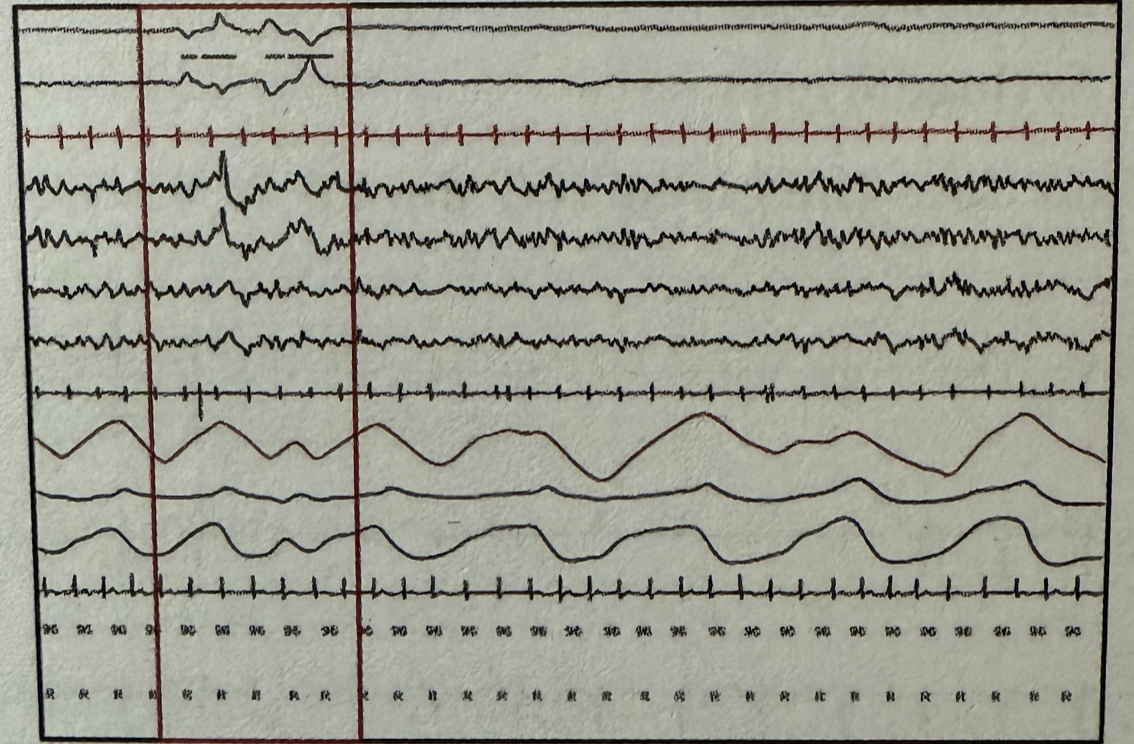
During polysomnography, which stage of sleep is represented by the marked areas when observing the following wave patterns? EOG (Electrooculography) EEG (Electroencephalography) EMG (Electromyography)
Drug of choice for night terrors:
All are used in the treatment of nocturnal enuresis except?
Early morning awakening is a feature of -
What is the first-line treatment for generalized anxiety disorder?
Bruxism most commonly occurs during which phase of sleep?
Kleine-Levin syndrome is characterized by which of the following?
A person hears voices before falling asleep, with a history of falls and daytime sleep attacks. What is the probable diagnosis?
Want unlimited practice?
Get full access to all questions, explanations, and performance tracking.
Scan to download app