
Delirium: Assessment and Management — MCQs

Which of the following will have an organic cause?
Global cerebral dysfunction characterised by alteration in cognitive function and consciousness is known as
A young girl presents with a history of multiple episodes of loss of consciousness lasting for 20 minutes. These episodes occur only in front of family members and only during the daytime. There is no history of tongue biting or incontinence, and EEG and MRI studies are normal. What is the most appropriate management?
A 60-year-old man had undergone cardiac bypass surgery 2 days back. Now he started forgetting things and was not able to recall names and phone numbers of his relatives. What is the probable diagnosis?
A 56-year-old man is brought to the emergency department by his wife because of memory loss and difficulty walking. She has noticed personality changes, truancy from work, and lack of personal care over the past 1 year. On examination, he appears unkempt, smells of urine, and is uncooperative. He cannot recall the date or season and gets angry when asked questions. His answers are often fabricated when checked with his wife. The blood pressure is 150/90 mm Hg, pulse 100/min, and he is diaphoretic and tremulous. His gait is wide-based, and motor strength and reflexes are normal. His ocular movements are normal, but there is nystagmus on lateral gaze. In the past, he has had multiple admissions for alcohol withdrawal. Which of the following is the most appropriate next step in management?
Which of the following conditions does not typically involve delusions?
The Confusion Assessment Method (CAM) is used for which of the following?
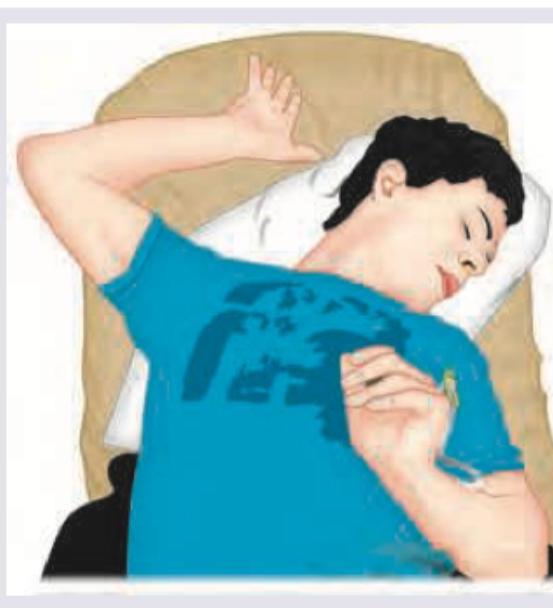
A 25-year-old uncooperative patient of schizophrenia was brought in to the casualty. The Casualty Medical Officer gave an injectable drug to the patient. Two hours later patient develops the following posturing. What is the best treatment?
The 4AT is a screening tool for detection of delirium. Which THREE of the following parameters listed below are included in the 4AT tool? I. Alertness II. Apnoea III. Abbreviated Mental Test (AMT4) IV. Attention Select the correct answer using the code given below:
A 41-year-old male presents with complaints of inability to achieve proper erections during sexual intercourse. He reports that there were no abnormalities until last month, when on one occasion he tried having sex while he was drunk. He was not able to achieve a proper erection at that time, and since then, on four other occasions, he has been unable to have an erection during attempted sex. He reports that his morning erections are fine and erections during masturbation were also normal. He is a diabetic, and the blood reports show FBS-103 mg/dl, HbA1C-6.6. His BP was 138/88 mm Hg. What is the likely cause of his erection disturbances?
Want unlimited practice?
Get full access to all questions, explanations, and performance tracking.
Scan to download app