
Respiratory Adjustments in Health and Disease — MCQs

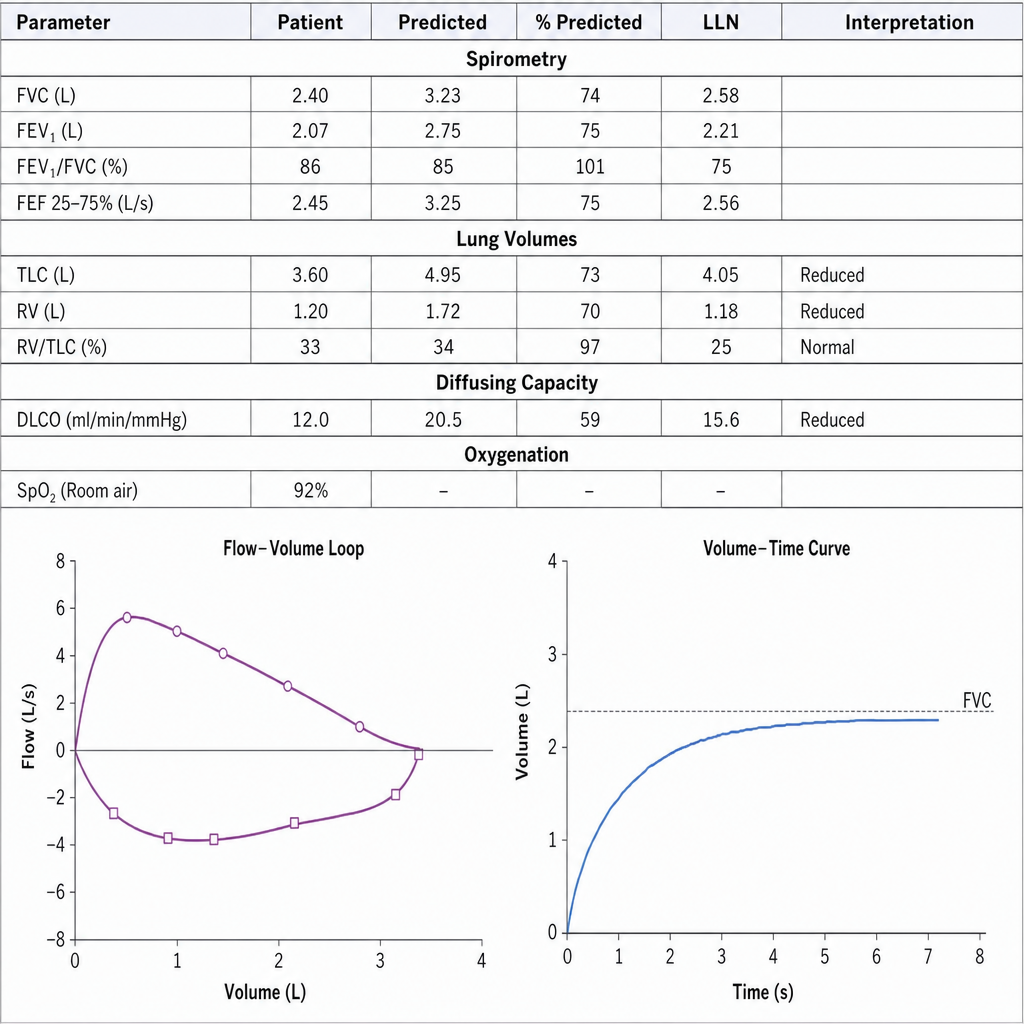
A 28-year-old woman having limited cutaneous scleroderma for the last 10 years complains of shortness of breath for the last one month. Pulmonary function tests (PFT) are as follows. What is the most likely diagnosis in this case?
Which of the following is seen in high altitude climbers?
A 56-year-old male with COPD presents with worsening shortness of breath. ABG analysis shows PaO2 of 55 mmHg. Which physiological mechanism primarily contributes to his hypoxemia?
Which of the following laboratory findings most directly indicates tissue hypoxia in a patient with chronic obstructive pulmonary disease (COPD)?
In an emphysematous patient with bullous lesions, which is the best investigation to measure lung volumes?
What is the estimated PaO2 after giving FiO2 at 0.5 in a normal person?
In forceful expiration, which of the following neurons gets fired?
Why does hyperventilation cause paresthesia?
Damage to pneumotaxic center along with vagus nerve causes which type of respiration?
Consider the following statements regarding respiratory function in old age: I. There is increasing ventilation-perfusion mismatch II. There is increased ventilatory response to hypoxia and hypercapnia III. There is a decline in maximum oxygen uptake leading to reduction in cardiorespiratory reserve IV. There is decline in the Forced Expiratory Volume to Forced Vital Capacity ratio (FEV1/FVC) by around 0.2% per year after the forties Which of the statements given above are correct?
Want unlimited practice?
Get full access to all questions, explanations, and performance tracking.
Scan to download app