
Molecular Motors and Cytoskeleton — MCQs

What will be the likely cause of death in a 4-year-old boy who tires easily, exhibits weakness in the pelvic and shoulder girdles, and calf muscle enlargement, with elevated serum creatine kinase levels, and a biopsy showing marked variation in muscle fiber size and shape, muscle fiber necrosis, myophagocytosis, regenerating fibers, and fibrosis?
What covers the binding sites for myosin heads on actin in skeletal muscles?
An electron microscopy of muscle biopsy shows 'parking lot' appearance. Which additional finding would confirm myotonic dystrophy?
Arrange the following parts of sarcomere from periphery to center. 1. Z line 2. M line 3. A band 4. H zone
In congenital dystrophic variety of epidermolysis bullosa, mutation is seen in the gene coding for:
Which of the following protein molecules is responsible for cell-to-cell adhesion?
Not a monomeric intermediate filament:
In response to changes in Ca2+ concentration, which of the following Ca2+ binding proteins can modify the activity of many enzymes & proteins?
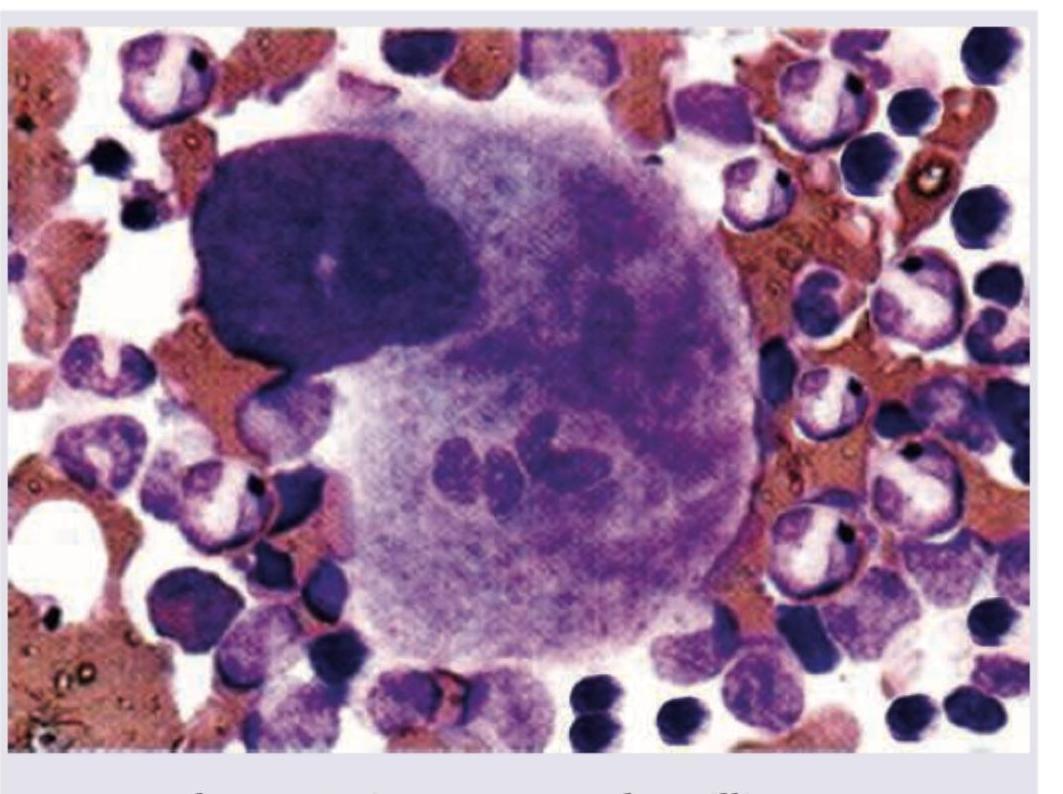
A macrophage engulfs different cells as shown in the image. This is known as?
A novel drug is designed to treat a genetic disorder caused by a nonsense mutation in the dystrophin gene. The drug works by allowing the ribosome to skip over the premature stop codon and continue translation. Evaluation of this therapeutic strategy reveals partial restoration of dystrophin protein with 60% of normal length but sufficient function. What is the most critical molecular consideration in determining if this approach will be clinically beneficial?
Want unlimited practice?
Get full access to all questions, explanations, and performance tracking.
Scan to download app