
Physiological Adaptation Mechanisms — MCQs

A 28-year-old woman is pinned by falling debris during a hurricane. An X-ray film of the leg reveals a compound fracture of the right tibia. The leg is immobilized in a cast for 6 weeks. When the cast is removed, the patient notices that her right leg is weak and visibly smaller in circumference than the left leg. Which of the following terms best describes this change in the patient's leg muscle?
A woman on Pap smear shows disorganized growth of cells with hyperchromatic nuclei. Which phenomenon is occurring here?
What is the most immediate hematological adaptation that occurs during high-altitude exposure to improve oxygen delivery to tissues?
In comparison to a normal healthy person, in the evening time, which of these will have an elevated ACTH as well as elevated Cortisol?
Using the quadrant method, if the mean QRS vector in lead I is negative and in lead aVF is positive, what is the axis?
What is the body's first physiological response to hypoglycemia?
Which hormone, together with the catecholamines, enhances the tone of vascular smooth muscle and assists in elevating blood pressure?
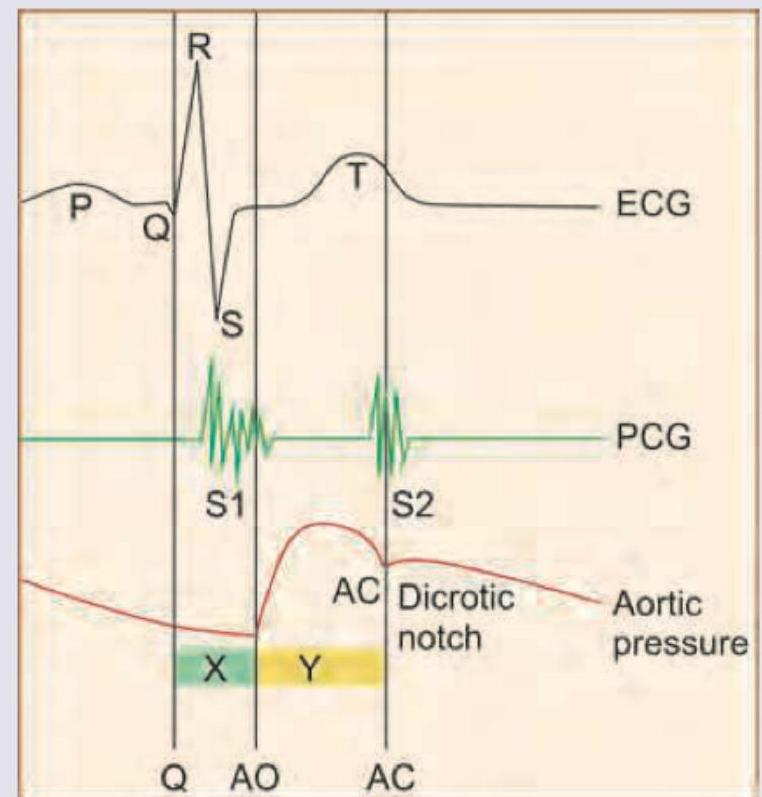
The recording of cardiac cycle is drawn below. Which of the following is correct about $X$ and $Y$ shown in the image?
What is the definition of preload in the context of cardiac physiology?
A patient with a pheochromocytoma is secreting large amounts of norepinephrine into the bloodstream. In a normal individual, this compound is usually released from the adrenal medulla in response to which of the following?
Want unlimited practice?
Get full access to all questions, explanations, and performance tracking.
Scan to download app