
Exercise Testing and Prescription — MCQs

Which condition is indicated by 'Q waves' and 'ST elevation' in leads II, III, and aVF?
What is the primary measurement obtained from pulse oximetry in relation to arterial blood?
Least useful for a 800-m run in a competitive event would be
A 55-year-old male, known smoker, complains of calf pain while walking. He experiences calf pain while walking but can continue walking with effort. Which grade of claudication does this patient fall under?
A patient scheduled for elective inguinal hernia surgery has a history of myocardial infarction (MI) and underwent coronary artery bypass grafting (CABG). What should be included in the preoperative assessment?
A 25-year-old male athlete undergoes a cardiopulmonary exercise test. As exercise intensity increases from rest to moderate levels, which of the following best describes the relationship between oxygen consumption and cardiac output?
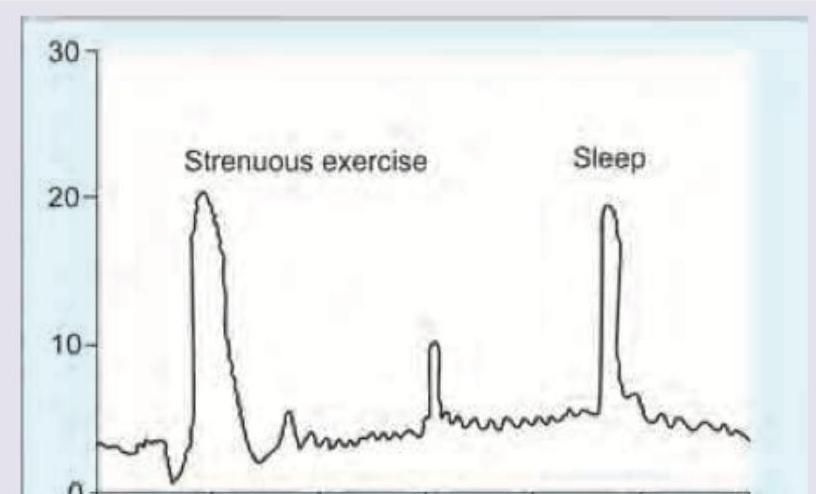
The blood levels of hormones are elevated during exercise and sleep as shown. Which hormone would exhibit this diurnal pattern?
In severe exercise, decrease in pH is due to:
During a 100 m sprint which of the following is used by the muscle for meeting energy demands?
Which of the following is the mechanism for a decrease in splanchnic blood flow during exercise?
Want unlimited practice?
Get full access to all questions, explanations, and performance tracking.
Scan to download app