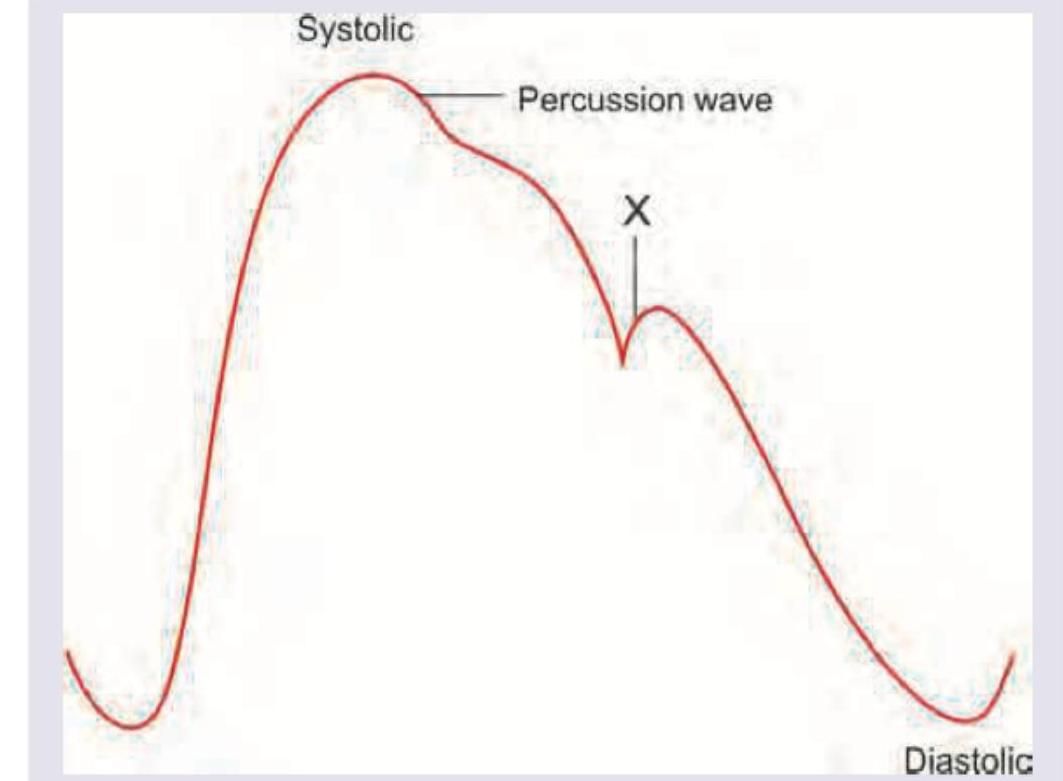
Peripheral edema in congestive cardiac failure (CCF) is due to which of the following?
Which one of the following findings is indicative of compromised left ventricular performance?
Jugular venous pressure is typically elevated in which type of shock?
Which one of the following will decrease with an increase in ejection fraction?
The 'V' wave in the jugular venous pulse is due to which of the following?
The plateau phase of the myocardial action potential is primarily due to which ion movement?
In the cardiac cycle, at what point does the mitral valve open?
Which of the following is a true statement regarding the Windkessel effect?
The heart is made up of which type of muscle?
Which formula correctly represents venous return (VR)?
Explanation: **Explanation:** In Congestive Cardiac Failure (CCF), the heart is unable to pump blood effectively, leading to "backward failure." This causes blood to pool in the venous system, resulting in **increased venous pressure**. According to **Starling’s Law of Capillary Exchange**, an increase in capillary hydrostatic pressure (the force pushing fluid out of the vessel) overcomes the oncotic pressure (the force holding fluid in), leading to the leakage of fluid into the interstitial space, manifesting as peripheral edema. **Analysis of Options:** * **A. Increased hydrostatic pressure (Correct):** As the heart fails, central venous pressure rises. This back-pressure is transmitted to the capillaries, increasing the filtration force and causing edema. Additionally, activation of the Renin-Angiotensin-Aldosterone System (RAAS) leads to salt and water retention, further increasing blood volume and hydrostatic pressure. * **B. Increased osmotic (oncotic) pressure:** Increased plasma oncotic pressure (primarily from albumin) would actually *prevent* edema by pulling fluid back into the capillaries. * **C. Decreased proteins:** While hypoproteinemia (e.g., in Nephrotic syndrome or Cirrhosis) causes edema by decreasing oncotic pressure, it is not the *primary* initiating mechanism in CCF. * **D. Decreased aldosterone:** In CCF, aldosterone levels are actually **increased** (Secondary Hyperaldosteronism) due to reduced renal perfusion, which exacerbates edema through sodium retention. **Clinical Pearls for NEET-PG:** * **Dependent Edema:** Edema in CCF is typically "pitting" and occurs in dependent parts (ankles in walking patients; sacrum in bedridden patients). * **Starling Forces:** Edema occurs when (Capillary Hydrostatic Pressure + Interstitial Oncotic Pressure) > (Plasma Oncotic Pressure + Interstitial Hydrostatic Pressure). * **Right vs. Left Heart Failure:** Peripheral edema is a hallmark of **Right-sided heart failure**, whereas pulmonary edema is a hallmark of **Left-sided heart failure**.
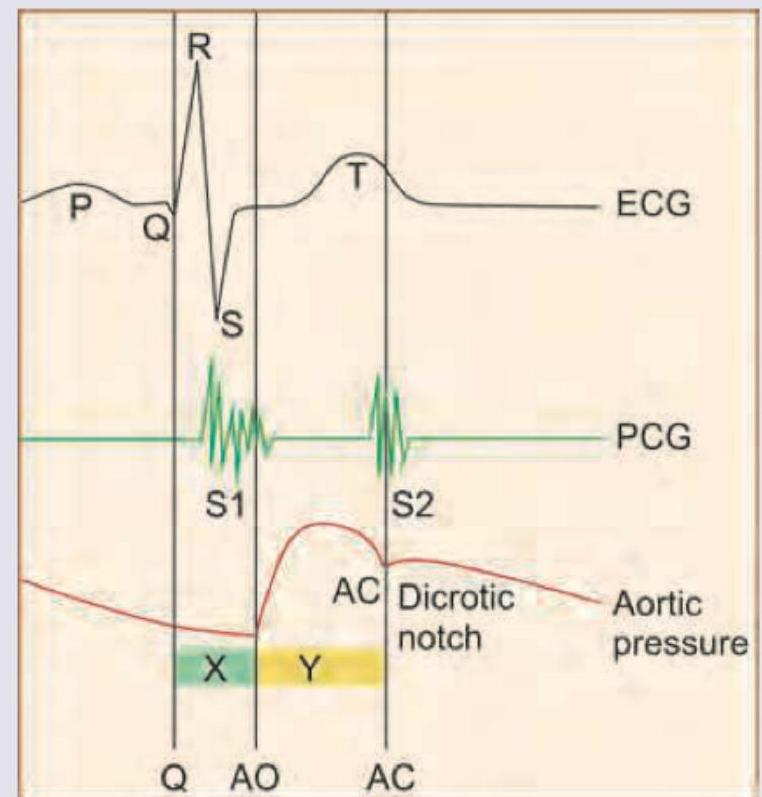
Explanation: ### Explanation The assessment of left ventricular (LV) performance can be done using **Systolic Time Intervals (STI)**, which include the Pre-Ejection Period (PEP), Left Ventricular Ejection Time (LVET), and the Total Electromechanical Systole (QS2). **1. Why Option C is Correct:** In a failing heart (compromised LV performance), the rate of intraventricular pressure rise decreases. This leads to: * **Prolonged PEP:** It takes longer for the LV pressure to exceed aortic pressure. * **Shortened LVET:** The stroke volume decreases, leading to a shorter ejection phase. * **Constant QS2:** Since QS2 is the sum of PEP and LVET ($QS2 = PEP + LVET$), the prolongation of PEP is roughly offset by the shortening of LVET, leaving the total electromechanical systole unchanged. * **Increased PEP/LVET Ratio:** In a healthy heart, the normal ratio is approximately **0.35**. In LV failure, as PEP increases and LVET decreases, the ratio rises significantly (**> 0.35**). **2. Why Other Options are Incorrect:** * **Option A:** An increased LVET with a normal PEP usually indicates a high stroke volume or aortic stenosis, not generalized LV failure. * **Option B:** A ratio of 0.35 is considered the upper limit of normal. A shortened QS2 is not a characteristic finding of chronic LV compromise. * **Option D:** A reduction in all three parameters is not seen in heart failure; PEP specifically increases when the heart's contractility is impaired. **3. High-Yield Clinical Pearls for NEET-PG:** * **PEP (Pre-Ejection Period):** Measured from the onset of the QRS complex to the beginning of the carotid pulse upstroke. It correlates inversely with LV contractility ($dP/dt$). * **LVET (LV Ejection Time):** Measured from the beginning of the carotid upstroke to the dicrotic notch. It correlates directly with stroke volume. * **The PEP/LVET ratio** is the most sensitive STI for detecting LV dysfunction and correlates well with the **Ejection Fraction (EF)**. As EF decreases, the PEP/LVET ratio increases.
Explanation: **Explanation:** The **Jugular Venous Pressure (JVP)** is a clinical reflection of the pressure in the right atrium and the central venous system. In clinical practice, JVP serves as a marker of **fluid status** and **cardiac pump efficiency**. **Why Cardiogenic Shock is Correct:** In cardiogenic shock, the primary defect is **pump failure** (e.g., massive myocardial infarction). The heart is unable to effectively eject blood, leading to a "backup" of blood into the systemic venous circulation. This increases the central venous pressure (CVP), which manifests clinically as **elevated JVP**. This is often accompanied by pulmonary edema and a gallop rhythm (S3). **Why Other Options are Incorrect:** * **Hemorrhagic Shock:** This is a type of **hypovolemic shock**. Due to the loss of blood volume, there is decreased venous return to the heart, leading to a **low JVP** (flat neck veins). * **Neurogenic Shock:** This is a type of **distributive shock**. Loss of sympathetic tone leads to massive vasodilation and pooling of blood in the peripheral vessels. This reduces the effective circulating volume returning to the heart, resulting in a **low or normal JVP**. **High-Yield Clinical Pearls for NEET-PG:** * **Obstructive Shock:** JVP is also **elevated** in obstructive causes like Cardiac Tamponade, Tension Pneumothorax, and Massive Pulmonary Embolism. * **Kussmaul’s Sign:** A paradoxical rise in JVP during inspiration, classically seen in **Constrictive Pericarditis** (and sometimes Right Ventricular Infarction). * **Cannon 'a' waves:** Seen in the JVP during **Atrioventricular (AV) dissociation** (e.g., Complete Heart Block or Ventricular Tachycardia).
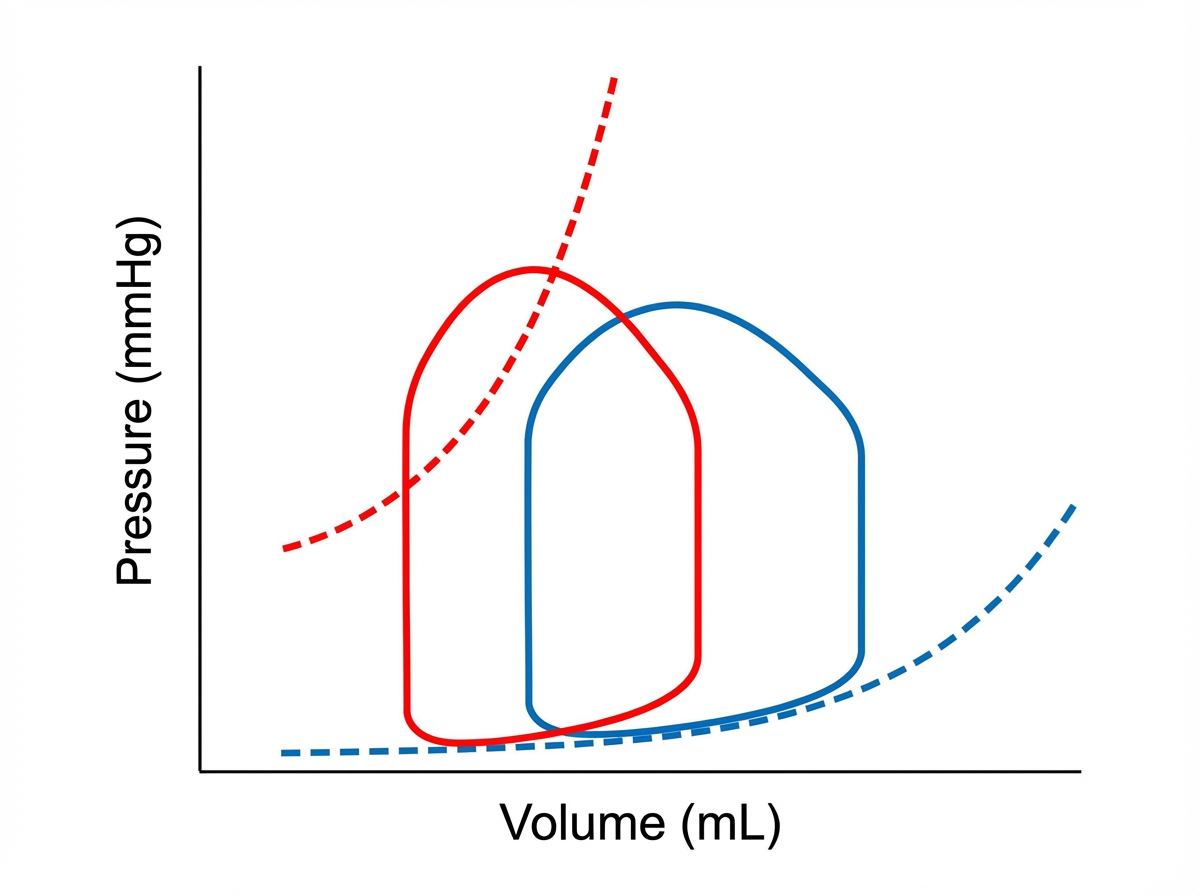
Explanation: **Explanation:** The core of this question lies in the mathematical and physiological relationship between ventricular volumes and the Ejection Fraction (EF). **1. Why End-systolic volume (ESV) is correct:** Ejection Fraction is the percentage of blood pumped out of the left ventricle with each heartbeat. It is calculated using the formula: **EF = (Stroke Volume / End-Diastolic Volume) × 100** Since Stroke Volume (SV) = EDV – ESV, the formula can be rewritten as: **EF = (EDV – ESV) / EDV** From this relationship, it is clear that for a given End-Diastolic Volume (the amount of blood at the end of filling), an **increase in EF** means a larger volume of blood has been ejected. Consequently, the amount of blood remaining in the heart at the end of contraction (**End-systolic volume**) must **decrease**. **2. Why the other options are incorrect:** * **Stroke Volume (A):** By definition, if EF increases (and EDV is constant or increasing), the Stroke Volume must increase, as more blood is being pumped per beat. * **Cardiac Output (C):** Since Cardiac Output = Stroke Volume × Heart Rate, an increase in EF (which increases SV) will typically lead to an increase in Cardiac Output. * **Heart Rate (B):** Heart rate is an independent variable regulated by the autonomic nervous system. While it affects CO, it does not have a direct inverse mathematical relationship with EF in this context. **High-Yield Clinical Pearls for NEET-PG:** * **Normal EF:** Typically ranges from **55% to 70%**. * **Inotropy:** Positive inotropic agents (like Digoxin or Dobutamine) increase EF by increasing contractility, which significantly reduces ESV. * **Heart Failure:** EF is the primary parameter used to categorize heart failure into HFrEF (Reduced EF ≤40%) and HFpEF (Preserved EF ≥50%). * **Indicator:** EF is considered one of the most important clinical indicators of the heart's pumping efficiency.
Explanation: ### Explanation The **Jugular Venous Pulse (JVP)** reflects pressure changes in the right atrium during the cardiac cycle. The **'v' wave** is the third positive deflection in the JVP tracing. **1. Why 'Atrial Filling' is Correct:** The 'v' wave occurs during late ventricular systole. At this stage, the tricuspid valve is closed. Blood continues to flow from the vena cava into the right atrium (venous return). As the atrium fills against a closed tricuspid valve, the intra-atrial pressure rises, creating the 'v' wave (V for **V**illing/Venous return). The peak of the 'v' wave occurs just before the tricuspid valve opens. **2. Why the Other Options are Incorrect:** * **Atrial Contraction:** This corresponds to the **'a' wave**. It is the first positive deflection and occurs at the end of diastole. * **Ventricular Contraction:** This is associated with the **'c' wave**, which occurs due to the bulging of the tricuspid valve into the right atrium during isovolumetric contraction. * **Ventricular Relaxation:** This leads to the **'y' descent**. Once the tricuspid valve opens, blood flows rapidly into the ventricle, causing a drop in atrial pressure. **3. Clinical Pearls for NEET-PG:** * **Giant 'v' waves:** Classically seen in **Tricuspid Regurgitation**. During systole, blood leaks back from the ventricle into the atrium, causing massive pressure elevation. * **Cannon 'a' waves:** Seen in **AV dissociation** (Complete Heart Block) or Ventricular Tachycardia, where the atrium contracts against a closed tricuspid valve. * **Absent 'a' wave:** A hallmark of **Atrial Fibrillation**. * **Friedreich’s Sign:** A steep 'y' descent seen in **Constrictive Pericarditis**.
Explanation: ### Explanation The myocardial action potential (specifically in non-pacemaker cells like ventricular myocytes) consists of five distinct phases (0–4). The **Plateau Phase (Phase 2)** is the hallmark of the cardiac action potential, distinguishing it from skeletal muscle. **Why Influx of Ca++ is Correct:** During Phase 2, there is a prolonged period of depolarization. This is primarily caused by the **opening of L-type (Long-lasting) voltage-gated Calcium channels**, leading to a slow **influx of Ca++** into the cell. This inward positive current is balanced by a slow outward movement of K+ ions (efflux), resulting in a "plateau" where the membrane potential remains relatively stable. This calcium influx is crucial as it triggers **Calcium-Induced Calcium Release (CICR)** from the sarcoplasmic reticulum, leading to muscle contraction. **Analysis of Incorrect Options:** * **A. Efflux of Na+:** Sodium movement during an action potential is an **influx** (Phase 0), not an efflux. Efflux of Na+ only occurs via the Na+/K+ ATPase pump to restore resting gradients. * **C. Influx of K+:** Potassium movement during an action potential is almost always an **efflux** (moving out of the cell), which causes repolarization. * **D. Closure of voltage-gated K+ channels:** While some K+ channels (like the inward rectifier) close during depolarization, the plateau is maintained by the *balance* of active Ca++ influx and K+ efflux, not merely the closure of channels. **High-Yield NEET-PG Pearls:** * **Phase 0:** Rapid depolarization due to **Na+ influx**. * **Phase 1:** Initial rapid repolarization due to **efflux of K+** (transient outward current, $I_{to}$). * **Phase 3:** Rapid repolarization due to **efflux of K+** (delayed rectifier channels). * **Phase 4:** Resting membrane potential (approx. -90 mV). * **Clinical Significance:** Class IV antiarrhythmics (Calcium Channel Blockers like Verapamil) primarily act on Phase 2, shortening the plateau and decreasing contractility (negative inotropy).
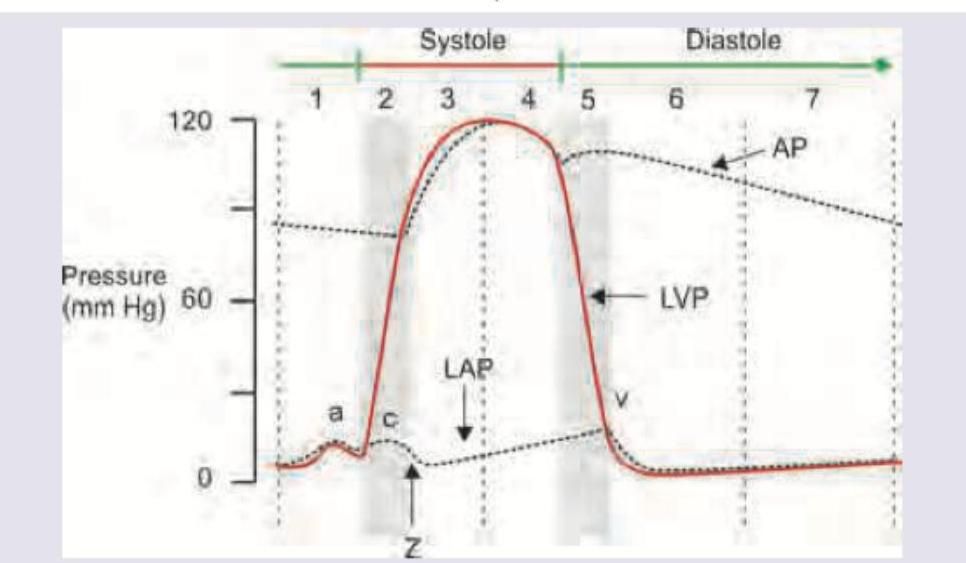
Explanation: **Explanation:** The cardiac cycle is governed by pressure gradients between the heart chambers. The **mitral valve** opens when the pressure in the Left Atrium (LA) exceeds the pressure in the Left Ventricle (LV). 1. **Why Option C is correct:** During **Isovolumetric Relaxation (IVR)**, the ventricle is a closed chamber; both the aortic and mitral valves are shut. As the myocardium relaxes, LV pressure drops precipitously. The moment LV pressure falls below LA pressure, the mitral valve is forced open. This marks the **end of isovolumetric relaxation** and the beginning of the ventricular filling phase (starting with the rapid filling phase). 2. **Why the other options are incorrect:** * **Option A (End of isovolumetric contraction):** This is when LV pressure exceeds aortic pressure, causing the **Aortic valve** to open. * **Option B (Beginning of isovolumetric relaxation):** This occurs immediately after the Aortic valve closes (S2). At this point, LV pressure is still much higher than LA pressure, so the mitral valve remains closed. * **Option D (Beginning of isovolumetric contraction):** This is marked by the closure of the mitral valve (S1) as LV pressure rises above LA pressure. **High-Yield NEET-PG Pearls:** * **S1 Heart Sound:** Occurs at the *beginning* of isovolumetric contraction (Mitral/Tricuspid closure). * **S2 Heart Sound:** Occurs at the *beginning* of isovolumetric relaxation (Aortic/Pulmonary closure). * **Opening Snap:** In Mitral Stenosis, this abnormal sound is heard at the *end* of isovolumetric relaxation (the moment the stenotic valve opens). * **Volume Change:** During both isovolumetric phases, ventricular volume remains constant; it only changes once the valves open.
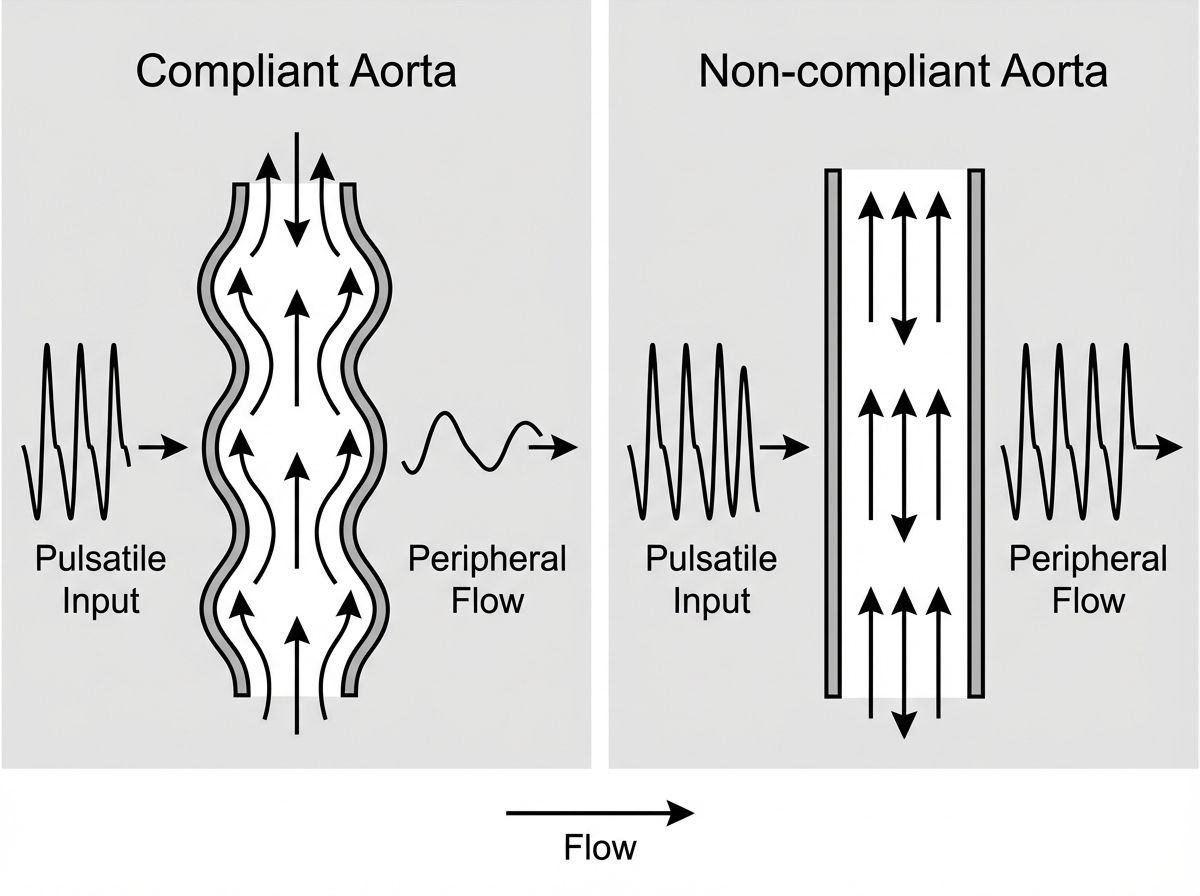
Explanation: ### Explanation The **Windkessel effect** refers to the hydraulic filtering action of the large elastic arteries (primarily the aorta) that converts the intermittent, pulsatile output of the heart into a more continuous flow in the peripheral circulation. **Why Option C is Correct:** The aorta and large arteries contain a high proportion of **elastin fibers**. During ventricular systole, these vessels expand to store a portion of the stroke volume (potential energy). During diastole, the elastic recoil of these vessels pushes the stored blood forward. This ensures that blood flow to the tissues continues even when the heart is in diastole and prevents systolic blood pressure from rising too high. **Why Other Options are Incorrect:** * **Options A & B:** Muscular arteries and arterioles have a high proportion of **smooth muscle** rather than elastic tissue. Their primary function is distribution and regulation of blood flow, not elastic buffering. * **Option D:** The major site of resistance to blood flow (the "resistance vessels") are the **arterioles**. The Windkessel vessels (aorta/large arteries) are "distensible vessels" with low resistance. **High-Yield NEET-PG Pearls:** * **Compliance:** The Windkessel effect is dependent on arterial compliance. As age increases, compliance decreases (arteriosclerosis), leading to a loss of the Windkessel effect, which results in **increased Pulse Pressure** and isolated systolic hypertension. * **Dichrotic Notch:** The elastic recoil of the aorta against the closed aortic valve contributes to the formation of the dicrotic notch on the arterial pressure tracing. * **Velocity:** Blood flow velocity is highest in the aorta and lowest in the capillaries, but the Windkessel effect ensures that flow is never zero in the systemic circulation.
Explanation: **Explanation:** The heart is composed of **Cardiac muscle (Myocardium)**, a specialized type of muscle tissue found exclusively in the heart. It is uniquely designed to provide continuous, rhythmic contractions without fatigue. **Why Cardiac Muscle is Correct:** Cardiac muscle combines features of both skeletal and smooth muscles. Like skeletal muscle, it is **striated** (organized into sarcomeres); however, like smooth muscle, it is **involuntary** and regulated by the autonomic nervous system. A defining feature is the presence of **intercalated discs**, which contain gap junctions. These allow for rapid electrical coupling, enabling the heart to function as a **functional syncytium** (contracting as a single unit). **Why Other Options are Incorrect:** * **Skeletal Muscle:** These are voluntary muscles attached to bones. While they are striated, they require direct neural stimulation for every contraction and are prone to fatigue, making them unsuitable for the heart's continuous workload. * **Smooth Muscle:** Found in the walls of hollow organs (e.g., intestines, blood vessels), these are non-striated and involuntary. They contract slowly and lack the powerful, synchronized pumping action required by the ventricles. **High-Yield Clinical Pearls for NEET-PG:** * **Automaticity:** Cardiac muscle contains specialized pacemaker cells (SA node) that can generate their own electrical impulses. * **Refractory Period:** Cardiac muscle has a long absolute refractory period, which prevents **tetanization** (sustained contraction), ensuring the heart always has time to fill with blood between beats. * **Mitochondria:** Cardiac myocytes have a significantly higher density of mitochondria compared to skeletal muscle, reflecting their total reliance on aerobic metabolism.
Explanation: ### Explanation **1. Understanding the Correct Answer (C):** Venous return (VR) is the flow of blood back to the heart. According to Ohm’s Law ($Flow = \Delta Pressure / Resistance$), blood flows from an area of higher pressure to lower pressure. * **Mean Filling Systemic Pressure (MFSP):** This is the average pressure in the systemic circulation when the heart is stopped (approx. 7 mmHg). It represents the "pushing force" that drives blood toward the heart. * **Right Atrial Pressure (RAP):** This is the "back pressure" or resistance against which the blood must enter the heart. * **Resistance to Venous Return (RVR):** This represents the frictional resistance of the peripheral vessels. The pressure gradient driving venous return is the difference between the systemic filling pressure and the right atrial pressure. Thus, **VR = (MFSP - RAP) / RVR**. **2. Why Other Options are Incorrect:** * **Option A:** Incorrectly places MFSP as the divisor. MFSP is a pressure value, not a resistance value. * **Option B:** Incorrectly uses RAP as the divisor. RAP is a pressure value. Furthermore, subtracting RVR (resistance) from MFSP (pressure) is mathematically and physiologically invalid. **3. NEET-PG High-Yield Clinical Pearls:** * **The Equilibrium Point:** On a Guyton’s graph, the point where the Venous Return curve intersects the Cardiac Output curve is the **Steady State** (Normal RAP ≈ 0-2 mmHg). * **MFSP vs. MSP:** While often used interchangeably, Mean Circulatory Filling Pressure (MCFP) involves the entire circuit, while MFSP refers specifically to the systemic circuit. * **Factors increasing MFSP:** Increased blood volume or increased sympathetic tone (venoconstriction) shifts the VR curve to the right. * **Venous Return Plateau:** If RAP falls below 0 mmHg (negative pressure), VR ceases to increase further because the veins collapsing at the thoracic inlet create a physical bottleneck.
Cardiac Electrophysiology
Practice Questions
Cardiac Cycle
Practice Questions
Cardiac Output and Its Regulation
Practice Questions
Hemodynamics and Blood Flow
Practice Questions
Arterial System Physiology
Practice Questions
Microcirculation and Lymphatics
Practice Questions
Venous Return and Central Venous Pressure
Practice Questions
Cardiovascular Reflexes
Practice Questions
Regional Circulations
Practice Questions
Cardiovascular Responses to Exercise and Stress
Practice Questions
Get full access to all questions, explanations, and performance tracking.
Start For Free